Thursday, 09 February 2012 14:27
 The struggle for Syria isn't just about Syria--it's the struggle for a free, democratic Middle East versus one that lives under the yoke of American and Israeli hegemony.
The conflict in Syria has reached its tipping point. At this level, it is no longer acceptable or reasonable to continue playing in a gray area in the name of diplomacy, as the struggle on Syria has a crucial significance from various strategic points of views.
The importance of the Syrian question has to be found in Syria’s key-role in the regional geostrategic pattern. Its position is directly intertwined with the confrontations we will witness in the Arab world for the next decade, whose results will in turn be strongly affected by the transformation happening in Syria. To be clear, the moves we are witnessing nowadays will influence the fate of a number of regional and global balances on more than one axis.
 From the moment that the Arab League made the decision to suspend Syria's membership, entailing a series of sanctions against the Syrian people, the clashes happening in Syria have moved to another level.
  This became even clearer with the second proposed UN resolution--calling for a democratic transition and for Bashar Al Assad to step down--which was stopped by Russia and China’s vetoes last Saturday for the second time in four months. There have been two attempts to prepare the ground for a military intervention – that the US, European, and Arab countries would like to see and that 13 out of 15 UN Security Council members voted for. Such fervor reminds of the international climate before the war against Iraq began in 2003.
With the recent developments, the façade has tumbled down disclosing the real goals hidden behind different masks, revealing that the slogans demanding freedom, democracy, and human rights have been used as a battering-ram by the advocates for an intervention to break Syria. The objective seems clear: depriving the country of its role and the Syrian people of their will. Here it has to be remembered that Syria has always had a relevant position in Arab history, being an example of a centuries-old civilization, solid state structures and a reference pole for the whole Arab world, not only because of its geopolitical position, but also because of its anti-colonial spirit and historical stand toward the state of Israel – as the longa manus of Western colonial powers in the Middle East. These elements, which have determined the nature of the people’s national feelings, are completely ignored by advocates of "human rights, freedom and democracy" – specifically the reactionary regimes in the Gulf, Turkey, the Lebanese Hariri-movement and Syrian Islamist groups - hired by the American - French - Qatar- connection. Ironically, representatives of countries which have been re-named after the ruling family (Saudi Arabia) or whose leaders came to power with a coup d’état while the own father was abroad (Sheikh Hamad bin Khalifa of Qatar) are begging today for a NATO intervention aiming at the destruction of Syria under the banner of "human rights and democracy".
 At the peak of their frustration – being unable to provoke a regime change for ten months in spite of all their media, financial and military efforts – the opposition cheif Burhan Ghalioun already promised his intention to open up Syria to the Western allies, cut off Syria’s relations with Iran, with the Lebanese and the Palestinian resistance and furthermore to establish positive relations with Israel - if their project will succeed. This shift toward a stronger inclusion into the free market economy and the penetration by colonial forces would deny Syria’s historical role and certainly not represent the Syrian people’s interests.
The Western goal for Syria, and the broader Middle East, is to progressively consolidate its control of the region. The so-called "War on Terror" that began after 9/11 is an expression of this desire to co-op the Middle East, as are the occupation of Afghanistan, the fall of Baghdad in 2003, the Israeli war with Lebanon in 2006, and, finally, the Israeli attack on Gaza at the end of 2008 and the beginning of 2009. The United States, however, faced resistance and opposition movements.
Washington has been surprised by the fall of the Zine El Abidine Ben Ali in Tunisia, the breakdown of Hosni Mubarak's regime in Egypt, and the outbreak of protest movements in various Arab countries. The game, which was so clear until then, got distorted, and the equation confused. These overthrows forced the West to re-formulate strategies and policies in order to contain and control the social change. This became even more important in light of the US-defeat in Iraq after nine years of war under the pressure of the Iraqi resistance, five thousand people dead, and an estimated three trillion dollars military expenditure.
 |
| Protest in Syria (photo: flickr/syriana2011) |
At this point, the alliance between the US and reactionary regimes alliance could no longer set the agenda in an overt way. The strategy shifted to involving the public debate and to direct the Arab reactionary regimes to break the Syrian conflict. Strong engagement seemed to be the sole chance to compensate for losses in Afghanistan, Iraq, and to protect the allied regimes from the “Arab Spring”.
So, the imperialist and reactionary forces – namely NATO and its Gulf allies - quickly decided to intervene against Syria, aiming at two possible scenarios. The first option was to ride the wave of the Arab revolts, employing full force to overthrow Syria using a comprehensive political, psychological, and media war, including the internationalization of the crisis and the call for an external intervention (like the one that occurred in Libya) to finally turn this NATO-hostile country into a satellite state like other Arab reactionary regimes revolving in the orbit of the colonial West.
If this doesn’t happen, we could see Western forces sink Syria in a quagmire of destruction, exhausting its resources as state and society and, in doing so, erasing the gains of its historical role at the regional and international level. This would be achieved by fueling sectarian violence and by arming terrorist organizations and extremist groups - trained and directed to drain the structures and institutions of the state – to disrupt the social and religious models, condemning Syria to long term internal conflicts.
In this context, we have to analyze the power positions of the different parties that have been involved in this struggle for months. We see two fronts squaring off: the first includes the United States, Israel, Western European countries, the Arab reactionary regimes represented by the Gulf Cooperation Council, reactionary segments of Gulf societies, and Turkey, which is looking for its regional role. On the other side we find the Syrian people demanding a change, the Syrian state and resistance forces of political and cultural opposition, especially in Lebanon and Palestine, backed by Algeria and Iran.
Here a point has to be stressed: the Syrian regime – and the Baath party# in particular- has to be strongly criticized for its repressive policies. The people’s will for a change and for reforms must be respected and supported. But the fact that the regime could not be overthrown yet shows that the internal balance of powers is different than it is presented in the international mainstream media.
 The crucial role of the Baath party in the creation of state structures (for example, the health care and educational systems) and in the support of the resistance movements- first and foremost the Palestinian one – has not been forgotten by the Syrian people. Moreover, if foreign powers are calling for the destruction of Syria’s state and structures, the regime should answer the Syrian people’s demands for reform. While a transition is necessary, it shouldn’t come at the price of Syria’s dismantlement and the denial of its people’s right to self-determination, disguised as democratization.
Internal pressure has already proven to be able to force the regime to open up for reforms, which were announced in recent months and include the withdraw of the emergency law in power since 1963, constitutional reforms entailing Presidential and local elections, parties pluralism with four new legalized parties and five others in the process of legalization, economic reforms revoking free trade agreements harming the interest of small and medium Syrian entrepreneurs and taking distance again from the shortly started free market policies. But the reforms need time and space to work and to prove that democratization is possible without Western dictates.
What is happening in Syria now is in not a local conflict, but an expression of the clashes between the American and Israeli vision of a "New Middle East" on one side and the resistance movements and oppositions fighting for true democratic social change.
This struggle moves on three interdependent levels:
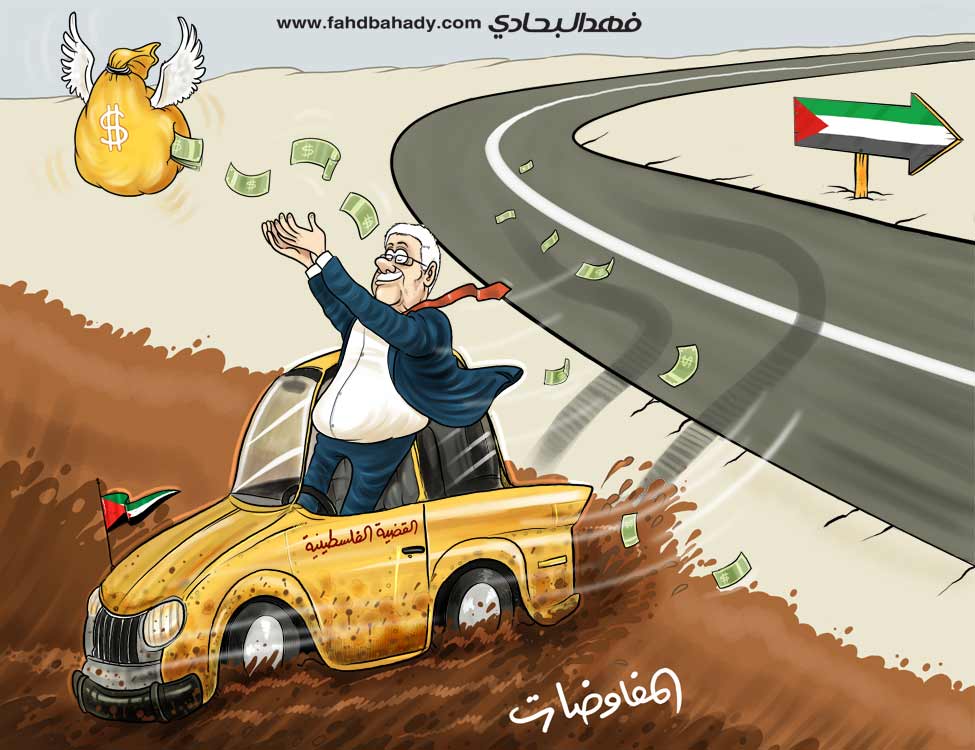
First level: the confrontation between the resistance and opposition parties fighting for their political, economic and cultural rights versus the Zionist project in all its dimensions and goals.
Consequences of the conflict at this level will determine the future of the Palestinian cause, either beyond the impasse created by the Oslo Accords, or by the dependency of the Arab countries and the consequent weakening of the Palestinian resistance. This would mean that the Arab world has to take initiative, pushing for Palestinian national rights, and countering the Zionist project as a prelude to his defeat. Or, it would lead to the defeat of the core of the resistance with the following Zionist victory, implying the annihilation of Palestinian rights.
Second level: a confrontation between the US- EU colonial attempt to dominate the region, with the support of the reactionary forces in Turkey and in the Arab regimes, against the Russian-Chinese axis, backed by emerging international forces, such as Iran, Brazil, and India.
 This confrontation will determine the parameters of the new international balances, aiming, on the one hand, to overcome American hegemony and restore Russia's and China’s moderating roles - which would lead to a reshaping of international relations, including reforming the UN role, which has been increasingly dominated by US interests in the last two decades. Russia and China, together with other emerging countries - such as India, South Africa, Brazil and Venezuela, and much of Latin America - are willing to reshape international relations on the basis of a more just balance than the pattern of US dominance that emerged after World War II and that was reinforced by the fall of the Soviet Union.
The alternative to this would be the fulfillment of the US plan to break Syria, gaining the chance to rearrange the region according to American interests and strategies.
 Third level: The confrontation at the sociopolitical – ideological level between the reactionary religious forces and the Salafists on one side and the secular progressive movements on the other, with their respective social and political agents.
This will determine the nature of change in the region and in the Arab communities, either moving the area towards a state of decline, leading to the establishment of new reactionary systems ruling in the name of religion, which will put an end to the process of democratic change with its national progressive expressions. This is what we will see if NATO powers intervene and manipulate the Arab ownership of the democratization process, thus restoring the colonial “democracy” once again. Alternatively, we could see the socio-political democratization process gain new momentum in Arab societies, becoming a genuine and profound phenomenon, which could be a model for change in Syria. This would clear the path for the Arab nation to break away from a state of dependency on the West, allowing it to enter a phase of progress and to assert itself on the international stage.
In light of this analysis, and stressing the interdependency of these three levels, the conflict in Syria has to be seen not just as struggle to punish the previous positions or the repressive policies by the Assad regime. It is, in essence, a conflict to determine the region's future. In this sense, the confrontation transcends narrow readings. A success for Syria means more than the state’s survival resisting foreign colonial interventions and standing against the attempt of its dismantlement. This is important, but a real success is dependent on the ability to implement a deep, radical and comprehensive reform process targeting the Syrian institutions, society and state apparatus. Aim of such democratization should be tapping the full potential of the Syrian society, especially in light of the high level of consciousness it proved in crucial historical moments. The people who - with their protests and, at the same time, their resistance to external interventions - did not fall in the trap of dazzling slogans for democracy and human rights, have been a big surprise for those who wagered on their break down. They proved to the Assad regime that they are willing and capable of true democratic change that is more than a translation of external models.The struggle taking place in Syria reveals that current developments have been fueled by colonial powers. The goal sought by the colonial and reactionary actors is to prevent Syria from building its own democratic model as an alternative to the Western "Democratic colonial" project.
In light of this analysis, and stressing the interdependency of these three levels, the conflict in Syria has to be seen not just as struggle to punish the previous positions or the repressive policies by the Assad regime. It is, in essence, a conflict to determine the region's future. In this sense, the confrontation transcends narrow readings. A success for Syria means more than the state’s survival resisting foreign colonial interventions and standing against the attempt of its dismantlement. This is important, but a real success is dependent on the ability to implement a deep, radical and comprehensive reform process targeting the Syrian institutions, society and state apparatus. Aim of such democratization should be tapping the full potential of the Syrian society, especially in light of the high level of consciousness it proved in crucial historical moments. The people who - with their protests and, at the same time, their resistance to external interventions - did not fall in the trap of dazzling slogans for democracy and human rights, have been a big surprise for those who wagered on their break down. They proved to the Assad regime that they are willing and capable of true democratic change that is more than a translation of external models.The struggle taking place in Syria reveals that current developments have been fueled by colonial powers. The goal sought by the colonial and reactionary actors is to prevent Syria from building its own democratic model as an alternative to the Western "Democratic colonial" project.
 The Western policy implemented towards the Assad regime seeks Syria's subordination and dependence, as a strategy to contain the Arab revolutions, to control and keep them under the roof of the American-Western vision, as the latter have failed to protect their Arab allies from mass revolts. Western interests in keeping hold of the reins of change in the Arab world explains the Western repositioning towards political Islam, especially the Muslim Brotherhood, which came to power in Tunisia, Libya and Egypt. In their turn, the Islamist movements are proving to be far less dangerous to Western interests than Western leaders, analysts, and the media claimed they would be. Looking past the hostile rhetoric we see that the Islamist movements in power are, in fact, rethinking their attitude in order to build bridges with Western countries, as a prelude to the establishment of new alliances in the region.
There is no room to be neutral or ambiguous in the face of this confrontation, and the duty of the resistance forces and the actors struggling for a democratic change across the Arab world – the actors that shouldn’t be forgotten - is, therefore, to evolve and protect Syria and the broader Middle East.
River to Sea
 Uprooted Palestinian
The views expressed in this article are the sole responsibility of the author and do not necessarily reflect those of this Blog!
No comments:
Post a Comment