
U.S. Secretary of State Hillary Clinton and Saudi Foreign Minister Prince Saud al-Faisal. (photo by REUTERS/Fahad Shadeed)
posted on Friday, Jul 27, 2012
Translator: Naria Tanoukhi
I share the United States’ concern that Saudi Arabia’s turn is coming, whether it be before or after that of other tiny Gulf states.
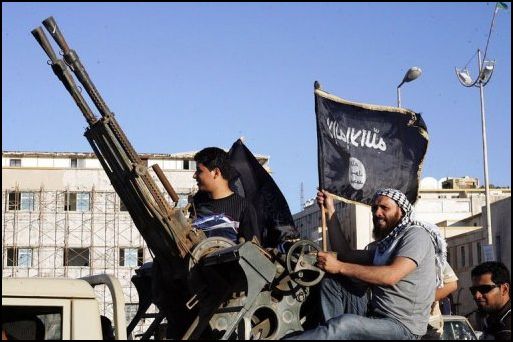 The US knows, and has confirmed, that organized Islamist groups are first and foremost fighting for power. These are groups which have previously fought in Libya, Syria and Yemen, and waged political battles in Egypt. Their ambitions will not stop at the borders of Saudi Arabia, or anywhere else.
The US also knows that the Saudi regime — whose system is similar to that which the Islamist organizations may establish in any Arab country — is not exactly the system they prefer. As these groups extend their sphere of control in the region, their desire to seize power in Saudi Arabia only grows.
The US knows that the generous aid provided by Saudi Arabia to these organizations, mostly in the form of money and weapons, largely aims to eliminate the threat these organizations pose, both towards Saudi Arabia and the Gulf region as a whole. This also applies to Qatar, the United Arab Emirates and Kuwait. However, the United States believes that the generosity of Saudi Arabia, among others, will not stop the advance of these organizations beyond Syria, Egypt, Libya, Yemen and Tunisia.
At the same time, the US is well aware that the ongoing war in Syria may persist, and might even end with the defeat of Islamist groups and their failure to seize power in Damascus.
 Over this particular point lies the hidden disagreement between the US and Saudi Arabia. The latter is a staunch believer in the Libyan scenario. Saudi Arabia sees no reason why the US cannot use NATO troops to end the ongoing conflict in Syria, rather than allowing it to persist or falter. On the other hand, the US believes that the Libyan combat landscape was very different and less rugged than that of the Syrian conflict. They cannot risk a US military or NATO intervention in Syria which might drag on for a long time and not achieve its goals.
In addition, there is another Saudi-US disagreement concerning the Syrian opposition and its varied positions regarding foreign military intervention. Some Syrian opposition organizations or groups welcome and call for foreign intervention, believing that it could conclusively end the war. Yet others are opposed to foreign intervention, and believe it would eliminate any chance of winning the support of the Syrian people against the regime.
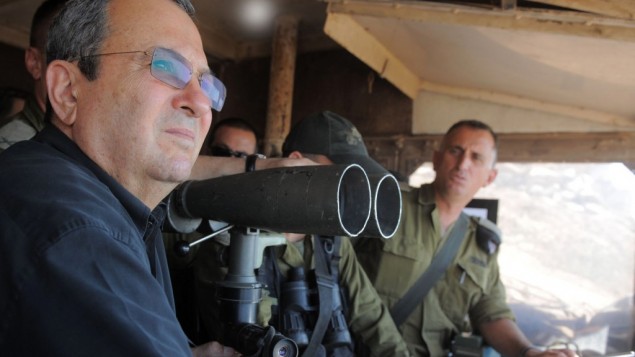 Israel has added another dimension to the situation. By this we mean Israel’s announcement, through its Defense Minister Ehud Barak, that it is planning to intervene in Syria for fear of chemical weapons falling into the hands of Syrian opposition groups. While this stance was met with enthusiasm from the US, it further worried the Saudis. This US enthusiasm at the idea of Israeli intervention is due to a US conviction that an Israeli role could help conclusively end the war in Syria.
 Saudi Arabia’s hesitation, however, comes from a realization that Israeli intervention in Syria would inflame the feelings of the Syrian people against the opposition and all forces that support them.
 There are a number of contentious issues related to current developments in Syria over which the US and Saudi Arabia disagree. Moreover, there is no doubt that the ruling regime in Saudi Arabia has left it up to the US to decide upon these issues and do as they please. However, Saudi Arabia is working hard to distance itself from issues upon which the US takes unilateral decisions. This is particularly evident in the bombing that took place in the Syrian national security headquarters in Damascus.
 This bombing resulted in the killing and wounding of a number of senior Syrian security chiefs. US officials were close to admitting that such a precise and accurate operation could not have been executed without direct assistance from the American side. This assistance is not limited to training and intelligence but included giving directions and specifying the time [for executing the operation]. Saudi Arabia has completely distanced itself and maintained silence over the operation in Syria, even with regard to the humanitarian aspect. This has led some US officials to distance themselves from "the killing," while maintaining that the operation is a huge blow to the Assad regime, and therefore should be welcomed.
Joseph Holliday, a former intelligence officer in the US Army who currently teaches at the Institute for the Study of War, said that the experience of Syrian dissidents in the use of explosive devices "comes in part from the expertise of Syrian insurgents who learned bomb-making while fighting US troops in eastern Iraq."
In this regard, according to Der Spiegel, the reason the Syrian opposition has not yet been able to carry out a major military operation is due to growing divisions within opposition groups, in addition to insurmountable disagreements between Islamist Jihadi militants and the majority of the Syrian population. The Islamist groups, which are being generously funded and equipped with advanced weaponry and equipment by the Gulf States, are holding firmly to the decision-making power.
Der Spiegel adds that "the Americans have spent money on the Muslim Brotherhood, particularly in countries [that have witnessed] the Arab spring. They believe that the Muslim Brotherhood will be the dominant force in the future."

The Saudis are certainly concerned about the thoughts of their US allies.
The question that haunts Saudi leaders is: What would the United States do if the Islamists (the Muslim Brotherhood in particular) unite against the Saudi regime, as part of their ongoing and diligent quest to seize power?
The Saudis have no doubt that the Islamists will try hard to convince the Americans that they will maintain their mutual alliance if they gain power in Saudi Arabia.
This means that the Muslim Brotherhood and their Salafist allies will pledge to the Americans to continue supplying them with oil from the whole Gulf region.
Such a pledge by Islamist organizations will not be harder than that made by the Egyptian Muslim Brotherhood to the Americans and Israelis to preserve the peace treaty signed by the regime of Anwar Sadat with Israel. This treaty was carefully protected by the regime of Hosni Mubarak for more than thirty years.
Here, one might say the Saudi regime is very similar to a regime that the Islamists, particularly the Muslim Brotherhood, may establish. Therefore, why replace the Saudi regime with a similar one?
The answer to this question is again the following: for Muslim groups, especially the Muslim Brotherhood, seizing power is a primary goal that precedes all others. For this reason, Saudi rulers fear that the Islamist opposition at home might revolt against them should they succeed, or even fail, in Syria.
The greatest concern for the Saudi rulers is what the United States would do if the Islamists, whom it supports, coalesce and become opposed to Saudi rule. Similarly, it can be said that the Islamist groups are haunted by the following question: How much longer will Islamist groups remain safe from being targeted by the Saudi regime?
 The answer to these questions is closely linked with a recent Saudi event. This event gained widespread attention in the US and the entire West, yet was of little interest to Arab regimes or media. I am referring to the recent announcement by the Kingdom of Saudi Arabia appointing Prince Bandar Bin Sultan as head of Saudi intelligence.
The importance of the Saudi decision is that Prince Bandar had previously been [put aside] and given an honorary position.
He had served as the President of the Saudi National Security Council, a position that is only symbolically important. However, he was suddenly chosen to be the head of Saudi intelligence. This decision indicates that the kingdom hopes to benefit from Bandar’s experience in the US, including his knowledge of US policies and decisions. The decision could actually mean that Saudi Arabia wants to predict the political intentions of the US regarding Saudi Arabia in the coming years. Prince Bandar occupied the post of Saudi ambassador to Washington from 1983 to 2005, the longest mandate of any ambassador, Arab or otherwise, to Washington. During the same period, the US ambassador to Riyadh was changed six times.
Prince Bandar is one of the kingdom's most knowledgeable and experienced figures in terms of US policies and objectives, especially in regard to the Arab region. He had the chance to make friends from the US ruling elite of both the Democratic and Republican parties. During his years in Washington, he became closely acquainted with all of those who occupied the post of director of the CIA.
The importance of the timing of the decision to appoint Bandar is perhaps exemplified best by what the Saudi political analyst Abdullah al-Shammari said:
"In these very hectic moments in Saudi foreign policy, we need Bandar bin Sultan. He is a volcano, and this is what we currently need."
According to Shammari, the current period is similar to the period in which Bandar served as Saudi ambassador to Washington, when the US and Saudi Arabia were allied in the war against the Soviets in Afghanistan.
Michael Stephen, a political analyst at the United Royal Services Institute, said,
"If they (Saudis) are looking to increase multilateral engagement on the Syrian issue, he’s their man.”
Ever since the start of what has been called the Arab Spring, developments reveal that the US has supported holistic change as part of its plans for the Arab region. In other words, the accuracy of US planning for a new policy in the region will be put to a tough test in the coming period. Also, Saudi Arabia’s ability to deal with surprising US shifts will be put to the test. This includes their ability to deal with the US moving from a position as an ally to an enemy...from their position as a supporter of the Kingdom of Saudi Arabia to a position of support for anti-Saudi Islamist groups. This is a possibility we cannot completely rule out.
 Uprooted Palestinian
The views expressed in this article are the sole responsibility of the author and do not necessarily reflect those of this Blog!
No comments:
Post a Comment