Uprooted Palestinians are at the heart of the conflict in the M.E Palestinians uprooted by force of arms. Yet faced immense difficulties have survived, kept alive their history and culture, passed keys of family homes in occupied Palestine from one generation to the next.
An emergency drill has been announced all over the apartheid Zionist entity, with the “Israeli” army preparing to repel a volley of some 230,000 missiles in any next war. The Home Front Command will also test several other scenarios in preparation for a hypothetical war.
The military institutions disclosed scenarios that would be tested through next week’s nationwide drill.
These scenarios include a full scale war with a simultaneous attack on several fronts, namely the Syrian Golan Heights, Gaza and Lebanon.
The “Israeli” military expects a possible 230,000 incoming ‘rockets’, more than a half of them most likely from an arsenal in the possession of Hizbullah. Some 95 percent of the projectiles are expected to be short-range [40-45 km] Grad missiles of various modifications and mortar shells.
Such munitions are equipped with around 10 kg of explosives. The remaining 5 percent of the projectiles are expected to be long-range.
According to the assessment, Hizbullah can fire up to 1,500 projectiles daily. Northern parts of the apartheid entity would fall under heavy shelling, although dozens of long-range projectiles could hit central regions daily.
The Home Front Command’s preparations feraed the fact that Hizbullah is obtaining more and more precision-guided rockets, and hundreds of unmanned aerial vehicles in possession of possible opponents are also being taken into account.
The worst case scenario involves a widespread evacuation of population from northern parts of Occupied Palestine. In such case 750,000 people would be relocated.
The U.S. is demanding the grounding of Syria’s air force but is resisting Russian demands that U.S.-armed rebels separate from Al Qaeda, a possible fatal flaw in the new cease-fire, writes Gareth Porter.
September 16, 2016 “Information Clearing House” – The new ceasefire agreement between Secretary of State John Kerry and Russian Foreign Minister Sergey Lavrov, which went into effect at noon Monday, has a new central compromise absent from the earlier ceasefire agreement that the same two men negotiated last February. But it isn’t clear that it will produce markedly different results.
The new agreement incorporates a U.S.-Russian bargain: the Syrian air force is prohibited from operating except under very specific circumstances in return for U.S.-Russian military cooperation against Al Qaeda and the Islamic State, also known as Daesh, ISIS or ISIL. That compromise could be a much stronger basis for an effective ceasefire, provided there is sufficient motivation to carry it out fully.
The question, however, is whether the Obama administration is willing to do what would certainly be necessary for the agreement to establish a longer-term ceasefire at the expense of Daesh and Al Qaeda.
In return for ending the Syrian air force’s operations, generally regarded as indiscriminate, and lifting the siege on the rebel-controlled sectors of Aleppo, the United States is supposed to ensure the end of the close military collaboration between the armed groups it supports and Al Qaeda, and join with Russian forces in weakening Al Qaeda.
The new bargain is actually a variant of a provision in the Feb. 27 ceasefire agreement: in return for Russian and Syrian restraints on bombing operations, the United States would prevail on its clients to separate themselves from their erstwhile Al Qaeda allies.
But that never happened. Instead the U.S.-supported groups not only declared publicly that they would not honor a “partial ceasefire” that excluded areas controlled by Al Qaeda’s affiliate, then known as Nusra Front, but joined with Nusra Front and its close ally, Ahrar al Sham, in a major open violation of the ceasefire by seizing strategic terrain south of Aleppo in early April.
As the Kerry-Lavrov negotiations on a ceasefire continued, Kerry’s State Department hinted that the U.S. was linking its willingness to pressure its Syrian military clients to separate themselves from Al Qaeda’s forces in the northwest to an unspecified Russian concession on the ceasefire that was still being negotiated.
It is now clear that what Kerry was pushing for was what the Obama administration characterized as the “grounding” of the Syrian air force in the current agreement.
Al Qaeda’s Ties
Now that it has gotten that concession from the Russians, the crucial question is what the Obama administration intends to do about the ties between its own military clients and Al Qaeda in Aleppo and elsewhere in the northwest.
Thus far the primary evidence available for answering that question is two letters from U.S. envoy to the Syrian opposition Michael Ratney to opposition groups backed by the United States. The first letter, sent on Sept. 3, after most of the Kerry-Lavrov agreement had already been hammered out, appears to have been aimed primarily at reassuring those Syrian armed groups.
As translated by al-Monitor, it asserted, “Russia will prevent regime planes from flying, and this means there will not be bombing by the regime of areas controlled by the opposition, regardless of who is present in the area, including areas in which Jabhat Fateh al Sham [the new name adopted by Al Qaeda’s Nusra Front] has a presence alongside other opposition factions.”
Ratney confirmed that the U.S. would in return “offer Russia coordination from our side to weaken al Qaeda.” But he also assured U.S. clients that their interests would be protected under the new agreement.
“[W]e believe this ceasefire should be stronger,” he wrote, “because it should prevent Russia and the regime from bombing the opposition and civilians under the pretext that its striking Jabhat al Nusra.”
The Ratney letter makes no reference to any requirement for the armed opposition to move away from their Al Qaeda allies or even terminate their military relationships, and thus implied that they need not do so.
But in a follow-up letter, undated but apparently sent on Sept. 10, following the completion of the new Kerry-Lavrov agreement, Ratney wrote, “We urge the rebels to distance themselves and cut all ties with Fateh of Sham, formerly Nusra Front, or there will be severe consequences.”
The difference between the two messages is obviously dramatic. That suggests that one of the last concessions made by Kerry in the Sept. 9 meeting with Lavrov may have been that a message would be sent to U.S. military clients with precisely such language.
The totality of the two letters from Ratney underlines the reluctance of the United States to present an ultimatum to its Syrian clients, no matter how clearly they are implicated in Al Qaeda operations against the ceasefire. Last spring, the State Department never publicly commented on the participation by the U.S.-supported armed groups in the Nusra Front offensive in violation of the ceasefire agreement, effectively providing political cover for it.
The decision by U.S.-supported armed groups in March to defy the ceasefire was taken in the knowledge that Turkey, Qatar and Saudi Arabia had agreed to resupply the Nusra Front-led commands in the northwest and had even provided shoulder-fired surface-to-air missiles to Nusra’s close ally Ahrar al Sham.
Turkey’s Dubious Role
Turkish President Recep Tayyip Erdogan’s recent shift in policy toward rapprochement with Russia and his talk of ending the war in Syria are fueled by determination to prevent Syrian Kurds from establishing a unified Kurdistan along the Turkish border.
The Wilson Center’s Henry Barkey, a leading specialist on Turkey, told a meeting sponsored by the Middle East Institute last week that Erdogan’s Syria policy is “90 percent about the Kurds.”
But Erdogan does not appear ready to pull the rug out from under Turkey’s client groups in Syria. In fact, Turkey suddenly dialed back its rhetorical shift on Syria in July just when the newly renamed Jabhat Fateh al Sham revealed for the first time that it was about to launch its major offensive for Aleppo.
The domestic political context of U.S. Syrian policy remains strongly hostile to any joint U.S. operations with Russia that could affect U.S.-supported anti-Assad clients, even though it is now generally acknowledged that those forces are “marbled” with troops of Al Qaeda’s franchise, especially in Aleppo.
During the spring and summer, Reuters, The Washington Post and other media outlets reported a string of complaints from the Pentagon and the CIA about Obama’s plans to reach an agreement with Russia on Syria that would commit the United States to cooperate against Al Qaeda’s Syrian franchise. These complaints argued that the Russians could not be trusted and that they intended to target U.S –supported groups in a proxy war.
The real reasons for these attacks on the negotiations with Russia, however, were more parochial. The Pentagon is determined to maintain the line that Russia is a dangerous threat and should be firmly opposed everywhere. The CIA’s clandestine service has long wanted a more aggressive program of military assistance for its Syrian clients, which would be a major CIA covert operation.
Thus, even though the new agreement calls for U.S. “coordination” with Russia of air strikes against Al Qaeda forces, the Obama administration can be expected to raise objections whenever it sees that a proposed operation would come too close to targets associated with its clients. Otherwise, more leaks from opponents of the agreement in the Pentagon and CIA – or even in the State Department – would surely follow.
Gareth Porter is an independent investigative journalist and winner of the 2012 Gellhorn Prize for journalism. He is the author of the newly published Manufactured Crisis: The Untold Story of the Iran Nuclear Scare.
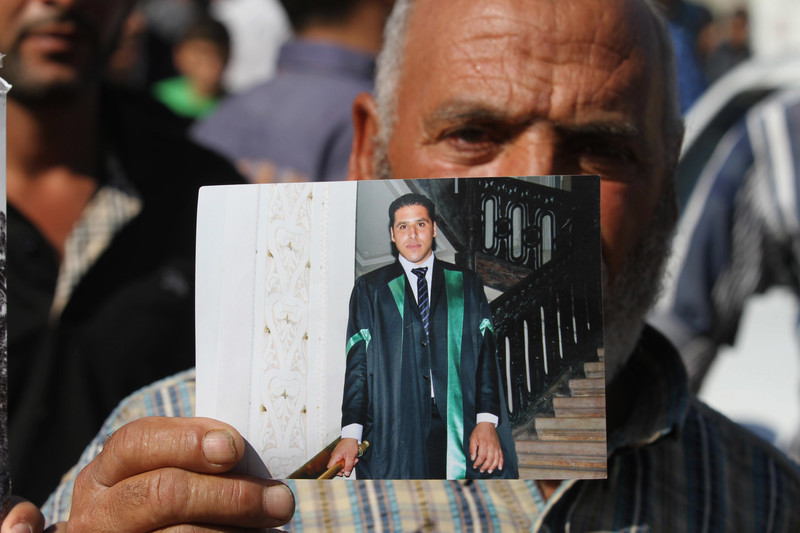
Palestinians hold photos of missing relatives during a Gaza City demonstration in September 2014 after a ship carrying hundreds of refugees, many of them from the Gaza, was intentionally capsized by traffickers as it made its way from Egypt to Italy. Mohammed AsadAPA images
Nour Hammad cannot accept that she may never see her brother Sajed again. “I’m still waiting for him to come back,” she said.
On 10 September 2014, more than 400 refugees from Gaza, Syria, Sudan and Egyptwere drowned en route to Italy. More than likely, Sajed was one of them, although his body has never been found.
His friends and family are keeping his memory alive. “We are always sending him messages on Facebook in the hope that he will read them one day,” said Nour.
The circumstances in which Sajed went missing were horrific.
An investigation by the Euro-Mediterranean Human Rights Monitor found that the Palestinians from Gaza who drowned in the incident had been promised a safe journey to Italy by smugglers of human beings. The smugglers charged each passenger from Gaza a few thousand dollars.
Once they left Gaza, the passengers were instructed to meet in the Egyptian city of Damietta. From there, 400 to 450 people, including approximately 100 children, were transported by bus to the coast.
On 6 September, the passengers were brought by small motorboats to a ship, which set sail later that evening. Just two hours into their voyage, the passengers were told they had to move to another boat.
On 8 September, the passengers were ordered to change boats yet again. By this time, food supplies were running out.
Two days later, the passengers were once again told that they would have to switch boats. Yet when they realized that the new vessel was less than 18 meters long, many of the passengers complained it was too small and refused to board.
Soon afterwards, another small boat appeared and began ramming the ship carrying Sajed and his fellow passengers. The attack caused severe damage to the ship, which began to sink.
Most of the passengers onboard the ship drowned soon after the sinking, though approximately 50 are thought to have survived for more than two days before succumbing to the waves and exhaustion. Eight Palestinians, two Syrians and one Egyptian survived the incident, which took place in international waters, roughly 300 nautical miles off the Maltese coast.
From horror to horror
Sajed’s family understands why he decided to travel towards Europe. Opportunities are severely restricted in Gaza, which has been under siege and closure since 2007 and has suffered three devastating Israeli military attacks since 2008.
“After the long years of siege and three wars, people want to have a way out,” Muhammad, Sajed’s brother, said. “They need an option to get out of this prison. The last war made many people think about finding opportunities so that their children could escape horror and death.”
Sajed had a small media production company which was bombed by Israel in August 2014.
He rented an office in al-Basha Tower, a high-rise building in Gaza City. The building was attacked late at night.
Sajed and his colleagues were not there at the time, but all of their firm’s equipment was destroyed.
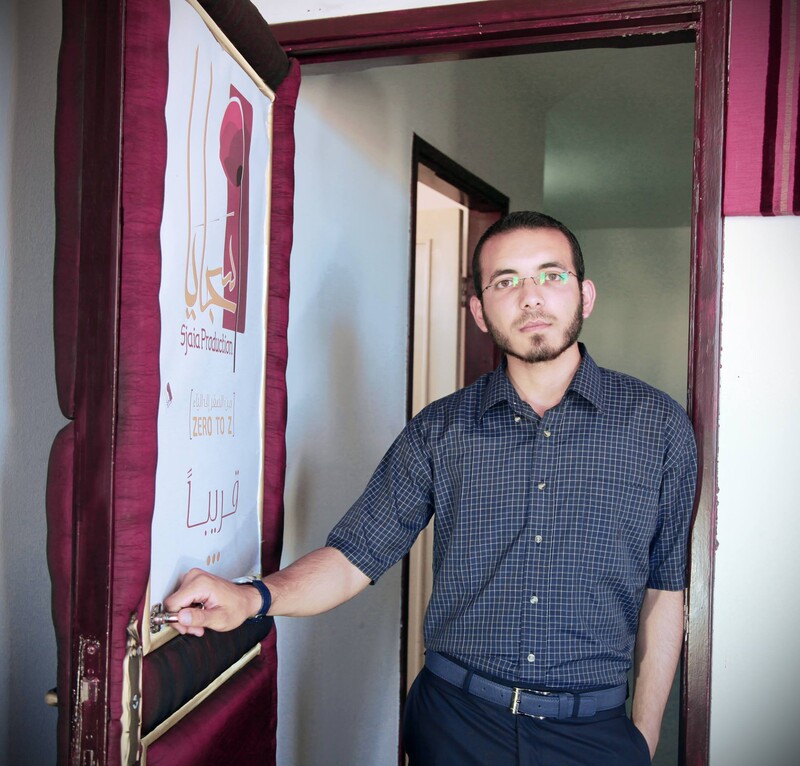
The company was known as Sjaia after the Arabic word for “qualities.” Established only a few months before it was bombed, Sajed had borrowed money in order to set it up.
Sajed Hammad at the Sjaia office in Gaza City before it was bombed. (Courtesy of Nour Hammad)
“Sajed always chased his dreams and was really enthusiastic about his work,” said his sister Nour.
“He was the one who gave us strength when we tried to console him for losing the company,” she added. “He was relieved that he and his friends weren’t in the office at the time. He was more worried about the people who lost their homes or members of their families.”
Following the attack, Sajed decided to travel to Turkey to pursue a masters program in media studies. He had obtained a scholarship to study there one year earlier. He had, however, previously been unable to take up the scholarship because of travel restrictions.
Sajed was determined to keep the company going, despite the attack. He planned to run it from Turkey and return to Gaza once his studies were completed.
Traveling to Turkey by a safe, legal route — via Egypt — was not possible. “The Egyptian authorities had denied entry to people from Gaza who held visas for Turkey, among other countries,” Nour said.
This meant that Sajed was unable to go through the Rafah crossing, which separates Gaza from Egypt. Instead, he had to enter Egypt through a tunnel.
And once in Egypt, he was not able to travel to Turkey. With little alternative, he embarked on the dangerous voyage towards Italy.
“Dying slowly”
Palestinians have continued to try and leave Gaza, despite the disasters and drownings.
Muhammad Lubad set off from Gaza just a few days after the sinking that likely claimed Sajed’s life.
Muhammad, an art graduate from al-Aqsa University in Gaza, resolved not to let fear stop him. After paying $2,000 to a people smuggler — contacted via a mutual friend — he took a seasickness tablet and boarded a boat in the Egyptian port city of Alexandria.
Muhammad left his wife and two children behind in Gaza. He was planning to sail towards Italy and find a way out of Gaza for his family once he arrived in Europe.
Before boarding the boat, Muhammad called his mother Amna. “I begged him to come back,” she recalled. “I had heard about the other boat which had sunk. Unfortunately, he would not listen. I kept crying until he asked me forgiveness and helped me to calm down.”
The boat on which Muhammad left Egypt was small. There were 15 other passengers onboard, mostly women and children.
The boat sailed for about an hour before it reached a fishing vessel. All of the boat’s passengers were transferred to that vessel, which was carrying a few hundred people. The vessel was alarmingly overcrowded.
“It was a mess,” said Muhammad. “We huddled together, barely able to find places to sit. A child near me was crying, a woman was ill. There was a man hugging his child tightly.”
The voyage lasted for days. At one point, the boat’s captain started shouting. “At that moment, we realized there was something wrong with the boat’s engine,” said Muhammad. “But the captain said that everything was under control.”
Although it could not sail properly, the boat remained at sea for several more days. Food became increasingly scarce.
“Nights were full of horror,” Muhammad said. “Children were frightened and crying. When you looked around, it was as if you were surrounded by dead people. Then in the mornings, the sunlight would be too strong. I became so dizzy that it was unbearable. It was really tiring. I tried my best to keep going by eating dates.”
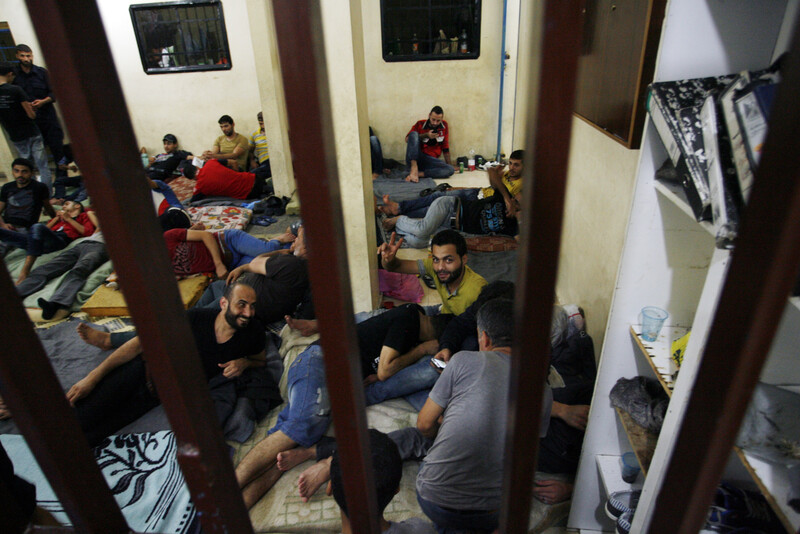
Palestinians sit in a police station at Rafah after their arrival to the Palestinian side of the crossing on 23 September. Egyptian naval forces arrested the group which were attempting to reach Europe, and instead sent them back to Gaza. Abed Rahim KhatibAPA images
About 10 days into the voyage, Muhammad heard someone shout, “My son is dying.”
Osama, a 4-year-old, had gone into a coma. Muhammad tried to help the boy’s family, but there was nothing he could do.
The boy died a day later. Muhammad helped Osama’s father wrap the child’s body in a white cloth before he was placed in a wooden box.
Eventually, the boat was surrounded by a number of vessels and by Egyptian maritime police who pointed guns at the passengers. They ordered the passengers to leave the boat one by one.
The passengers were brought to the coast and kept in a sports hall for a couple of days.
Then the passengers from Gaza, including Muhammad, were deported back to the Strip.
Amna, Muhammad’s mother, was hugely relieved. “When Muhammad called me and said that he was back, I came back to life once again,” she said. “I died every day that I didn’t hear from him.”
Muhammad is nonetheless still planning to leave. “I will travel when I have the opportunity to do so,” he said. “We’re dying slowly in Gaza.”
Rising above hardship
Some Palestinians have survived their dangerous journeys out of Gaza and arrived in Europe.
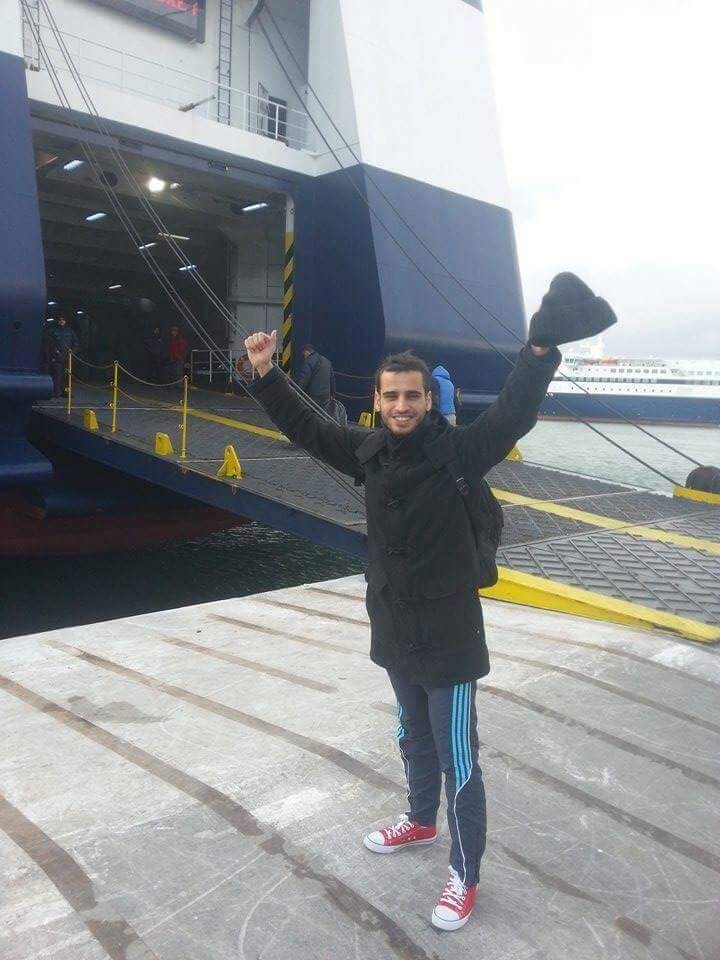
Abdel-Aziz Hamdouna now lives in Brussels, where he is hoping to establish a career as an artist. It took more than two weeks of traveling before he made it to the Belgian capital earlier this year.
Abdel-Aziz grew up in the Jabaliya refugee camp, north of Gaza City.
After leaving Gaza in February, he flew from Cairo to Istanbul. Unlike when Sajed set off, the Egyptian authorities were allowing people from Gaza to travel if they had Turkish visas.
From Istanbul, he and a few other young men traveled to Izmir, Turkey’s third-largest city.
As arranged, they met a people smuggler there. Each man paid the smuggler $1,000.
Then they boarded an inflatable boat. It sailed towards Greece, carrying approximately 25 people.
The crossing to a Greek island took a few hours and everyone landed safely.
In Greece, the authorities placed Abdel-Aziz in a refugee camp. There he was able to secure a document enabling him to travel by boat to Athens with Syrian refugees.
Abdel-Aziz recalled it was cold when he arrived. “I bought some food, water and clothes from one of the Syrian refugees who was in the camp where the Greek police put us,” he said.
Abdel-Aziz did not stay in the camp for long. When it was dark, he escaped by climbing over the camp’s fence. “I had a map to show me the way to Macedonia,” he recalled.
Abdel-Aziz walked for hours until he was too exhausted to go any farther. After lighting a fire to keep himself warm, he lay down on the ground and fell asleep.
Abdel-Aziz Hamdouna is one of the lucky ones to have made it safely to Europe. (Courtesy of Abdel-Aziz Hamdouna)
Day after day, Abdel-Aziz found enough strength to keep moving toward Macedonia. He met some young men from Algeria in a forest and they proceeded together. They eventually reached a military checkpoint on the Greek-Macedonian border after a few days.
It was not possible, however, for them to enter Macedonia. The authorities were only allowing Syrian refugees through. As a Palestinian, Abdel-Aziz lacked the right documentation.
Realizing that they had no chance of getting past the checkpoint, Abdel-Aziz and his Algerian friends turned back toward the forest. As they were walking, a police car started following them.
The young men ran until they reached a river, which they swam across despite the cold of the water.
The men had to walk through woodland again. They did so for another few days before coming across another Macedonian military checkpoint, Abdel-Aziz recalled. Hundreds of people were waiting at that crossing. He and his friends joined them.
The Macedonian forces, who have been known to use heavy-handed tactics at the border crossing, opened fire on the refugees.
Abdel-Aziz managed to run away, but became separated from his Algerian friends.
Alone and out of food, all he had to sustain himself was a bottle of water and some cigarettes.
As he tried to sleep one night, he was attacked by dogs. He escaped by climbing a tree.
Abdel-Aziz finally found a way into Macedonia with the help of a refugee family he had met.
“I first saw this family from afar,” he said. “They were among the refugees standing in a queue.”
Abdel-Aziz crossed Macedonia and entered into Serbia.
“I told one of the [Red Cross] staff that I could draw,” he said. “She agreed to pay for my ticket if I drew her portrait.”
He felt unwell on the train, but kept traveling until he reached Germany. Then he began the final leg of his journey — to Belgium. It involved walking, taking lifts in cars and sleeping in the restrooms of restaurants.
Safely there, Abdel-Aziz has a title for an art exhibition that he is hoping to organize about his journey and his experiences in Gaza. He wants to call it Phoenix.
The name seems apposite. Like so many refugees, he is determined to rise above hardship and oppression.
Hamza Abu Eltarabesh is a freelance journalist and writer from Gaza.
The Russian Aerospace Forces have eliminated 250 ISIS terrorists and 15 vehicles armed with machine guns near the Syrian city of Palmyra, the Russian Ministry of Defense reported on September 14.
Russian warplanes conducted airstrikes north of the city where a group of terrorists was preparing offensive on the Syrian army positions.
Photos of the Syrian S-200 air-defense system deployed in southern Syria appeared in pro-government social media accounts on September 14. According to reports, the same system was used against Israeli aircraft on September 13 when Syria claimed to down an Israeli drone and a warplane over the country. However, the claim of the Syrian military has not been confirmed with video or photo proofs.
On September 19, the Syrian Air Force will stop to carry out combat flights in accordance with terms of the US-Russian agreement on Syria, a senior US official said during a special briefing for press held on the phone on September 13. At the same time, the US side noted that in the current period, the Syrian Arab Air Force is still technically allowed to strike on Jabhat al-Nusra in Syria. After the joint US-Russian integration center will be created, new restrictions will come into force. Then the air force of the regime will not be able to strike on Jabhat al-Nusra.
The statement came amid reports that Russian and US defense officials even have not agreed a plan for military cooperation in Syria. According to Spokesman for the Pentagon, Peter Cook, the aim of recent discussions was to strengthen security measures to avoid incidents in the Syrian airspace. In this case, it’s hard to say when the US-Russian joint center will be de-facto launched.
Many people have wished me well and wished and wished me a safe journey. Some people have donated money. I am grateful for the best wishes, and the donations.
In many respects, we’re all in this together. The plight of Syria and Syrians is entwined with us as well. If the West and its proxies successfully destroy Syria as they did to so many other countries, including Iraq, and Libya, and Afghanistan, then the next country on the list will be Iran and so on.
But the mercenary terrorists are losing. I suspect that now the diplomats are looking for a way to help the US save face and to usher the West diplomatically out the door. I hope this is the case. The carnage in the Middle East, especially after the 911 false flag, is testament to the fact that a unipolar world is too dangerous for humanity.
Author and Anti-war activist Mark Taliano
Listening to diplomats can be confusing though. The Dirty War of aggression against Syria was planned well in advance. The lies and diplomatic scripts were wrapped around the invasion plans once the plans were complete. Intelligence agencies decided well in advance to use so-called “Islamic Militants” to fight the war. Saudi Arabia, a close ally of the West, is an incubator for these mercenaries, and Israel needs them as well to create their dream of a Greater Israel.
The story of the White/al Qaeda Helmets is particularly brazen. The White Helmets are a creation of Purpose Inc., and they, like all the fake NGOs, are embedded with the terrorists, and serve to advance the terrorist cause of regime change. Yet it is this same group that is vying for a Nobel Peace Prize. If they win their award, it will be further testament to the contamination of the Western mind-set, to the success of fake NGOs, and to the effectiveness of Public Relations “perception managers”.
All of the different names for terrorist groups are part of the psychological operation. Syrians trying to live their lives refer to them all as “Daesch”. Syrian writer Afraa Dagher, for instance, calls ISIS fiction. She’s right. It is well-documented that there are not and that there never were “moderate” terrorists.
Al Qaeda is the designated scape-goat to mislead the Western public, and to serve as a pretext to invade the world in a “war on terrorism”, which is itself a war for terrorism (since terrorists are the Western assets).
In Syria, the designated enemies are al Qaeda, ISIS etc. when in reality they are the “strategic assets”. This is well-documented using admissions and documents from Western sources.
It is also well-documented that the West has a long history of creating, using, and supporting un-Islamic “Islamic Militants”. Al Qaeda were proxies for the West in Afghanistan, in Bosnia, in Libya, in Iraq and now in Syria. The West calls them al Nursra Front in Syria. The West uses these proxies as ground troops with a view to maintaining “plausible deniability” and distancing themselves from their assets’ crimes. The West has always claimed that it fights for freedom and democracy, and now for “humanitarian” reasons — but they are all Big Lies, and they always were. The West is trying to destroy Syria because Syria is deemed to be an impediment to the West’s global hegemony and its projects for parasitical corporate globalization. Public assets, including free education, free public healthcare, and values such as equality, and democracy, are enemies to corporate globalists.
This puts me in a somewhat awkward position in Syria. Canada’s unspoken allies are the terrorists – all of them – so informed Syrians who haven’t read my articles may resent the Canadian flags on my luggage. Terrorists, on the other hand, might welcome the sight of my flags, since the Canadian government supports the terrorists, but I have no intention to befriend terrorists operating in Syria, and every intention to befriend those who oppose the terrorists — the Canadian government doesn’t represent my views on this matter.
The original source of this article is Global Research
منذ انطلاق المفاوضات الأميركية ــ الروسية الأخيرة، كان القلق ينتاب الجميع.
الولايات المتحدة الاميركية لم تعد تثق بجميع حلفائها على الارض، وهي تجاوزت مستوى التوبيخ الى حدود إملاء القرارات عليهم، حتى ولو لم يعجبهم الأمر، وصولاً الى قول دبلوماسي بريطاني إن الأميركيين قالوا لمسؤول خليجي يحتج على التفاهم مع الروس: لقد أخذتم أكثر مما تحتاجون إليه من وقت وإمكانات، وها هو بشار الاسد يتجول في بلاده، وإيران صارت في قلب سوريا، والروس عادوا الى الشرق الأوسط! روسيا لديها قلق من نوع مختلف.
هي قررت عن وعي كامل الدخول طرفاً مباشراً في الأزمة، لكنها لا تريد أزمة مفتوحة ومن دون أفق. كذلك فإن تجربة ما يقارب عاماً من العمل العسكري والميداني، أسقطت ما تبقى من نظريات حول فكرة الحسم العسكري. وتبين لموسكو أكثر من ذي قبل واقع الدولة السورية ومؤسساتها وتوازنات الميدان وتعقيداته.
تركيا متهمة من قبل كثيرين بأن «محاولة الانقلاب» فيها لم تكن جدية، وأن الاستخبارات العسكرية التركية كانت على علم، وكانت تدرك حجم المتورطين فيه، لكن الرئيس رجب طيب أردوغان فضّل هذا السيناريو الذي يسمح له بتعديلات جوهرية على الادارة الداخلية، العسكرية والامنية والسياسية والاقتصادية أيضاً، وأن ما حصل يعطيه زخماً لقرار بالتحول في ملف سوريا كان قد قرره قبل مدة. ويروي الروس والإيرانيون أن رئيس الحكومة السابق أحمد داوود أوغلو، وقبل أن يغادر منصبه بطلب من أردوغان، تولى تنفيذ مهمة أخيرة، إذ طلب اليه العمل على «تنظيف الملف» السوري. قصد داوود أوغلو موسكو وطهران، يرافقه رئيس المخابرات حقان فيدان. وقال هناك كلاماً واضحاً: نريد الحل، نريد حفظ مصالحنا، ولم نعد نهتم لبقاء الأسد أو رحيله. لكننا لا نريد التورط في الأمر أكثر.
بعد إزاحة داوود أوغلو ووصول بن علي يلدريم، بادر الأخير الى التواصل مع الجانبين الروسي والايراني قائلاً: ما نقله اليكم سلفي لا يزال سارياً. ثم تحدث رئيس الحكومة الجديد عن أنه غير متورط شخصياً كداوود أوغلو في مواقف حادة، وبإمكانه البدء بعملية التسريب التي تشير الى قرار بلاده تعديل الوجهة في سوريا.
قطر ليس لديها حول ولا قوة. قيادتها لا تزال تعيش هاجس الاستنفار السعودي الذي يكبّلها، وهي تجد في أنقرة سلم النجاة. وقد بادر أمير قطر الى إبلاغ زوار عرب بأن حكومته سوف تقوم بوساطة مع روسيا وإيران لأجل ترتيب اتفاق ينهي الحرب في سوريا. لكن أمير قطر تقدم في البحث، طارحاً مشروعاً لحل يرضي المعارضة السورية، ومقترحاً تشكيل مجلس حكم انتقالي في سوريا، يرأسه قاض مستقل مقبول من الطرفين، ويضم أربعة أعضاء يمثلون النظام والمعارضة مناصفة، وأن الأسد يبقى لمدة زمنية يحددها المجلس الانتقالي.
طبعاً، لم يستمع أحد الى مقترح قطر. حتى الأتراك أنفسهم نأوا بأنفسهم عن هذه التصورات. وللمرة الأولى يسمع القطريون، كما أطراف خليجية، نبرة قلق تركية من المجموعات المتشددة الموجودة قرب الحدود مع تركيا، وأن هذه الجماعات قد تنقلب إذا ما وجدت الفرصة مناسبة، إضافة الى كون أنقرة أوضحت الى من يهمه الامر، أن الهاجس الكردي عاد ليحتل الصدارة.
في المقلب الآخر، لم يبق غير السعودية في دائرة التوتر الأقصى. خسائرها في العراق تتجاوز ما توقعته. وفي اليمن خشية جدية من إقدام أنصار الله على احتلال نجران والتقدم صوب الطرقات الدولية التي تقود الى جدة والى الرياض. ثم جاء إعلان المجلس الرئاسي في اليمن ليفتح الباب أمام مستوى جديد من التنسيق بين أنصار الله والرئيس السابق على عبدالله صالح، كانت أبرز إشاراته فتح صالح لمستودعات الصواريخ الباليستية التي يجرى تطويرها وتحديثها، كذلك جرى استخدام بعضها لقصف مناطق جديدة في العمق السعودي. أما في سوريا، فلم يبق للسعودية سوى بعض المجموعات المنهكة في جنوب سوريا وجنوب دمشق، ولا تملك الادعاء أنها تقدر على قلب الطاولة.
من الجانب الآخر، لا تتصرف إيران وحزب الله على أساس أن الامور سهلة. خبرة خمس سنوات من القتال في سوريا تتيح للجانبين ملاحظة التعب والإعياء اللذين أصابا سوريا وأصابا أيضاً الدولة السورية. ورغم أن القرار حاسم وواضح من جانب إيران والحزب بالوقوف الى جانب الأسد مهما كانت الكلفة، ومنع أي إشارة الى مستقبله السياسي، فإن لهذين الطرفين حسابات تتعلق أيضاً بما يجري في المنطقة، انطلاقاً من ترابط الجبهات. وبعد التثبت من إفشال عملية إسقاط النظام، وتأمين نقاط دفاع قوية ومتقدمة، وتعرض المشروع الآخر للإنهاك، فإن إيران والحزب لا يمانعان السير نحو تهدئة تتيح حلاً سياسياً. ويعرف الجانبان أنه في ظروف سوريا والمنطقة اليوم، ليس هناك من إمكانية لفرض حل لا يناسب مصلحة النظام أو حتى مصالحهما في سوريا.
أضف الى ذلك، فإن حزب الله دخل في مرحلة الإعداد لاحتمال حصول مواجهة جنوب سوريا، خصوصاً بعد ورود معلومات عن نية السعودية، بالتعاون مع الاميركيين والفرنسيين والاردنيين، إطلاق عملية في الجنوب تعويضاً عن خسائر الشمال. وفي هذه الحالة، يقرأ الحزب جيداً الدور الاسرائيلي، خصوصاً أن أطراف غرفة الموك لا يمانعون، بل يفضّلون لو أن إسرائيل تتورط في الأزمة وتساعد على ضرب قواعد ومقار قوات النظام وحلفائه. وهو ما استدعى استراتيجيات من النوع الذي يمهّد لخطوة كالتي قام بها الجيش السوري بالأمس، حيث أعلن نيته التصدي لأي عدوان إسرائيلي.
والى جانب حسابات اللاعبين الخارجيين، فإن الحساب الأكبر يتصل بالأزمة التي يعاني منها الجمهور في سوريا، والتي تفرض التصرف بطريقة تتيح تجنّب إراقة المزيد من الدماء. وبمعزل عن أي نقاش حول مستقبل الحل السياسي وكيفية إنجازه، فإن وقفاً لإطلاق النار، وإتاحة الفرصة لاستعادة التواصل والهدوء وبعض مظاهر الحياة، يمثلان الخدمة الأكبر للشعب السوري المنهك، علماً بأن في جانب النظام من لا يريد تكرار تجربة «هدنة شباط» التي انتهت الى إعادة تجهيز الإرهابيين للقيام بمزيد من أعمال القتل والتدمير.
غداً: تركيا والتنسيق وملفات حلب
سوريا وهدنة أيلول ـ 2: كيف يتغيّر الأتراك… ولماذا ترفض أميركا نشر بنود الاتفاق؟
مكن لمن يرغب، أن يذهب إلى أبعد الحدود في توصيف الموقف التركي. لكن لمن يريد الامر ببساطة شديدة، يمكن التوضيح أن حكومة رجب طيب اردوغان، ومنذ عام 2011، سعت بكل ما تملك من قوة إلى الامساك بكل سوريا.
فاوضت بشار الأسد على إدخال حلفائها من الإخوان المسلمين في دائرة القرار، ثم أطلقت العنان لكل قدراتها الامنية والعسكرية والاعلامية واللوجستية، لتوفير رعاية مباشرة لعشرات المجموعات المسلحة، قبل أن تتبلور الأطر العسكرية في شكلها الحالي. تغاضى الاتراك عن نموّ أكثر المجموعات تشدداً، ما دام الهدف هو إسقاط الأسد. ولكن، بعد خمس سنوات، أقرّت تركيا أردوغان، غصباً أو طوعاً لا فرق، بأن المهمة لم تتحقق… وأن الأسد نفسه لا يزال يتمتع بدعم قسم لا بأس به من الشعب السوري، وأن حلفاءه في لبنان والعراق وإيران، ثم روسيا، يعطون الأدلة يوماً بعد آخر على أنهم لن يتركوه يسقط، بل هم فعلوا أكثر من ذلك في خلال سنوات القتال. حتى وصل الامر الى تشكّل اقتناع لدى أنقرة بأن المجموعات الحليفة لها داخل سوريا ليست قادرة وغير مؤهلة، لا سياسياً ولا عسكرياً ولا غير ذلك، للقيام بالمهمة.
طبعاً، يتصرف الاتراك بواقعية كبيرة. لا يوبّخون المعارضة السورية كما تفعل القيادات القطرية والسعودية والإماراتية والاردنية، التي باتت تخصّص نصف حديثها عن سوريا لشتم المعارضين المتلهين بالأموال والنفوذ، فقط كي تلقي عليهم مسؤولية الفشل.
في أنقرة، يتصرف الجميع وفق منظور مختلف حيث الحسابات المباشرة، السياسية والعسكرية والامنية والاقتصادية، لا تقول إن مشروع إسقاط الأسد قد فشل فحسب، بل إن الازمات تنعكس سلباً، وبقوة، على تركيا. فها هم الاكراد يتقدمون، بدعم سوري – إيراني – روسي، أو أميركي – عراقي. وهم باتوا على وشك إقامة حزامهم الذي يمتد على قسم كبير من الحدود التركية – السورية. وهو عنوان يكفي لقلب كل المفاهيم لدى حكام أنقرة. فكيف إذا أضيفت اليه الأزمة مع روسيا وإيران والعراق، وانعكاساتها الاقتصادية والسياسية المباشرة على تركيا؟ كذلك فإن هناك عنصراً آخر، يتمثل في الاجواء الداخلية، حيث توسعت دائرة المعترضين على السياسة المتبعة تجاه سوريا، وصار الأمر محل نقاش حتى داخل دوائر الحزب الحاكم، وليس بين معارضيه فقط. وبدأت حكومة أردوغان تشعر بأن تركيا لن تكون بمنأى عن الفرز الطائفي.
وحتى بعد انقلاب 15 تموز، ظهرت لاحقاً عناوين خافتة، عن قلق من كون جماعات طائفية عرقية أيّدت ضمناً الانقلاب، ليس حبّاً بالذين يقفون خلفه… لكن كرهاً بحكومة أردوغان وحزبه.
كل ذلك جعل تركيا تقترب من لحظة اتخاذ قرار له بعده الاستراتيجي. ومهما جرى الحديث عن مصالح هنا أو هناك، وأن أنقرة تحاول كسب الوقت لحصر الخسائر، إلا أن التحول حصل: لم يعد الهدف الإمساك بسوريا، بل الإمساك بجزء منها. ولم يعد الهدف ربط نزاع من حلفاء الأسد، بل تسوية معهم في المنطقة. وكل ذلك دفع الى ما حصل مؤخراً. وفي هذا السياق، بدأت الرحلة التركية الجديدة.
صحيح أن تقاطعاً كبيراً للمصالح نشأ بين تركيا وإيران والعراق وحكومة الأسد، حيال رفض الدولة أو الكانتون الكردي. وهذا تقاطع كاف لبلورة أشكال من التعاون. لكن الجديد أن تركيا لم تعد تثق بأن الغرب سيحفظ لها مصالحها. وها هي تشاهد الاميركيين، ومعهم الأوروبيون، يدعمون التمدد الكردي. فصار لزاماً عليها القيام بأمر عملي. وتركيا تدرك أنها غير قادرة على القيام بخطوة من شأنها أن تضعها في مواجهة مع الاميركيين، ولا على إعادة تسخين جبهتها مع إيران وروسيا. وهذا ما دفعها الى ترتيب «إطار تسوية»، مكّنها من الحصول على «غضّ طرف» للقيام بعملية عسكرية تعطل بموجبها عملية التمدد الكردي، لكن من دون أن توجه ضربة الى مصالح روسيا وإيران، وحتى إلى النظام في سوريا. وهو ما يعني عملياً أن المقايضة الممكنة هي أن تركيا حصلت على موافقة ضمنية من جانب إيران وروسيا، وحتى الولايات المتحدة، لتحصيل ضماناتها الحدودية بيدها، مقابل أن لا تكون هناك أي خطوة إضافية يمكن أن تؤثر على المصالح الاستراتيجية لبقية الأطراف. كيف يمكن أن يتحقق ذلك؟
يمكن من خلال وضع سقف زمني، وإطار جغرافي للعملية العسكرية، بما يمنع قيام كانتون كردي. ويكون ممكناً، من خلال عملية لا توجب ضرب الفصائل المسلحة الحليفة للولايات المتحدة. ويكون ممكناً، من خلال عدم خلق قواعد اشتباك جديدة تؤثر على حركة السلاح الروسي جواً وبحراً وحتى على الأرض. ويكون ممكناً من خلال ضبط معيّن للحدود التركية ــ السورية، بما لا يجعل التدخل التركي عائقاً أمام المشروع السوري ــ الإيراني ــ الروسي لاستعادة الدولة السورية للسيطرة على حلب وأريافها الشرقية والشمالية والجنوبية، على أن تبقي الارياف الغربية محل نزاع يصعب على أحد توقع نهايته من دون حل سياسي.
على هذا الوقع، انتقلت المفاوضات الروسية – الاميركية حول سوريا الى مستوى جديد. وإصرار الولايات المتحدة على عدم كشف تفاصيل التفاهم مع الروس، ليس هدفه حمايه الاتفاق، بل عدم الظهور بمظهر من هو مستعد لبيع عدد غير قليل من حلفائه. ويكفي أن ينشر الروس تفاصيل الخرائط العسكرية للمناطق الواقعة تحت سيطرة المسلحين، حتى يكتشف العالم أن «جبهة النصرة» هي الطرف الأكثر نفوذاً. وبالتالي فإن مواجهة هذا الفريق، ومعه المجموعات المتصلة به، ستدفع بالولايات المتحدة إلى أن تكون شريكاً مع روسيا وإيران والنظام السوري في تنفيذ المهمات العسكرية والأمنية. حتى التفاصيل الخاصة بنقاط المراقبة والمعابر وكيفية التصرف، ستكشف أن الجانب السوري ــ الروسي ــ الإيراني تعلم من هدنة شباط الماضية، ولم يوقّع على اتفاق عام من دون الدخول في تفاصيل مملة. وهو الأمر الذي أدركه الاميركيون خلال ساعات التفاوض الشاقة، وخصوصاً في المراحل الاخيرة، عندما كان الروس يغادرون الاجتماعات للتشاور مع السوريين والايرانيين حول تفاصيل كثيرة. ولم يكن ممكناً لروسيا السير في أي اتفاق لا يحظى بموافقة دمشق.
ومع ذلك، فإن أحداً من جبهة حلفاء سوريا لا يتعامل مع الامر كأنّه إنجاز كبير. بل إن الروس، هذه المرة، وقبل الإيرانيين والسوريين، لا يثقون بالجانب الاميركي. وهم قلقون بصورة دائمة من عدم ضمان الولايات المتحدة لتنفيذ الاتفاق. وصار الروس يستمعون جيداً الى الجانب الايراني الذي لديه مسلسلات طويلة حول الغدر الاميركي في العراق وسوريا واليمن وأفغانستان، وحتى بما خصّ الاتفاق النووي.
كذلك فإن جبهة حلفاء سوريا لا تلغي احتمال أن يلجأ الاتراك الى تجاوز ما هو متفق عليه. لذلك تتردد بقوة عبارة «الخطوط الحمر» خلال التواصل المباشر بين المسؤولين الروس والايرانيين من جهة والمسؤولين الاتراك من جهة ثانية. والأهم من كل ذلك أنّ الولايات المتحدة حاولت، على هامش هذه المفاوضات، فتح ثغرة للتواصل المباشر مع الايرانيين، وهو ما جاء عليه الرد سلبياً وبصور قاطعة: اذهبوا وتحدثوا مع الروس، أو اذهبوا وفاوضوا الأسد مباشرة. وغير ذلك، يفهم الاميركيون، ومن خلالهم حكام الخليج، أن إيران التي رفضت ضمّ ملفات المنطقة الى ملف المفاوضات النووية، لن تقحم أي ملف آخر في تفاصيل الملف السوري.
المهم أن الهدنة اليوم تمثّل اختباراً جدياً للجانبين التركي والاميركي. أما من جانب دمشق والحلفاء، فالاقتناع كبير بأنه في حال حصلت عملية غدر جديدة، فإن برنامج المواجهة الشاملة سيظل الممر الإلزامي نحو استعادة كامل سوريا.
On November 27, 2015, “Israel” opened its first diplomatic mission in the United Arab Emirates [UAE]. “Israel’s” diplomatic outreach to the UAE gained widespread international attention, as the UAE monarchy has officially refused to recognize “Israel’s” right to exist. “Israeli” citizens are forbidden to travel to the UAE, with occasional exceptions being granted to athletes in international sporting competitions.
“Israel’s” diplomatic overtures towards Abu Dhabi have been followed by other conciliatory gestures towards the Gulf Cooperation Council [GCC] states. “Israeli” officials have engaged in covert dialogues with their Saudi counterparts on containing Iran. Qatar has also tried to revive unofficial diplomatic ties with “Israel” that were severed following the 2008-09 “Israeli” airstrikes on the Gaza Strip.
The expansion of “Israel”-GCC “security” cooperation can be explained by the GCC’s declining concern about Palestine and Saudi Arabia’s desire to import sophisticated “Israeli” military technology. This growth in informal cooperation has had profound implications for “Israel’s” security and the geopolitical power balance in the Middle East.
How Declining GCC Interest in Palestine Has Strengthened “Israel”-GCC Ties
Since the 1967 Arab-“Israeli” war, “Israeli” policymakers have used pledges to compromise on Palestinian self-determination to neutralize the so-called threat Arab states pose to “Israel’s” “security”.
“Israeli” diplomats have used the 1994 normalization of relations with Jordan as a precedent for subsequent outreaches to the Arab League. The Jordanian monarchy’s recognition of “Israel” was triggered by Amman’s concern that Jordan’s interests in Palestine would be excluded during the implementation of the 1993 Oslo Accords.
The thaw in “Israel”-Jordan relations proved to be an exceptional outcome. The failure of “Israeli” policymakers to negotiate a workable “peace settlement” with the Palestinian Authority [PA] prevented a thaw in “Israel”-GCC relations.
GCC countries have also intensely criticized “Israeli” airstrikes in the Gaza Strip. In response to the 2008-09 “Israeli” War on Gaza, Saudi Arabia urged the United States to militarily intervene to stop “Israeli” aggression. Qatar suspended informal diplomatic relations with “Israel.” The UAE’s Dubai Emirate cancelled its New Year’s celebrations in a show of solidarity with Gaza.
Even though Qatar publicly sponsors Hamas, and Saudi Arabia provides extensive financial assistance to Palestinian organizations, the GCC’s support for the Palestinian cause has become palpably less enthusiastic in recent years. GCC business leaders have tacitly displayed their frustration with PA corruption.
UAE officials have become increasingly circumspect about Hamas’s Muslim Brotherhood [MB] linkages, as they view an MB government as a gateway for Iranian influence. The GCC’s continued patronage of “Israel’s” strongest Arab ally and the MB’s most strident opponent, Egyptian President Abdel Fattah el-Sisi, indicate that the GCC consensus on Palestine has shifted dramatically in recent years.
As progress towards a “peaceful” resolution to the “Israel”-Palestine conflict has stagnated, the GCC’s assistance to Palestinian nationalist movements has become increasingly tactical in nature. Saudi Arabia has exploited the breakdown in the Hamas-Iran relationship over the Syrian conflict.
Riyadh has also reached out to Fatah to counter PA President Mahmoud Abbas’s increasingly cordial relationship with Iranian opposition factions. These aid provisions demonstrate that Saudi policymakers have made containing Iran a greater priority than creating a viable Palestinian state.
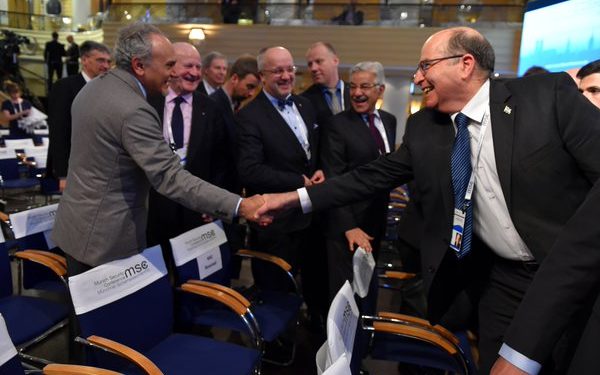
“Israel’s” soft power in the Middle East has been bolstered considerably by strains in the GCC-Palestine relationship. Even though representatives of the Kuwaiti and Bahraini monarchies expressed solidarity with Palestinian nationalists at the July 25 Arab League summit in Mauritania, the absence of Saudi Arabia’s King Salman was a striking demonstration of the declining importance of Palestine to GCC countries.
The Gulf monarchies have also tacitly encouraged Hamas to soften its militant opposition to “Israel’s” occupation of the Palestinian territories. “Israel” has encouraged supervised dialogues between Hamas officials and their GCC patrons to ensure that the Palestinian movement embraces a moderate course in the years to come. In the eyes of “Israeli” policymakers, the increased reluctance of GCC leaders to antagonize “Israel” demonstrates that the “Israel”-GCC anti-Iran axis is becoming a durable feature of the Middle Eastern geopolitical arena.
Economic and “Security” Cooperation Between “Israel” and the GCC
The declining importance of the Palestinian conflict as a wedge issue between “Israel” and the GCC has caused the Gulf monarchies to engage with “Israel” in an increasingly pragmatic way. Saudi Arabia has developed clandestine business deals with “Israeli” companies in recent years, even though Riyadh officially maintains a stringent boycott on “Israeli” goods.
To circumvent the trade boycott, “Israeli” goods have been shipped to Saudi Arabia under the purview of foreign companies. This circumvention has allowed “Israeli” IT products and irrigation technology to enter Saudi markets.
“Israel” has also made progress towards expanded economic cooperation with Qatar. Business elites in Doha have covertly expressed interest in “Israeli” high-tech products, which have typically been exported to India and Eastern Europe.
The Qatari monarchy believes that access to these products could convince Qatari engineers who study from foreign universities to return to Qatar after graduation.
Some “Israeli” business elites have embraced GCC economic overtures, as they believe that deeper informal engagement with Saudi Arabia, the UAE and Qatar will prevent “Israeli” economic isolation. The so-called “Israeli” Peace Initiative, founded by London-based “Israeli” billionaire Idan Ofer, has embraced economic deals with the GCC bloc as a gateway to lasting “peace” in the Middle East.
Even though the GCC bloc officially regards “Israel” as a security threat, the Gulf monarchies have greatly expanded their intelligence cooperation with the “Israeli” military.GCC officials have signed covert deals with the “Israeli” war contractors to gain access to the Zionist army’s prized military technology.
In 2011, “Israeli” companies sold an estimated $300 million of military technology to the UAE. The Emirati government used “Israeli” military technology to secure the UAE’s oil wells. “Israeli” media reports have also claimed that the “Israeli” army has offered Saudi Arabia Iron Dome military technology to “defend” Saudi territory from Yemeni rocket launches.
Small-scale provisions of military technology and security assistance by “Israeli” companies to the GCC bloc have provided the foundations for expanded “Israel”-GCC anti-Iran military cooperation.
In 2009, Saudi Arabia allegedly tested its air power to evaluate “Israel’s” ability to use Saudi territory for a military strike on Iran’s nuclear facilities. During a June 2015 Council of Foreign Relations event in Washington, representatives of “Israel” and Saudi Arabia revealed covert diplomatic meetings between the two sides over Iran’s nuclear ambitions.
These dialogues have surprising public support within Saudi Arabia. The Associated Press reported in 2015 that 53% of Saudis view Iran as Saudi Arabia’s primary adversary, compared to the 18% of Saudis who viewed “Israel” as Saudi Arabia’s biggest enemy. The amelioration of the Saudi public’s belligerent hostility towards “Israel” has also translated into closer diplomatic linkages.
“Israel” supported Egypt’s handover of two Red Sea islands to Saudi Arabia in April 2016.
The “Israeli” war ministry confirmed that Riyadh had given “Israeli” policymakers written assurances of the continued safety of the Straits of Tiran. As the Saudi monarchy’s domestic legitimacy depends on continuing Riyadh’s existential struggle against Iran, King Salman is likely to make similar diplomatic compromises to “Israeli” interests in the years to come.
“Israel’s” strengthened economic and security cooperation with the GCC bloc is closely related to the GCC’s growing indifference to the situation in Palestine, and Riyadh’s single-minded desire to undercut Iranian influence in the Middle East. Even though GCC countries are unlikely to recognize “Israel’s” right to exist, informal “Jerusalem”-Riyadh cooperation is likely to continue for the foreseeable future.
As the United States continues its normalization efforts towards Iran, Washington needs to pay close attention to the scope and nature of “Israel”-Saudi Arabia collusion in the Middle East.
Kabbalistic Balance
-
Kabbalistic Balance August 6 2026 ___________________________________ More
Vids! +BN Vids Archive! HERE! ___________________________________ Support
The Br...
Report on Beth Israel vigil 07-04-26
-
*1A Rights under combined attack from local government plus media*
Ann Arbor City Council is at it again. Right before the long 4th of July
weekend, they ...
-
Hello all,
It is with great sadness that I share with you the passing of our beloved
sister, Mother, and Grandmother, the individual that you all knew ...
Best Horror Podcast
-
Best Horror Podcast Introduction: Horror podcasts […]
The post Best Horror Podcast appeared first on Copper Shock Horror Podcast.
Ikhras Endorses Muntadhar Al-Zaidi
-
“Oh parties of banditry and sectarianism and corruption, we have come and
our goal is to destroy you.” Ikhras formally endorses Muntadhar al-Zaidi,
Iraqi j...
Prince Charles: Foreign Jews behind bloodshed in ME
-
In May, 2017, British Crown Prince Charles declined an invitation from
Zionist entity’s president Reuven Rivlin‘s to attend the 100th anniversary
of the no...
Palestinian Women – One for All, All for One
-
Honouring All Palestinian Women by Honouring Three: Hanin Zoabi, Ahed
Tamimi, Samah Sabawi Vacy Vlazna “Palestinian women have always stood side
by side ...
US’s Saudi Oil Deal from Win-Win to Mega-Lose
-
By F. William Engdahl Who would’ve thought it would come to this? Certainly
not the Obama Administration, and their brilliant geo-political think-tank
neo-...
-
*Mordechai Vanunu wins human rights prize of Brazilian Press Association *
* http://www.alternativenews.org/english/index.php/features/updates/7038-mordechai...
Abdul Aziz Rantissi:
"My ultimate wish, my God, is to attain martyrdom,"...God granted him his wish on April 17, 2004, at the hands of Israeli assassins.





 “Israel’s” soft power in the Middle East has been bolstered considerably by strains in the GCC-Palestine relationship. Even though representatives of the Kuwaiti and Bahraini monarchies expressed solidarity with Palestinian nationalists at the July 25 Arab League summit in Mauritania, the absence of Saudi Arabia’s King Salman was a striking demonstration of the declining importance of Palestine to GCC countries.


