Uprooted Palestinians are at the heart of the conflict in the M.E Palestinians uprooted by force of arms. Yet faced immense difficulties have survived, kept alive their history and culture, passed keys of family homes in occupied Palestine from one generation to the next.
Tehran – With the nearing of the parliamentary elections in Iran, anti-Iranian news outlets have rushed to attack the electoral system in Iran and underscore that the disqualification of most candidates was decided based on their loyalty to the system. Mainstream media tried to put this in the context of disqualifying Reformist candidates only. This is not unprecedented. Let us remind that in June 2017, when Iran witnessed the presidential debates between the current Reformist president Hassan Rouhani and the Principalist candidate back then Seyed Ebrahim Raeesi, media outlets also rushed into suggesting that the “undemocratic” system will not allow the Reformists to win, claiming that Raeesi coming into office would mean the end of diplomacy and international relations for Iran. Rouhani won the elections.
Iran elections: a different Islamic constitution
The nationwide votes for the parliament and the midterm election of the Assembly of Experts will be held simultaneously on Friday. A total of 7,148 candidates, including dozens of Iranians from the religious minorities, are running for the parliament. There are 290 seats in the parliament up for grabs. The lawmakers are elected for a 4-year term, with no limitation for the incumbent or former parliamentarians to run again.
Parliamentary elections in Iran go as far back as 1906 and the Constitutional Revolution, calling for a Constitutional Monarchy. Post-Islamic Revolution however, Parliament is called the Islamic Consultative Assembly, and it passes laws within a very different Constitution; one based on Islamic Sharia Law.
As with the previous round, the major rivaling camps are those of Principlists and Reformists. In the last legislative elections, the Hope List comprising Reformist candidates secured relative majority at the parliament after winning 122 seats over two rounds of elections. In all, the Reformist camp together with moderate candidates took 137 seats against 120 seats that went to the Principlists.
Part of the fair elections also is that Christians, Jews, Zoroastrians, Armenians and Assyrians are getting ready to cast their ballots in Iran’s eleventh parliamentary elections. Under the Constitution, there are five reserved seats in the legislature for Iran’s religious minorities.
One week before Iranians are expected to head to the polls for the country’s 11th parliamentary elections, the interior minister says inspection teams assigned by the ministry are comprehensively monitoring the electoral process against any potential fraudulent activity.
According to IRNA, the observer teams have been watchful of the candidates’ electoral engagement and the behavior of those associated with them over the past month.
A healthy turnout
Western mainstream media outlets claim that much of the country’s youth, particularly in the capital Tehran, plan to stay at home, foreshadowing what’s expected to be the lowest voter turnout in years.
But this is a judgment from afar. Many young people particularly in Tehran, despite being upset with the economic situation which is part of an economic crisis swiping across the region, have said they will take part in the elections. Others said they prefer to abstain from voting, but that is part of any normal elections isn’t it? Also, Tehran is the capital of a country of 80 million people at least, and the turnout of elections in the capital is usually 35 to 40 percent for multiple reasons. First of all the low turnout in Tehran is due to the long voting process and the lack of interaction between voters and candidates, as experts note. It is not the best way to evaluate the elections of a country by looking at its metropolis or capital. All other cities count too, especially in a big country geographically and demographically speaking.
Also concerning Tehran, there is no real connection between the voter and the candidate, unlike other cities across the country. In addition, the lack of TV debates makes it less interesting than presidential elections, which is normal as well. Moreover, experts point out that while Reformists do not do well across the country, they do much better in the capital.
Western governments, media and think tanks do not recognize that all major Iranian factions are disgusted with the regime in Washington. The turnout of people participating in the funeral of General Soleimani and the millions who poured into the streets on a snowy day to take part in the rallies on the anniversary of the victory of the Islamic Revolution says a lot. Simultaneously, some media outlets claim that the assassination of Soleimani will probably tilt the turnout towards Principlists, but that is a miscalculation because General Soleimani was popular among all Iranian political groups and camps and hence that will not have any impact on the attitude of the voters. Western governments topped by the American regime should end their miscalculations.
According to Iranian experts, turnout for parliamentary elections throughout the country over the past four decades has been between 50 and 70 percent. If the turnout is significantly below 50 percent then that would be seen as unhealthy.
Iran vs. US elections; transparent vs. non-transparent
The American administration also criticized the disqualification of the candidates in Iran, accusing the Islamic Republic of being “undemocratic”.
On this note, the Iranian Foreign Ministry on Monday urged U.S. officials to focus on fixing their own country’s “nontransparent” and undemocratic system before calling into question the legitimacy of elections in other nations.
Abbas Mousavi, spokesperson for Iran’s Foreign Ministry, told reporters that the U.S. system “ignores the vote of the majority of people” and said “American officials had better address questions” about the country’s elections from the US public.
Mousavi appeared to be referring to the Electoral College, the archaic system the US uses to elect its president every four years. Two of the last three presidents—George W. Bush and Donald Trump—have lost the popular vote yet won the presidential election thanks to the Electoral College.
However, the Guardian Council states that the vetting process was done fairly, pointing to the fact that both Reformists and Principlists were among the disqualified.
In an exclusive interview with Fars news agency on Sunday, the spokesman for Iran’s election supervisory body, the Guardian Council, Abbas Ali Kadkhodaei said, “Despite the enemies’ false propaganda, and wrong allegations by some people inside the country, elections in Iran have never been symbolic and ceremonial and the Guardian Council, as a national judge of elections…, will not enter any deal on people’s right in the face of political pressure or in order to appease [political] factions.”
Kadkhodaei also noted that the Guardian Council approves qualification of nominees only based on the Constitution and believes that allocation of quotas for various political factions lacks legitimacy.
“Definitely, the Guardian Council assures the noble Iranian nation that it has made all necessary preparations to guarantee healthy and competitive elections, and will fulfill its supervisory duties with more accuracy,” Kadkhodaei said.
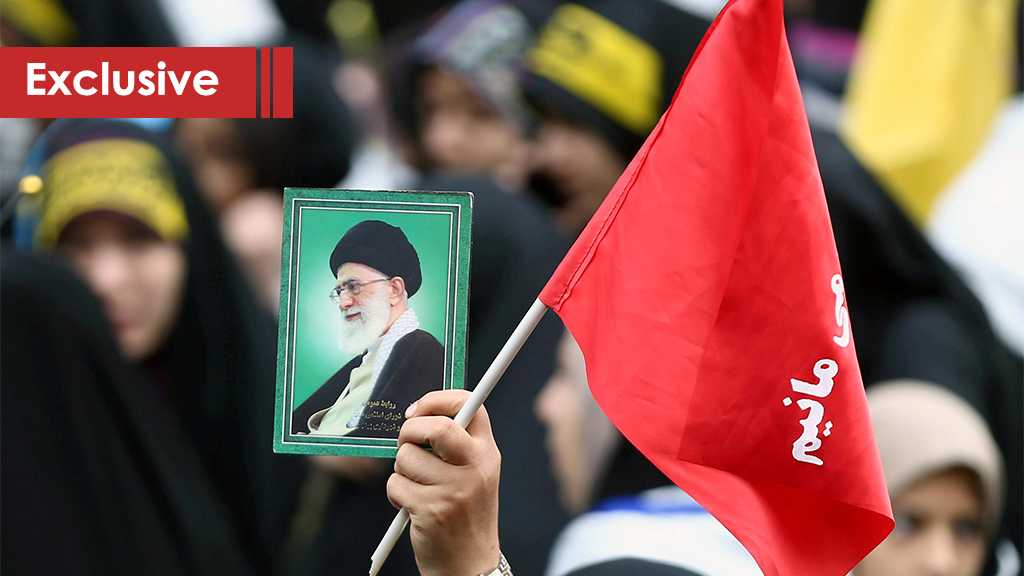
Leader of the Islamic Revolution Ayatollah Seyyed Ali Khamenei has called for a high turnout in the upcoming elections, saying a lively vote guarantees the Iranian nation’s security and contributes to efforts towards resolving the problems.
The will of Iranian powerful commander Qassem Suleimani who was killed by a US strike last January will be read on February 13 during a ceremony marking 40 days on his martyrdom.
Commander of the Tehran division of the Islamic Revolution Guards Corps (IRGC), Mohammad Reza Yazdi, said that the ceremony will be held on Thursday evening from 18:30 to 20:30 local time at Tehran-based Mosallah, Mehr news agency reported.
The new commander of Quds Force Brigadier General Ismail Qaani, who succeeded Suleimani, is going to read the will, Yazdi said, noting that IRGC commander Major General Hossein Salami will also address the event.
“Since the will of Martyr Suleimani is long, as he has left special wills for each segment of the society, only selected parts of the will is going to be read in the event,” added Yazdi
He went on to say that guests from Iraq, Syria, Lebanon, Yemen, Afghanistan, some Persian Gulf states, and some African countries will attend the event.
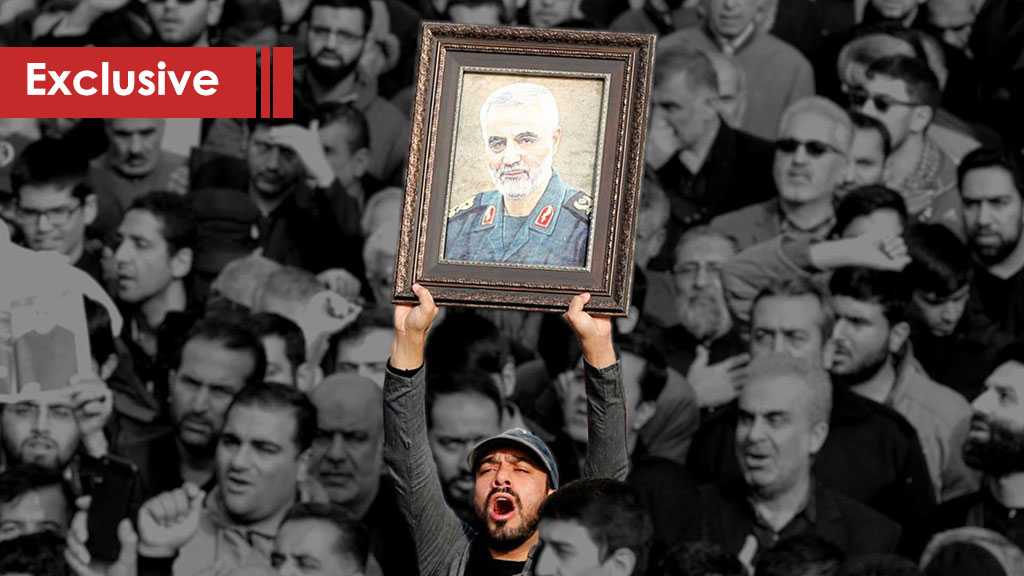
General Suleimani was assassinated alongside Abu Mahdi Al-Muhandis, Deputy Commander of Iraq’s Hashd Shaabi paramilitary force, by a US strike on Baghdad international airport on January 3. Millions of people in Iran and Iraq came to streets on funeral ceremonies of Martyr Suleimani and Al-Muhandis in different cities to pay tribute to their hero.
Lebanon – Hajj Qassem Soleimani wasn’t just a person. He was also a project, and a project does not die. From Beirut to Tehran to Kerman, Baghdad and Damascus, Soleimani was at every place and at every time, specifically in al-Quds [Jerusalem], the final destination of the broader jihad in the project of the resistance and its axis.
But the international and regional scene changed significantly. The assassination of the commander of the axis, which extends along the aforementioned cities, has reshuffled cards and accounts. What comes after the assassination? How did the crime impact the capital of the Islamic Revolution? And what about Lebanon?
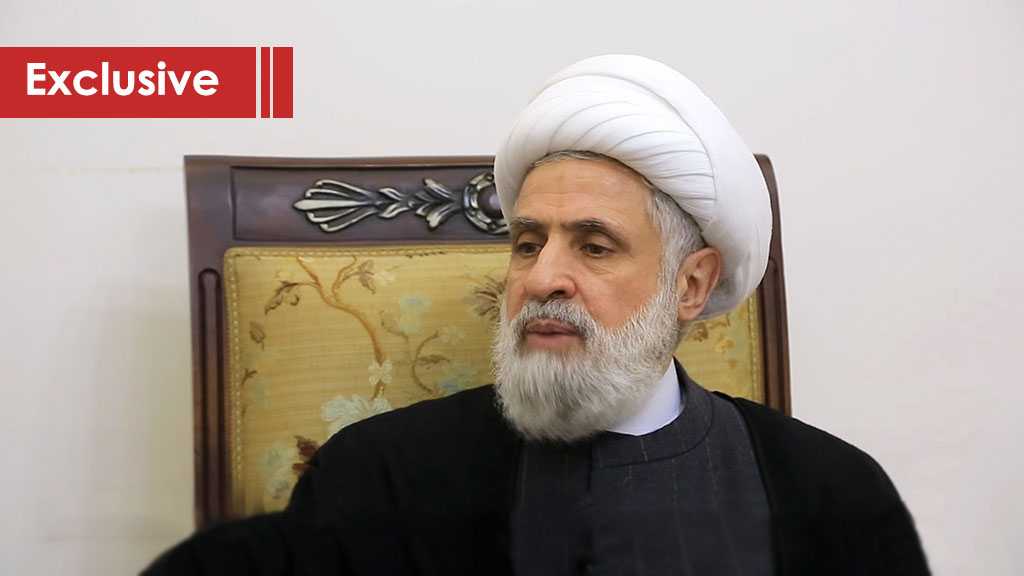
In an attempt to outline the features of the coming stage, al-Ahed sat down with Hezbollah’s Deputy Secretary-General, His Eminence Sheikh Naim Qassem, just days after his return from Iran.
Hajj Qassem Soleimani’s martyrdom reignited the revolution
Before talking about the dimensions of the developments and their importance, Sheikh Qassem talked about what he saw during his participation in the funeral procession and consolation ceremony of Hajj Qassem Soleimani.
From Tehran to Kerman, His Eminence described a monumental scene.
“Neither contemporary nor ancient history witnessed a funeral procession on this scale. Various Iranian regions saw million-man marches in which the youth element was predominant. This aspect bears the connotations of a revolution that is still radiant and rooted in the spirituality of the Iranian people.”
Sheikh Qassem recounted how the large crowds on the streets and squares prolonged the journey from their place of residence to the University of Tehran. He also told us how he saw Soleimani in all the faces of the participants and those who loved him. After talking about the family of martyr Soleimani and the manner of reception, communication and solace, Sheikh Qassem said that “the conclusions that embody the reality that took place is that Hajj Qassem’s martyrdom reignited the revolution. It was as if we are at its beginning when everyone took to the streets to confront the tyrant.”
A new reality in the region
“Hajj Qassem accomplished a lot in his life. His project was to drive the Americans out of the region, so his martyrdom fueled the decision to expel the US military forces from our region. Hence, we are facing the stage of ending the American presence in the region, and this carries significant implications, dimensions and effects on regional states and their peoples,” Sheikh Qassem added.
The Deputy Secretary General of Hezbollah pointed out that “the significance of the assassination, its nature and magnitude created a new reality in the region, a foundational and fundamental reality, one in which the American prestige will be broken in preparation for expelling its forces from here.”
The killer will face thousands of Qassem Soleimani’s likes who carry his thoughts and will avenge him
Sheikh Qassem asserts that “Qassem Soleimani was the field commander of the axis of resistance, which is a liberation project. Despite his assassination, the project will not die. Rather, it will continue with greater and stronger momentum and a renewed thrust that will be sensed by the murderer soon. The murderer will know that he did not get rid of this project, and that after Hajj Qassem, he will face thousands of Qassem Soleimani’s likes who carry his thoughts and will avenge him.”
Hezbollah is continually working on addressing complications in the government
As for Lebanon, the problem is not in any regional or international change or developments, but rather in “the mentality that this country suffers from. It requires a bit of modification and attention to the reality of the people’s lives and their deteriorating conditions, especially as we are at a stage that is farthest from external influences on Lebanese internal affairs.”
The Deputy Secretary General of Hezbollah concluded by saying that “Hezbollah is continuing to seek resolutions to complications in the government. It will talk with the prime minister-designate and the parties concerned with the formation of the government to get some facilities and concessions that will contribute to the formation of the government as soon as possible because without that we will face further deterioration.”
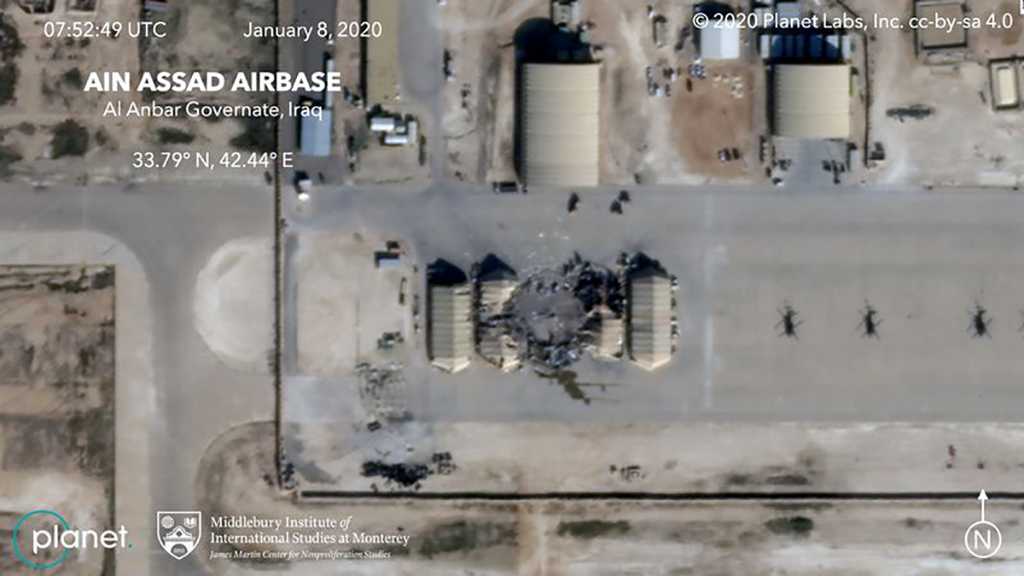
Iran’s retaliation on Wednesday for the killing of General Qassem Soleimani, when it launched missile attacks at US troops in Iraq, was an important step that cannot be exaggerated, crossing as it did a psychological barrier, Shimrit Meir wrote for Ynet.
The regime in Tehran brought hundreds of thousands onto the streets for Soleimani’s days-long funeral, but its revenge for the killing of its most favored general was no more than a symbolic effort.
The Iranian missile attack evokes ‘Israeli’ bombings of Hamas targets when the Zionist entity wants to avoid an escalation in hostilities, Meir added.
“The Iranians even made sure to leave an intelligence footprint to warn American troops of an imminent attack and – to really make sure the information was received.”
As soon as the attack was over, Tehran signaled it was done. They had had their revenge and if the United States refrained from reacting to the missile strike, things could go back to the way they were before last week’s targeted killing.
Everyone in the region hoped for calm, but two loose ends still remain.
The first is the potential retaliation of Iraqi groups whose commander was assassinated alongside Soleimani, and the second is Iran’s long-term strategy to remove US forces from the region altogether, starting with their presence in Iraq.
Soleimani’s assassination should prompt both ‘Israel’ and the West to a re-evaluate of Iran’s deterrence capabilities.
Is this deterrence backed by military might when facing a substantial fighting force, and how much of it is self-aggrandizing on the part of the regime?
Watching hysterical news analysts yelling in TV studios, the average American viewer may have been convinced that this out of control president was dragging his country into World War III. But the ‘Israelis’ – who have come to understand the distance between myth and reality when it comes to Iranian strength – knew better.
It would be wrong to assume Iran is weak and on the verge of collapse or that it has used up all of its capabilities, but Leader of the Islamic Revolution, His Eminence Imam Sayyed Ali Khamenei, knows why he made the choice not to test Trump’s resolve.
Related Videos
سي.أن.أن: الكثير من الجنود قالوا أن ما حدث لا يشبه أيّ شيء تخيلوه سابقاً
“إسرائيل” تترقب مرحلة ما بعد الرد الإيراني على الجيش الأميركي
تغطية خاصة | 2020-01-09 | تداعيات اغتيال الفريق سليماني والرد الإيراني
Iran’s Islamic Revolution has triumphed internationally. We begin with the immensity of Qassem Soleimani’s funeral.
The time Hajj Qassem Soleimani spent on the path of jihad begins with the commencement of the Islamic Revolution in 1979 and ends with the revolution’s global victory in 2020.
The Islamic Republic made the whole world understand the definition of honor. It introduced to the world the essence of Iran’s Islamic Revolution as well as its meaning and values which were never limited to a certain geography. On the contrary, they were meant to be global. The natural time prerequisites were the ones that delayed the Islamic Revolution from acquiring its international nature.
Martyr Qassem Soleimani’s great burial ceremony that took place following the qualitative Iranian response marks the end of a chapter for the people of this world. The great leader was not laid to his final resting place until the door of a new stage that will be witnessed by everyone was opened. It is the stage of victory and glory that he always wanted.
The beginning of his jihadist career coincided with the start of the Islamic Revolution. Soleimani’s role was central in the Quds Force as he was responsible for exporting the revolution to support the oppressed people of the world.
The arrogant forces thought that by ending General Soleimani’s physical existence they would destroy his role and retract the effects of the Islamic Revolution. But they miscalculated. Where the Americans failed, the Iranians succeeded.
Washington’s move only served to introduce a new phase that ordained the Islamic Republic of Iran as the godfather of regional and world politics. Here, we are just assessing a series of facts.
In the standards of strength, there is a difference between having power and managing it. The essence of real power is in its management, not its possession. It is the delicate line that separates the behavior of the weak and the righteous from that of the people of falsehood who arrogate in the use of power.
In the world of power management, the Iranian nation succeeded where many empires, nations and countries failed. It succeeded because it realized early on the meaning of rebelling against tyrants and how to achieve glory starting from the victory of Imam Khomeini’s revolution during the 1970s. Didn’t the Shah of Iran represent the arrogance of the West in the East? Is it possible that those who have eliminated arrogance fail in managing a revolution against arrogance in the world? These are historical facts. But we are a nation that does not read the true lessons of history.
What is happening today is a consequence that the world has been late in understanding. However, the Islamic Republic found in the assassination of martyr Qassem Soleimani the right time for the world to know that values always triumph, even after a while. Hence, with a carefully planned method, it delivered a just punishment that matches the level of Iranian national security and the weight of a martyr belonging to the axis of resistance. Since Iranian national security interests are integrated with that of the axis of resistance, the image of the Islamic Revolution is complete. And its scenery turns towards internationalism.
The greatness and wisdom of the Iranian leadership appeared. An upsurge in the strengths of the righteous system also appeared. It was met with the fall of the U.S. as an arrogant power. A state of confusion and weakness also appeared. Iran has humiliated the head of arrogance. This is just the beginning. Soon, a collapse of the arrogant system with its political, economic, military and security dimensions will follow.
This as the burial ceremony came after retribution that translated the quality, style, location and timing of the meaning of managing power. With it, a new phase that would be called “glory to the vulnerable and humiliation of the arrogant” was opened throughout the world.
Is it not the first time in history that a great leader bearing the banner of truth is buried after carrying out retribution against his arrogant enemies? More importantly, if this was just the beginning, what would the next stage be? Here, it is necessary to pause at what happened before the response. Did Washington not mobilize all of its diplomatic ties to mediate with Tehran to prevent a response? Have major powers not moved to dissuade Iran from responding and for Iran to state its conditions that Washington was ready to agree to?
The first response took place. In assessing its results, the shift in the balance of power is clear. But this shift, with the pangs before the birth of the new world order, is considered the most difficult period. It is a stage in which the knives planted by the arrogant and the pains that came with them will be extracted from the body of the world. But it seems that for the sake of honor, the pain becomes a feeling of euphoria.
It is the beginning where the truth revealed the definition of glory and immortalized martyr Qassem Soleimani at the heart of time. And the beginning of the stage pushing the revolution of the weak towards internationalism is connected to his martyrdom.
Kerman – Lieutenant General Qassem Soleimani, commander Abu Mahdi al-Muhandis and a group of their companions in jihad were martyred in the early hours of January 2 in a brutal American attack in Baghdad.
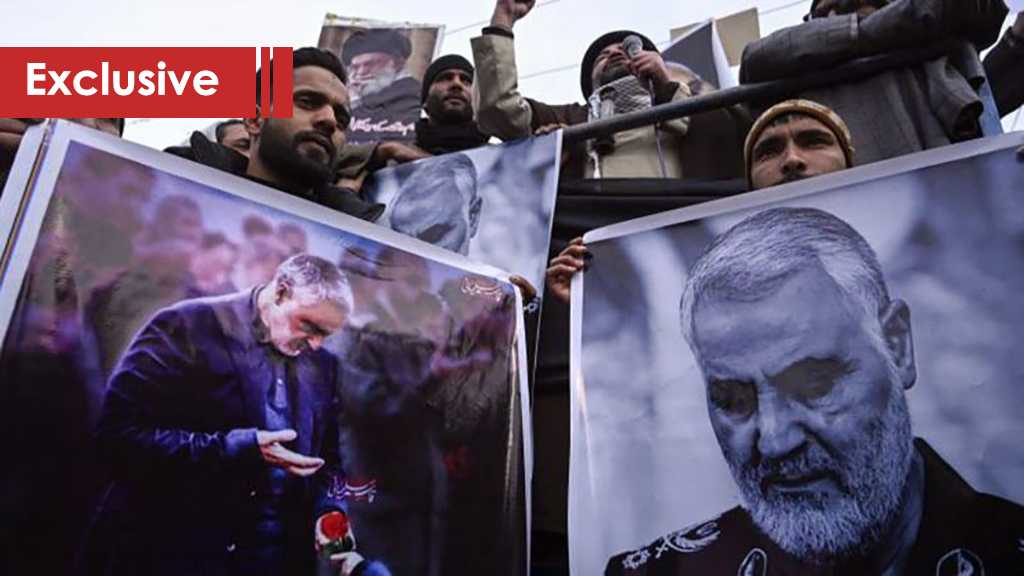
Their remains were carried by a sea of mourners for days as millions from across Iraq and Iran took to the streets to renew their pledge of allegiance to the path of martyrs. In Soleimani’s hometown of Kerman, the scene mirrored that of other Iranian cities as massive crowds bid their final farewell to the top general.
An Iraqi official tells Al-Ahed that the unprecedented number of mourners is a demonstration of both unity and support for the late Iranian general.
“The Americans thought that by killing general Qassem Soleimani, the Iraqi and Iranian people would forget him. On the contrary, they were completely wrong.” said the Deputy Secretary General of Asa’ib Ahl al-Haq [AAH], Sayyed Muhammad al-Tabatabai.
“By killing him, they have revived him,” Sayyed al-Tabatabai added.
“The people of Iraq and Iran joined hands. They took part in the funeral processions starting from Al-Kadhimiya shrines to Baghdad to the holy city of Krabala and to the holy city of Najaf. There were massive crowds. There were even more in Iran. Masses came out in Ahvaz, Mashhad or Tehran, and today in Kerman Shah. We have never seen anything like it,” he explained. “Hajj Qassem’s martyrdom united the Iraqi and Iranian peoples.”
“The other fruit of this martyrdom is the Iraqi parliament’s vote to expel all American military forces from Iraq. We are awaiting other positions from the Iraqi parliament because Hajj Qassem Soleimani came as a guest to Iraq, and we will not be satisfied with expelling American forces. We call for a boycott of all goods that come from America and closing the US embassy in Iraq,” AAH’s deputy chief said.
“The response will be decisive, as Grand Ayatollah Sayyid Ali Khamenei said. This response will come from the Islamic Republic, the resistance factions and the Popular Mobilization Units in Iraq.”
Kabbalistic Balance
-
Kabbalistic Balance August 6 2026 ___________________________________ More
Vids! +BN Vids Archive! HERE! ___________________________________ Support
The Br...
Report on Beth Israel vigil 07-04-26
-
*1A Rights under combined attack from local government plus media*
Ann Arbor City Council is at it again. Right before the long 4th of July
weekend, they ...
-
Hello all,
It is with great sadness that I share with you the passing of our beloved
sister, Mother, and Grandmother, the individual that you all knew ...
Best Horror Podcast
-
Best Horror Podcast Introduction: Horror podcasts […]
The post Best Horror Podcast appeared first on Copper Shock Horror Podcast.
Ikhras Endorses Muntadhar Al-Zaidi
-
“Oh parties of banditry and sectarianism and corruption, we have come and
our goal is to destroy you.” Ikhras formally endorses Muntadhar al-Zaidi,
Iraqi j...
Prince Charles: Foreign Jews behind bloodshed in ME
-
In May, 2017, British Crown Prince Charles declined an invitation from
Zionist entity’s president Reuven Rivlin‘s to attend the 100th anniversary
of the no...
Palestinian Women – One for All, All for One
-
Honouring All Palestinian Women by Honouring Three: Hanin Zoabi, Ahed
Tamimi, Samah Sabawi Vacy Vlazna “Palestinian women have always stood side
by side ...
US’s Saudi Oil Deal from Win-Win to Mega-Lose
-
By F. William Engdahl Who would’ve thought it would come to this? Certainly
not the Obama Administration, and their brilliant geo-political think-tank
neo-...
-
*Mordechai Vanunu wins human rights prize of Brazilian Press Association *
* http://www.alternativenews.org/english/index.php/features/updates/7038-mordechai...
Abdul Aziz Rantissi:
"My ultimate wish, my God, is to attain martyrdom,"...God granted him his wish on April 17, 2004, at the hands of Israeli assassins.