Uprooted Palestinians are at the heart of the conflict in the M.E Palestinians uprooted by force of arms. Yet faced immense difficulties have survived, kept alive their history and culture, passed keys of family homes in occupied Palestine from one generation to the next.
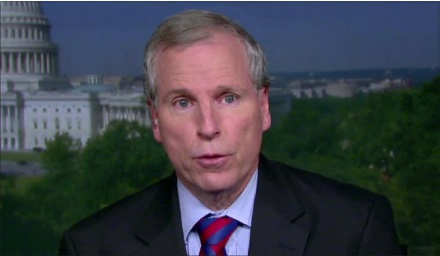
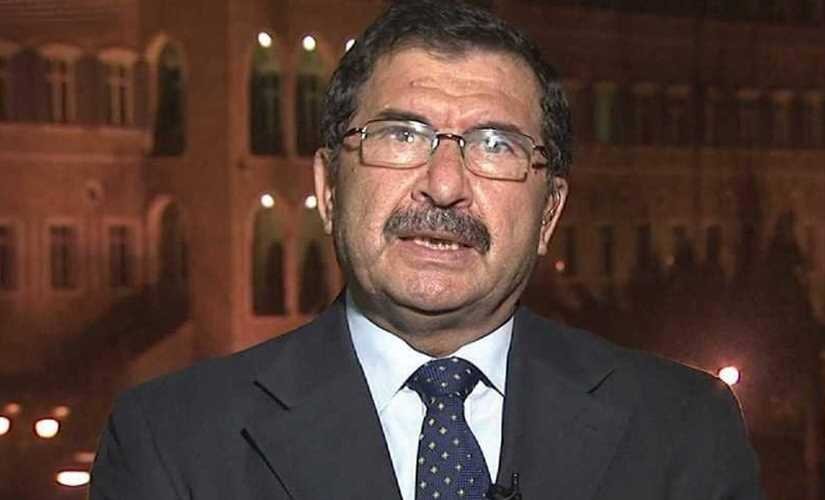
In an interview with France 24, the US former ambassador to Syria Robert Ford admits Bashar al-Assad’s victory, among other things.
Former US ambassador to Syria, Robert Ford
In an exclusive interview with France 24, former US ambassador to Syria Robert Ford said that the “US policy has failed to establish a Syrian government through negotiations,” in addition to failing to unite the Syrian “opposition” groups.
Ford also mentioned that there are many divisions between the “opposition” groups, which were present since the beginning, contributing to the US’ failure in achieving its interests.
He noted that “As the government of Syrian President Bashar al-Assad is present, and controls 70% of the Syrian territory, including major cities, the armed opposition is unable to remove him,” stressing that “despite the destruction of the Syrian economy, in the end, Assad won the war.”
Ford also acknowledged that “the United States bears responsibility for what happened in Syria,” admitting “we armed [“opposition”] groups open to finding solutions through negotiations.”
On Arab coexistence
Ford said that Arab countries such as the UAE, Egypt and Jordan have recognized the authority of the Syrian government, acknowledging that it is ‘here to stay’ and that Arab countries will have to find a way to coexist with it.
While he revealed that no US politician encourages restoring diplomatic relations with Damascus, he considered that the US’ circumstances are different when it comes to Syria’s Arab neighbors.
However, this does not mean that Washington is happy with the Arab efforts to coexist with Damascus,” also saying that the US is unable to offer an alternative to these offers.
The reconciliation efforts, according to Ford, could be seen in examples like UAE Foreign Minister Abdallah bin Zayed Al Nahyan’s recent visit to Damascus. The UAE foreign minister, last March, said that “Syria’s return to its Arab surroundings is inevitable, and it is in the interest of Syria and the region.”
When it came to whether Arab countries would be sanctioned for restoring relations with Damascus, Ford ruled out the possibility, saying that Biden’s efforts are currently focused on Asia.
قال السفير الأميركي السابق في سورية روبرت فورد إنّ «السياسة الأميركية فشلت في إنشاء حكومة سورية عن طريق المفاوضات».
وأضاف فورد في حديث خاص لوكالة «فرانس 24» أنّ «هناك انقسامات عديدة داخل صفوف المعارضة السورية، منذ البداية، والسياسة الأميركية فشلت في توحيد الصف بين مجموعات المعارضة».
وإذ أشار إلى أنّ «حكومة الرئيس السوري بشار الأسد موجودة، وتسيطر على 70% من الأراضي السورية، وبينها المدن الكبرى المعارضة المسلحة غير قادرة عل تنحية الأسد»، أكّد أنه «على الرغم من تدمير الاقتصاد السوري، ولكنه في نهاية المطاف الأسد فاز في الحرب».
وتابع: «أعتقد أن الدول العربية، وليس الإمارات فقط، بل مصر والأردن، اعترفت بأنّ الحكومة السورية باقية وتستمر بالسلطة».
وأقرّ السفير الأميركي السابق لدى سورية بأنّ «الحكومة السورية باقية، وعلى الدول العربية إيجاد طريقة التعايش معها».
وفي حين كشف أنه «لا يوجد أي سياسي أميركي يؤيد فكرة إعادة العلاقات الدبلوماسية مع دمشق»، اعتبر فورد أنّ «الولايات المتحدة لها ظروف تختلف مع البلدان العربية جيران سورية».
كما اعترف أنّ «واشنطن فهمت أن من الصعب عليها أن تمانع جهوداً عربية لإيجاد طريقة تعايش مع الحكومة السورية المستمرة في السلطة في دمشق، وهذا لا يعني أنّ واشنطن فرحة بالجهود العربية للتعايش مع دمشق»، مؤكداً أنّ «واشنطن غير قادرة على عرض بديل للاستراتيجية العربية التي رأيناها مع وزير الخارجية الإماراتي عبد الله بن زايد آل نهيان».
واستبعد فورد فرض عقوبات على الأنظمة العربية التي تعيد علاقاتها مع دمشق، مشيراً إلى أنّ «إدارة الرئيس بايدن تركز على ملف آسيا حالياً».
وفي الختام، أقرّ السفير الأميركي السابق لدى سوريا أيضاً أنّ «الولايات المتحدة تتحمل مسؤولية في ما جرى في سورية»، وقال: «أرسلنا السلاح إلى المجموعات المنفتحة حول فكرة إيجاد حل تفاوضي»، في إشارة إلى المعارضة، التي كان قد أكّد لها في العام 2019 أن «لا تنتظر شيئاً من واشنطن».
Pinning Palestinians down while applying harsh measures of violent repression accompanied by a fanatical settler movement of arch-racists given free rein to attack and plunder, is a notorious game Israel has elevated to a daily ritual.
In fact, the routine of inflicting war crimes has all the hallmarks of a rogue regime entirely caught up in a misplaced belief that to engage in ethnic cleansing is a religious obligation.
Conflating Judaism with a racist political ideology of Zionism has been part of a strategy designed to deceive, distort and divert. It has its roots in the First Zionist Congress held on the eve of the 19th century.
That this is well documented and widely known is not in dispute. Indeed, awareness of Zionism’s goal to dismember and dislodge Palestinians from their centuries-old homeland, and forcibly impose thereon a foreign entity known as Israel, has always been a bedrock for resistance.
Israel has thus always been considered an enemy thrust upon a native population through the most horrific forms of terrorism. The memories of Deir Yassin remind the world of bloody massacres committed by Zionist terrorists who didn’t spare hundreds of villages to colonize Palestine.
That more than seven decades later the expansionist goals of Zionism are still being pursued at a great human cost to successive generations of the indigenous Palestinian population, is reflected in daily atrocities.
None of these facts, as attested to by historians as well as organs of the United Nations, are contested, although Israel and its supporters seek to distort and malign commentators who speak truth to power as antisemitic.
Yet, against this background of terrorism and current conditions siege, occupation, killings and mass imprisonment – recorded and broadcast via mainstream media for all the world to witness – it is bizarre that a handful of Arab regimes have broken rank with Palestine’s freedom struggle.
And at a time when even Haaretz describes atrocities by Israel as a pogrom:
“Residents of the Palestinian communities in the southeastern West Bank have experience with settler attacks – when they graze their flocks, work their fields, or even have a picnic on their own land. But they cannot recall an attack like the one experienced Tuesday by the small communities of Khirbat al-Mufkara, al-Rakiz and al-Tuwani. On Simhat Torah, dozens of young Jews, most of them masked, conducted what can only be described as a pogrom.”
The treachery associated with what has become known as “normalization” is an outrageous manifestation of betrayal and collaboration. Limited to the UAE, Bahrain, Sudan and Morocco, these regimes have in effect confessed that the protection of their shaky thrones counts for more than legitimate rights of the Palestinians.
As unelected self-imposed despots fearful of democratic values, they have bargained that “normalization” with the usurper of Palestine will “guarantee” safety and protection for them. In other words, just as Egypt has done, these oligarchs have outsourced their intelligence networks and security apparatus to Israel, knowing full well that in doing so, they have abandoned Palestine.
Though the abnormality of implicit recognition of an illegal colonial enterprise has been in sharp contrast to countless Arab League resolutions, the deal of “normalization” pushed by Trump and vigorously backed by the Biden administration has exposed these leaders as surrogates of western imperialism.
The case of Bahrain’s role in the “Abraham Accords” reveals the soft underbelly of Arab dictatorships. Besides being financially dependent on its neighbors, especially the UAE and Saudi Arabia, Bahrain’s alliance with Israel is designed to entrench its power and crush any resistance to authoritarianism or efforts towards freedom and democracy.
In 2011, during the onset of the Arab Spring uprisings, Saudi Arabia sent troops to Bahrain to suppress anti-government protests. This trend continues today by Israel equally committed to maintaining the status quo and preventing the success of any popular uprisings.
In this context, one may justifiably condemn Bahrain’s gross insensitivity and abject abdication of Palestine’s freedom struggle as treacherous.
Showcasing Israeli war criminal Lapid’s visit to Manama, where he is set to open the embassy flying Israel’s flag, is utterly outrageous. This follows the opening of a Zionist embassy in Abu Dhabi; another embassy will likely be established in Rabat. Sudan thus far has reportedly said that it has no plans yet to open an embassy in Khartoum.
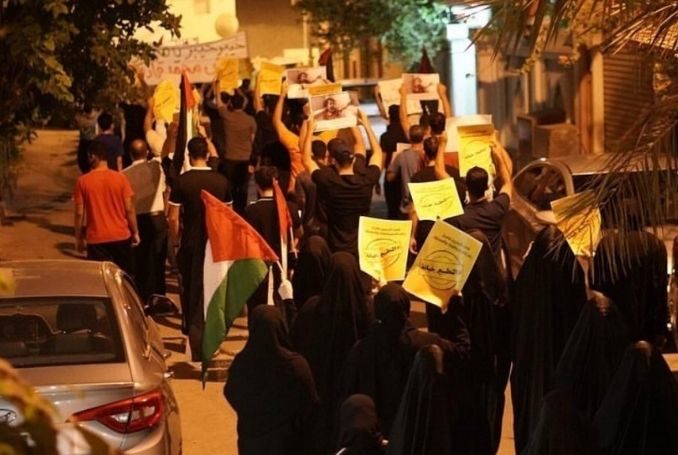
Not surprising therefore that the Arab street across these capitals have vowed to end “normalization”. The iron-fisted grip held by Arab despots notwithstanding, human rights movements (many banned and leaders exiled) have declared their outright rejection of America’s much-vaunted Abraham Accords.
Stirrings in Sudan are becoming more vocal despite Khartoum’s attempts to silence critics. In Bahrain the main opposition group, al-Wefaq National Islamic Society declared Lapid’s trip as a “threat”, saying, “This is provocative news and this trip is completely rejected, and he (Lapid) should not set foot on Bahraini soil.”
Their message is clear: “Any (Israeli) presence on Bahraini soil means incitement.”
– Iqbal Jassat is an Executive Member of the South Africa-based Media Review Network. He contributed this article to The Palestine Chronicle. Visit: www.mediareviewnet.com
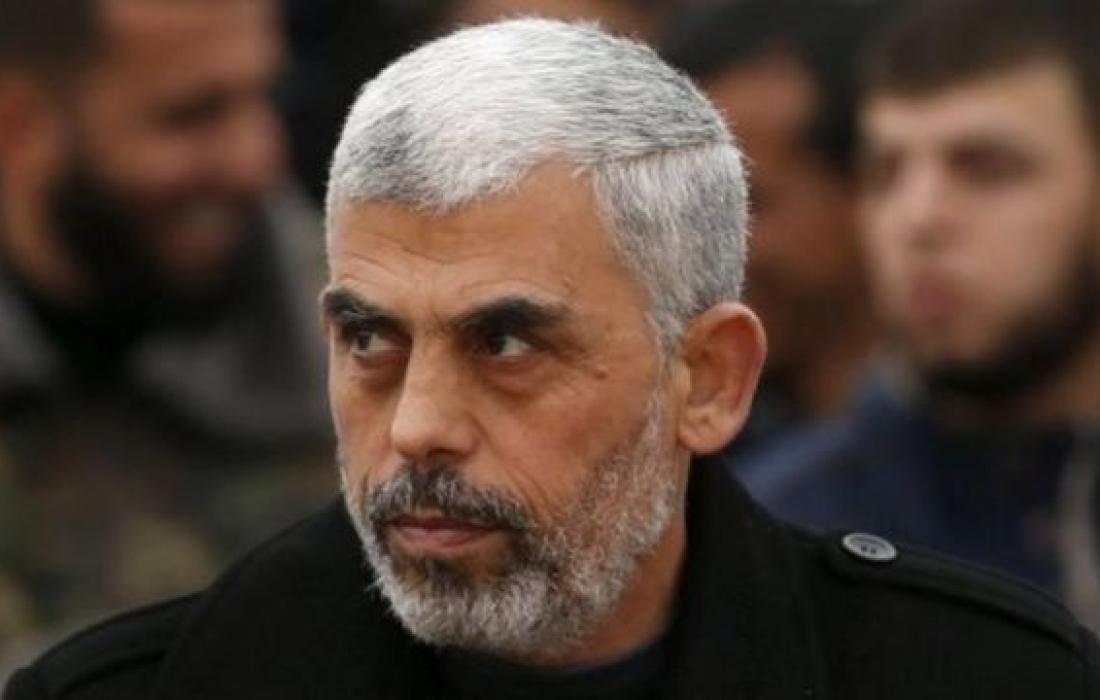
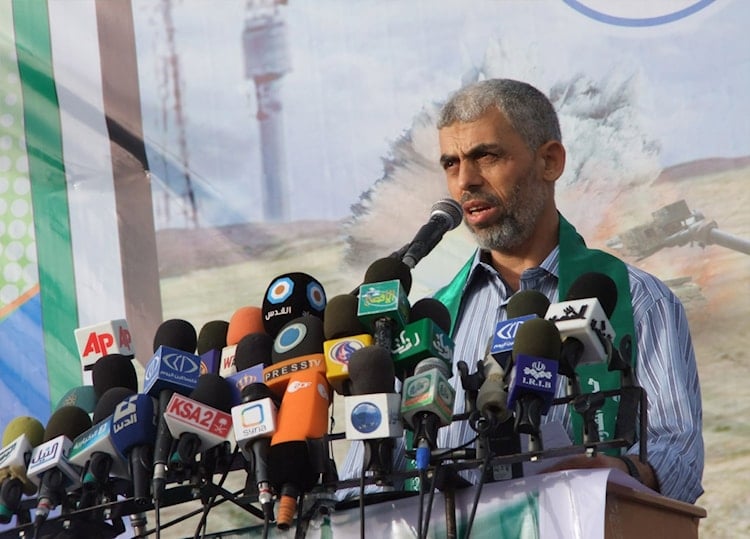
Hamas Chief in Gaza, Yahya Sinwar, indicated on Saturday that the Palestinian resistance used only 50% of its military power during Al-Quds Sword battle, highlighting the military readiness to face any Zionist aggression.
Addressing the academicians in Gaza, Sinwar stressed that if the confrontation erupts again, the entire Middle East will change, underlining that there are great surprises in this regard.
Sinwar pointed out that 130 missiles were fired by the Palestinian resistance at Tel Aviv, adding that the Zionist enemy could not destroy more than 3% of Gaza tunnels.
On the other hand, Sinwar said that the Palestinian resistance will reject any attempt to keep Gaza affected by the destruction caused by the Israeli war, adding that all who plan to support the Gazans or invest in the Strip are welcomed.
Sinwar, also, noted that the PLO must be reorganized in order to be joined by Hamas and the resistance factions, emphasizing that all the political concepts that were adopted by the PLO figures before Al-Quds Sword have become useless.
رئيس المكتب السياسي لحركة حماس في قطاع غزة يحيى السنوار يؤكد أنه “إذا تفجرّت المواجهة مع “إسرائيل” مجدداً، فإن شكل الشرق الأوسط سيكون مختلفاً عما هو عليه الآن”.
رئيس المكتب السياسي لحركة حماس في قطاع غزة يحيى السنوار (أرشيف)
أعلن رئيس المكتب السياسي لحركة حماس في قطاع غزة يحيى السنوار، أنه “إذا تفجرّت المواجهة مع “إسرائيل” مجدداً، فإن شكّل الشرق الأوسط سيكون مختلفاً عما هو عليه الآن، فالمقاومة قادرة على تحقيق الردع واستطاعت أن تصنع من المستحيل القوة المتراكمة”.
ولفت خلال لقاء مع الكتّاب والأكاديميين والأساتذة في جامعات بغزة، إلى أن”انتفاضة أهل الضفة الغربية والداخل شكلّت عامل ضغط أكبر من صواريخ المقاومة في العدوان على غزة، فيما الهرولة العربية للتطبيع والانقسام الفلسطيني والوضع الدولي شجعّت إسرائيل على عدوانها”.
وكشف السنوار أن “ما خفيّ كان أعظم، ففي في الرشقة الصاروخية الأخيرة التي أعددناها، كان القرار بإطلاق كافة الصواريخ القديمة”، موضحاً أن “العدو لن يستطيع فرض واقعه المزعوم في القدس والشيخ جرّاح مستغلاً حالة الانقسام والتطبيع”.
وتابع السنوار قائلاً: “مقاومتنا المحاصرة من العدو والأقربون، تستطيع أن تدك تل أبيب بـ130 صاروخاً برشقة واحدة، والرشقة الأخيرة بمعركة “سيف القــدس” كان القرار أن تدك بكل صواريخها القديمة، وما خفيّ أعظم”، مؤكدا أن “تل أبيب التي أصبحت قبلة الحكام العرب، حولناها إلى ممسحة وأوقفتها المقـاومة على رجل واحدة”.
وأشار السنوار إلى أن “الاحتلال لم يدمّر إلا كسوراً من أنفاق المقـاومة في قطاع غزة، وفشل في تحطيم “مترو حمـاس” لأننا نعشق هذه الأرض كما هي تعشقنا، كما فشل بتحطيم قدرات المقـاومة وفي تنفيذ خطته التي تقضي بقتل 10 آلاف مقاتل من المقاومة، ولم يدمروا أكثر من 3% من الأنفاق، مضيفا أنه “إستعملنا فقط نصف قوتنا”.
وشدد على أنه “لا يمكن أن نقبل دون انفراجة كبيرة يلمسها أهلنا في قطاع غزة، ونحن بعد أيار/مايو 2021 لسنا كما كنا قبله”، مؤكداً بسياق المناسبة أن “المعركة الأخيرة أثبتت أن المقاومة الفلسطينية تضم بين صفوفها عدداً كبيراً من حملة الشهادات العليا”.
انتخابياً، كشف السنوار عن ” تقديم كل تنازل ممكن وأبدينا مرونة عالية جداً من أجل الوصول لحالة تنهي شتاتنا وتنهي الانقسام، لكن الانتخابات ألغيت، وأي شخص يريد الإستثمار بقطاع غزة أو يقدم الدعم لغزة سنفتح له الباب ولن نأخذ أي شيء للمقاومة، والأيام القادمة ستكون اختباراً حقيقياً للاحتلال وللعالم وللسلطة لترجمة ما تم الاتفاق عليه”.
وأكمل: “أمامنا فرصة لإنهاء حالة الانقسام وترتيب البيت الفلسطيني ونقول كل ما كان يطرح قبل 21 أيار لم يعد صالحاً”، معتبراً أن “منظمة التحرير بدون حركة حمـاس وفصائل المقـاومة هي مجرد صالون سياسي، وأمامنا استحقاق فوري لترتيب المنظمة لتمثّل الجميع ولنضع استراتيجيتنا الوطنية لإدارة الصراع لتحقيق جزء من أهداف شعبنا”.
TEHRAN – A senior Lebanese political analyst says that Iran adheres to the Palestinian cause while many Arab countries have neglected Palestine in order to satisfy the colonialists and the Zionist regime and their American master.
Amin Hoteit says Iran has adopted such a policy toward Palestine because it is an independent and sovereign state.
“There is a big difference between a sovereign, independent ruler who safeguards the interests of his nation and a subordinate ruler who guards the interests of foreigners,” Hoteit tells the Tehran Times.
“Iran adheres to Palestinian cause while many Arabs neglect Palestine in order to satisfy the colonialists and the Zionist regime, and their American master,” the Lebanese analyst notes.
After 11 days of Israeli bombing, Gaza remains strong. The Israeli regime was forced to agree to a ceasefire in the Gaza Strip. Resistance forces in Gaza forced Israeli settlers to seek shelters by firing hundreds of missiles at different parts of occupied territories. Following is the text of the interview:
Q: What is the status of Palestine in the Arab and Islamic world?
A: Palestine is part of the Arab and Islamic lands, and within this framework, we say that the Islamic world should be coherent and united in the face of Israel as God says in Quran: “Indeed this, your religion, is one religion, one and I am your Lord, so worship Me.” (Al-Anbya – Verse: 92)
On the one hand, according to Islamic logic, the attack on Palestine means an attack on the Islamic Ummah.
On the other hand, Palestine contains the most important sanctities of Muslims, including Jerusalem, which hosts Muslim’s first Qiblah and the Al-Aqsa Mosque; and there are other religious symbols related to Islam and Christianity.
Third, the Palestinian people are part of the Arab people and the Islamic Ummah, and attacking that part means attacking the whole. For all of this, Palestine, in its three dimensions -the land, the people, and the holy sites-has a fundamental position for the Arab and Islamic world.
Q: Why does Iran, after the Islamic Revolution, has kept insisting on liberating the Palestinian lands?
A: What distinguishes Iran from other Arab countries is that first it is an independent, sovereign state whose rule stems from the will of the people and was established on the basis of an Islamic revolution that seeks to achieve the nations’ rights and resist the usurpers.
Therefore, Iran is working for the sake of Islam, the people, and the Islamic Ummah. This feature does not exist in most Arab regimes, wherein the ruler is appointed by foreigners.
In Arab states, a ruler comes and goes by an external decision, and policies and governments are determined by powers outside the countries. Therefore, at a time when we find that Iran is a country in which the rule emanates from the people and takes care of the interests of the people and nations, most of Arab rulers are guardians of the interests of foreign powers.
There is a big difference between a sovereign, independent ruler who safeguards his nation’s interests and a subordinate ruler who guards the interests of foreigners. For this reason, Iran adheres to the Palestinian cause while many Arabs neglect Palestine in order to satisfy the colonialists and the Zionist regime and their American master.
Q: How do you see the stances of Arab states towards the Palestinian issue? How do you assess normalization of ties with Israel?
A: Unfortunately, some Arabs are heading towards overt surrender to the Israeli enemy.
Under the slogan of normalization of ties with Israel and the forged Abraham Accords, these regimes accepted to be slaves of Israel and servants of American interests, providing it with resources and reassurance. This approach should be stopped.
We call on Arab people to move against this approach adopted by their governments. They need to retreat from this treacherous behavior.
Normalization of ties with Israel, in our opinion, is a betrayal of the Ummah and a betrayal of the Palestinian cause. It violates their rights and legitimacy. That is why we find that today there are sides and groups in the Arab and Islamic world that condemn normalization of ties with the Zionist regime and call for an end to it and a return to the idea of Palestine from the river to the sea.
Q: Is it possible to bet on the American-European role in resolving the Palestinian-Israeli conflict?
A: The Palestinian tragedy is a result and product of European-American conspiracy.
The Europeans continue to insult Palestine and the Palestinian people since they adopted the Sykes–Picot Agreement in Britain and France, which was followed by the Balfour Declaration.
Then, they decided to partition Palestine in the United Nations, which was ruled by Europeans and Westerners.
They are insulting the Arab world and the Islamic Ummah by aggression against Palestine.
Whoever harmed Palestine cannot heal its wounds, and therefore we are not betting on a real European stance or on a just and fair American position in order to restore rights to their owners.
The only bet is on the peoples, on the will of the Muslim nations, and on the governments that line up in support of the resistance axis, which constitutes a milestone in the modern era.
Resistance forces have succeeded to withstand colonial domination in the region and now are drawing a scheme of liberating Palestine in the people’s minds.
Q: How could Israel preoccupy Islamic countries with internal disputes and divert attention from the Zionist threats?
A: Israel is afraid of the unity of the Arab-Islamic world because if the Arabs and the Muslims get united, what Imam Khomeini said about the Zionist regime’s demise will be realized.
To divide the Islamic world and preventing Muslim unity, Israel is working to undermine the Arab-Islamic frontier. Unfortunately, it finds those who listen to it and engage in its projects.
The comprehensive war that targeted Syria, and the great strife that has been called the Arab Spring, are not but a case of conspiracy plotted by the Zionists and Europeans to disperse and divide Muslims so that they do not unite to liberate Palestine.
Israel’s inclusion in Centcom will further harm the Palestinian cause, drive a wedge between Arab states and raise the heat on Iran
Flags of the US, Israel, the United Arab Emirates and Bahrain are projected on the ramparts of Jerusalem’s Old City in celebration of Israeli normalisation deals with the UAE and Bahrain, 15 September 2020 (AFP)
Jonathan CookJonathan Cook, a British journalist based in Nazareth since 2001, is the the author of three books on the Israeli-Palestinian conflict. He is a past winner of the Martha Gellhorn Special Prize for Journalism. His website and blog can be found at: http://www.jonathan-cook.net
With none of the usual fanfare associated with such a momentous decision, the Pentagon announced last month a major reorganisation to bring Israel – for the first time – inside its military command in the Middle East alongside the Arab states.
Until now, Israel has belonged to the US military’s European command, or Eucom, rather than the Middle Eastern one, known as Central Command, or Centcom. The decision effectively jettisoned the traditional wisdom that Israel’s inclusion in Centcom would increase friction between the US and Arab states, and would make the latter more reluctant to share intelligence or cooperate with the Pentagon.
Those concerns were felt especially keenly when the US had large numbers of troops in Iraq and Afghanistan. Back in 2010, David Petraeus, then Centcom’s commander, expressed fears that the price of too-overt military collusion with Israel could be exacted on US forces stationed in the region.
But Israel’s long-standing goal has been to force the Pentagon to restructure Centcom, and pressure had mounted from pro-Israel lobby groups in Washington in the final months of the Trump administration. The decision looked very much like a “parting gift” to Israel from President Donald Trump as he stepped down.
Military ‘normalisation’
Israel’s formal transfer to Centcom has not yet taken place, but the move was cemented last week with the first visit to Israel by General Kenneth McKenzie, the current head of Centcom, since Joe Biden entered the White House. Alongside Israel’s military chief of staff, Aviv Kohavi, McKenzie planted a tree – officially to mark the Jewish holiday of Tu Bishvat but symbolically representing a new era in their strategic partnership.
The decision to bring Israel inside Centcom is best viewed – from Washington’s perspective – as the culmination of efforts to push the Arab states into public ‘normalisation’ with Israel
On Friday, after a meeting with the US general, Benny Gantz, Israel’s defence minister, issued a statement praising the Pentagon’s reorganisation, saying it would “afford Israel opportunity to deepen cooperation with new regional partners and broaden operative horizons”.
The decision to bring Israel inside the US military command in the Middle East is best viewed – from Washington’s perspective – as the culmination of efforts to push the Arab states into public “normalisation” with Israel.
Military normalisation can now be added to the political, diplomatic and economic normalisation that formally began last September when two Gulf states, the United Arab Emirates and Bahrain, signed the so-called Abraham Accords with Israel. Morocco and Sudan have also announced their own peace deals with Israel, and other Arab states are likely to follow suit once the dust settles with the incoming Biden administration.
Since the signing of the Abraham Accords, the UAE has been forging strong trading ties with Israel and has helped to establish the Abraham Fund, designed to finance the infrastructure of occupation Israel has used to deprive the Palestinians of statehood. When flights to Dubai were launched in November, Israeli tourists poured into the UAE to take advantage of the new friendly relations and escape lockdown restrictions back home.
In fact, it is widely reported that such visits have become one of the main ways Israel has imported new variants of Covid-19. Last week, Israel effectively closed its borders – except to General McKenzie – to keep the virus in check.
Growing confidence
On the face of it, Israel’s desire to move into Centcom – a kind of Middle East Nato covering several Arab states with which Israel still has hostile relations – appears counter-intuitive. But, in fact, Israel will make major strategic gains. How Gulf states became business partners in Israel’s occupationRead More »
It will align US security interests in the region even more closely with Israel’s, at the expense of its Arab neighbours. It will aid Israel’s continuing efforts to crush the national ambitions of the Palestinians, with many Arab states’ either explicit or implicit cooperation. It will accentuate political tensions within the bloc of Arab states, further weakening it. And it will help to build pressure on recalcitrant Arab states to join the broader consensus against Israel’s one remaining significant regional foe: Iran.
It is significant that Washington’s long-standing concern about Israel’s presence in Centcom damaging US relations with the Arab states has apparently evaporated.
Once, the US was careful to distance itself from Israel whenever the Pentagon got deeply mired in the region, whether it was the US Gulf war of 1990 or the invasion and occupation of Iraq in 2003. Those calculations no longer seem relevant.
The move demonstrates a growing US confidence that the Arab states – at least those that matter to Washington – are unperturbed about being seen to make a military accommodation with Israel, in addition to political and economic engagement. It underscores the fact that the oil-rich Gulf states, alongside Israel, are now the key drivers of US foreign policy in the region and suggests that the most important, Saudi Arabia, is waiting for the right moment to sign its own accord with Israel.
Move out of the shadows
Israel, it is expected, will continue to conduct military exercises in Europe with Nato countries, but will soon be able to build similar direct relations with Arab armies, especially those being rapidly expanded and professionalised in the Gulf using its oil wealth.
US General Kenneth McKenzie (L), commander of US Central Command (Centcom), shakes hands with Saudi military officers on 18 July 2019 (AFP)
As the Israeli scholar Jeff Halper has noted, Israel has shown how effective it is at translating its military and security ties with armies and police forces around the world into diplomatic support in international bodies.
The Middle East is not likely to be different. Once Israel has become the linchpin of more professionalised armies in the region, those states dependent on its help can be expected to further abandon the Palestinian cause.
Regional divide-and-rule
Another dividend for Israel will be complicating Washington’s relations with the Arab region.
Not only does Centcom operate major bases in the Gulf, especially in Bahrain and Qatar, but it leads the proclaimed “war on terror”, with overt or covert operations in several Arab states, including Iraq and Syria.
With Israel inside Centcom, the US and its most favoured Arab states are also likely to be more directly implicated in Israel’s major military operations against the Palestinians, such as the repeated ‘wars’ on Gaza
It will be harder for the US to disentangle itself from Israel’s own openly belligerent operations, including air strikes, in both countries, that are conducted in flagrant violation of international law. Tensions between the US and Baghdad have in the past escalated over Israeli air strikes in Iraq, with threats to limit US access to Iraqi airspace.
With Israel inside Centcom, the US and its most favoured Arab states are also likely to be more directly implicated in Israel’s major military operations against the Palestinians, such as the repeated “wars” on Gaza.
This will pose a significant challenge to the region’s cooperative institutions such as the Arab League. It is almost certain to drive an even deeper wedge between pro-Washington Arab states and those accused of being on the wrong side of the “war on terror”.
The result could be a regional divide-and-rule policy cultivated by Israel that mirrors the decades-long, disabling divisions Israel has generated in the Palestinian leadership, most pronounced in the split between Fatah and Hamas.
Anti-Iran front
The biggest bonus for Israel will be a more formal alliance with Arab states against Iran and shepherding more ambivalent states into Israel’s orbit.
That appears to have been the purpose of the recently well-publicised reconciliation between the UAE and Saudis on one side and Qatar on the other, achieved in the dying days of the Trump administration. One of the chief causes of the lengthy blockade of Qatar related to its insistence on maintaining political and economic ties with Tehran.
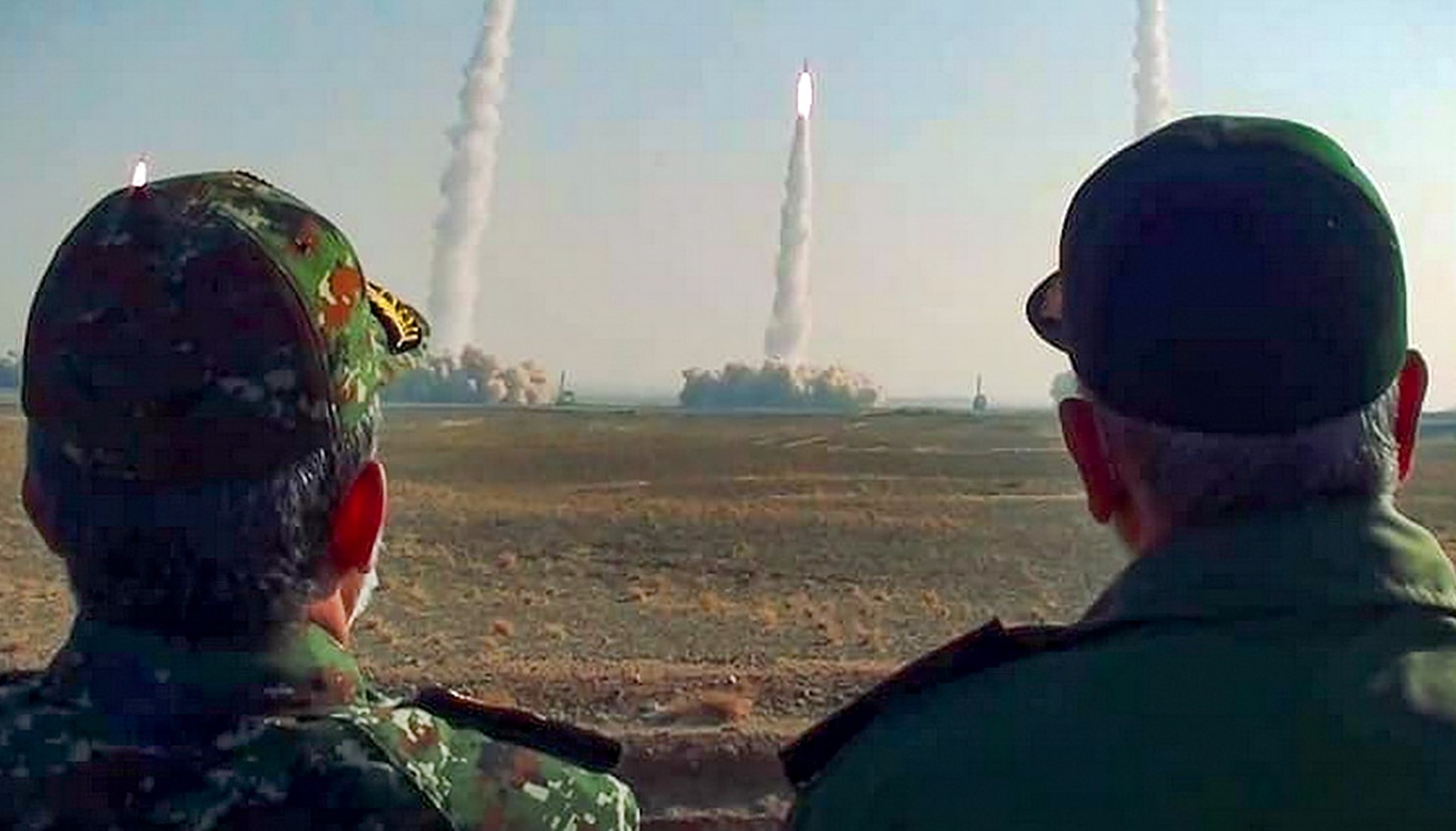
Head of Iran’s Revolutionary Guard Corps, Hossein Salami (R), watches missiles being launched during a military drill in central Iran on 15 January 2021 (AFP)
Israel’s aim is to force the Biden administration’s hand in continuing Trump’s belligerent anti-Iran policy, which included aggressive sanctions, assassinations and tearing up the 2015 nuclear agreement with Tehran signed by Barack Obama. That deal had given inspectors access to Iran to ensure it did not develop a nuclear bomb that might neutralise the strategic clout Israel gains from its nuclear arsenal.
Once Israel has become the linchpin of more professionalised armies in the region, those states dependent on its help can be expected to further abandon the Palestinian cause
Inside Centcom, Israel will be able to work more closely with Gulf allies to sabotage any efforts inside Washington to revive the nuclear accord with Tehran. That point was underscored last week when an online security conference, hosted by Tel Aviv University, was attended by two Gulf ministers.
At the conference, Kochavi, Israel’s military chief of staff, issued an unprecedented public rebuke to Biden over recent statements that he wished to revive the nuclear deal. Kochavi called the agreement “bad and wrong strategically and operatively”, claimed that Iran would launch nuclear missiles at Israel once it had them, and declared that a go-it-alone attack by Israel “must be on the table”.
Bahrain’s foreign minister, Abdullatif al-Zayani, observed that Israel and the Gulf states would have a better chance of preventing any US conciliation towards Iran if they spoke in a “unified voice”. He added: “A joint regional position on these issues will exert greater influence on the United States.”
That view was echoed by Anwar Gargash, the UAE’s foreign affairs minister.
Middle East bogeyman
In a sign of how the Biden administration is already fearful of taking on a broad Middle Eastern alliance against Iran, the new president’s pick for secretary of state, Antony Blinken, said last month it was “vitally important” to consult with Israel and the Gulf states before re-entering the deal.Is the UAE plotting with Israel against Palestinian refugees?Read More »
Israeli Prime Minister Benjamin Netanyahu, desperate to bolster his electoral fortunes and deflect attention from his looming corruption trial, has every incentive to prise open that chink.
Ensuring Iran remains the Middle East’s number one bogeyman – the focus of western hostility – is in the joint interests of an Israel that has no intention of ending its decades-old obstruction of Palestinian statehood and of Gulf states that have no intention of ending their own human rights abuses and promotion of Islamic discord.
Mike Pompeo, Trump’s departing secretary of state, planted a landmine last month designed to serve Israeli and Saudi interests by highlighting the fact that a number of al-Qaeda leaders have found shelter in Iran. That echoed the Bush administration’s – in this case, entirely fanciful – claim of ties between al-Qaeda and Saddam Hussein as a pretext, along with non-existent WMD, for the invasion and occupation of Iraq in 2003.
With Israel’s arrival in Centcom, the lobbying for a repeat of that catastrophic blunder can only grow – and with it, the prospects for renewed conflagration in the Middle East.
The views expressed in this article belong to the author and do not necessarily reflect the editorial policy of Middle East Eye.
إن انضمام “إسرائيل” إلى القيادة المركزية الأميركية سيزيد من إلحاق الضرر بالقضية الفلسطينية وسيدق إسفيناً بين الدول العربية ويزيد من حدة التوتر مع إيران.
كتب جوناثان كوك مقالة في موقع “ميدل إيست آي” البريطاني قال فيه إن البنتاغون أعلن الشهر الماضي عن إعادة تنظيم كبيرة لإدخال “إسرائيل” – لأول مرة – داخل قيادتها العسكرية في الشرق الأوسط، القيادة المركزية الأميركية ، إلى جانب الدول العربية، وهذا القرار الخطير لم يحدث أي من الضجة المعتادة.
وأضاف: حتى الآن، تنتمي “إسرائيل” إلى القيادة الأوروبية للجيش الأميركي، أو ، بدلاً من القيادة في الشرق الأوسط، المعروفة باسم القيادة المركزية . لقد تخلص القرار بشكل فعال من الحكمة التقليدية القائلة بأن إدراج “إسرائيل” في القيادة المركزية الأميركية من شأنه أن يزيد الاحتكاك بين الولايات المتحدة والدول العربية، وسيجعل الأخيرة أكثر إحجاماً عن مشاركة المعلومات الاستخباراتية أو التعاون مع البنتاغون. فقد تم الشعور بهذه المخاوف بشكل خاص عندما كان للولايات المتحدة أعداد كبيرة من القوات في العراق وأفغانستان. في عام 2010، أعرب الجنرال ديفيد بتريوس، قائد القيادة المركزية الأميركية آنذاك، عن مخاوفه من احتمال دفع ثمن التواطؤ العسكري الصريح مع “إسرائيل” على القوات الأميركية المتمركزة في المنطقة.
لكن هدف “إسرائيل” الطويل الأمد كان إجبار البنتاغون على إعادة هيكلة القيادة المركزية، وقد تصاعد الضغط من جماعات الضغط المؤيدة لـ”إسرائيل” في واشنطن في الأشهر الأخيرة من إدارة الرئيس دونالد ترامب. وكان القرار يشبه إلى حد كبير “هدية وداع” لـ”إسرائيل” من ترامب أثناء تنحيه.
تطبيع عسكري
وأوضح الكاتب أنه لم يتم الانتقال الرسمي لـ”إسرائيل” إلى “سنتكوم” بعد، ولكن تم تعزيز هذه الخطوة مع أول زيارة الشهر الماضي إلى “إسرائيل” من قبل الجنرال كينيث ماكنزي، الرئيس الحالي للقيادة المركزية، منذ دخول الرئيس جو بايدن البيت الأبيض. إلى جانب رئيس أركان الجيش الإسرائيلي، أفيف كوخافي، زرع ماكنزي شجرة، رسمياً بمناسبة العيد اليهودي لتو بيشفات، لكنها تمثل رمزياً حقبة جديدة في شراكتهما الاستراتيجية.
وبعد اجتماع مع الجنرال الأميركي، أصدر بيني غانتس، وزير الأمن الإسرائيلي، بياناً أشاد فيه بإعادة تنظيم البنتاغون، قائلاً إنه “سيوفر لإسرائيل فرصة لتعميق التعاون مع شركاء إقليميين جدد وتوسيع آفاق العمل”.
وقال الكاتب إن قرار إدخال “إسرائيل” داخل القيادة العسكرية الأميركية في الشرق الأوسط – من وجهة نظر واشنطن – يعتبر تتويجاً لجهود دفع الدول العربية إلى “التطبيع” العلني مع “إسرائيل”. وأضاف: يمكن الآن إضافة التطبيع العسكري إلى التطبيع السياسي والدبلوماسي والاقتصادي الذي بدأ رسمياً في أيلول / سبتمبر الماضي عندما وقعت دولتان خليجيتان، الإمارات العربية المتحدة والبحرين، ما يسمى بـ”اتفاقات إبراهيم” مع “إسرائيل”. كما أعلن المغرب والسودان عن اتفاقيات السلام الخاصة بهما مع “إسرائيل”، ومن المرجح أن تحذو دول عربية أخرى حذوها بمجرد انتهاء الغبار مع إدارة بايدن.
وتابع كوك: منذ توقيع اتفاقات إبراهيم، أقامت الإمارات علاقات تجارية قوية مع “إسرائيل” وساعدت في إنشاء صندوق إبراهيم، المصمم لتمويل البنية التحتية للاحتلال الذي استخدمته “إسرائيل” لحرمان الفلسطينيين من إقامة دولة. وعندما تم إطلاق الرحلات إلى دبي في تشرين الثاني / نوفمبر، تدفق السياح الإسرائيليون على الإمارات للاستفادة من العلاقات الودية الجديدة والهروب من قيود الإغلاق في الوطن. ويُقال على نطاق واسع إن مثل هذه الزيارات أصبحت إحدى الطرق الرئيسية التي استوردت بها “إسرائيل” أنواعًا جديدة من فيروس كوفيد -19 الشهر الماضي، إذ أغلقت “إسرائيل” حدودها فعلياً – باستثناء استقبال الجنرال ماكنزي – لإبقاء الفيروس تحت السيطرة.
ورأى الكاتب أنه في ظاهر الأمر، فإن رغبة “إسرائيل” في الانتقال إلى “سنتكوم ، وهو نوع من حلف شمال الأطلسي في الشرق الأوسط يغطي العديد من الدول العربية التي لا تزال “إسرائيل” لديها علاقات عدائية معها، تبدو غير بديهية. لكن في الواقع، ستحقق “إسرائيل” مكاسب إستراتيجية كبيرة. وستعمل على مواءمة المصالح الأمنية الأميركية في المنطقة بشكل أوثق مع مصالح “إسرائيل”، على حساب جيرانها العرب. وسوف تساعد جهود “إسرائيل” المستمرة لسحق الطموحات الوطنية للفلسطينيين، مع تعاون العديد من الدول العربية سواء بشكل واضح أو ضمني. وسيزيد من حدة التوترات السياسية داخل كتلة الدول العربية، ويزيد من إضعافها. وسيساعد على زيادة الضغط على الدول العربية المتمردة للانضمام إلى إجماع أوسع ضد العدو الإقليمي الوحيد المتبقي لـ”إسرائيل”: إيران.
وقال الكاتب “إن من الأهمية بمكان أن قلق واشنطن الطويل الأمد بشأن الوجود الإسرائيلي في القيادة المركزية الأميركية الذي يضر بعلاقات الولايات المتحدة مع الدول العربية قد تبخر على ما يبدو. فذات مرة، كانت الولايات المتحدة حريصة على إبعاد نفسها عن “إسرائيل” كلما غرق البنتاغون بعمق في المنطقة، سواء كانت حرب الخليج الأميركية عام 1990 أو غزو العراق واحتلاله عام 2003. هذه الحسابات لم تعد موجودة. فقد أظهرت هذه الخطوة ثقة الولايات المتحدة المتزايدة في أن الدول العربية – على الأقل تلك التي تهم واشنطن – غير منزعجة من أن يُنظر إليها على أنها تقدم تسوية عسكرية مع “إسرائيل”، بالإضافة إلى المشاركة السياسية والاقتصادية. إنه يؤكد حقيقة أن دول الخليج الغنية بالنفط، إلى جانب “إسرائيل”، أصبحت الآن المحركين الرئيسيين للسياسة الخارجية الأميركية في المنطقة، وتشير إلى أن أهمها، المملكة العربية السعودية، تنتظر اللحظة المناسبة لتوقيع اتفاقها الخاص مع إسرائيل”.
وأضاف: من المتوقع أن تستمر “إسرائيل” في إجراء التدريبات العسكرية في أوروبا مع دول حلف الأطلسي (الناتو)، لكنها ستتمكن قريباً من بناء علاقات مباشرة مماثلة مع الجيوش العربية، وخاصة تلك التي يتم توسيعها بسرعة واحترافها في الخليج باستخدام ثروتها النفطية. ومن المحتمل أن يخرج الضباط الإسرائيليون قريباً من الظل ويقومون بتدريب الجيوش الإماراتية والسعودية وتقديم المشورة لهم كجزء من أدوارهم المشتركة في القيادة المركزية. إن خبرة “إسرائيل” الخاصة، التي تعتمد على عقود من المراقبة والسيطرة والقمع للفلسطينيين، ستكون مطلوبة بشدة في دول الخليج التي تخشى المعارضة الداخلية أو الانتفاضات.
وكما أشار الباحث الإسرائيلي جيف هالبر، أظهرت “إسرائيل” مدى فعاليتها في ترجمة علاقاتها العسكرية والأمنية مع الجيوش وقوات الشرطة في جميع أنحاء العالم إلى دعم دبلوماسي في الهيئات الدولية. ومن غير المحتمل أن يكون الشرق الأوسط مختلفاً. فبمجرد أن تصبح “إسرائيل” العمود الفقري للجيوش الأكثر احترافاً في المنطقة، يمكن توقع أن تتخلى تلك الدول التي تعتمد على مساعدتها عن القضية الفلسطينية.
فرّق تسد
ورأى الكاتب أن المكاسب الأخرى لـ”إسرائيل” ستكون تعقيد علاقات واشنطن مع المنطقة العربية. إذ لا تقوم القيادة المركزية الأميركية بتشغيل قواعد رئيسية في الخليج فقط، وخاصة في البحرين وقطر، ولكنها تقود “الحرب على الإرهاب” المعلنة، مع عمليات علنية أو سرية في العديد من الدول العربية، بما في ذلك العراق وسوريا. وسيكون من الصعب على الولايات المتحدة أن تنأى بنفسها عن عمليات “إسرائيل” العدائية العلنية، بما في ذلك الضربات الجوية، في كلا البلدين (سوريا والعراق)، والتي تتم في انتهاك صارخ للقانون الدولي.
وأضاف: تصاعدت التوترات بين الولايات المتحدة وبغداد في الماضي بسبب الضربات الجوية الإسرائيلية في العراق، مع تهديدات بتقييد وصول الولايات المتحدة إلى المجال الجوي العراقي. لكن بوجود “إسرائيل” داخل القيادة المركزية الأميركية، فمن المرجح أيضاً أن تكون الولايات المتحدة والدول العربية المفضلة لديها أكثر تورطًا بشكل مباشر في العمليات العسكرية الإسرائيلية الكبرى ضد الفلسطينيين، مثل “الحروب” المتكررة على غزة. سيشكل هذا تحدياً كبيراً للمؤسسات التعاونية في المنطقة مثل جامعة الدول العربية. ويكاد يكون من المؤكد دق إسفين أعمق بين الدول العربية الموالية لواشنطن وتلك المتهمة بالوقوف في الجانب الخطأ من “الحرب على الإرهاب”.
وخلص الكاتب إلى أنه يمكن أن تكون النتيجة سياسة “فرق تسد” الإقليمية التي ترعاها “إسرائيل” والتي تعكس الانقسامات التي دامت عقوداً، والتي عطلتها “إسرائيل” في القيادة الفلسطينية، والتي تجلّت أكثر في الانقسام بين حركتي فتح وحماس.
الجبهة المناهضة لإيران
وأوضح الكاتب أن المكافأة الأكبر لـ”إسرائيل” ستكون تحالفاً أكثر رسمية مع الدول العربية ضد إيران ورعاية دول أكثر تردداً في فلك “إسرائيل”. ويبدو أن هذا الأمر كان الغرض من المصالحة التي تم الإعلان عنها أخيراً بين الإمارات والسعوديين من جهة وقطر من جهة أخرى، والتي تحققت في الأيام الأخيرة لإدارة ترامب. فمن الأسباب الرئيسية للحصار المطول على قطر إصرارها على الحفاظ على العلاقات السياسية والاقتصادية مع طهران. وتهدف “إسرائيل” إلى إجبار إدارة بايدن على مواصلة سياسة ترامب العدائية المناهضة لإيران، والتي تضمنت عقوبات صارمة واغتيالات وتمزيق الاتفاق النووي لعام 2015 مع طهران الذي وقعه الرئيس باراك أوباما. وقد سمح هذا الاتفاق للمفتشين بالدخول إلى إيران للتأكد من أنها لم تطور قنبلة نووية قد تكسر النفوذ الاستراتيجي الذي تكسبه “إسرائيل” من ترسانتها النووية.
وتابع الكاتب: داخل القيادة المركزية -سنتكوم، ستكون “إسرائيل” قادرة على العمل بشكل أوثق مع حلفاء الخليج لتخريب أي جهود داخل واشنطن لإحياء الاتفاق النووي مع طهران. فقد أصدر كوخافي، رئيس أركان الجيش الإسرائيلي، توبيخاً علنياً غير مسبوق لبايدن بشأن التصريحات الأخيرة التي قال فيها إنه يرغب في إحياء الاتفاق النووي. ووصف كوخافي الاتفاق بأنه “سيء وخاطئ استراتيجياً وعملياً”، وادعى أن إيران ستطلق صواريخ نووية على “إسرائيل” بمجرد امتلاكها، وأعلن أن هجوم “إسرائيل” بمفردها “يجب أن يكون على الطاولة”.
وأشار وزير خارجية البحرين، عبد اللطيف الزياني، إلى أن “إسرائيل” ودول الخليج ستكون لها فرصة أفضل لمنع أي تسوية أميركية تجاه إيران إذا تحدثت “بصوت موحد”. وأضاف: “الموقف الإقليمي المشترك بشأن هذه القضايا سيكون له تأثير أكبر على الولايات المتحدة”. وكرر هذا الرأي أنور قرقاش وزير الخارجية الإماراتي.
وفي إشارة إلى كيف تخشى إدارة بايدن بالفعل الدخول في تحالف شرق أوسطي واسع ضد إيران، قال انتوني بلينكين، وزيرة الخارجية الأميركي، الشهر الماضي إنه من “المهم للغاية” التشاور مع “إسرائيل” والخليج قبل العودة إلى الاتفاق النووي.
رئيس الوزراء الإسرائيلي بنيامين نتنياهو، اليائس لتعزيز ثرواته الانتخابية وصرف الانتباه عن محاكمته التي تلوح في الأفق بالفساد، لديه كل الحافز لفتح هذه الفجوة، وذلك لضمان أن تظل إيران البعبع الأول في الشرق الأوسط – محور العداء الغربي – في المصالح المشتركة لـ”إسرائيل”، التي لا تنوي إنهاء عوائقها المستمرة منذ عقود للدولة الفلسطينية، ودول الخليج التي لا تنوي إنهاء انتهاكات حقوق الإنسان وتعزيز الانقسام الإسلامي.
مايك بومبيو، وزير خارجية ترامب، زرع لغماً أرضياً الشهر الماضي مصمماً لخدمة المصالح الإسرائيلية والسعودية من خلال تسليط الضوء على حقيقة أن عدداً من قادة تنظيم القاعدة وجدوا ملاذاً في إيران. وردد ذلك صدى ادعاء إدارة الرئيس جورج بوش الإبن – الوهمي تماماً – بوجود روابط بين “القاعدة” وصدام حسين كذريعة، إلى جانب أسلحة دمار شامل التي لم تكن موجودة، لغزو العراق واحتلاله عام 2003.
وختم كوك تحليله بالقول إنه “مع وصول إسرائيل إلى القيادة المركزية، فإن الضغط لتكرار هذا الخطأ الكارثي يمكن أن ينمو فقط، وتنمو معه احتمالات تجدد الحرب في الشرق الأوسط”.
Normalisation with Israel is just the latest example of Arab rulers advancing their own interests at the expense of Palestinians
The Arab League summit meeting held in Mecca on 31 May 2019 (AFP)
Since the First World War, the Palestinians have been used as a bargaining chip by different Arab regimes to advance their own interests by sacrificing Palestinian rights.
Yet, apologists for the Arab regimes, which recently normalised relations with Israel, defend their governments’ decision with the same arguments the earliest normalisers – Egypt and Jordan – used decades ago, namely that these countries made sacrifices since 1948 by placing Palestinian interests above their own “national”, read regime, interests.
Their decisions to normalise with Israel now, they tell us, have finally placed their own national interests first, and yet at the same time in normalising they are also helping the Palestinians!
American propaganda
A major argument – proffered in this regard – relates to the American-sponsored ideological notion of “peace”, a cornerstone of American propaganda against peoples struggling against colonial and racist oppression, whether in the colonised world or inside the US itself.
Arab regimes have always put their own national interests first and had established ties and collaborated with Israel since 1948
“Peace”, which maintains oppressive colonial and racist relations, we are told, brings prosperity, whereas struggling against injustice and oppression, dubbed “war” in US lingo, brings destruction and poverty.
In contrast with the Arab peoples who have ceaselessly shown solidarity with the Palestinians since Britain issued the Balfour Declaration in 1917, Arab regimes, as I have written in Middle East Eye before, have always put their own national interests first and had established ties and collaborated with Israel since 1948 – in the case of the Hashemite Amir Faisal since 1919. Apologists for Sadat’s surrender to Israel claimed for decades that President Gamal Abdel Nasser’s excessive zeal to defend the Palestinians led Egypt, as Egyptian President Abdel Fattah el-Sisi put it in 2014, to sacrifice “100,000 Egyptian martyrs” for the Palestinians.
In fact, Egypt’s losses in the 1948 war, according to Egyptian military sources, were 1,168 soldiers, officers, and volunteers killed (as mentioned in Ibrahim Shakib’s book: The Palestine War 1948, p432-433), whereas other Egyptian official sources (noted in Benny Morris’ book, 1948: A History of the First Arab-Israeli War, p406-407) put it at 1,400.
Moreover, King Farouk of Egypt entered the war in 1948 not because he placed Palestinian interests ahead of Egypt’s, but as analysts have shown, on account of his rivalry with the Iraqi monarchy for hegemony over the post-colonial Arab world.
Not only did Nasser not launch a single war against Israel, but also all of Egypt’s subsequent wars were fought to defend Egypt, not the Palestinians. In 1956 and in 1967, Israel invaded Egypt and occupied Sinai.
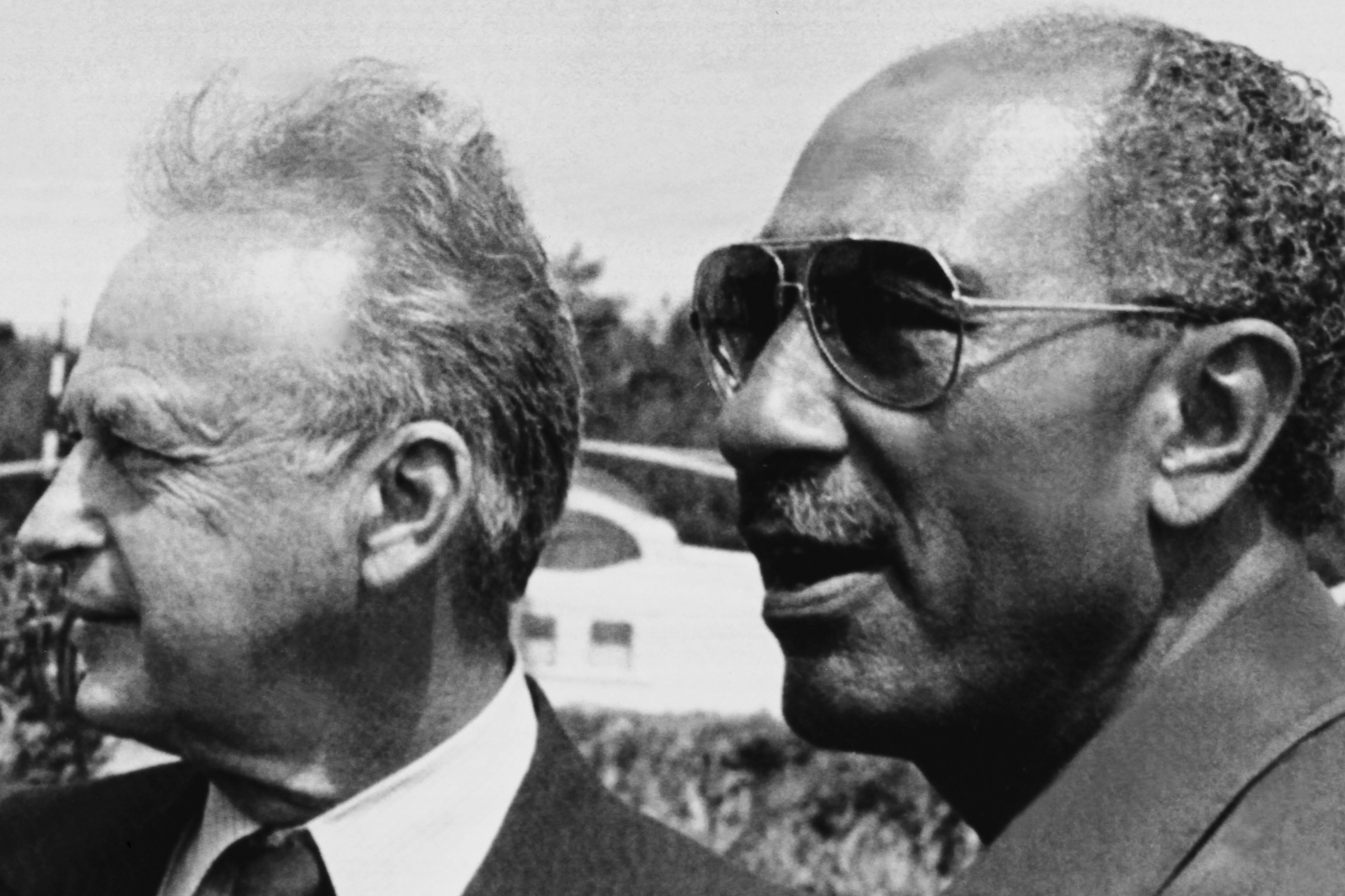
Former Israeli PM Yitzhak Rabin (L) and President of Egypt Anwar el Sadat (R) in Alexandria on 9 September 1980 (AFP)
Egyptian soldiers died in these wars defending their country, not the Palestinians. Between 1968 and 1970, Israel and Egypt fought the “War of Attrition” in which Egyptian soldiers were killed defending their country against continuing Israeli aggression, a war fought on Egyptian soil; and in 1973, Egypt launched a war to liberate Sinai, not Palestine, and Egyptian soldiers were again killed defending their country against foreign occupation.
Sacrificing Palestinians
When Sadat signed the Camp David Accords in 1978, not only did he not defend the Palestinians, he in fact sacrificed the Palestinians and their right to independence in exchange for the return of Sinai to Egypt (without full Egyptian sovereignty) and a lavish US aid package that served to enrich the Egyptian upper classes and impoverish most of the population.Arab rulers and Israel’s leaders: A long and secret history of cooperationRead More »
The Jordanian regime, whose army was led by a British colonial general, entered the 1948 war to expand its territory, which it did by annexing central Palestine (renamed the “West Bank”) after the war. In 1967, the Israelis invaded Jordan and occupied the West Bank. In both wars, Jordanian soldiers died for Jordanian regime interests, not Palestinian interests.
When Jordan signed in 1994 its peace treaty with Israel, Palestinian interests were sacrificed yet again by Jordan’s recognition of Israel’s right to exist on stolen Palestinian land, and by securing some sort of Hashemite role over Muslim holy places in Jerusalem.
In exchange, Jordan also received a lavish US aid package benefiting the regime and the upper classes. In contrast with Egypt’s deal, Jordan’s deal was concluded without even requiring Israel to withdraw from any of the territories it occupied in 1967. Jordan’s “peace” with Israel, as a result, legitimised Israeli occupation and conquest and did not reverse any of it.
While historically Egyptian and Jordanian soldiers might have been told they fought these wars for Palestine, the truth of the matter is that, unbeknownst to them, they fought them for their regime’s interests. As for Sudan, Morocco, Bahrain and the UAE, it remains unclear how they had ever put Palestinian interests before their own.
Peace ‘dividend’
A related argument is the so-called “peace dividend“, heavily marketed by the Americans since the 1970s, wherein we are told all the money spent on wars and armaments with Israel would now be used for economic development and prosperity.
To prove their allegiance to the anti-Palestinian policies of the US and Israel, Gulf officials have ceaselessly attacked Palestinians in the oil-families-owned Gulf media
The irony, of course, is that the military budgets of Egypt and Jordan, abetted by huge US military aid packages as a reward, skyrocketed since they normalised with Israel. Economic development and state social benefits were in contrast reduced to unprecedented levels in both countries, bringing about massive poverty, and a decline in educational and health services. Even Jordanian officials who support the peace deal claim that Jordan has not properly cashed in on the “peace dividend”.
On the public relations front, as a result of congressional and media hostility to the Saudis and other Gulf countries after 9/11, the oil ruling families decided yet again to benefit at the expense of Palestinian interests by abandoning demands that Israel abide by international law and withdraw from the occupied territories as prerequisites to warmer relations. They quickly cosied up to Israel and its US lobby to stem the tide of such hostility by promising closer relations, which have now become open.
Pro-Palestinian protesters wave Palestinian flags and chant slogans against the US and Israel in Rabat on 10 December, 2017 (AFP)
None of this is the stuff of the past, but is part of ongoing normalisation, whereby President Trump announced huge Saudi, Moroccan, Bahraini, and UAE purchases of US arms during the preparation and brokering of the normalisation deals in 2019 and after, which will militarise the region more than ever.
To prove their allegiance to the anti-Palestinian policies of the US and Israel, Gulf officials have ceaselessly attacked Palestinians in the oil-families-owned Gulf media and press in the last few years. Such attacks have recently become more vigorous, especially in Saudi Arabia and the UAE.
National interests
Ironically, the UAE had hoped to obtain the sophisticated F-35 fighter planes from the US in exchange for its peace with Israel. Israel and its supporters in Congress, however, refuse to allow this. Humiliated by this outcome, the UAE has suggested to Israeli Prime Minister Benjamin Netanyahu, in order to assuage Israeli concerns, that Israeli fighter pilots take charge of the F-35s for a temporary period, after which they would train UAE pilots to replace them. How Gulf states became business partners in Israel’s occupation
Morocco has also finally received US legitimisation of its takeover and annexation of the Western Sahara and Sudan was removed from the US list of terrorism-sponsoring countries. Neither country conceded nor sacrificed any part of its national interest to obtain such rewards.
Rather, like other Arab countries since 1948, they sacrificed Palestinian rights enshrined in international law to obtain benefits for themselves. The Arab League, an enemy of Palestinian interests since its establishment, also refused to condemn these peace deals even though they contradict its standing policy.
Rather than sacrifice their national interests to defend the Palestinians, the Arab regimes have used every opportunity to sell out Palestinian rights to advance their own interests without respite.
Starting with the Hashemite Emir Faisal in 1919 who cooperated with the Zionists to ensure their support for his then Syrian kingdom, to King Mohammad VI’s normalisation with Israel to legitimise Morocco’s control of the Western Sahara, the Palestinians have been a God-send to Arab regimes which used and continue to use and abuse them for their own benefit.
The views expressed in this article belong to the author and do not necessarily reflect the editorial policy of Middle East Eye.Joseph MassadJoseph Massad is Professor of Modern Arab Politics and Intellectual History at Columbia University in New York. He is the author of many books and academic and journalistic articles. His books include Colonial Effects: The Making of National Identity in Jordan, Desiring Arabs, The Persistence of the Palestinian Question: Essays on Zionism and the Palestinians, and most recently Islam in Liberalism. His books and articles have been translated to a dozen languages.
Kabbalistic Balance
-
Kabbalistic Balance August 6 2026 ___________________________________ More
Vids! +BN Vids Archive! HERE! ___________________________________ Support
The Br...
Report on Beth Israel vigil 07-04-26
-
*1A Rights under combined attack from local government plus media*
Ann Arbor City Council is at it again. Right before the long 4th of July
weekend, they ...
-
Hello all,
It is with great sadness that I share with you the passing of our beloved
sister, Mother, and Grandmother, the individual that you all knew ...
Best Horror Podcast
-
Best Horror Podcast Introduction: Horror podcasts […]
The post Best Horror Podcast appeared first on Copper Shock Horror Podcast.
Ikhras Endorses Muntadhar Al-Zaidi
-
“Oh parties of banditry and sectarianism and corruption, we have come and
our goal is to destroy you.” Ikhras formally endorses Muntadhar al-Zaidi,
Iraqi j...
Prince Charles: Foreign Jews behind bloodshed in ME
-
In May, 2017, British Crown Prince Charles declined an invitation from
Zionist entity’s president Reuven Rivlin‘s to attend the 100th anniversary
of the no...
Palestinian Women – One for All, All for One
-
Honouring All Palestinian Women by Honouring Three: Hanin Zoabi, Ahed
Tamimi, Samah Sabawi Vacy Vlazna “Palestinian women have always stood side
by side ...
US’s Saudi Oil Deal from Win-Win to Mega-Lose
-
By F. William Engdahl Who would’ve thought it would come to this? Certainly
not the Obama Administration, and their brilliant geo-political think-tank
neo-...
-
*Mordechai Vanunu wins human rights prize of Brazilian Press Association *
* http://www.alternativenews.org/english/index.php/features/updates/7038-mordechai...
Abdul Aziz Rantissi:
"My ultimate wish, my God, is to attain martyrdom,"...God granted him his wish on April 17, 2004, at the hands of Israeli assassins.