Uprooted Palestinians are at the heart of the conflict in the M.E Palestinians uprooted by force of arms. Yet faced immense difficulties have survived, kept alive their history and culture, passed keys of family homes in occupied Palestine from one generation to the next.
A fire broke out on a merchant ship docking at the Latakia Port during maintenance work, the fire was soon under control, unlike the NATO propagandists who unleashed their imaginations and used their professionalism in doctoring news to spread panic.
The Chief of the Latakia Fire Department stated that the fire in one of the commercial ships in the Latakia Port was under control and two injuries were recorded.
Latakia Port Director Mr. Amjad Soleiman said in a statement carried by the Syrian news agency SANA: ‘the ship headed to the Latakia Port for maintenance and during the maintenance operations, a limited fire broke out, which was put out by the ship’s crew and the Latakia Fire Department.’
Russian helicopters from the Russian forces in the Hmeimim military base helped extinguish a fire in the Jableh countryside, in the Syrian coastal Lattakia province.
The fire, most probably from the excessive summer heat, burned 8 donums (approximately 2 acres) of a wooded area in the vicinity of the village of Deroutan in the Jableh countryside, the fire has been completely extinguished, and no casualties reported.
Russian forces deployed in Syria, in addition to their military role in fighting the US-sponsored terrorist groups of ISIS, Nusra Front, and their affiliates, play an important role in humanitarian relief, reconciliation efforts, the restoration of archeological sites destroyed by the terrorists like in Tadmor (Palmyra), and demining liberated areas from landmines and explosive devices planted by the terrorists in large quantities in the areas they infested.
To help us continue please visit the Donate page to donate or learn how you can help us with no cost to you. Follow us on Telegram: http://t.me/syupdates link will open the Telegram app.
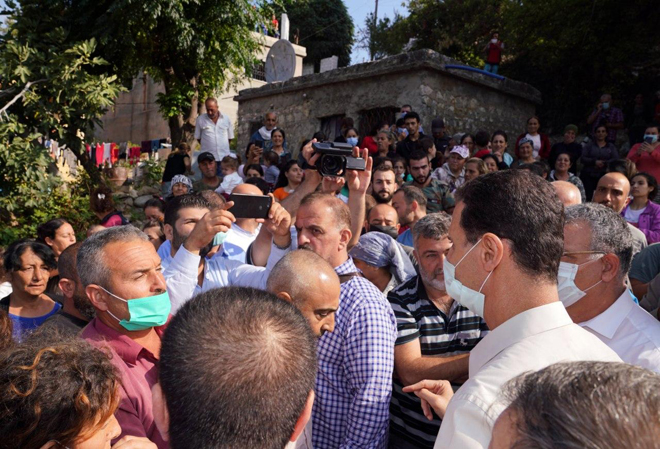
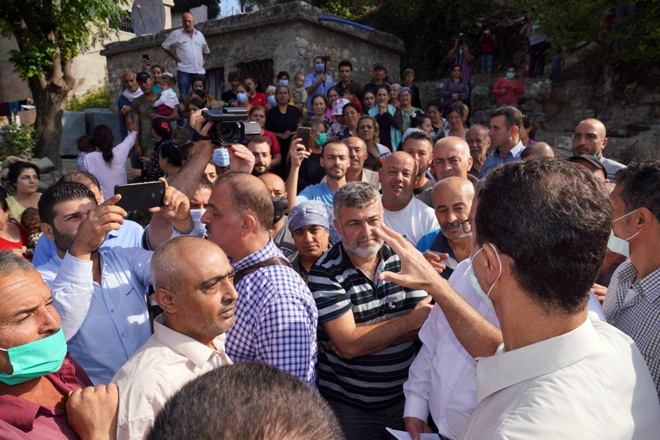
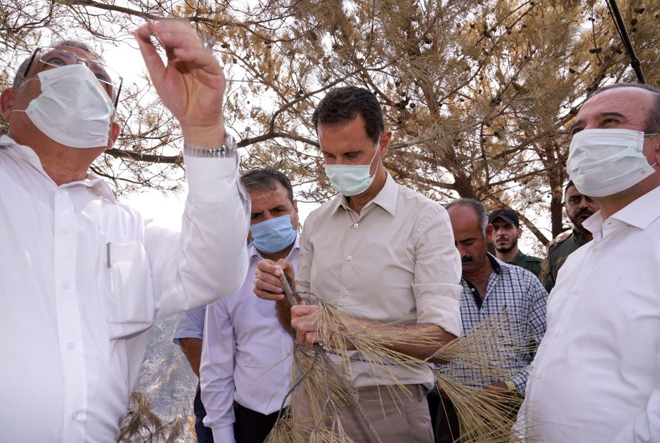
President Bashar al-Assad on Tuesday toured a number of areas affected by fires few days ago in Lattakia province.
In the first station of his tour, President al-Assad visited Ballouran area in Lattakia northern countryside, inspecting the damage caused by the fires and met the locals.
President al-Assad listened to the needs of the locals of Ballouran village to secure them and help enhance the factors of their adherence to their lands and re-cultivating them as soon as possible.
Ministers of Local Administration, Agriculture Minister and Lattakia Governor accompanied President al-Assad in his tour.
In Qardaha countryside, President al-Assad visited Bsout village whose locals were forced to leave their homes during the fires, and they returned after extinguishing them in cooperation between the civil defense, the Syrian Arab Army and the locals of the village and its surroundings.
The locals of the village expressed high appreciation over the efforts exerted by the state institutions and the locals of the area which have contributed to securing their village and extinguishing the fires before devouring it along with the surrounding areas, asserting that their immediate return to their houses reflects their adherence to their village and lands despite of all the difficulties they have been facing.
In a statement to the national media during his visit to Bsout village, President al-Assad said that the damage and challenges are large at the same time, adding that “the most important thing which we know is that overcoming these challenges is not impossible at all, as all problems which we have heard about before our visit or which we have monitored in the reports and have heard about from the citizens and the affected families, all of them surely have a solution.”
“They only need some arrangement; however, the state will shoulder the biggest responsibility with regard to this support which is primarily a financial support to enable these families to stay on these lands and invest them,” the President added.
President al-Assad said that there are many challenges; the first is that the majority of the affected families have lost the current season, so, at minimum, we are talking about the loss of resources for one year, and there are families who have lost the trees, particularly the olive which need from 5 to 8 years, here we are in front of the challenge of re-production to let people remain in this region through technical support, whether through seedlings or alternative plants.
“The other side is the human support, we have to bear financial burdens and help those families who have lost the resources.. the third challenge is that the families may tend to sell the land because they have lost the trees, and of course there are persons who attempt to exploit the citizens’ need to buy these lands and change them from productive lands into real estates,” the President said.
President al-Assad went on to say that those points are linked to each other and the main goal of the visit is to inspect details and be assured that the plans which will put during the coming days are realistic and reasonable which are possible to be applied.
“As for forestry areas, as I know, the largest part of fires has affected the forestry.. more than 60%…the fear is from the spread of random buildings in those areas.. so there should be governmental decisions to strongly prevent any person to randomly build… these lands are national wealth,” the President said.
President al-Assad added that the catastrophe that took place is a national catastrophe in the human, economic or environmental meaning.. it is normal to continue the round… and I will go ahead in this tour according to a certain timetable because we want to support all the lands and areas, support every affected tree, family and each individual.
President Al-Assad added that this visit is a beginning for another visits and an opportunity to meet those kind people from whom we take strength, patriotism and also dignity.
“I want to avail this opportunity to salute the civil defense men … I was not able to meet them and they had a very effective and basic role and we all know this fact despite the lack of capabilities… I greet them and greet everyone who has contributed to putting out fires in a very short time in light of the capabilities… of course, there is no need to talk about the role of the Syrian Arab Army, whether on the fronts with terrorists or on the fronts with fire,” the President said.
President al-Assad also greeted journalists who have covered all the news and conveyed the images of fires in a transparent and true way.
President al-Assad continued his tour to include Kfar Dabil area in the countryside of Jableh city where fires devoured a large part of the town’s forests.
“The holy blood of the Syrian Arab Army’s martyrs won’t go in vain. Every drop of my husband’s blood when he was slaughtered savagely by ISIS terrorists in the northern countryside of Lattakia province because he was one of the Syrian Army personnel is a source of pride, hope, strength and steadfastness,” Mrs. Hasna Issa said in a statement to the Syriatimes e-newspaper on the sidelines of an event held by “Assawari” Civil Society Association in Lattakia province marking International Women’s Day ( IWD) and Mother’s Day.
She underlined that the worst and most brutal massacres were carried out by terrorists in the northern countryside of Lattakia.
“I will not forget that day when I and my three little children witnessed the slaughtering of my husband. When my five-year old son saw his father lying on the ground covered with his blood, he threw stones at the terrorists, who then tied the child to a tree and started torturing him by burning his body with a hot iron rod,” Mrs. Issa added with her eyes full of tears and sadness.
She went on to say “My children and I spent four years as hostages of the ISIS terrorists. We witnessed unspeakable violence of physical and mental suffering.”
“During those long days of detention we were close to death every minute as we were cruelly tortured but I felt the prayers of the whole world fortified my inner peace and strength” Mrs. Issa made it clear.
A bright smile lit up her face when she said “I believe that the merciful God always finds a way to help everyone and we were liberated thanks to the hero Syrian Arab Army.”
Mrs. Issa described her imprisonment as an extraordinary experience that provided her with more strength and determination to stay steadfast and overcome all the difficult circumstances like other distinguished Syrian women.
On her part, Mrs. Reema Khalil, and elderly lady in her eighties, told Syriatimes that “when ISIS terrorists stormed our village in the countryside of Lattakia, they destroyed our houses, burnt our lands, kidnapped a lot of families and slaughtered a number of innocent citizens.”
“One of my sons was martyred in Aleppo and the other was martyred by an explosive bomb that targeted his home in the village. His wife and his two children, Haidar and Hala, were kidnapped by the terrorists,” Mrs. Khalil said .
She added that after two years of kidnapping, her grandson Haider was released by the Syrian Arab Army, but no information has surfaced about his kidnapped mother.
The grandma added that her granddaughter Hala was sent by the terrorists to Turkey for organ trafficking, but a faithful Syrian lady managed to bring Hala back to Syria.
“Hala returned to live with me and her brother Haider, but unfortunately she has got an injury by a gunshot in her lower jaw and now she finds difficulty in talking”, Mrs . Khalil said .
The patient grandma, who is alone looking after Hala and Haider, said the children miss their mother and hope to see her again.
Syrian Women’s unbreakable will
In turn , Head of “ Assawari” Civil Society Association Mrs. Afnan Blal asserted that the Syrian women have sacrificed much during the Syrian crisis as many of them have lost their loved ones including parents, husbands, brothers and children as martyrs because of terrorism, yet the Syrian women never stopped to play their role in defending their homeland and supporting the army in its battle against terrorism.
Mrs. Blal confirmed that the association is a support initiative that seeks alleviating women’s suffering from the crisis and providing assistance to affected women who fled the crimes of terrorist groups in several provinces.
She highlighted the fact that Mrs. Asama Al-Assad, Syria’s First Lady, is the role model for all Syrian women as she is the symbol of steadfastness, strength, hope and determination.
Turkey announced last month that it could no longer restrain the flow of refugees from Syria, and opened its borders. Following this decision, taken amid tensions in Syria’s Idlib province, thousands of migrants have been attempting to enter Greece through Turkey. Police and army units have been deployed to the border.
Turkish President Recep Tayyip Erdogan has called on Greece to “open the gates” to migrants.
“Hey Greece! I appeal to you… open the gates as well and be free of this burden. Let them go to other European countries,” President Erdogan said during a televised speech in Istanbul.
He added that he will travel to Belgium on Monday for talks with the European Union.
“I hope I will return from Belgium with different outcomes,” Erdogan said.
The situation with migrants at the Greek-Turkish border escalated in late February after Ankara announced it had opened its border with the European Union to migrants and refugees following the recent increase in tension in the Syrian province of Idlib. Soon after, tens of thousands of migrants rushed to Turkey’s border with Greece and Bulgaria to attempt to get into Europe.
Turkish police stand by migrants camping in Edirne near the Turkish-Greek border
According to Turkey, one of the reasons it has opened its borders to the EU was the lack of assistance from the bloc in dealing with the flow of migrants. Under the 2016 agreement between the two, Ankara promised to restrain the flow of migrants into the bloc, with Brussels pledging to provide funds to help Turkey care for the refugees.
On Thursday, Russian President Vladimir Putin and his Turkish counterpart, Recep Tayyip Erdogan, agreed on a ceasefire in Idlib. Two parties also agreed to create a security corridor six kilometres (3.7 miles) north and south of the M4 highway in Syria, which connects the provinces of Latakia and Aleppo.
Russian and Turkish forces were seen driving on the M4 highway, just outside Saraqib in Idlib province on Friday, following a ceasefire agreed between Syrian government forces and Turkish-backed forces, secured by Moscow and Ankara.
Footage shows the vehicles proceeding down the road near the city, which was reportedly liberated by the Syrian Arab Army (SAA) earlier this week after being the scene of intense fighting between the SAA and Turkish-backed forces.
The ceasefire, which came into force at midnight, was reached during talks between Russian President Vladimir Putin and his Turkish counterpart Recep Tayyip Erdogan in Moscow.
On Thursday, the two leaders discussed the situation in Idlib and agreed to create a security corridor around the M4 highway which links Latakia and Aleppo.
MOSCOW (Sputnik) – Imad Moustapha, Syria’s current ambassador to China and former ambassador to the United States, told Sputnik on Friday that Ankara’s failure to fulfil some of its commitments under the 2018 Russian-Turkish memorandum on a demilitarised zone in Syria’s Idlib casts doubts on the validity of the newest ceasefire in the province.
“Erdogan’s track record regarding the Sochi and Astana agreements indicates that he has never honoured his commitments before. It is very difficult to presume that this time will be different,” Moustapha said when asked whether he expected the agreement on the ceasefire to be fulfilled by Turkey.
The ambassador went on to say that the only solution to the ongoing conflict in northern Syria would be for Turkey to withdraw its forces.
“As for the security corridor, we have to see if the joint patrols will be able to guarantee the free circulation of the Syrian people along the M4 from Aleppo to Latakia and return. Only time can tell if this is going to work or not”, Moustapha added.
On Thursday, Russian President Vladimir Putin and his Turkish counterpart, Recep Tayyip Erdogan, agreed on a ceasefire in Idlib, which started at midnight. The sides also agreed to create a security corridor six kilometres (3.7 miles) north and south of the M4 highway in Syria, which connects the provinces of Latakia and Aleppo.
Fighting in Idlib escalated last week after jihadists carried out an operation against Syrian government troops. This prompted retaliatory attacks, after which the Turkish military said that more than 30 of its soldiers had been killed. The Russian Defence Ministry said that those troops were, for reasons unknown, among the terrorists when they got caught in Syria’s return fire.
بات الجيش السوري على مقربة من طريق حلب – اللاذقية من جهة أقصى ريف حماة الشمالي الغربي (أ ف ب )
تابع الجيش السوري عملياته في أقصى ريف حماة الشمالي الغربي، حيث تَمكّن من السيطرة على عدد من القرى والبلدات، بالغاً مشارف الطريق الدولي حلب – اللاذقية (M4). في هذا الوقت، تَصاعد التجاذب الروسي – التركي على خلفية مقتل عشرات الجنود الأتراك في ريف إدلب الجنوبي أول من أمس، فيما أتى التفاعل الغربي مع مناشدات أنقرة دعمها في الشمال السوري بارداًفي ظلّ ردّ تركي وُصف بـ«الهزيل» على مقتل أكثر من ثلاثين جندياً تركياً بغارات جوية روسية – سورية في إدلب أول من أمس، تابع الجيش السوري تقدمه في منطقة سهل الغاب في أقصى ريف حماة الشمالي الغربي، حيث سيطر على قرى خربة الناقوس والمنصورة وتل واسط والزيارة والمشيك وزيزون الجديدة وقسطون، ليصل إلى مشارف الطريق الدولي حلب – اللاذقية (M4)، والذي باتت تفصله عنه كيلومترات قليلة فقط، فيما يفصله عن مدينة جسر الشغور الاستراتيجية أقلّ من 10 كم. وتهدف العمليات العسكرية في أقصى ريف حماة الشمالي الغربي، وريف إدلب الجنوبي، إلى الوصول إلى الطريق المذكور، ووصله بالطريق الدولي حلب – حماه، علماً أن الطريقين يلتقيان في مدينة سراقب الاستراتجية جنوب شرق مدينة إدلب، والتي أعاد المسلحون السيطرة عليها فجر يوم الأربعاء، وقطعوا بذلك الطريق الدولي «M5». ولم تفلح محاولات الجيش السوري، منذ ليل الخميس – الجمعة، في استعادة السيطرة على المدينة؛ إذ انطلق عبر محورَي تل الشيخ منصور والدوير، من دون أن يحرز تقدّماً.
في غضون ذلك، وفي إطار الردّ التركي على مقتل الجنود الأتراك في بلدة بليون في ريف إدلب الجنوبي، قصفت المدفعية التركية نقاطاً ومواقع للجيش السوري في اللاذقية وحلب وإدلب. وطال القصف بلدتَي نبل والزهراء شمالي حلب، ومواقع للجيش في أرياف إدلب الجنوبية والشرقية. ونشرت وزارة الدفاع التركية مقطع فيديو يظهر، بحسبها، استهداف تلك المواقع، فيما اكتفت دمشق بتصريح لمصدر في وزارة الخارجية، قال فيه إن «الجيش لن يسمح للدول الغربية ووكلائها بتأبيد سيطرة الإرهابيين في سوريا». وأضاف المصدر أن الجيش «سيستمرّ في تنفيذ مهامّه المتمثلة في إنهاء الوجود الإرهابي في كلّ أنحاء سوريا». في هذا الوقت، برزت مساعٍ دبلوماسية روسية لتخفيف الاحتقان، وتجنّب أيّ صدام مباشر مع أنقرة، على رغم مشاركة القوات الروسية في غالبية عمليات القصف الجارية في إدلب. وكانت أرسلت موسكو، عقب اشتداد التطورات في إدلب، وفداً إلى أنقرة للاجتماع بالمسؤولين الأتراك. وأعلنت وزارة الخارجية التركية، أمس، أن تلك المحادثات انتهت، وأن «الوفد الروسي في الطريق إلى بلاده». وأشارت الوزارة إلى أن المسؤولين الأتراك أبلغوا الوفد الروسي «ضرورة تطبيق وقف دائم لإطلاق النار فوراً في إدلب»، و«ضرورة انسحاب قوات الحكومة السورية إلى الحدود المقرّرة في اتفاق خفض التصعيد المبرم عام 2018 بين تركيا وروسيا».
بوتين وإردوغان قد يلتقيان الأسبوع المقبل في موسكو
في غضون ذلك، أعلن الكرملين، أمس، على لسان المتحدث باسمه ديمتري بيسكوف، أن «الرئيسين الروسي فلاديمير بوتين، والتركي رجب طيب إردوغان، قد يلتقيان الأسبوع المقبل في موسكو». وكان بيسكوف أعلن، في وقت سابق، أن بوتين بحث مع أعضاء مجلس الأمن الروسي الوضع في إدلب، مشيراً إلى أن «الجانب التركي لم يبلغنا بوجود العسكريين الأتراك في أماكن تجمّع الإرهابيين»، مضيفاً أن «الجنود الأتراك قتلوا خارج نطاق نقاط المراقبة». وجدّد القول إن «القوات التركية فشلت في السيطرة على أعداد كبيرة من المسلحين ومنع أعمالهم العدائية تجاه المواقع الروسية»، متابعاً أن روسيا «اتخذت جميع التدابير اللازمة لضمان أمن تركيا على طول الحدود السورية التركية». في المقابل، أعلن البيت الأبيض أن الرئيس الأميركي، دونالد ترامب، ونظيره التركي، اتفقا في اتصال هاتفي على «ضرورة وقف النظام السوري وروسيا وإيران للهجمات في إدلب». وجدّد ترامب، في خلال الاتصال، «تأكيده دعم جهود تركيا لخفض التصعيد في شمال غرب سوريا وتجنب كارثة إنسانية». كذلك، أعلنت الرئاسة التركية أن أردوغان «أبلغ ترامب باستعداده لدفع الجيش السوري إلى المواقع المحدّدة في اتفاق سوتشي».
وعلى رغم مناشدة أنقرة حلفاءها في «حلف شمال الأطلسي» دعمها، فقد اكتفى «الحلف» بالتعبير عن تضامنه معها، من دون أن يقدّم تعهّدات بإجراءات جديدة للدفاع عن القوات التركية. وقال الأمين العام للحلف، ينس ستولتنبرغ، إن «الحلفاء وافقوا على المحافظة على الإجراءات القائمة حالياً لتعزيز قدرات تركيا الدفاعية الجوية». بالتوازي مع ذلك، ردّت المفوضية الأوروبية على التهديدات التركية بفتح الحدود أمام اللاجئين السورييين للتدفق نحو أوروبا، بإعلانها أن الاتحاد يتوقّع من تركيا «احترام تعهّداتها الواردة في الاتفاق الهادف للحدّ من تدفق المهاجرين من سوريا»، وفق ما قال المتحدث باسم المفوضية بيتر ستانو . أما الأمين العام للأمم المتحدة، أنطونيو غوتيريش، فقد اعتبر أن وقف إطلاق النار في إدلب «هو الحاجة الأكثر إلحاحاً الآن قبل خروج الوضع عن السيطرة»، واصفاً استهداف القوات التركية بـ«أكثر اللحظات إثارة للقلق خلال فترة الصراع في سوريا». ومن المنتظر أن يعقد مجلس الأمن الدولي اجتماعاً طارئاً لمناقشة التصعيد الأخير في سوريا، وفق ما ذكر دبلوماسيون.
The murder of the Iranian hero-martyr General Soleimani created a situation in which a war between Iran and the Axis of Kindness (USA/Israel/KSA) became a real possibility but, at the very last minute, Uncle Shmuel decided that he had no stomach for a full-scale war against Iran. Wise decision.
This, however, does not at all imply that the AngloZionist Empire decided to stand by idly, far from it. The need to take quick and determined action became particularly acute following the huge anti-US demonstrations in Iraq (well over one million people in the streets!) which directly put at risk the US occupation (the MSM would call it “presence”) in both Iraq and Syria.
At the same time, Turkish President Erdogan’s refusal to remove all the “bad terrorists” from the Idlib province eventually resulted in a joint Syrian-Russian offensive to liberate the province. That offensive, in turn, clearly infuriated the Turks who warned of a major military operation to prevent the Syrians from liberating their own country.
This begs the question: are Russia and Turkey really on a collision course?
There are certainly some very worrying warning signs including a number of very harsh statements by Erdogan himself, and a suddenly re-kindled Turkish interest for the US “Patriots”.
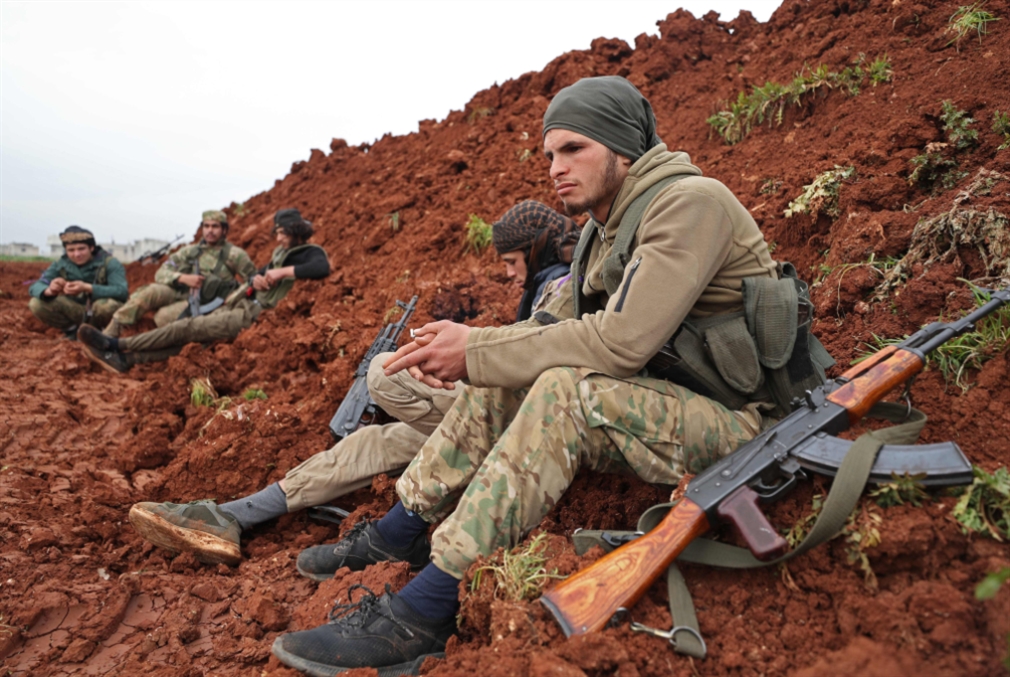
On the ground in Idlib, the Turks have clearly provided the “bad terrorists” with a lot of support including equipment, MANPADs, tanks and armored personnel carriers. The Turks actually went as far as sending special forces to assist the “bad terrorists” directly. Finally, from footage taken by Russian and Syrian drones, and even the “bad terrorists” themselves, it appears undeniable that Turkish MLRS and regular artillery provided the “bad terrorists” with fire support.
Both sides also agree that a number of Turkish personnel were killed (they only disagree on how many and what these Turks were doing in Syria).
Finally, and most ominously, there is even a video circulating on the Internet which appears to show a US “Stinger” being fired by the “bad terrorists” at a Russian aircraft which, thank God, managed to evade it (unlike 2 Syrian Army helicopters which were shot down).
So the first conclusion that we can come to is that the Turks are already engaged in combat operations against the Syrians. For the time being, these combat operations are just below the threshold of “credible deniability”, but not by much. For example, if the Turks had shot down a Russian aircraft you can be pretty certain that the Russian public opinion (which has still not forgiven Erdogan for the downed Su-24) would have demanded that the Russian Aerospace Forces massively retaliate (just as they have every time Russian military personnel have been killed) kill scores of Turks.
The Russian position is very straightforward. It goes something like this:
The Turks committed to remove all the “bad terrorists” from the Idlib province, leaving only the “good terrorists” who are committed to a ceasefire and a political peace process in place. That did not happen. In this case, the Syrians clearly have to do themselves what the Turks refused (or could not) do. The Russian military presence in Syria, and the Russian military operations, are all absolutely legitimate and legal: the legitimate government of Syria invited the Russians in, and the UNSC agreed to back the Syrian peace process. Thus the Russian Aerospace Forces’ strikes against the “bad terrorists” are absolutely legal. Furthermore, Russia very much deplores the presence of regular Turkish units among the “bad terrorists” which is both illegal and very unhelpful. Finally, the Russian Aerospace forces have no way to determine who sits in which tank, or who provides artillery cover for the operations of the “bad terrorists”. Thus, if Turkish military personnel are killed in Syrian or Russian operations, this would be entirely the fault of Ankara.
So far the Turkish military operation has been rather unsuccessful and limited.
But Erdogan is now promising a major attack.
Will that happen and what can the Turks really do?
First and foremost, Turkey does not have the means to enter into a full-scale conflict with Russia. Turkey cannot do that for political, economic and military reasons:
Political: the simple truth is that Turkey (and Erdogan) desperately need Russian political support, not only towards the West, but also towards Iraq, Iran or Israel. Furthermore, Erdogan has now clearly deeply alienated the Europeans who are fed up with Erdogan’s constant threats to open the “refugees” spigot. As for the Turks, they have already known for years that the EU will never accept them and that NATO will not support Turkey in its (very dangerous) operations in Iraq and Syria.
Economic: Turkey’s economy really suffered from the sanctions introduced by Russia following the shooting down of the Russian Su-24 by Turkish aircraft (backed by USAF fighters). What was true then is even more true now, and the Turkish public opinion understands that.
Military: the past years have been absolutely disastrous for the Turkish armed forces which were purged following the coup attempt against Erdogan. This sorry state of affairs is indirectly confirmed by the very poor performance of Turkish forces in Syria.
What about a conflict limited to Syria?
Again, Turkey is in a bad position. For one thing, the Syrians and, even more so, the Russians control the airspace above Idlib. The Turks are so frustrated with this state of affairs that they have now reportedly asked the US to deploy Patriot missiles in southern Turkey. This is a rather bizarre request, especially considering that Turkey purchased S-400s from Russia or how pathetically the Patriots actually performed (recently in the KSA and elsewhere before that). This, by the way, might well be a case of fake news since, apparently, there are no Patriots available for Turkey even if the US agreed to sell.
Then there is the bellicose rhetoric we hear from Erdogan. For example, he recently declared that:
“The regime, backed by Russian forces and Iran-backed militants, are continuously attacking civilians, committing massacres and shedding blood, (…) I hereby declare that we will strike regime forces everywhere from now on regardless of the [2018] deal if any tiny bit of harm is dealt to our soldiers at observation posts or elsewhere.”
That kind of language is, of course, very dangerous but, at least so far, the Turkish operation has been both limited and unsuccessful. Syrian President Assad was not impressed and declared that:
It also means that we must not rest idle, but prepare for the battles to come. As a result, the battle to liberate the Aleppo and Idlib countryside continues regardless of some empty sound bubbles coming from the north (vain threats from Erdogan), just as the battle continues to liberate all of Syrian soil, crush terrorism and achieve stability.
In the meantime, in Iraq, the US has apparently dug-in and categorically refuses to leave. In practical terms this means that the Iraqis will have to step up their anti-US campaign both politically (more protests and demonstrations) and militarily (more IEDs, convoy attacks and, probably soon, drone, cruise missile and ballistic missile attacks on US targets in Iraq). I don’t believe that the US will be able to sustain that kind of pressure in the mid to long term, especially not in an election year (which promises to be hellish anyway). Right now, the Idiot-in-Chief seems to think that threatening Iraq with “very big sanctions” is the way to restore good relationships. In reality, all this will do is to further inflame anti-US feelings in Iraq and the rest of the region.
Then there is the tactical situation. Please check these two maps: (click on map for a higher resolution)
The part in red shows the government controlled areas. The light blue (or light green on the 2nd map) show the Turkish deployment. The part in olive green (or darker green on the 2nd map) shows the parts of the Idlib province which are still under Takfiri occupation. Finally, the small region around Tell Rifaat are controlled by the Kurds.
The Syrian forces, backed by Russia, have now pushed back the latest Turkish+Takfiri attack north and west of Aleppo and they are now attacking the southern tip of the Takfiri occupation zone around the Zawiya mountain and highlands, see here:
The Syrians have options here. They can either gradually push north, or they can try to envelop the Takfiri forces in a “cauldron”. Finally, the Syrians would score a major victory if they succeeded in regaining control of the highway between Aleppo and Latakia (in blue on the map).
As for the Turkish-backed Takfiris, they are pushing very hard towards Idlib, so far with only moderate and temporary successes (they typically take a location at hugecost in lives and equipment and then cannot hold on to it as soon as the Syrians and Russians bomb the crap out of their newly conquered positions).
All of this is taking place while Syrian, Russian, Turkish and US patrols are regularly meeting, often in rather tense situations which could quickly escalate into a firefight or, even worse, an open battle. There is also the risk of an incident in the air since these four nations also conduct air operations over Syria. And, just like in the case of the ground operations, Syrian and Russian air operations are legal under international law, Turkish, US or Israeli operations are not and constitute an act of “aggression” (n.b: the highest crime under international law).
So far, the various negotiations between the parties have not yielded any result. This might change on March 5th when a conference on Syria attended by Turkey, Russia, France and Germany will meet (probably in Istanbul) to try to find a negotiated solution. Considering that Turkish soldiers are killed every day and already that 2 Syrian helicopters have been shot down, this might be too late to avoid an escalation.
I will conclude here by posting a (minimally corrected) machine translation of a Russian translation of a text originally written by a Turkish political commentator and translated into Russian by a Telegram channel: (emphasis added)
Russia’s strategy from the very beginning was to return full control of Syrian territories to Assad. And Moscow was implementing its plans, getting closer to the goal step by step. As long as Damascus will not take Idlib, the operation will continue. You don’t need to be an expert in this field to understand this. This is obvious. Someone says that Erdogan’s trip to Ukraine played a role in the offensive operations of Damascus. In fact, this visit is the result of the Syrian army’s offensive. The Turkish President went to Kiev just after tensions rose between the Turkish armed forces and the Russian side. Erdogan is in Ukraine made statements that have caused irritation in Moscow.
Turkish diplomacy was at an impasse. We discussed for a long time that you can’t put all your eggs in one Russian basket. And they said: we will buy the S-400, build a nuclear power plant, and develop tourism. And Putin was made a hero in our country. And now the defense Secretary is talking about buying American patriot air defense systems. And the President is talking about acquiring Patriot. “We did not succeed with Russia, we will get closer to the United States” – this is not how foreign policy is done. We need consistency in foreign policy. It is not appropriate for a country with a strong military power to change sides between world powers once a week.
What we are still discussing these days: we need to get closer to Europe and the US against Russia. These discussions worry our entrepreneurs who work with Russia. The tourism sector is concerned. Without Russian tourists, our tourism sector cannot fill all the volumes and make a profit. We have not yet been able to resolve these issues, and we are discussing a clash with Russia. Let’s remember what happened after Turkey shot down a Russian plane. Our tourism sector could not recover for two years. What to expect from a military clash. We have to talk about it.
The goal of our state: to live in peace on our land, and keep all the troubles away from yourself, while doing this to attract new troubles – this is not an indicator of a good military strategy or a well-thought-out diplomatic strategy. Everyone should understand this.
The risk for Erdogan is obvious: in case of a serious confrontation with Russia (and Syria AND Iran, don’t forget them!), the consequences for Turkey might be severe, resulting in a sharp rise in anti-Erdogan feelings in Turkey, something he can hardly afford.
And that brings us to the current US/NATO/CENTCOM posture following the assassination of General Soleimani I mentioned in the beginning of this article. The risks of a quick and dangerous escalation involving the US and Iran are still extremely high. The same can be said for the risks of a resumption of anti-US attacks by Iraqi Shia forces. Then there are the conflicts in both Afghanistan and Yemen, which Uncle Shmuel probably would prefer to end, but has no idea how. In these countries a rapid escalation could occur at any time, especially following Iran’s officially declared goal to kick the US out of the Middle-East. And now, there is a risk of major escalation between Turkey, Syria and Russia: such an escalation would have a major potential to suck in the US forces in the region, even if nobody does so deliberately (or if the Iranians do that very deliberately).
Right now Uncle Shmuel is busy with a strategic PSYOP trying to get Russia and Iran into a conflict (see this propaganda piece for example). That will not work, as both the Russians and the Iranians are waaaaaaay too savvy to fall for such primitive things. The US also tried to instigate riots inside Iran, but they quickly petered out (as did the rumors about the US deliberately shooting down the Ukrainian airliner).
The Middle-East is impossible to predict, it is too complex and there are too many possible factors which influence the situation. Still, my guess is that the March 5th conference, assuming it takes place, will force Erdogan to back down and re-pledge his commitment to bringing back security to the Idlib province. That is, as far as I can see, the only way for Erdogan to avoid an embarrassing military defeat with possibly very serious political consequences.
Conversely, should there be an open clash between Turkey and Syria+Russia, then I don’t see NATO intervening to back Turkey. At the most, the US/NATO can send forces to “protect” Turkey and equipment, but in both cases these would not be effective (the problems of the Turkish military are too big to be solved by such mostly symbolic actions). While some more rabid countries (Poland, Netherlands, UK and, of course, the USA) might be tempted to get a major NATO action going against Syria and, through that, against Russia, the mentally saner EU countries have exactly zero desire to end up in a war against Russia, not over the Ukraine, and not over Syria.
Thus while Erdogan is desperately trying to pit the US against Russia, this will not work, especially since this latest pro-US “zag” will only further alienate Iran (and the rest of the region). I predict that after the March 5th conference, Erdogan will be forced to resume his “friendship” with Putin and basically cave in.
If that does not happen, for whatever reason, an escalation will be pretty close to inevitable.
PS: Colonel Cassad (aka Boris Rozhin) has published on his blog an interesting article which looks at a theory which, apparently, is popular in the Middle-East and Russia. This theory says that what is taking place is a gigantic show, a deception, in which both Russia and Turkey appear to be at odds, but in reality are working hand in hand to disarm the Takfiris and exchange territory. Here are, in his opinion, the possibly indications of such a collaboration: (machine translated and minimally corrected)
After some formalities, Turkey resumed joint patrols with the Russian military in Rojava, which is carried out in a routine manner.
Russia has increased the quota for the supply of Turkish tomatoes to Russia despite the fact that Russia threatened to block the supply of Turkish tomatoes.
US did not give Turkey patriot missile, which was described in the Turkish media referring to anonymous sources in the Turkish government. No actual support from the United States and NATO, Turkey has not received.
Despite the fact that the SAA was not going to stop the offensive and continued to surround the Turkish observation points, Turkey has effectively given Assad’s carte blanche for all of February, stating that no major combat operation will be initiated before the beginning of March.
The main chain of the new observation points were deployed by Turkey to the North of highway M-4. The southern direction is not actually strengthened. Attempts to cover the Kafr will Sagna or Kafr Nabl were not undertaken, although this is more important points than Nairab.
The bulk of the Pro-Turkish militants were drawn to Idlib and Carmine, while the southern front was actually exposed for Assad there is a situation of maximum favour for liberation dozen cities and towns.
The battle of Niravam turned into a week-long meat grinder, where the militants engaged in stupid frontal assaults against Syrian positions with heavy losses but capturing Neirab, there is virtually nothing on the operational level, they did not win – losing people and most importantly – time.
The Russian and Turkish military keep all channels of communication and exchange information, including on the movement of Turkish columns. The Russian military help to supply the surrounded Turkish observational points in the rear of Assad.
Moscow and Ankara have repeatedly stressed that not to seek a military conflict with each other, preferring to seek resolution of disputes through diplomatic means.
And Rozhin adds:
Why all this may be part of a backroom deal? Because such a scenario would allow Turkey to look like a defender of Idlib, which is in strong opposition to the plans of Assad and Putin. At least visually. As for Assad and Putin, they can claim to have liberated part of the Idlib province. The battle of Niravam in this logic allow Erdogan to save face before “in the interests of peace and security,” to sign a new deal with Russia with a new line of demarcation, which officially has already been discussed at negotiations in Moscow on 17-18 February. Officially, the Turks rejected it. But it’s official. And if we assume that the agreement already exists and this just fixed sight 5 March, while Assad released another piece of Idlib and the militants “An-Nusra” will be partially disposed in the battles with the SAA in Idlib and in the southern frontal attack on the front under Niranam. In favor of this version may indicate the previous experience of transactions between Russia and Turkey, when Ankara loudly growled at Assad, but de facto did not prevent the Assad regime to clean up the enclaves and win the battle for Aleppo. Against this version can play what the Turks themselves are suffering losses in manpower, and further concessions to Russia may undermine Erdogan’s positions in Idlib, so he tries to bargain.
I personally doubt this version, if only because this is a very tricky and dangerous way to get things done, and because of the many threats and even ultimatums Erdogan is constantly spewing. A more likely explanation for all of the above is that 1) the Takfiris are desperate and are running out of steam and 2) the Turks are afraid of a serious confrontation with Russia. Rozin concludes:
I think that by March 5 the question of whether there is was a secret deal or not will finally be clarified, since Erdogan’s threats are all focusing on early March, at which point he will have to either attack or chose to play the role of peacemaker, which “diplomatically” stopped the advance of Assad.
Missile finds patrons
-
“Iran War: Axios Reports US, Iran Agree to Ceasefire Within Ceasefire, Doha
Meeting on Strait of Hormuz as Iran Stands Up US on Technical Talks; Ship
Trans...
Hell Is Heaven For Jews
-
Hell Is Heaven For Jews June 23 2026 ___________________________________
More Vids! +BN Vids Archive! HERE! ___________________________________
Support The...
Is Rolex Quietly Retiring the GMT-Master II Pepsi?
-
Few Rolex rumors spread faster than whispers about the GMT-Master II
“Pepsi.” It happens almost every year. Someone claims production is ending,
Reddit lig...
Report on Beth Israel vigil 02-21-26
-
*Vigils continue, non-stop*
Just because we don’t get Vigil Reports out at the same rate as years'
past, we remind readers that we show up every Saturday ...
-
Hello all,
It is with great sadness that I share with you the passing of our beloved
sister, Mother, and Grandmother, the individual that you all knew ...
Best Horror Podcast
-
Best Horror Podcast Introduction: Horror podcasts […]
The post Best Horror Podcast appeared first on Copper Shock Horror Podcast.
Ikhras Endorses Muntadhar Al-Zaidi
-
“Oh parties of banditry and sectarianism and corruption, we have come and
our goal is to destroy you.” Ikhras formally endorses Muntadhar al-Zaidi,
Iraqi j...
Prince Charles: Foreign Jews behind bloodshed in ME
-
In May, 2017, British Crown Prince Charles declined an invitation from
Zionist entity’s president Reuven Rivlin‘s to attend the 100th anniversary
of the no...
Palestinian Women – One for All, All for One
-
Honouring All Palestinian Women by Honouring Three: Hanin Zoabi, Ahed
Tamimi, Samah Sabawi Vacy Vlazna “Palestinian women have always stood side
by side ...
US’s Saudi Oil Deal from Win-Win to Mega-Lose
-
By F. William Engdahl Who would’ve thought it would come to this? Certainly
not the Obama Administration, and their brilliant geo-political think-tank
neo-...
-
*Mordechai Vanunu wins human rights prize of Brazilian Press Association *
* http://www.alternativenews.org/english/index.php/features/updates/7038-mordechai...
Abdul Aziz Rantissi:
"My ultimate wish, my God, is to attain martyrdom,"...God granted him his wish on April 17, 2004, at the hands of Israeli assassins.






 “The holy blood of the Syrian Arab Army’s martyrs won’t go in vain. Every drop of my husband’s blood when he was slaughtered savagely by ISIS terrorists in the northern countryside of Lattakia province because he was one of the Syrian Army personnel is a source of pride, hope, strength and steadfastness,” Mrs. Hasna Issa said in a statement to the Syriatimes e-newspaper on the sidelines of an event held by “Assawari” Civil Society Association in Lattakia province marking International Women’s Day ( IWD) and Mother’s Day.
 “Hala returned to live with me and her brother Haider, but unfortunately she has got an injury by a gunshot in her lower jaw and now she finds difficulty in talking”, Mrs . Khalil said .