Uprooted Palestinians are at the heart of the conflict in the M.E Palestinians uprooted by force of arms. Yet faced immense difficulties have survived, kept alive their history and culture, passed keys of family homes in occupied Palestine from one generation to the next.
This is not poetry nor mere exaggerations with the hope of spreading false hope. It is the reality of the Yemeni geographic revenge against the occupation.
Israeli technology is one of the most important sources of input for the Neom project, which heavily relies on stability that cannot be attained without securing the Red Sea itself.
For the UAE, Bahrain, “Israel,” and the United States to launch maritime military exercises is no show of force; it is a reflection of deep concern and misgiving, primarily that of “Israel.”
“Israel” is dealing with four nightmares in the Red Sea, and Yemen seems to be their common thread.
The first nightmare: “We will strike critical targets.” That is how Ansar Allah responded last year to “Israel’s” comment on the situation in Yemen. Ansar Allah’s words were not just mere lip service, for Yemeni drones and Sanaa’s missile capabilities pose a genuine threat to the occupation on the Red Sea front, which has been confirmed by various Israeli military research centers.
Throughout the entirety of the Yemeni Army and Popular Committee-controlled Yemen, threatening “Eilat” is not any harder than threatening Saudi Aramco – that is Ari Heistein’s approach, a researcher in the Israeli Institute for National Security Studies. Though Heistein underrates the Yemeni threat, he acknowledges that Ansar Allah is able to use long-range missiles to hit targets from very far ranges. He sums up the whole situation with a single phrase: “It is realistic; however, it is limited.”
The precarious aspect of “limitation” stems from one basic angle: long-range missiles would grant the Israeli defense systems a certain margin of time to respond. This study was written two weeks ahead of the battle of Seif al-Quds, which proved that the issues in the Israeli defense systems do not solely rely on preparation, for what merits preparation more than a war?
The second nightmare: during the 1967 war, “Israel” experienced firsthand the repercussions of the Suez Canal and the Straits of Tiran being closed, so what could be the adverse effects of a farther passage – Bab-el-Mandeb Strait – being closed?
Closing Bab-el-Mandeb Strait in the face of Israeli vessels could seriously harm Israeli trade, both in terms of imports and exports. India is the largest Israeli arms importer in the world, importing 43% of “Israel’s” arms exports between 2016 and 2020, while Vietnam is the third-largest in the world, importing 12% of “Israel’s” arms exports.
Arms exports are a vital part of the Israeli economy, as “Israel” ranks eighth in the world in terms of arms exports, exporting 3% of the world’s arms. Therefore, closing Bab-el-Mandeb in the face of Israeli ships, one of the main pillars of the Israeli economy, heavily impacts the lives of Israeli settlers, whom the Israeli authorities need many temptations to keep in place.
The Israeli economy heavily relies on imported goods, which cross through the Indian Ocean through Bab-el-Mandeb. “Israel” might experience a situation that is opposite to the one it went through during the October 1973 war, which saw “Israel” suffering because of Bab-el-Mandeb being closed in the face of Iranian tankers transporting oil to “Israel” back when Iran was under the Shah. Today, “Israel” is extremely worried about the same strait standing in solidarity with revolutionary Iran.
The third nightmare: “Israel” dreams about having coastal tourist-attractive cities, and they are part of its plans for the future, firstly due to profits they would generate, and secondly due to the doors they could open for normalization.
Carnegie Center calls this project “The diplomacy of the Saudi Neom.” Neom city is at the heart of this project, and Israeli technology is one of the most important sources of input for this project, which requires high levels of stability that cannot be attained without stability in the Red Sea. Losing the opportunity of having military stability in the Red Sea means “Israel” would lose its economic opportunities in these “smart cities.”
The fourth nightmare: China aims to ensure the finest conditions for stability in the regions and straits through which the Belt and Road Initiative goes. By taking a look at a map of the initiative, one sees that Bab-el-Mandeb is a pivotal intermediate link for its success. The same initiative deems the Haifa port as less of a priority in terms of pathways into the Mediterranean sea, especially because it has many alternatives.
“Israel,” who is acting very cautiously in fear of the US aims to please China, hopes to reap the utmost benefits from the project. However, Bab-el-Mandeb could seriously harm “Israel” if China was put in a zero-sum game. “Israel” would lose a railway that connects “Eilat” and “Ashdod” and huge gas pipelines that would transmit energy through the occupied territories and supply them with energy as well.
This is the Yemeni geographic revenge from the occupation, as the four Yemeni nightmares are enough to shake “Isreal” to the core in terms of the occupation’s security and economy.
Now that the Iranian fuel has arrived to Lebanon via Syria – under the care, sponsorship and protection of Hezbollah – and now that it is available in the Lebanese market at the preferences identified by His Eminence Sayyed Hassan Nasrallah as free or low-cost and to be distributed according to clear standards, it is the duty of every observer whether concerned or not [the unconcerned is definitely concerned but prefers not show it] to say what should be said neutrally. He should express his opinion objectively, if he could, about this achievement that has neither been fulfilled by Lebanon nor any other state with the challenges it carries. Of course, the challenges are not intended for internal parties who are completely ineffective and their words are nothing more than mere dust. But rather, the challenges confront regional and international parties which have been and still are laying a siege and pressuring major countries, and are somehow succeeding in that.
At first and foremost, the challenge facing the United States – which bet, through unprecedented economic and political pressure – that Lebanon and its entire component would surrender, in such a way that the Lebanese would yell at Hezbollah: “Enough! Yield to what the Americans want and engage in the game of subservience, normalization and surrender. Withdraw from the regional equations that you support or you had shaped, and have mercy on your people who are on the verge of collapse and have entered the tunnel of hunger, thirst and disease”.
The second challenge faced “Israel”, which also bet on Hezbollah’s reluctance to dare to transport the Iranian fuel, not only because that’s against Washington’s will, but also in transporting it via a sensitive sea route fraught with high risks, where “Israel” and its allies militarily control a large section of it to some extent, between the Arabian Sea, Bab al-Mandab, the Red Sea and Mediterranean Sea. “Israel” thought that Hezbollah would be afraid of launching even one ship in this sea route where it has frequently assaulted many Iranian ships. It was surprised by Hezbollah’s boldness, and what shocked it even more was when Hezbollah considered the ship or the ships that will transport Iranian fuel to Lebanon as a “Lebanese Territory” and the rules of engagement will apply to it just as they apply to the Lebanese land and facilities; asserting that any attack on it after it is loaded with fuel even if it is still docked in Iranian ports are tantamount to an attack on Lebanese territory.
The other challenge, despite lacking the importance and influence and does not pose any military danger such as the challenges confronting Washington or “Israel”, is the challenge facing some internal parties who bet – as usual – on the stances of Washington and “Israel”, believing that both would at least impede the transport of the Iranian fuel to Lebanon and ease the siege on the country. These parties remained at ease until they were certain that Iranian fuel had started flowing to Lebanon via the Syrian tankers. As they gasped its sweet scent, they were dumbfounded, silenced and tongue-tied, after being vocal and bold about the impossibility of Iranian fuel arriving.
It’s normal for these tongue-tied parties – after smelling the scent of Iranian fuel and hearing Sayyed Nasrallah’s detailed plan of fuel distribution to all the Lebanese; surely, those who desire and not by force, because oil by force has huge health and psychological repercussions – to keep their mouths shut, not to react positively with the event and never thank Hezbollah for this achievement. It’s typical of them because these people with their masters in the region and in the west attacked and conspired against Hezbollah when the latter was shedding blood in confronting the “Israeli” occupation or Takfiri terrorism in order to defend and protect the sons of these contingent and ungrateful people.
What’s worth noting in the reaction of these ungrateful parties is that their media refrained from reacting and appropriately reporting this event. Rather, they abided by the orders of their masters, benefactors and sponsors and overlooked broadcasting Sayyed Nasrallah’s speech regarding the details of transfer and distribution.
Last but not least, the event of the Iranian fuel will end soon and may stay for a little longer if the new government delays in carrying out its basic duties, but Hezbollah will always remain Lebanon’s safety valve and right hand to its legitimate military forces, if the political authorities fail to carry out their duties in protecting the country and its economic security. Accordingly, part of the contingent and ungrateful Lebanese will remain pawns and mouthpieces of their foreign masters, just the way we are used to them being.
Since Hezbollah Secretary General Sayyed Hasan Nasrallah announced in his Ashura speech that the first fuel ship set off from Iran, the opponents of the Resistance Party in Lebanon, the region, and the whole world desperately tried to underestimate its fuel import plan.
Anti-Hezbollah forces launched a propaganda that depreciates the Resistance endeavor to confront the US siege by importing the Iranian fuel. That propaganda was based on misleading information about Hezbollah intentions and Iran’s ability to provide Lebanon with diesel and gasoline.
After Sayyed Nasrallah announced the arrival of the first oil ship, all the efforts of Hezbollah foes went in vain.
International relations researcher and specialist in Turkish affairs
The following is the English translation from Arabic of the latest article by Turkish career journalistHusni Mahali he published in the Lebanese Al-Mayadeen news site Al-Mayadeen Net:
The Ukrainian interior, especially the border separating the west and east of the country, is witnessing a dangerous tension, which many expect will turn into hot confrontations between Ukraine backed by America and some European countries and Russia that support separatists in the east of the country, who in 2014 declared autonomy in the republics of Donetsk and Lugansk.
This tension acquires additional importance with the approaching date of the exercises scheduled to take place next month, with the participation of Ukrainian forces and NATO units, the largest of their kind since the fall of the Soviet Union. Moscow sees in these maneuvers, which bear the name ‘Defending Europe – 21’, as a direct threat, because they will include the Black Sea and the North Baltic Seas, which are potential hotbeds of confrontation between Russia and NATO.
All this comes as Washington continues its relentless efforts to include Ukraine and Georgia in the (NATO) alliance before the end of this year, after it included in 2004 both Bulgaria and Romania to it, in an attempt to tighten the blockade on Russia in the Black Sea, which Turkey also overlooks.
President Biden called his Ukrainian counterpart Zalinsky (a Jew and a friend of Netanyahu), and after that the contacts made by the defense and foreign ministers, the chief of staff, and the secretary-general of the US National Security Council with their Ukrainian counterparts this week, to prove the seriousness of the situation in the region, after Washington confirmed its absolute support for Ukraine in its crisis with Russia.
The Russian response to these US-Ukrainian provocations was not late, Moscow mobilized very large forces in the region, and large naval maneuvers began in the Crimea and the Krasnodar region in southeastern Ukraine and in the northern Black Sea.
The timing of the Turkish Parliament Speaker Mustafa Shantop’s speech about President Erdogan’s powers to withdraw from the Montreux Convention gained additional importance, because it coincided with the escalation between Moscow and Washington, and sparked a new debate in the Turkish, Russian and Western streets, as 120 retired Turkish diplomats signed, and after them 103 admirals retirees, on two separate statements in which they denounced Shantop’s words, and said: ‘The withdrawal from the Montreux Agreement puts Turkey in front of new and dangerous challenges in its foreign policy, and forces it to align itself with one of the parties to the conflict in the region.
The response came quickly from Interior Minister Suleiman Soylu and Fakhruddin Altun, spokesman for President Erdogan, who accused the admirals of ‘seeking a new coup attempt. While the Public Prosecutor filed an urgent lawsuit against the signatories of the Military personnel’s statement, the leader of the National Movement Party, Devlet Bakhsali, Erdogan’s ally, demanded that they be tried and their pensions cut off. Some see this discussion as an introduction to what Erdogan is preparing for with regard to the straits and raising the level of bargaining with President Putin.
The ‘Montreux Convention’ of 1936 recognized Turkey’s ownership of the Bosporus and the Dardanelles straits while ensuring freedom of commercial navigation in them for all ships, and set strict conditions for the passage of warships owned by countries not bordering the Black Sea through these straits. Washington does not hide its dissatisfaction with this convention, and since the fall of the Soviet Union, it has been planning to send the largest possible number of its warships to the Black Sea and the bases it is now seeking to establish in Bulgaria and Romania, and later Ukraine and Georgia.
With Turkey’s support for this American scheme, Russian warships will find themselves in a difficult situation en route to and from the Mediterranean. Russian diplomatic circles have considered the Istanbul channel that Erdogan seeks to split between the Sea of Marmara and the Black Sea, parallel to the Bosphorus, as an attempt by Ankara to circumvent the ‘Montreux Convention’, so that American and (North) Atlantic warships can pass through this channel in the quantity and sizes they want, far from the conditions of the Montreux Convention.
All these facts make Turkey, directly or indirectly, an important party in the possible hot confrontations in Ukraine, given Ankara’s intertwined strategic relations with Kiev, especially in the field of war industries, especially the jet engines for drones and advanced missiles. In addition to this, the Turkish religious and national interest in the Crimea region, which Muslims make up about 15% of its population, with their bad memories during the communist Soviet rule, the ideological enemy of the Turkish state, which is the heir to the Ottoman Empire, which is the historical enemy of the Russian Empire.
Whatever the potential developments in the Ukrainian crisis and their implications for the Turkish role in the Black Sea region, with their complex calculations, Moscow and Washington (and their European allies) do not neglect their other regional and international accounts in the Mediterranean and Red Sea regions, especially with the continuation of the Syrian, Yemeni, Somali and Libyan crises, and their repercussions on the balance of power in the basins of the Straits of Hormuz, Bab el-Mandeb and the Eastern Mediterranean, where ‘Israel’ is present, which borders Jordan with its recent surprising events.
Here, the recent Russian-Iranian-Chinese moves with their various elements gain additional importance, because they disturbed and worried Western capitals, which found themselves forced, even in their last attempt, to distance Tehran from this alliance, by returning to the nuclear agreement as soon as possible.
Washington and Western capitals believe that this may help them to devote themselves to the Ukraine crisis, and then to similar issues in other regions, through which it aims to tighten the siege on Russia in its backyards in Central Asia and the Caucasus, where Georgia and Azerbaijan have direct links with Turkey.
It has become clear that, with all its geostrategic advantages, it will be the arena of competition, and perhaps direct and indirect future conflict between Washington and Moscow, as they race together to gain more positions in its arena, which supports President Erdogan’s position externally, because his accounts have become intertwined in Syria and Karabakh with Russia, and its ally Iran, it will also support his projects and plans internally to stay in power forever, thanks to US and European economic and financial support. Without this, he cannot achieve anything.
The bet remains on the content of the phone call that the Turkish president is waiting for from President Biden, for which many have written many different scenarios that will have their results reflected on the overall US-Russian competitions. This possibility will raise the bargaining ceiling between Erdogan and both Putin and Biden, whoever pays the most will win Turkey on his side or prevent it from allying with his enemy.
To help us continue please visit the Donate page to donate or learn how you can help us with no cost on you. Follow us on Telegram: http://t.me/syupdates link will open Telegram app.
مهما كانت التطورات المحتملة في الأزمة الأوكرانية وانعكاساتها على الدور التركي في منطقة البحر الأسود، بحساباتها المعقدة، لا تهمل موسكو وواشنطن حسابتهما الإقليمية والدولية الأخرى في منطقتي الأبيض المتوسط والأحمر.
تسعى واشنطن لضم أوكرانيا إلى حلف شمال الأطلسي
يشهد الداخل الأوكراني، وخصوصاً الحدود الفاصلة بين غرب البلاد وشرقها، توتراً خطيراً يتوقع الكثيرون أن يتحوّل إلى مواجهات ساخنة بين أوكرانيا المدعومة من أميركا وبعض الدول الأوروبية وروسيا التي تدعم الانفصاليين شرق البلاد، الذين أعلنوا في العام 2014 حكماً ذاتياً في جمهوريتي دونيتسك ولوغانسك.
يكتسب هذا التوتّر أهمية إضافية مع اقتراب موعد المناورات المقرر إجراؤها الشهر القادم، بمشاركة القوات الأوكرانية ووحدات الحلف الأطلسي، وهي الأكبر من نوعها منذ سقوط الاتحاد السوفياتي. ترى موسكو في هذه المناورات التي تحمل اسم “الدفاع عن أوروبا – 21” خطراً يستهدفها بشكلٍ مباشر، لأنّها ستشمل البحر الأسود وبحر البلطيق الشمالي، وهي ساحات المواجهة الساخنة المحتملة بين روسيا والحلف الأطلسي.
يأتي كلّ ذلك مع استمرار مساعي واشنطن الحثيثة لضم أوكرانيا وجورجيا إلى الحلف قبل نهاية العام الجاري، بعد أن ضمّت في العام 2004 كلاً من بلغاريا ورومانيا إليه، في محاولة منها لتضييق الحصار على روسيا في البحر الأسود الذي تطل تركيا أيضاً عليه.
وجاء اتصال الرئيس بايدن بنظيره الأوكراني زالينسكي (يهودي وصديق لنتنياهو)، وبعده الاتصالات التي أجراها وزراء الدفاع والخارجية ورئيس الأركان وسكرتير عام مجلس الأمن القومي الأميركي بنظرائهم الأوكرانيين خلال الأسبوع الجاري، لتثبت مدى جدية الوضع في المنطقة، بعد أن أكدت واشنطن دعمها المطلق لأوكرانيا في أزمتها مع روسيا.
لم يتأخّر الرد الروسي على هذه الاستفزازات الأميركية – الأوكرانية، فقامت موسكو بحشد قوات كبيرة جداً في المنطقة، وبدأت مناورات بحرية واسعة في شبه جزيرة القرم وإقليم كراسنودار جنوب شرق أوكرانيا وفي شمال البحر الأسود.
وقد اكتسب التوقيت الزمني لحديث رئيس البرلمان التركي مصطفى شانتوب عن صلاحيات الرئيس إردوغان للانسحاب من اتفاقية “مونترو” أهمية إضافية، لأنه تزامن مع التصعيد بين موسكو وواشنطن، وأثار نقاشاً جديداً في الشارع التركي والروسي والغربي، إذ وقّع 120 دبلوماسياً تركياً متقاعداً، وبعدهم 103 أميرالات متقاعدين، على بيانين منفصلين استنكروا فيهما كلام شانتوب، وقالوا: “إن الانسحاب من اتفاقية “مونترو” يضع تركيا أمام تحديات جديدة وخطيرة في سياستها الخارجية، ويجبرها على الانحياز إلى أحد أطراف الصراع في المنطقة”.
جاء الرد سريعاً على لسان وزير الداخلية سليمان صويلو، وفخر الدين التون، المتحدث باسم الرئيس إردوغان، اللذين اتهما الأميرالات “بالسعي لمحاولة انقلاب جديدة”، فيما أقام وكيل النيابة العامة دعوى قضائية عاجلة ضد الموقعين على بيان العسكر، وطالب زعيم حزب الحركة القومية دولت باخشالي، حليف إردوغان، بمحاكمتهم وقطع المرتبات التقاعدية عنهم. ويرى البعض أن هذا النقاش مقدمة لما يحضّر له إردوغان في ما يتعلق بالمضائق ورفع مستوى المساومة مع الرئيس بوتين.
وكانت اتفاقية “مونترو” للعام 1936 قد اعترفت بملكية تركيا لمضيقي البوسفور والدردنيل، مع ضمان حرية الملاحة التجارية فيهما لجميع السفن، وحددت شروطاً صارمة على مرور السفن الحربية التي تملكها الدول غير المطلة على البحر الأسود من هذه المضائق. لا تخفي واشنطن عدم ارتياحها إلى هذه الاتفاقية، وهي تخطط منذ سقوط الاتحاد السوفياتي لإرسال أكبر عدد ممكن من سفنها الحربية إلى البحر الأسود، وتسعى الآن إلى إنشاء قواعد في بلغاريا ورومانيا، ولاحقاً في أوكرانيا وجورجيا.
وبدعم تركيا لهذا المخطط الأميركي، ستجد السفن الحربية الروسية نفسها في وضع صعب في الطريق من البحر الأبيض المتوسط وإليه. وقد اعتبرت أوساط دبلوماسية روسية قناة إسطنبول التي يسعى إردوغان لشقّها بين بحر مرمرة والبحر الأسود، وبشكل موازٍ لمضيق البوسفور، محاولة من أنقرة للالتفاف على اتفاقية “مونترو”، حتى يتسنّى للسفن الحربية الأميركية والأطلسية المرور في هذه القناة بالكم والكيف اللذين تشاؤهما، بعيداً من شروط اتفاقية “مونترو”.
كل هذه المعطيات تجعل تركيا، بشكل مباشر أو غير مباشر، طرفاً مهماً في المواجهات الساخنة المحتملة في أوكرانيا، نظراً إلى علاقات أنقرة الاستراتيجية المتشابكة مع كييف، وخصوصاً في مجال الصناعات الحربية، وفي مقدمتها المحركات النفاثة للطائرات المسيّرة والصواريخ المتطورة. يُضاف إلى ذلك الاهتمام التركي الديني والقومي بمنطقة القرم التي يشكل المسلمون حوالى 15% من سكّانها، مع ذكرياتهم السيّئة خلال الحكم السوفياتي الشيوعي، العدو العقائدي للدولة التركية، وهي وريثة الإمبراطورية العثمانية التي تعدّ العدو التاريخي للإمبراطورية الروسيّة.
مهما كانت التطورات المحتملة في الأزمة الأوكرانية وانعكاساتها على الدور التركي في منطقة البحر الأسود، بحساباتها المعقدة، لا تهمل موسكو وواشنطن (وحلفاؤهما الأوروبيون) حسابتهما الإقليمية والدولية الأخرى في منطقتي الأبيض المتوسط والأحمر، وخصوصاً مع استمرار الأزمات السورية واليمنية والصومالية والليبية، وانعكاساتها على موازين القوى في حوضي مضيقي هرمز وباب المندب وشرق الأبيض المتوسط، حيث تتواجد “إسرائيل” التي تحتل فلسطين المجاورة للأردن بأحداثه الأخيرة المفاجئة.
وهنا، تكتسب التحركات الروسية – الإيرانية – الصينية الأخيرة بعناصرها المختلفة أهمية إضافية، لأنها أزعجت وأقلقت العواصم الغربية التي وجدت نفسها مضطرة، ولو في محاولة أخيرة منها، إلى إبعاد طهران عن هذا التحالف، عبر العودة إلى الاتفاق النووي بأسرع ما يمكن.
وتعتقد واشنطن والعواصم الغربية أن ذلك قد يساعدها للتفرغ لأزمة أوكرانيا، وبعدها لقضايا مماثلة في مناطق أخرى، تهدف من خلالها إلى تضييق الحصار على روسيا في حدائقها الخلفية في آسيا الوسطى والقوقاز، حيث جورجيا وأذربيجان ذات الصلة المباشرة مع تركيا.
وقد بات واضحاً أنها، وبكل مزاياها الجيوستراتيجية، ستكون ساحة المنافسة، وربما الصراع المستقبلي المباشر وغير المباشر بين واشنطن وموسكو، وهما تتسابقان معاً لكسب المزيد من المواقع في ساحتها، وهو ما يدعم موقف الرئيس إردوغان خارجياً، لأن حساباته باتت متداخلة في سوريا وكاراباخ مع روسيا وحليفتها إيران، كما سيدعم مشاريعه ومخططاته داخلياً للبقاء في السلطة إلى الأبد، بفضل الدعم الاقتصادي والمالي الأميركي والأوروبي. ومن دون ذلك، لا يمكنه أن يحقق شيئاً.
يبقى الرهان على فحوى المكالمة الهاتفية التي ينتظرها الرئيس التركي من الرئيس بايدن، والتي كتب من أجلها الكثيرون العديد من السيناريوهات المختلفة التي ستنعكس بنتائجها على مجمل المنافسات الأميركية – الروسية. سيرفع هذا الاحتمال سقف المساومة بين إردوغان وكلٍّ من بوتين وبايدن. ومن يدفع منهم أكثر سوف يكسب تركيا إلى جانبه أو يمنعها من التحالف مع عدوه.
حتى تلك الساعة، يبدو واضحاً أن الجميع يراهن على مضمون الصفقة التي سيقترحها الرئيس بايدن على الرئيس إردوغان، وشروط الأخير للقبول بتفاصيلها أو رفضها، وهو يدري أن الرئيس بوتين يملك بدوره ما يكفيه من الأوراق لإبقاء تركيا خارج الحلبة الأميركية، حتى لا تعود، كما كانت في سنوات الحرب الباردة، سمكة عالقة في الصنارة الأميركية.
News – Yemen: An official source at the Ministry of Foreign Affairs commented on what was stated by the spokesman of the Zionist army, in which he said that “the Zionists are monitoring the situation in Yemen.”
The source told the Yemen news agency, Saba, that “the Zionist entity should bother with monitoring its own situation in the occupied territory, Palestine, rather than threatening the Islamic region in the Middle East with a lightning war.”
The source added, “The Zionist entity has no business whit the situation in Yemen,” warning that “any reckless action of the Zionist entity in the region would spark a comprehensive war, and Israel would be the first to lose.”
He pointed out that the Israeli enemy seeks to fabricate excuses for hostile actions and movements through which it tries to cover up its continuous aggression against the Palestinian people.
The source added, “if the Zionist entity makes any reckless move or action that affects Yemen, then any interests of this entity or its partners in the Red Sea will be a legitimate target.”
This announcement is bound to make Western Russia ‘watchers’ twitch, others laugh at the location, (not exactly Havana’s bustle of the Soviet era), and some pundits may have another severe bout of futile angst. This piece of news will not make waves and certainly will not make a difference to either the U.S. or NATO member countries, particularly as the U.S. has an overwhelming number of military bases dotted around the world. Essentially, the one Russian naval base will be a drop in the ocean. Having said that, it will be highly significant incremental increase in Russian naval power, to have a warm water base to call in, a bit closer to the Indian Ocean, which will free the Russian Navy of a number of constraints:
limited scope and length of dedicated maritime missions (e.g. Horn of Africa anti-piracy, Indian Ocean);
limited inter-fleet missions across the board, (Northern, Black and Baltic Fleets)
need or wish to call into Cyprus, Malta or Ceuta if the political situation doesn’t allow it;
making unnecessary transit passages across the Mediterranean Sea to home ports.
The issue of a Russian warm water naval base has been mooted both by the Russian government and also other governments many times before for two decades, from discussions in 2002 for a presence in Djibouti, to an offer by the Somaliland government earlier in 2020.
The quest for a presence in the Red Sea and the Gulf of Aden region has regularly featured in news articles. After many years of rumours, tentative discussions & clickbait type of articles suggesting that Russia was going to create a naval base in various countries, (Lebanon, Libya, Mozambique, Egypt, Cuba and Venezuela) finally some preliminary confirmation that the first candidate is in fact set to be Sudan.
The need for naval bases overseas started in earnest with the arrival of coal powered ships, with the development of strategic coaling stations for navies such as the UK, Germany and France. This then transformed into oil depots, logistics and maintenance bases. All of which ensures a wider footprint of naval power.
The Soviet Union was no exception to this rule, with a whole host of overseas bases in which to call in: from Cienfuegos, (Cuba), Egypt, Libya, Tartus (Syria), and also took over Cam Ranh from the U.S., 1979 – 2002 (Vietnam), amongst others. Some historical insights are given in this RT article. In particular, the Soviet Navy had a presence, in the Red Sea region for several decades, under the remit of the 8th Squadron:
Port or mooring locations: Al Hudaydah & Socotra (Yemen).
Other than Tartus, the Russian Navy does not currently have dedicated overseas bases. The creation of the Sudanese bases will thus the first new Russian base situated in Africa after the fall of the Soviet Union. By re-establishing a presence regionally, Russia will nevertheless have a tiny footprint compared to that of the U.S. Navy or even the PLA(N).
So why the Red Sea, firstly it is an internationally important transit for commercial traffic, notably oil and gas shipments (to Europe & the U.S.). To put this into context, according to the U.S. EIA: “In 2018, an estimated 6.2 million barrels per day (b/d) of crude oil, condensate, and refined petroleum products flowed through the Bab el-Mandeb Strait toward Europe, the United States, and Asia”
Although the Russian LNG exports to Asia mostly to go through the Northern Sea Route, there are certain shipments of Russian oil and LNG that also transits through the Red Sea, especially in winter. Secondly, a significant amount of international container volumes passes through the Red Sea and the Suez Canal. Similarly, the Russian Navy in 2020 has escorted several ships connected to the Nord Stream 2 project. Although the pipe-laying vessel Akademik Cherskiywent round the cape of Good Hope (due the height of the crane), a Baltic Fleet based the Neustrashimyy-class frigate, the ‘Yaroslav Mudry’ was tasked with escorting it. Later, the SCF supply vessels Ostap Sheremet and Ivan Osipenko sailed via the Red Sea from Vladivostok to Kaliningrad, with apparently a Russian Navy escort too.
Thirdly, the Red Sea is also important for the likes of the US Navy, as a vital transit route to the Indian Ocean, (every aircraft carrier transit takes the Suez Canal).
On the whole I am not going to dwell more on why the Yemen, the Bab-el-Mandeb strait is of significance geopolitically, other to note that this has been extensively written about back in August.
Much in the same way as to why China stepped up their naval base footprint in Djibouti, this ensures that there is naval visibility close to the chokepoint of Bab el Mandeb, (given the significant Chinese maritime exports that also transit the Red Sea). Intriguingly, Djibouti is also home to the US Navy and French Navy.
With this global geopolitical tussle taking place, it is worth mentioning that at the end of October, the US Navy Secretary, Kenneth Braithwaite, suggested creating another “fleet closer to the border of the Indian and Pacific Oceans. The proposed 1st Fleet could likely be based out of Singapore, to alleviate the operations of the 7th Fleet.
If the modest Russian naval base becomes operational, the Russian military will have better means of monitoring the ongoing conflict in Yemen and the as well enhance anti-piracy patrols in the north western part of the Indian Ocean. A military presence will somewhat also provide a potential counterbalance to Chinese military presence in the region. A Russian navy presence will potentially stymie further moves by Turkey to establish a presence in the Red Sea region. Turkey had signed an agreement in 2017 with Sudan to boost Turkish military and economic presence in Sudan, (principally in relation to Suakin island). The creation of a military base was subsequently rejected by the Sudanese government in 2019, largely due to positions taken in the Libyan conflict.
The base and ships
The plans for a naval base are still at a very initial stage and could go the same way as the 2017 Sudanese-Turkish military agreement, if the Sudanese government should scrap it. If the plans for the base do get achieved, it will need to be built from scratch and it will be capped to just 4 ships and 300 personnel. Of particular interest is that the likely base will be also capable of having nuclear-powered (surface?) vessels. Regardless of the eventual size of the port infrastructure, the importance rests with the fact that it is a first step in securing a logistics foothold in a busy sea route. The Port Sudan will be set up and operated in the same way as Tartus has been, with anti-sabotage boats (Raptors), air defence unit and repair workshops, (initially a floating ‘PM’ repair ship, but with time, better to have land-based workshops, given the limit of 4 ships).
Frequent visitors will be likely the auxiliary ships, in particular fleet tankers and ocean-going tugs that accompany the long-distance deployments. By having a resupply and logistics base in the Red Sea, the Russian Navy will be able to operate in the region and across the Indian Ocean more often. This latest move by Russia ties into a previous article written on Russian Navy presence in the Indian Ocean.
1.Enhance scope and length of dedicated maritime missions (e.g. Horn of Africa anti-piracy, Indian Ocean):
Crew exchanges can take place, routine maintenance can be done without having a ship returning to the Black or Baltic Sea for instance. Essentially, the Russian Navy will be able to do what the US Navy and Royal Navy have done for decades, but only to a limited extent.
2.Increase in inter-fleet missions across the board, (Northern, Black and Baltic Fleets) and thus the overall maturity of the Russian Navy:
Various units and ships will be able to operate jointly, without the need of having to call into Tartus or Sevastopol, thus breaking up the tempo of long-distance missions.
According to the agreement Russia will operate the base lease-free for an initial 25 years, however there will be infrastructure costs to pay. Additionally, Russia will undertake to provide military equipment at no cost and also provide training to the Sudanese military and help develop further the Sudanese navy. The Sudanese navy recently received a training ship from Russia, as part of 2019 bilateral defence agreements.
Likely infrequent visitors could be Moskva (Project 1164); anti-submarine destroyers, such as the Vice-Admiral Kulakov or Admiral Tributs, (Project 1155) as they have been the mainstay of anti-piracy & Indian Ocean missions in the recent past. Calling into a base for resupply would make Indian Ocean deployments much easier overall and also in a small measure extend the operational life of older ships. Nuclear powered missile cruisers such as ‘Pyotr Veliky’ and the ‘Admiral Nakhimov’ may also call in. Another aspect is that the latest Karakurt (or even at a push the Buyan class) ship could forward deploy from such a base, to potentially carry out anti-piracy missions, which is what they (the Karakurt class) were originally developed for. Naval commentors in the Wes have derided the transformation and modernisation of the Russian Navy into a small-ship fleet, yet the use of small bases such as Tartus and eventually port Sudan have amply demonstrated the wider and greater use of the smaller class of ships, especially the Kalibr carrying combat ships.
Deployment of such class of ships would not be as far-fetched as it seems, because this would enable the larger combat ships to go for longer periods farther away. Additionally, auxiliary ships such as intelligence gathering ships will be able to redeploy quickly and for longer in important areas such as the Arabian Sea or the Gulf for instance.
The development and active use of a base in the Red Sea is also a reflection of the growing maturity of the Russian Navy, still a tiny shadow of the Soviet Navy. The precedence has been set by the sustained activities of the 5th Mediterranean Squadron based out of Tartus. Although its remit and composition are actually quite small and localised in influence, the continued operations demonstrate quiet assertion of focused regional naval projection.
To summarise, the creation of a naval base in the Red Sea is another visible result from the re-establishment and operation of the 5th Squadron, as well as the trickle-down effect of long-distance missions that has been taking place in the last 5 years. The Russian Navy is modestly gaining confidence in increasing by a notch, single or double combat ship deployments further afield as well as their duration.
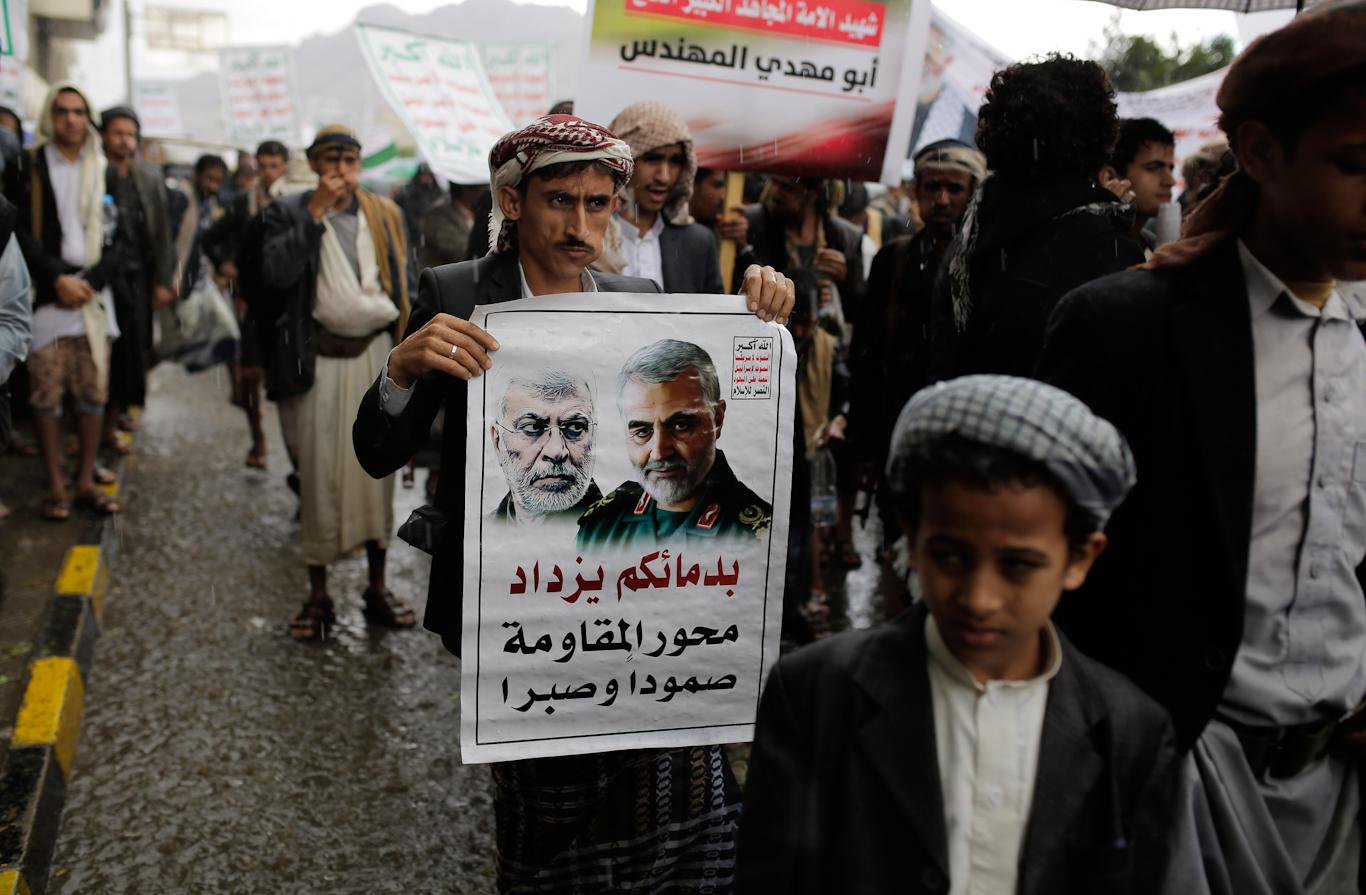
As tensions in the Middle East continue to rise, there are indications that Donald Trump’s administration is planning to carry out assassination operations against high-ranking Houthi officials inside of Yemen similar to the U.S. assassination of Iranian Revolutionary Guard General, Qassem Soleimani, a move likely to open the door for further escalation in the region.
On Thursday, a high ranking Houthi official in Sana’a told MintPress News on condition of anonymity that the Houthis would not hesitate to target U.S. troops in the region if the Trump administration targets its personnel inside Yemen.
The statement comes in the wake of an announcement by United States officials that the U.S. military tried, but failed, to kill another senior Iranian commander on the same day a U.S. drone strike killed Soleimani.
According to reports, a U.S. military air attack targeted Abdul Reza Shahlai, a high-ranking commander in Iran’s Islamic Revolutionary Guard Corps (IRGC) while he was in Yemen, but the mission was not successful. The U.S. Department of the Treasury claimed that Shahlai was based in Yemen and accused him of having “a long history of targeting Americans and US allies globally.”
Meanwhile, Yemeni activists and media pundits are expressing concerns over what they consider serious threats from Trump administration, pointing out that news of the unsuccessful assassination in Yemen should not be underestimated. Others have called on U.S. Congress to prevent any attacks on Yemeni soil and to keep U.S. soldiers in the region out of harm’s way.
The pretexts for U.S. attacks in Yemen are not without precedent. On October 13, 2016, the U.S. military announced that it had struck three coastal radar sites in Hodeida, an area of Yemen controlled by Houthi forces, in retaliation for an alleged failed missile attack on the USS Mason, a U.S. Navy destroyer. The Houthis maintain that they were not involved in any missile attacks against the Mason.
For their part, the Houthis (Ansar Allah) were clear in their warning to U.S. leaders in the wake of U.S. assassinations in Iraq, promising that U.S. troops in the Arabian Gulf or the Red Sea would be targeted without hesitation if the Trump administration attempts to target Houthi leaders in Yemen.
The Yemeni army, which is loyal to Ansar Allah, is already preparing for anticipated U.S. attacks. Ansar Allah’s leadership has reaffirmed that their anti-U.S. position is based on a principled and ideological commitment, but historically, Ansar Allah has not directly targeted the United States or its interests in the region.
During a televised speech broadcast live on January 8 during Yemen’s martyr’s week commemoration, Abdulmalik Badr al-Din al Houthi, the leader of Ansar Allah, said that “We will no longer acquiesce to Trump’s equation in killing us and interfering in our affairs and to do nothing is no longer acceptable.” He went on to say that the Houthis’ dealings with the “carelessness of the United States which targets the nation’s leaders will be different.”
The Ansar Allah leader pointed out that if there was no U.S. support for Saudi Arabia, the war against Yemen would not have occurred, adding that the role of the United States in the war against his country includes supervision, management, political protection, destruction, and the supply of weapons.
He also warned Saudi Arabia and the United Arab Emirates from continuing their military campaign in Yemen, saying that “developments in the region are not in their interests.” Implying that the escalation of tensions between the U.S. and Iran could be used against both the United States and Saudi Arabia in some way.
The threats of Ansar Allah, a group known to strike sensitive targets without hesitation, should not be underestimated. On September 14, Yemen hit two of Saudi Arabia’s oil facilities in Abqaiq and Khurais in a retaliatory attack that the United States blamed on Iran. Now, they have developed their arsenal of ballistic missiles and drones even further and experts say are likely capable of hitting U.S. troops in the region.
According to Houthi officials in Sana’a, the Trump administration appears to be using allegations of an Iranian troop presence in Yemen, an allegation that Houthis deny, as a pretext for further military action in the country, despite no evidence to back the claim.
Furthermore, the contrast between the Houthi reaction to that of Iran’s allies in the region after the U.S. assassinated Soleimani further suggests that Iran has no significant measure of influence over the Houthi’s decision-making process.
In fact, the Houthis fiercely rejected any and all foreign attempts to influence their decisions after the assassination of Soleimani. The group, thus far, has not promised to retaliate against U.S. troops as revenge for the murder of Soleimani as Iran’s allies in the region did in near unanimity. Moreover, they treated the incident with caution and decided not to be drawn into an escalation despite angry demonstrations that took place in many of Yemen’s cities over the assassination.
However, the Houthis have signed a military cooperation deal with Iran as a result of the continued war and blockade against their country and may work with Iran to take action against U.S. troops in the region should the U.S. target Houthi leaders in Yemen. According to some strategic decision-makers in Sana’a, retaliatory attacks could take place if even a single case of a U.S. attack in Yemen were to take place.
A legacy of targeted killings
In the wake of the U.S. killing of Iranian General Qasem Soleimani and Iraqi military leader Abu Majd al- Muhandis, many Yemeni politicians fear the Trump administration could carry out similar operations against high-ranking leaders in Yemen. The Saudi-backed assassinations of former presidents Saleh al- Sammad and Ibrahim al-Hamdi, both popular figures among Yemenis, are cemented in the country’s collective memory.
On November 6, 2017, Saudi Arabia released a list of 40 names of Houthis leaders and senior figures that the Kingdom wanted dead or alive. The list was issued by the Saudi Ministry of Interior, which offered rewards of between $5 to $30 million. On April 19, 2018, former president of the SPC, Saleh al-Samad, was assassinated by Saudi airstrikes in Hodeida while preparing for a protest to statements made by the American ambassador that the Houthi-controlled city of Hodeida will fall.
Almost two years after al-Sammad’s assassination, a criminal court in Hodeida has begun the trial of U.S. President Trump along with 61 Yemenis and foreigners, all believed to be involved in the assassination of the former head of the SPC. After finding ten suspects guilty, the court held its first hearing, trying Trump and the remaining 51 foreign and Yemeni defendants in absentia in late October.
The trial, which has drawn national media attention, may only be symbolic, but it sends a clear message to the U.S. that its operations in Yemen and its ongoing complicity in the worst man-made humanitarian crisis in the world is unacceptable and will undermine U.S. foreign policy in the region.
Before his assassination, Al-Sammad was attempting to carry out a plan to rebuild Yemen into a modern, stable and democratic state by 2030. He penned the National Vision, a manifesto of 175 goals focused on independence, freedom and non-submission to foreign influence.
Yemenis’ concerns about .U.S and Saudi intentions towards their national leaders were reinforced when the Yemeni Defense Ministry revealed that both U.S intelligence and Saudi princes’ were involved in the 1977 assassination of popular Yemeni president Ibrahim al-Hamdi after he refused Washington and Riyadh’s interference in Yemen’s internal affairs.
At a press conference, Brigadier Abdullah bin Amer, a senior official at the Yemeni Defense Ministry, released important documents related to the assassination of President al-Hamdi, including the names of those involved in his murder.
Before his death, al-Hamdi was attempting to pivot Yemen away from the Saudi kingdom and the United States and build Yemen’s independence by developing it’s oil reserves and its strategic location on the Bab al-Mandeb Strait. Now, according to senior Houthi officials, Sana’a is in possession of evidence that confirms the role of President Carter’s administration and the Saudi regime in the assassination, including planning, supervising and covering up the crime, according to Brigadier bin Amer.
MintPress was shown documents allegedly exchanged between U.S. and Saudi intelligence that indicated the involvement of the United States and former Saudi Kings Khalid bin Abdulaziz Al Saud, Fahd bin Abdulaziz and their brother Sultan in the assassination, but was unable to independently verify their authenticity.
According to the documents as well as witness testimony, al-Hamdi was invited to lunch at the residence of Ahmad al-Qashmi, who was the Army chief of staff under his command. During his stay there, Ali Abdullah Saleh, then a brigade commander, and one of his bodyguards entered the house. Moments after they entered, al-Hamdi was killed in a hail of bullets.
Sultan Bin Abdulaziz, according to the documents, was in direct contact with Saleh al-Hadyan, the Saudi military attaché in Northern Yemen’s capital Sana’a at the time of the targeted killing. Riyadh allegedly dispatched three Saudi intelligence operatives to Sana’a hours before the assassination who then left Yemen three hours after the operation concluded.
“Saudi Arabia killed al-Hamdi under the supervision of Saudi military attaché, Saleh al-Hadyan because he was an opponent of Saudi Arabia and did not comply with its instructions and interventions in Yemen,” The late Abdullah Saleh said in a 2016 interview with RT Arabic in which he claimed that he had “evidence of the involvement of Saudi Arabia.”
When al-Hamdi came to power in 1974, North Yemen lacked even the most basic services and infrastructure. Moreover, the country was on the brink of collapse and tribesmen held significant power and influence. Al-Hamdi, much like Al-Sammad, created a development plan supervised by a number of committees which encouraged local communities to contribute to road construction, school buildings, and water networks.
Under al-Hamdi’s direction, North Yemen underwent a period of rapid economic growth. The country’s GDP rose from 21.5 percent in 1974 to 56.1 percent in 1977 and per capita income rose by 300 percent. Al-Hamdi, according to WikiLeaks documents, was also working to “prepare the groundwork for eventual elections” in North Yemen.
Given the fate shared by those willing to risk charting a path free of foreign intervention in Yemen, it is unlikely that the Houthis, nor their fellow countrymen, will take attempts by foreign countries to assassinate Yemeni leaders lightly.
Another Epstein Class whistleblower ‘suicide’
-
“How US commerce secretary’s Epstein links were uncovered by British
whistleblower“ (Verity/Byrne/Milne):Andriesz suspected there was yet more
to find in t...
The Legendary Golem
-
The Legendary Golem October 3 2026 ___________________________________ More
Vids! +BN Vids Archive! HERE! ___________________________________ Support
The B...
The United States At A Crossroad
-
The United States At A Crossroad—An Analysis (16 Sept 2026) by Lawrence
Davidson Part I—Texas vs Minnesota Back in mid-May […]
Report on Beth Israel vigil 09-12-26
-
*Eat-a-Cheeseburger Day Approaches*
This year, EAC Day appears on Monday, September 21st. The date coincides
with the Jewish holiday called Yom Kippur. Cl...
-
Hello all,
It is with great sadness that I share with you the passing of our beloved
sister, Mother, and Grandmother, the individual that you all knew ...
Best Horror Podcast
-
Best Horror Podcast Introduction: Horror podcasts […]
The post Best Horror Podcast appeared first on Copper Shock Horror Podcast.
Ikhras Endorses Muntadhar Al-Zaidi
-
“Oh parties of banditry and sectarianism and corruption, we have come and
our goal is to destroy you.” Ikhras formally endorses Muntadhar al-Zaidi,
Iraqi j...
Prince Charles: Foreign Jews behind bloodshed in ME
-
In May, 2017, British Crown Prince Charles declined an invitation from
Zionist entity’s president Reuven Rivlin‘s to attend the 100th anniversary
of the no...
Palestinian Women – One for All, All for One
-
Honouring All Palestinian Women by Honouring Three: Hanin Zoabi, Ahed
Tamimi, Samah Sabawi Vacy Vlazna “Palestinian women have always stood side
by side ...
US’s Saudi Oil Deal from Win-Win to Mega-Lose
-
By F. William Engdahl Who would’ve thought it would come to this? Certainly
not the Obama Administration, and their brilliant geo-political think-tank
neo-...
-
*Mordechai Vanunu wins human rights prize of Brazilian Press Association *
* http://www.alternativenews.org/english/index.php/features/updates/7038-mordechai...
Abdul Aziz Rantissi:
"My ultimate wish, my God, is to attain martyrdom,"...God granted him his wish on April 17, 2004, at the hands of Israeli assassins.