Showing posts with label Greece. Show all posts

Friday, 16 April 2021

Lebanon Confirms Its Rights To Confront ’Israel”… What Are Its Power Elements?

 Source

Lebanon Confirms Its Rights To Confront ’Israel”… What Are Its Power Elements?

Charles Abi Nader

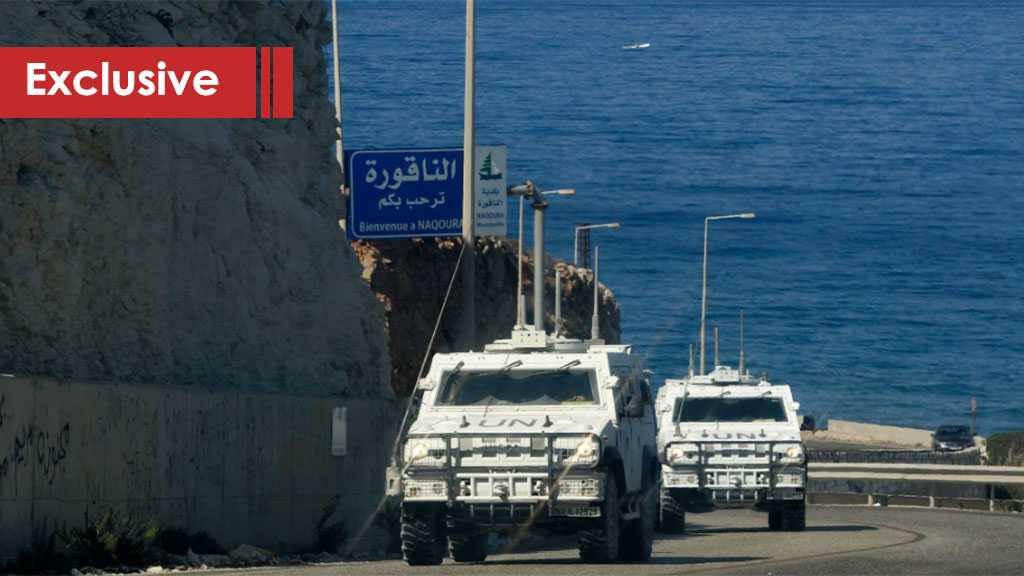
Apart from the political contending that preceded and accompanied the administrative-legal path of the Lebanese Maritime Borders Amendment Decree [6433], which also takes its constitutional and diplomatic path [as soon assumed] to the United Nations, it can be said that Lebanon – the government and the institutions – through its delicate and decisive decision to amend that decree, has imposed itself as a powerful player in the game of regional and international interests and conflicts.

The statement that Lebanon has imposed itself as a powerful player in the game of international interests and conflicts may be misplaced or inappropriate if we compare it to the crisis situation in Lebanon today, and what it is experiencing in terms of what looks like a financial, economic and social collapse, in addition to its fragmentation and political imbalance. But in reality, despite all the tragedies that have passed through Lebanon, its position has brought the highest level of challenge to many regional and international players.

First of all, the field of interest in which Lebanon has created itself by amending the decree defining its pure economic waters, is almost the entire eastern Mediterranean region, which is apparently very rich in gas and oil, between Syria and Turkey eastward and northward, between the occupied Palestine and Egypt southward and southwestward, and between Cyprus, Turkey and Greece westward. We are talking here about a maritime field, which is currently experiencing a delicate conflict and danger over the division and determination of the exclusive economic waters of the aforementioned countries, not far from the possibility that it will cause a military confrontation, such as between Greece and Turkey or between Cyprus and Turkey.

On the other hand, while ‘Israel’ is considered Lebanon’s fiercest opponent in this maritime border dispute, and due to its urgent need to exploit the huge wealth from the occupied Palestine’s coasts and to accelerate and advance its partnership with the Forum of Eastern Mediterranean States [Egypt, Cyprus and Greece], which is based on the initiation of the extraction and supply of gas and since it has completed the completion and preparation of the administrative, technical and legal structure for the initiation of the exploration in the Karish border field with Lebanon, which was affected by the aforementioned Lebanese amendment in more than half of its area, it will consider the Lebanese position regarding the amendment of its maritime rights in the south as a declaration of war against it, which would call for a non-simple reaction, not only as it threatened to stop indirect negotiations with Lebanon.

At a time where Lebanon is experiencing this almost complete collapse at all levels, and where most of the external parties involved in the conflict or the file contribute to deepening the collapse by exerting a lot of additional pressure on Lebanon to force it to surrender or submit to the maritime or other border file, and as these parties consider that the Lebanese position is supposed to be lenient and lax, in other words, disregarding what they see as their rights, so that they can make quick use of their needs before its inevitable collapse, Lebanon declares this strong position.

Therefore, the fundamental question remains: On what does Lebanon depend in this powerful position? And what are Lebanon’s power elements in the delicate game of defiance that it got itself involved in?

Of course, the consistent position of His Excellency the President of the Republic as a key official actor in guiding the negotiation process has been instrumental in amending the decree and establishing Lebanese maritime rights by fully supporting and embracing the perspective of the experts in the Lebanese Armed Forces and the specialists of the negotiating delegation in the demarcation process, which highlighted in a scientific-legal manner the correct maritime borders, that must be at first: A valid document for deposit with the United Nations and relevant institutions of the international community, and secondly: a platform for indirect negotiation with the enemy and for the demarcation and precise determination of the border based on it.

On the other hand, the legal and technical point of view presented and proved by the Lebanese Army in scientific details, from which its position was clear and decisive, regarding the necessity of completing indirect negotiations with the enemy on its basis, and in terms of the futility of its completion without it, proves without any doubt that the military, as a matter of national responsibility and duty, will be an essential party in fixing, protecting and supporting the amendment decision, with all possible military or security implications, dangers or repercussions.

Also, it is absolutely impossible to overlook the important role of the unified internal Lebanese position on the amendment, which was finally demonstrated by all concerned, official, partisan and political parties, and despite some initial reservations, which were in good faith in order not to lose the opportunity of demarcation and to benefit from the wealth as soon as possible, due to the urgent need for it today, this united position in terms of cohesion and non-division was essential in confirming the Lebanese decision to amend against all external parties.

In the end, the decisive role remains for the resistance, with its deterrent capabilities and balance of force against the ‘Israeli’ enemy, which is the main foundation in stabilizing and protecting the delicate, sensitive and bold Lebanese position, in terms of modification in general, and in terms of its sensitivity to hit the center of the Karish field, which ‘Israel’ considers to be under its control [within the areas occupied in the Palestinian waters], which had completed all appropriate measures to initiate exploration and exploitation of its wealth, with possible implications and developments, that will produce a provision that the enemy will regard the official Lebanese amendment to the decree as war or targeting what it claims to be its rights. As the Resistance has always stated, it is behind the Lebanese government in supporting and protecting what the latter determines in terms of national rights, land or maritime borders or the borders of Lebanese sovereignty, thus it [the Resistance] will, with its qualitative capabilities, remain the most powerful and solid safety valve for the protection, maintenance and stabilization of these national rights.


Related Articles


River to Sea Uprooted Palestinian   
The views expressed in this article are the sole responsibility of the author and do not necessarily reflect those of the Blog!

Friday, 19 March 2021

The Arab yacht summit plotters have fallen out

 This image has an empty alt attribute; its file name is DYxJNIWWAAMxxsb.jpg

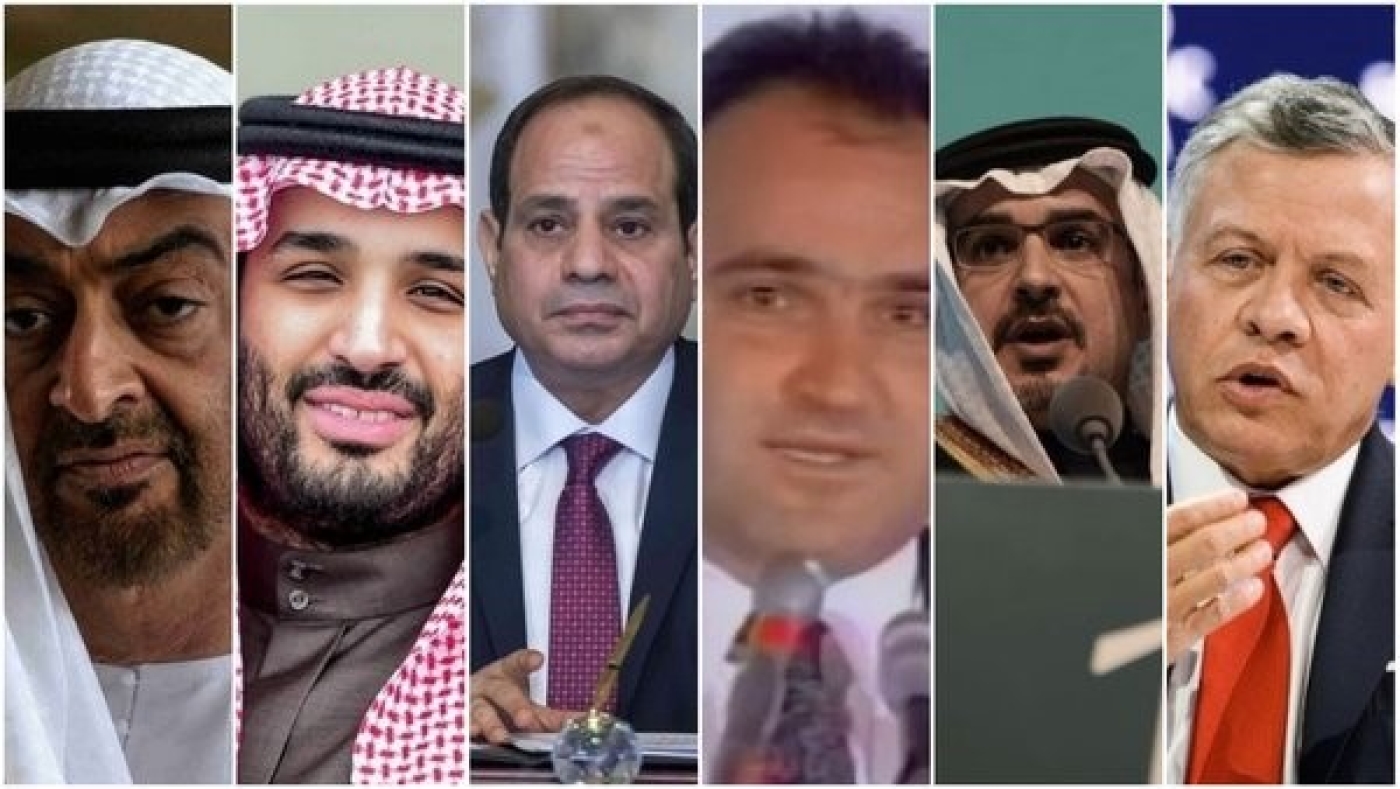
George Nader (fourth from left) organised a secret summit of Arab leaders on a yacht in the Red Sea in late 2015
David HearstDavid Hearst is co-founder and editor-in-chief of Middle East Eye. He is a commentator and speaker on the region and analyst on Saudi Arabia. He was The Guardian’s foreign leader writer, and was correspondent in Russia, Europe, and Belfast. He joined the Guardian from The Scotsman, where he was education correspondent.

David Hearst

15 March 2021 15:09 UTC 

An alliance of regional rulers that put so much effort into suppressing democracy is weakening now as its participants bear substantial grudges against each other

For the past decade, an alliance of rulers has bent every sinew to halt the onward, and irreversible, fight for human rights in the Arab world.

To preserve their own decaying regimes, this alliance has laid waste to once proud and civilised nations. It has waged wars in Yemen, Libya and Syria, reducing much of them to rubble. It has funded coups in Egypt, and attempted them in Tunisia and Turkey. The blood of hundreds of thousands has been shed in these interventions.

They were fought in the name of defending the region from Islamism and extremism. In this, they attracted the credulous, or cynical, support of former colonial powers France and Britain. But in reality their “jihad” had nothing to do with defending liberalism or secularism.

These regimes had no qualms about enlisting religious forces for political ends. Their quest was for hegemony, or how to transfer autocracy from one generation to another. For them, power was part of the family silver.

Late in 2015 – two years after their first major success, that being the military coup in Egypt, the leaders of this alliance – crown princes and rulers of Saudi Arabia, the United Arab Emirates, Bahrain, Egypt and Jordan – met secretly on a yacht to plot their plans for the region. To summon the same cast of characters on a yacht in the Red Sea today, six years on, would, however, be more difficult. 

For one thing, the fixer of this secret summit is in prison. George Nader is serving ten years on child sex charges. For another, the participants today bear substantial grudges against each other.

Money like rice?

Relations between Saudi Arabia and Egypt have cooled fastest. The Saudis no longer have “money like rice” as the Egyptian President Abdel Fattah el Sisi once bragged to his chief of staff Abbas Kamel. And any way King Salman is not as generous as his late brother Abdullah was, even if he had the money, which he doesn’t.

Sisi has no interest in following Mohammed bin Salman into the camp of pariah dictators

Sisi tried to get a new line of funding from Riyadh by giving it two uninhabited but strategically placed Red Sea islands, Tiran and Sanafir, to much protest at home. But the Saudis are no longer interested in such baubles like the Suez Canal and the Gulf of Aqaba.  

Their eyes light up when contemplating cheaper and faster ways to the Mediterranean – through Israel. Egypt is not saying it, but it is getting increasingly irritated by plans to bypass the Suez Canal, which it enlarged to the tune of $8.2bn.

Whether it is reversing a once-secret desert pipeline that ran from Iran to Israel during the time of the Shah, or the development of ports and free zones in Israel, or Blue Raman, a new fibre optic cable for the Middle East, it’s all pointing in one direction for Cairo – a huge loss of money and regional influence. 

Saudi Crown Prince Mohammed bin Salman (AFP)

It is not as if there have not been past divergences between banker and client state. Egypt’s refusal to send troops to fight in Saudi Arabia’s disastrous war in Yemen was one. It has refused to be as hostile to Iran and its allies in Lebanon. But two new factors are persuading Egypt that its national interests are not always best served by its regional allies. 

The Biden factor

The first is the arrival of US President Joe Biden and his obvious antipathy to the Saudi Crown Prince Mohammed bin Salman – even though he refuses to sanction him. Sisi has no interest in following bin Salman into the camp of pariah dictators. Rather, he has a strong motive to distance himself from that clan.For Trump’s Middle East allies, Joe Biden is a new nightmareRead More »

Bin Salman’s international reputation has been tarnished by the release of the US intelligence report into the murder of journalist Jamal Khashoggi. When it was released, Mohammed bin Salman expected that every member of his club, and even those that were not, like Qatar, to send a message of support. 

Most did. King Abdullah II of Jordan; Sudan’s prime minister, Abdalla Hamdok, flew to Riyadh. Others like Bahrain and the UAE issued statements. The only country to fall silent was Egypt.

The second factor was the military defeat of the Libyan general Khalifa Haftar, when his forces were repulsed from Tripoli and retreated to Sirte. The Turkish intervention, and the effectiveness of its drones, came as a shock to Egypt, whose agenda in Libya was driven by the Emirates. Egypt, however, invested considerably in training, arming and supplying Haftar’s forces.

When both the UAE and Egypt discovered that they were on the losing side – and this was sometime before Haftar pushed Sisi to invade – some in the Egyptian media began to question publicly why Egypt was in this position. Libya is important to its neighbour, not least because of the millions of Egyptians who – in times of peace – work there. When Libya prospers, so does Egypt. Haftar’s defeat opened the way for direct talks with the government in Tripoli, and covert talks with Turkish intelligence chiefs. 

As a result, the candidates of the list which lost the election to the post of prime minister had been agreed beforehand by both Turkey and Egypt. When the Libyans rejected those candidates, it did not disturb the tacit understanding between Ankara and Cairo. Nor are things as close between Cairo and Abu Dhabi. The froideur started over a question of money. But it rapidly went much further over Abu Dhabi’s recognition of Israel

The second wave

The second wave of normalisation with Israel displaced the first. Both Egypt and Jordan lost influence as the gatekeepers of the Arab world to Israel, in the same degree to which the UAE gained it.

It’s no coincidence that two of the nations that attended that yacht summit are in the process of softening their hostility to Ankara

When Abu Dhabi announced it would invest $10bn in Israeli energy, manufacturing, water, space, healthcare and agri-tech, it was no coincidence that Jordan at first refused permission for Benjamin Netanyahu’s jet to use its airspace, and he had to cancel his trip to pick up the prize money in person. Netanyahu’s office said the dispute with Amman stemmed from Israel’s decision to cancel the Jordanian crown prince’s plans to visit the Al-Aqsa mosque the day before.  

Much of the legitimacy of the Hashemite dynasty rests on its role as custodian of the holy sites in Jerusalem, a role that is now being overtly threatened by its Saudi cousin with Israel’s encouragement. Bin Salman is playing a zero-sum game. By advancing his own relationship with Israel, he is weakening the stability of Israel’s safest border. 

Egypt's President Abdel Fattah al-Sisi attends the closing session of an African summit meeting (AFP)
Egypt’s President Abdel Fattah el-Sisi (AFP)

The yacht summit was convened to counter Turkey and Iran’s resistance to their schemes. So it’s also no coincidence that two of the nations that attended that summit are in the process of softening their hostility to Ankara.

Enters Turkey

Both Turkey and Saudi Arabia are being pushed into each other arms by a US president who is hostile to the Saudi crown prince and the Turkish president, Recep Tayyip Erdogan. Mohammed bin Salman was told by his advisers that if Biden won, he would have to open relations with Turkey. 

Where foreign relations are based on secret pacts between leaders each of whom have good reason to fear their own people, they are built on sand

Bin Salman is not convinced, and can’t overcome the feeling that Erdogan was out to get him for having ordered Khashoggi’s murder. But the relationship between his father, King Salman, and Erdogan was never ruptured and so halting attempts are being made.

Qatar has offered to mediate, which is ironic, because when the boycott of the Gulf peninsula states started, the Turks offered to mediate. Turkey maintains strong relations with Oman and Kuwait and both Ankara and Riyadh have an interest in showing Washington they are regional players.

But is more going on under the table? Recently the Houthis claimed to have shot down a drone that “had proven its worth in Azerbaijan”, an oblique reference to Turkey. It was a Turkish drone, but not one used in Azerbaijan. Last year the Saudi government signed a deal with a local company to supply armed drones after getting a technology transfer from a Turkish defence firm, Vestel Karayel. Six drones were delivered. 

Turkey denies there was anything official about this technology transfer. A Turkish source familiar with the defence industry said Vestel did not seek government authorisation to make such a tech transfer to Riyadh. Still, the incident raised eyebrows. Janes defence news said the Karayel has not been previously known to be in service with the Saudi military.

In any case the Saudi boycott of Turkish goods still continues.

Repairing ties with Egypt

Last week’s flurry of statements from the Turkish foreign minister, Mevlut Cavusoglu, chief counsellor to the president Ibrahim Kalin and the president himself about turning the page with Egypt have been downplayed by Cairo.

Egyptian Foreign Minister Sameh Shoukry, confirming contacts with Cavusoglu, said that Turkey must “align with Egypt’s principles” before relations could return to normal. And the editor in chief of Egypt’s al Watan newspaper published ten conditions before relations could be restored.

This will have the same effect on Ankara as the 13 demands the blockading countries laid on Qatar.

The optimism in Ankara started when Egypt announced an oil and gas exploration bid in the Eastern Mediterranean which acknowledged the coordinates of the continental shelf declared by Ankara. The Greek foreign minister, Nikos Dendias, claims to have since “adjusted” those coordinates after a trip to Cairo.Turkey-Egypt relations: What’s behind their new diplomatic push?Read More »

Turkish intelligence chiefs have, however, met their Egyptian counterparts several times. Apart from Libya, Turkey is offering the Egyptians help in their dispute with Ethiopia over the Grand Ethiopian Renaissance Dam. UAE is doing the opposite by offering help to the Ethiopian Prime Minister Abiy Ahmet. 

Mohammed Dahlan, the Abu Dhabi-based former Fatah security chief, visited Addis in an announced visit. What was not announced was that his boss Crown Prince Mohammed bin Zayed went with him, according to one informed source. Egypt is baulking at the Turkish charm offensive and there has been no breakthrough.

“Egypt wants Ankara to take at least a symbolic step on the presence of Muslim Brotherhood in Turkey,” an official told MEE. 

If that is what is needed, it will not materialise. The Muslim Brotherhood does not have a physical presence like a regional office in Turkey. So there is nothing to close down. To go against individual members of the large expatriate Egyptian community in Istanbul would mean extraditing individuals, which Turkey is not going to do. Nor is there any discernible Turkish pressure on the Egyptian opposition media in Istanbul. Cairo would particularly like Al Sharq television off air.

“The Turkish authorities have nothing to offer nor withdraw when it comes to Al Sharq Channel because we are not funded by Turkey or Qatar,” its owner Dr Ayman Nour, the Egyptian opposition politician, told MEE. “We have not sensed any change on the Turkish side with regard to Al Sharq.”

But the axis itself is weakening and the lessons for everyone in the region are clear. Where foreign relations are based on secret pacts between leaders, each of whom have good reason to fear their own people, they are built on sand. Where they are based on the strategic interests of their peoples, they are more durable. The more national interests are based on the interests of their peoples rather than the rulers, the greater the stability of the region

Thus far it has been warm embraces one day, and stabs in the back the next.

The views expressed in this article belong to the author and do not necessarily reflect the editorial policy of Middle East Eye.

This article is available in French on Middle East Eye French edition.

Related


River to Sea Uprooted Palestinian   
The views expressed in this article are the sole responsibility of the author and do not necessarily reflect those of the Blog!

Wednesday, 6 January 2021

Erdogan and Libya… Will the Ottoman Dream End?

 ARABI SOURI 

Erdogan the Ottoman Caliph Wannabe - Syria Libya Yemen Africa Azerbaijan

The following is the English translation from Arabic of the latest article by Turkish career journalist Husni Mahali he published in the Lebanese Al-Mayadeen news site Al-Mayadeen Net:

The last week of last year witnessed interesting developments in the Libyan file, and it seems that it will become more hot and interesting during the next few days and weeks; after the fiery statements made by Field Marshal Khalifa Haftar calling for the “expulsion of the Turkish occupier”, Turkish President Recep Tayyip Erdogan did not delay in responding by sending the Minister of Defense Hulusi Akar and the commanders of the armed forces to Tripoli, in a new attempt from him to flex the muscles, which he relatively failed in after his “strategic ally” Fayez al-Sarraj refused to receive the delegation that met the pro-Ankara figures led by the Minister of Interior, Fathi Bash Agha, who has Ottoman origins, in the midst of information that started talking about differences, splits and conflicts between the forces, factions, and armed groups that support the government Al-Wefaq, some of which are loyal to Turkey, which the Misrata factions attach special importance to, considering that their militants are a remnant of Ottoman rule, according to President Erdogan’s classification.

Erdogan had talked about a million Libyans of successive Ottoman origins, since Sultan ‘Suleiman the Magnificent’ responded to the request for help from the Libyans to protect them from the attacks of the Knights of Malta and Rhodes in the year 1553, and this Ottoman rule continued until 1911 when Italy occupied Tripoli.

The press information also talks about an important role for Abdul Hakim Belhadj, who lives in Turkey, and who owns the “Wings” aviation company, which played an important role in the transfer of Syrian mercenaries to the Mitiga base near Tripoli. Belhadj, who fought alongside bin Laden, is considered one of the most important leaders of the armed factions in the relationship between Ankara and the rest of the Libyan groups that helped it to establish two air bases in Mitiga and Al-Watiyah, and another navy base west of Misrata.

The Turkish officers are training the Libyans in these bases on various types of weapons, including the use of drones and heavy guns, which explains the words of Turkish Foreign Minister Mevlut Cavusoglu, who said during his press conference with Lavrov in Sochi on December 29: ‘Haftar or any other country has no right to ask Turkey to leave the Libyan territories and stop its support for the legitimate government, Turkey will not leave,’ which is the main topic in the discussions of the Libyan parties under the auspices of the United Nations, and had previously agreed to hold elections on December 24, That all foreign forces and mercenaries be expelled from Libya until that date.

Everyone knows that this talk specifically targets Turkey, which is the only country that has officially sent military forces to Libya, and it is the only country that, with President Erdogan’s admission, transferred thousands of Syrian mercenaries to Libya.

And the entry of Egypt on the line of its crisis came to embarrass President Erdogan. The information expects that he will seek to host the Speaker of the Libyan Parliament, Aguila Saleh, in Istanbul, in response to Cairo’s efforts in dialogue with the Libyan parties in Tripoli, which was visited by an Egyptian military, intelligence, and political delegation a day after the visit of Turkish Defense Minister Hulusi Akar.

The Egyptian Foreign Minister Sameh Shoukry’s call to his Libyan counterpart, Muhammad al-Sayala, and after that al-Sayala’s visit to Moscow and his meeting with Minister Lavrov, came amid information that talks about a joint Russian-Egyptian move to bring together Sarraj and Haftar at a summit that settles all matters on the road to final reconciliation.

This may mean ending the Turkish military role in Libya, in which Paris also seeks to play an important role in it, and at all levels, and everyone knows that this role was and will remain against the calculations of Ankara, which is facing many difficulties and problems in its relations with the European Union, and the main reason for this is the President Emmanuel Macron solidarity with Greece and Cyprus.

With Macron remaining in power in the next May elections, he will continue to create problems for Erdogan’s Turkey, and the latter will then find himself in an unenviable position, with possible pressure from President Biden, in the absence of his “traditional friend”, German Chancellor Angela Merkel, who will give up her position in this coming September.

All these rapid and successive developments did not prevent Erdogan from continuing to implement his agenda in Libya, in which he sees his important arena to challenge his regional and international enemies, especially Cairo and Paris, which he hopes will return to its normal relations with Ankara in the event that Macron loses in the next elections.

Erdogan did not neglect the appointment of his new ambassador in Paris after he has found the right person for that, a former friend of Macron at the university. The information talks about the Turkish president’s desire to achieve a similar breakthrough in the relationship with Cairo, which Minister Cavusoglu spoke a few days ago about “open intelligence channels with it, as is the case with Tel Aviv,” and perhaps to face all future possibilities.

In all cases, whatever the possible results of the Libyan reconciliation efforts, which information of Ankara’s attempts to obstruct it, it has become clear that Erdogan will mobilize all his Libyan, regional and international capabilities to stay in Libya, for many reasons, the most important of which are psychological, and because he will not accept defeat easily.

Erdogan also does not want his efforts to go to waste, and he is the one who planned to obtain a share in Libyan oil and gas on land and in sea, and also planned to send Turkish companies to Libya, to contribute to the reconstruction of what the war has destroyed, which will bring Turkey a large income that will help it overcome its difficult financial crisis.

The wager on the ideological side that he attaches to special importance in all of his calculations and movements since the so-called “Arab Spring” remains. Without this aspect, Erdogan will not remain the leader of all Islamists in the world, and he will lose his most important weapon in addressing his supporters and followers at home, who are the ones he accustomed to his Ottoman national, religious and historical statements, and he succeeded in convincing them that the whole world is jealous of Turkey and envies it for its victories and feared its greatness!

To help us continue please visit the Donate page to donate or learn how you can help us with no cost on you.
Follow us on Telegram: http://t.me/syupdates link will open Telegram app.


إردوغان وليبيا.. هل ينتهي الحلم العثماني؟

إردوغان تحدث عن وجود مليون ليبي من أصول عثمانية في ليبيا.
حسني محلي
باحث علاقات دولية ومختصص بالشأن التركي

حسني محلي 

المصدر: الميادين نت

يجري تداول معلومات عن تحرك روسي- مصري مشترك لجمع السراج وحفتر في قمة تحسم كل الأمور على طريق المصالحة النهائية، وقد يعني ذلك إنهاء الدور التركي العسكري في ليبيا.

شهد الأسبوع الأخير من العام الماضي تطورات مثيرة على صعيد الملف الليبي، ويبدو أنه سيزداد سخونة وإثارة خلال الأيام والأسابيع القليلة القادمة، فبعد تصريحات نارية أطلقها المشير خليفة حفتر، ودعا فيها إلى “طرد المحتل التركي”، لم يتأخر الرئيس التركي رجب طيب إردوغان في الرد على ذلك بإرسال وزير الدفاع خلوصي آكار وقادة القوات المسلحة إلى طرابلس، في محاولة جديدة منه لعرض العضلات، وهو ما فشل فيه نسبياً بعد أن رفض “حليفه الاستراتيجي” فايز السراج استقبال الوفد الذي التقى الشخصيات الموالية لأنقرة، وفي مقدمتها وزير الداخلية فتحي باش آغا ذو الأصول العثمانية، وسط المعلومات التي بدأت تتحدث عن خلافات وانشقاقات وصراعات بين القوى والفصائل والمجموعات المسلحة التي تدعم حكومة الوفاق، وبعضها موالٍ لتركيا التي تولي فصائل مصراتة أهمية خاصّة، باعتبار أن مسلحيها من بقايا الحكم العثماني، وفق تصنيف الرئيس إردوغان. 

وكان إردوغان قد تحدث عن مليون ليبي من أصول عثمانية متتالية، منذ أن لبى السلطان سليمان القانوني طلب النجدة من الليبيين لحمايتهم من هجمات فرسان مالطا ورودوس في العام 1553، واستمر هذا الحكم العثماني حتى العام 1911، عندما احتلت إيطاليا طرابلس.

وتتحدث المعلومات الصحافية أيضاً عن دور مهم لعبد الحكيم بلحاج المقيم في تركيا، والذي يملك شركة “الأجنحة” للطيران، التي أدت دوراً مهماً في عملية نقل المرتزقة السوريين إلى قاعدة معيتيقة قرب طرابلس. كما أن بلحاج الذي قاتل إلى جانب بن لادن يعدّ من أهم قيادات الفصائل المسلّحة في العلاقة بين أنقرة وباقي المجموعات الليبية التي ساعدتها لإنشاء قاعدتين جويتين في معيتيقة والوطية، وأخرى بحرية غرب مصراتة.

ويقوم الضباط الأتراك بتدريب الليبيين في هذه القواعد على مختلف أنواع الأسلحة، بما فيها استخدام الطائرات المسيرة والمدافع الثقيلة، وهو ما يفسر كلام وزير الخارجية التركي مولود جاويش أوغلو، الذي قال خلال مؤتمره الصحافي مع لافروف في سوتشي بتاريخ 29 كانون الأول/ديسمبر المنصرم: “لا يحق لحفتر أو أي دولة أخرى أن تطلب من تركيا مغادرة الأراضي الليبية ووقف دعمها للحكومة الشرعية، تركيا لن تغادر”، وهو الموضوع الأساسي في مجمل مباحثات الأطراف الليبية برعاية أممية، وسبق أن اتفقت على إجراء الانتخابات في 24 كانون الأول/ديسمبر القادم، على أن يتم إخراج كل القوات الأجنبية والمرتزقة من ليبيا حتى ذلك التاريخ.

ويعرف الجميع أن هذا الحديث يستهدف تركيا تحديداً، وهي الدولة الوحيدة التي أرسلت رسمياً قوات عسكرية إلى ليبيا، وهي الوحيدة التي قامت باعتراف الرئيس إردوغان بنقل الآلاف من المرتزقة السوريين إلى ليبيا.

وجاء دخول مصر على خط أزمتها ليحرج الرئيس إردوغان. وتتوقع المعلومات أن يسعى إلى استضافة رئيس البرلمان الليبي عقيلة صالح في إسطنبول، كرد على مساعي القاهرة في الحوار مع الأطراف الليبية في طرابلس التي زارها وفد عسكري واستخباراتي وسياسي مصري بعد يوم من زيارة وزير الدفاع التركي خلوصي آكار. 

وجاء اتصال وزير الخارجية المصري سامح شكري بنظيره الليبي محمد السيالة، ومن بعده زيارة السيالة إلى موسكو ولقائه الوزير لافروف، وسط المعلومات التي تتحدَّث عن تحرك روسي – مصري مشترك لجمع السراج وحفتر في قمة تحسم كل الأمور على طريق المصالحة النهائية. 

وقد يعني ذلك إنهاء الدور التركي العسكري في ليبيا التي تسعى باريس أيضاً لأداء دور مهم فيها، وعلى جميع الأصعدة، ويعرف الجميع أنَّ هذا الدور كان وسيبقى ضد حسابات أنقرة التي تواجه الكثير من المصاعب والمشاكل في علاقاتها مع الاتحاد الأوروبي، والسبب الرئيسي في ذلك هو الرئيس إيمانويل ماكرون المتضامن مع اليونان وقبرص.

وببقاء ماكرون في السلطة في انتخابات أيار/مايو القادم، سوف يستمر في خلق المشاكل لتركيا إردوغان، وسيجد الأخير نفسه حينها في وضع لا يحسد عليه، مع الضغوط المحتملة من الرئيس بايدن، بغياب “صديقته التقليدية” المستشارة الألمانية أنجيلا ميركل التي ستتخلّى عن منصبها في أيلول/سبتمبر القادم. 

ولم تمنع كلّ هذه التطورات السريعة والمتلاحقة إردوغان من الاستمرار في تطبيق أجندته في ليبيا، التي يرى فيها ساحته المهمة لتحدي أعدائه الإقليميين والدوليين، وبشكل خاص القاهرة وباريس، التي يتمنى لها أن تعود إلى علاقاتها الطبيعية مع أنقرة في حال خسارة ماكرون في الانتخابات القادمة.

ولم يهمل إردوغان تعيين سفير جديد له في باريس، بعد أن وجد الشخص المناسب لذلك، وهو صديق سابق لماكرون في الجامعة. وتتحدث المعلومات عن رغبة الرئيس التركي في تحقيق انفراج مماثل في العلاقة مع القاهرة، التي تحدَّث الوزير جاويش أوغلو قبل أيام عن “قنوات استخباراتية مفتوحة معها، حالها حال تل أبيب”، وربما لمواجهة كل الاحتمالات المستقبلية.

وفي جميع الحالات، وأياً كانت النتائج المحتملة لمساعي المصالحة الليبية، والتي تتحدَّث المعلومات عن محاولات أنقرة لعرقلتها، فقد بات واضحاً أن إردوغان سيستنفر كل إمكانياته ليبياً وإقليمياً ودولياً للبقاء في ليبيا، لأسباب عديدة، أهمها نفسية، ولأنه لن يتقبل الهزيمة بسهولة.

كما لا يريد إردوغان لأتعابه أن تذهب هباء منثوراً، وهو الذي خطط للحصول على حصة ما في النفط والغاز الليبي براً وبحراً، كما خطط لإرسال الشركات التركية إلى ليبيا، لتساهم في إعادة إعمار ما دمرته الحرب، وهو ما سيحقق لتركيا دخلاً كبيراً يساعدها على تجاوز أزمتها المالية الصعبة. 

ويبقى الرهان على الجانب العقائدي الذي يوليه أهمية خاصة في مجمل حساباته وتحركاته منذ ما يسمى بـ”الربيع العربي”. ومن دون هذا الجانب، لن يبقى إردوغان زعيماً لجميع الإسلاميين في العالم، كما سيخسر سلاحه الأهم في مخاطبة أنصاره وأتباعه في الداخل، وهم الذين عوَّدهم على مقولاته القومية والدينية والتاريخية العثمانية، ونجح في إقناعهم بأن العالم أجمع يغار من تركيا ويحسدها على انتصاراتها ويهاب من عظمتها!


River to Sea Uprooted Palestinian   
The views expressed in this article are the sole responsibility of the author and do not necessarily reflect those of the Blog!

Wednesday, 30 December 2020

Turkey pivots to the center of The New Great Game

Turkey pivots to the center of The New Great Game 

December 28, 2020

by Pepe Escobar with permission and first posted at Asia Times

When it comes to sowing – and profiting – from division, Erdogan’s Turkey is quite the superstar.

Under the delightfully named Countering America’s Adversaries Through Sanctions Act (CAATSA), the Trump administration duly slapped sanctions on Ankara for daring to buy Russian S-400 surface-to-air missile defence systems. The sanctions focused on Turkey’s defence procurement agency, the SSB.

Turkish Foreign Minister Mevlut Cavusoglu’s response was swift: Ankara won’t back down – and it is in fact mulling how to respond.

The European poodles inevitably had to provide the follow-up. So after the proverbial, interminable debate in Brussels, they settled for “limited” sanctions – adding a further list for a summit in March 2021. Yet these sanctions actually focus on as-yet unidentified individuals involved in offshore drilling in Cyprus and Greece. They have nothing to do with S-400s.

What the EU has come up with is in fact a very ambitious, global human-rights sanctions regime modeled after the US’s Magnitsky Act. That implies travel bans and asset freezes of people unilaterally considered responsible for genocide, torture, extrajudicial killings and crimes against humanity.

Turkey, in this case, is just a guinea pig. The EU always hesitates mightily when it comes to sanctioning a NATO member. What the Eurocrats in Brussels really want is an extra, powerful tool to harass mostly China and Russia.

Our jihadis, sorry, “moderate rebels”

What’s fascinating is that Ankara under Erdogan always seems to be exhibiting a sort of “devil may care” attitude.

Take the seemingly insoluble situation in the Idlib cauldron in northwest Syria. Jabhat al-Nusra – a.k.a. al-Qaeda in Syria – honchos are now involved in “secret” negotiations with Turkish-backed armed gangs, such as Ahrar al-Sharqiya, right in front of Turkish officials. The objective: to boost the number of jihadis concentrated in certain key areas. The bottom line: a large number of these will come from Jabhat al-Nusra.

So Ankara for all practical purposes remains fully behind hardcore jihadis in northwest Syria – disguised under the “innocent” brand Hayat Tahrir al-Sham. Ankara has absolutely no interest in letting these people disappear. Moscow, of course, is fully aware of these shenanigans, but wily Kremlin and Defence Ministry strategists prefer to let it roll for the time being, assuming the Astana process shared by Russia, Iran and Turkey can be somewhat fruitful.

Erdogan, at the same time, masterfully plays the impression that he’s totally involved in pivoting towards Moscow. He’s effusive that “his Russian colleague Vladimir Putin” supports the idea – initially tabled by Azerbaijan – of a regional security platform uniting Russia, Turkey, Iran, Azerbaijan, Georgia and Armenia. Erdogan even said that if Yerevan is part of this mechanism, “a new page may be opened” in so far intractable Turkey-Armenia relations.

It will help, of course, that even under Putin pre-eminence, Erdogan will have a very important seat at the table of this putative security organization.

The Big Picture is even more fascinating – because it lays out various aspects of Putin’s Eurasia balancing strategy, which involves as main players Russia, China, Iran, Turkey and Pakistan.

On the eve of the first anniversary of the assassination of Gen Soleimani, Tehran is far from cowed and “isolated”. For all practical purposes, it is slowly but surely forcing the US out of Iraq. Iran’s diplomatic and military links to Iraq, Syria and Lebanon remain solid.

And with less US troops in Afghanistan, the fact is Iran for the first time since the “axis of evil” era will be less surrounded by the Pentagon. Both Russia and China – the key nodes of Eurasia integration – fully approve it.

Of course the Iranian rial has collapsed against the US dollar, and oil income has fallen from over $100 billion a year to something like $7 billion. But non-oil exports are going well over $30 billion a year.

All is about to change for the better. Iran is building an ultra-strategic pipeline from the eastern part of the Persian Gulf to the port of Jask in the Gulf of Oman – bypassing the Strait of Hormuz, and ready to export up to 1 million barrels of oil a day. China will be the top customer.

President Rouhani said the pipeline will be ready by the summer of 2021, adding that Iran plans to be selling over 2.3 million barrels of oil a day next year – with or without US sanctions alleviated by Biden-Harris.

Watch the Golden Ring

Iran is well linked to Turkey to the west and Central Asia to the east. An extra important element in the chessboard is the entrance of freight trains directly linking Turkey to China via Central Asia -bypassing Russia.

Earlier this month, the first freight train left Istanbul for a 8,693 km, 12-day trip, crossing below the Bosphorus via the brand new Marmary tunnel, inaugurated a year ago, then along the East-West Middle Corridor via the Baku-Tbilisi-Kars (BTK) railway, across Georgia, Azerbaijan and Kazakhstan.

In Turkey this is known as the Silk Railway. It was the BTK that reduced freight transport from Turkey to China from one month to only 12 days. The whole route from East Asia to Western Europe can now be travelled in only 18 days. BTK is the key node of the so-called Middle Corridor from Beijing to London and the Iron Silk Road from Kazakhstan to Turkey.

All of the above totally fits the EU’s agenda – especially Germany’s: implementing a strategic trade corridor linking the EU to China, bypassing Russia.

This would eventually lead to one of the key alliances to be consolidated in the Raging Twenties: Berlin-Beijing.

To speed up this putative alliance, the talk in Brussels is that Eurocrats would profit from Turkmen nationalism, pan-Turkism and the recent entente cordiale between Erdogan and Xi when it comes to the Uighurs. But there’s a problem: many a turcophone tribe prefers an alliance with Russia.

Moreover, Russia is inescapable when it comes to other corridors. Take, for instance, a flow of Japanese goods going to Vladivostok and then via the Trans-Siberian to Moscow and onwards to the EU.

The bypass-Russia EU strategy was not exactly a hit in Armenia-Azerbaijan: what we had was a relative Turkey retreat and a de facto Russian victory, with Moscow reinforcing its military position in the Caucasus.

Enter an even more interesting gambit: the Azerbaijan-Pakistan strategic partnership, now on overdrive in trade, defence, energy, science and technology, and agriculture. Islamabad, incidentally, supported Baku on Nagorno-Karabakh.

Both Azerbaijan and Pakistan have very good relations with Turkey: a matter of very complex, interlocking Turk-Persian cultural heritage.

And they may get even closer, with the International North-South Transportation Corridor (INTSC) increasingly connecting not only Islamabad to Baku but also both to Moscow.

Thus the extra dimension of the new security mechanism proposed by Baku uniting Russia, Turkey, Iran, Azerbaijan, Georgia and Armenia: all the Top Four here want closer ties with Pakistan.

Analyst Andrew Korybko has neatly dubbed it the “Golden Ring” – a new dimension to Central Eurasian integration featuring Russia, China, Iran, Pakistan, Turkey, Azerbaijan and the central Asian “stans”. So this all goes way beyond a possible Triple Entente: Berlin-Ankara-Beijing.

What’s certain as it stands is that the all-important Berlin-Moscow relationship is bound to remain as cold as ice. Norwegian analyst Glenn Diesen summed it all up: “The German-Russian partnership for Greater Europe was replaced with the Chinese-Russian partnership for Greater Eurasia”.

What’s also certain is that Erdogan, a master of pivoting, will find ways to simultaneously profit from both Germany and Russia.


River to Sea Uprooted Palestinian   
The views expressed in this article are the sole responsibility of the author and do not necessarily reflect those of the Blog!

Saturday, 7 November 2020

International Reaction to Turkey’s Aggressive Foreign Policy Approach

 05.11.2020 Author: Valery Kulikov

TE341188
e

According to numerous observers, the “aggressive approach” the Turkish leader R. Erdogan implies in Turkey’s foreign policy every day evokes more and more hostility and opposition across the world.

It is through the fault of Ankara that many of the faded conflicts have flared up with renewed vigor lately. Thus, in the Eastern Mediterranean, Turkey is striving for shelf hydrocarbons, causing a wave of indignation not only from Greece, but also from the European Union. And although the clash of interests here has not yet reached outright bloodshed, nevertheless, Turkey is no longer shy about ramming opponents with their ships and vessels. This, in turn, causes an increase in the degree of tensions both within the EU and between NATO member states, the outcome of which so far few can predict. The drift towards divisions is on in spite of Washington’s calls to all NATO member states urging them to “keep Turkey in the West.”

After the terrorist attack on October 16 in the Paris suburbs of Conflans-Saint-Honorine, when an 18-year-old Islamist, motivated by religious enmity, killed a school history and geography teacher, a new diplomatic scandal erupted between Turkey and France, which significantly increased tensions between these countries in Libya, where they support opposing sides of the conflict.

Numerous media voices are increasingly citing factual evidence of Ankara’s intervention in the Libyan conflict, and not only in the form of supplying weapons there in violation of the imposed international embargo, but also sending numerous mercenaries from the war zone in Syria.

Recently, the growing criticism of Turkey on sending mercenaries not only to Syria and Libya, but also to the Karabakh conflict zone, has been confirmed by the intelligence services of the OSCE Minsk Group co-chairing countries. As a result, today no one, including Turkey itself, can claim that in the context of the Nagorno-Karabakh conflict, it acts as an impartial or neutral party, since it views this conflict as an opportunity to expand its influence in another neighboring region, the Southern Caucasus.

The summit of the EU states, which ended in late October, condemned the aggressive rhetoric and actions of Turkey aimed at the EU states, and the head of the European Council Charles Michel indicated that the EU leaders would discuss further actions with regard to Turkey at the planned summit in December. “We have expressed our determination to make Ankara respect us. Turkey has not yet chosen a positive path in relations with the EU. We condemn the recent unilateral actions of Turkey in the Eastern Mediterranean, provocations and aggressive rhetoric against the EU countries, which is absolutely unacceptable,” Charles Michel said on October 29 following the EU summit held in the video conference format.

NATO also declares its “bewilderment” by Turkey’s actions, openly hinting to Erdogan about “unpleasant moments” and readiness to take a tougher position with regard to Ankara.

Today Turkey has strained its relations with many countries. In addition to the deepening conflict with the United States (after the acquisition and testing of the Russian S-400 anti-aircraft missile system), France, Greece and the EU as a whole, the list of Turkey’s “opponents” includes Israel (due to the conflict over the Palestinian problem), Syria (where Erdogan introduced Turkish troops), Iran (with which Ankara has intensified contradictions because of Erdogan’s actions in Syria), Saudi Arabia (relations with which have especially worsened because of the “Khashoggi case”). Even with the United Arab Emirates Erdogan’s conflict has become so widespread that this struggle unfolds from Morocco to Syria, most fiercely manifesting itself in the field of “soft power”, with mutual accusations of seeking to destabilize the Arab world. The Arab monarchies are particularly concerned about Ankara’s policy in the Persian Gulf, where Turkish troops are now stationed in Qatar, another Turkish base is located in Somalia, and Erdogan himself actively supports and finances the Muslim Brotherhood religious and political movement (banned in Russia – ed.) , to which the monarchies of the Gulf are more than wary.

As a result, as noted not only by the Western, but other regional media, Erdogan risks isolating his country from both the West and Arabs with Persians. “Turkish President Recep Tayyip Erdogan has made it clear that he has no desire to be a bridge between Europe and the Arab world. Instead, he decided to reshape Turkey in line with its imperial past and make it a competitor to the two regions,” UAE Foreign Minister Anwar Gargash is being cited.

In response to the aggressiveness of Erdogan’s policy, France has already called off its ambassador from Turkey “for consultations”. The Canadian government, after the Bombardier Recreational Products company “unexpectedly” learned that its engines were being installed on the Turkish Bayraktar TB2 (“Flag Bearer”) operational tactical attack drones (these has been actively used in the conflict in Nagorno-Karabakh), took the decision to stop supplying them, as well as other weapons to Turkey. Canada stressed that “the use of attack drones by Turkey often goes beyond the framework of agreements within the NATO format.”

For its part, Turkey has no choice but to launch its own production of engines for Turkish drones, or to intensify military-technical cooperation with Ukraine in this regard, which was indirectly confirmed in the speeches of representatives of the industrial and business circles of Turkey, in particular, Turkish Aerospace Industries.

Against the backdrop of these events, the fall of the Turkish lira became uncontrollable, and Ankara no longer has the resources to keep the situation under control. Since the beginning of the year, the lira has fallen by 39% against the US dollar, which has become the worst indicator dynamics among all currencies in Eurasia, despite the fact that the dollar this year is clearly not up to par. The savings of the Turkish state itself continue to fall: according to the investment bank Goldman Sachs, Turkey has spent about $130 billion from its reserves over the past year and a half. At the same time, the reserves do not cease to decline, and if in the summer their volume reached $90 billion, now they have dropped below $80 billion. The situation is complicated by the need to fight the current economic crisis. In addition, unemployment in the country approached 14%, and among young people it reached 25%.

According to the forecasts of the former IMF Managing Director Desmond Lachman, in the event of a liquidity crisis in the world, Turkey will become one of the first countries to declare a default. Under these conditions, in order to mitigate the consequences of the recession, the state again has to borrow a lot from foreign creditors, but because of Erdogan’s aggressive policy, reliable friends (except, perhaps, Ukraine, whose situation is even worse), to whom you can turn for loans, today are getting more and more scarce…

Valery Kulikov, a political analyst, exclusively for the online magazine “New Eastern Outlook”.

River to Sea Uprooted Palestinian   
The views expressed in this article are the sole responsibility of the author and do not necessarily reflect those of the Blog!