Uprooted Palestinians are at the heart of the conflict in the M.E Palestinians uprooted by force of arms. Yet faced immense difficulties have survived, kept alive their history and culture, passed keys of family homes in occupied Palestine from one generation to the next.
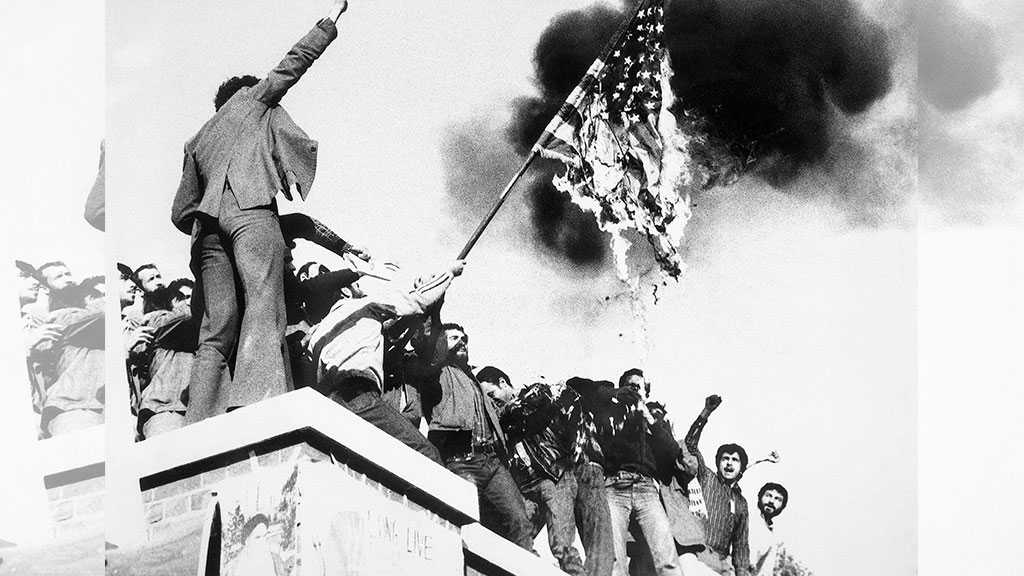
Tehran – Iranians are celebrating the 42nd anniversary of the seizure of the US embassy in Tehran by Iranian students and the closure of the American spy den, which acted as a central nervous system for espionage, and interference.
The leader of the Islamic Revolution, Imam Khomeini described this event as the second revolution. This day also coincides with the anniversary of Imam Khomeini’s exile from the country in 1964 and the beginning of the Islamic renaissance in Iran. Imam Khomeini led the revolution and returned to the country in 1979. The revolution of the Iranian people triumphed under his leadership.
This day also commemorates the martyrdom of dozens of Iranian school and university students who perished at the hands of the Shah’s regime during a march in front of the University of Tehran.
This year’s anniversary of the closure of the American spy den in Tehran coincides with another blow dealt to the US in international waters when the Islamic Revolutionary Guard prevented American pirates from stealing Iranian oil.
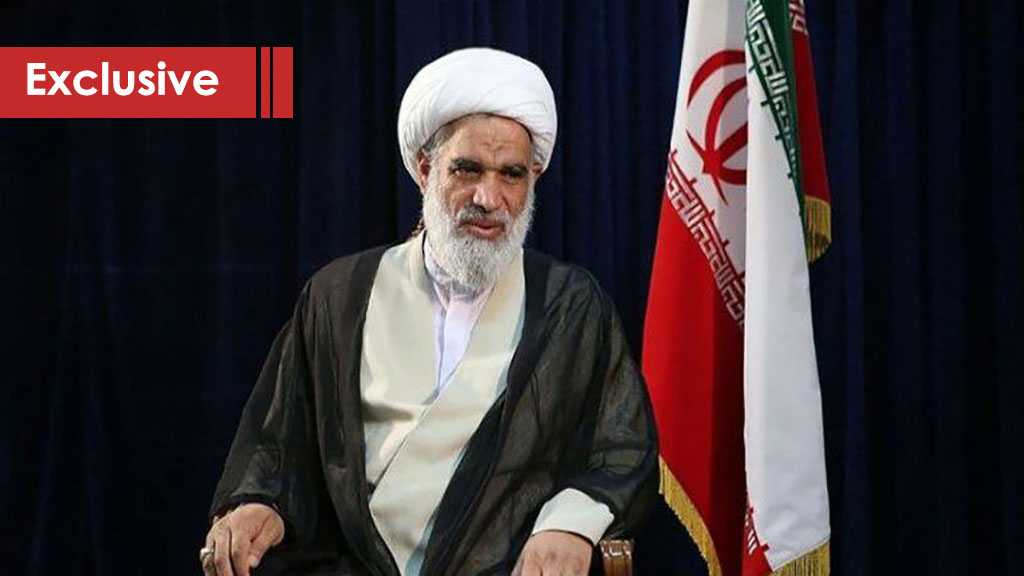
On this occasion, Al-Ahed news website sat down with a member of the Presidency of Iran’s Assembly of Experts, His Eminence Ayatollah Sheikh Abbas Al-Kaabi, who confirmed that the discourse of the Islamic Revolution presented a model for civilized jihad in the face of arrogance. This discourse, which was initiated by the honorable Imam Khomeini and continued by the Grand His Eminence Imam Sayyed Ali Khamenei is based on several elements:
1st element: Transforming weaknesses of the nation into strengths at all levels – cultural, economic, political, social, scientific, technical, defense and military
2nd element: Turning enemy threats into opportunities for development and civilization at all levels
3rd element: The cognitive view of power as a means of creating civilization not creating and producing power in order to dominate other human beings
4th element: Emphasis on the value system that starts from monotheism, justice, and human dignity and continues to consolidate the principles of ethics, development, science, religious governance of the people, and effective political participation in the light of values and morals
5th element: Removing the obstacles by combating tyrants, aggressors, corrupters, and the arrogant
6th element: Interaction with the Islamic awakening movement, restoration of nation-building and rooting the culture of resistance and the creation of civilization
7th element: The establishment of principles and values and the preservation of Islamic belief and knowledge in order to create an Islamic way of living that is compatible with Islamic values within the Islamic nation
8th element: The fight against backwardness and moving towards scientific development among the sons of the Islamic nation
9th element: Combating strife within the nation and emphasizing the strategy of unity among its sons
10th element: Focusing on the scientific and religious reference for the people of the nation in line with the requirements of the age and time
11th element: Knowledge and subordination to the righteous and intellectual leadership to create victory after victory in the face of global arrogance
12th element: Creating a new general structure for the nation and overthrowing structures, organizations, and administrative frameworks of global arrogance in international relations
13th element: Supporting independence, freedom, and movement towards achieving justice and development for Islamic peoples and countries in the face of hegemony, influence, and penetration of global arrogance
14th element: Focusing on interreligious and intercultural dialogue in the framework of monotheism, justice, and human dignity
Ayatollah Al-Kaabi concluded by saying: These 14 elements need the rise and resistance of the sons of the nation against the global arrogance system at all levels.
The discourse of the Islamic Revolution in the light of the ideas of Imam Khomeini and Imam Khamenei today created glory for the nation as well as an uprising and a movement of resistance against global arrogance. Today, we are stronger than ever, and global arrogance and its puppets in the region are weaker than ever. We are living in an era of great victories and the nation’s children pioneering resistance against global arrogance.
Chief Commander of Iran’s Islamic Revolution Guard [IRG], Major General Hossein Salami, labelled the US as the manufacturer of dictatorships all over the world, while stressing that Iran represents the haven of peace in the region.
In remarks during the commemoration ceremony of the National Day of Fight against Global Arrogance, which was held in front of the former US embassy in Tehran, now referred to as the Den of Espionage, on Thursday, Salami said “The Americans are used to being defeated at the hands of the Iranian nation, but, they have yet to learn the lesson.”
Aban 13, which is reminiscent of November 4, 1979, is the day when Iranian students stood against the United States’ arrogance and hegemonic power, and seized the US Embassy in Tehran.
“Today is a day of victory for the Iranian nation and overcoming the greatest empire in history,” Salami said.
He stated that on November 4, 1979, when the United States was at the peak of its political, military and economic power and the Iranian nation had not created the great structures of its current power at the beginning of a glorious Islamic Revolution, a glorious Islamic revolution was formed under the leadership of the late Imam Khomeini.
“This courage and endurance in the atmosphere of that day in the world is one of the most amazing historical facts both for humanity and for the Iranian nation,” Salami underscored.
Addressing the revolutionary people of Tehran who participated in the massive rally, Major General Salami said that today is a great day for the Iranian nation.
Referring to the anniversary of the seizure of the former US Embassy in Iran in 1979, Salami added that on this day, the United States, which was the greatest empire in history, was defeated.
“The Americans are used defeats at the hands of the Iranian people, he added that however, they have not yet embraced a lesson,” he added.
Salami also slammed the US hegemonic moves to provoke wars in the world, saying that more than 40 major wars in 40 parts of the world are the outcome of the US politics in the world.
“The US has engaged in a war with many countries in Europe, Africa, South America, the far East, West Asia, and Russia,” Salami said, and “the US waged wars that have left more an 8 million dead in the world.”
He also noted that 750 US military bases in the world have each tried to establish pervasive political domination in the world with a circle of political influence.
The Iranian military commemorated the anniversary of the US embassy takeover by students as a symbol of the nation’s resistance against global arrogance and American hegemony, saying the developments unfolding today in the region and elsewhere in the world foretell America’s decline.
The General Staff of the Iranian Armed Forces marked the National Day of the Fight against Global Arrogance, which falls on November 4, in a statement released on Wednesday.
The occasion is a symbol of the Iranian people’s “oppression-fighting, freedom-seeking, resistance and perseverance” against the greed and hegemonic policies of the criminal US regime, the statement read.
Forty two years ago on this day, Iranian students took over the American embassy in Tehran, also known in Iran as the “Den of Espionage,” less than a year after the Islamic Revolution toppled the US-backed Pahlavi dictatorship in 1979.
On the eve of the anniversary, Iran’s Islamic Revolution Guard [IRG] released detailed footage of its successful seizing of an American vessel that had stolen a shipment of Iranian oil in the strategic Sea of Oman.
“Now, after over four decades of the Islamic Republic’s blessed existence, we are still witnessing repeated hostilities and inhumane conspiracies of the American terrorist regime and the fake Zionist regime against the people and the [government] of the Islamic Republic,” the Armed Forces’ statement read.
It then enumerated the crimes perpetrated by the “terrorist-nurturing” US regime and its allies against Iran, including the draconian sanctions, attempts to hamper Iran’s nuclear progress, the assassination of the country’s nuclear scientists, the assassination of Lieutenant General Qassem Soleimani, and the destabilization of the country by different means, such as the latest cyber-attack on gas stations.
In spite of the aforementioned hurdles, the statement went on to say, the Iranian people and government have managed to unmask the decline of the United States’ fake and evil grandeur throughout the world.
Each year, Iranians commemorate the National Day of the Fight against Global Arrogance by staging rallies across the country. Last year’s events were canceled due to an increase in COVID-19 infections, but people can attend this year’s events while observing health protocols. IRG Chief Major General Hossein Salami is expected to address the main event in Tehran.
The Israeli occupation has attempted to destabilize Iraq since the sixties. How is the Israeli Occupation trying to infiltrate Iraqi society?
Iraqi Society has been a target for pro-normalization Propaganda in Past years
On the 24th of the current month, a conference was held in Erbil, the capital city of the Iraqi Kurdistan region. The conference of “Peace and Reclamation,” called for the normalization of relations with the Israeli occupation under the shady slogans of peace and establishing civil society organizations.
The conference, organized by theNew York-based Center for Peace Communications (CPC), was called “an illegal gathering” by the Iraqi government. The CPC is an organization that openly calls for the normalization of relations between the Arab states and “Israel”.
For a foreign observer, the story might look like it started here, and one might think, isolating the Iraqis from their national and cultural context, that this reaction is just a mere prejudice from the Iraqis in the face of something they ignore or never have experienced. But is it the case?
A History of Sabotage
Despite Iraq not sharing a direct border with Occupied Palestine, the country was a target for countless Israeli aggressions during the last century. Even before the foundation of the Israeli entity in 1948, contact has been made as early as the thirties through the Jewish agency with some Kurdish groups in northern Iraq. In the forties and fifties, simple contact was transformed into real military espionage committed by Kumran Ali Bedir-Khan a Kurdish leader with close ties to “Israel”.
These espionage attempts continued throughout the sixties as well until the rebellion started in autumn 1961 in northern Iraqi regions. Eventually, a larger scale training and supply operation to the insurgents in the north was launched following Kurdish leaders from the Kurdish democratic party (KDP) meeting with Israeli officials during that year.
Israeli attempts to destabilize the country go back to at least the sixties when the Israelis intervened with the help of the SAVAK, the former Shah of Iran intelligence Agency, to assist the militants of the KDP led by Moustafa Barazani. The insurgents agreed on this supply training Israeli operation in 1963 following their initial hesitation. There were reports about unidentified arms cache in the region, and Mossad agents never found any difficulty accessing the northern zones in Iraq to fuel the insurgency.
In August 1965, the Israelis provided a training course code-named Marvad (carpet) for Peshmerga (the military force of Barazani at that time). Israeli-backed militias not only destabilized the region and attacked Iraqi military personnel and installations, but also civilian infrastructures. Attacking the Kirkuk oil field which produced a large portion of Iraq’s Oil at that time was one of these attacks.
Mustafa Barzani accompanied by Israeli Occupation President Zalman Shazar in the Occupied Lands,1968
Following the Shah of Iran signing the 1975 Algier agreement with Iraq, Israelis objected to the Shah and called it a “betrayal to the Kurds.” This abandonment led to the KDP’s demise and a subsequent de-escalation of the violence in the north, although contacts with “Israel” were maintained afterward.
The first official acknowledgment of the Israeli occupation’s aid to the insurgency dates to September 29 1980 when Prime Minister Menachem Begin disclosed that “Israel” had supported the Kurds (KDP) “during their uprising against the Iraqis in 1965–1975.” Begin added that “Israel” had sent instructors and arms but not military units.
Israeli Field Hospital Helping the insurgency in Northern Iraq between 1963-1973
In 2004, the Israeli media reported on meetings between Masud Barzani (who would become president of the KRG in 2005 ), Jalal Talabani (who would become president of Iraq in 2005 and serve in that office until 2014), and Israeli Prime Minister Ariel Sharon. Relations continued to flourish as the PUK became entangled with this illegal normalization according toIraqi Legal code 111 of 1969 in its 201st article.
As a part of its “Peripherical alliance” strategy, the Israeli occupation tried to sow division in the societies surrounding it. It tried to ally itself with every ethnic or religious minority in the Arab world as well as surrounding states like Turkey or the Shah’s Persia. The objective of this article is not to bash Kurds as ethnicity in any way. For instance, many Kurdish factions resisted colonialism and Zionism such as the PKK who fought the Israeli occupation in 1982. Kurdish factions in general, have been a target of Israeli subversive actions, due to the complexity of the Kurdish national cause that the Israelis tried to exploit.
For the first time, this time publically at least, the normalization efforts have been extended to wider sectors of the Iraqi society outside of the “Periphery doctrine.” These efforts have intensified with the recent normalization wave that included UAE, Bahrain, and other countries like Morocco. New faces have appeared on the scene in parallel with such normalization such as Wisam al-Hardan’s The head of the Awakening Groups and Sahar al-Tai, among having called to normalize with “Isreal” following the previously mentioned states’ model. “The UAE and Saudi Arabia are backing these efforts” according to Iraqi Popular Mobilisation forces.
Haaretz Israeli newspaper mentioned another level of normalization that is happening mainly on social media. Besides the older Facebook and Twitter page “Israel in Arabic” that was launched in 2011, another Facebook page was created in 2018 called “Isreal Speaks in Iraqi (dialect)” to target Iraqi society specifically. The article says that many operate under the cover of linking Iraqi jews to their heritage and introducing “Israel” to the Iraqis.
The article mentions the page admin stating that the 2003 war opened up new channels of communication with Iraqis, this communication has been made easier with the signing of the normalization deals with UAE and other countries. Iraqis with second passports are being brought to Israel with the pretext of “tourism” since 2018, which the organizer claims to be independently done from her work for the occupation government as an administrator of the page. The page publically calls for normalization and launches polls to investigate the views of the general audience.
The stumbling project
The Iraqi government and various political parties expressed their firm rejection of the “illegal” meetings that were held by some tribal figures in the city of Erbil in the Kurdistan Region, which called for the normalization with “Israel.” Arrest warrants have been issued against the participants of the “Peace and Reclamation” conference in Erbil. One of the main speakers of the conference Wissam al-Hardan has been suspended from his post as the head of the “awakening movement”.
In the light of these reactions, a general popular rage is engulfing Iraqi Streets while activists on social mediacalled for all participants to be held accountable for the crimes committed according to Iraqi law. Iraqis haven’t forgotten not only the injustice of the Israeli occupation against their Palestinian and Arab brethren but the role Israelis played in insinuating and calling for both major wars launched by the US against their country in 2003. A war whose devastating effects are still evident today.
منذ الاحتلال البريطاني للعراق خلال الحرب العالمية الأولى التي انتهت عام 1918 لم تتوقف المحاولات الغربية لاحتواء العراق وخاصة لفصله عن امتداده الطبيعي إلى بلاد الشام حيث التبادل التاريخي والمعرفي والاقتصادي كان معروفاً بين مملكة إيبلا وبلاد الرافدين. وتشهد الرقم التاريخية والتطور الزراعي على التفاعل والتكامل والانسجام الحضاري والحياتي بين سورية والعراق على مرّ التاريخ إلى أن بدأت بالسعي لإلحاق العراق بسياساتها وربطه بمعاهدات متعددة في عشرينيات وثلاثينيات القرن الماضي وصولاً إلى حلف بغداد عام 1955 والذي كان يضم بالإضافة إلى المملكة المتحدة كلاً من العراق وتركيا وإيران الشاه وباكستان.
لقد كان الهدف الأول لهذا الحلف هو محاولة وقف نفوذ الاتحاد السوفييتي الذي كان قد وطّد ووسّع علاقته في تلك الفترة مع سورية ومصر. ومع أن الولايات المتحدة هي صاحبة فكرة إنشاء هذا الحلف ووعدت بتقديم الدعم الاقتصادي والعسكري للأعضاء إلا أنها لم تشارك فيه بشكل مباشر وإنما وكّلت بريطانيا للقيام بذلك، ولكن العراق انسحب من الحلف بعد ثورة 14 تموز 1958 التي أطاحت بالنظام الملكي الهاشمي وأعلنت الجمهورية واستقلّ العراق لأول مرة من النفوذ البريطاني، وانتقل مركز الحلف بعد ذلك من بغداد إلى أنقرة، وأقام العراق علاقات دبلوماسية واقتصادية وعسكرية مع الاتحاد السوفييتي، وبذلك أخفق هذا الحلف في وقف توسع نفوذ الاتحاد السوفييتي الذي وطّد علاقاته مع الدول العربية في تلك الفترة. ومع اندلاع الثورة الإيرانية عام 1979 أطلقت رصاصة الرحمة على حلف بغداد الذي اعتُبر من أضعف الأحلاف التي نشأت خلال الحرب الباردة.
ولكن محاولات احتواء العراق لم تتوقف وأسوأ تجلياتها على مرّ العقود الماضية كان نشوب الحرب العراقية الإيرانية بعد انتصار الثورة الإيرانية وبذل الجهود المستمرّة والمستميتة لفصل العراق عن عمقه العربي السوري، ومنع حتى إقامة أي علاقة وتواصل بين هذين البلدين المنسجمين تاريخياً وديموغرافياً وجغرافياً وحضارياً لأن التكامل والتفاعل بين سورية والعراق سيؤسس من دون شك لبنة عربية متينة قد تشكل قاعدة ومنطلقاً للعلاقات العربية السليمة والمجزية لكلّ المنخرطين فيها، ولذلك فقد كانت الحدود العراقية السورية دوماً أحد الأهداف الغربية وقد حرصت الدول الاستعمارية الغربية على خلق كافة الحجج والذرائع والمؤامرات لإبقاء هذه الحدود مغلقة في فترات طويلة من تاريخ البلدين.
إذ رغم كل الدعم الذي قدمه الغرب للعصابات الإرهابية منذ 2011 في حربها على سورية ورغم انشغاله في حرب إرهابية تدميرية في الداخل السوري فإن نظر الغرب لم يحد عن هذه الحدود وسعى إلى ضمان بقاء الإرهاب قربها كي يمنع فتحها والتواصل الحقيقي بين الشعبين السوري والعراقي لأن هذا التواصل سيعود بالفائدة الجمّة على البلدين انتماءً وثقافة وعروبة وحضارة واقتصاداً وتكاملاً حقيقياً. ولا شك أن كل الذرائع للإبقاء على هذه الحدود مغلقة تتلخص بأهداف الإدارة الأميركية القديمة الجديدة والتي تريد أن يكون العراق قاعدة للدول المنضوية تحت لواء الغرب وسدّاً في وجه روسيا والصين وإيران وفي وجه دخول الصين خاصة إلى منطقة الشرق الأوسط ومنع قيام أي مسعى وحدوي بين البلدين.
الغرب يعتبر العراق بوابة لنفوذه في الشرق الأوسط، ولا شك أن العراق بعمقه الحضاري ومؤهلات شعبه وثرواته الظاهرة والباطنة يشكّل عمقاً وحدوياً عروبياً وأن فصله عن سورية وإلهاءه بتحالفات غير قابلة للحياة وأثبتت فشلها على مرّ التاريخ يظهران أهمية العراق الحقيقية وإدراك الغرب لهذه الأهمية ومحاولاته تجيير كل مقدرات العراق لصالحه ونهب ثرواته وإلهاء شعبه بالخلافات الطائفية. من هذا المنظور يمكن أن نفهم كل محاولات التدمير والتهميش والاحتلال والحصار والعقوبات للعراق وشعبه على مدى العقود الماضية، وأن كل ما أثير من تهم له من أسلحة دمار شامل إلى غيرها كانت غطاءً بائساً لتنفيذ تلك الأهداف.
ولكن وبعد قرن ونيّف من أساليب وطموحات وطروحات الغرب هذه أصبح من البدهي أن يدرك أصحاب الشأن حقيقة ما يقال ومجافاته للواقع والهدف المراد منه؛ إذ لم يعد مقبولاً اليوم أن يشعر البعض بسعادة غامرة لأن مسؤولاً غربياً قرر أن يحضر مؤتمراً في بغداد وكأنّ هذا الحضور يشكل منّة أو قيمة مضافة في حين يهدف إلى تحقيق ما عجزوا عن تحقيقه من قبل من التواطؤ ضد نسيج العراق العربي وتواصله مع أهله وجيرانه واختراع تحالفات له لا مستقبل لها ولا تسمن ولا تغني من جوع بل تتركه فريسة لمن يتشدّق بحضارة بغداد، في حين تحلّ قواه العسكرية الطاغية قوة غاشمة على أرض العراق الطاهرة؛ تحتل الأرض وتنهب الخيرات وتدعم الإرهاب وتغزو الأسواق بمنتجاتها العثمانية وتروّج للطائفية وترسل الإرهابيين من الإخوان المسلمين في بلد تاريخه العيش المشترك والغنى الحضاري والتمازج الثقافي.
السؤال الذي يشغل بالي دائماً: لماذا لا نثق نحن العرب بقيمة ما لدينا؟ ولماذا لا نعرف أحياناً أهمية ما لدينا حتى يتم تسليط الضوء عليه من قبل الخصوم والأعداء؛ فنسعى حينذاك جاهدين إلى الاحتفاظ به أو تحريره من عدوانهم دافعين أغلى الأثمان في سبيل ذلك؟ لماذا لا نقتنع أن التكالب الغربي على بلداننا ومؤامراتهم ضدنا والتحالفات التي خلقوها لتمزيق صفوفنا وبناء الحواجز بين شعوبنا تعني أن لدينا ما هو ثمين وما يريدون الحصول عليه أو تدميره إذا لم يتمكنوا من انتزاعه منا؟ لماذا نحتاج إلى اعتراف الآخرين بأن موقعنا الجغرافي وثرواتنا الطبيعية والبشرية وعمقنا الحضاري وعيشنا المشترك عبر التاريخ يشكلون قيمة استثنائية لا يمتلكها الآخرون ويتوجب علينا الحفاظ عليها والاعتزاز بها من دون الحاجة إلى من يعترف لنا بذلك ومن دون الحاجة إلى شهادة من الخصوم والأعداء التاريخيين الذين ما زالوا يحطون من قدر بلادنا إلى أن يستولوا على مقدراتنا ويدمروها.
فهل تحتاج بغداد التاريخ إلى محتل عثماني ومتواطئ غربي كي تعرف قيمتها ومكانتها؟ وهل كانوا ليأتوا إليها لولا إدراكهم العميق لهذه القيمة؟ وهل يجوز أن تمتثل لما يريدون علماً أنهم برهنوا للمرة الألف أنهم يريدون للعراق التبعية فقط والوقوف في وجه التنين القادم من الشرق وأن تكون بغداد والقاهرة وعمّان سنداً لهم في وجه هذا التنين؟ إلى متى ستبقى المرجعية الغربية تذرّ الرماد في العيون ويبقى المستعمر الغربي متمادياً في نشر أوهامه عبر الأجيال أنه الأذكى والأقوى والأعرف؟ متى سيشكل العرب مرجعيتهم الخاصة بهم والمنطلقة من تقديرهم لذاتهم وتاريخهم وإمكاناتهم الاستثنائية ويمضون في التحالفات التي يختارونها هم بإرادتهم الحرة ولصالح شعوبهم وبلدانهم من دون ضغوطات أو إملاءات أو تهديدات من أحد؟ متى يكون الرأي حراً لا يتحكم به سوى الشأن الوطني والمصلحة العربية العليا؟
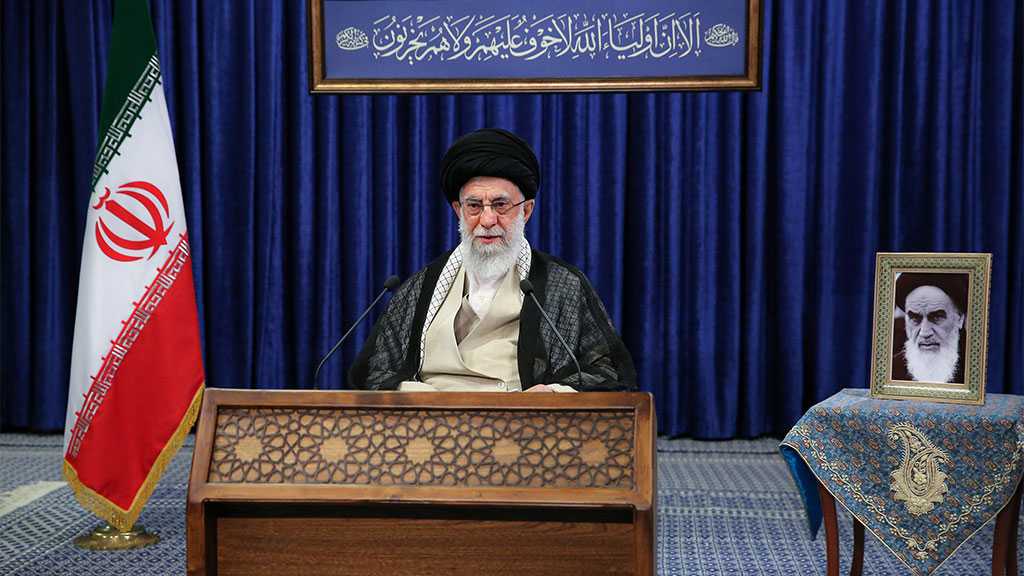
Leader of the Islamic Revolution Ayatollah Seyyed Ali Khamenei says Iran is stronger than ever as the country marks the 32nd anniversary of the passing away of its revolutionary founder Imam Khomeini.
“I start the discussion from here that among the revolutionary systems and establishments that have been formed in the last one or two centuries, I do not know of any system that has been predicted as much as the Islamic Republic to collapse,” the Leader said Friday in a televised address.
“From the first day of the revolution, the ill-wishers and those who could not digest and tolerate this great phenomenon, both inside and outside the country, said that the Islamic Republic would not last for another two months, six months or a year,” the Leader said.
“It was one or two years ago when the esteemed Americans said the same thing and a high-ranking American official stated that the Islamic Republic would not see its 40th anniversary. I do not remember so many predictions of decay and collapse to have been made about any other system,” he added.
Ayatollah Khamenei was apparently referring to former US national security advisor John Bolton’s infamous prediction while addressing a terrorist MKO convention in Paris in 2017.
At the conference Bolton said, “The outcome of the president’s policy review should be to determine that the Ayatollah Khomeini’s 1979 revolution will not last until its 40th birthday. And that’s why, before 2019, we here will celebrate in Tehran.”
“But, thank God, the revolution and the system of Imam Khomeini not only did not collapse and did not stop, but became stronger day by day,” Ayatollah Khamenei said Friday.
“It did not surrender, did not give up and rather showed its independence day by day. It achieved great success and overcame obstacles.”
The Leader said despite many successive political, security, economic obstacles created for Iran, “the Islamic Republic today is more developed than 40 years ago and is ahead in all respects by the grace of God.”
“The question arises, what is the secret of this permanence? Why did the Islamic Republic not face the fate of other revolutions in spite of all this hostility? Here I announce that the glorious and proud secret of this system is two words: the Republic and Islam. The existence created from these two words has every right to remain permanent, because it includes both people and Islam.”
Every year on the anniversary of the passing away, a commemoration ceremony is held at Imam Khomeini’s mausoleum in southern Tehran, with large crowds of mourners attending.
Like last year, authorities scrapped the ceremony and other events across the country this year to prevent the spread of the coronavirus. Nevertheless, people in different cities attended local events by observing social distancing, to pay tribute to the late Imam.
Ayatollah Khamenei said Imam Khomeini’s outstanding initiative was that he created and introduced the idea of the Islamic Republic and then realized it.
“The great work of our esteemed Imam was to create this idea and theory of the Islamic Republic and to introduce it into the field of various political theories, in which there were various Eastern and Western political theories,” the Leader said, adding Imam Khomeini then took action and put his theory into practice.
“The Imam had many initiatives but the Islamic Republic is the most important initiative of the Imam,” the Leader said. “This is the same religious democracy that was recognized as the Islamic Republic.”
Addressing the youth, Ayatollah Khamenei said, “You, the youth, who have not experienced the pre-Revolution era, it is hard for you to feel that era.”
He recollected that people played no role at all in their destiny, especially during the dark tyranny of the Pahlavi dynasty.
“The Imam brought the people to the field with a leaping movement. The nation believed in itself and the Imam used the great capacity of the nation’s ability and will, and with his leadership and guidance, he was able to take it to a stage where he could do great things,” he added.
There was a time, the Leader continued, when the Islamic Republic was a sapling, and now it is a robust tree which cannot be uprooted by any storm.
Grand Ayatollah Seyyed Rouhollah Mousavi Khomeini, better known as Imam Khomeini, passed away on June 3, 1989 at the age of 87.
Plot to divide nation, eradicate religious democracy
Ayatollah Khamenei called Iran’s religious democracy a “divine gift”, but warned of plots by the enemies to undermine it.
“Thank God, after the departure of the Imam, the Iranian nation preserved this divine gift and this religious democracy,” he said.
“The enemies of Iran, who made all kinds of efforts to separate the people and make them lose belief in religious democracy, had their plot thwarted and every time they tried a new way they faced the steel barrier of the Iranian people,” the Leader said.
“It is the same today. The enemies are lying in ambush to drive a wedge between the people and the Islamic system, but they are facing the steel barrier of the Iranian people. They plotted both security and intellectual invasion, all of which failed.”
Ayatollah Khamenei said there are some people inside Iran, who either knowingly or unknowingly repeat the claims of the enemies.
“The idea that democracy does not go hand in hand with religion is also the claim of the enemies. Of course, some may say this out of negligence. They should know that this is the talk of the enemy and the enemy wants to eradicate Islam… It is a great mistake if we alienate democracy from Islamic thought and spirit.”
Press TV’s website can also be accessed at the following alternate addresses:
The list of candidates for the 1400 Islamic Republic of Iran Presidential Election has shocked and surprised only those analysts and reporters whose investigative skills have been rendered dull perhaps by covidus lifeosis (abnormal life caused by covid) or by sourcepenia crediblerrhexis (ruptured credibility due to an abnormal reduction in the number of informed sources) or by some other malady of unknown etiology. Had the baffled and the bewildered had their fingers on the right non-digitized social and political pulses inside Iran, especially those of the past twelve years, it is likely they would not have found the list shocking.
As a general personal rule, I do not get into peripheral details of political factions, personalities, and transient political lather, froth, and intrigues peculiar to election times and their aftermaths with audiences either inside or outside Iran. I often use the opportunity, however, to remind people of the constitution of the Islamic Republic of Iran, relevant bodies and laws with respect to a specific election, and the degree to which given organs, oversight bodies, hopefuls, and candidates follow or deviate from those laws based on proven and credible public sources and records. When the Saker kindly asked me to write about the rationale behind the most recent finalized list of presidential candidates, I thought I could do something similar for this blog.
I am going to briefly discuss with you what I would, more or less, present inside Iran when I am invited to talk and hope the discussion proves useful in making sense of what is happening right now and what to expect in the future. I will focus this essay on three key areas: 1) The role and conduct of the Guardian Council as a review & decision-making body with respect to elections and candidates based on the constitution of the Islamic Republic; 2) Overview of “Who is Who” in the Iranian political scene as various political groups, factions, and personalities emerge and how these personalities and groups treating the constitution of the Islamic Republic of Iran with their words and deeds; and 3) The importance of the outcome of this year’s election for the Iranians, the people of the region, and the Resistance using an important official document released by the Leader, Ayatullah Khamenei, on the 40th anniversary of the Islamic Republic in 1397 [2019], titled “Gaam_e Dovvom_e Enghlaab,” or The 2nd Phase of the Revolution.[1]
1. The Guardian Council and the Final List of Candidates for Presidential Election 1400
The Constitution of the Islamic Republic of Iran entrusts the Guardian Council with three major responsibilities: a) Oversight of all laws, legislations, and rules to make sure they are in accordance with the constitution AND fiqh according to Shi’a Islam; b) Interpretation of the Constitution where and when such interpretation is needed; and c) Oversight over all elections and their components including the qualifications and records of the applicants and their approval as candidates.[2] In a nutshell, the Council is obligated to use the tools and the authority given to it by law to guard and protect the Constitution and when an interpretation is needed, to make sure that interpretation is in accordance with Shi’a Islam fiqh.
As far as the presidential candidates are concerned, if someone openly and publicly expresses his rejection of the Constitution or its key components, for example, and there is solid proof of that, or if he acts in violation of key components of the Constitution and there is solid proof of that, or if he breaks the law and has a file in the legal system, then he should not expect to be approved as a candidate to run for the position of the president, which is the 2nd most important position in the Constitution of the Islamic Republic of Iran. This is regardless of how popular that person may imagine himself to be. Should the person of that caliber be approved, then the Guardian Council must be held accountable for breach of duties. This is not some revolutionary idea or practice. It is a wise and reasonable expectation of a body with responsibilities of that nature in any system of governance anywhere in the world.
Related to the approved list, a key question we must ask is this: Does the Guardian Council apply its evaluation and assessment of the applicants in a fair and unbiased manner, or does it appear that some applicants are being treated as more equal than others?
To answer the above question, I explain the structure of the Council and we could take a look at a few records of their past decisions.
The Guardian Council consists of 12 members. Six members must be “faqih adil wa jame’ushumul,” or well-rounded, just and pious religious jurist with proven records in fiqh and in justice. These members are selected and appointed by Wali Faqih, or the Supreme Leader, in consultation with Majlis Khobregan Rahbari, or the Assembly of the Experts in Leadership which is an 88- member assembly directly elected by the people. The other six members must be just, pious, and knowledgeable legal experts with proven records in their expertise. These members are nominated by the head of the judiciary and approved by a majority vote by the members of Majlis Shoraye Islami, or the Iranian Parliament. So, six legal experts and six religious experts are responsible for safeguarding the laws of the Constitution and the laws of the Religion (Shi’a Islam).
Perhaps the nearest similar body to the Guardian Council in terms of function is the United States Supreme Court. Of course, I am using the term “similar function” extremely loosely here since the Islamic Republic of Iran’s Guardian Council is in charge of guarding and protecting a constitution that has defense of the oppressed in the world as one of its important principles and the US Supreme Court is in charge of guarding and protecting whatever it is guarding and protecting to ensure the Global Arrogance can continue to arrogate, aggress, and wreak havoc upon the defenseless.
At least 7 out of 12 votes are required for an applicant to be approved as a presidential candidate. Once the list is submitted and published by the Ministry of Interior, it is considered final. According to the law, however, the Supreme Leader can use what is called “Hokm_e Rahbari,” or the Leader’s Decree, to make a change to that list. In the past 40+ years, only once did this happen. During the 1384 [2005] presidential election, when the list was published, Ayatullah Khamenei sent a letter the Council and asked them to add two additional names to the list of candidates for that year’s election. The text of that letter is as follows:
“Ayatullay Jannati, the Secretary General of the Guardian Council,
With salaam and greetings. Thank you for the great efforts of the esteemed Council and the important task of determining the competencies of the presidential candidates for the 9th presidential election. With due observance of the law in this order, it is desirable for people with diverse political preferences to have the occasion as well as the opportunity for their great test in the election. Therefore, you should consider the announcement of the gentlemen, Dr. Mostafa Mueen and Engineer Mehralizadeh as candidates.
Wasalaam Alaykum.
Sayyed Ali Khamenei,
1384/3/2.”[3]
The phrase “great test” in the Leader’s statement carries with it a significant message. From the perspective of our responsibilities before God, these positions of power, regardless of the position and level, are tests through which the strength of our characters and purity of our beliefs get authenticated.
The two candidates added to the list by the Leader belonged to the reformist camp. The augmented list now reflected a more representative list of the most notable political factions of that time. Some analysts later speculated that this addition led to a split in votes for Hashemi Rafsanjani and an ultimate victory for Mahmoud Ahamadinejad who was supported by the principlist camp during that election. Their speculation was based on an assumption that those who voted for Mueen and Mehralizadeh (the reformist camp) would have voted for Rafsanjani (the technocrat liberal economy camp).
Perhaps a parallel to this phenomenon could be drawn with the 1992 US presidential election when Ross Perot entered the race as an independent candidate and that led to a split in votes for Bush Sr. and handed a victory to Bill Clinton.
I find the claims regarding a split in Rafsanjani’s vote unsubstantiated though. I think a widespread sense of “anyone but Rafsanjani” at that time was much stronger than what some of those analysts are willing to admit.
At any rate, in subsequent elections and since then, every time the Guardian Council released the final list, given personalities sent letters to the Leader and asked him to add specific people to the list. However, the Leader never intervened again. Those who sent letters to the Leader, I think, do not really “get” why the Leader used his Hokm_e Rahbari authority that once and why he is unlikely to use it unless there are exceptional circumstances.
Despite what foreign media and their echo chambers inside Iran propagate, I think the Guardian Council’s decision-making calculus has been ameliorated in favor of a more diversified and less conservative list in reviewing applications by the Council. I also think that one-time mandate by the Leader had something to do with this change. There has been a few names in the 1388 (2009), 1392 (2013), and 1396 (2017) list of candidates that should not have been there had the Council’s vetting been more by the letter of the law.
2. “Who is Who” in the Islamic Republic of Iran’s Current Political Scene
If we use the Pareto principle and apply the general 80-20 rule to the socio-political scene in Iran and assume that 80% of the general voting population is influenced by the 20% political elites, then we could divvy up the 20% so-called elites into six somewhat loose categories based on what we see of the present political currents. I constructed the table below to give an overall sense of various groups and notable personalities in three areas of social, economic, and foreign policy stance. I based this categorization on what each group’s actual records show and not what they theoretically claim. The candidacy of the names in green was approved by the Guardian Council. The names that are crossed are known personalities that did not make it to the final list.
Each member of the Guardian Council casts its vote in writing and it is “Gheyre Alani”. That means, the Council members discuss each candidate’s application among themselves but cast a secret vote. So, none of the members knows who exactly voted “yes” or who voted “no” for a given application. In cases when an applicant did not make it to the list and he wants to know why, the Council reveals the content of the discussion to him and him only. However, if the applicant wishes for the discussion to be made public, then he must submit a written request to the Council and the specific discussions will be revealed. So far, I could not find any records of any candidates having submitted any such written request.
Since we do not have any credible report from the Council’s discussions, I will briefly review some of the publicly available records on two of the notable personalities who did not make the list. We examine potential reasons for why these two candidates did not earn at least 7 out of 12 votes. I would like to reiterate that these are my assessments and I have absolutely no access nor am I privy to the records of undisclosed discussions by the Guardian Council. The two applicants are Ali Larijani and Mahmoud Ahmadinejad.
Ali Larijani. He is a well-known figure in the Principlist camp and most recently served as the head of the Majlis Shoraye Islami, or the Parliament. His brother, Ayatullah Amoli Larijani, who was the head of the Judiciary is also one of the 12 members of the Guardian Council. It appears Ayatullah Larijani was not able to persuade enough other members of the Council in favor of his brother. After the final list had been released, Ayatullah Larijani made the following public statement:
“Since the beginning of my participation in the Guardian Council in 1380 [2001] nearly 20 years has passed. In all this time, I have defended the Guardian Council even during the years I was in the Judiciary. But I had never found the decision of the Council so much indefensible whether in approval or in lack of approval for qualifications. This chaos is to a large degree related to the interference by security organs through false reports that exert undue influence on the decision of the members of the Guardian Council.”[4]
Ugh. I find the fact that Ayatullah Larijani participated in the discussion and did not recuse himself due to conflict of interest disturbing. But let us assume he has reached a level of Taqwa that he can keep his bias on a tight leash and explore if his displeasure with fellow council members is warranted.
One factual, publicly available, and verifiable information is this: Fatemeh Ardeshir Larijani is Ali Larijani’s daughter, (Ayatullah Amoli Larijani’s niece). In 2010, she relocated to the United States and has been living and working there for the past 10 years. Whether she is a citizen, permanent resident, or on an H1 visa or what not is not an issue. It is also a fact that Ali Larijani, her father, the rejected candidate, has served as a key member of the Supreme Council on National Security, the head of the parliament, and in many other important high profile positions for decades. The relation between Fatemeh Larijani and her family and relatives is intact, quite close, and ongoing.
Here is another fact: Many times, Iran’s nuclear programs, generals, and scientists have been openly, publicly, and shamelessly sabotaged, threatened, and assassinated respectively under direct order from top officials in the United States of America. The role the United States played in bringing the Iranian society to a brink of collapse in 2009 is quite public and azharu mina-Shams (more evident than the sun).
This is where things get even worse: In certain instances, security breaches led to significant damages to critical infrastructures as well as to the assassination of key scientists and top commanders in Iran. Disturbingly, some of the intelligence leaks (let us suppose inadvertently) were traced to close family members of top ranking officials with access to classified information as discovered by members of the Intelligence Ministry.
Here is one of the core concerns: should the Guardian Council wait until leaks linked to this particular person and this particular candidate actually occur and another disaster to happen in order to take a stance and say enough is enough? If Larijanies and the likes of them want to be free to do as they wish as private citizens, then so be it. They must relinquish their sensitive positions and do as they wish according to the law. But if they aim to occupy extremely critical positions of authority and responsibility in the country, then they must know there are constraints for themselves and their family members. It is not just about them. It has something to do with life, death, security, and the fate of a nation. Why should a whole nation pay the price for the self-indulgences of a few families?
In 2018, some families of Americans who had been detained in Iran on espionage charges, wrote letters to Trump administration to deny US visas to the children of top-ranking officials in the Iranian government. An excerpt from an NBC report at the time reads:
“The families have provided the administration and several lawmakers with a list of Iranian nationals living in the U.S. alleged to be the children or relatives of senior Iranian officials, including President Hassan Rouhani himself… The daughter of the powerful speaker of the Iranian parliament, Ali Larijani, is also on the list. She is a resident in internal medicine at an Ohio hospital, according to medical directories. The nephew of President Hassan Rouhani attended college in New York City and now works there, according to LinkedIn. The nephew’s father was the former top adviser to Rouhani, who stepped down after coming under fire from hardline opponents of the Iranian president.” [5]
Double ugh. It is not surprising that the Guardian Council did not place Ali Larijani on the final approved list for presidential candidates. It is surprising that the Council members grew a spine.
Mahmoud Ahmadinejad. Among all post-war presidents of the Islamic Republic of Iran, from the construction era to present, Mahmoud Ahmadinejad may be viewed, without a doubt, as the most active and the most productive president in terms of construction, social justice programs, and public service during his 1st term of as the president of the Islamic Republic of Iran. His excellent record of public service continued well into the 2nd year of his 2nd term. I do not believe any fair and unbiased person would deny this.
With respect to Iran’s foreign policy and anti-imperial and anti-Zionist stance as well, one can name very few politicians that demonstrated the same level of boldness and courage as him. For sure, he pulled no punches.
Half way through his second term and beyond his time as president, however, Mahmoud Ahmadinejad’s priorities, statements, and conduct changed. The areas in which he was the strongest dimmed and areas in which he had weaknesses became more prominent. I do not wish to go into details of the political games into which he was drawn and questionable conducts of some of his closest associates from whom he failed to distance himself and a combination of factors that resulted in his political fall. Whatever the condition of his environment and associates, ultimately, he was the one who made the choice and he was the one who presented his application for the position of president.
Mahmoud Ahmadinejad had an excellent team of hardworking and honest ministers working with him. Many of those excellent workers and ministers, however, have long distanced themselves from him and have expressed unwillingness to work with him again for various reasons. A domineering and overbearing quality to his relationship with those who worked with him seem to be among those reasons. An attitude of “either my way exactly as I say or highway,” with various ministers and organs in the executive branch, with members of Majlis, with the Judiciary, with the Leader, and with many others and of a clear disregard for the law is not exactly an appropriate attitude for a wise chief executive officer of a country, an Islamic Republic at that.
Muhammad Vahdati, the former head of the Center for Studies of the Ministry of Interior, has spoken at length about what may have happened. I would like to quote for you here excerpts from his statements that I found illuminating:
“Of course, those public service works were the product of a team work that was done by a system consisting of the administration, the ministers, the governors who themselves now, those very same hardworking ministers and governors, more than 90 percent of them have distanced themselves from Mr. Ahmadinejad’s current position. Now, here is the question, a person who was once an eyesore for the arrogant powers such as the US and Israel, why is he marked and regarded today as a prey and a beacon of hope for those very arrogant powers? And why do the enemies sense that they must invest in him and that he could deal such hard blows to the system that the US Americans themselves are incapable of doing?”[6]
What Dr. Vahdati is alluding to is a series of interviews with Ahmadinejad conducted by Western/Saudi-financed media outlets and aired by their lie factories regarding the war in Syria. About three months ago, in a televised interview with the Lebanese TV Channel, Al-Jadid[7], Ahmadinejad lumped together the Resistance fighters and Russia in Syria with the ISIS, Jubhatu-Nusrah, and other West-Zionist backed fighters. He said they must all leave Syria as none of them are helping the Syrian people. He also made other noteworthy remarks of similar nature that one could usually hear from Zionist-controlled media.
I seek refuge in God Himself when He seeks to test us.
Here, I would like to bring a bit more of Dr. Vahdati’s interview from the archive of the Ministry of Interior since it sheds some light not only regarding Ahmadinejad’s attitude and conduct but also on social and historical context that ushered him into the office of the President of the Islamic Republic of Iran about 15 years ago. He states:
“But the reasons for his [Ahmadinejad’s] fall: the first one is his pride. Pride knocks down a human being. It is one of those types of sins that God will punish in this very world. Even if he is a believer, even if he is a warrior of God fighting in the warfront. If one becomes afflicted with pride, God will very quickly pinch his ear. Who do you think Satan was? An angel very high up in God’s Presence. Who had worshiped God as much as Satan?! Several thousand years of worship. But its pride and arrogance caused it to be rejected and become Satan, the Outcast.”
“The 2nd reason, I think, is Mr. Ahmadinejad’s inaccurate analysis of the reasons for his victory during his first presidential term. This incorrect analysis of his own situation caused his pride to be further inflated. He had this thinking that he and he alone had made this wave. So, you do know that main Principlists and other conservative camps at that time sought after more famous people. Even the Isargaran camp that Mr. Ahmadinejad was part of its main council, that council, too, went after another candidate. Well, at that time, Mr. Ahmadinejad was not very well known. He had just recently become the Mayor of Tehran. Even that opportunity was provided to him by the Principlists. He claimed that the Principlist factions did not support him. He even claimed that the Leader’s office had suggested to him to remain in Tehran’s Mayoral Office since he had just become the Mayor of Tehran. He, therefore, claimed, “I myself created this wave therefore I do not need any support from the Priciplists.” But the truth is this: Mr. Ahmadinejad did not create that wave. He rode it. Even the Leader and the Revolutionary forces had done a lot to raise awareness in those years and unravel the enemy’s complex plot. In those days, there were even talks of silent dismantling of the government. Many people did a lot to reveal the true essence and aim of the so-called Reformist movement that was being superintended by the [US] Americans.”
“It was the efforts of all these people that once again brought to the fore the revolutionary dialogue and a need for skillful management of the society. In the very first achievement of that wave, you saw in the victory of Chamran’s Team in Tehran City Council elections. But before that, a very different dialogue had dominated the scene. The atmosphere at that time was such that whoever was the most extremist and the most bellicose against the system, he would get the most attention.”
“For example, someone would say the religion and power must be separated. Another would say we must run bullets through Imam’s thoughts. Another would say religion is not only the opium of the masses but it is also the opium of rulers. Yet another would say ‘are our people monkeys to emulate?’ Mr. Abbas Abdi, for instance, was saying, ‘we could do street demonstration against God.’ And things like this.”
“Okay then, it took a lot to change those sorts of dialogues. Mr. Ahmadinejad relied on this new wave of reviving the revolutionary dialogue and began riding that wave and claimed he was more revolutionary than others. It was because now that dialogue had gained currency. On the other side, the Principlists who had gained an opportunity, they provided that opportunity to Mr. Ahmadinejad in Tehran Mayoral Office. It was under these circumstances that Ahmadinejad was able to beat his rivals in that particular arena and use the opportunity as a springboard.”
“The third factor was his grab onto power and an emergence of a serious power-seeking spirit from within him. That means, Mr. Ahmadinejad was gradually afflicted with the very same problem against which he had gone to war. His main reason to oppose Mr. Hashemi [Rafsanjani] was Mr. Hashemi’s [Rafsanjani’s] affliction with power grab and exclusivism. For instance, those around Mr. Hashemi [Rafsanjani] during his second term had been saying they should do something so that Mr. Hashemi’s [Rafsanjani’s] presidency becomes a life-long position but the Leader vigorously opposed this and said it is against the constitution. Mr. Mohajerani who was at the time the president’s [Rafsanjani’s] legal advisor was saying, ‘We need to change the constitution, to reform it, so that he could become a president for at least one more term.’”
“So, what they did to remain in power was the establishment of the Kargozaran Sazandegi and the formation of a coalition with the Leftists who had by then become isolated. Eventually, we saw those with whom the public was dissatisfied because of hardships and widening of the gap between the rich and the poor. So, those people returned with a new slogan and kept their grip on power.”
“Mr. Khatami’s administration in fact revolved around the Kargozaran as its main axis. This was a left-over administration from Mr. Hashimi’s [Rafsanjani’s] presidency. Similarly, Mr. Ahmadinejad, in the final days of his first term and the beginning of his 2nd term, had reached the conclusion that in fact the only one who can save the country is him. He believed the reformers had no religion and the Principlists did not have what it takes. Consequently, his main preoccupation was what would happen after his 2nd term was up.”
“So, we remember that the first appointment he made in his second term, he made Mashaei as his first assistant secretary. The Leader privately wrote to him that that decision is neither a prudent decision for the country nor a wise decision for himself. But in order for him to push this decision on the system, he brought forth all he had. In doing so, he set fire on his entire political capital. From 11-day Sulking to abandoning his office to picking fights with Majlis.”
“It is not necessarily a bad thing for a political current to try to bring its most powerful people to the scene in order to remain in power but Mr. Ahamadinejad’s idea was not this. He had very capable ministers in his team like Mr. Lankarani, Mr. Nikzad, Mr. Babaee, and Mr. Fattah. However, he told them if they came forward for candidacy, he would publically announce that they were not with him and he would not support them. He viewed them as the ‘system’s people.’ He wanted to bring someone to power who was his person.”
“The other factor was that ideological deviation with which Mr. Ahmadinejad became afflicted. Or, we could say his presence in power caused that disease to manifest itself. And the role the ring around him played to worsen his situation cannot be denied. Gradually, this mentality was formed in Mr. Ahamadinejad that ‘following a Wali Faqih is for the time that we have no direct access to an Infallible Imam (AS). Today, we are directly connected to the Imam (AS) and we no longer need to accept the wilayat of this faqih.’”
“So, you see we are facing two Ahmadinejads: One is the Ahmadinejad belonging to the beginning of the 9th Administration and with those worldviews and the other is the Ahmadinejad in the 10th Administration fully deviating from the frame of mind he had started his first term and, in many places, he even became defiantly oppositional with the first one.”
If I were to summarize Ahmadinejad’s situation, I must say that had he been on the approved list of the 1400 presidential candidates released by the Guardian Council, it would have been quite shocking. It would have demonstrated the Council was not living up to the responsibility of guarding the Constitution.
Just to close the file on the 20% political elites and all their protests and grievances, I would like to re-post a segment of Imam Ali’s (AS) letter to Malik Ashtar about the elites in the society that I had quoted in one of my previous articles regarding Imamat and Wilayat:
“O, Malik! Your most favored tasks must consist of the ones that are the most balanced with the truth, the most encompassing in justice, and the most comprehensive in gaining the public’s gratitude. That is because the public’s anger makes the satisfaction of a few elites useless and the anger of a few elites become null and void when countered with the satisfaction of the public. At the time of great abundance and comfort, no one is more wasteful for a governor than the elites. At the time of hardship and challenges, no one is more useless than the elites. At the time of fairness, no one is less pleased than the elites. At the time of asking and wanting, no one is more persistent than the elites. At the time of generosity, no one is more ungrateful than the elites. At the time of refusing to cater, no one is more unforgiving than the elites. At the time of calamities, no one less patient than the elites. So, the pillar of religion, the crowd of Muslims, and the most ready to fight with the enemies are in fact the public. So, your attentions and your desires must be devoted to them.”[8]
3. Election 1400 and the 2nd Phase of the Revolution
As stated in the introduction, on the 40th anniversary of the Islamic Republic of Iran in 1397 [2019], the Wali Faqih Ayatullah Khamenei released a declaration titled “Gaam_e Dovvom_e Enghlaab,” or The 2nd Phase of the Revolution directly addressing the Iranian Nation. The document is important in that it gives a concise and significant overview of the past 40 years and notable lessons, a general assessment of the present, and a clear map and direction for the future.
When the document was released two years ago, many people, organizations, and movements at all levels from local mosques to academic centers of higher education took it and said “Labbayk” (i.e. “we heard your call and we will do what we must”). Several of the candidates that submitted their application for the presidency actually stated they were doing so in order to have responded to the Leader’s call. Those interested could find the link to the entire document here. I would like to highlight segments that I think provide important cues to what is ahead in terms of the upcoming election, the qualities of the next president, and the areas where both the nation and the officials must focus.
The Ideals of the Revolution: In the introduction segment, the Leader states,
“From among all oppressed nations, very few nations undertake a revolution. And among those who rise up and have a revolution, even fewer are able to carry the work to its final phase. Except for changing the ruling system, few have been able to preserve their revolutionary ideals. With the great revolution of the Iranian nation, however, which is the most significant people-based revolution in modern era, it is the only revolution that went through a forty-year honorable period without betraying its ideals. It protected and preserved the authenticity and dignity of its slogans despite all sorts of seemingly irresistible temptations. Now, it has entered into the 2nd phase of building self, the society, and the civilization. Salutations from the bottom of my heart to this nation, to the generation that began the revolution, and to the generation that is ushering it into the grand global process of its 2nd Forty-Year.”
Therefore, the next president must not only believe in the Revolution’s ideals but help realize them for the nation inside and for the oppressed outside.
Balance and Justice in Foreign Policy: In another segment of the document, the Leader clarifies:
“The Islamic Revolution of the Iranian nation has been strong but kind and tolerant even when unjustly treated. It has never committed the excesses and deviations that brought dishonor to many other uprisings and movements in the world. In no challenge, not even with the [US] America and Sadam, did it ever fire the first shot but always and in all cases, after the enemy had attacked, it defended itself and of course executed the counter attack with force. This Revolution, from the start until today, has neither been ruthless and bloodthirsty nor cowardly and hesitant. It has stood up unambiguously and courageously against arrogant bullies and transgressors and has defended the unjustly treated and the oppressed. This revolutionary valor and affability, this truthfulness, transparency, and strength, and this global and regional domain of action on the side of the oppressed of the world, is an honor for Iran and the Iranians. May it always remain so.”
In addition, the next president must be wise and courageous at the same time. Neither should he be bellicose to pick fights nor fearful to face a challenge with strength. Being on the side of the oppressed of the world is given. Ayatullah Khamenei highlights 7 specific areas that require great attention and defines each area in a way they serve as a roadmap for those who are willing to take action. I will close the essay with a particularly uplifting segment for the region.
“Strong Iran of today, just like the beginning of the Revolution, is facing many challenges from the Arrogant Powers but with a meaningful difference. If the challenge [for Iran] in those days was to cut off the [US] America’s and foreign hands from the nation or to close the Zionist regime’s embassy in Tehran or to expose the Den of Spies [the term that refers to US embassy in Tehran], today, the challenge for the US with Iran’s presence at the borders surrounding the Zionist regime and dismantling the illegitimate influence and presence of the [US] America from West Asia, Islamic Republic’s defense of Palestinian fighters at the heart of the occupied territories, and defense of holy flag of Hizbullah and the Resistance in the entire region. If in those days, the West’s problem was preventing Iran from buying even the most primitive forms of arms for its defense, today, its challenge is to prevent the Iranian arms, military equipment, and drones reaching Hizbullah and the Resistance everywhere in the region. If in those days, the [US] America imagined it can overcome the Islamic System and the Iranian nation with the help of a few self-selling Iranian traitors, today, it is finding itself in need of a large coalition of tens of hostile yet impotent governments to fight Iran. Yet, it fails.”
[3] IRI Guardian Council News Site. “The 9th Election: Participation and Competition in Two Rounds.” News Code: 3152; Published on line on Khordad 21, 1392 [June 11, 2013]. Accessed online at: Shora-GC.ir
[4] Mehr News Agency, “Amoli Larijani’s Criticism of the results regarding approved candidates list.” Khordad 4th, 1400, @ 17:31. News Code: 5220521. Accessed online at: mehrnews.com/xVpkg
Kabbalistic Balance
-
Kabbalistic Balance August 6 2026 ___________________________________ More
Vids! +BN Vids Archive! HERE! ___________________________________ Support
The Br...
Report on Beth Israel vigil 07-04-26
-
*1A Rights under combined attack from local government plus media*
Ann Arbor City Council is at it again. Right before the long 4th of July
weekend, they ...
-
Hello all,
It is with great sadness that I share with you the passing of our beloved
sister, Mother, and Grandmother, the individual that you all knew ...
Best Horror Podcast
-
Best Horror Podcast Introduction: Horror podcasts […]
The post Best Horror Podcast appeared first on Copper Shock Horror Podcast.
Ikhras Endorses Muntadhar Al-Zaidi
-
“Oh parties of banditry and sectarianism and corruption, we have come and
our goal is to destroy you.” Ikhras formally endorses Muntadhar al-Zaidi,
Iraqi j...
Prince Charles: Foreign Jews behind bloodshed in ME
-
In May, 2017, British Crown Prince Charles declined an invitation from
Zionist entity’s president Reuven Rivlin‘s to attend the 100th anniversary
of the no...
Palestinian Women – One for All, All for One
-
Honouring All Palestinian Women by Honouring Three: Hanin Zoabi, Ahed
Tamimi, Samah Sabawi Vacy Vlazna “Palestinian women have always stood side
by side ...
US’s Saudi Oil Deal from Win-Win to Mega-Lose
-
By F. William Engdahl Who would’ve thought it would come to this? Certainly
not the Obama Administration, and their brilliant geo-political think-tank
neo-...
-
*Mordechai Vanunu wins human rights prize of Brazilian Press Association *
* http://www.alternativenews.org/english/index.php/features/updates/7038-mordechai...
Abdul Aziz Rantissi:
"My ultimate wish, my God, is to attain martyrdom,"...God granted him his wish on April 17, 2004, at the hands of Israeli assassins.