Showing posts with label Lauren Booth. Show all posts

Friday, 19 October 2012

On BDS & Integrity..

DateThursday, October 18, 2012 at 12:05AM AuthorGilad Atzmon


River to Sea Uprooted Palestinian
The views expressed in this article are the sole responsibility of the author and do not necessarily reflect those of this Blog!

Tuesday, 16 October 2012

Lauren Booth: Pakistan’s Moment of Truth: A CagePrisoners report on the anti-Drone March


Pakistan’s Moment of Truth: A CagePrisoners report on the anti-Drone March“What about the security of those taking part in the anti drones protest” was the only question asked by journalists at the press conference held by Imran Khan, in Islamabad, on the subject. It was tiresome to witness the agenda of Pakistan’s rulers on such public display. Namely, to derail the growing mass movement in Pakistan opposing US drone attacks on its regional villages. To prevent the momentum of this movement, the spectre of foreigners being harmed was hyped up across the local media.

As political leader of Pakistan Tehreek-e-Insaf party (PTI), Imran Khan called for people of all age, gender and class to head to Waziristan and witness the real terror there; the terror being visited on one of the world’s poorest regions by the world’s richest, most heavily armed, superpower.

As the weekend of the historic convoy approached; Clive Stafford Smith of Reprieve and members of US group Code Pink, all taking part, called for the rights of Waziri civilians be recognised, supported and protected.

South Waziristan is one of seven Pakistani Federally Administered Tribal Areas and Frontier Regions (FATA). Sixty percent of the population lives below the national poverty line, the region is inhabited almost entirely by Pashtuns. The governance is under the direct authority of the Pakistani President, who has the sole power to regulate ‘for the peace and good governance’ of FATA.

That ‘good governance’ includes refusing to condemn (or indeed supporting) Barak Obama’s drones policy in the region. Since Obama became President, drone attacks have surged in the FATA region; from an average of one strike every 40 days before 2007, up to one every four days by mid-2011.

Stanford University and New York University released their major study recently. This shocked the world, revealing that a mere 2 per cent of those murdered and maimed by unmanned American drones, were (accused) ‘terrorists.’ So much for the narrative that drones attacks in Pakistan (and Gaza and Yeman and elsewhere) are surgical, precise and thus, effective against ‘extremism’. Instead, their imprecision and their increasingly casual use, not only fail to contain resistance to American hegemony in the region, they fuel anti-US sentiments in Pakistan and destabilize the lives and safety of tens of millions of people. People who may be, as a result, genuinely at risk of militant attack.

Overwhelming the majority of those killed, injured, and handicapped by drones are innocent civilians going about their daily lives. Independent research puts the number of drone-related deaths over 3,000, including 175 children. During my time in Pakistan, an awareness of the massive impact of drone strikes became clearer. What is too little mentioned in the international media is the displacement of people from South Waziristan. Estimates now put the number of IDP’s (Internally Displaced Persons) at almost fifty per cent of the entire population. That is 300,000 people, unable to live in their homes as a direct result of America’s policy of launching random attacks on civilian villages and gatherings.

I remember being in Gaza earlier this year, hearing the drones overhead, trembling inside at the creepiness of being spied upon, judged for injury or death from afar. Israeli and US militarists have boasted in the past that drone attacks are so precise that ‘the colour of a woman’s hijab’ can be detected (the point here is not the colour - images are black and white - but the boast). This is the lie which keeps the US public supporting drone policy. This imaginary scenario where scary bearded terrorists are obliterated by ‘surgical’ attacks that somehow do no damage to ‘innocent’ people living, eating or sleeping, alongside them.

So what is like living under these wonderfully controlled killing machines? As in Gaza, the people of North and South Waziristan live with their skies constantly abuzz with flying metal destruction. Clive Stafford Smith reports that his mother remembered the buzz of ‘drones’ aka ‘doodblebugs’ used by the Nazis in WWII over London. ‘So long as they made a sound you were alive’ she remembered seventy years later, with a shudder. Today again, weapons of Fascism buzz in the skies over towns and villages. Breaking up the very fabric of community life. Women in Waziristan are afraid to shop at the markets, their children are kept home from school, funerals of those already killed, avoided (these have been targeted as ‘militant gatherings). And here in Europe our media gets all excited about the sexy sounding ‘double tap’ strikes. How we love the rhetoric of war these days. But ‘double taps’ should not be thrilled over. For what it refers to is America’s use of secondary strikes on the same target - at the time when medics come to rescue the injured and family members are giving comfort to the dying. As a result, a leading humanitarian agency now delays assistance to victims of drone attacks by an astonishing six hours.

Saturday 6th of October, hundreds of vehicles set off from Islamabad towards the Pakistan border region with Afghanistan. I had my own media shaped preconceptions about the people I would see there; specifically the men. I expected not to leave the car for ‘security reasons’ and that my white face (despite the hijab) would be met with suspicious glares from those modern bogeymen aka ‘tribal elders’. Hundreds of cars, buses and scooters, packed with people to suspension-bearing limits, travelled 400 sweaty, slow kilometres before stopping overnight in the city of Dera Ismail Khan. The plan for the second and final day was to travel another 120 kilometers to Kotkai in South Waziristan.

The next morning, thousands of every day Pakistanis from cities as far apart as Karachi, Islamabad and Lahore, set off towards the border provinces. The Pakistan military had been told to block the roads at certain points causing long delays. Undeterred, men simply joined together and removed the massive containers, and on we drove.

And then it began.

The greeting by the impoverished in the provinces - to the convoy members. The love and affection exchanged between Pakistan’s city dwellers and their rural people, a truly rare and special event.
Imran Khan is a visionary - whether you like or agree with that vision is neither here or there - this is what he is.

‘We are making history’ he told supporters. And I believe that last weekend, this is what happened. The reunifying of Pakistan’s people; an ethical revival, begun. The Government could only watch on. For the military men posted all along the rooftops of the mud buildings as we chugged onwards did not glare at the convoy.
They waved, giving ‘V - for victory signs.
‘We are with you’ shouted an older man in uniform.
‘Stop America attacking the people’ a younger soldier, smiling at me and waved.

At the village of Tank, I left the car, spurred on by the constant line of smiles and friendly cheers along the dusty, humble, streets. Here were the old men in long beards and turbans of TV footage, but nowhere were there scowls or threats or mutterings of ‘haram’ for women taking part in the protest. Islam was in the air in a way I have felt before only in the Gaza Strip. Truly Allah SWT is with the poor and the oppressed.

Sometime later, the military stopped the convoy in the town of Kawar. Their constant road blocks had made us too late to reach Waziristan and to return before nightfall.
But this was not a victory for the Pakistan government.
It was a victory for the people of Pakistan.

An impromptu rally of some ten thousand was assembled in a field in “Jahazi Ground” in Tank, a town of Khyber Pakhtunkhwa, near the border. Imran Khan, advised the Zardari government to abandon the double standards concerning drones - saying one thing to America another to Pakistan’s people. The crowd cheered and called for America to leave them alone; huge chants of ‘Go America Go!’ rang out.

Khan said the convoy had sent the message to the world that drone attacks were unacceptable. He raised cheers with his certain words; "America is not God, Allah is God,"

Back in Karachi, the following day, the Pakistan government tries to seize the political moment. Interior Minister Rehman Malik claims that U.S. officials have given him an assurance to review the policy of using drones in tribal areas of Pakistan, following opposition (not from protestors of course) but from the country's government.

 Whatever.

The list of countries facing remote attacks will only grow. The US and UK governments are working on doubling the number of armed drones in their arsenals. Plus there’s the wonderful bonus that drone attacks kill civilians whilst protecting the security of military personnel who can be thousands of miles away.

Meanwhile, a few miles beyond the government’s machinations, hundreds of thousands of people continue to wonder what it is they can actually do to make themselves safe. You see no one has told the rural people, WHY they are actually being targeted. After all what can you say to a three year old child, or a wedding party of hundreds, or the sick and elderly injured and murdered by unmanned machines from a country they know little about? That they are terrorists by dint of their place of birth, their religion, their facial hair? No one knows who is on the American kill list. And on one knows what they can do to get themselves off.

Suddenly, and without warning, a missile launches. Women, men, babies, homes, everyone and everything is annihilated within a 15 metre radius.

 Random and indiscriminate murder is the definition of terrorism.
Drone attacks are terrifyingly random.
Source:

http://www.cageprisoners.com/our-work/opinion-editorial/item/5150-cage-prisoners-report-pakistan

River to Sea Uprooted Palestinian
The views expressed in this article are the sole responsibility of the author and do not necessarily reflect those of this Blog!

Saturday, 22 September 2012

Lauren Booth: ‘Journey to Islam and Palestine’

Posted on |
British journalist and broadcaster, Lauren Booth (born Sarah Booth, July 22, 1967), reverted to Islam in late 2010. Even before her newly found faith, she supported Palestinian resistance against the Zionist-Jewish occupation of historical Muslim-majority Arab Palestine. In March 2012, Lauren Booth visited Gaza and the West Bank after three years. Read the story of her trip, here. Also watch a video below in which she talks about her journey to Islam and her views on Palestine.
Lauren Booth once asked a very poor mother in Gaza why she had so many children? “We need at least seven children to each family here,” the mother responded. “Why? Because at least two will be killed by Israeli soldiers. Two more, will be imprisoned by Israelis for a long time or crippled by Israeli rockets. Two may be lucky to receive education, leave Palestine and never return. Which leaves only one child to look after us in our old age“.

In May 2011, Lauren Booth along with Alan Hart, Gilad Atzmon and Karl Sabbagh spoke at London panel debate on ‘Jewishness and Israeli criminality‘. The debate which was scheduled to be held at University of Westminster Campus - but was cancelled due to threats of disturbance, from UK based Zionist militants.

Lauren Booth who is a talk-show host at Iran’s Press TV, hold Palestinian VIP passport given to her by PA prime minister Ismail Haniya.

Tuesday, 31 July 2012

If Palestinians disappear, who cares?

by Lauren Booth
Tuesday, July 31st, 2012


Lauren BoothOsama Qashoo, film director, activist
Extra reporting; Lauren Booth

On the 21 and 27 June, two asylum seeker vessels heading from port of  Pelabuhan Ratu on the south-eastern coast of Java – a popular embarkation point for Australia disappeared. The boats were overladen with men, women and children, desperately seeking a new life, when the suspected sinkings took place.

Such tragedies are all too rare in the world of people smuggling. But this horror has an extra dimension to it, as the majority of the missing passengers were Palestinian refugees. This has led to a cruel fiasco of disinterest from all the regional authorities, who, even 30 days after the disappearance have failed to send out any search party for the missing. The trail of disinterest spreads from the Australian government right the way to the Palestinian Authority itself.

Whilst other families of the missing have received some contact and support from the authorities, the Palestinian families, in Iraqi refugee camps, are left still without news of their relatives. 28 Palestinians were in the boats believed to have sunk between Indonesia and Australia.

For an entire month,  families of the Palestinian refugees from Iraq have been waiting for news of their family members still missing at sea.

Their story is the tragedy of the ongoing Nakba (tragedy) itself. The grandparents of those missing were forced to flee their homes in the cities of Acre and Haifa by the Zionist movement  in 1948. After years of hardships, roaming from refugee camp to refugee camp in the Middle East, these families arrived, penniless and stateless, in Iraq.

In Iraq, poverty and war stayed with the refugee families until in utter despondency, their children and grandchildren once again set off escaping sectarianviolence after the war on Iraq and got stuck in the middle of the sand for years on the Jordan-Iraq border, then part of them where dispatched to Brazil where they are now living in the jungle and the rest set yet again for an unknown future towards Europe.

Cyprus, not so long ago, was a friend to the Palestinian cause; a people with a shared past, dating back to the Phoenician times. Now however, with money talking louder than the Cypriot government’s conscience, Palestinian refugees are even here treated as criminals. And so the families were left to live on the streets, without schooling and in severe breach of their basic human rights and devoid of any support from the authorities and with little to no chance of their asylum cases being accepted.
Finally, in desperation, families established humble funds to sail the families towards Australia. A bad idea certainly, as Australia’s reputation for helping the world’s needy who arrive on their shores is also at an all- time low.

For two decades, Australia has experimented with different asylum policies.  The destitute who attempt to reach Australia by boat in order to claim refugee status or ‘boat people’ typically make their way from the world’s trouble spots, including Iraq and Sri Lanka. Once they arrive in Indonesia or Malaysia, professional smugglers are engaged who arrange unsecured transit  to Australia on small freighters or large fishing boats.

In 2011, the media brought us images of asylum seekers in Australia mounting the rooftops of their detention centres. Their protest finally brought to light the inhumane conditions faced  in what amounts to little more than concentration camps on the Australian mainland and especially on Christmas Island. The riots were a reflection of the anger and frustration with the Australian government’s policy of mandatory detention for asylum seekers until their status is determined; this process that can take more than two years.

Yet still the ‘boat people’ head to Australia. Not in great numbers, as the government there would have you believe but in numbers small enough to make it clear that Australia is still failing to meet its international minimum duties regarding the acceptance and aid of asylum seekers. The number of men, women and children  awaiting a decision on whether they will be granted refugee status is relatively low compared to other countries.

UNHCR has reported that Australia had 5,242 official asylum seekers whose cases were pending at the end of 2011, which does not even place Australia in the top 40 states with the largest number of asylum seekers worldwide. Last year, there were some 4,500 migrants who entered Australian territory by boat, according to the Immigration Department and Minister for Home Affairs (up from about 2,700 boat people in 2009). A minuscule amount in immigration terms. But these people are amongst the most desperate of all; those who, with no hope for a future anywhere, else pile into unsafe vessels praying for a safe haven.

Today, the confusion about what precisely is the fate of the Palestinians aboard the most recent boats to sink in this desperate search for justice remains unclear.

The Department of Immigration and Citizenship has closed the dedicated information collection telephone line it operated following the sinking on 21 and 27 June for the two asylum seeker vessels. Relatives of the missing continue to telephone the department seeking information on loved ones they believe may have been on one of the vessels.

In accordance with Australia’s privacy laws, the department refuses to release information about people who have arrived in Australia seeking asylum.

All people who survived the sinking, say the authorities, have telephoned a relative or friend to let them know of their arrival on Christmas Island. They have also been issued with a telephone card which they can use to telephone other relatives or friends.

Yet, only in a small number of cases have the authorities been able to match the names of survivors with the names of people sent to them leaving families in a terrible limbo.

What happened to the boats? Why did they sink – did they sink? Why the silence in the media about such a tragedy which usually sparks front pages and comment pieces about asylum seekers and the status of refugees?

Perhaps worst of all for the families awaiting what will now certainly be bad news has been the silence from the Palestinian Authority itself.

One caller to a regional ambassador to Indonesia/Malaysia said he was told; ‘I’ll look into the matter after my lunch next Wednesday.’ The call was made on Friday. Nothing has been heard since.
The question then arises, the question that will remain the same until the Palestinian people are given their legal right to return to their own land; ‘Who is responsible for the rights of the refugees from 1948 and their descendants? And. When will justice finally be done?

The Australian Red Cross (in partnership with International Red Cross and Red Crescent counterparts) is assisting in providing tracing services for survivors and the immediate family members of passengers aboard the vessels. The Australian authorities have made it clear that as this incident occurred at sea, they may never be able to confirm the identities of all victims. The Department is unable to provide further details at this time.

Below is a list of all those missing and still unaccounted for. Please pray for them and their families. Please contact the Palestinian ambassador in your country and the Australian authorities and demand answers for the families awaiting news.
عام
الحالة الأجتماعية _ متزوج  وله ثلاثة  اطفال
علما ان عائلتة موجودة في قبرص
الاسم _ مظفر عثمان عبد الحفيظmothafer Othman abed alhafeeth
Age -41
الحالة الأجتماعية_ متزوج  وله ثلاثة  اطفال- married with 3 kids
علما ان عائلتة موجودة في قبرصfamily in larnaka
الاسم _ روحي صبري الحامدي                  الاسم_ يسرى سعيد نايف العمرو rohi sabri alhamdi  60 years old
العمر _57     عامر      العمر _60
الاسم _عمار روحي صبري الحامدي
العمر_ 24 عام
الاسم _ عبد الناصر روحي صبري الحامدي  abed alnaser rohi alhamedi 22 years old
العمر _ 22 عام
اسم زوجتة  _ تجالي زهير عادل النابلسي
Wife  tajali zuheer alnabulsi  22 years old
العمر _ 22 عام
ملاحظه هذه الاسماء عائلة  كاملة على نفس القارب
الاسم _ عمر ابراهيم عارف الملحم
العمر _ 35 عام
اسم الزوجه _ اميرة شعبان شعيب
العمر _ 32 عام
اسم الاطفال
1_ يسرى عمر ابراهيم عارف الملحم           13 عام
2_ ابراهيم عمر ابراهيم عارف الملحم           11 عام
3_ اميرة عمر ابراهيم عارف الملحم            4 عام
4_ يامن عمر ابراهيم عارف الملحم             1 عام
ملاحظه هذه الاسماء عائلة  كاملة على نفس القارب
الاسم _ عنان عبد الفتاح الاسعد
العمر _ 53 عام
اسم الزوجه _ علياء عادل الاسعد
العمر _ 45 عام
الاولاد
1_ عبد الله عنان عبد الفتاح الاسعد              17 عام
2_همام عنان عبد الفتاح الاسعد                   15 عام
3_ حارث  عنان عبد الفتاح الاسعد              13 عام
ملاحظه هذه الاسماء عائلة  كاملة على نفس القارب
الاسم _ عبد ابراهيم احمد ملحم
العمر _ 33 عام
الحالة الأجتماعية _ متزوج  وله اثنان  اطفال
علما ان عائلتة موجودة في قبرص

River to Sea Uprooted Palestinian  
The views expressed in this article are the sole responsibility of the author and do not necessarily reflect those of this Blog!

Tuesday, 19 June 2012

On BDS & Integrity..

Gilad Atzmon on Lauren Booth's Remembering Palestine (Press TV) talking about BDS & Integrity. We spoke about the boycott movement and its crucial role but also about the corrosive impact of liberal Zionist support. The question here is how to be consistent and coherent while still brining change about. http://youtu.be/vCBxXMlp9ww

The full program can be found here http://youtu.be/7Ds5y_y2neU
or here:


The Wandering Who? A Study Of Jewish Identity Politics
The book can be ordered on Amazon.com or Amazon.co.uk
River to Sea Uprooted Palestinian  
The views expressed in this article are the sole responsibility of the author and do not necessarily reflect those of this Blog!

Sunday, 17 June 2012

Boycotting Israel gains momentum

by the Editor
Sunday, June 17th, 2012

Remember Palestine-06-16-2012 from Press TV featuring Lauren Booth.

As convoys and flotillas are being increasingly blocked from entering Palestine, activists look increasingly to the Boycott Movement as a way to pressure Israel. Most recently, the Co-operative Group decided to no longer engage with any supplier of produce known to be sourcing from the Israeli settlements. This was a great achievement for activists who have campaigned for this kind of boycott for years in the face of government’s refusal to act in compliance with international human rights norms.

This month campaigns were also held against the Habima Theatre Company performance as part of the Globe’s Shakespeare festival. This boycott was called in response to the Palestinian call to boycott all Israeli cultural institutions which “continue to serve the purposes of the Israeli colonial and apartheid regime”. The protest at Habima’s performance was covered by most of the UK’s major news outlets drawing attention to Israel’s human rights violations.


River to Sea Uprooted Palestinian  
The views expressed in this article are the sole responsibility of the author and do not necessarily reflect those of this Blog!

Wednesday, 9 May 2012

Kuala Lumpur War Crimes Tribunal Day 1

by Lauren Booth
Tuesday, May 8th, 2012

Lauren BoothWhen authority entrusted to further truth and justice betrays that trust, two options remain: one is to throw up your hands in despair and resignation; the other is to reclaim that power and to hold authority accountable.

This is the statement of intent from the Kuala Lumpur Foundation to Criminalise War on the first day of its proceedings against former US President George Bush and 11 members of his regime. Over the next five days, the Tribunal will hear from victims of US torture in both Iraq and Guantanamo Bay.

On ‘trial’ in their absence are former U.S. President George W. Bush and his associates. Namely Richard (Dick) Cheney, former U.S. Vice President, Donald Rumsfeld, former Defence Secretary, Alberto Gonzales, then Counsel to President Bush, David Addington, then General Counsel to the Vice-President, William Haynes II, then General Counsel to Secretary of Defense, Jay Bybee, then Assistant Attorney General, and John Choon Yoo, former Deputy Assistant Attorney-General. The charge reads as follows:

The Accused persons had committed the Crime of Torture and War Crimes, in that: The Accused persons had wilfully participated in the formulation of executive orders and directives to exclude the applicability of all international conventions and laws, namely the Convention against Torture 1984, Geneva Convention III 1949, Universal Declaration of Human Rights and the United Nations Charter in relation to the war launched by the U.S. and others in Afghanistan (in 2001) and in Iraq (in March 2003); Additionally, and/or on the basis and in furtherance thereof, the Accused persons authorised, or connived in, the commission of acts of torture and cruel, degrading and inhuman treatment against victims in violation of international law, treaties and conventions including the Convention against Torture 1984 and the Geneva Conventions, including Geneva Convention III 1949.

The Kuala Lumpur War Crimes Commission (KLWCC) is following the due process of the law in bringing these charges against the accused. In 2009, the Commission, having received complaints from torture victims from Guantanamo and Iraq and having conducted a painstaking and an in-depth investigation for close to two years. Thus, two charges on war crimes were drawn and filed against the both the Bush and the Blair regimes.
This War Crimes Tribunal heard the first charge in November 2011 against the two main accused; former U.S. President George W. Bush and former British Prime Minister Anthony L. Blair. After a 4-day trial Anthony L. Blair was found guilty of Crimes Against Peace. Both former heads of state were found to have violated the United Nations Charter and international law when they planned, prepared and invaded the sovereign state Iraq on 19 March 2003 using false and misleading ‘intelligence’ as justification for the ensuing, long term, massacre.

An avalanche of information, emerging after the launch of the Iraq and Afghanistan wars, are providing evidence of the ways in which almost every facet of international law is being disregarded with impunity. Including the way in which the wars were launched and conducted of the wars – and the politically endorsed torture of civilians. The perpetrators of such barbarism are not being made to account for their acts. Indeed there is no legally constituted forum to address the grievances of the world community offended by these crimes against humanity.

The Kuala Lumpur War Crimes Tribunal is constituted of eminent persons with legal qualifications. Please visit the website of the Tribunal for more details.

The judges of the Tribunal, headed by retired Malaysian Federal Court judge Tan Sri Dato Lamin bin Haji Mohd Yunus, details of the judges panel can be found at the
Tribunals website.

In the event the tribunal convicts any of the accused, the only sanction is that the name of the guilty person will be entered in the Commission’s Register of War Criminals and publicised worldwide. However it is worth noting that since the tribunal found Blair guilty last year, Bush junior has cancelled several international trips for fear of legal reprisals and attempts to take such cases further.

The tribunal is a tribunal of conscience and a peoples’ initiative.

What follows is my partial transcription of the proceedings plus some conversations and personal observations. It is longer than pieces you usually read perhaps. It is much longer thank is usual for a news website. But the 1.4 million dead and tortured in Iraq deserve our attention. Soundbites and summaries no longer cut it. Read what you can, digest what you can cope with. Above all share these proceedings with your university or journalistic contacts and all those of conscience. Do what you like. But please don’t stay silent or turn away from your brothers and sister in humanity under such abject suffering. Those who demand justice and freedom from the aggressor of our age; The United States of America and Israel.

Yours in peace and in prayer to the One God of us all.
Lauren Booth
Kuala Lumpur
May 2012

DAY ONE OF THE PROCEEDINGS

Morning Break

I take coffee with three Iraqui university students. They want to know why Palestine ‘whose dead number in the thousands’ is the cause of such global outrage as opposed to Iraq ‘where millions are dead and millions displaced.’ Their genocide is being ignored there is no doubt. The man with the beard shakes with emotion, as he talks of the murder of thousands of scholars nationwide in Iraq. The other tells me that children for decades have struggled to even have pencils in schools because of the blockade and the subsequent occupation.

The Tribunal’s first witness is Abbas Abid. The defence council seeks permission for the witness to appear covered in court and for his image not appear. We are told this is because he fears the risk of further reprisals and danger back in Iraq. He appears with a Palestinian kaffiyeh wrapped about his face revealing only his eyes.

Witness is 48 year old man, married from Fallujah with five children born before his arrest. He was head of science and engineering in Iraq at the time.

First detained August 28 2005. He was removed violently from his house and after transferred to nearby base where he was detained for four weeks in the then secret prison known as, Jadrya bunker or shelter.
In Baghdad there were five shelters against nuclear attack. One of these were changed into a secret prison named above. The Iraqui National Guard and US troops launched a raid on his uncle’s home with 4 American Humvees and 12 trucks of Iraqi soldiers. More than 15 Iraqi soldiers stormed the house in a ‘terrifying manner’. Smashing down doors and using sound bombs. They would scream and terrorise those inside the home ie his brothers family. His nephews came to his families home crying for help. His brother was absent at the time so he was called to help them. He said he was ready to answer any questions and was entirely co operative. They said ‘why so many Holy books – there are too many holy books!’ I told them – everyone in the family has their own Quran.

The soldiers examined some articles from the internet on the situation in Iraq. He was told to follow them for questioning. He was taken to Al Munhtanna Brigade Headquarters for questioning. They beat him up demanding to know the names of ‘terrorists’ in his neighbourhood.

‘They even electrocuted me’ he says. He was cuffed with hands behind him. A cord with a positive and negative charge attached to his hands and then attached to a power supply.

He stands up to show us his hands behind him.

The wire cable had current in it immediately and he felt the shocks straight away. The place he was in was’ new’ and not a’ professional place for torturing’ so they had amateur tools which they used at this time.

What was the effect of the electrocution he is asked?

I would turn into a dancer” he says to nervous laughter around the court. “You cannot react and your senses stop and you just shake, dancing’.
This was done more than three times and he was then threatened with being shot. The US soldiers, would use an AK47 and re load it with his eyes covered, then shoot near his ears saying the next shot would be to his head if he didn’t co-operate. He knew it was an AK47 as it is a popular gun in Iraq.
He saw Americans in uniform. The eye cover had a small space at the bottom and he could tell from the lower attire of the US military uniform. Plus their voices and accents were American. After the torture was finished he would see the soldiers involved were indeed American.

They tortured some of his cousins to get testimony against him. With 7 detainees he was moved to Al Jadrya- he was again tortured using a wide range of methods

  • Electric shocks to his body especially the penis
  • Hitting with tools, pipes
  • Forced to drink water mixed with diaretics then having his penis tied to prevent urination
  • Hung to wall with weights hanging from his penis
  • Threatens of sexual assault and abuse to sexual organs.
  • Shooting live rounds around his body
During the investigation period he was not given food and only drink with diaretics as above.
They pulled out his finger nails – the audience gasps using pliers – more gasps.

He was hung with his hands behind his back until his shoulders dislocated. Detainees were forced to have sex with each other. Solid objects were forced into the rectum of detainees. Forced standing for hours.

He was beaten on every part of his body – his genitals were assaulted. Detainees were used as ‘ash trays’ by the torturers.

In a room 6×6 he was with thirty detainees for three days. This room was a temporary room after torture, where detainees were brought in unconscious. Piles of bodies would lay there. He was wake from time to time and would then faint again.

A bag was put over his head for two months and only removed when food was given. Some detainees would have a bag on their head for more than five months. All the time in the prison detainees had bags on their heads from the minute they arrived to the moment they left.

The room he was kept in was so overcrowded no one could sleep lying down and all had injuries. Everyone had to urinate in plastic bottles by the door. Visits to the toilet were permitted only once every four days. This was timed at one minute per person. At all other times we had to discharge our waste into plastic bags by the door. These would be trodden on or tip over and spill waste all over the floor. The bags were only emptied every four days.

No medical care was available at all and men died from their injuries. He lists the names of almost a dozen men who died from their injuries in the 8 weeks he was there.

Water was withheld. A litre per detainee every three days was the ration. Sometimes thirst would become so bad that detainees would drink from the urine bottles. He confirms that US troops not only knew about the torture facilities but that they visited them all the time.

On release he was charged ten thousand USD by the authorities. He was released with 3 other detainees. On release two cars followed him – one a BMW with darkened windows. He evaded them. He later found out that the other two released at the same time were killed and their families forced to pay huge amounts of money in order to reclaim the bodies.

He stayed just one hour in his house with his family before moving to another house and then leaving his country. He is now back in Fallujah.

He says ‘my suffering was a test from Allah which I endured with patience. I am now unable to have children. I have nightmares all the time…Terrible dreams of someone coming to catch me, torture me or hurt my family. My family have similar nightmares of soldiers coming to torture me’.

When he married he wished to have 15 children. And according to plan he and his wife would conceive every two years until the time he was detained. He was happy to be released and he was overwhelmed by the joy of his loved ones but, the worst thing, that happened- the thing that took all his joy since, is the fact he left his wife pregnant at the time of his capture. But as a result of the trauma of this capture – she miscarried twins. After going back to his life he realised his dream of a large family was shattered. He cannot have further children due to his injuries. He is giving this testimony to the world that those who act cruelly must be brought to justice.

The court defence lawyer examines Abid Abbas, who was born in Abu Ghraib district. He says that as the man has five children he is fortunate. Intimating that his long standing damage from his torture has not such serious effects. “Each man has his own dreams” replies Abid to accepting laughter around the court.

He is asked are you from Sunni or Shia?

You see this question regarding being a Muslim Sunni or Shia only started to be asked here and in other parts of the world after the war.’
A judge makes a call of order asking for the ‘point’ to be reached. Clearly defining the parameters of the court as different from those of the US soldiers and their agenda.
The defence lawyer for Bush and his cohorts questions the ages of Mr Abbas children, how much they actually saw, how he spoke to the soldiers. He is asked many times –

‘Were you scared, you were scared weren’t you? You were scared for your brother’s children.’

‘No’ replies Abbas ‘not scared’,

When asked if he lost his position in Saddam’s government he says

Is that relevant to the case?

He is asked then how he supported the large family during the occupation as a man who had lost his position.

‘As a Muslim I believe that my wealth is managed by Allah and I still had a job until the detention in 2005’.

He is pushed on the question of whether the Saddam government had torturers and prisons.

‘Is this a trial of the previous government?’

The prosecution attorney Francis Boyle intervenes. Calling for questions of the ‘victim’s credibility to be dismissed and avoided’ as well as questions about the Saddam government which is not on trial in this court or this case.
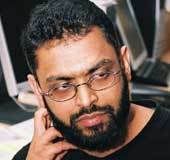
The Bush defence asks if the witness had owned a gun and how he recognised the AK47 sound as mentioned. Witness clarifies that serving in the army was compulsory for at least two years.

‘Its very easy to differentiate between the Iraqi army and US forces by their uniforms, accents, voices and language.’

The defence looks very weak. Interestingly all the mechanics of its questioning have been played out in the mainstream press many times. They can be read in papers from the Telegraph to Ynetnews in Israel and Fox in the US. The tired strategies of the oppressive regimes; first attempt to destroy the credibility of those with a message, a truth, you do not wish to hear or see shared. If that fails. compare the crime committed by yourself (your ally/paymaster) to alleged crimes of the regime the victim lived under – or if not relevant then to any other oppressive regime, not your own.

Finally try to make the victim into the aggressor via his views or his knowledge. Thus;
1. Were you angry with the occupation
2. Did you own a gun or serve in the military?
3. Do you hold a grudge against the US?

Overall the Bush/Cheney defence team are doing a good job at being as obnoxious and intellectually limited as a US team – if that team were lead by Fox newsreaders rather than attorneys…

Did the Americans intervene at any time to stop the torture on you?

No. On the contrary in the first three weeks they would collaborate with the guards and beat him up.

Testimony from Mozzam Begg. Former Guantanamo Bay detainee, director of human rights organisation Cage Prisoner. British citizen of 41 years old.

Moazzam Begg wants to put on record his torture in Pakistan, Afghanistan and Guantanamo Bay.
In 2001 he went to build a school for girls in Afghanistan. When the region became dangerous due to the American invasion, he was evacuated, with his family, to Islamabad, Pakistan. On 31 January 2002, he was arrested in this house in Islamabad. He was questioned about his presence in Afghanistan and Pakistan. He was held for three weeks then handed over to the Americans. The minute he was handed over he was shackled and thrown to the ground. He was reverse shackled and carried into a plane. Punched and kicked throughout. A knife was put to his throat. Photos were taken of him in his hood.


On arrival he was punched and kicked. Cold steel ripped off his clothes. Photos were taken of him without clothes. Dogs were brought in and he was racially and religiously mocked and abused.
He was flown to Kadahar in Afghanistan where he asked when was the last time he saw Mullah Omar or Osama Bin Laden. He was taken to a tent. On the way to interrogations barking dogs were brought to ‘bark in my face.’

Once I was asked to write my entire life story and then the entire thing was torn up.

He was moved to Bagram. No one held there was allowed to walk, talk or move.

He used to see the taxi driver ‘Dilawar’ from his cell. The man was shackled to the sides of his cell. He saw him slumped at one time and instead of the soldiers administering medical aid they came in and kicked and punched him. He later found out that the man had died. The award winning documentary ‘Taxi to the dark side’ focuses on this murder of an Afghani civilian detainee held by the US troops.

Moazzem was threatened with being sent to Egypt on several occasions. In Egypt he learnt later a man was waterboarded who then gave testimony that he worked with Saddam Hussein – Ibn Sheikh Halibi. And more testimony about WMD’s. This testimony was then used to make the case for war by Colin Powell and others.

An American soldier who told him he could be sent to Egypt or ‘Syria’. This says Begg proves ‘an intelligence link between the US and Syrian leaderships.’

Did British intelligence play a part?

Yes – an immense role. I was intensely interrogated for a month in solitary confinement by the CIA, FBI, US military intelligence and also by British intelligence. For the first time the British police are examining the British government for complicity in torture…enquiries have been ordered by the British PM into cases of torture.

During his incarceration Moazzem Begg wrote letters via the Red Cross to his wife and never got replies. At one point photos were brought in of his wife and children. A woman was heard screaming terribly nearby and profanities were being yelled at her. He believed his wife was being tortured as a result of this. It was a ruse.

Conditions in Bagram

No tea no fruits no fresh food. Each cell was communal with ten prisoners with a bucket for a toilet. The stench was disgusting. Showers were communal and humiliating. Women prisoners were present during the showers and ‘trophy’ photos were taken. He was shackled in ‘3 piece shackles’ connecting arms and legs to neck and waist

Ear muffs over his ears and goggles on his eyes which were so tight as to be agony. He begged for a sedative and was given one. He arrived in Guantanamo Bay groggy as a result.

He spent 20 months in Guantanamo Bay. He was designated a ‘high risk detainee’. A document; a confession was produced for him to sign. Moazzem Begg was warned that failure to sign could lead to execution. Or he would spend decades in in Gitmo. He was in a state of constant anxiety. He continues; ‘The female psychiatrist ( I was sent to) told me a way to commit suicide using my trousers’. Drugs were given to aid sleep after which her would suffer hallucinations.
I never knew what my crime was to this day. The absence of due process became worse than the actual detention’.
He adds.
I never imagined the United States to be a country that would behave in this manner’.
When he heard US accents after being held by the Pakistanis at first he felt relief – ‘at last the good guys are here. That quickly changed.’
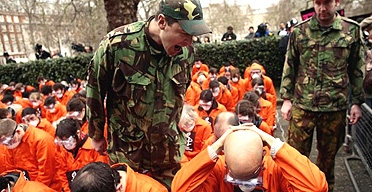
His testimony continues.

Nine people have died in Guantanamo.
Children are in Gauntanamo who have grown into adults there.
The US, Bush and his cohorts have not accepted responsibility for anything…it was said of us we were the ‘worst of the worst’ if so then why have some 600 of us been released?
There is no rule of law in the US. We still carry the stigma of being a Guantanamo Bay inmates to this day…until someone is charged and prosecuted for this it is very hard to remove this from over our heads.
The court is told that ‘Guantanamo is the tip of the iceberg. You go through secret prisons that makes Guantanamo look relatively tame’.

Under examination Mozzem Begg describes having some conversations and relationships with US soldiers at Gitmo..

Would he visit the US now?

He was invited recently. He was asked to visit the family of a 14 year old boy who is now 24 and remains in Gitmo. When the boy arrived at Gitmo he had a bullet wound. When Moazzem Begg arrived in Canada to meet the boys family, he was taken off the plane by police for being a ‘former Guantanamo Bay inmate.’

The defence asks – are you a member of Al Quaeda?

Moazzem answers he has never been a member nor never will be and that the fact the British government has made an out of court settlement with him should be enough proof of this.

What of the school that Moazzem had gone to Afghanistan to help build?

It was ‘also hit by a cruise missile - it was lucky no child was killed.’.

Defence asks about Moazzam’s book stall in the UK in the years before his detention. Was it a religious book stall?

In 2001 there was a raid on this shop and items were taken away under the uk terrorism act. The items were returned. He believes this was the process that was begun by Uk intelliegence and allowed us to keep him imprisoned.
Moazzem says

I have never been to America but America has been to me…I have never hurt an American but America has hurt me.’
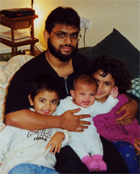
He didn’t meet his son until he was three years old. There are says MB ‘ways of asking, processes’ what you can’t or shouldn’t’ do is take them to a place where the law doesn’t apply like GBay. Even iguanas are protected on the base but no one in orange jumpsuits has any rights there.

He is asked if he was raped in Guantanamo Bay.
Uncomfortably MB says ‘things were placed where they shouldn’t be.’
Asked if the thought the conditions had ‘improved over time. Moazzem Begg quotes Malcom X;
‘You don’t take a knife and put it in a man’s back nine inches deep – withdraw it two inches and say things are better.’
The US propaganda – outlined so well in James Yee’s book – that ‘some prisoners put on weight’ in Gitmo was brought up. As was the laughable sop that religious freedoms were respected. In Gitmo Begg did not know when Ramadan was, when Eid was, when the prayer times were at first.

Books and TV?

‘No TV there were some books usually English classics – Charles Dickens.’
Under examination, Moazzem Begg admits to reading Harry Potter in Guantanamo Bay – which? – the first five. To laughter and with a slight smile, he says;

‘These are some of the worst admissions I have had to make’.
‘Am I angry? If anyone wasn’t angry there would be something wrong with them’.
Recently he met with part of the Task force for detainee rights. He used his time to talk to them. He has invited Americans who served at Gitmo to his home.

‘These Americans some of whom kept me from my children are now in my home playing with them. My thoughts are that I am ready to forgive any American who asks for forgiveness. I am not at liberty to forgive for anyone else who is still suffering at their hands’.

He is asked if he can ‘understand’ the thought process that could have brought someone to close an eye to torture. The fear?

‘I have met many people I would consider torturers in my life. One was called the King of Torture and the Monster. He was responsible for the interrogation of many prisoners. One of whom (prisoners) said he (the torturer) tried to rape him’.
In Abu Ghraib he was present at abuse of females.

Former US interrogator Damien Corsetti recalls
the torture of prisoners in Bagram and Abu Ghraib
 ‘ In 2008 or 7 I received a call from my lawyers on whether I would be a character witness to him in the case regarding female prisoners’.

Begg said that Damien Corsetti, the US soldier called the Monster, said to him
“please forgive me -what I had become in Guantanamo Bay was as a result of the propaganda I had been fed by my country and my leaders.”
Corsetti realised what he had done and suffered a series of nervous breakdowns as a result.Day 2
River to Sea Uprooted Palestinian  
The views expressed in this article are the sole responsibility of the author and do not necessarily reflect those of this Blog!

Wednesday, 4 April 2012

GAZA’S SUFFERING HEROES

 
I write this from a freezing, dark hostel room in the centre of Gaza. This area is now in a twelve hour blackout, so there will be no hot water to shower with this morning and no internet. After three days here, I feel, dirty, tired and emotionally wrung out. Yet, I know that in 48 hours, when the time comes to leave, I won’t want to go. For Gaza’s incredible people have again overwhelmed a visitor with their warmth, their ability to offer friendship - no love - on a first meeting. Their absolute resilience and faith in a Divine plan.

Yesterday, driving around was a stark reminder of just how serious the fuel shortage is here. At regular intervals the roadside becomes jammed with many hundreds of battered, near death, vehicles, stalled. Men sit at the wheels or smoke leaning against them, faces grim. They are locked into an 8 hour wait for just 100 shekels of fuel. Not enough for a quarter of a tank in the larger cars. When the fuel at the pumps becomes perilously low, each driver may buy just 50 shekels. As a result, cars are becoming if not quite a rarity, then certainly for a city with a population the size of Gaza - a luxury. Roads that were once jammed with the honking life typical of all major Middle Eastern cities are silent. The silence is not a blessing either, dont think that for a moment. I remember when Diana died and cars were banned from the city centre for her funeral, what a beautiful day that was. Citizens could reclaim the streets and remember what it was to stroll in peaceful, bliss.

This is different. This silence is morbid and desperate. For alongside the near empty roads, are shops boarded up. And the pavements which you’d think would be jammed with people are empty too. There is simply no way to get to work - if you have it. Many shops simply close down due to the blackouts. This silence is the quiet of despair.

my bodyguard Mr Falafel (his nickname) and my friend Yassir, drive me to Beit Hanoun to visit a family living on the edge of one of Israel’s infamous and ever expanding buffer zones. On our way out of the main city, Yassir shouts.

‘Stop, Lauren let us get out and see this.’ It’s not clear what he wants me to see, As I get out there are men and boys milling everywhere, hundreds. There is shouting. Then I see them. A yellow, mountainscape of plastic containers piled four high in some places and stretching from one end of the road to the other. We follow the line of boys of men and are shocked to see the queue is the same length around the corner.

‘What is your name!?” Shout boys of all ages
‘How are you today?’
‘Where you come from?’ The foreign lady in the hijab provides a welcome distraction from their miserable duty and Yassir and I are quickly embroiled in a human maelstrom of faces and laughter. We squeeze away from the youngsters towards a father in his fifties who is near the front of the queue. I ask him what he needs.

‘Fuel for the generator. We have no light. No electricity. We can’t eat. The children are cold.’ He has six children. Only, That is a small family here.

Looking at the thousands of containers waiting to be filled. Each powering a generator that has become the only (ir) regular source of power for Gazan homes, I realise that each one represents a family of ten or more.

In a week, they say, even the fuel at these stations will run out. Then what?

It is dusk, Magrib prayer time, as we reach Beit Hanoun. An area that was, not too long ago, a place of farming. Of vast orchards stretching as far as the eye could see, where adults worked and children sheltered from the heat of the sun, playing the games that only children understand.
This evening the sun sets over what’s left; a sealed off scrubland of weeds and thorns.

We get out of the car.

“Israel sent bulldozers and destroyed everything, all the trees; old trees, old orchards. Gone.’ Such is the sight to my right. To my left across the pot holed ‘road’ is Gaza’s frontline with Israel. The enemy that it fears so much are families in roughshod apartment blocks. No frills here. No trips to Ikea for little home touches. Here ‘home’ is a cememt block low rise, half finished, slum. There are so many children here it’s hard to fathom for the first time visitor. Large families are the norm in Palestine and in Gaza a pride. Each window of the hundreds I pass can represent easily five children within. Beside each and every window are dozens of Israeli bullet holes or the larger impact damage from shells of all variety. Hard to imagine the international reaction if a family suburb in Tel Aviv were attacked like Beit Hanoun is attacked by the IOF, over not just days, not even months - but years.

I remember once asking a very poor mother in Gaza why she had so many children.
‘We need atleast seven children to each family here’ she said

‘Why? Because atleast two will be killed by Israel. Two more, Israeli will take to prison for a long time or cripple with rockets. Two may (may) have a chance to get educated and they will leave Palestine and never return. Which leaves just one child to look after us in our old age...’

I, a stranger here in Beit Hanoun, walk down this road at dusk. Every window with a face in offters me ‘Salam.’ The doorway of the sole shop has a family sitting in it, I wave
‘Assalamu Alaykhum’ they shout at me - cheerily. Yes cheerily, I feel the lump in my throat that I carry inside me forming again.

Salam
Salam
Salam

“Peace’ they offer to the stranger in their midst, as they bathe me in smiles of instant friendship. Don’t be pathetic and start crying I tell myself, don’t you dare. But the mix of emotional generosity amongst such hardship is making my heart thump painfully.

On the corner two young guys come over and greet me as if I am a long lost cousin. There welcome is SO warm I wonder for a moment if we have met on a previous visit to Gaza.

“Okay’ says the tallest brother, after introducing himself.
‘Nice to meet you now you come to our home to spend the evening, First tea, then you stay with us. Yalla come!’
I laugh.
‘Why you laugh?’Asks the other boy in his late teens or early twenties.
‘We don’t joking - you come for tea now, really, fadal.’
These boys/men are brimming with life. Their eyes have energy and hope in them that is utterly at odds with the grim landscape they live in.
Heroes of Gaza. The next generation of hope. The ones who will not be broken.

We can’t take tea with them and are eventually allowed to leave only with sincere promises to return to their home as soon as possible.

We have come to visit, amongst this needy populace, a family in dire need.

Through a broken wooden gate, behind a crumbling stone wall, my friend Yassir, silent and grim faced, points me into a cement building that has no right to be standing. It was once a PLO prison. Now it is ‘home’ to a family of one father, his two wives and their seventeen children. Before the second intifada the father used to work in Israel and he had enough money for his growing family. After the blockade, that stopped. So he worked as taxi driver. And that income was just enough to get by on for his growing family. Then the siege came. Food prices have shot up to parity with those in European nations whilst incomes here Third world low. His car began to have small problems which he couldn’t afford to repair, which led to worse ones which killed it. I pass its rotting carcass and enter a large unplastered room with a cement floor. There is no furniture, no pictures, no adornments of any kind. Besides two plastic chairs, the freezing space is utterly empty except for a small TV, on a crate in one corner. Children with hollow eyes, mill about, expressionless, wide eyed at the surprise visit of so many unknown faces.They look (and are) shell shocked.

One of the wives makes an attempt to smile but her lips have forgotten how. The husband in his shame at the poverty of his family mutters ‘salam’ and looks at the ground.

Their sixteen year old son has a limp, I ask what the matter is, has he hurt himself playing.

His trouser leg is pulled up and a large plaster ripped off revealing a fresh ten inch wound with stitches. His ankle is also bandaged. Two years earlier the boy (then 14) had been collecting rubble in the wasteland, once orchards, that Israel has now stolen as its ‘buffer zone.’ His job was to sell the rock for whatever he could, to scavenge then, in the hope of some money for the hungry family. An Israeli sniper at a long distant shot him in his leg, shattering the bone. He has finally after years had the pins put in his shin. It is likely he will limp for the rest of his life.

A smaller boy of around ten is brought over. His dirty tracksuit bottoms are bulled above the knee to reveal strange white patches. White phosphorous. The nepalm of the 21st century was blown across this area when Israel rained it, by the ton, onto one of the most densely populated cities in the world.
Another son of around seven, shoeless and silent clings to his fathers legs.

‘This boy’ he tells me
‘Has developed mental problems since the attack in 2009. The soldiers came many times into our home and wake the children up, shouting. Now he doesn’t talk and doesn’t act normally. Doctors can’t help him.’

Cooking is being done in the kitchen. An empty cement space with a fridge that is empty except for four cauliflours of questionable age. Due to the ‘cuts’ - twelve hour electricity blackouts - no family can chill or freeze food anymore. Fridges are just storage cupboards in Gaza. There is nothing else in the room except on the dirty floor, a single, ancient electric ring on which, now, a pan of chips is cooking. Chips that are enough for perhaps three children in the UK. Here the amount must feed a family of 20.

It is salah (prayer) time. The smaller of the wives takes me to another empty room. This one is called a bedroom because it has blankets in it. And she lays out a prayer mat for me. As I pray, I can see my own home, my own happy, educated, well fed, daughters. All the luxuries of London flood my sight and tears come. I want them to stop. But they won’t. With my head on the floor at the end of the pray I silently, angrily, sob. Besides me the mother makes her prayer. Behind me one of her daughters hold a torch on me as the room has no lights and no electricity anyway.. Its not the poverty that gets me its the evil of humanity that pours agony on almost two million Gazans, year in year out for 63 years. It is so much worse here than when I came four years ago, that words can barely describe the new cruelties Israel has designed to torture the people in this vast concentration camp.

‘Habeebiti’ says the mother beside me.
‘Please don’t cry.’ Her concern for me makes me sob even more. I can’t speak with the weight of my grief. Oh God, I think to myself. Dont let her be kind to me, please, I cant take it.
But she is. Ofcourse she is. She is Palestinian.
‘My dear why do you cry? Are you alright?’
‘I...I..hate this for you...’ Is all I manage.
She looks into my eyes. Mother to mother.
‘What? Don’t cry for us, it’s okay, you can stop now, shhh’.
Then she says the words that almost break me, words that make me feel so humble so I fear I may never stop crying. Tears that begin as frustration and sadness and become tears of love and respect.

‘We are so happy. We are Muslim, we know this is our test and we must be patient. We are happy, really sister, we are. Allah will reward us if we can just be patient’

These are the exact words I have heard in EVERY home I have entered in Gaza at this terrible time.

Thanks to Cheadle Masjid’s fund raising in the UK, 48 hours later, the children have shoes footballs, table tennis kits, new tracksuits for the boys and the father. The girls have a new abaya each. The mothers are given tapestry and sewing materials to teach the girls the beloved Palestinian artistry of sewing. The family has a hot meal during our visit and is provided with wood for cooking in the coming weeks.

Israel’s illegal witholding of essential supplies such as enough gas, oil and the components to maintain the utility works here means that Gaza is being pushed back to the time before electricity existed. When the power is cut, families must cook using gas from canisters. When the gas runs out - and right now, even the smallest gas ration means an eight to ten hour wait - families scavenge for twigs and light fires inside their apartments to try and cook what food they can afford to buy. It is becoming the norm for children to miss meals entirely. In this Beit Hanoun family, I ask the youngest boy of four, what his dream is, what he wants to be;
“ I want to eat’ he says.

Somehow. Somehow. This makes all the family laugh.

Next stop, Jaffa Street, Gaza city. The smart home of Mohammed Ajur, 25. He is a handsome young man with the sweet smile of faith (emaan) on his lips. He happily greets his friend who has brought me to meet him and myself and we are seated in the family salon. Mohammed was in his uncles home when a rocket hit during what Israel proudly calls operation Cast Lead. He woke up in hospital in Egypt having been in a coma for four days. His family were around him weeping.
‘What happened?’ he asked.
‘Habibi, you have lost both your legs’ he is told.

His eyes shine with light and he smiles (smiles!) at the memory.
‘What did you say?’ I ask. Although by his contentment I already know the answer.
‘I said “thanks be to God”’ he replies.
“I was so grateful to Allah for saving my eyes and my hands and giving me so many chances to continue my life in a good way. Many, many others in Gaza lost their sight and their hands from the attacks. Alhamdoulilah, I have those. Alhamdoulilah!’

Mohammed has since completed his university degree in sports education. He laughs at this
‘yes I know sports education right! But I can do anything and I will succeed in this life, with Gods blessing, inshaAllah. My life is only beginning. I am now looking for a wife. There is so much I have to do now and I will!’
He is the kind of man that makes you smile just being around him.

On the middle of the table between us is a stunning urn, in copper glaze with rose workings and Arabic lettering across it. I admire it.
‘I made it’ he says shyly.
He is also a talented artisan.
‘Do you like this jug?’ He asks me.
I do.
‘Take it’ he says.
I offer to pay but he refuses to sell it to me. It is a gift. Because I came to see him.

One final visit must be made this evening. To a man whose livelihood mattered so much to my dear friend Vittorio Arrigoni; a fisherman. This father of six is in his late forties and hasn’t fished for two months. He explains that under the Oslo accord it was agreed that Gaza fisherman could sail up to 25miles from their coastline in order to fish. But Israel never honored this agreement. At first their naval forces forced the fisherman back to just six miles from the coast, then in recent years, to just three miles from the shore. There are no fish in this depth any longer due to over fishing and pollution. So, this fisherman took his boat, within his rights, to six miles and began to fish. The Israelis - as is a daily occurence for fishermen - attacked. At gunpoint he was told to strip naked and jump into the freezing February water where he was made to say for some time. Then still naked and humiliated he was handcuffed and taken to Ashdod for questioning. In the meantime the navy shot his boat so full of holes it is too damaged to repair. The livelihoods of four brothers and their thirty plus dependants - destroyed.

Thanks to Cheadle Masjid for donating the money to keep these families fed for the next month. After that, what will happen to them? Who knows?

As I type these words Israeli fighter jets are buzzing overhead jangling my nerves. They can be flying just for that effect or to launch yet another deadly attack on Gaza. It is 6am. The time when children are having breakfast and getting ready for school. Besides the night, this is the hour most favoured by Israel to inflict emotional terrorism on the population here.

Driving through Gaza and seeing the queues of gas and petrol, I mentally titled my writing today as - Gaza’s suffering. But now the title has changed to ‘Gaza’s heroes’.

River to Sea Uprooted Palestinian  
The views expressed in this article are the sole responsibility of the author and do not necessarily reflect those of this Blog!

Thursday, 15 March 2012

Shawa family: Plight of Palestinian families in exile

by Lauren Booth
Wednesday, March 14th, 2012


Diaspora-03-13-2012.

Lauren BoothSince 1948, millions of Palestinians have been forced into exile from their own lands.
In this series we seek to find out what happened to the refugees of the 1948 and how their families are coping with six decades in exile.
In this episode of the show Lauren Booth meets Shawa family from London.

River to Sea Uprooted Palestinian  
The views expressed in this article are the sole responsibility of the author and do not necessarily reflect those of this Blog!