Showing posts with label Strait of Gibraltar. Show all posts
Sunday, 31 May 2020
Why Did Russia Refuse Venezuela’s Request but Iran Accepted It?
By Elijah J. Magnier

Iranian tankers were 2200 km from the US coast when the Iranian-flagged “Fortune”, followed by “Forest”, entered Venezuelan waters, challenging the US embargo and the US’s threats. The Islamic Republic was broadcasting loud and clear a strong message.
The first message was dispatched to the US administration after Gulf and Arab Leaders conveyed a direct message to the Iranian leaders: “Washington is determined to stop the Iranian tankers sailing to Venezuela”. Iran responded to all messages received that “its five tankers will sail to Venezuela and if any of these tankers is intercepted, Iran will respond in the Straits of Hormuz, the Gulf of Oman or anywhere else it sees fit.”
“These five tankers – the Clavel, Fortune, Petunia, Forest and Faxul- are only the beginning of the supply to Venezuela. Iran has the right to send any of its tankers anywhere in the world and any US interception will be considered an act of piracy and will trigger a direct response,” said an Iranian decision-maker who revealed the Iranian response to the US administration via message-carriers.
“Iran had decided to avoid the horn of Africa because the plan was for the first tanker to reach the Venezuelan waters on the first day of Eid el-Fitr. The aim was to share an important day of the Islamic Republic’s defiance to the US in its backyard and to break the sanctions imposed on one of Iran’s main allies. It is a message for the “Axis of the Resistance” that Iran will not abandon its friends and allies anywhere in the world whatever the challenges. It is directly confronting the US by imposing a new rule of engagement”, said the source.
Iran shut its ears to all threatening messages from the US menace and instructed its five tankers to go not round the horn of Africa but through the Gulf of Aden via Bab al-Mandab strait, the Suez Canal and Gibraltar into the Atlantic Ocean- where the US has a strong presence and influence. This shortens the distance and it tested the intentions of the American Navy. Simultaneously, Iran informed its allies of its readiness to confront the US if ever an escalation should loom on the horizon so that these allies within the “Axis of the Resistance” are ready for a wider confrontation if needed.
The first Iranian tanker, “Fortune”, reached the Caribbean Sea on the first day of Eid al-Fitr, on Sunday 24th of May, with US Navy ships in the vicinity. The tankers are carrying over 10 million barrels of oil but also Alkylate and spare parts to start repairing any of the eight “out of order” refineries, to enable oil-rich Venezuela to be self-sufficient in the future. The US sanctions on Venezuela had paralyzed Venezuelan refineries and caused gasoline shortages, with the aim of overthrowing the legitimately elected President, Nicolas Maduro.
Iran is challenging the US administration and considers it a victory that its first tanker went through without being intercepted. Tehran considers this challenge to US authority much more significant than the downing of the US’s most sophisticated drone or the bombing of the US’s largest military base in Ayn al-Assad, Iraq.
“Our allies used to wonder why Iran was not confronting the US dominance face-to-face. In fact, we were preparing for this day, and what helps us the most is the US sanctions that force this country to be autonomous on many levels. Today, Iran and its allies are all equipped with strong ideology and motivation to face down US hegemony, with sufficiently advanced military and financial support to stand up to the US and its allies, both in the Middle East and outside the Middle East. Since World War II the US has not faced a challenge to its hegemony similar to the one Iran is representing, particularly when the main enemy, the US, believes that 40 years of sanctions and maximum pressure have crippled Iran’s capabilities. Imam Khamenei informed all our allies that the military and financial support to all of them will increase and will meet all their needs in Palestine, Lebanon, Syria, Iraq and Yemen. The Axis of the Resistance is now ready and united as one front”, said the source.
Venezuela had asked President Vladimir Putin for help. Russia said clearly it was not willing to send ships close to the US coast because that might support President Trump by triggering a false threat which could lead to unifying the national feeling behind him. This is why Putin had to refuse Venezuela’s request. Iran came forward at the first demand and was grateful for the opportunity to challenge the US and to pay back the support Venezuela offered in the year 2008 when Iran was in need and under heavy US sanctions that forbid technology transfer to build or repair its own refineries. Since then, Iran has built 11 refineries (and 3 more in Pars, Anahita and Bahman Geno which are still under construction) and is considered the third most important country in the world to have developed Gas to Liquid technology (GTL).
Since the US assassinated Brigadier General Qassem Soleimani at Baghdad’s airport, Iran has imposed new rules of engagement on the US. Its message consists in the inevitability of a response against its enemies if they hit Iran, and the threat that no attack will go unanswered. It seems Iran is no longer ready to turn the other cheek and has decided to take special measures to respond to any attack against its troops or interests, including in Syria (more details will be provided in another article). Also, Iran and its allies have raised the level of readiness to maximum in case the US administration decides to attack any aspect of Iran’s interests, particularly the flotilla heading to Venezuela.
Iran is not facing the US directly, and is not asking its allies to do the job on its behalf. The “Persian rug weaver” waited through 40 years of sanctions for this day, until its capability and preparations were completed. This means that now Iran will be tougher and harder, and that is manifest in the election of the new parliament and the new government. President Trump has abused and exhausted all the avenues used by President Hassan Rouhani. Therefore, any new negotiation between Iran and the US will be very difficult: there is a total lack of trust in any document signed by the US.
Whether a Republican or a Democrat reaches the White House at the end of 2020, they will be waiting by the phone for many long years if they imagine that Iran will take the initiative and call the US for a meeting. It will now be up to the US to prove to Iran that it is worth holding any negotiations at all.
Iran has planted robust roots in Afghanistan, Palestine, Lebanon, Syria, Iraq and Yemen. It is now spreading towards Venezuela and will support President Maduro, a strategic rather than ideological ally, to stand against US hegemony and sanctions. More tankers are expected to follow in the very near future. Iran is eager to confront President Trump and tempt him into a confrontation only months before the elections. The Coronavirus mismanagement, the US’s rebuttal of its deals with Russia, Trump’s aggressive position towards China and the World Health Organisation, and his rejection of the Iranian nuclear deal (JCPOA): all these are striking possibilities for a challenge to his re-election. This is why Iran is preparing more surprises for Trump- to show that his Middle Eastern policy is jeopardizing the safety and security of the US and its allies both in Europe and the Middle East, and indeed global world security.
The views expressed in this article are the sole responsibility of the author and do not necessarily reflect those of the Blog!
Wednesday, 9 October 2019
العراق الفصل الأخير ما قبل لفظ الأنفاس عين الأسد تفشل… ارمِ ببصرك أقصى القوم!
أكتوبر 8, 2019
محمد صادق الحسيني
فشل الانقلاب الأميركي السعودي على حكومة عادل عبد المهدي…!
والشعب العراقي وحلفاؤه لم يسمحوا بتحقيق اختراق في محور حلف المقاومة بالصدمة والرعب، كما فعلوا بسيناريو داعش من الموصل وهو ما حاولوا تكراره في الأيام الأخيرة!
من خراسان الى صور ومن شانغهاي إلى بيروت ومن شبه جزيرة القرم الى دير الزور يجتهد المحور المنتصر على الأحادية الأميركية بإعادة ترتيب مسرح العمليات قبل استكمال الفصل الأخير من إغلاق ملف الحرب على الإرهاب…!
في المقابل يحاول المحور المهزوم بقيادة أميركا وأذنابها الهجوم على البطن الرخوة في جبهة حلف المقاومة أيّ العراق، مستميتاً استعادة بعض الحياة لصفوف قواته التي تلقت ضربات استراتيجية جعلته يترنّح من مضيق هرمز الى باب المندب ومن بنت جبيل الى البصرة…!
الهجوم الممنهج والمنظم الإعلامي والأمني والسياسي و المطلبي المشروع على حكومة بغداد وحلفائها الإقليميين والدوليين ثمة من يشبّهه بالمحاولة الأخيرة التي استمات فيها هتلر في ساعاته الأخيرة قبل دخول السوفيات وحلفائهم في دول المحور إلى برلين فاتحين في نهاية الحرب العالمية الثانية!
إنه تفصيل من تفاصيل المشهد الاستراتيجي أن تصمد حكومة عادل عبد المهدي أو تسقط في الاختبار. كذلك هو تفصيل آخر أن تنجح السعودية وتوابعها في المشاغبة على مسرح عمليات نصر حلف المقاومة من خلال تهييج الشارع العراقي وتوظيف مطالبه المشروعة في الإصلاح…!
فكلّ ما فعلوه واحتمال تكراره في شوارع العراق هو بمثابة الهجوم الأخير قبل لفظ الأنفاس والموت المحقق لتحالف العدوان والإرهاب الدولي..!
حتى الهجوم في البادية السورية من السخنة إلى الشولة بقيادة غرفة عمليات التنف قبل أيام قليلة ليس إلا تفصيلاً من محاولات غرفة عمليات عين الأسد البائسة واليائسة من أجل استرداد زمام المبادرة…!
مساعي تطويق الصين وروسيا وإيران سقطت قبل أيام في إعادة افتتاح معبر القائم البوكمال. وبقية الرواية سيكتبها الفاتحون لعصر ما بعد الهيمنة الأميركية، وإليكم المشهد عينياً وميدانياً كما تراه إحدى غرف عمليات الجيش الأميركي المهزوم الفرعية الناشطة في تل أبيب:
نشر موقع ديبكا، الاستخباري الإسرائيلي، موضوعاً بتاريخ 3/10/2019، حول التمرين العسكري المشترك الذي تُجريه القوات السورية الروسية الإيرانية في محافظة دير الزور السورية، في مناطق قريبة من قاعدة التنف الأميركية.
أهمّ ما جاء في التقرير ما يلي:
1. مصادر عسكرية روسية أكدت لديبكا فايل أنّ وحدات من القوات الخاصة الروسية الى جانب قوات سورية وإيرانية تشارك في هذا التدريب.
2. وصول طائرات حربية إيرانية وطائرات بدون طيار إلى سورية للمشاركة في هذا التدريب.
3. توفير القيادة العسكرية الروسية غطاءً جوياً / مظلة جوية / للقوات المشاركة في هذا التدريب، وذلك من خلال نشر بطاريات صواريخ دفاع جوي روسية، من طراز / بانتسير 1 / وبانتسير 2 / في منطقة انتشار تلك القوات.
4. بدء وصول قوافل عسكرية روسية، تتضمّن آليات نقل عسكرية ثقيلة، تحرّكت من قواعد في شبه جزيرة القرم وجنوب أوسيتيا، عبر القائم / البوكمال / الذي أعيد افتتاحه قبل ثلاثة أيّام فقط. وهو ما يُضيف طريق إمداد بري جديد للقوات الروسية العاملة في سورية، الى جانب طريقي الإمداد البحري والجوي.
5. وبما أنّ القوات الروسية أصبحت تستخدم طريق الإمداد العسكري نفسه، الى سورية، الذي تستخدمه إيران، فإنّ ذلك سيزيد من صعوبة مهاجمة هذه الطريق الدولية من قبل إسرائيل .
تعليقنا: هذا ما تحدّثنا به قبل أكثر من سنة… عن أهمية فتح طريق إمداد بري للقوات الروسية المرابطة في سورية، خاصة في حال نزاع دولي كبير، قد يؤدي الى إغلاق مضائق الدردنيل التركية وقناة السويس ومضيق جبل طارق. وبالتالي قطع إمدادات الأساطيل الروسية في البحر المتوسط والقوات الجوية والبرية الروسية على اليابسة السورية.
اذن فإنّ الخط البري الجديد، الرابط بين روسيا وإيران والعراق وسورية ولبنان وفلسطين هو خط استراتيجي، ليس فقط لحلف المقاومة، وإنما لكلّ من روسيا والصين أيضاً على الصعيد الاستراتيجي البعيد المدى. بالإضافة الى الأهمية العملياتية، بالنسبة لقوات حلف المقاومة، المتمثلة في فتح طريق إمداد حيوي جداً ووضع حدّ للعربدة الجوية الأميركية الإسرائيلية في منطقة غرب الأنبار وشمال شرق سورية. أيّ وقف الغارات على مواقع الجيش العربي السوري في محيط البوكمال / دير الزُّور / وكذلك ضد الحشد الشعبي في منطقة القائم / عكاشات / حديثة.
ضربُ حلفنا صار بحكم الماضي..
وتقدّمنا نحو الأهداف المرجوة بات أكيداً بفضل صبرنا الاستراتيجي…
وخططهم لزعزعة جبهتنا فشلت وآخرها مؤامرة غرفة عمليات عين الأسد …!
ارمِ ببصرك أقصى القوم…
سترى النصر قاب قوسين أو أدنى…
وتلك الأيام نداولها بين الناس.
بعدنا طيّبين، قولوا الله…
River to Sea
Uprooted Palestinian
The views expressed in this article are the sole responsibility of the author and do not necessarily reflect those of the Blog!
Sunday, 8 September 2019
Iranian Diplomat Amir Mousavi to Al-Ahed: Tehran Fulfilled its Promises to the Syrian People despite US Procrastination

Beirut – Head of Iran’s Strategic Studies and International Relations, former diplomat Amir Mousavi told al-Ahed News Website that the Iranian oil tanker Adriyan Dariya-1 has reached the Syrian coast and unloaded its cargo, adding that it is getting ready to head to another port.
In an exclusive interview with al-Ahed, Mousavi noted that the tanker has been registered under a North Korean marketing company, adding that the cargo was unloaded under the name of the North Korean company and not Iran.

“Iran was able to break the restriction imposed by the US against its allies,” Mousavi stressed, noting that “Tehran has fulfilled its pledge to the Syrian people despite the US procrastination and quarrel that lasted 4 months.”
“The load will be directly presented to the Syrian citizen and will contribute to shortening the long lines in front of the gas stations in Syria,” Mousavi said.
The Iranian diplomat further pointed out that “US National Security Advisor John Bolton’s latest statement stress that Iran has angered him and disabled him from making any decision to confront it.”
“Iran has broken the siege imposed on the Syrian people and has borne all consequences of this step,” he concluded.
Iranian tanker previously detained in Gibraltar allegedly offloads oil in Syria

By News Desk
–
2019-09-06
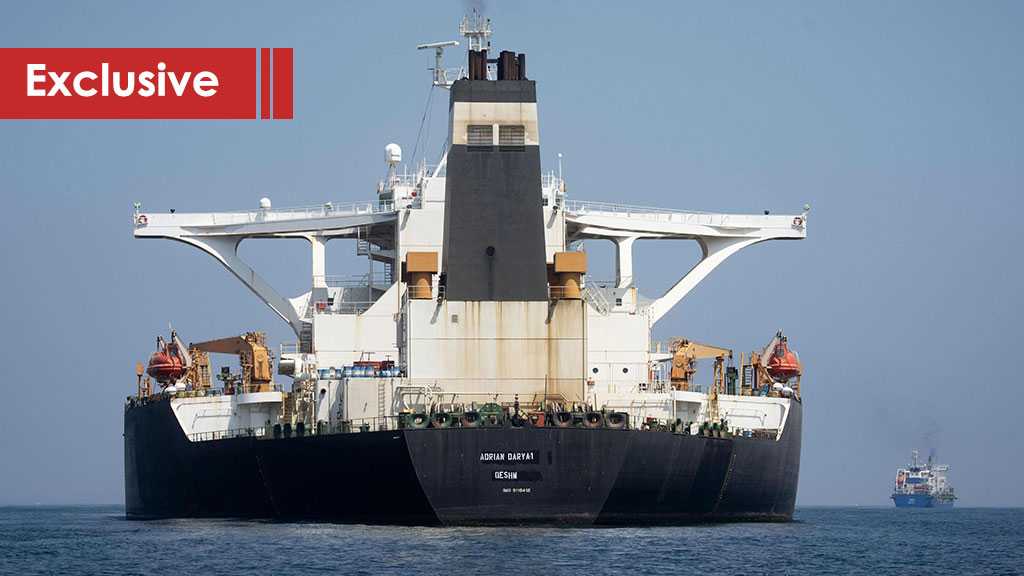
BEIRUT, LEBANON (7:15 P.M.) – The Iranian oil tanker, ADRIAN DARYA (previously Grace 1), that was previously detained in Gibraltar has allegedly offloaded its cargo in Syria, the Middle East Eye reported.
According to the Middle East Eye, the ADRIAN DARYA offloaded at least 55 percent of its cargo, a similar claim made to Al-Masdar from a Lebanese journalist that asked to remain anonymous.
The journalist added that the cargo on the ADRIAN DARYA oil tanker is worth approximately $130 million (U.S.).
At the same time, a Syrian source in Damascus told Al-Masdar that the oil was delivered using several small ships. He said the ships later moved the oil to the Syrian port-city of Baniyas in the Tartous Governorate.
Earlier this week, the ADRIAN DARYA was tracked off the coast of Baniyas; however, its fate was unknown at that time, as there were reports that it was heading to both Turkey and Lebanon.
Another Iranian ship named the SAVIOR was also tracked off the coast of Syria before it turned off its GPS. The vessel’s destination was supposed to be Port Said in Egypt.

These reports remain unconfirmed at this time, as neither Iran nor Syria has made any statement on the alleged oil delivery.
See Also
River to Sea
Uprooted Palestinian
The views expressed in this article are the sole responsibility of the author and do not necessarily reflect those of the Blog!
Sunday, 1 September 2019
Iranian oil tanker previously seized in Gibraltar to dock just north of Syria
The crew of the oil tanker Adrian Darya 1, formerly known as the Grace 1, has changed its registered destination in its Automatic Identification System to Iskenderun, Turkey, a shipping source stated.
Meanwhile, a source in the Turkish port of Mersin stated on 29 August that the tanker would enter Turkish territorial waters and head toward Mersin to be unloaded there.
Iran emphasised earlier this month that it was considering sending naval ships to escort the Adrian Darya 1 tanker, formerly known as Grace 1.
After it was held for a month, a Gibraltar court ordered the release of the ship on 15 August despite a last-minute request by the US to extend its detention.
However, the authorities of Gibraltar rejected the United States’ request to extend the detainment of the tanker, citing differences in US and European sanctions against Iran.
Source: Sputnik
Uprooted Palestinian
The views expressed in this article are the sole responsibility of the author and do not necessarily reflect those of the Blog!
Friday, 16 August 2019
Ezzidine to Al-Ahed: I Will Serve Hezbollah March that Was Baptized With Blood, Sacrifice

Hezbollah MPs and ministers should be attested for their relentless endeavor to serve their people and society. Both their friends and foes know this fact. Those closely following the magnitude of the files that Hezbollah is responsible for and the degree of effort they are exerting understand the true meaning of the concept of “Hezbollah Secretary General’s trust”. This confidence means a lot to anyone who is chosen by the Hezbollah leadership to represent the party no matter what their responsibilities may entail.
Hezbollah’s candidate for the by-elections in the Tyre constituency, Sheikh Hassan Ezzedine, underscored this point.
Sheikh Ezzedine extended his gratitude to the leadership that placed such a degree of confidence in him.
“It will be a great responsibility for me, I hope I am worthy of it,” the candidate says.
In a statement to al-Ahed News, Ezzedine vowed to “strive to serve the path of the resistance and martyrs. I will also be a servant of this march, which was baptized with blood and the sacrifices of the wounded, the captives and their families.”
Moreover, he promised to stay on their path and approach. “This path that gave so much in the way of sacrifices is imperative when it comes to serving the people that can only be described as “the whole good” as the Messenger of Allah [PBUH] said”.
Ezzedine only hopes that he can live up to their expectations, carry their agonies and hopes and live their pains.
He also promised to be a resounding voice in the defense of these people and their demands as well as to be the cure that alleviates the pain of those who sacrificed in this march and were an essential part of its progress.
Hezbollah’s candidate stressed that he will be a deputy for all of Lebanon. He will be among the people of Tyre. He promised to live with their joys and sorrows, embrace their issues and be vocal when it comes to demanding what they aspire to and want to be.
“What I can do, I will do to the fullest. And what I cannot do, I will continue to fight for,” Ezzedine added. “Especially for our people in the resilient South and the Tyre District.”
“I will be the voice that responsibly carries the trust to serve these people,” he concluded.
Ezzeddine in brief
– He was born in Maaroub – Tyre District in 1953.
– His name was tabled as a candidate in the 1992 election – the first polls that Hezbollah participated in.
He held several positions within the party, including:
– Hezbollah central media official after the 2000 liberation.
– Head of the Arab Relations Unit to date.
– Today he is Hezbollah’s candidate for the Tyre seat in the September 15, 2019 by-elections.
The views expressed in this article are the sole responsibility of the author and do not necessarily reflect those of the Blog!
Thursday, 15 August 2019
Gibraltar releases Iran-operated tanker despite US pressure
Thu Aug 15, 2019 02:40PM [Updated: Thu Aug 15, 2019 04:35PM ]

This file photo taken on July 20, 2019, shows Gibraltar defense police officers guarding the Iranian-operated oil tanker Grace 1 as it sits anchored after being seized last month by British Royal Marines off the coast of Gibraltar, southern Spain. (Photo by Reuters)
Gibraltar’s government has released an Iranian-operated supertanker, which was seized by British marines in the Strait of Gibraltar on July 4, despite pressure from the United States for the vessel’s continued detainment.
“Authorities in Gibraltar have released the Iranian supertanker Grace 1, which was seized on July 4 on suspicion it was shipping 2.1 million barrels of crude oil to Syria in breach of EU sanctions,” Reuters quoted the Gibraltar Chronicle as reporting on Thursday.
According to the report, the chief justice of Gibraltar’s supreme court, Anthony Dudley, said there was no US application currently before the court.
Chief Justice Anthony Dudley said that since Iran had guaranteed in writing that the destination of the Grace 1 would not be a country “subject to European Union sanctions… there are no longer reasonable grounds to suspect that the detention of the Vessel is required.”
Spain’s Foreign Ministry reported after the incident that the UK had seized the vessel at the request of the US, which has been trying to trouble Iran’s international oil vessels as part of its campaign of economic pressure against the Islamic Republic.
Authorities in #Gibraltar have released the Iranian supertanker Grace 1, which was seized on July 4 on suspicion it was shipping 2.1m barrels of crude oil to Syria in breach of EU sanctions.
244 people are talking about this
Earlier on Thursday, Gibraltar said that the US had applied to seize the Iranian-operated oil tanker after British media reported that the vessel’s release was imminent following a set of diplomatic exchanges between Tehran and London.
“The US Department of Justice has applied to seize the Grace 1 on a number of allegations which are now being considered,” the Gibraltar government said in a statement.
It added that the “matter will return to the Supreme Court of Gibraltar at 4 p.m. (1400 GMT) today.”
A diplomatic dispute broke out between Iran and the UK on July 4, when Britain’s naval forces unlawfully seized Grace 1 and its cargo of 2.1 million barrels of oil in the Strait of Gibraltar under the pretext that the supertanker had been suspected of carrying crude to Syria in violation of the European Union’s unilateral sanctions against the Arab country.
However, reports show the confiscation took place upon a call by the US.
Tehran rejected London’s claim that the tanker was heading to Syria, slamming the seizure as “maritime piracy.”
Iran’s Ports and Maritime Organization said Tuesday that Britain was expected to soon free Grace 1, after the two sides exchanged certain documents to pave the way for the supertanker’s release.
Iran’s FM: Trump’s piracy attempt indicates his contempt for law
Soon after the report emerged about the release of the Iranian-operated tanker, Iran’s Foreign Minister Mohammad Javad Zarif took to Twitter noting that the seizure of the tanker proved the Trump administration’s contempt for the law.
“This piracy attempt is indicative of Trump admin’s contempt for the law,” Iran’s top diplomat said.
Having failed to accomplish its objectives through its #EconomicTerrorism—including depriving cancer patients of medicine— the US attempted to abuse the legal system to steal our property on the high seas.This piracy attempt is indicative of Trump admin’s contempt for the law.
489 people are talking about this
Zarif added that the US effort to prevent release of the Iranian tanker was aimed at abusing “the legal system to steal our property on the high seas.”
He said this vain attempt followed the US failure in achieving its anti-Iranian goals through economic terrorism.
‘US faced humiliating defeat in its effort to prevent tanker’s release’
Following the decision by the Gibraltar court, Iran’s Ambassador to UK Hamid Baeidinejad said in a tweet on his official Twitter page that the decision by the officials of Gibraltar put an end to 40 days of illegal seizure of the tanker, which carries the Iranian oil.
لحظاتی پیش با تصمیم مقامات جبل الطارق و تایید دادگاه، نفتکش حامل نفت ایران از توقیف غیرقانونی آزاد گردید.کشورمان درتمامی۴۰ روز گذشته بامشارکت نهادهای ذیربط داخلی تحت مدیریت وزارت خارجه گفتگوهای مستمری در سطح سیاسی،حقوقی و فنی با طرف انگلیسی برای رفع این اقدام غیرقانونی انجام داد.
86 people are talking about this
“Up to the last minute, the United States tried in vain to prevent the release of the tanker, but was faced with a humiliating defeat,” Iran’s UK envoy added.
آمریکا با تلاشهای مذبوحانه ی آخرین لحظه ی خود قصد داشت مانع رفع توقیف نفتکش شود که با شکست تحقیرآمیزی مواجه شد.
با تلاشهای روزهای گذشته تمام مقدمات و تمهیدات فنی لازم برای حرکت نفتکش به دریای آزاد نیز تامین شده است و کشتی بزودی منطقه ی جبل الطارق را ترک خواهد نمود.
43 people are talking about this
Baeidinejad stated that all preliminary steps have been taken to ensure the tanker’s movement toward free waters and “the vessel will soon leave the Gibraltar region.”
Related Vidoes
Related News
- No need to foreign forces for Persian Gulf security, Rouhani says
- Lebanese Islamic resistance front proved it is possible to defeat Israel: Zarif
- Health official: U.S. claim not banning medicine and humanitarian aid is ‘ridiculous’
- Iran’s deterrence power cannot be tested: Army air defense chief
- Iran’s Defense Ministry unveils new types of armored vehicles
- U.S. not in a position to draw redlines for Iran’s defense capabilities: Zarif
- Ayatollah Khamenei: Intra-Yemeni dialogue needed for a united Yemen
The views expressed in this article are the sole responsibility of the author and do not necessarily reflect those of the Blog!
Wednesday, 14 August 2019
Iran: UK to Release Iranian Oil Tanker Soon

August 13, 2019
The first phase of the so-called New Middle East was just after ‘the Summit of Peacemakers’ in 1996, when former Israeli premier Shimon Peres applied his New Middle East vision by declaring the “Operation Grapes of Wrath” on Lebanon for 16 days in April 1996.
During the 2006 Lebanon war, former US Secretary of State Condoleezza Rice announced the beginning of the New Middle East. After almost one decade of political attempts to resolve the Arab- Israeli conflict, the US decided to use a brute force to eliminate what it saw an impediment to the ‘peaceful’ resolution of the conflict by pushing ‘Israel’ to attack Lebanon, destroying its infrastructures.
The first phase of the above mentioned project has fallen after the US-Israeli failure to impose their conditions for the 2006 ceasefire agreement on Lebanon. It was Lebanon which emerged victorious after a 33-day war, as declared by Hezbollah Secretary General Sayyed Hassan Nasrallah. It was the resistance of Hezbollah that turned the table on the New Middle East project, said the Winograd Commission report, after the investigation of the causes of failure in the 2006 war.
In 2011, the second phase of the scheme has started, Syria was the battlefield. However, the US-backed terrorists failed to overthrow the Syrian government, and the second phase was over. Then, the old Shimon Peres vision was revitalized and there was the third phase of the so-called New Middle East project.
The US administration proposed an economic approach, allegedly to resolve the Arab-Israeli conflict, in a bid to gain in politics what it couldn’t achieve in the war.
US President Donald Trump sent Jared Kushner, his son-in-law, who is presented as the godfather of the ‘Deal of Century’, to the region. Kushner decided to replace the well-known slogan of “land for peace” principle with his own one: “peace to prosperity”. He believes that such a slogan could reduce the conflict to an economic problem that can be resolved by improving the living standards of the Palestinians.
The absence of a draft solution for major political issues, particularly Palestinian statehood, the status of Al-Quds (Jerusalem), and the Palestinians’ right to return to their land, turns Kushner proposal to be a mere attempt to bribe the Palestinians into giving up self-determination.
The funding issue is also a significant factor of disruption for that deal, especially that EU, the traditional donor, did not participated in the workshop in Bahrain, neither Russia, nor China.
Meanwhile, Saudi Arabia, which has shown an extreme enthusiasm for the deal, has been already facing an economic problem and the war in Yemen, which has cost it billions of dollars. The US, where the proposal was launched, certainly would not spend that much money, particularly under Trump administration, who prides himself on extracting monetary concessions from other countries, including Saudi Arabia by extortion, or by the arm sales.
The development and prosperity that Kushner is heralding can only happen if the Israeli occupation is ended.
In contrast, the Trump administration has already made major steps in strengthening the pillars of the occupation, including recognizing Israeli annexation of Al-Quds and the Golan Heights.
With all these major flaws, it was hardly surprising that the Bahrain Workshop failed to jump-start the deal process.
The Axis of Resistance is accomplishing important steps in the warfare in Syria, Yemen and Iraq, preventing Trump and his allies to step forward for the announcement of the “Deal of Century” that could eradicate the Palestinian cause in favor of the Israeli occupation. Hence, the third phase of the New Middle east has also failed.
A flashback to Madrid conference in 1990: the peace process had been built on the principle of “land for peace”, where ‘Israel’ withdrew from occupied Arab land in 1967 in exchange for peace and normalization of ties with the Palestinians and Arabs.
The 1993 Oslo Accord provided a political vision for Shimon Peres’s plan – a two-state solution – which was followed by the 1994 Paris Protocol that established rules regulating economic relations between the Palestinians and Israelis.
This vision was also the core of the 2002 Arab Peace Initiative proposed by Saudi Arabia in Beirut Arab League summit.
Needless to say, all past proposals have failed for one simple reason: They were all in favor of the Israeli occupation of Palestine.
The views expressed in this article are the sole responsibility of the author and do not necessarily reflect those of the Blog!
Tuesday, 13 August 2019
How pervasive is Saudi penetration of western political systems?

Padraig McGrath, political analyst
When the Royal Marines seized the Iranian-owned Grace 1 supertanker off Gibraltar on July 4th, then British Foreign Secretary Jeremy Hunt hailed the seizure as a sign that Iran had “no place to hide.” On July 19th, when the Iranian government retaliated by authorizing the Iranian Revolutionary Guard Corps to seize the Swedish-owned, British-registered tanker Stena Impero in Hormuz, Hunt described it as an act of “state-piracy.”
Now, at first glance, this looks like just another tedious example of the blatant double-standards which we’ve come to expect from western politicians in relation to non-vassal states, and it is certainly that. This is not the first article in which I have drawn attention to Hunt’s tendency to practice blatant double-standards such as these. However, it has subsequently transpired that Jeremy Hunt’s recent campaign for the leadership of the British Conservative Party was largely financed by a close associate of Saudi Crown Prince Mohammad Bin Salman. The South African banker and philanthropist Ken Costa has been described in some quarters as Bin Salman’s “point-man” in the UK.
Or bagman, if you prefer.
It is unsurprising, then, that Hunt publicly bats for Kingdom of Saudi Arabia (KSA) at every available opportunity, for example in deflecting criticism regarding the Saudi role in the precipitation of the humanitarian crisis in Yemen, and also in consistently demonstrating hostility toward Iran.
On August 7th, US Energy Secretary Rick Perry met with Saudi Minister for Energy, Industry and Mineral Resources Khalid Al-Falih. They are reported to have discussed ways of countering what they see as Iranian attempts to “destabilize” world-oil markets, with Al-Falih indicating that KSA favours the policy of increasing oil-production to moderate any surges in the world-price of crude.
Well, when the US withdraws from the JCPOA as a pretext for unilaterally imposing new sanctions on Iranian oil, “destabilization” is inevitable, but there wouldn’t be any point in making that argument to someone to whom it was not already self-evident.
It turns out that Perry also has a lot of Saudi grit under his fingernails. The US Senate House Oversight Committee has just published a report which is extremely critical of Perry’s role in advocacy for the sale of nuclear technology to Saudi Arabia. Attempts have been made by IP3, an energy-consulting firm, to persuade the US Department of Energy to facilitate the sale without requiring the Saudis to sign a Section 123 agreement, which would be a commitment regarding the non-proliferation of nuclear weapons.
Can you imagine Saudi Arabia with nuclear weapons?
Not that these dubious Saudi entanglements mark the Trump administration in particular, of course. Enormous Saudi funding for the Clinton Foundation prior to 2016 was well documented. During Clinton’s tenure as Secretary of State, US arms-sales to Saudi Arabia increased by 97%, including a $29.4 billion sale of over 80 F-15 fighters to KSA, and her 2016 campaign-manager John Podesta’s consulting firm was paid $140,000 per month to lobby on behalf of the KSA government. The Clinton Foundation itself also received about $10 billion in donations from the Saudi government while Clinton was Secretary of State.
And let’s not even talk about the Bush family’s history with the Saudis.
So we see, then, that the level of penetration which the Saudi government has achieved in the west’s political systems transcends both nationalities and ideological boundaries. British and American hostility toward the Islamic Republic of Iran is usually analyzed as being primarily ideologically driven. This interpretation is certainly valid on a number of levels.
The Iranian Islamic revolution has been one of the most stunningly resilient and successful anti-colonial movements in history, and therefore many imperial strategists see it as an imperative that the Islamic revolution must be crushed, not simply in order for Iran’s immense natural resources to be looted as they were before 1979, but also for the same strategic-ideological reasons that the western geo-strategic perspective has historically seen it as an imperative that all revolutionary societies be crushed.
Furthermore, we can discern a deeper ideological confluence between Saudi Wahhabism and liberal universalism, currently the Occident’s dominant (but rapidly decaying) ideological paradigm. Both are rooted in 18th century excessively transcendental thought, in an explicitly ahistorical, anti-historical or post-historical way of thinking. Both explicitly reject historical comparison or collective historical experience as a normative basis for the evaluation of social, political, ideological or ethical questions.
While the French philosophes of the 18th century sought to ground their worldview in something which they called “pure reason,” unburdened by any considerations of historical embeddedness or context (a form of philosophical naiveté thankfully not shared by any of the most notable figures in the German enlightenment), Muhammad ibn Abd al-Wahhab sought to rediscover a “pure” version of Islam, unburdened by the allegorical Koranic hermeneutics of sophisticated Persian intellectuals.
In an Inforos column on August 1st, my colleague Sarah Abed argued that the United States’ ultimate objective in Iran remains regime-change, hence the willingness to use any spurious pretext whatsoever in order to re-impose sanctions. She argues that there is a strategy of continuing to economically pressure the Iranian state until it collapses in its current form.
I certainly agree with this analysis, but in breaking down the various motivating factors behind it, our broadly justified emphasis on ideological and geo-strategic issues sometimes blinds us to the role of straightforward corruption and influence-peddling in the process. Saudi financial power has led to a situation wherein KSA exerts very arguably more influence on the foreign policies of western governments than any other foreign entity.
Paranoid liberal fantasies about the Kremlin’s influence in subverting the internal political processes of western countries used to make us laugh, but by now they are simply tedious, and paranoid fantasies about pervasive Israeli influence are almost as tedious. We overlook the point that the Kingdom of Saudi Arabia has arguably more raw bribery-power than any other nation-state.
Source: InfoBrics
The views expressed in this article are the sole responsibility of the author and do not necessarily reflect those of the Blog!
Subscribe to:
Posts (Atom)