Uprooted Palestinians are at the heart of the conflict in the M.E Palestinians uprooted by force of arms. Yet faced immense difficulties have survived, kept alive their history and culture, passed keys of family homes in occupied Palestine from one generation to the next.
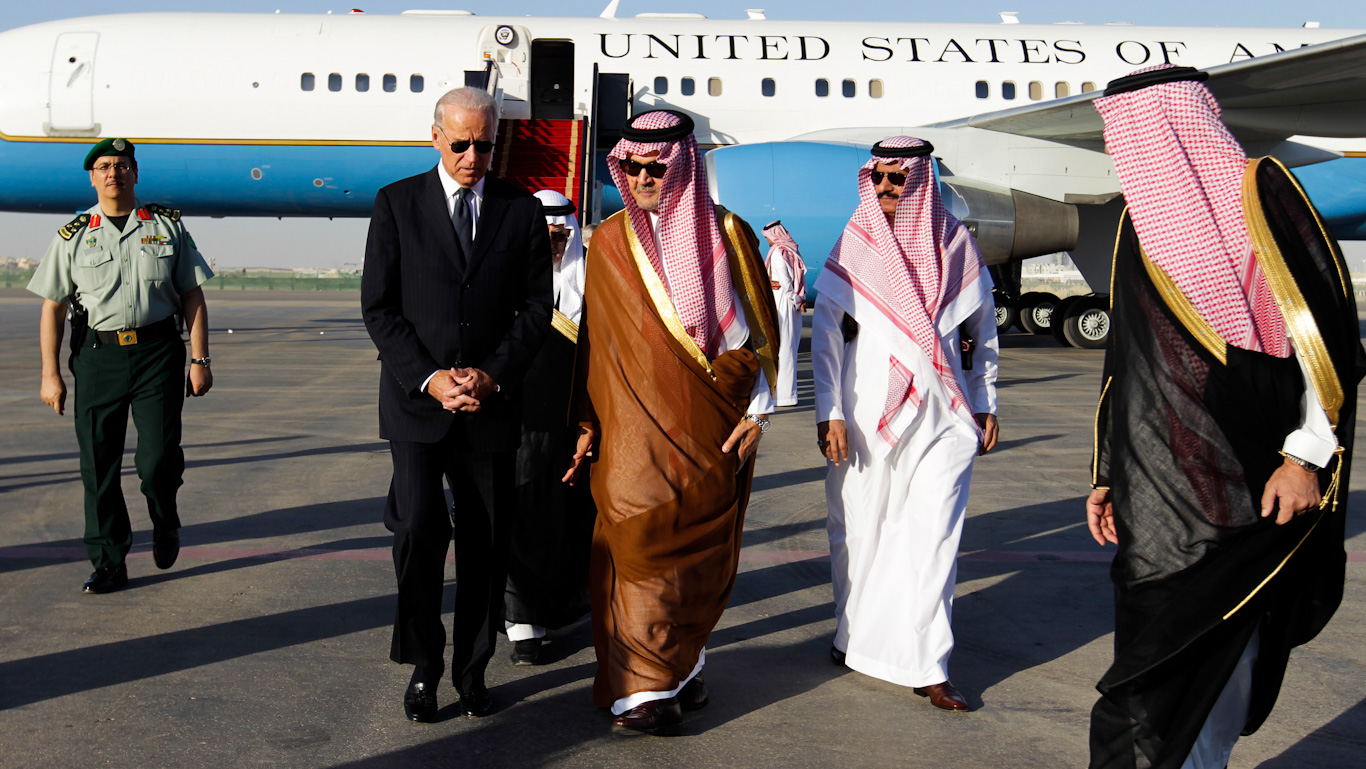
As news broke that Joe Biden almost certainly won the U.S. presidential election, some Americans became hopeful that the new administration could hearken in an era of calm in the Middle East. In Yemen, however, that sentiment was not shared.
Most Yemenis have little hope that the new White House will end the blockade and the devastating war in their country, which is now nearing the end of its sixth year. Nor are they hopeful that the announcement that U.S. support for the Saudi military intervention in Yemen could end during Biden’s presidential term will materialize into action after he is sworn into office on January 20, 2021.
Ibrahim Abdulkareem, who lost his 11-month-old daughter, Zainab when a Saudi warplane dropped an American-made bomb on his home in Sana`a in 2015, told MintPress that Biden’s statement is not good news to him, ”I am not optimistic that Biden will stop supplying Bin Salman with bombs like the ones that killed my daughter,” he said. Like Ibrahim, Yemeni civilians are losing their loved ones, homes, and infrastructure to American weapons supplied to the Saudi Coalition in droves, and there is little hope that president-elect Biden will end support, including the supply of weapons and military equipment, to Saudi Arabia and the UAE.
The Iranian boogeyman
In fact, officials in both Sana’a and Aden – the respective seats of power for the opposing sides in Yemen’s war – see little chance that Biden will take action to end the conflict given the current geopolitical reality in the Middle East. That reality includes the fever of normalization with Israel sweeping across Arab governments, Riyadh and Abu Dhabi are no exception. Closely related is the ongoing obsession from concurrent U.S. administrations with trying to contain so-called “Iranian influence” in the Middle East and linking the war in Yemen with that effort.
Yemeni politicians have called on Biden to change how the White House views the conflict and to stop treating it as a proxy war with Iran over influence. Unfortunately, it has been reduced down to that binary argument, with U.S. officials on both sides of the aisle blaming the entire affair on Iran, reductively claiming that the Houthis are an Iranian proxy, and framing the entire conflict in an Iran-centric geopolitical context – and not the true context of foreign aggression and a battle to control the strategic areas and some of the region’s most lucrative untapped oil and gas reserves.
American support
Most Yemenis view American support for the Saudi-led coalition not only as fueling the fighting but also view the American government as a party to serious war crimes in their country, directly at fault for the devastating humanitarian crisis they now face. Yemen is on the verge of yet another countdown to catastrophe as it faces a devastating famine within a few short months according to a recent report by the UN issued on Wednesday. That famine, in large part, stems not only from the Saud-led war and blockade, but from drastic cuts to humanitarian food and aid programs implemented by President Trump.
Since March 2015, when the war began, rather than halting weapons sales or pressuring Saudi Arabia diplomatically, the White House instead opted to ignore calls from the international community to address the suffering of Yemeni civilians. Worse yet, Saudi Arabia and the UAE have been given carte blanche to carry out the most brazen and egregious violations of international law and collective murder in modern history without so much as a scolding from the United States.
he Saudi-led war has killed more than 100,000 people since January 2016, according to a report by the Armed Conflict and Location Event Data Project (ACLED). That figure does not include those who have died in the humanitarian disasters sparked by the conflict, particularly famine and the thousands of tons of weapons, most often supplied by the United States, that have been dropped on hospitals, schools, markets, mosques, farms, factories, bridges, and power and water treatment plants.
Thirsty for peace
If Biden is serious about reaching a diplomatic end to the war, he has a real chance to add ending one of the twenty-first century’s most violent conflicts to his presidential legacy. Yemen is thirsty for peace. Both the resistance forces led by Ansar Allah and the Saudi-backed militant groups’ that oppose them have signaled a desire to reach a political settlement, a sentiment, of course, not readily reflected by the governments of Saudi Arabia and the UAE. Those governments, however, do face increasingly dwindling support among the same forces in Yemen that allegedly invited them to intervene in their country under the auspices of returning ousted president Abdul Mansour Hadi to power. Now, even among the coalition’s staunchest allies, Saudi Arabia’s actions are increasingly seen as little more than an effort to balkanize the nation into regions and factions that can more easily be managed.
Among the Houthis (Ansar Allah), the most stalwart of forces opposed to a foreign presence in Yemen, an attitude of reconciliation pervades. Throughout the conflict, the group has proven its propensity for diplomatic rapprochement and a desire to work within the structures of international mediators to negotiate an end to the war. According to high-ranking officials in Sana’a, preparations for negotiations are being made in case the Biden administration is serious about ending the war.
However, the group’s leadership is taking Biden’s statement with a grain of salt. A wait and see approach persists among decision-makers in Sana’a, and rumors are flying that Biden may work with Yemen’s Brotherhood, a Saudi Arabia ally.
Untangling the quagmire
Trump’s own legacy in the Middle East is another factor that Biden will have to maneuver if he wishes to untangle the complex quagmire that is Yemen. The Trump administration recently notified Congress that it approved the sale of more than $23bn in advanced weapons systems, including F-35 fighter jets and armed drones, to the UAE, Saudi Arabia’s most prominent partner in its war on Yemen. The Houthis have played down the announcement, saying that consent is one thing, but delivery is another entirely and if the Biden administration does go through with the sale, they will consider it a crime against Yemen.
High-ranking Houthi officials told MintPress that while they do not expect the president-elect to recognize their right to sovereignty, they are hopeful that the situation in Yemen will be re-assessed by the incoming administration and that the Houthis will no longer be seen as a threat to Washington or their allies in the region, and there is some evidence to substantiate that idea.
Every Houthi attack on Saudi Arabia and the UAE has been retaliatory, not preemptive, in nature. Even the attack on the Saudi Aramco facility on September 14, 2019, came in response to ongoing Saudi Coalition military maneuvers inside Yemen. Prior to the 2015 Saudi-led Coalition war on their country, the Houthis did not show animus towards the Kingdom, nor a desire to target it militarily. Furthermore, Saudi Arabia a major exporter of the same kind of jihadist ideology that drives groups like al-Qaeda in the Arabian Peninsula and ISIS, groups that the Kingdom has used to try to undermine Houthi power, making the Houthis a natural ally to any force working to contain those organizations.
Saudi Arabia launched its war on Yemen in March of 2015 under the leadership of Saudi Crown Prince Mohamed Bin Salman. Salman claimed his objective in launching the war was to roll back the Houthis and reinstate ousted former Yemeni president Abdrabbuh Mansur Hadi, who fled the country to Saudi Arabia following popular protests during the Arab Spring. From the moment the highly unpopular war began, Saudi officials have worked hard to frame it as a necessary step in liberating the Arab country from Iran, repeating the still unfounded claim that the Houthis are an Iranian proxy.
Continued pressure on Yemen will inevitably force the Houthis to lean more heavily into their relationships with Iran, Russia, and China, all perceived enemies of the United States, as they indeed have done under the Trump presidency. Iran’s newly appointed ambassador to Yemen arrived in Sana’a last month, and prior to that, the Houthis sent an ambassador to Tehran. Syria and Qatar are expected to follow and reopen their embassies in Sana’a according to Houthi officials, and if the staggering human cost of the war is not enough, that should give Biden an incentive not to allow the protracted conflict to carry on.
TEHRAN – The U.S. plans to invade Iraq and Afghanistan gained stream immediately after the September 11, 2001 attacks on civilian and military targets in the United States. An Iraqi expert tells the Tehran Times that the Americans “exploited” the attacks to occupy Iraq and Afghanistan.
The attacks, carried out by al-Qaeda, killed almost 3,000 American and foreign citizens and sent shock waves across the world. In the wake of the attacks, the U.S. administration sought to pave the way for a military response to al-Qaeda and those allegedly supporting it.
Addressing the American people on the same day at 9 pm, then-President George W. Bush said, “We will make no distinction between the terrorists who committed these acts and those who harbor them.”
Only a week after the 9/11 attacks, Congress passed a special law allowing President Bush to punish the people who had aided or abetted the 9/11 attackers. The law, which was passed on September 18, 2001, stipulates “that the President is authorized to use all necessary and appropriate force against those nations, organizations, or persons he determines planned, authorized, committed, or aided the terrorist attacks that occurred on September 11, 2001, or harbored such organizations or persons, in order to prevent any future acts of international terrorism against the United States by such nations, organizations or persons.”
A few weeks later, the U.S. led a coalition to overthrow the Taliban regime in Afghanistan, and two years later, the U.S. invaded Iraq under the pretext of countering terrorism.
Nearly two decades after the 9 /11 attacks, the U.S. is still bogged down in “endless wars” in the region, which yielded no results in terms of combating terrorism, according to Reza Alghurabi, an Iraqi expert who closely monitors the situation in Iraq and Iran.
In order to assess one of the U.S. post-9/11 wars in the region, the Tehran Times interviewed Alghurabi. He weighed in on the situation in Iraq in the aftermath of the U.S. invasion of the country. He also touched on the U.S.-Iran relations in Iraq since 2003. The following is the full text of the interview:
Q: In the aftermath of the 9/11 attacks, the issue of “counterterrorism” became prominent in U.S. foreign policy and eventually, it became one of the reasons for the occupation of Iraq and Afghanistan. Do you think the United States really wanted to fight terrorism in Iraq? And if so, how successful was it? How do you assess the U.S. presence in Iraq in terms of the fight against terrorism since 2003?
A: In addition to leading to the emergence of the U.S. counterterrorism agenda and the introduction of new concepts in the field of terrorism and international law, the 9/11 attacks led to one of the largest U.S. military campaigns and military interventions in recent decades in the ever sensitive region of West Asia. Regardless of any assessment of the truth of 9/11, Washington’s subsequent exploitation of it shows that the Americans behaved in a completely political and abusive manner that led to the occupation of Afghanistan and Iraq.
It was clear at the time that the terrorists were mostly Saudi nationals, and that if the United States was to be honest in its counterterrorism plan, it would have had to deal with the source of religious extremism in the region, which is the Saudi regime and some other countries whose religious muftis kept playing role in the death of thousands of people and the spread of extremism and violence by issuing hundreds of fatwas [religious decrees] and sending financial aid through charities after the occupation of Iraq.
Despite spending billions of dollars on the counterterrorism project since 2001, Washington has failed to fight terrorism, and the growing spread of extremism, violence, and terrorism in recent years in areas where the Americans themselves have been present was not only a sign of Washington’s failure to fight terrorism, but it also raised serious doubts about its direct role in the spread of terrorism and violence.
Iraq is clearly still grappling with terrorism 17 years after [the American occupation], and from 2003 to 2011, when U.S. troops were officially present in Iraq, violence was widespread in the country and the United States failed to contain it.
Q: How many human rights violations did the United States commit in the years following the occupation of Iraq? In terms of human rights violations, can Abu Ghraib prison be compared to Guantanamo?
A: While the U.S. was present in Iraq as an occupying force, numerous reports were published by Western and American think tanks on individual and organized ill-treatment of prisoners. Some of the initial information was released by U.S. troops themselves. Various forms of torture of prisoners, such as waterboarding in the United States itself, sparked controversy in the U.S. Congress.
U.S. human rights abuses were not limited to detainees. There were also numerous reports of civilians being harassed during house searches or checkpoints and street raids by soldiers and mercenaries of private security companies such as Blackwater. In this respect, there was no difference between Abu Ghraib and Guantanamo. Perhaps Abu Ghraib can be considered a worse case than Guantanamo because in this prison even young Iraqi girls were sexually tortured by the American military.
Q: How do you assess Iran-U.S. relations in Iraq after 2003? It is said that Iran had reached understandings with the United States during the occupation of Afghanistan and Iraq, but why did the United States turn these understandings into hostility and include Iran in the “axis of evil”?
A: Iran-U.S. relations have always been tense for the last four decades. After 9/11, the Americans took a more hostile stance against the Iranians. The use of the term “axis of evil” in reference to Iran by George W. Bush in 2002 indicated the adoption of an escalatory strategy against Iran. With the occupation of Iraq by the U.S., this country became the scene of confrontation between Tehran and Washington. Iran was concerned and dissatisfied with the full U.S. military presence in Iraq and the repeated threats by White House officials about the need for regime change in Iran. The Americans in Iraq were also reluctant to vacate the battlefield for Tehran. Therefore, Iraq has since become the scene of confrontation between the two axes.
The U.S. is a longtime enemy of Iran and the prospect of its troops being deployed along Iran’s borders as well as [U.S.] provocative actions were a source of potential and tense hostility that threatened any possible understanding.
Reflections on Global Geopolitics, on an Iranian Conference in Beirut, and on a Canadian Federal Election
I was out of the country for two weeks during the opening phase of the political contest that will culminate in a Canadian national election on October 21. In late September I took part in a controversial conference in Beirut Lebanon. Since ancient times Beirut has been a pivotal city in the strategic zone on the eastern shores of the Mediterranean Sea where Asia, Africa and Europe converge. Beirut has been dramatically rebuilt in an atmosphere of relative stability over recent years, but especially since the turning back of the Israeli invasion of southern Lebanon in 2006.
The conference was organized by the Iran-based New Horizon organization. My time with the distinguished members of the international group assembled in Lebanon has helped me to see more clearly some of the core issues in the rapidly changing configurations of global geopolitics. It has also helped me to appreciate better the nature of problems closer to my Canadian home.
Looking outward from the perspective of the Beirut conference I have garnered many new insights on a variety of issues. In particular, I gained fuller appreciation of the problems plaguing the vitality of public discourse in my own North American country. I have had to face a heightened appreciation of the stunted and parochial character of public discourse in Canada even during a national election campaign. It seems there is a dearth of thoughtful commentary emerging to address the possibility of new roles for Canada in rapidly changing configurations of global power. It seems there is little willingness to consider the possibility of a dramatic reshaping of the political, economic, cultural and military interactions that help define Canada’s place in the global community of communities.
I found Lebanon to be an environment much more conducive than Canada to the exercise of free speech. The discussions in which I took part in Lebanon helped confirm for me the tight censorship of permissible public discourse in Canadian institutions these days. The formal and informal censorship extends to harsh repression of thought, discussion and publication in, for instance, agencies of the Canadian Broadcasting Corporation, Canadian universities and the core institutions in our failing parliamentary democracy.
The pattern is not unique to Canada. The repression of public discourse is fast reaching crisis proportions throughout the Occident. The clampdown of free speech is manifest especially in the rush by powerful political lobbies to censor the Internet.
Much of the rush to control the Internet’s content and search mechanisms is going forward in the name of a seemingly benevolent opposition to “hate speech.” It is important to bring skeptical eyes to appreciate the true priorities of arbitrarily-appointed censors who claim the want to wrestle “hate speech” into insignificance. It seems the ill-conceived war on terror is giving rise to a similarly ill-conceived war on hate speech.
In far too many cases the zeal by elites to decide what people can read, watch and hear on the Internet is being carried out in the name of a censorious war on hate speech. In the final analysis, the zeal to filter, constrain and reconfigure the Internet’s content and motifs of digital interaction is tightly aligned with the self-serving agendas of some of society’s most ruthless power brokers.
The Yemeni Connection to the New Horizon Conference of 2019 in Beirut
As the New Horizon conference got going, one of the delegates shared with us early news about the startling events taking place inside the southern boundary of Saudi Arabia around the town of Narjan. Assan Al-Emad, a Yemeni leader, shared with the attendees at the Beirut conference insights and information that, to the best of my knowledge, has been sparse and misleading in the zealously policed content of the Occident’s mainstream media.
Even before the circulation of some international reports about the military breakthrough being executed by the Yemeni army together with the organized Houthi resistance, Mr. Al-Emad shared with the conference delegates a running commentary on the remarkable news emerging from his home region. The new developments had as their background the Saudi Arabian military assault beginning in 2015 on the civilian population of its Yemen in the southwest corner of the Arabian Peninsula. Part of that aggressive warfare has involved the Saudi attempt to blockade all Yemeni land, air, and seaports in order to starve the indigenous population into submission.
The Saudi war is directed at returning Yemen to the status of a subordinate satellite of the world’s wealthiest and notorious Petro tyranny. The Saudi attempt to obliterate the vital infrastructure supporting the lives of the Yemen civilian population is backed by a large coalition of Occidental and Arab powers. These powers include Canada, Israel, the United States, Bahrain, and the United Arab Emirates.
In recent years the Saudi assault on Yemen has been widely recognized as the basis of the largest humanitarian crisis in the world. The invasion has directly affected about 80% of Yemen’s 24 million people where starvation in running rife. As a high-level UNICEF official put it, “Yemen has become today a living hell for children…. with 400,000 children suffering acute malnutrition.”
Those engaged in the Yemeni resistance to Saudi Arabia’s assault on their country began in the summer of 2019 to demonstrate increasingly sophisticated forms of self-defense especially through the deployment of unmanned aerial vehicles including drones. In mid-September this strategy of targeting Saudi installations in the cause of undermining the strength of the imperial predator extended to hitting oil-producing and oil-refining installations of the Saudi corporate giant, Aramco.
As the New Horizon delegates learned in Beirut, the Yemeni resistance forces followed up this action in late September by capturing about 2,000 Saudi officers and their mercenary soldiers who hail from many locations including Sudan, Pakistan, and Iraq. The Yemeni resistance also captured hundreds of Saudi military vehicles including some light armored vehicles made in Ontario by a Canadian-based unit of General Dynamics.
The turnaround in the military balance of power in the Arabian Peninsula in September of 2019 has many global implications. There is no doubt this turnaround is a game-changer with many far-reaching implications. The Yemeni resistance demonstrates that the world’s biggest importer of armaments emanating mostly from the United States cannot repel a concerted attack on the Saudi Arabian Armed Forces within Saudi territory. The attack comes from highly-skilled fighting units hailing mostly from one of the poorest and most aggressively assaulted countries in the world.
In 1945 Saudi Arabia was effectively taken over by the United States and its oil and gas sector. The USA claimed the lion’s share of Arabia’s fossil fuel wealth as one of the main fruits of victory for intervening to help shift the balance of power towards the allies in the Second World War. The family of Ibn Saud was entrusted to play the role of custodian of the massive Saudi oil fields largely on behalf of the emerging US superpower with its imperial headquarters in the Pentagon.
Now in 2019, the balance of world power is shifting again, this time to the disadvantage of the United States. The drone attacks on Aramco followed by the humiliation of the Saudi Armed Forces captured en masse in their own territory demonstrates once again that the Saudi royal dynasty is in dire trouble. The monarchical system of Saudi Arabia does not serve the largest majority of its own people. Nor is Saudi Arabia capable of carrying on the protection for the Zio-American empire of one of the world’s primary caches of the black gold that fuels this extended era of dirty industrialization.
The royal dynasty established by Ibn Saud with British and then US-backing is showing itself to have been outmaneuvered and outsmarted by poor but determined regional enemies. These enemies have been generated over several generations through the now-legendary ineptitude of corrupt Saudi leadership that is widely resented by millions both inside and outside the petrodollar’s heartland.
The absurd dependence of the Occident on the Wahabi Kingdom run by mentally-unstable billionaire princes is becoming increasingly obvious. The Kingdom’s vulnerability to the growing sophistication of the Yemeni resistance exposes many of the internal contradictions plaguing the corrupt constitution of the most zealous drivers of imperial globalization.
The logistical sophistication embodied in the victories of the Yemeni resistance should not be underestimated. The operation demonstrates that the Yemeni resistance has much support within Saudi Arabia. The resistance has agents and collaborators inside the Saudi Kingdom that are obviously ready, willing and able to supply vital intelligence of developments on the ground.
Among the many elements of the victory by the Yemeni resistance is the shutting down of Jizan airport and the targeting of nearby Saudi bases so that reinforcements could not be sent into battle. A particularly bold maneuver was aimed at sidelining Apache helicopters parked at King Khalid International Airport near Riyadh. The Yemeni resistance deployed missiles, drones and anti-aircraft systems to prevent Saudis from supporting their troops in the air. They used various electronic jamming devices to disrupt Saudi systems of command and control. Yemeni resistance demonstrated its ability to blind the expensive Patriot radar system sold to the Saudis at great expense by US war profiteers.
Why are the startling developments in the Arabian Peninsula not generating significant political discussion here in Canada during our federal election? Can it even be said that there is sufficient objective reporting reaching the heavily censored airwaves and print reporting in the Occident to enable even a modicum of informed commentary on the recent developments? What obstructions are being put in the way of wider recognition that the balance of power in the Arabian Peninsula and in global geopolitics is being inalterably affected by dramatic turnarounds in a very significant theatre of military conflict?
In spite of Prime Minister Justin Trudeau’s war of words with the Saudi government, Canada maintains extremely close relations with the leadership and business sector of the Saudi Kingdom. This close relationship goes back at least to 1984 when the Saudi plutocrat, Adnan Kashoggi, met in Toronto with top officials of the then-ruling Ontario government of Bill Davis. In those days this Saudi “playboy” and “arm’s merchant” was often billed as the world’s richest man.
Until he was offered up as a fall guy in the Iran-Contra scandal based on the discovery of a covert supply line largely running largely through Canada, the late Jamal Khashoggi’s uncle, Adnan, was an ideal candidate for star coverage. Adnan Khashoggi’s ostentatious lifestyle perfectly fit the dominant plotline of the hit TV series, “Lifestyles of the Rich and Famous.”
Khashoggi’s close partner was Peter Munk who some have described as an agent charged to advance the financial interests of Canada’s Bronfman family dynasty. Khashoggi and Munk teamed up in Toronto with the aim of preparing a public offering of Barrick Gold shares. The history of Barrick Gold in Canada is deeply intertwined with the rising importance of the Munk School of Global Affairs at the University of Toronto. The Barrick Gold Company has been used as a primary commercial base for the Conservative and Republican parties of former Canadian Prime Minister, Brian Mulroney, and former US President, George H.W. Bush.
On the other side of Canada’s main electoral rivalry is the large international engineering firm, SNC-Lavalin. This corporate entity has been fashioned as one of the primary commercial platforms cultivated as a base of operations for the Liberal Party of Canada. The covert merger of public and private interests in the corporatocracy embodied by the international operations of SNC has been an important pillar in the rise of the Trudeau family dynasty.
The changing situation in Saudi Arabia is deeply integrated into the substance of the SNC-Lavalin fiasco, a complex scandal that has created a significant political problem menacing Justin Trudeau’s quest for re-election. Canada’s SNC scandal has some of its major roots in the company’s efforts to gain multiple engineering contracts in Libya through wholesale bribery of the Gaddafi family, but especially Muammar’s son, Saif Al-Islam Gaddafi.
The scandal swirling around SNC is this election no doubt also involves Saudi Arabia where the company employs 9.000 individuals. This number is comparable to the number of people employed in the SNC’s Montreal headquarters. Justin Trudeau speaks often about the need to protect SNC jobs in his own Montreal riding. The current Prime Minister, however, never elaborates on the Libyan and Saudi Arabian background of the company’s effort to exploit its Liberal Party connections in order to evade multiple criminal charges including some emanating from the World Bank.
The failure to even notice the dramatic military turnaround being suffered by Canada’s Saudi ally during the height of our national election is reminiscent of a similar case in 2011. During the federal election of 2011 the Canadian Armed Forces began to play a large role in NATO’s bombing campaign aimed at an illegal and ill-considered regime change in Libya.
This military intervention culminated in the vigilante-style murder/sodomy of Muammar Gadaffi. The murder was executed by a well-armed mob left free by NATO and the UN to commit a ruthless act of lethal violence against a sitting head-of-state and against what remains of the degraded viability of anything resembling an international rule of law. “We came, we saw, he died” exclaimed former Secretary of State Hillary Clinton in a now-notorious statement that succinctly sums up the nature of her strategic understanding of how power is exercised.
In 2011 the leaders of all the major political parties in Canada conspired with the mainstream media to make sure no significant opening was allowed for significant electoral debate on Canada’s role in the Occident’s treatment of the government and people of Libya. It seems that our political masters increasingly want to sideline the big issues of war and peace, life and death, as eligible subjects for formal debate in national elections. National elections in which corrupt media venues deny citizens the basic information we require to make informed decisions are of dubious legitimacy.
Navigating Relations Between USA, Israel, Iran and Saudi Arabia
On September 29 when I was still in Beirut, the US TV network, CBS, broadcasted an interview with Saudi Crown Prince Muhammad Bin-Salman. The interview was recorded several days before the item was televised. It was the first English-language interview granted by the Crown Prince since reports emerged in October of 2018 that Saudi government officials had gruesomely murdered in Istanbul’s Saudi consulate a prominent Saudi journalist, Jamal Khashoggi.
The exchange between the hands-on ruler of the Saudi Kingdom and journalist Norah O’Donnell appeared on CBS’s 60 Minutes. There might have been some real rhetorical fireworks generated in Canada by the 60 Minutes telecast if our electoral process was a genuinely open exercise in candid political interaction rather than a televised spectacle scripted to adhere to the narrow boundaries of permitted debate.
Generally speaking, national electorates are frequently discouraged by the experts in media spin from looking beyond a few well-marked subjects of domestic concern. In my view, this systemic sabotaging of democratic spontaneity in elections– this betrayal of the rights and responsibilities of free speech– is contributing significantly to Canada’s increasingly anemic role in the international arena.
Abdel Bari Atwan, the Editor-In-Chief of Rai al-Youm, offered up the following characterization of the televised performance of the man pulling most of the strings of Saudi monarchical rule. Mr. Atwan wrote that bin Salman was
unusually conciliatory towards Iran and its allies, completely abandoning the hawkish escalatory tone that has characterized most if not all his previous interviews…. The most plausible explanation for this sudden outbreak of dovishness is that the Saudi Crown prince feels betrayed and deceived by his Western allies, especially the US. They left him standing alone to face a succession of Iranian or Iranian-backed attacks and failed to retaliate after key Saudi oil facilities were targeted three times in succession — including the very nerve center of its petroleum industry in Abqeiq and Khreis, slashing its output by half.
Prince bin Salman conducted the taped interview with CBS prior to the circulation of news that the Saudi land forces had suffered a major defeat on Saudi territory at the hands of the Yemeni resistance. Nevertheless, the change in the military balance of power was already well advanced when the Saudi leader made his comments.
I am more skeptical than is Mr. Atwan about the sincerity of the Crown Prince’s sudden “dovishness.” Since the exchange on 60 Minutes was the first interview Prince bin Salman had granted since the murder by Saudi officials of Jamal Khashoggi, the prevailing mood of the Saudi leader was animated by his need to eat some humble pie on American TV. His tone of light contrition affected his way of talking about Iran. Under the circumstances, bin Salman pulled back from engaging in his usual sword rattling rhetoric highlighting the military dimension of Saudi Arabia’s conflict with its Iranian opponent.
By appointing itself as a harbinger of war, the CBS network afforded Crown Prince bin Salman considerable latitude to feign the role of a sensible friend of peace among nations. I for one did not find bin Salman at all credible in this personae. When seeking a response from the Crown Prince about drone strikes on Aramco, Norah O’Donnell declared sharply, “Iran struck Aramco.” Not surprisingly the journalist offered up no evidence or explanation to back CBS’s attempt to advance the interests of the war party that seeks to incite public support for a US-led invasion of Iran.
On behalf of his Liberal federal government, Justin Trudeau has aggravated the conditions that have rendered Canada a foe of Iran and a friend of Saudi Arabia including in its recent history of genocidal incursions into Yemen. Trudeau had promised in the last federal election of 2015 to re-establish with Iran formal diplomatic relations.
In 2012 Stephen Harper strongly took the side of the anti-Iranian war party. Harper implemented the Israel Lobby’s request that Canada should withdraw from diplomatic relations with Tehran. Not only did Trudeau fail in his first term to make good on this election promise to the Canadian people. Trudeau added insult to injury by adding to the weight of antagonisms with Iran. He carried through with Harper’s plan to appropriate Iranian property in Canada in order to redistribute it to “victims of terrorism.”
“The New Horizon conferences has been a platform where many of the world’s most formidable dissident intellectuals can meet in person”
I began attending New Horizon conferences in Tehran in 2014. Since then, the New Horizon conferences have given rise to a New Horizon movement. In partnership with our Iranian colleagues, the New Horizon group is made up largely of independent-minded skeptics based widely throughout the Occident. A common denominator informing many participants in the New Horizon movement is a significant loss of confidence in the capacity of Western governments, media cartels, universities, and political lobbies to operate within a framework of relative honesty, integrity and respect for the requirements of law and due process.
An example of the kind of understanding that animates many who have attended the New Horizon conferences is a willingness to engage in clear condemnation of the audacious misrepresentations of the events of September 11, 2001. The wrongheaded notions concerning who did what to whom on 9/11 and why have been followed up by the perpetration of subsequent acts of false flag terrorism. This Deep State engineering of Islamophobic responses to 9/11 has helped in the creation of public support for US invasions of Muslim-majority countries including Iraq and Iran.
An overriding preoccupation of the Israel Lobby and of many Israel First partisans is to persuade the leadership of the US government to invade Iran. This agenda has been promoted relentlessly since the 9/11 false-flag terror event of 2001. As President Donald Trump’s National Security Adviser, John Bolton was one of the most obsessive promoters of a US-led war on Iran in order to serve Israel’s expansionistic agenda. Was Bolton fired because Donald Trump discovered that one of his key advisers on international and strategic affairs was first and foremost serving Benjamin Netanyahu as a White House spy?
It seems Trump has attempted to offer up some red meat to the hawks demanding an invasion of Iran. The US President has expanded the frontiers of so-called “sanctions” on Iran. The term, “sanctions,” that has become a kind of code for many-faced forms of economic warfare. The effort to expand the field of sanctions targeting Iran’s economy has had its base in the US Treasury branch and in particular in the Office of Terrorism and Financial Intelligence. Created in the wake of 9/11, the keepers of this Office have consistently been zealous Israel First neoconservatives from Stuart Levy to David Cohen to Sigal Mandelker.
Mandelker, a current or past Israeli citizen, became part of the wave of Israel First partisans who flooded into high-ranking positions in the administration of US President George W. Bush after 9/11. She became an economic hit woman as the Global War on Terror coalesced to become the US government’s top strategic priority.
During her quick rise up the ladder of administrative power within the US government, Mandelker served as a clerk for ultraconservative Supreme Court Judge Clarence Thomas and as a lawyer representing Homeland Security czar, Michael Chertoff. Apparently Mandelker played a role on behalf of the federal Justice Department in arranging the sweetheart deal extended to Jeffrey Epstein in Florida in 2008 for various infractions including child sex trafficking. There is much literature suggesting that a big part of Epstein’s operation involved creating the conditions for Mossad and other related intelligence agencies to blackmail key politicians.
Like so many of her Israel First colleagues, Mandelker became obsessed with heaping recriminations on Iran. She was prominent among the Israel First partisans who were inducted en masse into the deep bowels of the international affairs branches of the US government after 9/11. In spite of much evidence to the contrary, she regularly charges Iran with trying to obtain nuclear weapons. At the same time, she remains completely mum on the reality of Israel’s still-unacknowledged possession of many nuclear weapons.
As Mandelker sees it, “Iran is “posing an incredibly destabilizing presence in the region.” She added, “They’re threatening our great ally in the region, Israel!”
Given even the partial information that has already emerged concerning Mandelker’s relationship to the USA and Israel, certain questions have been emerging. In her work as a US economic intelligence officer has Sigal Mandelker been working as a spy for the Israeli government, a polity well known over the years for conducting very concerted espionage operations in the United States?
Has Mandelker’s work figured at all into the spying allegations directed by one branch of the FBI at AIPAC and at the neocon’s very hawkish organization, Foundation for the Defense of Democracies? Was Mandelker’s recent resignation on October 2 an indication that the substance of her work in the US Treasury Branch could not withstand skeptical scrutiny concerning the substance of what she was really doing on behalf of her patrons and clients in Israel and the United States?
In her last weeks as the primary enforcer of the USA’s campaign of economic warfare targeting Iran, Sigal Mandelker went on a kind of sanctions blitzkrieg. As part of her economic warfare activities, Mandelker targeted the New Horizon conference as well as its top organizers. In particular, Mandelker pinned the new label of “Global Terrorist” on Iranian broadcaster, Nader Talebzadeh, and on his Lebanese wife, Zeinab Mehanna.
This effort to further isolate Iran and to throw up obstacles to any peace-making dialogue between US and Iranian citizens went further. FBI officers visited the 11 public intellectuals in the United States who had planned to attend the New Horizon conference in Beirut between September 20 and 26. All these individuals were threatened with heavy fines and jail time if they took part in an event whose aims include identifying means of avoiding disastrous bloody wars. What US interests would be served by a US-led invasion on 80 million Persian people whose government happens to be in a strong position to respond with a formidable national self-defense?
Among those pressured into staying home was Dr. Kevin Barrett, an outspoken Muslim critic of the dubious assumptions and outright lies animating the conduct of the Global War on Terror. Dr. Barrett summed up as follows his understanding of the reason for attempting to sanction and thus cripple an event dedicated to advancing the arts of sciences of dialogue and peace over the devastations of war. He wrote,
I think the Tehran-based New Horizon NGO has been targeted because its conferences are viewed as an ideological threat to powerful special interests here in the US. Mainstream Iranian intellectuals like New Horizon organizer and filmmaker Nader Talebzadeh, the most popular TV host in Iran, hold views of the US empire, Israel, and related issues that are very different from the views allowed expression in mainstream American media and politics. Yet a great many well-informed people, globally and here in the US, largely agree with some or most aspects of the mainstream Iranian view, and disagree with the mainstream American one. The New Horizon conferences have been a platform where many of the world’s most formidable dissident intellectuals can meet in person, get to know each other, and find ways to promote their interpretations of world events.
Michael Maloof was another member of the group of Americans who had planned to attend the New Horizon conference but who warned by federal police to stay away if they wanted to avoid harsh consequences. A 30-year veteran of the US Defense Department, Maloof retired as a senior security policy analyst with the Office of the Secretary of Defence. Of his reason for being drawn into the orbit of the New Horizon movement, Maloof said of himself and of his American colleagues, “We’re all still US patriots, but we believe there’s another way to go about things other than looking at everything in Iran through the prism of Israel.”
Because the US delegates did not attend, I found myself to be the only North American delegate included in the program. The contrast between my treatment by my own Canadian government and the treatment of my US colleagues by their government is significant. As I see it, there are good reasons for Canada and Iran to return to normal diplomatic and economic relations. I am of course pleased to be left free to advocate this position of normalization of relations in the developments of policies in both Ottawa and Tehran.
My presentation on the podium of the New Horizon conference on Sept. 23 dealt with my reflections on some of my recent research for a paper entitled “The Israel Lobby and University Governance.” I initiated this research following an episode that put me at the center of a crude and illegal assault mounted by the Israel Lobby in partnership with the administration of the University of Lethbridge in Alberta Canada. This administration failed grossly to live up to its fiduciary responsibilities to adhere to the contractual protections for academic freedom in Canada.
My unilateral suspension from my professional duties in October of 2016 was pushed forward in a way that denied me pay, due process or the proferring of any coherent evidence to which I could respond. A court in Alberta court eventually condemned unequivocally this combination of administrative actions. The win for my faculty association and I, however, took place after the Israel Lobby in Canada had already mounted a specious media smear campaign with the aim of delegitimizing me professionally. The effort to try to outlaw as “anti-Semitic” any criticism of Israel and its treatment of Palestinian people is moving in the same direction in North America as the travesty of smear directed at Jeremy Corbyn, the leader of the Labour Party in Great Britain.
Meanwhile, it is unlikely that most of the issues I raised in Beirut and in this essay will make their way into the gate-kept confines shaping the current parochial character of electioneering in Canada. The Israel Lobby as embodied in organizations like B’nai Brith Canada and the Centre for Israel and Jewish Affairs (CIJA) is seeing to it that any debate on Israel/Palestinians affairs is held to a minimum. Moreover, I am not optimistic that any of the contenders for the job of Canadian prime minister have the capacity, courage, insight or independence to mount a thoughtful political debate on the need for Canada to reorient the dominant motifs of our interactions with Iran, Saudi Arabia, Israel and the United States.
Terrorists or Freedom Fighters?
Like many Israel First mouthpieces in North America, Sigal Mandelker repeats often many of the slogans of the anti-Iran war party. Like John Bolton, she has tried to fan the flames of extreme Islamophobia and Iranophobia. She seeks to push the US government to lead a monumental war project that would target the Persian heartland. She labels Iran with the unsupported slogan that the Muslim-majority country is the “biggest exporter of terrorism in the world.” Seldom do those who constantly repeat this mantra ever attempt to explain the assertion.
One obvious way of calling into question the claims equating Iran with the international support of terrorism is to point out the relative peace and stability currently enjoyed by all the citizens of Lebanon. These citizens include Shia, Sunni and Christian groups. This stability is to some extent founded on Iran’s backing of forces that helped defend Lebanon’s territorial integrity against armed intervention by the Israeli Defence Force in 2006. Iran’s positive relation with the government of Lebanon helps to explain how it is that the most recent New Horizon conference took place in Beirut.
Iran’s relationship with the Yemeni resistance, which by and large emerges from deep within the Aboriginal cultures of the Indigenous peoples, also helps cast doubt on the Israel Lobby’s propagandistic condemnation of Iran. Any reasonable account of the Saudi invasion of the life support system of Yemeni citizens since 2015 reveals the obvious fact that the Saudis are the aggressors and that their victims are the targets of round after round of ruthless state terrorism.
If anyone is a leading exporter of terrorism, it is the Saudi Arabian monarchy. The Houthis and other Yemeni citizens are prominent among the victims of the Saudi government with its weird missionary preoccupations aimed at spreading its own Takfiri form of Wahabi fundamentalism.
Saudi Arabia, the USA and Israel have much to do with the creation and backing of the al-Qaeda and ISIL/Daesh, proxy armies that consistently fought the armed forces of the elected governments of Syria, Iran, and Russia. The forces of the so-called “Islamic state” fought with the backing of Israel, the USA and many NATO countries. Iran itself has had to defend its own citizens from the incursion of ISIL/Daesh.
Iran has had to absorb a cyberwar directed at it by the National Security apparatus of the USA and Israel. This attack included the goal of crippling Iran’s local system for generating electrical energy. Iran has had to absorb many ruthless assassinations of its nuclear scientists. Iran has to face the West’s growing political support of a former Marxist organization that is much despised by many indigenous Persians. The violent group, MeK, is being cast in much the same role as was Ahmed Chalabi prior to the US-led invasion of Iraq in 2003. MeK is being groomed to take up the levers of power in Iran following the regime change war being persistently promoted even by the likes of the CBS television network.
How is it a promotion of terrorism for Iran to intervene in Lebanon in the process that has brought some peace and stability to benefit all the citizens of a very diverse and pluralistic country? How is it a promotion of terrorism to render some assistance to an indigenous fighting force whose aim is to protect Yemeni citizens from the genocidal incursions of the predatory Saudi royal dynasty? How is it an export of terrorism for Iran to support the elected government of Syria against those invaders seeking to balkanize and subjugate the country in order to advance a malevolent agenda involving, it seems, an endless series of US wars for Israel?
ADAA, NORTHERN YEMEN — Third-grader Farah Abbas al-Halimi didn’t get the UNICEF backpack or textbook she was hoping for this year. Instead, she was given an advanced U.S bomb delivered on an F-16 courtesy of the Saudi Air Force. That bomb fell on Farah’s school on September 24 and killed Farah, two of her sisters, and her father who was working at the school. It will undoubtedly have an irrevocable effect on the safety and psyche of schoolchildren across the region.
Over the course of Yemen’s pre-war history, which locals fondly refer to as the happy Yemen years, never has an entire generation been subjected to the level of disaster and suffering as that levied upon Farah’s generation by the Saudi-led Coalition, which has used high-tech weapons supplied by the United States and other Western powers to devastating effect since it began its military campaign against Yemen in 2015.
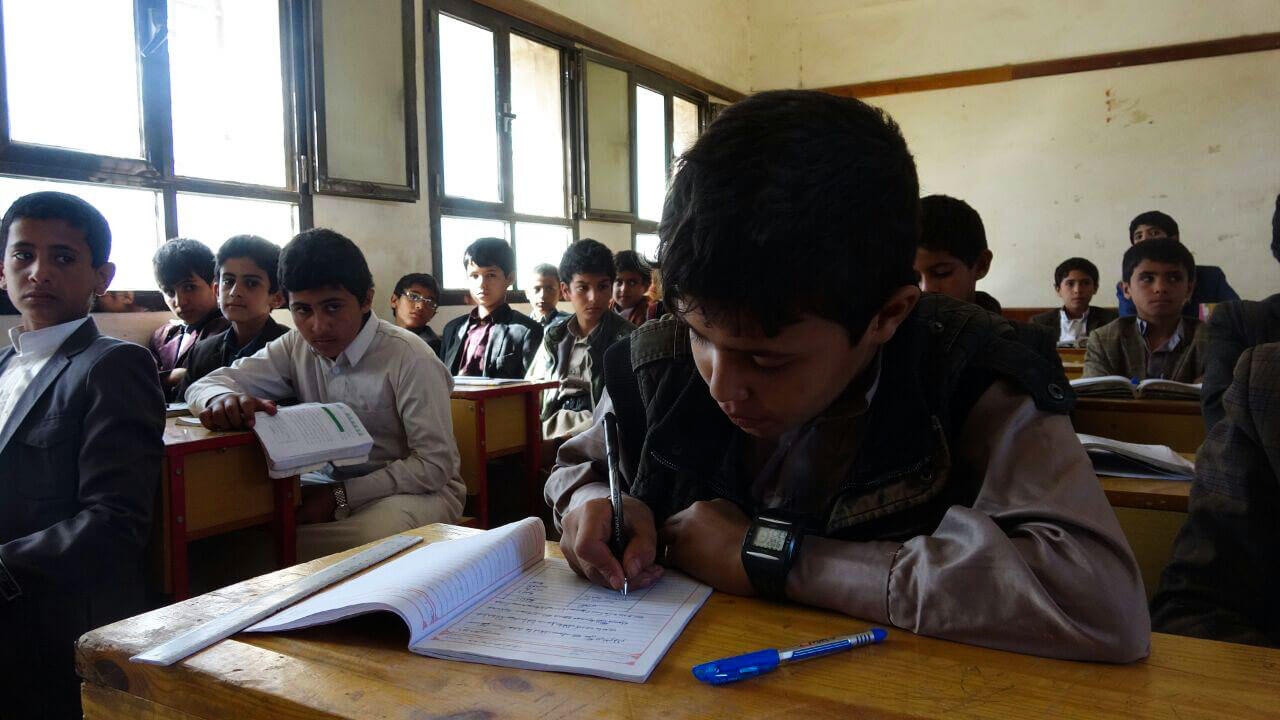
Last week a new school year in Yemen began, the fifth school year since the war started, and little has changed for Yemen’s schoolchildren aside from the fact that the Coalition’s weapons have become more precise and even more deadly, leaving the futures of the country’s more than one million schoolchildren in limbo.
“I want to go to school, I can’t wait any longer,” a relative of six-year-old Ayman al-Kindi told MintPress, recalling how Ayman, surrounded by proud family members, waited impatiently to leave for his first day of school. Ayman would never make it to school; in fact, he never even made it outside. “Ayman wanted to become a doctor but a bomb took him away from school. What these American bombs do to our children is terrifying,” his relative told us.
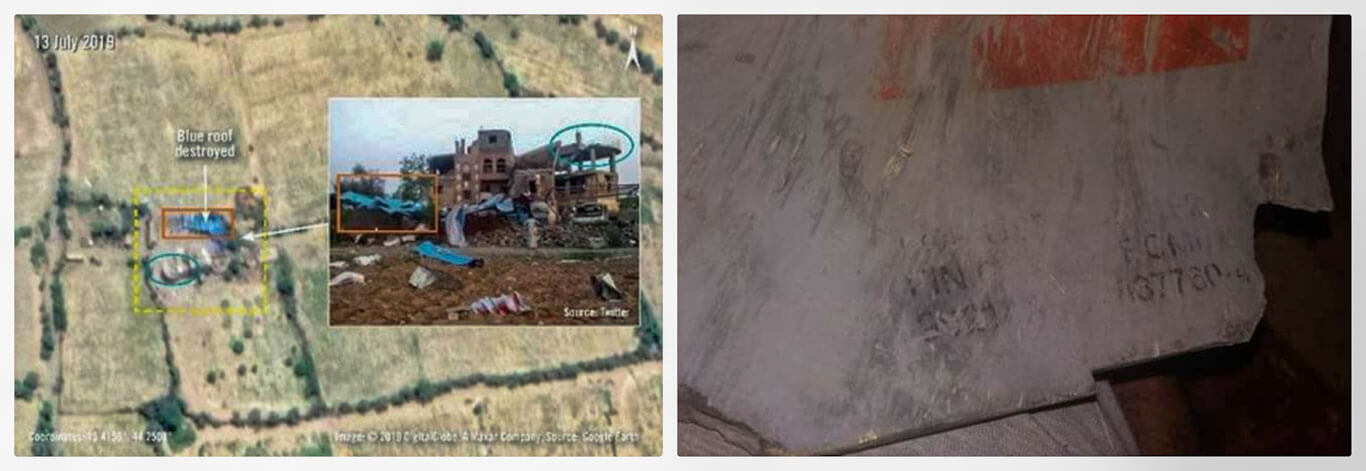
In late June 2019, Coalition aircraft targeted Ayman’s family home located on their farm in the Warzan area, south of Taiz province in southwestern Yemen. Six of Ayman’s family members were killed, including three children aged 12, nine and six. According to Amnesty International, the laser-guided precision weapon used in the attack was made by Raytheon. Amnesty’s arms experts analyzed photos of the remnants of the weapon recovered from the scene of the attack by family members and identified it as a U.S.-made 500-pound GBU-12 Paveway II.
The use of a U.S.-made weapon in the attack on the al-Kindi home was no anomaly: most of the weapons possessed by Saudi Arabia and the United Arab Emirates, which between them have carried out a quarter of a million raids on Yemen since the beginning of the war, are American-made. This week, families who lost loved ones in Coalition airstrikes held an exhibition called “Criminal Evidence” in the city of Sana`a. The event was an opportunity to consolidate evidence of potential war crimes and prompted hundreds of Yemeni civilians to attend the event with remnants of U.S.-made weapons in tow, remnants recovered from the rubble of the attacks that killed their loved ones.
The airstrike on the al-Kindi home was one of nearly a dozen carried out by Saudi Arabia using U.S. weapons that were included in a recent UN report. A team of investigators appointed by the UN Human Rights Council found numerous cases of Saudi airstrikes that violated international humanitarian law and, for the first time, directly implicated the United States, Britain, France and Australia for supplying the weapons used in the attacks.
Charles Garraway, a former military lawyer and one of the experts behind the report, recently told PBS, “We have a war that’s going on. It’s causing immense suffering and frankly most of that suffering is caused by arms.” Garraway continued, “The tragedy in Yemen is so awful at the moment that somehow one has got to reach some form of settlement to stop the war.”
Despite the abundance of evidence proving that Saudi Arabia and the UAE have routinely targeted schools and other civilian facilities, the United States continues to replenish the Coalition’s arsenal. Earlier this year, the Trump administration tried to force through an $8.1 billion arms deal to Saudi Arabia, the United Arab Emirates, and Jordan; and, despite growing opposition within his own government, President Donald Trump seems determined to maintain the flow of U.S. weapons to Saudi Arabia and its allies.
Not your normal “back-to-school” day
Eleven-year-old Mohammed AbdulRaham al-Haddi is one the few schoolchildren to have survived the horrific August 9, 2018, Saudi airstrike on a school bus on the outskirts of Dahyan in Yemen’s northwestern province of Saada. The attack killed more than 35 of his classmates, but Mohammed miraculously survived. Today, he returns to school for the first time since the deadly attack, but to an underserved school and without his classmates. Al-Faleh, Mohammed’s new school, lies nestled in a dusty valley near Yemen’s northeastern border with Saudi Arabia
The attack on Mohammed’s school bus was carried out using a Mark 82 (MK-82) bomb, jointly manufactured by U.S. weapons companies Lockheed Martin and General Dynamics. The MK-82, along with other general-purpose MK-series bombs, has been sold to the Saudi-led Coalition by the United States through a series of contracts made in 2016 and 2017. In addition to last year’s atrocity, the Coalition has used the MK-82 to target Yemeni civilians in the past, such as its bombing of a funeral in 2016 that left over 140 dead and 525 wounded.
As the war in Yemen enters its fifth year, the tragic consequences of these weapons deals are difficult to describe, but their effects are noticed everywhere. Some 3,526 educational buildings have been at least partially destroyed by bombs since the war began, with most yet to be rebuilt. Of those, 402 were completely destroyed, according to a new field survey conducted by the Ministry of Education. Approximately 900 of Yemen’s schools are still being used as shelters for the internally displaced. And 700 schools have been closed as a result of ongoing clashes.
The United Nations Children’s Fund (UNICEF) estimates that two million children are out of school in Yemen. “A fourth of the two million Yemeni children have dropped out since the beginning of the Saudi war in March 2015,” UNICEF representative in Yemen Sara Beysolow Nyanti said in a statement released last Wednesday.
Beysolow raised concerns about the future of Yemeni children, saying:
[They] face increased risks of all forms of exploitation including being forced to join the fighting, child labor and early marriage. They lose the opportunity to develop and grow in a caring and stimulating environment, ultimately becoming trapped in a life of poverty and hardship.”
According to the Geneva-based human rights monitoring organization, SAM, four hundred thousand schoolchildren in Yemen suffer from acute malnutrition, exposing them to the risk of sudden death, 7 million schoolchildren face hunger, and more than 2 million do not go to school.
Even before the war began, the education system in Yemen, the Arab world’s poorest country, was not in good health; a lack of equipment, unqualified teachers, and a shortage of textbooks plagued the country’s schools, which were bursting at the seams with overcrowding. Coalition bombs and a blockade supported by the United States have effectively destroyed what was left, just as schools were beginning to show signs of recovery.
Many of Yemen’s teachers have not received a paycheck in years and some, unable to eke out a living, have sought work as soldiers-for-hire on Yemen’s battlefields, leaving millions of children without prospects for education and the country as a whole with a 70 percent rate of illiteracy. Beysolow warned that the education of a further 3.7 million Yemeni children is at risk, as teachers have not received their salaries for over two years, adding that one fifth of schools in Yemen can no longer be used as a direct result of the conflict. “Violence, displacement and attacks on schools are preventing many children from accessing school,” she said.
In a bid to stop teachers from leaving schools, the Ministry of Education, based in Sana`a, has imposed a fee on students of $2 per month to pay teacher salaries, but that seemingly nominal fee has added a huge burden to families with more than one child, many of whom are living in extreme poverty as a result of the war and siege. “I have six students, meaning that I need to pay $12 a month; I can’t save that amount,” one mother told us. She lost her husband in the clashes that erupted between the former president Ali Saleh and opposition tribes on Hasabah Street in 2011. Now, her only source of income is begging and it is not enough to feed her six children, let alone send them to school.
To make matters worse, just weeks before the new school year began, the Saudi-led Coalition prevented 11 oil tankers from entering Yemen. The move sparked an acute shortage of fuel, which meant that school buses could no longer run, leaving even those with the means to pay school fees unable to send their children to school.
The severe psychological toll
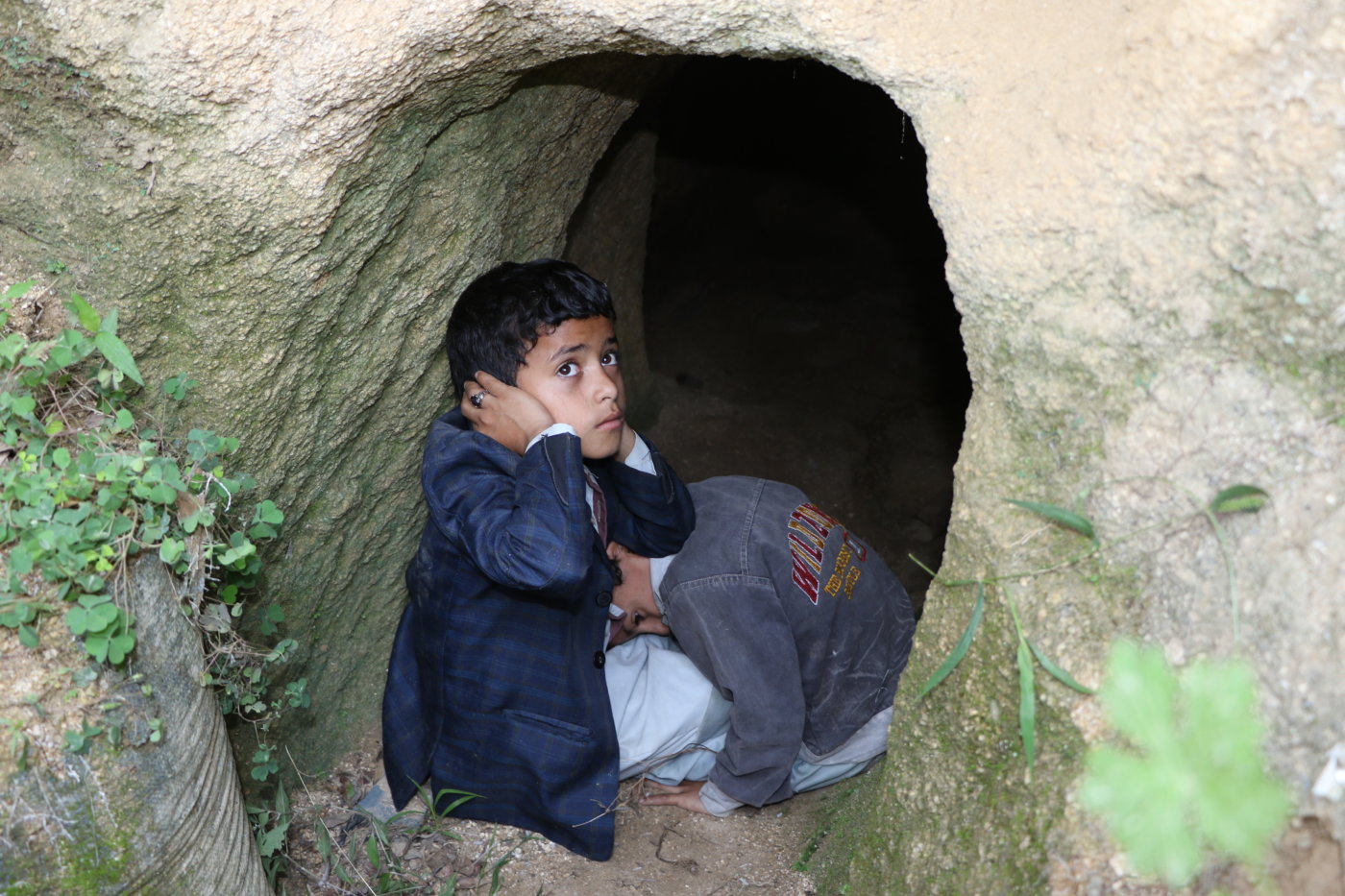
The effect of U.S.-made weapons upon Yemen’s children does not end there. Children who have survived the fighting are often left with physical disabilities and severe and chronic psychological symptoms, turning their environment into the worst place in the world, according to UNICEF.
Beyond the direct casualties from airstrikes, the largely unnoticed and unrecorded (by the world) sounds of explosions and buzzing warplanes are leaving Yemen’s children with irreversible psychological damage.
Like other students, Mohammed often gets distracted while at home or sitting in class, unable to focus and laden with severe anxiety. While students the world over occupy their minds with the day-to-day matters that should accompany adolescence, Yemen`s students, especially those who live in border districts, are filled with an ever-present fear of an impending airstrike.
Since the school year began on September 15, the Saudi-led Coalition has reportedly dropped more than a thousand bombs and missiles in 400 separate airstrikes targeting border districts including Sadaa, Hajjah, Sana`a, Amran, Dhali, and Hodeida. The hundreds of sorties are accompanied by frightening whizzing noise and have left great panic in the hearts of civilians, especially Yemen’s schoolchildren.
“Before the war, the sound of planes meant happiness for families who were expecting loved-ones returning [from abroad], but now the sound of planes mean destruction, death, blood,” Dr. AbdulSalam Ashish, a consultant for psychological and neurological diseases, told MintPress. Dr. Ashish continued, “Now, the planes bring nothing but fear and panic and are a reminder of tragedies and crimes that were committed with U.S., British, and French weapons.”
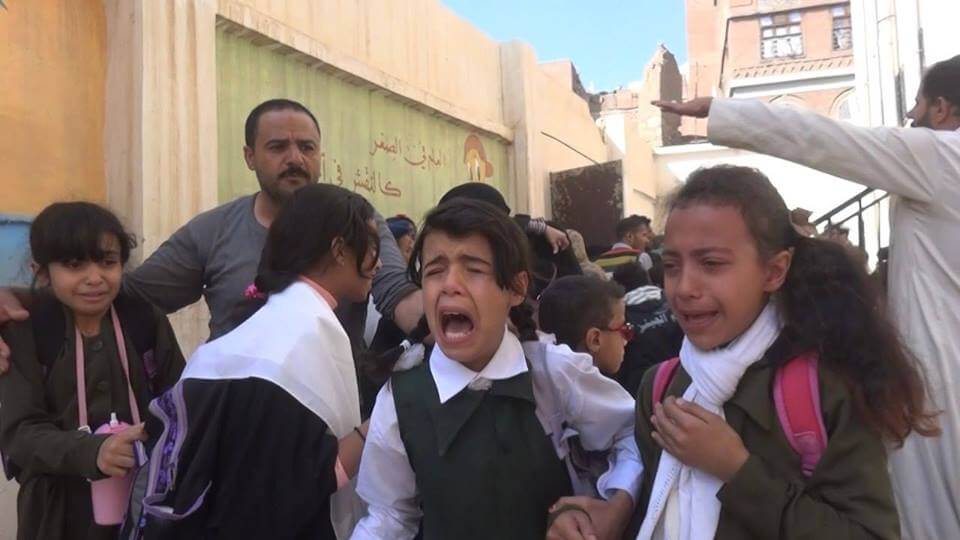
“It was 1:45 p.m., when we heard a missile strike; we were able to calm the students down but when the third strike hit we lost control of the students as they began to scream and chaos spread throughout the school,” Hana Al Awlaqi, a school agent at the “Martyr Ahmed Abdul Wahab Al Samawi” School, said, recounting the moment a Saudi attack took place just tens of meters away from the school. “The sound of the fourth bomb made matters worse, as the school was being broken into by panicked parents and many teachers were fainting.”
Al Awlaqi went on to say that many students convulse into spasms when they hear the sound of airplanes, while others have refused to come back to school. “The sound of an explosion or the buzz of the aircraft stays in the mind. The sound of an aircraft can send these children into severe panic attacks and anxiety,” Dr. Ashish confirmed.
Jalal Al-Omeisi, a pediatric nurse at the Psychiatric and Neurological Hospital in Sana`a told MintPress that most of the cases that arrive at the hospital are from areas subjected to intensive Saudi Coalition raids, such as Sana`a, Hodeida, and Saada, as well as the border areas. Al-Omeisi went on to say that most medics lack the training to deal with the complex psychological issues that these children are developing.
Such experiences in children go well beyond the temporary impact on their education and, without proper care and the knowledge necessary to address treat these psychological issues, many will suffer life-long consequences that hinder their ability to obtain an education. This is especially true in light of the lack of programs, centers or hospitals for the rehabilitation of war-affected children in Yemen.
Asking Americans to open their eyes
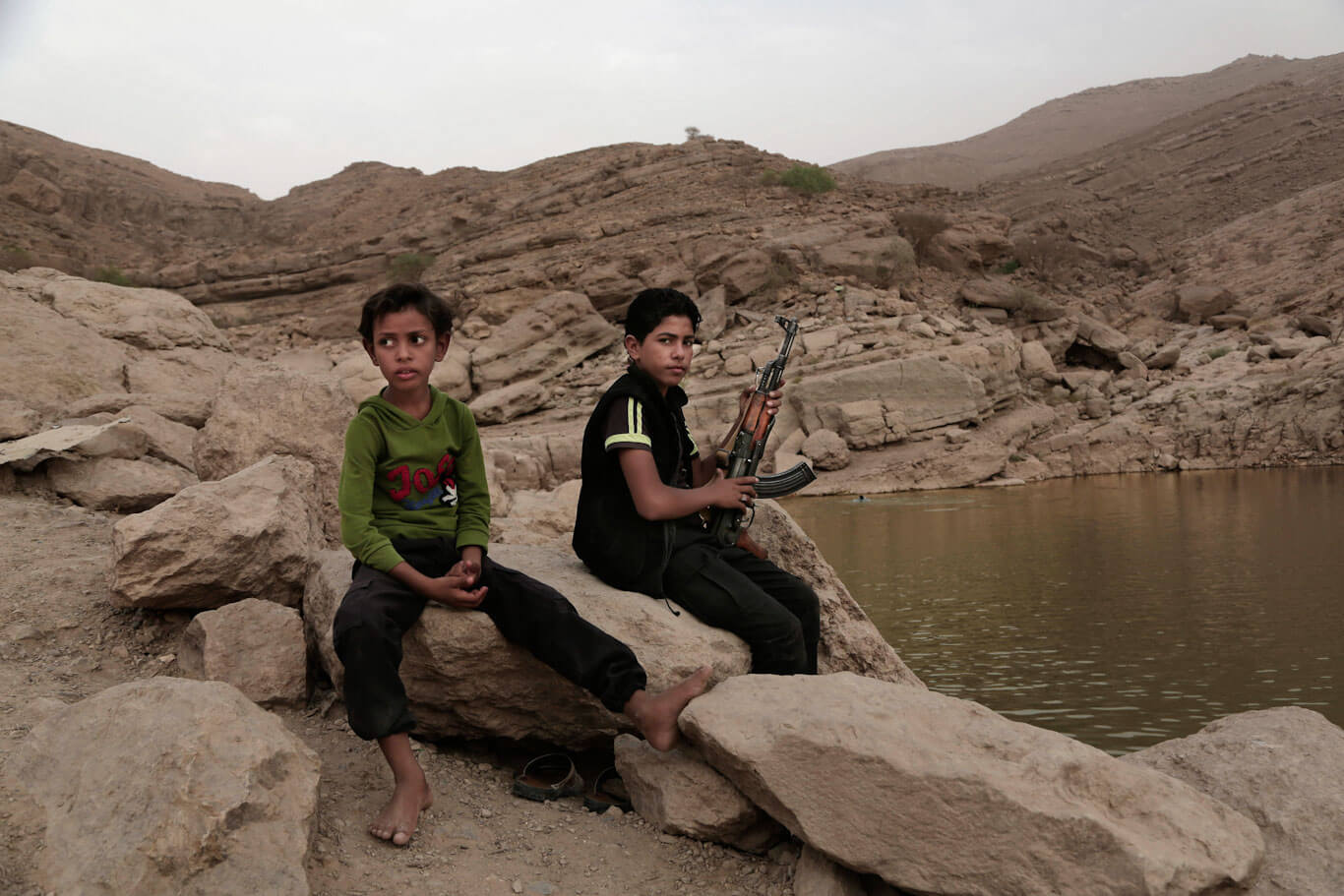
Schoolchildren living along Yemen’s porous border with Saudi Arabia and throughout its southern districts face a reality even more grim than that faced by their peers. Many are recruited or even forced to join the fight to defend the Saudi border via local trafficking networks, which funnel children into training and recruitment camps in the southern Saudi provinces of Jizan and Najran, as well as to Yemen’s southern districts.
According to a recent report by SAM, Saudi Arabia has been enlisting thousands of Yemeni children to fight along its southern border with Yemen over the past four years. Those have who died as a result of the fighting at the border are often buried in the Kingdom without their families’ knowledge. At least 300 had to have their limbs amputated as a result of their military injuries.
MintPress managed to speak to dozens of school-aged Yemeni children who were captured in a recent Houthi operation that saw thousands of militiamen, including dozens of schoolchildren, and Saudi officers taken into captivity. Fifteen-year-old Adel was among those captured. He left his home in the southern city of Taiz, chasing promises of a regular paycheck of up to 3,000 Saudi riyals ($800). Adel told MintPress:
We were left alone in Wadi Abu to face our destiny. Older recruits were fleeing on pickup trucks and armored personnel carriers; Saudi airstrikes hit us as we were surrendering to the Houthis.”
Saudi warplanes targeted the captured mercenaries in Wadi Abu Jubarah, killing more than 300 of their own recruits.
Adel, who left school for the promise of a paycheck, went on to say, “Me and the others were recruited to wash the clothes of Saudi soldiers but they gave us rifles and forced us to go to battlefields.” When asked what he would do when freed, Adel said simply, “I want to go back to my mom and school. I don’t want to fight.”
The recruitment of Yemeni children by Saudi Arabia is not without precedent. Although the Kingdom signed the international protocol banning the involvement of children in armed conflict in 2007 and again in 2011, it was accused of recruiting Sudanese children from Darfur to fight in Yemen on its behalf as late as 2018.
Mohammed, who often visits the memorial to his classmates located only a few hundred meters away from his new school, said he will continue to attend school every day, regardless of how much bombing there is. He asked that Americans open their eyes to see what their weapons are doing to Yemen’s children.
Kabbalistic Balance
-
Kabbalistic Balance August 6 2026 ___________________________________ More
Vids! +BN Vids Archive! HERE! ___________________________________ Support
The Br...
Report on Beth Israel vigil 07-04-26
-
*1A Rights under combined attack from local government plus media*
Ann Arbor City Council is at it again. Right before the long 4th of July
weekend, they ...
-
Hello all,
It is with great sadness that I share with you the passing of our beloved
sister, Mother, and Grandmother, the individual that you all knew ...
Best Horror Podcast
-
Best Horror Podcast Introduction: Horror podcasts […]
The post Best Horror Podcast appeared first on Copper Shock Horror Podcast.
Ikhras Endorses Muntadhar Al-Zaidi
-
“Oh parties of banditry and sectarianism and corruption, we have come and
our goal is to destroy you.” Ikhras formally endorses Muntadhar al-Zaidi,
Iraqi j...
Prince Charles: Foreign Jews behind bloodshed in ME
-
In May, 2017, British Crown Prince Charles declined an invitation from
Zionist entity’s president Reuven Rivlin‘s to attend the 100th anniversary
of the no...
Palestinian Women – One for All, All for One
-
Honouring All Palestinian Women by Honouring Three: Hanin Zoabi, Ahed
Tamimi, Samah Sabawi Vacy Vlazna “Palestinian women have always stood side
by side ...
US’s Saudi Oil Deal from Win-Win to Mega-Lose
-
By F. William Engdahl Who would’ve thought it would come to this? Certainly
not the Obama Administration, and their brilliant geo-political think-tank
neo-...
-
*Mordechai Vanunu wins human rights prize of Brazilian Press Association *
* http://www.alternativenews.org/english/index.php/features/updates/7038-mordechai...
Abdul Aziz Rantissi:
"My ultimate wish, my God, is to attain martyrdom,"...God granted him his wish on April 17, 2004, at the hands of Israeli assassins.