Showing posts with label Madawi al-Rasheed. Show all posts

Wednesday, 21 July 2021

Pegasus Project: Why I was targeted by Israeli spyware


The building housing the Israeli NSO Group is pictured in 2016 in Herzliya (AFP)
Visual search query image
Madawi al-RasheedMadawi al-Rasheed is visiting professor at the Middle East Institute of the London School of Economics. You can follow her on Twitter: @MadawiDr

20 July 2021 09:34 UTC

Madawi al-Rasheed

My work to expose the crimes of the Saudi regime led to a hacking attempt on my phone. Today, I am overwhelmed by feelings of vulnerability and intrusion

The Orwellian prediction finally came true. I knew it was only a matter of time before the Saudi regime tried to hack my phone, using Pegasus software manufactured by the private Israeli security company NSO Group.

This development highlights the consolidation of a new axis of evil: IsraelSaudi Arabia and the UAE have become a chorus of malicious powers aiming to stifle activism and the quest for democracy in the region. Israel provides knowledge; the others provide funds.

I have spent more than half my life writing, researching and teaching. You wouldn’t expect me to be hacked. But such professional activities are a crime in Saudi Arabia

The privatisation of the Israeli security apparatus, and the mushrooming of private companies founded by ex-defence and ex-Mossad agents, is a threat not only to Palestinians in Israel, Gaza and the occupied West Bank, but also to all Gulf citizens, with Israeli spyware sold to dictatorships across the Arab world.

In return, Israel gains access to the inner intelligence circles and deep states of the Gulf – enabling it to hold them hostage for a long time to come. Israel supports Gulf autocracies, thinking that this guarantees its own security forever. But Israel is wrong.

Normalisation with Israel is not only immoral because of the Palestinian plight; it is also an existential threat to all Gulf nationals seeking political reform in their own countries. The so-called “only democracy in the Middle East” has so entrenched its apartheid system that no propaganda can salvage it, and strong public objections to Arab regimes’ normalisation with Israel will only intensify in the months and years ahead.

Saga of surveillance

The UAE plays a key role in the saga of surveillance by Israeli private companies. Saudi Crown Prince Mohammed bin Salman has fallen under the spell of Mohammed bin Zayed, his UAE counterpart. Forget the “tallest buildingbusiest airport and ministries of tolerance and happiness” – which are at the core of UAE propaganda – and remember that bin Zayed is bin Salman’s mentor.

The two are united by their hatred of democracy, political diversity, freedom of speech and human rights. Both are now key to an axis of evil overseen by malicious Israeli technology, whose alleged raison d’etre is to help governments catch criminals and terrorists. Yet, it is being used against peaceful activists.

Pegasus: How it hacks phones and spies for NSO clients
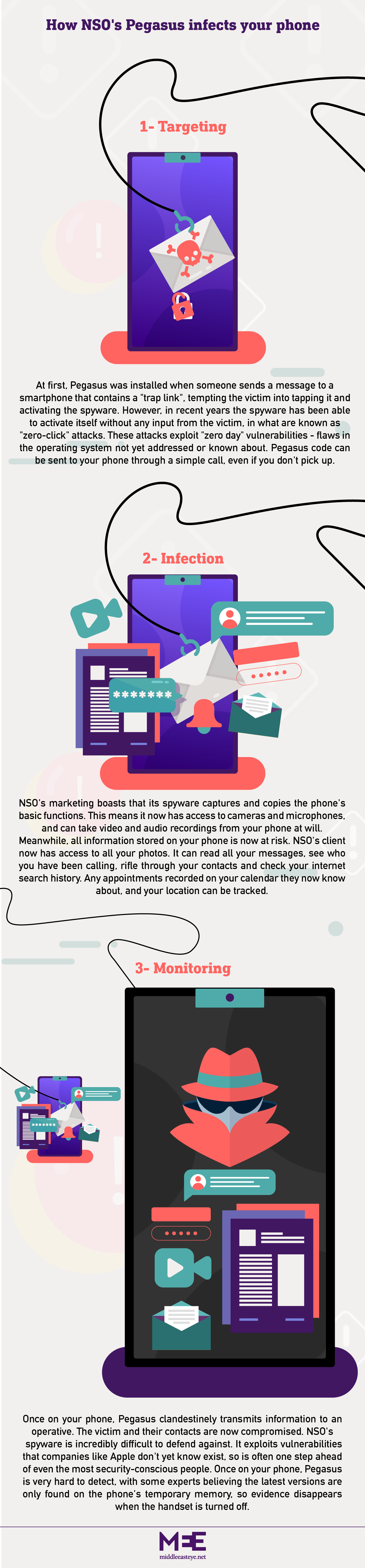
graphic

Forbidden Stories, a Paris-based NGO specialising in defending journalists and human rights activists, obtained more than 50,000 telephone numbers targeted globally by Israeli malware on behalf of NSO clients, mainly governments. They alerted various media outlets, and with the support of Amnesty International, launched the Pegasus Project.Pegasus: Khashoggi contacts among ‘thousands targeted by Israeli spyware

The findings showed that in April 2019, there was an attempt to hack my phone, but it was unsuccessful. While this is a relief, I am overwhelmed by feelings of vulnerability and intrusion.

To obtain evidence from the Pegasus Project, I had to submit the contents of my phone – in which my private and professional life was stored – to their technology team.

I sat in front of a computer screen for three hours, watching my virtual life travel to the Amnesty International lab, where a search for malware was conducted. I received evidence of the failed April hacking attempt the same day.

Controlling the narrative

As a British citizen of Saudi origin, I have spent more than half my life writing, researching and teaching. You wouldn’t expect me to be hacked. But such professional activities are a crime in Saudi Arabia, where the regime is determined to control the narrative about the past, present and future.

My crime is that I punctured this narrative, using academic research skills and access to Saudis whose voices remain muted. All my research has focused on giving a voice to the voiceless, which inevitably involves interviewing Saudis inside and outside the country. My debunking of official Saudi lies bothers the regime, which has spared no opportunity to tarnish my reputation, accusing me of being an agent of western governments, Turkey, Iran, Qatar, and previously Libya and Iraq.

Saudi government agents murdered Jamal Khashoggi in Istanbul in October 2018 (AFP)

In the 1990s, the regime targeted me with direct threats of violence – but with the advent of the internet, such threats have become virtual, propagated by regime agents. Hacking my phone is only the latest episode.

In 2014, my Twitter account was hacked in search of sensational scandals, and possibly clandestine plots with other Saudi exiles. The hackers must have been disappointed not to find any of this, but they did expose my private conversation with Sheikh Awad al-Qarni, a key Islamist figure who sent me greetings and asked me not to augment my criticism of the Islamist movement’s silence when prominent Saudi human rights leaders were detained.

Regime spies launched a campaign to discredit Qarni for sending a direct message to an unveiled woman, such as myself. Qarni has been in prison for several years.

Lives in danger

I never had anything to hide, as everything I knew was documented and published in books and articles. I had no secrets, but this was not the point. I cherished my privacy and loathed the Saudi intrusion into my life. I also worried about those who communicate with me from within the country, as their lives could be in danger.

Among the charges against Mohammed al-Otaibi, a human right activist, was storing my books and articles on his computer. He is still in prison. It is my responsibility to protect those who confide in me and want their voices to be heard.

While the April 2019 assault on my device was unsuccessful, I am sure there will be other attempts in the future

The murder of Jamal Khashoggi in October 2018 coincided with greater Saudi surveillance of exiles in Britain, Canada and elsewhere. The shock over the gruesome details of chopping up a peaceful journalist was compounded by fears of hacking. This was the first time exiles had heard of NSO helping the Saudis to hack the phone of a young exile based in Canada, Omar al-Zahrani, who had communicated with Khashoggi about establishing a media platform to debunk Saudi propaganda.

The financial cost of securing my phone was colossal, but it was worth it. While the April 2019 assault on my device was unsuccessful, I am sure there will be other attempts in the future.

Back in 2019, I was involved in discussions with other exiles in three countries about forming a political party, which could explain the attempt to infiltrate my phone at that time. The regime wanted more details about who would sponsor such a project – and who the culprits were. The project materialised on 23 September 2020,  the day the kingdom celebrates its national day, as a small group of activists, including myself, announced the establishment of the Saudi National Assembly (NAAS). Yahya Asiri, the general secretary, was hacked, and his name appears in the Pegasus files. 

Standing against oppression

I moved from academia to political activism because the Saudi regime committed heinous crimes, and the lives of exiles, including my own, were in danger. The Saudi regime targeted me when I was an academic, and again after I became an activist. Such attacks will surely continue in the months and years ahead.

In April 2019, I was also writing a book on state-society  relations. The villain was none other than bin Salman, who has detained hundreds of Saudis and precipitated the flight of scores more.

I was baffled by western media depictions of the prince as a modern reformer, while Saudi prisons were bulging with innocent prisoners of conscience, women were campaigning against discrimination, and a young diaspora was coming together around the globe. My book, The Son King, was definitely a faux pas.

How Israeli spy tech reaches deep into our lives

In 2019, a new virtual Saudi opposition-in-exile was beginning to be formed, standing against oppression and dictatorship. NAAS relies on social media to connect and exchange ideas, making it extremely vulnerable, as the murder of Khashoggi and the hacking of activists’ phones has demonstrated. In the wake of the Pegasus Project revelations, NAAS will surely revert to old methods of mobilisation, meetings and activism.

Thanks to Israeli malware, UAE complicity and Saudi intrusions, exiles will have to search for secure methods to share information and to mobilise. As many have taken refuge in the US, Canada, Britain and across Europe, these states have a responsibility to protect them from Saudi surveillance. Otherwise, there is a real risk the Khashoggi saga could be repeated.

Diplomacy must be activated to stop the axis of evil from spreading more fear, apprehension and possibly murder – and if that doesn’t work, sanctions should be pursued, at the very least in Britain, where two of the founders of NAAS reside.

The views expressed in this article belong to the author and do not necessarily reflect the editorial policy of Middle East Eye.

Read more


River to Sea Uprooted Palestinian   
The views expressed in this article are the sole responsibility of the author and do not necessarily reflect those of the Blog!

Saturday, 3 July 2021

Saudi Arabia: Why Biden will leave Mohammed bin Salman in charge


Madawi al-Rasheed

2 July 2021 11:43 UTC 

Despite Biden’s rhetoric, American national interests are allied with those of the authoritarian crown prince in Riyadh

US President Joe Biden and Saudi Crown Prince Mohammed bin Salman (AFP)

In the Middle East in general, and Saudi Arabia in particular, many activists and human right defenders hoped that newly elected US President Joe Biden would turn the page on the Trump era, when rulers in the region had carte blanche to continue their authoritarian practices and repressive measures.

Many hoped that Biden would exert pressure on the US’s most loyal Arab dictators to reverse the tide and respond to calls for democracy, ensure freedom of speech, and halt mass executions. 

It is unlikely that Biden will encourage his removal from office or openly challenge his abuse of human rights domestically

But in Riyadh, among other places, such unrealistic wishful thinking is beginning to be dashed. Realpolitik is settling in, to the demise of Washington’s reputation and its endless rhetoric about promoting democracy. 

American myths about the country’s own historical position as the leader of the free world, promoter of democratic values and protector of individual rights are always exposed in the Arab world at the hands of none other than its most loyal man in Riyadh. Indeed, Crown Prince Mohammed bin Salman continues his campaign of detentionsexecutions and surveillance, unchecked by Washington.

Biden slightly embarrassed the crown prince when his intelligence services published a four-page report that held the Saudi ruler responsible for the murder of journalist Jamal Khashoggi, and placed several suspects on a list of sanctioned operatives. The crown prince himself was untouched by these superficial measures.

Loyal prince

Today, Biden and his advisers remain silent on the future of the Saudi crown prince. But American media and think tanks have been promoting his nemesis, former crown prince Mohammed bin Nayef, who has been placed under house arrest and allegedly suffered ill treatment. Ex-CIA officials want their partner in the war on terror back in the driving seat in Riyadh. 

How can Washington ignore its loyal prince, who allegedly helped save the lives of Americans as he shared intelligence with US security services, they ask. In this view, it’s an American betrayal of bin Nayef, who provided valuable information that helped to foil terrorist attacks on US soil.

Once the darling of the CIA, bin Nayef is now helpless without the US pushing for his release, let alone his rehabilitation, as its man in Riyadh. This sounds like a familiar story: use the man in Riyadh, then dump him when he faces his fate at the hands of his kinsmen.

Mohammed bin Nayef has been promoted by some as an alternative Saudi leader (AFP)

In fact, Biden should resist calls to bring back the deposed prince, who never stopped using violence against peaceful activists and put them on trial in the terrorism courts that he established. Mohammed bin Nayef used the pretext of the war on terror to spread fear and torture. His most famous victims included founders of the Saudi Civil and Political Rights Association – activists such as Abdullah al-Hamid, who died in prison, and Sulaiman al-Rashoudi. Activist Waleed Abu al-Khair remains in prison, alongside many others. 

Many of the men and women Mohammed bin Nayef put in prison have been subjected to solitary confinement. Perhaps the arrest of the former crown prince by the current crown prince fulfilled the hopes of those who suffered at his hands for years – but unfortunately, they had no power to arrest him, put him on trial or seek justice. 

Perverse revenge

In his own way, Mohammed bin Salman is punishing the deposed prince, but for different reasons. When the mafia fights its own battles within its own rank-and-file, the weakened society may achieve some perverse sense of revenge that is momentary and emotional. 

But both Mohammed bin Nayef and his empowered cousin, the crown prince, need to be put on trial for crimes against their own citizens. US intelligence services obviously want the devil they know, but many Saudis want justice for their lost sons and tortured relatives, who either linger in prison or have already been executed. Many of their corpses have yet to be returned to their relatives for proper burial. Biden must end Trump’s alliance with Mohammed bin Salman

Many of Mohammed bin Nayef’s old cronies and right-hand men are not only free, but have the gall to protest – among them Saad al-Jabri, who escaped to Canada and is now facing a court case for allegedly stealing billions of dollars when he was in charge of purchasing anti-terrorism and surveillance technology. The court case may shed new light on how the opaque and corrupt interior ministry conducted its affairs and plundered billions under the pretext of fighting terrorism. 

The day will come when the prosecutor, Mohammed bin Salman, will himself face a similar fate for his crimes against activists and dissidents. For now, the Biden administration remains silent on the crown prince’s present and future. It is unlikely that Biden will encourage his removal from office or openly challenge his abuse of human rights domestically. 

So far, Biden has a better record on pushing the crown prince to temper his adventurist foreign policies. It is easier for Biden to force him to seek reconciliation with Qatar, offer a peace treaty to Yemen’s Houthis, flirt with Iran via Iraq, and endear himself to Turkish President Recep Tayyip Erdogan.

But when it comes to political reforms, a muted US is neither willing nor able to see the merits of promoting a process that will eventually lead the kingdom on a path to democracy. At the moment, US national interests are allied with those of an authoritarian crown prince, so why rock the boat.  

The views expressed in this article belong to the author and do not necessarily reflect the editorial policy of Middle East Eye.

Madawi al-RasheedMadawi al-Rasheed is visiting professor at the Middle East Institute of the London School of Economics. She has written extensively on the Arabian Peninsula, Arab migration, globalisation, religious transnationalism and gender issues. You can follow her on Twitter: @MadawiDr

Recommended


River to Sea Uprooted Palestinian   
The views expressed in this article are the sole responsibility of the author and do not necessarily reflect those of the Blog!

Thursday, 15 October 2020

US Election: Mohammed Bin Salman Braces for The Loss of a Key Ally

US Election: Mohammed Bin Salman Braces for The Loss of a Key Ally

By Madawi Al-Rasheed – MEE

No doubt Saudi Crown Prince Mohammed bin Salman listened to US presidential candidate Joe Biden’s statement on the second anniversary of the murder of journalist Jamal Khashoggi with apprehension.

Biden’s statement this month was a strong condemnation of the murder by Saudi operatives of Khashoggi, who had been a US resident since 2017. Biden promised to withdraw US support for the war in Yemen launched by Saudi Arabia in 2015, and noted: “Today, I join many brave Saudi women and men, activists, journalists, and the international community in mourning Khashoggi’s death and echoing his call for people everywhere to exercise their universal rights in freedom.”

Such a statement by someone who may become the master of the White House has surely sent shock waves through Riyadh.

Shifting public opinion

In contrast, two years ago, US President Donald Trump uncritically adopted the Saudi narrative about the slain journalist as an “enemy of the state”. Trump shamelessly boasted about shielding the murderers, above all bin Salman, and protecting him from further denunciation by Congress. Trump sensed a major shift in public opinion, and above all in Congress, in favor of vigorous scrutiny of US authoritarian allies in the Middle East – above all, the Saudi regime.

Many Republican and Democratic congressmen condemned Saudi Arabia and its authoritarian ruler for committing crimes against their own citizens on foreign soil, and continuing a policy of zero tolerance towards activists and dissidents. Shielding bin Salman from further scrutiny and possible sanctions allowed the crown prince to enjoy two years of security and tranquility, which may not be readily available after 3 November, should Biden win the presidential election.

Yet, one must be cautious when anticipating great US policy shifts if a Democrat is elected to the White House. The previous record of Democratic leadership has been more in line with a long US tradition of supporting authoritarian proteges in the Middle East, above all in Saudi Arabia, despite being more likely to invoke US values and their contradiction with the realist policy of propping up the region’s dictators.

Barack Obama went further than any previous US president by withdrawing support for former Egyptian leader Hosni Mubarak, rather than openly and actively embracing the democratic forces that toppled him in 2011. By failing to unconditionally support a long-term US ally, Obama antagonized the Saudis, who interpreted his position on Egypt as abandoning a loyal partner.

The Saudis feared that the Arab uprisings would leave them exposed to serious political change, without the US superpower rushing to protect them against a dramatic fall. Saudi leaders knew they could not count on Obama to embrace them without demanding serious reforms. In a famous interview, Obama reminded Gulf leaders that their biggest problems were domestic and encouraged them to stop amplifying “external threats”, such as Iran’s regional influence, while silencing critical voices at home.

Sense of betrayal

The Saudi leadership was further annoyed by a historic deal between the US, several European countries and Iran, facilitated by Oman. The Saudis realized how far a US Democratic president could go towards marginalizing them, without openly denouncing their domestic and regional policies in the Middle East.   

That didn’t sit well with Saudi autocrats, who have always aimed to paint a picture of a kingdom besieged by hostile regional powers, while enjoying the bliss of harmony and the support of its domestic constituency. Obama publicly debunked this Saudi myth and negotiated with Iran, Saudi Arabia’s archenemy for decades.

The Saudis felt a sense of betrayal, which Trump quickly abated when he fully endorsed bin Salman – or, more accurately, the crown prince’s promises to invest in the US economy and to seriously consider normalizing relations with Israel, both high prices for US tolerance of bin Salman’s excesses at home and abroad.  

Should Biden win the US election, bin Salman will be on alert. Any word uttered by the White House that falls short of endorsing the young prince and reminding Congress of the centrality of the “historical partnership” between the US and Saudi Arabia will automatically be interpreted in Riyadh as a hostile stand.

Yet the rambling discourses of the Democrats about US values is no longer convincing, if not accompanied by real policy changes. Withdrawing support from autocrats is not enough. The region and its activists expect more than passive support from a country that boasts about its democracy and civil rights. They expect real and concrete measures that undermine the longevity of authoritarian rule, if the region and the rest of the world are to enjoy political change, economic prosperity and social harmony.

Loss of faith

The first step is to starve those autocrats of weapons used against their own people and their neighbors. Whether Democrats will reconsider the relentless US export of arms and training programs to Saudi Arabia and its neighbors remains to be seen. At the least, Biden could make the export of weapons to Saudi Arabia conditional on meeting international standards on human rights, and on serious political changes to allow Saudis to be represented in a national assembly. The Saudi people could do the rest.

Frankly, the Middle East, and for that matter the rest of the world, have lost faith in the US. Americans have yet to calculate the costs of having elected Trump and the ensuing reputational damage. Should they bring a Democrat to power next month, they will struggle to correct not only the short history of Trump’s failings, but also more than half a century of misguided US policy in the Middle East. 

From now until early November, bin Salman will no doubt have sleepless nights in anticipation of losing a good partner in Washington – one who allowed him to get away with murder.


River to Sea Uprooted Palestinian   
The views expressed in this article are the sole responsibility of the author and do not necessarily reflect those of the Blog!

Sunday, 16 December 2018

The U.S. Has Always Backed Dictators. Trump's Support for MBS is no Different


In his steadfast support for MBS, Trump is following a long tradition of US support for Arab autocrats, which in turn is used as the reason for violent terrorist organisations to target the US
December 14, 2018 “Information Clearing House” –   Last week, US President Donald Trump announced that the close US-Saudi partnership will continue, even after the murder of journalist Jamal Khashoggi at the Saudi consulate in Istanbul and a CIA report that pointed the finger at Crown Prince Mohammad bin Salman (MBS) as the one who ordered the killing.

A longstanding US tradition

The president’s statement cited a combination of geostrategic and economic reasons to justify continuing his close alliance with a regime that had practised utter brutality at home and abroad. Trump highlighted the lucrative financial dividends of this partnership to the US economy, based on MBS’s promise of $450bn investment, including $100bn-plus of arms purchases.
The president also asserted that Saudi Arabia was central to containing Iran’s expansion in the Middle East and achieving peace with Israel.
Despite its shockingly frank nature, the president’s statement does not represent a major departure from previous US foreign policy but rather maintains a longstanding principle of supporting Arab dictators for specific strategic and economic reasons. What is different from previous US presidents is Trump’s uncomfortably explicit calculus.
No previous US president has flagged hard cash as the rationale for maintaining close ties with and even support for the Saudi leadership.
But rhetoric aside, Trump is remaining faithful to a longstanding tradition of US foreign policy that privileges economic and strategic interests over moral and ethical issues, sometimes referred to as realpolitik.
In the past, the US has occasionally expressed concern over severe human rights violations by their proteges but few would seriously expect President Trump to be troubled by the crimes of the Saudi regime.
Even if he admits that no one should condone such a murder, he was apparently comfortable endorsing the far-from-credible Saudi explanation for what happened at the consulate. He even provided a possible exit strategy for the Saudis when he said that the murder could be the work of“rogue killers”, thus providing a potential out for MBS, the de facto head of state and the security apparatus in Saudi Arabia.

Empowering dictators

Trump’s latest statement, that business as usual with Saudi Arabia is to be maintained, even if MBS “may or may not” have ordered the murder of Khashoggi, is certainly shocking for some American audiences. But for Arabs in general and Saudis in particular, the statement was expected, to say the least.
It confirmed their strong belief that the US prefers to work with autocrats than encourage them to democratise or at least restrain themselves from suffocating their people with draconian measures ranging from detention to murder.
US support for Arab dictators has been asserted as the casus belli by the most violent terrorist organisations to target the US. Osama bin Laden’s justification for hitting the “far enemy”, namely the US that supports the Saudi regime only echoed previous slogans of Arab nationalists, socialists and pro-democracy forces that blamed the US for the excesses of their regimes.
In their logic, US support empowers dictators not only through the transfer of the technology of death, surveillance and torture, but also morally and globally.
Even Trump himself admitted that without US support, the Saudi regime will collapse in two weeks. Former US intelligence officer Bruce Riedel confirmed that without US and UK support, the Saudis will not be able to continue the war in Yemen.
The likes of Bin Laden strongly believed this narrative long before it was uttered by the US president. Consequently, his network diverted its struggle against the near enemy to the far one and precipitated a global terrorist crisis that keeps resurfacing under different names. The Islamic State group (IS) was the most recent incarnation of this phenomenon but may not be the last.
Many Americans understandably feel uncomfortable with the president’s blunt words as they cling to a myth that American foreign policy should reflect American values, especially when a high-profile murder by a close partner is concerned.
However, like so-called ‘American exceptionalism’, American values, in the form of respect of civil, political and human rights, have not been an obvious principle guiding American foreign policy in the Arab world.
Also, such values are being eroded and undermined in the US itself under the ultra-nationalist and populist rhetoric of the current president.

The wrath of the people

Previous US presidents may not have liked Arab dictators but nonetheless lent them support, often in the form of military sales and assistance. The list is long.
Many Arab autocrats had the full support of previous American administrations despite the fact that domestically they violated their own peoples’ rights, including Anwar Sadat and Hosni Mubarak of Egypt, Zine Abedine Ben Ali of Tunisia, King Hamad bin Al-Khalifa of Bahrain, and at one moment Muammar Qaddafi of Libya came close to being an ally just before he faced an uprising in 2011
Until his fall in 1979, the US granted the Shah of Iran its ultimate support by making him the “policeman of the Gulf” to ward off and contain the spread of communism and nationalism at the time. His dramatic fall at the hands of his own people was shocking for both the US and its Western allies.
The message to the US at the time could not have been clearer: no amount of US support can protect a dictator from the wrath of his own people when the right moment comes. In fact, the US could not even protect its own Tehran Embassy where over 50 diplomats were held hostage for 444 days, an incident that four decades later still shapes and haunts US thinking about Iran.
Yet unconditional US support had always been the privilege of Saudi monarchs. The love affair with Saudi kings is based on expediency and interest rather than passionate conviction. US support was neither shaken nor reconsidered, at least in public, even after 15 Saudi hijackers attacked the Twin Towers in New York on 9/11
The US administration at the time meandered and left it to the US media and civil society to pressure the Saudi regime to change its policy of spreading lethal religious interpretations that had inspired a whole generation of Muslims across the globe and justified terrorism.
It is a cruel irony for the victims of this attack that Trump now considers the Saudi regime an indispensable partner against terrorism.

The face of Saudi Arabia

Even if Americans are not entirely comfortable with their government’s foreign policy of complete neglect for human rights and even direct support for MBS, despite his latest murderous adventure abroad, this is as nothing compared with Saudis living under the reality of one-man rule.
As MBS became the sole face of Saudi Arabia, in control of economic, military, security and social dimensions of government, he has exhibited complete disrespect for the basic semblance of tolerance towards critics, dissidents and activists.
Saudi Arabia has hardly been a safe haven for dissent but the magnitude of MBS’s ambition to reach the top of the royal hierarchy has turned Saudi Arabia into a murderous nightmare for anyone associated with dissent.
Under his orders, potential rival princes were detained, and a nascent feminist movement was stifled and its remaining advocates imprisoned and tortured according to a recent Amnesty report. Intellectuals and religious clerics were also imprisoned.


Prisoners of Conscie@m3takl_en
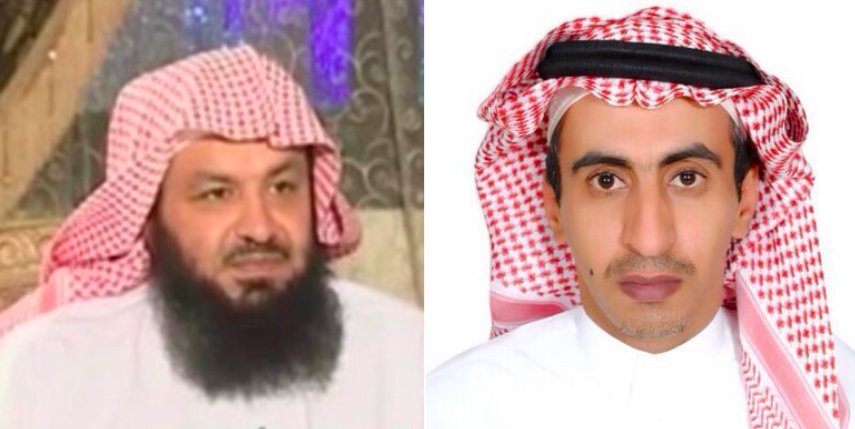
SEVERE TORTURE in the prison has caused lately the death of:
Shiekh Suleiman al-Dweesh
Journalist Turki al-Jasser
We warn of a possible deterioration and a possible death of one of the female activists who were tortured and sexually harassed !
97 people are talking about this
Vague charges such as communicating with foreign agents, treason, and undermining the image of the state are mentioned as justification for detention. These charges are more reminiscent of Stalin’s terror than a benevolent monarchy that Saudi propaganda would have us believe it is.
Almost all detained Saudi intellectuals are charged with treason and of being agents of foreign governments. From Salman al-Odah to economist Essam al-Zamil and feminist Lujain al-Huthloul, the word treason looms large and may lead to the death penalty. In fact, the Saudi public prosecutor called for such punishment to be inflicted on those detainees. The infamous office of the public prosecutor is also in charge of the investigation of Khashoggi’s murder.

Seeds of terror

Being “an enemy of the state” – to use Trump’s reiteration of what Saudi officials had told him about Khashoggi – is now a common crime investigated by appointed judges who enjoy no independence whatsoever. Trump seems comfortable with such a statement. Perhaps “enemy of the state” reflects or mirrors his own thinking about anybody who criticises a president, a king or a crown prince.
Saudis know very well that US support for MBS will not waiver as they are fed on propaganda that money buys everything – from mighty fighter jets used against their poorest Yemeni neighbours, to the US president’s silence over one of the most horrific crimes committed against a journalist.
Trump will cling to MBS even if the latter becomes more burdensome. If there is a chance for so-called “American values” to become relevant to foreign policy, it is the US Congress that will have to push for a reconsideration of the age-old US support for dictators. This should spring not out of concern for the safety and security of the Saudi people, but for their own American national security.
Congress must know that under the dark and repressive cloak of MBS, the flamboyant and illusory economic plans, and the veneer of social liberalisation, the seeds of terror are sown. In the past this terror has spilled over and reached the US itself. For the present, there is little to assure the American public that it won’t happen again.
– Professor Madawi al-Rasheed is a visiting professor at the Middle East Centre at the London School of Economics. She has written extensively about the Arabian Peninsula, Arab migration, globalisation, religious transnationalism and gender. On Twitter: @MadawiDr
This article was originally published by Middle East Eye” 

River to Sea Uprooted Palestinian   
The views expressed in this article are the sole responsibility of the author and do not necessarily reflect those of the Blog!