Uprooted Palestinians are at the heart of the conflict in the M.E Palestinians uprooted by force of arms. Yet faced immense difficulties have survived, kept alive their history and culture, passed keys of family homes in occupied Palestine from one generation to the next.
U.S. leaders seek to suggest that America still has the power to alter ‘reality’ to fit to its own exceptionalist myth.
U.S. leaders seek to suggest that America still has the power to alter ‘reality’ to fit to its own exceptionalist myth.
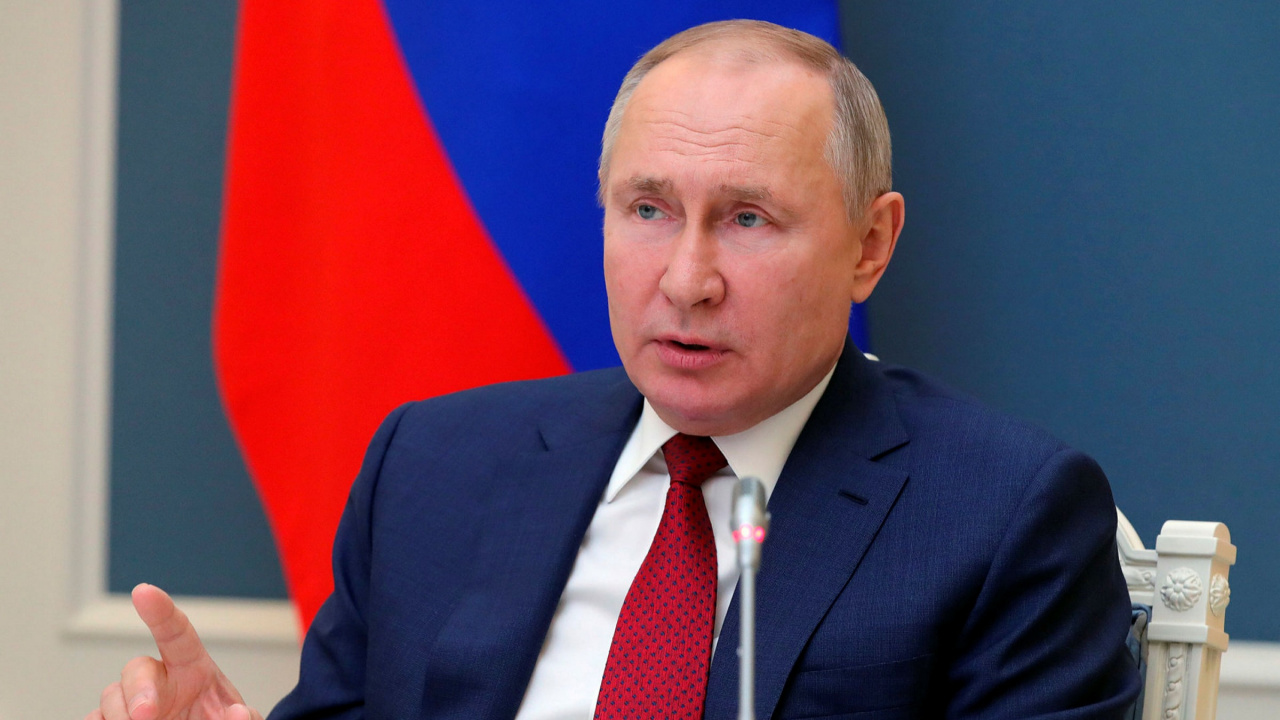
President Putin in 2007 (at Munich) challenged the West: ‘We didn’t. You did; You continuously attack Russia; but we shall not bend’. The audience sniggered. Now, speaking at (a virtual) Davos this last month, after an absence of twelve years from that forum, President Putin held up a mirror to the key ‘influencers’ of the West: ‘See what you have become in the interim; Look at yourself, and be worried’.
This was not so much a be-gloved slap, prefacing duel-by-weapons-of-choice, but an earnest caution. At its’ bottom is a warning that the socio-economic dynamics set into motion by the western zero-interest, debt-led model have not just thrown swaths of society under the economic bus, but rather, that the internal socio-economic catastrophe is being widely vented at external ‘others’. That is, projected psychically abroad, in a lust to fight imaginary demons.
Italy in the 1400s had experienced psychological stresses somewhat similar to todays’ – the upending old ‘myths’, old cultural ties and sources of social cohesion, triggered by the gathering storm of Reformation and Scientific Enlightenment. The new leaders insisted to put old values and the ethos of ‘continuity’ to the auto da fé bonfires of sceptical rationalism’s shiny, new culture. There was then, no China to blame, but the witch and Satan hysteria of that era – a mass collective hysteria – led to some ten thousand Europeans being ‘cancelled’: they were burned alive for clinging to ancient ways (judged to be denials of ‘Truth’). Ultimately the Inquisition was instantiated to condemn and punish heresy.
“This [crisis in the economic models], in turn, is causing today a sharp polarisation of public views, provoking the growth of populism, right- and left-wing radicalism and other extremes … All this is inevitably affecting the nature of international relations, and is not making them more stable or predictable. International institutions are becoming weaker, regional conflicts are emerging one after another, and the system of global security is deteriorating … the differences are leading to a downward spiral”.
“The situation could take an unexpected and uncontrollable turn – unless we do something to prevent this. There is a chance that we will face a formidable break-down in global development, which will be fought as a war of all, against all … And attempts to deal with contradictions through the appointment of internal and external enemies [to scapegoat] the negative demographic consequences of the ongoing social crisis and the crisis of values, could result in humanity losing entire civilisational and cultural continents”.
The existing model, Putin explained, seems to have inverted ‘means and ends’ – Means (as in the Great Re-set’s emphasis on technological – even trans human – instrumentation of the economy) seem to have taken primacy over humans as its Ends.
Yes, globalisation may have lifted billions out of poverty, yet as Putin points out, “it has led to significant imbalances in global socioeconomic development, and these are a direct result of the policy pursued in the 1980s, which was often vulgar or dogmatic”. It has made “economic stimulation with traditional methods, through an increase in private loans virtually impossible. The so-called quantitative easing is only increasing the bubble of the value of financial assets and deepening the social divide. The widening gap between the real and virtual economies … presents a very real threat and is fraught with serious and unpredictable shocks …”.
“Hopes that it will be possible to reboot the old growth model are connected with rapid technological development. Indeed, during the past 20 years we have created a foundation for the so-called Fourth Industrial Revolution based on the wide use of AI and automation and robotics. However, this process is leading to new structural changes, I am thinking in particular of the labour market. This means that very many people could lose their jobs unless the state takes effective measures to prevent this. Most of these people are from the so-called middle class, which is the basis of any modern society.”
Putin points out that these flaws, inherent within the western growth model, and the ‘turn’ to Big Tech as salvation, were not specifically caused by the pandemic. The latter nonetheless, has pulled the mask from the face of the economic model, and also exacerbated its noxious symptoms:
“The coronavirus pandemic … which became a serious challenge for humankind, only spurred and accelerated the structural changes, the conditions for which had been created long ago. Needless to say, there are no direct parallels in history. However, some experts – and I respect their opinion – compare the current situation to the 1930s [the Great Depression]”.
Putin hints, but does not say explicitly, that that the pandemic, by aggravating the socio-economic stress, precisely has contributed to the general hysteria (and polarisation) – and the hunt for external enemies (i.e. such as the ‘CCP virus’).
Putin notes a further contributing factor:
“Modern technological giants, especially digital companies, have started playing an increasing role in the life of society. Much is being said about this now, especially regarding the events that took place during the election campaign in the U.S. They are not just some economic giants. In some areas, they are de facto competing with states. Their audiences consist of billions of users that pass a considerable part of their lives in these eco systems. In the opinion of these companies, their monopoly is optimal for organising technological and business processes. Maybe so – but society is wondering whether such monopolism meets public interests”.
Putin here alludes to something more troubling – the failure of the system-model to deliver on the promise of prosperity and opportunity ‘for all’, and specifically for the less advantaged in society. Can this flaw not be said to be directly related to the rise of Tech soft totalitarianism? Since the systemic nature of the failure cannot be admitted, is it then so surprising there has been a resort to big Tech enforcement of its more favourable version of reality (i.e. one that insists that the systemic failures all derive, rather, from historic racism and injustices, and they will not countenance any dissent from this narrative)?
The core idea here – the response to civic, socio-economic anger – is that a combination of unparalleled monetary injection, radical positive discrimination prioritising non-white identities, plus access to élite oligarchic Tech expertise, will solve most of society’s problems. This is pure ideology. But, unable to deal directly with the evidence of systematic failings and economic ‘rigging’ (that being far too sensitive an issue), western leaders work instead to alter the definition of reality. When you are attempting to extend a make-believe economy by printing more and more debt, in spite of its failed history, it is no wonder you have to silence dissent.
Those then, that do not embrace the propaganda that big Tech and the corporate media relentlessly push, need to be de-platformed, and pushed to the fringes of society. In a striking echo of that earlier Italian era of psychic tensions, the New York Times is now asking for the Biden administration to appoint a “Reality Czar” who will be given authority to deal with “misinformation” and “extremism” (shades of the Inquisition)?
Putin’s speech was a withering de-construction (polite, and very measured) of where we stand – and why. Did his audience hear? And will President Putin’s call for a return to the ‘classic’ economic model; to the real economy; to job creation; comfortable living standards, and education with opportunity for the young, have any impact?
Probably not, unfortunately. One only has to note the European ‘hysteria’ for the quick return to absolute ‘normal’ – to everything being ‘just as it was before’ – and above all, to ‘our summer holidays’. Again Putin alludes, but does not say it: The pandemic has exposed the brittleness, the friability, of European society. It finds hardship impossible to endure (even by those well insulated from the true hardships, which have been real, but only for some: “Worse than WW2, this pandemic”, one veteran said to me this morning!). The space for true (and urgent) structural reforms is disappearingly small.
The future course for the western economies is obvious – one only has to observe the return of (former Fed head) Janet Yellen to the U.S. Treasury; of (former IMF head) Christine Lagarde to the ECB and (former ECB head) Mario Draghi as PM in Italy, to understand that a full blown ‘reflation trade’ is underway.
And as for Putin’s caution about “attempts to deal with contradictions through the appointment of internal and external enemies [to scapegoat] the negative demographic consequences of the ongoing social crisis”, this looks no more promising than the financial scene.
Recently, an anonymous former U.S. government official wrote a paper of policy recommendations on China. The Atlantic Council and Politico both published versions of the piece, and they agreed to keep the author’s identity under wraps for reasons known only to them. The Atlantic Council claims that anonymity was necessary because of “the extraordinary significance of the author’s insights and recommendations”. It is not clear however, why they find these insights and recommendations to be so extraordinary – the paper simply is yet another blueprint for regime change (in this case, a coup against the CCP).
Quite possibly, the door to a peaceful resolution of U.S. tensions with China already is closed. China’s intention always has been peacefully, through economic integration, to re-absorb Taiwan into China. It is committed to that. But it seems from Biden Administration statements that it is equally committed to exacerbating the Taiwan autonomy issue sufficiently so that Beijing has no other option, but to annex Taiwan by force (a last resort for Beijing). In the pages of mainstream U.S. media, experts ostensibly regret this, yet nonetheless conclude that America will again ‘be obliged’ to intervene, in order to stop ‘an aggressor state’ from occupying a democratic, American ally.
Again in the context of the U.S. internal tensions, this is more about the fragility of the U.S. psyche at a moment of potential Thucydides’ angst, than of China posing any real threat to America. China will overtake the U.S. economically, at some point. U.S. leaders seek to suggest that America still has the power to alter ‘reality’ to fit to its own exceptionalist myth.
President Putin of course, knows all this, but at least no one can now complain, ‘We were not warned’.
Vladimir Putin addressed the meeting of the heads of delegations of the G20 member countries, invited states and international organisations.
The summit chaired by Saudi Arabia is held via videoconference on November 21–22.
The forum’s agenda includes issues of tackling the impacts of the coronavirus pandemic, providing universal access to vaccines, strengthening healthcare systems, global economic recovery and employment, as well as cooperation in the digital economy, fighting climate change, environmental protection and countering corruption.
* * *
President of Russia Vladimir Putin:
Colleagues,
The scope of problems humanity has faced in 2020 are truly unprecedented. The coronavirus pandemic, global lockdown and frozen economic activity have launched a systemic economic crisis the world probably has not known since the Great Depression.
The growth of national economies has been severely undermined. The pandemic claimed dozens, hundreds of thousands of lives while millions of people have lost their jobs and incomes.
The main risk, obviously, even despite some positive signals, the main risk remains: mass long-term unemployment, a so-called “stagnant” unemployment with the subsequent growth of poverty and social insecurity. The role of the G20 is to stop this from happening.
Russia highly values Saudi Arabia’s efforts during its G20 Presidency. In the present situation, the forums’ agenda was re-focussed towards global economic recovery and the protection of people’s health and wellbeing.
Drawing on the experience of fighting the 2008–2009 global financial crisis, the G20 launched a number of multilateral initiatives to curb pandemic-related economic risks and to restore business activity including via key global management institutions, namely the United Nations Organisation, the World Health Organisation, IMF, the World Bank and others.
Our countries have designed a package of incentives for the world economy totalling $12 trillion. The US President has spoken now about the US efforts – indeed, it is a very big contribution to the recovery of the American economy, which also means the recovery of the world economy.
We all together facilitated the emergency mobilisation of $21 billion for essential medical needs and gave a start to international cooperation in developing, producing and distributing vaccines.
Like other nations, Russia took unparalleled anti-crisis steps as it gave top priority to the key and fundamental value – people’s lives and health.
To ensure the sustainability of the national economy and maintain social stability, Russia’s Government together with the Bank of Russia are implementing a comprehensive plan of assistance to the population, small and medium-sized businesses and industries in the risk zone. Support was provided to the banking sector and regional budgets, businesses were issued loans while government investments were increased. The current volume of anti-crisis budget support totalled 4.5 percent of the GDP.
The timely adoption of these targeted measures allowed Russia, as well as the majority of developed countries, to mitigate the economic decline, to enhance the healthcare system and get through the hard times without irreparable losses. Both our accumulated reserves and attracting loan resources in the domestic market helped to finance the above measures.
Yet we are aware that the developing economies and some emerging market economies objectively lack such resources. Their fiscal revenues have plunged while the need to allocate considerable funds for fighting the pandemic is growing practically daily. National currency devaluation carries a big risk, and respectively, the cost of servicing on the state debt, primarily for low income countries, which have two thirds of their loans in US dollars.
The IMF and the World Bank rendered significant assistance to developing countries. Following their proposal, G20 made a decision in April to install a temporary moratorium on developing nations’ debt payments. That is certainly a much-needed initiative, but it only covers the poorest countries. It does not include their debt to private creditors and concerns less than four percent of the developing countries’ overall costs of servicing state debt in the current year.
I believe additional measures are needed to prevent the deterioration of the situation and the growth of economic and social inequality.
Urgent issues that have accumulated in international trade also need to be addressed. Thus, it is necessary to try to contain protectionism, to abandon the practice of unilateral sanctions and to resume delivery chains. We spoke about this just yesterday at another international platform, APEC.
Adjustment of multilateral universal trade rules to e-commerce (much needs to be done in this area) and other new economic realities are also on the agenda.
On the whole, the G20 should continue searching for new approaches to reforming the World Trade Organisation to meet present-day challenges. This task defies a solution without a stable and effective multilateral trade system, but at present, there is no alternative to the World Trade Organisation.
Russia supports the draft key decision of the current summit aimed at making effective and safe vaccines accessible for everyone. Undoubtedly, immunisation drugs are and must be universal public domain. Our country, Russia, is ready to provide the countries in need with the vaccines developed by our researchers. This is the world’s first registered vaccine Sputnik V, based on human adenoviral vectors platform. The second Russian vaccine, EpiVacCorona from a Novosibirsk research centre, is also ready. The third Russian vaccine is coming.
The scale of the pandemic compels us to engage all the resources and research available. Our common goal is to form portfolios of vaccines and ensure reliable protection for the planet’s population. It means that there will be enough work for everyone, colleagues, and I think it is a case when competition may be inevitable but we must proceed primarily from humanitarian considerations and make it a priority.
Let me stress – this crisis must become an opportunity to alter the trajectory of global development, preserve the favourable environment and climate, ensure equal conditions for all nations and peoples, build up effective tools of multilateral cooperation and key international institutions while drawing upon the UN Charter and universally accepted norms and principles of international law. We see this approach to solving global issues as the key task and responsibility of the G20 as the main forum of the world’s leading economies.
Colleagues, I would like to once again thank the hosts of today’s event, Saudi Arabia. Thank you for your attention.
With both parties unwilling to agree on a desperately-needed 2nd stimulus package amid Great Depression-levels of economic suffering, it should be crystal clear that both Democrats and Republicans are happy to destroy the average American in their lust for power.
It’s incredibly devilish, but just to achieve their short-term goal of winning the November elections both parties have proven that the ruin of Main Street is a perfectly acceptable price to paid.
Republican intransigence at least has an ideological component, albeit a terrible one: the largest pillar of neoliberal ideology is to slash the size of government at all levels – this explains why they refuse to concede to the Democrats’ intelligent call for hundreds of billions in stimulus funding for state and local governments.
Yet Republicans don’t seem to understand that their beloved “democracy with American characteristics” does have a flaw or two: the US is a federal system – the fundamental structure of this type of government is to empower local government and to reduce the power of the central government. Therefore, in any type of crisis the federal government is handicapped from the very start – US citizens are forced to depend on local governments. Yet a crisis like this – which saps local funding and tax revenue – makes a federal/national response the difference between life or death.
Democratic intransigence is harder to understand: why did they go months without even mouthing condemnation towards anarchic situations in places like Portland and Minneapolis, or against cases of violent looting which topples far more small-business households than corporate insurance companies? Why do they refuse President Trump’s call for a stand-alone stimulus package consisting of another $1,200 check to households? Everyone reading this is aware of the general statistics: as recently as two weeks ago 42% of all US households said they have endured job losses or reductions in wages – more aid is urgently, urgently needed and has been for months.
It is irresponsible to not objectively consider the widespread claim over here: Democrats are sowing as much disorder and suffering as possible in order to oust the incumbent because, of course, how can an incumbent possibly survive this catastrophe? Democrats have history on their side (if perhaps not the popular vote): the only one-term presidents in the past 50 years – Jimmy Carter and George Bush I – were doomed by recessions far, far more minor than this one.
So it seems as if Republicans are fine with – on an ideological level – the social chaos necessarily caused by a people without a government. It seems that Democrats are fine with – on a practical level – months and months of hellish social and individual suffering if it means they can win back the presidency.
The answer in almost every country would be obvious: surely a third party must be turned to?
But the duopoly in the US system is so firmly entrenched that there simply is no third party. Democrats throw up huge obstacles to keep left-wing parties like Greens or socialists from even being on local ballots, while Republicans do the same for more right-leaning parties like the Libertarians. Beyond this very real collusion, which in any non-Western country would be denounced as rendering elections not at all “free and fair,” a “winner take all” system means that third parties can make no incremental gains, only sweep to power in a landslide. Such a shift hasn’t happened here since the collapse of the Whig Party in the 1850s.
Trump, however, was indeed something of a third-party landslide, history will prove:
Because they were so fed up with the disregard and corruption of Washington half the country elected a totally non-partisan non-politician like Trump (he has changed his party affiliation five times), mainly because of his promise to drain “the Swamp” and, thrillingly, dangling the promise of prosecuting people like “crooked Hillary” in a China-like anti-corruption drive. Unfortunately for these voters not only has Trump proven to have no coherent political ideology at all (nor the ability to acquire one over four years of daily political briefings), but he has depressingly done his very best to win the acceptance of the political establishment. Trump has “become the Republican Party” even though he was voted in to destroy it and to provide an alternative to it. The Republican Party knew that – this is why they rejected Trump’s candidacy all the way until May 2016. Indeed, it’s too bad that Trump handles rejection so well.
Despite his stupidities, vulgarities and baggage, in 2016 Trump was indeed the “vote for change” to half the United States. Yet due to his four-year effort to win “The Swamp’s” approval, which is proof that he is not a truly “populist” politician at all, in 2020 he cannot be considered, like Barack Obama in 2008, the “hope candidate”.
So who is the “hope candidate” for an already deeply cynical and embittered American populace which is now also economically-desperate and patriotically aghast?
Because Trump has actually rendered no genuine change in Washington – he has merely been absorbed by the Swamp’s quicksand – there are only two choices, and both choices are the same as they were prior to the 2016 Trump phenomenon: inconsequential third parties or abstention.
A vote for third parties like Party for Socialism and Liberation, the Green Party or even the Libertarians is the only ballot an American with free will can cast and truly feel like they have not sanctioned the 2020 destruction of their own country by the entrenched elite.
Trump is accused of being a “strongman” or a “caudillo”, but 2020 proves it is the Clintons, McConnells, Bidens, Bushes and Pelosis who are the largely-despised and clearly incompetent leaders who could not care less if the country goes to ruin as long as they don’t lose their slices of privilege.
2020 has removed the emperor’s clothes: the US is a banana republic, and the one interest which predominates is not fruit but elite privilege.
“Privilege” is not a word one hears in the United States: the Iranian Islamic Revolution was openly “anti-privilege”, but this term (when used politically) is so foreign that it is not at all comprehended by the average American, I have found. So, clearly, the problem is cultural and not just limited to the area around Washington DC.
Regardless, in the 21st century votes must be made. Or not made – by not voting an American does indeed give powerful ammunition to non-Americans to assert that this current US system is domestically rejected. But the decisions of Washington’s duopoly in 2020 are absolutely incomprehensible unless one considers the possibility that they are not at all concerned with the citizenry.
The lack of a 2nd stimulus is incomprehensible and completely shameful, but both parties are clearly behind it. All of the “Trump Derangement Syndrome” of the past four years cannot explain the actions of the Democratic Party since March.
And make no mistake: an additional $1,200 – if it does somehow arrive – is totally inadequate, given the prices in the US: From March until October $1,200 works out to less than $7 per day. Trust me that the average American is screaming every day about this paltry sum, even if their Mainstream Media prefers to talk about stock prices every hour.
The reality is that the redistribution of wealth which we are discussing – a “People’s QE” – is something which the US has only seen one of, ever. Why should we expect the right-wing, dog-eat-dog American system to release a second tranche of direct aid to privilege-less American households?
Economically, culturally and politically the United States is lost in the modern wilderness – how very far gone they are? But in just a few weeks they could cast a single vote to change one of these things immediately, but not with a vote for a Republican or a Democrat.
Ramin Mazaheri is currently covering the US elections. He is the chief correspondent in Paris for PressTV and has lived in France since 2009. He has been a daily newspaper reporter in the US, and has reported from Iran, Cuba, Egypt, Tunisia, South Korea and elsewhere. He is the author of ‘Socialism’s Ignored Success: Iranian Islamic Socialism’ as well as ‘I’ll Ruin Everything You Are: Ending Western Propaganda on Red China’, which is also available in simplified and traditional Chinese.
(The views expressed in this article do not necessarily reflect those of Press TV.)
Press TV’s website can also be accessed at the following alternate addresses:
If America and the western order is to somehow find its moral fitness to survive and if a world war is to be avoided in the coming near-term future, then certain fundamental banking reforms will be needed. Among the most important of these reforms will be a breaking up of banking activities into two categories under a renewal of the Glass-Steagall bank reform which was repealed by Bill Clinton in 1999. These two categories would include: 1) speculative trash and illegitimate usury which must be “deleted” under a debt jubilee and 2) legitimate savings and other useful commercial banking activities tied to “real” values without which society couldn’t sustain itself.
Many readers might immediately scoff at my words, and assert that such a reform were impossible at this late stage of rot and corruption in western society but I would retort with the question: If this were so impossible, then how was it done already at a similar time of crisis only 87 years ago under similar circumstances of economic breakdown, fascism and world war? How have other national resistance movements blocked this sort of misanthropic agenda from succeeding in the past?
In this case, I speak of course of the forgotten Pecora Commission and an often-forgotten war on Wall Street which changed the course of human history.
What was the Pecora Commission?
Many are aware of the economic meltdown of October 24, 1929 that ushered in four years of depression onto America (and much of the western world). However not many people are aware of the intense fight that was launched by patriots in both parties against the Wall Street/deep state parasite of that age which prevented both a fascist coup against the newly elected Franklin Roosevelt while also crippling Wall Street’s command of American life. In spite of whitewashing revisionist history books that contaminated the past 70 years, America’s recovery from the depression never occurred without a life or death struggle and this struggle was made possible, in large measure by the courageous work of an Italian lawyer from New York. This man’s name was Ferdinand Pecora.
By 1932, when Senators Peter Norbeck (R-SD) and George Norris (R-NB) spearheaded the establishment of the U.S. Committee on Banking and Currency, the American economy was on life support and the people were so desperate that a fascist dictatorship in America would have been welcomed with open arms if only bread could be put on the table. Unemployment had reached 25%, while over 40% of banks had gone bankrupt and 25% of the population had lost their savings. Thousands of tent cities called ‘Hoovervilles’ were spread across the USA and over 50% of America’s industrial capacity had shut down. Thousands of farms had been foreclosed and the engines of American industry had grinded to a screeching halt.
Across the ocean, the fascist regimes of Germany, Italy and Spain were growing more powerful by the day fed by injections of hundreds of millions of dollars of capital by London and Wall Street bankers. Notable among these pro-fascist financiers was none other than Bush family patriarch Prescott, who provided millions in loans to Hitler’s bankrupt Nazi party in 1932 (and continued doing business with the party through 1942- having only stopped after being found guilty for “trading with the enemy”).
The Committee on Banking and Currency was a relatively impotent body when it began in 1932, but when Senator Norbeck called in Ferdinand Pecora to lead it in April 1932, everything began to change. A first generation Italian-American, Pecora was forced to quit high school after his father was injured in order to support his family. Years later, the young man found work as a clerk in a law firm, and managed to work his way through law school, passing the bar in 1911. His unimpeachable reputation earned him the animosity of powerful NY financiers who ensured that his successes in prosecuting brokers never resulted in attaining Attorney General, where he made a name for himself shutting down over 100 illegal brokerage houses that speculated on fraudulent securities during the depression.
Within days of accepting the Washington job as Chief Council of Norbeck’s committee (for the meager salary of $250/month), Pecora was granted broad subpoena powers to audit banks and drag the most powerful men in America to testify in the committee’s hearings.
In his first two weeks, Pecora made headlines by auditing the books of major Wall Street banks and pulled in pro-fascist National City President Charles Mitchell (then preparing to advise Benito Mussolini) to testify. Within days, Mitchell’s team of expensive defense attorneys could do nothing but watch in despair as the powerful financier admitted to short selling his own bank’s stocks during the depression, scamming depositors with purchases of Cuban junk debt and avoiding taxes for years. Mitchell was forced to resign in shame followed days later by NY Stock Exchange Chair Dick Whitney- who left the court in handcuffs.
This crackdown on Wall Street’s abuses were highly publicized and put the spotlight on the criminal schemes used to gamble with savings and commercial bank deposits on securities and futures markets which led to the orchestrated collapse of the bubble economy in 1929 (ironically much of the bubble built up during the “easy-money days” of the “roaring 20s” was centered in the housing market). Pecora’s crackdown also set the tone for the incoming Roosevelt administration.
Unlike the previous 1911 Pujo Commission, which also exposed Wall Street’s abuses of power, the Pecora Commission was supported by a President who actually cared about the Constitution and amplified Pecora’s powers even further. When FDR was told that supporting Pecora’s exposures of financial crimes would hurt the economy, the President famously responded with “they should have thought of that when they did the things that are being exposed now.” FDR followed up that warning by encouraging the attorney to take on John Pierpont Morgan Jr.
Rather than controlling an American institution as many believed 70 years ago and today, J.P. Morgan Jr. was actually running an operation that had earlier been created in the mid-19th century as part of a British infiltration of America. As historian John Hoefle pointed out in a 2009 EIR study:
“The House of Morgan was, in truth, a British operation from its inception. It began life as George Peabody & Co., a bank founded in London in 1851 by American George Peabody. A few years later, another American, Junius S. Morgan, joined the firm, and upon Peabody’s death the firm became J.S. Morgan & Co. Junius Morgan brought in his son, J. Pierpont Morgan, to head the New York office of J.S. Morgan, and the New York office became J.P. Morgan & Co. From its original role in helping the British gain control of American railroads, the Morgan bank became a leading force in the oligarchy’s war against the American System, using the deep pockets of its imperial masters to become a powerhouse in not only finance but steel, automobiles, railroads, electricity generation, and other industries.”
By 1933, the House of Morgan grew into a multi-headed hydra controlling utilities, holding companies, banks and countless other subsidiaries.
Senator George Norris showcasing a chart of Wall Street power
When J.P. Morgan jr. was called to testify, the banker carried a midget on his lap in mockery of the “circus of the commission”. As the questions began however, the arrogant banker was caught off guard by Pecora’s proof of Morgan’s secret “preferred clients lists” of politicians whom the banker owned and who received stock offerings at discount rates. Named among the thousands of traitors on this list, Pecora revealed former president Calvin Coolidge, Coolidge’s Treasury Secretary Andrew Mellon (a Schacht-Hitler supporter from the start), financier Bernard Baruch, Supreme Court Justice Owen Roberts and Democratic Party controller John Jacob Raskob. Raskob was not only a major speculator but was also the leader of the American Liberty League which tried repeatedly to overthrow FDR between 1933-1939 and worked to ally America with axis powers from 1939-1941.
Morgan’s god-like ego was brought down to the level of mortals when the flustered banker was only able to answer “I can’t remember” repeatedly when asked if he had paid taxes over the past 5 years. As it turned out, by the end of the trial, it was revealed that NONE of the subsidiaries of the House of Morgan paid any taxes during the entire period of the depression, and were caught gambling with depositors assets from commercial accounts. These revelations didn’t sit well with a population dying of starvation across the streets of America.
Similar displays of corruption were made of the heads of Kohn Loeb, Chase Bank, Brown Brothers Harriman and others.
Faced with these revelations, The Nation magazine famously reported “If you steel $25, you’re a thief. If you steal $250 000, you’re an embezzler. If you steal $2.5 million, you’re a financier.”
Pecora’s ally Sen. Burton Wheeler said “the best way to restore confidence in our banks is to take these crooked presidents out of the banks and treat them the same as we treated Al Capone.”
FDR Drains the Swamp
With the light cast firmly upon the dark shadows where vile creatures like J.P. Morgan and other financial gremlins reside, the population was finally able to start making sense of what injustices befell them during the years of post-1929 despair. While not every banker went to prison as Wheeler or Pecora would have liked, examples were made of dozens who did and many more whose careers were shamefully ended. Most importantly however, this exposure gave Franklin Roosevelt the support needed to drain the swamp and impose sweeping reforms upon the banks.
In the first hundred days, FDR was able to:
1) Impose Glass-Steagall banking separation (forcing Wall Street banks to break up their functions and preventing speculators from gambling with productive assets)
2) Create the Federal Deposit Insurance Corporation (FDIC) that protected citizens’ savings from future crises
3) Create the Securities Exchange Commission to provide oversight to Wall Street’s activities and on whose body Pecora was appointed commissioner in 1934.
4) Unleash broad credit through the Reconstruction Finance Corporation (RFC) which acted as a national bank bypassing the private Federal Reserve, channeling $33 billion to the real economy by 1945 (more than all private commercial banks combined)
5) Impose protective tariffs on agriculture, metals and industrial goods to stop dumping of cheap products in America and rebuild America’s physical economy
6) Create vast public works, like the Tennessee Valley Authority, Grand Coulee dams, Hoover dams, St Laurence development and countless other projects, hospitals, schools, bridges, roads and rail under the New Deal that acted in many ways then as China’s Belt and Road Initiative has in our modern age. Unfortunately, Roosevelt died before this new form of political economy could be internationalized abroad in the post-war years as an anti-colonial program.
Ferdinand Pecora’s Commission shaped the dynamics of America so intensely by its simple power of speaking the truth, that efforts to run a fascist coup against FDR using a general named Smedley Butler also came undone before it could succeed. Butler played along with Wall Street’s plans for some months before deciding to publicly blow the whistle in congress. Butler exposed the intension to use him as a “puppet dictator” leading thousands of American legionnaires in a storming of the White House displacing FDR.
It is often forgotten today, but in the early days of the 1920s-1930s, the Legion was modeled on Mussolini’s fascist squadristi and even its leader Alvin Owsley made explicit in 1921 saying:
“If need be the American Legion is ready to protect the institutions of this country and its ideals, in the same way as the Fascists have treated the destructive forces threatening Italy. Don’t forget that the Fascists are for today’s Italy what the American Legion is for the United States.”
Butler’s startling revelations amplified FDR’s popular support and inoculated much of the population from the fake news pouring out of Wall Street propaganda agencies spread across the media.
“Under the surface of the governmental regulation of the securities market, the same forces that produced the riotous speculative excesses of the ‘wild bull market’ of 1929 still give evidence of their existence and influence. Though repressed for the present, it cannot be doubted that, given a suitable opportunity, they would spring back to their pernicious activity.”
Pecora went onto deliver one more warning which current generations should take seriously “Had there been full disclosure of what has been done in furtherance of these schemes, they could not long have survived the fierce light of publicity and criticism. Legal chicanery and pitch darkness were the bankers’ stoutest allies.”
Today’s oncoming economic meltdown can only be prevented if the lessons of 1933 are taken seriously and patriots who actually care about their nations and people stop legitimizing the casino economy of fictitious capital, derivatives, debt slavery and anti-humanism that has become so commonplace across the governing strata of the technocratic and banking elite today trying to control the world. This elite, just like the financiers of the 1920s, doesn’t care ultimately for money as an end but sees it merely as a means for imposing fascist forms of governance onto the world population. In the same way that FDR’s Wall Street/London enemies sought a world government under Nazi enforcers then, today’s heirs to that anti-human legacy are driven by a religious-like commitment to “manage” a new collapse of world civilization under a Green New Deal and World Government.
So why accept that dystopic future when a brighter one is offered us by the Multipolar alliance today led by Russia and China?
While the world’s attention is absorbed by tectonic shifts unfolding across America as “a perfect storm of civil war, and military coup threatens to undo both the elections and the very foundations of the republic itself, something very ominous has appeared “off of the radar” of most onlookers. This something is a financial collapse of the trans-Atlantic banks that threatens to unleash chaos upon the world. It is this collapse that underlies the desperate efforts being made by the neo-con drive for total war with Russia, China and other members of the growing Mutlipolar Alliance today.
In recent articles, I have mentioned that the Bank of England-led “solution” to this oncoming financial blowout of the $1.5 quadrillion derivatives bubble is being pushed under the cover of a “Great Global Reset” which is an ugly and desperate effort to use COVID-19 as a cover for the imposition of a new post-covid world order operating system. Since the new “rules” of this new system are very similar to the 1923 Bank of England “solution” to Germany’s economic chaos which eventually required a fascist governance mechanism to impose it onto the masses, I wish to take a deeper look at the causes and effects of Weimar Germany’s completely un-necessary collapse into hyperinflation and chaos during the period of 1919-1923.
In this essay, I will go further to examine how those same architects of hyperfinflation came close to establishing a global bankers’ dictatorship in 1933 and how that early attempt at a New World Order was fortunately derailed through a bold fight which has been written out of popular history books.
We will investigate in depth how a major war broke out within America led by anti-imperial patriots in opposition to the forces of Wall Street and London’s Deep State and we will examine how this clash of paradigms came to a head in 1943-1945.
This historical study is not being conducted for entertainment, nor should this be seen as a purely academic exercise, but is being created for the simple fact that the world is coming to a total systemic meltdown and unless certain suppressed facts of 20th century history are brought to light, then those forces who have destroyed our collective memory of what we once were will remain in the drivers seat as society is carried into a new age of fascism and world war.
Versailles and the Destruction of Germany
Britain had been the leading hand behind the orchestration of WWI and the destruction of the potential German-Russian-American-Ottoman alliance that had begun to take form by the late 19th century as foolish Kaiser Wilhelm discovered (though sadly too late) when he said: “the world will be engulfed in the most terrible of wars, the ultimate aim of which is the ruin of Germany. England, France and Russia have conspired for our annihilation… that is the naked truth of the situation which was slowly but surely created by Edward VII”.
Just as the British oligarchy managed the war, so too did they organize the reparations conference in France which, among other things, imposed impossible debt repayments upon a defeated Germany and created the League of Nations which was meant to become the instrument for a “post-nation state world order”. Lloyd George led the British delegation alongside his assistant Philip Kerr (Lord Lothian), Leo Amery, Lord Robert Cecil and Lord John Maynard Keynes who have a long term agenda to bring about a global dictatorship. All of these figures were members of the newly emerging Round Table Movement, that had taken full control of Britain by ousting Asquith in 1916, and which is at the heart of today’s “deep state”.
After the 1918 Armistice dismantled Germany’s army and navy, the once powerful nation was now forced to pay the impossible sum of 132 billion gold marks to the victors and had to give up territories representing 10% of its population (Alsace-Loraine, Ruhr, and North Silesia) which made up 15% of its arable land, 12% of its livestock, 74% of its iron ore, 63% of its zinc production, and 26% of its coal. Germany also had to give up 8000 locomotives, 225 000 railcars and all of its colonies. It was a field day of modern pillage.
Germany was left with very few options. Taxes were increased and imports were cut entirely while exports were increased. This policy (reminiscent of the IMF austerity techniques in use today) failed entirely as both fell 60%. Germany gave up half of its gold supply and still barely a dent was made in the debt payments. By June 1920 the decision was made to begin a new strategy: increase the printing press. Rather than the “miracle cure” which desperate monetarists foolishly believed it would be, this solution resulted in an asymptotic devaluation of the currency into hyperinflation. From June 1920 to October 1923 the money supply in circulation skyrocketed from 68.1 gold marks to 496.6 quintillion gold marks. In June 1922, 300 marks exchanged $1 US and in November 1923, it took 42 trillion marks to get $1 US! Images are still available of Germans pushing wheelbarrows of cash down the street, just to buy a stick of butter and bread (1Kg of Bread sold for $428 billion marks in 1923).
With the currency’s loss of value, industrial output fell by 50%, unemployment rose to over 30% and food intake collapsed by over half of pre-war levels. German director Fritz Lang’s 1922 film Dr. Mabuse (The Gambler) exposed the insanity of German population’s collapse into speculative insanity as those who had the means began betting against the German mark in order to protect themselves thus only helping to collapse the mark from within. This is very reminiscent of those Americans today short selling the US dollar rather than fighting for a systemic solution.
There was resistance.
The dark effects of Versailles were not unknown and Germany’s Nazi-stained destiny was anything but pre-determined. It is a provable fact often left out of history books that patriotic forces from Russia, America and Germany attempted courageously to change the tragic trajectory of hyperinflation and fascism which WOULD HAVE prevented the rise of Hitler and WWII had their efforts not been sabotaged.
From America itself, a new Presidential team under the leadership of William Harding quickly reversed the pro-League of Nations agenda of the rabidly anglophile President Woodrow Wilson. A leading US industrialist named Washington Baker Vanderclip who had led in the world’s largest trade agreement in history with Russia to the tune of $3 billion in 1920 had called Wilson “an autocrat at the inspiration of the British government.” Unlike Wilson, President Harding both supported the US-Russia trade deal and undermined the League of Nations by re-enforcing America’s sovereignty, declaring bi-lateral treaties with Russia, Hungary and Austria outside of the league’s control in 1921. The newly-formed British Roundtable Movement in America (set up as the Council on Foreign Relations) were not pleased.
Just as Harding was maneuvering to recognize the Soviet Union and establish an entente with Lenin, the great president ate some “bad oysters” and died on August 2, 1923. While no autopsy was ever conducted, his death brought a decade of Anglophile Wall Street control into America and ended all opposition to World Government from the Presidency. This period resulted in the speculation-driven bubble of the roaring 20s whose crash on black Friday in 1929 nearly unleashed a fascist hell in America.
The Russia-Germany Rapallo Treaty is De-Railed
After months of organizing, leading representatives of Russia and Germany agreed to an alternative solution to the Versailles Treaty which would have given new life to Germany’s patriots and established a powerful Russia-German friendship in Europe that would have upset other nefarious agendas.
Under the leadership of German Industrialist and Foreign Minster Walter Rathenau, and his counterpart Russian Foreign Minister Georgi Chicherin, the treaty was signed in Rapallo, Italy on April 16, 1922 premised upon the forgiveness of all war debts and a renouncement of all territorial claims from either side. The treaty said Russia and Germany would “co-operate in a spirit of mutual goodwill in meeting the economic needs of both countries.”
When Rathenau was assassinated by a terrorist cell called the Organization Consul on June 24, 1922 the success of the Rapallo Treaty lost its steam and the nation fell into a deeper wave of chaos and money printing. The Organization Consul had taken the lead in the murder of over 354 German political figures between 1919-1923, and when they were banned in 1922, the group merely changed its name and morphed into other German paramilitary groups (such as the Freikorps) becoming the military arm of the new National Socialist Party.
1923: City of London’s Solution is imposed
When the hyperinflationary blowout of Germany resulted in total un-governability of the state, a solution took the form of the Wall Street authored “Dawes Plan” which necessitated the use of a London-trained golem by the name of Hjalmar Schacht. First introduced as Currency Commissioner in November 1923 and soon President of the Reichsbank, Schacht’s first act was to visit Bank of England’s governor Montagu Norman in London who provided Schacht a blueprint for proceeding with Germany’s restructuring. Schacht returned to “solve” the crisis with the very same poison that caused it.
First announcing a new currency called the “rentenmark” set on a fixed value exchanging 1 trillion reichsmarks for 1 new rentenmark, Germans were robbed yet again. This new currency would operate under “new rules” never before seen in Germany’s history: Mass privatizations resulted in Anglo-American conglomerates purchasing state enterprises. IG Farben, Thyssen, Union Banking, Brown Brothers Harriman, Standard Oil, JP Morgan and Union Banking took control Germany’s finances, mining and industrial interests under the supervision of John Foster Dulles, Montagu Norman, Averill Harriman and other deep state actors. This was famously exposed in the 1961 film Judgement at Nuremburg by Stanley Kramer.
Schacht next cut credit to industries, raised taxes and imposed mass austerity on “useless spending”. 390 000 civil servants were fired, unions and collective bargaining was destroyed and wages were slashed by 15%.
As one can imagine, this destruction of life after the hell of Versailles was intolerable and civil unrest began to boil over in ways that even the powerful London-Wall Street bankers (and their mercenaries) couldn’t control. An enforcer was needed unhindered by the republic’s democratic institutions to force Schacht’s economics onto the people. An up-and-coming rabble rousing failed painter who had made waves in a Beerhall Putsch on November 8, 1923 was perfect.
One Last Attempt to Save Germany
Though Hitler grew in power over the coming decade of Schachtian economics, one last republican effort was made to prevent Germany from plunging into a fascist hell in the form of the November 1932 election victory of General Kurt von Schleicher as Chancellor of Germany. Schleicher had been a co-architect of Rapallo alongside Rathenau a decade earlier and was a strong proponent of the Friedrich List Society’s program of public works and internal improvements promoted by industrialist Wilhelm Lautenbach. The Nazi party’s public support collapsed and it found itself bankrupt. Hitler had fallen into depression and was even contemplating suicide when “a legal coup” was unleashed by the Anglo-American elite resulting in Wall Street funds pouring into Nazi coffers.
By January 30, 1933 Hitler gained Chancellorship where he quickly took dictatorial powers under the “state of emergency” caused by the burning of the Reichstag in March 1933. By 1934 the Night of the Long Knives saw General Schleicher and hundreds of other German patriots assassinated and it was only a few years until the City of London-Wall Street Frankenstein monster stormed across the world.
How the 1929 Crash was Manufactured
While everyone knows that the 1929 market crash unleashed four years of hell in America which quickly spread across Europe under the great depression, not many people have realized that this was not inevitable, but rather a controlled blowout.
The bubbles of the 1920s were unleashed with the early death of President William Harding in 1923 and grew under the careful guidance of JP Morgan’s President Coolidge and financier Andrew Mellon (Treasury Secretary) who de-regulated the banks, imposed austerity onto the country, and cooked up a scheme for Broker loans allowing speculators to borrow 90% on their stock. Wall Street was deregulated, investments into the real economy were halted during the 1920s and insanity became the norm. In 1925 broker loans totalled $1.5 billion and grew to $2.6 billion in 1926 and hit $5.7 billion by the end of 1927. By 1928, the stock market was overvalued fourfold!
When the bubble was sufficiently inflated, a moment was decided upon to coordinate a mass “calling in” of the broker loans. Predictably, no one could pay them resulting in a collapse of the markets. Those “in the know” cleaned up with JP Morgan’s “preferred clients”, and other financial behemoths selling before the crash and then buying up the physical assets of America for pennies on the dollar. One notable person who made his fortune in this manner was Prescott Bush of Brown Brothers Harriman, who went onto bailout a bankrupt Nazi party in 1932. These financiers had a tight allegiance with the City of London and coordinated their operations through the private central banking system of America’s Federal Reserve and Bank of International Settlements.
The Living Hell that was the Great Depression
Throughout the Great depression, the population was pushed to its limits making America highly susceptible to fascism as unemployment skyrocketed to 25%, industrial capacity collapsed by 70%, and agricultural prices collapsed far below the cost of production accelerating foreclosures and suicide. Life savings were lost as 4000 banks failed.
This despair was replicated across Europe and Canada with eugenics-loving fascists gaining popularity across the board. England saw the rise of Sir Oswald Mosley’s British Union of Fascists in 1932, English Canada had its own fascist solution with the Rhodes Scholar “Fabian Society” League of Social Reconstruction (which later took over the Liberal Party) calling for the “scientific management of society”. Time magazine had featured Il Duce over 6 times by 1932 and people were being told by that corporate fascism was the economic solution to all of America’s economic woes.
In the midst of the crisis, the City of London removed itself from the gold standard in 1931 which was a crippling blow to the USA, as it resulted in a flight of gold from America causing a deeper contraction of the money supply and thus inability to respond to the depression. British goods simultaneously swamped the USA crushing what little production was left.
It was in this atmosphere that one of the least understood battles unfolded in 1933.
1932: A Bankers’ Dictatorship is Attempted
In Germany, a surprise victory of Gen. Kurt Schleicher caused the defeat of the London-directed Nazi party in December 1932 threatening to break Germany free of Central Bank tyranny. A few weeks before Schleicher’s victory, Franklin Roosevelt won the presidency in America threatening to regulate the private banks and assert national sovereignty over finance.
Seeing their plans for global fascism slipping away, the City of London announced that a new global system controlled by Central Banks had to be created post haste. Their objective was to use the economic crisis as an excuse to remove from nation states any power over monetary policy, while enhancing the power of Independent Central Banks as enforcers of “balanced global budgets”. elaborate
In December 1932, an economic conference “to stabilize the world economy” was organized by the League of Nations under the guidance of the Bank of International Settlements (BIS) and Bank of England. The BIS was set up as “the Central Bank of Central Banks” in 1930 in order to facilitate WWI debt repayments and was a vital instrument for funding Nazi Germany- long after WWII began. The London Economic Conference brought together 64 nations of the world under a controlled environment chaired by the British Prime Minister and opened by the King himself.
“The conference considers it to be essential, in order to provide an international gold standard with the necessary mechanism for satisfactory working, that independent Central Banks, with requisite powers and freedom to carry out an appropriate currency and credit policy, should be created in such developed countries as have not at present an adequate central banking institution” and that “the conference wish to reaffirm the great utility of close and continuous cooperation between Central Banks. The Bank of International Settlements should play an increasingly important part not only by improving contact, but also as an instrument for common action.”
Echoing the Bank of England’s modern fixation with “mathematical equilibrium”, the resolutions stated that the new global gold standard controlled by central banks was needed “to maintain a fundamental equilibrium in the balance of payments” of countries. The idea was to deprive nation states of their power to generate and direct credit for their own development.
FDR Torpedoes the London Conference
Chancellor Schleicher’s resistance to a bankers’ dictatorship was resolved by a “soft coup” ousting the patriotic leader in favor of Adolph Hitler (under the control of a Bank of England toy named Hjalmar Schacht) in January 1933 with Schleicher assassinated the following year. In America, an assassination attempt on Roosevelt was thwarted on February 15, 1933 when a woman knocked the gun out of the hand of an anarchist-freemason in Miami resulting in the death of Chicago’s Mayor Cermak.
Without FDR’s dead body, the London conference met an insurmountable barrier, as FDR refused to permit any American cooperation. Roosevelt recognized the necessity for a new international system, but he also knew that it had to be organized by sovereign nation states subservient to the general welfare of the people and not central banks dedicated to the welfare of the oligarchy. Before any international changes could occur, nation states castrated from the effects of the depression had to first recover economically in order to stay above the power of the financiers.
By May 1933, the London Conference crumbled when FDR complained that the conference’s inability to address the real issues of the crisis is “a catastrophe amounting to a world tragedy” and that fixation with short term stability were “old fetishes of so-called international bankers”. FDR continued “The United States seeks the kind of dollar which a generation hence will have the same purchasing and debt paying power as the dollar value we hope to attain in the near future. That objective means more to the good of other nations than a fixed ratio for a month or two. Exchange rate fixing is not the true answer.”
The British drafted an official statement saying “the American statement on stabilization rendered it entirely useless to continue the conference.”
FDR’s War on Wall Street
The new president laid down the gauntlet in his inaugural speech on March 4th saying: “The money-changers have fled from their high seats in the temple of our civilization. We may now restore that temple to the ancient truths. The measure of the restoration lies in the extent to which we apply social values more noble than mere monetary profit”.
FDR declared a war on Wall Street on several levels, beginning with his support of the Pecorra Commission which sent thousands of bankers to prison, and exposed the criminal activities of the top tier of Wall Street’s power structure who manipulated the depression, buying political offices and pushing fascism. Ferdinand Pecorra who ran the commission called out the deep state when he said “this small group of highly placed financiers, controlling the very springs of economic activity, holds more real power than any similar group in the United States.”
Pecorra’s highly publicized success empowered FDR to impose sweeping regulation in the form of 1) Glass-Steagall bank separation, 2) bankruptcy re-organization and 3) the creation of the Security Exchange Commission to oversee Wall Street. Most importantly, FDR disempowered the London-controlled Federal Reserve by installing his own man as Chair (Industrialist Mariner Eccles) who forced it to obey national commands for the first time since 1913, while creating an “alternative” lending mechanism outside of Fed control called the Reconstruction Finance Corporation (RFC) which became the number one lender to infrastructure in America throughout the 1930s.
One of the most controversial policies for which FDR is demonized today was his abolishment of the gold standard. The gold standard itself constricted the money supply to a strict exchange of gold per paper dollar, thus preventing the construction of internal improvements needed to revive industrial capacity and put the millions of unemployed back to work for which no financial resources existed. It’s manipulation by international financiers made it a weapon of destruction rather than creation at this time. Since commodity prices had fallen lower than the costs of production, it was vital to increase the price of goods under a form of “controlled inflation” so that factories and farms could become solvent and unfortunately the gold standard held that back. FDR imposed protective tariffs to favor agro-industrial recovery on all fronts ending years of rapacious free trade.
FDR stated his political-economic philosophy in 1934: “the old fallacious notion of the bankers on the one side and the government on the other side, as being more or less equal and independent units, has passed away. Government by the necessity of things must be the leader, must be the judge, of the conflicting interests of all groups in the community, including bankers.”
The Real New Deal
Once liberated from the shackles of the central banks, FDR and his allies were able to start a genuine recovery by restoring confidence in banking. Within 31 days of his bank holiday, 75% of banks were operational and the FDIC was created to insure deposits. Four million people were given immediate work, and hundreds of libraries, schools and hospitals were built and staffed- All funded through the RFC. FDR’s first fireside chat was vital in rebuilding confidence in the government and banks, serving even today as a strong lesson in banking which central bankers don’t want you to learn about.
From 1933-1939, 45 000 infrastructure projects were built. The many “local” projects were governed, like China’s Belt and Road Initiative today, under a “grand design” which FDR termed the “Four Quarters” featuring zones of megaprojects such as the Tennessee Valley Authority area in the south east, the Columbia River Treaty zone on the northwest, the St Laurence Seaway zone on the North east, and Hoover Dam/Colorado zone on the Southwest. These projects were transformative in ways money could never measure as the Tennessee area’s literacy rose from 20% in 1932 to 80% in 1950, and racist backwater holes of the south became the bedrock for America’s aerospace industry due to the abundant and cheap hydropower. As I had already reported on the Saker, FDR was not a Keynesian (although it cannot be argued that hives of Rhodes Scholars and Fabians penetrating his administration certainly were).
Wall Street Sabotages the New Deal
Those who criticize the New Deal today ignore the fact that its failures have more to do with Wall Street sabotage than anything intrinsic to the program. For example, JP Morgan tool Lewis Douglass (U.S. Budget Director) forced the closure of the Civil Works Administration in 1934 resulting in the firing of all 4 million workers.
Wall Street did everything it could to choke the economy at every turn. In 1931, NY banks loans to the real economy amounted to $38.1 billion which dropped to only $20.3 billion by 1935. Where NY banks had 29% of their funds in US bonds and securities in 1929, this had risen to 58% which cut off the government from being able to issue productive credit to the real economy.
When, in 1937, FDR’s Treasury Secretary persuaded him to cancel public works to see if the economy “could stand on its own two feet”, Wall Street pulled credit out of the economy collapsing the Industrial production index from 110 to 85 erasing seven years’ worth of gain, while steel fell from 80% capacity back to depression levels of 19%. Two million jobs were lost and the Dow Jones lost 39% of its value. This was no different from kicking the crutches out from a patient in rehabilitation and it was not lost on anyone that those doing the kicking were openly supporting Fascism in Europe. Bush patriarch Prescott Bush, then representing Brown Brothers Harriman was found guilty for trading with the enemy in 1942!
Coup Attempt in America Thwarted
The bankers didn’t limit themselves to financial sabotage during this time, but also attempted a fascist military coup which was exposed by Maj. Gen. Smedley Butler in his congressional testimony of November 20, 1934. Butler had testified that the plan was begun in the Summer of 1933 and organized by Wall Street financiers who tried to use him as a puppet dictator leading 500 000 American Legion members to storm the White House. As Butler spoke, those same financiers had just set up an anti-New Deal organization called the American Liberty League which fought to keep America out of the war in defense of an Anglo-Nazi fascist global government which they wished to partner with.
The American Liberty league only changed tune when it became evident that Hitler had become a disobedient Frankenstein monster who wasn’t content in a subservient position to Britain’s idea of a New World Order. In response to the Liberty League’s agenda, FDR said “some speak of a New World Order, but it is not new and it is not order”.
FDR’s Anti-Colonial Post-War Vision
One of the greatest living testimonies to FDR’s anti-colonial vision is contained in a little known 1946 book authored by his son Elliot Roosevelt who, as his father’s confidante and aide, was privy to some of the most sensitive meetings his father participated in throughout the war. Seeing the collapse of the post-war vision upon FDR’s April 12, 1945 death and the emergence of a pro-Churchill presidency under Harry Truman, who lost no time in dropping nuclear bombs on a defeated Japan, ushering in a Soviet witch hunt at home and launching a Cold War abroad, Elliot authored ‘As He Saw It’ (1946) in order to create a living testimony to the potential that was lost upon his father’s passing.
As Elliot said of his motive to write his book:
“The decision to write this book was taken more recently and impelled by urgent events. Winston Churchill’s speech at Fulton, Missouri, had a hand in this decision,… the growing stockpile of American atom bombs is a compelling factor; all the signs of growing disunity among the leading nations of the world, all the broken promises, all the renascent power politics of greedy and desperate imperialism were my spurs in this undertaking… And I have seen the promises violated, and the conditions summarily and cynically disregarded, and the structure of peace disavowed… I am writing this, then, to you who agree with me that… the path he charted has been most grievously—and deliberately—forsaken.”
The Four Freedoms
Even before America had entered the war, the principles of international harmony which FDR enunciated in his January 6, 1941 Four Freedoms speech to the U.S. Congress served as the guiding light through every battle for the next 4.5 years. In this speech FDR said:
“In future days, which we seek to secure, we look forward to a world founded upon four essential human freedoms.
“The first is the freedom of speech and expression–everywhere in the world.
“The second is the freedom of every person to worship God in his own way–everywhere in the world.
“The third is the freedom from want–which, translated into world terms, means economic understandings which will secure to every nation a healthy peacetime life for its inhabitants–everywhere in the world.
“The fourth is freedom from fear–which, translated into world terms, means a worldwide reduction of armaments to such a point and in such a thorough fashion that no nation will be in a position to commit an act of physical aggression against any neighbor–anywhere in the world.
“That is no vision of a distant millennium. It is a definite basis for a kind of world attainable in our time and generation. That kind of world is the very antithesis of the so-called new order of tyranny which dictators seek to create with the crash of a bomb.
“To that new order, we oppose the greater conception–the moral order. A good society is able to face schemes of world domination and foreign revolutions alike without fear.
“Since the beginning of American history, we have been engaged in change–in a perpetual peaceful revolution–a revolution which goes on steadily, quietly, adjusting itself to changing conditions–without the concentration camp or the quicklime in the ditch. The world order which we seek is the cooperation of free countries, working together in a friendly, civilized society.
“This nation has placed its destiny in the hands and heads and hearts of millions of free men and women; and its faith in freedom under the guidance of God. Freedom means the supremacy of human rights everywhere. Our support goes to those who struggle to gain those rights or to keep them. Our strength is our unity of purpose.”
Upon hearing these Freedoms outlined, American painter Norman Rockwell was inspired to paint four masterpieces that were displayed across America and conveyed the beauty of FDR’s spirit to all citizens.
FDR’s patriotic Vice President (and the man who SHOULD have been president in 1948) Henry Wallace outlined FDR’s vision in a passionate video address to the people in 1942 which should also be watched by all world citizens today:
Churchill vs FDR: The Clash of Two Paradigms
Elliot’s account of the 1941-1945 clash of paradigms between his father and Churchill are invaluable both for their ability to shed light into the true noble constitutional character of America personified in the person of Roosevelt but also in demonstrating the beautiful potential of a world that SHOULD HAVE BEEN had certain unnatural events not intervened to derail the evolution of our species into an age of win-win cooperation, creative reason and harmony.
In As He Saw It, Elliot documents a conversation he had with his father at the beginning of America’s entry into WWII, who made his anti-colonial intentions clear as day saying:
“I’m talking about another war, Elliott. I’m talking about what will happen to our world, if after this war we allow millions of people to slide back into the same semi-slavery!
“Don’t think for a moment, Elliott, that Americans would be dying in the Pacific tonight, if it hadn’t been for the shortsighted greed of the French and the British and the Dutch. Shall we allow them to do it all, all over again? Your son will be about the right age, fifteen or twenty years from now.
“One sentence, Elliott. Then I’m going to kick you out of here. I’m tired. This is the sentence: When we’ve won the war, I will work with all my might and main to see to it that the United States is not wheedled into the position of accepting any plan that will further France’s imperialistic ambitions, or that will aid or abet the British Empire in its imperial ambitions.”
This clash came to a head during a major confrontation between FDR and Churchill during the January 24, 1943 Casablanca Conference in Morocco. At this event, Elliot documents how his father first confronted Churchill’s belief in the maintenance of the British Empire’s preferential trade agreements upon which it’s looting system was founded:
“Of course,” he [FDR] remarked, with a sly sort of assurance, “of course, after the war, one of the preconditions of any lasting peace will have to be the greatest possible freedom of trade.”
He paused. The P.M.’s head was lowered; he was watching Father steadily, from under one eyebrow.
“No artificial barriers,” Father pursued. “As few favored economic agreements as possible. Opportunities for expansion. Markets open for healthy competition.” His eye wandered innocently around the room.
Churchill shifted in his armchair. “The British Empire trade agreements” he began heavily, “are—”
Father broke in. “Yes. Those Empire trade agreements are a case in point. It’s because of them that the people of India and Africa, of all the colonial Near East and Far East, are still as backward as they are.”
Churchill’s neck reddened and he crouched forward. “Mr. President, England does not propose for a moment to lose its favored position among the British Dominions. The trade that has made England great shall continue, and under conditions prescribed by England’s ministers.”
“You see,” said Father slowly, “it is along in here somewhere that there is likely to be some disagreement between you, Winston, and me.
“I am firmly of the belief that if we are to arrive at a stable peace it must involve the development of backward countries. Backward peoples. How can this be done? It can’t be done, obviously, by eighteenth-century methods. Now—”
“Who’s talking eighteenth-century methods?”
“Whichever of your ministers recommends a policy which takes wealth in raw materials out of a colonial country, but which returns nothing to the people of that country in consideration. Twentieth-century methods involve bringing industry to these colonies. Twentieth-century methods include increasing the wealth of a people by increasing their standard of living, by educating them, by bringing them sanitation—by making sure that they get a return for the raw wealth of their community.”
Around the room, all of us were leaning forward attentively. Hopkins was grinning. Commander Thompson, Churchill’s aide, was looking glum and alarmed. The P.M. himself was beginning to look apoplectic.
“You mentioned India,” he growled.
“Yes. I can’t believe that we can fight a war against fascist slavery, and at the same time not work to free people all over the world from a backward colonial policy.”
“What about the Philippines?”
“I’m glad you mentioned them. They get their independence, you know, in 1946. And they’ve gotten modern sanitation, modern education; their rate of illiteracy has gone steadily down…”
“There can be no tampering with the Empire’s economic agreements.”
“They’re artificial…”
“They’re the foundation of our greatness.”
“The peace,” said Father firmly, “cannot include any continued despotism. The structure of the peace demands and will get equality of peoples. Equality of peoples involves the utmost freedom of competitive trade. Will anyone suggest that Germany’s attempt to dominate trade in central Europe was not a major contributing factor to war?”
It was an argument that could have no resolution between these two men…
The following day, Elliot describes how the conversation continued between the two men with Churchill stating:
“Mr. President,” he cried, “I believe you are trying to do away with the British Empire. Every idea you entertain about the structure of the postwar world demonstrates it. But in spite of that”—and his forefinger waved—”in spite of that, we know that you constitute our only hope. And”—his voice sank dramatically—”you know that we know it. You know that we know that without America, the Empire won’t stand.”
Churchill admitted, in that moment, that he knew the peace could only be won according to precepts which the United States of America would lay down. And in saying what he did, he was acknowledging that British colonial policy would be a dead duck, and British attempts to dominate world trade would be a dead duck, and British ambitions to play off the U.S.S.R. against the U.S.A. would be a dead duck. Or would have been, if Father had lived.”
This story was delivered in full during an August 15 lecture by the author:
FDR’s Post-War Vision Destroyed
While FDR’s struggle did change the course of history, his early death during the first months of his fourth term resulted in a fascist perversion of his post-war vision.
Rather than see the IMF, World Bank or UN used as instruments for the internationalization of the New Deal principles to promote long term, low interest loans for the industrial development of former colonies, FDR’s allies were ousted from power over his dead body, and they were recaptured by the same forces who attempted to steer the world towards a Central Banking Dictatorship in 1933.
The American Liberty League spawned into various “patriotic” anti-communist organizations which took power with the FBI and McCarthyism under the fog of the Cold War. This is the structure that Eisenhower warned about when he called out “the Military Industrial Complex” in 1960 and which John Kennedy did battle with during his 900 days as president.
This is the structure which is out to destroy President Donald Trump and undo the November elections under a military coup and Civil War out of fear that a new FDR impulse is beginning to be revived in America which may align with the 21st Century international New Deal emerging from China’s Belt and Road Initiative and Eurasian alliance. French Finance Minister Bruno LeMaire and Marc Carney have stated their fear that if the Green New Deal isn’t imposed by the west, then the New Silk Road and yuan will become the basis for the new world system.
The Bank of England-authored Green New Deal being pushed under the fog of COVID-19’s Great Green Global Reset which promise to impose draconian constraints on humanity’s carrying capacity in defense of saving nature from humanity have nothing to do with Franklin Roosevelt’s New Deal and they have less to do with the Bretton Woods conference of 1944. These are merely central bankers’ wet dreams for depopulation and fascism “with a democratic face” which their 1923 and 1933 efforts failed to achieve and can only be imposed if people remain blind to their own recent history.
Kabbalistic Balance
-
Kabbalistic Balance August 6 2026 ___________________________________ More
Vids! +BN Vids Archive! HERE! ___________________________________ Support
The Br...
Report on Beth Israel vigil 07-04-26
-
*1A Rights under combined attack from local government plus media*
Ann Arbor City Council is at it again. Right before the long 4th of July
weekend, they ...
-
Hello all,
It is with great sadness that I share with you the passing of our beloved
sister, Mother, and Grandmother, the individual that you all knew ...
Best Horror Podcast
-
Best Horror Podcast Introduction: Horror podcasts […]
The post Best Horror Podcast appeared first on Copper Shock Horror Podcast.
Ikhras Endorses Muntadhar Al-Zaidi
-
“Oh parties of banditry and sectarianism and corruption, we have come and
our goal is to destroy you.” Ikhras formally endorses Muntadhar al-Zaidi,
Iraqi j...
Prince Charles: Foreign Jews behind bloodshed in ME
-
In May, 2017, British Crown Prince Charles declined an invitation from
Zionist entity’s president Reuven Rivlin‘s to attend the 100th anniversary
of the no...
Palestinian Women – One for All, All for One
-
Honouring All Palestinian Women by Honouring Three: Hanin Zoabi, Ahed
Tamimi, Samah Sabawi Vacy Vlazna “Palestinian women have always stood side
by side ...
US’s Saudi Oil Deal from Win-Win to Mega-Lose
-
By F. William Engdahl Who would’ve thought it would come to this? Certainly
not the Obama Administration, and their brilliant geo-political think-tank
neo-...
-
*Mordechai Vanunu wins human rights prize of Brazilian Press Association *
* http://www.alternativenews.org/english/index.php/features/updates/7038-mordechai...
Abdul Aziz Rantissi:
"My ultimate wish, my God, is to attain martyrdom,"...God granted him his wish on April 17, 2004, at the hands of Israeli assassins.