Showing posts with label Globalization. Show all posts

Tuesday, 24 August 2021

تسارع التاريخ والانحدار الأميركيّ


الثلاثاء 24 آب 2021


المركز الاستشاري للدراسات والتوثيق

وليد شرارة

ما يغيظ أيتام الهيمنة «الحميدة» الأميركية، هذه الأيام، هو أنّ الإعلان عن «تمريغ رأسها في وحل أفغانستان»، لم يعد يصدر عمّن يسمّونهم «أبواق الممانعة»، بل عن أبرز المنظّرين، في ما مضى، للنموذج الأميركي على أنّه أفق التطوّر المستقبلي الوحيد والأبدي للإنسانية جمعاء. فرنسيس فوكوياما، المرجع الفكري، حتى لا نقول الروحي، لغالبية بينهم آمنت بنبوءاته، التي سطّرها في كتابه «نهاية التاريخ والإنسان الأخير»، انضمّ إلى الإجماع الواسع وسط النخب الفكرية والسياسية الأميركية والغربية، حول اعتبار دخول «الطالبان» إلى كابول هزيمة منكرة لواشنطن. غير أنّ الأنكى بالنسبة إلى هؤلاء المكلومين، هو أنّ الإجماع المذكور ينطلق من الإقرار بهزيمة الولايات المتحدة ليصل إلى استنتاج آخر، مزلزل، وهو أنّ هيمنتها دخلت في طور متقدّم من الانحسار. أمام مثل هذا الاستنتاج، لم يجد الخائبون، من العرب أساساً، سوى اللجوء إلى مناورة فكرية مكشوفة ومكرورة، وهي التساؤل عن هوية المنتصر وطبيعة مشروعه السياسي والاجتماعي. سبق لأنصار الاستعمار القديم طرح النوع نفسه من الأسئلة، بعد نجاح حركات التحرّر الوطني في انتزاع استقلال بلادها والمصاعب الكبرى التي واجهتها خلال سنوات إعادة البناء الوطني التي تلت. قال هؤلاء: «هل هذا ما قاتلت الشعوب لأجله وضحّت؟ هل فعلت ذلك لكي تنشأ أنظمة حكم سلطوية أو من أجل الحفاظ على نظام الملل المكرّس لتمييز اجتماعي قاسٍ بين فئات الشعب كما حصل في الهند مثلاً؟». طبعاً، الفرضية المضمرة التي يستند إليها مثل هذا الهراء، هي أنّ أوضاع الشعوب المستعمرة كانت أفضل أيام سيطرة الأسياد البيض! الشعور بسعادة غامرة لهزيمة الإمبراطورية العاتية الأميركية في أفغانستان، لا يتأسّس على قاعدة التماهي مع البرنامج السياسي لـ«طالبان». مستقبل هذه البلاد، هو شأن شعبها الذي سيقرّر وحده مصيره وما يراه مناسباً لمصالحه وتطلّعاته من نظام سياسي واجتماعي، وهو قطعاً ليس شأن الغربيين، الذين نشروا الموت والدمار في ربوعها. كم عدد الأفغان الذين قتلتهم الولايات المتحدة وحلفاؤها المتحضّرون: عشرات الآلاف؟ مئات الآلاف؟ المتباكون الحاليون على مصير النساء الأفغانيات والأقلّيات الإثنية، لم يكلّفوا أنفسهم عناء إحصاء عدد الجثث. هذا النوع من التساؤلات التافهة هو إهانة لعقولنا. ينقسم العالم اليوم بين من يشعرون بالسعادة الغامرة لهزيمة واشنطن، ومن يرتعدون ذعراً بسببها. هم محقّون بذلك، لأنّ التحليلات الصادرة في الولايات المتحدة، قبل روسيا أو الصين أو إيران، تؤكّد أننا نشهد تسارعاً للتاريخ، ولكن ليس في الاتجاه الذي استشرفه فوكوياما قبل 30 عاماً.

نهاية حقبة تاريخية


لفرنسيس فوكوياما فضيلة، نادرة بين أترابه من المثقّفين الذين جرى تكريسهم ناطقين رسميين باسم الإيديولوجية السائدة، وهي الاعتراف العلني أكثر من مرّة بخطأ أطروحاته وتحليلاته. هو لم يتردّد، مثلاً، في القطيعة مع تيار «المحافظين الجدد» الذي انتمى إليه لفترة طويلة، وإصدار كتاب نقدي صارم لهم في عام 2006، بعنوان «ما بعد المحافظين الجدد: أميركا على مفترق طرق». يعيد فوكوياما الكرّة، لكنّه هذه المرّة يتراجع عن نظريته التي أكسبته شهرة عالمية حول نهاية التاريخ. ففي مقال على موقع «ذي إيكونوميست”»، بعنوان «نهاية الهيمنة الأميركية»، نُشر منذ أيام، هو يرى أنّ الاستقطاب الاجتماعي – السياسي داخل الولايات المتحدة، الذي تعاظم بفعل حروب التوسّع والسيطرة التي خاضتها، في العقود الثلاثة الأخيرة، والعولمة التي قادتها والأزمة المالية والاقتصادية في عام 2008 – 2009، بات عاملاً رئيسياً في إضعاف موقعها الدولي. ووفقاً له، فإنّ «المجتمع الأميركي منقسم بعمق، وأصبح يعاني صعوبة جمّة للوصول إلى إجماع حول أيّة قضية.

الثقة المفرطة بخلود الإمبراطورية الأميركية، هي سمة راسخة للعقل السياسي لأنصارها بين ظهرانينا

بدأ الاستقطاب حول موضوعات سياسية تقليدية كالضرائب والإجهاض، لكنّه توسّع ليصبح نزاعاً مريراً حول الهُويات الثقافية. طلب الاعتراف من قبل الجماعات التي اعتبرت أنها عانت التهميش من قبل النخب هو واقع التفت إليه قبل 30 سنة على أنّه كعب أخيل الديمقراطيات المعاصرة. كان من المفترض أن يُفضي تهديدٌ كبيرٌ كجائحة كورونا إلى اتحاد المواطنين حول سبل مواجهته. بدلاً من ذلك، غذّت الجائحة الانقسام الداخلي الأميركي، وتحوّل التباعد الاجتماعي وارتداء الأقنعة والتلقيح إلى رموز للتمايز السياسي… خلال الحرب الباردة وحتى بداية الألفية الثانية، ساد إجماع قوي بين النخب السياسية حول ضرورة الحفاظ على موقع أميركي قيادي على الصعيد الدولي. غير أنّ الحروب التي لا نهاية لها في أفغانستان والعراق، غيّرت موقف العديد من الأميركيين حيال التدخّل الخارجي ليس في الشرق الأوسط وحده، بل على مستوى العالم بأسره». مهما كانت العوامل التي يؤدّي تضافرها وتفاعلها إلى إضعاف الموقع المهيمن لقوة مسيطرة في مرحلة تاريخية محدّدة، فإن تداعيات هذا التطور أول ما تظهر في المناطق الخاضعة لسيطرتها. هذا سرّ ما حصل في أفغانستان، وما سيقع في منطقتنا، وفي مناطق أخرى، في الآتي من السنين.


كلّ إمبراطورية إلى زوال


الثقة المفرطة بخلود الإمبراطورية الأميركية، هي سمة راسخة للعقل السياسي لأنصارها بين ظهرانينا. نذير شؤم آخر لهؤلاء أطلقه المؤرّخ الأميركي – البريطاني، نيل فيرغسون، المسكون بنوستالجيا الإمبراطورية البريطانية، والذي أجهر بانتمائه إلى ما أسماه «العصابة النيوامبريالية» عقب الغزو الأميركي – البريطاني للعراق، في عام 2003. ففي مقالٍ بعنوان «نهاية الإمبراطورية الأميركية لن تتمّ بسلام» على موقع «ذي إيكونوميست»، جزم فيرغسون بأنّ مآل الإمبراطورية الأميركية لن يكون أفضل من ذلك الذي وصلت إليه الإمبراطورية البريطانية. هو يعتقد بأنّ اجتماع عوامل كارتفاع المديونية العامة للدولة، وتراجع وزنها الاقتصادي النسبي على المستوى الدولي لمصلحة منافسيها الصاعدين والأكلاف الضخمة للتوسّع الإمبراطوري الزائد، والذي عانت منه بريطانيا في زمن مضى وتعاني منه الولايات المتحدة حالياً، يقود إلى فقدان قطاعات وازنة من مجتمعها للشهية الإمبراطورية. وبحسب فيرغسون، فإنّ «البريطانيين في ثلاثينيات القرن الماضي، كما الأميركيين راهناً، فقدوا هواهم الإمبراطوري، وهو ما لاحظه المراقبون الصينيون وابتهجوا بسببه… المشكلة التي كشفها الانهيار الأميركي في أفغانستان هي أنّ التراجع عن الهيمنة العالمية يندر أن يحصل بشكل سلمي. مهما كانت الصياغة اللغوية المعتمدة للإعلان عن الانسحاب من أطول حرب قامت بشنّها، فإنّ ذلك يوازي الاعتراف بالهزيمة، وليس في نظر الطالبان وحدهم… قناعة السيد بايدن بإمكانية الخروج من أفغانستان على غرار ما فعله نيكسون في فيتنام، هي استعادةٌ لتجربة تاريخية سيّئة لأنّ إذلال أميركا في هذا البلد، كانت له نتائج خطيرة. هي شجّعت الاتحاد السوفياتي وحلفاءه على إثارة القلاقل في أماكن أخرى: في جنوب وشرق أفريقيا، وفي أميركا الوسطى وأفغانستان، التي غُزيت في عام 1979. تكرار سيناريو سقوط سايغون في كابول ستكون له تداعيات سلبية مشابهة».

لم تمنع القناعات الإيديولوجية لمدافعين بارزين عن ريادة النموذج الأميركي لعقود، من الإقرار بالهزيمة الأميركية في أفغانستان، وما تشي به من عوامل بنيوية تسرّع في انحسار هيمنة واشنطن على النطاق العالمي، على عكس مريديهم العرب. هنا تكمن أهمية هذه المقالات، ونحن نحضّهم على قراءتها بتمعّن، كما فعلوا سابقاً عندما روّجوا لنهاية التاريخ والهيمنة «الحميدة» وغيرها من الفقاعات الإيديولوجية.


فيديوات متعلقة


مقالات متعلقة


River to Sea Uprooted Palestinian   
The views expressed in this article are the sole responsibility of the author and do not necessarily reflect those of the Blog!

Monday, 2 August 2021

The West, Eurasia, and the Global South: The Development of Underdevelopment

The West, Eurasia, and the Global South: The Development of Underdevelopment

August 01, 2021

By Francis Lee for the Saker Blog

‘The dependency thesis, like all good (and great) theories can be summed up in a single phrase: Modern ‘’underdevelopment’’ is not ‘’historical backwardness’’ the result of late and insufficient development; it is the product of capitalist development, which is polarizing by nature’. (Andre Gunder Frank -1996.)

The leader of the UK Conservative Party, Mrs Thatcher, first came to power in the UK in 1979 with a brief to end the post-war consensus which had prevailed from the Labour party victory in 1945. Although Labour lost the ensuing elections from 1951-1963, the Conservative Party nonetheless adopted many of Labour’s social-democratic policies, particularly the economic policies, which characterised the post-war years. The same process was to take place when Ronald Reagan established a similar ascendency in the United States. The Thatcher-Reagan duo was born and was to terminate the post-war settlement in both the UK and the US.

Theories were put forward by economic luminaries on both sides of the Atlantic, but particularly by Milton Friedman at the University of Chicago. The notion that there existed a magic panacea that would banish all the problems associated with the failing British and American economic policies of 1945-1979, formed the basis of the Thatcher-Reagan economic radicalism, which was to be followed by the Blair-Clinton consolidation of the 1990s. The so-called ‘supply-side’ revolution consisted of removing all the controls which undergirded capitalism, and which had been painstakingly put in place during the course of the 20th century, and simply letting the system find its own level. Privatisation, deregulation, and liberalisation were the components in this policy paradigm.

Of course none of this is news; it had been the staple of the West’s chattering classes in the late 20th century. But its effects were more than restricted to the North Atlantic bloc and was to have a global impact changing the political and economic policies and structures of the whole world.

NEO-LIBERALISM & GLOBALIZATION

­In international terms ‘free’-trade as it was known was at the heart of the system – a system, which was later to become known as globalization, packaged and sold as an irresistible force of nature. Globalization was considered to be neo-liberalism writ large. But on the contrary, a more nuanced interpretation was to be put forward by one of the more astute commentators on the issue.

‘’The standard and most popular narrative is of globalization as the twin of neo-liberalism, expressing the market-fundamentalist view that state-intervention is bad for the economy. It is argued that the state interferes too much with the self-regulating power of the markets, thereby undermining prosperity. This perspective would explain why Alan Greenspan regarded it as fortunate that globalization was rendering the government as being redundant. We call this the anti-state narrative. An alternative narrative is actually considerably more germane: an anti-politics, specifically an anti-mass politics narrative. Greenspan’s statement incorporated the conventional presumption that the West has reached the frontiers of traditional politics: politics has lost its efficacy in the face of global forces. As a result, especially economic policy, is now pretty irrelevant if not actually detrimental, because everything is driven by – determined by – the impersonal force of globalisation. (1) So it is argued.

It was of course taken as axiomatic that free-trade – a vital component in the new economic paradigm – was always and everywhere the best policy. This conventional wisdom was to become known as the ‘Washington Consensus’ and was given a legitimating cachet by political, business, and academic elites around the world. However many of the elements – if not all – of the Washington Consensus where hardly new, many date back to the 18th and 19th centuries and perhaps beyond. It could be said that the newly emergent mainstream orthodoxy represented a caricature of an outdated and somewhat dubious political economy.

The free-trade canon is, of course, spoken of in almost reverential terms. It is as jealously guarded by the economics priesthood in Wall Street and the City of London and of course academia. In short, the theory is based upon a type of formal logic expounded by the early pioneers of political economy, viz., Adam Smith and David Ricardo; and in particular in Ricardo’s magnum opus, The Principles of Political Economy and Taxation first published in 1817. Briefly he argued that nations should specialise in what they do best and in that way world output would be maximised. The hypothetical example he used was England and Portugal and the production of wine and cloth, where he calculated that England should produce cloth and Portugal should produce wine. It was asserted, although no evidence was ever presented, that all would gain from this international division of labour.

However, even a cursory glance at economic history, and particularly the transition from agrarian to industrial societies, demonstrates the weaknesses, and indeed serves to falsify the whole Ricardian model – taken as a model of development. The brute historical fact is that every nation which has successfully embarked upon this transition, including most importantly the US and Germany, has done so adopting catch-up policies which were the exact opposite of those advocated by the free-trade school. (2)

In the world of actually existing capitalism free-trade is the exception rather than the rule. Contemporary free-trade is mainly a matter of intra-firm trading, that is to say, global companies trading with their own subsidiaries and affiliates mainly for tax avoidance purposes, transfer pricing for example. Next come the regional trading blocs – the EU, NAFTA, (which was superseded by the United States–Mexico–Canada Agreement USMCA) and Mercosur (in Latin America). With regard to Mercosur there is no common currency as is the case in most of the EU. Thirdly there is barter trade where goods and services are exchanged for other goods and services rather than money. Finally only about 20% of world trade can at most be considered free trade, and even here there are exceptions involving bilateral specifications and agreements.

INTERVENTIONISM

Modernisation and industrialisation, wherever it took place, involved tariffs, non-tariff barriers (3) infant industry protection, export subsidies, import quotas, grants for Research and Development (R&D), patents, currency manipulation, mass education and so forth – a smorgasboard of interventionist policies whereby the economy was directed from above by the state. For example, during its period of industrialisation, the United States erected tariff walls to keep out foreign (mainly British) goods with the intention of nurturing nascent US industries. US tariffs (in percentages of value) ranged from 35% to almost 50% during the period 1820-1931, and the US itself only became in any sense a free trading nation after WW2, that is once its financial and industrial hegemony had been established.

In Europe laissez-faire policies were also eschewed. In Germany in particular tariffs were lower than those in the US, but the involvement of the German state in the development of the economy was decidedly hands on. Again there was the by now standard policy of infant industry protection, and this was supplemented by an array of grants from the central government including scholarships to promising innovators, subsidies to competent entrepreneurs, and the organisation of exhibitions of new machinery and industrial processes. In addition ‘’during this period Germany pioneered modern policy, which was important in maintaining social peace – and thus promoting and encouraging social investment – in a newly unified country.’’ (4)

This path from under-development to modern industrial development, a feature of historical and dynamic economic growth and expansion which has taken place in the US, Europe, and East Asia is not a ‘natural’ progression, it was a matter of state policy. It has been the same everywhere that it has been applied. That being said the Ricardian legacy still prevails. But this legacy takes on the form of a free-floating ideology with little connexion to either practical policy prescriptions or the real world.

Turning to the real world it can be seen, by all of those who have eyes to see, that, ‘’ … history shows that symmetric free-trade between nations of approximately the same level of development, benefits both parties.’’ However, ‘’ … asymmetric trade will lead to the poor nation specialising in being poor, whilst the rich nation will specialise in being rich. To benefit from free-trade, the poor nation must rid itself of its international specialisation of being poor. For 500 years this has not happened anywhere without any market intervention.’’ (5)

GLOBAL ECONOMIC ASYMMETRY

This asymmetry in the global system is both cause and consequence of globalization. It should be borne in mind that the Least Developed Countries (LDCs) are the providers of cheap raw material inputs to the industrial countries of North America, Western Europe and East Asia. In technological terms the LDC’s find themselves locked into low value-added, dead-end production where no discernible technology transfer takes place. Thus under-development is a structural characteristic of globalization, not some unfortunate accident. Put another way,

‘’ … If rich nations (the North) as the result of historical tendencies (i.e., colonialism – FL) are relatively well-endowed with vital resources of capital, entrepreneurial ability, and skilled labour, their continued specialisation in products and processes that use these resources intensively can create the necessary conditions for their further growth. By contrast LDCs (the global South) endowed with abundant supplies of cheap unskilled labour, by intentionally specialising in products which use cheap, unskilled labour … often find themselves locked into a stagnant situation which perpetuates their comparative advantage in unskilled unproductive activities. This in turn inhibits the domestic growth of needed capital, and technical skills. Static efficiency becomes dynamic inefficiency, and a cumulative process is set in motion in which trade exacerbates already unequal trading relationships, distributes benefits largely to the people who are already well off, and perpetuates the physical and human resource under-development that characterises most poor nations. (6)

Examples of these unequal economic relationships are not difficult to find. US global trade policy was openly based upon a ‘Me Tarzan, you Jane’ set up. America’s trade ‘partners’ were somewhat less endowed with both political and economic capital compared with their senior trading associate – this fact provides a number of typical case studies in this connexion.

Agriculture was always a particular example of the double standard inherent in the trade liberalization agenda. The United States always insisted that other countries reduce their barriers to American products and eliminate subsidies for those products which competed against theirs. However, the US kept up barriers for the goods produced by the developing countries whilst it continued to underwrite massive subsidies for their own producers.

Agricultural subsidies encouraged American farmers to produce more output, forcing down global prices for the crops that poor developing countries produce and depend upon. For example, subsidies for one crop alone, cotton, went to 25,000 mostly very well-off US farmers, exceeded in value the cotton that was produced, lowering the global price of cotton enormously. American farmers, who account for a third of global output, despite the fact that US production costs twice the international price of 42 cents per pound, gained at the expense of the 10 million African farmers in Mali, West Africa, who depended on cotton for their meagre living. Several African countries lost between 1 and 2 percent of their entire income, an amount greater than what these particular countries received in foreign aid from the US. The state of Mali received US$37 million in aid but lost US$43 million from depressed cotton prices.

In other grubby little deals the US tried to keep out Mexican tomatoes, and Mexican trucks, Chinese honey, and Ukrainian women’s coats. Whenever an American industry is threatened, the US authorities swing into action, using so-called fair-trade laws, which had been largely blessed by the Uruguay Round.

Such Treaties were little more than a con game between two grossly unequal partners where one of the partners holds all the cards. Nor does it end there. Transnational Companies can and do avoid much local taxation by shifting profits to subsidiaries in low-tax venues by artificially inflating the price which they pay for their intermediate products purchased from these same subsidiaries so as to lower their stated profits. This phenomenon is usually called ‘transfer pricing’ and is a common practice of Transnational Companies (TNCs), one over which host governments can exert little control as long as corporate tax rates differ from one country to the next.

It should also be borne in mind that although the IMF and World Bank enjoin LDCs to adopt market liberalisation policies they apparently see – or conveniently ignore – the past and current mercantilist practices of developed nations. Agriculture, as has been noted, is massively subsidised in both NAFTA and the EU. But it really is a question of don’t do what I do – do as I say.

The hypocrisy at the heart of the problem represents the elephant in the room. We know that countries which attempt to open their markets when they are not ready to do so usually pay a heavy price (Russia during the Yeltsin period and the shock therapy for example). The countries which protect their growing industries until they are ready to trade on world markets – e.g. South Korea –have been the successes, even in capitalist terms. The wave of development during the 19th century and the development of East Asia in the 20th bears witness to this.

NOT IN THE DEVELOPMENT BUSINESS

But the object of the free-trade rhetoric and finger-wagging posture of the developed world is precisely to maintain the status quo. We should be aware that … ‘’Transnational Corporations are not in the development business; their objective is to maximise their return on capital. TNCs seek out the best profit opportunities and are largely unconcerned with issues such as poverty, inequality, employment conditions, and environmental problems.’’ (7)

Given the regulatory capture of the political structures in the developed world by powerful business interests, it seems that this situation is likely to endure for the foreseeable future. Development will only come about when the LDCs take their fate into their own hands and emulate the national building strategies of East Asia.

‘’…markets have a strong tendency to reinforce the status quo. The free market dictates that countries should stick to what they are good at. Stated bluntly, this means that poor countries are supposed to continue with the current practices in low-productivity, low-value added, and low research-intensive activities. But engagement in these activities is exactly what makes them poor in the first place. If they want to leave poverty behind, they have to defy the market and do the more difficult things that bring them higher income and development – there are no two ways about it.’’ (8)

APPENDIX

THE RUSSIAN ROAD.

The legacy of the Yeltsin years had left Russia badly exposed to a triumphalist Western US/EU/NATO bloc. The NATO expansion up to Russia’s western frontiers posed a serious threat to Russia’s security. Internationally Russia was relatively isolated. The socialist political and economic alliances (Warsaw Pact and Comecon) were disbanded, and their previous commercial and economic networks were dismantled. The Russian Federation was excluded from membership of the European Union and was not (yet) a member of the World Trade Organization (WTO). This was the background for the widespread popular support for the assertive policy of President Putin.

But the geopolitical situation was to say the least – challenging. For his part Putin objected to NATO’s deployment of missiles in Poland and Romania pointed directly at Russia. In 1999 the Visegrad countries, Czech Republic, Poland and Hungary, joined NATO and in 2004 they were joined by Bulgaria, Estonia, Latvia, Lithuania, Romania, Slovakia and Slovenia. All these states joined in 2009. Albania and Croatia joined in the same year. Economically, politically and militarily, the ‘’West’’ had arrived at Russia’s borders.

In addition to its external enemies Russia had an abundance of internal foes. This latter group was a product of the Yeltsin model and prior to this a tottering bureaucratic system which barely worked and ultimately collapsed. It was possible to distinguish two main groups which, for better or worse, undermined the Soviet system, which were identified as 1. The Administrative Class, and 2. The Acquiring Class, to which should be added the black-market entrepreneurs who were keen to emulate their western business icons in addition to the American mafia. Powerful reactionary and criminal elements in Russia were keen to bring about deep-rooted changes at the expense of the Russian people.

‘’Ostensibly the reforms in Russia were overseen by a group of senior state officials headed by one Yegor Gaidar and advised, supported and encouraged by senior figures from the US administration, as well as by various American ‘experts.’ But according to an American scholar, Janine Wedel, the Russian reforms were worked out in painstaking detail by a handful of specialists from Harvard University, with close ties to the American government, and were implemented in Russia through the politically dominant ‘Chubais Clan’. (Wedel – 2001). Chubais was officially reported as having engaged foreign consultants including officers of the CIA, to fill leading roles in the State Property Committee. Jonathan Hay, citizen of the USA and Officer in the CIA, was appointed director of the Foreign Technical Aid and Expertise Section and Deputy to the chairperson of the committee (Anatoliy Chubais) within the Expert Commission. The Expert Commission was empowered to review draft decrees of the president of Russia to review for the decisions by the government and instructions by the Chairman and Deputy Chairman of the State Property Committee of the Russian Federation of the details of privatisation in various sectors of the economy … The memoirs of Strove Talbott, Assistant to the US President William Jefferson Clinton on Russian affairs, left no doubt that the US administration viewed (the then) Russian President, Boris Yeltsin, as a reliable conduit for its interests in Russia.

The US neo-liberal economists Jeffrey Sachs and Andrei Shleifer, and Jonathan Hay, had an unprecedented degree of influence over Russia’s economic policy which was unparalleled for a sovereign state. Together with Gaidar and Chabais they formulated decisions that were inserted directly into Presidential decrees … Analysis shows that the implementation of Russian reforms organically combined an aspiration by Soviet bureaucrats to transform themselves from State functionaries into private property owners, and a desire on the part of the ruling elites in the West to impose their own system of values on their historical rival. It was thus inappropriate to speak of Russia and its neighbours in the CIS as having been independent in their conduct of radical economic reforms, and this very lack of independence was crucial for determining the strategy applied in these transformations.’’ (9)

Be that as it may, the damage to Russia carried out and orchestrated by both internal and external enemies was to push back Russian development at least two decades, if not more. Russia has been described by various informed opinion as being a ‘semi-peripheral economy’ and there is some truth in this, its main exports being raw materials and military and defence hardware. But this was a choice forced upon Russia by the US-western alliance. At the turn of the 19/20 century Russia needed to defend itself from western aggression. There were two absolute priorities. Agricultural security and military security. This was the sine qua non for Russia’s continued survival and development. The mixed economy – a characteristic of the western economic models, was for the moment, out of reach. But then the west started to run into its own problems, so things began to balance, particularly with the emergence of the Russian-Chinese alliance. However, the Yeltsin period which had produced a crop of cronies, co-conspirators, criminal and mafia elements, are still hidden in the shadows, often in very high places. The struggle goes on. La Lotta Continua.

NOTES

(1) Phillip Mullan – Beyond Confrontation – p.36

(2) These economic policies as advocated by Alexander Hamilton in the US. In the month of January of 1791, the Secretary of Treasury to the then President George Washington’s administration, Mr. Alexander Hamilton, proposed a seemingly innocuous excise tax on spirits distilled within the United States of America. The move was part of Hamilton’s initiative to encourage industrialization and higher degree of national sufficiency. In his December 1791 report to manufacturers, Hamilton called for protective tariffs to spur domestic production. Also, Hamilton called for the reduction of duties on goods that were carried by American ships.

This was also the case of Freidrich List in Germany in his short work – The National System of Political Economy.

(3) A non-tariff barrier (NTB) is a policy implemented by a government that acts as a cost or impediment to trade. It is not tariffs on products but rather different rules and regulations that are often the biggest practical barrier to trade between countries. Examples of non-tariff barriers include rules on labelling and safety standards on products. Other types of non-tariff barriers to trade can also be the result of policies that differentiate between national and international companies and firms. For example, domestic subsidies by governments to a carmaker may help keep that manufacturer in their country. However, that acts as essentially an indirect non-tariff barrier to other car companies looking to compete. Governments are also often likely to give preferential treatment to companies in their own country when it comes to government procurement contracts. Governments also buy products from their own industries in preference to foreign companies, these are called procurement policies another NTB. This can be seen as an impediment to free and fair international trade.

(4) Ha-Joon Chang – Kicking Away the Ladder – p.32/33.

(5) How Rich Countries Got Rich and Why Poor Countries Stay Poor. – Erik Reinert. It could be argued that political intervention would be the prerequisite for an industrial policy.

(6) Development Economics – Todaro and Smith – 2009

(7) Todaro and Smith – Development Economics – Ibid.

(8) Ha-Joon Chang – Bad Samaritans – p.210

(9) Ruslan Dzarasov – Russia, Ukraine and Contemporary Imperialism – Semi-Peripheral Russia and the Ukraine Crisis – pp.82-97


River to Sea Uprooted Palestinian   
The views expressed in this article are the sole responsibility of the author and do not necessarily reflect those of the Blog!

Thursday, 1 July 2021

The Chinese Miracle, Revisited

The Chinese Miracle, Revisited

June 30, 2021

Western exceptionalists may continue to throw a fit 24/7 ad infinitum: that will not change the course of history.

By Pepe Escobar with permission and widely distributed

The Chinese Communist Party (CCP) centennial takes place this week at the heart of an incandescent geopolitical equation.

China, the emerging superpower, is back to the global prominence it enjoyed throughout centuries of recorded history, while the declining Hegemon is paralyzed by the “existential challenge” posed to its fleeting, unilateral dominance.

A mindset of full spectrum confrontation already sketched in the 2017 U.S. National Security Review is sliding fast into fear, loathing and relentless Sinophobia.

Add to it the Russia-China comprehensive strategic partnership graphically exposing the ultimate Mackinderian nightmare of Anglo-American elites jaded by “ruling the world” – for only two centuries at best.

The Little Helmsman Deng Xiaoping may have coined the ultimate formula for what many in the West defined as the Chinese miracle:

“To seek truth from facts, not from dogmas, whether from East or West”.

So this was never about divine intervention, but planning, hard work, and learning by trial and error.

The recent session of the National People’s Congress provides a stark example. Not only it approved a new Five-Year Plan, but in fact a full road map for China’s development up to 2035: three plans in one.

What the whole world saw, in practice, was the manifest efficiency of the Chinese governance system, capable of designing and implementing extremely complex geoeconomic strategies after plenty of local and regional debate on a vast range of policy initiatives.

Compare it to the endless bickering and gridlock in Western liberal democracies, which are incapable of planning for the next quarter, not to mention fifteen years.

The best and the brightest in China actually do their Deng; they couldn’t care less about the politicizing of governance systems. What matters is what they define as a very effective system to make SMART (specific, measurable, achievable, relevant and time-bound) development plans, and put them in practice.

The 85% popular vote

At the start of 2021, before the onset of the Year of the Metal Ox, President Xi Jinping emphasized that  “favorable social conditions” should be in place for the CCP centennial celebrations.

Oblivious to waves of demonization coming from the West, for Chinese public opinion what matters is whether the CCP delivered. And deliver it did (over 85% popular approval). China controlled Covid-19 in record time; economic growth is back; poverty alleviation was achieved; and the civilization-state became a “moderately prosperous society” – right on schedule for the CCP centennial.

Since 1949, the size of the Chinese economy soared by a whopping 189 times. Over the past two decades, China’s GDP grew 11-fold. Since 2010, it more than doubled, from $6 trillion to $15 trillion, and now accounts for 17% of global economic output.

No wonder Western grumbling is irrelevant. Shanghai Capital investment boss Eric Li succinctly describes the governance gap; in the U.S., government changes but not policy. In China, government doesn’t change; policy does.

This is the background for the next development stage – where the CCP will in fact double down on its unique hybrid model of “socialism with Chinese characteristics”.

The key point is that the Chinese leadership, via non-stop policy adjustments (trial and error, always) has evolved a model of “peaceful rise” – their own terminology – that essentially respects China’s immense historical and cultural experiences.

In this case, Chinese exceptionalism means respecting Confucianism – which privileges harmony and abhors conflict – as well as Daoism – which privileges balance – over the boisterous, warring, hegemonic Western model.

This is reflected in major policy adjustments such as the new “dual circulation” drive, which places greater emphasis on the domestic market compared to China as the “factory of the world”.

Past and future are totally intertwined in China; what was done in previous dynasties echoes in the future. The best contemporary example is the New Silk Roads, or Belt and Road Initiative (BRI) – the overarching Chinese foreign policy concept for the foreseeable future.

As detailed by Renmin University Professor Wang Yiwei, BRI is about to reshape geopolitics, “bringing Eurasia back to its historical place at the center of human civilization.” Wang has shown how “the two great civilizations of the East and the West were linked until the rise of the Ottoman Empire cut off the Ancient Silk Road”.

Europe moving seaward led to “globalization through colonization”; the decline of the Silk Road; the world’s center shifting to the West; the rise of the U.S.; and the decline of Europe. Now, Wang argues, “Europe is faced with a historic opportunity to return to the world center through the revival of Eurasia.”

And that’s exactly what the Hegemon will go no holds barred to prevent.

Zhu and Xi

It’s fair to argue that Xi’s historical counterpart is the Hongwu emperor Zhu, the founder of the Ming dynasty (1368-1644). The emperor was keen to present his dynasty as a Chinese renewal after Mongol domination via the Yuan dynasty.

Xi frames it as “Chinese rejuvenation”: “China used to be a world economic power. However, it missed its chance in the wake of the Industrial Revolution and the consequent dramatic changes, and was thus left behind and suffered humiliation under foreign invasion …we must not let this tragic history repeat itself.”

The difference is that 21st century China under Xi will not retreat inward as it did under the Ming. The parallel for the near future would rather be with the Tang dynasty (618-907), which privileged trade and interactions with the world at large.

To comment on the torrent of Western misinterpretations of China is a waste of time. For the Chinese, the overwhelming majority of Asia, and for the Global South, much more relevant is to register how the American imperial narrative – “we are the liberators of Asia-Pacific” – has now been totally debunked.

In fact Chairman Mao may end up having the last laugh. As he wrote in 1957, “if the imperialists insist on launching a third world war, it is certain that several hundred million more will turn to socialism, and then there will not be much room left on earth for the imperialists; it is also likely that the whole structure of imperialism will utterly collapse.”

Martin Jacques, one of the very few Westerners who actually studied China in depth, correctly pointed out how “China has enjoyed five separate periods when it has enjoyed a position of pre-eminence – or shared pre-eminence – in the world: part of the Han, the Tang, arguably the Song, the early Ming, and the early Qing.”

So China, historically, does represent continuous renewal and “rejuvenation” (Xi). We’re right in the middle of another one of these phases – now conducted by a CCP dynasty that, incidentally, does not believe in miracles, but in hardcore planning. Western exceptionalists may continue to throw a fit 24/7 ad infinitum: that will not change the course of history.


River to Sea Uprooted Palestinian   
The views expressed in this article are the sole responsibility of the author and do not necessarily reflect those of the Blog!

Saturday, 24 April 2021

American plans something but ends up differently

American plans something but ends up differently

April 23, 2021

By Zamir Awan for the Saker Blog

“I flew to Afghanistan, to the Kunar Valley — a rugged, mountainous region on the border with Pakistan. What I saw on that trip reinforced my conviction that only the Afghans have the right and responsibility to lead their country and that more and endless American military force could not create or sustain a durable Afghan government.” President Joe Biden explained in his remarks in the White House on 14 April 2021, where he announced the withdrawal of troops from Afghanistan starting from 1 May 2021 and completes on 11 September 2021.

The US invaded Afghanistan to fight against the tribal system of Afghanistan and create a modern democratic government based on American vision. The US, with the help of its allies, and full military might, after spending Trillion Dollars, killing millions of human beings (from either side), devastating the whole country completely, is concluded that the Afghan war is unwinnable and the American must leave Afghanistan. Today in war-torn Afghanistan, there is no electricity because all dams & powerhouses were bombed. No infrastructure, all damaged in the ruthless bombing, no education, no health care, scarcity of food, medicine, fuel, etc. Homes were damaged, crops were destroyed, businesses were damaged—– one of the heaviest bombing and explosive used in the history of humankind. The poor Afghans are living a miserable life, all due to prolonged imposed war.

The US used state of the art, latest, advanced, most lethal weapons, modern war tactics, well-trained troops, and all possible technologies to win this war but failed adversely. The Allies, who were very much proactive in the early days of the war but calmed down gradually and today are not so supportive of the US on the Afghan war.

The number of Nato forces peaked at about 140,000 in 2011 but decreased in subsequent years as Nato countries wound down combat operations, handing over control to local security forces. Countries with troops still in Afghanistan include the US, Georgia, Germany, Turkey, Romania, Italy, the UK, and Australia. The US and allies created an Afghan Army of around 300,000 on the most modern lines and trained & equipped with the Western latest weapons. Yet failed to gain control over Afghanistan. Yet more than 70% of Afghanistan is under Taliban control.

Although the Afghan war has destroyed Afghanistan severely, it at the same time has also cost heavily to the US itself too. Not only Trillion dollars cost of the war, but thousands of servicemen’s lives, and substantial mental disturbance to servicemen involved in the Afghan war. Yet, the most prominent impact has been visible that instead of fighting the tribal system in Afghanistan, America itself has turned into a tribal society. The recent number of shootings and killings are increased sharply, depicting the visible change in the American society – tribal society – where might is right – gun culture. The exponential growth of crimes is undesired at all. Although President Trump created hate in American society and supported white-supremacist, the roots of hatred have existed for a long time, he was just a catalyst. It might take decades to normalize the situation in America.

Afghanistan is an old civilization and one of the oldest countries, which foreign invaders in history never defeated. Afghans have their own tradition of bravery. They might fight internally but are united against any intruders. Their tribal society is strong enough to resolve their issue, and any interference from outside or imposed system may not succeed. It took two decades for to American understand the nature of Afghan society and the solution to their problems. It is never too late; even if the American troop’s exit from Afghan, there might be a vacuum for the time being, and danger of bloodshed moves around. Ultimately, it is the Afghans only who have to resolve their issues. An Afghan let, Afghan-owned solution can be sustainable only.

The Americans should focus on how to help Afghanistan in reconstruction after the troops’ withdrawal. It might require several trillion dollars to rebuild Afghanistan. The US and allies who destroyed Afghanistan have the moral obligations to help Afghanistan generously.

However, the UN may also proactively pursue the reconstruction of Afghanistan after the withdrawal. After the world wars, an agreement like German and Japanese (Potsdam Agreement) agreements needed to be reached between Afghanistan and America, including allies, for war compensation. China and Russia may become guarantors of such an agreement for implementation.

However, Afghans are not the sons of lessor God and deserve equal treatment and access to a quality life. After spending four decades in war, at least they deserve a peaceful and prosperous life. It needs enormous funding, and only those who are responsible for this destruction are supposed to help them appropriately.

It is not the first time which happened with America, where it plans some things and ends up in entirely opposite. I recalled my days in China in the early 1980s, when American and European entrepreneurs were entering China to occupy the vast niche market of China. That was the era of China opening to the outside world and introducing economic reforms. China facilitated market access, and American & European businessmen and investors flooded the Chinese market with foreign products. Those were the days when China was facing a shortage of everything like food, consumer products and etc. A quota system was introduced to buy items of daily life. They made huge profits in the early days, but gradually, they shifted their industry to China to avail themselves of China’s cheap raw material and cheap labor cost. It was in the best interest of foreign companies to manufacture in China to cut down the cost and maximize their profit. But sooner, they became the market of China.

Against their original plan to occupy the Chinese market, they became a market for Chinese products. The worst phenomenon was visible in the early days of the Pandemic when America was dependant on China on essential items like Masks, Sanitizers, Ventilators, Testing kits, and toilet papers, etc. China has become the manufacturing factory for the world, and no other country can compete with China in daily consumer products.

China has emerged as the second-largest economy in the world and the biggest trading partner with most of the nations. China shares one-third of the global economy and supplies almost 70% of consumer products to the whole world. China has become a global power already.

The American experience in Vietnam War, Somaliya War, Syrian War, and Middle-East wars is not much different. In Seven Decades, hardly any war Which Americans can claim a total victory. However, during the World wars, the US was a winner.

Trust, next couple of decades, the US must focus on its domestic issues and re-evaluate its mistakes in the perspective of changed geopolitics. Stop meddling in other nations and countries, stop thinking to change the world order as per the wishes of America. Let others live the life as they desire and live your own life according to your own wishes. Let peace, stability, and prosperity boom around the world, avoid imposing wars on other nations. Respect humanity and respect human lives.


Author: Prof. Engr. Zamir Ahmed Awan, Sinologist (ex-Diplomat), Editor, Analyst, Non-Resident Fellow of CCG (Center for China and Globalization), National University of Sciences and Technology (NUST), Islamabad, Pakistan. (E-mail: awanzamir@yahoo.com).


River to Sea Uprooted Palestinian   
The views expressed in this article are the sole responsibility of the author and do not necessarily reflect those of the Blog!

Thursday, 22 April 2021

Do as I say … not as I do

Do as I say … not as I do April 19, 2021

By Francis Lee who looks at the politics of development and under-development for the Saker Blog.

I think it was Sir Ian Gilmour (now deceased) who, as one time member of Mrs Thatcher’s first Cabinet in 1979, referred to her economic policy as ‘Clause 4 dogmatism in reverse.’ (1) This was an apt description from a thinking Tory. The notion that there existed a magic panacea which would banish all the problems associated with Britain’s (and the world’s) economic ills, formed the basis of Thatcherism, Reaganism, and the Third-wayism of Clinton and Blair. The so-called ‘supply-side’ revolution consisted of removing all the controls from capitalism which had been painstakingly put in place over the centuries, and simply letting the system rip – and rip it did. The 1970s was the beginning of the interregnum to the new order of the 1980s and beyond, which had ushered in policies of privatisation, deregulation, liberalisation which were the key components of this policy paradigm.

In international terms free-trade and free-markets were of course at the heart of the system – a system which was to become known as ‘globalization’ and/or neoliberalism packaged and sold as an irresistible force of nature. It was considered, by all the people that mattered, that free-trade was always and everywhere the best policy. This view was codified in what was to become known as the ‘Washington Consensus.’ The new conventional wisdom was conceived of and given a legitimating cachet by political, business, MSM and academic elites around the world.

However, many of the elements – if not all – of the Washington Consensus were hardly new, and indeed many date back to the 18th and 19th centuries and perhaps beyond. It could be said that the newly emergent mainstream orthodoxy represented a caricature of an outdated and somewhat dubious political economy.

The theory that free trade between nations would maximise output and welfare was first mooted by Adam Smith, but its final elaboration was conducted by David Ricardo in his famous work The Principles of Political Economy and Taxation first published in 1817. Briefly, he argued that nations should specialise in what they do best and in that way world output would be maximised. This policy was called ‘comparative advantage’. The hypothetical example he used was England and Portugal and the production of wine and cloth, where he calculated that England should produce cloth and Portugal should produce wine. It was asserted, though no evidence was ever presented, that all would gain from this international division of labour. The theory is in fact full of unsubstantiated and seductive notions, but its practical application is limited. Because it is based upon so many rigid and static assumptions, it is especially appealing to those of a status quo disposition, including most present- day globalist thinkers.

However, even a cursory glance at economic history, and particularly the transition from agrarian to industrial societies, demonstrates the weaknesses, and indeed, serves to falsify the whole Ricardian trade paradigm. The brute historical fact is that every nation which has successfully embarked on this transition – including the UK – has done so adopting policies which were the exact opposite of those advocated by the free-trade school. In the world of actually existing capitalism, free-trade is the exception rather than the rule. Contemporary world trade is mainly a matter of intra-firm trading, that is, global companies trading with their own affiliates and subsidiaries in different countries, mainly for tax avoidance purposes (see below). Next there are regional trading blocs like the EU or US which erect tariff barriers to non-members. Thirdly there is barter trade where goods and services are exchanged for other goods and services rather than money. Finally, only about 20% at most, can be considered to be free trade, and even here there are exceptions involving bilateral specifications and agreements.

Modernisation and industrialisation, wherever it took place, involved tariffs, infant industry protection, export subsidies, import quotas, grants for R&D, patents, currency manipulation, mass education and so forth … a smorgasboard of interventionist policies whereby the economy was directed from above by the state. For example during its period of industrialisation the United States erected tariff walls to keep out foreign (mainly British) goods with the intention of nurturing nascent US industries. US tariffs (in percentages of value) ranged from 35 to almost 50% during the period 1820-1931, and the US itself only became in any sense a free-trading nation after World War II, that is once its financial and industrial hegemony had been established. In Europe laissez-faire was also eschewed. In Germany in particular tariffs were lower in the US, but the involvement of the German state in the development of the economy was decidedly hands-on. Again there was the by now standard policy of infant industry protection, and this was supplemented by an array of grants from the central government including scholarships to promising innovators, subsidies to competent entrepreneurs, and the organisation of exhibitions of new machinery and industrial processes. In addition, ‘’during this period Germany pioneered modern social policy, which was important in maintaining social peace – and thus promoting investment – in a newly unified country … ‘’(2)

It has been the same everywhere, yet the Ricardian legacy still prevails. But this legacy takes on the form of a free-floating ideology with little connexion to either practical policy prescriptions or the real world. It has been said in this respect that ‘’ … practical results have little to do with the persuasiveness of ideology.’’(3) This much is true, but it rather misses the point: the function of ideology is not to supply answers to problems in the real world, but simply to give a Panglossian justification to the prevalent order of things.

Turning to the real world it will be seen that ‘’ … history shows that symmetric free-trade, between nations of approximately the same level of development, benefits both parties.’’ However, ‘’asymmetric trade will lead to the poor nation specialising in being poor, while the rich nation will specialise in being rich. To benefit from free trade, the poor nation must rid itself of its international specialisation of being poor. For 500 years this has not happened anywhere without any market intervention.’’ (4)

This asymmetry in the global system is both cause and consequence of globalization. It should be borne in mind that the Least Developed Countries (LDCs) are suppliers of cheap raw material inputs to the industrialised countries of North America, Western Europe, and East Asia. In technological terms the LDCs find themselves locked into low value-added, low-productivity, low-research intensive dead-end production, where no discernible development or technology transfer takes place. Thus under-development is a structural characteristic of globalization, not some unfortunate accident. Put another way:

‘’ … if rich nations (the North) as the result of historical forces, are relatively well endowed with the vital resources of capital, entrepreneurial ability, and skilled labour, their continued specialisation in products and processes that use the resources intensively can create the necessary conditions for their further growth. By contrast LDCs (the global-South) endowed with abundant supplies of cheap, unskilled labour, by intentionally specialising in products that use cheap, unskilled labour … will often find themselves locked into a stagnant situation that perpetuates their comparative advantage in unskilled, unproductive activities. This in turn inhibits the domestic growth of needed capital, entrepreneurship, and technical skills. Static efficiency becomes dynamic inefficiency, and a cumulative process is set in motion in which trade exacerbates already unequal trading relationships, distributes benefits largely to the people who are already well-off, and perpetuates the physical and human resource under-development that characterises most poor nations.’’ (5)

The cocoa-chocolate industry (hereafter CCI) of the West African nations, Cameroon, Ghana, Ivory Coast and Nigeria are a case in point. These countries produce the majority of the world’s raw cocoa beans. But of course the industry as a whole is controlled by western multinationals such as Hershey, Nestlé and Cadbury-Schweppes (now Kraft). The structure of this industry – vertically integrated – is very typical of the relationship between the LDCs and the developed world. The low value-added part of the industry – growing and harvesting the beans – is left to individual farmers in West Africa. Buying agencies, either very close to, or in fact subsidiaries of multinational companies (MNCs), then buy the raw material at prices usually dictated by the MNCs. This asymmetrical relationship between supplier and sole buyers (the African farmers) is termed ‘monopsony’ in the economics jargon. It should be understood that large companies not only over-price their products to the final consumer, but also under-price their purchases from their captive suppliers. From then on, the various stages of the processing supply chain are in the hands of the parent company. From raw beans, to roasting, milling, refining, manufacturing of chocolate or cocoa, shipping, and packaging, branding and advertising – all of these stages add value to the product, value which is garnered by the MNC. The exporting African nations are left with the low or no value-added end of the operation, a technological cul-de-sac.

Nor does it end there. MNCs can avoid much local taxation by shifting profits to subsidiaries in low-tax venues by artificially inflating the price which it pays for intermediate products purchased from these same subsidiaries so as to lower its stated profits. This phenomenon is known as transfer pricing and is a common practice of MNCs – one over which host governments can exert little control as long as corporate tax rates differ from one country to the next. Hypothetically it works as follows:

Take a company called World Inc. which produces a type of food in Africa; it then processes it and sells the finished product in the United States. World Inc. does this via three subsidiaries: Africa Inc. (in Africa Malawi ), Haven Inc. (in a tax haven, British Virgin Islands with zero taxes) and America Inc. (in the United States).

1. Now Africa Inc. sells the produce to Haven Inc. at an artificially low price, resulting in Africa Inc. having artificially low profits – and consequently an artificially low tax bill in Africa. 2. Then Haven Inc. sells the product to America Inc. at a very high price – almost as high as the final retail price at which 3. America Inc. sells the processed product. As a result, America Inc. also has artificially low profitability, and an artificially low tax bill in America. By contrast, however, Haven Inc. has bought at a very low price, and sold at a very high price, artificially creating very high profits. However, Haven Inc is located in a tax haven – so it pays no taxes on those profits. Easy Peasy, no?

Bear in mind also that although the IMF and World Bank enjoin LDCs to adopt market liberalisation policies, they apparently see – or conveniently ignore – the past and current mercantilist practices of developed nations. Agriculture for example is massively subsidised in both the US and the EU. But it really is a question of don’t do what I do – do as I say. This hypocrisy at the heart of the problem represents the elephant in the room. We know that countries which attempt to open their markets when they are not ready to do so usually pay a heavy price (in the 1990s with Russia and the free-market shock-therapy for example). The countries which protect their growing industries until they are ready to trade on world markets have been the successes – even in capitalist terms. The wave of development in the 19th century and the development of East Asian economies during the 20th century bears witness to this.

But the object of the free-trade rhetoric and finger wagging posture of the developed world is precisely to maintain the status quo. We should be aware that: ‘’… multinational corporations are not in the development business; their objective is to maximise their return on capital. MNCs seek out the best profit opportunities and are largely unconcerned with issues such as poverty, inequality, employment conditions, and environmental problems.’’ (6)

Given the regulatory capture of the political structures in the developed world by powerful business interests, it seems that this situation is likely to endure for the foreseeable future. Development will only come about when the LDCs take their fate into their own hands and emulate the nation-building strategies of East Asia and in the 19th century by Germany and the United States. These leaders and leading nations were not to sit back and let the British rule the roost. They acted and they overcame.

Germany: Georg Friedrich List (1789-1846).  He was a forefather of the German historical school of economics and ‘National System of Political Economy’. He argued for the German Customs Union from a Nationalist standpoint. He advocated imposing tariffs on imported goods while supporting free trade of domestic goods and stated the cost of a tariff should be seen as an investment in a nation’s future productivity.

The USA – Alexander Hamilton In the aftermath of ratification, Hamilton continued to expand on his interpretations of the Constitution to defend his proposed economic policies as Secretary of the Treasury. Credited today with creating the foundation for the U.S. financial system, Hamilton wrote three reports addressing public credit, banking, and raising revenue. In addition to the National Bank, Alexander Hamilton founded the U.S. Mint, created a system to levy taxes on luxury products (such as whiskey), and outlined an aggressive plan for the development of internal manufacturing.

The USA – President – Ulysses S Grant

“For centuries England has relied on protection, has carried it to extremes and has obtained satisfactory results from it. There is no doubt that it is to this system that it owes its present strength. After two centuries, England has found it convenient to adopt free trade because it thinks that protection can no longer offer it anything. Very well then, gentlemen, my knowledge of our country leads me to believe that within 200 years, when America has gotten out of protection all that it can offer, it too will adopt free trade.” (7)

Markets have a strong tendency to reinforce the status quo. The free market dictates that countries stick to what they are good at. Stated bluntly, this means that poor countries are supposed to continue with their current engagement in low productivity activities. But engagement in those activities is exactly what makes them poor. If they want to leave poverty behind, they have to defy the market and do the more difficult things that bring them higher incomes – it is as simple as that, and there are no two ways about it.


NOTES

(1Clause 4 was part of the British Labour Party’s early Constitution. But is no longer in any real sense part of the constitution of the contemporary UK Labour Party, setting out the aims and values of the party (New Labour) as it is now called. The original clause, adopted in 1918, called for common ownership of heavy industry, and proved controversial in later years; the then leader, Hugh Gaitskell, attempted to remove the clause after Labour’s loss in the 1959 general election.

In 1995, under the leadership of Tony Blair, a new (revisionist) Clause IV was adopted. This was seen as a significant moment in Blair’s redefinition of the party as New Labour, but has survived and become a centrist party along with sister parties in Europe and the Democratic party in the US beyond the New Labour branding.

(2) Kicking Away the Ladder – Ha-Joon Chang

(3) The Trillion Dollar Meltdown – Charles Morris

(4) How Rich Countries Got Rich and Why Poor Countries Stay Poor – Erik Reinert.

(5) Development Economics – Todaro and Smith

(6) Ibid – Todaro and Smith

(7) Collected Works


River to Sea Uprooted Palestinian   
The views expressed in this article are the sole responsibility of the author and do not necessarily reflect those of the Blog!

Tuesday, 16 February 2021

COLLECTIVE HYSTERIA: WESTERN LEADERS WORK TO ALTER THE DEFINITION OF REALITY


09.02.2021

Alastair Crooke

U.S. leaders seek to suggest that America still has the power to alter ‘reality’ to fit to its own exceptionalist myth.

U.S. leaders seek to suggest that America still has the power to alter ‘reality’ to fit to its own exceptionalist myth.

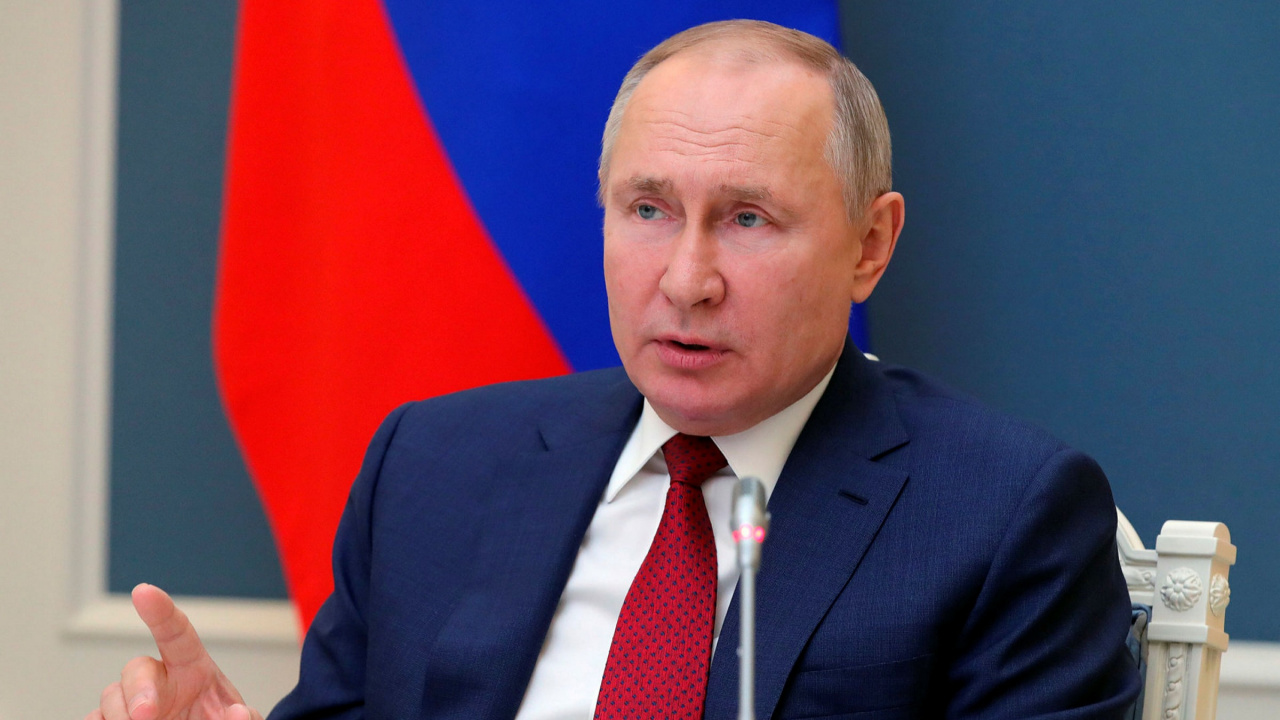
President Putin in 2007 (at Munich) challenged the West: ‘We didn’t. You did; You continuously attack Russia; but we shall not bend’. The audience sniggered. Now, speaking at (a virtual) Davos this last month, after an absence of twelve years from that forum, President Putin held up a mirror to the key ‘influencers’ of the West: ‘See what you have become in the interim; Look at yourself, and be worried’.

This was not so much a be-gloved slap, prefacing duel-by-weapons-of-choice, but an earnest caution. At its’ bottom is a warning that the socio-economic dynamics set into motion by the western zero-interest, debt-led model have not just thrown swaths of society under the economic bus, but rather, that the internal socio-economic catastrophe is being widely vented at external ‘others’. That is, projected psychically abroad, in a lust to fight imaginary demons.

Italy in the 1400s had experienced psychological stresses somewhat similar to todays’ – the upending old ‘myths’, old cultural ties and sources of social cohesion, triggered by the gathering storm of Reformation and Scientific Enlightenment. The new leaders insisted to put old values and the ethos of ‘continuity’ to the auto da fé bonfires of sceptical rationalism’s shiny, new culture. There was then, no China to blame, but the witch and Satan hysteria of that era – a mass collective hysteria – led to some ten thousand Europeans being ‘cancelled’: they were burned alive for clinging to ancient ways (judged to be denials of ‘Truth’). Ultimately the Inquisition was instantiated to condemn and punish heresy.

Last week, President Putin noted at Davos:

“This [crisis in the economic models], in turn, is causing today a sharp polarisation of public views, provoking the growth of populism, right- and left-wing radicalism and other extremes … All this is inevitably affecting the nature of international relations, and is not making them more stable or predictable. International institutions are becoming weaker, regional conflicts are emerging one after another, and the system of global security is deteriorating … the differences are leading to a downward spiral”.

“The situation could take an unexpected and uncontrollable turn – unless we do something to prevent this. There is a chance that we will face a formidable break-down in global development, which will be fought as a war of all, against all … And attempts to deal with contradictions through the appointment of internal and external enemies [to scapegoat] the negative demographic consequences of the ongoing social crisis and the crisis of values, could result in humanity losing entire civilisational and cultural continents”.

The existing model, Putin explained, seems to have inverted ‘means and ends’ – Means (as in the Great Re-set’s emphasis on technological – even trans human – instrumentation of the economy) seem to have taken primacy over humans as its Ends.

Yes, globalisation may have lifted billions out of poverty, yet as Putin points out, “it has led to significant imbalances in global socioeconomic development, and these are a direct result of the policy pursued in the 1980s, which was often vulgar or dogmatic”. It has made “economic stimulation with traditional methods, through an increase in private loans virtually impossible. The so-called quantitative easing is only increasing the bubble of the value of financial assets and deepening the social divide. The widening gap between the real and virtual economies … presents a very real threat and is fraught with serious and unpredictable shocks …”.

“Hopes that it will be possible to reboot the old growth model are connected with rapid technological development. Indeed, during the past 20 years we have created a foundation for the so-called Fourth Industrial Revolution based on the wide use of AI and automation and robotics. However, this process is leading to new structural changes, I am thinking in particular of the labour market. This means that very many people could lose their jobs unless the state takes effective measures to prevent this. Most of these people are from the so-called middle class, which is the basis of any modern society.”

Putin points out that these flaws, inherent within the western growth model, and the ‘turn’ to Big Tech as salvation, were not specifically caused by the pandemic. The latter nonetheless, has pulled the mask from the face of the economic model, and also exacerbated its noxious symptoms:

The coronavirus pandemic … which became a serious challenge for humankind, only spurred and accelerated the structural changes, the conditions for which had been created long ago. Needless to say, there are no direct parallels in history. However, some experts – and I respect their opinion – compare the current situation to the 1930s [the Great Depression]”.

Putin hints, but does not say explicitly, that that the pandemic, by aggravating the socio-economic stress, precisely has contributed to the general hysteria (and polarisation) – and the hunt for external enemies (i.e. such as the ‘CCP virus’).

Putin notes a further contributing factor:

“Modern technological giants, especially digital companies, have started playing an increasing role in the life of society. Much is being said about this now, especially regarding the events that took place during the election campaign in the U.S. They are not just some economic giants. In some areas, they are de facto competing with states. Their audiences consist of billions of users that pass a considerable part of their lives in these eco systems. In the opinion of these companies, their monopoly is optimal for organising technological and business processes. Maybe so – but society is wondering whether such monopolism meets public interests”.

Putin here alludes to something more troubling – the failure of the system-model to deliver on the promise of prosperity and opportunity ‘for all’, and specifically for the less advantaged in society. Can this flaw not be said to be directly related to the rise of Tech soft totalitarianism? Since the systemic nature of the failure cannot be admitted, is it then so surprising there has been a resort to big Tech enforcement of its more favourable version of reality (i.e. one that insists that the systemic failures all derive, rather, from historic racism and injustices, and they will not countenance any dissent from this narrative)?

The core idea here – the response to civic, socio-economic anger – is that a combination of unparalleled monetary injection, radical positive discrimination prioritising non-white identities, plus access to élite oligarchic Tech expertise, will solve most of society’s problems. This is pure ideology. But, unable to deal directly with the evidence of systematic failings and economic ‘rigging’ (that being far too sensitive an issue), western leaders work instead to alter the definition of reality. When you are attempting to extend a make-believe economy by printing more and more debt, in spite of its failed history, it is no wonder you have to silence dissent.

Those then, that do not embrace the propaganda that big Tech and the corporate media relentlessly push, need to be de-platformed, and pushed to the fringes of society. In a striking echo of that earlier Italian era of psychic tensions, the New York Times is now asking for the Biden administration to appoint a “Reality Czar” who will be given authority to deal with “misinformation” and “extremism” (shades of the Inquisition)?

Putin’s speech was a withering de-construction (polite, and very measured) of where we stand – and why. Did his audience hear? And will President Putin’s call for a return to the ‘classic’ economic model; to the real economy; to job creation; comfortable living standards, and education with opportunity for the young, have any impact?

Probably not, unfortunately. One only has to note the European ‘hysteria’ for the quick return to absolute ‘normal’ – to everything being ‘just as it was before’ – and above all, to ‘our summer holidays’. Again Putin alludes, but does not say it: The pandemic has exposed the brittleness, the friability, of European society. It finds hardship impossible to endure (even by those well insulated from the true hardships, which have been real, but only for some: “Worse than WW2, this pandemic”, one veteran said to me this morning!). The space for true (and urgent) structural reforms is disappearingly small.

The future course for the western economies is obvious – one only has to observe the return of (former Fed head) Janet Yellen to the U.S. Treasury; of (former IMF head) Christine Lagarde to the ECB and (former ECB head) Mario Draghi as PM in Italy, to understand that a full blown ‘reflation trade’ is underway.

And as for Putin’s caution about “attempts to deal with contradictions through the appointment of internal and external enemies [to scapegoat] the negative demographic consequences of the ongoing social crisis”, this looks no more promising than the financial scene.

Recently, an anonymous former U.S. government official wrote a paper of policy recommendations on China. The Atlantic Council and Politico both published versions of the piece, and they agreed to keep the author’s identity under wraps for reasons known only to them. The Atlantic Council claims that anonymity was necessary because of “the extraordinary significance of the author’s insights and recommendations”. It is not clear however, why they find these insights and recommendations to be so extraordinary – the paper simply is yet another blueprint for regime change (in this case, a coup against the CCP).

Quite possibly, the door to a peaceful resolution of U.S. tensions with China already is closed. China’s intention always has been peacefully, through economic integration, to re-absorb Taiwan into China. It is committed to that. But it seems from Biden Administration statements that it is equally committed to exacerbating the Taiwan autonomy issue sufficiently so that Beijing has no other option, but to annex Taiwan by force (a last resort for Beijing). In the pages of mainstream U.S. media, experts ostensibly regret this, yet nonetheless conclude that America will again ‘be obliged’ to intervene, in order to stop ‘an aggressor state’ from occupying a democratic, American ally.

Again in the context of the U.S. internal tensions, this is more about the fragility of the U.S. psyche at a moment of potential Thucydides’ angst, than of China posing any real threat to America. China will overtake the U.S. economically, at some point. U.S. leaders seek to suggest that America still has the power to alter ‘reality’ to fit to its own exceptionalist myth.

President Putin of course, knows all this, but at least no one can now complain, ‘We were not warned’.


River to Sea Uprooted Palestinian   
The views expressed in this article are the sole responsibility of the author and do not necessarily reflect those of the Blog!