Showing posts with label Imran Khan. Show all posts

Friday, 24 September 2021

Eurasia takes shape: How the SCO just flipped the world order


https://media.thecradle.co/wp-content/uploads/2021/09/22154938/Unknown-11.jpeg
With Iran’s arrival, the SCO member-states now number nine, and they’re focused on fixing Afghanistan and consolidating Eurasia.Photo Credit: The Cradle
https://media.thecradle.co/wp-content/uploads/2021/08/27165257/Unknown-13.jpeg

SEPTEMBER 22, 2021

By Pepe Escobar posted with permission and cross-posted with The Cradle

Part 1 of 2 on Eurasia

With Iran’s arrival, the SCO member-states now number nine, and they’re focused on fixing Afghanistan and consolidating Eurasia.

As a rudderless West watched on, the 20th anniversary meeting of the Shanghai Cooperation Organization was laser-focused on two key deliverables: shaping up Afghanistan and kicking off a full-spectrum Eurasian integration.

The two defining moments of the historic 20th anniversary Shanghai Cooperation Organization (SCO) summit in Dushanbe, Tajikistan had to come from the keynote speeches of – who else – the leaders of the Russia-China strategic partnership.

Xi Jinping: “Today we will launch procedures to admit Iran as a full member of the SCO.”

Vladimir Putin: “I would like to highlight the Memorandum of Understanding that was signed today between the SCO Secretariat and the Eurasian Economic Commission. It is clearly designed to further Russia’s idea of establishing a Greater Eurasia Partnership covering the SCO, the EAEU (Eurasian Economic Union), ASEAN (Association of Southeast Asian Nations) and China’s Belt and Road initiative (BRI).”

In short, over the weekend, Iran was enshrined in its rightful, prime Eurasian role, and all Eurasian integration paths converged toward a new global geopolitical – and geoeconomic – paradigm, with a sonic boom bound to echo for the rest of the century.

That was the killer one-two punch immediately following the Atlantic alliance’s ignominious imperial retreat from Afghanistan. Right as the Taliban took control of Kabul on August 15, the redoubtable Nikolai Patrushev, secretary of Russia’s Security Council, told his Iranian colleague Admiral Ali Shamkhani that “the Islamic Republic will become a full member of the SCO.”

Dushanbe revealed itself as the ultimate diplomatic crossover. President Xi firmly rejected any “condescending lecturing” and emphasized development paths and governance models compatible with national conditions. Just like Putin, he stressed the complementary focus of BRI and the EAEU, and in fact summarized a true multilateralist Manifesto for the Global South.

Right on point, President Kassym-Jomart Tokayev of Kazakhstan noted that the SCO should advance “the development of a regional macro-economy.” This is reflected in the SCO’s drive to start using local currencies for trade, bypassing the US dollar.

Watch that quadrilateral

Dushanbe was not just a bed of roses. Tajikistan’s Emomali Rahmon, a staunch, secular Muslim and former member of the Communist Party of the USSR – in power for no less than 29 years, reelected for the 5th time in 2020 with 90 percent of the vote – right off the bat denounced the “medieval sharia” of Taliban 2.0 and said they had already “abandoned their previous promise to form an inclusive  government.”

Rahmon, who has never been caught smiling on camera, was already in power when the Taliban conquered Kabul in 1996. He was bound to publicly support his Tajik cousins against the “expansion of extremist ideology” in Afghanistan – which in fact worries all SCO member-states when it comes to smashing dodgy jihadi outfits of the ISIS-K mold .

The meat of the matter in Dushanbe was in the bilaterals – and one quadrilateral.

Take the bilateral between Indian External Affairs Minister S. Jaishankar and Chinese FM Wang Yi. Jaishankar said that China should not view “its relations with India through the lens of a third country,” and took pains to stress that India “does not subscribe to any clash of civilizations theory.”

That was quite a tough sell considering that the first in-person Quad summit takes place this week in Washington, DC, hosted by that “third country” which is now knee deep in clash-of-civilizations mode against China.

Pakistani Prime Minister Imran Khan was on a bilateral roll, meeting the presidents of Iran, Belarus, Uzbekistan and Kazakhstan. The official Pakistani diplomatic position is that Afghanistan should not be abandoned, but engaged.

That position added nuance to what Russian Special Presidential Envoy for SCO Affairs Bakhtiyer Khakimov had explained about Kabul’s absence at the SCO table: “At this stage, all member states have an understanding that there are no reasons for an invitation until there is a legitimate, generally recognized government in Afghanistan.”

And that, arguably, leads us to the key SCO meeting: a quadrilateral with the Foreign Ministers of Russia, China, Pakistan and Iran.

Pakistani Foreign Minister Qureshi affirmed: “We are monitoring whether all the groups are included in the government or not.” The heart of the matter is that, from now on, Islamabad coordinates the SCO strategy on Afghanistan, and will broker Taliban negotiations with senior Tajik, Uzbek and Hazara leaders. This will eventually lead the way towards an inclusive government regionally recognized by SCO member-nations.

Iranian President Ebrahim Raisi was warmly received by all – especially after his forceful keynote speech, an Axis of Resistance classic. His bilateral with Belarus president Aleksandr Lukashenko revolved around a discussion on “sanctions confrontation.” According to Lukashenko: “If the sanctions did any harm to Belarus, Iran, other countries, it was only because we ourselves are to blame for this. We were not always negotiable, we did not always find the path we had to take under the pressure of sanctions.”

Considering Tehran is fully briefed on Islamabad’s SCO role in terms of Afghanistan, there will be no need to deploy the Fatemiyoun brigade – informally known as the Afghan Hezbollah – to defend the Hazaras. Fatemiyoun was formed in 2012 and was instrumental in Syria in the fight against Daesh, especially in Palmyra. But if ISIS-K does not go away, that’s a completely different story.

Particular important for SCO members Iran and India will be the future of Chabahar port. That remains India’s crypto-Silk Road gambit to connect it to Afghanistan and Central Asia. The geoeconomic success of Chabahar more than ever depends on a stable Afghanistan – and this is where Tehran’s interests fully converge with Russia-China’s SCO drive.

What the 2021 SCO Dushanbe Declaration spelled out about Afghanistan is quite revealing:

1. Afghanistan should be an independent, neutral, united, democratic and peaceful state, free of terrorism, war and drugs.

2. It is critical to have an inclusive government in Afghanistan, with representatives from all ethnic, religious and political groups of Afghan society.

3. SCO member states, emphasizing the significance of the many years of hospitality and effective assistance provided by regional and neighboring countries to Afghan refugees, consider it important for the international community to make active efforts to facilitate their dignified, safe and sustainable return to their homeland.

As much as it may sound like an impossible dream, this is the unified message of Russia, China, Iran, India, Pakistan and the Central Asian “stans.” One hopes that Pakistani PM Imran Khan is up to the task and ready for his SCO close-up.

That troubled Western peninsula

The New Silk Roads were officially launched eight years ago by Xi Jinping, first in Astana – now Nur-Sultan – and then in Jakarta.

This is how I reported it at the time.

The announcement came close to a SCO summit – then in Bishkek. The SCO, widely dismissed in Washington and Brussels as a mere talk shop, was already surpassing its original mandate of fighting the “three evil forces” – terrorism, separatism and extremism – and encompassing politics and geoeconomics.

In 2013, there was a Xi-Putin-Rouhani trilateral. Beijing expressed full support for Iran’s peaceful nuclear program (remember, this was two years before the signing of the Joint Comprehensive Plan of Action, also known as the JCPOA).

Despite many experts dismissing it at the time, there was indeed a common China-Russia-Iran front on Syria (Axis of Resistance in action). Xinjiang was being promoted as the key hub for the Eurasian Land Bridge. Pipelineistan was at the heart of the Chinese strategy – from Kazakhstan oil to Turkmenistan gas. Some people may even remember when Hillary Clinton, as Secretary of State, was waxing lyrical about an American-propelled New Silk Road.

Now compare it to Xi’s Multilateralism Manifesto in Dushanbe eight years later, reminiscing on how the SCO “has proved to be an excellent example of multilateralism in the 21stcentury,” and “has played an important role in enhancing the voice of developing countries.”

The strategic importance of this SCO summit taking place right after the Eastern Economic Forum (EEF) in Vladivostok cannot be overstated enough. The EEF focuses of course on the Russian Far East – and essentially advances interconnectivity between Russia and Asia. It is an absolutely key hub of Russia’s Greater Eurasian Partnership.

A cornucopia of deals is on the horizon – expanding from the Far East to the Arctic and the development of the Northern Sea Route, and involving everything from precious metals and green energy to digital sovereignty flowing through logistics corridors between Asia and Europe via Russia.

As Putin hinted in his keynote speech, this is what the Greater Eurasia Partnership is all about: the Eurasia Economic Union (EAEU), BRI, India’s initiative, ASEAN, and now the SCO, developing in a harmonized network, crucially operated by “sovereign decision-making centers.”

So if the BRI proposes a very Taoist “community of shared future for human kind,” the Russian project, conceptually, proposes a dialogue of civilizations (already evoked by the Khatami years in Iran) and sovereign economic-political projects. They are, indeed, complementary.

Glenn Diesen, Professor at the University of South-Eastern Norway and an editor at the Russia in Global Affairs journal, is among the very few top scholars who are analyzing this process in depth. His latest book remarkably tells the whole story in its title:  Europe as the Western Peninsula of Greater Eurasia: Geoeconomic Regions in a Multipolar World. It’s not clear whether Eurocrats in Brussels – slaves of Atlanticism and incapable of grasping the potential of Greater Eurasia – will end up exercising real strategic autonomy.

Diesen evokes in detail the parallels between the Russian and the Chinese strategies. He notes how China “is pursuing a three-pillared geoeconomic initiative by developing technological leadership via its China 2025 plan, new transportation corridors via its trillion-dollar Belt and Road Initiative, and establishing new financial instruments such as banks, payment systems and the internationalization of the yuan. Russia is similarly pursuing technological sovereignty, both in the digital sphere and beyond, as well as new transportation corridors such as the Northern Sea Route through the Arctic, and, primarily, new financial instruments.”

The whole Global South, stunned by the accelerated collapse of the western Empire and its unilateral “rules-based order, now seems to be ready to embrace the new groove, fully displayed in Dushanbe: a multipolar Greater Eurasia of sovereign equals.


River to Sea Uprooted Palestinian   
The views expressed in this article are the sole responsibility of the author and do not necessarily reflect those of the Blog!

Wednesday, 7 April 2021

’Every Year We Dig Mass Graves’: The Slaughter of Pakistan’s Hazara

  5/4/2021

’Every Year We Dig Mass Graves’: The Slaughter of Pakistan’s Hazara

By Shah Meer Baloch – The Guardian

Ahmed Shah had always dreamed of bigger things. Though just 17, the high school pupil had taken a job in the coalmines of Balochistan, Pakistan’s south-western province, one of the harshest, most dangerous working environments in the world. Shah was determined to earn enough to educate himself, so he could escape the tough life of the Hazara Shia community, the most persecuted minority in Pakistan.

But Shah never saw a brighter future. He was among 10 miners who were resting in their mud hut near the mines in the small Balochistan town of Mach when armed militants burst in. A gruesome video from the scene shows the young men blindfolded, with their hands tied behind their backs. A security official said their throats had been slit. Daesh [the Arabic acronym for terrorist ‘ISIS/ISIL’ group] claimed responsibility for the massacre.

The prime minister, Imran Khan, called it an “inhumane act of terrorism”, but for the Hazara, minority Shia Muslims who have been targeted for three decades in Pakistan by extremists among the majority Sunni Muslims who view them as heretics, this was not enough.

Shah’s mother, Amina, was on her rounds as a healthcare worker in the nearby provincial capital of Quetta when she heard about the massacre.

“I wanted to see my son one last time, but I was told that I would not be able to bear that,” says Amina. “The killers were not humans. They killed them so brutally.”

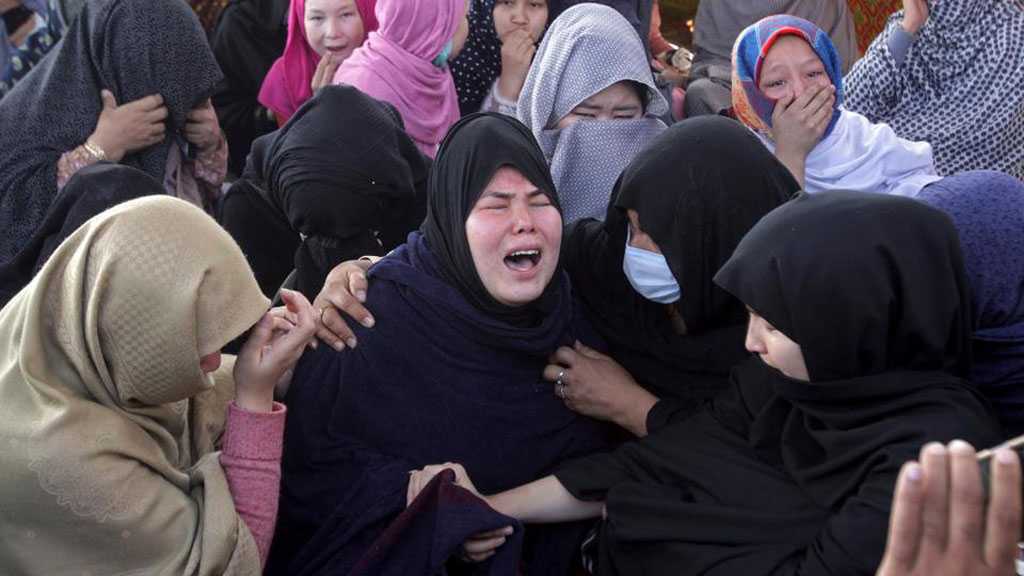
The Hazara community, after decades of injustice and neglect by the state, were driven to act, and in a protest unlike anything seen before in Pakistan, the families of the 10 men brought the dead bodies out on to the streets, and sat beside them, in the freezing cold, to demand protection and justice.

For a full week, they did not move, stating they would not bury the bodies until the prime minister listened to their demands.

In response, Khan accused them of trying to “blackmail” him, and said he would not visit until the bodies were buried.

Ahmed Shah was one of four from his family to die in the Mach massacre. So too did his cousin Sadiq, the sole breadwinner for his wife, children and six sisters.

Sadiq, a father of two daughters, had had breakfast with his wife before dawn at his home in Quetta before leaving for Mach. One sister, Masooma Yaqoob Ali, saw the news of the Hazara miners on Facebook and stumbled upon the picture of her brother’s blindfolded body.

“These monsters have not only killed 10 people, they have killed 10 families,” she says. “It has been two decades that we are being mercilessly killed but no one has been arrested yet.”

The Hazara Shia have been targeted over many years by Sunni extremists, such as Lashkar-e-Jhangvi, Sipah-e-Sahaba and now Daesh. According to a 2019 report by Pakistan’s National Commission for Human Rights, an independent watchdog, at least 509 Hazara have been murdered for their faith since 2013. The non-profit Human Rights Commission of Pakistan says that from 2009 to 2014, nearly 1,000 Hazaras died in sectarian violence. Thousands have been injured.

To curb attacks on the 600,000 Hazaras living in the towns of Mariabad and Hazara Town in Quetta, authorities have built military checkpoints, roadblocks and walls around the areas.

In 2014, the international organization Human Rights Watch published a 62-page report on the persecution of Hazara Shia in Balochistan entitled “We are the walking dead.”

“We are living in two prisons. Our men and young can’t go outside. If they go, they will be killed. Our graveyards are full of young men with barely any space left,” says Ali. “We are tired of carrying their coffins. Every year we dig mass graves. Yet Prime Minister Imran Khan says we are blackmailers. Khan is heartless.”

The majority of Hazara in Quetta originally came from Afghanistan and Iran to seek work in Pakistan, with many ending up in the mines of Balochistan.

For 15 years, Chaman Ali, another of the Mach victims, would travel from Afghanistan to Quetta every winter to work in the coalmines.

“I would be worried for his life when he was here and when he went to Afghanistan. I would think ‘what if he gets into the hands of the Taliban?’ I thought he was safe here, but this is where he got killed,” his sister Zara says.

Chaman Ali is survived by his wife and eight children, the youngest just three months old. Aziz and Nasim, from the Daykundi province of Afghanistan, came with Chaman Ali to work in the mines for the first time. They were also murdered.

Nasim, 22, started work to fund his education and had arrived in Pakistan just a week before he was killed. “Afghanistan is in a very bad situation and we think that something is better than nothing, which is why we come to Pakistan just to make a living,” says Abdul Rahim, Nasim’s father. Along with other members of his family, he could not get to his son’s funeral from Afghanistan, when the security forces closed routes out of the villages across Pakistan’s porous border.

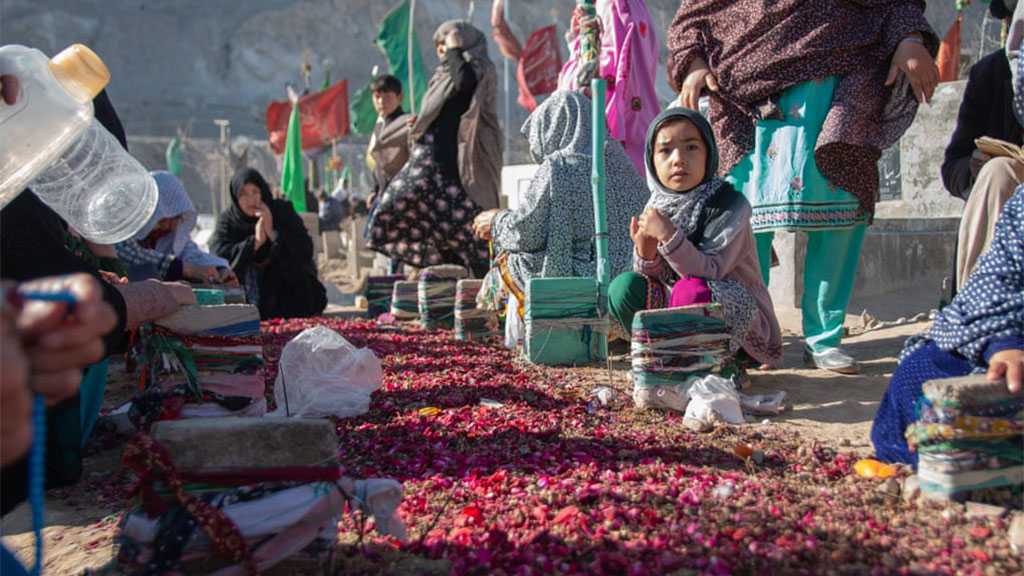
Victims of the Mach massacre were all eventually buried in a mass grave at Hazara Town, on the outskirts of Quetta. The Hazara community is running out of space to bury their dead. The graveyard is full of photographs of Hazara Shia men, women and children, many of them murdered.

Having Mongolian ancestors, many Hazara are identifiable by their distinctive appearance, and it is along the single road that leads to Mari Abad and Hazara Town that thousands have been attacked by extremist groups.

“Our generation has grown up in a cage. We make houses on the mountain and are afraid of going out to see other parts of Quetta,” says Arif Hussain Nasry, 21, founder of the Future is Young campaign. “We are even afraid to gather with Hazara from other nations and communities. We have to live to survive in these two ghettoes.”

But for Naseem Javed, an author and political activist, the attacks on the Hazara are not just about sectarianism. “I don’t think Hazara are being targeted just because of their faith,” he says. “They also are being targeted to divert the attention from the Baloch separatist movement.”

Balochistan, the most impoverished province of Pakistan and wedged between Iran and Afghanistan, has a separatist movement that has been active in the province for the past 20 years. “The region also has become a hub for international proxies, including the Taliban,” Javed adds.

Javed shows the pistol he keeps close to him in his shop, where he sells prayer mats and prayer beads. “We live under shadows of weapons and fear. None of us has a normal life. We are being slaughtered. If the security establishment has no role in this genocide, why have they not arrested any attacker?”

For many Hazara people the solution is simply to leave. Amjad Ali, 21, has made three attempts to leave Balochistan for a new life in Europe. He was first deported from Turkey and handed over to Iran, from where he was sent back to Pakistan. The second time he was deported from Iran.

During his third attempt to reach Europe, with 25 other Hazara Shia, Ali was caught a few miles from the border by Jaish ul-Adl, another Sunni militant group that operates mainly in south-eastern Iran. Pretending to be Iranian security forces, the jihadist group took Ali and others to a mountain camp in Pakistan, close to the Iranian border.

“They were very well updated and informed. As soon as we reached their camp they shot four Hazaras with Kalashnikovs. Two of them used to work in the Pakistan army. Two, as Jaish ul-Adl claimed, were going to be part of the Zainebiyoun brigade, an Iranian-backed militant force [fighting in Syria],” Ali told the Guardian.

The rest were held and their families sent random demands. Ali spent 55 days in the camp before his family members managed to raise thousands of dollars in ransom money for his release.

“If I get a chance now to go to Europe, I will try again,” says Ali. “There is no life for Hazara Shia in Pakistan and Afghanistan.”


River to Sea Uprooted Palestinian   
The views expressed in this article are the sole responsibility of the author and do not necessarily reflect those of the Blog!

Saturday, 9 January 2021

Pakistan’s Hazaras Wait for Imran Khan Amidst Coffins of Their Loved Ones

 Pakistan’s Hazaras Wait for Imran Khan Amidst Coffins of Their Loved Ones

By Saad Hasan – TRT WORLD

The murder spree has gone on for years. People belonging to Pakistan’s ethnic Hazara minority have been attacked in their homes, in shops, in mosques, at the doctor’s clinic, inside a snooker club and picked out from among other passengers on busses, forced to line up and summarily executed.

A similar episode played out again on January 3 when 11 Hazara miners were killed in the troubled Balochistan province. Daesh [ISIS/ISIL] claimed responsibility for the grisly incident in which the hands of the victims were bound and then their throats slit. A video of the killing was later uploaded on the internet.

Hazaras, most of whom ascribe to the Shia Muslim faith, have been relentlessly targeted in the past two decades. More than 2,000 people have been killed in suicide bombings and drive-by shootings between 2004 and 2018.

“We want these killings to end. That’s all we want. We are tired of burying our loved ones. All we want now is Prime Minister Imran Khan to come and give us surety that this won’t happen again,” Syed Abbas Ali, a member of the Hazara community, told TRT World from Quetta, Balochistan’s capital.

Hundreds of people have joined a sit-in protest on a highway near Quetta. They have placed the coffins there and refused to bury the dead until Khan comes to meet the families.

“Several government officials have met us. But that doesn’t mean anything. Whenever something like this happens, they come and give us the same assurances. It has done little to stop the cycle of violence,” says Ali.

Khan has refused to go personally and meet the mourners at the time of writing, promising that he will do so later. His decision along with the statement of one of his advisors, which was widely seen as being insensitive, has angered many.

Protests against the killings have also erupted in other cities including Karachi.

Most of the Hazara population, generally recognizable for their distinctly Central Asian facial features, is centered around Quetta. The size of the community is estimated to be around 800,000.

For years, Pakistan’s security forces have battled separatist insurgents in Balochistan, which borders Iran and Afghanistan. Sectarian militant group Lashkar-e-Jhangvi which openly call the Shia heretics is also behind a spate of terrorist attacks.

The miners were living in makeshift quarters near a coalfield, located some 60km from Quetta, leaving them particularly vulnerable to such an attack, Zafar Baloch, a local journalist, told TRT World over the phone.

“A number of terrorist attacks against the Hazara community have come down in the last few years. The situation was really bad up till 2013 when someone was being targeted every 4-5 days.”

The year 2013 was particularly devastating for Hazara community. More than 175 people were killed in back-to-back bombings in January and February. In one incident, a suicide bomber killed scores of young men at a snooker club. When rescue services began evacuating the injured, an ambulance laden with explosives exploded, killing more.

Islamabad has deployed around a thousand paramilitary troops and police for security. But that has limited the movement of many Hazara people who are confined to a few areas such as Hazara Town or Alamdar Road in Quetta city.

Security escorts are needed whenever pilgrims travel by road to Iran where several Shia shrines are located. Even vegetable vendors need armed protection when they travel to the wholesale market.

The fear of being shot dead has forced thousands of young men to make their way towards Southeast Asia and then take the dangerous sea journey on rickety boats to seek refuge in Australia. Many have sold their businesses and moved to other cities in Pakistan.

A sizable Hazara population also lives in neighboring Afghanistan where thousands of them have been killed by the Taliban.

According to some reports, there were some Afghans among the dead miners. Abbas Ali says making an issue of the nationality of the victims undermines the severity of the situation.

“Does it matter where they came from? The fact is they were brutally murdered and we should all be condemning it.”

River to Sea Uprooted Palestinian   
The views expressed in this article are the sole responsibility of the author and do not necessarily reflect those of the Blog!

Sunday, 20 December 2020

Pakistani PM firmly rejects Israeli ties as ‘baseless’, publicity campaign

 Source

Saturday, 19 December 2020 10:31 AM  [ Last Update: Saturday, 19 December 2020 11:45 AM ]

US Rep. Ilhan Omar (D-MN) (L) talks with Speaker of the House Nancy Pelosi (D-CA) during a rally with fellow Democrats before voting on H.R. 1, or the People Act, on the East Steps of the US Capitol on March 08, 2019 in Washington, DC. (AFP photo)

Pakistan’s Prime Minister Imran Khan removes his facemask during a joint press conference with Afghan President Ashraf Ghani (not pictured) at the Presidential Palace in Kabul on November 19, 2020. (Photo by AFP)

Pakistani Prime Minister Imran Khan has rejected as “baseless” reports of his government officials visiting Israel, insisting why would any of the ministers visit Tel Aviv when Islamabad does not recognize the occupying regime.

Khan made the remarks during an interview on Friday with the local Samaa TV emphasizing that the Israeli-based news story was part of “an entire campaign” targeting his administration.

The development came following a publicity campaign by Israeli regime’s news outlets alleging on Wednesday that a senior advisor to Khan had visited the occupied territories last month.

Israel stirs media hype as Pakistan comes under pressure to normalize ties
Israeli news outlets are spreading a rumor that a senior advisor to Pakistan’s Prime Minister Imran Khan visited the Israeli-occupied territories last month, despite Islamabad’s repeated rejections of speculation about ties with Tel Aviv.

Citing a source close to the Tel Aviv regime, Israel Hayom and other Israeli dailies published a report claiming that the Pakistani aide had met with Israeli officials during an alleged trip to Tel Aviv.

The apparent propaganda story also said the Pakistani official was carrying a message from Khan that reflected his “strategic decision” to open political and diplomatic talks with the regime. The Jerusalem Post also covered publicity item but later removed it from its website.

Pointing to recent efforts by a coalition of 11 opposition groups — led by the Pakistan Democratic Movement (PDM) and the now London-based former prime minister Nawaz Sharif, who was ousted after being convicted and later jailed on official corruption charges – Khan said he was prepared to face everything the opposition alliance aims to throw at him.

“The PDM can do anything that it wants. I am ready,” said the premier, adding that PDM’s recent protest rally in Lahore had damaged the opposition’s alliance.

“I am a jalsa specialist and I am telling you that this was a flop show,” he said.

Khan’s administration had dismissed the Lahore rally as “more [of] a ploy” to distract from the corruption charges against Sharif.

Huge opposition rally in Lahore urges resignation of PM Khan
Thousands of Pakistani opposition supporters stage a protest rally in Lahore to demand the resignation of Prime Minister Imran Khan.

Khan also touched upon the threat of mass resignations by opposition legislators, saying, “If they resign, it would be better for Pakistan.”

He went on to say he would even assist the opposition if they came to Islamabad, but noted, “They cannot even last a week [in Islamabad] even if I support them.”

The Pakistani leader defended the country’s top military commander General Qamar Javed Bajwa against the opposition’s persisting allegations against him and the army, saying that “anger” and “disappointment” prevailed among the ranks after Bajwawas was targeted by opposition leaders during public gatherings.

“Gen Bajwa believes in democracy. Had it been another general, he would have given a quick rebuttal,” Khan said, adding that the army chief was “angry” but he was “controlling it.”

He also emphasized that all institutions — including the army — stood beside him, saying, “There are excellent civil-military ties in the country.”

He said the army serves under him as he is the prime minister, and as the army is a government institution.

India’s scheme to discredit Pakistan

Referring to a recent report by the EU DisinfoLab, Khan said the NGO’s research had exposed India’s network that kept spreading misinformation about Pakistan.

The Brussels-based NGO, which works to combat disinformation against the European Union, unveiled earlier this month that a 15-year-old operation run by an Indian entity had used hundreds of fake media outlets and the identity of a dead professor to defame Pakistan.

The report – Indian Chronicles: deep dive into a 15-year operation targeting the EU and United Nations to serve Indian interests – described the effort as the “largest network” of disinformation they have exposed so far.

The report – released on December 9 – said the disinformation network run by the Srivastava Group, a New Delhi-based entity, was designed primarily to “discredit Pakistan internationally” and influence decision-making at the UN Human Rights Council (UNHRC) and the European Parliament, Al-Jazeera reported.

The report also revealed that in order to “undermine Pakistan internationally,” the network “resurrected dead NGOs” at the UN, impersonated the EU and laundered content produced by fake media to real media, and reached millions in South Asia and across the world.


Press TV’s website can also be accessed at the following alternate addresses:

www.presstv.ir

www.presstv.co.uk

www.presstv.tv


River to Sea Uprooted Palestinian   
The views expressed in this article are the sole responsibility of the author and do not necessarily reflect those of the Blog!

Saturday, 19 September 2020

Imam Khamenei’s Adviser: Snapback Mechanism Piece of US Propaganda

Imam Khamenei’s Adviser: Snapback Mechanism Piece of US Propaganda

By Staff, Agencies

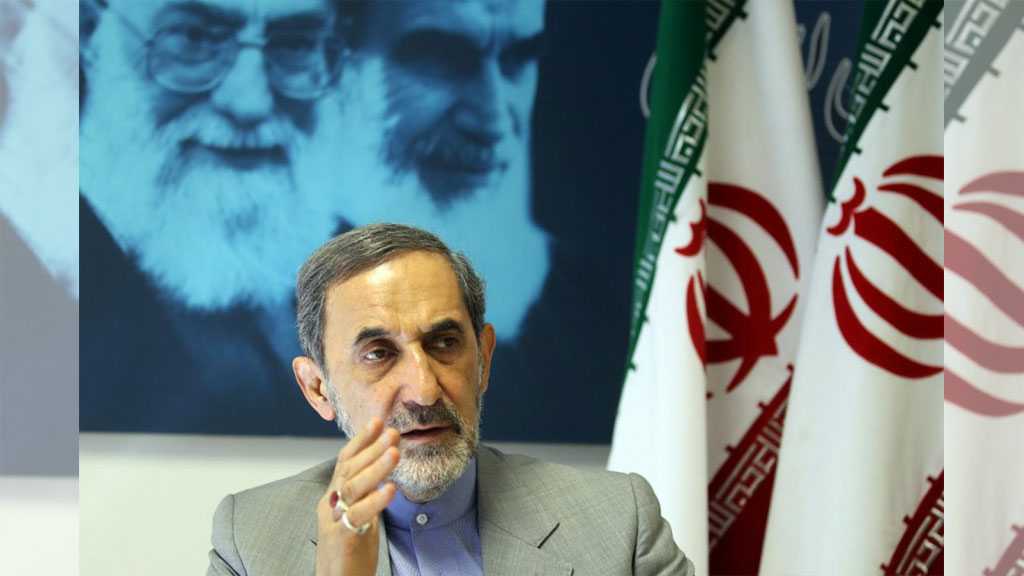
Washington’s push to trigger the snapback mechanism of the JCPOA for re-imposing sanctions on Iran is nothing but an attempt to attract the American public attention as part of a propaganda game, Adviser to Leader of the Islamic Revolution His Eminence Imam Sayyed Ali Khamenei, Ali Akbar Velayati said.

In an interview with Iran’s Tasnim News Agency, Velayati slammed the hype over the so-called snapback mechanism of the 2015 nuclear deal as a propaganda game.

Pointing to the US administration’s attempts to attract the public opinion after Donald Trump’s plummeting poll numbers, the member of the Iranian team of JCPOA observers lashed out at the US for reneging on the nuclear deal and refusing to lift the sanctions.

“A one-sided JCPOA has no validity,” Velayati added.

Asked about Iran’s reaction to a possible activation of the snapback mechanism, he said the US, which has already withdrawn from the deal, has no right to make any comment or trigger the mechanism.

On the expectations that Joe Biden would win the US presidential election, Velayati said the weakest diplomacy taken by a country is to pin hopes on the fate of other states, stressing that the Iranian authorities do not care who the next US president will be.

Last month, 13 countries of the 15-member council rejected the US push to trigger the snapback provision in the 2015 nuclear deal, leaving Washington isolated on the issue.

UNSC Resolution 2231, which enshrined the JCPOA, states that if no council member has put forward a draft resolution to extend sanctions relief on Iran within 10 days of a non-compliance complaint, then the body’s president shall do so within the remaining 20 days.

The document, however, says the Security Council would “take into account the views of the states involved.”

US Secretary of State Mike Pompeo claimed that all UN sanctions against Iran will be reinstated on September 20 after the US “activated the snapback mechanism.”

However, the claim was strongly condemned by other signatories of the nuclear deal including the EU, Russia and China.


River to Sea Uprooted Palestinian   
The views expressed in this article are the sole responsibility of the author and do not necessarily reflect those of the Blog!

Thursday, 17 September 2020

Qatar, Pakistan Rule out Possibility of Normalization with Israel


Source

2020-09-15 18:12:44

A high-ranking Qatari official says Doha will not follow in the footsteps of neighboring Bahrain and the United Arab Emirates (UAE) to normalize relations with Israel, emphasizing that Doha will not take such a measure as long as the Palestinian issue is unresolved.

“We don’t think that normalization was the core of this conflict and hence it can’t be the answer,” Qatari Spokesperson for the Ministry of Foreign Affairs Lolwah Rashid al-Khater, said in an exclusive interview with Bloomberg television news network on Monday.

She added, “The core of this conflict is about the drastic conditions that the Palestinians are living under” as “people without a country, living under occupation.”

Last week, Bahrain joined the UAE in striking an agreement to normalize relations with Israel.

In a joint statement, the United States, Bahrain and Israel said the agreement to establish ties was reached after US President Donald Trump spoke with Israeli Prime Minister Benjamin Netanyahu and Bahraini King Hamad bin Isa Al Khalifah.

The deal came one month after the UAE and the Tel Aviv regime agreed to normalize ties under a US-brokered accord.

Bahrain will join Israel and the UAE for a signing ceremony at the White House hosted by Trump later on Tuesday. The ceremony will be attended by Netanyahu, Bahrain’s Foreign Minister Abdullatif Al Zayani and Emirati Foreign Minister Sheikh Abdullah bin Zayed Al Nahyan.

Elsewhere in her remarks, Khater pointed to the attempts, backed by Kuwait, to end the economic and diplomatic blockade Saudi Arabia and a number of its allies imposed on gas-rich Qatar in June 2017, noting that the efforts have not yet reached a tipping point.

“In the past couple of months, there have been messages and messengers going back and forth,” she said.

“It’s very early to talk about a real breakthrough,” but “the coming few weeks might reveal something new,” the top Qatari official pointed out.

“We’re beyond this point. The point we are at is engaging constructively in unconditional negotiations and discussions” that “do not necessarily need to include all parties at once,” Khater said.

Saudi Arabia, the UAE, Bahrain and Egypt severed diplomatic and trade ties with Qatar on June 5, 2017, after the quartet officially accused Doha of meddling in regional affairs and supporting terrorism.

The quartet later issued a 13-point list of demands in return for the reconciliation, which was rejected as an attack on Qatar’s sovereignty.

‘Pakistan won’t compromise on Palestine cause’

Meanwhile, Pakistani Prime Minister Imran Khan reacted to Bahrain’s normalization of ties with the Israeli regime following the UAE, saying, “Any recognition of Israel will face strong opposition from Palestinian people. We cannot made a decision which runs counter to the aspirations of the oppressed Palestinian nation. We will continue to support the fair resolution of the Palestinian issue.”

“If the whole world wants to recognize Israel, Islamabad would not do so and would never make a decision contrary to the wishes of the Palestinian people” Khan told Urdu-language 92 News television news network on Tuesday.

He underlined that the Pakistani government will never compromise on its fundamental principles of supporting Palestine and its liberation, as stated by the founder of Pakistan Muhammad Ali Jinnah.

“Until a just solution to the Palestinian issue is produced, any recognition of the Zionist regime is ruled out. How can we accept to normalize with the Zionists when the main Palestinian parties do not accept it?” the Pakistani premier said.

Source: Press TV

River to Sea Uprooted Palestinian   
The views expressed in this article are the sole responsibility of the author and do not necessarily reflect those of the Blog!

Friday, 21 August 2020

PM Khan: Pakistan Can’t Recognize Israel Until Palestine Gets Its Rights, State


Source

Pakistani Prime Minister Imran Khan says his country will never recognize Israel until the issue of Palestine is resolved days after the United Arab Emirates (UAE) reached a normalization deal with Israel.

In an interview with the private Dunya News television network on Tuesday, Khan said Islamabad will not follow suit in recognizing Israel, in a reference to Abu Dhabi, which has reached a highly controversial deal with Tel Aviv to establish full diplomatic ties.

 “Our stance is very clear from day one and Quaid-i-Azam Muhammad Ali Jinnah had said Pakistan can never accept Israel until the people of Palestine get rights and state,” Khan said.

The Pakistani prime minister further noted that recognition of Israel equals to abandoning Pakistan’s stance on the Muslim-majority Kashmir region.

“The case of Palestinians is similar to people of Kashmir and their [Palestinians] rights have been snatched and they have been suffering from Israeli atrocities. Both issues have a similar background,” Khan pointed out.

The Himalayan region of Kashmir has been split between India and Pakistan since their partition in 1947. The countries have fought three wars over the territory.

The Indian-administered part of the region, known as Jammu and Kashmir, enjoyed autonomy until August 2019, when Prime Minister Narendra Modi’s Hindu nationalist government revoked that status.

On 13 August, US President Donald Trump announced the peace deal between the UAE and Israel brokered by Washington.

The UAE claims the deal — which the Palestinians have rejected as backstabbing — was designed to stave off Tel Aviv’s planned annexation of the occupied West Bank.

Supporters of the Palestinian cause, however, reject that claim, saying normalization attempts have been in the offing for a long time.

Israeli Prime Minister Benjamin Netanyahu has also reaffirmed that the regime’s annexation has been delayed but is not off the table.

Anger is boiling in the Middle East and the entire Muslim world over the agreement.

In Pakistan, tens of thousands of people joined protests organized by political and religious activists in various cities on the weekend to condemn the UAE.

The protesters voiced strong support for Palestine and the liberation of Jerusalem al-Quds, stressing that compromise with the occupiers is a great betrayal of Palestine and the entire Islamic world.

Source: Press


River to Sea Uprooted Palestinian   
The views expressed in this article are the sole responsibility of the author and do not necessarily reflect those of the Blog!

Thursday, 30 April 2020

BRI-LED REGIONALIZATION ROLLS ON AS GWADAR PORT OPENS AFGHAN TRADE TO THE WORLD

By Andrew Korybko
American political analyst
29 APRIL 2020


The successful opening of Gwadar Port to Afghanistan lays the basis for expanding this trade network to Central Asia and Russia via N-CPEC+, which sets a positive example for how BRI-led regionalization can rejuvenate globalization after the coronavirus is finally defeated.

The speculative talk about the coronavirus supposedly signaling the impending end of globalization was thrown into doubt last week after Gwadar Port was opened to Afghanistan. That facility is the terminal point of the Belt & Road Initiative’s (BRI) flagship project of the China-Pakistan Economic Corridor (CPEC) and will be used to facilitate trade with the South Asian state’s landlocked neighbor, according to the announcement by Abdul Razak Dawood, the adviser for commerce and investment to Pakistani Prime Minister Imran Khan.
He also said that “16,000 MT of diamonium phosphate and World Food Programme cargo of 500,000 MT of wheat for Afghanistan will arrive next month” and that “Ships from China will also offload at Gwadar.” This development is remarkable in more ways than one and thus deserves to be analyzed a bit more in depth in order for the reader to better understand its grand strategic significance in the context of contemporary geopolitics.
First off, it’s especially important that war-torn Afghanistan will receive much-needed aid through this port. Those supplies will help its people better survive the hardships that they’ve been experiencing for decades already, and they come at a crucial time when the country is struggling to counter COVID-19. Not only could Gwadar become a humanitarian lifeline for Afghanistan, but also an economic one too since it opens up its trade to the rest of the world and can therefore help it rebuild after the war finally ends.
The very fact that CPEC is expanding along the northern vector suggests that a branch corridor prospectively called N-CPEC+ could enter into fruition in the future if the project expands into the Central Asian Republics and even further afield to Russia, thus creating a new North-South connectivity corridor in the Eurasian Heartland. Even in the event that the aforementioned scenario doesn’t unfold right way, it’s still noteworthy that BRI’s flagship project is strengthening regionalization between Pakistan and Afghanistan.
This objective observation powerfully refutes the rumors that globalization is destined to die due to the consequences of the world’s uncoordinated lockdowns in response to COVID-19. There will always be a need for countries to import whatever they can’t make at home and export the wares that they produce abroad, which in the Afghan context refers to agricultural imports and prospective mineral exports via CPEC. The present lockdowns will inevitably end, after which globalization will resume, bolstered by regionalization.
Regionalization and globalization are two sides of the same coin since they both involve international trade, albeit to differing geographic extents made obvious by their names. There’s some credence to the claims that regionalization will benefit more in the short term than globalization, though the success of regionalization would strengthen globalization through the creation of more consolidated economic spaces. In the present example, CPEC brings China, Pakistan, and Afghanistan closer together, thus boosting trade between all three.
The successful opening of Gwadar Port to Afghanistan lays the basis for expanding this trade network to Central Asia and Russia via N-CPEC+, as was earlier explained, which sets a positive example for how BRI-led regionalization can rejuvenate globalization after the coronavirus is finally defeated. Both interconnected trends are pivotal to the world’s economic recovery, and seeing as how they’re being championed by China, it can be said that the People’s Republic is taking the leading role in helping humanity return back to normal.
With all of this in mind, while casual observers might have dismissed the opening of Gwadar Port to Afghanistan as an unimportant event compared to everything else going on in the world nowadays (if they were even aware of it in the first place, that is), it’s actually one of the most significant non-health-related developments of the year. China showed that its desire to create a Community of Common Destiny through BRI hasn’t slowed down as a result of the virus, which speaks to its commitment to carry through with this noble vision no matter what.

River to Sea Uprooted Palestinian   
The views expressed in this article are the sole responsibility of the author and do not necessarily reflect those of the Blog!

Pakistan PM Slams US Sanctions on Iran

Source
April 29, 2020


Imran Khan Rouhani

Prime Minister of Pakistan Imran Khan condemned the US sanctions and mounting pressures against Iran amid the outbreak of the coronavirus pandemic, saying he feels bound to support Tehran in the face of Washington’s illegal sanctions.
In a telephone conversation on Wednesday, Iranian President Hassan Rouhani and the Prime Minister of Pakistan called for efforts to resume trade exchanges between the two neighbors following a halt in the wake of the coronavirus outbreak, and discussed ways to enhance bilateral economic relations in defiance of the US sanctions, Tasnim news agency reported.
They also stressed the need to share the experiences, knowledge and technology in the fight against the novel coronavirus, and called for the resumption of cross-border trade, reopening of the border markets, and strengthening the trade ties in conformity with health regulations.
The Iranian president and the Pakistani prime minster further condemned any type of discrimination or imposition of pressures against Muslims, and expressed their support for Muslim communities.
Rouhani commended Pakistan for its opposition to the US’ illegal sanctions against Iran, and expressed hope that the two Muslim neighbors could further broaden the trade and economic relations.
He also noted that reopening of the border markets in full compliance with the health and medical instructions would contribute to the promotion of the trade and economic ties between the two countries.
“We are willing to continue the exchange of commodities and border trade with Pakistan in the same way that trading of commodities with a number of the neighboring countries is going on,” Rouhani added.
He also congratulated the Pakistani government and nation on the start of the holy month of Ramadan, and hoped that the joint agreements between Iran and Pakistan would be implemented to benefit the two nations.
For his part, Imran Khan highlighted the necessity of promoting and deepening relations with Iran, particularly the economic and trade ties, and welcomed plans on the resumption of trade activities at the common border and reopening of the border markets by observing the health instructions.
The resumption of commodities exchange between the two countries will greatly help Pakistan’s economy, which has encountered many problems due to the coronavirus, the Pakistani premier added.
Source: Iranian media

River to Sea Uprooted Palestinian   
The views expressed in this article are the sole responsibility of the author and do not necessarily reflect those of the Blog!

Thursday, 13 February 2020

Pakistan’s Big Victory Against Terrorism


February 11, 2020


by Prof. Engr. Zamir Ahmed Awan for The Saker Blog
The term “terroriste” in French, meaning “terrorist”, is first used in 1794 by the French philosopher François-Noël Babeuf, who denounces Maximilien Robespierre’s Jacobin regime as a dictatorship. Terrorism has many definitions but the well-recognized by the UN is “intended to cause death or serious bodily harm to civilians or non-combatants with the purpose of intimidating a population or compelling a government or an international organization to do or abstain from doing any act”.
Although the terms “terrorist” and “terrorism” originated during the French Revolution of the late 18th century but gained mainstream popularity in the 1970s in news reports and books covering the conflicts in Northern Ireland, the Basque Country, and Palestine. The increased use of suicide attacks from the 1980s onwards was typified by the September 11 attacks in New York City and Washington, D.C. in 2001.
Pakistan became the victim of Terrorism since the 1980s, the Afghan War. Traditionally, Pakistan was a very peaceful state and the people of Pakistan were known for its peace, hospitality, and tolerance. In the 1950s, 1960s, and 1970s, Pakistan was heaven for foreign tourists, especially from the Western World. Pakistan is blessed with natural beauty, high mountains, Glaciers, Rivers, Beaches, Pilatus, Jungles, Deserts, Archaeological & historical places, and religious places. Pakistani society was famous for the acceptance of Foreigners with all different backgrounds, religions, cultures, and ethnicities. In history, Pakistan has absorbed various cultures, especially the National Language of Pakistan “Urdu” is a mixture of Arabic, Persian and Turkish. The typical Pakistani cultures have roots from Central Asia, the Arabian Peninsula and Greek-Alexander the Great. During the one century-long British rule, has Westernized Pakistani Society and is a member of Commonwealth Country, English language and culture was dominating visibly. By nature, Pakistanis are peace-loving nature and a rather submissive society.
However, due to the former USSR invasion of Afghanistan in 1979, the US gathered Muslim youth from all over the world in Pakistan. Provided them training, weapons, and Dollars to fight against the Russians in Afghanistan. This all was possible by radicalizing them. The US used religion to charge these youth for “Jihad”. The Muslim scholars were paid to promote “Jihad” and textbooks taught in educational schools were modified to promote “Jihad”. The US has funded such scholars’ generously who preach “Jihad”.
Cash and religion were used to exploit Muslim youths for “Jihad” (Holy War). And Taliban, involved in Jihad were treated as heroes. White House was open for them and President Reagan hosted banquets in honor of the Taliban. Some of President Regan’s remakes about the Taliban are denied recently, but it was acknowledged that the Taliban enjoyed the highest degree of respect and honor in the US during the Afghan War during the 1980s.
However, with the help of the Taliban, the US won the war in Afghanistan and the former USSR was to withdraw its troops from Afghanistan in 1988-89, under an agreement. But unfortunately, the US also lost its interest in Afghanistan and left Pakistan alone to face the consequences of unstable Afghanistan.
Deliberately, Pakistani society was radicalized. Intolerance, extremism, religious divide, ethnicity, and factionists were promoted. The US-funded the individuals with an extremist ideology to promote a division in the society. Insurgency and separatist movements were supported and society was led toward chaos.
Furthermore, during the former USSR invasion of Afghanistan since 1979, Pakistan became the hub of international intelligence agencies. In the beginning, their operations were focused on Afghanistan only. But later on, it was spread and their scope also covers Pakistan is self too. It was not only the US, but many friendly countries also strengthen their Intelligence operation from Afghanistan. Later on, it was noticed that some of the unfriendly countries were also involved in similar operations. After the former USSR withdrawal, some of the international intelligence agencies were using Pakistan as a training ground and executing live operations, sometimes only for the experience.
The easiest way was to identify disgruntles or destitute Pakistanis, brainwash them, fund them and exploit them, was a routine matter. Still, we are facing such incidents, that Pakistanis were used by foreign agents in sabotage, subversion, insurgencies, separatism, and terrorism. This practice is still in exercise, but with a lot reduction in size.
Although the terrorism phenomenon was started since the USSR invasion of Afghanistan in 1979, the intensity gained momentum from 200 to 2014, with a peak in 2009. Only in 2009, the worst of any year, 2,586 terrorist, insurgent, and sectarian-related incidents were reported that killed 3,021 people and injured 7,334, according to the “Pakistan Security Report 2009” published by PIPS. These casualties figure 48 percent higher as compared to 2008. On the other hand, the rate of suicide attacks surged by one third to 87 bombings that killed 1,300 people and injured 3,600.
Turning point
Since, the 16 December 2014 attack on an army-run school in Peshawar, which killed 150, mainly children, claimed by the Tehreek-e-Taliban Pakistan (Taliban Movement of Pakistan-TTP), was ostensibly a game-changer. A week later the government unveiled a new counter-terrorism strategy, the twenty-point National Action Plan (NAP), with Prime Minister and Army Chief, vowing to target all terror groups without distinction.
A massive military action was taken along with the judicial reforms with the involvement of civil society. The death penalty was restored, military courts were established, through media and civic society educational reforms were implemented. Military action was supported by the educational reforms and rehabilitation of effect was implemented. As a re4sult some of the terrorists were killed, some were run into Afghanistan and remaining were changed by education. People were educated toward tolerance, and acceptance of diversity in this society.
While fighting against terrorism, we encountered many tough challenges. The terrorists were well trained and well equipped. Sometimes, they were using many advance tactics and weapons, even better than the Pakistan Army. They were using Satellite phones and Hummer Jeeps, while the Pakistan Army was using rather old communication systems and vehicles. Terrorists were supported by foreign powers and getting logistics and supplies against Pakistan. The terrain was very tough and the region was mountainous and difficult to accessibility. Pakistan blames India and Afghanistan for supporting Terrorists officially. However, India kept on denying and Afghanistan has confirmed. In fact, there were many other foreign powers supporting these terrorists. We suspect many countries like the US, Russia, Israel, Iran, etc. But with no confirmed evidence.
Pakistan Army, Civilian Government, and General public was committed to rooting out the menace of terrorism, once for all. Devotion and firm commitment made us possible to overcome this serious issue. Pakistan is the only country with the highest success in its war against terrorism. Today the number of terrorist attacks has been reduced to around 200 from 2500 at the peak in 2009. Pakistan is still engaged in a war footing against terrorism.
The Irony is that Pakistan was radicalized by some of the friendly nations to achieve their goals. Once they achieved their goals, they left, Pakistan alone to suffer. In fact, those friends played a dirty role to isolate Pakistan and made propaganda against Pakistan as a hub of terrorism. While in fact, Pakistan was the victim of terrorism and suffered huge losses. Pakistan’s sacrifices were not acknowledged or recognized. Pakistan is not seeking any reward for its sacrifices but deserves compensation from those friends who caused this terrorism in Pakistan. Hilary Clinton has committed publically that the US has created the Taliban. It is obvious that Islamophobia is the root cause of terrorism. It is a moral obligation that those who are responsible for the creation of terrorism should assist Pakistan to overcome it. Pakistan expects from the international community to acknowledge and recognition of its sacrifices. I believe, it is the moral duty of the Western World to extend cooperation toward Pakistan to defeat terrorism.
However, Pakistan is a resilient nation and after a lot of effort has succeeded to eliminate terrorism in Pakistan. Pakistanis are genetically peace-loving people and very much accommodative. Our society is open and integrate all immigrants or foreigners in this country. Pakistan accommodated many immigrants from many different countries. These immigrants are well integrated into our society and face no discrimination. There were around 5 million Afghanis in Pakistan at the peak time of war and around 3 million are settled in Pakistan since the 1980s. Their third and fourth generations are living in Pakistan now. There also exists a huge number of Bengalis, Indians, Burmese, Iranian, Iraqis, Syrians, Palestinians, African, Chinese, etc., in Pakistan and enjoying a complete harmony.
Pakistan is a multi-cultural, multi-ethnic, multi-religious society and diversity is our strength. We won against terrorism by promoting tolerance, education, and traditional culture. I believe Pakistan’s soft power is our best tool to win against all challenges. Today, Pakistan has emerged as a Peace-Loving nation, a mature and responsible state. Prime Minister Imran Khan is a visionary leader and a messenger for Peace. He believes in Peace and wanted to resolve all regional and global issues through peaceful dialogue. He has demonstrated to avert a War with Indian in February 2019 and still insists on his stand of Peaceful resolution of all issues between India and Pakistan, as well as all international disputes.
The rest of the world may avail Pakistan’s experience to counter-terrorism and utilize Pakistan’s expertise in fighting against terrorism globally. We wish to eliminate the menace of terrorism completely.

Author: Prof. Engr. Zamir Ahmed Awan, Sinologist (ex-Diplomat), Non-Resident Fellow of CCG (Center for China and Globalization), National University of Sciences and Technology (NUST), Islamabad, Pakistan.

River to Sea Uprooted Palestinian   
The views expressed in this article are the sole responsibility of the author and do not necessarily reflect those of the Blog!