Showing posts with label Tammam Salam. Show all posts

Tuesday, 29 September 2020

نادي رؤساء الحكومات السابقين أو «مجلس التعطيل»…!

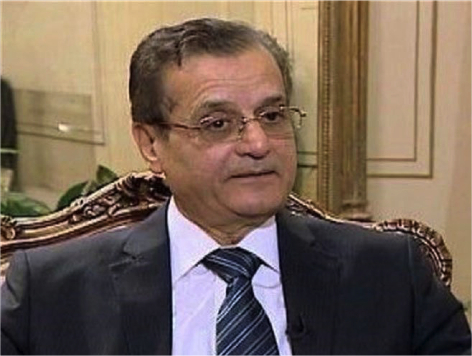
 د. عدنان منصور

كثر الحديث في الأسابيع الأخيرة، عن نادي رؤساء الحكومات السابقين، وكأنّ هذا النادي، المولود الهجين الجديد، بمثابة مجلس «حكماء»، أراد لنفسه أن يكون الوصيّ المباشر، والحريص كلّ الحرص، على تعيين او اختيار رئيس حكومة للبلاد. هذا المجلس أياً كان عدده، يريد ان يؤسّس عرفاً، ونمطاً، وسلوكاً جديداً في لبنان، وما أكثر التسميات والأعراف السياسية التي تتناسل وتتناسخ في هذا البلد الموبوء بالأزمات والمشاكل، ليصبح لهذا المجلس في ما بعد الكلمة الأساس والفصل، في اختيار وانتقاء وتسمية المرشحين، لتشكيل أيّ حكومة جديدة، أو عندما تدعو الحاجة، استخدام حق النقض، أو الرفض، أو حجب الثقة عنهم، ومحاصرتهم، أو إفشال وإجهاض أيّ محاولة منهم فيما لو خرجوا عن طاعتهم وإرادتهم، وإملاءاتهم، وتوجيهاتهم.

مجلس مثير، عجيب غريب، لم تشهد دول العالم مثيلاً له، في فذلكته، وتركيبته، وأدائه، وغايته، والذي يضمّ عدداً من «الأخيار الفضلاء»، حيث شهد اللبنانيون في زمن حكوماتهم، «مدينة الفارابي الفاضلة»، التي يُحتذى بها، ويشهد لها القاصي والداني، والصديق والعدو، وكلّ مؤيد لها ومعارض.

ولعل فؤاد السنيورة أحد أركان هذا النادي، هو واحد من أبرز الشخصيات الفذة لنادي رؤساء الحكومات السابقين، الذي جسّد حقيقة لا لبس فيها ولا جدال، وهي قمة النزاهة، ونظافة الكفّ، والأداء السليم، والزهد في الحياة الدنيا، والإيمان العميق، والترفع عن الماديات والصفقات، والمال الحرام.

لكن السؤال الذي يراودني: ماذا لو أنّ نادي أو مجلس أو منتدى، رؤساء الحكومات السابقين _ سمّه ما شئت _ أطال الله بعمرهم جميعاً _ الذين تجمعهم روح الأخوة الصادقة، والنوايا السليمة الطيبة المشتركة تجاه بعضهم البعض، والمصلحة الوطنية الواحدة، والتنافس والتزاحم في ما بينهم لخدمة الشعب، والترفع عن مصالحهم الشخصية، واستعدادهم الدائم، للتضحية بمالهم وبأنفسهم في أيّ وقت، غير مكترثين بمنصب أو إغراء كرسي، تأكيداً وحرصاً وحفاظاً منهم على مصلحة الوطن والمواطن. أعود وأتساءل: ماذا لو اقتصر النادي على شخصية واحدة فقط، كفؤاد السنيورة مثلاً، أمل اللبنانيين باستمرار، ومُلهم المواطنين وحبيبهم، ومثلهم الأعلى، وأملهم الكبير! فهل هو الذي سيقرّر لوحده وفقا للعرف الجديد، تسمية رئيس حكومة عتيد، يتمتع بصفات مثالية، متميّزة يريدها للمرشح، تتطابق مع الفضائل الحميدة لفؤاد السنيورة، الذي سينقلنا مع من يختاره إلى عالم جديد، في رحاب جمهورية أفلاطون!

سؤال برسم المتبحّرين في التقاليد والأعراف السياسية اللبنانية، والبدع، والفذلكات العجيبة، والتشكيلات الهجينة، والابتكارات الحكومية المعقدة، التي لا تسمن ولا تغني من جوع.

ها هو اليوم، مصطفى أديب الذي اختاره وتبناه نادي رؤساء الحكومات السابقين، يعتذر عن تأليف الحكومة، حيث لم يسمح له النادي العتيد أن يتحرك بإرادته الحرة المستقلة، وإنما ظلّ أسيراً في يد أقطاب النادي، يشيرون، ويوجّهون، ويعترضون، ويحجبون، فكان المكلف بتشكيل الحكومة، وسط ناد قلبه مع مصطفى أديب، وعيون أعضائه ولعابهم يسيل على الحكومة.

فماذا بعد مصطفى أديب؟! وما الذي ينتظره لبنان من أقطاب النادي في اختيارهم لمرشح جديد لا يريدون له مطلقاً أن يخرج من جلبابهم، لتكون لهم الكلمة الفصل، أياً كانت نتائجها، وإنْ تعارضت مع مصلحة الوطن واستقراره، طالما انّ هذا النادي بدوره لن يخرج عن إرادة وتوجهات وإملاءات قوى خارجية، تفعل فعلها على الساحة اللبنانية، بطرق وأساليب عديدة، عبر أطراف وهيئات وشخصيات عديدة، وأصدقاء وحلفاء تستخدمهم مطية عندما تدعو الحاجة.

فبعد اعتذار المكلف، هل سيستفيد أقطاب النادي من تجربة مصطفى أديب وفشل التشكيل، أم سيستمرّون في نهجم وأدائهم السابق، ويمعنون في التعطيل؟! وهل التعطيل الذي كان النادي أحد أبرز أسبابه، يهدف من ورائه جرّ الخارج إلى فرض المزيد من الضغوط والعقوبات، على طرف لبناني رئيس وتحميله مسؤولية فشل تأليف الحكومة، وحمله على التنازل، والرضوخ لإرادة ومطالب النادي، وما يخطط له ويرسمه وينسقه مع حلفاء الداخل والخارج؟! وهل الوطن اللبناني، بعد فشل التأليف، سيسلم من الهزات التي تحيط به من كلّ جانب وتهدّد أمنه، واستقراره، وسيادته، ووحدة شعبه، والتي لم يعد باستطاعته أن يستوعب الحدّ الأدنى من درجات قوتها، بعد ان تهاوت في لبنان كلّ مقوّمات حياته الاقتصادية والمالية والنقدية والاجتماعية، وفوق كلّ ذلك، المعيشية وانعدام ثقة المواطن بالطبقة السياسية الفاسدة، ويأسه من غده ومستقبله؟!

أيها «الغيارى» على لبنان، لا تدعوه ينهار ويسقط، ويتحلل أمام عيونكم وسياساتكم الكيدية، لأنّ عنادكم ورهانكم واعتمادكم على الخارج، لن يوفر لكم ما تريدون ويريده معكم، بل سيزيد من تفاقم الأزمة الخطيرة، وارتداداتها المدمّرة التي ستطال الجميع ولن تستثني أحداً.

فأين نادي «الحكماء» من كلّ ذلك؟!

ــــــــــــــــــــــــــــــــــــــــــــــــــــــــــــــــــــــــــــــــــــــــــــــــــــــــــ

*وزير الخارجية والمغتربين الأسبق

مقالات متعلقة

River to Sea Uprooted Palestinian   
The views expressed in this article are the sole responsibility of the author and do not necessarily reflect those of the Blog!

Wednesday, 23 September 2020

Shia Duo Sources to Al-Manar: We Have Rescued Hariri Several Times from Ingesting His Allies’ Poison

 September 22, 2020

أول ما شاهده في المطار رجال شرطة صادروا هواتفه.. كشف كواليس احتجاز “ابن  سلمان” لـ”سعد الحريري” | الوطن

In response to the statement of the former premier, MP Saad Hariri, about the cabinet formation, the Shia duo (Hezbollah and Amal Movement) sources told Al-Manar that the duo wonders how Hariri allows himself to set conditions for nominating the finance minister, wondering how he alleges that the French initiative includes this issue.

The sources added that the Shia duo do not want for Hariri to be poisoned, adding that that they have rescued him several times from his allies’ poison.

Hariri had stated that he decided to help the PM-designate Mustafa Adib by approving nominating a Shiite minister to hold the finance portfolio, considering that he has accepted again to ingest the poison.

The former prime ministers Fouad Siniora, Tammam Salam and Najib Miqati later issued a statement in which they pointed out that they are not committed to Hariri initiative pertaining the cabinet formation

Meanwhile, Al-Manar sources said that the cabinet formation process did not witness any progress, adding that President Michel Aoun has the right to propose whatever is suitable in this regard.

The Lebanese political system classifies the finance, interior, foreign affairs, and defense portfolios as sovereign and distributes them over the major sects. However, Taif Agreement grants the finance ministry to the Shia sect in order to have the third signature on most of the ministerial decrees.

The PM-designate Mustafa Adib and a group of former prime ministers reject granting the finance ministry to the Shia sect, while Hezbollah and Amal movement insist on the right to take the portfolio in line with the Constitution.

Source: Al-Manar English Website


Related Videos

Related Posts


River to Sea Uprooted Palestinian   
The views expressed in this article are the sole responsibility of the author and do not necessarily reflect those of the Blog!

Tuesday, 21 May 2013

"Saudi Arabia is excising Qatar from the Lebanon & Syria!"


FLC

 'Gone a 'menage a deux & a quarter'!'
"...According to sources knowledgeable in internal Saudi affairs, Riyadh considers its dispute with Qatar — subsequent to the latter’s support for the Syrian Muslim Brotherhood reaching power — as a dispute with strategic overtones. Lately, specifically after the naming of Tammam Salam as prime minister-designate to form a new Lebanese government, the alliance between Doha and Riyadh in managing the Lebanese arena has shown signs of disintegrating. The last time the two countries were in accord over Lebanon was when [former Lebanese] Prime Minister Saad Hariri visited Qatar last summer, and later appeared in a photograph with Qatari Prime Minister Sheikh Hamad bin Jassim when both visited Saudi King Abdullah bin Abdulaziz.The Syrian crisis was responsible for restoring harmony between Qatar and Saudi Arabia in Lebanon; throughout the preceding period, between 2006 and 2011, Qatar had taken the side in Lebanon of the March 8 alliance backed by Damascus and Iran, while Saudi Arabia stood with the March 14 coalition, whose main Sunni constituent (the Future Movement) is a Saudi protégé. The reasons that drove Qatar to espouse its aforementioned position remain unknown to this day; but some in Hezbollah think that Doha’s bias toward the Iranian-Syrian axis in Lebanon was not genuine, but was merely a political role assigned by Washington on Qatar — the location of the largest American military base in the Arab Gulf..., ..., ... 
During the Syrian crisis and before, even when Hezbollah and its allies ousted Saad Hariri from the Lebanese premiership, the political divergence between Qatar and Saudi Arabia in Lebanon lost its raison d'être, and they both re-adopted the traditional Gulf policy of concentrating on weakening Iranian influence in the Orient. Doha and Riyadh therefore switched to an offensive policy, through publicly supporting the Syrian opposition bent on toppling Bashar al-Assad’s Iranian-allied regime, and by extension, weakening Iran’s Lebanese allies, led by Hezbollah. 
In its internal discussions, Hezbollah affirms that Qatari funding stands behind the rise of Sheikh Ahmad al-Assir, who came to prominence in the last two years by challenging and criticizing Hezbollah from his Bilal bin Rabah mosque in Sidon. Hezbollah’s information also indicates that Saudi Arabia is funding Salafist factions in Lebanon that profess animosity towards the party.
Yet, it’s been obvious lately that the honeymoon between Riyadh and Doha in Lebanon is ending. The main point of contention between them this time is the issue of support for the Muslim Brotherhood in Syria. While Qatar and Turkey are planning to make the Brotherhood the spearhead of their future influence in Syria following Assad’s ouster, Riyadh, on the other hand, backs the advent to power of moderate Sunni factions, most of which are comprised of Syrian Army defectors and other figures who don’t belong to Islamist movements. From Riyadh’s perspective, its disagreement with Qatar about the Brotherhood is a strategic one. For Saudi Arabia is wary of the ties between the Muslim Brotherhood and the Islamist Sahwa movement in Saudi Arabia, which today represents the main internal opposition to the Saudi ruling family. Riyadh wants Qatar to abandon its plan to back the Muslim Brotherhood because it would become a source of strength for the Saudi Sahwa movement if it were to attain power in Syria.
 
Riyadh is therefore developing a new policy in Lebanon, and has begun opening up to all Lebanese political powers, including Iran’s ally Hezbollah and the Christian Free Patriotic Movement, which belongs to the Iranian-Syrian axis of resistance. Saudi Arabia is also bolstering its influence on Sunni Lebanese factions, in order to minimize Qatari influence over them. There are indications that Riyadh has succeeded in dispelling Qatar’s role in Lebanon, as evidenced by the lack of visits by Lebanese officials to Doha recently, and the resurgence of visits to Saudi Arabia instead. Furthermore, Sheikh Assir’s vitriolic Qatari-influenced verbal attacks on Hezbollah have ceased lately. 
Qatar’s role in the region is the subject of behind-the-scenes attacks by factions close to Saudi Arabia in Lebanon, and talk about it being a country that is trying to fight above its weight class has risen to prominence once again. All of this points to Saudi Arabia having decided to excise Qatar from the Lebanese as well as the Eastern scenes. This is all part of a comprehensive Saudi agenda to strike at the Muslim Brotherhood and weaken the influence of the countries that support it in sensitive areas of the Arab and Muslim worlds.  "
River to Sea Uprooted Palestinian  
The views expressed in this article are the sole responsibility of the author and do not necessarily reflect those of this Blog!

Friday, 17 May 2013

Tammam Salam...Be Careful!


From what we have seen so far, Salam seems to completely ignore certain political realities which can be said to be equivalent to certain articles of the constitution, particularly when it comes to governing the country. (Photo: Bilal Jawich)
 
Published Monday, May 13, 2013
 
Prime minister-designate Tammam Salam’s reading of his appointment to form a government is increasingly running counter to reality on the ground.

He interpreted the near-unanimous support he received in parliament from all the political parties as a sign of weakness on the part of March 8, and particularly Hezbollah, which he believes is not in a position to oppose him

He also misread his follow Beirutis’ enthusiastic support for his appointment, believing it was due to their desire for an alternative Sunni leader to the Hariris. In fact, the capital’s residents – who hail from all sects – welcomed Salam’s selection, hoping he would play the critical role of building bridges across Lebanon’s fractured political landscape.

Having experienced the selection process firsthand, Salam should be fully aware that the Saudis were behind his appointment. Therefore, he should have no illusions about the role they want him to play in advancing their interests in Syria and Lebanon, particularly in confronting Iran and its allies in the region.

From what we have seen so far, Salam seems to completely ignore certain political realities which can be said to be equivalent to – if not more important than – certain articles of the constitution, particularly when it comes to governing the country. He has therefore erred on two counts:
1) The transfer of executive powers from the president to the cabinet as was stipulated in the Taif Accords that ended the Lebanese civil war means that neither the prime minister, nor the president, are capable of governing the country without striking deals with those political forces that carry weight in parliament and on the popular level.

Simply put, Salam must engage all the parties he needs to form a stable and effective government, finding common ground with them on the key issues facing the country.

2) It is true that Salam has the support of Riyadh and Washington externally – as well as March 14, Walid Jumblatt, and the president internally – but Lebanon’s recent experience has shown repeatedly that without some semblance of balance in representation, no government has much of a chance of survival.

The prime minister-designate must understand that what Lebanon needs at the moment is a government that can avoid – or, at the very least, postpone – a major internal explosion, with the hope that some favorable regional developments will come along and spare the country such a fate.

All attempts to ignore such a reality – and living in the illusion that you can represent other people’s interests despite them – is but an invitation to the opposition to mutiny as they did on 7 May 2008 or when they pulled out of the Saad Hariri government.

All the rest is meaningless chatter!

Ibrahim al-Amin is editor-in-chief of Al-Akhbar.

This article is an edited translation from the Arabic Edition.
River to Sea Uprooted Palestinian  
The views expressed in this article are the sole responsibility of the author and do not necessarily reflect those of this Blog!

Monday, 13 May 2013

Hezbollah Warns: Forming Fait Accompli Gov’t would Have Severe Consequences

Local Editor
 
Hezbollah warned of the dangers of declaring a fait accompli government, and considered this step would have severe consequences. In contrast, Premier-designate Tammam Salam assured that he will continue his efforts to form a consensus government that serves national interests.

Tammam SalamMinister Mohammad Fneish said, in a political meeting at the Municipal Directorate of Labor in the South, that forming a fait accompli government would be a step towards marginalization and elimination, which does not serve national interest, and cannot be accepted because it would divide the country.

“Thinking of imposing a fait accompli government is a return to challenging and elimination policies, and this will not be accepted at all,” Minister Fneish said.

For his part, Chairman of Hezbollah Executive Board, Sayyed Hashem Safieddine, considered, in a ceremony for the passage of one week on the burial of martyr Mohammad Baddah, that Hezbollah’s positive approach during the appointment of PM Salam was for the sake of preserving the country.

“Our positive approach during the appointment period was for the sake of the whole country and for approximating points of view; but if some parts insisted on possessing the government and boycotting other parts, then they must bear the responsibility of their acts,” Sayyed Safieddine stressed.

In parallel, Head of Hezbollah Juristic Council, Mohammad Yazbek, demanded, in a statement he made in a ceremony in Baalbeck, that the representation in the new government must be proportionate with the actual size of the parties.

Similarly, Loyalty to the Resistance Parliamentary bloc, MP Hasan Fadlallah, considered, in a ceremony he attended, that a fait accompli government would drag the country into a crisis, which would have severe consequences.

“Our constitution states clearly that the representation in the government must be a correct one. This is the core of the national charter, and any attempt to damage this representation is a threat to Lebanon which adopts the Taef accord,” MP Fadlallah stated.

Bekaa Official Mohammad Yaghi warned of forming a fait accompli government, considering it would bring instability to the country.

“We will not accept that you form a fait accompli government, and reaching this point will have severe consequences,” he said.

In contrast, Premier-designate Tammam Salam assured in a meeting with reporters that he will continue his efforts to form a consensus government which would serve the national interest and even include members that are not candidates for the election.

He considered that a fait accompli government was a one colored, challenging, or a guaranteeing-third government.

Tammam further told reporters that his choices were variable, and he will set the right moment in which he would take the national choice, as he is currently negotiating with several political sides.
For his part, Deputy Chief of the Kataeb (Phalange) Party, Sejaan Qazzi, told Al-Manar correspondent that his party did not support a challenging government, and wondered: “Could PM Salam protect a fait accompli government?”

Qazzi further stated that “We’d rather wait than form a government which would make an explosion in the country.”

In this context, Progressive Socialist Party Chief Walid Jumblatt, who returned Sunday night from a surprise visit he made to Saudi Arabia where he met former PM Saad Hariri,  considered that “the cabinet that grants eight ministers to the March 8, March 14, and centrist blocs offers the best representation and avoids schemes to obstruct political life in Lebanon.”

Jumblatt also slammed criticisms by opposing groups, stating that he supported Salam and President Michel Suleiman's efforts to form a “cabinet of national interests”.
Source: Al Manar TV
13-05-2013 - 15:04 Last updated 13-05-2013 - 15:04
River to Sea Uprooted Palestinian  
The views expressed in this article are the sole responsibility of the author and do not necessarily reflect those of this Blog!

Wednesday, 17 April 2013

Lebanon Cabinet: Hezbollah and Suleiman Change the Equation


To their surprise, March 14 discovered that Hezbollah was not at all prepared to sacrifice their Aounist ally.


Published Wednesday, April 17, 2013
 
After a failed attempt to present his line-up for a new cabinet, prime minister-designate Tammam Salam is reconsidering his options in light of new regional developments.

Political commentators were not far off when they predicted that the formation of a new government would prove difficult, even after the relatively quick process of naming a new prime minister.

After a clumsy first attempt at imposing a list of his own choice, Tammam Salam was convinced to take more time for consultation, especially after Hezbollah insisted that a new government be made up of all the political parties according to their weight in parliament.

March 14 had initially believed it had the upper hand in forming the new government. It believed that Hezbollah had pressured its ally, Michel Aoun’s Free Patriotic Movement (FPM), into naming Salam in order to help defuse mounting Sunni-Shia tensions in the country.

Despite the fact that Salam was not their first choice by any means, March 14 managed to turn him into their candidate, taking the initiative in naming their preferred ministers, accompanied by a campaign to exclude the FPM altogether.

To their surprise, March 14 discovered that Hezbollah was not at all prepared to sacrifice their Aounist ally. The Shia party is reported to have even asked for a veto share – one-third of the cabinet – for March 8 and the FPM. Otherwise, Hezbollah sources said, the minority can rule on its own, while they and their allies will become the opposition.

Those close to Hezbollah say the party is far more at ease these days given the new developments taking place in Syria. To begin with, the party no longer feels the need to hide that some of its fighters are involved in Syria, even though it is under the guise of protecting Lebanese villages and Shia shrines.

The party is also said to be quite comfortable about the trajectory of events in Syria, where the regime has managed to regain the initiative on the ground and has scored a series of gains across the country against opposition fighters.

The developments next door mean that Hezbollah is not under any pressure to quickly form a new government, for time is increasingly on its side.

Even Lebanese President Michel Suleiman seems to have adjusted his position of supporting Salam’s efforts by asking him to take some time for consultation instead of unilaterally imposing a list of candidates.

It appears that Walid Jumblatt played a key role in tempering the president’s position, not out of any deference to Aoun, but rather due to the Druze leader’s conviction that it is neither to his or the president’s advantage to antagonize Hezbollah at the moment.

Like Hezbollah, the president is not in any rush to form a new government, especially one that will not provide him with the necessary cover to finish out the last year of his term on a high note.

This article is an edited translation from the Arabic Edition.

River to Sea Uprooted Palestinian  
The views expressed in this article are the sole responsibility of the author and do not necessarily reflect those of this Blog!

Saturday, 13 April 2013

Lebanon: New Prime Minister Breaks the Mold


In the end, however, the task of forming a new government will largely depend on how quickly the contending sides can agree on a new electoral law. (Photo: Haitham Moussawi)
 
Published Monday, April 8, 2013
 
Lebanon’s designated prime minister Tammam Salam has declared his intention to head a consensus government with the “national interest” as its slogan.

He made it clear that his government’s main task would be to oversee the parliamentary election according to a law agreed upon by all sides. To start off on a good foot with everyone, he insisted that he is politically neutral and not beholden to any parties.

Of course everyone is waiting to see how Salam will approach Hezbollah, not only on the formula for the new government, but also on Syria and the party’s resistance activities. March 14’s hawks are talking less these days about the Resistance’s weapons – they’re more concerned about Hezbollah’s presence in Syria.

But developments over the last two years have prompted some March 14 leaders, including Salam, to raise questions about the growing amount of weapons in the hands of Hezbollah’s foes, which have become a greater source of worry for the Lebanese than those under the control of the Resistance.
Hezbollah need not put the prime minister-designate through any tests to know his position on the issues that matter most to the party. They’re quite comfortable that he won’t repeat the actions of his Future Movement predecessors Saad Hariri and Fouad Siniora

Michel Aoun, too, has little to worry about, particularly on the question of Salam’s relations with radical Islamist currents, like the Salafis. It is true that the two men are not in regular contact, but those who shuttle between them claim that Salam’s positions are reassuring to Christians in Lebanon.

Practically speaking, there are no major obstacles between Salam, on one side, and March 8 and Aoun’s Free Patriotic Movement, on the other. The coming days will reveal that the two sides conducted negotiations far from the media, which are likely to produce a better relationship than the one that existed with outgoing prime minister Najib Mikati.

In the end, however, the task of forming a new government will largely depend on how quickly the contending sides can agree on a new electoral law. Without such a breakthrough, Salam’s mission may very well become a long and difficult one.

But what about Salam’s relationship to the Future Movement and March 14, or even the ascending Islamist forces? How will he deal with the demands placed on him by Hariri’s men and to what extent will they leave him room to make his own choices?


Most Lebanese know by now that Salam was not Hariri’s optimal choice for prime minister. Both he and his Saudi patrons would have preferred former Internal Security Forces commander Ashraf Rifi, but the moment was not yet right to maneuver him into office.

Salam may not pose any real danger to Hariri’s position among Sunnis, but there are many in Beirut – Salam’s hometown – that feel that they have been marginalized since the ascent of the Hariris to power two decades ago. It is enough for Salam to hear out Beiruti politicians, activists, and leaders to understand the scale of discontent in the capital.

As for his outlook toward the rising Islamist forces, Salam is a conservative in the traditional sense, for whom political Islam represents a headache for Lebanon’s Sunnis, primarily due to the way it relates to the country’s diverse religious and confessional landscape.

It is well-known that Salam’s daily life is full of close interactions with Beirut’s many sects, as well as the city’s mix of political and social currents. This is in stark contrast to the inward-looking and communal life-style advocated by the Salafis.

In many ways, Salam may find it easier to deal with Hezbollah and Aoun than his traditional March 14 allies, who have already laid political claim to the prime minister-designate.

Ibrahim al-Amin is editor-in-chief of Al-Akhbar.

This article is an edited translation from the Arabic Edition.
 
River to Sea Uprooted Palestinian  
The views expressed in this article are the sole responsibility of the author and do not necessarily reflect those of this Blog!

A Peek at Salam’s Controversial Cabinet


The main concern now is forming the cabinet. We will switch off our engines so that we can focus on reaching a good outcome. (Photo: Haytham Moussawi)
Published Friday, April 12, 2013
 
As premier-designate Tammam Salam focuses on forming his cabinet, the March 8 alliance made three observations about Salam that, in their view, do not bode well for the future.

First, March 8 remarked, Salam announced his candidacy from the home of former prime minister Saad Hariri. This occurred during a theatrical March 14 meeting meant to signal their return to power via a “bloodless coup.”

Second, Salam did not reach out to any senior leaders in March 8 after his designation, as is customary for new prime ministers. Salam’s excuse: he was preoccupied.

Third, March 8 questioned why Salam did not follow in the footsteps of his predecessors Hariri and Mikati, by immediately visiting Hezbollah Secretary General Hassan Nasrallah after being named prime minister. Hariri and Mikati’s goal was to initiate strategic dialogue with Nasrallah and boost cooperation. According to sources in Hezbollah, the current premier-designate and the Resistance party are not estranged.

One explanation has come from former prime minister Fouad Siniora’s circles, which purported that Salam’s political directive is clear: lead a government of independents to oversee the elections – a longstanding demand of both Saudi Arabia and March 14.

In this context, Al-Akhbar has learned from informed sources that on Wednesday evening, Siniora was putting the final touches on his cabinet line-up. It was not clear whether the former prime minister had handed over his list to the premier-designate, or if the latter would even adopt it.

Siniora’s line-up is based on a technocratic government comprising 14 ministers (seven Muslim and seven Christian). Al-Akhbar learned the majority of names on Siniora’s list, including:

Shia ministers: Raed Sharaf al-Din, first deputy governor of the Central Bank of Lebanon (BDL) and Youssef Khalil, a director at BDL. Al-Akhbar could not obtain the third name.

Sunni ministers: In addition to Salam, Siniora’s “cabinet recipe” includes four additional names, two of which would be chosen: Abdul-Hafiz Mansour, head of the BDL’s anti-money laundering commission and close to the Future Movement; Mohammed al-Mashnouq, who is close to Salam; Ashraf Rifi, head of the Internal Security Forces, as a possible contender for the ministry of interior; and former minister Khaled Qabbani.

Maronite ministers: The list included three names, three of which would be selected: Bassam Yammine, former energy minister in Mikati’s 2005 government and close to MP Suleiman Franjieh; former finance minister Jihad Azour for the same post; Joseph Tarabay; Naji al-Bustani, who is close to President Michel Suleiman and March 8; and former Minister Ziad Baroud.

Druze ministers: Bahij Abu Hamzeh for the energy ministry. Abu Hamzeh is the “secret ingredient” meant to entice Druze MP Walid Jumblatt to give a vote of confidence to the proposed cabinet in parliament.

Sources believe that, if adopted by Salam, President Suleiman may endorse this line-up. For his part, Jumblatt pledged to Speaker of Parliament Nabih Berri not to consent to a government that is not acceptable to all political factions, particularly Hezbollah. Jumblatt may give such a government a vote of no-confidence, setting off a new round of negotiations to form a new cabinet.
Prominent March 8 sources said that Siniora’s circles are presenting the line-up in question as a fait accompli. To be sure, the proposed line-up would be a gross violation of the national pact, the constitution, and all norms in place, and would hence be unacceptable to many factions.

On Thursday, President Suleiman met with Salam to discuss the outcome of the consultations. The premier-designate spoke to reporters afterwards, and said, “The main concern now is forming the cabinet. We will switch off our engines so that we can focus on reaching a good outcome.”
(Al-Akhbar)

This article is an edited translation from the Arabic Edition.
 
River to Sea Uprooted Palestinian  
The views expressed in this article are the sole responsibility of the author and do not necessarily reflect those of this Blog!