Showing posts with label Belgium. Show all posts

Monday, 30 November 2020

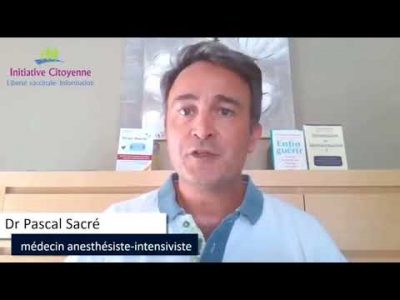
Dr Pascal Sacré: Emergency Physician Unjustly Fired for His Writings on the COVID Crisis: The Right of Response

 Thanks to all of you who want a world where the word is respected, truth is defended, freedom is a reality. I will never let fear rule my life. Don’t negotiate with fear.

By Dr. Pascal Sacré

Global Research, November 28, 2020

There, it happened.

For my words, my words, my writings, I was dismissed like a waste, a thief, without the right to answer.

An experienced, competent emergency physician, appreciated by his colleagues for my actions in stressful situations, fired in the middle of COVID!

For words, for an image.

All you had to do was reassure people, defend your doctor, attenuate and wait for the storm to calm down…  and then talk.

I write, it’s true, things that disturb, dissident points of view, those who follow me on this site since 2009 know it.

When I resumed my writing starting in 2020, about the political management of the COVID crisis, but also generally, about the endemic corruption of medicine, science and official bodies in Belgium, I felt that it would be risky, really.

But I did not give up because I will never let my life be controlled by fear.

Some people say that I am unconscious. Do you think that after 17 years of treating people, in emergency, stress, often for 24 hours at a time, I could have done all this while being unconscious?

Some people say that I am irresponsible. I have always taken my responsibilities, preferred writing to speaking because it allows reflection, rereading, and I have always turned my tongue 7 times in my mouth, before finishing an article and sending it with all its sources and references. I have always respected the rules of the hospital, of society, even when, as they stand, they seemed crazy to me and likely to cause more harm than good. I have always put the safety of my patients above my convictions, preferring to explain, to convince through words and writings.

Some say I am a disgrace to the profession.

Those who say that are ignorant of my profession. Many people talk about critical care, especially today with Covid, when critical care has been around for 70 years, but do they even know, these accusing people, what they are talking about?

We can’t pretend, this is live, live, surrounded by death and suffering,

We don’t know how to lie and if we do, we get out. I’ve held on to it for 17 years and I only had to stop suddenly because of people who don’t like what I say, don’t like my opinions!

Some say, the most beautiful things, that I am anti-everything. Those who say that are certainly much more so than I am. I will tell you all the things I am for:

  1. The truth, in any case its permanent search and accept for that, to deceive me.
  2. Tolerance of other people’s ideas, opinions and writings.
  3. The will, in turn, to be able to express my ideas, opinions and writings.
  4. Respect for nature and animals
  5. Relief of pain and suffering
  6. Life in all its facets, music, sounds, songs, dances, colors, and therefore accept death, because one cannot live like this without accepting the idea of dying at any time.

I only wanted to ask questions, to give my points of view without ever imposing them, to question, to nuance, to contextualize, to reassure when others only want to terrorize.

I was condemned, thrown away for that.

I was forced to abandon my colleagues in difficulty, summoned to leave burning places by people who should not so easily spit on the help of one of their own, a resuscitator, for words, a picture!

That’s how it is.

They have that power.

And yet,

  • Professor Didier Raoult (France)
  • Professor Christian Perronne (France)
  • Professor Toubiana (France)
  • Professor Toussaint (France)
  • Professor Gala (Belgium)
  • And all those other doctors, caregivers, health care professionals,

Belgium :  https://docs4opendebate.be/fr/open-brief/ 

Netherlands: https://opendebat.info/  et https://brandbriefggz.nl/ 

US Frontline Doctors : https://www.xandernieuws.net/algemeen/groep-artsen-vs-komt-in-verzet-facebook-bant-hun-17-miljoen-keer-bekeken-video/ 

Spain: https://niburu.co/gezondheid/15385-artsen-komen-massaal-met-coronawaarheid-naar-buiten 

Germany: https://acu2020.org/international/ 

Belgium : https://omgekeerdelockdown.simplesite.com/?fbclid=IwAR2bJAAShAlIidjnRQPyVSoZbk1Uj-FTHAthL77hKX_Oo8aMLN3V6DdwAac 

https://www.lalibre.be/belgique/enseignement/septante-medecins-flamands-demandent-l-abolition-du-masque-dans-les-ecoles-une-menace-serieuse-pour-leur-developpement-5f58a5189978e2322fa9d32c

https://belgiumbeyondcovid.be/

France : https://france3-regions.francetvinfo.fr/provence-alpes-cote-d-azur/bouches-du-rhone/marseille/covid-tribune-pres-300-scientifiques-denoncent-mesures-gouvernementales-disproportionnees-1878840.html 

We are all of them.

There are thousands of us.

Thanks to all of you who want a world where the word is respected, truth is defended, freedom is a reality.

I will never let fear rule my life. Don’t negotiate with fear.

Dr. Pascal Sacré

Featured Photo: Citizen Initiative VideoThe original source of this article is Global ResearchCopyright © Dr. Pascal Sacré, Global Research, 2020


River to Sea Uprooted Palestinian   
The views expressed in this article are the sole responsibility of the author and do not necessarily reflect those of the Blog!

Friday, 17 July 2020

UNSC Approves Extending Al-Qaeda Border Crossing to Idlib for One Year

Source
NATO Friends in Syria - UNSC - Nusra Front ISIS FSA Al Qaeda Terror SDF Kurds
NATO Friends in Syria
UNSC, the United Nations Security Council, passed a new resolution on Syria to allow humanitarian aid introduction into Syria through one border crossing.
After a long heated deliberation between the members of the United Nations Security Council, members who support Al Qaeda and want to prolong the terror war on Syria spearheaded by NATO member states, and those who want to adhere to international law and respect the sovereignty of an establishing member state of the United Nations, Syria.
The existing mandate for sending ‘humanitarian aid’ into Syria expired yesterday, the 10th of July. The new resolution allows extending the introduction of ‘humanitarian aid’ through Bab Al Hawa border crossing with NATO member state Turkey into Idlib, the last stronghold of al-Qaeda in Syria. The extension is for one year.
This means that any other border crossing run by any other party than the Syrian Government is considered as illegal and the Syrian armed forces and their allies are not only allowed to target, but are obliged to do so.
NATO member states Germany and Belgium penned the initial draft resolution to extend the crossings for one year and increase the number of such crossings to 6. The situation today is totally different than when the 2165 UN resolution was passed in 2014, now that US-sponsored terrorist groups have lost the majority of the territories they gained back then, and the Syrian state increased its presence all over, therefore, logically, there’s no need for more crossings now, rather what was needed is enabling the Syrian state to eliminate all terrorist groups, not provide them with humanitarian and non-humanitarian aid to prolong the suffering of the Syrian people further.
Three countries abstained from the vote on the new UNSC resolution: Russia, China, and the Dominican Republic, there were no vetoes allowing the new resolution penned by NATO member states Germany and Belgium to pass.
Russia and China vetoed the previous draft resolution penned by NATO member states Germany and Belgium extending the border crossings to one year and adding new crossings, Russia presented a counter draft that very much is similar to the one passed but was vetoed by NATO member states because it includes a demand to lift the inhumane unilateral coercive measures against the majority of the Syrian people, and the new compromise was finally introduced.
Russia’s opposition to the resolution remained because it’s ignoring the request of the UN Secretary-General to include in it the demand to lift off the unilateral coercive measures (draconian sanctions) imposed on the Syrian people, the 18 million of them not living in the last ‘safe haven’ of al-Qaeda in Idlib province, but Russia didn’t veto the new resolution since there are civilians that might benefit from this crossings until Idlib is cleaned from NATO-sponsored terrorists.

River to Sea Uprooted Palestinian   
The views expressed in this article are the sole responsibility of the author and do not necessarily reflect those of the Blog!

Thursday, 11 April 2019

Retired French Colonel to ST: False chemical attacks have been organized by terrorists with help of western powers and Turkey to justify strikes on Syria

Sunday, 07 April 2019
DAMASCUS, (ST) – The Retired French Colonel Alain Corvez has emphasized that western powers are trying to use all kinds of false pretexts to carry out airstrikes against Syria in order to delay the political solution they don’t want.
Among these false pretexts are chemical weapons attacks being filmed and carried out by foreign-backed terrorist groups in Syria to blame the Syrian government for the attacks.
“Russian intelligence are very professional services and they have said that France and Belgium intelligence are in contact with White Helmets and terrorist groups in Idlib area and they are plotting false flag chemical attack in this area. They are reliable and I believe they say the truth because they have proved in the past their accuracy,” the retired officer told the Syria Times e-newspaper
He made it clear that this truth corresponds to the regrettable French action from the start of the war in Syria to support jihadists to take over the legal government of President Bashar Al-Assad which is their obsession.
“From the beginning the French diplomacy has to follow the US strategy and even to be the best pupil of the classroom in overtaking the master. This time, Belgium seems willing to demonstrate its association with this devil project. But Germany have also been participating in the support to terrorists together with France. Proofs of that have been delivered several times, namely by Russians,” the retired colonel stated.
He added: “The shame is that French media do not inform the people and diffuse the government propaganda trying to present its action as humanitarian.”
Mr. Corvez affirmed that false chemical attacks have already been organized by terrorists with the help of western powers and Turkey who want to justify strikes on a “power which kills its own people with prohibited chemical weapons”.
“The false attacks are being organized  because the western powers’ strategy of legal government’s change has failed by  the fierce resistance of the Syrian army supported by the people and leaded by its President, with the help of true friends of Syria : Russia and Iran who are also interested in the victory of their common camp,” Mr. Corvez said.
He affirmed that the western powers’ attempts will fail again and the US forces will leave Syria eventually, even if it is not the idea of the “deep state” in Washington which does not defend American interests but Israeli ones.
“Trump is a close friend of Israel but a patriot and he understands that the interest of US is to cease this war and others in the ME which makes people hate America, except a few leaders disconnected from their population relying on US support,” the retired officer concluded.
Related link:
Interviewed by: Basma Qaddourv

River to Sea Uprooted Palestinian   
The views expressed in this article are the sole responsibility of the author and do not necessarily reflect those of the Blog!

Tuesday, 23 October 2018

Belgian official: israel (apartheid state) steals organs of Palestinian kids


Robrecht Vanderbeeken, the cultural secretary of Belgium’s ACOD trade union
Press TV – October 21, 2018
A Belgian official’s remarks that Israel steals the organs of Palestinian children, whom it kills, have made headlines again after the news website which published them decided to stick to the story.
Robrecht Vanderbeeken, the cultural secretary of Belgium’s ACOD trade union and a philosophy of science scholar, had made the comments back in August in a column published by Belgian website De Wereld Morgen.
The population of the Gaza Strip is being “starved to death, poisoned, and children are kidnapped and murdered for their organs,” he wrote then.
The website recently received a complaint by Belgian watchdog, the Interfederal Center for Equal Opportunities, over the story.
De Wereld Morgen, however, stuck to the assertion that Israel “kidnapped” and “murdered” Palestinian children and used organs belonging to the Palestinians its forces killed.
In November 2015, the Palestinian ambassador to the United Nations said Israel harvested the organs of the Palestinians it killed.
In a letter to the UN secretary general, Riyad Mansour said the bodies of Palestinians killed by Israeli security forces “were returned with missing corneas and other organs, further confirming past reports about organ harvesting by the occupying power.”
The New York Times also said in an August 2014 report that transplant brokers in Israel had pocketed enormous sums of money. Based on the newspaper’s analysis of major organ trafficking cases since 2000, Israelis had played a “disproportionate role” in organ trafficking.
The issue of organ theft by Israel was first brought to the fore in a report published by Sweden’s most highly-circulated daily Aftonbladet in 2009.
Back in 2000, Dr. Yehuda Hiss, the former head of Israel’s forensic institute, divulged that Israeli pathologists at the institute would harvest skin, corneas, heart valves, and bones from the bodies of Palestinians and others often without permission from relatives.
The interview was, however, released no later than 2009 by Nancy Scheper-Hughes, a professor of anthropology at the University of California-Berkeley, who had conducted it as part of her investigation into the institute, in response to a row created between Israel and Sweden over Aftonbladet’s report.

River to Sea Uprooted Palestinian   
The views expressed in this article are the sole responsibility of the author and do not necessarily reflect those of the Blog!

Friday, 24 March 2017

From Paris to London: Another City, Another Attack with Elements from «ISIS» Playbook

In the immediate aftermath of what police are describing as a terrorist incident in and around Parliament, at least three facts stand out suggesting that the attacks are similar to those carried out over the last two years by “ISIS” supporters in Paris, Nice, Brussels and Berlin.
UK's Big Ben
The similarities with the events today are in the targets of the attacks which in all cases were ordinary civilians, but the means of trying to cause mass casualties differs. In Nice, Berlin and London no fire arms were used by the attackers, while in Paris and Brussels there was a coordinated assault in which guns and explosives were employed.
In Nice on 14 July 2016 a truck killed 86 people and injured hundreds, driving at speed through crowds watching a firework display on the Promenade des Anglais until the driver was shot dead by police. “ISIS” claimed that he was answering their “calls to target citizens of coalition nations that fight ‘ISIS'”. Britain is a member of the coalition with aircraft and Special Forces troops in action against “ISIS” in Iraq and Syria.
“ISIS” claimed responsibility for a lorry which drove into a Christmas market in 19 December 2016, killing 12 and injuring dozens. As with Nice, this appears to resemble what happened on Westminster Bridge, going by first reports.
The overall location of the attacks today may be significant and would fit in with the way that “ISIS” normally operates when carrying out such atrocities. This is to act in the center of capital cities or in large provincial ones in order to ensure 24/7 publicity and maximize the effectiveness of the incident as a demonstration of “ISIS’s” continuing reach and ability to project fear far from its rapidly shrinking core areas in Syria and Iraq.
“ISIS” is sophisticated enough to know that such attacks carried out in news hubs like London or Paris will serve their purposes best. In cases of attack with a knife or a vehicle then “ISIS” would not need to provide more than motivation, though individuals seldom turn out to have acted alone. It may no longer have cells in Europe capable of obtaining fire arms or making bombs.
It could be that the attacks were carried out by another group, the most obvious candidate being one of the affiliates of al-Qaeda in Yemen. Syria or elsewhere. On 11 March 2017 Jabhat Fateh al-Sham, formerly Jabhat al-Nusra, the Syrian affiliate of al-Qaeda, carried out two bombing attacks in Damascus, killing 59 people, mostly Shia pilgrims from Iraq visiting holy sites. But the Syrian arm of al-Qaeda, while carrying out suicide bombings against targets in Syria, has previously avoided doing so abroad in order to make itself more diplomatically palatable than “ISIS”.
Could the attacks on Westminster Bridge and in Parliament be linked to the siege of Mosul where “ISIS” has lost the east of the city and half the west since an Iraqi army offensive started o n17 October? “ISIS” has traditionally tried to offset defeats on the battlefield, by terrorist attacks aimed civilians that show they are still very much a force to be feared. The same logic led to the ritual decapitation, drowning and burning of foreign journalists and domestic opponents.
The most likely speculation at this early stage is that the attacks in London are inspired or directed by “ISIS”, but there is too little evidence to make the connection with any certainty. “ISIS” often holds off claiming such atrocities for several days to increase speculation and intensify terror.
Source: Independent, Edited by website team
23-03-2017 | 11:22

River to Sea Uprooted Palestinian   
The views expressed in this article are the sole responsibility of the author and do not necessarily reflect those of the Blog!

Sunday, 19 February 2017

Assad to Belgian Media: Europeans Only Follow US Master


A comment on this video from Uprooted Palestinians reads: “More sense from Assad in 3 minutes than from the West in 6 years.” I would have to concur, and I would add that Assad’s “following-the-US-master” comment would probably equally apply to Western so-called “human rights” organizations as well.
Last week I commented on a report by Amnesty International accusing the Syrian government of operating a “human slaughterhouse” at a prison near Damascus. Now comes a Human Rights Watch report alleging that the Syrians used chemical weapons in their liberation of Aleppo from terrorist control. The report, which can be found here, also implicates Russia, but relies upon information given by “journalists” from the Aleppo Media Center, the organization that produced the “boy in the ambulance” photo last year–a photo believed by some to have been staged.
The Amnesty report, published on February 7, and the HRW report, released February 13, would seem to be a one-two punch aimed at the Syrian government and coming as the Pentagon is now reportedly considering recommending that the US send “conventional ground combat forces” for the first time into Syria.
The Syrian government has responded to the HRW report in an article just published today at SANA.
***
Syria Dismisses HRW Chemical Weapons Report as Unprofessional and Non-Credible
Damascus, SANA – The Syrian government denies categorically the false allegations brought up in the report of the Human Rights Watch (HRW) that the Syrian forces and their allies used toxic substances in the operation to liberate Aleppo, an official source at the Foreign and Expatriates Ministry said on Wednesday.
“The fact that the Human Rights Watch organization relied on the terrorists’ media sources and on absolutely non-credible false witnesses proves the lack of credibility of the report,” the source said in a statement to SANA.
“This report comes to justify the terrorists’ defeat and the victories of the Syrian Arab Army and its allies,” the source added.
It dismissed the HRW report as “unprofessional” and “non-scientific” and based on distorting facts, stressing that the report will definitely lose ground when faced with any scientific study or legal evidence.
“The Syrian Arab Republic, which has met all its obligations under the Chemical Weapons Convention, strongly condemns this misleading report that came out in implementation of Western agendas before the convening of meetings in Astana and Geneva and any other meetings that might be held later on the Syrian file,” the Foreign Ministry source said.
The source reiterated Syria’s condemnation of the use of toxic chemical weapons by any part, in any place and for any reason, stressing that all these allegations will not discourage it from continuing its war against the terrorist organizations and their backers.
H. Said

River to Sea Uprooted Palestinian   
The views expressed in this article are the sole responsibility of the author and do not necessarily reflect those of the Blog!

Friday, 18 November 2016

Major Russian Geopolitical Moves Going Unnoticed in Wake of US Election

November 17, 2016
Major Russian Geopolitical Moves Going Unnoticed in Wake of US Election
It’s official, Russia has decided to grab the bull by the horns. Just one week after the shocking vote in the US presidential election resulted in a Trump victory, Russia has decided to pull all the stops and take care of some long lingering business while Obama’s administration is working overtime to manage a transition that no one expected would happen and Obama himself is out of the office, making what might be his very last visit to Europe, calming the closest of American allies in a time of serious questions about the future of the American relationship with NATO.
Obama has just two months before Trump will be sworn in and much of the time and energy of his staff will be consumed by briefing Trump and his cabinet, which is not yet fully formed, on their duties and on the situation in the world in general. Perhaps Obama’s own transition team will try to convince the Teflon Don and his staff to pursue a similar policy on many issues, not the least of which include Obamacare and the Paris agreement on climate change. Trump himself has already received a call from Putin shortly after the election, one of Trump’s most publicized calls with world leaders after news of his victory broke, putting even more pressure on Obama’s transition team to get their points across quickly.
In the meantime, Obama is making his last expected tour of Europe before Trump’s inauguration. It is not certain exactly why Obama chose to visit Greece first, but it is certainly significant that he was greeted with tens of thousands of protesters, in the least because it shows the current zeitgeist. Obama has to perform his duties of Salesman in Chief as he goes around to NATO allies and reassures them of budget commitments to American forces stationed abroad. I can only imagine the brain-tingling questions that Obama will have to field from the German and French defense ministers.
The main source of all the sweating European bureaucrats is Trump’s apparent friendliness with Russia and criticism of NATO, which could mean that Brussels will have to have some existential discussions on many long standing policies, including the sanctions against Russia. In fact, if Trump were to recognize Crimea as a legal part of Russia, as he has suggested that he is willing to do, Europe may either have to follow suit and bring down the house of cards commonly referred to as the Ukrainian Crisis or declare an open break with Washington’s foreign policy, a veritable checkmate.
If the current batch of Eurocrats were to keep their jobs (which is looking questionable), they would most probably try to avoid an open break with Washington or, ironically, risk losing their jobs. An open break with Washington would set the European Union into open waters of foreign policy sovereignty, a move that would meet with great resistance from many sources. Either way, an incredible shake-up is coming to Ukraine soon as they are about to have much less friends in the ‘international community’.
However, all of these major theatrical dramas and loud, painful snowflake whines are actually working wonderfully to divert attention from the real news. This last Monday night, Russia did several noteworthy things on a globally relevant geopolitical level that will surely resonate with the global movers and shakers. Russia launched an all-out air assault onto ‘Syrian rebels’ operating in the Homs, Idlib, and Latakia provinces of Syria. Monday night’s military campaign coincided with the biggest corruption bust in the history of modern Russia – the Russian Economy Minister Ulyukaev was taken into custody by the FSB after being caught demanding and accepting a $2 million bribe. Lastly, and perhaps less significantly but just as suddenly and symbolically, Russia has announced that it will no longer participate in the International Criminal Court.
However, in the humble opinion of this author, the most important fact to note connecting these three events is that they represent huge milestones in the modern history of Russia. One event is on the domestic political and economic level, connecting staff thought to be within the inner circle of the Kremlin specifically with financial corruption. The second is purely military in nature and works to show off the power projection capabilities of the modern Russian military. Thirdly, Russia’s decision to leave the ICC is a huge signal to Russia’s positions in the context of international bodies, up to and including the UN.
I would like to highlight this point just one more time to make sure that the meaning doesn’t slide by anyone. The government of Russia has just performed the biggest government shake up since the fall of the Soviet Union, with the FSB arresting the ‘untouchable’ Economy Minister from his post and placing him on a very public trial for extorting a very large bribe. Russia have also launched the biggest attack on an enemy military at least since the Second Chechen conflict, which was the major event of the first few years of Putin’s presidency over 17 years ago, and, at most, since Soviet forces left Afghanistan in 1989, 27 years ago. And lastly, Russia has made a very major and unexpected decision to abandon the jurisdictions of the ICC, long known for its adherence to justice and fair verdicts (sarcasm). AT NEARLY EXACTLY THE SAME TIME!
Is it just me, or does it seem like the planets are aligning here?
Let’s analyze the first event. Alexei Ulyukaev was accused of extorting a bribe from state-owned oil company Rosneft to tune of $2 million, cold hard cash, and was arrested by investigators (mostly three letter agencies) at night. To top it all off, one official said under condition of anonymity that Ulyukaev’s arrest was the final act in a yearlong investigation by the FSB. Ulyukaev, a member of the Russian government since the break-up of the Soviet Union, has been considered as member of Russia’s liberal, Western-leaning politicians. Of particular interest is Ulyukaev’s CV.
Ulyukaev has held some critical positions in the modern Russian government, including serving under Gaidar and managing the shock privatizations of Soviet assets (as well as the shock hyperinflation) from 1991-1994. He was a deputy to Finance Minister Alexei Kudrin from 2000-2004 before taking a job as the first vice-chairman of the Russian Central Bank, a position that he held from April 2004 to June 2013. When he was arrested, again, in the middle of the night, he was the acting Economy Minister.
Ulyukaev was certainly high on the list of those considered to be untouchable.
Along with Ulyukaev, the vice-governor of Saint Petersburg and some high-ranking officials in the regional government of the Kemerovo region have also been arrested for corruption after investigations by the FSB.
Various commentary has already surfaced claiming that Putin has turned to the age old Russian tradition of the Purge. Opinion leaders in the community are writing that no ‘chinovnik’ or oligarch could feel that ‘untouchable’ anymore after Ulyukaev’s arrest and that corrupt officials better behave or face the ax. Still others are claiming that Putin is consolidating his power and is preparing to become a dictator in the classic sense. No matter which explanation you prefer, the fact remains that the Russian government is powerfully expressing its political and economic sovereignty and is publicly making a loud statement against corruption.
The second incident was a comprehensive and simultaneous assault on rebel targets all over Syria in a very short time frame. Targets were struck with a bevy of missiles launched both from sea and by land. One of the most surprising features of this massive campaign is the sheer size and diversity of it. The Bastion system, highlighted as a defensive surface-to-surface missile system, showed off its potent attack power, engaging targets up to 300 miles away.
IHS Janes reports on the news that Russia is “not known to have previously claimed” that the Bastion, which is originally an anti-ship missile, “has a land attack capability”. It turns out that missile ‘defense’ systems designed to engage land targets, such as the United States Missile Defense systems in Poland and Romania, can easily be used to engage in attacks on land targets. Surprise, surprise.
However, the brunt of the missile strikes done by Kalibr missiles launched from the Mediterranean Sea, most notably from Russia’s new and improved frigate, the Admiral Grigorovich. In fact, the Russian naval group, led by the aircraft carrier Admiral Kuznetsov, made ‘waves’ in Europe as the group was headed to their final destination, the Syrian coast, from which they launched volley after volley of high precision cruise missiles at targets from what is most likely a confusing medley of rebel groups. It is highly likely that, among the rebel groups which met the explosive end of a Russian cruise missile, some were directly funded by American allies, and less likely that the Russians even targeted groups directly trained or supplied by the CIA.
This major military move actually kills two birds with one stone. First, it provides Russia’s allies and ‘partners’ in the area with a bit of information about how far and in what quantity the Russian military can project its power. Further, it reveals that the Russians are most likely purposefully understating the power and capabilities of many of their newest technologies (although this should come as a surprise to no one). Also to this point, the Russian government did not ask permission of any international body when it passed through international waters and made its way to Syria, despite the ‘uncomfort’ felt in London. The second stone is that Russia has engaged in one of the most effective and convincing advertising campaigns for their newest export model military products. With loud fanfare, the Russians showed the world that Russian arms still give great bang for the buck.
The last major move, but, in the view of this author, not nearly as significant as the other two, is Russia’s decision to withdraw its signature from the Rome Statute, which established the International Criminal Court. This move was sudden and symbolic, coming after the ICC ruled Russia’s ‘annexation’ Crimea illegal and called the current situation an ‘occupation’, but will lead to no noticeable change in real terms, since Russia never actually ratified the Rome Statute, meaning that it never submitted itself to the jurisdiction of the ICC to begin with.
One can write more on the nature and meaning of the withdrawal of Russia from the ICC, but the readers are welcome to find their own facts and form their own opinions. I will also stop short of giving my opinion on this strange set of geopolitical ‘coincidences’, and finish only with a invitation for speculation on what these facts could mean for the future of Russia, Russia’s relationship with Europe and the world, and the global security structure as a whole.

River to Sea Uprooted Palestinian   
The views expressed in this article are the sole responsibility of the author and do not necessarily reflect those of the Blog!

Monday, 14 November 2016

Trump’s US-Russia Thaw A Chance for Europe to Find its Place in the World’: Analysis


US President-elect Donald Trump
French political analyst Caroline Galacteros said that if US President-elect Donald Trump manages to normalize ties between Moscow and Washington, this will change the global geopolitical environment.
In this situation, Europe would get a historic chance to find its place in this new world, Galacteros wrote in a piece for Le Figaro.
Trump’s victory in the United States presidential election became a shock of global magnitude for many Western leaders and media. However, this victory is not the beginning of an “era of uncertainty” as it was described by French President Francois Hollande, Galacteros said.
According to her, Europe should welcome the next American president and the French government should reaffirm its readiness to develop bilateral ties.
“The American fundamental geopolitical principles will not disappear after Trump’s inauguration because these principles are trans-partisan. What will change are the style and the methods of Washington’s foreign policy,” the article read.
Moreover, Galacteros suggested that Trump’s entourage will probably have a more realistic vision of global politics.
Paris should use the situation to establish a European structure of security and defense, which should also involve Russia, she wrote.
According to the author, Donald Trump wants to cooperate with Russia to defeat the Daesh or ISIL Takfiri terrorist group in Syria and Iraq, “and this is good news for Europe”.
Since 2001, Russian President Vladimir Putin has repeatedly called for cooperation with the West on counterterrorism efforts. If Trump made the decision to cooperate in fact this would mean the “end of the policy of chaos and destabilization” in the Middle East, the article read.
Moreover, joint military efforts against terrorists by Moscow and Washington would lead to diplomatic efforts.
“The choice of the American people is promising. The ’empire’ is not dead. It is rising from the ashes. […] The scope of these changes will depend on Washington’s policy towards Russia as well as the West’s ability to put an end to the Russia-related nightmares of the Cold War,” Galacteros wrote.
However, she noted, there will be those in Washington and Brussels insisting on running the “policy of ostracism” against Russia.
“Whatever russophobic politicians say, Russia is at the end of the West and at the end of Europe. […] Europe and France are in flames. We need a cognitive, intellectual and even moral rupture to integrate Russia back into the European camps, instead of pushing it to China’s embraces,” the article read.
Source: Sputnik
River to Sea Uprooted Palestinian   
The views expressed in this article are the sole responsibility of the author and do not necessarily reflect those of the Blog!

Saturday, 22 October 2016

NATO War Crimes: Russia shows Belgian ambassador proof Belgian jets struck Syrian village

…the real liars are always liars, even confronted with evidence, especially if they know they have the support of the media propaganda & omerta…(SFP-WP)

belgian-f-16-fighterjet-20161021-2
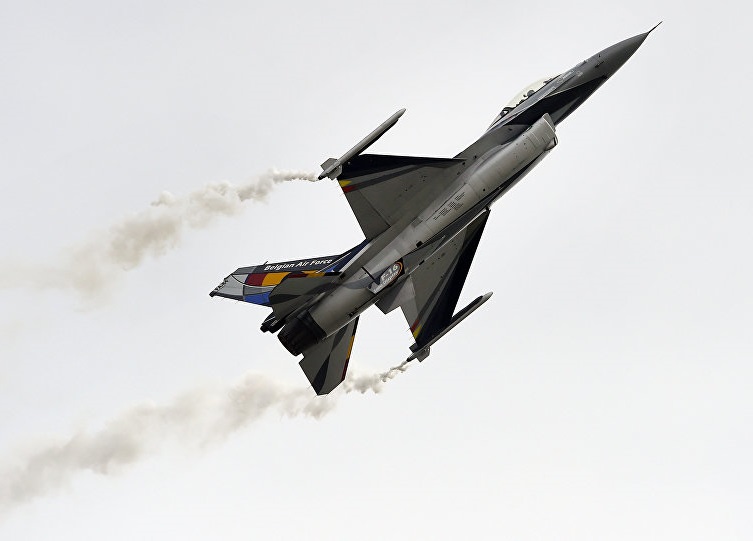
Russian Ministry of Foreign Affairs has summoned Belgian Ambassador Alex Van Meuwen to present him with proof that the Royal Belgian Air Force took part in strikes at the Hassajek village near Aleppo, Syria.
“On October 21, Belgian Ambassador Alex Van Meuwen was summoned to Russian Ministry of Foreign Affairs. During the meeting with the Ambassador, Russia’s Deputy Foreign Minister Vladimir Titov said that it is puzzling that Belgium is continuing to pesistently deny the fact that the Royal Belgian Air Force performed a strike on the area near Aleppo on October 18, in consequence of which civilians died,”according to a statement issued on Friday.
“The Belgian diplomat was presented with proof of the Royal Belgian Air Force’s involvement in the bombardment of the Hassajek village. It is stated that detailed information about technical aspects of the flight path of two F-16 jets was sent earlier to Belgium’s military attache in Moscow”.
Earlier on Thursday, the Russian Defense Ministry released the detailed information about the airstrike on Hassajek, which had resulted in destruction of two houses and deaths of six people.
According to Russian Defense Ministry’s spokesman Maj. Gen. Igor Konashenkov, the aircraft that took off from Al-Azraq air base in Jordanhave been immediately identified to be F-16, and their affiliation was established as that of the Belgian Air Force.

RELATED:

NATO War Crimes: Russian and Syrian radars prove Belgian fighter jets strike Syrian village killing 6 civilian near Aleppo [Reports]

belgian-f-16-fighterjet-20161021-2

Moscow Expects US-Led Coalition to Decry Deadly Belgian Strike on Syrian Village

1046155121-churkin-500

Russian Foreign Ministry Expects US to Condemn Airstrikes on Syrian Village

maria-zakharova-statement-on-belgian-airstrike

Belgian Jets Could be Behind Airstrike Killing 6 People Near Aleppo

belgian-f-16-fighterjet

SOURCES:
Sputnik News
submitted by Lone_Bear (Lone Bear)
War Press Info Network at:
https://syrianfreepress.wordpress.com/2016/10/21/belgian-war-crimes-2/
~

River to Sea Uprooted Palestinian   
The views expressed in this article are the sole responsibility of the author and do not necessarily reflect those of the Blog!

Sunday, 28 August 2016

Saudis and Extremism: «Both the Arsonists and the Firefighters»

Scott Shane

Critics see Saudi Arabia’s export of a rigid strain of Islam as contributing to terrorism, but the kingdom’s influence depends greatly on local conditions.
Mecca
Hillary Clinton and Donald Trump do not agree on much, but Saudi Arabia may be an exception. She has deplored Saudi Arabia’s support for “radical schools and mosques around the world that have set too many young people on a path towards extremism.” He has called the Saudis “the world’s biggest funders of terrorism.”
The first American diplomat to serve as envoy to Muslim communities around the world visited 80 countries and concluded that the Saudi influence was destroying tolerant Islamic traditions. “If the Saudis do not cease what they are doing,” the official, Farah Pandith, wrote last year, “there must be diplomatic, cultural and economic consequences.”
And hardly a week passes without a television pundit or a newspaper columnist blaming Saudi Arabia for “jihadist” violence. On HBO, Bill Maher calls Saudi teachings “medieval,” adding an epithet. In The Washington Post, Fareed Zakaria writes that the Saudis have “created a monster in the world of Islam.”
The idea has become a commonplace: that Saudi Arabia’s export of the rigid, bigoted, patriarchal, fundamentalist strain of Islam known as Wahhabism has fueled global extremism and contributed to terrorism. As the “ISIS” projects its menacing calls for violence into the West, directing or inspiring terrorist attacks in country after country, an old debate over Saudi influence on Islam has taken on new relevance.
Is the world today a more divided, dangerous and violent place because of the cumulative effect of five decades of oil-financed proselytizing from the historical heart of the Muslim world? Or is Saudi Arabia, which has often supported Western-friendly autocrats over “Islamists”, merely a convenient scapegoat for extremism and terrorism with many complex causes – the United States’ own actions among them?
Those questions are deeply contentious, partly because of the contradictory impulses of the Saudi state.
In the realm of extremist Islam, the Saudis are “both the arsonists and the firefighters,” said William McCants, a Brookings Institution scholar. “They promote a very toxic form of Islam that draws sharp lines between a small number of true believers and everyone else, Muslim and non-Muslim,” he said, providing ideological fodder for violent “jihadists”.
Yet at the same time, “they’re our partners in counterterrorism,” said Mr. McCants, one of three dozen academics, government officials and experts on Islam from multiple countries interviewed for this article.
Conflicting Goals
Saudi leaders seek good relations with the West and see “jihadist” violence as a menace that could endanger their rule, especially now that the Islamic State is staging attacks in the kingdom – 25 in the last eight months, by the government’s count. But they are also driven by their rivalry with Iran, and they depend for legitimacy on a clerical establishment dedicated to a reactionary set of beliefs. Those conflicting goals can play out in a bafflingly inconsistent manner.
Thomas Hegghammer, a Norwegian terrorism expert who has advised the United States government, said the most important effect of Saudi proselytizing might have been to slow the evolution of Islam, blocking its natural accommodation to a diverse and globalized world. “If there was going to be an Islamic reformation in the 20th century, the Saudis probably prevented it by pumping out literalism,” he said.
The reach of the Saudis has been stunning, touching nearly every country with a Muslim population, from the Gothenburg Mosque in Sweden to the King Faisal Mosque in Chad, from the King Fahad Mosque in Los Angeles to the Seoul Central Mosque in South Korea. Support has come from the Saudi government; the royal family; Saudi charities; and Saudi-sponsored organizations including the World Muslim League, the World Assembly of Muslim Youth and the International Islamic Relief Organization, providing the hardware of impressive edifices and the software of preaching and teaching.
There is a broad consensus that the Saudi ideological juggernaut has disrupted local Islamic traditions in dozens of countries – the result of lavish spending on religious outreach for half a century, estimated in the tens of billions of dollars. The result has been amplified by guest workers, many from South Asia, who spend years in Saudi Arabia and bring Saudi ways home with them. In many countries, Wahhabist preaching has encouraged a harshly judgmental religion, contributing to majority support in some polls in Egypt, Pakistan and other countries for stoning for adultery and execution for anyone trying to leave Islam.
Limits of Influence
But exactly how Saudi influence plays out seems to depend greatly on local conditions. In parts of Africa and Southeast Asia, for instance, Saudi teachings have shifted the religious culture in a markedly conservative direction, most visibly in the decision of more women to cover their hair or of men to grow beards. Among Muslim immigrant communities in Europe, the Saudi influence seems to be just one factor driving radicalization, and not the most significant. In divided countries like Pakistan and Nigeria, the flood of Saudi money, and the ideology it promotes, have exacerbated divisions over religion that regularly prove lethal.
And for a small minority in many countries, the exclusionary Saudi version of Sunni Islam, with its denigration of Jews and Christians, as well as of Muslims of Shiite, Sufi and other traditions, may have made some people vulnerable to the lure of al-Qaeda, the “ISIS” and other violent “jihadist” groups. “There’s only so much dehumanizing of the other that you can be exposed to – and exposed to as the word of God – without becoming susceptible to recruitment,” said David Andrew Weinberg, a senior fellow at the Foundation for Defense of Democracies in Washington who tracks Saudi influence.
Exhibit A may be Saudi Arabia itself, which produced not only Osama bin Laden, but also 15 of the 19 hijackers of Sept. 11, 2001; sent more suicide bombers than any other country to Iraq after the 2003 invasion; and has supplied more foreign fighters to “ISIS”, 2,500, than any country other than Tunisia.
Mehmet Gormez, the senior Islamic cleric in Turkey, said that while he was meeting with Saudi clerics in Riyadh in January, the Saudi authorities had executed 47 people in a single day on terrorism charges, 45 of them Saudi citizens. “I said: ‘These people studied Islam for 10 or 15 years in your country. Is there a problem with the educational system?’ ” Mr. Gormez said in an interview. He argued that Wahhabi teaching was undermining the pluralism, tolerance and openness to science and learning that had long characterized Islam. “Sadly,” he said, the changes have taken place “in almost all of the Islamic world.”
In a huge embarrassment to the Saudi authorities, “ISIS” adopted official Saudi textbooks for its schools until the extremist group could publish its own books in 2015. Out of 12 works by Muslim scholars republished by the Islamic State, seven are by Muhammad ibn Abd al-Wahhab, the 18th-century founder of the Saudi school of Islam, said Jacob Olidort, a scholar at the Washington Institute for Near East Policy. A former imam of the Grand Mosque in Mecca, Sheikh Adil al-Kalbani declared with regret in a television interview in January that the Islamic State leaders “draw their ideas from what is written in our own books, our own principles.”
Small details of Saudi practice can cause outsize trouble. For at least two decades, the kingdom has distributed an English translation of the Quran that in the first surah, or chapter, adds parenthetical references to Jews and Christians in addressing Allah: “those who earned Your Anger [such as the Jews], nor of those who went astray [such as the Christians].” Sayyed Hossein Nasr, a professor of Islamic studies at George Washington University and the editor in chief of the new Study Quran, an annotated English version, said the additions were “a complete heresy, with no basis in Islamic tradition.”
Continue reading the main story
Accordingly, many American officials who have worked to counter extremism and terrorism have formed a dark view of the Saudi effect – even if, given the sensitivity of the relationship, they are often loath to discuss it publicly. The United States’ reliance on Saudi counterterrorism cooperation in recent years – for instance, the Saudi tip that foiled a 2010 Qaeda plot to blow up two American cargo planes – has often taken precedence over concerns about radical influence. And generous Saudi funding for professorships and research centers at American universities, including the most elite institutions, has deterred criticism and discouraged research on the effects of Wahhabi proselytizing, according to Mr. McCants – who is working on a book about the Saudi impact on global Islam – and other scholars.
One American former official who has begun to speak out is Ms. Pandith, the State Department’s first special representative to Muslim communities worldwide. From 2009 to 2014, she visited Muslims in 80 countries and concluded that Saudi influence was pernicious and universal. “In each place I visited, the Wahhabi influence was an insidious presence,” she wrote in The New York Times last year. She said the United States should “disrupt the training of extremist imams,” “reject free Saudi textbooks and translations that are filled with hate,” and “prevent the Saudis from demolishing local Muslim religious and cultural sites that are evidence of the diversity of Islam.”
Yet some scholars on Islam and extremism, including experts on radicalization in many countries, push back against the notion that Saudi Arabia bears predominant responsibility for the current wave of extremism and “jihadist” violence. They point to multiple sources for the rise and spread of “Islamist terrorism”, including repressive secular governments in the Middle East, local injustices and divisions, the hijacking of the internet for terrorist propaganda, and American interventions in the Muslim world from the anti-Soviet war in Afghanistan to the invasion of Iraq. The 20th-century ideologues most influential with modern “jihadists”, like Sayyid Qutb of Egypt and Abul Ala Maududi of Pakistan, reached their extreme, anti-Western views without much Saudi input. Al-Qaeda and “ISIS” despise Saudi rulers, whom they consider the worst of hypocrites.
“Americans like to have someone to blame – a person, a political party or country,” said Robert S. Ford, a former United States ambassador to Syria and Algeria. “But it’s a lot more complicated than that. I’d be careful about blaming the Saudis.”
While Saudi religious influence may be disruptive, he and others say, its effect is not monolithic. A major tenet of official Saudi Islamic teaching is obedience to rulers – hardly a precept that encourages terrorism intended to break nations. Many Saudi and Saudi-trained clerics are quietist, characterized by a devotion to scripture and prayer and a shunning of politics, let alone political violence.
And especially since 2003, when Qaeda attacks in the kingdom awoke the monarchy to the danger it faced from militancy, Saudi Arabia has acted more aggressively to curtail preachers who call for violence, cut off terrorist financing and cooperate with Western intelligence to foil terrorist plots. From 2004 to 2012, 3,500 imams were fired for refusing to renounce extremist views, and another 20,000 went through retraining, according to the Ministry of Islamic Affairs – though the United States Commission on International Religious Freedom expressed skepticism that the training was really “instilling tolerance.”
An American scholar with long experience in Saudi Arabia – who spoke on condition of anonymity to preserve his ability to travel to the kingdom for research – said he believed that Saudi influence had often been exaggerated in American political discourse. But he compared it to climate change. Just as a one-degree increase in temperature can ultimately result in drastic effects around the globe, with glaciers melting and species dying off, so Saudi teaching is playing out in many countries in ways that are hard to predict and difficult to trace but often profound, the scholar said.
Saudi proselytizing can result in a “recalibrating of the religious center of gravity” for young people, the scholar said, which makes it “easier for them to swallow or make sense of the ‘ISIS’ religious narrative when it does arrive. It doesn’t seem quite as foreign as it might have, had that Saudi religious influence not been there.”
Centuries-Old Dilemma
Why does Saudi Arabia find it so difficult to let go of an ideology that much of the world finds repugnant? The key to the Saudi dilemma dates back nearly three centuries to the origin of the alliance that still undergirds the Saudi state. In 1744, Muhammad ibn Abd al-Wahhab, a reformist cleric, sought the protection of Muhammad bin Saud, a powerful tribal leader in the harsh desert of the Arabian Peninsula.
The alliance was mutually beneficial: Wahhab received military protection for his movement, which sought to return Muslims to what he believed were the values of the early years of Islam in the seventh century, when the Prophet Muhammad was alive. [His beliefs were a variant of Salafism, the conservative school of Islam that teaches that the salaf, or pious ancestors, had the correct ways and beliefs and should be emulated.] In return, the Saud family earned the endorsement of an Islamic cleric – a puritanical enforcer known for insisting on the death by stoning of a woman for adultery.
Wahhab’s particular version of Islam was the first of two historical accidents that would define Saudi religious influence centuries later. What came to be known as Wahhabism was “a tribal, desert Islam,” said Akbar Ahmed, the chairman of Islamic studies at American University in Washington. It was shaped by the austere environment – xenophobic, fiercely opposed to shrines and tombs, disapproving of art and music, and hugely different from the cosmopolitan Islam of diverse trading cities like Baghdad and Cairo.
The second historical accident came in 1938, when American prospectors discovered the largest oil reserves on earth in Saudi Arabia. Oil revenue generated by the Arabian-American Oil Company, or Aramco, created fabulous wealth. But it also froze in place a rigid social and economic system and gave the conservative religious establishment an extravagant budget for the export of its severe strain of Islam.
“One day you find oil, and the world is coming to you,” Professor Ahmed said. “God has given you the ability to take your version of Islam to the world.”
In 1964, when King Faisal ascended the throne, he embraced the obligation of spreading Islam. A modernizer in many respects, with close ties to the West, he nonetheless could not overhaul the Wahhabi doctrine that became the face of Saudi generosity in many countries. Over the next four decades, in non-Muslim-majority countries alone, Saudi Arabia would build 1,359 mosques, 210 Islamic centers, 202 colleges and 2,000 schools. Saudi money helped finance 16 American mosques; four in Canada; and others in London, Madrid, Brussels and Geneva, according to a report in an official Saudi weekly, Ain al-Yaqeen. The total spending, including supplying or training imams and teachers, was “many billions” of Saudi riyals [at a rate of about four to a dollar], the report said.
Saudi religious teaching had particular force because it came from the birthplace of the Prophet Muhammad, the land of Islam’s two holiest places, Mecca and Medina. When Saudi imams arrived in Muslim countries in Asia or Africa, or in Muslim communities in Europe or the Americas, wearing traditional Arabian robes, speaking the language of the Quran – and carrying a generous checkbook – they had automatic credibility.
As the 20th century progressed and people of different nationalities and faiths mixed routinely, the puritanical, exclusionary nature of Wahhab’s teachings would become more and more dysfunctional. But the Saudi government would find it extraordinarily difficult to shed or soften its ideology, especially after the landmark year of 1979.
In Tehran that year, the Iranian revolution brought to power a Shiite government, symbolically challenging Saudi Arabia, the leader of Sunnism, for leadership of global Islam. The declaration of an Islamic Republic escalated the competition between the two major branches of Islam, spurring the Saudis to redouble their efforts to counter Iran and spread Wahhabism around the world.
Then, in a stunning strike, a band of 500 Saudi extremists seized the Grand Mosque in Mecca for two weeks, publicly calling Saudi rulers puppets of the West and traitors to true Islam. The rebels were defeated, but leading clerics agreed to back the government only after assurances of support for a crackdown on immodest ways in the kingdom and a more aggressive export of Wahhabism abroad.
Finally, at year’s end, the Soviet Union invaded Afghanistan and seized power to prop up a Communist government. It soon faced an insurgent movement of mujahedeen, or holy warriors battling for Islam, which drew fighters from around the world for a decade-long battle to expel the occupiers.
Throughout the 1980s, Saudi Arabia and the United States worked together to finance the mujahedeen in this great Afghan war, which would revive the notion of noble armed jihad for Muslims worldwide. President Ronald Reagan famously welcomed to the Oval Office a delegation of bearded “Afghan freedom fighters” whose social and theological views were hardly distinguishable from those later embraced by the Taliban.
In fact, the United States spent $50 million from 1986 to 1992 on what was called a “jihad literacy” project – printing books for Afghan children and adults to encourage violence against non-Muslim “infidels” like Soviet troops. A first-grade language textbook for Pashto speakers, for example, according to a study by Dana Burde, an associate professor at New York University, used “Mujahid,” or fighter of jihad, as the illustration: “My brother is a Mujahid. Afghan Muslims are Mujahedeen. I do ‘jihad’ together with them. Doing jihad against infidels is our duty.”
Pressure after 9/11
One day in the months after the Sept. 11 attacks, Robert W. Jordan, the United States ambassador to Saudi Arabia, was driving in the kingdom with the longtime Saudi ambassador to the United States, Prince Bandar Bin Sultan. The prince pointed to a mosque and said, “I just fired the imam there.” The man’s preaching had been too militant, he said.
Mr. Jordan, a Texas lawyer, said that after the Qaeda attacks, he had stepped up pressure on the Saudi government over its spread of extremism. “I told them: ‘What you teach in your schools and preach in your mosques now is not an internal matter. It affects our national security,'” he said.
After years of encouraging and financing a harsh Islam in support of the anti-Soviet “jihad”, the United States had reversed course – gradually during the 1990s and then dramatically after the Sept. 11 attacks. But in pressuring Saudi Arabia, American officials would tread lightly, acutely aware of American dependence on Saudi oil and intelligence cooperation. Saudi reform would move at an excruciatingly slow pace.
Twelve years after Sept. 11, after years of quiet American complaints about Saudi teachings, a State Department contractor, the International Center for Religion and Diplomacy, completed a study of official Saudi textbooks. It reported some progress in cutting back on bigoted and violent content but found that plenty of objectionable material remained. Officials never released the 2013 study, for fear of angering the Saudis. The New York Times obtained it under the Freedom of Information Act.
Seventh graders were being taught that “fighting the infidels to elevate the words of Allah” was among the deeds Allah loved the most, the report found, among dozens of passages it found troubling. Tenth graders learned that Muslims who abandoned Islam should be jailed for three days and, if they did not change their minds, “killed for walking away from their true religion.” Fourth graders read that non-Muslims had been “shown the truth but abandoned it, like the Jews,” or had replaced truth with “ignorance and delusion, like the Christians.”
Some of the books, prepared and distributed by the government, propagated views that were hostile to science, modernity and women’s rights, not to say downright quirky – advocating, for instance, execution for sorcerers and warning against the dangers of the Rotary Club and the Lions Club. [The groups’ intent, said a 10th-grade textbook, “is to achieve the goals of the Zionist movement.”]
The textbooks, or other Saudi teaching materials with similar content, had been distributed in scores of countries, the study found. Textbook reform has continued since the 2013 study, and Saudi officials say they are trying to replace older books distributed overseas.
But as the study noted, the schoolbooks were only a modest part of the Saudis’ lavishly funded global export of Wahhabism. In many places, the study said, the largess includes “a Saudi-funded school with a Wahhabist faculty [educated in a Saudi-funded Wahhabist University], attached to a mosque with a Wahhabist imam, and ultimately controlled by an international Wahhabist educational body.”
This ideological steamroller has landed in diverse places where Muslims of different sects had spent centuries learning to accommodate one another. Sayyed Shah, a Pakistani journalist working on a doctorate in the United States, described the devastating effect on his town, not far from the Afghan border, of the arrival some years ago of a young Pakistani preacher trained in a Saudi-funded seminary.
Village residents had long held a mélange of Muslim beliefs, he said. “We were Sunni, but our culture, our traditions were a mixture of Shia and Barelvi and Deobandi,” Mr. Shah said, referring to Muslim sects. His family would visit the large Barelvi shrine… “We wouldn’t do that ourselves, but we’d hand out sweets and water,” he said.
The new preacher, he said, denounced the Barelvi and Shiite beliefs as false and heretical, dividing the community and setting off years of bitter argument. By 2010, Mr. Shah said, “everything had changed.” Women who had used shawls to cover their hair and face began wearing full burqas. Militants began attacking kiosks where merchants sold secular music CDs. Twice, terrorists used explosives to try to destroy the village’s locally famous shrine.
Now, Mr. Shah said, families are divided; his cousin, he said, “just wants Saudi religion.” He said an entire generation had been “indoctrinated” with a rigid, unforgiving creed.
“It’s so difficult these days,” he said. “Initially we were on a single path. We just had economic problems, but we were culturally sound.”
He added, “But now it’s very difficult, because some people want Saudi culture to be our culture, and others are opposing that.”
C. Christine Fair, a specialist on Pakistan at Georgetown University, said Mr. Shah’s account was credible. But like many scholars describing the Saudi impact on religion, she said that militancy in Pakistan also had local causes. While Saudi money and teaching have unquestionably been “accelerants,” Pakistan’s sectarian troubles and jihadist violence have deep roots dating to the country’s origins in the partition of India in 1947.
“The idea that without the Saudis Pakistan would be Switzerland is ridiculous,” she said.
Elusive Saudi Links
That is the disputed question, of course: how the world would be different without decades of Saudi-funded shaping of Islam. Though there is a widespread belief that Saudi influence has contributed to the growth of terrorism, it is rare to find a direct case of cause and effect. For example, in Brussels, the Grand Mosque was built with Saudi money and staffed with Saudi imams.
In 2012, according to Saudi diplomatic cables released by WikiLeaks, one Saudi preacher was removed after Belgian complaints that he was a “true Salafi” who did not accept other schools of Islam. And Brussels’ immigrant neighborhoods, notably Molenbeek, have long been the home of storefront mosques teaching hardline Salafi views.
After the terrorist attacks in Paris in November and in Brussels in March were tied to an “ISIS” cell in Belgium, the Saudi history was the subject of several news media reports. Yet it was difficult to find any direct link between the bombers and the Saudi legacy in the Belgian capital.
Several suspects had petty criminal backgrounds; their knowledge of Islam was described by friends as superficial; they did not appear to be regulars at any mosque. Though “ISIS” claimed responsibility for the blasts, resentment of the treatment of North African immigrant families in Belgium and exposure to “ISIS” propaganda, in person or via the internet and social media, appeared to be the major factors motivating the attacks.
If there was a Saudi connection, it was highly indirect, perhaps playing out over a generation or longer. Hind Fraihi, a Moroccan-Belgian journalist who went underground in the Brussels immigrant neighborhood of Molenbeek in 2005 and wrote a book about it, met Saudi-trained imams and found lots of extremist literature written in Saudi Arabia that encouraged “polarization, the sentiment of us against them, the glorification of jihad.”
The recent attackers, Ms. Fraihi said, were motivated by “lots of factors – economic frustration, racism, a generation that feels it has no future.” But Saudi teaching, she said, “is part of the cocktail.”
Without the Saudi presence over the decades, might a more progressive and accommodating Islam, reflecting immigrants’ Moroccan roots, have taken hold in Brussels? Would young Muslims raised in Belgium have been less susceptible to the stark, violent call of “ISIS”? Conceivably, but the case is impossible to prove.
Or consider an utterly different cultural milieu – the world’s most populous Muslim country, Indonesia. The Saudis have sent money for mosque-building, books and teachers for decades, said Sidney Jones, the director of the Institute for Policy Analysis of Conflict in Jakarta.
“Over time,” said Ms. Jones, who has visited or lived in Indonesia since the 1970s, the Saudi influence “has contributed to a more conservative, more intolerant atmosphere.” [President Obama, who lived in Indonesia as a boy, has remarked on the same phenomenon.] She said she believed money from private Saudi donors and foundations was behind campaigns in Indonesia against Shiite and Ahmadi Islam, considered heretical by Wahhabi teaching. Some well-known Indonesian religious vigilantes are Saudi-educated, she said.
But when Ms. Jones studied the approximately 1,000 people arrested in Indonesia on terrorism charges since 2002, she found only a few – “literally four or five” – with ties to Wahhabi or Salafi institutions. When it comes to violence, she concluded, the Saudi connection is “mostly a red herring.”
In fact, she said, there is a gulf between Indonesian “jihadists” and Indonesian Salafis who look to Saudi or Yemeni scholars for guidance. The jihadists accuse the Salafis of failing to act on their convictions; the Salafis scorn the “jihadists” as extremists.
Whatever the global effects of decades of Saudi proselytizing, it is under greater scrutiny than ever, from outside and inside the kingdom. Saudi leaders’ ideological reform efforts, encompassing textbooks and preaching, amount to a tacit recognition that its religious exports have sometimes backfired. And the kingdom has stepped up an aggressive public relations campaign in the West, hiring American publicists to counter critical news media reports and fashion a reformist image for Saudi leaders.
But neither the publicists nor their clients can renounce the strain of Islam on which the Saudi state was built, and old habits sometimes prove difficult to suppress. A prominent cleric, Saad bin Nasser al-Shethri, had been stripped of a leadership position by the previous king, Abdullah, for condemning coeducation. King Salman restored Mr. Shethri to the job last year, not long after the cleric had joined the chorus of official voices criticizing “ISIS”.
But Mr. Shethri’s reasoning for denouncing “ISIS” suggested the difficulty of change. The group was, he said, “more infidel than Jews and Christians.”
Source: NYT, Edited by website team 
27-08-2016 | 11:29

Related Articles
River to Sea Uprooted Palestinian   
The views expressed in this article are the sole responsibility of the author and do not necessarily reflect those of the Blog!