Showing posts with label INF Treaty. Show all posts

Thursday, 28 October 2021

East Asia Summit: President Putin

 OCTOBER 27, 2021

East Asia Summit: President Putin

East Asia Summit

The President addressed, via videoconference, the 16th East Asia Summit.

The 2021 East Asia Summit was held under the chairmanship of Brunei Darussalam. The participants discussed the economic recovery of the Asia-Pacific Region and overcoming the consequences of the coronavirus pandemic.

At the end of the session, the participants approved a package of documents.

* * *

President of Russia Vladimir Putin: Your Majesty, colleagues,

I would like to begin by expressing my gratitude to His Majesty Sultan of Brunei Darussalam for organising this event.

The East Asia Summits provide a good opportunity to discuss the situation in the Asia-Pacific Region, map out possible solutions to the most challenging problems and coordinate measures to maintain peace and stability and to strengthen mutually beneficial multilateral cooperation.

Our common region has indeed become one of the most dynamic global centres of political, business and investment activity. At the same time, it is facing serious challenges and threats in terms of security, and economic and social development, which have been augmented by the coronavirus during the past two years.

Therefore, it is quite logical that this summit is focusing on the struggle against the pandemic and efforts to overcome its consequences, as well as the implementation of the joint Statement on Strengthening Collective Capacity in Epidemics Prevention and Response, which was adopted at Russia’s initiative. In this context, we are certainly ready to exchange experience with interested countries on the practical aspects of combatting infectious diseases.

We could also expand the training programme for epidemiologists from ASEAN states at the Vladivostok Research Centre of Biosecurity in the Asia-Pacific region. In November and December, we will hold a new series of relevant advanced training courses on that platform, which representatives of the regional countries are welcome to attend.

I would like to note that Russia is seeking to make a real contribution to efforts aimed at ensuring free and non-discriminatory access to vaccines against COVID-19 for citizens of all states. We are in favour of developing a procedure involving reciprocal recognition of vaccination certificates, without which it is practically impossible to support the unrestricted movement of citizens of our countries across the region.

The use of Russian vaccines, primarily Sputnik V, has been approved by 70 countries, and they are supplied to more than 50. We are grateful to many partners in the Asia-Pacific Region for our joint work to localise the production of vaccines. We will continue to provide Russian test kits and reagents needed for diagnosing COVID-19, including free of charge.

Protecting mental health and rendering psychological support is of particular importance against the background of the pandemic and related tough restrictions, including the need to stay at home or go into self-isolation. For this reason, we certainly support the initiative of the Brunei chairmanship to approve a separate thematic statement following today’s meeting.

In general, we suggest that a regional mechanism for anti-pandemic collaboration be established under the aegis of the East Asia Summits, and we will shortly submit specific considerations on this score via the expert channels.

Colleagues,

We believe it is quite important for the states in this region to engage in the further strengthening of trade and economic ties, the more so that business activity is gradually recovering. Russia, for one, has managed to reach the pre-crisis level, with GDP growth amounting to 3.7 percent on August 2020.

During the first eight months of 2021, Russia’s trade with countries participating in the East Asia Summits grew by more than 34 percent to $162 billion. The states present here account for $18.5 billion in direct accumulated investment into the Russian economy, which is more than a twofold increase over five years.

We should support the incipient economic recovery by taking additional measures to stimulate the backbone industries of our economies and by seeking further coordination of efforts in this area.

We believe that tourism deserves special attention. It is one of the sectors that have been hardest hit by COVID-19. Meanwhile, for some countries that are taking part in this summit, tourism is the main provider of jobs: before the pandemic, it generated about 10 or more percent of their incomes.

In view of this, Russia has suggested adopting a joint statement in support of the tourist industry, following today’s discussion. There is also a specific initiative – to organise a meeting of the heads of relevant departments as early as next January, on the sidelines of the ASEAN Tourist Forum in Cambodia, and then to make such contacts regular.

No less urgent are the tasks of stepping up growth in other branches of the economy, including industry, power engineering and finances. With these goals in view, we would consider it useful to prepare and submit for approval by the leaders next year a roadmap of cooperation between the participants in East Asia Summits on the entire range of economic issues.

We also support a proposal on adopting a statement on sustainable recovery, based on the outcome of our summit. The priorities mentioned in it, such as efforts to counter climate change, encourage innovation in decarbonisation and develop technology and sectors with low emission levels, require smooth, concerted cooperation from all of us.

And, of course, we are interested in the closest cooperation on digitisation with the participants in the East Asia Summits. Digital technology is very helpful in resolving the comprehensive goal of strengthening coherence in the region, developing its infrastructure and trade, and creating transport-and-logistics corridors.

We hope for positive results from the project on innovation for the smart and sustainable cities of Russia and ASEAN. We are launching it as part of our partnership dialogue with the association. Our capital, Moscow, which is among the world’s top seven smart cities, will play a most active role in this project.

Finally, I would be remiss not to mention that along with the need to overcome all of the above pressing challenges in healthcare as well as on the social track and in the economy in general, it is important not to relax our joint efforts to maintain regional stability and security. This is all the more relevant given the fact that the number of challenges and threats in the Asia-Pacific region is not decreasing, but growing with old conflicts being exacerbated and new ones emerging.

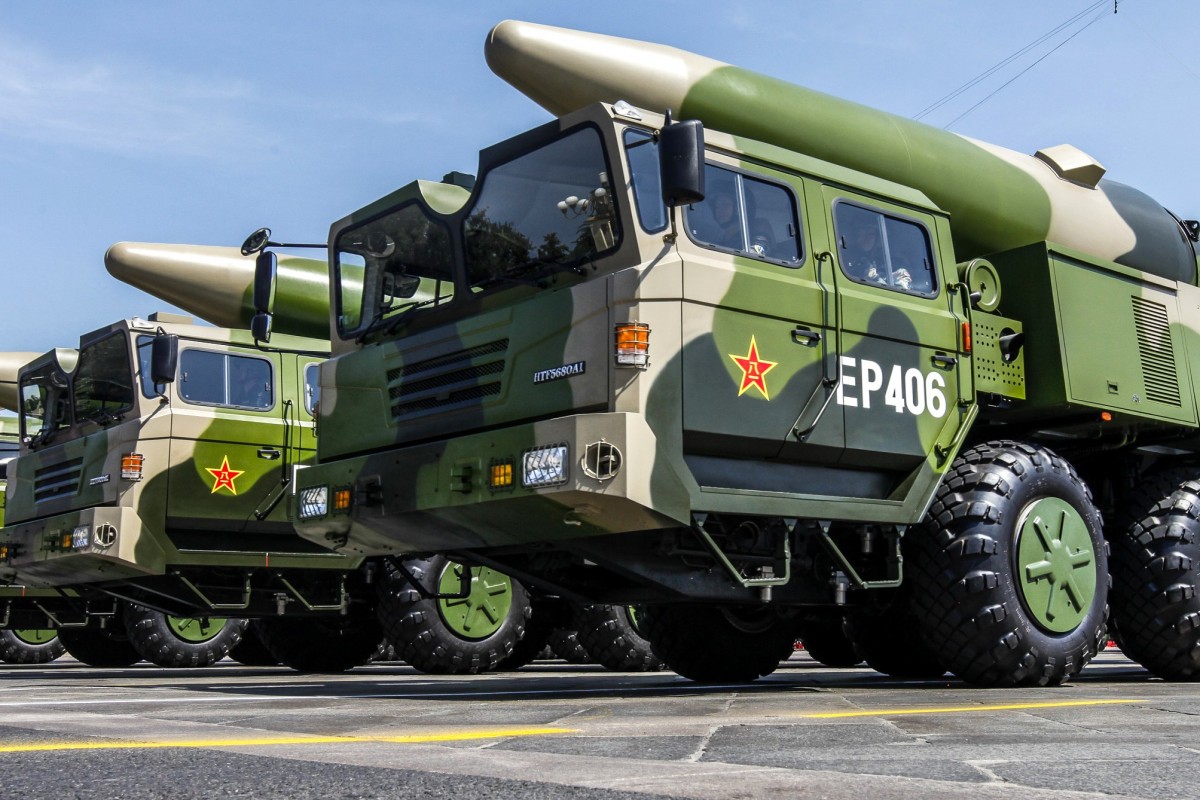
In particular, we have repeatedly noted that with the termination of the INF Treaty, the region is facing the possibility of assault weapons being deployed in its vast territory, and accordingly, the prospect for a new round of the arms race.

Realising the danger of such a turn of events, Russia, as you are aware, has announced a unilateral moratorium on the deployment of intermediate and short-range missiles in the APR and other regions and called for a serious discussion on this subject with all stakeholders. Russia’s proposal remains in force and has even become more relevant.

To reiterate, Russia has consistently advocated forming a system of equal and indivisible security in the APR and strengthening the atmosphere of constructive cooperation based on international law, including respect for the sovereignty, equality and consideration of each other’s interests.

We believe this is the only way to cut short existing and emerging threats and to address pressing issues facing our region and the international community, as well as to effectively interact in the interests of sustainable development and improving people’s well-being.

Russia will continue to contribute to this joint work.

Thank you.


River to Sea Uprooted Palestinian   
The views expressed in this article are the sole responsibility of the author and do not necessarily reflect those of the Blog!

Saturday, 15 August 2020

Is the US a Global Leader Anymore?


Is the US a Global Leader Anymore?

August 13, 2020

by Zamir Awan for the Saker Blog

Currently, the biggest challenge faced by the world is Pandemic. Outbreak early this year has engulfed the whole world. Indeed, the COVID-19 is not too fatal, yet due to its highly contagious nature, it has impacted society adversely. It is a new virus, a lot of studies are going on, especially on its cure and vaccines. Yet, nothing is commercially available; all such R&D is at the laboratory level. Either it is stage one or two or any other advanced stage, yet it might take some time to make the vaccine available at a commercial scale for everybody to be benefitted.

The number of CVID-19 cases has exceeded 20 million, with a death toll of around 750,000. The economic impact is even more visible. And some of the countries are already slipped into recession, while few are almost near to collapse. Social distance has made everyday life more difficult, people are losing jobs, businesses are suffering, and some of the markets have been closed.

At this challenging moment, the whole world was looking toward the US as a global leader to rescue them. Developing countries and underdeveloped countries were more miserable and was expecting much more from the US. Even the developed nations and well-advanced countries were also expecting some kind of assistance or help from the US.

Unfortunatetely, the US was the worst-hit country in the world, with the highest number of Coronavirus cases and the death toll. It was the time when the US can prove its global leadership role. NATO allies, other friendly countries were in award position, when the US showed cold shoulders.

It is entirely right; every country should look after its own interest and must say his own country first. But for a leader, one has to take everyone else along with and protect everyone.

Acknowledging the US’s global leadership, just after World War II (WWII), by launching the Marshal Program aimed to rebuild war-torn Europe was a successful model. As a result, the US gained a leadership role. But during the last couple of decades, the US policies witnessed a deviation from Global responsibilities.

The US was leaving International organizations and treaties, one after another, ignoring its global obligations and escaping from global responsibilities gradually.

  • In 1982, to maintain its maritime hegemony, the United States refused to sign the United Nations Convention on the Law of the Sea (UNCLOS), of which it is still not a party. It has created an imbalance of power in the global maritime and vulnerability.
  • In 1984, the United States formally withdrew from UNESCO, dissatisfied with the gradual erosion of its social control by developing countries. After returning to the Organization in 2003, it once again withdrew in 2017 on the so-called ground of saving funds and urging reform. UNESCO suffered a considerable loss in its routine functions. It has impacted the capabilities of the Organization adversely due to a shortage of funds.
  • In 1985, the United States refused to recognize the compulsory jurisdiction of the United Nations International Court of Justice (ICJ) after Nicaragua complained that US armed intervention violated its sovereignty. A message that the US was not sincere about global justice. As a matter of fact, the US was extensively involved in war-crimes and international terrorism and scared of convictions.
  • In 1995, the United States withdrew from the United Nations Industrial Development Organization and refused to pay arrears by claiming domestic budgetary constraints, damaging the global industrialization program. Yet increased its defense budget.
  • The United States has refused to sign the Kyoto Protocol since 2001, saying it was not in its national interest to meet relevant environmental obligations. By withdrawing, the US denied its responsibility in protecting the global environment. It should be noted that damaging the environment is a severe collective crime with humanity.
  • In 2001, the United States withdrew from the United Nations World Conference against Racism, Racial Discrimination, Xenophobia, and Related Intolerance after failing to prevent discussion of Israeli military action against Palestinians. Today, what is happening in the US is also the result of these policies.
  • In 2001, to strengthen its military advantage, the United States formally withdrew from the Anti-Ballistic Missile Treaty signed by the United States and the Soviet Union in 1972. However, it gave supremacy to the US but created an arms race world-wide, forcing other nations to compete in the US.
  • In 2002, the United States withdrew from the Rome Statute of the International Criminal Court, citing unfavorable terms for American soldiers, diplomats, and politicians. It was a message that the US did not feel globally obliged not to commit war crimes, espionage, the aggression of sovereign states, etc.
  • In 2017, the United States announced its formal withdrawal from the Trans-Pacific Partnership (TPP) because it believed that multilateral trade agreements were not in its best interests and hindered its “America First” policy. Although the US is the largest economy of the world, it yet believes in unfair practices.
  • In 2017, the US government announced its withdrawal from the Paris Agreement, aimed to strengthen the global response to the threat of climate change, believing that it could hinder economic development. An irrational approach and wrong decision again.
  • In 2017, the United States withdrew from negotiations of the United Nations Global impact on Migration and cast votes against the UNGCM at the UN General Assembly.
  • In 2018, even though the IAEA confirmed Iran’s fulfillment of its JCPOA commitment and that the United States had no clear evidence to show Iran conducted nuclear tests in breach of the deal, the United States withdrew from the JCPOA, a deal that has been endorsed by the United Nations Security Council and re-imposed unilateral sanctions against Iran. This decision has damaged the US image adversely. Contaraily imposed irrational sanctions on Iran, making the lives of Iranian more miserable.
  • In 2018, the US announced its withdrawal from the UN Human Rights Council, claiming it failed to protect human rights adequately. The current violence in the US may also be the outcome of this decision.
  • In 2018, the United States withdrew from the Optional Protocol to the Vienna Convention on Diplomatic Relations, Concerning the Compulsory Settlement of Disputes relating to the jurisdiction of the ICJ in order to avoid a Palestinian complaint filed legitimately to the ICJ. It has caused a strong wave of anti-American sentiments in the Arab world.
  • In 2019, the United States withdrew from the INF Treaty to develop short- and medium-range missiles without restraint. Again a wrong decision at wrong timings, pushing the world toward developing more lethal weapons.
  • In 2020, under the pretext of alleged Russian violations of the Open Skies Treaty, the United States announced steps to exit the Treaty.
  • In 2020, the US government, looking for scapegoats for its botched response to COVID-19, announced its withdrawal from the World Health Organization. It should be noted that the United States still owes more than $200 million in assessed contributions. Will the US pay this sum before going out? Exactly, when WHO needs to be strengthened, the US decision harmed the Organization’s capabilities.

Notably, the Trump-Administration has focused only on “America First,” leaving the rest of the world ignored. The Pandemic has exposed Trump-administration’s policies further. Europe was suffering from COVID-19 and expecting that the US may come up with some kind of help and rescue. But, unfortunately, this was not in the minds of the Trump-Administration.

If the United States tries to escape from its global responsibilities, it may no longer enjoy the status of global leadership. The gap created by the US may be filled-in by some other powers. Enjoy authority, but with responsibilities!

Author: Prof. Engr. Zamir Ahmed Awan, Sinologist (ex-Diplomat), Editor, Analyst, Non-Resident Fellow of CCG (Center for China and Globalization), National University of Sciences and Technology (NUST), Islamabad, Pakistan.


River to Sea Uprooted Palestinian   
The views expressed in this article are the sole responsibility of the author and do not necessarily reflect those of the Blog!

Saturday, 28 December 2019

German Politician: “Ami Go Home!”… The US is waging bloody economic wars against the entire world


Global Research, December 26, 2019


Oskar Lafontaine
Oskar Lafontaine is a German politician, candidate for Chancellor in the German federal election of 1990, Chairman of the Social Democratic Party from 1995 to 1999, Minister of Finance from 1998 to 1999, leader of The Left in Saarland since 2010.
The United States of America is waging bloody economic wars against the entire world, and now against us Germans. The German government is talking interference with our sovereignty. What a fallacy! We have never been a sovereign state. After the end of the World War II, it is the Americans who have been handling issues of war and peace in Germany.
In 1963, Charles de Gaulle said:
“Having allies… is a matter of course for us in the historical era in which we find ourselves. But to have your own free choice… is also a categorical imperative, because alliances have no absolute virtue, no matter what feelings they are based on. And if you give up control over yourself, you run the risk of never regaining it.”
Later, Francois Mitterrand would add:
“You can’t hand the solution over to others when life or death is at stake.”
American military bases in Germany imperil us instead of protecting. The United States is pushing us to a war with its aggressive policy of encircling Russia and China, with allocating huge amounts of $738 billion for military purposes, by means of withdrawing from the INF Treaty and placing short-range missiles next to the Russian borders. It is in our interest to liberate the German soil from US military bases.The Real New World Order. Bankers Taking over the World
“Ami go home!” the students chanted in 1968, when the United States killed millions of people in Vietnam, using its military bases in Germany. “Ami go home!” the Germans urged when the United States, under the guise of lying about Saddam Hussein’s possession of weapons of mass destruction, unleashed the war in Iraq using its military facilities in Germany – a war that claimed the lives of hundreds of thousands of people. “Ami go home!” – this appeal should become the motto of German politics today, when the greatest military power in the world is obviously violating international law and terrorizing all of the world.
This has been taken from Oscar Lafontaine’s Facebook and distributed by the German NachdenkSeiten run by another “heavyweight” of German politics – Albrecht Müller, a long-term ally of German Chancellor Willy Brandt, Bundestag member from 1987 to 1994.
“People like Oscar Lafontaine,” Albrecht Müller writes in his commentary, “able to get across their ideas, are a must-have in politics. The demand [on the US to leave Germany] is by no means radical. It’s appropriate. Many Germans believe so, but not those who shape today’s politics in Berlin. The German establishment and representatives of the major news outlets are either associated with the United States and dependent on them, or serve the interests of the military establishment. There are also people who simply lack courage and consider the ‘Ami go home’ demand unduly radical.
What else should happen? Sanctions have been imposed against us Germans. The weaponization process is at our expense. We are involved in maneuvers next to the Russian borders. Convoys with military equipment block our railways. What is finally going to make the cup run over?”
*
Note to readers: please click the share buttons above or below. Forward this article to your email lists. Crosspost on your blog site, internet forums. etc.
Featured image is from Wikimedia CommonsThe original source of this article is InfoBricsCopyright © InfoBricsInfoBrics, 2019

River to Sea Uprooted Palestinian   
The views expressed in this article are the sole responsibility of the author and do not necessarily reflect those of the Blog!

Sunday, 18 August 2019

US Leaves INF Because "Russia," But Points Missiles at China

August 9, 2019 (Gunnar Ulson – NEO) – We’re told that the US withdrawal from the Intermediate-Range Nuclear Forces (INF) Treaty singed in 1987 between the US and Soviet Union was based on claims that Russia had violated it.
While we continue waiting for Washington to provide evidence to prove these claims, the US itself admitted it had already long begun developing missiles that violated the treaty.
A February 2018 Defense One article titled, “Pentagon Confirms It’s Developing Nuclear Cruise Missile to Counter a Similar Russian One,” admitted that:
The U.S. military is developing a ground-launched, intermediate-range cruise missile to counter a similar Russian weapon whose deployment violates an arms-control treaty between Moscow and Washington, U.S. officials said Friday. 

The officials acknowledged that the still-under-development American missile would, if deployed, also violate the Intermediate-Range Nuclear Forces Treaty.
Just as the US did when it unilaterally walked away from the 1972 Anti-Ballistic Missile Treaty in 2002, the goal is to blame Russia for otherwise indefensible and incremental provocations aimed at Moscow. For example, after the US walked away from the ABM Treaty in 2002, the US began deploying anti-missile systems across Europe.
But if Russia is the problem, why did the US also begin deploying similar missiles in Asia?
It is Washington’s goal of hemming in its competitors anywhere and everywhere that is at the heart of these serial treaty terminations, not any particular “violation” on Moscow’s part.
China Too   
That the US already had missiles under development that would undoubtedly violate the INF Treaty before it accused Russia of such violations, is one indicator of Washington’s true intentions. Another is the fact Washington is rushing to encircle China with both defensive and offensive missile systems as well.
China is not a signatory of either the ABM Treaty or the INF Treaty. Its missiles are deployed strictly within its mainland territory with no plans by Beijing to deploy them anywhere else in the future.
The only threat they pose is to any nation that decides to wage war on China, in or around Chinese territory.
Washington’s behavior post-INF Treaty indicates that it was its intent to violate the treaty all along, creating the same precarious security crisis in Asia the treaty sought to prevent in Europe.
The New York Times in its article, “U.S. Ends Cold War Missile Treaty, With Aim of Countering China,” would explain:
The United States on Friday terminated a major treaty of the Cold War, the Intermediate Nuclear Forces agreement, and it is already planning to start testing a new class of missiles later this summer. 

But the new missiles are unlikely to be deployed to counter the treaty’s other nuclear power, Russia, which the United States has said for years was in violation of the accord. Instead, the first deployments are likely to be intended to counter China, which has amassed an imposing missile arsenal and is now seen as a much more formidable long-term strategic rival than Russia. 

The moves by Washington have elicited concern that the United States may be on the precipice of a new arms race, especially because the one major remaining arms control treaty with Russia, a far larger one called New START, appears on life support, unlikely to be renewed when it expires in less than two years.
Here, the NYT admits that despite Washington claiming its termination of the INF Treaty was prompted by Moscow, its own actions since indicate Washington was already well underway of violating it itself. It did so not only to threaten Russia, but also to threaten China.
After months of accusing Russia of undermining the INF Treaty, the NYT itself reveals it was Washington who solely benefited from it, and specifically in terms of targeting China:
…the administration has argued that China is one reason Mr. Trump decided to exit the I.N.F. treaty. Most experts now assess that China has the most advanced conventional missile arsenal in the world, based throughout the mainland. When the treaty went into effect in 1987, China’s missile fleet was judged so rudimentary that it was not even a consideration.
The prospects of the US signing a new treaty with either Russia or China (or both) are nonexistent. The NYT article also reported that:
Chinese officials have also balked at any attempt to limit their missiles with a new treaty, arguing that the nuclear arsenals of the United States and Russia are much larger and deadlier.
The NYT fails to mention the other, and perhaps most important factor preventing Beijing from signing any treaty with Washington; Washington has already demonstrated categorically that it cannot be trusted. It just walked away from the INF Treaty based on deliberate lies implicating Russia while Washington all along was developing missiles it planned to deploy around the globe to hem in both Russia and China.
Dangerous Desperation 

While the Cold War is remembered as a precarious time, it was a time when agreements like the ABM and INF treaties were not only possible, they were signed and for the most part adhered to by two global powers who could agree an uneasy balance of global power was preferable to large scale war (nuclear or not) between the two.
During the Cold War, Washington was confident that it could not only maintain that balance of power, but eventually tip it in its favor, resulting in global hegemony. The collapse of the Soviet Union and the US invasion of Iraq certainly seemed to prove those behind this mindset right. But the window was already closing on the establishment of an uncontested US-led international order.
Today, Russia, China and a number of other emerging regional and global powers have all but assured US hegemony is no longer a viable geopolitical objective. The confidence that allowed the US to sign previous treaties and uphold them along with their Soviet counterparts no longer exists.
We live in a world today where the US has become a tremendous danger to global peace and security. The inability of treaties to exist that were even possible during the tense days of the Cold War takes us into unprecedented and dangerous territory.
Only time will tell if both Moscow and Beijing can find other mechanisms to avoid a dangerous and wasteful arms race in their backyards as a stubborn United States not only refuses to leave, but insists on bringing in incredibly dangerous weapons that will wreck havoc not on the territorial United States, but on the nations of Europe and East Asia should Washington’s desperation progress even further amid its wanning global power.
Gunnar Ulson, a New York-based geopolitical analyst and writer especially for the online magazine “New Eastern Outlook”.

River to Sea Uprooted Palestinian   
The views expressed in this article are the sole responsibility of the author and do not necessarily reflect those of the Blog!

Saturday, 10 August 2019

America Dumps INF Treaty. Time for Russian Missiles in Latin America?


Image result for America Dumps INF Treaty. Time for Russian Missiles in Latin America?
Robert Bridge
August 9, 2019
Washington’s withdrawal from the INF Treaty is just the latest move against Russia that will serve to intensify an arms race on the European continent that is already underway. It may also force Russia to take things to the next level.
Aside from the unprecedented stockpiling of weapons of mass destruction on an epic scale, a whirlwind of regional developments are now underway that foreshadow extremely unsettling consequences. First and foremost is this month’s formal announcement by the Trump administration that it would be pulling out of the Intermediate-Range Nuclear Forces Treaty (INF Treaty), signed into force by Mikhail Gorbachev and Ronald Reagan back in 1987.
With the INF consigned to the dustbin of history, the US and Russia are free to design and produce ballistic and cruise missiles within a 500-5,500 kilometer range (310-3,420 miles). Would any NATO country be so foolish as to host these American-made weapons on their territory, thereby opening itself up to a devastating first-strike attack in some worst-case scenario? Poland is one possible candidate. After all, Polish President Andrzej Duda last year offered the United States $2 billion in financing for the construction of a permanent American base on Poland’s eastern border. While the two NATO countries are still considering the idea, it is clear that the eradication of the INF Treaty promises to ratchet up tensions between Russia and its neighbors.
Washington’s pullout from the INF did not occur in a vacuum, of course. It followed in the tank tracks of George W. Bush’s disastrous decision to withdraw from the ABM Treaty, one of many opportunistic moves committed by the United States in the aftermath of 9/11. With the ABM out of the way, the United States was able to establish a missile defense shield in Romania, just miles from the Russian border. Washington’s overtures to Moscow that it would welcome Russian participation in the project were eventually revealed as a deceitful stalling tactic. Russian President Vladimir Putin was not fooled, however, and wasted no time researching and developing of a lethal array of new weapon systems, including a nuclear-powered cruise missile with unlimited range.
156 человек(а) говорят об этом
At this point in the updated ‘Great Game’ there is a temptation to say that the US and Russia have entered yet another ‘MAD’ moment, that is, ‘mutually assured destruction’ should one side or the other attempt fate with a first-strike attack. Check mate, as it were. After all, Russia has got its “unstoppable” nuclear-powered cruise missile and other fearsome hardware, while the US has its missile defense shield, as well as numerous NATO set pieces, bolted down in Europe. Everything is wonderful in the neighborhood, right? Well, not exactly.
Comparing the present standoff between the US and Russia to the Cold War realities is erroneous and dangerous for a number of reasons. First, the opportunity for some sort of mishap resulting in all-out war has never been greater. The reason is not simply due to the dizzying amount of firepower involved, but rather due to the proximity of the firepower to the Russian border.  During the Cold War standoff, Moscow, the nerve center of the Soviet empire, was well guarded by the buffer of Warsaw Pact republics. Today, that buffer has practically vanished, and NATO is not only encamped deep inside of Eastern Europe, but – in the case of the Baltic States of Estonia and Latvia – smack up against the Russian border. Although the entire concept of time, distance and space has been made somewhat redundant by the exceptional speed of modern missiles and aircraft, this has not reduced the possibility of NATO and Russia accidentally stumbling into a very bad situation.
Now with the INF Treaty out of the way there is the possibility that Washington will place intermediate-range missiles in Russia’s backyard. Such a move would flush with Washington’s revised nuclear doctrine, which not only aims for increasing its nuclear arsenal, but – in pure Dr. Strangelove fashion – lowering the threshold for which nuclear weapons may be used. To think that Russia will watch passively on the sidelines as the US disrupts the regional strategic balance in its favor would be wishful thinking.
Even as the corpse of the INF treaty was still warm, Mark T. Esper, the new US secretary of defense said he favored the deployment of new American ground-based missiles to Asia, without specifying a precise location.
“It’s fair to say, though, that we would like to deploy a capability sooner rather than later,” Esper said while en route to Australia for foreign policy meetings. “I would prefer months. I just don’t have the latest state of play on timelines.”
Meanwhile, the Pentagon is reportedly moving ahead with the development of missile systems, including a cruise missile with an expected 1,000 km range and an intermediate-range ballistic missile with a 3,000 to 4,000 km range. With the ‘shield’ of a US missile defense system already established in Eastern Europe, Russia will not sit by idly and wait for NATO’s other hand to pick up a sword.
What options are open to Russia at this point? Aside from its Russia-based defenses already mentioned, Moscow will feel very compelled to move its strike abilities closer to the United States in order to match NATO’s newfound capacity just over the Russian border.
Putin has emphasized that Russia will not deploy ballistic missiles unless the US does so first. If he were required to respond, would Russia consider a permanent missile base somewhere in Latin America, just miles from US shores, mirroring the same situation that Russia faces in Eastern Europe? Imagine a situation where ‘Trump’s Mexican Wall’ became in reality a host of Russian launch pads. Although ti would solve America’s migrant problem, it probably won’t do much to help Americans sleep better at night. Impossible to imagine, of course, yet that is the exact dire scenario Russia faces on its own border with the Baltic States.
A more likely scenario, however, is that Putin, in the event Trump ‘goes nuclear’ in Eastern Europe, will deploy round-the-clock stealth submarines armed with ballistic missiles near the American shoreline as an insurance policy. It is a dreadful new reality to consider, yet as the United States continues with its reckless treaty-trashing posture it is a reality the world will be forced to live with.

River to Sea Uprooted Palestinian   
The views expressed in this article are the sole responsibility of the author and do not necessarily reflect those of the Blog!

Tuesday, 6 August 2019

Why The End Of The INF Treaty Will Not Start A New Arms Race


Moon of Alabama
August 03, 2019
Yesterday the U.S. left the Intermediate-Range Nuclear Forces (INF) treaty. The end of this and other treaties that eliminated or restricted the deployment of nuclear systems is seen by some as the beginning of a news arms race:
William J. Perry – @SecDef19 – 7:37 PM · Aug 2, 2019The U.S. withdrawal from the INF Treaty today deals a great blow to nuclear arms control and global security, we are sleepwalking into a new arms race.
The former Secretary of Defense is wrong. The race will not happen because Russia (and China) won’t run. Or said differently, they already won.
To understand why that is the case we have to look at the history if the nuclear treaties and their demise.
In 1976 the Soviet Union started to deploy nuclear armed SS-20 (RSD-10 Pioneer) intermediate range missiles in Europe. The west-Europeans, especially Germany, feared that these missiles would decouple the U.S. from western Europe. The Soviet Union might tell the U.S. that it would not use its intercontinental nuclear missiles against the U.S. mainland as long as the U.S. would not fire its intercontinental missiles into the Soviet Union. It could then use the SS-20 to attack NATO in Europe while the U.S. would refrain from nuclear counter strikes on the Soviet Union. Europe would become a nuclear battle field while the U.S. and the Soviet Union would be left untouched.
The German chancellor Helmut Schmidt urged the U.S. to station nuclear armed intermediate range missiles in western Europe to press the Soviets to eliminate the SS-20. In 1979 NATO made the double track decision. It would deploy U.S. made Pershing IImissiles in Europe and at the same time offer the Soviet Union a treaty to ban all such intermediate range weapons. The effort was successful.
The 1987 Intermediate-Range Nuclear Forces Treaty (INF) between the U.S. and the Soviet Union (later Russia) banned all of the two countries’ land-based ballistic missiles, cruise missiles, and missile launchers with ranges of 500 to 5,500 kilometers (310-3,420 mi). All SS-20 and Pershing II missiles were withdrawn and destroyed. A nuclear war in Europe became less likely.
Another successful treaty was the 1972 Anti-Ballistic Missile Treaty. It prohibited both sides from deploying more than one ABM system. It was necessary because the side that thought it had a working anti-ballistic missile defense could launch a massive first strike on the other side, destroy most of its forces, and defend itself against the smaller retaliation strike that would follow. Both sides were better off with prohibiting ABM in general and to rely on Mutually Assured Destruction (MAD) for the prevention of a nuclear war.
In June 2002 U.S. President George W. Bush, under the influence of one John Bolton, withdrew from the ABM treaty which led to its termination. The U.S. deployed ABM system in Alaska and California but during tests the systems proved to be unreliable.
The U.S. claimed at that time that ABM was needed to defend against nuclear missiles from North Korea and Iran. That was always obvious nonsense. At that time North Korea had no missile that could reach the United States and Iran has no nukes and limits the range of its missiles to 2,000 kilometer.
Russia saw the U.S. step as an attempt to achieve a first strike capability against it. It immediately started the development of new system that would make the U.S. anti-missile defense irrelevant.
The U.S. also pressed NATO to deploy ABM systems in Europe. Iran was again cited as the main danger. Plans were developed to deploy Patriot and THAAD anti-missile system in Poland and Romania. These did not immediately endangered Russia. But in 2009 President Obama canceled the deployment and came up with a more devilish plan. The AEGIS system used on many U.S. war ships would be converted into a land based versionand deployed in an alleged ABM role. AEGIS consist of radar, a battle management system and canister missiles launchers. The big issue is that these canisters can contain very different types of missiles. While the Standard Missile-2 or 3 can be launched from those canisters in an ABM role, the very same canisters can also hold nuclear armed cruise missile with a range of 2,400 kilometer.
Russia had no means to detect which type of missiles the U.S. would deploy on these sites. It had to assume that nuclear intermediate range nuclear missiles will be in those canisters. In 2016 the U.S. activated the first of these AEGIS ashore systems in Romania. It was that step that broke the INF treaty.
That Obama had earlier signed a nuclear agreement with Iran that made sure that Iran would never build nukes made it obvious that Russia is the one and only target of those system:
During a visit to Greece intended to repair ties with the EU, Vladimir Putin said that Russia has “no choice” but to target Romania, which has recently opened a NATO missile defense base, and Poland, which plans to do so within two years.“If yesterday people simply did not know what it means to be in the crosshairs in those areas of Romania, then today we will be forced to carry out certain measures to ensure our security. And it will be the same with Poland,” Putin said during a joint press conference with Greek Prime Minister Alexis Tsipras in Athens on Friday.

“At the moment the interceptor missiles installed have a range of 500 kilometers, soon this will go up to 1000 kilometers, and worse than that, they can be rearmed with 2400km-range offensive missiles even today, and it can be done by simply switching the software, so that even the Romanians themselves won’t know,” said Putin, who is in Greece for a two-day tour.
Russia urged the U.S. to negotiate about the issue but the U.S. rejected that. A year after the U.S. deployed its system in Romania it alleged that Russia itself was in breach of the INF treaty. It claimed that Russia deployed the 9M729 missile, an extended range version of a previous missile, with a range that exceeds the limits of the INF treaty. Russia says that the missile is just a technical upgrade of an older one and has a maximum range below 500 kilometers. The U.S. never provided evidence for its claim.
In January 2019 the U.S. rejected a Russian offer to inspect the new Russian missile and started to pull out of the INF treaty. It gave a six month notice on February 2 and yesterday the INF treaty terminated.
Neither the New York Times obituary of the treaty nor the CNN write-up mention the ABM system in Romania and Poland that were the first to breach of the treaty. Both repeat the unproven claim that Russia deployed new intermediate range systems as fact.
The Europeans in NATO are not happy about the treaty’s end:
The official demise of a landmark arms control pact between the US and Russia is a “bad day” for stability in Europe, the military alliance’s Secretary General Jens Stoltenberg told CNN Friday, hours after the US withdrew from the pact.Speaking to CNN’s Hala Gorani, the Norwegian politician called the end of the Intermediate-Range Nuclear Forces (INF) treaty with Moscow a “serious setback.”
“I’m part of a political generation that was shaped during the 1980s, where we all were concerned for the risk of nuclear war and where we were actually able to reach the INF treaty that didn’t only reduce the missiles but banned all intermediate range missiles and weapons,” he said.
Stoltenberg went on to blame Russia without mentioning the fake U.S. “ABM” sites in Romania and Poland.
It was John Bolton who was behind the demise of the ABM treaty and it was John Bolton who convinced Trump to terminate the INF treaty. With Bolton in the lead the New Start treaty, which limits intercontinental systems but ends in 2021, will likely not be renewed. Soon the whole system of treaties that limited U.S. and Russian nuclear weapons and delivery means will be gone.
Why is the U.S. so eager to end all these? It is known John Bolton hates anything that restricts the U.S., but there is also a larger strategy behind it. The U.S. believes that it defeated the Soviet Union by creating an arms race that the Soviets lost. It hopes that it can do the same with a recalcitrant Russia. But that calculation is wrong. President Putin has long said that Russia will not fall for it:
Moscow will not engage in an exhausting arms race, and the country’s military spending will gradually decrease as Russia does not seek a role as the “world gendarme,” President Vladimir Putin said.Moscow is not seeking to get involved in a “pointless” new arms race, and will stick to “smart decisions” to strengthen its defensive capabilities, Putin said on Friday during an annual extended meeting of the Defense Ministry board.
As Patrick Armstrong explains well:
Putin & Co have learned: Russia has no World-Historical purpose and its military is just for Russia. They understand what this means for Russia’s Armed Forces:Moscow doesn’t have to match the US military; it just has to checkmate it.
And it doesn’t have to checkmate it everywhere, only at home. The US Air Force can rampage anywhere but not in Russia’s airspace; the US Navy can go anywhere but not in Russia’s waters. It’s a much simpler job and it costs much less than what Stalin, Khrushchev and Brezhnev were attempting; it’s much easier to achieve; it’s easier to plan and carry out. The exceptionalist/interventionist has to plan for Everything; the nationalist for One Thing.
Russia already has all the weapons it needs to defend itself. U.S. warfare depends on satellite communication, air superiority and missiles. But Russia’s air defense and electronic warfare systems are first class. They demonstrated in Syria that their capabilities exceed any U.S. systems.
When the U.S. left the ABM treaty Russia started to develop new weapons. In 2018 it was ready and demonstrated weapon systems that defeat any ABM system. The U.S. can not longer achieve first strike capability against Russia no matter how many ABM systems and nukes it deploys. There is no defense against hypersonic systems, nuclear torpedoes or nuclear powered cruise missiles with unlimited reach.
If the U.S. wants to start a new arms race with Russia or China it will be the only one to run. It will have to run fast to catch up.
Unlike the U.S. neither Russia nor China try to achieve world wide hegemony. They only have the need to defend their realm. The U.S. threat against both of them made them allies. If China needs more defense capabilities Russia will be happy to provide these. A U.S. nuclear attack against either of them, from Europe, Japan or the U.S. itself, will be responded to with a nuclear attack on the U.S. mainland. As the U.S. has no ability to defend itself from the new Russian systems it will continue to be deterred.
Posted by b on August 3, 2019 at 18:55 UTC | Permalink

River to Sea Uprooted Palestinian   
The views expressed in this article are the sole responsibility of the author and do not necessarily reflect those of the Blog!

Monday, 5 August 2019

US ‘Democracy’ – A Spectacle of War Party

Source
August 2, 2019

Image result for US ‘Democracy’ – A Spectacle of War Party
With over 20 Democratic party candidates vying for the US presidential election in 2020, there appears to be an abundance of choice from a glance at the mere number of contenders. But the superficial optics are far from “2020 vision”.
Image result for US ‘Democracy’ – A Spectacle of War Party
Unfortunately, lamentably, on crucial foreign policy concerning militarism, war and peace, and on relations towards Russia and China, there seems little difference between the crowded field. The single notable exception, so far at least, is the Hawaiian congresswoman Tulsi Gabbard.
As our columnists Philip Giraldi and Tom Luongo have both separately assessed in recent commentaries for SCF, Gabbard appears to be the only genuine anti-war candidate.
Gabbard, a veteran soldier who served in Iraq, has trenchantly criticized America’s overseas militarism and covert wars for regime change. She has also clearly called for an end to Cold War-style hostility towards Russia, and for better bilateral relations.
In some ways, Gabbard is an echo of Donald Trump when he was running for the 2016 presidency as the Republican candidate. Trump back then condemned US foreign wars and proffered developing normal relations with Russia. Since then, however, Trump has failed miserably to end Washington’s militarism. Indeed he has emerged as an even bigger militarist than previous presidents, boosting the Pentagon’s already gargantuan budget, and embarking on a policy of reckless aggression towards Iran.
In regard to Russia, Trump has expressed wanting friendly relations with Moscow. Nevertheless, he has not scaled back on NATO’s provocative build-up along Russia’s borders; his administration continues to sanction Moscow over spurious claims, including on the matter of gas energy trade with Europe; and, to cap it all, this week the US has officially ended its adherence to the Intermediate-Range Nuclear (INF) Treaty. The US termination of the INF raises the specter of a new arms race with Russia and gravely undermines global peace and security. It was President Trump who personally pushed ending the INF by citing baseless claims of Russia violating the treaty.
In short, Trump is no friend of Russia and his past electoral promises of challenging the US status quo on malign foreign policy have turned out to be pathetic empty rhetoric.
It remains to be seen whether Tulsi Gabbard advances to the nomination as Democrat candidate for the presidency. And whether she retains her commitment to fundamentally change US foreign policy on matters of militarism, war and peace and in particular on creating a real reset in relations with Russia.
As both of our columnists cited above have appraised, the US mainstream corporate-controlled media and Washington political establishment have embarked on a systematic and scurrilous campaign to smear Gabbard as “soft on Russia” and a “Kremlin stooge”. The same smear campaign, of course, has been a non-stop effort to politically eviscerate Trump since he entered the White House more than two years ago. He appears to have conformed to the pressure by self-censoring and suppressing his erstwhile promise to restore relations with Russia.
That brings us back to the other 20 or so Democrat candidates. Virtually all of them conform to the giant media hoax (“psyops”) known as “Russiagate” which bombarded the US public with specious allegations of Russian “interference in American democracy”.
Democrat front-runners Joe Biden and Kamala Harris are proponents of this nonsense. So too are supposed “radical left” candidates Bernie Sanders and Elizabeth Warren. A handy compilation of all the candidates’ stated views on Russia as “an enemy” and their denigration of President Vladimir Putin as a “dictator” illustrate the execrable poverty of independent, intelligent thinking among America’s political class. These “opponents” are supposed to be offering American voters a change from Trump. Admittedly, Trump has scoffed at the whole Russiagate claims as “fake news” – and he is right to do that. But what has Trump actually done to pursue normal relations with Moscow? Very little.
All the Democrat candidates – with the honorable exception of Gabbard – are on record for harboring, to varying degrees, Cold War-style ideology of depicting Russia as an enemy or adversary. They have used this baleful and offensive view of Russia as a way to attack Trump. Instead of challenging Trump on his dubious economic policies favoring the wealthy and big corporations, the Democrats have used a futile and destructive tactic of trying to paint Trump has a “Kremlin agent”. Such thinking has only consolidated ever-more hostile US relations with Russia, which has culminated this week in the deplorable collapse of the INF Treaty.
As well as supporting the status quo of obscene US military spending and militarism generally, the so-called political opposition to Trump demonstrate with crystal clarity that there is only one party in the US – the War Party.
Republicans and Democrats are in reality two sides of the same coin that promotes oligarchy and imperialistic wars. That conformity of thinking even among so-called “radical left” candidates is a repugnant reflection on the degraded state of US politics and democracy.
The views of individual contributors do not necessarily represent those of the Strategic Culture Foundation.

River to Sea Uprooted Palestinian   
The views expressed in this article are the sole responsibility of the author and do not necessarily reflect those of the Blog!