Uprooted Palestinians are at the heart of the conflict in the M.E Palestinians uprooted by force of arms. Yet faced immense difficulties have survived, kept alive their history and culture, passed keys of family homes in occupied Palestine from one generation to the next.
This comment was chosen by moderator SA from the post “Weekly China Newsbrief and Sitrep”.Comment by Ahino Wolf Sushanti
I’m from Malaysia. China has traded with Malaysia for 2000 years. In those years, they had been the world’s biggest powers many times. Never once they sent troops to take our land. Admiral Zhenghe came to Malacca five times, in gigantic fleets, and a flagship eight times the size of Christopher Columbus’ flagship, Santa Maria. He could have seized Malacca easily, but he did not. In 1511, the Portuguese came. In 1642, the Dutch came. In the 18th century the British came. We were colonised by each, one after another.
When China wanted spices from India, they traded with the Indians. When they wanted gems, they traded with the Persian. They didn’t take lands. The only time China expanded beyond their current borders was in Yuan Dynasty, when Genghis and his descendants Ogedei Khan, Guyuk Khan & Kublai Khan concurred China, Mid Asia and Eastern Europe. But Yuan Dynasty, although being based in China, was a part of the Mongolian Empire.
Then came the Century of Humiliation. Britain smuggled opium into China to dope the population, a strategy to turn the trade deficit around, after the British could not find enough silver to pay the Qing Dynasty in their tea and porcelain trades. After the opium warehouses were burned down and ports were closed by the Chinese in ordered to curb opium, the British started the opium I, which China lost. Hong Kong was forced to be surrendered to the British in a peace talk (Nanjing Treaty). The British owned 90% of the opium market in China, during that time, Queen Victoria was the world’s biggest drug baron. The remaining 10% was owned by American merchants from Boston. Many of Boston’s institutions were built with profit from opium.
After 12 years of Nanjing Treaty, the West started getting really really greedy. The British wanted the Qing government: 1. To open the borders of China to allow goods coming in and out freely, and tax free. 2. Make opium legal in China. Insane requests, Qing government said no. The British and French, with supports from the US and Russia from behind, started Opium War II with China, which again, China lost. The Anglo-French military raided the Summer Palace, and threatened to burn down the Imperial Palace, the Qing government was forced to pay with ports, free business zones, 300,000 kilograms of silver and Kowloon was taken. Since then, China’s resources flew out freely through these business zones and ports. In the subsequent amendment to the treaties, Chinese people were sold overseas to serve as labor.
In 1900, China suffered attacks by the 8-National Alliance(Japan, Russia, Britain, France, USA, Germany, Italy, Austria-Hungary). Innocent Chinese civilians in Peking (Beijing now) were murdered, buildings were destroyed & women were raped. The Imperial Palace was raided, and treasures ended up in museums like the British Museum in London and the Louvre in Paris.
In late 1930’s China was occupied by the Japanese in WWII. Millions of Chinese died during the occupancy. 300,000 Chinese died in Nanjing Massacre alone.
Mao brought China together again from the shambles. There were peace and unity for some time. But Mao’s later reign saw sufferings and deaths from famine and power struggles.
Then came Deng Xiao Ping and his infamous “black-cat and white-cat” story. His preference in pragmatism than ideologies has transformed China. This thinking allowed China to evolve all the time to adapt to the actual needs in the country, instead of rigidly bounded to ideologies. It also signified the death of Communism in actually practice in China. The current Socialism+Meritocracy+Market Economy model fits the Chinese like gloves, and it propels the uprise of China. Singapore has a similar model, and has been arguably more successful than Hong Kong, because Hong Kong being gateway to China, was riding on the economic boom in China, while Singapore had no one to gain from.
In just 30 years, the CPC have moved 800 millions of people out from poverty. The rate of growth is unprecedented in human history. They have built the biggest mobile network, by far the biggest high speed rail network in the world, and they have become a behemoth in infrastructure. They made a fishing village called Shenzhen into the world’s second largest technological centre after the Silicon Valley. They are growing into a technological power house. It has the most elaborate e-commerce and cashless payment system in the world. They have launched exploration to Mars. The Chinese are living a good life and China has become one of the safest countries in the world. The level of patriotism in the country has reached an unprecedented height.
For all of the achievements, the West has nothing good to say about it. China suffers from intense anti-China propaganda from the West. Western Media used the keyword “Communist” to instil fear and hatred towards China. Everything China does is negatively reported.
They claimed China used slave labor in making iPhones. The truth was, Apple was the most profitable company in the world, it took most of the profit, leave some to Foxconn (a Taiwanese company) and little to the labor.
They claimed China was inhuman with one-child policy. By the way absolutely recommended by the UN-Health-Organisation at that time. At the same time, they accused China of polluting the earth with its huge population. The fact is the Chinese consume just 30% of energy per capita compared to the US.
They claimed China underwent ethnic cleansing in Xinjiang. The fact is China has a policy which priorities ethnic minorities. For a long time, the ethnic minorities were allowed to have two children and the majority Han only allowed one. The minorities are allowed a lower score for university intakes. There are 39,000 mosque in China, and 2100 in the US. China has about 3 times more mosque per Muslim than the US. When terrorist attacks happened in Xinjiang, China had two choices: 1. Re-educate the Uighur extremists before they turned terrorists. 2. Let them be, after they launch attacks and killed innocent people, bomb their homes. China chose 1 to solve problem from the root and not to do killing. How the US solve terrorism? Fire missiles from battleships, drop bombs from the sky.
During the pandemic, When China took extreme measures to lock-down the people, they were accused of being inhuman. When China recovered swiftly because of the extreme measures, they were accused of lying about the actual numbers. When China’s cases became so low that they could provide medical support to other countries, they were accused of politically motivated. Western Media always have reasons to bash China.
Just like any country, there are irresponsible individuals from China which do bad and dirty things, but the China government overall has done very well. But I hear this comment over and over by people from the West: I like Chinese people, but the CPC is “evil”\’. What they really want is the Chinese to change the government, because the current one is too good.
Fortunately China is not a multi-party democratic country, otherwise the opposition party in China will be supported by notorious NGOs (Non-Government Organization) of the USA, like the NED (National Endowment for Democracy), to topple the ruling party. The US and the British couldn’t crack Mainland China, so they work on Hong Kong. Of all the ex-British colonial countries, only the Hong Kongers were offered BNOs by the British. Because the UK would like the Hong Kongers to think they are British citizens, not Chinese. A divide-and-conquer strategy, which they often used in Color Revolutions around the world.
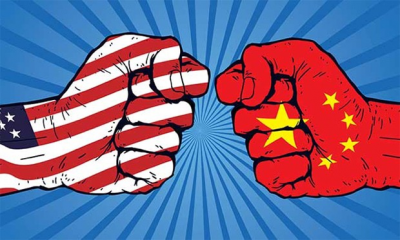
They resort to low dirty tricks like detaining Huawei’s CFO & banning Huawei. They raised a silly trade war which benefits no one. Trade deficit always exist between a developing and a developed country. USA is like a luxury car seller who ask a farmer: why am I always buying your vegetables and you haven’t bought any of my cars?
When the Chinese were making socks for the world 30 years ago, the world let it be. But when Chinese started to make high technology products, like Huawei and DJI, it caused red-alert. Because when Western and Japanese products are equal to Chinese in technologies, they could never match the Chinese in prices. First world countries want China to continue in making socks. Instead of stepping up themselves, they want to pull China down.
The recent movement by the US against China has a very important background. When Libya, Iran, and China decided to ditch the US dollar in oil trades, Gaddafi’s was killed by the US, Iran was being sanctioned by the US, and now it’s China’s turn. The US has been printing money out of nothing. The only reason why the US Dollar is still widely accepted, is because it’s the only currency which oil is allowed to be traded with. The US has an agreement with Saudi that oil must be traded in US dollar ONLY. Without the petrol-dollar status, the US dollars will sink, and America will fall. Therefore anyone trying to disobey this order will be eliminated. China will soon use a gold-backed crypto-currency, the alarms in the White House go off like mad.
China’s achievement has been by hard work. Not buy looting the world.
I have deep sympathy for China for all the suffering, but now I feel happy for them. China is not rising, they are going back to where they belong. Good luck China.
The President of Serbia and Avdullah Hoti, the Prime Minister (perhaps it would be more correct to say “self-styled Prime Minister”) of NATO’s 1999 war booty, the occupied Serbian province of Kosovo were hosted for a conference at the White House on 3 and 4 September. The ostensible purpose of the meeting was to iron out their economic relations, as if anything were there to iron out given the devastated condition of both their economies. Putting aside the sensible question of why anybody at the White House would even care about this very local issue enough to devote the good part of two days to it, and bearing in mind that nothing in the Balkans is as it appears at first glance, the real agenda was, of course, quite a bit different. It had to do with putting finishing touches on legitimizing Kosovo as a separate state with international attributes, and economic concerns only served to camouflage that intention.
When the dust settled, the Serbian President had signed what must appear as one of the weirdest documents in the history of international relations. Before making any further editorial comments, here it is:
What is so bizarre about it? It is a scrap of paper adorned with the signature of a head of state, but without any heading or logo, or place where it was signed. To add insult to injury, the signatory is identified merely as “President.” President of what, the local Rotary Club or Hunters’ Association? Would a statesman who cares about the dignity of his office or the prestige of his country sign something like this? And what is this, anyway? Is it a diplomatic document or the signatory’s private notes, written out to himself? Interesting questions, worth pondering.
For a contrast, here is President Donald Trump’s letter to his Kosovo Albanian guest, Avdullah Hoti, commemorating the occasion:
That looks a lot better and more dignified, doesn’t it?
For an economic agreement between two Balkan entities that few in the West have heard of, care about, or could locate on the map, reached with the involvement of President Trump and members of his staff, the strangely laid out document, it must be said, contains some even stranger provisions.
It says, among other things, that the parties will “diversify their energy supplies.” What does this Aesopian language mean? Are the parties unhappy with their current sources of energy and in need of assistance to secure new ones? Hardly. In light of (a) America’s bitter opposition to North Stream 2, and (b) Secretary of State Pompeo’s recent attempts to “diversify” Belarus’ energy supplies by pushing on it US products that would have to be brought from 10,000 miles away in order to block nearby Russian energy supplies, this phrase can mean only one thing. It is an order to Serbia to abandon any thought of relying on convenient and reasonably priced Russian energy supplies. It also puts an end to Serbia’s role in the Russian European energy distribution scheme, and potentially deprives it of its lucrative position as the South Stream distribution hub. What a great deal for Serbia!
Serbia further accepts to “prohibit the use of 5G equipment supplied by untrusted vendors.” Public health advocates would at this point say “Great, the trip to Washington was not in vain after all, because the scourge of 5G will no longer endanger the health of Serbia’s population, already being decimated by dire cancer generating radioactive consequences of the 1999 NATO bombing.” But the removal of this indisputably noxious Chinese equipment (and that is the whole point of this provision) will not end the scourge but will merely lead to “other mediation efforts in a timely fashion,” e.g. to the substitution of US manufactured deadly 5G networks for those of Huawei.
So the “economic normalization agreement with Kosovo” signed by the president of Serbia’s Hunter’s Association is actually a huge slap to both Russia and China, Serbia’s important geopolitical partners, and incidentally a shot in Serbia’s own foot as well.
Next, there is a provision which Ambassador Richard Grenell, who mediated the talks, might have inserted himself: “Both parties will work with the 69 countries that criminalize homosexuality to push for decriminalization.” What has that got to do with economic relations? And why stop there and not also mandate transgender toilets in Serbian grammar schools?
Serbia is also mandated to transfer its embassy in Israel from Tel Aviv to Jerusalem. In parallel fashion, “Kosovo” and Israel will establish diplomatic relations, i.e. Israel recognizes Kosovo. Another great deal for Serbia. By moving its embassy to Jerusalem, Serbia will reward Israel for recognizing the illegal separation of 15% of its territory containing some of its most significant cultural and spiritual sites. That would be analogous to Israel ceding Temple Mount and the Wailing wall to the Arabs and opening embassies in their capitals. And, slap number three, this time to the Arab and Muslim world, for reasons that are impossible to rationally fathom, Serbia obliges itself to “implement measures to restrict Hizballah´s operations and financial activities” on its territory. Whatever position one chooses to take toward “Hizballah” there is nothing for Serbia to restrict because that organization does not conduct any activities on Serbian territory, unless the reference is to “Kosovo” which happens to be a Hizballah stronghold. So why aren´t things called by their real name, and why does a person purporting to represent Serbia consent to being strong-armed into signing such a ludicrous provision, needlessly putting his country in a bad light and courting the contempt of hundreds of millions of Muslims throughout the world?
The next to last point of the Agreement is highly indicative of the political context of the entire affair. It says that in return for “Kosovo” not seeking membership in international organizations for a year, Serbia will “agree to a one-year moratorium on its de-recognition campaign, and will refrain from formally or informally requesting any nation or International Organization not to recognize Kosovo as an independent state.” The formulation is ambiguous but it is framed to support the interpretation that Serbia will refrain from obstructing the recognition of “Kosovo as an independent state” without any time limitations. The sentence is cleverly written by Anglo-Saxon lawyers, including tricky punctuation, to obfuscate that point, but the comma after the word “year” gives the game away. The clause that follows is grammatically separate from the language that precedes it. If President Trump was in a hurry and retyping the whole thing was not an option, any prudent signatory on Serbia’s behalf would have quickly inserted in his own hand after the word refrain the phrase “for the duration of one year,” thus clearly matching the period of “Kosovo’s” commitment to refrain. But as the matter stands, “Kosovo’s” duty to refrain will expire in one year, while Serbia’s obligation to do the same will continue indefinitely after that. Pacta sunt servanda.
Did Serbia’s representative at this meeting have a legal team to assist him? Probably not, because he presumes to be a lawyer himself.
What is the political implication of this provision? It is that the US and EU sponsored process of “Kosovo” legitimation as an “independent state” shall continue unabated, culminating in UN membership, with Serbia renouncing in advance the right to oppose it in any effective way. It is a demonically clever scheme. In the end, Serbia’s de iure recognition of “Kosovo” will become irrelevant because there will no longer be a need to seek its consent or opinion on the subject.
For the outlaw “government of Kosovo,” however, this is an important phase in the relentless process of legitimation that is being conducted under the auspices of its US deep state sponsors, whether Trump personally is aware of what is going on or not. For Serbia, the trans-Atlantic trip definitely was not worth it. It was another broad strategic retreat and humiliation. It demonstrates the readiness of Serbia’s leadership to needlessly abase themselves and trade the country’s crown jewels for another lease on their political life, betting on the foreign support they now think they have secured by brown-nosing the global powers-that-be. They better think again, however, and analyse realistically the trajectory of their Montenegrin colleagues.
I thank a reader of my previous article for correctly spelling my surname, with the umlaut. I had used the English transliteration in order not to confuse some readers. ↑
Moscow didn’t interfere in the UK election last year, and has no idea who tried to hack British pharma companies for Covid-19 vaccine data, the Kremlin press secretary Dmitry Peskov said.
“We have no information on who could’ve hacked the pharma companies and research centers in the UK. We can only say one thing – Russia has nothing to do with those attempts,” Peskov said.
“We reject these kind of accusations,” he added, referring to both the hacking and election meddling claims as “unsubstantiated.”
On Thursday, Britain’s National Cyber Security Centre said that hackers, who were allegedly backed by the Russian government, were trying to obtain Covid-19 vaccine data from academic and pharmaceutical institutions in the UK and around the globe.
Earlier in the day British Foreign Secretary, Dominic Raab claimed that “it is almost certain that Russian actors sought to interfere in the 2019 General Election through the online amplification of illicitly acquired and leaked Government documents.”
The leaked documents that surfaced online ahead of the December vote showed several rounds of trade talks between British and American representatives, during which the US side supposedly pushed for access to the National Health Service for high-priced American pharmaceutical companies, and to lower health and safety standards in the British food industry.
Raab didn’t mention any proof of how Russians were involved in spreading the word about the leak that embarrassed the government at the time, but he acknowledged that “there is no evidence of a broad-spectrum Russian campaign against the General Election.”
Contradictions in the words of the UK’s top diplomat were pointed out by the Russian Foreign Ministry’s spokeswoman, Maria Zakharova. Raab’s statement “was so ambiguous and inconsistent that it was practically impossible to understand,” she said.
With London confirming that it has no proof against Russia, but still threatening retaliatory measures, “there’s a feeling that we have a new loop of the ‘highly likely’ tactics.”
“Highly likely” was the phrase used by then-UK Prime Minister Theresa May to blame Russia for the chemical poisoning of double agent Sergei Skripal in Salisbury back in 2018. Two years later, London hasn’t provided any convincing evidence to back the claim.
Raab’s “almost certain” will apparently become the new go-to formula for the UK authorities, but the tactics of blaming Russia for internal problems in Britain will remain the same, Zakharova said.
The Russian Embassy in London called it a purely propagandist step, noting that it never received any notes of protest from the British parties regarding the hacking claims. As for Raab’s threats of retaliation, an embassy spokesman said that “any unfriendly steps towards Russia won’t be left without a proper and adequate response.”
The hacking claims were an attempt to “tarnish the reputation of the Russian vaccine” against the coronavirus, CEO of Russian Direct Investment Fund (RDIF) Kirill Dmitriev said. Those behind the slur are “scared of [the vaccine’s] success because the Russian vaccine could potentially be the first on the market and it potentially could be the most effective,” he explained.
It’s no coincidence that those accusations were made just after the announcement that the state regulators will be approving the Russian vaccine in August, Dmitriev added. Besides, stealing data from the UK would have made no sense for Moscow, as a Russian firm, R-Pharm, will be producing the British vaccine made by Oxford-based AstraZeneca.
“No secrets are needed. Everything is already given to R-Pharm,” Dmitriev said.
Think your friends would be interested? Share this story!
One of the graver risks for big-time criminals is that investigators will be able to identify them and their deeds by ‘following the money’. The criminals have to hide the proceeds of their crimes. This is done by depositing their monies into legitimate finance houses and businesses. It often requires some fancy book-keeping tricks and intricate transactions. This is called layering by the afficionados of this dark art. Once it is done, the criminals can draw on the accounts created and mix the ill-gotten gains with legally garnered capital. The term for this is ‘integration’ and it makes the investigators’ tasks much harder. The rotten fruit of crime will have been laundered.,
Extradition
For some time now, Hong Kong has seen massive street protests as many people want more of a say for themselves in governance and less of a say for Beijing. In the midst of the chaos, Hong Kong’s legislators proposed to ink an extradition agreement to which China would be the other signatory.
Extradition treaties are arrangements whereby a nation state agrees to return to its partner-nation to the treaty people alleged to have committed criminal acts against that other nation’s laws. It is meant to prevent alleged criminals from avoiding the consequences for their misconduct by escaping to another jurisdiction. When a request for extradition by a signatory to a treaty is received, a court there is to determine whether the application should succeed. It is not its task to question whether the person actually committed a crime. It merely has to determine whether it is the kind of crime which could lead to prosecution if the conduct had occurred in its jurisdiction. This gives the process its legitimacy because it gives effect to legal values shared by both parties to the extradition treaty. The court considering the request has no interest in whether the conduct actually amounted to a crime, either in the applicant nation or in its own. It assumes the facts as alleged by the applicant nation and then determines whether that conduct would amount to a violation of its own laws if it occurred in its jurisdiction.
It is, then, a judicial exercise which is purely formal. It does not make any findings about the issues between the applicant for extradition and the person resisting extradition.
Although this was the essential nature of the Hong Kong Bill, it met with fierce resistance: huge marches, physical fights in the legislature. The protests added fuel to the already widely burning fires of dissent and the Hong Kong government withdrew the Bill. In addition to the upheaval and violence in the streets, the government was likely somewhat influenced by the great show of support for the anti-Extradition Bill movement in countries such as the UK, the US and Canada. This anti-extradition stance by these nations seemed to sit uneasily alongside the fact that they had signed on to many similar extradition treaties themselves. But, they bought into the argument made by the Hong Kong dissidents. This was that, even though an extradition request made by China would be vetted by Hong Kong courts steeped in the principles and values of English common law, the proposed treaty would allow China to use extradition requests for crass political purposes, to help it chase down political opponents and agitators. It would lead to attacks on precious freedoms. Even though the proposed treaty ‘looked’ much like any other, it was likely to be used for unacceptable purposes. This sort of thing would never occur in the UK the US or Canada because, unlike China, they respected and lived by the Rule of Law.
The Lore and Lure of the Rule of Law
Canada’s legal system presents itself as embodying society’s shared values and norms. They are embodied in principles and the instrumental rules devised to give these fundamental principles life. This presupposes that the basic principles can be found and defined and that the rules will be appropriately fashioned and applied. The conventional view is that the judiciary is an independent institution and can be trusted to go about the finding of principles and the interpretation and application of rules in a non-partisan, in a non-political, manner.
Courts will treat all private individuals, whatever their social or economic circumstances, as legal equals whose disputes must be settled by the application of known, rational criteria. Rationality, of the legal kind, is to replace political and economic power, that is, irrational power.
The courts abide by generalizing principles and specific rules. The rules have to be spelled out clearly; citizens are to know of the existence of those rules; new rules should not apply retroactively. The principles and rules are to be applied even-handedly, regardless of status and class. The access to this justice system should be equally available to one and all. These are some of the ingredients of what is so often termed the Rule of Law. It is an attractive system because it suggests that everyone is subject to the same laws and requirements, that political or economic power is not allowed to deny anyone their entitlements or rights established in law. The UK, US and Canadian view is that it, or any equivalent, regime does not exist in China. But, while the idea of it certainly exists in our rather self-satisfied Anglo-American settings, its implementation may leave something to be desired.
While our courts are punctilious about following the procedural safeguards which make up the Rule of Law, they have an enormous amount of leeway when determining how substantive principles and rules are to be interpreted and applied. They are in a position to launder otherwise politically troubling, anti-liberal, anti-democratic, policies and decisions. What happens is a mixing of the adherence to procedural formalities which abjure bias and prejudice with the manipulation of substantive laws which incorporate bias and prejudice. The integrated outcome is analogous to the consequence of the criminals’ mixing suspect monies with legally acquired assets. It makes it hard to see whether there was a political wrong in the first place. It is a form of laundering, legalized laundering.1
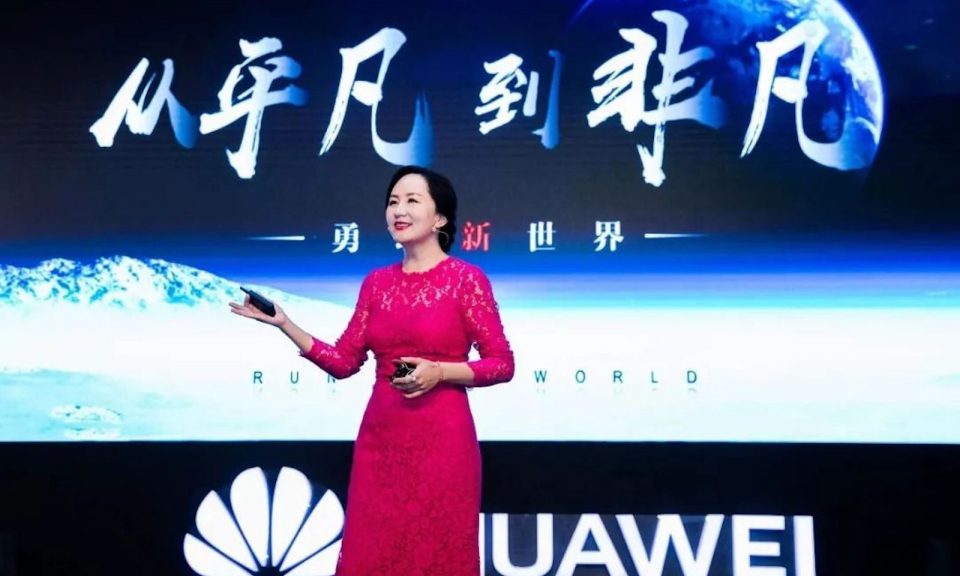
The recent proceedings in Canada dealing with the US demand that the Chief Financial officer of Huawei, Meng Wanzhou, be extradited to the US brings some of this into the open. The Supreme Court of British Columbia ruled that Meng’s argument that there was no legal basis for extradition was rejected. Canada’s talking heads and chattering class sighed with relief. The self-proclaimed liberal Toronto Star’s editors welcomed and characterized the virtue of the decision: “Beijing must understand: out courts don’t serve the government… It’s called ‘rule of law,’ a concept foreign to China’s Communist Party and its mouthpieces.” Apart from their evident cold war genre chauvinism, the editors undoubtedly were glad to have any doubts about the Trudeau government’s and Canada’s allegiance to the Rule of Law stilled.
The recent embarrassment caused by the tawdry behaviour of almost every cog in the ruling class’s legal engine room during the SNC-Lavalin scandal which involved the government forcing its own Minister of Justice to resign because she wanted to act independently and deny a flagrantly wrongdoing corporation any kind of soft landing, now could be pushed aside as an uncharacteristic violation of Canada’s basic principles. To them, the Meng ruling signified that, once again, Canada was entitled to be smug, to assert that it was to be envied because of its stout adherence to an unalloyed good, the Rule of Law.
The Ruling in the Meng Case
It all began with a warrant issued by a New York court for Meng Wanzhou’s arrest in August 2018. She was not there. On December 1, 2018, after an extradition request from the US, Meng was arrested by Canadian authorities when she landed in Vancouver. On 28 January 2019, formal charges were laid by the US Department of Justice, accusing Meng’s employer, Huawei, of misrepresentations about its corporate organization which had enabled it to circumvent laws that imposed economic sanctions on Iran. Huawei was also charged with stealing technology and trade secrets from T-Mobile USA. Meng, the Chief Financial Officer of Huawei, was charged with fraud and conspiracy to commit fraud. Huawei pled not guilty to the charges of violating the Iran sanction provisions in a New York court and not guilty to the stealing charges in a Seattle court. After a number of preliminary legal skirmishes, the extradition hearings against Meng began in 2020. Associate Justice Holmes issued her ruling on 27 May, 2020. Law takes its time.
Meng had told HSBC officials who met with her in the back of a Hong Kong restaurant in 2013 that, despite the allegations in a newspaper article, Huawei had not made improper use of a closely associated firm, named Skycom Tech, to supply US materiel to Iran. The reason she had made this statement to HSBC, it was alleged, was that Huawei used HSBC as a banker when transacting business. If Huawei, as alleged, was implicated in violations of the Iran sanction laws, HSBC might well be held to be complicit in such crimes. The US alleged that Meng’s representations to HSBC constituted fraud under its law.
Meng Wanzhou argued that, for a case of fraud to be made out, in both the US and Canada, it was necessary for the prosecution to prove that the fraud materially contributed to a tangible loss. This could not be made out here. For Meng’s deception of HSBC to cause it a tangible loss in the US, it was necessary for US prosecutors to invoke the impact of another law, the Iranian sanction law. Without it there would not be any harm and, therefore, no fraud in the US. As Canada did not have any such sanction provisions in place, Meng’s deception would not have led to any tangible loss in Canada and there would have been no fraud committed in Canada. This argument that the basic requirement for extradition – mirroring laws – had not been met, was rejected by Associate Chief Justice Holmes.
She deployed standard legal reasoning that is, she looked for previous holdings and used the imprecisions she found in them and in the wording of the legislation she was interpreting. Holmes found that previous decisions had held that, in order to determine whether the conduct in the applicant jurisdiction created an offence, it was necessary to assess the essential nature of that conduct. That meant evaluating the foreign conduct in its context, in its legal environment. Meng argued that looking at the legal environment required taking a foreign law, one distinct from the laws being compared, into account, something which should not be done under the Extradition Law.
The presiding judge responded that only some aspects of the legal environment, constituted by that other law, had to be taken into account, not all of it. It was her job to say which aspects could be so used. Holmes admitted that she was going out on a limb because the distinction between looking at some aspects of a foreign law and taking the actual law into consideration is fraught, both as a matter of logic and of established law. She wrote that “the issue is at what level of abstraction… the essence … of the conduct is to be described… there is little authority or precisely what may be included in ‘imported legal environment’.”
Undeterred by the lack of any known criteria (remember the Rule of Law!), she used what she likely calls her common sense and what Meng’s supporters probably think was her unconscious bias. Associate Justice Holmes decided that, in this case, it was appropriate, when looking for the essential nature of the foreign conduct, to look at the effects of that US law, the Iran sanction law. As its effects made Meng’s deceiving conduct fraudulent in the US, and as deception is the core of fraud in Canada, the essential/contextualized nature of Meng’s conduct satisfied the essence of fraud as defined under Canada’s Criminal Code. Lawyers call this sort of finessing good lawyering; in the wider community it is seen as legal chicanery. Holmes ruled that Canada was free to extradite Meng.
Laundered
All that effort to put Wanzhou Meng’s fraud into legal context and not a scintilla of regard for the political, social and economic context of the case!
Everyone, literally everyone, knew what had led the US to charge Huawei and its CFO. It was to obtain bargaining chips in its fight with China. It was to persuade its citizens that it was right for the government to deny them access to cheaper goods and a better 5G system because China would abuse its growing economic influence and enhance its spying potential. It was to make China more pliable when the US demanded better trade terms and more protection for its intellectual property, etc. There was no attempt to hide any of this.
Did the Canadian government understand this? Of course. Did it feel it had to allow the US to use Canada’s supposedly neutral legal machinery to further its political project? Of course. Could the Canadian government have said “no” and simply turned a blind eye when Wanzhou Meng landed in Vancouver? Of course.
Was Associate Justice Holmes, at the very least, in a position to guess all of this? Of course.
The Supreme Court of British Columbia had the timelines of the saga before it. All the events that led to the fraud charges occurred years before the tug-of-war between the US and China turned into a full blown version of a new cold war. Meng’s alleged misrepresentations to HSBC occurred in August 2013, several months after Reuters had published its report on the links between Huawei and Skycom Tech. that supposedly led to Iran being supplied with US materiel.
It took five years for the US to charge Huawei and Meng. It took five years for its righteous indignation about Huawei’s and Meng’s violations to reach fever pitch. It took five years for the US to decide that a deception of one set of private entrepreneurs by other private entrepreneurs ( a garden variety event in an aggressive competitive milieu), a deception which took place in a far away jurisdiction, presented a danger to the integrity of the US justice system. That integrity had not been seen as severely threatened when the masters of the universe deceived millions of people during the subprime mortgage scandals, at least not sufficiently to charge any of the more senior perpetrators. None of this was of any concern to the Supreme Court of British Columbia. The court was only concerned with the narrowest of decontextualized legal issues before it. Its certainty that its only responsibility was to the Rule of Law signified to it that it should not be troubled by the possibility that it might be used as a pawn, by either the US or the Canadian government or both.
Nor was this lack of concern shaken by President Trump’s highly publicized statement to Reuters (the outfit which had written the report which started the ball rolling), made just after Wanzhou Meng was released on bail. Trump said that he would certainly intervene in her case “if I thought it necessary” to help forge a trade deal with China. Undoubtedly some people (especially lawyers) might think it right and proper for a court to ignore a blatant admission by a craven politician that the supposedly independent system of law of both the US and Canada was being used for partisan political purposes. After all, the statement had been made extrajudicially and had not been put before the court. While the judge might have known about the Trump intervention, much as she knew that the US and China were having a political tug-of-war and that Canada had been drawn into it, the wilful blindness demanded by the Rule of Law demanded that she make no reference to any off this knowledge.
This reasoning makes no sense to anyone not held in rapture by the Rule of Law fantasy. Immediately after Trump made his provocative statement, Trudeau realized that the public might draw the inference that Canada was just bowing to its Big Brother ally and permitting it to abuse the Canadian justice system. It evoked the notion that the US and Canada were just one country with two systems. He was forced to respond.
Trudeau issued the following statement: “Regardless of what goes on in other countries, Canada is and will always remain a country of the rule of law.” The message was clear: we, the elected government and its executive have nothing to do with any of this; we rule an independent country; we have an independent legal system and it makes these kinds of decisions. We respect this and abide by the results. When it comes to the extradition of Meng, we, the politicians, like Pontius Pilate, wash our hands off the whole mess. It has nothing to do with us. It is not a political matter.
This is why the editors of the Toronto Star and all other opinion moulders greeted the ruling in the Meng case with such acclaim. By ignoring all the real facts underlying the dispute, the court had given support to the Canadian government’s pretence that the Meng case had not raised questions about its participation in a complex set of political, economic and ideological controversies. Their role had been laundered. If the outcome suited the US in its struggle with China, this was incidental; Canada’s government had not pushed for such an outcome because it believed in the Rule of Law. These cheerleaders pointed out that, if Canada had interfered with the judiciary’s operations, it would certainly have pushed for a different result.
As it was, the judicial ruling could only strain relations between Canada and China, a most undesirable state of affairs as Canada hoped to have China release two Canadians accused of committing serious offences in China; more Canada had no interest in imperilling important trade relations with China, as the judicial ruling might well do. That is, the result may be a political win for Trump, but a loss for Trudeau, two Canadian citizens and, likely, some farmers and manufacturers if China uses its economic clout to punish Canada.
So viewed, the judicial outcome gives the impression that the government had not played any part in the decision-making. It should, therefore, not be held politically responsible for the consequences. The government had acted righteously, it had been true to the Rule of Law. Its conduct had been sanitized, laundered.
Of course this argument is not as strong if the judicial outcome is not seen as inimical to the government. What did Canada actually want? We can only guess. But it is to be remembered that the government did detain Wanzhou Meng; if it had not done so, the worst that would have happened is that the US might have been annoyed. Assuming, as it makes sense to do, that Canadian officials understood full well what the US was up to, the detention suggests, although it does not prove, that the government was not opposed to the obvious political and economic goals of the US. More strongly, it indicated that it was willing to support those goals. After all, it knew the risks it was taking. The headline in the Ottawa Citizen on 15 December, 2018, read: “Abelev: In the Huawei case, Trump has enlisted in a game Canada can’t win.”
Another glimpse of the Canadian government’s thinking is provided by Prime Minister’s request that John McCallum resign from his post as Ambassador to China after he had made public statements which indicated that he thought the case against Meng was trumped up and, therefore, should lead the government to reject the extradition request. This would help Canada in its negotiations with China which, in apparent retaliation, had jailed two Canadian citizens.
Implicit in McCallum’s intervention was a reference to a legal power that Canada has reserved for itself over extradition processes. The Minister for Justice can, at any moment after a request for extradition is received, abort the process. In Trudeau’s angry reaction to McCallum, he made no reference to this, pretending political interference with the judicial system was to be eschewed.2 While to some people, then, Trudeau’s publicized disapproval of McCallum’s views (and of similar ones by former Prime Minister Jean Chretien a little later), did dovetail with the claim that the government should not take a position on matters to be determined by a judge, it also suggested that the government would not object too much if the ruling went against Meng, regardless of what it might mean for Huawei, Meng and the prisoners. After all, the justification for the hands-off the justice system proffered by Trudeau should not have been given too much credence.
At that time a full-blown scandal was raging over the SNC-Lavalin affair. Trudeau was brazenly trying to get rid of an independent Minister of Justice precisely because she was thwarting his enactment of a law which was to apply retroactively (remember the Rule of Law!) to save a serial wrongdoing corporation. A curious symmetry weirdly surfaces. The Trudeau government was trying to give its rogue actor, SNC-Lavalin, the kind of gentle treatment the US had given HSBC by giving it access to a deferred prosecution agreement of the kind that the US had given that deviant bank.
There were many polluting particles in the ambient air as the Meng case was processed in the supposedly politically unpolluted atmosphere of law. Undoubtedly, Associate Justice Holmes did her best to blow all these toxic particles out of her mind, as all judges claim to do. But this does not mean that they did not influence her mind-set. We will never know. That is how laundering works: if the dirt which soiled the cloth is rinsed out, all that one is left with is clean cloth. Just what the government needed.
Epilogue
The legal processes have not ended. Meng may appeal the ruling on double criminality handed down by the Supreme Court of British Columbia, arguing the Holmes’ reading of how the essential nature of conduct in a foreign state was to be found was erroneous. Her lawyers do have some plausible arguments to proffer on this issue. Before that will take place, a hearing will be held into Meng’s allegation that, when she was detained in Vancouver, prior to being turned over to the RCMP, the border official obtained Meng’s telephone numbers and passwords and then passed these on to the RCMP. She was detained and questioned for three hours before she was told of her arrest. She claims her constitutional rights were violated and that the RCMP and Canada’s Border Services Agency acted, improperly, as US agents.
This is a claim that procedural safeguards essential to the proper operation of the Rule of Law had been breached. If successful it would make the arrest wrongful and mean that the committal process which led to Holmes’ ruling should be voided. The result of the adjudication on this action by Meng can also be the basis for an appeal. If all of it, the denial of proper process and the Supreme Court of British Columbia’s ruling on double criminality, are settled in favour of Canada, the extradition process can continue, although, as seen, the Minister for Justice can always set the whole thing aside.
There are many other hurdles to clear. The Trump Administration may be replaced, the Trudeau government (in a minority position) may fall before all this is over. It is also difficult to know what steps China will take and how this will influence political minds in Washington and Ottawa. These unknowns highlight how artificial it is to pretend that a request for extradition is a legal, non-political, struggle based on rational aseptic criteria.
To underscore this point, note that, on 4 June, 2020, the US State Department issued a threat. It will reassess its sharing of intelligence with Canada (a member of the so-called Five Eye intelligence network) if Canada chooses to let Huawei market its 5G technology in Canada. This makes it clear that the extradition case was never about a fraudulent misrepresentation to a ‘vulnerable’ foreign bank, but about furthering US efforts to ward-off the danger of an economic and political threat posed by China.
Law and its Rule of Law are convenient tools, no more no less. They should not be granted too much respect. Certainly they should not permit our governments to present themselves as unsullied, as if they have come out of the washing machine, smelling fragrantly.
And, oh yes, after its agreement with the US Department of Justice, HSBC had made much of its new approach and had spent money on better systems to inhibit wrongdoing. On 8 April, 2020, it was reported that HSBC had admitted it had engaged in money laundering in Australia. Maybe it does not require Huawei or Meng to engage in fraud to get HSBC to participate in criminality.
*
Note to readers: please click the share buttons above or below. Forward this article to your email lists. Crosspost on your blog site, internet forums. etc.
‘The legalization of politics’ is the name given by Harry Glasbeek and Michael Mandel, “The Legalization of Politics in Advanced Capitalism: The Canadian Charter of Rights and Freedoms” (1984), Socialist Studies, 2:84, and by Michael Mandel, The Charter of Rights and the Legalization of Politics in Canada, rev. ed., Toronto; Thompson Educational, 1994, to a process which removes class and history from political discourse and consciousness.
As well, there is a rarely used law on the books, the Foreign Extra Territorial Measures Act, that the Attorney-General can deploy to repulse measures of a foreign state that are likely to significantly affect Canadian interests. This is the legislation used to allow Canada not to comply with the US sanctions on Cuba. Arguably, but not certainly, it could be used to block the extradition of Meng.
China is aggressively targeted by Washington because of its growing political, economic and military power on the world stage.
Pompeo falsely accused its ruling authorities of “repression…unfair competition…predatory economic practices, (and) a more aggressive military posture (sic).”
All of the above explain how the US operates, its agenda defined by its war on humanity at home and abroad — COVID-19 used as a pretext to pursue it.
Enactment of the US Secure and Trusted Communications Act last month was the latest anti-China shoe to drop.
It requires the Federal Communications Commission (FCC) to establish a $1 billion fund to help small telecom firms remove existing Chinese equipment the Trump regime and Congress consider a threat to US security — despite none posed, no evidence suggesting it.
The measure prohibits using US subsidies to buy network communications equipment from Huawei and other Chinese tech companies.
A Justice Department statement said various “Executive Branch agencies unanimously recommended that the Federal Communications Commission (FCC) revoke and terminate China Telecom’s authorizations to provide international telecommunications services to and from the United States,” falsely adding:
The company’s operations in the US potentially lets the firm “engage in malicious cyber activity enabling economic espionage and disruption and misrouting of US communications.”
A joint disinformation statement by House Energy and Commerce Committee co-sponsors said the following:
“Securing our networks from malicious foreign interference is critical to America’s wireless future, especially as some communications providers rely on equipment from companies like Huawei that pose an immense threat to America’s national and economic security (sic).”
The measure has nothing to do with “ensuring the integrity of America’s telecommunications systems.”
It’s all about China bashing, the latest step to weaken the country economically and technologically.
Last year, the US Commerce Department’s so-called “entity list” effectively banned Huawei and scores of other Chinese tech companies from the US market and supply chain.
They include enterprises involved in producing aviation related products, semiconductors, engineering, as well as other high-tech products and components.
Falsely claiming these enterprises act “contrary to the national security or foreign policy interests of the United States” is cover for wanting corporate America to have a leg up on Chinese competition — especially related to the rollout of 5G technology, Huawei leading the race globally.
At stake are trillions of dollars of economic value, why Huawei and other Chinese tech firms are targeted by Washington.
Blacklisted companies are prohibited from purchasing US technology without Washington’s permission, Huawei and its 70 affiliate companies notably targeted.
According to Competitive Carriers Association director Steven Barry, the new law “essentially attempt(s) to rebuild the airplane in mid-flight” by requiring US users of Chinese telecom equipment to remove and replace it while attempting to maintain uninterrupted operations.
On Monday, the US Semiconductor Industry Association, National Foreign Trade Council, and seven other US industry groups wrote Trump regime Commerce Secretary Wilbur Ross, saying:
Proposed US changes “result in significant impacts to the semiconductor industry, its global supply chain, and the broader technology sector,” adding:
“Semiconductors drive the functionality in advanced medical equipment used by health professionals to treat the public” and enable telework.
SEMI president Ajit Manocha wrote Trump, saying proposed anti-China changes will disrupt over $20 billion in US industry business annually, adding:
New rules will “serve as a disincentive for further investments and innovation in the US and lead to the design-out of US technology and components.”
They’ll also disrupt supply chains that are “critical to fighting” COVID-19.
New rules aren’t finalized. Industry pushback may not be enough to halt the Trump regime from fully enforcing them along with more of the same to come.
A Final Comment
COVID-19 is a global issue, falsely called the “Wuhan virus” by Trump and other regime officials. Most likely it originated in the US, not China.
On April 7, UK-based Nature magazine apologized for associating COVID-19 with China, saying:
“That we did so was an error on our part, for which we take responsibility and apologize,” adding:
“(W)hen (a viral) outbreak happens, everyone is at risk, regardless of who they are or where they are from.”
“(A)ssociat(ing) a virus and the disease it causes with a specific place is irresponsible and needs to stop.”
Since early COVID-19 outbreaks, “people of Asian descent around the world have been subjected to racist attacks, with untold human costs” — Chinese nationals mostly affected.
“(W)e must all do everything we can to avoid and reduce stigma; not associate COVID-19 with particular groups of people or places; and emphasize that viruses do not discriminate — we are all at risk.”
“Coronavirus stigma must stop — now.”
*
Note to readers: please click the share buttons below. Forward this article to your email lists. Crosspost on your blog site, internet forums. etc.
Award-winning author Stephen Lendman lives in Chicago. He can be reached at lendmanstephen@sbcglobal.net. He is a Research Associate of the Centre for Research on Globalization (CRG)
His new book as editor and contributor is titled “Flashpoint in Ukraine: US Drive for Hegemony Risks WW III.”
MUNICH, GERMANY – FEBRUARY 15: Chinese Foreign Minister Wang Yi makes a speech during the 56th Munich Security Conference at Bayerischer Hof Hotel in Munich, Germany on February 15, 2020. Abdulhamid Hosbas / Anadolu Agency
Chinese Foreign Minister Wang Yi stresses urgent need for international coordination ‘to build a shared future’
Few postmodern political pantomimes have been more revealing than the hundreds of so-called “international decision-makers,” mostly Western, waxing lyrical, disgusted or nostalgic over “Westlessness” at the Munich Security Conference.
“Westlessness” sounds like one of those constipated concepts issued from a post-party bad hangover at the Rive Gauche during the 1970s. In theory (but not French Theory) Westlessness in the age of Whatsapp should mean a deficit of multiparty action to address the most pressing threats to the “international order” – or (dis)order – as nationalism, derided as a narrow-minded populist wave, prevails.
Yet what Munich actually unveiled was some deep – Western – longing for those effervescent days of humanitarian imperialism, with nationalism in all its strands being cast as the villain impeding the relentless advance of profitable, neocolonial Forever Wars.
As much as the MSC organizers – a hefty Atlanticist bunch – tried to spin the discussions as emphasizing the need for multilateralism, a basket case of ills ranging from uncontrolled migration to “brain dead” NATO got billed as a direct consequence of “the rise of an illiberal and nationalist camp within the Western world.” As if this were a rampage perpetrated by an all-powerful Hydra featuring Bannon-Bolsonaro-Orban heads.
Far from those West-is-More heads in Munich is the courage to admit that assorted nationalist counter-coups also qualify as blowback for the relentless Western plunder of the Global South via wars – hot, cold, financial, corporate-exploitative.
For what it is worth, here’s the MSC report. Only two sentences would be enough to give away the MSC game: “In the post-Cold War era, Western-led coalitions were free to intervene almost anywhere. Most of the time, there was support in the UN Security Council, and whenever a military intervention was launched, the West enjoyed almost uncontested freedom of military movement.”
There you go. Those were the days when NATO, with full impunity, could bomb Serbia, miserably lose a war on Afghanistan, turn Libya into a militia hell and plot myriad interventions across the Global South. And of course none of that had any connection whatsoever with the bombed and the invaded being forced into becoming refugees in Europe.
West is more
In Munich, South Korean Foreign Minister Kang Kyung-wha got closer to the point when she said she found “Westlessness” quite insular as a theme. She made sure to stress that multilateralism is very much an Asian feature, expanding on the theme of ASEAN centrality.
Russian Foreign Minister Sergey Lavrov, with his customary finesse, was sharper, noting how “the structure of the Cold War rivalry is being recreated” in Europe. Lavrov was a prodigy of euphemism when he noted how “escalating tensions, NATO’s military infrastructure advancing to the East, exercises of unprecedented scope near the Russian borders, the pumping of defense budgets beyond measure – all this generates unpredictability.”
Yet it was Chinese State Councilor and Foreign Minister Wang Yi who really got to the heart of the matter. While stressing that “strengthening global governance and international coordination is urgent right now,” Wang said, “We need to get rid of the division of the East and the West and go beyond the difference between the South and the North, in a bid to build a community with a shared future for mankind.”
“Community with a shared future” may be standard Beijing terminology, but it does carry a profound meaning as it embodies the Chinese concept of multilateralism as meaning no single state has priority and all nations share the same rights.
Wang went farther: The West – with or without Westlessness– should get rid of its subconscious mentality of civilization supremacy; give up its bias against China; and “accept and welcome the development and revitalization of a nation from the East with a system different from that of the West.” Wang is a sophisticated enough diplomat to know this is not going to happen.
Wang also could not fail to raise the Westlessness crowd’s eyebrows to alarming heights when he stressed, once again, that the Russia-China strategic partnership will be deepened – alongside exploring “ways of peaceful coexistence” with the US and deeper cooperation with Europe.
What to expect from the so-called “system leader” in Munich was quite predictable. And it was delivered, true to script, by current Pentagon head Mark Esper, yet another Washington revolving door practitioner.
21st Century threat
All Pentagon talking points were on display. China is nothing but a rising threat to the world order – as in “order” dictated by Washington. China steals Western know-how; intimidates all its smaller and weaker neighbors; seeks an “advantage by any means and at any cost.”
As if any reminder to this well-informed audience was needed, China was once again placed at the top of the Pentagon’s “threats,” followed by Russia, “rogue states” Iran and North Korea, and “extremist groups.” No one asked whether al-Qaeda in Syria is part of the list.
The “Communist Party and its associated organs, including the People’s Liberation Army,” were accused of “increasingly operating in theaters outside China’s borders, including in Europe.” Everyone knows only one “indispensable nation” is self-authorized to operate “in theaters outside its borders” to bomb others into democracy.
No wonder Wang was forced to qualify all of the above as “lies”: “The root cause of all these problems and issues is that the US does not want to see the rapid development and rejuvenation of China, and still less would they want to accept the success of a socialist country.”
So in the end Munich did disintegrate into the catfight that will dominate the rest of the century. With Europe de facto irrelevant and the EU subordinated to NATO’s designs, Westlessness is indeed just an empty, constipated concept: all reality is conditioned by the toxic dynamics of China ascension and US decline.
The irrepressible Maria Zakharova once again nailed it: “They spoke about that country [China] as a threat to entire humankind. They said that China’s policy is the threat of the 21st century. I have a feeling that we are witnessing, through the speeches delivered at the Munich conference in particular, the revival of new colonial approaches, as though the West no longer thinks it shameful to reincarnate the spirit of colonialism by means of dividing people, nations and countries.”
An absolute highlight of the MSC was when diplomat Fu Ying, the chairperson on foreign affairs for the National People’s Congress, reduced US House Speaker Nancy Pelosi to dust with a simple question: “Do you really think the democratic system is so fragile” that it can be threatened by Huawei?
Kabbalistic Balance
-
Kabbalistic Balance August 6 2026 ___________________________________ More
Vids! +BN Vids Archive! HERE! ___________________________________ Support
The Br...
Report on Beth Israel vigil 07-04-26
-
*1A Rights under combined attack from local government plus media*
Ann Arbor City Council is at it again. Right before the long 4th of July
weekend, they ...
-
Hello all,
It is with great sadness that I share with you the passing of our beloved
sister, Mother, and Grandmother, the individual that you all knew ...
Best Horror Podcast
-
Best Horror Podcast Introduction: Horror podcasts […]
The post Best Horror Podcast appeared first on Copper Shock Horror Podcast.
Ikhras Endorses Muntadhar Al-Zaidi
-
“Oh parties of banditry and sectarianism and corruption, we have come and
our goal is to destroy you.” Ikhras formally endorses Muntadhar al-Zaidi,
Iraqi j...
Prince Charles: Foreign Jews behind bloodshed in ME
-
In May, 2017, British Crown Prince Charles declined an invitation from
Zionist entity’s president Reuven Rivlin‘s to attend the 100th anniversary
of the no...
Palestinian Women – One for All, All for One
-
Honouring All Palestinian Women by Honouring Three: Hanin Zoabi, Ahed
Tamimi, Samah Sabawi Vacy Vlazna “Palestinian women have always stood side
by side ...
US’s Saudi Oil Deal from Win-Win to Mega-Lose
-
By F. William Engdahl Who would’ve thought it would come to this? Certainly
not the Obama Administration, and their brilliant geo-political think-tank
neo-...
-
*Mordechai Vanunu wins human rights prize of Brazilian Press Association *
* http://www.alternativenews.org/english/index.php/features/updates/7038-mordechai...
Abdul Aziz Rantissi:
"My ultimate wish, my God, is to attain martyrdom,"...God granted him his wish on April 17, 2004, at the hands of Israeli assassins.