Uprooted Palestinians are at the heart of the conflict in the M.E Palestinians uprooted by force of arms. Yet faced immense difficulties have survived, kept alive their history and culture, passed keys of family homes in occupied Palestine from one generation to the next.
Millions hungry… no fuel or electricity… worthless currency… I witnessed all of this in Lebanon and Syria. And the greatest tragedy is this needless suffering is caused by the West’s desire to introduce ‘freedom’ and ‘democracy’.
I have just returned from my second trip to Lebanon and Syria this year. I previously visited in May, and in the course of a few months I have witnessed a precipitous decline in the wellbeing of the people of both of these countries.
Beirut, the capital of Lebanon, seemed rather normal and tranquil in May but is now completely dark at night, due to a lack of electricity. There are only a few hours of sporadic electricity a day throughout the city. Meanwhile, fuel is nearly impossible to come by, with lines of cars spanning at least a kilometer waiting for gas. A number of my friends told me that they could not drive to meet me because they had no fuel for their vehicles.
There is also little to no garbage service, and so the streets and sidewalks are lined with trash. In what was once dubbed the ‘Paris of the East’, I witnessed goats roaming the streets in search of garbage to eat on the side of the road. The Lebanese lira has tumbled in value daily, with menus at restaurants that were still able to operate displaying prices written in pencil so they could be changed every morning. As I write these words, the lira is now worth 0.00066 US dollars. A number of truly exasperated people stated – with a swoosh of the hand in the air – that “Lebanon is finished.” And it certainly feels that way.
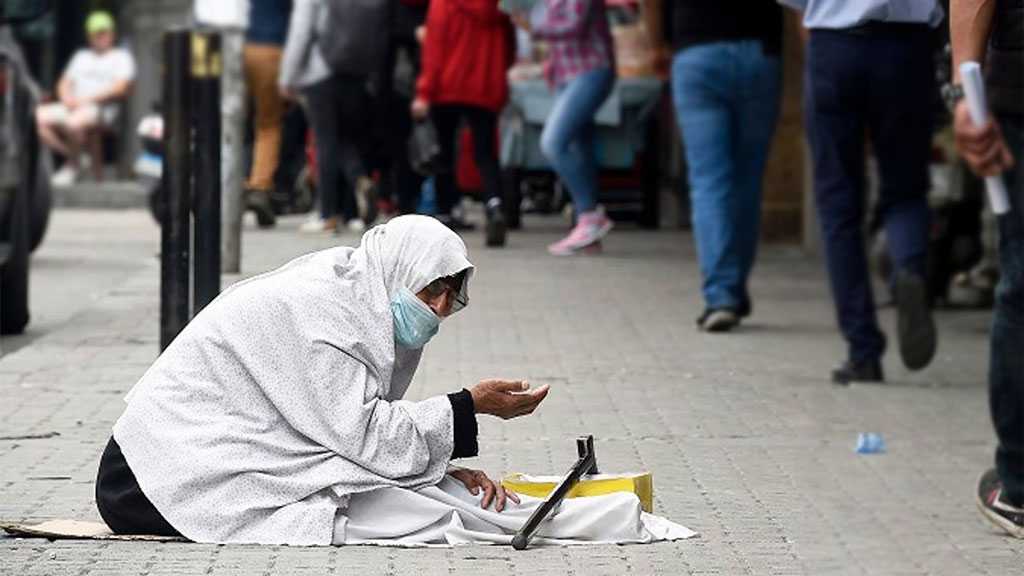
Everyone in Lebanon I talked to wants out of the country; some even asked if I could take them with me. The possible exception is the mass of Syrian people who have fled the war in their own country. Many of these Syrians now live on the streets in Beirut. It is very common to see Syrian women with their children sleeping on the dark city sidewalks. According to UNICEF, there are nearly 1.5 million Syrian refugees living in Lebanon, putting further strain on a social system which is unable to take care of its own people.
Syria is also suffering from a lack of electricity, with power for only a few hours a day, and food and vital medicines are hard to come by as well. Personal protective materials necessary to protect against Covid – such as masks and hand sanitizer – are almost non-existent.
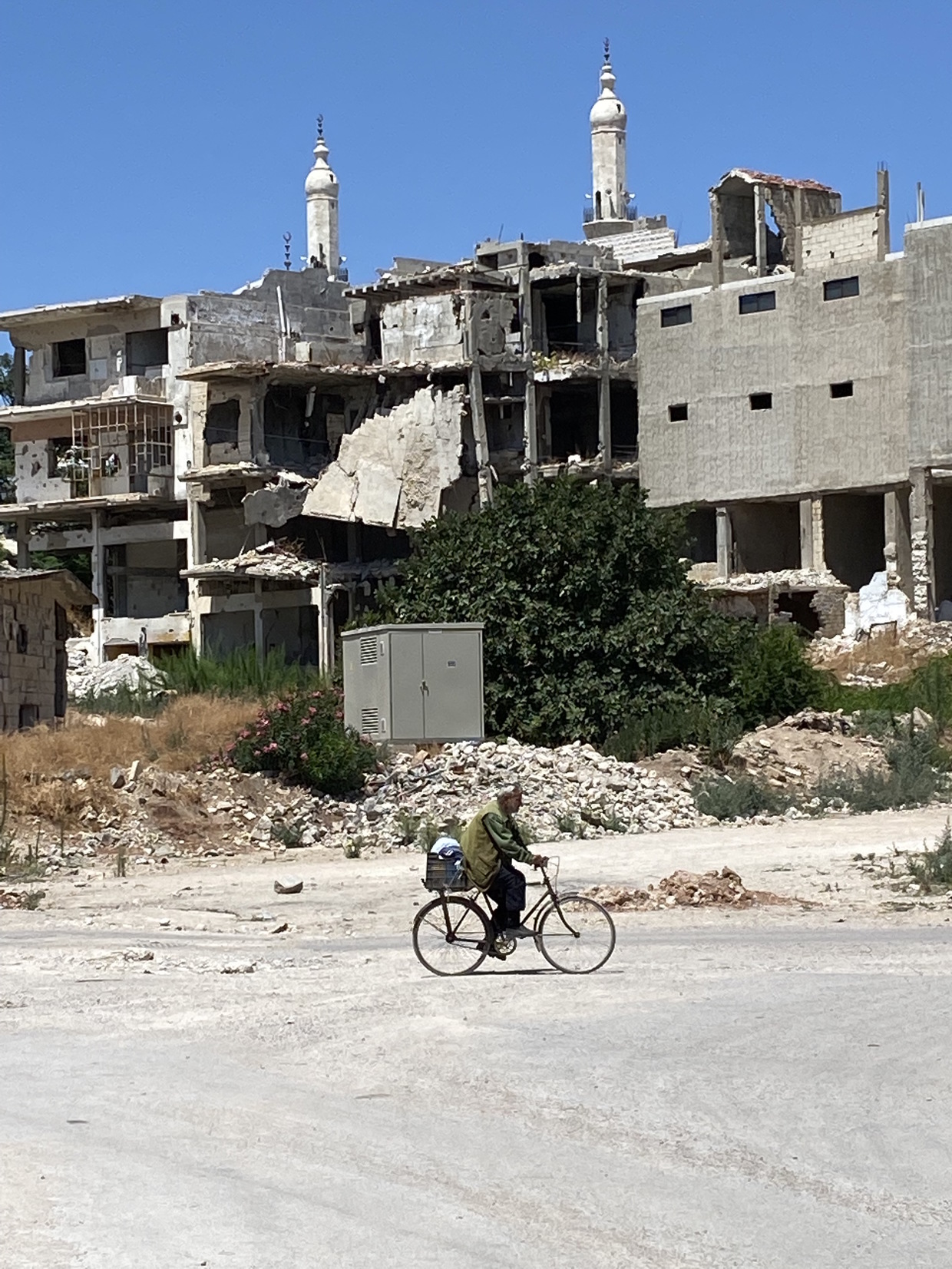
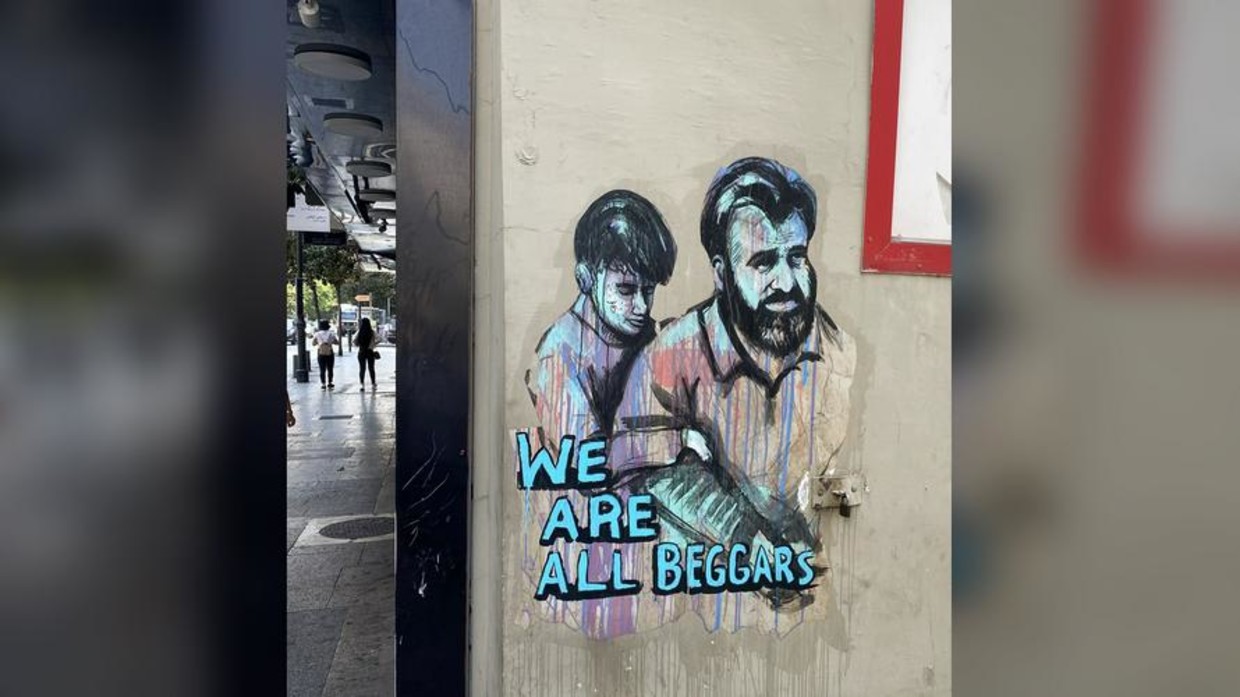
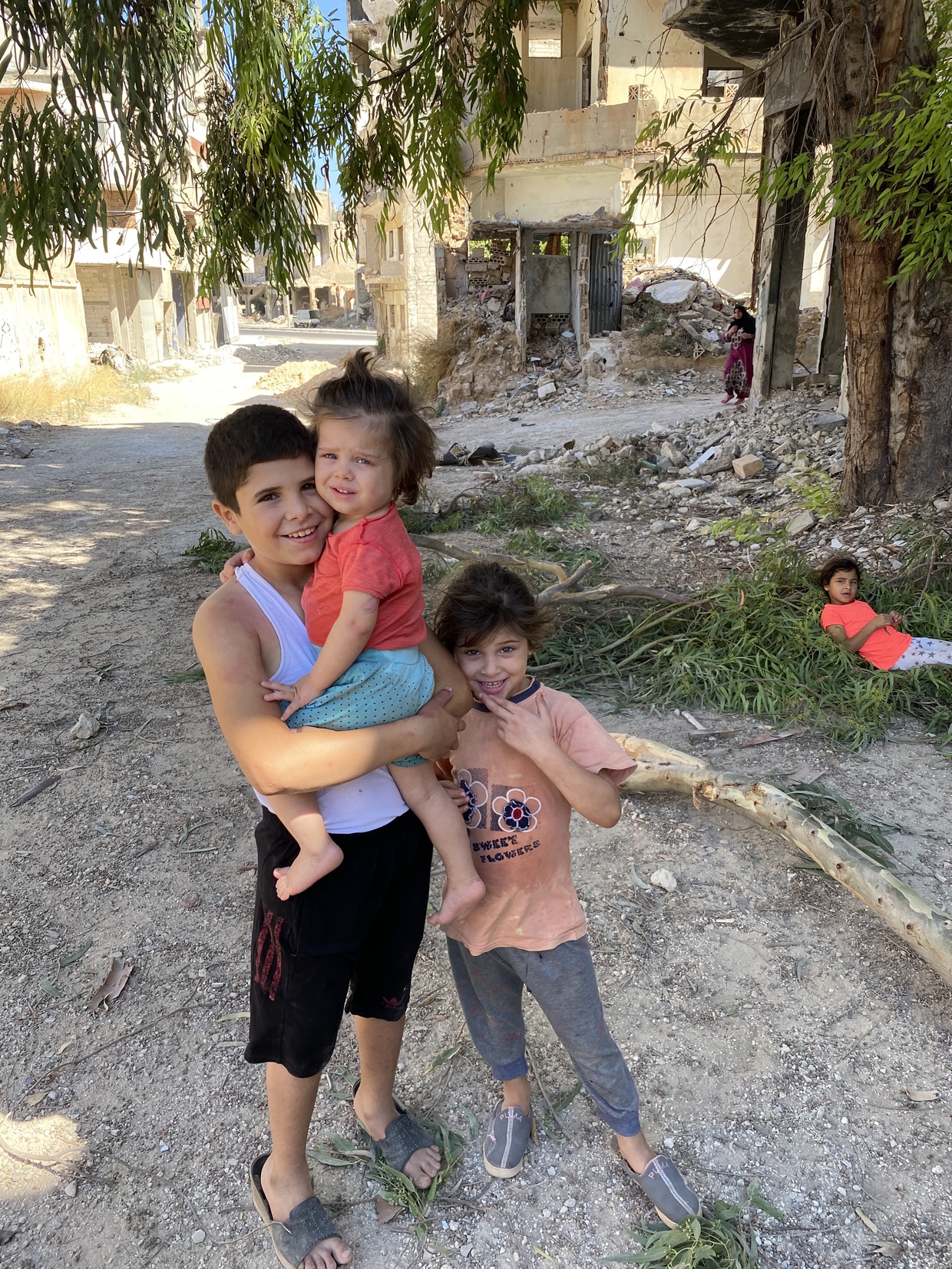
The families I stayed with would be at the ready with their laundry and food to cook for the odd occasion that the electricity would turn on for an hour. Most people are without air-conditioning or refrigeration in the sultry climate. The Syrian pound is also relatively valueless, with $100 buying bags of the currency, as I myself have experienced. Meanwhile, huge swathes of cities like Homs remain largely in rubble as post-war reconstruction has ground to a halt.
All of this is, of course, according to the plan of the Western ‘humanitarians’ who claim their suffocating economic sanctions on Syria – once Lebanon’s biggest trading partner and largest source of fuel – are intended to somehow bring democracy and freedom to the region. As we well know, these sanctions hurt civilians first and foremost, and disproportionately injure women and children in every country upon which they have been imposed.
As an article in Foreign Affairs explains, the example of Iraq shows that sanctions do nothing but create human misery. It reads, “US sanctions killed hundreds of thousands of Iraqis. Their effect was gendered, disproportionately punishing women and children. The notion that sanctions work is a pitiless illusion.”
And it goes into great detail about the humanitarian toll of the sanctions first imposed upon Syria by President Trump. “The Trump administration designed the sanctions it has now imposed on Syria to make reconstruction impossible. The sanctions target the construction, electricity and oil sectors, which are essential to getting Syria back on its feet. Although the United States says it is ‘protecting’ Syria’s oil fields in the northeast, it has not given the Syrian government access to repair them, and US sanctions prohibit any firm of any nationality from repairing them – unless the administration wishes to make an exception…”
The article goes on to point out that these restrictions mean the country faces “mass starvation or another mass exodus,” according to the World Food Program. This is backed up by alarming statistics which show that 10 years ago, abject poverty in Syria affected less than one percent of the population. By 2015, this had risen to 35 percent of the population. The rise in food prices – up 209 percent in the last year – is also noted, as is the fact that according to the World Food Program, there are now 9.3 million “food insecure” Syrians. There is also criticism of the requirements the Syrian government must meet to secure relief from the sanctions. These are described as “deliberately vague” – a ploy, it is said, to deter investors who might be able to assist Syria, but are unprepared to do so because they are not certain they are free to help.
The UK humanitarian organization, the Humanitarian Aid Relief Trust (HART), echoes these concerns, explaining that “[t]he sanctions that have been placed on Syria by the EU (including the UK) and USA have caused dire humanitarian consequences for Syrian citizens in Government controlled areas (which is 70% of the country) who are seeking to rebuild their lives…”
“Of the huge amounts of humanitarian aid that western governments are sending ‘to Syria’, the vast majority reaches either refugees who have fled the country, or only those areas of Syria occupied by militant groups opposed to the Syrian government. Most Syrian people are therefore deliberately left unsupported; indeed, even their own effort to help themselves and re-build their lives are hampered by sanctions.”
The despair being brought about by Western sanctions is palpable. Syrians and Lebanese, whose fates are inextricably tied to each other, have little hope for a happy and prosperous future. Once again, the West’s claims to ‘civilize’ the world have brought only misery, sorrow and destruction.
But I would be remiss if I did not end on this note: that, still, despite it all, the incredible hospitality and kindness of the Syrians and Lebanese have yet to be destroyed by the cruelty visited upon them. Everywhere my companions and I went, including in the most modest homes of places like Maaloula, Homs or Latakia, Syria, or in Lebanon, families were quick to offer us coffee, water, and snacks.
Despite the fact that they are being denied the basic amenities of life by sanctions as targeted as a nuclear weapon, these people still know how to share the little that they have. This, I will always carry with me and be grateful for.
Daniel Kovalik teaches International Human Rights at the University of Pittsburgh School of Law, and is author of the recently-releasedNo More War: How the West Violates International Law by Using “Humanitarian” Intervention to Advance Economic and Strategic Interests.
Poverty in Lebanon has drastically increased over the past year, now affecting about 74% of the total population, warns a new policy brief on “Multidimensional Poverty in Lebanon: Painful Reality and Uncertain Prospects” issued today by the United Nations Economic and Social Commission for Western Asia [ESCWA].
Taking into account dimensions other than income, such as access to health, education and public utilities, increases the rate to 82% of the population living in multidimensional poverty.
This new policy brief comes one year after a previous ESCWA publication on poverty in Lebanon, which had found that between 2019 and 2020, the headcount poverty rate had already jumped from 28% to 55%. According to today’s updates, the multidimensional poverty rate in Lebanon has nearly doubled from 42% in 2019 to 82% in 2021.
Against this backdrop, ESCWA Executive Secretary Rola Dashti reiterated her call for the establishment of a social solidarity fund to alleviate the country’s humanitarian crisis. She recalled that, in 2020, ESCWA put forward a proposal: the 10% richest decile in Lebanon, who held nearly $91 billion of wealth at the time, could bridge the funding gap for poverty eradication by making annual contributions of 1% of their net wealth.
According to the study, interlinked shocks exposed the Lebanese pound exchange rate, which has been fixed since the beginning of the century, to tremendous pressures, causing currency depreciation. Inflation soared to 281% between June 2019 and June 2021. These combined shocks have led to a significant decrease in the living standards of both Lebanese and non-Lebanese, and to rampant deprivation.
Moreover, extreme multidimensional poverty, which refers to deprivation in two or more dimensions of poverty, affects 34% of the population today, exceeding half in some areas of the country.
Given that the unprecedented socioeconomic crisis in Lebanon afflicts all segments of society, population groups with highest and lowest levels of educational attainment now register similar poverty rates. The study also highlights that the share of households deprived of healthcare increased to 33%, and the share of those unable to obtain medicines has also increased to more than half.
“Mitigating the impact of the crisis requires solidarity and cooperation between all segments of the Lebanese society,” Dashti stressed, while urging the development of effective social protection schemes that are more responsive to the needs of the poor, especially those living in extreme multidimensional poverty, and the expansion of their scope to include the unemployed.
It is worth to note that, with the progress of development research and the availability of more detailed surveys, the concept of poverty expanded to take into account living conditions and various aspects of deprivation not limited to income. This new concept has become known as “multidimensional poverty”, measured by six key dimensions, namely education, health, public utilities, housing, assets and property, and employment and income.
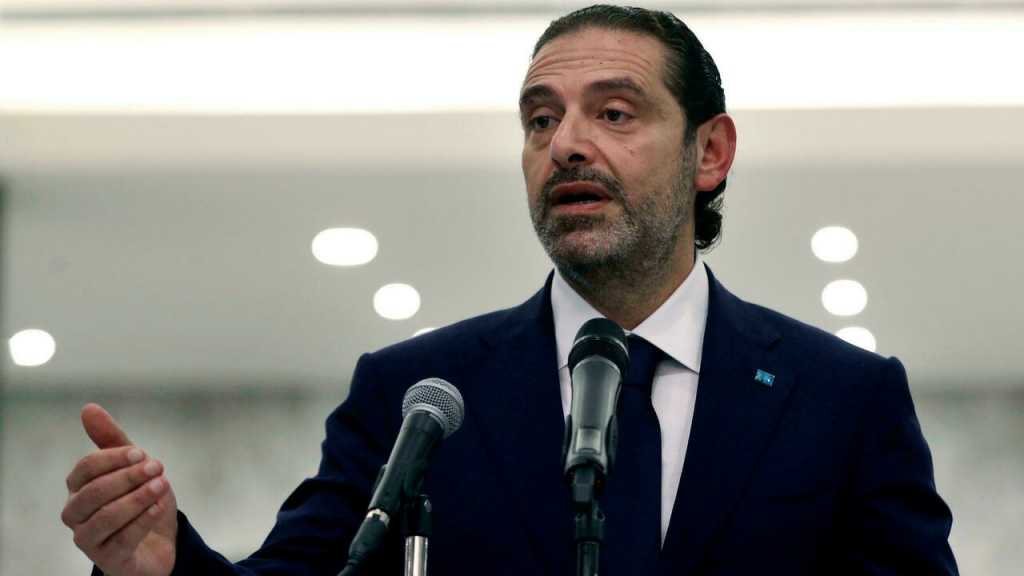
Lebanon’s Prime Minister-designate Saad al-Hariri says he has abandoned his efforts to form a new government, citing differences with the country’s president.
Hariri announced on Thursday that he was unable to reach an agreement with President Michel Aoun on the formation of a new cabinet, and stepped down nine months after he was assigned to the task.
Hariri’s resignation came following a brief meeting with Aoun at Baabda Palace.
He said Aoun had requested fundamental changes to a cabinet line-up he had presented to him, and that the Lebanese president had told Hariri that they would not be able to reach an agreement.
“I met with the president, and we had consultation on the issue of the government,” Hariri told reporters shortly after meeting with Aoun, adding, “There were amendments requested by the president, which I considered substantial in the line-up.”
“It is clear that the position of Aoun has not changed… and that we will not be able to agree,” Hariri said.
Lebanon’s prime minister-designate added that he had offered to spend more time trying to form a cabinet, but he had also been told by the president that, “We will not be able to agree.”
The statement said Hariri had proposed that Aoun take one more day to accept the suggested proposal, but the president had responded, “What is the use of one additional day if the door to discussions was closed.”
The Lebanese president was said to be considering a date for parliamentary consultations as soon as possible after Hariri’s decision to give up on cabinet formation.
Hariri is the second candidate to have failed at forming a government in less than one year amid political bickering between Lebanon’s leaders and the economic crisis gripping the country.
Hariri was designated to form the new government in October, after the resignation of Prime Minister Hassan Diab in the aftermath of the deadly August 4 Beirut port explosion.
Since then, Lebanese political groups have failed to resolve their differences and form a government.
The World Bank has called Lebanon’s crisis one of the worst depressions of modern history, ranking it among the world’s three worst since the mid-1800s in terms of its effect on living standards.
The country’s currency has lost more than 90% of its value since fall 2019 and more than half of the population has been rendered jobless as businesses have shut down.
According to the World Bank, the gross domestic product [GDP] of the country of six million people nosedived by about 40 percent to $33 billion last year, from $55 billion in 2018.
The double blow of the COVID-19 pandemic and the Beirut port explosion has made the difficult situation even worse in the country.
The European Union, led by France – the former colonizer of Lebanon – is also seeking to ramp up pressure on the Lebanese authorities in an attempt to force the formation of a Western-friendly government.
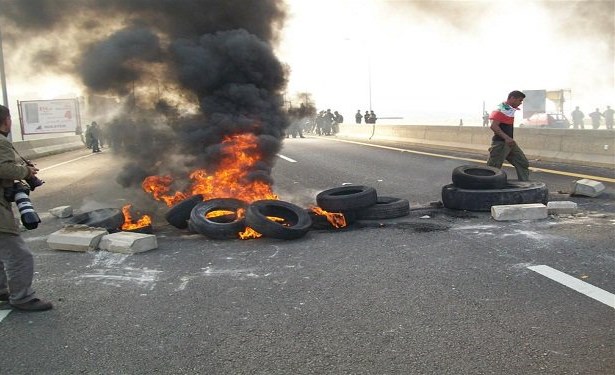
Since the former premier Saad Hariri announced quitting the mission of forming the new Lebanese government earlier on Thursday, his supporter started blocking main highways and throwing stones at the Army units in several cities.
In this context, Hariri supporters blocked Cola highway in Beirut as well as other roads in Bekaa and the North, throwing stones at the Lebanese Army units.
Hariri announced his resignation after a meeting with President Michel Aoun who rejected the proposed cabinet line-up of the the PM-designate for several reasons.
A little over a decade ago, Syrians lived in safety and financial security. After ten years of war on Syria, while safety has largely returned, Syrians are struggling to exist under increasingly crippling Western sanctions.
As Syrian analyst Kevork Almassian noted, “Were it not for the CIA regime change war, arming & training tens of thousands of multinational terrorists, draconian sanctions, foreign occupation of North & East, looting the oil & burning the wheat, Syria would’ve now a brilliant economy & high standard of living.”
When I first visited Syria in 2014, and in the years following, mortars and missiles fired from terrorist groups occupying eastern Ghouta pummeled Damascus on a daily basis. Likewise in government-controlled areas of Aleppo, and elsewhere around Syria.
Parents never knew if their children would return from school, or be shelled while at school. Untold numbers of Syrian civilians have been maimed over the past decade by such shelling, untold numbers more killed.
So one might expect that in 2021, with most of the terrorism in Syria eradicated, Syrians would have begun returning to the normal lives they had ten years prior. But the brutal sanctions have truly wrought hell on Syrians over the years, and under the latest ones, life has gotten exponentially worse.
Last year, I was in Syria for half of the year, after the borders closed due to Covid confusion. With ample time on my hands, I walked for hours around Damascus daily. One afternoon, wanting to get a good view of the city, I walked along narrow lanes going up the side of Qasioun mountain, encountering locals who spoke of community and supporting one another in hard times.
I had stopped to take a photo of the vista when a young girl’s voice called out to me. Shortly after, I was seated in her family’s humble sitting room, drinking cold water and talking with the family.
Only by chance did I learn that the father was ill with prostate cancer and suffering greatly for a want of affordable medications, increasingly difficult to get a hold of due to the sanctions. And that was in April, before the sadistically-named Caesar Syria Civilian Protection Act came into effect months later.
I say sadistically, because these sanctions, while ostensibly intended to target the Syrian government and its allies in order to punish and discourage supposed “war crimes” against civilians, in reality inflict endless misery on those same Syrian civilians. This is, as I wrote, something former US envoy for Syria, James Jeffrey, boasted about, reportedly saying that the sanctions “contributed to the collapse of the value of the Syrian pound.”
It’s a pattern we’ve already seen with Western sanctions – in Venezuela, they have not only made people’s lives hell, but as I also wrote, have killed up to 40,000 Venezuelans in the span of one year, according to the Center for Economic and Policy Research.
A recent guest article in the Financial Times addressed Syria’s ongoing (and orchestrated) economic crisis, with particular attention to the sanctions, noting that 60% of Syrians are suffering from food insecurity.
That number might actually be significantly higher, as in a July 2020 article detailing the illegality of the sanctions, the author cited 83% of the population living below the poverty line. That article noted, of the Caesar sanctions:
“Unlike the pre-existing sanctions, they apply to transactions anywhere in the world that engage the Syrian Government or certain sectors of the Syrian economy, even when those transactions have no connection to the United States.
“Such sanctions cripple a state’s economy; disrupt the availability of food, medicines, drinking water, and sanitation supplies; interfere with the functioning of health and education systems; and undermine people’s ability to work.”
These are not unintended effects – they are the whole idea.
The FT article notes that after the Caesar Act came into effect, the Syrian pound, “lost almost 70% of its value against the dollar in the following months. This spurred an inflationary spiral affecting food prices, which more than tripled in 2020.”
And, in contrast to how the US pretends to “protect” Syrians with these sanctions, the Caesar Act is, “severely affecting the local economy especially in the construction, energy, and financial sectors, blocking any possibility of reconstruction in this phase of lower-intensity conflict.”
Although I continued to follow events in Syria after leaving in late September 2020, when I returned in the last week of May this year, even I was surprised at the skyrocketed cost of basic things. About half a kilo of hummus that was 400 Syrian pounds last year is 2,200 now. At the current official exchange rate of 2,500 that’s slightly less than a dollar – but the average salary in Syria is around 50-60,000 Syrian pounds/month.
The FT article noted a kilogram of beef “costs about a quarter of a public employee’s average monthly salary. For perspective, in Italy this translates as €700 per kg. In the UK? £300 per lb.”
I chatted with a friend who has just one child. He described spending 15,000 (about $6) on vegetables, that would last several days. That’s a quarter of his salary gone, and many expenses still to pay.
In the Midan district of Damascus—an area usually brimming with shoppers coming for the famous sweet shops there, but not crowded the day I went—a cigarette vendor I spoke with described how he struggles to provide food for his wife and two sons. Like the majority of Syrians, selling cigarettes is a second job for him. Some are working three jobs, morning to late evening, and still can’t make ends meet.
He spoke of the self-sufficiency Syria had prior to the war, how everyone had work, but now, people are suffocating.
“We are rationing! I used to buy a kilo of meat every month, but now I buy 200 grams. My salary is 55,000, and if I can earn 50,000 from this second work, I will have 100,000 Syrian pounds. But, this amount is still not enough.”
“Yesterday, I bought some yogurt, cheese, a box of mortadella (meat), and a box of tissues. I paid 11,000 Syrian pounds. This is for one day, and just breakfast.”
He said a dearth of fertilizers and insecticides, due to sanctions, is directly impacting the agricultural sector.
While in Damascus, I also met with French humanitarian, Pierre Le Corf, who has lived in Syria for six years, most of that time in Aleppo. Le Corf, working and living with some of the poorest and most affected Syrians in Aleppo, spoke of how the sanctions are designed to kill hope, in addition to killing civilians.
“You might not see people starving in the street, but that’s not what suffering is. People are suffering in silence. More and more, the youth are leaving the country, not because they want to leave Syria or feel oppressed, but because they feel that they have no hope anymore.
The currency went from 50 Syrian pounds [for a dollar, before the war] to 4,000 Syrian pounds. People work from morning to night, and at the end of the day, their kids might ask for a banana. One kilogram of bananas is 5,000 Syrian pounds. When you earn 60,000 a month…”
He spoke of the pressure the US puts on every company and person who deals with Syria, that they can be imprisoned, fined. “They are forcing companies to not work with Syria,” to isolate Syria.
“I know families for who I’m trying to figure out how to bring them medicines that they can’t find any more. A week ago, I went to bury a guy who we had been bringing medicine, because we couldn’t find it any more. It became 90,000 pounds a box, he needed four boxes a month. He needed more medicine and better treatment that we can’t have, because it’s forbidden. Forbidden why? Because they pretend it’s ‘double use’, maybe it could be used for the army. The people are paying the price, no one else.
In an interview on Syria Insider, British journalist Vanessa Beeley condemned the sanctions against Syria, saying:
“Western governments are starving the Syrian people. They are depriving them of their right to return home, because the rebuilding process is being delayed. They are punishing the Syrian people for the resistance of the Syrian people against what they want to impose upon them. It’s nothing to do with the Syrian government or President Assad.”
Sanctions are never ever non-lethal practises. They are almost the most lethal of all weapons used in the hybrid war against the people of a targeted nation.
“At the same time as the sanctions are in place, the West is stealing the oil, burning the food resources, selling the food resources outside of Syria, all to deprive the Syrian people of their own resources, of the abundance of their own country.”
In a recent, detailed, presentation focussing on the sanctions, Beeley highlighted their effects not only on incomes, food, medicines, but also on fuel, industry, agriculture, health care and hospitals, electricity and water.
She aptly noted: “One could argue that the US Coalition is responsible for genocide in Syria under Genocide Convention article II (e) – deliberately inflicting on the group, conditions of life calculated to bring about its physical destruction in whole or in part.”
“The US Coalition is effectively following a policy of collective extermination of the Syrian people by military and economic means. This is a crime against Humanity, a war crime and a flagrant violation of the right to life & a life of dignity.”#Syriahttps://t.co/m8YxqIlUHR— vanessa beeley (@VanessaBeeley) June 14, 2021
In US President Joe Biden’s meeting with Russia’s Vladimir Putin today, perhaps among the scripted talking points there was tut tutting of Syria and Russia’s alleged preventing of humanitarian aid, a tired old trope debunked but still trumpeted by hypocrites in the West.
And while such integrity-devoid Western representatives launch accusation after accusation at Syria and Russia, it is abundantly clear that the suffering of Syrians is a product of the illegal war on Syria and the deadly, criminal, sanctions against the Syrian people.
It is difficult to separate the recent appearance of the Secretary General of Hezbollah, His Eminence Sayyed Hassan Nasrallah, from its predecessors, as it seems to be linked and rolling on more than one level, but on the Lebanese local issue, these appearances seemed more like a double approach:
1- The first pillar of the dual approach is related to an attempt to propose solutions, exits, endeavors and ideas related to the formation of the new government, with support for the initiatives presented by Parliament Speaker Nabih Berri on one hand, and urging the informed Government to activate some of its actions and create exits that would not conflict with the constitution with regard to the powers of ministers during the so-called conduct of business. Knowing that an important part of what needs to be done is linked to the work of the Ministry itself and not the work of the Cabinet as a whole, which allows the competent minister to exercise his powers under the laws in force, particularly in the supervisory sector, in cooperation and collaboration with the security forces and supervisory authorities, especially in combating corruption linked to monopolization, concealment of goods and price hikes.
2- The second pillar is linked to warnings about the resistance’s long-standing inability to remain silent facing the irresponsible behavior of monopolists and corrupt people, and the government’s failure to fulfill its responsibilities in securing basic commodities for citizens. In this spirit, His Eminence, in his last speech, issued a warning that if matters reached the point where the government can no longer carry out its responsibilities, and shows a clear inability to secure the basics, especially oil derivatives, the resistance would have to turn to the Islamic Republic of Iran to secure and ship this material to the port of Beirut.
This latest position represents a remarkable development in Hezbollah’s speech; it does not constitute a sudden breakthrough, but rather in the context of what might be called “smart dose increase” in the process of confronting the starvation that the US administration is waging on Lebanon.
In an earlier overview of the Secretary-General of Hezbollah, His Eminence indicated that Hezbollah has so far been dealing with the fact that the government exists, and one of its responsibilities is to secure basic commodities, and that when Hezbollah feels that the state has become absent and unable to carry out its tasks, it would act otherwise without revealing what the party’s reaction is and what it intends to do.
As preceded by this situation, Sayyed Nasrallah launched his well-known slogan that Hezbollah would not let the Lebanese starve.
It is rolling situations that started with the slogan “We will not starve” to become a warning that the party could bring oil derivatives itself from the Islamic Republic of Iran.
In fact, the party could not, nor would it be wise, to issue warnings such as importing gasoline without such warnings being accompanied by initiatives urging politicians to assume their responsibilities, either with regard to the formation of the new Government, or the activation of the resigned Government. Sayyed Nasrallah went beyond exhortation, as he explained in details how to address emerging crises without linking them to the radical solutions of the economic crisis. Rather, these crises can be dismantled and treated locally, pending the formation of an effective government that can innovate and invade solutions, and presenting plans and scenarios that pave the way for radical solutions that will neither be easy nor quick, given that the need for long-term radical solutions is not exempt from trying to cope with crises through temporary solutions that reduce the economic burden on citizens.
Whatever the case is, many wondered how Hezbollah would bring in the oil derivatives, where they would be stored, how would it be distributed, how to price it, and other questions. In fact, these kinds of questions are linked to the mechanisms, which are details that Hezbollah undoubtedly has answers and solutions to, and are not interested in explaining them to the public at this time.
In any case, the choice put forward by the party seems to be working according to the saying: the last treatment is cauterization. He is serious about it, but at the same time it’s a message to the people who are involved, especially those responsible for importing and securing these goods. The message is: If you are eager to secure and sustain your interests, you must secure what you have pledged to secure. Otherwise, we pledge to do the job, and we will, as always, fulfil our commitments.
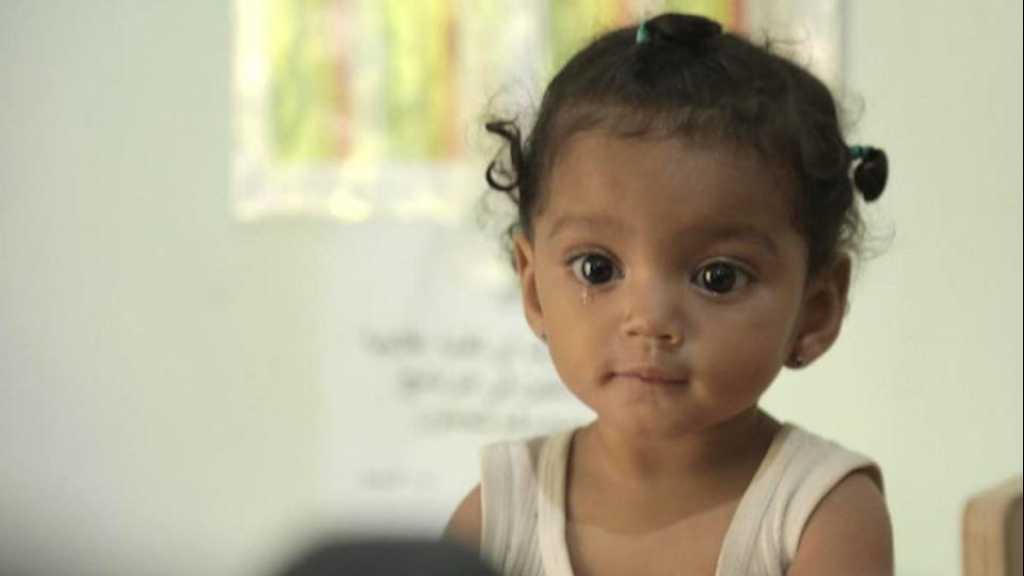
The holy month of Ramadan will be particularly difficult this year for families in Yemen, home of the world’s worst humanitarian crisis.
Six years of conflict, widespread economic collapse and now COVID-19 have pushed the country to the brink, leaving 80 percent of the population — including 12.4 million children — in need of humanitarian assistance.
Half of all children under age 5 in Yemen are likely to suffer from acute malnutrition in 2021
Nearly 2.3 million children under age 5 in Yemen are projected to suffer from acute malnutrition in 2021; 400,000 could die if they do not receive urgent treatment. To protect Yemen’s most vulnerable children, UNICEF health workers are on the ground, screening children for malnutrition and referring those in need to health centers, where they can receive the treatment they need to survive.
“When Nour was born, she was weak and wasted, and her health kept worsening from day to day because of our poor living conditions,” said her mother, Souad. Al-Raymi referred Nour to the Maeen Medical Complex for emergency treatment.
A health worker measures Nour’s mid-upper arm circumference with a MUAC tape used to assess malnourished children.
At the health center, Nour was screened regularly, and slowly nursed back to health with therapeutic food and nutritional supplements. Soon, she began to take her first faltering steps.
“I feel happy that my baby regained her health and started moving, toddling and playing,” said Souad. “She used to feel tired all the time because of her poor health. It’s an indescribable feeling as you watch your child recover from an illness that ravaged its body.”
There is dead silence in health centers where children too weak to make a sound wait for treatment. Above, a Yemeni father sits with his child, who is being cared for in the malnutrition ward of Al-Sabeen Maternity and Child Hospital in Sana’a. Below, a Yemeni health worker measures the height of a girl at the same hospital.
“The increasing number of children going hungry in Yemen should shock us all into action,” said UNICEF Executive Director Henrietta Fore. “More children will die with every day that passes without action. Humanitarian organizations need urgent predictable resources and unhindered access to communities on the ground to be able to save lives.
The aggression on Yemen has officially entered its seventh year. During the last six years, the international community turned a blind eye to the horrific massacres and violations committed against the Yemeni people which include killing, destruction, starvation, and a siege.
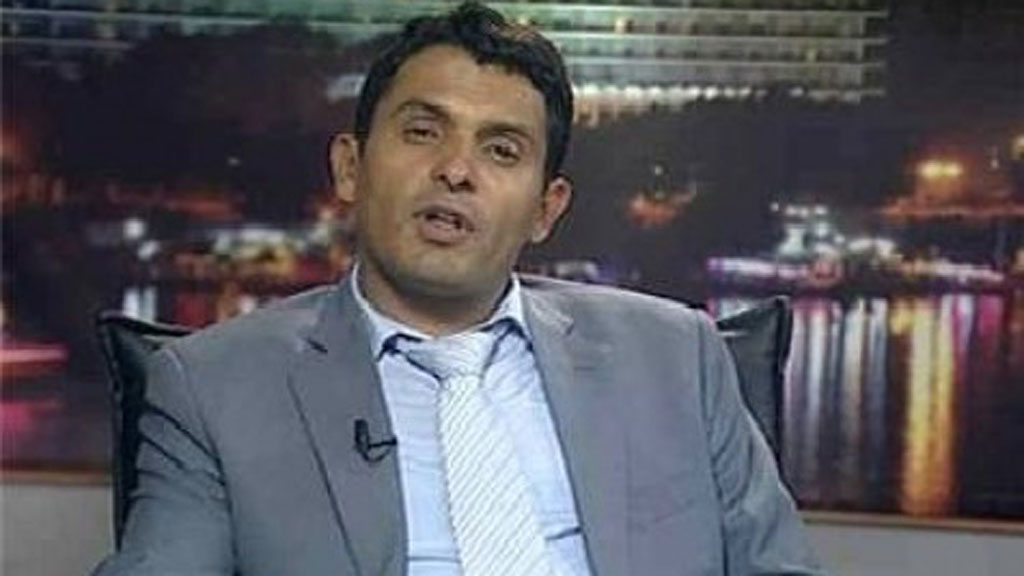
In an interview with Al-Ahed News, Acting Yemeni Minister of Human Rights Ali Al-Dailami detailed the war crimes that the Yemenis endured during the years of aggression.
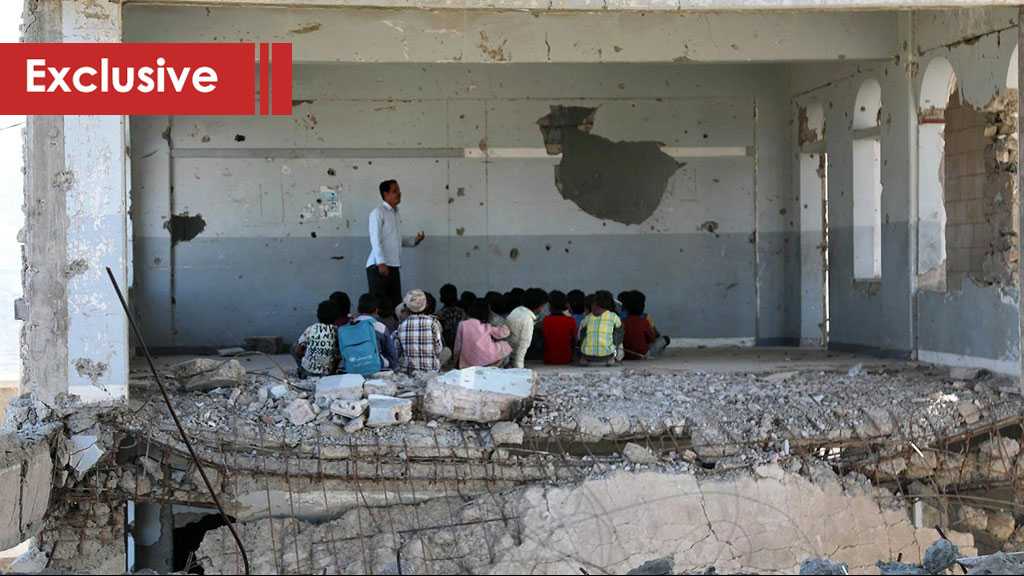
– Destruction of infrastructure: The Saudi-led coalition deliberately destroyed infrastructure, including thousands of hospitals, schools, universities, power plants, roads and bridges, communication networks, and fuel supply facilities. In addition, it destroyed food factories, food storage facilities, transportation networks, drinking water, and irrigation facilities, as well as other civilian facilities that provide basic services. International humanitarian law prohibits the targeting of these sites.
– Starvation and siege: The Saudi-led coalition sought to starve and destroy the Yemeni people by targeting many resources that are essential for the survival of the civilian population. The total blockade imposed on all of Yemen’s land, sea, and air ports is a continuous inhumane practice that causes shortages of basic goods, especially food and medicine.
The Saudi-led forces are blocking the entry of these basic goods that are needed to save lives, and the coalition also intensified its targeting of the port of Hodeida with the aim of halting its maritime navigation service. It completely closed Sanaa airport and strengthened all these inhuman measures by moving the Central Bank of Yemen from the capital to the Aden Governorate, which it occupies and controls through armed proxies. This resulted in salary cuts for state employees that started from the first month that the Central Bank of Yemen was relocated.
– The spread of famine and food insecurity was one of the consequences of the military attacks and sieges on agricultural crops, food storage facilities, livestock, drinking water, and irrigation facilities, in addition to the contamination of wells and irrigation tanks with chemicals and harmful materials that are internationally prohibited. Many lands and agricultural crops were also destroyed due to the use of internationally banned weapons, including phosphorus bombs, white phosphorus, and enriched uranium. These caused a humanitarian disaster, which has long-term effects on women, children, and the elderly.
– During the aggression and the blockade, Yemen faced a major crisis in providing food due to the illegal measures imposed by the coalition that also led to the country’s economic decline. This is widely regarded as one of the main causes of acute food insecurity, in addition to inflation, rising food prices, and the depletion of foreign exchange reserves.
According to an analysis, children in Yemen are the most affected group, as they are at particular risk of acute malnutrition, and they are in dire need of food and medicine. The percentage of the population that is food insecure this year is estimated at around 77% (13.3 million people), with an increase of 21.4% compared to 2017. Around 22.7% of the total population are in Emergency (IPC Phase 4), while 25.6% will soon be in Emergency (IPC Phase 3). With the continuation of the aggression, a large proportion of the population will suffer from acute food insecurity at the end of this year and be classified as living in Famine (IPC Phase 5). The percentage of food insecurity increased during 2018-2019 to 21.4% of the population.
Of course, women and children are the most affected groups by the Saudi-led aggression and blockade and are especially vulnerable to certain diseases, such as malnutrition and anemia.
This includes pregnant women and newborns. Statistics show us the high levels of malnutrition in children and women. More than 2.6 million children under the age of five suffer from malnutrition, including 500,000 who are suffering from severe acute malnutrition, and more than 1.8 million pregnant and lactating women suffer from malnutrition.
– There has also been a sharp decline in access to clean drinking water, decreasing from 10% to 66%, after the water and sanitation sector services were damaged as the coalition targeted dozens of tanks, water wells, springs, and water-raising pumps that run on solar energy. This is in addition to power cuts and lack of fuel, the high average cost of the production unit and the high cost of maintenance (95%), and the inability to pay workers in the sector. Water facilities have been damaged, and water projects in the public and private sectors have ceased to operate (the activities of many local institutions have stopped). The environmental situation in cities and urban areas further deteriorated due to the accumulation of solid waste and garbage. It is estimated that 20.5 million Yemeni people do not have access to clean water.
According to the Consumer Price Index data issued by the Central Bureau of Statistics, the cost of living has recently increased to more than 80%, compared to what it was before the aggression on Yemen. 92.2% of families do not have sufficient funds to secure their basic needs as a result of the aggression.
– There is also the spread of various epidemics and the increase in the number of chronic diseases, including all kinds of cancers caused by the coalition’s use of internationally prohibited weapons. Meanwhile, a high number of patients are suffering from kidney failure and diseases related to the heart, liver, and other vital organs.
The death rate is rising due to diseases and the lack of medicine.
Prior to the Saudi-led aggression, the rate of cancer incidence was 2.3% per year. It has since increased by 5.5% as a result of the coalition’s use of internationally banned and carcinogenic weapons. In March 2021, the number of people with carcinomas increased to 72,000. Meanwhile, the percentage of patients heading to consultation centers for periodic follow-ups and the external administration department for chemotherapy decreased to 20% during the aggression because people can’t reach health facilitates safely amid the bombing of bridges and roads.
The provision of ultrasound services, as well as surgical interventions and radiation therapy, decreased by 50% during the aggression. It also became difficult to obtain radioactive sources and linear accelerators. The radiotherapy service may be permanently stopped due to the poor efficiency of the currently available radioactive source, which may cause a humanitarian disaster for cancer patients.
The provision of some diagnostic services that were provided free of charge to patients in the center has stopped, and 50% of the chemical medicines required for patients, especially targeted therapies that need to be transported at certain temperatures, have been discontinued. The provision of essential medicines, antibiotics, and intravenous solutions decreased by 80% due to the blockade and the scarcity of financial resources.
Meanwhile, 40% of the diagnostic and medical equipment stopped working due to maintenance issues and the unavailability of spare parts. There are approximately 28 dialysis centers that may have to halt operations completely and no longer provide services to 120,000 people with kidney failure and diabetes, in addition to thousands of people with cancer and thalassemia. On the other hand, there are more than 75,000 patients who need treatment abroad. They are facing death as a result of the closure of Sanaa International Airport that is preventing them from traveling for medical treatment.
So far, there are more than 2,326,568 cholera infections and suspected cholera cases, and the number of deaths from this epidemic has reached 3,786.
The coalition used internationally banned weapons in many of its attacks. Medical reports confirmed that the weapons and ammunition used by the coalition caused deformities of fetuses and newborns, especially those weapons that were used in the governorates of Saada, Hodeida, Sanaa, and Taiz. These are the same weapons that the US forces used in their aggression against Iraq in 2004, especially in Fallujah. The attacks caused the deformation of hundreds of newborns and fetuses. Humanitarian organizations have warned against the use of these weapons in Yemen. These are the same weapons the Zionist entity used in the Gaza Strip in 2009, also resulting in the deformation of dozens of newborns and fetuses.
In many of the wars and armed conflicts that occurred in the past, civilian victims, especially women and children, are neglected. The sound of planes and missiles and sudden explosions result in a number of deaths, especially among women and children, and affect pregnant women and fetuses. Preliminary statistics, registered by the Ministry of Public Health and Population, showed that 450 women in 2015 suffered miscarriages due to fear, and anxiety caused by the bombardment.
Following the detailed presentation on the deteriorating humanitarian situation in Yemen as a result of the Saudi-American aggression and blockade, Acting Minister for Human Rights, Ali Al-Dailami, reviews Yemen’s Hiroshima, a report recently issued by the Ansarullah Political Bureau’s Rights and Legal Department.
In his interview with Al-Ahed News, Al-Dailami pointed out that this is the first human rights report that shows the scale of the coalition’s crimes that are being overseen by the US, Saudi Arabia, and the UAE and their mercenaries from within. It also shows the coalition’s brutality towards civilians. The reporter’s name obviously refers to the atrocities committed by the Americans in Japan during World War 2 – namely the nuclear strike on Hiroshima, which killed millions of people and destroyed the city. This is what America, its aides, and its tools are doing in Yemen. They are targeting both the land and people, with various types of lethal weapons that have long-term effects such as cluster bombs. The title of the report illustrates the brutal model being applied in Yemen, and against the Yemeni people.
Al-Dailami explains that the report documented the crimes the coalition committed against children, women, and the elderly using pictures and eyewitness testimonies. These crimes mentioned in the report are only a small part of what was documented by specialists who followed international standards and methodology in the monitoring and documentation process. There are still dozens of crimes and violations that have killed people, and the report focused largely on one of the most serious crimes stipulated in the Rome Statute of the International Criminal Court, which is the premeditated murder that falls under war crimes, crimes against humanity, genocide, and the crime of aggression.
Al-Dailami notes that there will be other issues and publications on the various direct and indirect crimes that have affected Yemen and its people as well as their implications and repercussions on people’s lives.
The report includes three main parts:
– The rules of international law and the violations of the aggression thereof
– The alleged pretexts for the countries of aggression
– The crimes of the countries of aggression as narrated by the documentation team, victims, and witnesses
In response to Al-Ahed’s question about the role of human rights organizations in what is happening in Yemen, Al-Dailami points out that these groups acted against the basic framework of their work and did not adhere to the humanitarian agenda but rather to an agenda that corresponds to the demands of the coalition. The following are examples:
– International Resolution 2342: It indicates the poor humanitarian situation in Yemen that has become catastrophic in most of the country’s governorates and regions. But it doesn’t include any condemnation of the coalition and its daily crimes. This indicates UN and international collusion with the forces of aggression, which means more destruction, collapse, and the continuous deterioration of basic services.
– The closure of Sanaa International Airport: This is an unjustified closure. Meanwhile, the United Nations missions continue to use Sanaa Int. Airport for their flights exclusively without opening humanitarian and commercial services to the Yemenis. This makes the United Nations the main accomplice for the countries of aggression and fully responsible for the worsening humanitarian situation.
– Blockading ports and maritime outlets: The United Nations is fully aware of the extent of the impact of the imposed blockade on port traffic in Hodeida, Salif, and Ras Issa in particular. This situation imposed on the maritime ports is witnessed by the United Nations, but it continues to mislead the world in service of the Saudi-led coalition, which uses the blockade as a means of war on Yemen and the Yemenis.
– According to Al-Dailami, the speech of the Secretary-General of the United Nations at the opening of the fifth high-level humanitarian pledging event for Yemen was also an indication of the disregard for the suffering of Yemenis. Antonio Guterres acknowledged that famine is weighing on Yemen and the race is underway to save Yemen from the famine that most of the Yemeni people may be exposed to. He affirmed that there are quite a few Yemenis starving to death in conditions similar to famine.
– Meanwhile, reports from the Office of the United Nations High Commissioner for Human Rights in Yemen documented civilian casualties and the killing of a large number of civilians in the Shada District of Saada Governorate as a result of airstrikes and an intense attack by a military helicopter. It is clear that the United Nations body records the criminal incident and identifies the perpetrator. However, it does not take any measures related to the protection of civilians and redress for the victims. In addition, the United Nations is unable to hold the coalition’s forces accountable for their crimes against civilians.
Al-Dailami adds that the Yemenis are still following up on the statements of this agency and its officials, which are full of expressions of concern, and fear.
Jamie McGoldrick, the Humanitarian Coordinator for Yemen, expressed his grave concern about reports of airstrikes on civilians in Saada Governorate, including attacks on a house and a private car in two separate areas that resulted in the killing of civilians, including women and children.
The UN agencies keep reminding the parties to the conflict without taking any action that would stop the aggression and its tools from killing civilians in all Yemeni governorates. The following is from one of its officials:
“We recall that indiscriminate or disproportionate attacks or attacks targeting civilian objects such as markets are prohibited under international humanitarian law. We remind all parties to the conflict of their obligation to ensure full respect for international human rights law and international humanitarian law. All incidents resulting in civilian casualties … must be thoroughly investigated to ensure accountability when breaches of international law have been found to have taken place.”
At the top of the list of acts of complicity is the removal of the Kingdom of Saudi Arabia from the list of countries and unofficial bodies that failed to adopt the measures necessary to protect children. It had a direct role in child recruitment, detention, kidnapping, sexual violence, and attacks on schools and hospitals.
The Secretary-General cited a continuous and significant decrease in the number of deaths and injuries in the airstrikes and the implementation of the provisions of a memorandum of understanding calling for the adoption of a program of activities aimed at strengthening prevention and protection measures.
He also added that the program will be subject to monitoring for a period of 12 months and that any failure in this field will lead to the inclusion on the list of the same violations.
“The secretary-general has brought shame on the UN by removing the Saudi-led coalition from his ‘list of shame’ even as it continues to kill and injure children in Yemen,” HRW’s Children’s Rights Advocacy Director Jo Becker said as she reacted to this UN decision.
For her part, Adrian Labar, the director of Watchlist, an NGO concerned with children and armed conflict, said that the removal “sends the message that powerful actors can escape the killing of children.” She called for an “independent, objective, and transparent evaluation of the process that led to the decision” of removing Saudi Arabia from the list of shame.
The Saudi-led coalition remained on the blacklist for three years, as it was added to the list in 2016. It was later removed after protests by Saudi Arabia. The Secretary-General of the United Nations at the time, Ban Ki-moon, accused Saudi Arabia of exerting unacceptable pressure on the United Nations, as allied countries have threatened to cut off funding for humanitarian aid programs.
According to Al-Dailami, evidence of collusion, condemned by all Yemeni society, people, and institutions, is evident through the stance of the international community towards the coalition’s practices – it gives the coalition more room to commit crimes against Yemenis every day. This stance is a reflection of the lack of responsibility and appreciation of the magnitude of the humanitarian situation in Yemen, which goes beyond just being a political crisis.
In response to a question about whether the continuation of the aggression will contribute to the subjugation of the Yemeni people, Al-Dailami asserts that the Yemeni people have conveyed their message to the world.
The plan to occupy Yemen was concluded in the US capital and cooked in the kitchens of the American intelligence. It was decided that it will only take two weeks. But here we are, seven years later! They thought that things would go according to their plan. However, God’s plan and kindness to the army, the popular committees, and the missile force, the supervision of a wise leadership – represented by Sayyed Abdul Malik Badreddine al-Houthi – with strong confidence in God and its representative, and the steadfastness of the Yemeni people have foiled all external bets. There is no doubt that solidarity and support are important from a leader like His Eminence Sayyed Hassan Nasrallah and the Islamic Republic.
Al-Dailami notes that the ongoing siege is killing the Yemeni people, and it has become tighter since Biden took office and announced that he would seek peace in Yemen. This is his way of building peace through blackmail. These are their initiatives, and this is their alleged peace. International silence clearly and explicitly confirms that laws, international agreements, the Universal Declaration of Human Rights, and the United Nations Charter have died and are only a cover for the interests of major countries, even at the expense of dead women and children.
Al-Dailami stressed that the Yemeni people depend on God and move with their steadfastness to defend against injustice and their just cause. As for the countries of aggression, they are losers. He points out that the Yemeni people convey the most wonderful examples of sacrifice, and steadfastness. They insist on the independence of their country and respect for its sovereignty. They are steadfast, defiant, proud, and a great people.
Addressing the forces of aggression, Al-Dailami says: “Haven’t you had enough of killing civilians, especially children and women? Haven’t you had enough lessons to learn from great men? You are facing the Yemeni people! The saying tells you, ‘Yemen is the graveyard of invaders.’”
Kabbalistic Balance
-
Kabbalistic Balance August 6 2026 ___________________________________ More
Vids! +BN Vids Archive! HERE! ___________________________________ Support
The Br...
Report on Beth Israel vigil 07-04-26
-
*1A Rights under combined attack from local government plus media*
Ann Arbor City Council is at it again. Right before the long 4th of July
weekend, they ...
-
Hello all,
It is with great sadness that I share with you the passing of our beloved
sister, Mother, and Grandmother, the individual that you all knew ...
Best Horror Podcast
-
Best Horror Podcast Introduction: Horror podcasts […]
The post Best Horror Podcast appeared first on Copper Shock Horror Podcast.
Ikhras Endorses Muntadhar Al-Zaidi
-
“Oh parties of banditry and sectarianism and corruption, we have come and
our goal is to destroy you.” Ikhras formally endorses Muntadhar al-Zaidi,
Iraqi j...
Prince Charles: Foreign Jews behind bloodshed in ME
-
In May, 2017, British Crown Prince Charles declined an invitation from
Zionist entity’s president Reuven Rivlin‘s to attend the 100th anniversary
of the no...
Palestinian Women – One for All, All for One
-
Honouring All Palestinian Women by Honouring Three: Hanin Zoabi, Ahed
Tamimi, Samah Sabawi Vacy Vlazna “Palestinian women have always stood side
by side ...
US’s Saudi Oil Deal from Win-Win to Mega-Lose
-
By F. William Engdahl Who would’ve thought it would come to this? Certainly
not the Obama Administration, and their brilliant geo-political think-tank
neo-...
-
*Mordechai Vanunu wins human rights prize of Brazilian Press Association *
* http://www.alternativenews.org/english/index.php/features/updates/7038-mordechai...
Abdul Aziz Rantissi:
"My ultimate wish, my God, is to attain martyrdom,"...God granted him his wish on April 17, 2004, at the hands of Israeli assassins.
 The families I stayed with would be at the ready with their laundry and food to cook for the odd occasion that the electricity would turn on for an hour. Most people are without air-conditioning or refrigeration in the sultry climate. The Syrian pound is also relatively valueless, with $100 buying bags of the currency, as I myself have experienced. Meanwhile, huge swathes of cities like Homs remain largely in rubble as post-war reconstruction has ground to a halt.