Showing posts with label Eastern Ukraine. Show all posts

Sunday, 2 May 2021

Air Mission: April Overview

Air Mission: April Overview

May 01, 2021

By Nat South for the Saker Blog

From time to time, I gather and compile basic statistics on US / NATO/ Swedish flights principally near to Russia, (articles posted on my blog). The idea is to get a rough snapshot of the activity, location and types of aircraft that carry out intelligence-gathering missions, broadly known as Intelligence Surveillance Reconnaissance, (ISR), as well as those in direct support of those missions. It is a thankless and time-consuming task, but hopefully it can offer a semblance of having a wider perspective on issues, other than just riding on emotional off-one events, without providing any context.

The US and NATO (and Sweden) routinely send out a variety of aircraft dedicated for ISR missions along or in proximity to Russia. These missions are tasked with monitoring the military status quo, namely the movement of units and in particular the deployment of equipment and ships. Given the ongoing Ukraine-Russia tensions, the data collecting took on another aspect in the last month, namely what kind of activity and response could be seen. Well, the answer is that the skies got a little more crowded in April.

Going through the figures for April shows a marked overall increase in ISR the Black Sea region compared to other regions. Not surprising considering the military build-up in Crimea and in southern Russia, in response to the re-deployment of Ukrainian military hardware and units to Eastern Ukraine.

All the data obtained is done through trawling through social media accounts who track via ADS-B, Mode-S and MLAT sites, to identify the type of aircraft, location, and nationality of the aircraft. Invariably, there are some flights that are missed, because only those that had transponders active in each location were logged. For example, there were certainly more flights off the Norway, Barents Sea and in the GIUK region than I managed to record.

Some points to retain:

Intensification of flights in the Black Sea, (Crimea, Southern Russia FIR). Although the use of unmanned RQ-4B Global Hawks over Eastern Ukraine and Northern Georgia has been going on for a long time, (years in fact), there was an uptick of activities, (Graph 1) in April. Given their 250km reported ‘visual’ range, they can scan a wide swath of land. Unusually, on several occasions in April, two RQ-4B operated at the same time in the region. Prior to April, most of the ISR flight paths were fairly regular in character, this wasn’t the case several times during April, in particular the RQ-4B flights.

Chart, line chart Description automatically generated

Being unmanned, this is the only US / NATO aircraft that carries out missions over territorial airspace over Ukraine and Georgia. For a short time, a RQ-4B was brought in from the Middle East to carry air missions. Many of these flights did not have habitual flight track of prior ISR missions in certain areas, (Eastern Ukraine, Crimean coastline, and Georgia), often orbiting or making multiple tracking back and forth passes.

A comparison is provided below between the number of flights between February, March, and April. The figures for March or February were not different to previous months, so, a big change in frequency. To sum up, the redeployment of Ukrainian military units did not bring about changes in air missions but the Russian redeployments to the area certainly influenced US and NATO military brass in despatching aircraft to the region.

Another noticeable increase in flights is that of the US Navy P-8 Poseidon flights along the northern Black Sea coastline region. Flights were almost a daily occurrence and this unprecedented as far I know. However, this is partially consistent with the fact that the Russian Navy units started a series of naval exercises in the Black Sea over April, (some of the media reports below to get a gist of the frequency and intensity).

It has to be noted that the flights take place in international airspace, but some of the flights tracked closely the 12 nautical miles limit. As with the other ISR aircraft (Rivet Joint, EP3 Aries), the flight route taken were fairly consistent, going along the whole coast of Crimea, flying all the way down to the sea area adjoining Sochi and towards Novorossiysk, (which I refer to as Southern Russia FIR), and then returning back along the coastline.

Chart, diagram Description automatically generated

8-9 April https://tass.com/defense/1276211

12-13 April https://tass.com/defense/1276793

14 April https://www.rt.com/russia/520989-black-sea-fleet-dispatched-us-threat/

19-23 April https://tass.com/defense/1279759/

https://tass.com/defense/1280235

https://tass.com/defense/1281517

27-30 April https://twitter.com/mod_russia/status/1388085378175881216

Boeing P-8s contrary to social media pundits aren’t just submarine hunters, (“must be looking for a Kilo” fare), but in addition to their anti-submarine warfare (ASW), P-8s have anti-surface warfare (ASUW), and shipping interdiction roles. In other words, maritime domain intelligence.

Graphical user interface, diagram Description automatically generated

Another interesting aspect that is noteworthy is the increase in intelligence-gathering flights along the Russian Far East, (Kamchatka and Anadyr). This ties in with press releases and videos on interceptions by the RuAF, where Russian Air Force MiG-31 high-altitude fighter intercepted an USAF RC-135W Rivet Joint reconnaissance aircraft off the coast of Kamchatka.

Often, several type of ISR missions were taking place simultaneously in the Black Sea region, (usually a combination of P-8 and Rivet Joint, or P-8 with Global Hawks). This means that several types of intelligence gathering are carried out, (maritime, ELINT, etc…). This situation

Chart, bar chart Description automatically generated

The above graph shows the ISR missions carried out in April was done daily around many regions from the Baltic to the Barents Sea.

Chart, bar chart Description automatically generated

The overall snapshot for April across many regions is shown in the above graph, the Baltic region, being the second busiest region overall.

So, how do these figures compare to those for March?

Chart, timeline, bar chart Description automatically generated

The Black Sea region in April swapped places with the Baltic region, to lead by a wide margin. To note that I have split the Black Sea region into different sectors, to distinguish the location of flights. The Black Sea region is the overall total, which includes flights that did not enter Crimean, Russian FIRs but were in support of other ISR missions. Generally, this does not include Turkish flights in the southern Black Sea sector, as such the only flights that are counted are those support of other flights monitoring Russian military activities. Unfortunately, it wasn’t possible to confirm whether a RQ-4B flight went to Eastern Ukraine or Georgia, so it may be expected that the figures that I have are lower than in reality.

Chart, bar chart Description automatically generated

The main types of aircraft that carried out various intelligence-gathering missions in the Black Sea region are listed above. While some (the E-3 AWACS, Peace Eagle) stayed over land, their location of activity suggested support for overall intelligence-gathering operations linked to Russian military activities and units.

No surprise to say that it is the US military that flies the most often, with the UK in second place.

Chart, scatter chart Description automatically generated

Lastly, as an interesting comparison with my dataset, here is a graph showing the numbers of air flights along Russian borders, (including the unmanned aircraft) along with interceptions carried out since the beginning of the year, as regularly reported by the Russian Ministry of Defence. As you can surmise, a lot more aerial activity takes place in proximity to Russia generally, (Not just ISR flights but air tankers, U2s and maybe bomber flights are possibly included in the figures). These figures probably also include other non-NATO aircraft elsewhere near to Russia.

Getting this level of official data from NATO and NORAD would be a rarity and as such, it is nearly impossible to compare data for Russian military flights, as the data is rather opaque compared that of the Russian MoD. Add in a level of obfuscation, as this quote shows the typical situation:
““NORAD responded to more Russian military flights off the coast of Alaska than we’ve seen in any year since the end of the Cold War” General Glen Van Herck’s briefing to the Senate Armed Services Committee in 2020.

  1. Define highest as per the yearly data (which is not available)
  2. Why reference it to the end of the Cold War? I find it rather misleading to use the basic value as “the end of the Cold War”, whether for aircraft and submarines.

The average NORAD interceptions in the USA/ Canada ADIZ, since 2013 is between 10-16 (roughly), PER YEAR. According to the Russian MoD, there were 10 interceptions for the whole of April alone.

Conclusion

The northern part of the Black Sea region has come under close scrutiny for April regarding US/NATO air missions, and it does not show any signs of decreasing in frequency as yet, (as I write this, there are 2 Global Hawks operating in the region). Yet other areas continue to be monitored as attentively as in previous months on a daily basis.

It highlights the continued need for intelligence by Washington and Brussels on all aspects of Russian military activities and units.

NB: For anyone interested in the naval sitreps side of activities, I have produced a series of them for March and April: https://natsouth.livejournal.com/19905.html concerning the Mediterranean, Black Sea and Red Sea. I regularly update the sitreps with a Twitter thread of additional events.


River to Sea Uprooted Palestinian   
The views expressed in this article are the sole responsibility of the author and do not necessarily reflect those of the Blog!

Friday, 23 April 2021

As British Warships Deploy to Black Sea, Putin Warns of Red Lines


As British Warships Deploy to Black Sea, Putin Warns of Red Lines - Islam  Times
As British Warships Deploy to Black Sea, Putin Warns of Red Lines
Former editor and writer for major news media organizations. He has written extensively on international affairs, with articles published in several languages

Finian Cunningham April 22, 2021

The British are being told that they cannot just sail their warships into the Black Sea and rattle their sabers in Russia’s face. Putin is telling the Brits and anyone else not to even think about getting that close.

Russian President Vladimir Putin issued a stern warning to countries trying to provoke military tensions, saying that his nation is drawing up red lines for defense.

Putin delivered the sharp remarks during his annual state-of-the-nation address to lawmakers from both chambers of the Russian parliament. The stark warning comes amid spiraling tensions over Ukraine between Western supporters of the Kiev regime and Russia.

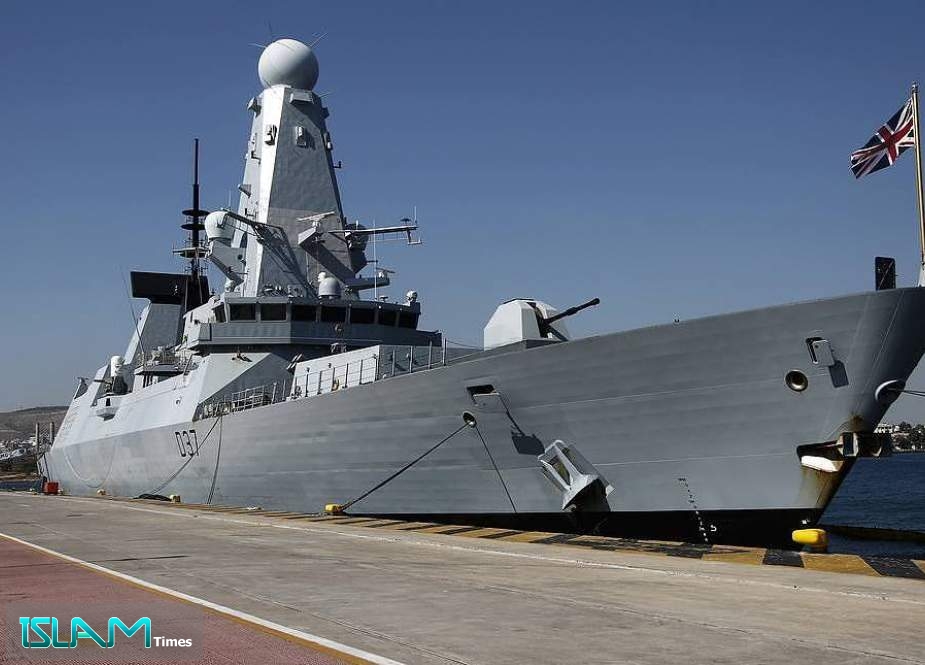
Specifically, days before Putin’s set-piece speech, British media reported that Britain’s Royal Navy is planning to deploy two warships to the Black Sea: a Type-45 destroyer armed with anti-aircraft missiles; and a frigate for hunting submarines. A British ministry of defense spokesman is quoted as saying the move was a sign of “unwavering support for Ukraine’s territorial integrity” in the face of alleged Russian aggression.

The British deployment is planned to take place in the coming weeks. The two warships will transit Turkey’s Bosphorus Strait to enter the Black Sea. International shipping is permitted under the Montreux Convention. However, the British plan seems far from an innocent passage, and a rather more calculated provocation.

The two ships will be part of a bigger battle group, the newly launched HMS Queen Elizabeth aircraft carrier which will station in the East Mediterranean. The battle group will be able to supply F-35B Lightning fighter jets and Merlin helicopters with submarine-hunting missiles. All in all, it is a pretty audacious attempt by the British to raise tensions with Russia.

It is notable that the United States last week abruptly cancelled sending two of its guided-missile destroyers to the Black Sea after Russia mobilized its own fleet in the region and warned the Americans to “stay away”. Days later, the British seem to have stepped into the breach with their proposed Black Sea operation. Did the Biden administration ask London to step up to the plate and to show “solidarity”, or is the British maneuver a gambit to curry favor with Washington by flexing AngloSaxon muscles for Uncle Sam?

In any case, London’s move comes on the back of an already brazen buildup of British military forces in the Black Sea. Britain has previously sent naval personnel and equipment to train Ukrainian warships. The Royal Air Force has also dispatched a squadron of Typhoon fighter jets to patrol the Black Sea in support of the Kiev regime and its claim to take back control of the Crimean Peninsula. The Peninsula voted in a referendum in March 2014 to join the Russian Federation after a NATO-backed coup d’état in Kiev the previous month which ushered in an anti-Russian regime.

The Kiev regime has also been stepping up its violations of the ceasefire in Eastern Ukraine where ethnic Russian populations have declared breakaway republics in defiance of the 2014 NATO-backed coup. Civilian centers in Donetsk and Luhansk are being shelled on a daily basis. This is clearly a cynical attempt by the Kiev regime to escalate the civil war in such a way as to drag NATO further into the conflict. Russia has mobilized sizable army divisions on the border with Ukraine in what Moscow says is a matter of national self-defense. Yet, ironically, the United States, Britain, and other NATO powers are demanding Russia to “de-escalate” tensions.

NATO’s very public backing for the Kiev regime and the supply of American lethal weaponry is no doubt emboldening the regime to step up its offensive fire on Eastern Ukraine and making menacing moves towards Crimea.

The British are in particular giving the Kiev regime a dangerous sense of military license for its bravado towards Moscow.

The situation is an extremely dangerous powder-keg. One wrong move, even unintended, could spark off a wider war involving the NATO powers and Russia.

In this highly combustible context, Russia is right to close off areas in the Black Sea that encompass its territorial waters. Those areas include the coastal waters off the Crimean Peninsula.

NATO powers sending warships into the region is the height of criminal folly. If Britain and other members of the U.S.-led alliance contend that they are “defending Ukraine’s territorial integrity” then the logic of that position dictates that they will attempt to make an incursion into Crimean coastal water since they don’t recognize Russia’s sovereignty. In that event, a military confrontation is bound to happen.

President Putin’s declaration of red lines is not so much a rhetorical putting it up to the West. It is a responsible position to prevent a war from breaking out.

The British are being told that they cannot just sail their warships into the Black Sea and rattle their sabers in Russia’s face. Putin is telling the Brits and anyone else not to even think about getting that close.


River to Sea Uprooted Palestinian   
The views expressed in this article are the sole responsibility of the author and do not necessarily reflect those of the Blog!

Thursday, 22 April 2021

Ukraine: Fascism’s toe-hold in Europe


Ukraine: Fascism’s toe-hold in Europe

April 21, 2021

The tacit support given by the centre-left to the installation of the regime in Kiev should give them cause for concern

By Francis Lee for the Saker Blog

Politics in the Ukraine can only be understood by reference to its history and ethnic and cultural make-up – a make-up criss-crossed by lasting and entrenched ethnic, cultural and political differences. The country has long been split into the northern and western Ukraine, where Ukrainian is the official and everyday lingua franca, and the more industrialised regions of the east and south where a mixture of Russian speaking Ukrainians and ethnic Russians reside. Additionally, there has long been Hungarian and Romanian settlement in the west of the country, and a particularly important Polish presence, whose unofficial capital, Lviv, was once the Polish city of Lwow. The Russian Orthodox Church is the predominant form of Christianity in the East, whilst in the west the Christian tradition tends towards Roman Catholicism.

Politically the Eastern and Southern Oblasts (Regions) which includes the cities and centres of heavy industry, Kharkov, Lugansk, Donetsk, Zaporozhe, Nikolayev, Kherson, Simferopol and Odessa, have tended to tilt towards Russia whilst the western regions have had a more western orientation. This has traditionally been reflected in the electoral division of the country. There is no party which can be considered ‘national’ in this respect, except ironically, the old Communist party, which of course is now banned. The major regional parties have been the Fatherland party of Yulia Tymoshenko (since renamed) and the former head of government, Arseniy Yatsenyuk as well as the ultra-nationalists predominantly in the west of the country, and the deposed Victor Yanukovich’s Party of the Regions in the East (now defunct) along with its junior partner in the coalition, the Ukrainian Communist Party.

However, what is new since the coup in February 2014 there has been the emergence from the shadows of ultra-nationalist (fascist) parties and movements, with both parliamentary and extra-parliamentary (i.e.,military) wings. In the main ‘Svoboda’ or Freedom Party, and the paramilitaries of ‘Right Sector’ (Fuhrer: Dimitry Yarosh) who spearheaded the coup in Kiev; these have been joined or changed their names to inter alia the Radical Party, and Patriots of the Ukraine; this in addition to the punitive right-wing militias, such as the Azov Regiment responsible for numerous atrocities in the Don Bas.

Suffice it to say, however, that these political movements and parties did not emerge from nowhere.

This far-right tradition has been historically very strong in the western Ukraine. The Organization of Ukrainian Nationalists (OUN) was first established in 1929 and brought together, war veterans, student fraternities, far-right groups and various other disoriented socially and political flotsam and jetsam under its banner. The OUN took its ideological position from the writings of one, Dymtro Dontsov, who, like Mussolini had been a socialist, and who was instrumental in creating an indigenous Ukrainian fascism based upon the usual mish-mash of writings and theories including Friedrich Nietzsche, Georges Sorel, and Charles Maurras. Dontsov also translated the works of Hitler and Mussolini into Ukrainian.

The OUN was committed to ethnic purity, and relied on violence, assassination and terrorism, not least against other Ukrainians, to achieve its goal of a totalitarian and homogeneous nation-state. Assorted enemies and impediments to this goal were Communists, Russians, Poles, and of course – Jews. Strongly oriented toward the Axis powers OUN founder Evhen Konovalets (1891-1938) stated that his movement was ‘’waging war against mixed marriages’’, with Poles, Russians and Jews, the latter which he described as ‘’foes of our national rebirth’’. Indeed, rabid anti-Semitism has been a leitmotif in the history of Ukrainian fascism, which we will return to below.

Konovelts himself was assassinated by a KGB hit-man in 1938 after which the movement split into two wings: (OUN-m) under Andrii Melnyk and, more importantly for our purposes (OUN-b) under Stepan Bandera. Both wings committed to a new fascist Europe. Upon the German invasion in June 1941, the OUN-b attempted to establish a Ukrainian satellite state loyal to Nazi Germany. Stepan Lenkavs’kyi the then chief propagandist of the OUN-b ‘government’ advocated the physical destruction of Ukrainian Jewry. OUN-b’s ‘Prime Minister’ Yaroslav Stets’ko, and deputy to Bandera supported, ‘’the destruction of the Jews and the expedience of bringing German methods of exterminating Jewry to Ukraine, barring their assimilation and the like.’’

During the early days of the rapid German advance into the Soviet Union there were some 140 pogroms in the western Ukraine claiming the lives of between 13000-35000 people (Untermensch, in fascist terminology). In 1943-1944 OUN-b and its armed wing the Ukrainian Insurgent Army (Ukrainska povstanska armia – UPA) carried out large scale ethnic cleansing resulting in the deaths of tens of thousands; this was a particularly gruesome affair in Volhynia where some 90000 Poles and thousands of Jews were murdered. The campaign of the UPA continued well into the 1950s until it was virtually wiped out by the Soviet forces.

It should be said that during this early period Bandera himself had been incarcerated by the German authorities up until his release in 1944, since unlike Bandera they were not enamoured of an independent Ukrainian state but wanted total control. Bandera was only released at this late date since the German high command was endeavouring to build up a pro-German Ukrainian quisling military force to hold up the remorseless advance of the Red Army. Also pursuant to this it is also worth noting that during this period the 14th Galizian Waffen SS Division, a military Ukrainian collaborationist formation established by Heinrich Himmler, was formed to fight the Soviet forces, and yet another being the Nachtingal brigade; (1) this unit was integrated into the 14th Galizian in due course. It is also interesting to note, that every year, and up to 2014 commemoration ceremony including veterans of this unit takes place with a march through Lviv in an evening torchlight parade – genuine Nazi pastiche. The flag of this unit is not dissimilar to the Peugeot logo, the standing lion, and can be seen at ultra-nationalist rallies as well as football matches involving Lviv Karparti FC. There are also numerous statues of Bandera across Ukraine, and since the 2014 coup even street names bearing the same name. Significantly the UPA have now received political rehabilitation from the Kiev Junta, with Bandera declared a hero of the Ukraine and the UPA rebranded as ‘freedom fighters.’ One particularly splendid statue of Bandera stands proudly in Lviv and is usually adorned with flowers.

Other novel attractions the capital of Banderestan include ‘Jewish themed restaurants’ one such is Kryivka (Hideout or Lurking Hole) where guests have a choice of dishes and whose dinning walls are decorated with larger than life portraits of Bandera, the toilet with Russian and Jewish anecdotes. At another Jewish themed restaurant guests are offered black hats of the sort worn by Hasidim. The menu lists no prices for the dishes; instead, one is required to haggle over highly inflated prices ‘’in the Jewish fashion’’. Yes, it’s all good clean fun in Lviv. Anti-Semitism also sells. Out of 19 book vendors on the streets of central Lviv, 16 were openly selling anti-Semitic literature. About 70% of the anti-Semitic publications in Ukraine are being published by and educational institution called MUAP (The Inter-Regional Academy of Personnel Management). MAUP is a large, well-connected and increasingly powerful organization funded from outside anti-Semite sources, and also connected to White Supremacist groups in the USA and to the David Duke, former Grand Wizard of the Ku Klux Klan.

(It is one of the ironies of history that if the Zionists in AIPAC and the Washington neo-con think tanks, and the Labour Party Friends of Israel, were so concerned about anti-Semitism, they might try looking for it in Lviv. They wouldn’t have to search very far.)

Present day neo-Nazi groupings in Ukraine – Svoboda (Freedom) party and Right Sector – have been the direct descendants from the prior ideological cesspool. Heading Svoboda is Oleh Tyahnybok. Although these are separate organizations Tyahnybok’s deputy Yuriy Mykhalchyshyn is the main link between Svoboda’s official wing and neo-Nazi militias like Right Sector. The Social-Nationalist party as it was formerly known chose as its logo an amended version of the Wolfsangel, a symbol used by many SS divisions on the Eastern front during the war who in 2004 a celebration of the OUN-UPA, stated in 2004, that ‘’they fought against the Muscovite, Germans, Jews and other scum who wanted to take away our Ukrainian state.’’ And further that ‘’Ukraine was ruled by a Muscovite-Jewish mafia.’’ Tyahnybok came under pressure from the then President, Yuschenko, to retract his inflammatory statements, which he did, but he then retracted the retraction!

Given the fact that Svoboda was, apart from its stamping grounds in the west, making little national electoral headway, it was essential to clean up its image and deny its Nazi past. But this was always going to be difficult since the members of such groups cannot help the unscripted outbursts and faux pas which they tend to make and which reveals their true colours. For example, following the conviction and sentencing of John Demjanjuk to five years in jail for his role as an accessory to the murder of 27,900 people at the Sobibor death camp, Tyahnybok travelled to Germany and met up with Demjanjuk’s lawyer, presenting the death camp guard as a hero, a victim of persecution ‘’who is fighting for truth’’.

And so it goes on. We can therefore infer that this organization is inveterate fascist. More disturbing Svoboda has links with the so-called Alliance of National European Movements, which includes: Nationaldemokraterna of Sweden, Front Nationale of France, Fiamma Tricolore in Italy, the Hungarian Jobbik and the Belgian National Front. More importantly Svoboda held several ministerial portfolios in the Kiev administration, and Right Sector swaggers around Kiev streets with impunity, and/or are being drafted into a National Guard to deal with the separatist movements in the east, or to beat down anyone who doesn’t conform to their Ayran racial and political ideals.

One would have thought that this mutating revolution in the Ukraine would have drawn attention of the centre-left to the fact that fascism had gained a vital beachhead in Europe, and that the danger signals should be flashing. But not a bit of it; a perusal of the Guardian newspaper quickly reveals that their chief concern has been with a non-existent ‘Russian threat’. One of their reporters – or old friend, Luke Harding -described Right Sector as an ‘’eccentric group of people with unpleasant right-wing views.’’ Priceless! This must rank as the political understatement of the century. In fact, the Guardian was simply reiterating the US-imposed neo-conservative foreign policy. But naturally, this is par for the course.

  1. The Nachtingal brigade, which was later incorporated into the SS Galizien, took part in a three-day massacre of the Jewish population of Lvov (now Lviv) from 30 June 1941. Roman Shukhevych was the commander of the Nachtingal and later, in 1943, became commander of the Ukrainian Insurgent Army (the “Banderivtsy”, or UPA/UIA[5] ), armed henchmen of the fascist Stepan Bandera, who after the war pretended that they had fought both Nazis and Communists. Members of the division are also accused of having murdered some 800 residents of the Polish village of Huta Pieniacka and 44 civilians in the village of Chłaniów.
Bandera statue.

Stepan Bandera statue in Lviv


River to Sea Uprooted Palestinian   
The views expressed in this article are the sole responsibility of the author and do not necessarily reflect those of the Blog!

Monday, 12 April 2021

Incentives: Joe Biden and Vladimir Putin possible moves – Donbass crisis.

Incentives: Joe Biden and Vladimir Putin possible moves – Donbass crisis. April 11, 2021

By David Sant for the Saker Blog

Several analysts have written articles about how Russia is likely to respond in the theater to an offensive by Ukraine to restart the Donbass War. My purpose in this article is to look at the psychology and incentives of Joe Biden and Vladimir Putin and the possible moves that each of them may make in response to the Donbass crisis.

The Nature of the Dispute

It is fairly well established that two primary motives seem to be driving the Atlanticist pressure on Russia and continuing eastward expansion of NATO. The larger issue is that Russia, Iran, and China seem to be increasingly resistant to the rule of the Atlanticist monopolar hegemony enforced by the US Military and NATO. As someone recently said, the American empire is a currency empire sustained by forcing all energy transactions to be priced in US Dollars, and controlling energy transit points. By moving away from using USD for oil and gas transactions, Russia, China, and Iran pose a mortal threat to the empire.

The secondary issue, the one driving the timing, is control of oil and gas pipelines. In short the USA wants Europe to use American-controlled gas and oil, which means Saudi and Qatari oil, and American LNG. They want to create pipelines and delivery routes for American-controlled energy, and close or prevent delivery routes for Russian energy. The three current flashpoints are Syria, Ukraine, and the route of the Nord Stream 2 pipeline, all three of which are current or potential pipeline routes.

Several years ago the US successfully pressured Bulgaria into cancelling the South Stream Pipeline through the Black Sea. However, US sanctions have been unable to deter Germany from allowing the Russians to complete the Nord Stream 2.

With the completion of the project only a few months away, the US seems determined to stop it at any cost. This appears to be the motive behind instigating the Ukrainian government to invade Donbass. If Russia defends Donbass, she will be demonized in the Western press, and this will be used to pressure Germany to cancel Nord Stream 2. From the American perspective, getting the Ukrainians to fight the Russians weakens both at no political cost to the US.

It is my opinion that the Biden Administration is making a major miscalculation by continuing this approach. For the past seven years, Russia has absorbed round after round of sanctions and provocations by the US government in Ukraine and Syria. The Biden regime seems to assume that if they instigate a war in Donbass now, that Russia will continue as they have before, to absorb the blow without striking back. I suggest that this time it will be different.

The History and Psychology of Biden and Putin

Vladimir Putin was handpicked by the Western handlers to replace Boris Yeltsin in 1999, largely because he was known to be reliable. However, Putin surprised those who appointed him by turning against the oligarchs and reigning in the chaos that was dismembering Russia after the collapse of the Soviet Union. Putin enforced the law and cracked down on corruption, including corruption by the Western interests that put him in power.

Displeased by this turn of events, the West, led by Bill Browder, has spent the past fifteen years demonizing Putin. For example, when Russia granted asylum to Edward Snowden in 2013, multiple US politicians used scripted talking points calling Mr. Putin “a schoolyard bully.” That analogy was rather inept, as Russia did not invite Snowden, but rather got stuck with him, as his passport was cancelled while in transit, making it impossible for him to board his flight out of Russia. Putin actually said that as a former intelligence officer himself, he did not view Snowden’s leak of classified information in a positive light.

The problem with demonizing one’s opponent is that it can lead to strategic errors if you make the mistake of believing your own propaganda. If we look at Mr. Putin’s past behavior we see four consistent characteristics.

First, he follows the rules. Whether it is the START treaty, the chemical weapons accord, or the Minsk Agreements, the Putin regime has consistently tried to keep the old treaties alive and to follow agreed upon UN procedures for conflict resolution.

Second, when Mr. Putin has taken steps to oppose the Atlanticist agenda, he has done so in a way that allowed his opponents to save face. When the US was preparing to invade Syria in 2013, Putin persuaded Assad to agree to eliminate his chemical weapon stockpile. This pulled the rug out from under the US invasion, but it did not make the US look bad.

When Russia entered Syria to fight ISIS, they did not publicly expose the fact that the US and Israel were the primary backers of ISIS. Putin went along with the ruse and said, if America is fighting ISIS we will fight ISIS too, and did so legally at the invitation of Syria. Russia’s work allowed Trump to take credit for defeating ISIS, even though it completely ruined eight years of CIA efforts to train and arm those terrorists.

Third, Mr. Putin keeps his word. When he draws a red line, he enforces it. He speaks quietly but it is wise to listen carefully to what he says. We have seen this in the way that Russia dealt with terrorist groups that agreed to deconfliction versus those that did not, as well as the ones that agreed and then went against it.

And, lastly, when all else has failed and the other party crosses the red line anyway, Putin punches fast, hard, and unexpectedly, and often in a different theater than where the provocation has occurred. We saw this when Russia destroyed the oil smuggling network that the US and Turkey had set up in Northeastern Syria. We saw it again when Russia saved Mr. Erdogan from a US-backed coup only thirty minutes before he probably would have been captured.

Joe Biden

Joe Biden loved to tell the story on the campaign trail about his interaction with a black gangster named “Corn Pop” when he was a lifeguard in college. They almost had a fight but Biden brought a chain with him, and they later became friends. The fact that he even tells this tale signals that Biden has no real experience against a serious enemy. Men with street credibility don’t need to tell stories. They are known and respected.

The reality of Biden’s career is that he has played second fiddle to stronger leaders and only appears to have gotten the presidential nomination because it was his turn and he was deemed to be controllable by his handlers. Biden obtained the presidency through a fraud seen so openly that he has one of the lowest presidential approval ratings in history.

Biden and Putin met for the first time alone in 2011 for talks in Russia. According to Mike McCormick, who was Biden’s stenographer, Biden was halfway through his talk when suddenly the microphone, cameras, and lights were turned off and Putin and all of the media walked out leaving Biden humiliated. Something similar happened to Biden in China a few months later.

This is probably what Biden was referring to when he recently said that Putin was “a killer” with “no soul.” That interaction tells us exactly what Putin thinks of Biden. He considers him to be a weakling with no substance.

Biden’s team is stacked with Russophobes who are motivated by the desire to finish what they began in Ukraine under Obama. They believe they can successfully use information war and dirty tricks to isolate Russia from Europe and control all the energy conduits. Whether due to hubris or ignorance, they do not believe Russia would dare to strike back at the real instigator of the war in Ukraine.

Biden’s response to a Russian strike would probably be a plaintive high pitched, “c’mon man!” However, if Kamala Harris is making the decisions the risk of escalating to a nuclear response is much higher. The problem is that both Biden and Harris were picked and installed by a “power behind the throne,” so it is unclear exactly who would be making the decision of how to respond.

The Imminent Danger of the Current Imbroglio

There is no doubt that the US intends to create a war in Ukraine before the Nord Stream 2 Pipeline can be finished. This will happen within months if not weeks. It is also clear that Zelensky is being placed under tremendous pressure to force Russia into defending Donbass.

Russia has drawn a red line around Donbass. Ukraine had agreed to a peaceful resolution through the Minsk Accords. But with US encouragement, Kiev violated everything they agreed to, making it now politically impossible to re-integrate Donbass into Ukraine.

If Zelensky invades Donbass, then not just Ukraine, but the USA and NATO will be viewed by Russia as having crossed an inviolable red line. Yes, Russia will be forced to defend Donbass, because Putin will not allow Russians to be subjected to genocide. Russia does not want to fight Ukrainians, whom despite the jokes, they view as their Russian brothers. They are frustrated and angry that the USA has forced them into this position.

For this reason, I believe that Mr. Putin will do something that the Biden regime is not expecting with similar psychological impact to the sudden turning off of the lights and cameras. He will find a way to inflict debilitating pain on the decision makers who have forced Russia into intervening in Ukraine.

In addition to defending Donbass, Russia may strike the USA in a different theater. But they will do so in a way that cannot be confused with a nuclear attack. Unlike the previous chess moves that allowed the US leadership to save face, this one will neutralize and publicly humiliate the USA and the Biden regime as a paper tiger.

The Narrow Window of Technological Supremacy

While the US was busy invading third world countries as part of the War on Terror, Russia was quietly developing their defense technologies. They have now achieved technological supremacy over the USA in three areas: air and missile defenses, hypersonic missiles, and electronic countermeasures (ECM).

In the area of air defenses the Russian S-400 is an extremely capable platform which the West has very little experience fighting against. Russia has the capability to impose a no fly zone within about 500 kilometers of its S-400 batteries, of which there are several from Crimea to Kaliningrad. Israel’s use of the F-35 to bomb Syria has given the Russians live data on NATO’s most advanced stealth fighter.

The S-500 space defense system is scheduled to enter service in 2021. Since the S-500 can defend against ICBMs it may affect the balance of power of mutual assured destruction (MAD).

The Zircon and Khinzal hypersonic missiles are currently in service and are the most effective anti-ship weapons in the Russian arsenal that we know of. Their standoff range enables strikes on enemy ships from 500 to 2,000 kilometers. This means that Russia has the ability to strike ships in the Mediteranean and North Sea using assets based on Russian soil, not even counting the assets based in Latakia, Syria. NATO forces currently have no defense against hypersonic missiles.

Russian ECM capabilities have been somewhat exaggerated by news stories about the 2014 encounter with the USS Donald Cook. The Donald Cook was allegedly shut down by ECM attack while an SU-24 overflew the vessel. However, more accurate sources noted that any ECM attack, if there even was one, would have been executed using ground-based equipment, not the Su-24 fighter. If this attack really happened, the US Navy has presumably hardened its vessels against ECM in the seven years since.

We do know that Russian ECM systems in Syria were able to disable the vast majority of Tomahawk Missiles fired at Syria in April 2017. Other than aircraft carriers, the primary American method of projecting power is Arleigh-Burke class destroyers such as the USS Donald Cook which carry about 50 Tomahawk missiles each. The 2017 exercise in Syria probably indicates that Russia is able to jam volleys of Tomahawk missiles with better than 90% success. The remaining 10% of the subsonic Tomahawks can be easily shot down by anti-aircraft batteries.

The question is whether the US Navy has found a way to harden the Tomahawk missiles against Russian ECM since 2017. If not, then given the much smaller size and number of missiles that can be carried by Navy attack aircraft, the US Navy’s primary weapon for ground attack has no teeth against Russian targets. Of course in any conflict, the first target of NATO’s “wild weasel” aircraft will be SAM radars and ECM equipment.

Conclusion – Biden has Created Strong Incentives for Russia to Strike First

The US is spending billions to catch up technologically, and the window of Russian supremacy may only last for two or three years at most. Russia can be expected to reach the peak technological advantage over NATO in late 2021 after the S-500 system has been fully deployed. However, the Donbass crisis may force Russia to act sooner than they are comfortable.

If Russia were to use the window of supremacy to attempt a debilitating strike on the US military the US Navy is the most likely target. Ships are the most exposed, are not located inside another country’s borders, and are also the primary means of projecting US power. However, I would not rule out a non-missile attack on DC. For example, there are many ways that the US power grid could be turned off without using missiles. The ensuing domestic chaos might prevent the US from responding.

This is a very dangerous situation for the world because it could easily escalate to World War III or nuclear war, depending on the Biden Administration’s reaction. Part of the problem is that it is not clear who is really in charge of the Whitehouse. A nuclear response to a devastating conventional weapons defeat would be a disaster for both sides.

Russia will only strike the USA if they believe they have no other choice. What they have learned from seven years of sanctions, attempted coups, fake poisonings, and other provocations is that the US will continue this behavior for as long as Russia continues to accept it, or until Russia is broken and conquered. In short, Biden’s team may have finally convinced Russia that they have no other choice.

President Biden has handed Putin the justification for a first strike by openly stating his intention to conduct a cyber attack on Russia “soon.” That is a public declaration of war. The fact that the Russian ambassador was recalled from Washington and has not been sent back should be a wakeup call to America that DC itself is on the potential target list.

For these reasons I believe that there is a high probability that Russia will strike first before NATO can fully put in place the forces for planned exercises for this Summer. The strike will probably be non-nuclear, focused against US forces only, and its purpose will be to delegitimize the US power in the eyes of the junior members of NATO, and to weaken or cripple the US ability to project power.

If China and Iran see Russia strike the US military, it would not be surprising if they also pile on using their own hypersonic missiles to destroy US Navy assets in the Persian Gulf and South China Sea.

The Biden regime’s underestimation of Russia and failure to heed Putin’s warnings have created conditions which make possible a sudden and humiliating defeat of the US Navy, which could effectively end the US ability to project power overseas.

However, wars are rarely short, and victories rarely decisive. For this reason it would be better for all parties to de-escalate the conflict immediately. Unfortunately, the Biden regime is the only one in a position to do that, and they have shown no intention of doing so.


River to Sea Uprooted Palestinian   
The views expressed in this article are the sole responsibility of the author and do not necessarily reflect those of the Blog!

Sunday, 11 April 2021

All sides are “locked and loaded”: what comes next? (OPEN THREAD #9)


All sides are “locked and loaded”: what comes next? (OPEN THREAD #9)

April 10, 2021

By all accounts, all sides are ready for war. That does NOT mean that war is inevitable, only that there are no more objective factors making war impossible.

How long can this “neither quite here, nor quite there” situation last?

A long time, at least until the Fall of 2021.

Let’s not pretend like anybody is a prophet and can predict the future (all those who do are, in reality, clueless).

The most likely next phase would be a Ukronazi diversionary/terrorist attack, either in the Donbass, or in Crimea or even somewhere else in Russia.  Keep in mind that the Ukie special services have a proven track of successful clandestine operations.

So what I suggest for a topic today is this: what kind of diversionary/terrorist provocations (as opposed to purely military moves) could the Ukronazis pull off the provoke the LDNR (or even Russia) and then declare itself a victim of aggression?

Hugs and cheers

The Saker


River to Sea Uprooted Palestinian   
The views expressed in this article are the sole responsibility of the author and do not necessarily reflect those of the Blog!

RUSSIAN-UKRAINIAN WAR: TRAGEDY FOR PEOPLE, CHANCE FOR ELITES

 10.04.2021 

South Front


Russian-Ukrainian War: Tragedy For People, Chance For Elites
Illustrative Image

Against the backdrop of ongoing political provocations and bellicose rhetoric from all parties involved in the conflict in Eastern Ukraine, military escalation is constantly growing. Local forces, as well as the OSCE observers, report about more and more ceasefire violations in the Donetsk and Luhansk People’s Republics. There are daily statements on casualties on both sides of the conflict among the military and local civilians.

Now, when all the global media are closely following the situation in the eastern regions of Ukraine, the international community is wondering whether Donbass will become the point of the next military conflict, and what its scale will be. The main question is “Cui Prodest”?

The answer is unambiguous: the administration of Ukrainian President is a real stakeholder in the armed conflict in eastern Ukraine. In the current Ukrainian reality, there are plenty of circumstances that determine the pattern of conduct of Volodimir Zelensky.

First, the current economic situation in Ukraine is disastrous. The Ukrainian state is on the way to lose the ability to fulfill its social obligations. According to the data for 2020, its GDP in real terms suffered about 4% drop. According to the IMF, this drop will be at least 7%. If for the United States, China or Russia, a 4% drop in GDP is a big problem, for Ukraine it is almost a disaster, as GDP indicators were low even before the crisis.

Secondly, the economic situation in Ukraine was aggravated by the coronacrisis. The number of those contaminated by COVID-19 per day there is one of the biggest among the European countries, and even in the whole world. The death rate is also disproportionately high. The country’s economy is suffering, as most regions are still under lockdown, and since April 5, restrictions have been tightened again.

The fall in national budget income was caused by a complex of reasons, including pure management of national economy and the extremely high level of corruption that caused the destruction of the industrial complex, drop in already low per capita income, accompanied by a decreasing revenue gained from gas and cargo transit from East to West.

Third, the Zelensky administration is now facing a rapid decrease in people’s support. The national disappointment in his political program is caused by the rejection of his campaign promises to stop the war in Donbass.

Fourthly, it is increasingly difficult for NATO allies to fuel Kiev’s anti-Russian hysteria in the absence of any actual changes of the issue. The military conflict in the Eastern Ukraine is already 7 years old, and the only alarming statements no longer contribute to the increase in financial support from the US and its allies.

The last but not least is a political request from a part of the American elite, who are interested in various forms of pressuring Russia. They support blocking of the Nord Stream 2 project by any means; destruction of bilateral relations between Russia and leading European countries, up to war outbreak along its borders.

On the other hand, such a policy of the United States does not fully coincide with the national interests of leading European countries. However, new war in Eastern Ukraine would define Russian status as enemy for years while the US will strengthen its weight in European security.

The position of the Zelensky administration and the interests of the United States represent sufficient set of reasons to outbreak war in Eastern Ukraine.

Indeed, official Kiev does not need to care about the actual result of the conflict, but its very existence.

There are only 3 scenarios of the military conflict in Eastern Ukraine.

  • The Ukrainian army wholly or partially occupies the territory of the DLPR.
  • The forces of both sides remain in their current positions.
  • The DLPR forces, with Russian support, advance on the Ukrainian territory for several dozens of miles.

There is almost a zero probability that Ukraine will suffer a crushing defeat and the DLPR forces will occupy the territory to the Dnieper River. Russia now has neither the strength nor the ability to gain control over such a vast territory, and the collective West, in its turn, would not let this happen.

If any of the above scenarios are implemented, Zelensky and his supporters among the US elites will benefit.

For many years, the US and European media have shaped Russia as the aggressor, the enemy of democratic values and the authoritarian tyrannical regime that must be contained. The idea of an external military threat, which being sequentially built up by the West, serves as a pretext for its increasing military funding both in defense industry and army itself amid inevitable unification under the US leadership.

In its turn, Ukraine, positioning itself as the Eastern European Shield against “Asian Barbarians”, receives significant and steadily growing support from NATO countries, gaining momentum to development and further nazi-like ideology originally rooted in Western Ukraine.

Unleashing the war, Zelensky has a chance to reclaim his status as the national leader. In case of the conquest of the self-proclaimed republics, or the preservation of the current troops’ positions, he will become a hero who saved Ukraine from “evil Russians”.

Even after having lost the war, he would claim that the entire country was saved with little blood and only a small piece of land that was temporary lost, taking on the role of a good strategist who defended the sovereignty in the furious fighting shoulder to shoulder with his NATO allies.

Zelensky’s policy can only fail if Russia captures half of Ukraine, which de facto is not possible.

Thus, almost whatever may happen during the conflict, Ukraine can be sure that it will receive stable financial flows from its Western allies for years ahead. Having become a “real” Eastern Shield of Europe, Ukraine may finally get the coveted NATO membership.

Finally yet importantly – the hot military conflict will undoubtedly divert public attention from the economic problems inside the country.

Unleashing a war in Donbass will allow Zelensky to solve his main problems, albeit at the cost of lives of thousands of Ukrainians.

Today, many analysts assure that there will not be a full-scale war, since Ukraine is weak, and Zelensky must assess country’s military strength in front of the Russian power. Let’s hope this is the case, while remembering who the beneficiary of the conflict is.

In its turn, the United States, at the cost of Ukrainian soldiers’ lives, can resolve a good part of its problems in the European region, while Russia seems to lose strategically in any of these war scenarios.

Definitely, the war in Ukraine will lead to the closure of the Nord Stream 2 project, which is already at the final stage of construction. Key contacts between Russia and NATO countries will be frozen, no more significant bilateral cooperation in economy will be possible.

A new war near the Russian borders that involves national armed forces will have an important impact on the internal situation in the country. It is not clear to what extent the Russian society, which has suffered the break of economic relations with Western countries and numerous sanctions, is ready to support the struggle for Donbass.


MORE ON THE TOPIC:


River to Sea Uprooted Palestinian   
The views expressed in this article are the sole responsibility of the author and do not necessarily reflect those of the Blog!

Friday, 9 April 2021

Telephone conversation with Federal Chancellor of Germany Angela Merkel

 Source

Telephone conversation with Federal Chancellor of Germany Angela Merkel

April 08, 2021

http://en.kremlin.ru/events/president/news/65325

Vladimir Putin had a telephone conversation with Federal Chancellor of the Federal Republic of Germany Angela Merkel.

April 8, 202114:30

The two leaders had a detailed discussion on a number of topical international matters.

While exchanging opinions on ways of resolving the intra-Ukrainian crisis, the Russian President and the German Chancellor voiced concern in connection with the escalation of tensions in southeastern Ukraine. Vladimir Putin drew attention to the provocative actions of Kiev which is now deliberately aggravating the situation along the line of contact. The parties noted the need for the Kiev authorities to implement earlier agreements without fail, in particular those aimed at the launch of direct dialogue with Donetsk and Lugansk and at legally formalising the special status of Donbass.

They urged the parties to the conflict to display restraint and to invigorate the negotiating process in order to fully implement the 2015 Minsk Package of Measures as the only legal foundation for a peace settlement. They reaffirmed their commitment to further close coordination of Russian and German efforts, including within the Normandy Format, between political advisers and foreign ministers.

Mr Putin and Ms Merkel continued to exchange opinions on the subject of Syria and noted the high priority of tasks to improve the humanitarian situation in Syria. The Russian party underscored the unacceptability of politicising issues as regards the provision of foreign assistance to the people of Syria, the restoration of the socioeconomic infrastructure and the return of refugees.

While discussing the situation in Libya, both leaders praised the establishment of interim national institutions of state authority in the country. They voiced readiness to help normalise the domestic situation and to facilitate Libya’s peaceful development. They agreed to continue coordinating their efforts in this direction.

The two leaders touched upon the situation in the Balkans and noted the importance of further well-coordinated steps to ensure stability and inter-ethnic accord, including with due consideration for the decisions of the Steering Committee of the Council to fulfil the 1995 General Framework Agreement for Peace in Bosnia and Herzegovina, or the Dayton Agreement.

In connection with the interest displayed by the Federal Chancellor, the situation regarding Alexei Navalny was touched upon.

At Vladimir Putin’s initiative, certain matters regarding the activities of foreign media outlets and NGOs in both countries were reviewed.

It was agreed to maintain close working contacts through various channels.


River to Sea Uprooted Palestinian   
The views expressed in this article are the sole responsibility of the author and do not necessarily reflect those of the Blog!