Showing posts with label Bloody Oil. Show all posts

Wednesday, 31 March 2021

Crashing Saudi Oil Economy Explains Urgent Yemeni Peace Offer

 Crashing Saudi Oil Economy Explains Urgent Yemeni Peace Offer - Islam Times

Finian CUNNINGHAM
Former editor and writer for major news media organizations. He has written extensively on international affairs, with articles published in several languages

Finian Cunningham

March 26, 2021

The Saudi rulers are facing a humiliating defeat as the Yemenis take revenge and Uncle Sam washes his hands of blood.

After six years of blowing up Yemen and blockading its southern neighbor, the Saudi rulers are now saying they are committed to finding peace. The move is less about genuine peace than economic survival for the oil kingdom.

The Saudi monarchy say they want “all guns to fall completely silent”. Washington, which has been a crucial enabler of the Saudi war on Yemen, has backed the latest “peace offer”. Secretary of State Antony Blinken this week endorsed the initiative from the Saudi rulers, saying he had spoken with them “on our work together to end the conflict in Yemen, facilitate humanitarian access and aid for the Yemeni people”.

The Saudi foreign ministry stated: “The initiative aims to end the human suffering of the brotherly Yemeni people, and affirms the kingdom’s support for efforts to reach a comprehensive political resolution.”

Can you believe this sickening duplicity from the Saudis and the Americans?

So, after six years of relentless aerial bombing in Yemen causing the world’s worst humanitarian crisis, according to the United Nations, the Saudis and their American military supplier, seem to have developed a conscience for peace and ending suffering.

The real reason for trying to end the conflict is the perilous state of the Saudi oil-dependent economy. Saudi Aramco, the state-owned oil, gas and petroleum industry, recently announced that its profits have slumped by nearly half in 2020 compared with the year before. Down from $88 billion to $49 billion.

Given that its oil economy provides nearly 90 per cent of state budget that is a stupendous hit on the Saudi finances. The Saudi rulers rely on hefty state subsidies to keep its 34 million population content. With income from the oil industry nosediving that means state deficits will explode to maintain public spending, or else risk social unrest from dire cutbacks.

Saudi Arabia remains the biggest oil exporter, but due to the Covid-19 pandemic and world economies going into recession crude oil prices have plummeted. At one point oil prices fell to around $20 a barrel. The Saudi economy needs an oil price of around $70 a barrel to reel in a profit.

The upshot is the Saudi war in Yemen has become a critical drain on state finances and potentially jeopardizing the superficial stability of the absolute monarchy.

Of further alarm is the increasing missile and drone attacks by the Houthi rebels in Yemen on key Saudi locations, including the capital Riyadh.

The Yemeni rebels are escalating airstrikes on Aramco installations at its headquarters in Dhahran and Dammam in Eastern Province, as well as in the cities of Abha, Azir, Jazan, and Ras Tanura. The targets include oil refineries and export terminals. The Saudis claim they have intercepted a lot of the missiles with U.S.-made Patriot defense systems. Nevertheless, the mere fact that the Yemenis can hit key parts of the Saudi oil economy over a distance of 1,000 kilometers is a grave security concern undermining investor confidence.

The first major strike was in September 2019 when Houthi drones hit the huge refinery complex at Abqaiq. That caused Saudi oil production to temporarily shut down by half. It also delayed an Initial Public Offering of Aramco shares on the stock market as investors took fright over political risk.

At a time when the Saudi oil economy is contracting severely due to worldwide circumstances, an additional debilitating threat is the intensifying campaign of Houthi airstrikes. They are taking the war into Saudi heartland.

The Biden administration has condemned the Houthi missile attacks on Saudi Arabia as “unacceptable”. Such American concern is derisory given how Washington has been providing warplanes, missiles and logistics for the Saudis to indiscriminately bomb Yemen causing tens of thousands of deaths. The Americans also enable the Saudis to impose a blockade on Yemen’s sea and airports, which has prevented vital food and medicines from being supplied to the country. Nearly 80 per cent of Yemen’s 30 million population are dependent on foreign aid deliveries. The blockade is a war crime, a crime against humanity, and the Americans are fully complicit.

President Joe Biden has said he is ending U.S. military support for Saudi Arabia’s war in Yemen. It was an election promise. However, it is not clear what military support the U.S. has actually stopped, if at all. The Saudi bombing of food depots continues and the blockade on the country could not be maintained without essential American logistics.

More cynically, the Biden administration realizes that the Saudis started a war back in March 2015, when Obama was president and Biden was vice-president, that has turned into an un-winnable quagmire whose horrendous human suffering has become a vile stain on America’s international image.

That’s why Biden and his diplomats have been urging the Saudi rulers to sue for peace. Now it seems the Saudi monarchy realizes that the reckless war launched by “defense minister” Crown Prince Mohammed bin Salman has come with a price that they can’t afford to sustain if they want to preserve their rickety house of cards, known as the House of Saud.

On the latest peace proposal, the Yemeni rebels have rejected it out of hand. They say it contains “nothing new”. The Houthis say the only way to end the war is for the Saudis and their American sponsors to end the aggression on their country. There is no “deal”. It is a case of the Saudis and the Americans just getting out.

Meantime, the airstrikes on Saudi oil infrastructure are going to continue with ever-increasing damage to the royal coffers. Thus, the Saudi rulers have no choice but to unconditionally surrender in this criminal war. They are facing a humiliating defeat as the Yemenis take revenge and Uncle Sam washes his hands of blood.


River to Sea Uprooted Palestinian   
The views expressed in this article are the sole responsibility of the author and do not necessarily reflect those of the Blog!

Monday, 22 February 2021

Ten Years Ago: “Operation Libya” and the Battle for Oil: Redrawing the Map of Africa

 Part II

By Prof Michel Chossudovsky

Global Research, February 20, 2021

Global Research 9 March 2011

Author’s Note:

The following article was published almost ten years ago on March 9, 2011, at the outset of the US-NATO “humanitarian” military intervention in Libya.  Libya’s crude oil reserves in 2011 were twice those of the United States.

In retrospect. the 2011 US-NATO led war on Libya was a multi-trillion dollar trophy for the United States. It was also, as outlined in my 2011 article a means to establishing US hegemony in North Africa, a region historically dominated by France and to lesser extent by Italy and Spain.

The US-NATO intervention was also intent upon excluding China from the region and edging out China’s National Petroleum Corp (CNPC), which was a major player in Libya. 

Libya is the gateway to the Sahel and Central Africa. More generally, what is at stake is the redrawing of the map of Africa at the expense of France’s historical spheres of influence, namely a process of neo-colonial redivision.

Recent developments confirm this process. In the course of the last decade, starting with president Nicolas Sarkozy, France has become a de facto US proxy State. 

Michel Chossudovsky, February 15, 2021

***

The geopolitical and economic implications of a US-NATO led military intervention directed against Libya are far-reaching.

Libya is among the World’s largest oil economies with approximately 3.5% of global oil reserves, more than twice those of the US.

“Operation Libya” is part of  the broader military agenda in the Middle East and Central Asia which consists in gaining control and corporate ownership over more than sixty percent of the world’s reserves of oil and natural gas, including oil and gas pipeline routes.

“Muslim countries including Saudi Arabia, Iraq, Iran, Kuwait, the United Arab Emirates, Qatar, Yemen, Libya, Egypt, Nigeria, Algeria, Kazakhstan, Azerbaijan, Malaysia, Indonesia, Brunei, possess between 66.2 and 75.9 percent of total oil reserves, depending on the source and methodology of the estimate.” (See Michel Chossudovsky, The “Demonization” of Muslims and the Battle for Oil, Global Research, January 4, 2007) .

With 46.5 billion barrels of proven reserves [2011 data], (10 times those of Egypt), Libya is the largest oil economy in the African continent followed by Nigeria and Algeria (Oil and Gas Journal). In contrast, US proven oil reserves are of the order of 20.6 billion barrels (December 2008) according to the Energy Information Administration.  U.S. Crude Oil, Natural Gas, and Natural Gas Liquids Reserves)

The most recent estimates [2011] place Libya’s oil reserves at 60 billion barrels. Its gas reserves at 1,500 billion m3. Its production has been between 1.3 and 1.7 million barrels a day, well below its productive capacity. Its longer term objective is three million b/d and a gas production of 2,600 million cubic feet a day, according to figures of the National Oil Corporation (NOC).

The (alternative) BP Statistical Energy Survey (2008) places Libya’s proven oil reserves at 41.464 billion barrels at the end of 2007 which represents 3.34 % of the world’s proven reserves. (Mbendi  Oil and Gas in Libya – Overview).


Oil is the “Trophy” of US-NATO led Wars

An invasion of Libya under a humanitarian mandate would serve the same corporate interests as the 2003 invasion and occupation of Iraq. The underlying objective is to take possession of Libya’s oil reserves, destabilize the National Oil Corporation (NOC) and eventually privatize the country’s oil industry, namely transfer the control and ownership of Libya’s oil wealth into foreign hands.

The National Oil Corporation (NOC) is ranked 25 among the world’s Top 100 Oil Companies. (The Energy Intelligence ranks NOC 25 among the world’s Top 100 companies. – Libyaonline.com)

The planned invasion of Libya, which is already underway [February-March 2011]is part of the broader “Battle for Oil”.  Close to 80 percent of Libya’s oil reserves are located in the Sirte Gulf basin of Eastern Libya. (See map below)

Libya is a Prize Economy. “War is good for business”. Oil is the trophy of US-NATO led wars.

Wall Street, the Anglo-American oil giants, the US-EU weapons producers would be the unspoken beneficiaries of a US-NATO led military campaign directed against Libya.

Libyan oil is a bonanza for the Anglo-American oil giants. While the market value of crude oil is currently well in excess of 100 dollars a barrel, the cost of Libyan oil is extremely low, as low as $1.00 a barrel (according to one estimate). As one oil market expert commented somewhat cryptically:

“At $110 on the world market, the simple math gives Libya a $109 profit margin.” (Libya Oil, Libya Oil One Country’s $109 Profit on $110 Oil, EnergyandCapital.com March 12, 2008)

Foreign Oil Interests in Libya

Foreign oil companies operating prior to the insurrection in Libya include France’s Total, Italy’s ENI, The China National Petroleum Corp (CNPC), British Petroleum, the Spanish Oil consortium REPSOL, ExxonMobil, Chevron, Occidental Petroleum, Hess, Conoco Phillips.

Of significance, China plays a central role in the Libyan oil industry. The China National Petroleum Corp (CNPC) had a workforce of some 400 employees. The total Chinese workforce in Libya was of the order of 30,000.

Eleven percent (11%) of Libyan oil exports are channelled to China. While there are no figures on the size and importance of CNPC’s production and exploration activities, there are indications that they are sizeable.

More generally, China’s presence in North Africa is considered by Washington to constitute an intrusion. From a geopolitical standpoint, China is an encroachment. The military campaign directed against Libya is intent upon excluding China from North Africa.

Also of importance is the role of Italy. ENI, the Italian oil consortium puts out 244,000 barrels of gas and oil, which represents almost 25 percent of Libya’s total exports. ( Sky News: Foreign oil firms halt Libyan operations, February 23, 2011).

Among US companies in Libya, Chevron and Occidental Petroleum (Oxy) decided barely 6 months ago (October 2010) not to renew their oil and gas exploration licenses in Libya. (Why are Chevron and Oxy leaving Libya?: Voice of Russia, October 6, 2010). In contrast, in November 2010, Germany’s oil company, R.W. DIA E signed a far-reaching agreement with Libya’s National Oil Corporation (NOC) involving exploration and production sharing. AfricaNews – Libya: German oil firm signs prospecting deal – The AfricaNews, 

The financial stakes as well  as “the spoils of war” are extremely high. The military operation is intent upon dismantling Libya’s financial institutions as well as confiscating billions of dollars of Libyan financial assets deposited in Western banks.

It should be emphasised that Libya’s military capabilities, including its air defense system are weak. 

Libya Oil Concessions

Redrawing the Map of Africa

Libya has the largest oil reserves in Africa. The objective of US-NATO interference is strategic: it consists in outright theft, in stealing the nation’s oil wealth under the disguise of a humanitarian intervention.

This military operation is intent upon establishing US hegemony in North Africa, a region historically dominated by France and to lesser extent by Italy and Spain.

With regard to Tunisia, Morocco and Algeria, Washington’s design is to weaken the political links of these countries to France and push for the installation of new political regimes which have a close rapport with the US. This weakening of France is part of a US imperial design. It is a historical process which goes back to the wars in Indochina.

US-NATO intervention leading to the eventual formation of a US puppet regime is also intent upon excluding China from the region and edging out China’s National Petroleum Corp (CNPC). The Anglo-American oil giants including British Petroleum which signed an exploration contract in 2007 with the Ghadaffi government are among the potential “beneficiaries” of  the proposed US-NATO military operation.

More generally, what is at stake is the redrawing of the map of Africa, a process of neo-colonial redivision, the scrapping of the demarcations of the 1884 Berlin Conference, the conquest of Africa by the United States in alliance with Britain, in a US-NATO led operation.

The colonial redivision of Africa. 1913

Libya: Strategic Saharan Gateway to Central Africa

Libya has borders with several countries which are within France’s sphere of influence, including Algeria, Tunisia, Niger and Chad.

Chad is potentially an oil rich economy. ExxonMobil and Chevron have interests in Southern Chad including a pipeline project. Southern Chad is a gateway into the Darfur region of Sudan, which is also strategic in view of its oil wealth.

China has oil interests in both Chad and Sudan. The China National Petroleum Corp (CNPC) signed a farreaching agreement with the Chad government in 2007.

Niger is strategic to the United States in view of its extensive reserves of uranium. At present, France dominates the uranium industry in Niger through the French nuclear conglomerate Areva, formerly known as Cogema. China also has a stake in Niger’s uranium industry.

More generally, the Southern border of Libya is strategic for the United States in its quest to extend its sphere of influence in Francophone Africa, a vast territory extending from North Africa to Central and Western Africa. Historically this region was part of France and Belgium’s colonial empires, the borders of which were established  at the Berlin Conference of 1884.

Image Source www.hobotraveler.com

The US played a passive role at the 1884 Berlin Conference. This new 21st Century redivision of the African continent, predicated on the control over oil, natural gas and strategic minerals (cobalt, uranium, chromium, manganese, platinum and uranium) largely supports dominant Anglo-American corporate interests.

US interference in North Africa redefines the geopolitics of an entire region. It undermines China and overshadows the influence of the European Union.

This new redivision of Africa not only weakens the role of the former colonial powers (including France and Italy) in North Africa. it  is also part of a broader process of displacing and weakening France (and Belgium) over a large part of the African continent.

US puppet regimes have been installed in several African countries which historically were in the sphere of influence of France (and Belgium), including The Republic of the Congo and Rwanda.  Several countries in West Africa (including Côte d’Ivoire) are slated to become US proxy states.

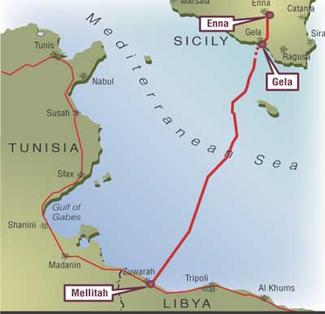
The European Union is heavily dependent on the flow of Libyan oil. 85 percent of its oil is sold to European countries. In the case of a war with Libya, the supply of petroleum to Western Europe could be further disrupted, largely affecting Italy, France and Germany. Thirty percent of Italy’s oil and 10 percent of its gas are imported from Libya. Libyan gas is fed through the Greenstream pipeline in the Mediterranean (See map below).

The implications of these potential disruptions are far-reaching. They also have a direct bearing on the relationship between the US and the European Union.

Greenstream pipeline linking Libya to Italy (right)

Concluding Remarks

The mainstream media through massive disinformation is complicit in justifying a military agenda which, if carried out, would have devastating consequences not only for the Libyan people: the social and economic impacts would be felt Worldwide.

There are at present three distinct war theaters in the broader Middle East Central Asian region: Palestine, Afghanistan, Iraq. In the case of an attack on Libya, a  fourth war theater would be opened up in North Africa, with the risk of military escalation.

Public opinion must take cognizance of the hidden agenda behind this alleged humanitarian undertaking, heralded by the heads of state and heads of government of NATO countries as a “Just War”. The Just War theory in both its classical and contemporary versions upholds war as a “humanitarian operation”. It calls for military intervention on ethical and moral grounds against “rogue states” and “Islamic terrorists”. The Just war theory demonizes the Gaddafi regime while providing a humanitarian mandate to US-NATO military intervention.

The heads of state and heads of government of NATO countries are the architects of war and destruction in Iraq and Afghanistan. In an utterly twisted logic, they are heralded as the voices of reason, as the representatives of the “international community”.

Realities are turned upside down. A humanitarian intervention is launched by war criminals in high office, who are the unchallenged guardians of the Just War theory.

Abu Ghraib, Guantanamo,… Civilian casualties in Pakistan resulting from US drone attacks on towns and villages ordered by president Obama, are not front page news, nor are the 2 million civilian deaths in Iraq.

There is no such thing as a “Just War”.  The history of US imperialism should be understood. The 2000 Report of the Project of the New American Century entitled “Rebuilding Americas’ Defenses” [pdf file no longer accessible] calls for the implementation of a long war, a war of conquest.

One of the main components of this military agenda is: to “Fight and decisively win in multiple, simultaneous theater wars”.

“Operation Libya” is part of that process. It is another theater in the Pentagon’s logic of “simultaneous theater wars”.

The PNAC document faithfully reflects the evolution of US military doctrine since 2001. The US plans to be involved simultaneously in several war theaters in different regions of the World.

While heralding the need to protect America (i.e. “National Security”), the PNAC report does spell out why these multiple theater wars are required.

What purpose do they serve. Are they an instrument of peace? The usual humanitarian justification is not even mentioned.

What is the purpose of America’s military roadmap?

Libya is targeted because it is one among several remaining countries outside America’s sphere of influence, which fail to conform to US demands. Libya is a country which has been selected as part of a military “road map” which consists of “multiple simultaneous theater wars”.  In the words of former NATO Commander Chief General Wesley Clark:

 “in the Pentagon in November 2001, one of the senior military staff officers had time for a chat. Yes, we were still on track for going against Iraq, he said. But there was more. This was being discussed as part of a five-year campaign plan, he said, and there were a total of seven countries, beginning with Iraq, then Syria, Lebanon, Libya, Iran, Somalia and Sudan…. (Wesley Clark, Winning Modern Wars, p. 130).

Part I

Insurrection and Military Intervention: The US NATO Attempted Coup d’Etat in Libya?


River to Sea Uprooted Palestinian   
The views expressed in this article are the sole responsibility of the author and do not necessarily reflect those of the Blog!

Monday, 1 February 2021

What Wall Street fears

 January 30, 2021

What Wall Street fears

By The Ister for the Saker Blog

The origin of modern banking can be found in the early days of the gold trade. In the Middle Ages, goldsmiths accepted deposits of gold in return for paper notes, which could be exchanged for the deposits at a later date. Because these paper notes were more convenient for commercial use than physical metal, they were usually not redeemed for gold right away. The goldsmiths noticed their customers’ deposits could be used in the meantime to generate interest and began surreptitiously lending out the savings of their depositors. Over time fractional reserve banking developed from this tendency of lending out money in excess of the actual reserves being held.

Goldsmith became banker, and from this early monetary system, banking families emerged. Prior to the existence of modern financial institutions, these houses were the entities which could be relied upon for large amounts of credit. A reputable surname gave confidence to depositors that their gold was in good hands, and from the intergenerational accumulation of wealth grew large pools of loanable capital. As nobles required weapons and pay for their armies, the conflicts of medieval Europe were fueled by families such as the Medici, Fuggers, and Welsers. Today, it is the Federal Reserve which finances America’s enormous military and conquests abroad.

To truly understand banking, the concept of free markets must be cast aside. Just as oil is a strategic resource for the real economy capitalist, gold and silver are strategic resources for the financial capitalist. Physical bullion is the basis from which all other lines of credit extend; we know this because the same central banks which publicly proclaim gold to be a barbarous relic still feel the need to maintain enormous hordes in their vaults.

As in oil markets, pricing is not influenced primarily by a large number of producers and buyers but by concentrated cartel dynamics. So while we witness yet another energy battle between OPEC and Russia unfold, it should be understood that similar dynamics are at play in the upper echelons of the monetary world as bankers seek to fix prices and control physical bullion flows in a manner which is beneficial to their interests.

A key difference from oil is that while the pump leads to the refinery and the refinery to the end-user, bankers do not generally like to part with their gold. Accordingly, markets have been designed so that prices are determined not by physical delivery but by the trading of unbacked or fractionally backed “claims” on the underlying metal: certificates, ETFs, and futures. We can be certain that there is not enough physical bullion to cover all these paper metal claims, just like the medieval goldsmith did not hold his deposits in full.

These paper markets set the price, although bars rarely leave the vault

Where is the vault? While Fort Knox claims the largest holdings, the price is set by the London Bullion Market Association and CME Group which together account for around 70% and 20% of global trading volume respectively. The London Bullion Market began in 1850, when N. M. Rothschild and Sons and several other banking families created a cartel to oversee the operations of the global gold market, including the establishment of the “London good delivery” list which created trading standards for size, dimensions, shape and fineness of bullion; today trading on London markets requires a high purity and being between 350-450 ounces.

This domination of the world’s gold market was not achieved through peaceful means: look into the forces behind the conquest of Transvaal’s gold mines, for it bears a direct parallel to America’s invasions of oil-rich nations today. Another similarity with oil markets is that military interventions have a habit of “liberating” the target nation of their gold: just ask Muammar Gaddafi.

The price of such a strategic resource could not be determined by an open market, thus alongside good delivery standards the “gold fix” was established in 1919 and was held in the offices of New Court until 2004, when its operations were passed on to a cartel of bullion banks such JP Morgan and HSBC. Ever since, these banks have been investigated and convicted countless times of manipulating and spoofing the prices.

How do we know that there isn’t enough gold to cover physical deliveries? Back in the 1970s the dollar was under a lot of pressure and Western banks maintained secret gentlemen’s agreements not to request delivery of bullion. In 1971 Dutch central bank chief Jelle Zjilstra ignored these formalities and planned to convert $600 million of the Dutch dollar reserves to gold, prompting Federal Reserve chair Paul Volcker to fly out to the Netherlands and warn him: “you’re rocking the boat.” Shortly after Zijlstra refused Volcker’s pressure and continued with the purchase, the US decoupled from the gold standard.

Abandonment of the gold standard risked a reduction in dollar demand, so Nixon enlisted Wall Street scion Gerry Parsky to negotiate with oil exporting Arab nations. After discussion, the Saudi state agreed to sell oil priced exclusively in dollars and to invest the proceeds of oil sales in America.

To those who say dismissively that the dollar is now backed by “nothing,” I say it is backed by oil and the threat of the US military.

Look at the somber fates of those that tried to ditch the dollar for gold or the Euro: Libya in a state of permanent civil war; starving Syrians picking through landfills in search of food only miles from occupied wheat fields.

So maintaining confidence in our reserve currency requires the undermining of confidence in gold, as its reemergence would unnecessarily democratize the international monetary order. Confidence is undermined first by price suppression, which is accomplished by the manipulation of precious metals futures markets. While it would be hugely wasteful for a private individual or consortium to manipulate such a market with their own money, that is where the unlimited fiat available at central bank trading desks come in: and we know central banks are secretly trading precious metals futures due to leaked documents from CME Group.

Leo Melamed, chairman of CME Group and the putative father of modern commodity futures markets noted in his book Escape to the Futures that CME’s Globex system was inspired by the original London gold fix:

Sandner, Kilcollin and I were in London with the chairman of the Rothschild Bank seeking his advice on how to bring the “gold fix” to Chicago. From the heated debate that followed one would have concluded that Kilcollin knew more about the subject than the legendary Rothschilds, the people who had founded the concept ages before.

What we can see from this is that strategic commodities such as gold and oil are far from a free market: recall my previous article The Empire is Losing the Energy War which described how the Saudi state functions as a price-suppression weapon against Russia’s oil exports. This global commodity suppression schema allows the importation of the planet’s finite resources at a fraction of the true cost in return for theoretically unlimited currency. Recall Fed governor Kevin Warsh’s comments in December of 2011 when gold hit an all time high that banks were:

“finding it tempting to pursue financial repression- suppressing market prices that they don’t like”

There are signs, however, that the thin pool of physical bullion which exists to maintain confidence in paper markets is drying up. In March of 2020, CME Group had to relax its own requirement of 100oz bars to allow 400oz London good delivery bars to be shipped from overseas and used for trade settlement. Some would say: if price suppression exists then why has the gold price gone up over the last few years?

The middle ground between setting the price to very low or very high levels, say, $100 or $10,000, is that the prices are set high enough to minimize outflows from vaults, while at the same time using futures to hammer down the prices at psychologically important levels and initiating margin calls on those who are long gold using leverage. Those who have watched gold for a long time can attest to the sudden and inexplicable drops which originate in the futures market and which occur every time the gold price appears *just* ready to break out.

It’s a very complicated charade for the bullion bank cartel. Allow the price per ounce to go too low and you risk running out of the gold necessary to facilitate markets. At the same time, if the price rises too high it attracts international attention and risks gold reemerging in monetary policy. Notice how as soon as the supply shortages became apparent in March 2020 the bankers were forced to reset gold from $1230 to over $2000 in order to stem the outflows of physical delivery.

Putin is intentionally exacerbating this drought of physical gold in Western banks by expanding the Russian central bank’s purchases of gold. For the past few years Russia has been the number one global purchaser of bullion, having spent over $40 billion to bring Moscow’s reserves to the highest level in history: a sum close to the annual military budget because it is a strategic asset.

Just last week, Russia’s gold reserves passed its dollar reserves for the first time reaching a sum of $583 billion, highlighted by the central bank as part of Putin’s de-dollarization agenda. Given that purchases have grown at roughly 15% per year we can predict that even if the price does not rise, the value of these holdings will be around $1 trillion in three years. Read the anxious commentary about these purchases in Bloomberg and Forbes, and remember the nervousness in the business press when Germany demanded its gold back in 2013, which would only exist if behind-the-scenes physical gold flows were disjointed and there was internal muttering in the financial world as to whether the demand could be fulfilled.

To any who doubt that this is an overt move, in the pre-WW2 monetary system the mass accumulation of gold was well understood among central bankers as an aggressive act intended to starve competitor states of their ability to create credit. For example, French and American hoarding resulted in hyperinflation for Germany and forced Britain’s pound sterling off the gold standard.

Russia’s acquisition of precious metal is a direct threat to the financial system. How funny that the system is so fraudulent that it is an act of aggression to simply demand in physical form what one has paid for in full on an open market; an act which the designers of the system cannot protest lest they reveal their own bankruptcy. Just as it did in the 1920s, the hoarding of gold in the East will eventually limit the West’s ability to extend credit, it is simply unfolding on a longer time frame.

So why is a tiny stock like GameStop causing billionaire Leon Cooperman to cry on CNBC, and why is the SEC threatening small-time investors?

Simply, the financial markets are being revealed as a highly illiquid house of cards. Retail investors from Reddit began trolling short-sellers by rapidly buying small stocks and causing hedge funds to blow up from expensive margin calls. The losses are now estimated at around $70 billion, and as these small-time investors funnel their unemployment and stimulus checks into their aggressive trades they have fought wealthy investors in a more effective way than Occupy Wall Street ever did. They have now turned their eyes to the small and illiquid silver market…

Look at the fate of the Hunt brothers fortune: they were oil billionaires who tried to exercise their legal right to take physical delivery of a large volume of silver futures contracts and had CME pull the rug out from under them before it could be achieved. CME Group defeated the Hunt brothers by instituting Silver Rule 7 which limited the dollar amount of physical silver that an individual investor could buy. But how will that stop the hordes of young low net worth traders who are now telling one another to purchase physical bullion and intentionally strain the rigged silver market?

This arcane financial system is doomed to fail because it is based on ever-higher and more unstable abstractions of underlying wealth: CDOs squared and cubed, dark pool derivatives markets totaling trillions of dollars, and so on: all of which depends on the financial sector sucking as much money as possible out of a shrinking global economy through securitization. Now that people are demanding the underlying assets themselves, change is beginning.

What an interesting timeline: where Russia and unemployed youths have come to the same conclusion for how to defeat the banks.


The Ister is a researcher of financial markets and geopolitics. Author of The Ister: Escape America


River to Sea Uprooted Palestinian   
The views expressed in this article are the sole responsibility of the author and do not necessarily reflect those of the Blog!

Sunday, 4 October 2020

آخر الحروب الأميركية قبل الانهيار كاراباخ مقتل أنقرة وتل أبيب

محمد صادق الحسيني

أياً  تكن عائدية الأراضي المتنازع عليها بين أذربيجان وأرمينيا وأياً تكن الاصطفافات العرقية أو الاثنية أو الطائفية أو الدينية المحيطة بالصراع حول ناغورنو كاراباخ، وماهية الحلّ العادل المطلوب لها، فإن ما يجري في الهضبة الاستراتيجية الواقعة بين البحرين الأسود وقزوين من تصعيد لنزاع تاريخي قديم انما يهدف الى محاولة أميركية يائسة لمنع صعود الثلاثي الروسي الصيني الإيراني لعرش العالم…!

فرملة الاندفاعة الروسية الهادفة الى قيادة العالم المتعدد الأقطاب، وتوسيع حزام التخريب على إيران وتعزيز الحشد الاستراتيجي ضدّ الصين هو الهدف الأعلى والأبعد في كلّ ما يجري في القوقاز…!

لا شك أنّ جذور الصراع، بين القوى الدولية والإقليمية في مراحل التاريخ المختلفة، حول منطقة القوقاز بشكل عام ومنطقة ناغورنو كاراباخ بشكل خاص، ضاربة في عمق التاريخ.

فمنذ أن كانت هذه المنطقة جزءاً من الدولة الآشورية القديمة، في حدود سنة 800 قبل ميلاد السيد المسيح، وهذه المنطقة تشهد صراعات مسلحة بين العديد من الدول.

من هنا فإنّ الصراع الدائر حالياً، حول ناغورنو كاراباخ، هو امتداد لصراعات قديمة، دارت معظمها بين دول الاستعمار الأوروبي، وعلى رأسها بريطانيا، وبين روسيا القيصرية والامبراطورية الفارسية ووريثتها إيران الحديثة.

وفِي هذا الإطار، قامت بريطانيا بإشعال حرب، بين روسيا القيصرية والامبراطورية الفارسية، سنة ١٨٠٤ استمرت حتى سنة 1813، بهدف “وقف توسع روسيا” في آسيا الوسطى. ولكن هذه الحرب قد حُسمت لصالح روسيا واضطر شاه إيران، فتح علي شاه، لتقديم تنازلات كبيرة لروسيا، سواء عبر التنازل عن أراضٍ واسعة، كانت ناغورنو كاراباخ جزءاً منها، أو دفع تعويضات مالية أو غير ذلك.

وعلى الرغم من هزيمة حليف بريطانيا في إيران، الشاه فتح علي شاه، إلا أنّ بريطانيا واصلت تحريضه على شنّ حرب جديدة ضدّ روسيا، لاستعادة الأراضي الإيرانية، التي خسرتها إيران في حرب 1804 – 1813، على الرغم من أنّ روسيا لم تكن تريد الدخول في حرب جديدة وإنما سعت الى تثبيت وجودها في تلك المناطق والاستعداد لصدّ هجمات بريطانية، تُشنّ على أراضيها عبر عملاء بريطانيا في الجواسيس آسيا، من سلاطين وأمراء وإقطاعيين.

وتأكيداً على ذلك قام القيصر الروسي، نيكولاس الأول، بإرسال مبعوث سلام روسي خاص الى إيران، هو الأدميرال، أليكساندر مينشيكوف حيث عرض على شاه إيران عقد حلف روسي إيراني لمواجهة الأطماع التركية التوسعية في اواسط آسيا (القوقاز). ولكن شاه إيران، فتح علي شاه، عوضاً عن الاستجابة لدعوة السلام والعمل المشترك، التي عرضها عليه الجانب الروسي، قد أقدم على خطوتين مدمّرتين لتلك المبادرة وهما:

أ ـ وضع مبعوث السلام الروسي، الأدميرال مينشيكوف، تحت الإقامة الجبرية في ربيع سنة 1826.

ب) تجريد حملة عسكرية فارسية، قوامها 35000 رجل، بتاريخ 16 / 7/ 1826، بقيادة ابنه الثاني، عباس ميرزا، الذي كان يطلق عليه اسم نائب السلطان ايضاً، واجتاح بهذه القوات منطقتي كاراباخ وتاليش المجاورة، دون إعلان حرب على روسيا بشكل رسمي. وهي الخطوة التي شكلت بداية للحرب الروسية الفارسية الثانية والاخيرة، التي استمرت من سنة ١٨٢٦ حتى ١٨٢٨، حيث تمّ توقيع اتفاق وقف الحرب بين الطرفين، بتاريخ 22 /2/ 1828، والتي سُمّيت: عهدنامه تركمنچي وبالانجليزية: Treaty of turkmenchey، والتي تنازلت الامبراطورية الفارسية بموجبها عن:

– خانات ايريفان Khanat irevan.

– خانات ناخشيڤان Khanat Nachshivan.

– بقايا خانات تاليش Khanat Talysh.

– منطقة اوردوباد Ordubad.

وبالنظر الى ما تقدّم، من حقائق تاريخية، فإنّ أهداف دول الاستعمار الأوروبي، ومن بعدها الدور الأميركي، يتمحور حول محاصرة روسيا وتهديد حدودها من كلّ الاتجاهات، سواء من الجنوب الشرقي (الامبراطورية اليابانية) أو من الجنوب الغربي (الامبراطورية العثمانية) او من الغرب (الامبراطورية الفرنسية/ نابليون) ثم ألمانيا النازية في القرن الماضي، وصولاً الى التهديدات الأميركية في الشمال الشرقي (بحر بارنتس) والمحيط الهادئ من الشرق.

من هنا فإننا نجزم تماماً، وبناءً على معلومات دقيقة، انّ ما يجري حالياً من اشتباكات حدودية، بين أرمينيا وأذربيجان، ليست صدامات عارضة ومنقطعة التواصل، مع الوضع الاستراتيجي لكل من روسيا وإيران وتركيا، وإنما هي عبارة عن جزء أو حلقة من مخطط أكبر بكثير، من المساحة الجغرافية، التي تشكل مسرح العمليات الحربية هذه. وهي بالتالي عملية لها أهداف وتداعيات استراتيجية هامة، على الصعيدين الإقليمي (إقليم وسط آسيا) والدولي، المتمثل في الصراع الدولي بين القوى العظمى في العالم.

أما عن المعلومات والأدلة، التي تؤكد انّ طبيعة هذه الاشتباكات تتجاوز كونها اشتباكات حدودية، بل انها استمرار لخطط الحشد والتطويق الاستراتيجي الأميركي لكلّ من روسيا والصين وإيران، فهي (المعلومات) كثيرة ومتشعّبة نكتفي بذكر الأهمّ منها، وهي ما يلي:

أولاً: التدخل التركي المباشر في العمليات العسكرية، الى جانب أذربيجان، وتسلمها قيادة غرفة العمليات المشتركه مع “إسرائيل” في أذربيجان، وهو تدخل ليس سرياً وليس جديداً، وقد بدأ بنقل قوات تركية جوية وبرية قبل عدة أسابيع بحجة إجراء تدريبات عسكريه مشتركة مع الجيش الأذري وإبقاء تلك الوحدات العسكري التركية في أذربيجان، وفي محيط منطقة ناغورنو كاراباخ ونقچوان بالتحديد.

وما قام به سلاح الجو التركي من إسقاط مقاتلة أرمينية، من طراز سوخوي 25؛ يوم أمس الأول إلا أبرز دليل على ذلك.

ثانياً: انّ الهدف التركي، من هذا التدخل، لا يقتصر على مؤازرة دولة لها علاقات عرقية (إثنية) مع تركيا فقط، بل ان هذا التدخل يهدف الى:

اقامة قواعد عسكرية تركية دائمة في هذه الدولة، تعزيزاً للحشود الأميركية الأوروبية والاستفزازات الجوية والبحرية المتواصلة، من قبل الأساطيل الغربية، ضدّ الأراضي الروسية المجاورة للبحر الأسود، وكذلك تعزيزاً للدور الاستخباراتي التخريبي الإسرائيلي ضدّ إيران، انطلاقاً من القواعد التجسّسية “الإسرائيلية” الموجودة حالياً في أذربيجان والتي ستكون القواعد التركية بمثابة إضافة كمية لها وتمهيداً لتوسيع الهجوم الاقتصادي على الصادرات النفطية والغازية الروسية الى الاسواق الأوروبية، حيث تعمل تركيا على التوسع شرقاً، الى ما بعد بحر قزوين، بهدف ربط منابع الغاز في تركمنستان وغيرها من دول آسيا الوسطى بناقل الغاز الأذري التركي، الذي ينقل الغاز حالياً الى تركيا، ليصار تصديره في ما بعد الى الاسواق الأوروبية، من خلال محطات التصدير التركية. وكذلك الأمر بالنسبة لـ “إسرائيل” التي تغطي ٤٠٪ من احتياجاتها النفطية من النفط الأذري، الذي يجري ضخه إلى ميناء شيخان التركي ومن هناك الى ميناء حيفا.
انشاء بنية عسكرية لحلف الناتو، تحت مسمّى تركي، في أذربيجان لزيادة الضغط والتهديد العسكريين على إيران، خاصة في شمالها الغربي الذي يسكنه أذريين وتركمان، تعتقد تركيا ومعها حلف الناتو، انّ من الممكن استغلال انتماءاتهم العرقية، لتحقيق أهداف جيوسياسية.
ثانياً: وفي هذا الإطار، نعني إطار تمدّد الناتو في وسط آسيا، عبر القواعد العسكرية التركية في أذربيجان، فإنّ الخطة المعدة، من قبل غرفة العمليات المشتركة، الأميركية التركية الإسرائيلية الأذرية، تهدف الى اقامة تواصل جغرافي أرضي بين أذربيجان وتركيا، عبر إعادة احتلال الكوريدور (الشريط)، الذي تسيطر عليه القوات الأرمنية، والفاصل بين جيب كاراباخ الأرمني وأراضي جمهورية أرمينيا، والممتدّ من منطقة جبرائيل، في جنوب الجيب وحتى منطقة موروفداغ في شماله. كما ان الخطط العسكرية الاذرية، الموضوعة قيد التنفيذ الآن، والتي يشارك في تنفيذها بشكل مباشر في الميدان، ثلاثة جنرالات وثمانية عشر ضابط أركان إسرائيليين، انما تهدف الى توسيع سيطرة القوات الأذرية، واحتلال شريط حدودي داخل الأراضي الأرمينيه، يمتدّ بموازاة الحدود الإيرانية، من منطقة Nrnadzor في أقصى جنوب شرق أرمينيا وحتى منطقة Meghri / Agarak / Kuris، في أقصى جنوب غرب أرمينيا، لاقامة تواصل جغرافي مع جمهورية نقچوان الاذرية، المتصلة جغرافياً بحدود مشتركة مع تركيا، في اقصى شمال غرب ناخشاڤان، قرب نقطة الحدود التركية الأذرية في ساداراك (Sadarak).

ثالثاً: نشر المزيد من عناصر داعش والتنظيمات الإرهابية الأخرى، في أذربيجان تحت غطاء مساعدة أذربيجان في صدّ “العدوان” الأرميني واستعادة الأراضي التي سيطرت عليها أرمينيا في حرب عام 1994، حيث تمّ حتى الآن نقل 5300 عنصر من هذه التنظيمات، ومن عناصر داعش تحديداً، من السجون التي تديرها الميليشيات الكردية، في شمال شرق سورية، بالتعاون مع الاستخبارات العسكرية والخارجية الإسرائيلية، تحت الإشراف الكامل لأجهزة الاستخبارات والجيش الأميركيين. وهي مراكز إيواء يعيش فيها حوالي 80 ألف عنصر من داعش، بينهم الآلاف من مواطني دول وسط آسيا الإسلامية، إضافة الى آلاف المواطنين الصينيين الذين ينتمون لقومية الايغور، وموطنها في شمال غرب الصين.

وهذا يعني انّ عمليات المناورة بعناصر داعش، التي تنفذها القيادة العسكرية الأميركية، بأدوات إسرائيلية وتركية، هي استمرار لعمليات المناورة الشبيهة والتي نفذها الجيش الأميركي نهاية سنة 2017، عند سقوط الموصل والرقة بشكل خاص، حيث تمّ، آنذاك، نقل الآلاف من عناصر داعش، جواً وبتمويل قطري الى كلّ من ليبيا، لتتمّ إعادة تدريبهم، ونقلهم من هناك الى دول الساحل الأفريقي والى سيناء وكلّ من: تركمنستان وأذربيجان واوزبكستان وجنوب شرق طاجيكستان وشمال شرق افغانستان، قرب الحدود مع الصين، كجزء من خطط التطويق الاستراتيجي لكل من الصين وروسيا وإيران واثارة الحروب والتوترات في تلك المناطق، وهو ما يعني انّ عمليات ضخ عناصر داعش الى أذربيجان لن تتوقف وانما سيتمّ الاعتماد مستقبلاً عليهم في تنفيذ عمليات ارهابية، في كلّ من الصين وروسيا وإيران، رغم كلّ ما يعلن من نفي تركي لنقل هذه العناصر الى تلك البلدان.

وما إعراب وزارة الخارجية الروسية، يوم 30/9/2020، عن قلقها من نقل إرهابيين ومرتزقة الى أذربيجان، الا دليل جديد ومهمّ على انّ هذه العمليات لا تزال تجري على قدم وساق، وان ذلك يجري تحت إشراف هيئة أركان عامة تتابع كل التفاصيل الميدانية المتعلقة بأماكن انتشارهم أو زجّهم في المعارك الدائرة حالياً في جمهورية ناغورنو كاراباخ.

كما لا بدّ من التذكير بسيل التصريحات الإسرائيلية، الصادرة بالأمس، حول الدور الإسرائيلي في ما يدور في كاراباخ وكذلك تصريحات المسؤولين الأذريين حول دور السلاح الإسرائيلي في العمليات التي ينفذها الجيش الأذري.

رابعاً: صحيح انّ البنتاغون وقيادة الناتو يقومون بتنفيذ كلّ ما ذكر أعلاه، من خطط عسكرية استراتيجية، ولكن هذه التحركات والمناورات لا تعبّر إلا عن فشل، أميركي إسرائيلي أوروبي سعودي، شامل وعلى طول مسرح العمليات، او مسرح المواجهة الشاملة، بين الولايات المتحدة وحلف شمال الأطلسي، ومعهما التابع الإسرائيلي السعودي الخليجي، من جهة، وبين روسيا والصين وإيران وحلف المقاومة من جهة أخرى.

اذ يكفي ان ننظر الى مسلسل الفشل، الذي لحق بمشاريعهم العسكرية والسياسية، بدءاً بهزيمة الجيش الإسرائيلي في لبنان سنة 2006، مروراً بالهزيمة الأميركية في العراق وانسحاب الجيش الأميركي من هناك سنة 2011، وصولاً الى هزيمة مشروعهم في إسقاط الدولة السورية وإعادة احتلال العراق، عبر مشروع داعش، وما يحصل في اليمن، من هزائم متلاحقة لقوى العدوان الأميركي الإسرائيلي، بواجهة سعودية إماراتية، وما لهذا الصمود اليمني العظيم والنصر المؤزّر الناجز القريب، للشعب اليمني وقواته المسلحة، من آثار استراتيجية غاية في الأهمية، سواء من جهة المحافظة على حرية الملاحة في المضائق المائية من باب المندب وصولاً الى هرمز والى مداخل المحيط الهندي، عند جزيرة سوقطرى اليمنية المحتلة حالياً، من قبل مرتزقة بن زايد والجيش الإسرائيلي.

إذ انّ صمود اليمن وجيشه ومعهم أنصار الله قد أسهم في إفشال الجهد الأميركي الإسرائيلي في السيطرة على هذه المضائق البحرية الاستراتيجية، الأمر الذي دفع واشنطن وبروكسل وأذنابها في الشرق الأوسط لوضع الخطط الجديدة، التي تهدف الى إنشاء حزام ناري إرهابي، يطوّق روسيا من الجنوب والجنوب الغربي، ويطوّق الصين من الجنوب الغربي (جنوب شرق آسيا في الفلبين/ ابو سياف/ وفي بنغلادش وغيرها من الدول). وكذلك من الغرب، من خلال المناطق الحدودية مع افغانستان وطاجيكستان.

لا نقول انّ إطلاق هذه الخطط العسكرية هو انعكاس لضعف أميركي اطلسي جزافاً، وانما ننطلق في تحديدنا لطبيعة هذه الخطط، من كونها تعبيراً عن غياب الخطط الاستراتيجية، المرتكزة الى واقع ميداني وموازين قوى محددة وواضحة ومدروسة بدقة، وكذلك المرتكزة الى قدرات على دراسة المتغيّرات التي شهدتها الفنون العسكرية في العقدين الاخيرين بشكل خاص وعدم قدرة الجيوش الأميركية والاطلسية على التعامل مع هذه الفنون والتكتيكات، التي كان أبرزها ما استخدم في سورية، من قبل الجيش السوري وقوات حزب الله (الرضوان) والوحدات الرديفة الأخرى من إيرانية وعراقية خضعت جميعها لقيادة الجنرال قاسم سليماني، الذي اضطرت الإدارة الأميركية الى الانتقام منه شخصياً، بسبب ما لحق بها وبمشاريعها من هزائم في “الشرق الاوسط”.

إذا كان قاسم سليماني قد أخرجك من مشهد الدولة العظمى يا ترامب وحوّلك الى جمهورية موز. فإنّ آلاف قاسم سليماني بانتظار الإشارة ليحوّلوا ما تبقى من امبراطوريتك الهزيلة الى هشيم تذروه الرياح.

بعدنا طيبين قولوا الله…

River to Sea Uprooted Palestinian   
The views expressed in this article are the sole responsibility of the author and do not necessarily reflect those of the Blog!

Sunday, 13 September 2020

توسّع أردوغان, في شرق المتوسّط مسمار نعش النهاية..


سماهر الخطيب

وجّهت الولايات المتحدة بالأمس دعوة إلى الحليف الناتوي تركيا لسحب قواتها من شرق المتوسط.

وجاءت الدعوة على لسان وزير الخارجية الأميركية مايك بومبيو عشية زيارته إلى قبرص بهدف التوصل إلى حل سلميّ يُنهي التوتر في المنطقة.

وبحسب بومبيو فإن «زيارته لقبرص تأتي استكمالاً لاتصالات أجراها الرئيس الأميركي دونالد ترامب مع نظيره التركي رجب طيب أردوغان ورئيس الوزراء اليوناني»، مشدداً على «ضرورة حل النزاع بطريقة دبلوماسية وسلمية». كما أشار إلى «دور ألمانيا في السعي إلى خفض التوتر».

فيما أكدت الدول الأوروبية السبع المطلة على المتوسط في ختام قمتها بشأن الأوضاع في شرق المتوسط استعدادها لـ»فرض عقوبات على تركيا ما لم تتراجع عما وصفته بتحركاتها الأحادية الجانب في المنطقة».

كما أكدت الدول الأوروبية السبع “دعمها الكامل وتضامنها مع قبرص واليونان في وجه التعديات المتكررة على سيادتهما وحقوقهما السيادية والأعمال التصعيدية من جانب تركيا”، وفق ما جاء في البيان.

وندّد الرئيس الفرنسي إيمانويل ماكرون أول أمس، بـ”لعبة الهيمنة لقوى تاريخية” في البحر الأبيض المتوسط وليبيا وسورية، مسمياً تركيا. وقال ماكرون إن «دول المتوسط السبع تريد حواراً بنية حسنة مع تركيا التي تقود سياسة توسعية في البحر الأبيض المتوسط».

وفي المشهد التركي يبدو أنّ أردوغان ماضٍ إلى نهاية حقبته «الأردوغانية»، بعد أن أصبحت نزعته «السلطانية» المتحكمة والمسيطرة على أفعاله وأقواله. وهو يعلم جليّاً بأنّ تلك النزعة التوسعية فاقدة أي شرعية أو مشروعية وخالية من أي سند قانوني يدعمها أو حق تاريخي يؤصّلها، ليس في مياه البحر الأبيض المتوسط، فحسب، إنما في معظم الأراضي السورية التي سلخها أجداده عن أمها السورية بلا حق وها هو اليوم يفتح عليه أبواب مواجهات قاسية وقاصمة، قد تصل إلى حد الحرب.

ومنذ أن وقعت تركيا اتفاقية ترسيم الحدود مع الوفاق الليبية ولم تكل ولم تهدأ بتوجيه تهديداتها لجيرانها في منطقة شرق البحر الأبيض المتوسط، وبخاصة قبرص واليونان، وذلك من خلال إعلانها الخاص بتوسيع نطاق عملياتها لاستكشاف حقول الغاز في المنطقة المتنازع عليها شرقي المتوسط، وتأكيدها على مواصلة سفينة التنقيب التركية “ياووز” أعمالها، خلال الفترة الممتدة من 18 آب، وحتى نهاية أيلول الحالي.

وصرّح أردوغان مراراً أن بلاده ستستأنف عمليات التنقيب وستبحث عن مصادر الطاقة قبالة جزر يونانية، متوعّداً بعدم التراجع عن توغل بلاده في شرق المتوسط، زاعماً أن لبلاده «الحق تماماً» في المنطقة المتنازع عليها مع اليونان.. وإذا ما فتحنا دفتر الحساب حول الحق المزعوم فسنجد أنّ هذه «الحقوق العثمانية» ما هي إلا الأوهام مجرّدة من المصداقية بنت إمبراطوريتها السابقة على المجازر التي ارتكبتها كالمجازر الأرمنية والسريانية واقتطعت الأراضي بلا أدنى حق متذرعة بقوة السيف من جهة وباتفاق مع حلفاء الحربين العالميتين الأولى والثانية من جهة أخرى..

إنما هروب أردوغان من الجهة الغربية نحو جهة المتوسطية سيكون مسماراً في نعش النهاية الحتمية لجنون الحقبة «الأردوغانية» التي عاشتها بلاده ودفعت وستدفع أكلافها عالية وغالية..

إذ أضحى أردوغان عدواً مشتركاً للغرب وللشرق بتصرّفاته الرعناء ولم تقتصر تلك العداوة على الخارج بل ظهرت وتغلغلت داخل بلاده وبين مواطنيه..

ودخل في دوامة الخلافات مع محيطه الشرقي والغربي وبات العمق الاستراتيجي أضغاث أحلام ولم يعد يساوي الحبر الذي كتب فيه أحمد داوود أوغلو كتابه موجهاً دعواته لحزبه السابق حزب العدالة والتنمية بالتوجه نحو الشرق والداخل المشرقي وباتت رؤية “صفر مشاكل” صفراً على شمال طموحات أردوغان الرعناء.. فأصبح الإقليم برمته ضدّه، فبينما تلوّح أوروبا بورقة العقوبات، تحرّك فرنسا قطعها الحربية إلى المتوسط، وواشنطن تفتر علاقتها به وتطلب منه بصريح العبارة سحب قواته من المتوسط وتدين “الجامعة العربية” تصرفاته وتطالبه بسحب قواته من سورية وليبيا وغيرها من البلاد التي عاث فيها فساداً ليبدو وكأنّ الجميع اتفق عليه ويتجه نحو تشكيل حلف جديد في رحم المنطقة لملاقاته، والذي يبدو في الزمن القريب قدراً مقدوراً..

في المحصلة تبدو نهاية «الأردوغانيّة» أمراً محتوماً وحقيقة مؤكدة، وفي التاريخ الكثير من أمثولات أطماع أردوغان وأوهامه التي تسببت بانهيار إمبراطوريات كبيرة واندثرت حضارات عظيمة، إذا ما افترضنا أنّ تركيا «حضارة» وإن كانت، فإنما حضارة مسروقة مبنية على مجازر..

وفي العودة إلى التاريخ، فإن كثيراً من الإمبراطوريات انهارت وفسدت واضمحلت من داخلها، بسبب تصرفات حكامها وما محاولة أردوغان لبناء دولة خلافة تركية من جديد، إلا أوهام مضادة لحركة التاريخ وتزييف لتطور البشرية..

وإذا ما استمرّ في تجاوزاته لكل الخطوط الحمر فإن نهايته حتماً ستأتي على يد تحالف دولي إقليمي، قد يتحول إلى حلف عسكري في القريب العاجل، للقضاء على أوهام السلطان الذي لم يعد له صاحب أو صديق..


River to Sea Uprooted Palestinian   
The views expressed in this article are the sole responsibility of the author and do not necessarily reflect those of the Blog!

Sunday, 6 September 2020

Turkey Makes New Greece Threat ahead of Military Drill

Erdogan

 September 5, 2020

Turkish President Recep Tayyip Erdogan on Saturday issued a threat to Greece over simmering tensions in the eastern Mediterranean, the day before his forces launch military drills in the region.

Turkey and Greece, both Nato members, have been embroiled in an increasingly heated spat over gas and oil in the region since Turkey deployed an exploration vessel last month.

“As Turkey and the Turkish people, we are ready for every possibility and every consequence,” Erdogan said in a televised speech in Istanbul.

Turkish defense officials said they would start five days of military exercises on Sunday in the breakaway republic of northern Cyprus — an entity recognized only by Ankara.

Nato said this week Greek and Turkish leaders had agreed to take part in technical talks to avoid accidents between their navies.

But Greece later said it had not agreed to the talks, leading to accusations from Turkey that the EU country was shunning dialogue.

Greece and Cyprus have accused Turkey of breaching their sovereignty by drilling in their waters.

But Erdogan made it clear that he would not compromise, saying: “Turkey is ready for any kind of sharing (of energy resources) as long as it is fair.”

Turkey on August 10 deployed the Oruc Reis research vessel and an escorting flotilla of warships to the waters between Cyprus and the Greek islands of Kastellorizo and Crete.

The vessel’s stay in the contested waters has been extended three times.

Greece responded by staging naval exercises with several EU allies and the United Arab Emirates, not far from smaller ones Turkey conducted between Cyprus and Crete last week.

Source

Related Video

Related Articles


River to Sea Uprooted Palestinian   
The views expressed in this article are the sole responsibility of the author and do not necessarily reflect those of the Blog!