Uprooted Palestinians are at the heart of the conflict in the M.E Palestinians uprooted by force of arms. Yet faced immense difficulties have survived, kept alive their history and culture, passed keys of family homes in occupied Palestine from one generation to the next.
‘Israel’ Hayom published an analysis piece by Lilach Shoval, in which she considered that ‘Israel’s’ most severe security threat in 2021 and perhaps over the next several years is Lebanon.
While the ‘Israeli’ military and Hezbollah have established mutual deterrence, officials in Tel Aviv estimate that the risk of an escalation is on the rise because tactical events could change the dynamics.
Hezbollah has its own fighters and weapons and continues to strengthen its military capabilities, Shoval wrote.
Hezbollah Secretary General His Eminence Sayyed Hassan Nasrallah has in recent years created a kind of blood-for-blood discourse, threatening to retaliate against every ‘Israeli’ attack in Lebanon. He has also vowed to retaliate if an attack attributed to the Zionist entity on Syrian soil inflicts harm to Hezbollah members in the country.
Over the past 12 months, the Zionist military has grown increasingly concerned over a possible escalation because of repeated rocket launches from Lebanon, most recently during the 11-day ‘Israeli’ war on Gaza.
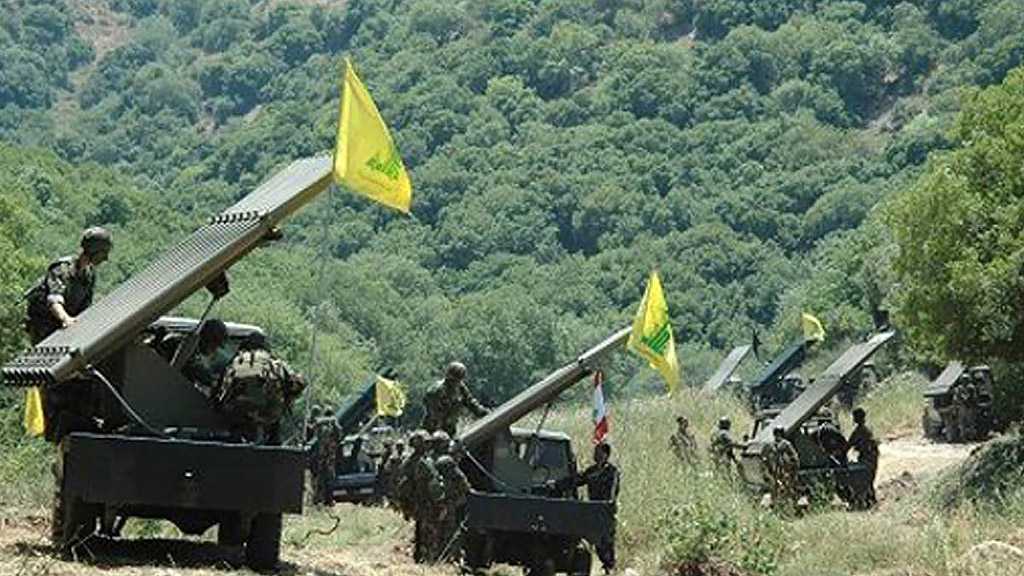
The author went on to say that “Hezbollah has more than 70,000 rockets that have a variety of ranges. It also has tens of thousands of mortar shells. Some of the rockets can strike a target at an accuracy of several meters. All this is a source of great concern for the ‘Israeli’ military.”
Additionally, the ‘Israeli’ military estimates that Hezbollah has about a hundred precision-guided munitions as well as the capability to produce more on an industrial scale. Zionist officials are worried that if Hezbollah’s efforts on this front are successful, the balance of power with the ‘Israeli’ would change dramatically.
Another threat posed to the ‘Israeli’ occupation regime is Hezbollah’s drones, antitank missiles, cruise missiles, and of course, its elite Radwan Unit, which includes several thousand fighters who cut their teeth in the Syrian war, Shoval added.
This accumulated experience has led to a perpetual change within the resistance group.
In this context, the author claimed that Hezbollah is preparing for a surprise operation against the ‘Israeli’ regime, during which if a war were to break out, it would deploy its forces to infiltrate the occupied territory and take over outposts or towns close to the border, thereby disrupting the ‘Israeli’ military’s ground maneuver capabilities.
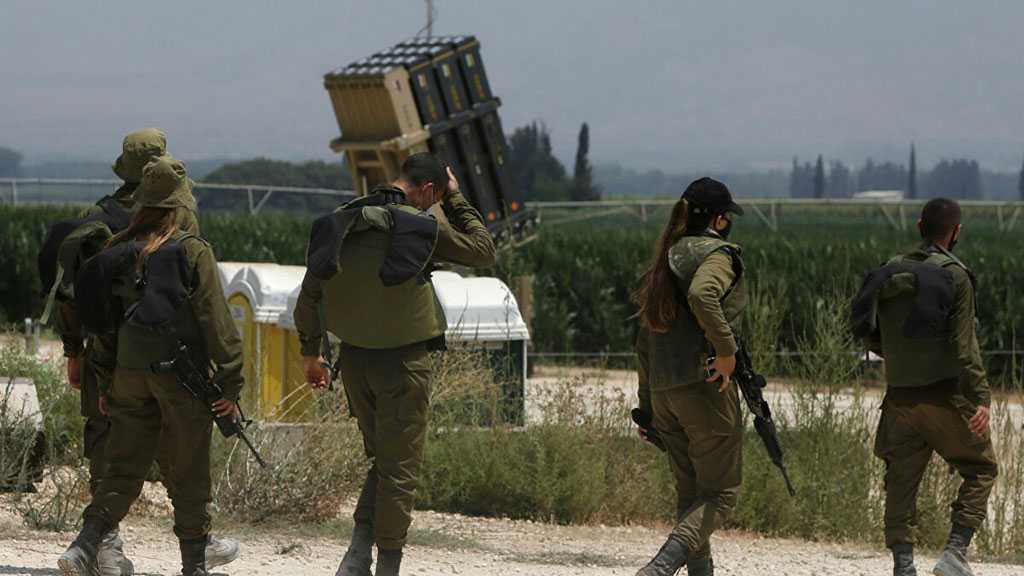
Additionally, Hezbollah’s rockets pose a major challenge to the Iron Dome.
Meanwhile, the author concluded that the Zionist military has to bolster the combat worthiness of its ground forces, which are currently, not in their best shape.
The military correspondent at the Maariv Newspaper, Tal Lev-Ram, discussed several potential scenarios that the ‘Israeli’ army is preparing for in case of a war with Hezbollah. The ‘Israelis’ are conducting assessments and developing strategies in an upcoming military exercise.
“The army expects two incidents related to hazardous materials in the city of Haifa over a three-week period, in addition to the targeting of the port with precision missiles that can be fired from the Lebanese side,” Lev-Ram explained.
He indicated that “the home front, the police, and the various rescue services will maneuver on this basis next month.”
“Amid Hezbollah’s developing capabilities in terms of the number and accuracy of missiles, our army has prepared several assessments of the damage that will occur in the war,” he added.
“These assessments are considered to be highly likely for the next confrontation scenario. After examining the data about Hezbollah’s capabilities as well as the capabilities of the ‘defense’ systems in the ‘Israeli’ army, the latter took into account that approximately 6% of the rockets launched by the party will hit urban areas and will not be intercepted by ‘defense’ systems.”
He pointed out that “in the industrial zone adjacent to Haifa Bay, there are many facilities housing hazardous materials that are expected to be targeted and cause a very large explosion, while releasing these hazardous materials.”
According to Lev-Ram, Tel Aviv is “very seriously considering the possibility of damage and the great threat from this scenario as the area is inhabited by a number of settlers who may inhale these dangerous materials.”
“Every year, prior to the home front exercise, the authorities assess scenarios attributed to the extent of the expected damage in their cities, so that they can prepare accordingly. Among other things, the heads of the emergency services and agencies in each local authority are required to plan their activities in order to be ready to evacuate about 4% of their settlers after their homes are directly or indirectly hit.”
Lev-Ram claims that “in recent years, efforts have been made to reduce the size of the threat by fortifying facilities in Haifa Bay or reducing the quantity and type of materials stored there, but it is still considered a strategic target for Hezbollah fire, as well as the seaports in Haifa and Ashdod.”
“The qualitative difference between the situation in the Second Lebanon War in 2006 and the situation today is that Hezbollah is accumulating accurate capabilities, a given that makes this threat very significant in the upcoming confrontations with the party,” the Maariv correspondent added.
“After the end of the maneuvers, which will begin on November 10 of this year, a joint exercise will be conducted by the Home Front Command and the various rescue services in Kiryat Shmona, which will simulate a missile hitting a factory containing dangerous materials.”
Lev-Ram notes that when it comes to hazardous materials, “one war room is supposed to work for all the relevant rescue services: the home front, the fire department, the police, the Magen David Adom, and additional government agencies.”
“After a complete fortification, the forces are supposed to work together with the factory management to determine the source of the leak of hazardous materials, in return the police will block roads to prevent citizens from entering the dangerous area.”
“The Home Front soldiers will work to evacuate the residents in accordance with the standards of the leakage of hazardous materials, the severity and level of danger, and the extent of its impact on residential communities in the area,” Lev-Ram said.
The “Israeli” entity does not want war with Lebanon’s Hezbollah, however, in order to avoid going through the 2006 war events again, it said it is prepared to face about 2,000 rockets a day from the resistance group if conflict breaks out, a senior “Israeli” military official told AFP.
In May this year, the “Israeli” Occupation Forces [IOF] waged an 11-day war against Palestinian resistance movements in the besieged Gaza Strip, who fired around 4,400 projectiles towards the apartheid entity.
The entity said its Iron Dome system intercepted around 90 percent of the rockets.
The rate of fire surpassed that seen in the entity’s 2006 war against Hezbollah, when a similar number of rockets were launched from Lebanon – but over the course of around a month – the IOF said.
In May, cities like Tel Aviv and Ashdod experienced the “highest number of fire towards them in the history of ‘Israel’”, said Uri Gordin, chief of the IOF’s “Home Front” Command.
“We saw a pace of more than 400 rockets fired towards ‘Israel’ on a daily basis.”
He said that in the case of “conflict or a war with Hezbollah, we expect more than five times the number of rockets fired every day from Lebanon to ‘Israel’”.
“Basically we are looking between 1,500 and 2,500 rockets fired daily towards ‘Israel’,” he told AFP.
Set up in 1992 after the first Gulf War, Gordin’s Home Front Command is responsible for readying the entity in case of threat, conflict or disaster. The unit was criticized for its response to the 2006 war with Hezbollah.
That war was a “wake-up call” for the “Home Front” Command, Gordin said, adding that it had since beefed up its liaison units, which are now active across 250 “Israeli” municipalities to provide assistance in case of any attack.
The “Home Front” Command uses computer projections to predict a rocket’s trajectory after it has been launched, and advises “Israelis”, within a specific range, to head to bomb shelters.
During the Gaza conflict in May, this allowed emergency services to “go to every incident within less than five minutes”, Gordin said from the control room of the unit’s headquarters in Ramla, near Tel Aviv.
He said preparations had been made for any incidents on the border with Lebanon.
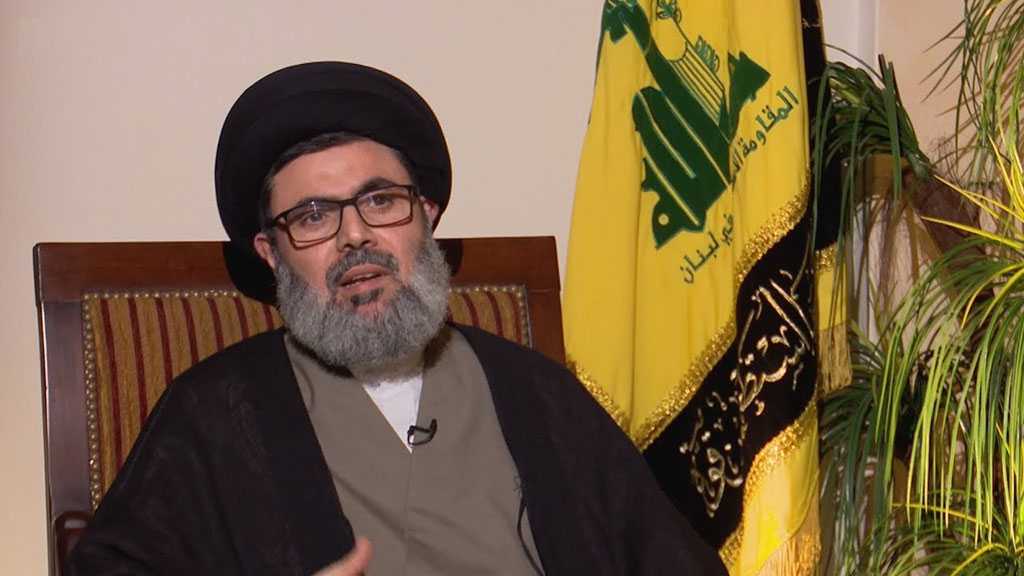
The Head of Hezbollah’s Executive Council, His Eminence Sayyed Hashem Safieddine, underscored that Iran’s fuel shipments to Lebanon dealt a heavy blow to sanctions imposed by the US and its allies on the Arab country, but the resistance movement will double down with other measures.
“Fuel imports from Iran will not be the last step, as we have many other measures to take,” Sayyed Safieddine said at a ceremony in the southern Lebanese town of Bint Jbeil on Sunday night.
He said Lebanon is currently facing numerous crises and challenges, because it is now an integral part of the regional equations, but it needs to emerge victorious and dignified out of them and to move towards a new phase.
“We know that some Lebanese citizens are afraid of the word ‘challenge’. Nevertheless, Hezbollah will stand committed to the protection of our country, our nation, and our future,” Sayyed Safieddine said.
“There is no way to strengthen Lebanon other than performing a leading role in regional equations. Any other initiative is worthless, and falls within the framework of capitulation and surrender to ‘Israel’s’ interests,” he added.
Sayyed Safieddine said not only did the arrival of Iranian fuel shipments into Lebanon help solve the country’s dire shortages, but it also showed the Zionist entity’s inability in maritime terms to stop Lebanon-bound oil tankers sent by the Islamic Republic of Iran.
The ‘Israeli’ enemy, he said, is not seeking a naval confrontation with Hezbollah, which would expose the weakness of its regime.
“They know very well that our missiles can strike the farthest point deep inside the occupied territories. ‘Israel’ is also aware of the fact that we can prevent any ship from docking in the port cities of Acre, Haifa and Tel Aviv or any other region in the occupied lands.”
Tanker Trackers said on Friday that the third ship carrying Iranian gasoil or gasoline for distribution in Lebanon had entered the Gulf of Suez from the Red Sea. It identified the vessel as Fortune.
Last month, the first tanker trucks carrying Iranian fuel arranged by Hezbollah arrived in Lebanon, with the resistance group declaring that it had broken the “American siege.”
Lebanon has been mired in a deep economic and financial crisis since late 2019. The crisis is the gravest threat to the country’s stability since the 15-year civil war ended in 1990.
The economic and financial crisis is mostly linked to the sanctions that the United States and its allies have imposed on Lebanon as well as foreign intervention in the Arab nation’s domestic affairs.
Last month, Hezbollah Secretary General His Eminence Sayyed Hassan Nasrallah said the Iranian fuel shipments would be distributed free of charge to institutions, including state hospitals, nursing homes, orphanages and the Red Cross.
“[Hezbollah] is not looking to make a business out of this but wants to help ease the people’s hardships,” Sayyed Nasrallah said, adding that the rest of the Iranian fuel would be sold “below cost” to bakeries, private hospitals or companies that run private generators.
Hezbollah cannot provide and has no intention of replacing the services provided by the state.
Lebanon is under unprecedented economic and social pressure, paying the price for Hezbollah’s military capability that causes a threat to “Israel”. The options offered by those (US, EU and “Israel”) effectively participating in cornering Lebanon -notwithstanding decades of domestic corruption and mismanagement – are limited to two: either disarm Hezbollah or push Lebanon toward a failed state and civil war. However, the “Axis of the Resistance” has other options: Iran has responded to the request of Hezbollah Secretary-General Sayed Hassan Nasrallah by regularly sending to Lebanon food supplies and medicine. It is now sending oil tankers, which are expected to reach the country in the coming weeks via the Syrian port of Tartous. Iran is rushing to support one of its strongest allies in the “Axis of the Resistance”, Hezbollah, which is suffering severe domestic pressure, as are the entire Resistance Axis members in their respective countries. Hezbollah’s supporters of all persuasions are affected by the acute socio-economic crisis. But will Hezbollah succeed in overcoming the inevitable result of the current long-term crisis? How serious are the challenges?
In one of his private meetings, Sayed Nasrallah said: “Israel considered that Hezbollah’s military capability constituted a “vexing danger” at the first years of its existence. The level of danger moved up to “challenge” in 2000 when “Israel” withdrew from Lebanon, to the “serious menace” level after the 2006 war, and to “existential danger” after the wars in Syria and Iraq.”
In line with what the Secretary-General of Hezbollah believes, it is common knowledge that “Israel” possesses nuclear weapons. Therefore, no other power in the Middle East can be considered an “existential threat” to “Israel”. However, according to the Israeli military leadership, Hezbollah possesses accurate missiles carrying hundreds of kilograms of explosives each. Thus, Hezbollah needs only ten missiles – not hundreds – to hit 6 electric stations and 4 water desalination plants over the entire geography to render life impossible for a vast number of Israelis. The Israeli leadership stated that there is no need to count the precision missiles that could hit any oil platform, ship or harbour and destroy any airport control tower in any future war.
Consequently, there will be not many Israelis willing to stay, and it is conceivable to believe that a considerable number of Israelis would leave. This scenario constitutes an existential threat to “Israel”, indeed. In this case, as the military command says, “Israel” will never be able to coexist with such an existential threat looming over its head generated from the other side of the Lebanese border. Hezbollah possesses hundreds of precision missiles spread over a wide area in Lebanon, Syria, and mainly along the fortified eastern mountainside that offer ideal protection for these missiles. So what are “Israel’s” options?
Following the failure to subdue Hezbollah in 2006 in the 3rd war, the victory of the “Axis of Resistance” in the Syrian conflict, the prevention of the division of Iraq and the fall of Yemen under Saudi Arabia’s control, the area of influence of the Resistance Axis expanded, as well as its theatre of operations. Consequently, the danger to “Israel”, to the US’s goals and hegemony in West Asia, significantly increased.
The nuclear dossier is not that far away from the threat the “Axis of the Resistance” is confronted with. By increasing its nuclear capability, Iran forced President Joe Biden to put the nuclear negotiation at the top of its agenda during (former) President Hassan Rouhani’s mandate. Whatever has been said about the possibility of future progress in the nuclear talks in Vienna, lifting sanctions on Iran – while Iraq is labouring under heavy financial debt, Syria is subjected to a severe economic blockade, and Lebanon faces a becoming degraded state -seems unrealistic to the US.
To the west and “Israel”, releasing Iran’s frozen funds – which exceed $110 billion – at a time of maximum financial pressure and heavy sanctions, is not logical. Moreover, allowing Iran to sell and export its oil and lifting the maximum pressure means that all the previous US efforts to curb Iran’s will and progress are due to fail just when the results of these sanctions are turning in favour of the US in Iraq, Syria and Lebanon.
Consequently, maintaining economic pressure on the “Axis of Resistance” has become a US necessity and strategy. With this in mind, the US failed to comply with the nuclear agreement, to improve the leverage of the US negotiator and impose its conditions over Iran to include, above all, its relationship with its allies and the maintenance of hundreds of sanctions in place.
With the arrival of President Ibrahim Raisi to power and his plans to give little time for the nuclear negotiation, the US sees itself faced with two very bitter choices: either allowing Iran to become a nuclear power or removing all sanctions so as to persuade Iran to delay its entire nuclear capability. Both decisions are impossible choices and inconvenient for the US administration. Thus, the US needs to hit Iran’s allies without negotiating with Tehran, because it refuses to include it – as well as Iran’s missile program – in any nuclear talks.
Suppose the maximum pressure on Lebanon fails to weaken Hezbollah. In that case, Washington needs to evaluate future steps to choose between the nuclear threat or the “Axis of the Resistance” threat to “Israel”. And if the US opts for the 2015 nuclear agreement –which is unlikely – then “the Axis of Resistance” will experience a strong revival, recovering from the extreme US pressure. Whatever America’s choice is, it has become more than evident that Iran will eventually become a nuclear power and offer more than adequate support to its allies to keep them strong enough to face whatever challenges.
In Lebanon, Hezbollah cannot provide and has no intention of replacing the services provided by the state. Nevertheless, it is involved in the food supply through “al-Sajjad” cards delivered to families needing to buy food at a sharply reduced price, which raised the number from 150 000 to 200 000. It is supporting thousands of families who have reached the level of extreme poverty. Moreover, Hezbollah brought medication from Iran (more than 500 types) to cover some of the country’s needs when pharmacies are closing their doors and lacking essential medical supplies.
Furthermore, in the coming weeks, Iran, Syria, and Hezbollah have agreed on delivering Iranian oil to Lebanon. Hezbollah will receive the gasoline from the supply to its forces and for covering its daily movements. Hospitals are at the top of the list of those expected to receive the Iranian oil distributed by Hezbollah to prevent their shutting down. Many hospitals closed more than half of their departments. Other medical facilities transferred their patients to hospitals that still have fuel to generate electricity for the next few days. In various parts of Lebanon, hospitals are asking many patients to leave due to the lack of diesel fuel for electricity. The American University of Beirut Medical Centre stopped ventilators and other lifesaving medical devices for the lack of fuel oil.
Also, Hezbollah is expected to deliver Iranian oil to the owners of tens of thousands of private electric generators. The lack of electricity in the country boosted the presence of thousands of privately-owned generators who, for decades, offer their paid services to compensate for the lack of electricity. These are expected to benefit from the oil delivered by Hezbollah to secure electric power supply for people. The shortage of diesel fuel for the owners of generators reached a critical degree in the current hot summer, raising the level of discontent among the population.
Also, diesel fuel will be provided to some municipalities to secure waste removal from the streets for fear of the spread of disease. Al-Amanah Company is also expected to distribute the Iranian oil and diesel to dozens of stations approved by it and other local gasoline stations spread throughout the Lebanese territory.
But Hezbollah will not satisfy everyone in the country and is not able to prevent internal deterioration within the Shia society (-the majority of Shia stand with Hezbollah, but there are others in the Amal movement under the control of Speaker Nabih Berri and not Hezbollah) in the first place and among its allies in the second place. The social decline is at a peak, and Iran’s support is insufficient unless Iran fully achieves its own recovery – if sanctions are fully lifted – and its domestic economy recovers. As far as it concerns Iran, the consent to its allies is mandatory because the “Axis of the Resistance” is united and all share the same vocation.
However, it is not in Iran’s capability to take on the entire burden of Syria and Lebanon’s economy. Iran supported Syria financially throughout the decade of war but is in no position to finance all the needs of the state. Also, Hezbollah started as a popular resistance force against the Israeli occupation, intending to impose deterrence and protect the state from Israeli violations and ambitions. It has been heavily involved in social support to the deprived Shia sect and managed to cover many infrastructure and service holes left by the incapability of the state. But the challenge faced in the last couple of years is beyond Hezbollah’s competencies and probably beyond the means of the state itself.
It should be borne in mind, though, that the flow of the Iranian oil into Lebanon carries with it several potential risks:
First: The risk of an Israeli strike on the supply lines. This will require Hezbollah to strike back “Israel” to maintain the balance of terror and deterrence equation. The tension in the military situation between “Israel” and Hezbollah will reach its climax without going to an all-out war because “Israel” prefers “campaigns between wars” to control the damage that may result from the confrontation. However, if “Israel” strikes the Iranian oil tankers or other countries try to stop the oil from reaching Lebanon, Iran would reply and it is not expected to stop sending its tankers to Lebanon.
Second: The supply route passes through areas not controlled by Hezbollah. What will the other anti-Hezbollah groups do? Will Hezbollah find a solution to convince the (hostile) Druze, Sunni and Christians spread along its supply road to avoid intercepting its trucks, or would it be forced to face groups and be dragged into an internal battle? How will Hezbollah guarantee the cohesion of its areas from the Beqaa to the southern suburbs of Beirut and even to the South of Lebanon so that its environment would be safe from the sectarian incitement the US manipulates and drags the country toward it?
There is no doubt that Lebanon is heading toward the dissolution of the state in a fast-paced manner. This will lead to the security forces’ weakness in general and push each sect or party to provide the necessary support to the membership of its society. Lebanon is expected to live again in the 1980s era when social services were reduced, waste spread in the streets, health and education levels declined, security forces were inefficient and hopeless, and warlords were emerging out of it.
From a specific aspect, the US-Israeli blockade is relatively in the interests of Hezbollah because it receives its financial support in foreign currency. Hezbollah is a regular and coherent organisation, and it will increase its revenue from the sharp devaluation of the local currency, the selling of medicine, oil and food. Hezbollah is expected to sell gasoline and diesel at prices relatively lower than the market price. Furthermore, it is also expected to allow other areas in Lebanon to have access to all the reached products. That will permit Hezbollah to expose greedy Lebanese merchants who monopolise and stockpile medicines and gasoline to starve the market and increase prices. These Lebanese merchants will be forced to sell their goods if these are no longer a rarity in the market. The goods are currently sold on the black market at prices unaffordable to the majority of the inhabitants.
What Lebanon is suffering from is the result of decades of corruption conducted by the US friends who held the political power in the country. The downgrading of Lebanon is primarily due to the US and Israeli interventions and influence in this country: It has lost the name “Switzerland of the East” forever. The disadvantage for Hezbollah will be the security chaos, the fragmentation of the security forces and their inability to impose their authority, and the spread of poverty to hit all walks of life. It is also expected to see the country suffer different sabotage acts, bribes, further corruption- and to become a fertile platform for the Israeli intelligence to operate in. A possible and potential scenario will force Hezbollah to “clean up” the roads to ensure the continuity of its supplies, link all Shia areas together and impose “self-security” to reduce their vulnerability.
Time’s arrow cannot be reversed, and Lebanon will not return to what it was before, not for the next ten years at least. There is a possibility to create Lebanese cantons with different warlords without engaging in a civil war. Each Lebanese party would end up arming its group to support its people and area, not to engage in a battle with other parties, but to defend itself.
The collapse is the master of the situation. The US has prevented Lebanon from benefiting from Chinese and Russian offers to rebuild the country and stop it from deteriorating further. Moreover, the US forbad Europe and the oil-rich Middle Eastern countries from helping Lebanon in this crisis as they used to in the past. After all, Lebanon needs 3 to 4 billion dollars to stand on its feet and regain some of its strength after halting subsidies on various items that gobble up its cash resources.
But the challenge remains for the “Axis of Resistance” members, struggling to survive and resist the US hegemony and confront the US projects to dominate West Asia. Unless the “Axis of Resistance” members take the initiative and move from a defensive to an offensive position and impose new equations that prevent starvation of the population, this pressure will remain and even increase with time. However, supposing the US pressure is maintained, and the “Axis of the Resistance” adopts only survival mode: In that case, Lebanon’s people and the country’s stability will pay an increasingly heavy price, both now and in the years to come.
صحيفة “جيروزاليم بوست” الإسرائيلية تنشر مقالاً للكاتب “سيث فرانتزمان” يقول فيه إن رد “إسرائيل” على صواريخ حزب الله يمكن أن يضع حدود لبنان في نفس وضع حدود غزة.
“جيروزاليم بوست”: التوازن الصحيح لكيفية الرد سيكون من الصعب العثور عليه
نشرت صحيفة “جيروزاليم بوست” الإسرائيلية مقالاً للكاتب سيث فرانتزمان، تحت عنوان: حزب الله يختبر “إسرائيل” وحتى الآن ينجح.
وفيما يلي نص المقال المنقول إلى العربية:
ردّ “إسرائيل” على صواريخ حزب الله يمكن أن يضع حدود لبنان في وضع حدود غزة نفسه. في يوم الإثنين الماضي، ألقى رئيس الوزراء نفتالي بينيت كلمة في الكنيست. قوبل بوابل من الصراخ والإزعاج والتسميات.
وقال: “لنتحدث عن نتائج الحكومة الأخيرة” في غزة، أظهرتم ضبط النفس في مواجهة الهجمات الصاروخية بينما نهاجم كل بالون حارق. لقد تركتم حزب الله بعشرة أضعاف الصواريخ التي يمكن أن تصل إلى أي مكان في “إسرائيل” ولهذا السبب يجب أن تكون ميزانية الأمن كبيرة”.
لم يكن بينيت مخطئاً. عاد بنيامين نتنياهو إلى رئاسة الوزراء في سنة 2009، بعد ثلاث سنوات من حرب لبنان الثانية.
في ذلك الوقت، كان لدى حزب الله ما يُقدّر بنحو 30 أو 40 ألف صاروخ. في الوقت الحاضر، يُعتقد أن لديه أكثر من 150 ألف صاروخ.
هل هذا خطأ نتنياهو؟ إنه قابل للنقاش، لكن ليس هناك شك في أن “إسرائيل” اتخذت في عهده قراراً واعياً بعدم توجيه ضربة استباقية لوقف التعزيز العسكري للوكيل الإيراني. سمحت “إسرائيل” باستمراره في التسلح رغم علمها أن هدف الصواريخ هو استخدامها ضدها في يومٍ من الأيام.
في الغالب، كان القرار متسقاً مع العقيدة العسكرية الإسرائيلية. لم تتخذ “إسرائيل” إجراءات استباقية لوقف التعزيزات العسكرية التقليدية. اعتُمد هذا الخيار في حالتين عندما سعى العراق 1981 وسوريا 2007 للحصول على أسلحة نووية. نووية، نعم. صواريخ عادية، لا.
لكن ما سيتعلمه بينيت هو أنه من السهل التكلم لكن التصرف أصعب. هذا على الرغم من حقيقة أن أحد كبار أعضاء حكومته الائتلافية والأمنية، وزير القضاء غدعون ساعر، هو من أنصار العمل الوقائي منذ فترة طويلة ضد حزب الله.
في سنة 2018 حذّر ساعر من أن لـ”إسرائيل” نافذة ضيقة لمهاجمة حزب الله لمنعه من الحصول على ذخائر دقيقة التوجيه.
كل هذا مهم يجب أخذه في الاعتبار بعد هجوم حزب الله الصاروخي على “إسرائيل” في يوم الجمعة. صلية من نحو 20 صاروخاً جاءت بعد يومين فقط من إطلاق ثلاثة صواريخ باتجاه كريات شمونة. الفرق هو أن الصواريخ يوم الأربعاء قيل إن مجموعة فلسطينية مارقة أطلقتها. في يوم الجمعة، أعلن حزب الله مسؤوليته بشكل علني.
كان رد فعل “إسرائيل” حتى الآن معتدلاً. بعد هجوم يوم الأربعاء، قصف سلاح الجو مناطق مفتوحة في جنوب لبنان حيث تم إطلاق الصواريخ. بعد صلية يوم الجمعة، ردت “إسرائيل” بقصف مدفعي باتجاه مصدر النيران. بحلول ليلة السبت، بدا أن الأمر انتهى عند هذا الحد.
ما نعرفه هو أنها طريقة خطيرة للتفكير منذ أن سمحت “إسرائيل” لحدودها الشمالية بالتحول إلى الطريقة التي تسير بها الأمور على طول الحدود مع غزة. هناك، على مدى سنوات، ضبطت “إسرائيل” نفسها بعد الهجمات الصاروخية. وفي حال ردّت، استهدفت الكثبان الرملية أو نقاط المراقبة المؤقتة التابعة لحماس. لا شيء خطير جداً.
هذه القذائف الصاروخية، التي أصبحت طبيعية، أُطلقت على سيادة “إسرائيل”. طالما لم يصب أو يقتل أحد، وطالما كان إطلاق الصواريخ متقطعاً، يمكن لـ”إسرائيل” أن تتمالك نفسها. هل كان لهذا معنى؟ يمكن. وهل قوّضت أيضا قوة الردع الإسرائيلية؟ قطعاً.
هذا ما يحدث على طول الحدود الشمالية أيضاً. يمكن تفسير تعليق كوخاف على أنه تطبيع لإطلاق الصواريخ الآن من لبنان.
ليس بالضرورة. ما قد تفعله تعليقات مثل تعليقات كوخاف عندما تقترن برد عسكري معتدل، هو خلق شعور لحزب الله بأنه، مثل حماس، يمكنه تطبيع الهجمات الصاروخية ضد شمال “إسرائيل”.
سيكون هذا كارثياً لـ”إسرائيل” ولكن من الصعب إيقافه. قد يؤدي الرد القوي جداً إلى تصعيد أكبر، وهو أمر لا تريده “إسرائيل”، في حين أن الرد الضعيف جداً قد يؤدي إلى تعلم حزب الله درساً سيئاً، وهو أمر لا تريده “إسرائيل” أيضاً.
التوازن الصحيح لكيفية الرد سيكون من الصعب العثور عليه. بناءً على أحداث يوم الجمعة، يتعين على الحكومة أن تفعل ذلك بسرعة.
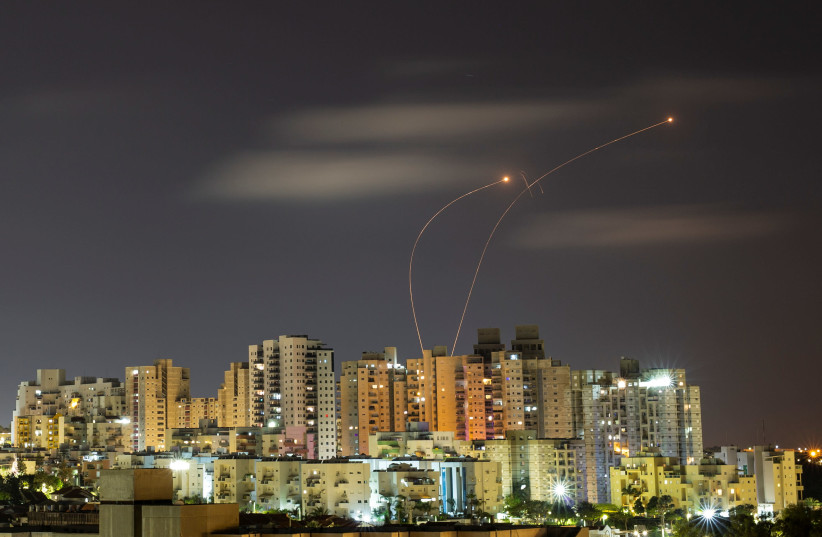
Streaks of light are seen from Ashkelon as the Iron Dome anti-missile system intercepts rockets launched from the Gaza Strip on May 20, 2021.(photo credit: AMIR COHEN/REUTERS)
On Monday, Prime Minister Naftali Bennett spoke at the Knesset. He was met by a volley of yelling, heckling and name calling.
“Let’s talk about the results [of the last government],” he said. “In Gaza, you showed restraint in face of rocket attacks while we attack for every incendiary balloon. You left Hezbollah with ten times more rockets that can reach any place in Israel and because of that the defense budget needs to be big.
”Bennett was not wrong. Benjamin Netanyahu returned to the premiership in 2009, three years after the Second Lebanon War. At the time, Hezbollah had an estimated 30 or 40 thousand rockets. Nowadays, they are believed to have over 150,000.
Was it Netanyahu’s fault? That is questionable, but there is no doubt that under his tenure Israel made a conscious decision not to launch a preemptive strike to stop the Iranian proxy’s military buildup. Israel allowed the armament to go on even though it knew that the rockets were intended to be used one day against it.
For the most part, the decision was in line with Israeli military doctrine. Israel has not launched preemptive action to stop a conventional military buildup; that has been reserved for two instances when Iraq (1981) and Syria (2007) were pursuing nuclear weapons. Nuclear, yes. Regular rockets, no.
What Bennett will learn though is that it is easy to talk but harder to act. This is despite the fact that one of the senior members of his coalition and security cabinet, Justice Minister Gideon Sa’ar, is a longtime proponent of preemptive action against Hezbollah.
In 2018, Sa’ar warned that Israel had a narrow window to attack Hezbollah to prevent it from obtaining precision-guided munitions.
This is all important to keep in mind following Hezbollah’s rocket attack against Israel on Friday. The barrage of about 20 rockets came just two days after three rockets were launched toward Kiryat Shmona. The difference was that the rockets on Wednesday were said to have been fired by a rogue Palestinian group. On Friday, Hezbollah openly took responsibility.
Israel’s response until now has been mild. After Wednesday’s attack, the Air Force bombed open areas in southern Lebanon from where the rockets had been fired. After Friday’s barrage, Israel responded with artillery fire in the direction of the source of the fire. By Saturday night, that seemed to be it.
This is dangerous and complicated. IDF Spokesperson Brig.-Gen. Ran Kochav went so far as to explain that the fact Hezbollah fired its 20 rockets into open fields meant that the Lebanese terrorist group was deterred and scared of a larger conflict with Israel. If that wasn’t the case, he told reporters in a briefing on Friday, it would have attacked population centers. Is this true? We don’t know.
What we do know, is that it is a dangerous way to think since it sets up Israel to allow its northern border to turn into the way things are along the border with Gaza. There, for years, Israel restrained itself after rocket attacks. If it responded, it hit sand dunes or makeshift Hamas observation posts. Nothing too serious.
This normalized rocket fire into sovereign Israel. As long as no one was hurt or killed and as long as the rocket fire was sporadic, Israel could restrain itself. Did it make sense? Maybe. Did it also erode Israel’s deterrence? Definitely. That is happening along the northern border as well. Kochav’s comment could be interpreted as normalizing rocket fire now from Lebanon. No one was killed and no one was hurt so that must mean that Hezbollah is deterred.
Not necessarily. What comments like Kochav’s potentially do when coupled with a mild military response, is create for Hezbollah a feeling that it – like Hamas – can normalize rocket attacks against Israel’s North.
This would be disastrous for Israel but difficult to stop. Too strong a response could lead to a larger escalation – something Israel does not want – while too weak a response could lead Hezbollah to learn a bad lesson, something Israel also does not want.
That right balance of how to respond and is going to be hard to find. Based on Friday’s events, the government needs to do so fast.
Hezbollah Secretary-General Sayyed Hassan Nasrallah, in a speech on the occasion of the 2006 July War, addresses local as well as regional issues – from the southern border retaliations to military equations.
Hezbollah Secretary-General Sayyed Hassan Nasrallah said, “The most important accomplishment of the 2006 war is achieving deterrence against Israel – this is the most important strategic and historic achievement.”
In his speech on the anniversary of the July 2006 victory, Nasrallah stated, “The victory of the July War has entered into a new stage through the heroic confrontations of the Sword of Jerusalem battle,” continuing to say, “The most prominent strategic achievement is striking a balance of deterrence and rules of engagement that protect and guarantee the security and safety of Lebanon.”
Sayyed Nasrallah pointed out that, “For 15 years since the July War, Israeli raids haven’t hit a target in Lebanese territory – Lebanon has enjoyed an unprecedented-since-1948 security and tranquility,” adding that “what prevents the Israeli enemy from launching raids is its fear of a major confrontation with the resistance.”
He stressed, “What prevents this vicious and murderous enemy, which is protected by the United States and Arab countries, from attacking Lebanon? They fear a war on their army, which collapsed in 2006, a war on their infrastructure – they’re afraid for their existence.”
The Secretary-General of Hezbollah said, “Before 2006 and beyond, the primary issue of the Israeli enemy was the weapons of the resistance,” pointing out that “some groups in Lebanon help whether they realize it or not, to achieve the goal of disarmament of the resistance.”
Furthermore, Nasrallah also spoke about the recent aggression against Lebanese territory, explaining that “What happened a few days back was a dangerous development that has not happened since 15 years.” He said that “Some matters require an immediate response… if retaliation is delayed, it loses its value.”
The Secretary-General of Hezbollah, addressing the back-and-forth which happened two days ago, said, “Our actions were intentional; they targeted an open area, we targeted an open area. This was to reinforce the old equation of deterrence, and not create a new one.” He explains that the capabilities of the resistance have increased through its wide possession of precision missiles, which Hezbollah owns now in large numbers.
He added, “We purposely responded to the Israeli rockets during the day out of respect for people’s emotions so that they don’t feel fear and terror during the night,” noting that Hezbollah has the courage to take responsibility for their actions in all formality – that includes issuing a statement along with the bombardment to send a message to the enemy.
Sayyed Nasrallah said, “An old equation was reinforced: they bomb an open area, we bomb an open area,” continuing, “Any strike on Lebanon will be responded to in a proportionate manner.”
He stressed that “we will not neglect the achievements of the resistance in the July war, regardless of the dangers, because that will create safegrounds for the enemy to harass Lebanon,” stressing that “whatever the internal situation in Lebanon is, for us, protecting our country and our people is our first responsibility.”
“What happened yesterday is a response to the airstrikes only and has nothing to do with the response to the assassination of the two dear martyrs, Muhammad Qassem Tahan and Ali Kamel Mohsen,” he reassured.
Hezbollah Deputy Secretary-General Sheikh Naim Qassem affirmed yesterday to Al-Mayadeen that “The Israeli occupation must understand that Lebanon is not an open arena for settling accounts in it,” stressing that “Israel must remain deterred.”
On Wednesday evening, the Israeli Air Force attacked targets in southern Lebanon, according to the Israeli media, “in response to the launching of 4 missiles from Lebanon” towards “Israel.”
The Lebanese resistance responded Friday by bombing the occupied lands in Shebaa. Yesterday, Israeli media reported that 20 rockets were launched, indicating that “the recreation centers in the north remained relatively empty after the rockets were launched from Lebanon.”
The People of the Resistance Are Those of Patience, Endurance
Hezbollah Secretary-General touched on the conflict that took place Friday in the Lebanese village Shwaya, saying that posting the incident was a “disgrace,” for he was touched by the scenes he saw, sympathizing with others who saw it. “When I saw what happened in Shwaya I wished I was able to get to the young men so I could kiss their foreheads and hands,” he added.
Sayyed Nasrallah stressed that the people of the resistance are those of patience and endurance, adding that they will always be in the position to sacrifice themselves and remain steadfast.
“The rockets in the launcher are evident of the resistance fighters’ discipline, for the order was to launch 20 rockets,” he noted.
“Our fighters were ordered to launch only 20 rockets on targets in Shebaa Farms. The rocket launcher has the capacity of 31 rockets. I could see the 11 remaining rockets still in the launcher,” he continued.
The Secretary-General addressed the people of Shwaya and Hasbaiyya, telling them that if Hezbollah were able to attack the targeted sites from Shiite areas, they would have. He said they were militarily obligated to launch the rockets from the areas from which they were launched.
Nasrallah called on everyone not to hold the people of Shwaya and the Druze sect responsible for the assault on the resistance fighters. “It was not the people of Shwaya who attacked the fighters, and we appreciate everyone who stands by the resistance,” he added.
Sayyed Hassan indicated that those who carried out the attack against “Israel” were highly disciplined and wise, stating that those who assaulted them must be held accountable and brought to justice.
Beirut Blast Anniversary
Regarding the Beirut Blast, whose anniversary was commemorated Wednesday, Sayyed Hassan Nasrallah said, “Since the first day, political investment started by several media outlets upon orders by the US and Saudi Arabia.”
“All parties who probed the blast reached a conclusion that there were no arms in the port,” he added, continuing to say, “When this scenario failed, they resorted to propagating the ammonium nitrate scenario.”
“Is there anything more ridiculous and worse than accusing Hezbollah of storing ammonium nitrate in the Beirut Port?” Wondered Sayyed Hassan, stressing that everything said since the blast is illogical and has no goal other than distorting the truth.
Nasrallah said if Hezbollah wanted to politically utilize the blast, they would have said the parties supporting the armed groups in Syria were the ones who brought the ammonium nitrate to Lebanon.
He indicated that those who spread fake news to mislead the investigation and public opinion insulted the blast’s martyrs, saying they turned a national and humanitarian cause into a political and sectarian one.
“Hezbollah fears no investigation, for it is not facing accusations from the judicial authorities,” Nasrallah added, saying what Hezbollah truly fears is the loss of truth, that is why the judiciary must announce its findings.
Secretary-General Nasrallah said, “What we are asking for is the announcement of the investigation’s findings.” He sees that the probe into the Beirut Blast is politicized and subject to discretion.
Sayyed Hassan Nasrallah addressed the families of those martyred and injured in the Beirut Blast by saying, “Do not allow the politicization of your children’s blood.”
Confrontations erupted Wednesday near Parliament in Beirut, Lebanon, between Lebanese demonstrators and the security services in light of the protests commemorating the Beirut blast on its first anniversary.
Khalde Incident Was a Massacre
Nasrallah touched on the crime that took place Sunday in Khalde, during which two Lebanese civilians were assaulted and murdered. He said, “What happened in Khalde was not an accident, it was a massacre perpetrated by a gang of criminals and murderers.
He stressed the need for arresting all those involved in the Khalde massacre as soon as possible and bringing them to justice.
“We need a definitive solution for the issue of assaulting people and blocking the highway leading to the south,” he said, adding that those insisting on assaulting civilians and threatening civil peace must be arrested.
“Our issue is not with the Khalde Arabs nor the Arab Tribes, but rather with the murderous criminal group,” Nasrallah asserted.
President Michel Aoun pointed out on Thursday that the Israeli aerial aggression on southern Lebanon, unprecedented since 2006 war, indicates the enemy hides intentions to continue its attacks and violations of the Lebanese sovereignty.
The President indicated that submitting a complaint to the UN is an indispensable step in order to deter ‘Israel’ from continuing its attacks on Lebanon.
The President of the Republic was also briefed by the Army Command, on the results of investigations related to the launch of missiles from Lebanese lands which took place yesterday, and the measures to be taken in this regard.
Israeli warplanes launched two air strikes on south Lebanon early on Thursday, in a clear violation of the country’s sovereignty.
Once again, the “Israeli” entity breaches Lebanese sovereignty as it takes an area in southern Lebanon under airstrikes after launching heavy artillery attack aimed again at the country’s south in response to alleged rocket attack.
Palestinian media outlets reported the aerial assaults in the early hours of Thursday, describing the target as an area lying along Lebanon’s southern border with the occupied territories.
The “Israeli” Occupation Forces [IOF] confirmed the attack, claiming that the targeted area had been used earlier as a launchpad for rocket strikes towards the occupied territories.
According to a Lebanese security source, the strikes targeted an open area near the village of Mahmoudiyah near the border shortly after midnight.
However, there was no immediate word on casualties or damage.
On Wednesday, explosions reportedly rang out across locations in southern Lebanon as a result of “extensive artillery attacks” launched by the occupying regime under the same pretext.
The “Israeli” Kan News channel said the attacks – that came after “three rockets” were reportedly fired from southern Lebanon towards the occupied territories – saw the regime releasing “more than 100 artillery rounds” towards the country.
Last time, the “Israeli” entity came under rocket fire from the direction of Lebanon in May, when it was staging a wholesale war on the besieged Palestinian territory of the Gaza Strip.
Lebanon and the “Israeli” entity are technically at war since the latter has been occupying the country’s Shebaa Farms since 1967.
The entity incessantly violates Lebanon’s airspace for aggressive surveillance operations and launched two full-scale wars against the country in the 2000s.
The wars were supposedly seeking to debilitate the Lebanese resistance movement of Hezbollah but destroyed much of the country’s infrastructure.
On both occasions, though, the IOF was forced to beat a retreat following Hezbollah’s successful defensive operations.
The movement, which has high stakes in the Lebanese political and military sectors, has vowed to put up a similarly fearless resistance in case of renewed “Israeli” aggression.
It has warned the entity that it has stockpiled thousands of precision rockets that it could fire towards the whole expanse of the occupied territories.
The Zionist security and military establishment ruled out the possibility that Hezbollah is behind the incidents of launching bombs from Lebanon towards the ‘Israeli’ occupation settlements.
According to ‘Israeli’ Walla news, the Zionist security establishment is directly linking the Lebanese state’s defragmentation and the ongoing insecurity along the border, adding that due to this, there are potential similar security incidents along the border in the near future.
The website added that it is believed in ‘Israel’ that the recent developments point to the void left by the Lebanese Army, which has been recently facing difficulties along the border region “as Palestinian militants independently open fire.”
The occupation army recommended in this period of time not to attack Hezbollah targets in response to the ‘attacks’, Walla news report added.
In front of the dilemmas ‘Isr Articlesael’ is facing regarding how to respond to the ongoing launching of fire and changing the reality along the border, the website noted, the decision was made for not reciprocating directly from Hezbollah or any of its activists, not to push the situation to a deterioration or escalation.
Kabbalistic Balance
-
Kabbalistic Balance August 6 2026 ___________________________________ More
Vids! +BN Vids Archive! HERE! ___________________________________ Support
The Br...
Report on Beth Israel vigil 07-04-26
-
*1A Rights under combined attack from local government plus media*
Ann Arbor City Council is at it again. Right before the long 4th of July
weekend, they ...
-
Hello all,
It is with great sadness that I share with you the passing of our beloved
sister, Mother, and Grandmother, the individual that you all knew ...
Best Horror Podcast
-
Best Horror Podcast Introduction: Horror podcasts […]
The post Best Horror Podcast appeared first on Copper Shock Horror Podcast.
Ikhras Endorses Muntadhar Al-Zaidi
-
“Oh parties of banditry and sectarianism and corruption, we have come and
our goal is to destroy you.” Ikhras formally endorses Muntadhar al-Zaidi,
Iraqi j...
Prince Charles: Foreign Jews behind bloodshed in ME
-
In May, 2017, British Crown Prince Charles declined an invitation from
Zionist entity’s president Reuven Rivlin‘s to attend the 100th anniversary
of the no...
Palestinian Women – One for All, All for One
-
Honouring All Palestinian Women by Honouring Three: Hanin Zoabi, Ahed
Tamimi, Samah Sabawi Vacy Vlazna “Palestinian women have always stood side
by side ...
US’s Saudi Oil Deal from Win-Win to Mega-Lose
-
By F. William Engdahl Who would’ve thought it would come to this? Certainly
not the Obama Administration, and their brilliant geo-political think-tank
neo-...
-
*Mordechai Vanunu wins human rights prize of Brazilian Press Association *
* http://www.alternativenews.org/english/index.php/features/updates/7038-mordechai...
Abdul Aziz Rantissi:
"My ultimate wish, my God, is to attain martyrdom,"...God granted him his wish on April 17, 2004, at the hands of Israeli assassins.