Showing posts with label Jewish terror state. Show all posts

Saturday, 6 November 2021

The Central Myth of Zionism: Jews Have No Future in the Arab and Muslim World (Updated)

Net 5 Nov, 2021

Source: Al Mayadeen

Samuel Geddes

The loss of 100 or so citizens to Iran, Iraq, Yemen, or Morocco would at best be terrible public relations for “Israel”. The loss of 100,000 or more would be existentially disastrous. 

Flourishing communities such as those in Iraq, Iran, and Yemen were, for much of history, the centers of the Jewish world and deeply enmeshed within the societies that surrounded them. One of the most effective lies of the Israeli propaganda has been to posit the irreconcilability of Jewish and Arab identities as if it is impossible to be both. The existence of hundreds of thousands of Jews with origins from Morocco to the Gulf demonstrates otherwise. 

Throughout the decades in which Arab leaders, in particular, pledged their opposition to the existence of “Israel” and its further colonization of Palestine, they have neglected to use one of the most powerful weapons at their disposal. Had Arab leaders in Iraq, Yemen or the states of the Arab Maghreb wished to truly damage the viability of “Israel”, they could easily have opened the way for their historic Jewish populations to return, trading in their Israeli passports and citizenship for that which they, their parents or even grandparents lost.  

The tactical argument

By this point, it has become clear even to the mainstream western opinion that the two-state solution envisioned by the Oslo Process is not even a remote possibility. Rather than the self-determination of an Arab state on the territories occupied in the Six-Day War of 1967, the central issue of the conflict has shifted to the political equality of all Palestinians within the territory of Mandate Palestine. The achievement of this goal would instantly nullify the concept of a “Jewish State” as Jews within the entire territory are already outnumbered by Palestinians, a demographic imbalance that will only grow with time.

Consequently, in terms of alleviating the colonial pressure on the Palestinians, as well as amplifying their demographic, and by extension political advantage, it makes complete sense for the surrounding countries to voluntarily reabsorb their Jewish former citizens, thereby removing them from the arena of conflict. 

In the case of Yemen, we are speaking of roughly 430,000 people. Of Iraqi Jews, between 200,000 to 600,000, Iranian Jews number 200,000 to 250,000, and Moroccans some 473,000. Were these communities to return to their homelands in any significant number it would be a catastrophic erosion of “Israel’s” demographic position, as well as its pretensions to being central to the identity of all Jews everywhere.

The loss of 100 or so citizens to Iran, Iraq, Yemen, or Morocco would at best be terrible public relations for “Israel”. The loss of 100,000 or more would be existentially disastrous. 

Perhaps surprisingly given the intensity of its opposition to the Zionist state, the Islamic Republic of Iran is one of the regional countries best placed to facilitate this. Since the success of the 1979 revolution, Judaism has received official recognition along with other minority religions such as Christianity and Zoroastrianism, including political representation in parliament.

The Iranian leadership has consistently made clear the distinction it sees between Jews, an ethnoreligious community, and Zionists, purveyors of a racist political ideology. Still, the country’s Jewish citizenry is a fraction of its pre-revolutionary size. Despite this, the future large-scale and permanent return of Iranian Jews is entirely conceivable if Tehran goes to the necessary lengths to assure them that their cultural, religious, and political freedoms would be guaranteed. 

Iran would likely be apprehensive about repatriating hundreds of thousands of its former citizens, their children, and grandchildren, in light of the ongoing Israeli campaigns of sabotage and assassination against its nuclear program and other targets. In the long run, however, even a relatively small demographic decline would dramatically constrain the military and covert power of the Israelis, hamstringing their capacity to attack their neighbors. 

A population drain of this kind could well lead to a self-reinforcing cycle, whereby other Israeli citizens witnessing outmigration may also choose to emigrate to countries where their long-term future is better guaranteed. 

The moral case

This is also a question that may force itself on the governments of the region whether they choose to address it or not. 

The Jews of the Arab and wider Islamic world to a significant extent continue to hold on to their eastern cultural heritage. To those governments and movements opposing the colonization of Palestine, this fact represents a unique advantage to be exploited. As both the global and regional environment becomes more hostile to “Israel”, its behavior could become yet more erratic and desperate. By offering resettlement to their former Jewish communities, regional countries would both give them a peaceful way out and demonstrate that Jews do have a future in the region outside of occupied Palestine. Such a gesture would demonstrate to many the futility of sacrificing themselves for a colonial project that will inevitably fail.  

Prior to the conflict, the Arab and Islamic world had nothing approaching the levels of persecution and discrimination as those suffered by the Jews of Christian Europe. In the aftermath of the Second World War and the exposure of the Holocaust to global awareness, the west could have earnestly confronted its own deeply rooted anti-Semitism. Instead, it chose to cynically back European Jewish ethnonationalism in Palestine.

For those struggling to end the colonial project in Palestine, an essential element of the strategy must be to demonstrate to enough Jewish Israelis that their own survival is not tied to the survival of “Israel” and that being a Yemeni, Iraqi, or Moroccan Jew does not exclude a person from membership of the Arab nation. 

As well as the enormous economic benefits to be had from the reintegration of hundreds of thousands of highly educated and productive people, the value of the societal and cultural enrichment that would follow would be incalculable. 

The peaceful repatriation of North African and Middle Eastern Jews to the countries of their birth or recent ancestry may seem like an idealistic pipe dream but it would not entail the creation of a radically new social dynamic. Rather it would be a return to the religious, cultural, and ethnic pluralism which has predominated in the region for so much of its history. 

The opinions mentioned in this article do not necessarily reflect the opinion of Al mayadeen, but rather express the opinion of its writer exclusively.


River to Sea Uprooted Palestinian   
The views expressed in this article are the sole responsibility of the author and do not necessarily reflect those of the Blog!

Wednesday, 13 October 2021

Learning from Your Enemy: Methodological Failures in Western War Analysis

 October 12, 2021

Source: Al Mayadeen

Failing to read and understand one’s enemy is dangerous, as Lao Tzu said many centuries ago, creating an ignorant ‘yes man’ culture of self-deception.


Visual search query image

“There is no greater danger than underestimating your opponent” – Lao Tzu

Washington’s role in at least eight Middle East wars of the 21st century (against the peoples of Palestine, Afghanistan, Iraq, Lebanon, Libya, Syria, Iran, and Yemen) has been hotly debated between two broad camps: those (including this writer) who regard them all as illegal wars of aggression; and those who either imagine they are not connected or defend them as the necessary policing measures of a global hegemon.

However this debate is plagued by poor method, and in particular by a strategic bias that adopts obligatory ‘loyalty’ elements and fails to study what are seen as enemy perspectives. That cripples even the most articulate and apparently critical discussions.

Yet failing to read and understand one’s enemy is dangerous, as Lao Tzu said many centuries ago, creating an ignorant ‘yes man’ culture of self-deception. The refusal to read and learn from a substantial enemy is simply childish or ignorant cynicism.

Let me illustrate this problem with a few articles from the ‘New Middle East’ wars, a piece on Yemen by Bruce Riedel (Brookings, 2017), an article on Iran by Hassan Hassan (Politico, 2020), and a discussion on terrorism by Paul Pillar (Responsible Statecraft, 2021). These are far from the worst of western war analysis, but all share similar methodological problems.

1. The obligatory but misleading element: strategic loyalty

Many years into these various wars, to ‘qualify’ as published war discussion western journals carry a strong expectation of some initial expression of loyalty to the overall project, if not to all the tactics. In the most obvious version of this, the analyst directly identifies with a state party at war, speaking in the first person plural (“we”).

So Riedel speaks of “our de facto enemies”, asking “why are we at war” with “the Houthis” (i.e. the Ansarallah-led Yemeni government), while Pillar refers to “our allies” and Hassan to “our adversaries”. This is an immediate sign of biased orientation, but also of a desire to please and so qualify with likely patrons.

Loyalty is also expressed by an early denunciation of the enemy. Most of the permissible western media criticisms of “Israel”, for example, begin with a denunciation of the Palestinian resistance, or of Iranian support for the resistance. At the least loyalty to the big power must be demonstrated by suggesting some kind of moral equivalence. 

The targets of terrorism should also be relatively privileged groups. In the case of Pillar’s criticism of Israeli terrorism, itself a departure from the normal western defense of the Zionist entity, he chooses the earlier British victims of Israeli terrorism – rather than the many thousands of contemporary Palestinian victims – and makes a moral equivalence with Palestinian resistance. The latter is typically reduced to “Hamas” and their alleged “poorly guided rockets”.  All this is to qualify the discussion for western publication and consumption.

Terminology also plays an important part in demonstrating loyalty, with the enemy described as a “regime” (implicitly illegitimate) and the intervening western power cloaked in an assumed stabilizing or conflict resolution role. 

With this in mind, Hassan speaks of Iranian influence as “a problem for the United States”, the Syrian government as a “regime”. Middle Eastern nations are said to be riven by sectarian conflicts (e.g. Sunni v. Shi’ite) and other “complexities”. On the other hand, Washington faces problems as a “stabilizing ally”. Pillar speaks of the Saudi-backed idea for repartition (and weakening) of Yemen as a “federal solution”.

2. Allowable criticism, within permissible space

Taking the problem-solving and stabilizing role of Washington as a given, criticism is allowed mainly as regards tactics. Accepting the benevolence of hegemonic prerogatives is a general principle of qualification. It is unimportant that this has little to do with post-colonial international law.

So Riedel writes of the US supposedly looking for a “political solution” in Yemen, while Hassan speaks of the US seeking to “stabilize” the region in face of the allegedly opportunistic agendas of Iran and the Saudis. 

Riedel also spoke of Yemen as a “complex problem” for US President Obama, while Pillar comfortingly agreed that it is necessary for Washington to “conduct business” with both “Israel” and Saudi Arabia, despite their terrorism. No real question is raised about what business the USA has initiating war after war in the Middle East region.

Indeed any serious questioning of the overall aims or strategy of western interventions would most likely invalidate or disqualify the article. It would not be published. Yet criticism of the tactical (and chronic) failure of interventionist wars to achieve their goals is allowed.

3. What can be learned from the enemy?

State integrated media (which includes most corporate media, as they are typically key associates of western states) typically steers mass audiences away from enemy media at times of war. Many analysts also either accommodate or fall prey to that prohibition. 

In recent decades we have seen many exhortations to stay away from the ‘regime media’ of China, Russia, Cuba, Venezuela, Iran, Syria, and so on. Enemy ‘regime’ media is often labeled as such in western social media. Not so the BBCVoice of America etc. In fact the US government has been busy taking down dozens of Iranian websites and banning or blocking Russian, Venezuelan, Chinese, Cuban, and other social media accounts linked to these various ‘enemy’ nations.

The problem for western war analysts in adopting this dictate is that important lessons are missed. In general, it is wrong to ignore ‘enemy’ sources because they might be seen as “biased” or “unreliable”. Any source with detailed information (as opposed to just spin and slogans) can be informative, properly read, in at least the following ways. 

A. Concessions and admissions: biased or enemy sources, when they contain detailed information, can make concessions on particular matters. This can help avoid pointless and endless debates. For example, senior US officials admitted in 2014 that US allies were funding and arming virtually all the Middle Eastern terrorist groups including ISIS, in support of US efforts to remove the Syrian Government. Syrian and Iranian sources had said this for some years, but the US admissions helped expose the charade.

B. Alerts to information and argument: hostile or ‘unreliable’ sources may alert us to particular information or argument, including independent factual information as well as vulnerabilities in enemy arguments. Any serious researcher or observer must remain open to the possibility that hostile sources might be correct, at least on some particular matters. The Israeli media, for example, understands this well. It has made the statements of Hezbollah leader Hassan Nasrallah virtually mandatory reading, while the man is effectively banned in much other western media, including social media.

The lesson, therefore, should be how to intelligently read enemy sources, rather than avoid them. This must be done according to principle, that is, with regard to general principle and using traditional forensic tools while recognizing self-interest. This requires developing an ability to distinguish between self-serving statements and admissions against interest, a common distinction in law.

Learning in this regard has more to do with observing the detail of argument and particular evidence, and less about the adoption and recitation of conclusions.

The opinions mentioned in this article do not necessarily reflect the opinion of Al mayadeen, but rather express the opinion of its writer exclusively.


River to Sea Uprooted Palestinian   
The views expressed in this article are the sole responsibility of the author and do not necessarily reflect those of the Blog!

Saturday, 17 July 2021

Legalized Apartheid: The Israeli Supreme Court Just Cemented Jewish Supremacy into Law

 July 16th, 2021

By Jessica Buxbaum

Source

JERUSALEM — In November of last year, an Israeli judge invoked the controversial Jewish Nation-State Basic Law when striking down a lawsuit against the city of Karmiel over funding transportation for two Palestinian students.

In his ruling, the chief registrar of the Krayot Magistrate’s Court, Yaniv Luzon, said that establishing an Arabic-language school in Karmiel or funding transportation for Palestinian Arab students would “damage the city’s Jewish character” and may encourage Palestinian citizens of Israel to move into Jewish cities, thereby “altering the demographic balance.”

Luzon cited Section 7 of Israel’s Jewish Nation-State Law, writing:

The development and establishment of Jewish settlement is a national value enshrined in the Basic Law and is a worthy and prominent consideration in municipal decision-making, including the establishment of schools and the determination of policies relating to the funding of [school] busing [of students] from outside the city.

The students’ father, Kasem Bakri, said of the judge’s decision, “The municipality treats my sons as guests in the best of times and as enemies in the worst of times.” The family was fined 2,000 shekels (roughly $600) and ordered to pay all of the court’s expenses.

The court ruling came just before a Supreme Court hearing on 15 petitions submitted by human rights organizations and Palestinian political leaders challenging the Nation-State Law in December. After only one discussion on the law, the high court last week rejected the petitions and upheld the 2018 law in a 10 to 1 decision.  The single dissenting opinion was from the only Palestinian justice on the court, Justice George Kara.

Swift condemnation of the Supreme Court’s decision

“The Israel Supreme Court approved a law that establishes a constitutional identity, which completely excludes those who do not belong to the majority group. This Law is illegitimate and violates absolute prohibitions of international law,” Adalah – The Legal Center for Arab Minority Rights in Israel wrote in a press release. Adalah, one of the law’s petitioners, deemed this piece of legislation “a law that clearly shows the Israeli regime as a colonial one, with distinct characteristics of apartheid.”

Israel: Not a Democracy. Apartheid
Activists drop a banner reading “Israel: Not a Democracy. Apartheid” from atop the Israeli military court in Jaffa, July 12, 2020. Photo | Activestills

“The Supreme Court refrained from doing what was essential — to defend the basic right to equality,” Dr. Yousef Jabareen, chair of the Human Rights Forum in the High Follow-up Committee for Arab Citizens of Israel and a former member of the Knesset, said in a statement, adding:

The so-called ‘Jewish Nation-State’ law formalizes in Israeli constitutional law the superior rights and privileges that Jewish citizens of the state enjoy over its indigenous Palestinian minority, who comprise roughly 20% of the population.”

What is the Jewish nation-state law?

In 2018, the Knesset voted to approve the nation-state law by 62 to 55. The basic law essentially legalizes Israel’s apartheid nature and states the following:

  • Exercising the right to national self-determination in the State of Israel is unique to the Jewish people.
  • The name of the state is ‘Israel.’
  • A greater, united Jerusalem is the capital of Israel.

The director of the land and planning rights unit at Adalah, Adv. Suhad Bishara, helped formulate Adalah’s petition against the nation-state law. “The overriding objective of the basic law is to violate both the right to equality and the right to dignity of the Arab citizens of Israel,” she said.

Additionally, the law promotes Jewish settlement and views it as a national value. It also demotes Arabic from one of the two official languages to a “special status.” With the nation-state law’s basic tenets, Palestinian history and identity are effectively erased from the land.

Emphasizing the law’s notion of Jewish settlement and demotion of Arabic, Amnon Be’eri-Sulitzeanu — co-director of Abraham Initiatives, an Israeli nonprofit focused on Jewish-Arab partnership — said the legislation institutionalizes inequality between Israeli Jews and Palestinian citizens of Israel. “It’s creating a situation in which, according to our basic laws, there is a sector in society that is not equal,” Be’eri-Sulitzeanu told MintPress News. “This is something that no democracy can allow.”

In a tweet, Abraham Initiatives advocated for repealing the law, writing that it “establishes the status of Arab citizens in Israel as second-class citizens.”

The nation-state law’s impact

Only a few years old, the nation-state law has already proven it can serve as a legal tool for discrimination and racial segregation.

The Bakri family in Karmiel sued the local municipality over their school transportation costs. Since there isn’t an Arabic-language school in Karmiel, the Bakri children were forced to travel nearly four miles to the town of Rameh for their education. According to the Bakris, the traffic often made the commute more than 30 minutes and cost the family 1,500 shekels (or roughly $460) each month. The family’s lawsuit requested reimbursement for their transportation costs totaling 25,000 shekels (about $7,683).

Nizar Bakri, the children’s uncle and the attorney who filed the lawsuit, condemned the magistrate court’s dismissal of the suit, saying, “The court’s decision wasn’t based on law; it was based on Jewish existence.” Following the ruling, Nizar Bakri filed an appeal with the Haifa District Court. The district court denied the Bakris’ appeal in February but determined the lower court’s reliance on the nation-state law was “fundamentally wrong” and “liable to damage the public’s trust in the courts.”

“The court may have unequivocally ruled that the registrar of the Krayot Magistrate’s Court made a mistake in the use of the nation-state law and its connection to this case, but this ruling should not satisfy the opponents and victims of the nation-state law,” Nizar Bakri told Haaretz.

For Adalah’s Bishara, the district court’s opposition to the magistrate’s court’s use of the nation-state law is irrelevant when it comes to future court decisions, as the grounds for discrimination are officially embedded into law. She explained:

It doesn’t really matter whether it’s explicitly mentioned or not because it’s the legal, constitutional framework that’s there that sets the basic principles of supremacy and of the right to self-determination only for one national ethnic group in the state. This sends a very clear message to all the authorities that you can not only go on with what you have been doing so far in terms of violating the rights of the Palestinian citizens as individuals and as a group, but this will certainly give you more backing to deepen these policies.”

Bishara told MintPress that she anticipates the legislation will add another dimension to Israel’s ongoing discrimination and have huge implications for Palestinians on both sides of the Green Line — not just 1948-occupied Palestine. “Since it speaks about the land of Israel as the historic land of the Jewish people and Jewish settlement as a constitutional value, this combination of both becomes very problematic both in Israel proper and in the Occupied Territories,” she said.

Israel’s long list of discriminatory laws

Globally, the state of Israel touts itself as the “only democracy in the Middle East,” but Dr. Jabareen said the nation-state law “prioritizes the Jewishness of the state over its democratic character,” specifically in “omitting any reference to democracy or equality.” He added:

The nation-state law further marginalizes the Arab-Palestinian community and entrenches Israel’s regime of racial discrimination and deterioration into apartheid. It will lead to more racist, anti-democratic laws, adding to the more than 50 laws already on the books that disadvantage non-Jewish citizens.”

Eyal checkpoint Israel
Palestinian workers cross the Eyal checkpoint, January 10, 2021. Keren Manor | Activestills

According to an Adalah database, Israel has more than 65 laws discriminating against Palestinian citizens of Israel and Palestinians in the Occupied Palestinian Territories (OPT). These laws encompass nearly every facet of daily life, from property and housing rights to citizenship and finances. The following are just a few notable examples:

  • The Admissions’ Committees Law, which permits towns built on state land to deny housing to Palestinians based upon the criterion of “social suitability.”
  • The Nakba Law, which bans groups or schools receiving government funding from commemorating Israel’s 1948 ethnic cleansing campaign against Palestinians during the state’s founding (known as the Nakba or Catastrophe).
  • The Boycott Law, which prohibits calls to boycott Israel. This legislation effectively outlaws the Palestinian-led Boycott, Divestment and Sanctions (BDS) movement.
  • The Absentees’ Property Law, which categorizes individuals who were expelled or fled their property after November 1947 as absentees and thereby having no ownership claims to their properties. However, Jews who lost property during this time are allowed to reclaim their land through the Legal and Administrative Matters Law. These laws are often used to displace Palestinian communities, as has been witnessed in the Occupied East Jerusalem neighborhoods of Sheikh Jarrah and Silwan.
  • The Law of Return, which guarantees citizenship to all Jews. No law exists guaranteeing Palestinians the right to citizenship — even if they were born in what is now considered modern-day Israel.
  • The Citizenship Law, which bans citizenship rights to Palestinians living in the OPT who are married to Israeli citizens. Settlers living in the Occupied West Bank are exempt. Israel’s new government failed to extend the law this month, but reunification still remains a significant problem for many Palestinian families.

Codifying apartheid into law

While the principles outlined in the nation-state law have always been part of Israel’s foundation and way of governing, enacting this legislation turns these de facto concepts into de jure ones and opens the floodgates for further inequity.

“This nation-state law is validating racist behavior against Palestinian Arabs,” Kasem Bakri said.

Despite the controversial legislation remaining, Kasem Bakri is steadfast. “I exist here as an Arab person and I have the right to be here,” he said. “Palestinians exist here like the cactus and the olive trees. We will never be gone from here.”


River to Sea Uprooted Palestinian   
The views expressed in this article are the sole responsibility of the author and do not necessarily reflect those of the Blog!

Saturday, 5 June 2021

Israel’s new government will deepen rifts, not heal them


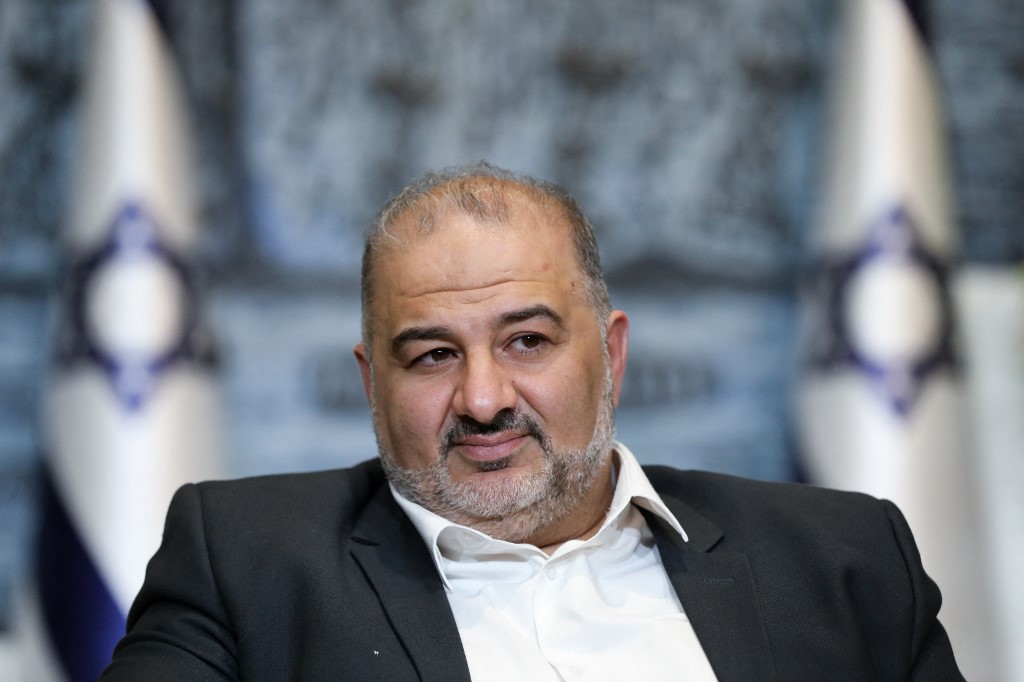
Mansour Abbas (R) signs a coalition agreement with Yair Lapid (L) and Naftali Bennett in Ramat Gan, near Tel Aviv, on 2 June 2021 (AFP/United Arab List)

Jonathan Cook

4 June 2021 10:03 UT

The symbolic moment of a Palestinian party sitting in government alongside settler leaders will turn sour all too soon

The photo was unprecedented. It showed Mansour Abbas, leader of an Islamist party for Palestinians in Israel, signing an agreement on Wednesday night to sit in a “government of change” alongside settler leader Naftali Bennett.

Caretaker Prime Minister Benjamin Netanyahu will fervently try to find a way to break up the coalition in the next few days, before a parliamentary vote takes place. But if he fails, it will be the first time in the country’s 73-year history that a party led by a Palestinian citizen has joined – or been allowed to join – an Israeli government. 

There will be a reckoning for this moment, and Israel’s 1.8 million Palestinian citizens… will once again pay the heaviest price

Aside from the symbolism of the moment, there are no other grounds for celebration. In fact, the involvement of Abbas’s four-member United Arab List in shoring up a majority for a government led by Bennett and Yair Lapid is almost certain to lead to a further deterioration in majority-minority relations.

There will be a reckoning for this moment, and Israel’s 1.8 million Palestinian citizens, a fifth of the population, will once again pay the heaviest price.

The sole reason that this makeshift coalition exists – the only glue holding it together – is the hostility of the various parties towards Netanyahu. In most cases, that is not a hostility towards his political positions; simply towards him personally, and towards the corrupting stranglehold he has exerted on Israel’s political system for the past 12 years. 

The “change” referred to by this proposed government coalition begins and ends with the removal of Netanyahu.

Doubly offended

It barely needs stating again that Bennett, who will serve first as prime minister in rotation with Lapid, is even more right wing than Netanyahu. In fact, three of the new coalition’s main parties are at least, if not more, rabidly nationalistic than the Israel’s longtime leader. In any other circumstances, they would be enthusiastically heading into government with his Likud Party.

As Bennett and Mansour huddled inside a hotel near Tel Aviv to sign the coalition agreement as the clocked ticked down on Lapid’s mandate to form a government, far-right demonstrators noisily chanted outside that Bennett was joining a “government with terror supporters”.

Much of the ultra-nationalist right is so incensed by Bennett’s actions that he and other members of his Yamina party have been assigned a security detail for fear of an assassination attempt.


Bennett, set to serve first as prime minister, attends a special Knesset session on 2 June 2021 (AFP)

No one has forgotten that it was Bennett’s own settler camp that produced Yigal Amir, the man who in 1995 shot dead the then-prime minister, Yitzhak Rabin, in a bid to foil the Oslo peace accords with the Palestinians. Amir killed Rabin in large part because the latter was seen to have betrayed the Jewish people by allowing “Arabs” – Palestinian parties in parliament – to prop up his minority government from outside. They did so to pass legislation necessary to begin implementing the Oslo process.

The chain of events that followed the assassination are well-known. Israelis lurched further rightwards and elected Netanyahu. The Oslo track with Palestinian leader Yasser Arafat was derailed. A Palestinian intifada erupted. And – coming full circle – Netanyahu returned to power and is now Israel’s longest-serving prime minister.

Today’s potential Yigal Amirs are doubly offended by Bennett’s behaviour. They believe he has stabbed the right’s natural leader, Netanyahu, in the back, while at the same time allowing Abbas – seen by the right as Hamas’s man in the Knesset – to dictate policy to the Jewish owners of the land.

Digging in heels

It was notable that Bennett and Abbas were the last to sign the coalition agreement, after both made great play of digging in their heels at the final moment for more concessions. Each risks inflaming their own constituency by being seen to cooperate with the other. 

Commentators will try to spin this agreement between a settler leader and the head of an Islamic party as a potential moment of healing after last month’s unprecedented inter-communal fighting inside Israel.Israel’s incoming government is so unnatural only Netanyahu can keep it togetherRead More »

But such a reading is as misleading as the narrative of the recent “Jewish-Arab clashes”. In fact, protests by Palestinian youths against systematic discrimination escalated into confrontations only after Israeli police turned violent and let Jewish gangs take the law into their own hands. Just as the balance of power on the streets was weighted in favour of Jewish vigilantism, so the balance of forces in this new coalition will work solidly against Abbas.

When Bennett spoke publicly on Sunday, as the horse-trading began in earnest behind the scenes, he underscored his credentials as the former head of the Yesha Council of Jewish settlements. That will be the theme of this proposed “government of change”. 

Pact with the ‘devil’

During the coalition-building negotiations, the more moderate Labor and Meretz parties conceded time and again to the demands of the far-right and settler parties on ministerial positions and policy. That is because the moderates have nowhere else to go. 

They have built their whole electoral strategy on ousting Netanyahu at any cost, using the anti-Netanyahu street protests of the past two years as their rallying cry. They cannot afford to be seen as missing this opportunity.

By contrast, as the death threats highlight, Bennett has far more to lose. Some 60 percent of his party’s voters recently told pollsters they would not have backed him had they known he would join a coalition with Lapid. Equally at risk are Gideon Saar, whose New Hope party broke away from Likud to challenge Netanyahu, and Avigdor Lieberman, a settler politician whose right-wing base has found in him their local strongman.

The Achilles heel Netanyahu will keep prodding as viciously as he can is the fact that his rivals on the right have made a Faustian pact with the Arab ‘devil’

These three must now do everything in their power during the term of this new government – if it happens – to prove to their constituencies that they are not betraying the far-right’s favourite causes, from settlements to annexation. Baiting them from the sidelines at every turn will be Netanyahu, stirring up passions on the right – at least until he is forced to step down, either by his party or by a verdict against him in his current corruption trial

The Achilles heel Netanyahu will keep prodding as viciously as he can is the fact that his rivals on the right have made a Faustian pact with the Arab “devil”. Netanyahu has never been shy to incite against the Palestinian minority. To imagine he will restrain himself this time is fanciful. 

Bennett understands the danger, which is why he tried to legitimise his dealings with Abbas on Thursday by calling him “a brave leader”. But Bennett was also keen to emphasise that Abbas would not be involved in any security matters and that he was not interested in “nationalism” – in this case, indicating that Abbas will neither offer support to Palestinians under occupation nor seek to advance national rights for Palestinian citizens of the kind Israeli Jews enjoy. 

Early on Thursday, Netanyahu had decried the new coalition as “dangerous” and “left wing”. He will most likely be in the driving seat, even while in opposition. Far from healing the country, a “government of change” could rapidly provoke yet more street violence, especially if Netanyahu believes such a deterioration would weaken Bennett as prime minister.

Extracting benefits

Abbas, the United Arab List leader, reportedly held out until last before signing. His whole electoral strategy was built on a promise to end the permanent exclusion of Palestinian parties from Israel’s national politics. He will be keen to show how many benefits he can extract from his role inside government – even if most are privileges the Jewish majority have always enjoyed by right.

Abbas trumpeted that the agreement would “provide solutions for the burning issues in Arab society – planning, the housing crisis, and of course, fighting violence and organised crime”. He has reportedly secured some $16bn in extra budgets for development and infrastructure, and three of the many Bedouin villages the state has long refused to recognise will be given legal status.

Abbas, the United Arab List leader, is pictured in Jerusalem on 5 April 2021 (AFP)

Abbas is also pushing for the repeal of a 2017 law that makes tens of thousands of homes in Palestinian communities inside Israel vulnerable to demolition.

One of his fellow legislators, Walid Taha, observed of the United Arab List’s new role: “For decades, Arab Israelis [Palestinian citizens] have been without any influence. Now, everyone knows that we’re the deciding votes as far as politics goes.”

Abbas has every incentive to use such claims as a whip to beat his rivals in the Joint List, a coalition of several other Palestinian parties that are staying in opposition. He needs to emphasise his role in bringing about change to make them look weak and irrelevant.

Hostility and disdain

But despite the promises that lured Abbas into the new government, he will face a rough ride getting any of them translated into tangible changes on the ground.

Lapid will be busy as foreign minister, selling this as a new era in Israeli politics. Meanwhile, Benny Gantz, the current defence minister who just oversaw the destruction yet again of Gaza, will offer continuity.

Back home, the key internal ministries will be held by the far-right. Lieberman will control the purse strings through the finance ministry, directing funds to settlements before Palestinian communities inside Israel. Bennett’s partner, Ayelet Shaked, will be interior minister, meaning the settlements in the occupied West Bank will be treated as more integral to Israel than the communities of Palestinian citizens. And Saar will be justice minister, helping to drive the legal system even further to the right.Israel: Four reasons Benjamin Netanyahu’s era is not over yetRead More »

Faced with this bloc, all of them keen to be seen as upholding the values of the right, Abbas will struggle to make any progress. And that is without considering the situation he will find himself in if Bennett pushes for annexation of the West Bank, or authorises another police invasion of al-Aqsa, or oversees the expulsion of Palestinian families from Sheikh Jarrah, or launches a fresh attack on Gaza. 

Abbas put the coalition negotiations on pause during Israel’s assault on Gaza last month. He won’t be able to do the same from inside the government. He will be directly implicated. 

As a result, Palestinian citizens are likely to end up growing even more disillusioned with a political system that has always treated them with a mix of hostility and disdain. They will finally have representatives inside government, but will continue to be very much outside of it. The triggers for the protests that erupted among young Palestinians in Israel last month are not going away.  

The most likely scenario over the coming months is that Netanyahu and Bennett will engage in a furious competition for who deserves the title of champion of the right. Netanyahu will seek to break apart the coalition as quickly as possible by inciting against Abbas and the Palestinian minority, so he has another shot at power. In turn, Bennett will try to pressure Likud to abandon Netanyahu so that Bennett can collapse the “government of change” as quickly as possible and rejoin a large majority, far-right government with Likud. 

Rifts will not be healed; coexistence will not be revived. But the preeminence of the ultra-nationalist right – with or without Netanyahu – will be restored. 

The views expressed in this article belong to the author and do not necessarily reflect the editorial policy of Middle East Eye.

Read more


River to Sea Uprooted Palestinian   
The views expressed in this article are the sole responsibility of the author and do not necessarily reflect those of the Blog!

Friday, 4 June 2021

Europe’s Failure Over Israeli-Palestinian Conflict Due to Germany’s Nazi Guilt and EU’s Subservience to United States


June 1, 2021

See the source image
Former editor and writer for major news media organizations. He has written extensively on international affairs, with articles published in several languages

Finian Cunningham

The international community has to end its support for the apartheid state of Israel and must stop the genocide of the Palestinian people, says MEP Mick Wallace in an interview with Finian Cunningham.

Mick Wallace, an independent Irish Member of the European Parliament, speaks his mind to Strategic Culture Foundation about the recent violence in Gaza where 248 people were killed by the Israeli military. Among the dead were 66 children during 11 days of bombardment of the Palestinian territory. Nearly 2,000 were injured in airstrikes on the densely populated coastal strip where two million people live in appalling deprivation. Hundreds of homes and civilian infrastructure were destroyed by the Israeli forces armed with U.S. warplanes and munitions. Rockets fired by Palestinian militant group Hamas killed 12 Israelis, including two children. Yet the United States and the European Union stridently declared support for Israel’s “right to self-defense” while not categorically denouncing the slaughter of Palestinians. Mick Wallace condemns what he calls the complicity of America and the European Union in Israeli war crimes. He says the oppression of Palestinians will continue tragically because, effectively, the U.S. and EU are sponsoring genocide. However, he notes, Western governments are increasingly out of step with public opinion horrified by Israel’s wanton occupation of Palestinian territory.

Wallace was elected to the EU parliament in 2019. He is an independent MEP who is affiliated with the European Party of the Left. He is an outspoken critic of American imperialism and European complicity in NATO aggression towards Russia. His weekly podcast frequently explores and condemns Russophobia in EU foreign policy which he says is due to the bloc’s subservience to Washington. Wallace’s outspoken internationalism and anti-imperialism have gained him much popular support in Ireland and abroad.

Interview

Question: American and European politicians commonly declare their support for Israel’s “right to self-defense”. However, you have stated that Israel does not have such a right. Many people would condemn your statement given the barrage of rockets fired at Israel by the Palestinian militant group Hamas. Can you explain why you think Israel does not have a right to self-defense?

Mick Wallace: Gaza is the largest concentration camp in the world. Do concentration camp guards have the right to self-defense? The indigenous people, the Palestinians, have the right to self-defense, not the colonizer. Does Israel have the right to self-defense? Does Israel have the right to commit crimes against humanity?

Question: During the recent eruption of hostilities between the Israelis and Palestinians, the European Union showed little leadership in calling for a ceasefire. Why is the EU so ineffective in resolving a conflict which is on Europe’s periphery?

Mick Wallace: It would probably be fair to say that when it comes to foreign policy, the European Union has never been so weak.

Question: European leaders aspire for the EU to be a global political force. But the EU is all too often seen as subordinate to the United States. With regard to the Israeli-Palestinian conflict, Europe seems too deferential to Washington. Is that a fair criticism?

Mick Wallace: Yes, the EU does not have the courage to challenge the United States on these matters.

Question: You have been especially critical of Germany and the European Commission President Ursula von der Leyen, who was formerly the German minister of defense, for their appeasement of Israel by not criticizing its illegal occupation of Palestinian territories. You have made the point that Germany’s historical guilt from Nazism and the Holocaust is a factor. Can you elaborate on that point?

Mick Wallace: Von der Leyen is a weak European Commission president but her statement on the conflict emphasizing Israel’s supposed right to self-defense was a new low. Sixty-six Palestinian children were killed by the illegal occupier, Israel, while Hamas killed two Israeli children. And yet Von der Leyen could only condemn Hamas. Germany backs Israel because of its guilt over Nazi horror. Yet in appeasing Israel, German politicians are complicit today in crimes against humanity akin to those of Nazi Germany.

Question: Other European countries were also complicit in Nazi crimes against Jews, such as France and the Baltic states, Austria, Romania, and Hungary. During the latest violence, Austrian public buildings were draped with the flag of Israel. Does the specter of the past Nazi horrors and European guilt account for the EU’s failings with regard to the Israeli-Palestinian conflict?

Mick Wallace: There’s no doubt that German guilt for the terrible atrocities committed against European Jews is a factor. The failure of so many German Members of the European Parliament to criticize Israeli war crimes is shocking, but other forces are also at play. Israel is a vital part of the United States Empire, and that’s reflected in EU subservience to the Americans.

Question: Out of 705 European parliamentarians, a sizable majority seems to be supportive of Israel whereas among European citizens there is strong sympathy for the Palestinians suffering from illegal occupation and oppression. How do you explain such a discrepancy between elected representatives and the general public with regard to views on the Israeli-Palestinian conflict?

Mick Wallace: Politicians rarely represent their citizens.

Question: Is European guilt over Nazism and fascism a factor in the European Parliament’s attempts at World War Two revisionism whereby the Soviet Union is equated with the Nazi Third Reich?

Mick Wallace: I believe it’s more a case of the European Union, at America’s beckoning, trying to undermine and isolate Russia.

Question: Russia has offered to act as a mediator between the Israelis and Palestinians, claiming to have credible relations with both sides. The American mediation efforts have been a failure as has been shown by the chronic impasse and erosion of Palestinian rights over several decades. Do you think Russia could help find a resolution?

Mick Wallace: I wouldn’t be confident of Russia playing a neutral and fair role – the Kremlin also tolerates much of the lawless behavior of Israel.

Question: What, in your view, is a viable solution to the decades-old conflict?

Mick Wallace: That’s a big question. The two-state solution is long dead. The international community has to end its support for the apartheid state of Israel and must stop the genocide of the Palestinian people. All Palestinians are entitled to live a dignified life in their homeland. But this is unlikely to happen until the international community stops supporting U.S. imperialism, and the sovereignty of all nations is respected.


River to Sea Uprooted Palestinian   
The views expressed in this article are the sole responsibility of the author and do not necessarily reflect those of the Blog!

Friday, 21 May 2021

Israel, Zionism and the Jewish State.

  BY GILAD ATZMON

In this interview I told Pro-Palestinian activist Trond Ali Linstad about my early life in Israel and the way it shaped my position on Israel, Zionism and Jewishness.


Denote


River to Sea Uprooted Palestinian   
The views expressed in this article are the sole responsibility of the author and do not necessarily reflect those of the Blog!