Saturday, 1 October 2016

Russia Responds to Kirby’s ‘Body Bags’ Comments; US Bombs Euphrates River Bridges

Posted on 
zakharova
The remarks by State Department spokesperson John Kirby that the world may soon see Russian troops going home in “body bags” has prompted a rejoinder from his counterpart in Moscow, Russian Foreign Ministry spokesperson Maria Zakharova.
“Don’t you think that such ventriloquism about ‘body bags,’ terrorist attacks in Russian cities’ and ‘loss of aircraft’ sounds more like a ‘get’em’ command, rather than a diplomatic comment?” Zakharova asked in a Facebook post.
As reported yesterday, Kirby’s remarks, including his prediction that “Russia will continue to send troops home in body bags,” sounded like a veiled threat.
“Extremist groups will continue to exploit the vacuums that are there in Syria to expand their operations, which will include attacks against Russian interests, perhaps even Russian cities. Russia will continue to send troops home in body bags, and they will continue to lose resources, even perhaps more aircraft,” said the State Department official.
He added that if the war continues “more Russian lives will be lost, more Russian aircraft will be shot down.”
The fact that the “extremist groups” spoken of by Kirby are being supported in large measure by the US obviously is not lost upon Zakharova.
“And those [acts of terrorism] will be perpetrated by ‘moderate’ [Syrian opposition groups]?” Zakharova inquired. “Just the ones that Washington has been unable to separate from Al-Nusra for as long as six months?”
“[What about] Terrorist attacks in France,” she went on, “America and other countries; the beheadings of people of all nationalities by Islamic State militants in Syria – is this all kind of a different paradigm? Perhaps another ‘parallel reality?’”
In case you missed it, Secretary of State John Kerry, in an acrimonious exchange at the UN last week, suggested Russian Foreign Minister Sergei Lavrov is living in a “parallel universe.” What the US State Department is doing publicly is engaging in childish finger pointing: “It’s all your fault!” they are essentially saying.
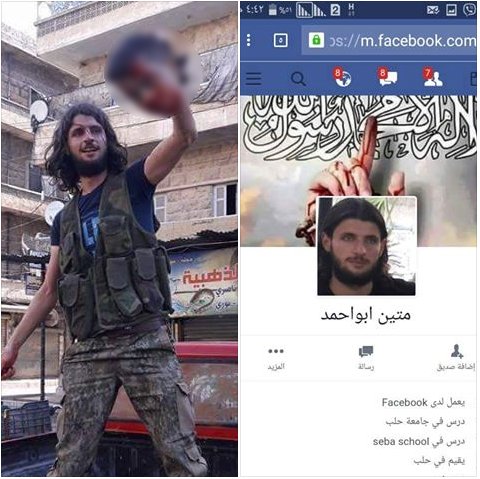
What they are doing privately, behind the scenes, is providing support for terrorist outfits such as Nour al-Din al-Zenki, which beheaded a 12-year-old boy back in July. Why they continue to do this, even as increasing numbers of people are beginning to see through the charade, is a mystery, though perhaps it’s a sign of desperation.
Another Russian official who has responded to Kirby’s undiplomatic remarks is Defense Ministry spokesman Major-General Igor Konashenkov.
“Once again we declare that we are fully prepared to continue the dialogue with the American side and carry on with the joint actions to combat terrorists in Syria,” he said. “However, even the slightest hints of a threat to our soldiers and Russian citizens must be excluded from this dialogue. The matter of safety of Russian citizens, wherever they may be, is not up for bargaining. It is our main and unconditional priority.”
Kirby says the State Department is considering non-diplomatic options, and there are indications it has already found them. In what may be the first step toward partitioning eastern Syria, the US coalition carried out airstrikes yesterday that destroyed two bridges over the Euphrates River, bridges that large segments of the population depend upon for transportation. The following is from Press TV:
Syria has slammed the US-led coalition purportedly fighting Daesh for destroying two bridges over Euphrates River in the eastern province of Dayr al-Zawr, where the same alliance recently killed 83 Syrian soldiers.
The attacks “confirm the so-called international coalition’s intent to bomb and destroy Syrian infrastructure and economic and social establishments through repeated aggressive acts,” state TV quoted the Syrian Foreign Ministry as saying Thursday.
The official SANA news agency reported that the bridges of al-Asharah and al-Mayadin in the eastern countryside of the provincial capital city of Dayr al-Zawr were hit by the coalition’s warplanes on Wednesday.
Syria’s ambassador to the UN Bashar Ja’afari said the bridges had been used by hundreds of thousands of civilians in the area.
Meanwhile, the so-called Syrian Observatory for Human Rights, a UK-based rights group advocating militants in Syria, said the two bridges are now unusable, a situation which would impede aid deliveries and hamper movement of civilians.
It may well be that the US is now opting for a different game plan–that of leaving Assad in power in Damascus while imposing what in effect could be a partitioning off of eastern Syria. This would still achieve the aim of balkanizing the country as well as make it possible to route a pipeline through Syrian territory for purpose of transporting natural gas from Qatar to Turkey and then into the EU. The question, of course, is whether Russia would allow it to happen.
If Syrians are not willing to see their country split apart, and if Russia and Iran continue to support them–with maybe China actively joining the alliance as well–we could be looking at World War III.

River to Sea Uprooted Palestinian   
The views expressed in this article are the sole responsibility of the author and do not necessarily reflect those of the Blog!

A Veiled Threat? State Department’s Kirby Predicts Russia Will ‘Send It’s Troops Home in Body Bags’

 photo jkirby_zpspb2nhvsi.jpg
[ Ed. note – Some pretty non-diplomatic words were spoken today by the State Department’s John Kirby:
“Extremist groups will continue to exploit the vacuums that are there in Syria to expand their operations, which will include attacks against Russian interests, perhaps even Russian cities. Russia will continue to send troops home in body bags, and they will continue to lose resources, even perhaps more aircraft,” Kirby said.
He added that if the war continues “more Russian lives will be lost, more Russian aircraft will be shot down.”
These things will happen, Kirby said, unless Russia “stops the violence” in Syria.
Given that the “extremist groups” Kirby refers to are being supported in large part by the US, one can’t help wondering if Kirby’s words about Russian troops going home in body bags were not intended as a veiled threat. His comment about “more Russian aircraft” being shot down are significant also insofar as reports are now emerging of Syrian terrorists being armed with MANPADS, shoulder-launched surface-to-air missiles capable of bringing down planes:
The US State Department is threatening to “suspend US-Russia bilateral engagement” on Syria unless Russia rolls over and allows the proxy forces backed by the US and its allies to move ahead and complete the American-initiated regime change operation. Failing that, Russian soldiers will be going home in body bags–this is the gist of the State Department spokesman’s comments in today’s press briefing.
Maybe I’m reading too much into Kirby’s words–maybe they weren’t intended as a veiled threat. On the other hand, I’m guessing the innuendo wasn’t lost on the Russians.
An interesting analysis on the Syrian conflict and the collapse of the ceasefire has been posted on Counterpunch by Mike Whitney, whose thesis is that in sabotaging the ceasefire, the US has set the stage for its own defeat in Syria. Below is an excerpt. Follow the link to access the full article. ]
By Mike Whitney
“Syria is the summation of all the errors of a dysfunctional empire collapsing upon itself. History forgotten. Science ignored. Facts denied. Propaganda cannot hide that West is supporting and killing Islamists at the same time in a World War that risks escalating into a nuclear holocaust.” Vietnam Vet, comments-line,  Sic Semper Tyrannis
The attack on Deir Ezzor was a flagrant act of betrayal. For the first time in the five year-long war,  US warplanes targeted an SAA military outpost killing 62 Syrian regulars. The surprise attacks — which lasted for the better part of an hour and were followed by a coordinated ground assault by members of ISIS– were intended to torpedo the fragile ceasefire agreement and send a message to Moscow that the US was prepared to achieve its strategic objectives in Syria whether it had to launch direct attacks on defenders of the regime or not.
The attacks–for which the Pentagon eventually accepted responsibility–were followed by a callous and thoroughly-unprofessional tirade by the administration’s chief diplomat at the United Nations, Samantha Power. Power dispelled any doubt that either she or anyone else in the Obama administration cared at all about the people who lost their lives in the bombing raid.  She also made it clear that she didn’t care if the US had violated the terms of the ceasefire just two days before critical parts of the agreement were scheduled to be implemented.
Naturally, Moscow was taken aback by Washington’s reaction, it’s blatant disregard for the soldiers they killed, and its obvious determination to sabotage the ceasefire. Having reflected on Obama’s de facto rejection of the agreement, Putin pursued the only viable option left open to him;  more war.   As a result, he has intensified his efforts on the battlefield particularly around Aleppo where the Syrian Arab Army (SAA) and crack-units from Hezbollah have launched a three-prong attack that will dispose of the US-backed jihadists that have destroyed much of Syria over the last half-decade  and displaced over 7 million civilians.
Bottom line: Having foreclosed the political option for reducing the violence, the Obama administration will now face the consequences for its rejection.

River to Sea Uprooted Palestinian   
The views expressed in this article are the sole responsibility of the author and do not necessarily reflect those of the Blog!

The war against Syria: both sides go to “plan B”

The war against Syria: both sides go to “plan B”
September 30, 2016
Unz ReviewThis article was written for the Unz Review
In view of the total failure the US policy to regime-change Syria and overthrow Assad, the time has now come for the United States to make a fundamental choice: to negotiate or double down.Apparently, Kerry and others initially tried to negotiate, but the Pentagon decided otherwise, treacherously broke the terms of the agreement and (illegally) bombed the Syrian forces. At which point, Kerry, Power and the rest of them felt like they had no choice but to “join” the Pentagon and double down. Now the US “warns” Russia that if the Aleppo offensive continues, the US will not resume negotiations. This is a rather bizarre threat considering that the US is clearly unable to stick to any agreement and that the Russians have already concluded that the USA is “not-agreement-capable”. The Russia reaction was predictable: Lavrov’s admitted that he could not even take his American colleagues seriously.
Okay, so both sides are fed-up with each other. What comes next?
The US will send more weapons to Daesh, including MANPADs, TOWs and Javelins. The effect of that will be marginal. Russian fixed-wing aircraft fly at over 5’000m where they are out of reach from MANPADs. They are currently the main provider of firepower support for the Syrians. Russian combat helicopters, while probably not immune to MANPADs, are still very resistant to such attacks due to three factors, survivability, weapons range and tactics: Mi-28s and Ka-52 have missiles with a maximum range of 10km and the way they are typically engaged is in a kind of ‘rotation’ where one helicopters flies to acquire the target, fires, immediately turns back and is replaced by the next one. In this matter they all protect each other while presenting a very difficult target to hit. Russian transport helicopters would, however, be at a much higher risk of being shot down by a US MANPAD. So, yes, if the US floods the Syrian theater with MANPADS, Syrian aircraft and Russian transport helicopters will be put at risk, but that will not be enough to significantly affect Russian or Syrian operations.
Russian escalatory options are far more diverse: Russia can send more T-90 tanks (which TOWs, apparently, cannot defeat), more artillery (especially modern multiple rocket launchers and heavy flamethrower systems like the TOS-1). The Russian Aerospace forces could also decide to engage in much heavier airstrikes including the use of cluster and thermobaric munitions. Finally, Russia could send in actual ground forces ranging in size from a few battalions to, in theory, a full-size brigade. The problem with that option is that this would mark a major increase in the commitment of Russian forces to this war, something which a lot of Russians would oppose. Still, since the Iranians and, especially, Hezbollah have been used like a “fire brigade” to “plug” the holes in the front created by various defeats of Syrian army units, it is not impossible that the Russians might commit a combined-arms battalion tactical group to a crucial segment of the front and then withdraw it as soon as possible. The purpose of this strategy would be double: to support the struggling Syrians with as much firepower as possible while, at the same time, slowly but surely bleeding the Daesh forces until the reach a breaking point. Basically, the same strategy as before the ceasefire.
So why did the Russians agree to that ceasefire in the first place?
Because of the long held belief that a bad ceasefire is better than a good war, because Russia is trying hard not to escalate the confrontation with the USA and because Russia believes that time is on her side. I am pretty sure that the Russian military would have preferred to do without that ceasefire, but I am equally sure that they were also okay with trying it out and see. This is the old contradiction: westerners also want results *now*, while the Russians always take their time and move very slowly.That is why to a western audience the Kremlin under Putin is always “late” or “hesitant” or otherwise frustrating in what appears to be almost a lack of purpose and determination. Where this typically Russian attitude becomes a problem is when it signals to the leaders of the US deep state that Russia is not only hesitant, but possibly frightened. In a perverse way, the lack of “show of force” by Russia risks giving the Americans the impression that “the Russkies have blinked”. I am always quite amazed when I see western reactions to the soft, diplomatic language used by Russian diplomats. Where the Americans openly compare Putin to Hitler and demand the imposition of a (completely illegal) no-fly zone over Syria, the Russians respond with“my friend John” and “our partners” and “negotiations must proceed”. More often than not, when Americans hear the diplomatic language of the Russians, they mistake it for weakness and they feel further emboldened and they make even more threats. It is in part for this reason that Russia and the United States are, yet again, on a collisions course.
Once the US comes to realize that its policy sending MANPADs to Syria did not work, it will have only one last card to play: attempt to impose a no-fly zone over Syria.
The good news is that judging by this exchange, US generals understand that any such US move would mean war with Russia. The bad news is that the Neocons seem to be dead-set on exactly that. Since such an event has now become possible, we need to look at what exactly this would entail.
The way the US doctrine mandates to impose a no-fly zone is pretty straightforward: it begins with an intensive series of USAF and USN cruise missile strikes and bombing raids whose aim is to disable the enemy air defenses and command and control capabilities. At this stage heavy jamming and anti-radiation missile strikes play a key role. This is also when the Americans, if they have any hope of achieving a tactical surprise, will also typically strikes at enemy airbases, with a special emphasis on destroying landed aircraft, runways and fuel storage facilities. This first phase can last anything between 48 hours to 10 days, depending on the complexity/survivability of the enemy air defense network. The second phase typically includes the deployment of air-to-air fighters into combat air patrols which are typically controlled by airborne AWACS aircraft. Finally, once the air defense network has been destroyed and air supremacy has been established, strike fighters and bombers are sent in to bomb whatever can be bombed until the enemy surrenders or is crushed.
In Syria, this ideal scenario would run into several problems.
First, while there are only a few S-400/S-300 systems in Syria, the US has never had to operate against them, especially not against the Russian version of these formidable systems. Worse, Russia also has very long range radars which will make it impossible for the USA to achieve a tactical surprise. Last but not least, Russia also has deployed powerful electronic warfare systems which are likely to create total chaos in key US command, control, communications and intelligence systems.
Second, these S-400/S-300 systems are mostly located on what is legally “Russian territory”: the Khmeimim airbase and the Slava-class or Kuznetsov-class cruisers off the Syrian coast. The same goes for the key nodes of the Russian communications network. If the Americans were crazy enough to try to hit a Russian Navy ship that would open up the entire USN to Russian attacks.
Third, while Russia has deployed relatively few aircraft in Syria, and while even fewer of them are air-to-air interceptors, those which Russia has deployed (SU-30SM and SU-35) are substantially superior to any aircraft in the US inventory with the possible exception of the F-22A. While the US will be able to overwhelm the Russians with numbers, it will be at a steep cost.
Fourth, the use of USAF AWACS could be complicated by the possibility that the Russians would decide to deploy their anti-AWACS very-long range missiles (both ground launched and air launched). It is also likely that Russia would deploy her own AWACS in Iranian airspace and protect them with MiG-31BMs making them a very difficult target.
Fifth, even if the USA was somehow able to establish something like an general air superiority over Syria, the Russians would still have three formidable options to continue to strike Daesh deep inside Syria:
1) cruise missiles (launched from naval platforms of Tu-95MS bombers)
2) SU-34/SU-35 strike groups launched from Russia or Iranian
3) supersonic long range bombers (Tu-22M3 and Tu-160)
It would be exceedingly difficult for the US to try to stop such Russian attacks as the USAF and USN have not trained for such missions since the late 1980s.
Sixth, even a successful imposition of a no-fly zone would do little to stop the Russians from using their artillery and attack helicopters (a difficult target for fixed-wing aircraft to begin with). Hunting them down at lower altitudes would further expose the USAF/USN to even more Russia air defenses.
Seven, last but not least, today is not 1995 and Syria is not Bosnia: nowadays the Europeans don’t have the stomach to fight the Syrians, nevermind Russia. So while some European leaders will definitely send at least some aircraft to show their loyalty to Uncle Sam (Poland, Germany, Holland and maybe one 2nd hand F-16 from a Baltic state), the regimes that matter (France, UK, Italy, etc.) are unlikely to be interested in a dangerous and completely illegal military intervention. This is not a military problem for the USA, but would present yet another political difficulty.
To sum all this up I would simply say that if the Americans and their allies have a huge advantage in numbers, in terms of quality they are outgunned by the Russians pretty much at all levels. At the very least, this qualitative edge for the Russians makes the imposition of a (completely illegal!) no-fly zone over Syria an extremely risky proposition. Could they do it? Yes, probably, but only at a very substantial cost and at the very real risk of a full-scale war with Russia. As I have said it many times, Syria is smack in the middle of the CENTCOM/NATO area of “responsibility” end at the outer edge of the Russian power projection capability. Where Russia has tens of aircraft, the Americans can bring in many hundreds. So the real question is not whether the Americans could do it, but rather whether they are willing to pay the price such an operation would entail.
At a political level it is important to repeat the following here:
1) The US presence in Syria – all of it – is completely illegal and has no UNSC mandate
2) Any and all US military operations in Syria are also completely illegal
3) The imposition of a US enforced no-fly zone would also be completely illegal
While this has not stopped the Empire so far, this might offer the Europeans a perfect excuse not to participate in any such operation. Of course, the Americans don’t need any European air force to try to impose a no-fly zone on Syria, but politically this would definitely hurt them.
Finally, there is one more problem for the US to deal with: the imposition of a no-fly zone over Syria is a very large operation which would require hundred of aircraft. Where would the US operate from? I might be naïve here, but I don’t think that Erdogan would let the US use Incirlik for that purpose. Iraq would most likely at least try close its airspace to any aircraft participating in such operation, especially if Syrian or Russian forces are hit. This leaves Israel, Jordan, Saudi Arabia and US aircraft carriers to launch from. None of them are very suited for that: Jordan does not have the infrastructure and is too close, Israel would not help the US against Russia and neither would Egypt. And while the Saudis have excellent facilities, they are far away. As for aircraft carriers, they are the best option, but they are far from ideal for a sustained air campaign (which the imposition of such a no-fly zone would be).
Again, none of that is a show-stopper, but it very substantially complicates the work of US planners.
Conclusion:
The risk of a US attempt to impose a no-fly zone over Syria will remain very real for the foreseeable future unless, of course, Trump beats Hillary to the White House. If Hillary wins – then that risk will sharply escalate. As for Obama, he probably does not want to stick a big stick in such a hornet’s nest right before leaving the White House (at least I hope so). Finally, regardless of who actually sits in the White House, the idea of imposing a no-fly zone over Syria would have to be measured against the so-called “Powell doctrine” of military interventions. So let’s see how this plan would measure up to the series of questions of the Powell doctrine:
Q: Is a vital national security interest threatened?
A: No
Q: Do we have a clear attainable objective?
A: Kinda
Q: Have the risks and costs been fully and frankly analyzed?
A: Yes, and they are potentially extremely high
Q: Have all other non-violent policy means been fully exhausted?
A: No
Q: Is there a plausible exit strategy to avoid endless entanglement?
A: No
Q: Have the consequences of our action been fully considered?
A: Yes, and the biggest risk is WWIII against Russia
Q: Is the action supported by the American people?
A: No
Q: Do we have genuine broad international support?
A: No
As we can easily see, this plan fails to meet the minimal criteria of the Powell Doctrine on most points. So as long as somebody mentally sane is in the White House all this talk should remain what it has been so far – empty threats. Of course, if Hillary makes it into the White House and then nominates a maniac like Michèle Flournoy as Secretary of Defense along with a national security team composed of rabid warmongers then all bets are off.
Please consider that before you go to vote.
Related Videos
Syrian War Report – September 29, 2016: US Deploys Troops near Aleppo City
Syrian War Report – September 28, 2016: US & Allies to Arm ‘Opposition’ with MANPADS
Syrian War Report – September 27, 2016: Diplomatic Deadlock over Syria
حروب المنطقة : مشروعان .. ميدان واحد .. | الاتجاه


Related articles
River to Sea Uprooted Palestinian   
The views expressed in this article are the sole responsibility of the author and do not necessarily reflect those of the Blog!

Friday, 30 September 2016

Jewish Groups Plotted to Kill British Official in 1946

Posted on September 28, 2016


[ Ed. note – This is actually an old story. What’s new is that you can now visit theUK National Archives and, for a fee, see the documents that have been released concerning these plots. The attempt on Bevin’s life is only part of the story. There was also a plot to carry out an aerial bombing of London organized by followers of an American rabbi by the name of Korf. The documents on the latter remain under heavy censorship. H/T Miriam. ]
By Neil Tweedie and Peter Day
Jewish terrorist groups plotted to assassinate Ernest Bevin, the Foreign Secretary in the post-war Labour government, as part of a bombing campaign on the British mainland inspired by the IRA.
MI5 warned Clement Attlee, the prime minister, that the Stern Gang and Irgun intended to establish five terrorist cells in London to mount a bombing campaign aimed at driving Britain out of Palestine. Bevin, who was opposed to the creation of the state of Israel, was a prime target.
Security Service files also contain details of an outlandish plan by the followers of an American Zionist rabbi to bomb London from the air. Details of that plot have been heavily censored.
The warnings came in 1946 from James Robertson, head of the Security Service’s Middle East Section.
He wrote: “Our Jerusalem representative has received information that the Irgun and Stern groups have decided to send five cells to London to work on IRA lines. To use their own words, the terrorists intend to ‘beat the dog in his own kennel’.
“The Stern group has been steadily recruiting in recent months and may now number 600 followers, most of whom are desperate men and women who count their own lives cheap.
“In recent months it has been reported that they have been training selected members for the purpose of assassinating a prominent British personality. Special reference has been several times made to Mr Bevin.”
The plot to bomb the capital from the air was said to be the product of followers of one Rabbi Korff.
Londoners were to be convinced of the rightness of the terrorists’ cause with leaflets dropped from the same aircraft as the explosives. The plot was foiled by MI5 and a number of arrests made in Paris.
The report was written shortly after 18 men had been sentenced to death for a sabotage attack on the railway workshops at Haifa. Stern and Irgun warned that there would be 100 terrorist outrages in retaliation if the 18 were hanged. Their sentences were later commuted to life.
Robertson identified Menachem Begin, the future Israeli prime minister, as leader of the 5,000-strong Irgun.
Bevin was a hated figure among all the Jewish groups trying to establish a homeland, arguing that Jews needed to be re-assimilated into the nations of Europe in the aftermath of the Holocaust. He accused the United States of encouraging illegal migration to Palestine in contravention of British quotas.

River to Sea Uprooted Palestinian   
The views expressed in this article are the sole responsibility of the author and do not necessarily reflect those of the Blog!

Jewish Bigotry on Speed? Just Check Out Rabbi Jonathan Sacks

by Gilad Atzmon
Last week, Britain’s veteran chief Rabbi Jonathan Sacks lectured to the European Parliament on antisemitism. The rabbi’s mission was to define antisemitism, but instead he just demonstrated some of the most problematic symptoms of Jewish supremacy, tribal arrogance and even crude Goy-hatred. Unwittingly, the rabbi didn’t make the Jews look too good.
“The hate that begins with Jews doesn’t end with Jews.” was the Rabbi’s starting point. Here, I tend to agree with the rabbi. The rabbi probably knows a lot about hate. Hate can so easily backfire. Hate is dangerous territory. Hate spreads fast. The Zionist project, initially driven by moderate animosity towards the Palestinians, quickly evolved into hate towards Arabs, then Islam, then Black migrant communities and eventually to Goyim in general.  The Jewish anti-Zionist Left follows the exact same pattern. They are now hating the ’White’ and the ‘redneck.’ All in all, it’s pretty clear that the rabbi’s presentation is mere projection – he simply attributes Jewish cultural symptoms onto the Goyim.
It didn’t take long for the rabbi to manifest his supremacist inclinations. “Antisemitism is not about Jews, antisemitism is about antisemites.” and if you really want to know who the antisemites are, the rabbi was quick to provide the answer. It is the failures and the losers in society. Antisemites are the“people who can’t accept their own failure and instead have to blame someone else (the Jews).” 
Yes, you’ve got it. For Rabbi Sacks, those who dare to criticise Jewish power and Israeli criminality are just a bunch of frustrated losers driven by jealousy. But here I can perhaps help the rabbi. Such an outrageously chauvinist statement is itself uniquely arrogant and dangerous and is not going to help the Jews defeat antisemites. On the contrary, it provides Jew haters with a rationale.
 “Antisemitism is symptom of a disease” the rabbi continues.  So basically, if you feel any  indignation whatsoever towards the rabbi’s disgusting remarks above, it means only that you are ill as well as being a ‘failure’ and ‘envious’. You’d better seek help.
But what is antisemitism? The rabbi answers. “Antisemitism means denying the right of Jews to exist collectively as Jews with the same rights as everyone else.” Well, in the world in which we live, no one denies Jews the right to exist or to enjoy every universal right. Trouble is, more and more people are repulsed by the Jewish State (for instance) celebrating its so called ‘rights’ at the expense of others.
And how exactly does the rabbi support the idea that antisemitism is on the rise?  Simple,  he points on an increase in Jewish anxiety. (Note how Jews constantly demand more and more police presence around their cultural and spiritual centres.)  But here is a problem. Analysing Jewish anxiety in Freudian terms may suggest that Jews may be fearful because they feel guilty. Jews understand very well that Zionist wars, Israeli criminality and the forceful Jewish lobby bear responsibility for many of our current humanitarian disasters. Is it possible, for instance,  that the rabbi is, likewise,  fearful of the ‘Goyim’ because he calls them failures and losers?
The rabbi detects a progress in the antisemitic discourse, “In the past antisemitism could be explored through religion (Christianity), then science (race), now it is human rights, ethnic cleansing and attempted genocide,”  and the Rabbi concludes that “anti Zionism is the anti Semitism of our time.” 
The rabbi is wrong: ethically, methodically and historically. Ethically, because if Israel attempts genocide and engages in ethnic cleansing then we, the rest of humanity, must and often do, oppose it.  But the rabbi is also mistaken methodically and historically because the opposition to Jewry extends far beyond Israeli criminality. It is really an ongoing battle against a choseness that fuels dissentto Jewish culture and spirit. This opposition is not new, it is, in fact, as old as the Jews and has been explored by the Hebrew prophets, by Christ, by Marx and even by early Zionists who were repulsed by the attitude of their brethren’s chauvinism. The opposition to choseness is driven by a humanist and universal intent. But if Christ, Marx and the Zionist Boruchov were entitled to criticiseJewish exceptionalism, shouldn’t the rest of humanity enjoy the same elementary right? Or maybe the rabbi thinks that criticism of Jewish culture and politics should be remain a Jews’-only territory?
Lying can be an act of courage but it takes a whole lot of courage for a celebrity rabbi to boldly spin the entire European Parliament.  “When bad things happen to a group,” the rabbi says, “its members can ask one of two different questions: 1, what did we do wrong 2, who did this to us?” This sounds like a beginning of a monumental Jewish confession on the rabbi’s part.  “Self criticism is essential for a free society. If a society asks who did this to us it defines itself as a victim and seek a scapegoat.”
Don’t hold your breath. This is not Jewish remorse. Rabbi Sacks, once again, projects his own symptoms onto the Goyim. It is in fact the Jews (Rabbi Sacks included) who never ask themselves‘what did we do wrong?’ It is the Jews who never self-reflect and try to identify what it is in their culture that invokes so much animosity in others. It is the Jews who block any attempt to verify, once and for all, why their history is an endless chain of holocausts with just a few tea breaks. The only Jews who ever attempted to address these crucial questions in the modern era were the early Zionists, people like Bernard Lazare, Borochov, A.D Gordon and just a few others and, as we know, their kind of Zionism wasn’t at all popular amongst the Jews at the time.
The rabbi warns the European Parliaments that if Jews leave Europe, liberty will come to an end. But reality suggests the complete opposite. No one asks Jews to leave Europe – it is actually Jewish institutions that prevent Europeans from thinking freely let alone revise their memory of their past. I suggest that rather than preaching to Europeans about the importance of Jews and Jerusalem, Rabbi Sack should take some time off from Jerusalem to study Athens.

River to Sea Uprooted Palestinian   
The views expressed in this article are the sole responsibility of the author and do not necessarily reflect those of the Blog!

Weekly Report On Israeli Human Rights Violations in the Occupied Palestinian Territory (22 – 28 September 2016)

Israeli forces continue systematic crimes in the occupied Palestinian territory (oPt)
(22 – 28 September 2016) 

  • Israeli forces continued to use excessive force in the oPt
– 6 Palestinian civilians, including a child, were wounded in the West Bank and Gaza Strip.
  • Israeli forces conducted 68 incursions into Palestinian communities in the West Bank and 15 ones in Jerusalem and its suburbs.
  • 114 civilians, including 16 children, were arrested.
  • 51 of them, including 9 children, were arrested in occupied Jerusalem.
  • Among the arrested was Jamal al-Natsha, a PLC member from Hamas’ Change and Reform Bloc.
  • Israeli forces continued their efforts to create Jewish majority in occupied East Jerusalem.
  • 2 residential buildings, a structure attached to a house and a restaurant were demolished under the pretext of non-licensing.
  • 2 civilians were obliged to self-demolish their houses in al-Ashqariya neighbourhood in Beit Hanina, north of occupied Jerusalem.
  • Israeli forces continued settlement activities in the West Bank.
  • Israeli forces demolish an old car garage in Hawarah and a livestock barn, east of Beit Dajan village in Nablus.
  • 6 dwellings and 9 livestock barns were demolished in Kherbet al-Hamma in northern Jordan Valley. As a result, 26 civilians, including 14 children, were rendered homeless.
  • Israeli forces turned the West Bank into cantons and continued to impose the illegal closure on the Gaza Strip for the 9th
  • Dozens of temporary checkpoints were established in the West Bank and others were re-established to obstruct the movement of Palestinian civilians.
  • 6 Palestinian civilians were arrested at military checkpoints.


Summary
Israeli violations of international law and international humanitarian law in the oPt continued during the reporting period (22 – 28 September 2016).

Shooting:
Israeli forces have continued to commit crimes, inflicting civilian casualties. They have also continued to use excessive force against Palestinian civilians participating in peaceful protests in the West Bank and Gaza Strip, the majority of whom were youngsters. During the reporting period, Israeli forces wounded 6 Palestinian civilians, including a child, in the West Bank and Gaza Strip. Four of them were in the West Bank and 2 others in the Gaza Strip.

In the West Bank, Israeli forces wounded 3 Palestinian civilians, including a child.

On 22 September 2016, an 18-year-old male sustained a bullet wounded to the right thigh and another bullet wound to the right side, and another 17-year-old male sustained a bullet wound to the left leg when Israeli forces moved into the east of Nablus.

On 23 September 2016, Israeli forces stationed at the entrance to “Givat Kharsina” settlement, east of Hebron, opened fire at Anas Zaidat (14), from Bani Na’im village, east of Hebron, when he was present at a nearby car stop. As a result, he was wounded to the lower limbs and was then transported to an Israeli hospital.

On the same day, an 18-year-old male sustained a bullet wound to the right leg while participating in a protest organized at the western entrance to Silwad village, northeast of Ramallah, in protest against the Israeli policies. The wounded person was transported to Palestine Medical Complec in Ramallah to receive the necessary medical treatment. His wound was classified as moderate.

In the Gaza Strip, on 23 September 2016, Qais Mohammed Baker (40), from al-Shati refugee camp, was wounded when Israeli forces stationed at the border fence, east of al-Shuja’iya neighbourhood, east of Gaza City, opened fire at dozens of Palestinian youngsters who headed to Nahal Oz area in participation of activities supporting Jerusalem.

On the same day, Ayman al-Najjar, (25) sustained a bullet wound to the left leg when Israeli forces stationed at the border fence, southeast of al-Bureij refugee camp, opened fire at dozens of Palestinian youngsters who headed to the area in participation of activities supporting Jerusalem.

Incursions:

During the reporting period, Israeli forces conducted at least 68 military incursions into Palestinian communities in the West Bank and 15 ones in occupied East Jerusalem and its suburbs. During these incursions, Israeli forces arrested at least 114 Palestinian civilians, including 16 children. Fifty-one of them, including 9 children, were arrested in occupied Jerusalem. Among the arrested was Jamal al-Natsha, member of the Palestinian Legislative Council (PLC) from Hamas’ Change and Reform Bloc.

Creating Jewish Majority in Occupied East Jerusalem:

Concerning house demolitions, on 27 September 2016, the Israeli municipality vehicles demolished 2 residential buildings belonging to Abu al-Hawa family in al-Khelwa area in al-Tour village, east of occupied Jerusalem, under the pretext of non-licensing.

In the same context, Israeli municipality bulldozers demolished on the same day a restaurant in Beit Safafa village, south of East Jerusalem, under the pretext of non-licensing as well. It should be noted the restaurant was built over 20 years ago and offers income to 25 families.

In the evening, Israeli municipality bulldozers demolished parts of a house belonging to Sa’id al-Qassas near “Gilo” settlement under the pretext of non-licensing. It should be noted the demolished part was attached to al-Qassas’ house 18 years ago.

On 18 September 2016, Rami Elwan and Emad Jaber self-demolished their houses in al-Ashqariya neighbourhood in Beit Hanina, north of occupied Jerusalem, upon a decision from the municipality. They self-demolished their houses to avoid the expensive fines imposed on the demolition.

Settlement activities

On 26 September 2016, Israeli forces demolished a container used as an old car garage in southern Nablus.

On the same day, Israeli forces demolished a livestock barrack in the east of Beit Dajan village, east of Nablus, belonging to Sa’ed Abu Jaish.

On 27 September 2016, Israeli forces accompanied by Israeli Civil Administration crew moved into Kherbet al-Hamma in northern Jordan Valley, east of Tubas. They demolished dwellings and barns belonging to families of 5 brothers. As a result, 26 civilians, including 14 children, were rendered homeless.

On the same day, Israeli forces demolished 4 wells in Jouret al-Khail area, east of Sa’ir village, east of Hebron, under the pretext of building without license in area (C) according to Oslo Accords. It should be noted that on 16 August 2016, Israeli forces moved into the same area and demolished 5 houses, sheds and barracks under the pretext of non-licensing as well.

Concerning settler attacks against Palestinian civilians and their property, on 25 September 2016, a group of settlers set fire to an under-construction house in Burin village, south of Nablus, belonging to Dakheel Eid. Fire burnt the walls, wood and construction equipment before the Civil defence could extinguish it.

Restrictions on movement:

Israel continued to impose a tight closure of the oPt, imposing severe restrictions on the movement of Palestinian civilians in the Gaza Strip and the West Bank, including occupied East Jerusalem.

The illegal closure of the Gaza Strip, which has been steadily tightened since June 2007 has had a disastrous impact on the humanitarian and economic situation in the Gaza Strip.  The Israeli authorities impose measures to undermine the freedom of trade, including the basic needs for the Gaza Strip population and the agricultural and industrial products to be exported. For 9 consecutive years, Israel has tightened the land and naval closure to isolate the Gaza Strip from the West Bank, including occupied Jerusalem, and other countries around the world. This resulted in grave violations of the economic, social and cultural rights and a deterioration of living conditions for 1.8 million people.  The Israeli authorities have established Karm Abu Salem (Kerem Shaloum) as the sole crossing for imports and exports in order to exercise its control over the Gaza Strip’s economy.  They also aim at imposing a complete ban on the Gaza Strip’s exports. The Israeli closure raised the rate of poverty to 38.8%, 21.1% of which suffer from extreme poverty. Moreover, the rate of unemployment increased up to 44%, which reflects the unprecedented economic deterioration in the Gaza Strip.

In the West Bank, Israeli forces continued to suffocate the Palestinian cities and village by imposing military checkpoints around and/or between them. This created “cantons” isolated from each other that hinders the movement of civilians. Moreover, the Palestinian civilians suffering aggravated because of the annexation wall and checkpoints erected on daily basis to catch Palestinians. During the reporting period, Israeli forces arrested 5 Palestinian civilians, including a child, while passing through those checkpoints.

Details

  1. Incursions into Palestinian Areas, and Attacks on Palestinian Civilians and Property in the West Bank and the Gaza Strip

Thursday, 22 September 2016

  • At approximately 00:30, Israeli forces accompanied with military vehicles moved into the eastern side of Nablus to guard dozens of buses carrying settlers to Joseph Tomb. A number of Palestinian Young men gathered and threw stones at the buses. Israeli forces then fired live bullets and rubber-coated metal bullets at them. As a result, an 18-year-old male was hit with a live bullet to the right thigh and a rubber-coated metal bullet to the right side. Additionally, a 17-year-old male was hit with a rubber-coated metal bullet to the left leg. At approximately 02:30, the abovementioned wounded arrived at Rafidia Hospital in Nablus via 2 PRCS ambulances. They were then taken to Tubas’ Turkish Hospital due to lack of beds in the first hospital. 
  • At approximately 01:30, Israeli forces moved into al-Far’a refugee camp, south of Tubas village. They raided and searched houses from which they arrested Sufian Abed al-Jawad al-Ghoul (19), Hamza Saleh Subeh (21), Saher Abdullah ‘Odah and Mohamed Salah Sawalmah (20). 
  • At approximately 03:00, Israeli forces moved into al-Khadir village, south of Bethlehem. They raided and searched houses and then arrested Hussain ‘Odah ‘Isaa (31). 
  • At approximately 03:30, Israeli forces moved into ‘Araba village, south of Jenin. They raided and searched houses from which they arrested Ja’far Fawzi Abu Salah (50) and Hassan Ramzi Abu Salah (39). 
  • At approximately 04:00, Israeli forces moved into Nour Shams refugee camp, east of Tulkarm. They raided and searched houses. At approximately 04:30, they arrested Abed al-Rahman Nimer Khalid al-Ghoul and then withdrew. 
  • At approximately 14:00, Israeli forces moved into al-Balou’ neighborhood in al-Bireh. They raided and searched houses and then arrested Hussain Ahmed Abed al-Mo’ti al-Akhras (42) and took him to Ashkelon prison. Hussain’s wife Eman al-Akhras said to PCHR’s fieldworker that her husband suffers from a work injury that resulted in amputation of his right hand year and a half earlier. He also underwent many surgeries and still receiving medications.

Note: During the aforementioned day, Israeli forces conducted (3) incursions in the following areas and no arrests were reported: al-Shayoukh village and al-‘Aroub refugee camp in Hebron; and Hawarah village, south of Nablus.

Friday,23 September 2016

  • At approximately 01:00, Israeli forces moved into Bethlehem and stationed in al-Karkafah neighbourhood. They raided and searched houses from which they arrested the two brothers Antoine (20) and George Hannah Abu ‘Atiya (29) and took them to an unknown destination. After that, Israeli forces raided a house belonging to Sameer al-Shantir in al-Saff neighbourhood in the center of the village. They handed Sameer’s son Samer (19) a summons to refer to the Israeli Intelligence Service in “Gosh Etzion” settlement, south of the city. They also raided a house belonging to the journalist Abed al-Rahman Hassan in al-Fawargha neighbourhood and handed him a similar summons. 
  • At approximately 02:30, Israeli forces moved into al-Tabqah village, south of Dura, southwest of Hebron. They raided and searched a house belonging to Fadi Ali Abu ‘Atwan and handed him a summons to refer to the Israeli Intelligence Service in “Gosh Etzion” settlement, south of Bethlehem. Moreover, they handed Mohamed Abu ‘Atwan (47) a similar summons after raiding his house. 
  • Around the same time, Israeli forces moved into Kharsa village, south of Dura, southwest of Hebron. They raided and searched a house belonging to Abed al-Haleem Mohamed Talahmah (55) and handed his two sons Mohamed and Mahmoud summonses to refer to the Israeli Intelligence Service in “Gosh Etzion” settlement, south of Bethlehem. 
  • At approximately 02:30, Israeli forces moved into al-Dahisha refugee camp, south of Bethlehem. They raided and searched houses from which they arrested Hidar ‘Izaat Abu Dayyah (21), Murad Mohamed al-Zaghawi (21), Sabir Ahmed Ma’ali (27), Foad Fisal Ma’ali (26), Mohamed Zuhair Sha’ban (25) and Mohamed Abed al-Kareem Hajajrah (17). 
  • At approximately 03:30, Israeli forces moved into Sanour village, south of Jenin. They raided and searched houses and then arrested Ridah Jamal Habaybah (25) taking him to an unknown destination. 
  • At approximately 09:00, Israeli forces stationed at the entrance to “Givat Kharsina” settlement, east of Hebron, opened fire at Anas Murad Jamil Zaidat (14), from Bani Na’im village, east of Hebron. They opened fire at Anas while he was present near a car stop. As a result, he was wounded in the lower part of his body and was then referred to a hospital in Israel. 
  • At approximately 17:00, Israeli forces moved into Kafur Qalil village, south of Nablus. They raided and searched houses from which they arrested Ahmed and Mohamed ‘Atiya Mansour (27), (23); ‘Aziz Ma’zouz ‘Amir (19) and Montasir Saleh Mansour (22).

Note: During the aforementioned day, Israeli forces conducted (3) incursions in the following areas and no arrests were reported: Ethna, Samou’a and Bani Na’iem villages in Hebron.

Saturday, 24 September 2016

  • At approximately 01:30, Israeli forces moved into Qarawat Bani Hassan village, northwest of Salfit. They raided and searched houses and damaged their contents. At approximately 04:00, they arrested 4 civilians, including a child. The arrested persons were identified as Jihad Rafat Adullah Rayan (16), Mujahid ‘Adnan Mar’I (23), ‘Esam Abed al-Raziq Rayan (40) and ‘Izz al-Deen Na’iem Mar’I (24). Moreover, Israeli forces raided and searched a house belonging to Shehada Abdullah Mahmoud Rayan (40) and damaged its content. Shehada said to PCHR’s fieldworker, “At approximately 01:30 on Thursday, 22 September 2016, I woke up and found Israeli forces had silently entered my house and were questioning my eldest son, while other Israeli soldiers had damaged the house content. We have a bridal shop downstairs; unarmed Israeli soldiers entered to the shop and damaged its content as well. They also damaged my car. After that, Israeli soldiers went to my brother’s house, arrested his son Jihad Rafat Abdullah Rayan (16) and damaged the house content.” 
  • At approximately 02:30, Israeli soldiers moved into al-‘Arouj village, east of Bethlehem. They raided and searched a house belonging to former prisoner Ja’far Abdullah al-‘Arouj (30). They handed him a summons to refer to the Israeli Intelligence Service in “Gosh Etzion” settlement, south of the city. 
  • At approximately 03:00, Israeli forces moved into al-‘Aubaydia village, east of Bethlehem. They raided and searched a house belonging to Majdy Mousa Radaydah (28). They handed him a summons to refer to the Israeli Intelligence Service in “Gosh Etzion” settlement, south of the city. 
  • At approximately 03:20, Israeli forces moved into Bethlehem and stationed in Handaza area. They raided and searched a house belonging to Mohamed Kamel Sha’lan (55). They handed him a summons to refer to the Israeli Intelligence Service in “Gosh Etzion” settlement, south of the city. 
  • At approximately 04:00, Israeli forces moved into al-‘Abiyat area, east of Bethlehem. They raided and searched a house belonging to Abdullah Fathi al-Harimy (23). They handed him a summons to refer to the Israeli Intelligence Service in “Gosh Etzion” settlement, south of the city. 
  • At approximately 04:30, Israeli forces moved into al-‘Asakrah village, east of Bethlehem. They raided and searched a house belonging to former prisoner Khalid Mohamed Ahmed ‘Asakrah (44). They handed him a summons to refer to the Israeli Intelligence Service in “Gosh Etzion” settlement, south of the city. 
  • Note: During the aforementioned day, Israeli forces conducted (5) incursions in the following areas and no arrests were reported: Jeet village, northeast of Qalqilyia; and Samou’a, Beit Olah and Bani Na’im villages in Hebron.

Sunday, 25 September 2016

  • At approximately 01:30, Israeli forces moved into al-‘Aroub refugee camp, north of Hebron, and stationed near an UNRWA Distribution Office. They raided and searched houses from which they arrested 5 civilians, including two children. The arrested persons were identified as: Laith Mohamed Banat (16), Saif Saleem Rushdi (17), Anas Amjad Jawabrah (21), Mohamed Nidal Abu Ghazi (20) and Murad Yousef Abu Ghazi (19). 
  • At approximately 03:00, Israeli forces moved into Bani Na’iem village, east of Hebron, and stationed in al-Matinah area. They raided and searched a house belonging to Mohamed Mahmoud al-Khour and arrested him.

Note: During the aforementioned day, Israeli forces conducted (3) incursions in the following areas and no arrests were reported: Beit ‘Awaa and Deir Samet villages in Hebron and Bita village, south of Nablus.

Monday, 26 September 2016

  • At approximately 02:00, Israeli forces moved into Nablus and ‘Ain Beit Maa’ camp, west of the city. They raided and searched houses and then arrested Marsail ‘Alaa Mahmoud al-Salhi (23). 
  • Around the same time, Israeli forces moved into ‘Araba village, south of Jenin. They raided and searched houses and damaged their contents. They also arrested Ja’far Fawzi Abu Salah (49) and Hassan Ramazi Abu Salah (39). 
  • Around the same time, Israeli forces moved into Jenin. They raided and searched houses from which they arrested Mohamed Ameen Baker al-‘Omari (30), Ahmed Mohamed ‘Arafat ‘Assaf (48), Mohamed Abdullah Harb and Omar Bayan ‘Abed. 
  • Around the same time, Israeli forces moved into ‘Ayidah refugee camp, north of Bethlehem. They raided and searched houses and then arrested Ibrahim Mohamed Hassan Abu Sorour (13). 
  • Around the same time, Israeli forces moved into Yatta village, south of Hebron. They raided and searched a house belonging to Yunis ‘Ayish Zain (56) and no arrests were reported. Moreover, they moved into Farsh al-Hawa area, where they searched a number of empty graves and leveled agricultural lands. They also arrested ‘Isaa Talab Abu Fanous (37) and ‘Atif Mahmoud Raba’ (43) and then withdrew. 
  • At approximately 02:30, Israeli forces moved into al-Sawiya village, southeast of Nablus. They raided and searched houses and then arrested Dahman Foad Ahmed Salman Jazi (30). 
  • Around the same time, Israeli forces moved into al-‘Aroub refugee camp, north of Hebron, and stationed near an UNRWA Distribution Office. They raided an searched houses belonging to Hassaniya and Jabreen families and no arrests were reported. After that, other Israeli soldiers raided and searched a house belonging to Jundiya family and arrested Wadee’ Nasir al-Jundi (17). 
  • At approximately 03:00, Israeli forces moved into Bethlehem and stationed in al-Saff street in the center of the city. They raided and searched houses and then arrested Ahmed Bassam al-Shayikh (22).

Note: During the aforementioned day, Israeli forces conducted (8) incursions in the following areas and no arrests were reported: al-Dahiryia, Tafouh, Shoyoukh al-‘Aroub, Kherbit Faqiqis villages and al-Fawar refugee camp in Hebron; Badiya village, northwest of Salfit and Hares village, north of the city.

Wednesday, 27 September 2016

  • At approximately 01:00, Israeli forces moved into al-Dahiriya village, south of Hebron, and stationed in al-Mashrou’ area. They raided and searched a shop belonging to Mohamed Farouq al-Jabareen but no confiscations were reported. 
  • At approximately 02:00, Israeli forces moved into al-‘Ezza refugee camp, north of Bethlehem. They raided and searched a house belonging to former prisoner Mo’az Abed al-Jabar Abu Tarboush (30) and arrested him. 
  • At approximately 03:00, Israeli forces accompanied with military vehicles moved into Qabatia village, south of Jenin, and raided and searched houses. At approximately 03:30, they raided and searched a shop belonging to Moayed Mahmoud Omar Zakarnah (34) and damaged its content. Zakarnah said to PCHR’s fieldworker, Israeli forces damaged the shop content that was estimated at NIS 10.000. At approximately 04:30, Israeli forces raided a house belonging to Ibrahim Mohamed Sowati (25) and arrested him. 
  • Around the same time, Israeli forces moved into al-‘Aroub refugee camp, north of Hebron, and stationed near an UNRWA Distribution Office. They raided and searched two houses belonging to Mohamed Nabil al-Qieq (19) and Amr Amja al-Hadoush (20) and then arrested them. 
  • Around the same time, Israeli forces moved into ‘Ayida refugee camp, north of Bethlehem. They raided and searched two houses belonging to Shadi Mohamed al-Badawnah (24) and ‘Amar Mostafa Abu ‘Akir (26) and then arrested them. 
  • At approximately 04:00, Israeli forces moved into al-Khadir village, south of Bethlehem. They raided and searched a house belonging to former prisoner Yousef Sayil ‘Isaa (27) and then arrested him.

Note: During the aforementioned day, Israeli forces conducted (4) incursions in the following areas and no arrests were reported: al-Zawyia village, northwest of Salfit; Ethna and Sureef villages and Wad al-Hariya area in Hebron.

Thursday, 28 September 2016

  • At approximately 01:00, Israeli forces moved into several neighbourhoods in Hebron. They raided and searched houses in ‘Ain Sarah, Abu Katilah and Namirah neighbourhoods from which they arrested 4 civilians. The arrested persons were identified as a Palestinian Legislative Council member (PLC) Jamal Mohamed al-Natsha; “Mohamed Kayid” As’ad Imam (54); Saied Mahmoud Zaghir and ‘Alaa Mohamed Abu Nijmah (44). 
  • At approximately 02:00, Israeli forces moved into al-‘Aroub refugee camp, north of Hebron, and stationed near an UNRWA Distribution Office. They raided and searched a house belonging to Abed al-Qadir al-Titi (28) and then arrested him. 
  • At approximately 02:25, Israeli forces moved into Nour Shams refugee camp, east of Tulkarm. They raided and searched houses from which they arrested Samir ‘Odai Mahmoud Jabir (19) and Wisam Mohamed Ali (27). 
  • At approximately 03:00, Israeli forces moved into Qabatia village, south of Jenin. They raided and searched houses from which they arrested Suhaib Abed al-Raouf Naji Kamil (20), Mohamed Basam Abed al-Raouf Kamil (23) and Suhaib Abed al-Hamid Mohamed Abu al-Rub (21).

Note: During the aforementioned day, Israeli forces conducted (4) incursions in the following areas and no arrests were reported: Bani Na’iem ,Samou’a, Abu al-‘Asjah and al-Tabaqah villages in Hebron.

  • Use of excessive force against peaceful demonstrations protesting settlement activities and the construction of the annexation wall

West Bank:

  • On Friday, 23 September 2016, dozens of Palestinian young men organized a protest against the Israeli policies in the oPt at the western entrance to Silwad village, northeast of Ramallah. Protesters set fire to tiers and threw stones and Molotov Cocktails at them. Israeli forces fired live bullets, rubber-coated metal bullets, tear gas canisters and sound bombs in response. As a result, an 18-year-old male was hit with a rubber-coated metal bullet to the right leg and was then taken to Palestine Medical Complex to receive medical treatment. 
  • Following the Friday prayer, Palestinian civilians and Israeli and international human rights defenders organized protests in Bil’in and Ni’lin villages, west of Ramallah; al-Nabi Saleh village, northwest of the city and Kufor Qaddoum village, northeast of Qalqiliya. Israeli forces forcibly dispersed the protests, firing live and rubber-coated metal bullets, tear gas canisters and sound bombs. They also chased protesters into olive fields and between houses.  As a result, some of the protesters suffered tear gas inhalation while others sustained bruises as Israeli soldiers beat them up. 
  • At approximately 15:20 on Sunday, 25 September 2016, a demonstration headed to the lands in ‘Iraq al-Toutah in Deir Balout, west of Salfit, in protest against levelling those lands to annex to “Lishin” Settlement. The Israeli company, which works in the site, removed the barbed wires separating the settlement from other lands and levelled and confiscated new dumdums.  These lands to be confiscated belong to Idris Jubarah Mahmoud ‘Abdullah; ‘Amer Yousif Mahmod ‘Abdullah; ‘Ahed Mousa Saleh ‘Abdullah; Mahmoud Hussein ‘Abdullah and Ahmed Hadrous ‘Abed Salman.  The aforementioned civilians headed to where the bulldozers were levelling and stood in front of them in protest against the confiscation. Although there were identification papers proving the ownership in addition to an Israeli decision issued to prevent seizing them after the owners filed a case regarding previous attempts to annex these lands to the aforementioned settlement, the bulldozers continued their work in the site.  The Israeli company then called in the Israeli forces and police. The Israeli forces arrived and fired sound bombs and tear gas canisters at the Palestinian civilians, causing gas inhalation. The Israeli forces also arrested ‘Amer Yousif Mahmoud ‘Abdullah (50) after protesting against the levelling and standing in front of the bulldozers and put him in a military vehicle.  After the vehicle rolled over in the aforementioned site, ‘Abdullah was wounded and transferred to a hospital in Israel for treatment.  At approximately 12:30 on the next day, he was released.  The leveling is ongoing in the site.

Gaza Strip

  • At approximately 15:00 on Friday, 23 September 2016, Israeli forces stationed at the border fence between the Gaza Strip and Israel, east of al-Shuja’iya, east of a Gaza City, fired live bullets and rubber-coated metal bullets at Palestinian young men, while heading to Nahal ‘Oz area, east of al-Shuja’iya participating in activities to support Jerusalem. The activities continued until 18:00. At approximately 17:15, Qays Mohamed Abed al-Raouf Baker (40), from al-Shati camp, was hit with a live bullet to the thigh (entered and exited) and was then taken to al-Shifa Hospital in Gaza City, where medical sources classified his wounds as serious. 
  • At approximately 15:30, on Friday, dozens of Palestinian young men headed to the border fence between Gaza Strip and Israel, south of al-Burij refugee camp. They threw stones at Israeli soldiers, who fired live bullets and tear-gas canisters at them. As a result, Ayman Ali Hasan al-Najar (25) was hit with a live bullet to the left leg and was then taken to al-Aqsa Hospital, where medical sources classified his wounds as moderate.

  1. Continued closure of the oPt

Israel continued to impose a tight closure on the oPt, imposing severe restrictions on the movement of Palestinian civilians in the Gaza Strip and the West Bank, including occupied East Jerusalem.

Gaza Strip

Israeli forces continuously tighten the closure of the Gaza Strip and close all commercial crossings, making the Karm Abu Salem crossing the sole commercial crossing of the Gaza Strip, although it is not suitable for commercial purposes in terms of its operational capacity and distance from markets.
Israeli forces have continued to apply the policy, which is aimed to tighten the closure on all commercial crossings, by imposing total control over the flow of imports and exports.

Israeli forces have continued to impose a total ban on the delivery of raw materials to the Gaza Strip, except for very limited items and quantities. The limited quantities of raw materials allowed into Gaza do not meet the minimal needs of the civilian population of the Gaza Strip.

Israeli forces also continued to impose an almost total ban on the Gaza Strip exports, including agricultural and industrial products, except for light-weighted products such as flowers, strawberries, and spices. However, they lately allowed the exportation of some vegetables such as cucumber and tomatoes, furniture and fish.

Israel has continued to close the Beit Hanoun (Erez) crossing for the majority of Palestinian citizens from the Gaza Strip. Israel only allows the movement of a limited number of groups, with many hours of waiting in the majority of cases. Israel has continued to adopt a policy aimed at reducing the number of Palestinian patients allowed to move via the Beit Hanoun crossing to receive medical treatment in hospitals in Israel or in the West Bank and East Jerusalem. Israel also continued applying the policy of making certain civilian traveling via the crossing interviewed by the Israeli intelligence service to be questioned, blackmailed or arrested

River to Sea Uprooted Palestinian   
The views expressed in this article are the sole responsibility of the author and do not necessarily reflect those of the Blog!