Saturday, 25 November 2017

الوجود الأميركي في سورية إلى زوال


الوجود الأميركي في سورية إلى زوال


نوفمبر 24, 2017

ناصر قنديل

الوجود الأميركي في سورية إلى زوال

– لا يشكّل الكلام الأميركي عن الرغبة بالبقاء في سورية حتى التحقق من مسار التسويات كلاماً استراتيجياً عن تموضع يحتاج أعمق من هذا الغطاء، بحجم دعم كيان كردي مستقلّ، وخوض حرب حماية تقسيم سورية، أو خوض حرب إسقاط الرئيس السوري والمجيء بحكومة تشرعن الوجود الأميركي في سورية، وما عدا ذلك هو وجود في زمن الحرب يبحث عن غطاء، ويدرك أصحابه كلما بدا أن قوى الحرب إلى اضمحلال وذرائعها إلى زوال، سيتكلمون عن البقاء للتفاوض على أشياء أخرى. وهذا هو الحال بالنسبة للأميركيين اليوم، التفاوض على ترتيبات جنوب سورية، والتفاوض على رفع سقف الخصوصية الكردية، والتفاوض على مستقبل الممر الاستراتيجي بين إيران وقوى المقاومة عبر العراق وسورية، وحجم التدفقات العسكرية عبره وتأثيراتها على توازنات المنطقة، وكلما اقترب توقيت خيار الأكراد بين الانخراط في العملية السياسية والتنازل عن الخصوصية العسكرية، أو مواجهة خيار الحسم العسكري، ضعفت أوراق التفاوض الأميركية ونزل سقفها.

– القوى الممسكة بالجغرافيا السورية اليوم، وهي رباعي الدولة السورية والمقاومة وإيران وروسيا ليست بينها تباينات، خصوصاً تجاه قضيتي، رحيل الأميركيين، ومنع بقاء السلاح الكردي وخصوصية جغرافيا تحت السيطرة الكردية في سورية. وهذه القوى لا حسابات لديها منعتها في الماضي من الاصطدام بخطوط حمراء رسمتها واشنطن، كانت أشد حيوية من الخصوصية الكردية في الحساب الأميركي، وأهمها كان مصير الحدود السورية العراقية. وقد خاضت هذه القوى معركتها لإمساك الحدود وهي تضع فرضية التصادم الكبير مع وشانطن أمامها، وتمضي قدماً مهما كان الثمن. وهذا تعلمه واشنطن، ولذلك تضع في حسابها، ما سبق وقاله روبرت فورد سفيرها السابق في دمشق، إنه مع نهاية داعش تبدأ واشنطن بحزم حقائبها، لأن لا خيار آخر أمامها، ومن تخلَّ عن مشروع دولة كردية في العراق لأنه لا يريد حرباً مع إيران وحلفائها، فلن يذهب للصدام تحت عنوان دولة كردية في سورية.

– سقوف أميركية مستعارة تجري فكفكتها تباعاً، كحال المعارضة السورية، فسوتشي موجود كبديل لجنيف ما دام جنيف غير جاهز لإنتاج الحل الذي رسم بحكومة موحدة ودستور فانتخابات تحت سقف بقاء الرئيس السوري بشار الأسد. ومثله الوفد الموحّد للمعارضة مؤجّل لحين نضج الخيار السياسي على قياس صناعة تسوية، واكتمال النزول المتدرج عن الشجرة، وبالتوازي مع جنيف الباهت سينعقد لقاء سوتشي بدرجة أعلى من الحرارة، مفتوحاً للأكراد شرط إعلان الاستعداد للتخلي عن خصوصية السيطرة على جزء من الجغرافيا السورية، ومثله استانة مفتوح لهم، ومفتوح لينجز الأتراك مهمتهم بإنهاء جبهة النصرة في إدلب وريفها، لكن المهل ليست مفتوحة، فنهاية العام ستكون موعد الجواب العملي للأكراد والأتراك، وبعدها إما انتعاش للعملية السياسية، بانضمام الأكراد والجماعات التي ترشحها تركيا، أو حسم يُنهي وضع النصرة كما انتهت داعش ويُنهي التمرّد الكردي شمالاً.

– يعرف الأميركيون ذلك، لكنهم لا يستعجلون، فكما قالوا إن الحدود السورية العراقية خط أحمر، وبقوا يرددون ذلك ويحاولون فرضه حتى اللحظة التي صار ثمن الإصرار مواجهة كبيرة فتراجعوا خطوة إلى الوراء، سيفعلون اليوم، فما دامت حروب صغيرة لم تحسم بعد لماذا يستعجلون الإعلان عن الاستعداد للانسحاب، فقد يطرأ ما يعطل خطة استرداد الدولة السورية جغرافيتها بدعم حلفائها، وهم مستعدون لتشجيع ودعم كل عناصر الإعاقة بما في ذلك تشجيع الأكراد على التصعيد ودعم جبهة النصرة، كما كان دعم داعش من قبل، حتى لحظة اقترابهم من الاختيار بين التراجع خطوة إلى الوراء أو خوض المواجهة الكبرى، فيفعلون ما سبق أن فعلوه مع الحدود السورية العراقية، وحتى ذلك التاريخ سيقولون باقون حتى التحقق من مسار التسويات، وسيبقون بنظر سورية وحلفائها احتلالاً، يُشهَر بوجهه سيف المقاومة متى دنت لحظة التلاقي وجهاً لوجه.

Related Videos

Related Articles

River to Sea Uprooted Palestinian   
The views expressed in this article are the sole responsibility of the author and do not necessarily reflect those of the Blog!

The Kushner Plan That Plopped

The views expressed in this article are the sole responsibility of the author and do not necessarily reflect those of the Blog!

Friday, 24 November 2017

How Turkey, Iran, Russia and India are playing the New Silk Roads

by Pepe Escobar of the Asia Times (cross-posted by special agreement with the author)
Syria war, Sochi peaceA pacified Syria is key to the economic integration of Eurasia through energy and transportation connections
Vladimir Putin, Recep Tayyip Erdogan and Hassan Rouhani will hold a summit this Wednesday in Sochi to discuss Syria. Russia, Turkey and Iran are the three power players at the Astana negotiations – where multiple cease-fires, as hard to implement as they are, at least evolve, slowly but surely, towards the ultimate target – a political settlement.
A stable Syria is crucial to all parties involved in Eurasia integration. As Asia Times reported, China has made it clear that a pacified Syria will eventually become a hub of the New Silk Roads, known as the Belt and Road Initiative (BRI) – building on the previous business bonanza of legions of small traders commuting between Yiwu and the Levant.
Away from intractable war and peace issues, it’s even more enlightening to observe how Turkey, Iran and Russia are playing their overlapping versions of Eurasia economic integration and/or BRI-related business.
Much has to do with the energy/transportation connectivity between railway networks – and, further on the down the road, high-speed rail – and what I have described, since the early 2000s, as Pipelineistan.
map2
The Baku-Tblisi-Ceyhan (BTC) pipeline, a deal brokered in person in Baku by the late Dr Zbigniew “Grand Chessboard” Brzezinski, was a major energy/geopolitical coup by the Clinton administration, laying out an umbilical steel cord between Azerbaijan, Georgia and Turkey.
Now comes the Baku-Tblisi-Kars (BTK) railway – inaugurated with great fanfare by Erdogan alongside Azerbaijani President Ilham Aliyev and Georgian Prime Minister Giorgi Kvirikashvili, but also crucially Kazakh Prime Minister Bakhytzhan Sagintayev and Uzbek Prime Minister Abdulla Aripov. After all, this is about the integration of the Caucasus with Central Asia.
Erdogan actually went further: BTK is “an important chain in the New Silk Road, which aims to connect Asia, Africa, and Europe.” The new transportation corridor is configured as an important Eurasian hub linking not only the Caucasus with Central Asia but also, in the Big Picture, the EU with Western China.
BTK is just the beginning, considering the long-term strategy of Chinese-built high-speed rail from Xinjiang across Central Asia all the way to Iran, Turkey, and of course, the dream destination: the EU. Erdogan can clearly see how Turkey is strategically positioned to profit from it.
map1
Of course, BTK is not a panacea. Other connectivity points between Iran and Turkey will spring up, and other key BRI interconnectors will pick up speed in the next few years, such as the Eurasian Land Bridge across the revamped Trans-Siberian and an icy version of the Maritime Silk Road: the Northern Sea Route across the Arctic.
What’s particularly interesting in the BTK case is the Pipelineistan interconnection with the Trans-Anatolian Gas Pipeline (TANAP), bringing natural gas from the massive Azeri gas field Shah Deniz-2 to Turkey and eventually the EU.
Turkish analyst Cemil Ertem stresses, “just like TANAP, the BTK Railway not only connects three countries, but also is one of the main trade and transport routes in Asia and Europe, and particularly Kazakhstan and Turkmenistan ports. It connects Central Asia to Turkey with the Marmaray project in Istanbul and via the Caspian region. Along with the Southern Gas Corridor, which constitutes TANAP’s backbone, it will also connect ports on the South China Sea to Europe via Turkey.”
It’s no wonder BTK has been met with ecstatic reception across Turkey – or, should we say, what used to be known as Asia Minor. It does spell out, graphically, Ankara’s pivoting to the East (as in increasing trade with China) as well as a new step in the extremely complex strategic interdependence between Ankara and Moscow; the Central Asian “stans”, after all, fall into Russia’s historical sphere of influence.
Add to it the (pending) Russian sale of the S-400 missile defense system to Ankara, and the Russian and Chinese interest in having Turkey as a full member of the Shanghai Cooperation Organization (SCO).

From IPI to IP and then II

Now compare the BTK coup with one of Pipelineistan’s trademark cliff-hanging soap operas; the IPI (Iran-Pakistan-India), previously dubbed “the peace pipeline”.
IPI originally was supposed to link southeastern Iran with northern India across Balochistan, via the Pakistani port of Gwadar (now a key hub of the China-Pakistan Economic Corridor, CPEC). The Bush and Obama administrations did everything to prevent IPI from ever being built, betting instead on the rival TAPI (Turkmenistan-Afghanistan-Pakistan-India) – which would actually traverse a war zone east of Herat, Afghanistan.
TAPI might eventually be built – even with the Taliban being denied their cut (that was exactly the contention 20 years ago with the first Clinton administration: transit rights). Lately, Russia stepped up its game, with Gazprom seducing India into becoming a partner in TAPI’s construction.
But then came the recent announcement by Russian Energy Minister Aleksandr Novak: Moscow and Tehran will sign a memorandum of understanding to build a 1,200km gas pipeline from Iran to India; call it II. And Gazprom, in parallel, will invest in unexplored Iranian gas fields along the route.
Apart from the fact of a major win for Gazprom – expanding its reach towards South Asia – the clincher is the project won’t be the original IPI (actually IP), where Iran already built the stretch up to the border and offered help for Islamabad to build its own stretch; a move that would be plagued by US sanctions. The Gazprom project will be an underwater pipeline from the Persian Gulf to the Indian Ocean.
From New Delhi’s point of view, this is the ultimate win-win. TAPI remains a nightmarish proposition, and India needs all the gas it can get, fast. Assuming the new Trump administration “Indo-Pacific” rhetoric holds, New Delhi is confident it won’t be slapped with sanctions because it’s doing business with both Iran and Russia.
And then there was another key development coming out of Putin’s recent visit to Tehran: the idea – straight out of BRI – of building a rail link between St. Petersburg (on the Baltic) and Chabahar port close to the Persian Gulf. Chabahar happens to be the key hub of India’s answer to BRI: a maritime trade link to Afghanistan and Central Asia bypassing Pakistan, and connected to the North-South Transport Corridor (INSTC), of which Iran, India and Russia are key members alongside Caucasus and Central Asian nations.
You don’t need a weatherman to see which way the wind blows across Eurasia; integration, all the way.

River to Sea Uprooted Palestinian   
The views expressed in this article are the sole responsibility of the author and do not necessarily reflect those of the Blog!

General Suleimani Leaves a Letter to Owner of House He Dwelled in While Leading Al-Bukamal Battles

November 24, 2017

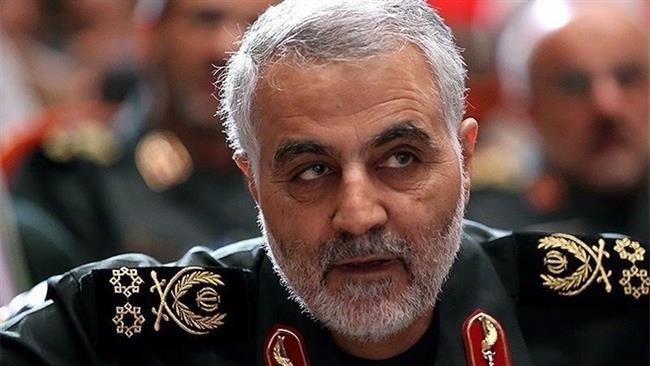
Commander of Iranian Revolutionary Guard Corps’ (IRGC) elite Quds force, Major General Qassem Suleimani

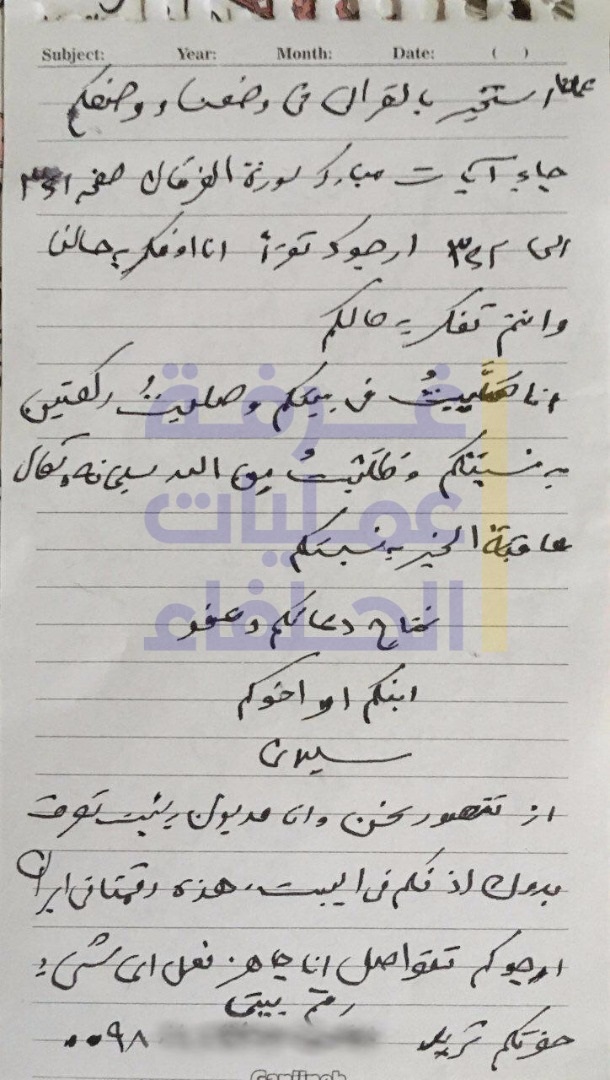
The commander of IRGC’s Al-Quds Force General Qassem Suleimani left a letter to the owner of the house he dwelled in while leading the anti-ISIL battles in Syria’s Al-Bukamal.
General Suleimani apologized to the owner of the house for dwelling in it without his permission and expressed readiness to compensate for any damage he may have caused to the house, including his personal phone number in the letter.
General Suleimani also pointed out that he as a Shiite does not differ from the owner of the house who is Sunni, stressing that both follow Prophet Muhammad (PBUH) and love His Family (P).
Source: Al-Manar Website


رسالة تركها اللواء #قاسم_سليماني لصاحب المنزل الذي استقر فيه خلال قيادته لمعارك #البوكمال

رسالة اللواء قاسم سليماني

رسالة تركها اللواء الحاج قاسم سليماني قائد قوة القدس لصاحب المنزل الذي استقر فيه خلال قيادته لمعركة السيطرة على مدينة البوكمال، حيث اعتذر من صاحب المنزل لاضطراره المكوث في المنزل بدون اذنه وطلب منه مسامحته، وابدى الحاج قاسم في الرسالة استعداده لدفع ثمن أي ضرر لحق في المنزل ووضع رقمه الخاص في نهاية الرسالة وأكد أنه جاهز لفعل أي شيء يطلبه صاحب المنزل كما أشار الحاج خلال رسالته إلى عدم وجود أي خلاف بينه كشيعي وبين صاحب المنزل كونه من أهل السنة لأن الإثنين من أتباع النبي الأعظم ومحبي أهل البيت عليهم السلام.

River to Sea Uprooted Palestinian   
The views expressed in this article are the sole responsibility of the author and do not necessarily reflect those of the Blog!

Prof’ Richard Falk on Trump and Being in Time

flakBIT.jpg
In Taking Stock: One Year After Trump professor  Richard Falk dissects the universe in which we live in the light of Trump’s reign. Towards his conclusion, Falk writes the following paragraph on Being in Time – A Post Political Condition.  
“…as Gilad Atzmon persuasively argues in Being in Time, a politics of reason has been thrown disastrously off course by the impact of a liberal discourse infected by the taints of ‘political correctness’ and ‘identity politics,’ which substitutes conformity and allegiance for truth-seeking and acknowledgements of the impurities of social reality. Without a suitable discourse respectful of the contingencies and unevenness of reality we cannot find the pathways to humane political behavior. To be sure, the Mammonite discourse of the Trump brand of right-wing politics is certainly no better, offering a greed-saturated form of materialism that feeds the limitless appetite of the very richest among us while manipulating and repressing the rest of us. As Atzmon provocatively insists, this absence of a trustworthy discourse by which to express grievances and aspirations is why it clears the air to admit that our epoch has become ‘post-political,’ at least for now.” (https://richardfalk.wordpress.com)
I must admit that after what Falk went through following his endorsement of The Wandering Who? I expected him to stay away.  I was obviously wrong. Prof Falk. Is a man of courage who speaks out and tells the truth as he sees it.
cover bit small.jpg
Being in Time – A Post Political Manifesto,
Amazon.co.uk , Amazon.com and  here (gilad.co.uk).

River to Sea Uprooted Palestinian   
The views expressed in this article are the sole responsibility of the author and do not necessarily reflect those of the Blog!

Speaker Berri: Lebanon Overcame Crisis, Gov’t Functioning Normally

Berri
House Speaker Nabih Berri said that Lebanon has overcome the crisis caused by the surprise resignation of PM Saad Hariri, noting that the government is normally operating.
Talking to his visitors in Ain Al-Tineh on Friday, Berri said: “Everything is going on track,” noting that political sides in Lebanon have to offer some concessions.
Meanwhile, Berri voiced satisfaction towards statements released by both Hariri’s Al-Mustaqbal party and Hezbollah, adding: “All sides are working and the solution (to the crisis) is reachable.”
Berri’s remarks come just two days after Hariri announced he was putting off his resignation at President Michel Aoun request. The PM returned late Tuesday to Lebanon after being in Saudi Arabia for 14 days.
President Aoun accused Saudi Arabia of detaining Hariri after forcing him to offer resignation, stressing that the move is a violation to Lebanon’s serenity and interference in its internal affairs.
Source: Lebanese media
Related Videos
Related Articles
River to Sea Uprooted Palestinian   
The views expressed in this article are the sole responsibility of the author and do not necessarily reflect those of the Blog!

US BUFFER ZONE IN NORTHEASTERN SYRIA AND LAND-BRIDGE FROM TEHRAN TO BEIRUT

24.11.2017
Following the victory of the Syrian army and its allies over the “Islamic State” group in the town of Albu Kamal in the north-east of the country, the road has been opened for the first time since the declaration of the Islamic Republic of Iran in 1979 between Tehran, Baghdad, Damascus and Beirut and become safe and non-hostile to the four capitals and their rulers.
The United States tried to block the road between Tehran and Beirut at the level of Albu Kamal by forcing the Kurdish forces into a frantic race, but Washington failed to achieve its goals.
US Buffer Zone In Northeastern Syria And Land-Bridge From Tehran To Beirut
Click to see the full-size map
The Syrian Army along with allied forces (the Lebanese Hezbollah, the Iranian Revolutionary Guards and the Iraqi Harakat al-Nujaba’) liberated the city, opening the border with Iraq at al-Qa’im crossing. ISIS militants fled to the Iraqi al-Anbar desert and east of the Euphrates River where US and Kurdish forces are operating.
The United States established a new rule of engagement in the east of the Euphrates, informing the Russian forces that it will not accept any ground forces (the Syrian army and its allies) east of the Euphrates River and that it will bomb any target approaching the east of the river even if the objective of the ground forces was to pursue ISIS.
Thus, the US is establishing a new undeclared no-fly-zone without bothering to deny that this can serve ISIS forces east of the Euphrates and offer the terrorists a kind of protection. Moreover, the US-led international coalition air bombing against ISIS has reduced noticeably.
With this US warning, it is clear that Washington is declaring the presence of an occupying force in Syria, particularly as the presence of the coalition was linked to fighting ISIS as previously announced. Today ISIS has lost all cities under its occupation since July 2014 in Iraq and before this date in Syria. Therefore there is no legal reason for the presence of the US forces in the Levant.
By becoming an occupation force, the US troops expose themselves, along with the proxy Kurds operating under its command, to attacks similar to the one in Iraq and the one in Lebanon in 1982 during the Israeli invasion.
The United States will no longer be able to block the Iraqi-Syrian road (Al-Qaim-Albu Kamal) because it is related to the sovereignty of the two countries. But this does not mean Tehran will use this route to send weapons across Baghdad and Damascus to Hezbollah in Lebanon, for two reasons:
First, Iraq has sovereignty and the Prime Minister Haider Abadi will not allow any Iraqi armed party to keep its weapons because the Iraqi armed forces are responsible for holding security, especially after the defeat of ISIS in all cities.
Abadi’s next step will be to disarm all Iraqi movements and organizations by the year 2018 and most likely after the forthcoming elections in May. According to well-informed sources Iran and the Marjaiya in Najaf (and the majority of the Iraqi parties) want Abadi to be re-elected for another term.
This means that Iraq will not allow its territory to be used to finance non-state actors, even if these have taken part in the elimination of ISIS. Neither will he allow weapons to cross his country to an ally that fought alongside the Iraqi forces – such as Hezbollah – because he is not positioning himself against the United States and the countries of the region. This is not Iraq’s battle.
Secondly, Hezbollah does not need the land route from Tehran to Beirut because the sea and air links with Tehran are open through Syria and from it to Lebanon. Moreover, Hezbollah is no longer in need of additional weapons in Lebanon, especially since the Lebanese-Syrian front is unified against any possible future Israeli war.
As for Syria, the preparations for starting the challenging and complex rounds of negotiation to open the way for political talks have begun in Sochi, Russia. Naturally, these talks are difficult because the United States has demands, as does Turkey, which has shown its intention to stay for a very long in the north of Syria.
In this context, Syrian President Bashar al-Assad is ready to prepare for a new constitution, on which work began several months ago. Syrian and international human rights experts and law specialists have been discussing with various groups how to establish new constitutional foundations for Syria, aiming to invite the numerous anti-Damascus parties to lay down their arms and join in the negotiations for the future of Syria.
The only problem remains with al-Qaeda in Bilad al-Sham, and the thousands of foreign fighters in Idlib, waiting for the results of the Turkish-Syrian negotiation.
The war was long and complex, mainly because of shifting alliances. But the peace will be no less complex to construct if future wars based on revenge and a greedy desire for territory are to be avoided.

جسر طهران – بيروت… حقيقي أم وهمي؟

تقرير / منطقة أميركية عازلة شمال شرقي سورية

بعد الانتصار الذي حققه الجيش السوري وحلفاؤه باستعادة مدينة البوكمال السورية شرق البلاد من تنظيم «داعش»، فُتحت الطريق – للمرة الأولى منذ إعلان الجمهورية الاسلامية في ايران العام 1979 – بين طهران وبغداد ودمشق وبيروت وأصبحت آمنة وغير عدائية للعواصم الأربع وحكّامها.

وحاولت الولايات المتحدة قطع الطريق البرية بين طهران – بيروت وإعاقتها عبر البوكمال من خلال دفْع القوات الكردية (قسد) التي تعمل بإمرتها نحو البوكمال في سباقٍ محموم أدى الى فشل واشنطن في تحقيق أهدافها. وقد وصلت القوات السورية ومعها القوات الرديفة (حزب الله اللبناني والحرس الثوري الايراني وحركة النجباء العراقية) الى المدينة وحرّرتْها وفتحتْ الحدود البرية مع العراق، بعدما كانت سيطرت قواته البرية على الحدود من ناحية القائم وطردت «داعش» الذي فرّ رجاله إلى الصحراء العراقية في الأنبار وإلى شرق نهر الفرات حيث توجد القوات الأميركية وتلك الكردية العاملة بإمرتها.

وعملت الولايات المتحدة على إرساء قواعد اشتباك جديدة شرق الفرات، إذ أبلغت الى القوات الروسية انها لن تقبل وجود أي قوى للجيش السوري وحلفائه شرق نهر الفرات وأنها ستقصف أي هدف يقترب من شرق النهر حتى ولو كان الهدف قوات «داعش»، وتالياً فإن أميركا فرضت منطقة حظر طيران من دون الإعلان عنها ولم تُخْفِ حمايتها حتى لقوات «داعش»، وخصوصاً أن وتيرة الغارات الأميركية والتحالف الدولي الذي تقوده واشنطن تراجعتْ في شكل ملحوظ. وبغرض منْع عبور نهر الفرات، تكون أميركا أعلنت عن بقائها في شمال شرقي سورية، الأمر الذي تعتبره دمشق احتلالاً لأن الحرب على «داعش» اقتربت من نهايتها مع خسارة التنظيم كل المدن التي كان يحتلّها في سورية والعراق.

وهذا التوصيف للقوات الأميركية قد يعرّضها ومعها القوات الموالية لها لعمليات شبيهة بتلك التي تعرّضت لها العام 2003 مع بداية احتلالها للعراق وأيضاً العام 1982 في لبنان إبان الاجتياح الاسرائيلي.

ولن تستطيع الولايات المتحدة قفل الطريق العراقي – السوري (القائم – البوكمال) لأن الأمر يتعلق بسيادة البلدين. الا أن هذا لا يعني ان طهران ستستخدم هذه الطريق لعبور الأسلحة الى «حزب الله» لسببين:

اولاً: ان للعراق سيادة وتالياً فإن رئيس الوزراء حيدر العبادي لن يسمح لأي طرف مسلّح عراقي بالوجود في العراق لان القوات المسلحة العراقية كافية للإمساك بالوضع الأمني – خصوصاً بعد إنهاء سيطرة «داعش» على المدن – وتالياً الخطوة التالية للعبادي ستكون سحب السلاح من كل الحركات والتنظيمات العراقية بحلول السنة المقبلة وعلى الأرجح بعد الانتخابات. وعلمت «الراي» أن إيران والمرجعية العليا في النجف وغالبية الأحزاب العراقية تريد التمديد للعبادي لولاية ثانية. وهذا يعني أن العراق لن يسمح بأن تُستخدم أراضيه لتمويل جهات غير حكومية – حتى ولو كانت صديقة وشاركت بالقضاء على «داعش»، مثل «حزب الله» – لانها بهذه الطريقة تضع نفسها بالواجهة ضدّ الولايات المتحدة ودول المنطقة وهذا ما لا تريده بغداد.

ثانياً: لا يحتاج «حزب الله» الى الطريق البرية لأن الخطوط البحرية والجوية مفتوحة عن طريق سورية والداخل اللبناني، إضافة الى ان الحزب لم يعد يحتاج إلى أسلحة إضافية في لبنان، وخصوصاً ان الجبهة اللبنانية – السورية أصبحت موحّدة ضد أي عدوان اسرائيلي محتمل في المستقبل. اما بالنسبة إلى سورية فالتحضيرات لبدء الجولات الصعبة والمعقّدة لفتح الطريق أمام المحادثات السياسية قد بدأت في سوتشي – روسيا، ومن الطبيعي ان تكون هذه المحادثات شاقة لأن الولايات المتحدة لها طلبات وكذلك تركيا التي ثبتت نفسها في المناطق الشمالية لسورية وكأنها باقية لأمد طويل.

وفي هذا السياق فإن الرئيس السوري بشار الأسد مستعدّ للتحضير لدستور جديد بدأ العمل من أجله منذ أشهر وقد عُرض على الخبراء الحقوقيين ويُناقَش مع جهات مختلفة لوضع أسس دستورية جديدة لسورية تجبر الأطراف المتنوعة المشارب على إلقاء السلاح. وتبقى عقدة «القاعدة» في بلاد الشام والمقاتلين الأجانب الموجودين بالآلاف في إدلب على حالها في انتظار القرار التركي – السوري في شأن مصيرهم.

River to Sea Uprooted Palestinian   
The views expressed in this article are the sole responsibility of the author and do not necessarily reflect those of the Blog!

The Greatest Dangers in the Middle East Today are Jared Kushner and Mohamed bin Salman


The sort of Neo-con and right-wing think tankers, who in 2003 were saying that a war with Iraq would be a doddle, are back in business in Washington, pushing for war with Iran – and are stronger than ever
November 21, 2017 “Information Clearing House” – I was in my room in the Baghdad Hotel on al-Sadoun street last Sunday evening, writing about the chances for stability in Iraq taking hold, when the walls and floor began to shake. They jerked sideways and up and down several times as if my room was the cabin of boat in a rough sea.
My first confused thought was – this being Baghdad – that there must have been some huge bomb explosion, which would explain the rocking motion of everything around me. But almost simultaneously, I realised that I had not heard the sound of an explosion, so a better explanation was that there was an earthquake, though I had never thought of Baghdad as being in an earthquake zone.
The jerking movements of the walls and floor of my room were so spectacular that I wondered if the building was going to collapse. I looked under the desk where I was sitting, but the space was too small for me to crouch in. I got down on my hands and knees and started to crawl towards the bathroom which is meant to be the safest place in the event of a bomb explosion, and I supposed the same must be true of earthquakes.
I had got about half way there when the shaking stopped. The lights were still on which seemed a good sign. I got back on a stool and googled “Baghdad earthquake” on my laptop and read a series of alarmed tweets confirming that was indeed what had just happened.
It was a 7.3 magnitude quake centred 19 miles from Halabja, a small city in Iraqi Kurdistan 150 miles north-east of Baghdad and close to the Iranian border. Nine people had been killed in Iraq, but the catastrophic damage was in Iran where 530 people had died.
In earlier times, an earthquake like this would be taken as an omen: a warning of bad times to come. Shakespeare is full of such grim portents which commonly precede assassinations and defeats in battle. This would be a pity in the case of present day Iraq because, for the first time since Saddam Hussein started his war with Iran in 1980, the prospects look positive.
The central government is stronger than before, defeating Isis in the nine-month long siege of Mosul and ending the move towards secession of Iraqi Kurdistan by peacefully reoccupying Kirkuk and other disputed territories.
Substantial successes these certainly are, but what has really changed the political landscape of Iraq is that there is no longer a community, party or faction fighting the central government with financial and military aid from foreign backers. For once, Iraq has good relations with all the neighbouring states.
The earthquake may not herald more domestically-generated violence in Iraq, but in the real world it is a useful reminder that the country, along with the rest of the Middle East, is vulnerable to unexpected and unpredictable events. Of course, these are always a possibility anywhere, but never more than at present because of the strange character change of two traditionally conservative powers in the region: the US and Saudi Arabia. Previously committed to preserving the political status quo, both have become mercurial and prone to saw off the branch on which they are sitting.
Shortly before the earthquake in Baghdad, I was making the above point about Iraq stabilising to a European diplomat. He said this might be true, but that real danger to peace “comes from a combination of three people: Saudi Crown Prince Mohammed bin Salman, Trump’s son-in-law and Middle East envoy Jared Kushner, and Bibi Netanyahu in Israel.”
Probably, the Saudis and the Americans exaggerate the willingness of Netanyahu and Israel to go to war. Netanyahu has always been strong on bellicose rhetoric, but cautious about real military conflict (except in Gaza, which was more massacre than war).
Israel’s military strength tends to be exaggerated and its army has not won a war outright since 1973. Previous engagements with Hezbollah have gone badly. Israeli generals know that the threat of military action can be more effective than its use in maximising Israeli political influence, but that actually going to war means losing control of the situation. They will know the saying of the 19th century German chief of staff, Helmuth Von Moltke, that “no plan survives contact with the enemy”.
But even if the Israelis do not intend to fight Hezbollah or Iran, this does not mean that they would not like somebody else to do so for them. Iraqi Prime Minister Haider al-Abadi told me in an interview earlier this month that his greatest fear was a US-Iranian confrontation fought out in Iraq. This could happen directly or through proxies, but in either case would end the present fragile peace.
On the optimistic side, US policy in Iraq and Syria is largely run by the Pentagon and not the White House, and has not changed much since President Obama’s days. It has been successful in its aim of destroying Isis and the self-declared caliphate.
The wars in Iraq and Syria already have their winners and losers: President Bashar al-Assad stays in power in Damascus, as does a Shia-dominated government in Baghdad. An Iranian-backed substantially Shia axis in four countries – Iran, Iraq, Syria and Lebanon – stretches from the Afghan border to the Mediterranean. This is the outcome of the wars since 2011, which is not going to be reversed except by a US land invasion – as happened in Iraq in 2003.
The great danger in the Middle East today is that Crown Prince Mohamed bin Salman and Jared Kushner appear to have a skewed and unrealistic understanding of the world around them. Inspector Clouseau seems to have a greater influence on Saudi policy than Machiavelli, going by the antics surrounding the forced resignation of Saad Hariri as Prime Minister of Lebanon. This sort of thing is not going to frighten the Iranians or Hezbollah.
The signs are that Iran has decided to go a long way to avoid confrontation with the US. In Iraq, it is reported that it will support the re-election of Abadi as prime minister which is also what the US wants. Iran knows that it has come out on the winning side in Iraq and Syria and does not need to flaunt its success. It may also believe that the Crown Prince is using anti-Iranian nationalist rhetoric to secure his own power and does not intend to do much about it.
Nobody has much to gain from another war in the Middle East, but wars are usually started by those who miscalculate their own strengths and interests. Both the US and Saudi Arabia have become “wild cards” in the regional pack. The sort of Neo-con and right-wing think tankers, who in 2003 were saying that a war with Iraq would be a doddle, are back in business in Washington, pushing for war with Iran – and are stronger than ever.
The wars in the Middle East should be ending, but they could just be entering a new phase. Leaders in the US and Saudi Arabia may not want a new war, but they might just blunder into one.
This article was originally published by The Independent –

River to Sea Uprooted Palestinian   
The views expressed in this article are the sole responsibility of the author and do not necessarily reflect those of the Blog!

Kosherizing Palestine

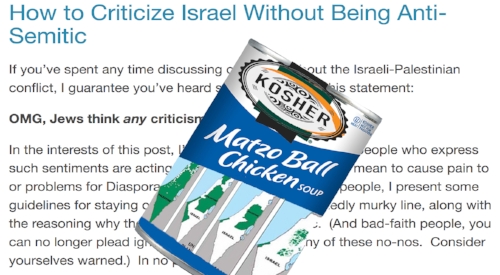
kosher palestine_edited-1.jpg
Introduction by Gilad Atzmon
When Palestine is concerned, the discourse of the oppressed is shaped by the sensitivities of the oppressor.
The following article was written in a disgusting attempt to ’educate’ the Goyim on how to discuss the Israeli-Palestine conflict without offending the Jews.  Israel defines itself as ‘The Jewish State.’ Its airplanes and tanks are decorated with Jewish symbols. The Jewish state is institutionally supported by world Jewry.  This means that  the relationships between and among  Israel, Zionism, Jews, Judaism and Jewishness must be open to scrutiny and criticism. The article’s author insists that this is not the case.  He or she endeavours to set ‘guidelines’ — a rule bound  Jerusalemite mode of engagement that sustains complete intellectual, political and spiritual paralysis.
I guess that before we delve into the liberation of Palestine we may want to emancipate ourselves first.

How to Criticize Israel Without Being Anti-Semitic

If you’ve spent any time discussing or reading about the Israeli-Palestinian conflict, I guarantee you’ve heard some variation of this statement:
OMG, Jews think any criticism of Israel is anti-Semitic! 
In the interests of this post, I’m going to assume that the people who express such sentiments are acting in good faith and really don’t mean to cause pain to or problems for Diaspora Jewry.  For those good-faith people, I present some guidelines for staying on the good side of that admittedly murky line, along with the reasoning why the actions I list are problematic.  (And bad-faith people, you can no longer plead ignorance if you engage in any of these no-nos.  Consider yourselves warned.)  In no particular order:
1.     Don’t use the terms “bloodthirsty,” “lust for Palestinian blood,” or similar.  Historically, Jews have been massacred in the belief that we use the blood of non-Jews (particularly of children) in our religious rituals.  This belief still persists in large portions of the Arab world (largely because white Europeans deliberately spread the belief among Arabs) and even in parts of the Western world.  Murderous, inhumane, cruel, vicious–fine.  But blood…just don’t go there.  Depicting Israel/Israelis/Israeli leaders eating children is also a no-no, for the same reason.
2.     Don’t use crucifixion imagery. Another huge, driving motivation behind anti-Semitism historically has been the belief that the Jews, rather than the Romans, crucified Jesus.  As in #1, this belief still persists.  There are plenty of other ways to depict suffering that don’t call back to ancient libels.
3.     Don’t demand that Jews publicly repudiate the actions of settlers and extremists.  People who make this demand are assuming that Jews are terrible people or undeserving of being heard out unless they “prove” themselves acceptable by non-Jews’ standards.  (It’s not okay to demand Palestinians publicly repudiate the actions of Hamas in order to be accepted/trusted, either.)
4.     Don’t say “the Jews” when you mean Israel.  I think this should be pretty clear.  The people in power in Israel are Jews, but not all Jews are Israelis (let alone Israeli leaders).
5.     Don’t say “Zionists” when you mean Israel. Zionism is no more a dirty word than feminism.  It is simply the belief that the Jews should have a country in part of their ancestral homeland where they can take refuge from the anti-Semitism and persecution they face everywhere else.  It does not mean a belief that Jews have a right to grab land from others, a belief that Jews are superior to non-Jews, or any other such tripe, any more than feminism means hating men.  Unless you believe that Israel should entirely cease to exist, you are yourself Zionist.  Furthermore, using “Zionists” in place of “Israelis” is inaccurate and harmful.  The word “Zionists” includes Diasporan Jews as well (most of whom support a two-state solution and pretty much none of whom have any influence on Israel’s policies) and is used to justify anti-Semitic attacks outside Israel (i.e., they brought it on themselves by being Zionists).  And many of the Jews IN Israel who are most violent against Palestinians are actually anti-Zionist–they believe that the modern state of Israel is an offense against God because it isn’t governed by halakha (traditional Jewish religious law).  Be careful with the labels you use.
6.     Don’t call Jews you agree with “the good Jews.”  Imposing your values on another group is not okay.  Tokenizing is not okay.  Appointing yourself the judge of what other groups can or should believe is not okay.
7.     Don’t use your Jewish friends or Jews who agree with you as shields.  (AKA, “I can’t be anti-Semitic, I have Jewish friends!” or “Well, Jew X agrees with me, so you’re wrong.”)  Again, this behavior is tokenizing and essentially amounts to you as a non-Jew appointing yourself arbiter over what Jews can/should feel or believe.  You don’t get to do that.
8.     Don’t claim that Jews are ethnically European.  Jews come in manycolors–white is only one.  Besides, the fact that many of us have some genetic mixing with the peoples who tried to force us to assimilate (be they German, Indian, Ethiopian, Italian…) doesn’t change the fact that all our common ancestral roots go back to Israel.
9.     Don’t claim that Jews “aren’t the TRUE/REAL Jews.”  Enough said.
10.   Don’t claim that Jews have no real historical connection to Israel/the Temple Mount.  Archaeology and the historical record both establish that this is false.
11.   Don’t accuse Diasporan Jews of dual loyalties or treason.  This is another charge that historically has been used to justify persecution and murder of Jews.  Having a connection to our ancestral homeland is natural.  Having a connection to our co-religionists who live there is natural.  It is no more treasonous for a Jew to consider the well-being of Israel when casting a vote than for a Muslim to consider the well-being of Islamic countries when voting.  (Tangent: fuck drone strikes.  End tangent.)
12.   Don’t claim that the Jews control the media/banks/country that isn’t Israel.  Yet another historical anti-Semitic claim is that Jews as a group intend to control the world and try to achieve this aim through shadowy, sinister channels.  There are many prominent Jews in the media and in the banking industry, yes, but they aren’t engaged in any kind of organized conspiracy to take over those industries, they simply work in those industries.  The phrase “the Jews control” should never be heard in a debate/discussion of Israel.
13.   Don’t depict the Magen David (Star of David) as an equivalent to the Nazi swastika.  The Magen David represents all Jews–not just Israelis, not just people who are violent against Palestinians, ALL JEWS.  When you do this, you are painting all Jews as violent, genocidal racists.  DON’T.
14.   Don’t use the Holocaust/Nazism/Hitler as a rhetorical prop.  The Jews who were murdered didn’t set foot in what was then Palestine, let alone take part in Israeli politics or policies.  It is wrong and appropriative to try to use their deaths to score political points.  Genocide, racism, occupation, murder, extermination–go ahead and use those terms, but leave the Holocaust out of it.
15.   In visual depictions (i.e., political cartoons and such), don’t depict Israel/Israelis as Jewish stereotypes.  Don’t show them in Chassidic, black-hat garb.  Don’t show them with exaggerated noses or frizzled red hair or payus (earlocks).  Don’t show them with horns or depict them as the Devil.  Don’t show them cackling over/hoarding money.  Don’t show them drinking blood or eating children (see #1).  Don’t show them raping non-Jewish women.  The Nazis didn’t invent the tropes they used in their propaganda–all of these have been anti-Semitic tropes going back centuries.  (The red hair trope, for instance, goes back to early depictions of Judas Iscariot as a redhead, and the horns trope stems from the belief that Jews are the Devil’s children, sent to destroy the world as best we can for our “father.”)
16.   Don’t use the phrase “the chosen people” to deride or as proof of Jewish racism.  When Jews say we are the chosen people, we don’t mean that we are biologically superior to others or that God loves us more than other groups.  Judaism in fact teaches that everyone is capable of being a righteous, Godly person, that Jews have obligations to be ethical and decent to “the stranger in our midst,” and that non-Jews don’t get sent to some kind of damnation for believing in another faith.  When we say we’re the chosen people, we mean that, according to our faith, God gave us extra responsibilities and codes of behavior that other groups aren’t burdened with, in the form of the Torah.  That’s all it means.
17.   Don’t claim that anti-Semitism is eradicated or negligible.  It isn’t.  In fact, according to international watchdog groups, it’s sharply on the rise.  (Which sadly isn’t surprising–anti-Semitism historically surges during economic downturns, thanks to the belief that Jews control the banks.)  This sort of statement is extremely dismissive and accuses us of lying about our own experiences.
18.   Don’t say that since Palestinians are Semites, Jews/Israelis are anti-Semitic, too.  You do not get to redefine the oppressions of others, nor do you get to police how they refer to that oppression.  This also often ties into #8.  Don’t do it.  Anti-Semitism has exclusively meant anti-Jewish bigotry for a good century plus now.  Coin your own word for anti-Palestinian oppression, or just call it what it is: racism mixed with Islamophobia.
19.   Don’t blow off Jews telling you that what you’re saying is anti-Semitic with some variant of the statement at the top of this post.  Not all anti-Israel speech is anti-Semitic (a lot of it is valid, much-deserved criticism), but some certainly is.  Actually give the accusation your consideration and hear the accuser out.  If they fail to convince you, that’s fine.  But at least hear them out (without talking over them) before you decide that.
I’m sure this isn’t a comprehensive list, but it covers all the hard-and-fast rules I can think of.  (I welcome input for improving it.)
But wait!  Why should I care about any of this?  I’m standing up for people who are suffering!
You should care because nonsense like the above makes Jews sympathetic to the Palestinian plight wary and afraid of joining your cause.  You should care because, unfortunately, the Israeli-Palestinian conflict has correlated to an uptick in anti-Semitic attacks around the world, attacks on Jews who have no say in Israeli politics, and this kind of behavior merely aggravates that, whether you intend it to or not.
The Israeli-Palestinian conflict is a real minefield in that it’s a clash between oppressed people of color and an ethnoreligious group that is dominant in Israel but marginalized and brutalized elsewhere (often nowadays on the exact grounds that they share ethnoreligious ties with the people of Israel), so it’s damned hard to toe the line of being socially aware and sensitive to both groups.  I get that.  But I think it is possible to toe that line, and I hope this post helps with that.  (And if a Palestinian makes a similar list of problematic arguments they hear targeted at them, I’d be happy to reblog it, too.)
So, TL;DR version:
1.     Do go ahead and criticize Israel.
2.     Don’t use anti-Semitic stereotypes or tropes.
3.     Don’t use overly expansive language that covers Jews as a whole and not just Israel.
4.     Don’t use lies to boost your claims.
5.     Do engage Jews in conversation on the issues of Israel and of anti-Semitism, rather than simply shutting them down for disagreeing.
6.     Do try to be sensitive to the fact that, fair or not, many people take verbal or violent revenge for the actions of Israelis on Diasporan Jews, and Diasporan Jews are understandably frightened and upset by this.
May there be peace in our days.

River to Sea Uprooted Palestinian   
The views expressed in this article are the sole responsibility of the author and do not necessarily reflect those of the Blog!