Saturday, 2 March 2019
Netanyahu’s Possible Indictment and Jewish Dialectics

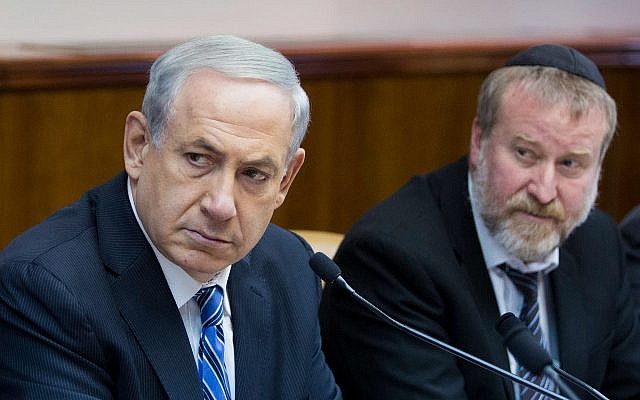
The Jewish State is an unusual place. It indicts its leaders and occasionally even locks them behind bars. Former Israeli president Moshe Katsav was found guilty of “rape, sexual harassment, committing an indecent act while using force, harassing a witness and obstruction of justice”. He was sentenced to seven years in prison. Veteran Israeli PM Ehud Olmert was convicted of two counts of bribery and was also sent to prison. Yesterday Israel’s attorney general published his decision to indict Mr Netanyahu on charges of bribery, fraud and breach of trust in connection with three cases.
Israel is tough on its leaders. It is certainly tougher than Britain that has so far failed to charge Tony Blair with war crimes or the USA that similarly failed to indict George Bush for launching an illegal war*. Yet Israel is far from an ethical realm. It is institutionally racist towards the indigenous people of the land as well as African immigrants, and it is also abusive to its poor. Israel is occasionally accused of gross war crimes. One may wonder why a criminal state with such an appalling record is so harsh with its leaders.
Zionism is one possible answer. Zionism, in its early days, was contemptuous of ‘the Jews.’ It promised to civilise the chosen people by means of ‘homecoming.’ The following comments weren’t made by Adolf Hitler or a member of the Nazi party but by some of the most dedicated early Zionists:
The wealthy Jews control the world, in their hands lies the fate of governments and nations. They set governments one against the other. When the wealthy Jews play, the nations and the rulers dance. One way or the other, they get rich.” (Theodor Herzl, Deutsche Zeitung, as cited by an Israeli documentary)
‘The Jew is a caricature of a normal, natural human being, both physically and spiritually. As an individual in society he revolts and throws off the harness of social obligations, knows no order nor discipline.’ (Our Shomer ‘Weltanschauung’, Hashomer Hatzair, December 1936, p.26. As cited by Lenni Brenner)
‘The enterprising spirit of the Jew is irrepressible. He refuses to remain a proletarian. He will grab at the first opportunity to advance to a higher rung in the social ladder.’ (The Economic Development of the Jewish People, Ber Borochov, 1916)
The harsh treatment of Israeli politicians by the Israeli media and judicial system is inspired by that Zionist promise. Israel wants to be ‘a state like all other states.’ It wants its politicians to be ethical and behave with dignity. But the Israeli people aren’t sure about the importance of such trappings. Mostly, they could care less whether the judicial system or the media approve of their leaders’ ethical records.
Ariel Sharon’s political career didn’t come to an end after the massacre in Sabra and Shatila. The Kahan Commission that was formed to probe Israeli involvement in that colossal crime found that the IDF was indirectly responsible and that Sharon, who was then the Defense Minister, bore personal responsibility for the massacre. The commission recommended the removal of Sharon from his post as Defense Minister. These findings did not stop Sharon political career, as we know, he went on to become Israel’s prime minister a few years later.
Aryeh Deri, a prominent Israeli politician and king maker was convicted of taking bribes while serving as Interior Minister. He was given a three-year jail sentence in 2000. Of course Deri was able to return to politics, and was re-elected to the Knesset in 2013 and resumed his role as a key political player.
As much as early Zionism promised to change the people of Israel, the people themselves haven’t been keen of turning into something totally foreign to their true nature. Despite yesterday’s polls that suggest that Netanyahu’s support has dropped following the decision to indict him, it is likely that within a few days we will find that Netanyahu’s support is rising.
This response to findings of criminal behaviour enlightens the dialectical clash between what the Israelis ‘are’ and the image they insist upon attributing to themselves.
Israelis love to see themselves as a dignified Western civilisation guided by law and order. They avidly sell this image to the world; but in reality the Jewish state is a an abusive tribal ghetto ran by oligarchs and underworld characters. Israel is at least ‘democratic’ enough to bring this contradiction to light. Its parliament is saturated with enough convicted criminals that Wikipedia dedicated a page to them, titled “List of Israeli public officials convicted of crimes or misdemeanors”.
* Needless to mention, Israel sends its politicians to jail for bribery but also does not prosecute war crimes as much as it should.
My battle for truth and freedom involves some expensive legal services. I hope that you will consider committing to a monthly donation in whatever amount you can give. Regular contributions will enable me to avoid being pushed against a wall and to stay on top of the endless harassment by Zionist operators attempting to silence me.
The views expressed in this article are the sole responsibility of the author and do not necessarily reflect those of the Blog!
Pakistan in the Crosshairs of New US Aggression

Pakistan in the Crosshairs of New US Aggression
With events escalating quickly in Kashmir it’s incumbent to ask the most pertinent questions in geopolitics.
Why there?
And, Why Now?
Why Kashmir?
India and Pakistan are both making serious moves to slip out from underneath the US’s external control. India has openly defied the US on buying S-400 missile defense systems, keeping up its oil trade with Iran and developing the important Iranian port at Chabahar to help complete an almost private spur of the North South Transport Corridor.
Pakistan, under new Prime Minister Imran Khan is trying to square accounts with China over its massive investment for its Belt and Road Initiative (BRI) known as the China Pakistan Economic Corridor (CPEC). It has also been at the forefront of multiple rounds of talks spurred by the Russians and Iranians to forge some kind of peace in Afghanistan.
And the Trump administration cut off US aid to Pakistan for not being sufficiently helpful in the fight against terrorism. This opened up a war of words between Trump and Khan who reminded Trump that the little bit of money the US sent Pakistan nothing compared to the losses both economic and personal.
If there was ever the possibility of peace breaking out between India and Pakistan it would be in the context of stitching the two countries together through China’s regional plans as well as solving the thorny problem of continued US and NATO occupation of Afghanistan.
Anything that can be done to flare up tensions between these two adversaries then serves the US’s goals of sowing chaos and division to keep the things from progressing smoothly. Khan was elected to, in effect, drain the Pakistani Swamp. His, like Trump’s, is a tall order.
And at this point it looks like he’s still willing to give it a go as opposed to Trump who is simply revealing himself to be a thin-skinned version of Barack Obama, albeit with a distinctly orange hue.
But, still why right now?
Because Trump is distracted with his latest love affair with himself – taking credit for a Korean peace process that will proceed with or without him at this point. All he can do is slow it down, which is exactly what his Secretary of State has been doing since last year’s meeting in Singapore.
And that leaves people like John Bolton and the rest of the worst people in D.C. to go to work undermining an entire region of the world.
Last weekend’s terrorist attack was a planned provocation to produce the very outcome we have today. Jaish-e-Mohammed have too many direct and indirect links to Bush the Lesser era programs and Saudi Arabia to be ignored.
This attack happens just days after Saudi Crown Prince Mohammed bin Salman comes rushing in to save Pakistan’s dwindling foreign exchange reserves with promises of $10 billion to build a refinery of Saudi oil at the (now Chinese) port of Gwadar.
There are no coincidences in geopolitics. Timing is everything.
It reminds me of the flare up in Nagorno-Karabakh between Armenia and Azerbaijan in 2016. Then Secretary of State John Kerry meets with Azeri leader Ilham Aliyev on a Wednesday and by Sunday a nearly twenty-year peace was broken.
National Security Advisor John Bolton is desperate to keep Trump from pulling half of the troops out of Afghanistan. After a disastrous “Let Make War on Iran” conference in Warsaw two weeks ago, Bolton, Secretary of State Mike Pompeo and Israeli Prime Minister Benjamin Netanyahu were reeling from having obtained no support outside of those already committed to such a plan.
Europe roundly said no, other than willing satrap Poland, still hoping Daddy Trump will save them from the mean old Nordstream 2 pipeline.
As Alistair Crooke pointed out recently, Bolton is putting pressure on Pakistan to forge a peace agreement with the Taliban which somehow allows for the US to maintain all of its troop presence there.
Washington is now embracing Pakistan (with Saudi Arabia and UAE writing the cheques). And Washington looks to Pakistan rather, not so much to contain and disrupt the Taliban, but to co-opt it through a ‘peace accord’ into accepting to be another US military ‘hub’ to match America’s revamped military ‘hub’ in Erbil (the Kurdish part of Iraq, which borders the Kurdish provinces of Iran). As a former Indian Ambassador, MK Bhadrakumar explains:“What the Saudis and Emiratis are expecting as follow-up in the near future is a certain “rebooting” of the traditional Afghan-Islamist ideology of the Taliban and its quintessentially nationalistic “Afghan-centric” outlook with a significant dosage of Wahhabi indoctrination … [so as to] make it possible [to] integrate the Taliban into the global jihadi network and co-habitate it with extremist organisations such as the variants of Islamic State or al-Qaeda … so that geopolitical projects can be undertaken in regions such as Central Asia and the Caucasus or Iran from the Afghan soil, under a comprador Taliban leadership”.
Bolton was also able to get Trump to agree to pull most of the troops out of Syria, leave just enough behind to call in airstrikes to protect what’s left of ISIS and relocate the rest to Iraq.
Trump gets to say he fulfilled a campaign promise, and everyone’s plans for War with Iran stays on schedule.
So, if I’m right (and there’s no guarantee that I am) what purpose does poking a fight between India and Pakistan serve?
Many, unfortunately.
1. One it sells the regional chaos angle about the need to continue the War on Terror.
2. ISIS is gone but we still have to fight Iran.
3. It punishes India for daring to get off the reservation.
4. It reminds Khan just how tenuous his hold on power is.
5. It is a warning to China that the US will risk everything to not lose the Heartland.
Add in the proximity to the Trump-Kim meeting as well as the fractious trade talks with China and you have an orgy of related news all at the same time to drive the point home.
Bolton, the Brits, France and Netanyahu were willing to risk World War III in Syria to create a false flag event in which Russia attacked a NATO target – the downing of the IL-20 ELINT aircraft last September.
Do you not think these insane animals wouldn’t risk a nuclear conflict between Pakistan and India to blow up (literally) China’s plans to win the biggest prize in geopolitics?
If you don’t then you haven’t been paying attention.
Both Imran Khan and Indian Prime Minister Narendra Modi need to keep their heads here. Modi has an election coming up later this year. I’m sure the calculus was that he would jump at the opportunity to burnish his cred with voters by lobbing a few bombs inside Pakistan. For Khan, this is the first real test of his leadership and he has to resist the siren’s call of the Saudi’s money to balance all sides of the equation while de-escalating this situation as quickly as possible.
One thing is for certain, we haven’t seen the last of this.
Photo: Flickr
River to Sea
Uprooted Palestinian
The views expressed in this article are the sole responsibility of the author and do not necessarily reflect those of the Blog!
Labels:
Afghanistan,
Al Qaeda,
American Aggression,
BRI,
China,
Imran Khan,
Indian Occupied Kashmir,
Iran,
ISIL,
John Bolton,
MBS,
NATO,
Netanyahu,
Pakistan,
Pompeo,
Russia,
S-400,
Saudia,
Taliban,
Trump
Britain’s Ban on Hezbollah Is Hypocritical and Unhelpful

The UK’s currently febrile political climate is being dominated by Brexit, as the country’s politicians grapple with the uncertainty created by result of the referendum to leave the EU.
The result and its aftermath has also provoked some soul-searching about the UK’s place in the world and increased its dependency on some of its most questionable allies in the Middle East, as Britain grapples with the now very real prospect of life outside the world’s largest trading bloc.
Crass politicking
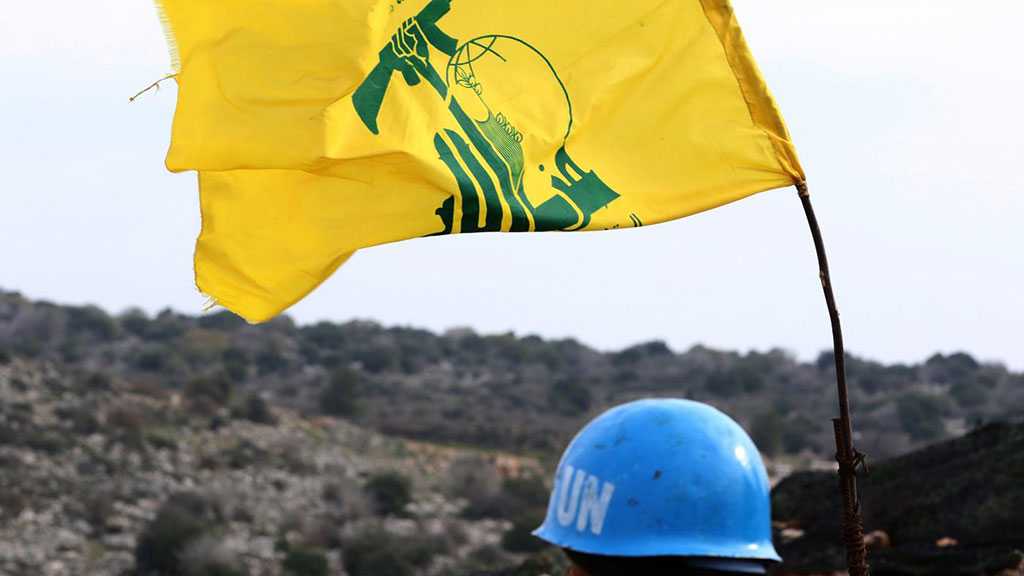
On Monday, Sajid Javid, the British home secretary, said in a statement that Britain would add Hezbollah, the Lebanese political party, in its entirety to its list of banned “terrorist organizations”.
Javid said that it was no longer tenable to maintain that there was a distinction between the political and military sides of the group.
This decision shines a light on some key developments in both the UK’s domestic politics and foreign policy.
Firstly, on the domestic front it represents a crass piece of politicking by ambitious Tory politicians, namely Javid and Foreign Secretary Jeremy Hunt, who are both keen to show, in light of the insecurity surrounding Theresa May’s position, that they would make a plausible prime minister.
It is a move that seeks to take advantage of the current debate around anti-Semitism in the opposition Labor party.
The wrong-headed equating of support for resistance to “Israeli” government policies in the Middle East with anti-Semitism takes advantage of the lack of understanding amongst the UK public and politicians regarding the complexities of Lebanese politics and the wider politics and international relations of the Middle East.
Britain’s hypocrisy
That Hezbollah and its allies gained around 60 percent of the popular vote in last year’s parliamentary elections, are essential to Lebanon’s security and stability, and have acted as one of the most effective fighting forces against ISIS, has been lost on British decision makers.
Citing Hezbollah as a security threat, when the UK is struggling with the blow-back from its own ISIS recruits demonstrates just how far removed UK decision-makers are from reality.
Indeed, British armed forces, according to a Hezbollah official, sought out the movement’s assistance in fighting ISIS in 2015, thus showing the rank hypocrisy that taints almost every British move in the Middle East. The UK’s unwelcome intervention into Lebanese politics shows that any semblance of even-handedness, such as that demonstrated by the UK’s siding with Europe over continued adherence to the Iran nuclear deal in the face of US pressure against Tehran, is merely a charade.
The UK inked one of its first post-Brexit trade agreements with Israel, continues to support its Saudi and Emirati allies with lethal weaponry to pursue their brutal war in Yemen, and shores up odious dictatorships in an attempt to boost its virtually stagnant economy.
The specter of lobby groups
This also begs questions about the integrity of the British foreign office (FCO). One can acknowledge the perverse maneuverings of ambitious politicians as being a motivating factor, but the supposed expertise and impartiality of the foreign office has been severely compromised by allowing such a short-sighted move to see the light of day.
Attempts to influence UK foreign policy are sadly following the model that has long predominated over the other side of the pond in Washington D.C.
Now, in London we have the unwelcome specter of lobbying groups with links to overseas regimes, holding events to try and influence UK decision-makers.
This can be seen in the moves of organizations such as the Tony Blair Institute for Global Change, an organization set up ostensibly to promote globalization for all.
A recent event hosted by the Tony Blair Institute at parliament, aimed squarely at proscribing Hezbollah and involving pro-“Israeli” politicians and lobbyists, shows that the pernicious motives of foreign regimes are finding a place, and potentially a receptive ear in the heart of UK-decision making.
A waning reach
It appears that the FCO has followed the politicians and lobbyists’ lead here, and the UK’s waning international reach has forced it into giving a sop to its allies in the Middle East as it desperately struggles to keep itself relevant.
What this shows us is that UK foreign policy is open to the highest bidder – something the government department has essentially admitted before – which has serious ramifications for the UK’s mission as a so-called force for good in international affairs.
An institution that prides itself on its mission to promote British “values”, through active promotion of democracy, security and regional stability in the Middle East, should not be complicit in a move that is a blatant attempt to secure political capital by key cabinet members.
In short it is a move that directly undermines the fragile Lebanese democratic process, thus showing scant regard for the UK’s purported values and will ultimately be counter-productive in terms of UK national security. Legitimate political actors such as Hezbollah need to be engaged, not ostracized.
Labor politicians, and indeed any with a modicum of knowledge about the Middle East and who aren’t in thrall to foreign interests, would do well to push back against such misguided politicking.
Britain can only be taken seriously if it looks anew at the Middle East and casts off the imperial baggage that continues to cloud its reputation.
Recent noises from Labor have focused on plans for moving away from the laser-like focus on interests back towards values.
In doing so, current shadow foreign minister Emily Thornberry cited the obfuscating effect that previous UK governments’ obsessions with arms deals had on their ability to comprehend regional developments, particularly in relation to the Shah of Iran.
The current government would do well to heed this advice.
- Hezbollah Condemns UK Proscription as Subjugation to US
- Lebanon UN Envoy: Hezbollah a Major Lebanese Party, We Reject Describing it as Terrorist
River to Sea
Uprooted Palestinian
The views expressed in this article are the sole responsibility of the author and do not necessarily reflect those of the Blog!
Friday, 1 March 2019
Russian Shipyards: An overview
February 27, 2019

by Nat South for The Saker Blog
Part 1 https://thesaker.is/being-bullish-about-arctic-shipping-the-northern-sea-route-nsr/
Part 2 http://thesaker.is/the-new-silk-route-on-rails/
This is the third part of a series of analyses relating to Russia transport, shipping and the Belt and Road Initiative (BRI).
The existing and future strategic role of shipbuilding in Russia is not to be under-estimated despite the prevailing dominance of Asian shipyards. Currently, Russia faces a series of obstacles in relation to the overall development of Russian-flagged shipping, port infrastructure, multimodal logistics and the continued development of the Northern Sea Route (NSR) on the global maritime scene.
The main core of Russian shipbuilding is mainly clustered around St Petersburg, Murmansk and the Far East. There are other smaller shipyards in Rybinsk, Nizhny Novgorod, Zelenodolsk and in Crimea. United Shipbuilding Corporation (USC) along with Zvezda are the leading major shipbuilders.
In the Doldrums
Russian shipyards have a well-known reputation for having a bad ‘score sheet’ regarding sustained ability and effective building capability especially within the naval shipbuilding sector. Much has been discussed about these aspects within the industry and by experts in recent years. However, the focus of attention in this article is mostly on the civil shipbuilding sector, which is in a poor shape compared to other global shipyards.
The Soviet monolithic naval industries were highly dependent on the “military-industrial complex” demands, all of which vanished practically overnight in the 1990. The hard-hitting demise of the Soviet Union fossilised some shipyards and closed down others. Equipment, skills and know-how were not replaced, apart from a couple of niche sectors which struggled on, (nuclear icebreakers and submarines). Consequently, the entire industry greatly suffered not only during the Yelstin period but also this also continued during the Putin and Medvedev presidencies right up to 2012. New advances in technological and work processes simply did not get carried over into the Russian ship industry in a timely or sufficient manner. A glimpse of this was the need for a partnership between STX France and USC over the building of the Mistral-class ships. Shipbuilding certainly was not seen as a needy strategic priority, unlike other countries especially in Asia.
High-level government policies left out the resurgence of an effective national shipbuilding infrastructure for well over a decade. This meant that Russian shipyards were not capable of trying to keep the inertia going in any way without significant and steady state support, with the USC cluster taking a hefty proportion of state support. Back in 2014, president Putin asserted that Russian shipbuilding should be on a par with foreign producers.
Shipbuilding is a complex affair, mostly based on customer needs, but also including other parameters, such as national political drivers and forecasted economic trends. The West imposed a series of sanctions that had far-reaching repercussions on naval shipbuilding from marine engines, paint coatings and navigational equipment. These also clearly showed up the barriers and threats to Russia. The sanctions sent a signal to the heart of government, paving the way for a fundamental re-evaluation of policies across the board. They acted as a catalyst in gradually reshaping Russian economic policies, including those related to the BRI. Further Western sanctions on the Russian shipbuilding sector are planned.
Russian ship-building is currently at a stage of not only requiring substantial modernisation programmes but also acceleration of these activities, to stay afloat so to speak. The bottom line is self-sufficiency. With this in mind, the Russian“military-industrial complex” (known in Russian as the oboronnyi-promyshlennyi kompleks, or OPK), still gets a lion’s share of the budget. Therefore, it is of interest to see how this ultimately translates into the civilian sector. The share of civilian production in the shipbuilding sector accounts for 13.5%, with the OPK stating an increase to 30% by 2025. This predominance is not surprising given the increasing asymmetric hostile geopolitical environment that Russia is faced with.
Optimistic measures in form of a “Shipbuilding Industry Development, 2013-2030” programme was introduced in 2012 to boost Russia’s shipbuilding industry. “We must focus on high-tech domestic orders and renounce futile competition with China, Japan and South Korea, which are engaged in large-scale production of multi-service vessels, […] Therefore, we have determined our priority market niches in the programme – naval shipbuilding, the fishing fleet, production of hardware for the Northern Sea Route and development of the shelf, and river shipbuilding,”
The article “Foresight in civil shipbuilding 2030” outlines the complexities and issues faced by the Russian shipbuilding industry and describes various scenarios in detail. One aspect noted is that “innovative scenarios assume a shift from mass production order to small-scale or even single-unit niche production”. It can be argued that this has happened to many shipyards both in the civil and military oriented sectors. One niche area exploited by the National 2013-2030 programme is the development of offshore support vessels, (OSV) namely small specialised high-tech ships that work in the Arctic or harsh marine environments. Recently Gazprom ordered 4 offshore vessels from Zvezda. Another up-and-coming sector is the building of domestic fishing ships.
The article also provides some figures related to “the ratio of the combined tonnage of the ships produced in one year (in CGT) to the number of employees working at the shipyard is taken into account.” This is part of an assessment of the workforce productivity. Whereas Japan is approximately 180 CGT per person, South Korea not far behind with 145 CGT, but it is only 20 CGT per person in Russia, (Minpromtorg, 2013).
The National Programme is also a driver for associated technological spin-offs, to support the development of civil projects. One such example is marine propulsion. However, the industry is still beset with problems of modern facilities, financial and managerial woes.
The ministry of industry has also a list of requirements for state support for prospective ship operators wanting to build in Russia. This also applies to incorporating domestically produced components such as engines and control systems. Import substitution is also a headache for segments of the civil shipbuilding sector as well as other sectors such as domestic civil aviation programmes. At present, there is reliance on Chinese-made components as a stop-gap measure, however this has resulted in problems with the quality and durability.
There are pitfalls to this kind of carrot and stick approach, as it also gives preferential status to one of two shipyards, as exceptions to the application of the rules will likely go the major players and not to the smaller yards or customers. However, there is a long-term silver lining to these dark clouds, which may have a positive knock-on effect on naval shipbuilding in areas of dual-use technology programmes, but at a greater cost and time delays for the foreseeable future.
Nonetheless, a systematic revitalisation of Russian shipbuilding is painstakingly taking shape, with a number of positive stories to report. The Sredne-Nevsky shipbuilding yard is one such success story, responsible for the serial production of minehunters for the navy, it has become a digital shipyard, arising from a modernisation process starting in 2013. Another example is the 30 billion roubles ($459 million) 17-year planned investment in the development of the Krasnaya Kuznitsa shipyard in Arkhangelsk region. This shipyard is part of the Zvezdochka ship repair facility, itself part of USC.
A gradual emphasis is being placed on changes to reflect the need for optimization of technological processes around construction production systems, using advanced machinery such as plasma gas cutting machines. Other crucial aspects logistics, inventory-keeping, document control and more coordinated relationships with suppliers. Another technology being rolled out is VR prototyping (3-D rooms) systems to help designers improve the quality of documentation. Amur-based ASZ shipyard has been modernising its equipment and machinery. Just one example of several shipyards currently getting a long-awaited overhaul of systems and processes.
The overall goal is to develop a maximum production process per square metre of a given plant. Russia doesn’t need to look far to see how this is achieved in Chinese shipyards. For example, any aerial photo of Dalian shipyard (DISC) will reflect the intensity and complexity of various commercial and naval ship constructions.
Looking to the Far-East
At the same time as the development of BRI moving progressively westwards, the Russian pivot towards the east is gaining more leverage, on all levels. From schemes to provide land for citizens, to offshore entities based on Rossiky Island are being implemented. One aspect of interest to me is shipping and the industries connected to this sector. The Russian shipbuilding flagship project is the construction and operation of Zvezda Shipbuilding Complex in Russia’s Far Eastern Primorsky Region.
Part of the “Shipbuilding Industry Development, 2013-2030” included geographical clusters, with the northern cluster having an historic advantage. A priority in the far-eastern cluster is the notable development of the construction of a mega shipyard in the Far East, as part of a dedicated shipping cluster, “Zvezda complex”. A project in the making since 2012, the first part of the shipyard’s production facilities was commissioned in 2017 and work started in 2018 on cutting steel for the first ever 114,000t dwt Aframax tanker order. The yard also picked up an order for LNG-fuelled tankers for Sovcomflot in December 2018.
Over $3 billion is already earmarked for the construction of the mega shipyard at Bolshoy Kamen, it will be highly influential project for the region as a whole with an expected 7000 employees working there, once it is finally completed in 2024. The Zvezda mega-yard will comprise of a vast production facilities and workshops and will be used to build marine equipment such as Azipods propulsion units and also ships, including LNG carriers, tankers and potentially nuclear icebreakers. It will certainly will be a boost as a means of cushioning the increasing impacts of Western sanctions on Russia, by having such a big domestic shipyard.
Better late than never, given the extensive existing Chinese and South Korean shipyards in operations for decades. 115 ocean vessels have are planned to be constructed at the Zvezda shipyard. This figure is a tad optimistic I believe, as it is not known how many will actually be built and launched. This depends on the amount of government subsidies obtained by customers.
The Arctic Context
This shipyard is likely to involved in the building of the project 10510 ‘Leader’ class of nuclear icebreakers. This will be done in cooperation with other shipyards for subassemblies and subsystems.
Zvezda had already signed deals with major Russian companies to build large vessels, including LNG gas carriers and shuttle tankers for the Arctic LNG-2 project as a joint venture with South Korean shipbuilders, Samsung Heavy Industries Co. Ltd relating to the transfer of technical know-how competencies in this specialist area, significantly financially supported by the Russian government.
South Korea is certainly an important player in development of the NSR and in working collaboratively on the construction of specialised tonnage. South Korean yards have built and continue to build a number of specialised ice-classed icebreaking tankers as part of the Yamal LNG project.
The Arctic sector could be potentially a key driver for the Russian shipbuilding sector, although this will depend on the steady input of quality R&D and investment into the high-technological aspects that underpin this sector. This has not yet materialised in a sustained way, apart from limited production of ice-class support vessels for the oil and gas sector. More on this in a later analysis dedicated to Arctic shipping.
Shipyard fires and accidents
A nagging headache for Russian shipyards is the risk of shipboard fires. There has been a spate of fires in Russian shipyards including a high-profile incident during the under-construction of the icebreaker ‘Viktor Chernomyrdin’ last November. Likewise, this is another example of a major shipbuilding project that has been hamstrung by delays in schedules and an over-running budget.
As a result of these incidents work is underway to improve and implement nationwide fire standards, in particular bringing in automated fire control and monitoring systems control and mobile fire-fighting systems. However, extensive efforts to improve the overall safety environment is still significantly neglected, as the loss of the huge dry-dock PD-50 in October 2018 with tragic consequences shows.
The workforce
Russia like many other OECD countries is faced with an increasing aging and shrinking population. This presents a dilemma in recruiting and maintaining a skilled workforce. Another tough nut to crack is the issue of a chronic shortage in specialised manpower within the shipbuilding sector, something is also common to other parts of the world. Therefore, it is of interest then to see the creation of military scientific units so as to enable conscripts with the talent and skills to serve for one year on bespoke naval technology and ship building projects. The first technical scientific company was set up in Sevmash in the summer of last year.
Summary
Currently, Russian shipbuilding is still experiencing a period of a slow transition from inherited Soviet-era processes and management. It is considerably lagging behind both West and East shipyards regarding major ship construction projects. Sporadic efforts have been made to modernise and upgrade a number of yards and production processes, although there is still much more to do in a coherent and transparent manner. The main focus is on process upgrades and machinery renewal as part of a package of digital transformation in production, automated work and design practices.
A number of government initiatives have been implemented to re-energise the civil shipbuilding sector, largely left moribund for several decades. The consequences of increased production costs and time delays within the civil shipbuilding are nevertheless hindering renewal and potential growth for the industry. This has led to a steady decline in the number of ships built in Russia in the last decade.
The sector faces a number of obstacles, namely increasing impact of sanctions on foreign-produced components. As such, it is a long arduous process of establishing positive image, neutralising the financial burden of technological advances, carrying out digitalisation, and maintaining a highly-specialised workforce.
The views expressed in this article are the sole responsibility of the author and do not necessarily reflect those of the Blog!
Russia Officially Returns to South Asia by Offering to Host Indo-Pak Peace Talks

Global Research, March 01, 2019
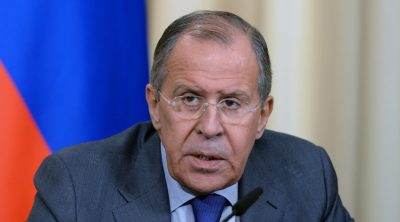
Russia’s 21st-century grand strategy of becoming the supreme “balancing” force in Afro-Eurasia is one major step closer to fruition after Foreign Minister Lavrov offered to host peace talks between India and Pakistan, proving that Russia’s refusal to take sides between its decades-long and newfound partners is part and parcel of President Putin’s pragmatic approach to regional affairs.
Russian Foreign Minister Lavrov sent shockwaves through South Asia on Thursday by announcing his country’s intent to host peace talks between India and Pakistan if they wish for it to do so, thereby heralding Russia’s return to the region and putting it one major step closer towards fulfilling its 21st-century grand strategy of becoming the supreme “balancing” force in Afro-Eurasia. This brief article will mostly serve as a collection of the author’s relevant pieces about the larger concepts that will be concisely touched upon on a point-by-point basis and should therefore be seen as a resource to rely on for better understanding Russia’s envisaged role in the Eastern Hemisphere.
All told, it’s nothing short of a game-changing geopolitical development that Russia would offer to host peace talks between India and Pakistan because it proves just how wildly successful President Putin’s “balancing” strategy has been thus far, considering how confident Moscow is that it can constructively apply this model to the two nuclear-armed Great Powers in South Asia. Russia has truly returned to the region and is poised to play an even larger role in it over the coming years, which will enable Moscow to more assertively counter the US’ plans to destabilize South Asia and therefore ensure the success of the emerging Multipolar World Order.
*
Note to readers: please click the share buttons below. Forward this article to your email lists. Crosspost on your blog site, internet forums. etc.
This article was originally published on Eurasia Future.
Andrew Korybko is an American Moscow-based political analyst specializing in the relationship between the US strategy in Afro-Eurasia, China’s One Belt One Road global vision of New Silk Road connectivity, and Hybrid Warfare. He is a frequent contributor to Global Research.
No Justification for Israel to Shoot Protesters with Live Ammunition: Report
By United Nations Human Rights Council
GENEVA (28 February 2019): The United Nations Independent Commission of Inquiry on the protests in the Occupied Palestinian Territory today presented its findings. The report focuses on the demonstrations in the Gaza Strip, referred to as the “Great March of Return and the Breaking of the Siege”.
“The Commission has reasonable grounds to believe that during the Great March of Return, Israeli soldiers committed violations of international human rights and humanitarian law. Some of those violations may constitute war crimes or crimes against humanity, and must be immediately investigated by Israel,” said the Chair of the Commission, Santiago Canton of Argentina.
The Commission was mandated by the Human Rights Council in May 2018 to investigate all alleged violations and abuses of international humanitarian law and international human rights law in the Occupied Palestinian Territory, in the context of the large-scale protests that began in Gaza on 30 March 2018. The Commission comprisesSantiago Canton of Argentina (Chair), Sara Hossain of Bangladesh and Betty Murungi of Kenya.
More than 6,000 unarmed demonstrators were shot by military snipers, week after week at the protest sites by the separation fence.
The Commission investigated every killing at the designated demonstration sites by the Gaza separation fence on official protest days. The investigation covered the period from the start of the protests until 31 December 2018. 189 Palestinians were killed during the demonstrations inside this period. The Commission found that Israeli Security Forces killed 183 of these protesters with live ammunition. Thirty-five of these fatalities were children, while three were clearly marked paramedics, and two were clearly marked journalists.
According to the Commission’s data analysis, the Israeli Security Forces injured 6,106 Palestinians with live ammunition at the protest sites during this period. Another 3,098 Palestinians were injured by bullet fragmentation, rubber-coated metal bullets or by hits from tear gas canisters. Four Israeli soldiers were injured at the demonstrations. Four Israeli soldiers were injured at the demonstrations. One Israeli soldier was killed on a protest day but outside the protest sites.
“There can be no justification for killing and injuring journalists, medics, and persons who pose no imminent threat of death or serious injury to those around them. Particularly alarming is the targeting of children and persons with disabilities,” said Sara Hossain. “Many young persons’ lives have been altered forever. 122 people have had a limb amputated since 30 March last year. Twenty of these amputees are children.”
The Commission found reasonable grounds to believe that Israeli snipers shot at journalists, health workers, children and persons with disabilities, knowing they were clearly recognizable as such.
Unless undertaken lawfully in self-defence, intentionally shooting a civilian not directly participating in hostilities is a war crime. The Commission found reasonable grounds to believe that individual members of the Israeli Security Forces, in the course of their response to the demonstrations, killed and injured civilians who were neither directly participating in hostilities, nor posing an imminent threat. These serious human rights and humanitarian law violations may constitute war crimes or crimes against humanity.
The Commission took note of the Israeli claim that the protests by the separation fence masked “terror activities” by Palestinian armed groups. The Commission found however that the demonstrations were civilian in nature, with clearly stated political aims. Despite some acts of significant violence, the Commission found that the demonstrations did not constitute combat or military campaigns.
The applicable legal framework was thus based in international human rights law. This assessment did not change even though the commission’s investigation revealed that some demonstrators were members of organized armed groups. Others were members of political parties. International human rights law prohibits the use of force based solely on a person’s actual or alleged affiliation to any group, rather than their conduct.
The Commission found that some members of the Higher National Committee organising the protests, which includes Hamas representatives, encouraged or defended demonstrators’ use of indiscriminate incendiary kites and balloons, causing fear among civilians and significant damage to property in southern Israel. The Commission concluded that Hamas, as the de facto authority in Gaza, failed to prevent these acts.
The Commission conducted 325 interviews with victims, witnesses and sources, and gathered more than 8,000 documents. An integral part of the investigation was comprehensive analysis of social media, and of vast amounts of audio-visual material showing incidents, including drone footage.
The Commission was mandated by the UN Human Rights Council to focus on accountability and identify those responsible for violations and alleged international crimes.
“The Commission will place the relevant information in a confidential file to be handed over to the High Commissioner of Human Rights, to provide access to this information to national and international justice mechanisms. The International Criminal Court is already concerned with this situation,” said Betty Murungi.
As the one-year anniversary of the Great March of Return on 30 March draws closer, the Commissioners urged all concerned to exercise restraint.
The large-scale killing and maiming of 30 March last year, when 18 people were killed and over 700 people shot, and of 14 May, when 60 people were killed and over 1100 people shot, must not be repeated. “The shooting must stop,” said Sara Hossain.
“The onus is now on Israel to investigate every protest-related killing and injury, promptly, impartially and independently in accordance with international standards, to determine whether war crimes or crimes against humanity were committed, with a view to holding accountable those found responsible”, said Santiago Canton. “We also urge the organisers, the demonstrators, and the de facto authorities in Gaza, to ensure that the Great March of Return is entirely peaceful, as it is intended to be.”
“The Commission finds that these protests were a call for help from a population in despair”, Santiago Canton reminded. “Not only Israel but also the de facto authorities led by Hamas and the Palestinian Authority have responsibilities towards them. The Commission calls on Israel to lift the blockade of Gaza, and on all three duty bearers to comply with their responsibilities and improve the living situation in Gaza.”
The Israeli authorities did not respond to repeated requests by the Commission for information and access to Israel and to the Occupied Palestinian Territory.
A fuller report, containing detailed factual and contextual information and legal analysis will be published and presented to the Human Rights Council on 18 March 2019 in Geneva.
-ENDS
To access the Commission’s short report and for more information, visit the report’s webpage.
Media Contacts:
Johan Eriksson: +41 76 691 10 82, mediacoioptprotests@ohchr.org
Rolando Gómez: +41 22 917 97 11, rgomez@ohchr.org
Cédric Sapey: +41 22 917 9845, csapey@ohchr.org
Johan Eriksson: +41 76 691 10 82, mediacoioptprotests@ohchr.org
Rolando Gómez: +41 22 917 97 11, rgomez@ohchr.org
Cédric Sapey: +41 22 917 9845, csapey@ohchr.org
Media interviews can be requested at number +41 22 917 81 82
B-roll for broadcasters can be downloaded here:
Video 1 (Incident Compilation at Gaza separation fence during protests)
Video 2 (Ahmad Abu Artema: the Reasons; The Voice from the Other Side of the Fence) [shotlist & storyline]
Video 3 (Minors injured) [shotlist & storyline]
More videos are also available on: http://www.youtube.com/c/UNHumanRightsCouncil
Video 1 (Incident Compilation at Gaza separation fence during protests)
Video 2 (Ahmad Abu Artema: the Reasons; The Voice from the Other Side of the Fence) [shotlist & storyline]
Video 3 (Minors injured) [shotlist & storyline]
More videos are also available on: http://www.youtube.com/c/UNHumanRightsCouncil
The press conference will be carried live on http://webtv.un.org/ and live broadcast
More broadcast material will be available at https://www.unmultimedia.org/tv/unifeed/
The views expressed in this article are the sole responsibility of the author and do not necessarily reflect those of the Blog!
حرب كشمير بواجهة هندية ـ باكستانية وتورّط دولي مكشوف!
مارس 1, 2019
د. وفيق ابراهيم
تَحوّلَ النزاع الهندي الباكستاني على منطقة كشمير الفاصلة بينهما مشروع حرب فعلية قد تشعل أكثر من شبه القارة الهندية.
لا شك أنّ هناك أسباباً هندية – باكستانية للصراع لم يجد أحدٌ له حلاً حتى الآن لكنه التزم بعد اندلاع حرب كبيرة بين طرفيها في 1972 بحدود الأمر الواقع في إطار هدنة مضبوطة، فما الذي استجدّ حتى يتحضّر البلدان لمواجهة واسعة؟
تصل مساحة كشمير الى 86 الف كلم مربع تقريباً تسيطر الهند على 65 في المئة منها تقريباً والباقي لباكستان كما تحتوي على غالبية إسلامية مقابل أقلية بوذية.
للتوضيح فإنّ انفصال الولايات الإسلامية في الهند بمسمّى جديد هو باكستان كان يُراد منه انفصال كامل الأقليات الإسلامية في شبه القارة الهندية، ونتيجة للبعد الجغرافي عن باكستان بقي ملايين المسلمين في أنحاء أخرى من الهند واحترب البلدان للاستحواذ على كشمير المنطقة الحدودية بينهما.
وكان التوتر السياسي يندلع على كشمير بين الفينة والأخرى لكنه لم يصل ومنذ 1972 إلى مرحلة حرب مكتفياً باشتباكات حدودية محدودة جداً تقتصر على مشاركة قليل من الجنود المنتشرين على حدود كشمير بين البلدين.
لجهة الأسباب الداخلية فإنّ جزءاً هاماً من «الإسلام المتطرف» ذي الجذر القاعدي موجود في باكستان وخصوصاً في كشمير ونما في مئات المراكز الاسلامية التي أسّستها السعودية ولا تزال تموّلها حتى تاريخه بمشاركة إماراتية ودعم من منظمة طالبان من مراكز نفوذها من أفغانستان المحاذية.
فرَفدَ هذا الاتجاه المتطرف التيارات الإسلامية في كشمير التي تعمل على تحرير القسم التي تسيطر عليه الهند فيها.
هناك فريق رابع تولى تقديم التسهيلات اللوجستية وحرية الحركة للتنظيمات الإسلامية وهي المخابرات الباكستانية التي لا يزال الغرب يتهمها حتى الآن بدعم القاعدة وطالبان في أفغانستان وتتهمها الهند حالياً بتوفير ظروف مناسبة لشنّ ضربات على القوات الهندية في كشمير وحتى داخل الهند.
لقد شكلت هذه التحالفات الغطاء الداخلي للعملية التي نفذها تشكيل إرهابي يُدعى «جيش محمد» مستهدفاً فيها كتيبة للجيش الهندي في مركز انتشاره في كشمير وأدّت الى مذبحة موصوفة.
ما أغضب نيودلهي ليست المذبحة فقط، إنما السلوك الباكستاني المتراخي الذي لم يمنح الهجوم الإرهابي الاهمية التي يستحقها.
واكتفت بشجب الهجوم والتعهّد بالتحقيق لكشف الفاعلين وهم معروفون سلفاً من أجهزتها، مشكلين جزءاً من بنية إرهابية تنتشر في معظم الجزء الباكستاني من كشمير.
لذلك حاولت الهند تنظيم ردّ عسكري يستبقُ فكرة مواصلة الهجمات على قواتها، فكانت الغارة الجوية الهندية على مواقع «جيش محمد» وتبيّن انّ باكستان كانت تتوقع مثل هذا الردّ فجابهته بشكل صارم الأمر الذي دفع بالبلدين لحشد قواتهما على حدوديهما في كشمير في حركات تصعيدية قد تتدحرج نحو حرب بين بلدين نوويين، وتعهّدت باكستان بإعادة طيار هندي أسقطت طائرته مقابل توقف الاستنفار الهندي.
تكشف هذه التفاصيل انّ أقساماً من المخابرات الباكستانية تعمل بإيحاء خارجي قابل للمضاعفة إذا كانت الهند العدو التقليدي هي المستهدف.
والسؤال هنا، لماذا يستهدفُ هذا الإيحاء الخارجي لمخابرات اسلام أباد الهند؟ وماذا فعلت؟
لم تفعل الهند ما يعادي علاقاتها الإقليمية والدولية، لكنها استمرّت بشراء النفط من إيران في حركة كسر للمقاطعة الأميركية التي تمنع العالم من علاقات اقتصادية طبيعية مع طهران، وهذا استفز الأميركيين ولم يتمكّن ولي العهد السعودي محمد بن سلمان في زيارته الأخيرة للهند من إقناع حكامها بشراء نفط سعودي بسعر تشجيعي مقابل وقف شراء النفط الإيراني.
أما السلوك الهندي الأهمّ الذي يستفزّ دوائر القرار في واشنطن فيتعلق بانفتاح الهند على روسيا والصين في مؤتمر يُهيّئ لتحالف جديد ترى فيه واشنطن «المكوّن العالمي الوحيد» الجدير بمجابهة الامبراطورية الأميركية المتراجعة.
هذا ما دفع بالبيت الأبيض إلى بناء خطة من مستويين: زعزعة الاستقرار الداخلي الهندي بواسطة الإسلام المتطرف الذي لا يصيبه في كشمير فقط، بل داخل الهند أيضاً حيث تنتشر أقليات إسلامية كبيرة.
فكانت بداية الخطة في هجوم جيش محمد في كشمير وبذلك يكسب الأميركيون على مستويين: إضعاف الهند داخلياً والاستمرار في تشويه علاقة الإسلام بالأديان الاخرى، والعالم عموماً.
من جانب آخر، يواصل الأميركيون عبثاً محاولة الحدّ من الصعود الصيني بمفاوضات تتحسّن وتسوء إلا انها لا تستطيع كبح الاندفاع الصيني نحو حلف مع الهند وروسيا يبدو ضرورياً لكسر أحادية التسلط الأميركي على العالم.
فهل يجد الأميركيون ضرورة لخلق ظروف مؤاتية لتفجير حرب كبيرة بين الهند وباكستان؟
الموضوع جدير بالانتباه لانه يندرج في إطار إشعال الأميركيين لكامل الحروب في العالم.
أليست واشنطن من احتلّ افغانستان والعراق وسورية وقسماً من أميركا اللاتينية، وتستعدّ لمغامرة عسكرية في فنزويلا، وهناك ليبيا المدمّرة وتونس المتأرجحة ومصر المتدهورة والسودان الذي يتحضّر لحروب أهلية، أليس الأميركيون من ينشر الصواريخ في شرق أوروبا؟
يتبيّن أنّ على روسيا والصين مهمة وقف مشروع الحرب الباكسانية الهندية بمفاوضات معمّقة لأنها حرب أميركية تستهدفهم أيضاً وتقع في مواجهة حدودهم السياسية وأمنهم الداخلي.
Related Videos
Related Aricles
- بادرة باكستانية تجاه إسلام أباد: إطلاق سراح الطيار الهندي اليوم
- استنفار واشتباك جوي ودعوات للتهدئة: ردّ سريع وموجع من باكستان
- الهند تهدد بمواصلة العمليات العسكرية على مواقع في باكستان
- فيسك” يكشف عن بصمات “إسرائيل” في الصراع المتصاعد
- كيف تطورت الأسلحة النووية الباكستانية؟
The views expressed in this article are the sole responsibility of the author and do not necessarily reflect those of the Blog!
Subscribe to:
Posts (Atom)