Saturday, 13 April 2019

Are Democracy and Despotic Racism Compatible

 | Posted by 


Are Democracy and Despotic Racism Compatible? An Analysis (12 April 2019) by Lawrence Davidson
Part I—The Israeli Model and Its American Supporters
On 25 February 2019, the Jewish American publication Forward, printed a remarkable opinion piece by Joshua Leifer. Leifer, who had worked in Israel for the anti-establishment +972 Magazine, is currently an associate editor ofDissent. His piece in the Forward was entitled “Wake Up, American Jews: You’ve Enabled Israel’s Racism for Years.”
Leifer begins by saying that the Israeli rightwing political parties have always been racist, though there was a time, back in the 1980s, when they objected to being too upfront about this. Thus, for the sake of public relations, they held their violent and despotic fringe—the Kahanists—at arm’s length. As Leifer puts it, what was frowned upon was the style rather than the substance of “explicit, violent racism.” That objection is now gone. The goal of a “Jewish supremacist state” is out in the open—an explicit political goal. And the Palestinians, including those who are Israeli citizens, are to be condemned to “forever live subjugated under military occupation, confined to isolated Bantustans, or … expelled.” Those Jews, both Israelis and diaspora Jews, who object to this process will be labeled as “traitors.”
Having established these facts on the ground, Leifer asks “how has the American Jewish establishment responded?” His answer is, they have either been silent or, more often, have actively sought to enable the power of Israel’s despotic racism. They have cooperated with, lobbied for, and raised money to underpin Israel’s racist policies. Of course, a Zionist is sure to assert that the lobbying and money are pursued for the sake of Israeli security. Yet, today’s Israeli leaders don’t define security, with the possible exceptions of Gaza and the Lebanese frontier, in terms of borders. Instead security is defined in terms of achieving and maintaining Jewish supremacy in all territory under Zionist control. This is why all of Israel’s Zionist parties have pledged never to include the token number of Arabs in the Knesset in a governing coalition.
In their effort to support Zionist Israel, America’s establishment Jewish leaders have proven themselves willing to undermine the constitutional freedoms of their own native country, as has been the case with their relentless attacks on the right of free speech as practiced in the boycott Israel movement—BDS. In the end, there can be no more convincing proof that these organizations serve as de facto agents of a foreign power, than to see how their leadership willingly discards the modern principles of civil and human rights found in the U.S. Constitution—to say nothing of international law—in order to support a state that openly pursues apartheid ends.
Leifer offers two possible reasons for why establishment Jewish organizations in the U.S. have chosen this path. The first possibility is “willful ignorance,” that is, a psychological inability to face the truth about a state that they, as American Jewish leaders, have always seen as an ultimate haven if a new Holocaust threat arises. The second possibility is that the leadership of the American Jewish organizations are themselves conscious racists when it comes to a Jewish supremacist state. According to Leifer, “No one exemplifies this better than Ambassador David Friedman, whose rhetoric—calling JStreet “worse than kapos”—mirrors the kind of rhetoric popular on the Israeli right.”
Part II—Racism Beyond the Israeli Right
This is a strong, and quite searing, condemnation of Israeli society and its American Jewish allies. Still, things can and do get worse. On 4 April 2019 the British anti-Zionist Jewish writer Tony Greenstein posted an essay entitled “There Is Nothing That Netanyahu Has Done That Labour Zionism Didn’t Do Before Him.” Greenstein begins by citing an 11 March 2019 piecein Haaretz written by Amira Haas, one of the few prominent non-Zionist Jewish journalists still working in Israel. Haas draws attention to the fact that “when Israeli governments in the 1960s and 1970s worked hard to steal Palestinian land while quoting God’s promises to atheists, they paved the way for parties promoting Jewish supremacy.” Thus, as Greenstein puts it: “It is often forgotten that it wasn’t Likud but the Israeli Labour Alignment which helped to launch the settler movement.” The remorseless absorption of Palestinian land and the oppressive treatment of its native population is not the work solely of the Israeli right wing. From the beginning, all of the major Zionist political parties, left and right, supported these policies as a way of fulfilling Zionist destiny.
Haas is unflinching in her characterization of their actions. For her, this “racist messianism” smacks of the policy of “Lebensraum” or “the urge to create living space.” Haas goes on to lament the fact that “we thought that in the end, the heads of the Labour movement would learn from the expansionist impulses of other nations. After all, they were the sons and brothers of the victims of Lebensraum.” In other words, at least in this policy of expansion and expulsion, all Israeli governing coalitions have adopted behaviors toward the Palestinians reminiscent of those practiced by the persecutors of Europe’s Jews.
Part III—The Question Answered
Considering that Israel and its supporters often proclaim that it is a Western-style democracy, and given the bit of history laid out above, we can ask if democracy and racist despotism can in fact be compatible. And, while the example of Israel serves as our backdrop for this query, we can consider the question generically. Can any democracy prove compatible with racist despotism?
Historically, the answer is an obvious yes. All that needs to happen is that a powerful group within the nation identifies itself as a privileged elite and reserves democratic procedures and privileges for itself, while condemning others to discrimination, segregation, or worse. Again, this posture has nothing to do with Jewishness. Any ethnicity or self-identified group can adopt it—based on color, religion, gender, or something else. The much-idealized ancient democracy of Athens did it based on gender and citizenship linked to birth.The United States ran as a selective democracy/racist despotism that practiced slavery until the middle of the 19th century while statutory discrimination persisted until the 1960s. Recent events indicate a revival of virulent white supremacism.
If there is a remedy to this it is in the rule of law functioning as an enforced regulatory process—one linked to a tenets of human rights. The U.S. Bill of Rights and the UN Universal Declaration of Human Rights are good, if incomplete models. Politics, including democratic politics, has to be constitutionally regulated to assure equity (much like economies), and the regulations have to be applied consistently until they become ingrained as natural expectations within the consciousness of the citizenry. This probably requires generations of equalitarian practice. And, even then, what you achieve is the minimizing of the infiltration of corruptive bias, and other such variants corrosive of genuine democracy, into the system. The truth is that you probably cannot eliminate the threat altogether.
Getting back to Israel: under the present circumstances, there is no reason to believe that the outcome of the recent 9 April 2019 Israeli elections would have changed the fate of either the the country’s Jews or the Palestinians. And, now that we know that Benjamin Netanyahu and his rightwing Likud Party will lead the next coalition government, it is certain that the illegal Zionist colonization of the West Bank, and its accompanying oppression, will continue apace. This, by the way, is simply the maintenance of a long-standing status quo—a conscious policy in its own right. And, it is a policy that reflects the fact that “for years, most Israelis have passively or actively allowed values of equality, justice, and yes, peace, to go by the wayside.”
So what is the legacy of Zionism? Is it the establishment of a genuine democracy in the Middle East? Is it even the realization of a haven for the world’s Jews against the next Holocaust? No, it is neither of these. It is rather the melding of an elitist pseudo-democracy with racist despotism—the realization of an elitist fortress from which Israel maintains distinctly undemocratic control of a hinterland full of conquered people. To paraphrase the odious Israeli Minister of Justice Ayelet Shaked, this whole setup smells nothing like democracy. It smells to me like fascism.

About Lawrence Davidson

Lawrence Davidson is professor of history emeritus at West Chester University in Pennsylvania. He has been publishing his analyses of topics in U.S. domestic and foreign policy, international and humanitarian law and Israel/Zionist practices and policies since 2010.

River to Sea Uprooted Palestinian   
The views expressed in this article are the sole responsibility of the author and do not necessarily reflect those of the Blog!

World Gives America One Year to Stop Trump or Face Sanctions

Frederic Legrand via Shutterstock
by John Feffer
The deputy assistant under secretary general of the United Nations has given the United States a one-year warning. If the country doesn’t clean up its act and become a responsible world citizen, Ithell Colhoquon announced yesterday, the international community will impose sanctions on U.S. government officials and tariffs on U.S. goods and services.
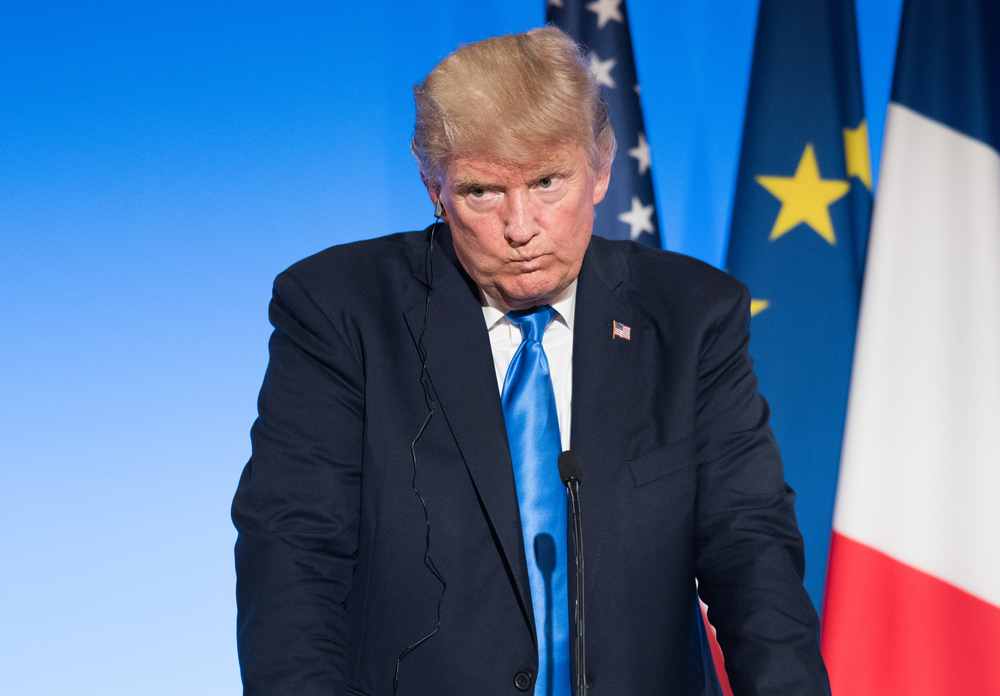
This announcement comes shortly after U.S. President Donald Trump told Mexico that it had one year to stop the flow of illegal drugs into the United States or face the shutdown of the southern border.
When asked what precipitated the international community’s sudden threat to sanction the United States, Colhoquon said, “The ICC decision. That was a line in the sand. That really demonstrated beyond a doubt that the United States is a rogue nation.”
Colhoquon was referring to Secretary of State Mike Pompeo’s denunciation of the International Criminal Court for “attacking America’s rule of law.” The Trump administration has followed up by revoking a visa for an ICC prosecutor looking into possible U.S. war crimes in Afghanistan. The administration has also threatened to arrest and prosecute ICC officials.
“If we could kick the United States out of the ICC, we would do so,” said ICC Third Vice President Elena Ferrante. “But it has always considered itself above the law — and above the ICC.”
Mexico and Canada have applauded the UN decision. Both countries have vowed to close their borders with the United States if the international community’s demands are not met.
Mexico has a wide range of complaints concerning U.S. policy, including the treatment of Mexican nationals, the dumping of U.S. products, and the unregulated trade in U.S. firearms. It has also complained about the enormous market for drugs in the United States, which has transformed Mexican narcotrafficking into an international force.
“Also, we don’t like college students coming down here on spring break,” Mexican Vice President Roberto Bolano recently said. “Every spring we have to deal with a caravan of loud, lazy, good-for-nothing gang members, and we’re tired of it!”
Canada has gone further by declaring the United States a failed state. Canadian President Marie-Claire Blais points to the murder rate in major cities, the opioid epidemic, the crumbling infrastructure, the endemic corruption, the huge gulf between rich and poor, and the authoritarian leadership.
“Sure, we all like our iPhones and Starbucks coffee,” Blais says, “but we can’t let this kind of social chaos spread like bird flu into our country.”
Although the Trump administration has not made any official comments on these recent developments, the U.S. president has been busy on Twitter.
“Everyone at UN is ugly and fat,” he tweeted. “Everyone in Mexico is ugly and stupid. Everyone in Canada smells bad and talks funny. Sad!”
Several countries have rallied behind the United States: Saudi Arabia, Russia, Hungary, North Korea, South Ossetia, the Canary Islands.
“Of course we have to speak up on behalf of the American president,” said Russian Vice Prime Minister Alexander Fadeyev. “You know the famous poem, yes? First they come for the human rights violators. And we say nothing. Then they come for the war criminals. And we say nothing. Then they come for the autocrats. And we still say nothing. So, when they come for us, who will be left to protest?”
When pressed about the actions the United States needs to take in order to return to the good graces of the international community, the UN’s Ithell Colhoquon was very specific. “The removal of Donald Trump is a necessary but not sufficient condition. Mike Pence is just as bad if not worse. So, we recommend that, after a series of public trials, Americans sentence all top-ranking officials of the Trump administration to a decade of community service picking up trash along America’s highways. Oh, and they should be forced to wear pink jumpsuits. Balls and chains would also be a nice touch.”
Response from the American public has been mixed.
“We’re not going to let a bunch of furriners tell us what to do in our own country,” said MAGA Stewart, the president of the Hands Off Trump coalition. As part of their commitment to the president, the members of the coalition have all changed their first names to Make America Great Again, or MAGA for short.
“Sovereignty is a cornerstone of American democracy,” opined Charles Coughlin, a constitutional law professor at the Antonin Scalia Law School at George Mason University. “We can tell other countries what to do, but it’s not a two-way street. In American jurisprudence, we call this the ‘one-way-street principle,’ though it’s also known more colloquially as hypocrisy.”
Support for the UN move, however, could be seen from satellite photographs. In fields and public parks across the United States on Tuesday at noon, Americans lay down to form letters with their bodies to spell out: “Thank you, UN!”
It’s unclear what will happen next in this standoff between the United States and the international community. Several countries have already withdrawn recognition of the Trump government and recognized Nancy Pelosi instead as the legitimate leader of the country. New Zealand has declared that, in the unlikely event that Donald Trump sets foot in the country, he will be immediately charged with crimes against intelligence.
But in perhaps the most significant sign that the international threats are having an effect, Twitter announced that it will suspend President Trump’s account. “Look, I just took the car keys away from my 99-year-old father,” one unnamed Twitter executive said. “Sometimes you just have to do the right thing to make the world a safer place.”

River to Sea Uprooted Palestinian   
The views expressed in this article are the sole responsibility of the author and do not necessarily reflect those of the Blog!

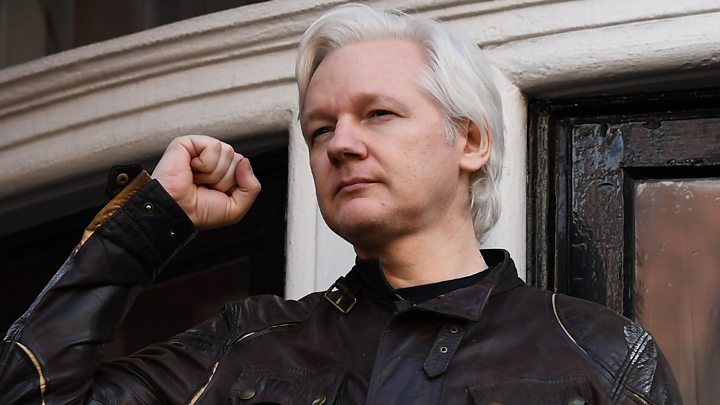
Julian Assange should not be extradited to US – Jeremy Corbyn

Corbyn: Do not extradite Assange to US
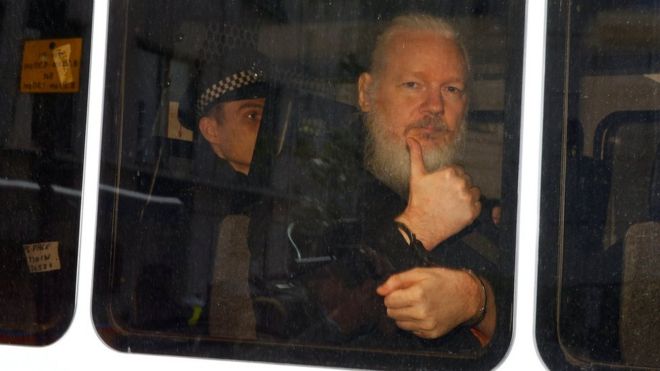
Julian Assange pictured in a police van
Labour leader Jeremy Corbyn has said the UK government should not extradite Julian Assange to the US, where he faces a computer hacking charge.
The Wikileaks co-founder was arrested for a separate charge at Ecuador’s London embassy on Thursday, where he had been granted asylum since 2012.
Mr Corbyn said Assange should not be extradited “for exposing evidence of atrocities in Iraq and Afghanistan”.
Australian-born Assange, 47, sought refuge in the Knightsbridge embassy seven years ago, to avoid extradition to Sweden over a sexual assault case that has since been dropped. But Ecuador abruptly withdrew its asylum and invited the police to arrest Assange on Thursday.
After his dramatic arrest, he was taken to Westminster Magistrates’ Court and found guilty of a British charge of breaching bail. He spent Thursday night in custody and is facing up to 12 months in prison for that conviction.

Video footage shows Julian Assange being dragged from the Ecuadorian embassy in London

The Swedish authorities are now considering whether to reopen an investigation into the allegations of sexual assault, which Assange denies.

The US government has also charged him with allegations of conspiracy to break into a computer, relating to a massive leak of classified US government documents. The UK will decide whether to extradite Assange, and if he was convicted, he could face up to five years in jail.

Assange battle ‘now political’

In a tweet, Mr Corbyn shared a video said to be of Pentagon footage – which had been released by Wikileaks – of a 2007 air strike which implicated US military in the killing of civilians and two journalists.
Earlier in the House of Commons, Labour’s shadow home secretary Diane Abbott questioned the US government’s motivation for charging Assange. She said: “Julian Assange is not being pursued to protect US national security. He is being pursued because he has exposed wrongdoing by US administrations.”
The BBC’s diplomatic correspondent James Landale said backing Assange is not without political risk and will not find universal favour among Labour MPs – but Mr Corbyn’s intervention “means the battle over Assange’s future will now be as much political as it is legal”.

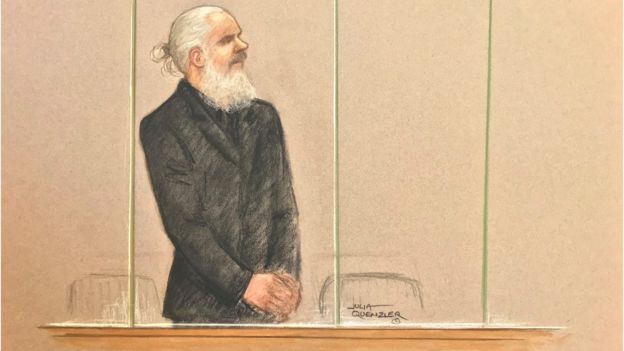
Sketch of Julia Assange at Westminster Magistrates' Court on 11 April 2019Image copyright Julia Quenzler, BBC
Image caption Australian-born Assange at Westminster Magistrates’ Court on Thursday

The editor of Wikileaks, Kristinn Hrafnsson, has expressed fears that the US could file more serious charges against Assange, and that if he was convicted he could be behind bars for “decades”.
Mr Hrafnsson added that Assange had been thrown “overboard” by Ecuador – and the country was “horrible” to treat him like that.

‘He was a problem’

Meanwhile in Ecuador, President Lenin Moreno criticised Assange, claiming that after spending seven years in the country’s embassy he had dismissed Ecuador by describing it as an insignificant country.
“We had treated him as a guest,” he said. “But not anymore.”
Ecuador’s ambassador to the UK, Jaime Marchan, also previously said Assange had been “continually a problem” while he was living in the embassy.
Meanwhile, a man who is alleged to have links with Assange has been arrested while trying to leave Ecuador, the country’s officials said.
The man – who has been identified by supporters as a Swedish software developer called Ola Bini – had been trying to board a flight to Japan.

He’s been in Ecuador’s embassy for seven years – but why was Julian Assange there in the first place?

Assange is due to face a hearing over his possible extradition to the US on 2 May.

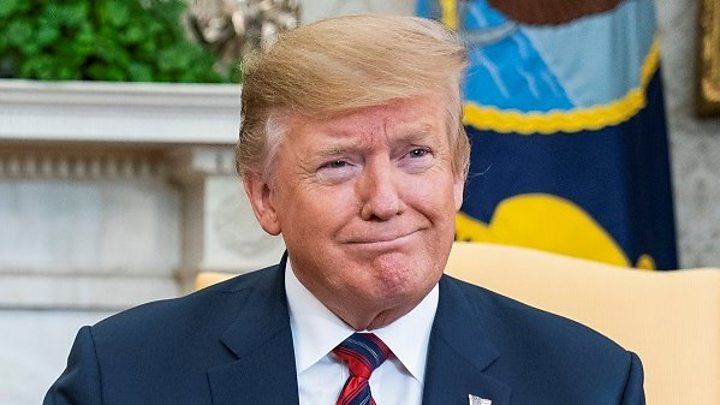
During a briefing at the White House following Assange’s arrest, US President Donald Trump was asked by reporters if he stood by remarks that he made during his election campaign when he said he loved Wikileaks.
“I know nothing about Wikileaks,” said Mr Trump. “It’s not my thing.”


He added: “I’ve been seeing what happened with Assange and that will be a determination, I would imagine, mostly by the attorney general, who’s doing an excellent job.”
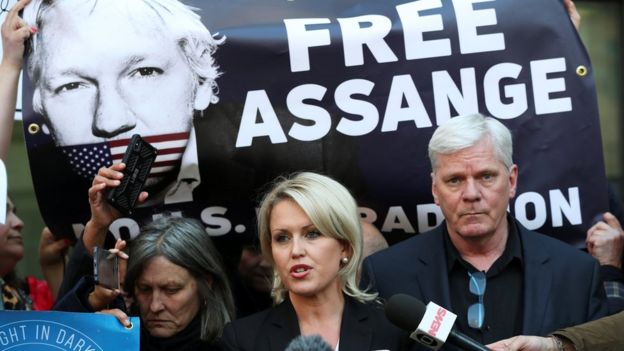
Assange’s lawyer, Jennifer Robinson, said they would be fighting the extradition request. She said it set a “dangerous precedent” where any journalist could face US charges for “publishing truthful information about the United States”.
She said she had visited Assange in the police cells where he thanked supporters and said: “I told you so.”
Assange had predicted that he would face extradition to the US if he left the embassy.
Meanwhile, Australia said it had received a request for consular assistance after Assange was taken from the embassy.
Australian Prime Minister Scott Morrison said Assange will not get “special treatment” and will have to “make his way through whatever comes his way in terms of the justice system”.

Assange's lawyer Jennifer Robinson and Wikileaks editor-in-chief Kristinn Hrafnsson
Image copyright Reuters
Image caption Assange’s lawyer Jennifer Robinson and Wikileaks editor-in-chief Kristinn Hrafnsson say the arrest sets a dangerous precedent

The arrest was welcomed by the government on Thursday. Prime Minister Theresa May told the House of Commons: “This goes to show that in the UK, no-one is above the law.”
Foreign Secretary Jeremy Hunt said the arrest was the result of “years of careful diplomacy” and that it was “not acceptable” for someone to “escape facing justice”.
Assange set up Wikileaks in 2006 with the aim of obtaining and publishing confidential documents and images.
The organisation hit the headlines four years later when it released footage of US soldiers killing civilians from a helicopter in Iraq.
Former US intelligence analyst Chelsea Manning was arrested in 2010 for disclosing more than 700,000 confidential documents, videos and diplomatic cables to the anti-secrecy website. She said she only did so to spark debates about foreign policy, but US officials said the leak put lives at risk.
She was found guilty by a court martial in 2013 of charges including espionage. However, her jail sentence was later commuted.
Manning was recently jailed for refusing to testify before an investigation into Wikileaks’ role in revealing the secret files.

River to Sea Uprooted Palestinian   
The views expressed in this article are the sole responsibility of the author and do not necessarily reflect those of the Blog!
Yellow Vests get 1st game-changing win: A vote to stop denationalisation of airports

April 11, 2019
by Ramin Mazaheri for The Saker BlogYellow Vests get 1st game-changing win: A vote to stop denationalisation of airports
You never read the word “denationalisation” in Western media anymore, only “privatisation”.
That makes sense… “denationalisation” is so obviously negative; it’s lack of patriotism and concern for the public welfare isn’t being covered up.
The New York Times seemed to stop using the word around the mid-1980s – which makes sense, because that’s when the propaganda of neoliberalism fully took hold. In 2019, a generation later, journalists don’t even question that “privatisation” is a bad thing: for them “nationalisation” is probably a pejorative term, smacking of “nationalism”, which has become essentially synonymous with “racism” in the Western vocabulary.
But “denationalisation” is totally accurate: the selling off businesses which were undoubtedly paid for by the People of the nation, and then operated for the good of the nation.
We cannot say that all neoliberals hate their nation – being “anti-nation” is the ideology of globalists, a subset of neoliberalism. We can say that neoliberals hate “the state”, and the distinction is important.
Listen to the talk radio in the United States and you invariably find Protestant religious radio, and they love to equate “the Beast” of the Bible with the federal government; this satisfies both neoliberal and libertarian listeners. This explains why neoliberals push “privatisation”. When they discover that the 1% to whom the denationalisation was made was to foreign 1%ers… they might get upset at that – they won’t if they are globalisation neoliberals.
Accurate political-economic terminology aside, the Yellow Vests can now tell everyone, “Ta gueule!” (shut your face)
They undoubtedly won their first real victory against Emmanuel Macron this week, as opposition parliamentarians surprisingly banded together to vote in favor of holding a referendum on the sell-off of all three airports in the Paris area. Swiss-style RICs – citizens’ initiative referendums – is the primary democratic-structural demand of the Vesters; the fact that one might now take place is undoubtedly due to their agitation.
A begrudging French media, which hates the Yellow Vests for daring to question the agenda leadership of the 4thestate, of course did not celebrate what is an obvious victory for everyone living on French soil or just flying through Paris. However, their skepticism is justified: France’s last referendum was in 2005 for the Maastricht Treaty, and that was immediately ignored… much like the Brexit vote appears to be .Today was supposed to the day the UK left the EU and regained their sovereignty, and now we’ll have a 24-7 media onslaught for a 2nd vote. Personally, I think the first vote should not be respected – everybody knows votes don’t really count until the 4th or 5th one….
I was quite surprised at France’s revival of economic patriotism/good sense. The day prior to the decision I did this report for PressTV – there were only perhaps 150 Yellow Vest protesters in front of the Senate, which appeared certain to vote their approval for Macron’s sell off. It’s still not sure a referendum will actually take place – it would be a first – but it could be in the headlines for months, emboldening more to join the Yellow Vests all the while.
Did Macron’s incredibly dirty tactics turn the tide?
The idea of selling off state assets to rich people is already shameful to anyone who isn’t rabidly against Socialist Democracy, but Macron’s tactics went beyond the pale.
Firstly, he pushed the totally-compliant, neophyte, business executives-turned-politicians (or, to places like The Economist – “civil society”) in the National Assembly to rewrite laws allowing the denationalisation of the airport. It’s always fun to read France’s Orwellian names for their “deforms” – this one was the Action Plan for the Growth and Transformation of Companies (Loi PACTE).
Then, to avoid media coverage and a possible defeat, at 6:15am on Saturday March 16, he called a vote on the sell-off. French PMs work really late hours – I have no idea why, this isn’t Spain – but I’ve never seen that. Only 45 deputies voted out of the lower house’s total 577. The mainstream media had to go into overdrive to explain why the vote was actually legal. Nobody covered that – we all missed it, including me. Hey, I’m a daily hack journalist – I can’t do a story 2 days after the fact. Ya can’t cover them all, and there’s always another one around the corner.
Then, in something no media appears to be connecting, Macron pushed back the end date of his phony PR-campaign known as the “National Debate” in order to draw attention away from this week’s planned Senate vote. Yellow Vesters did not care, they – as planned – engaged in massive civil disobedience on the Champs-Elysées the day after the National Debate was supposed to end, March 16, even burning down a bank, though I was truly the only one to properly explain why (and at the bank!). So this week Macron unveiled his “conclusions” of the 2.5-month talk-fest, which were, essentially: “It’s good to know that I’ve been right all along!” He was clearly hoping the media would focus on his technocratic rightness, instead of giving column inches and air time to the airport sell-off.
But he didn’t count on non-Macron party deputies joining together for the good of the nation. Or, for many, the good of their re-election campaign: after all, denationalisation is so unpopular its name cannot even be uttered anymore – opposing the 10 billon euro windfall from the sale is a sure winner with the voters.
Briefly: it is totally absurd to believe Macron’s claim that the state can only find 10 billion euros for an “industrial innovation fund” via selling off Paris airports (as well as the National Lottery and France’s stake in energy giant Engie). France has given scores upon scores of billions in tax cuts to corporations and businesses during the Age of Austerity, repeatedly telling us that the 1% will invest in industrial innovations funds of their own making and all without state strings attached to the cuts. Then you have tax evasion which is in the hundreds of billions in lost money for state coffers… which will be hard to find, considering that Macron wants to cut thousands of jobs in the Finance ministry, the ministry whose job it is to collect taxes (must kill the Beast… it’s what Jesus would do!).
In short, it’s a very bad week for Macron: just 6% of France said his National Watch Macron Outdo Fidel Castro In Speechifying was a success, and then it didn’t even provide cover for the privatisation his neoliberal globalist ilk loves more than absolutely anything. Why is it better to them than even oh-so-profitable wars – you axe tens of thousands of Beast/government jobs, and you get an already-made cash cow which has a customer base which is obviously guaranteed / an outright monopoly.
Iran knows what everyone in France hasn’t learned (except the Yellow Vests)
So in the mid-80s the neoliberal mindset had spent about 5 years ripening like bad French cheese; in 1991 the USSR’s leaders ignored the referendum which saw 78% of Soviets vote to remain Soviets; and by 2002 those “lefty” Frenchies had initiated denationalising the highways – the historical arc is clear, if slow-moving to some.
I was really surprised when I moved to “socialist” France that they had sold off the nation’s roads. Today, when a driver pays 60 euros in tolls to drive from Paris to Marseille – and that’s just the one-way – you feel like setting the toll booths on fire. Which is what the Yellow Vests did – it was a public service….
Denationalising the airport would have the same costly effect for the average Frenchman. It will have the same effect the UK experienced after denationalising their railways: a season ticket is now 5 times higher than on the Continent, with time-keeping, safety and comfort all worse, too. In the US you have headlines like this one last year from St. Louis: Lambert (airport) privatisation looks like Chicago’s parking meter disaster.
(Anyone recall the fringes of a scene in Godfather II of Cuban-style socialism’s victory night – they were smashing the parking meters? I can report that in 2019 the People’s land is still free for the Cuban People to park on. Many probably thought they were just looting….)
Macron should take heart that I will not be allowed to park my car – which I bought entirely with change – for free in Paris anytime soon: the West European / Liberal Democratic system is geared in his favor. Want more proof? Yellow Vests demonstrations have been totally banned in Lyon, the third-largest city, after a complaint from what is honestly (no kidding!) the real power in Western societies: the local chamber of commerce.
So we have “privatisation” and “denationalisation”… and then we have Iranian “privatisation”, which we hear about all the time. Rouhani has gone “neoliberal”, right? Ahmadinejad did, too, uh huh?
LOL, I swear, I truly am always laughing when I write about this subject! Iran is not selling off 51% of state assets to the Rothschilds, or the Swiss, or… the Turks?! LOL, the Turks running Iran? Do we want our nice things to be ruined?!
Iran’s “privatisation” aren’t “privatisations” because they “sold” the state-owned assets to state-controlled groups like the Revolutionary Guards, bonyads (religious charity co-operatives) and the Basij. So it wasn’t even “denationalisation”. It certainly wasn’t “neoliberal privatisation” – because the state nearly always retains more than just a controlling interest (20%) but a 51% share – and if you say Iran has gone “neoliberal globalization” I am truly going to be in hysterics!
So it’s not that Iranian media is obscuring what is going on by excising previously popular terms, it’s that Iran has revolutionary (unique) concepts of governance for which there simply are no words for it in foreign languages… yet.
But we can agree on this: such unique changes are the opposite of what Macron wanted for France; and such unique changes are so reviled by the capitalist-imperialist West that – as of this week – everyone in the Revolutionary Guards and the Basij is now considered a terrorist by the US.
There are 10-25 million Basiji, almost none of whom are armed, and the majority of whom are women and children, but… ok, they’re all terrorists. Whatever it takes to not pay 60 euros in tolls one-way.
That sounds like a very effective revolutionary cry for the Yellow Vests!
France should thank them – they have stopped (for now) the French People’s loss of one of the world’s busiest airports. Certainly, it’s a tangible victory which shuts up their detractors, which forcibly changes the mainstream media’s Liberal Democratic agenda, and which prods their fellow citizens to become more politically enlightened.
Ramin Mazaheri is the chief correspondent in Paris for Press TV and has lived in France since 2009. He has been a daily newspaper reporter in the US, and has reported from Iran, Cuba, Egypt, Tunisia, South Korea and elsewhere. He is the author of I’ll Ruin Everything You Are: Ending Western Propaganda on Red China. His work has appeared in various journals, magazines and websites, as well as on radio and television. He can be reached on Facebook.

River to Sea Uprooted Palestinian   
The views expressed in this article are the sole responsibility of the author and do not necessarily reflect those of the Blog!
VENEZUELAN EX-SPY CHIEF THAT SUPPORTS GUAIDO DETAINED OVER SUPPOSED LINKS TO COCAINE TRAFFICKING

13.04.2019
Venezuelan Ex-Spy Chief That Supports Guaido Detained Over Supposed Links To Cocaine Trafficking
Click to see full-size image
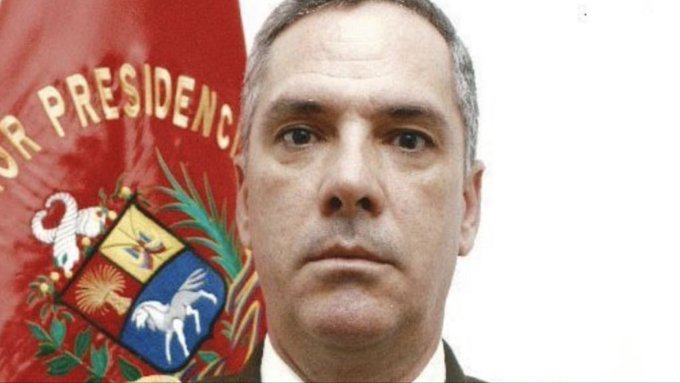
On April 12th, Venezuelan ex-spy chief Hugo Carvajal was arrested in Madrid by Spanish police on a US warrant for allegedly trafficking tons of cocaine.
He is also accused of having connections to the Revolutionary Armed Forces of Colombia (FARC), which is designated as a terrorist organization by the US.


Maibort Petit@maibortpetit
Hugo Carvajal fue arrestado en Madrid en la mañana de este viernes ..Carvajal tiene dos expedientes por delitos de narcotráfico y vinculaciones con el.grupo terrorista de la . Contrató abogados en  para aclarar su situación, no llegó acuerdos de cooperación,
“Hugo Carvajal was arrested in Madrid on the morning of this Friday #12abril.. Carvajal has two cases for drug offenses and ties with the terrorist group. #Farc He hired US lawyers to clarify his situation, there was no cooperation agreement.”
A spokeswoman with Spain’s National Court, which handles extradition cases, said that Carvajal would testify on April 13th before Judge Alejandro Abascal in Madrid.
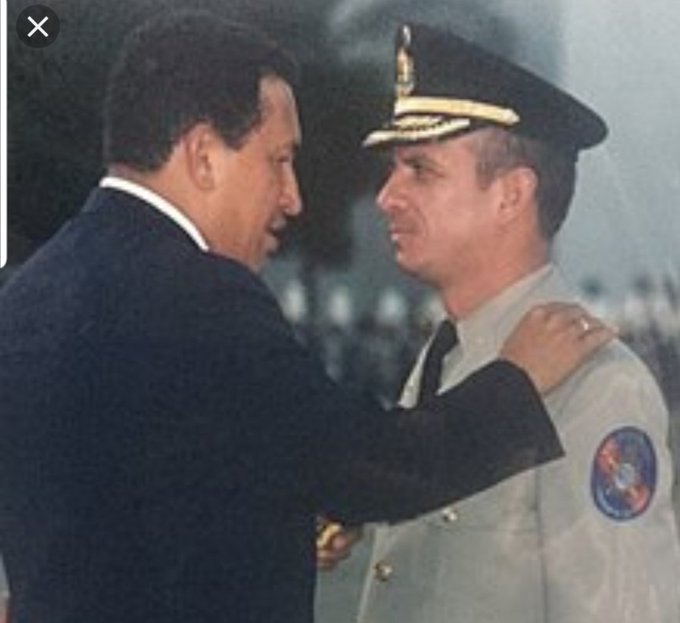
Carvajal was an adviser to Venezuelan Leader Hugo Chavez and headed the security services. On March 21st, he became one of the more influential military figures to recognize US-Proclaimed President Juan Guaido as the legitimate Venezuelan leader.
He also called on Defense Minister Vladimir Padrino to topple maduro with the Armed Forces.
Hugo Carvajal@hugocarvajal4f
Padrino debería ponerse par de b… y detener a Maduro. Fue quién ordenó la instalación de este sistema de torturas en la dgcim y el ingreso de los malditos cubanos a sus instalaciones. Ahí no se hace nada que Nicolás no apruebe.
Rocío San Miguel
✔@rociosanmiguel
Ministro @vladimirPadrino, su subalterno el M/G (Ej)Iván Hernández Dala, Director General de Contrainteligencia Militar en Venezuela, debe ser detenido, después de las evidencias del sistema de torturas que ha instalado en la dgcim, presentadas por el Tte Ronald Dugarte en la OEA

View image on Twitter
4,435 people are talking about this
“The majority of the Armed Forces want to return the freedom to Venezuela, but they are kidnapped by this system of torture and terror, and when I said that the control is more iron than they imagine, it was serious, believe me, if we do not finish with the Cubans, the FAN will not be able to fulfill its duties,” he warned on his Twitter account.
Despite his opposition to the Maduro government, his arrested was condemned by Venezuelan President Nicolas Maduro.
He described the detention of the former intelligence director as an “ambush” and, in addition to ruling out that he has or has had any relationship with drug trafficking, reiterated that he is a “diplomat in functions of the Venezuelan State.”
The Venezuelan Supreme Court also claimed that Carvajal should be released, since he had immunity “because he is an active Venezuelan diplomatic official.”
Separately, at the opening of the joint World Bank and International Monetary Fund (IMF) spring meetings, IMF managing director Christine Lagarde said that it is up the fund’s members “to indicate which authority they are recognising diplomatically.”
On the side of the World Bank, newly-appointed WB Group President David Malpass said that the organization is preparing to become “deeply involved” in Venezuela, “but the situation is still troublesome on the ground.”
Malpass said that Venezuela is a “deep concern” for the World Bank, but that any decision to intervene in the country or recognise opposition leader Juan Guaido as Venezuela’s president would be left to the World Bank’s stakeholders.
The US, on its part is attempting to increase pressure on Venezuela.
On April 12th, the US Treasury announced sanctions on companies that transport Venezuelan oil to Cuba.
Treasury Department
✔@USTreasury
Treasury increases pressure on Cuba to end support to Maduro by imposing further oil sector sanctions: https://home.treasury.gov/news/press-releases/sm653 …
836 people are talking about this
“We continue to target companies that transport Venezuelan oil to Cuba, as they are profiting while the Maduro regime pillages natural resources.  Venezuela’s oil belongs to the Venezuelan people, and should not be used as a bargaining tool to prop up dictators and prolong oppression,” said Treasury Secretary Steven T. Mnuchin.  “Maduro relies on the support he receives from the Cuban military and intelligence services to retain his hold on power because he does not have the support of the Venezuelan people.”
On his Latin America tour, US Secretary of State Mike Pompeo, while visiting Chile accused China of prolonging Venezuela’s crisis by financing Nicolas Maduro.
Pompeo said China is a major US trading partner, but that its “trade activities often are deeply connected to their national security mission, their technological goals, their desire to steal intellectual property, to have forced technology transfer, to engage in activity that is not economic.”
On April 10th, US Vice President Mike Pence once more said that the US would continue to “exert all diplomatic and economic pressure to bring about a peaceful transition to democracy in Venezuela.  But all options are on the table.”
Pence also said that the US would push the UN to recognize Juan Guaido as the legitimate Venezuelan leader and revoke the credentials of the Venezuelan government.
“Up to this point, while other international bodies have acted, the United Nations and this Security Council have refused to act.  But now that nations across this hemisphere have spoken, the time has come for the United Nations to recognize Interim President Juan Guaidó as the legitimate President of Venezuela and seat his representative in this body.
This body should revoke the credentials of Venezuela’s representative to the United Nations, recognize Interim President Juan Guaidó, and seat the representative of the free Venezuelan government in this body without delay.”
In response, Venezuelan Ambassador to the UN Samuel Moncada accused the US and UK of benefiting from the physical and financial assets which the Bolivarian people held abroad and were illegally confiscated.
“Our refineries’ profits are being used to pay debts to Trump administration-friendly oil companies. His friends, who hold Venezuelan debt bonds, receive special licenses to collect profits from our people’s stolen money,” Moncada said, while also commenting on an alleged plan to indebt Venezuela for $70 billion.
“One aspect of this mass destruction policy is looting and robbery of tens of billions, literally a robbery,” he said and warned that companies profiting from U.S. policies are using the stolen resources in dark financial transactions. “It is a plan where banks, insurance and ships are used… [as] weapons of mass destruction, although those who are responsible are not being brought to justice or suffering moral sanctions they deserve,” Ambassador Moncada said
MORE ON THE TOPIC:

River to Sea Uprooted Palestinian   
The views expressed in this article are the sole responsibility of the author and do not necessarily reflect those of the Blog!
من يطلق الطلقة الأولى في حرب المنطقة؟


أبريل 11, 2019

ناصر قنديل

– كتب الكثير قبل الانتخابات الإسرائيلية عن أنها مناسبة للتصعيد على جبهات القتال في غزة وجنوب لبنان وسورية وربما إيران. وقيل توقعوا الحرب طريقاً لفوز نتنياهو الانتخابي وجاءت نصف حرب في غزة تمنحه فرصة تحويلها حرباً كاملة فقرر التراجع خطوتين إلى الوراء منعاً للحرب. وجاءت الهدايا الانتخابية المفترض أنها اشد تأثيراً على توجهات الناخبين لتعويض الهروب من الحرب، لكن الانتخابات قالت إن نتنياهو فاز بصعوبة ومرارة الخسارة بفارق ضئيل بوجه حزب أسس بالأمس وعلى عجل ما يعني أن السياسة ماتت في «إسرائيل» وأن لا روح يمكن إيقاظها طالما أن التسوية وصفة للسقوط السياسي لصاحبها والحرب وصفة للسقوط الكامل للكيان.

– الآن يجري الحديث عن تزخيم المنطقة تمهيداً لما سيفعله نتنياهو الفائز وتجتمع آلات الحرب النفسية لتصوير الآتي الأعظم. ويطيب للبعض الحديث عن سلة عقوبات أميركية قاسية على قوى جديدة من حلفاء حزب الله في لبنان، وأصدقاء إيران في المنطقة والعالم، وعن خطوات أميركية ميدانية قرب مضيق هرمز تمهيداً للحرب المقبلة، ونتنياهو ومن خلفه مايك بومبيو ودونالد ترامب يقرعون طبول الحرب، ويتحدثون بلغة القطع عن أنهم سيحسمون النتائج. فلا حزب الله باقٍ على صعوده، ولا إيران باقية على نفوذها، ولا اليمن مقبول أن يشهد حزب الله آخر، ولا غزة والجولان مسموح تحولهما لجنوب لبنان جديد. وهذه نهايات حاسمة تحتاج حرباً بل حروباً لتصير واقعاً.

– ربما يكون الأميركي والإسرائيلي يحتاجان حرباً، لكنهما لا يستطيعان تحمل مسؤولية إشعالها فيريدان من خصومهما في محور المقاومة منحهما هذه الحرب، لأن مَن سيشعل الحرب مطالَب أمام جمهوره بكشف حساب مقارنة النتائج السريعة والحاسمة مع حجم الخراب والدمار والخسائر التي ستجلبها الحرب. وبالتوازي مَن سيشعل الحرب سيكون تحت الضغوط الدولية من خصومه وحلفائه لإيقافها فور ظهور مخاطر اتساع نطاقها، وصعوبة تحقيق إنجازات سريعة فيها. وبالتالي من سيشعل الحرب عليه الاستعداد لدفع الثمن المزدوج، مرة أمام جمهوره مساءلة ومحاسبة عن حجم الكلفة قياساً بالإنجاز وسرعة الحسم ووضوح النصر، ومرة ثانية في معادلات التفاوض لوقف الحرب والتنازلات التي ستفرض على طرفيها لصناعة تسوية الضرورة لوقفها.

– الأكيد أن الأميركي والإسرائيلي يريدان التقرّب من مناخ الحرب دون التورط فيها، بخلق توتر عالي المنسوب، وتحويله ضغطاً مؤثراً على حال الشعوب في المنطقة وإرباك انتظام دورة حياتها الطبيعية، وشل حركتها الاقتصادية، ووضعها تحت ضغط الشعور بالقلق والخوف، أملاً بانتقال هذا التوتر والقلق إلى قوى المقاومة ارتباكاً وتشوّشاً في الصورة فيصير ممكناً فتح أبواب المساومات، والحصول على التنازلات تحت الطاولة إن لم يكن فوقها، وتتاح الفرص لتسويات التغاضي طالما استعصت تسويات التراضي، وتسويات التغاضي هنا هي فرض قواعد اشتباك جديدة، تحمي مرتكزات الأمن الأميركي والإسرائيلي بقوة الأمر الواقع. فيحيّد الأميركي وجوده في العراق عن أي بحث بموعد الانسحاب، ويحيّد الإسرائيلي احتلاله للجولان عن اي ربط باتفاق فك الاشتباك، ويضمن الإسرائيلي والأميركي فرض أمر واقع في وضع اليد على بعض ثروات لبنان في النفط والغاز بالتغاضي.

– إطلالة السيد حسن نصرالله قالت إن المقاومة واثقة من حدود القدرة الأميركية الإسرائيلية على الذهاب إلى أبعد من الاستفزازات الكلامية، وهي واثقة من قدرتها على فعل العكس عندما يصير ضرورياً. فالذهاب إلى الأفعال هو ما يتقنه ويقدر عليه محور المقاومة، لكنه لن يمنح الأميركي والإسرائيلي ما يريد فيحمل عنهما تبعات الطلقة الأولى، وبالتوازي كلما ارتفع منسوب التصعيد الأميركي الإسرائيلي سيزداد الضغط لتحديد موعد الانسحاب الأميركي من العراق، ويزداد التقرّب من جبهة الجولان، ويزداد الإعداد نحو حماية ثروات لبنان في النفط والغاز.

– عندما ينفعل الأميركي أو الإسرائيلي أو كلاهما، ويشعران بالضغط والغضب ويرتكبان الخطأ الأول، قد يتحول إلى الخطأ القاتل والطلقة الأولى في الحرب، التي سيكسب جولتها السياسية من يكون فيها في موقع الدفاع مرتين، مرة أمام جمهوره ومرة في التفاوض حول شروط إنهائها، وإن لم يفعلا ولم ينفعلا بردت السخونة التي يريدان بثها في الساحة، وفقدت التهديدات والعقوبات والتصنيفات والالتزامات معناها، وسقطت معها حالة الحصار الكلامي والاقتصادي والنفسي بمحدودية القدرة على تغيير التوازنات رغم الآثار الموجعة لبعضها، ولكن تحت سقف القدرة على الاحتمال والتساكن.

– ترامب ونتنياهو يتبادلان هدايا الضعفاء في الانتخابات، والسيد نصرالله ليس مرشحاً لانتخابات يحتاج تخديمها، وسخونتهما بلا قرار أعلى مرتبة في التصعيد تعبير ضعف، بينما برود نصرالله مع جهوزية الذهاب للقرار الأعلى مرتبة في المواجهة علامة قوة. والأيام ستقول الكلمة الفصل.


Related Videos
RELATED ARTICLES
River to Sea Uprooted Palestinian   
The views expressed in this article are the sole responsibility of the author and do not necessarily reflect those of the Blog!