By Dr. Ali Kadri
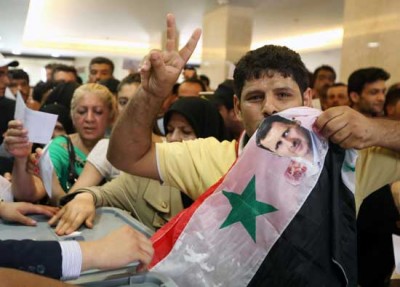
There is a revolution in Lebanon without a revolutionary ideology. It is spontaneous, and if memory serves one well, spontaneous revolutions end up badly for the left. Although the left was at its peak in the less spontaneous German uprising of 1918-1919, the right-wing militias defended the state, won and murdered Rosa Luxemburg.
There is practically very little left left, and the slogans of the Lebanese spontaneous revolution are as shallow and insidious as any of its Arab Spring predecessors. Calling for the removal of the sectarian system without removing its associated capital will rotate the same class into power with another form of sectarianism.
Sectarianism is the form of working-class differentiation or the basis of capital, a social relationship rooted in history and incarnated by much of the working class. To misunderstand the impulsiveness of the uprising is suicidal for remnants of the socialist forces. People want bread and democracy, but it is geostrategic-rent bread, as opposed to homegrown bread, and Western-style democracy, or the rule of US-led capital delegated to its local proxies that they want. ‘Words mean so many different things’ and there is paucity of alternative revolutionary concepts.From the spectrum of democratic choices, only shades of selective democracy are being proposed.
These are democracies that alienate the masses. They are based on the central democratic model where most vote for an imperial government to bomb and invade a developing country because they share a vested interest in imperial rents. In a selective democracy there are natural underlings and theworking-class lets capital to do what is best for capital. The ideology of capital incarnate in the working class, now the thingified people who replicate the thingified capitalists, reflects the short-termism of profit making. In Lebanon much has been invested in the idea that what is good for business is good for me. In short, there is a crisis of revolutionary consciousness and alternatives as elsewhere.
The crisis in Lebanon however is severe. For thirty years, the private Lebanese banks owned by the comprador ruling class charged five to ten times the prevailing world interest rate on bonds of the Lebanese government. Today, the state’s debt to the national banking sector is close to twice the income of the country. After thirty years of borrowing to reconstruct, Lebanon has no potable water supply, public transport, electricity, and cannot even remove its trash. Its capital city and only freshwater lake are possibly the most polluted on earth. Jobs are scarce, and emigration is high. The neoliberal policy of fighting inflation under open capital account, dollarized the economy, usurped much of national wealth, and brought the share of the wage bill from national income from about 50 percent in the late nineties to twenty five percent in 2015. With so much rationing of credit to production and indirect taxes dragging down demand, most private-sector loans owed to the banking sector are non-performing or unlikely to be repaid. The state cannot service its debts without draconian tax and privatisation measures. After years of austerity to pay exorbitant interests on a self-fuelling debt, the public, business and household sectors are all effectively insolvent. If the US decided to delay disbursements to finance future spending with more debt, the house of cards could come tumbling down.
In development finance, this latter point of US-governed international financial institutions (IFIs) lending US dollars on time to pay for state spending or imports, lest otherwise the national currency tumble and inflation lead to hunger and riots, is called the short-leash policy. It is a textbook case. In Ghana for instance, President Kufuor had to abide by the conditionality of privatising the Ashanti gold mines as loan disbursement was postponed forcing the population onto the streets just before the 2001 elections. In Lebanon too, the newly proposed reform programme by the incumbent prime minister proposes a fire-sale bonanza of most public assets. Through resource divestiture, neoliberalism imparted inimical growth in the productive forces, including productive capital stock, employment and growth in the incomes of the poorest working strata. Capital-biased institutions blocked broader participation in the decision-making process as the state retreated and vacated the ground for the imperialistically-funded civil society. Neoliberalism, the reigning ideology, does not choose people who are corrupt and in the business of promoting their self-interests. It creates the historical context into which it is only possible for corruption to grow. Corruption defined not in terms of personal ethical considerations is integral to a market economy and gauged by the rate of transfer of public into private wealth. The open capital account, the peg to the dollar, the tax on the poor and the privatisation of public assets are examples of context/corruption.
The prevailing concepts with which the crisis is being tackled are the same ones that were used as weapons against people in the past. Tax workers and privatise public assets – that is Moses and the prophets. Clearly, such measures, or the demands to try the corrupt without eliminating the context of corruption, are not at all revolutionary. To be sure, there are no revolutions without revolutionising the concepts with which reform is carried out. In view of the socialist ideological disaster, the only concepts available for public consumption are the putative neoliberal ones. The working class asks how do we pay for a debt that has become the wealth of the comprador class, as opposed to how we get rid of the comprador and its neoliberal policies. The comprador, to be sure, is a class, a historical social relationship of power reproduced by ideology, by the idea that not only our bread is imported, but our conceptual framework as well. For now, the salient conceptual alternatives are all about increasing state revenues from bread and butter tax to service an odious debt. In the case of Lebanon, the leakages are so pronounced that no matter the earnings from privatisation, the remedy would still be short-term. No one is talking about debt cancelation or, lesser serious reforms, like standstill agreements whereby the banks take zero interests until the economy recovers.
In Egypt, Libya, Yemen, Syria and to a lesser extent Tunisia, the spontaneity of the Arab Spring, the revolution in times of socialist ideological retreat, resulted in deeper crises. The revolutionary spontaneity in Lebanon appears to further destroy the national sources of people’s incomes, which are already quite low. However, the Lebanese banks also have put themselves at risk by lending at rates that brought the economy to a halt. Had they accepted lower rates of return over longer periods to allow the country’s productive capacity and demand to rise in order to earn more in the future, their business would be more secure; that is simple arithmetic. However, the chemistry of sectarianism, the political process by which capital fakes its differences to acquire more rents from the state, is quite complex. It is sort of like a Buick competing with a Chevrolet although both are General Motors. The banks do not truly belong to Lebanon. They are institutions of the international financial class, the social relation that has organised the resilience of capital for centuries. It is a class that personifies the reason of the commodity as self-expanding value. It is impersonal and objective, it is history and knows no right or wrong. It is a class neither obtuse nor short-sighted. It risks some funds for the bigger booty, prospects of control and the business of militarism.
The Middle East is a region of war and oil. Physicians for Social Responsibility noted that the global war on terror has killed 4 million or more.[1] The US has spent 32 Million per hour on war since 2001, which means some financial institution was absorbing the war debit as credit and billions were made in the spinoffs of the financial markets.[2] Now these numbers are gross underestimates, but they are indicative of how true, as Karl Liebknecht pointed out, that war is big business. Lebanon is at the heart of this region and it has almost always been in war whether with US-Israel or its Lebanese proxies. The now dormant inter-communal proxy war may awaken again. There is much more to be gained by the international financial class as it scapegoats its Lebanese compradors and immiserates Lebanon to the point of eroding the social basis by which Lebanon conducts people’s war in self-defence. The world ruling combination of finance and militarism could set Lebanon ablaze again. The evident objective of imperialism is to contain Hezbollah, but the not so obvious objective is the de-valorisation process, which reduces the costs of inputs for capital over its economic cycle. To shed light on the situation in deeply divided Lebanon, it is best to project the course of developments by moving from the broader political picture to the narrower one inside Lebanon.
Looking at Lebanon from the outside in
Had these been revolutionary times, or times in which radical concepts prevailed, nothing short of the expropriation of the robber baron class, the nationalisation of the banking sector, and the regulation of the capital account, could have been proposed as remedies. A revolution in revolutionary times and in this bloodied area may involve immediate violence against the ruling class. However, never in the past 200 years have the socialist alternatives available to humanity to organise its metabolic rate of reproduction been so absent. So far, the anarchy of production has overconsumed man and nature, yet economic planning, the historical priority by which to respond to the existentialist calamity, does not even figure on the spectrum of debate. The rich die earlier as a result of pollution related diseases, but not as early as the poor. The Veblenian consumption trap of recognition for status and power self-consumes the participants of all social classes. Impulsive uprisings are afoot across the planet, yet the people one sees on the streets are not the masses. They are not armed with progressive ideology, with ironclad modes of organisation, and a preparedness for peoples’ war. Capital is pure violence. People or working classes without revolutionary thought and the exercise of violence in self-defence are neither masses nor proletariat. They are appendages to capital, thingified people.
The business of imperialism in the Middle East is bigger than the business of Lebanese banks. Nearly nothing to do with Lebanon’s internal political landscape has to do with Lebanon. Lebanon’s development and politics are all about the US’s ambitions to control the region, especially to retain hegemony over the Persian Gulf. Reigning over the Gulf is the power that underwrites global dollarization and the imperial rents attendant thereupon. In fact, the United States is already on a low-key war-footing with Iran, a war whose boomerang effect is part of the effort to contain China. The deepening sanctions, the US armed proxies and Kurdish secession are but the tip of the US-offensive. Unmistakably, no matter the calculated costs, US-capital whose mind is the reason of the commodity is preparing to strike the Eastern flank of the Persian Gulf. For the commodity and its reason, war is a means but also end in itself. The Gulf happens to be a most strategic waterway from which thirty percent of seaborne world oil supply passes every day. Hegemony over the Gulf is priceless. True, the US exports oil, but hegemonising oil is a source of controlcumpower, and power, both military and ideological, is the primacy in the primacy of politics. Without that primacy, without arresting the development of others and regulating labour reproduction, there will be no profits. Power is what makes a subject of history; a subject who is capable of moulding social relations to accommodate low-cost production. The subject in value relationships also shapes how much of what is being produced goes to capital, and how much goes to labour, albeit over the lifecycle of society. A powerful subject implements the demands of possibly the most egregious of laws, the law of value. This is no simple double entry bookkeeping in dollars designed and printed by the US-treasury. Capital is not a person; it has real people working for it. It is a social being or a social relationship, which political economy names capital for brevity or coquetry.
The US is the operating structure of capital. It already controls the western shores of the Gulf and to control the eastern shores would undoubtedly strengthen its position at the helm in the international division of labour. If the US leaves things as they are and accepts Iranian partial control over Gulf waters, it would also have to accept a downgrading of its imperial stature, which would imply massive tectonic realignments of global powers, including perhaps an orderly workout of the US’s debt and its overstretched US dollar, among other losses de-structured around imperial rents. But the Gulf for US imperialism is an indispensable condition of empire. It epitomises an existential question for an empire whose crisis deepens with the ascent of China. Lebanon, bordering Israel to the North and in possession of effective weaponry, threatens the imperial security arrangement for the surrounding region.
That Lebanon is socially and constitutionally sectarian and geopolitically rent-based is no anomaly under the rule of capital. Working class division or sectarianism is the normal condition of the labour process under capital. Without labour differentiation, capital, the ruling social relation, will appear for the fiction that it really is and cease to be. The French, former colonial power in Lebanon, and their heirs invested heavily in Lebanon’s sectarianism. Lebanon is sort of a precursor in sectarianism or a first experiment in the process applied in distinct ways in Iraq. As a society disarticulated along sectarian lines, a country whose national productive capacity was destroyed by war, Lebanon survives by geostrategic rents. It imports nearly twenty billion US$ and exports around three billion US$. These imports require the county to raise its interest rate and set aside nearly the equivalent of its GDP in reserves to finance imports. And although the country almost always has a primary surplus, as it reduces spending on schools and health to service the debt, it runs a significant fiscal deficit as a result of servicing high interest-internal borrowing. The interest rate is kept too high to account for the risks and to draw in dollars to address balance of payments shortfalls.
Most of debt is internal, 80 or 90 percent. Such is an odd case for a small country recovering from years of war in the developing world. Lebanon’s debt to GDP is said to be at nearly150 percent, but it is in fact bigger (total income is about 50 billion US dollars). Only countries under the financial umbrella of US-led international finance can boast such an internal borrowing record while maintaining a currency peg and low inflation rates. A caveat is in order here: the debt to GDP ratio may be much higher because sometimes after 2005, the private bank responsible for issuing national statistics corrected the GDP figures upward to make the debt to GDP ratio look smaller. In December 2006, the debt to GDP ratio was 183 percent, and oddly enough, it went down to 151 percent in 2018. Lebanon did not have a national bureau of statistics then and most statistics were produced by one of its private banks. One must use the qualifying ‘nearly’ when speaking of figures, for although statistics everywhere are a point of view, they are even more so in Lebanon.
Lebanon’s Banks are family and political nomenklatura-owned. These financial institutions have drawn tremendous profits from holding high-interest state debt. They did so knowing that the faulty reconstruction efforts boosted by a constitution that denied the representation of labour in the state made sure that all funds destined for reconstruction went to banks and to the ruling comprador class. Without social reconstruction nothing constructs, and people build the sect leader not themselves. The post-war constitution reconfirmed sectarianism de jure, and the masses became many sects competing for rents from the state through their own sectarian leadership. Lebanon’s financial institutions are overstocked with cash because of banking privacy, and a considerable portion of their assets is of dubious origin. Their assets are about quarter of a trillion US$. They have an interest in putting the state into debt and buying the debt to launder much of their illegitimate cash. A former finance minister complained that the central bank overruled him and issued bonds at high interest rates even when the state did not need to borrow.
In 1990, the government issued reconstruction bonds at about forty percent yearly rates. The banks gladly obliged and doubled their initial loans in about two years. As noted above, the complex chemistry of baleful sectarianism is more complicated than the calculus of the debt. Banks earned tremendous rents on bonds and placed part of the capital abroad, while the remaining portions rolled over into additional debts. As time went by, new loans financed old and new debts, especially as internal and external deficits gaped wide. The debt grew as Lebanon’s tepid growth rates, powered by public and private borrowing to boost consumption, induced further austerity. Austerity compressed demand far below what was necessary to boost state revenues to settle new interest payments. As in typical Ponzi schemes, the debt grew at higher rates than the economy. If the scheme unfolds now, the earlier huge banking profits have been deposited abroad. The resulting runaway inflation would cripple the economy.
Non-oil exporting states in the Near East are traditionally geopolitical rent states. After the first Arab oil boom in the seventies, these countries became more dependent on rents. It was a combination of IFI supported structural adjustment and Gulf aid and remittances that gradually de-industrialised them. De-industrialisation deepened their dependence on handouts, or properly put, imperialist investments in social divisions and imperialist securitisation. It would be bizarre to believe that the US-Euro imperialism that has mown down nearly a billion people in its wars since 1500 A.D. benevolently delivers aid to humanity, or it would make efforts to arrest wars and the natural disaster. It is rather odder to entertain the thought that the Gulf states enjoy any significant autonomy to deliver aid without American consent.
As is typical of social processes under capitalism, which homogenise cultures and traditions and erase variety, Gulf aid to almost starving lower strata laced with Salafism homogenised the multifarious traditions of Islam. From dress codes to burial customs, the otherwise tolerant Islamic world was becoming more like a Xerox version of Saudi Islamism. To be sure, the Saudi version of Islam is a modern, colonially reared and concocted tradition meant to hold cultural and industrial development at bay while Arabian oil falls into the grip of empire. Gulf rents delivered to Lebanon and other states were plainly linked to the US’s political objectives to contain socialism and to create weak and internally divided states. US-sponsored rents from the Gulf not only eroded national production requiring indigenous knowhow, they reduced the state-distribution functions and the capacity of the state to deliver social welfare. Almost everywhere, the vacuum was filled by US-supported Islamists and liberals. During the Arab Spring, Islamists commandeered the revolts and with unconditional funding from the Gulf, they either attacked their states or were elected and introduced yet more neoliberal programmes than their predecessors. For post-war Lebanon things were no different. Rents bred either the liberal NGO’s or the Islamists. The former on paper declare women or any identity to be equal, but in actuality they do not deliver them from poverty. Liberalism is arguably more devastating than Islamism because it completely erases the social class or reality under the banner of freedom. It is indeed a freedom for humans to perish early from hunger while enjoying the liberty of fitting into an identity pre-selected for them by capital, the social power and the agent of history. Islamists, on the other hand justify the demobilisation of resources by divine fiat. Neither speaks of freedom from want.
Post-war Lebanon which had suffered the destruction of its infrastructure and industry depended more on external sources of funding to maintain consumption. As the state emerged weaker after the war and its social function was delegated to US-European sponsored civil society or to the parallel institutions of the sect. To rephrase an earlier point, what we see in the demos of Lebanon today is a thirty years investment in reactionary politics personified in people who suffer the same dire class conditions under phantasmagorical doses of intense neoliberalism. The social reaction could boil into a solid class position, but the left is weak in terms of organisation and resources, while the Gulf or European backed NGOs and sects have at their disposal extensive financial means.
In addressing the causes of lapses in development, mainstream social science falsely dichotomises constituents of the agency of history into internal and external. It blames the victimised classes for their self-inflicted misery. It does it so that history absolves the US-European structure of capital. But these Arab working classes are too weak and consistently under assault, often by the belligerence of war and poverty, and violently prohibited from organising into agents of history. The defeated are consistently stripped of agency. The truly powerful make historical choices. They truly vote in historical time. The colonials or later US imperialism lay down with the power of their bombs, starvations, invasions, and tailored constitutions the margins of actions available for subjugated people. These powers impose the historical imperatives. They empower and institutionalise sectarian and ethnic forms as purveyors of rent from the subjugated state such that the state is always in a state of low or high intensity civil war. They set the material foundations and impose a false scarcity to promote inter working-class war. And by doing this they make profits from the war and set the stage by the continual disempowerment of people to make future profits.
The Lebanese, for instance, can cast this or that vote for the sectarian lackey of imperialism who will do whatever to provide jobs for some of his sect members. However, his rent acquisition action always comes at the expense of other sect members and the working class as a whole. Incomes under capital are rents and if sects bid against each other they lower the share of social wage from the total income pie for the whole of the working class. The dividedness also weakens the state by the loss of sovereignty arising upon the living insecurity of the working class and holds it hostage to imperialist strategy. In the case of Lebanon, the short leash of finance, the few billion dollars needed to service the debt are currently being delayed and US imperialism is calling the shots. It has something up its sleeve and it has to do with Hezbollah. The US-led financial class through its control of the Lebanese finance casts the real vote in real historical time. It just sits back and watches, while the vote of the vanquished Lebanese population, rhetorically speaking, appears as a mere ornament of modern-day slavery.
The big divide and Iran
The US spares no effort to destabilise the region. As should be obvious, it does so because by devastating and warring it empowers itself and reduces the reproduction costs of labour. This latter point is at the heart of higher profit rates not only because the pressure of refugees on wages, but also in terms of the real value, the real commodities and the hours of labour it takes to sustain the working class, much less is expended on labour. In political economy parlance, that is called a reduction of necessary labour, which is another way of saying if capital pays less than is necessary for people over their lifetime, it makes more profits. In-fighting lowers the cost of people and what they own in resources.
At this historical juncture, fomenting the Sunni-Shiite divide, the in-fighting at play in Iraq and elsewhere is both an end in itself and end to weaken Iran. Also, by raising tensions in the Gulf, and by virtue of its gigantic military presence there, US-led capital holds the world in suspense relative to the instability it injects in oil supply routes. Imperial ransom from the rest of the world tallies with protracted military tension or turmoil in the Gulf. The scurry to the safety of the dollar market alone resituates the US atop of the global pyramid. War or tension in the Gulf is a win-win situation for ‘US-led capital.’ The use of the term US-led capital is more appropriate than the use of the term US because the poor in the US are also subjected to the wrath of their home grown imperialism. The recent figures on poverty in the US indicate that half the population subsists at below the poverty line.
[3]
Regionally, Israel, a state constructed around Jewish identity, has an innate aversion for Hezbollah and a less-sectarian Lebanon. Although Israel has no aversion to its adversaries wallowing in class conflict painted over by religion, Hezbollah is a successful paramilitary force and a model for people’s war. To be sure, Hezbollah’s power, its victory in liberating South Lebanon, had reconfirmed the effectiveness of people’s war. No weapon superiority bestows an occupier with the power to rule over a people against their will. Outright victory of an occupying force over an occupied people was and is no longer possible, short of complete annihilation – naturally under the rule of capital that means the continuation of wars. Hezbollah is stronger after its experience in the Syrian war and better armed. For that reason, Israel is keen to have Hezbollah consume itself in Lebanese misery or in an inter-communal war. Aware of Israel’s intentions, Hezbollah had solidified its ties to other progressive forces in Lebanon and the region.
As per the old lessons of national liberation wars, the premise of larger and deeper fronts, especially ones that involve grassroots support that combine security with development, better positions liberation struggles. Although anti-imperialism is not a class-inherent characteristic of the Iranian ruling classes, imperialism deprives peoples, peoples from all sort of classes and not only the working class in developing formations, not only of their control over resources, but also of their lives or longevity. Imperialism often consumes the peripheral comprador, the labour aristocrat and possibly the whole of social nature with its uranium-laced bombs. It depopulates to earn profits. The prematurely wasted life in wars or war related austerity is itself a product of militarism, just as a coke can is a product of the Coca-Cola corporation and industrialism. The more cokes and wasted-lives are consumed-realised, the more returns capital generates.
The Iranian ruling class is a rentier class. While some in Iran delude themselves with mini imperialist ambitions, the struggle of Iran’s people is a struggle to literally exist. Dreams of grandiosity related to past empire is delusional for Iran. The reality that Iran will meet the fate of Iraq or Afghanistan is demonstrably present. The barometer of the strength of its national front remains the extent to which it socialises, subsidises basic commodities, and creates social employment positions founded on a national money cycle – free from international finance, to cement the grounds for people’s war. Iran may have inroads in the Near East, but these were cavities purposefully carved by the US, not by some conspiracy, but by the reason of history abiding by the desires of the self-expanding commodity. Fetishism, the rule of commodities, through its ideology commands real processes and people believe that their imaginary relations to these real processes are real. Their relationship to the sect is not real because the only reality is that of the social class as it produces what people need to survive. Put differently, it is living labour deprived of better living conditions that produces and reproduces people and not identity. A reading of the historical moment, the balance of forces, would clearly show that Iran is in a position of self-defence. Its present government, however, is short on the delivery of jobs and welfare to solidify the social grounds for people’s war. Based on the premise that encroachment wars in this region are an industry of militarism and that imperialism reinforces waste accumulation through depopulation, the security of Iran through Hezbollah is a shared and co-dependent security with Lebanon.
Security in Lebanon is inversely related to sectarianism – here one has in mind the historically determined modern identity sect that acts a conveyor belt for rents. The sect imposed by imperialism as a form of social organisation vitiates class unity, consciousness and the solidarity required for anti-imperialist struggle. The degree to which sectarian divisions surface and security sinks principally corresponds to the retreat of socialist ideological crisis worldwide. In better times, before the Lebanese war, working class cohesion was in the process of formation diluting sectarian differences. Some indicate that inter-sectarian rapprochement under progressive parties and slogans was the reason for which imperialism unleashed its right-wing cronies against the masses igniting the Lebanese war of 1975-1989. After the war ended in 1989, the right learnt its lesson and rents were channelled to sects by degree of loyalty. Such was the effort to obviate the real social being of people, the working class and its institutions. The Lebanese revolution faces the weight of a history in which a cultural identity instrumentalised by capital has acquired a supernatural power. Received perception has it that against all odds such identity exists in the same shape and form it is across history.
The demos prove that class is the reality that resurfaces in times of crisis. Penuries of bread and democracy, poverty in Lebanon, are cross-sectarian. Bread and democracy are presupposed by social relationships before they become things or acts. They are historical and power relationships obtained from class struggle. These concepts, the bread and the democracy, even for the left they have become reified and ahistorical. They are simply the things and the boxes of the ballot boxes. They are maintained as such because Western Marxism peddles them as such. The Western left-intellectuals, with slightly more leisure than others in the developing world, churn out concepts that fit the R2P designs. Overlooking capital’s history and the current social and natural calamity, these pseudo-leftists harbour a deep fascination for the selective democratic model of Western capital and see its atrocities as prerequisites for progress.
Conceptualised differently, bread is the social wage share that requires delinking from the West, working class solidarity and, necessarily but not exclusively, armed struggle against imperialism. Development obtains from combining security with resistance. Poverty in Lebanon could have been worse than Egypt’s without Hezbollah and its resistance. Some sectarian leaders are using the poverty they inflicted upon people through their banks to negotiate a higher share of imperial rents as a price for handing over Hezbollah.
Democracy is an end to alienation. People no longer relinquish the popular will through the voting system. It is about the organs of labour consistently voting for labour in state policy with or without the ritual ballot box. Democracy is not labour as ‘an’ organic constituent of the state, it is ‘the’ organic constituent of the state. Yet, few understand the depth of the conceptual crisis and the idea that people’s representation in the state has to be organic. Demanding one-man one-vote realises democracy only when man is social man; the real man of society reproduced by the value of society, the socially necessary labour invested in him or her. Social man is a subcategory of the working class and, therefore, democracy is the rule of the working class.
Who is more democratic China whose revolution of 1949 heralded prosperity and eliminated poverty or the US which sinks half of its population and half the world into poverty? The working class is there, but it is not brought into focus because people have been taught to think in forms devoid of history, in the ‘now,’ while indeed the ‘now’ or the present do not exist in real time. Capital paid teachers, universities and media to distort people’s minds and erase the social alternatives. The cliché capitalism won against socialism has become truth as if history is a football game and not an ongoing process of massacres and environmental destruction. Without being democratically armed with weapons, without revolutionising concepts and ideology, the working class will always be a proletariat in waiting.
People negate the system, but adopt the conceptual alternatives of the system itself as their alternatives. As they uncritically assimilate the rule of capital, no matter what procedure of voting they choose, they will be electing capital’s authoritarianism. As capitalists and working people personify things or commodities, the development attendant upon the production-consumption of commodities by commodities will continue to end in the human and environmental waste visible all around.
Lebanon again
The crisis in Lebanon was inevitable. Why the banks usurped so much so as to debilitate the state has to do with capital’s objectives to create a social crisis capable of weakening Hezbollah. As the currency falls and the cost of living rises, sectarians and their NGOs are at work to derail the uprising. History bereft of socialist ideology is on their side. The NGO’s will divert cries for justice into a cry against Hezbollah. The US’s conditionality here is being put as such: hand over the weapons of Hezbollah and get the funding needed to maintain the consumerist standard of living. But borrowing short term will only delay the onslaught of poverty for few months. For imperialism, the reason of the commodity adopted by history, the poverty of all sects is necessary because it cheapens inputs from humans and otherwise in production and profits.
To reiterate: the reason why the private banking sector has sucked the country dry with exorbitant interest rates for such a long time is because its patron the international financial class makes more money out of poverty and war in Lebanon and the region. The bigger world financial class and its militarism may sacrifice the smaller Lebanese banking class. However, no matter how sects are positioned on the inside, events in Lebanon will unfold in synch with how the US fares in its regional war offensive. A glimmer of hope exists here as the rise of China arrests the growth of European civilisation, a store of culture whose ethos is to waste or to accumulate by waste. The real world happens to be a planet plagued with overproduction crises, which necessitate that money should be made in wars and in socially imposed under-consumption. Waste produced under waste accumulation also produces a consumerist man indulged in an overly entropic mode of self-consumption. Scarcity constructed to differentiate labour or to pit the working class against each other by designating quaweaponizing identity as the vehicle for rent acquisition abounds. In terms of the real physical scarcity however, not even oil is scarce anymore.
Capital’s logic of cost minimisation, the production of waste for profit, becomes the repository of the system. In times of socialist ideological retreat, the absurd becomes real as reality conforms to the logical forms of mainstream economics. Value relations become waste relations, the ruling class becomes the wasting class and the working class becomes the wasted class. The formalism of capital’s mainstream logic, the two-dimensional diagrammatic in which prices clear excess commodities, becomes more and more a condition in which the excess commodity to be cleared is living labour. Arresting European civilisation, the body of knowledge and traditions of expansion by war, the structural embodiment of that wasting capital, is the historical necessity.
Subordinately, the flux of this spontaneous revolution in Lebanon is a test of the left’s resolve. The left is poised against imperialist NGOs with logistical support from the Gulf states destined to lure the support of despairing people with bribes needed for survival. As people lose income, the left has to provide the alternatives. For the working class to become a proletariat, it must broadly align against reactionary positions. So far, spontaneity mixed with liberal or Islamist NGOs has been a suicide-trap for socialism. The left can commit the anecdotal suicide, it could jump from the superstructure and hit the base, but it could also through struggle carry the day.
*
Renowned author and Middle East analyst, Professor Ali Kadri teaches Economics ath the National University of Singapore (NUS). He is a Research Associate of the Centre for Research on Globalization (CRG)
Note to readers: please click the share buttons above or below. Forward this article to your email lists. Crosspost on your blog site, internet forums. etc.
Notes
[1] https://www.mintpressnews.com/do-the-math-global-war-on-terror-has-killed-4-million-muslims-or-more/208225/
The original source of this article is Global Research