Uprooted Palestinians are at the heart of the conflict in the M.E Palestinians uprooted by force of arms. Yet faced immense difficulties have survived, kept alive their history and culture, passed keys of family homes in occupied Palestine from one generation to the next.
The painful truth is that the Palestinian Authority of President Mahmoud Abbas has already ceased to exist as a political body that holds much sway or relevance, either to the Palestinian people or to Abbas’ former benefactors, namely the Israeli and the American governments.
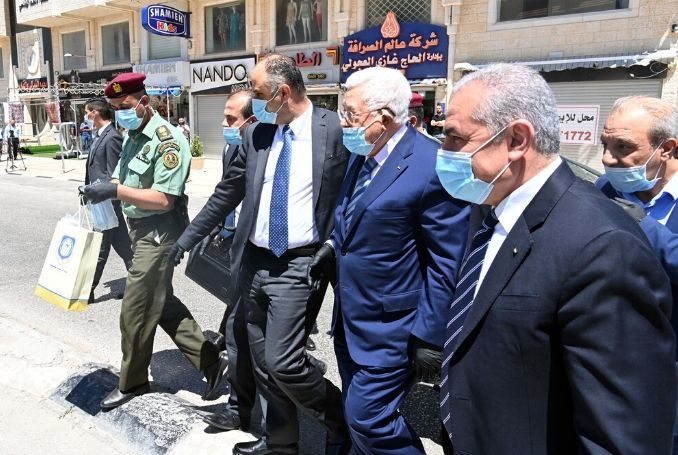
So, when the Palestinian Authority Prime Minister, Mohammed Shtayyeh, announced on June 9, that the Palestinian leadership had submitted a ‘counter-proposal’ to the US’ Middle East peace plan, also known as the ‘Deal of the Century’, few seemed to care.
We know little about this ‘counter-proposal’, aside from the fact that it envisages a demilitarized Palestinian state within the pre-1967 borders. We also know that the Palestinian leadership is willing to accept land swaps and border adjustments, a provision that has surely been inserted to cater for Israel’s demographic and security needs.
It is almost certain that nothing will come out of Shtayyeh’s counter-proposal and no independent Palestinian state is expected to result from the seemingly historical offer. So, why did Ramallah opt for such a strategy only days before the July 1 deadline, when the Israeli government of Benjamin Netanyahu is expected to launch its process of illegal annexation in the occupied West Bank and the Jordan Valley?
The main reason behind Shtayyeh’s announcement is that the Palestinian leadership is often accused by Israel, the US and their allies of supposedly rejecting previous ‘peace’ overtures.
Rightly, the Palestinian Authority rejected the ‘Deal of the Century’, because the latter represents the most jarring violation of international law yet. The ‘Deal’ denies Palestine’s territorial rights in occupied East Jerusalem, dismisses the right of return for Palestinian refugees altogether, and gives carte blanche to the Israeli government to colonize more Palestinian land.
In principle, Netanyahu also rejected the American proposal, though without pronouncing his rejection publicly. Indeed, the Israeli leader has already dismissed any prospects of Palestinian statehood and has decided to move forward with the unilateral annexation of nearly 30% of the West Bank without paying any heed to the fact that even Trump’s unfair ‘peace’ initiative called for mutual dialogue before any annexation takes place.
As soon as Washington’s plan was announced in January, followed by Israel’s insistence that annexation of Palestinian territories was imminent, the Palestinian Authority spun into a strange political mode, far more unpredictable and bizarre than ever before.
One after another, Palestinian Authority officials began making all sorts of contradictory remarks and declarations, notable amongst them Abbas’ decision on May 19 to cancel all agreements signed between Palestinians and Israel.
This was followed by another announcement, on June 8, this time by Hussein Al-Sheikh, a senior Palestinian Authority official and Abbas’ confidante, that if annexation takes place the Authority would cut off civil services to Palestinians so that Israel may assume its legal role as an Occupying Power as per international norms.
A third announcement was made the following day by Shtayyeh himself, who threatened that, if Israel claims sovereignty over parts of the West Bank, the Authority would retaliate by declaring statehood within the pre-1967 borders.
The Palestinian counter-proposal was declared soon after this hotchpotch of announcements, most likely to offset the state of confusion that is marring the Palestinian body politic. It is the Palestinian leadership’s way of appearing pro-active, positive, and stately.
The Palestinian initiative also aims at sending a message to European countries that, despite Abbas’ cancellation of agreements with Israel, the Palestinian Authority is still committed to the political parameters set by the Oslo Accords as early as September 1993.
What Abbas and Shtayyeh are ultimately hoping to achieve is a repeat of an earlier episode that followed the admission of Palestine as a non-state member of the United Nations General Assembly in 2011. Salam Fayyad, who served as the Authority Prime Minister at the time, also waved the card of the unilateral declaration of statehood to force Israel to freeze the construction of illegal Jewish settlements.
Eventually, the Palestinian Authority was co-opted by then-US Secretary of State, John Kerry, to return to another round of useless negotiations with Israel, which won the Authority another ten years, during which time it received generous international funds while selling Palestinians false hope for an imaginary state.
Sadly, this is the current strategy of the Palestinian leadership: a combination of threats, counter-proposals and such, in the hope that Washington and Tel Aviv will agree to return to a by-gone era.
Of course, the Palestinian people, occupied, besieged, and oppressed are the least relevant factor in the Palestinian Authority’s calculations, but this should come as no surprise. The Palestinian leadership has operated for many years without a semblance of democracy, and the Palestinian people neither respect their government nor their so-called President. They have made their feelings known, repeatedly, in many opinion polls in the past.
In the last few months, the Authority has used every trick in the book to demonstrate its relevance and its seriousness in the face of the dual-threat of Trump’s ‘Deal of the Century’ and Netanyahu’s annexation of Palestinian lands. Yet, the most significant and absolutely pressing step, that of uniting all Palestinians, people and factions, behind a single political body and a single political document, is yet to be taken.
Considering all of this, it is no exaggeration to argue that Abbas’ Authority is gasping its last breath, especially if its traditional European allies fail to extend a desperately needed lifeline. The guarded positions adopted by EU countries have, thus far, signaled that no European country is capable or even willing to fill the gap left open by Washington’s betrayal of the Palestinian Authority and of the ‘peace process’.
Until the Authority hands over the keys to the Palestine Liberation Organization (PLO) so that the more democratically representative Palestinian body can start a process of national reconciliation, Netanyahu will, tragically, remain the only relevant party, determining the fate of Palestine and her people.
– Ramzy Baroud is a journalist and the Editor of The Palestine Chronicle. He is the author of five books. His latest is “These Chains Will Be Broken: Palestinian Stories of Struggle and Defiance in Israeli Prisons” (Clarity Press, Atlanta). Dr. Baroud is a Non-resident Senior Research Fellow at the Center for Islam and Global Affairs (CIGA), Istanbul Zaim University (IZU). His website is www.ramzybaroud.net
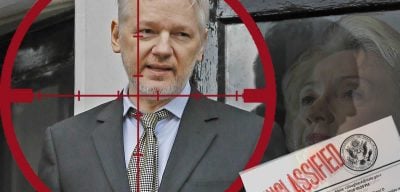
On 24 June a US Federal Grad Jury issued a second superseding indictment against Journalist Julian Assange.
The new indictment incorporates the 18 charges from the first indictment and seeks to ‘broaden the scope of the conspiracy’ and asserts that Assange and Wikileaks tried to recruit hackers for the purpose of stealing secret documents from the US government.
Thirteen of the 49 page indictment are devoted to Assange’s efforts to recruit ‘Anonymous’ hackers. At one conference Assange is alleged to have encouraged hackers to join the CIA and then use their position to steal top secret documents.
It also alleges that Assange cajoled, encouraged and assisted Chelsea Manning in ‘stealing’ hundreds of thousands of secret government documents relating to the Iraq and Afghan wars as well as diplomatic cables and Guantanamo Bay detainee assessments.
The icing on the cake of this new indictment are the claims that Assange wilfully revealed the ‘name of Human Sources and Created a Grave and Imminent Risk to Human Life’ through publishing ‘stolen’ secret documents. The tally of secret documents that Wikileaks published includes 75,000 Afghan war reports, 400,000 Iraq war reports, 800 Guantanamo Bay detainee assessments and 250,000 US diplomatic cables.
The new indictment alleges that Wikileaks published documents that revealed the names of various collaborators working with US military and intelligence agencies deliberately putting their lives in danger.
The new indictment also tries to make the help that Wikileaks gave NSA whistle-blower Edward Snowden a criminal offence. Never mind the fact that the FBI relied upon paid informants such as ‘convicted conman, and sex criminal Sigurdur Thordarson’ to make up bogus claims against Assange. According to WikiLeaks Thordarson is one of the star witnesses for new indictment from the US Department of Justice.
The timing of this new indictment is suspicious. Trump is trailing in numerous polls due to his disastrous handling of the Covid-19 pandemic that has left over 120,000 Americans dead and caused trillions of dollars worth of economic damage. Is the new indictment a pathetic attempt to try and steer the news away from the storm of negative press encircling the White House?
“The Trump DOJ’s new Assange indictment has all the same problems as the old one. Source communication and publishing are not crimes. They didn’t add any new charges. They didn’t really change any old ones. And the using the Espionage Act is beyond the pale.’’
Julian Assange’s extradition trial does not resume until 7 September. Further outbreaks of the virus could put a spoke in that judicial frame up by the British government. Yet it appears the entire British political class including the so called opposition Labour Party will do nothing to try and prevent Assange’s extradition. Its new leader Keir Starmer, a former human rights barrister, supports the extradition process.
Pulitzer prize winning journalist Glenn Greenwald, whose reports revealed the global surveillance operations of the US and UK, has noted the connivance of British and American politicians and media of all political colours with Trump’s war on whistle blowers:
“The Trump DOJ’s attempt to imprison Julian Assange for working with his source to publish classified documents that exposed US war crimes is the most severe US threat to press freedom since 2016. It’s sickening to watch so many journalists ignore it, & so many liberals cheer it: ‘’
Kevin Gosztlioa of the Shadow Proof news outlet has written a detailed expose of the new indictment. He conclusion declares:
“While the conspiracy charge includes sensational claims of collaboration with hackers, it is no less of a political charge than the seventeen Espionage Act offences Assange faces for publishing information.
The additional sections in the indictment represent an attempt to give the illegitimate prosecution a greater veneer of criminality. Unfortunately, it does not take much to scrape it off and expose the contempt for press freedom that still lies behind this vindictive prosecution.’’
Ordinary people around the world must step up their efforts to secure the release of journalist Julian Assange. If extradited to the US he would face a show trial that would resemble the worst excesses of Stalin and Hitler’s courtrooms in the 1930s.
The extradition of Julian Assange by the crisis ridden American empire sends a clear warning to anyone who has thoughts about investigating or revealing US war crimes. It represents a threat to investigative journalists and anti war activists who challenge the bloody rule of American capital which will not go down without a fight.
The persecution of Julian Assange reveals a certain desperation on the part of the American ruling class. However, it won’t solve any of the social, economic and political problems facing American capitalism which is in a state of deep crisis.
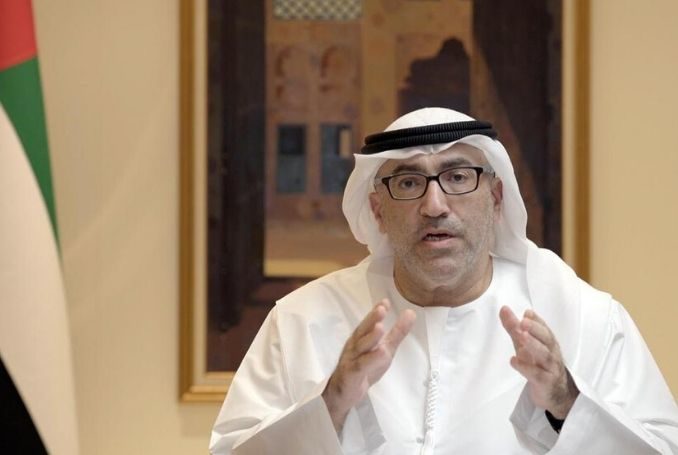
UAE Minister of Health and Prevention, Abdulrahman Al Owais. (Photo: File)
Prime Minister Benjamin Netanyahu said on Thursday that Israel and the United Arab Emirates would cooperate in the fight against the coronavirus – a possible boost to Israeli efforts to normalize relations with Gulf Arab countries.
Netanyahu said a formal announcement on working together with the UAE on confronting the COVID-19 pandemic was imminent and would be made by the UAE and Israeli health ministers.
The UAE’s foreign affairs ministry did not immediately respond to a request for comment.
Such cooperation would come at a time of strong Arab opposition to Israel’s plans to annex parts of the occupied West Bank – territory Palestinians seek for a state – under a US peace plan.
Last week, the UAE’s minister for foreign affairs, Anwar Gargash, said it could work with Israel on some areas, including the battle against the coronavirus and on technology, despite political differences.
Addressing a military ceremony in southern Israel, Netanyahu said Israel and the UAE would collaborate in research and development and technology “to improve the well-being of the entire region”.
Gulf Arab states do not have diplomatic relations with Israel. However, due to shared concerns over Iran’s influence in the region, they are are increasingly normalizing relations cooperating against a perceived threat from Teheran.
One of the graver risks for big-time criminals is that investigators will be able to identify them and their deeds by ‘following the money’. The criminals have to hide the proceeds of their crimes. This is done by depositing their monies into legitimate finance houses and businesses. It often requires some fancy book-keeping tricks and intricate transactions. This is called layering by the afficionados of this dark art. Once it is done, the criminals can draw on the accounts created and mix the ill-gotten gains with legally garnered capital. The term for this is ‘integration’ and it makes the investigators’ tasks much harder. The rotten fruit of crime will have been laundered.,
Extradition
For some time now, Hong Kong has seen massive street protests as many people want more of a say for themselves in governance and less of a say for Beijing. In the midst of the chaos, Hong Kong’s legislators proposed to ink an extradition agreement to which China would be the other signatory.
Extradition treaties are arrangements whereby a nation state agrees to return to its partner-nation to the treaty people alleged to have committed criminal acts against that other nation’s laws. It is meant to prevent alleged criminals from avoiding the consequences for their misconduct by escaping to another jurisdiction. When a request for extradition by a signatory to a treaty is received, a court there is to determine whether the application should succeed. It is not its task to question whether the person actually committed a crime. It merely has to determine whether it is the kind of crime which could lead to prosecution if the conduct had occurred in its jurisdiction. This gives the process its legitimacy because it gives effect to legal values shared by both parties to the extradition treaty. The court considering the request has no interest in whether the conduct actually amounted to a crime, either in the applicant nation or in its own. It assumes the facts as alleged by the applicant nation and then determines whether that conduct would amount to a violation of its own laws if it occurred in its jurisdiction.
It is, then, a judicial exercise which is purely formal. It does not make any findings about the issues between the applicant for extradition and the person resisting extradition.
Although this was the essential nature of the Hong Kong Bill, it met with fierce resistance: huge marches, physical fights in the legislature. The protests added fuel to the already widely burning fires of dissent and the Hong Kong government withdrew the Bill. In addition to the upheaval and violence in the streets, the government was likely somewhat influenced by the great show of support for the anti-Extradition Bill movement in countries such as the UK, the US and Canada. This anti-extradition stance by these nations seemed to sit uneasily alongside the fact that they had signed on to many similar extradition treaties themselves. But, they bought into the argument made by the Hong Kong dissidents. This was that, even though an extradition request made by China would be vetted by Hong Kong courts steeped in the principles and values of English common law, the proposed treaty would allow China to use extradition requests for crass political purposes, to help it chase down political opponents and agitators. It would lead to attacks on precious freedoms. Even though the proposed treaty ‘looked’ much like any other, it was likely to be used for unacceptable purposes. This sort of thing would never occur in the UK the US or Canada because, unlike China, they respected and lived by the Rule of Law.
The Lore and Lure of the Rule of Law
Canada’s legal system presents itself as embodying society’s shared values and norms. They are embodied in principles and the instrumental rules devised to give these fundamental principles life. This presupposes that the basic principles can be found and defined and that the rules will be appropriately fashioned and applied. The conventional view is that the judiciary is an independent institution and can be trusted to go about the finding of principles and the interpretation and application of rules in a non-partisan, in a non-political, manner.
Courts will treat all private individuals, whatever their social or economic circumstances, as legal equals whose disputes must be settled by the application of known, rational criteria. Rationality, of the legal kind, is to replace political and economic power, that is, irrational power.
The courts abide by generalizing principles and specific rules. The rules have to be spelled out clearly; citizens are to know of the existence of those rules; new rules should not apply retroactively. The principles and rules are to be applied even-handedly, regardless of status and class. The access to this justice system should be equally available to one and all. These are some of the ingredients of what is so often termed the Rule of Law. It is an attractive system because it suggests that everyone is subject to the same laws and requirements, that political or economic power is not allowed to deny anyone their entitlements or rights established in law. The UK, US and Canadian view is that it, or any equivalent, regime does not exist in China. But, while the idea of it certainly exists in our rather self-satisfied Anglo-American settings, its implementation may leave something to be desired.
While our courts are punctilious about following the procedural safeguards which make up the Rule of Law, they have an enormous amount of leeway when determining how substantive principles and rules are to be interpreted and applied. They are in a position to launder otherwise politically troubling, anti-liberal, anti-democratic, policies and decisions. What happens is a mixing of the adherence to procedural formalities which abjure bias and prejudice with the manipulation of substantive laws which incorporate bias and prejudice. The integrated outcome is analogous to the consequence of the criminals’ mixing suspect monies with legally acquired assets. It makes it hard to see whether there was a political wrong in the first place. It is a form of laundering, legalized laundering.1
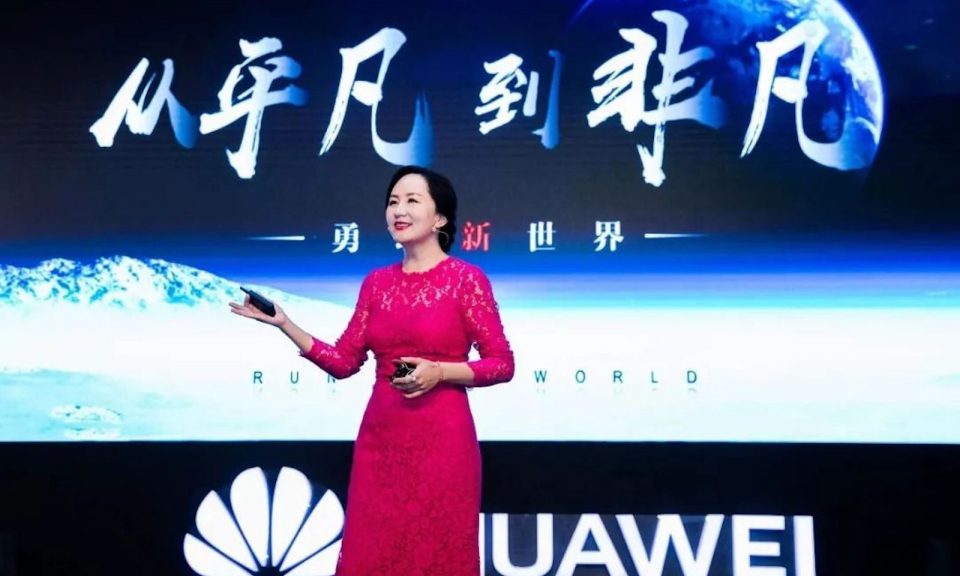
The recent proceedings in Canada dealing with the US demand that the Chief Financial officer of Huawei, Meng Wanzhou, be extradited to the US brings some of this into the open. The Supreme Court of British Columbia ruled that Meng’s argument that there was no legal basis for extradition was rejected. Canada’s talking heads and chattering class sighed with relief. The self-proclaimed liberal Toronto Star’s editors welcomed and characterized the virtue of the decision: “Beijing must understand: out courts don’t serve the government… It’s called ‘rule of law,’ a concept foreign to China’s Communist Party and its mouthpieces.” Apart from their evident cold war genre chauvinism, the editors undoubtedly were glad to have any doubts about the Trudeau government’s and Canada’s allegiance to the Rule of Law stilled.
The recent embarrassment caused by the tawdry behaviour of almost every cog in the ruling class’s legal engine room during the SNC-Lavalin scandal which involved the government forcing its own Minister of Justice to resign because she wanted to act independently and deny a flagrantly wrongdoing corporation any kind of soft landing, now could be pushed aside as an uncharacteristic violation of Canada’s basic principles. To them, the Meng ruling signified that, once again, Canada was entitled to be smug, to assert that it was to be envied because of its stout adherence to an unalloyed good, the Rule of Law.
The Ruling in the Meng Case
It all began with a warrant issued by a New York court for Meng Wanzhou’s arrest in August 2018. She was not there. On December 1, 2018, after an extradition request from the US, Meng was arrested by Canadian authorities when she landed in Vancouver. On 28 January 2019, formal charges were laid by the US Department of Justice, accusing Meng’s employer, Huawei, of misrepresentations about its corporate organization which had enabled it to circumvent laws that imposed economic sanctions on Iran. Huawei was also charged with stealing technology and trade secrets from T-Mobile USA. Meng, the Chief Financial Officer of Huawei, was charged with fraud and conspiracy to commit fraud. Huawei pled not guilty to the charges of violating the Iran sanction provisions in a New York court and not guilty to the stealing charges in a Seattle court. After a number of preliminary legal skirmishes, the extradition hearings against Meng began in 2020. Associate Justice Holmes issued her ruling on 27 May, 2020. Law takes its time.
Meng had told HSBC officials who met with her in the back of a Hong Kong restaurant in 2013 that, despite the allegations in a newspaper article, Huawei had not made improper use of a closely associated firm, named Skycom Tech, to supply US materiel to Iran. The reason she had made this statement to HSBC, it was alleged, was that Huawei used HSBC as a banker when transacting business. If Huawei, as alleged, was implicated in violations of the Iran sanction laws, HSBC might well be held to be complicit in such crimes. The US alleged that Meng’s representations to HSBC constituted fraud under its law.
Meng Wanzhou argued that, for a case of fraud to be made out, in both the US and Canada, it was necessary for the prosecution to prove that the fraud materially contributed to a tangible loss. This could not be made out here. For Meng’s deception of HSBC to cause it a tangible loss in the US, it was necessary for US prosecutors to invoke the impact of another law, the Iranian sanction law. Without it there would not be any harm and, therefore, no fraud in the US. As Canada did not have any such sanction provisions in place, Meng’s deception would not have led to any tangible loss in Canada and there would have been no fraud committed in Canada. This argument that the basic requirement for extradition – mirroring laws – had not been met, was rejected by Associate Chief Justice Holmes.
She deployed standard legal reasoning that is, she looked for previous holdings and used the imprecisions she found in them and in the wording of the legislation she was interpreting. Holmes found that previous decisions had held that, in order to determine whether the conduct in the applicant jurisdiction created an offence, it was necessary to assess the essential nature of that conduct. That meant evaluating the foreign conduct in its context, in its legal environment. Meng argued that looking at the legal environment required taking a foreign law, one distinct from the laws being compared, into account, something which should not be done under the Extradition Law.
The presiding judge responded that only some aspects of the legal environment, constituted by that other law, had to be taken into account, not all of it. It was her job to say which aspects could be so used. Holmes admitted that she was going out on a limb because the distinction between looking at some aspects of a foreign law and taking the actual law into consideration is fraught, both as a matter of logic and of established law. She wrote that “the issue is at what level of abstraction… the essence … of the conduct is to be described… there is little authority or precisely what may be included in ‘imported legal environment’.”
Undeterred by the lack of any known criteria (remember the Rule of Law!), she used what she likely calls her common sense and what Meng’s supporters probably think was her unconscious bias. Associate Justice Holmes decided that, in this case, it was appropriate, when looking for the essential nature of the foreign conduct, to look at the effects of that US law, the Iran sanction law. As its effects made Meng’s deceiving conduct fraudulent in the US, and as deception is the core of fraud in Canada, the essential/contextualized nature of Meng’s conduct satisfied the essence of fraud as defined under Canada’s Criminal Code. Lawyers call this sort of finessing good lawyering; in the wider community it is seen as legal chicanery. Holmes ruled that Canada was free to extradite Meng.
Laundered
All that effort to put Wanzhou Meng’s fraud into legal context and not a scintilla of regard for the political, social and economic context of the case!
Everyone, literally everyone, knew what had led the US to charge Huawei and its CFO. It was to obtain bargaining chips in its fight with China. It was to persuade its citizens that it was right for the government to deny them access to cheaper goods and a better 5G system because China would abuse its growing economic influence and enhance its spying potential. It was to make China more pliable when the US demanded better trade terms and more protection for its intellectual property, etc. There was no attempt to hide any of this.
Did the Canadian government understand this? Of course. Did it feel it had to allow the US to use Canada’s supposedly neutral legal machinery to further its political project? Of course. Could the Canadian government have said “no” and simply turned a blind eye when Wanzhou Meng landed in Vancouver? Of course.
Was Associate Justice Holmes, at the very least, in a position to guess all of this? Of course.
The Supreme Court of British Columbia had the timelines of the saga before it. All the events that led to the fraud charges occurred years before the tug-of-war between the US and China turned into a full blown version of a new cold war. Meng’s alleged misrepresentations to HSBC occurred in August 2013, several months after Reuters had published its report on the links between Huawei and Skycom Tech. that supposedly led to Iran being supplied with US materiel.
It took five years for the US to charge Huawei and Meng. It took five years for its righteous indignation about Huawei’s and Meng’s violations to reach fever pitch. It took five years for the US to decide that a deception of one set of private entrepreneurs by other private entrepreneurs ( a garden variety event in an aggressive competitive milieu), a deception which took place in a far away jurisdiction, presented a danger to the integrity of the US justice system. That integrity had not been seen as severely threatened when the masters of the universe deceived millions of people during the subprime mortgage scandals, at least not sufficiently to charge any of the more senior perpetrators. None of this was of any concern to the Supreme Court of British Columbia. The court was only concerned with the narrowest of decontextualized legal issues before it. Its certainty that its only responsibility was to the Rule of Law signified to it that it should not be troubled by the possibility that it might be used as a pawn, by either the US or the Canadian government or both.
Nor was this lack of concern shaken by President Trump’s highly publicized statement to Reuters (the outfit which had written the report which started the ball rolling), made just after Wanzhou Meng was released on bail. Trump said that he would certainly intervene in her case “if I thought it necessary” to help forge a trade deal with China. Undoubtedly some people (especially lawyers) might think it right and proper for a court to ignore a blatant admission by a craven politician that the supposedly independent system of law of both the US and Canada was being used for partisan political purposes. After all, the statement had been made extrajudicially and had not been put before the court. While the judge might have known about the Trump intervention, much as she knew that the US and China were having a political tug-of-war and that Canada had been drawn into it, the wilful blindness demanded by the Rule of Law demanded that she make no reference to any off this knowledge.
This reasoning makes no sense to anyone not held in rapture by the Rule of Law fantasy. Immediately after Trump made his provocative statement, Trudeau realized that the public might draw the inference that Canada was just bowing to its Big Brother ally and permitting it to abuse the Canadian justice system. It evoked the notion that the US and Canada were just one country with two systems. He was forced to respond.
Trudeau issued the following statement: “Regardless of what goes on in other countries, Canada is and will always remain a country of the rule of law.” The message was clear: we, the elected government and its executive have nothing to do with any of this; we rule an independent country; we have an independent legal system and it makes these kinds of decisions. We respect this and abide by the results. When it comes to the extradition of Meng, we, the politicians, like Pontius Pilate, wash our hands off the whole mess. It has nothing to do with us. It is not a political matter.
This is why the editors of the Toronto Star and all other opinion moulders greeted the ruling in the Meng case with such acclaim. By ignoring all the real facts underlying the dispute, the court had given support to the Canadian government’s pretence that the Meng case had not raised questions about its participation in a complex set of political, economic and ideological controversies. Their role had been laundered. If the outcome suited the US in its struggle with China, this was incidental; Canada’s government had not pushed for such an outcome because it believed in the Rule of Law. These cheerleaders pointed out that, if Canada had interfered with the judiciary’s operations, it would certainly have pushed for a different result.
As it was, the judicial ruling could only strain relations between Canada and China, a most undesirable state of affairs as Canada hoped to have China release two Canadians accused of committing serious offences in China; more Canada had no interest in imperilling important trade relations with China, as the judicial ruling might well do. That is, the result may be a political win for Trump, but a loss for Trudeau, two Canadian citizens and, likely, some farmers and manufacturers if China uses its economic clout to punish Canada.
So viewed, the judicial outcome gives the impression that the government had not played any part in the decision-making. It should, therefore, not be held politically responsible for the consequences. The government had acted righteously, it had been true to the Rule of Law. Its conduct had been sanitized, laundered.
Of course this argument is not as strong if the judicial outcome is not seen as inimical to the government. What did Canada actually want? We can only guess. But it is to be remembered that the government did detain Wanzhou Meng; if it had not done so, the worst that would have happened is that the US might have been annoyed. Assuming, as it makes sense to do, that Canadian officials understood full well what the US was up to, the detention suggests, although it does not prove, that the government was not opposed to the obvious political and economic goals of the US. More strongly, it indicated that it was willing to support those goals. After all, it knew the risks it was taking. The headline in the Ottawa Citizen on 15 December, 2018, read: “Abelev: In the Huawei case, Trump has enlisted in a game Canada can’t win.”
Another glimpse of the Canadian government’s thinking is provided by Prime Minister’s request that John McCallum resign from his post as Ambassador to China after he had made public statements which indicated that he thought the case against Meng was trumped up and, therefore, should lead the government to reject the extradition request. This would help Canada in its negotiations with China which, in apparent retaliation, had jailed two Canadian citizens.
Implicit in McCallum’s intervention was a reference to a legal power that Canada has reserved for itself over extradition processes. The Minister for Justice can, at any moment after a request for extradition is received, abort the process. In Trudeau’s angry reaction to McCallum, he made no reference to this, pretending political interference with the judicial system was to be eschewed.2 While to some people, then, Trudeau’s publicized disapproval of McCallum’s views (and of similar ones by former Prime Minister Jean Chretien a little later), did dovetail with the claim that the government should not take a position on matters to be determined by a judge, it also suggested that the government would not object too much if the ruling went against Meng, regardless of what it might mean for Huawei, Meng and the prisoners. After all, the justification for the hands-off the justice system proffered by Trudeau should not have been given too much credence.
At that time a full-blown scandal was raging over the SNC-Lavalin affair. Trudeau was brazenly trying to get rid of an independent Minister of Justice precisely because she was thwarting his enactment of a law which was to apply retroactively (remember the Rule of Law!) to save a serial wrongdoing corporation. A curious symmetry weirdly surfaces. The Trudeau government was trying to give its rogue actor, SNC-Lavalin, the kind of gentle treatment the US had given HSBC by giving it access to a deferred prosecution agreement of the kind that the US had given that deviant bank.
There were many polluting particles in the ambient air as the Meng case was processed in the supposedly politically unpolluted atmosphere of law. Undoubtedly, Associate Justice Holmes did her best to blow all these toxic particles out of her mind, as all judges claim to do. But this does not mean that they did not influence her mind-set. We will never know. That is how laundering works: if the dirt which soiled the cloth is rinsed out, all that one is left with is clean cloth. Just what the government needed.
Epilogue
The legal processes have not ended. Meng may appeal the ruling on double criminality handed down by the Supreme Court of British Columbia, arguing the Holmes’ reading of how the essential nature of conduct in a foreign state was to be found was erroneous. Her lawyers do have some plausible arguments to proffer on this issue. Before that will take place, a hearing will be held into Meng’s allegation that, when she was detained in Vancouver, prior to being turned over to the RCMP, the border official obtained Meng’s telephone numbers and passwords and then passed these on to the RCMP. She was detained and questioned for three hours before she was told of her arrest. She claims her constitutional rights were violated and that the RCMP and Canada’s Border Services Agency acted, improperly, as US agents.
This is a claim that procedural safeguards essential to the proper operation of the Rule of Law had been breached. If successful it would make the arrest wrongful and mean that the committal process which led to Holmes’ ruling should be voided. The result of the adjudication on this action by Meng can also be the basis for an appeal. If all of it, the denial of proper process and the Supreme Court of British Columbia’s ruling on double criminality, are settled in favour of Canada, the extradition process can continue, although, as seen, the Minister for Justice can always set the whole thing aside.
There are many other hurdles to clear. The Trump Administration may be replaced, the Trudeau government (in a minority position) may fall before all this is over. It is also difficult to know what steps China will take and how this will influence political minds in Washington and Ottawa. These unknowns highlight how artificial it is to pretend that a request for extradition is a legal, non-political, struggle based on rational aseptic criteria.
To underscore this point, note that, on 4 June, 2020, the US State Department issued a threat. It will reassess its sharing of intelligence with Canada (a member of the so-called Five Eye intelligence network) if Canada chooses to let Huawei market its 5G technology in Canada. This makes it clear that the extradition case was never about a fraudulent misrepresentation to a ‘vulnerable’ foreign bank, but about furthering US efforts to ward-off the danger of an economic and political threat posed by China.
Law and its Rule of Law are convenient tools, no more no less. They should not be granted too much respect. Certainly they should not permit our governments to present themselves as unsullied, as if they have come out of the washing machine, smelling fragrantly.
And, oh yes, after its agreement with the US Department of Justice, HSBC had made much of its new approach and had spent money on better systems to inhibit wrongdoing. On 8 April, 2020, it was reported that HSBC had admitted it had engaged in money laundering in Australia. Maybe it does not require Huawei or Meng to engage in fraud to get HSBC to participate in criminality.
*
Note to readers: please click the share buttons above or below. Forward this article to your email lists. Crosspost on your blog site, internet forums. etc.
‘The legalization of politics’ is the name given by Harry Glasbeek and Michael Mandel, “The Legalization of Politics in Advanced Capitalism: The Canadian Charter of Rights and Freedoms” (1984), Socialist Studies, 2:84, and by Michael Mandel, The Charter of Rights and the Legalization of Politics in Canada, rev. ed., Toronto; Thompson Educational, 1994, to a process which removes class and history from political discourse and consciousness.
As well, there is a rarely used law on the books, the Foreign Extra Territorial Measures Act, that the Attorney-General can deploy to repulse measures of a foreign state that are likely to significantly affect Canadian interests. This is the legislation used to allow Canada not to comply with the US sanctions on Cuba. Arguably, but not certainly, it could be used to block the extradition of Meng.
Ph.D., Executive Director of the Council for the National Interest.
June 25, 2020
John Bolton’s new memoir “The Room Where It Happened,” which came out two days ago in spite of White House attempts to block it, is the standard kiss and tell that senior American politicians and officials tend to write to make money for their retirement. There should be no question but that Bolton has done his best to cast the president in as bad a light as possible, which is easily done considering that communicating by twitter and through insults leaves a lot of room for second guessing about motive and intentions.
As required by law, Bolton’s book was reviewed for classified information starting in December, and when the process was finished it was started all over again, making clear that the tit for tat over the contents was essentially political and unrelated to national security. Having failed to stop the publication, the Trump Justice Department will now move to take away Bolton’s earnings from the book, a tactic that originated back in the 1970s with CIA whistleblower Frank Snepp’s “Decent Interval.” Critics of the security review process have noted that when a book says nice things about the government it is rarely interfered with no matter what classified information it might reveal, while a work that is unfriendly can expect to be hammered and delayed by the state secrets bureaucracy.
Why Donald Trump hired leading neoconservative John Bolton in the first place remains somewhat of a mystery, but the most plausible theory is that the number one GOP donor Sheldon Adelson demanded it. Adelson regards Bolton as something of a protégé and was particularly taken by Bolton’s enthusiasm for attacking Iran, something that the Las Vegas casino magnate and the Israeli government of Benjamin Netanyahu both passionately desired.
After months of an apparently difficult tenure as National Security Advisor, John Bolton was finally fired from the White House on September 10, 2019, but the post mortem on why it took so long to remove him continued for some time afterwards, with the punditry and media trying to understand exactly what happened and why. Perhaps the most complete explanation for what occurred came from President Donald Trump himself shortly after the fact. He said, in some impromptu comments, that his national security advisor had “…made some very big mistakes when he talked about the Libyan model for Kim Jong Un. That was not a good statement to make. You just take a look at what happened with Gadhafi. That was not a good statement to make. And it set us back.”
Incredible as it may seem, Trump had a point in that Bolton was clearly suggesting that North Korea get rid of its nuclear weapons in exchange for economic benefits, but it was the wrong example to pick as Libyan leader Moammar Gadhafi gave up his weapons and was then ousted and brutally killed in a rebel uprising that was supported by Washington. The Bolton analogy, which may have been deliberate attempt to sabotage any rapprochement, made impossible any agreement between Kim and Trump as Kim received the message loud and clear that he might suffer the same fate.
Subsequently, Bolton might have been behind media leaks that scuttled Trump’s plan to meet with Taliban representatives and that also, acting on behalf of Israel, undercut a presidential suggestion that he might meet with Iranian President Hassan Rouhani. Trump summed up his disagreements with Bolton by saying that the National Security Advisor “wasn’t getting along” with other administration officials, adding that “Frankly he wanted to do things — not necessarily tougher than me. John’s known as a tough guy. He’s so tough he got us into Iraq. That’s tough. But he’s somebody that I actually had a very good relationship with, but he wasn’t getting along with people in the administration who I consider very important. And you know John wasn’t in line with what we were doing. And actually in some cases he thought it was too tough, what we were doing. Mr. Tough Guy.”
Trump’s final comment on Bolton was that “I’m sure he’ll do whatever he can do to spin it his way,” a throw-away line that pretty much predicted the writing of the book. Bolton has many supporters among hardliners in the GOP and the media as well as among democracy promoting progressive Trump haters and it will be interesting to see what damage can be inflicted on the president’s reelection campaign.
Pre-publication reviews have focused on the takeaways from the book. The most damaging claim appears to be that Donald Trump asked the Chinese government to buy more agricultural products from the U.S. to help American farmers, which the president described as a key constituency for his reelection. Bolton claims that Trump specifically asked Chinese President Xi Jinping to buy American soybeans and other farm commodities and, as a possible quid pro quo, Trump intervened to reduce some financial penalties imposed on the Chinese telecommunications company ZTE for evading sanctions on Iran and North Korea.
Also concerning China, Bolton asserts that the president encouraged Xi to continue building concentration camps for the Muslim Uighurs, a religious and ethnic minority largely concentrated in the country’s Xinjiang region. The context of the alleged comment is not clear, nor is it easy to imagine how the subject even came up, so the claim might be regarded as exaggerated or even apocryphal. Bolton was not even present when the alleged conversation took place and only learned of it second hand.
Other claims made by Bolton include that Trump didn’t know that Britain was a nuclear power and that Finland is not part of Russia. The book also describes in some detail how Trump spent most of his time in White House intelligence briefings presenting his own views instead of listening to what analysts from the Director of National Intelligence (DNI) and Central Intelligence Agency (CIA) offices had to say.
That Donald Trump was a poor student and is an intellectual lightweight has been noted by many observers. Combining that with his essential lack of curiosity about the world and its peoples means that he does not know much about foreigners and the places they live in. But it is both condescending and somewhat of a cheap trick by Bolton to pillory him for his ignorance.
The media’s vision of the most damaging charge, that Trump colluded with the Chinese, is, quite frankly ridiculous. Buying American agricultural products is in the interest of both farmers and the U.S. economy. Reducing penalties on a major Chinese company as a sweetener and to mitigate bilateral tensions is called diplomacy. Of course, anything a president does with a foreign country will potentially have an impact when reelection time rolls along, but it would be difficult to suggest that Trump did anything wrong.
The Bolton book has also been critiqued by some, including the New York Times, as the exposure of “a president who sees his office as an instrument to advance his own personal and political interests over those of the nation.” Bolton writes how “Throughout my West Wing tenure, Trump wanted to do what he wanted to do, based on what he knew and what he saw as his own best personal interests… I am hard-pressed to identify any significant Trump decision during my tenure that wasn’t driven by re-election calculations.”
Trump is, to be sure, a man who has subordinated the dignity of the office he holds to personal ambition, but he differs more in the pervasiveness of his actions than in the substance. Many other presidents have made many of the same calculations as Trump though they have been more restrained and careful about expressing them.
Finally, a number of editors who have read review copies of the book have observed how badly written and organized it is. If anyone is looking for a real indictment of Donald Trump and all his works, they will not find it in the Bolton book. Apart from the new information it provides, which seems little enough, it would appear to be a waste of $20 to possibly enrich an author who has been promoting and saying “more please” to America’s wars for the past 20 years.
Jewish plumbers and the laws of aerodynamics
-
Ali Abunimah is the world’s most enthusiastic supporter of the AIBibi
hijacking story nonsense. He appears to be morphing into Michael Tracey.The
plumber w...
Why I Am Now Catholic
-
Why I Am Now Catholic September 18 2026 ___________________________________
More Vids! +BN Vids Archive! HERE! ___________________________________
Support ...
The United States At A Crossroad
-
The United States At A Crossroad—An Analysis (16 Sept 2026) by Lawrence
Davidson Part I—Texas vs Minnesota Back in mid-May […]
Report on Beth Israel vigil 09-12-26
-
*Eat-a-Cheeseburger Day Approaches*
This year, EAC Day appears on Monday, September 21st. The date coincides
with the Jewish holiday called Yom Kippur. Cl...
-
Hello all,
It is with great sadness that I share with you the passing of our beloved
sister, Mother, and Grandmother, the individual that you all knew ...
Best Horror Podcast
-
Best Horror Podcast Introduction: Horror podcasts […]
The post Best Horror Podcast appeared first on Copper Shock Horror Podcast.
Ikhras Endorses Muntadhar Al-Zaidi
-
“Oh parties of banditry and sectarianism and corruption, we have come and
our goal is to destroy you.” Ikhras formally endorses Muntadhar al-Zaidi,
Iraqi j...
Prince Charles: Foreign Jews behind bloodshed in ME
-
In May, 2017, British Crown Prince Charles declined an invitation from
Zionist entity’s president Reuven Rivlin‘s to attend the 100th anniversary
of the no...
Palestinian Women – One for All, All for One
-
Honouring All Palestinian Women by Honouring Three: Hanin Zoabi, Ahed
Tamimi, Samah Sabawi Vacy Vlazna “Palestinian women have always stood side
by side ...
US’s Saudi Oil Deal from Win-Win to Mega-Lose
-
By F. William Engdahl Who would’ve thought it would come to this? Certainly
not the Obama Administration, and their brilliant geo-political think-tank
neo-...
-
*Mordechai Vanunu wins human rights prize of Brazilian Press Association *
* http://www.alternativenews.org/english/index.php/features/updates/7038-mordechai...
Abdul Aziz Rantissi:
"My ultimate wish, my God, is to attain martyrdom,"...God granted him his wish on April 17, 2004, at the hands of Israeli assassins.
 Uprooted Palestinian
 Uprooted Palestinian