Saturday, 21 August 2021

Anti-Tank Weapons: Hezbollah Merkava Hunters Will Be Watching For It in the Next War

  Source

Anti-Tank Weapons: Hezbollah Merkava Hunters Will Be Watching For It in the Next War

Al-Ahed Exclusive

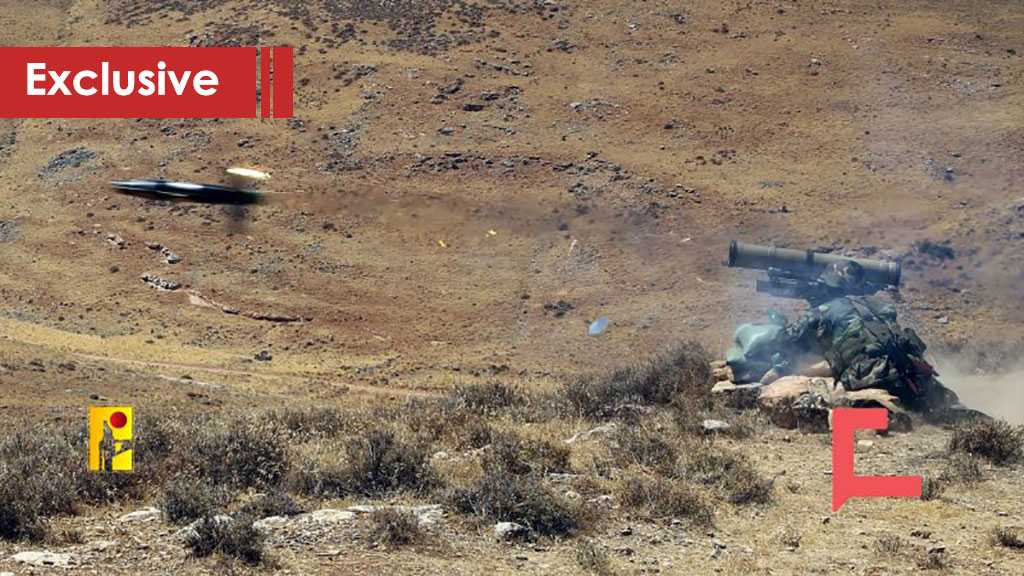
A report titled “Hezbollah’s Creative Tactical Use of Anti-Tank Weaponry” by the “Jamestown Institute for Security Studies and Counter-Terrorism Affairs” concluded that “among the many aspects to be investigated is the vulnerability of ‘Israel’s’ powerful armored corps to small, hand-held, wire-guided anti-tank weapons.”

It further stated that “Hezbollah’s innovative use of anti-tank missiles was the cause of most ‘Israeli’ casualties and has given the small but powerful weapons a new importance in battlefield tactics.”

The Merkava, or God’s Chariot, as the “Israelis” call it turned into the gates of hell in July 2006 that were opened by the Islamic Resistance’s anti-tank units.

“In the ‘Israeli’ consciousness, the Merkava tank cannot be defeated by any weapon in the Arab world,” an officer in the Islamic Resistance’s anti-tank unit explains to Al-Ahed News.

In a physical or material comparison, during the occupation, there was no weapon in the Arab armies capable, with technical qualities, of piercing the Merkava tank. For example, Egypt only had Malyutka and HOT, and Syria only had Fagot and Malyutka. We saw the Merkava for the first time on Lebanese soil in 1982. It belonged to the first generation.

*The Merkava is the obsession of the southerners

From the eighties until the nineties, the Merkava played an essential role in protecting enemy soldiers and strengthening their positions in southern Lebanon; the Lahd site, which was two meters high during the first days of the occupation, is now 12 meters high. In a short period of time, the enemy had developed all of its defense systems along the border, then the Merkava tank came to protect this deployment and was able to turn into an obsession and a source of fear and anxiety even for civilians in the south.

* Alaa Bosnia leaves his mark in the first Merkava ambush

The officer in the anti-tank unit recalls when the first Merkava tank was destroyed by the resistance.

“The Merkava tank became an obsession even for some Palestinian resistance factions at that time, and we were faced with a big question: What should we do? We did not have enough knowledge or experience. We made the most of our capabilities and were able to destroy a number of Merkava tanks. The first destruction operation was in an ambush prepared by the resistance in the heart of Beit Yahoun, and the martyrs Alaa, Malak, and Ali Tohme were at a distance of 15 meters from the Merkava tank. The ambush was in one place and the tank in another. A force was supposed to attack the tank and capture it, while another force isolated it. But the roles were reversed because the two tanks passed in a different order, then the men approached the tanks and clashed. Alaa Bosnia and martyr Salah Ghandour, aka Malak, confronted the first tank.”

With a passionate smile, the officer says: “The two martyrs, Salah Ghandour [Malak] and Ali Tohme (Siraj) threw a B7 shell at the tank. At that time, Alaa Bosnia was attacking the tank, but with what weapon? With an M16. The tank attacked him, and he hid by staying low to the ground. He remained in this state for 15 minutes until the tank disappeared. His colleague called out saying: ‘The ground swallowed the tank.’ Hajj’s colleague, who said the phrase with a smile, patted Hajj Alaa on the shoulder, advising him to get some sleep [he had not slept for three days prior to the ambush], only to find out later that the tank while retreating was not swallowed by the ground but fell into Beit Yahon’s pond, and three Zionist soldiers were killed.”

* To the Islamic Republic: The Merkava is the target

The Islamic Resistance was decisive in its pursuit of a solution for facing the Merkava. The Islamic Republic was the compass. There, the resistance fighters trained with the Malyutka, the TOW, and other weapons. In 1992, the resistance had one goal – to break the Merkava tank after the enemy used it as a means to prevent resistance operations. For more than a year, “Israeli” military targets were in the crosshairs of the resistance fighters, but a decision was made to only target the Merkava.

The officer says, “In one year, the point of weakness turned into strength, and the Malyutka had a major role in securing the mujahideen during their operations and providing them freedom of action along the border strip, and that was the first headlines of victory against the Merkava tank.”

Recalling the statements of the Islamic Resistance at that time, it turns out that the first Merkava was destroyed by the fighters with a Malyutka on the Talloussa road on March 2, 1993.

The statement read:

“The Islamic Resistance targeted a mechanized enemy patrol on the Markaba-Talloussa highway, which led to the destruction of a Merkava tank and its complete burning, killing and wounding everyone on board.”

A Zionist military spokesperson admitted the operation and kept the losses discrete. However, the extent of these losses became clear through the hysterical response of the enemy and its agents, which was manifested by the targeting of liberated villages adjacent to the occupied strip with artillery. At the time, a Zionist official admitted that “Hezbollah’s use of this type of weapon would constitute a real threat to our soldiers.”

*The Malyutka

The Malyutka that insulted the Merkava in the early nineties was designed in 1953, and it is a weapon that requires high craftsmanship. It is a man-portable anti-tank guided missile and is not classified as a smart weapon.

The resistance officer memorized by heart every tank and can tell you how each of them was destroyed.

“The second Merkava that was destroyed by a Malyutka was on the Deir Seryan-Alman Shumariya Road. The tank was struck while one of the brothers was filming it along with a centurion that was transporting five soldiers, all of whom were blown out.”

From here, the actual confrontation with the Merkava began, and the war of minds began. “After striking a tank in al-Salhani, the ‘Israelis’ established a committee to develop Merkava protection, and they actually started with the idea of reactive armor. Then, they established a second investigation committee to study other measures. Most of the measures taken by the enemy on the borders were measures confronting missiles to prevent them from targeting the Merkava tank. But for us, we had to defeat consciousness. We lured them in many places, and we could hear them. One soldier told the other, ‘do not show it, we are waiting for you.’ Yes, the tank became the opportunity we were waiting for, and for the ‘Israelis’ it was like a hunter in disguise who did not dare to appear.”

Not all of the mujahideen innovators in Merkava hunting had diplomas, but they had the will and intention. In 1996, the enemy began using other techniques. It kept the Merkava tank, but introduced anti-armor weapons to some posts to confront the mujahideen. As for the Merkava, the “Israelis” restricted its use to nighttime because the resistance’s capabilities were limited at night in this field. What about hunting Merkava at night?

The officer in the anti-armor unit answers, “We had no doubt that the first Merkava tank we targeted at night was targeted by God; the means were very, very, very simple –  night vision goggles, and navigating by the stars. We depended on stars due to the lack of a means of determining directions. This is how we struck the first Merkava tank at night in Al-Dabshe, with a primitive fist and a night missile. After striking the first tank at 3:00 am, the ‘Israelis’ went crazy. At that point, we accomplished the goal of breaking the Merkava, and we moved on to the next goal, which was to kill the soldiers. We no longer shot at the tank; we targeted the patrols on the border.”

* Spirituality while facing the Merkava

According to the officer, the Merkava tank faced “the spirituality and creativity of the young men, we even touched the Merkava physically. The level of courage that our men in the resistance possessed enabled us to do so. Bilal Adshit and Alaa Bosnia were hiding in one of the operations in Al-Dabshe after they were spotted by the Merkava. They walked right beside it. The mujahideen of the Islamic Resistance managed to break the narrative that the Merkava tank is the protector. In many places, we used to see them leave the tank after a missile fell close to it. They left it and fled.”

The officer recalls a scene from Al-Khiam in July 2006: “In Al-Khiam, one of the tanks got stuck in a trench while fleeing after four others were hit. The crew jumped from it to another and fled. They did not dare to return to pull the tank until the cease-fire.”

In the third stage of development, the enemy started making technical modifications to the Merkava tank, introducing the reactive armor. The Islamic Resistance officer explains that “the reactive armor consists of explosive plates that explode when exposed to a missile, preventing penetration. Then, they made two heads for them, so what did we do? We confronted the reactive armor by either repeating the shooting at the same point or using more than one weapon at the same point, and this created a big problem for the enemy. All this was with simple weapons. Liberation came in 2000 and the Merkava came out defeated, without any confusion or discussion. The enemy brought with it the Merkava tank to protect it and to fight, but it was like a coffin for the enemy’s soldiers. After the liberation, we started planning for a broader war.”

* What about the Merkava in 2006?

According to the officer, “the enemy entered 2006 and the Merkava was the tip of the spear. I can confidently say that in 2006 the enemy reached the conclusion for the first time that it would not be relying on the Merkava in the next war. As for us, it gave us the conviction that it is the easiest weapon to deal with in the war if you developed your methods.”

The Merkava 401, or the fourth generation, was a defeated scrap of metal in 2006 and until today, the officer says, “I am responsible for my words. The enemy did not change anything in them. Every development the enemy makes, we read it as a weakness because all this ability is associated with firepower, and the soldier is hiding under it. It means nothing. This is proof that you are defeated. When you develop the missiles, planes, the radar, all this is beautiful, but in practical terms, the soldier will be the one fighting on the ground. The bottom line is the Merkava was marketed for a specific purpose, so Hezbollah struck it and canceled this purpose. Thus, the enemy must look for other options.”

* Trophy: A fake armor

Trophy is a positive defense system. The officer asks, “Why are the ‘Israelis’ developing and reconsidering the use of tanks? Is it because they are no longer valid in confronting Hezbollah? What did the enemy say in 2006? Listen carefully. In 2006, the enemy said that the use of tanks was not up to the organizers. I want the enemy to hear my words well. They said they have the best combat doctrine for the armored corps, but the soldiers and officers did not use this doctrine in the scope of the battle. So, I ask, will these soldiers use this doctrine in the next war? You planted in the minds of your soldiers that protection is by means of Trophy and its derivatives. You, the officer, when you rely on such technology and then it malfunctions on the battlefield, what will you tell your soldiers?”

“We do not count on weapons but on the mujahideen who long for this moment. They have built their spirituality on this and feel that they have shortcomings when they read Ziyarat Ashura. To them, the real place to show these shortcomings is in the battlefield. This is not just morale. This is how we are,” the officer vows with confidence.

The tank massacre that humiliated the “Israeli” army was only some of what the officer wanted to inflict on the enemy. Here, he recalls what he had previously repeated before the Secretary-General of Hezbollah His Eminence Sayyed Hassan Nasrallah.

“The 2006 war was an irreplaceable golden opportunity. I said it to His Eminence the Secretary-General. It was an irreplaceable opportunity. It was ‘haram’ for a tank to leave the south. We were facing 400 tanks, and all of them should have been destroyed. But we fought the enemy in a hurry. We deployed the Kornet 7 days after the war started. If there had been a prior deployment, we would have hit all 400 tanks.”

“In 2006, our surprise was not that the Kornet destroyed the Merkava tank. Rather, the surprise was that the Kornet destroyed the tank before it entered the range of engagement, that is, before it reached the point of danger. The surprise was in the range, and to this day, the Kornet is still a worrying weapon for the ‘Israeli’ army. And all the measures taken by the enemy are not adequate measures.”

* Bilal Adchit and his comrades

When talking about the mujahideen, their high spirits, and their firm determination, the officer elaborates on the explanation and description: “Some of the brothers who struck the Merkava in the 2006 war were among the Taabia’a. They targeted the tank and when the ‘Israelis’ tried to pull it out, they’d fire at it again. I remember them all. I remember how many missiles we fired at the enemy in 2006, and I remember every brother who fired at them, how many tanks were hit, and who fired where. I think that this is the least I can do.”

Speaking of the Merkava, it’s necessary to talk about Bilal Adchit, whose name is synonyms with the Merkava. The officer says, “Bilal is a rare case. He loved to work and did not leave until he finished what he was assigned to do. He did not know failure and could not return disappointed. By ‘Israeli’ confession, he killed 48 ‘Israeli’ soldiers. I wrote them down in every location – Bilal in Al-Aziya, Bilal in Al-Qalaa, Bilal in Al-Dabshe, Bilal in Sujud, Bilal in Al-Rayhan, etc.”

In Wadi al-Hujeir, there were feats of Bilal the officer would not forget.

“In Wadi al-Hujeir, Bilal fired the first time and the ‘Israelis’ fired at the source of the shooting. Then, Bilal moved to another place, and thus he kept toying with the ‘Israelis’ from one area to another until the ‘Israelis’ decided to limit their movement to nighttime. But Bilal was also on the lookout, like a ghost. Bilal found a creative solution, which he did not learn in workshops nor in books, nor is it found in all the regular foundations. Bilal created a fire (the fire at night disrupts heat monitoring), and he started from the side of the fire. The ‘Israelis’ did not detect it. This is creativity!”

By killing Bilal, the enemy was not able to achieve this strength. According to the officer, “Bilal left behind him many Bilals, for he was one of the most prominent. Apart from him, there were important creativities from the brothers in 2006. The brother that hit the tanks in Al-Khiam was 50 years old and had undergone open-heart surgery. He carried the launcher to a distance of about 500 to 700 meters. He put it on the ground, rested a little, then began to ram the tanks. Likewise, martyr Rabi’ Qasir, the brother of martyr Ahmed Qasir, was another symbol of courage.”

* Priority for the initiative

The officer had a great role in the war, in distribution and in leadership, and in his accurate knowledge of geography.

“In 2006, one of the brothers called me to say that they heard the ‘Israeli’ soldiers through wiretaps, saying that they would get out of this place, so I laughed. He asked me, ‘why are you laughing?’ I said, because I have been waiting for them there for seven days. We’ve been reading the ‘Israeli’ mind.”

Likewise, for individuals, the advantage was not based on age or experience, but rather on initiative.

“One of the martyrs on the Ghandouriyeh axis continued to fire at tanks until it reached his proximity. When it arrived, he sat on the attic and detonated the mine as soon as the ‘Israelis’ entered the house.”

* The capture operation

During the July 2006 war, the Anti-Armor unit had a hidden role in the success of the capture operation in Khallet Warde.

“In capturing operations, we plant a bomb and stop the vehicles. But in the operation in Khallet Warde, the strip was placed along the road where the ‘Israelis’ crossed inside the line. So, the anti-armor unit was asked to stop the vehicles. The unit sent Bilal to investigate, and the idea was … when the brothers asked for the Humvees to be stopped, we resorted to an innovative idea. The shot usually hits or misses, so does the shell. So how would we ensure that we hit the killing area? We converted every two cannons into one, and every 2 B7s into one B7, and we used two B7s in the face of one Humvee. Thus, we fired six shots, two of which hit the target during the capture operation, which stopped the Hummer. Bilal and his comrades who fought in the war took part in the capture operation.”

* In the next war: We are assured and the enemy is definitely defeated

The officer tells Al-Ahed, “Technically, it is clear that when the weapon enters any battle, it is used in the next battle based on the previous one. And this is what happened in 2006. In the next battle, the enemy considers that this weapon is the main threat, and what the enemy has done so far is that it created a positive defense system, which is an intelligent system, a radar system that senses the missile. When the missile reaches a close range to the tank, a charge explodes and the effort of the missile is dispersed. This system, for me, will be fragile, and the proof of that is that not everything that works in a clean environment can work in the field (in battle). The bottom line is that we are reassured.”

“I have confidence that the enemy is defeated because with this technology, it will rely on the tank entering the battlefield. Their dependence is on technical means, and therefore the lessons learned by the enemy in 2006 were not enough. What happened in 2006 was a victory against armors, according to the testimony of the Secretary-General. However, this is not a certificate of good conduct, but rather a religious responsibility that entails greater responsibilities on us,” the officer says with confidence.


River to Sea Uprooted Palestinian   
The views expressed in this article are the sole responsibility of the author and do not necessarily reflect those of the Blog!

“There Was No Indication of Afghanistan Collapse Within 11 Days” – Top US General

 AUGUST 20, 2021

“There Was No Indication of Afghanistan Collapse Within 11 Days” - Top US General

By Staff, Agencies

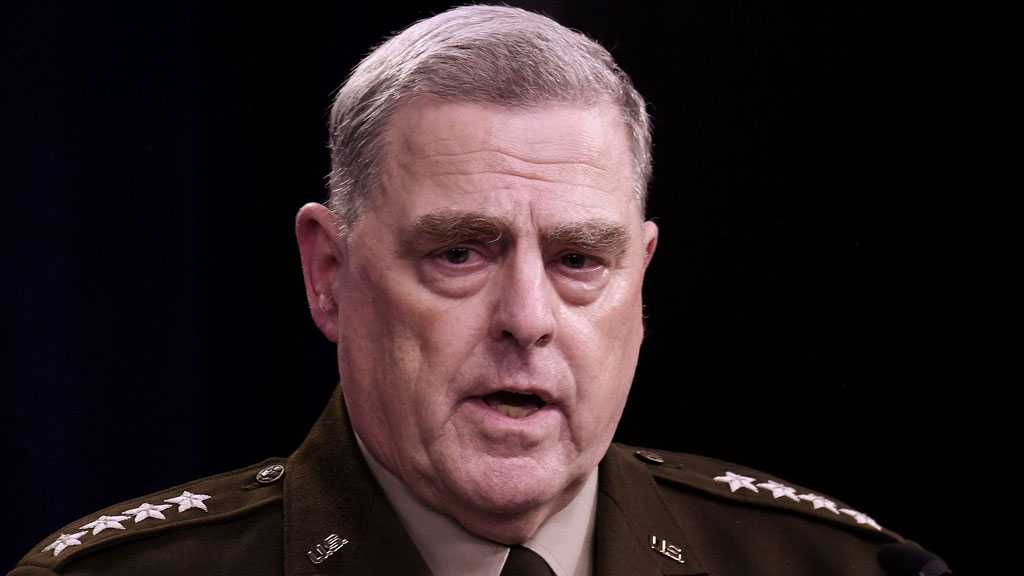
The top general in the US said no one predicted the sudden Taliban takeover of Afghanistan, speaking in a Pentagon press conference Wednesday.

“There was nothing that I or anybody else saw that indicated a collapse of this army and this government in 11 days,” Chairman of the Joint Chiefs of Staff Gen. Mark Milley said.

The US military and the administration of US President Joe Biden are under political attack domestically over the Taliban’s defeat of the Afghan forces with little fight and the collapse of former president Ashraf Ghani’s US-backed government last weekend.

“The intelligence clearly indicated multiple scenarios were possible: one of those was an outright Taliban takeover following a rapid collapse of the Afghan Security Forces and the government,” Milley said. “Another was a civil war, and a third was a negotiated settlement.”

But regarding the “timeframe of a rapid collapse, that was widely estimated and ranged from weeks, months, and even years following our departure,” he said.

He said that, to his knowledge, no reports “predicted a security force of 300,000 would evaporate in 11 days, from 6 August to 16 August, with the capture of 34 provinces and the capital city of Kabul.”

“The Afghan security forces had the capacity, and by that I mean they had the training, the size, the capability, to defend their country,” he claimed. “This comes down to an issue of will and leadership.”

The speed appeared to catch the US government off guard and it launched a rapid evacuation operation for US citizens and Afghans granted special visas for their work for US forces.

Since Saturday, around 5,000 US troops have flown in to Kabul’s Hamid Karzai International Airport to manage the evacuations of thousands.

Critics faulted the State Department, US intelligence, and the Pentagon for not anticipating the debacle and preparing earlier for the evacuation, which involves more than 10,000 US citizens.


River to Sea Uprooted Palestinian   
The views expressed in this article are the sole responsibility of the author and do not necessarily reflect those of the Blog!

مسؤول سابق في “السي آي إيه”: الانسحاب من أفغانستان يعكس الحدود الجديدة للقوة الأميركية America leaves Afghanistan, and the regional geopolitics take over


الخميس 18 اب 2021

المصدر: ريسبونسيبل ستيت كرافت

الكاتب: غراهام إي. فولر

المسؤول السابق في وكالة الاستخبارات المركزية الأميركية غراهام فولر يقول في مقال له إن الانسحاب الأميركي من أفغانستان كان مفاجئاً لصانعي السياسة الحاليين أكثر من المراقبين الذين لديهم إلمام طويل بديناميكيات هذا البلد.


Visual search query image
مقاتلو حركة طالبان في كابول. الصورة لجيتي إيماجيس.

كتب المسؤول السابق في وكالة الاستخبارات المركزية الأميركية غراهام فولر، مقالة في موقع “ريسبونسبل ستيت كرافت”، تناول فيها الانسحاب الأميركي من أفغانستان وسيطرة حركة طالبان على السلطة في كابول. وقال إن الأمر مفاجئاً لصانعي السياسة الحاليين أكثر من المراقبين العديدين الذين لديهم إلمام طويل بديناميكيات أفغانستان.

وتابع “الأمر كان حتمياً منذ فترة طويلة نظراً للطموحات غير الواقعية والتنفيذ السيء للسياسة التي حافظت عليها واشنطن في أفغانستان. لسوء الحظ، فإن تلك الآراء الأكثر قتامة، ولكن الأكثر دقة حول المشروع بأكمله، قد خُنقت إلى حد كبير من قبل وسائل الإعلام لدينا”.

وأضاف: يجادل جميع المحافظين الجدد، الإمبرياليون الجدد، بأن رحيل الولايات المتحدة والانهيار اللاحق لحكومة كابول هما أمران مدمران بشدة “لمصداقية” أميركا كقوة عظمى في العالم. الأيديولوجية الأساسية لوجهة النظر هذه هي بالطبع المفهوم المتمثل في أن الولايات المتحدة يجب أن تعمل كشرطي عالمي في كل مكان، وأن الفشل في القيام بذلك هو علامة على الضعف والانحدار.

واعتبر فولر أن هذا الخط من التفكير متخلف على وجه التحديد: إن الانحدار العام لأميركا محلياً وجيوسياسياً هو العلامة الواضحة على ضعفها الأعمق. هناك اعتقاد دولي متزايد بأن الولايات المتحدة تعيش داخل فقاعة خيالية من الإنكار بشأن الحفاظ على هيمنتها العالمية. إذا كان الوجود العسكري الأميركي في أفغانستان لمدة 20 عاماً قد أظهر بالفعل أي تقدم ملموس جاد نحو أهداف ملموسة، فسيكون ذلك شيئاً واحداً. لكن المحافظين الجدد يكتفون برمي أموال تلو أخرى في السعي الأعمى للهيمنة – حتى في قلب “مقبرة الإمبراطوريات”.

على المستوى الإنساني، بالطبع، المهم هو مصير الأفغان في ظل حكومة طالبان الجديدة. عانى الشعب الأفغاني في ظل الحروب المتكررة والمستمرة والتدخل العسكري منذ عام 1978، بدءاً من الانقلاب المحلي الذي قام به الشيوعيون الأفغان، تلاه الغزو السوفياتي، والسنوات اللاحقة من القتال لطرد السوفيات من قبل مجموعات “المجاهدين” المدعومة من الولايات المتحدة، وما تلاه من الحرب الأهلية التي أعقبت ذلك بين المجاهدين والتي أنهتها “طالبان” أخيراً باستعادة النظام والانضباط، بنوع من العدالة القاسية والجاهزة.

ورأى الكاتب أن تركيز واشنطن على أفغانستان لم يكن له علاقة تُذكر بتأسيس مجتمع أفضل وأكثر إنصافاً للأفغان. فالدافع الظاهري للغزو الأميركي كان اسمياً لتدمير وجود تنظيم القاعدة في أفغانستان. لكن السبب الأعمق للغزو الأميركي والاحتلال الطويل الأمد كان أكثر تحديداً لإنشاء موطئ قدم عسكري وجيوسياسي في آسيا الوسطى على حدود روسيا والصين. لم يتم التعبير عن هذا الطموح بشكل صريح، ولكن كان مفهوماً بوضوح من قبل جميع القوى الإقليمية. كانت جوانب “بناء الدولة والجوانب الإنسانية” للاحتلال الأميركي إلى حد كبير زينة بارزة لتغطية الطموحات الجيوسياسية لواشنطن. هذه الطموحات لم تمت بالكامل حتى الآن بين المحافظين الجدد والتدخليين الليبراليين في الولايات المتحدة.

وقال فولر: شئنا أم أبينا، فإن السمة الرئيسية لـ”الجغرافيا السياسية لما بعد أميركا” الجديدة ستكون العودة إلى حالة طبيعية أكثر من الناحية التاريخية للشؤون العالمية يشارك فيها لاعبون متعددون. وفي هذه الحالة، سيكون للاعبين المتعددين التأثير الأكبر على مستقبل أفغانستان – ربما للأفضل. الحقيقة هي أن الدول الثلاث التي تعتبرها الولايات المتحدة أعداء – إيران وروسيا والصين – تشترك جميعها مع واشنطن في نفس الأهداف الرئيسية لمستقبل أفغانستان: الاستقرار وإنهاء إراقة الدماء وإنهاء الجهاد. لكن هذه الدول الثلاث تتحد كذلك في معارضة شديدة للتدخل والهيمنة الأميركيين في أفغانستان وآسيا الوسطى.

وأضاف: في حقبة أخرى، ربما لم تهتم “طالبان” كثيراً بوجهات نظر هذه الدول المجاورة، لكن آسيا الوسطى أصبحت اليوم مكاناً مختلفاً. وأفغانستان في حالة يرثى لها، وبغض النظر عن السياسات الاجتماعية لطالبان، فهم بحاجة أيضاً إلى إعادة البلاد إلى الحد الأدنى من الازدهار والسلام. تتمتع الصين، على وجه الخصوص، بأكبر قدر من النفوذ السياسي والاقتصادي للمساعدة في مستقبل أفغانستان. تبرز أفغانستان في خطة الصين الطموحة وذات الرؤية الخاصة بمبادرة الحزام والطريق عبر آسيا الوسطى في إعادة إنشاء آسيا الوسطى المرتبطة اقتصادياً والتي لم يتم ربطها كثيراً منذ أيام جنكيز خان. “ستبذل الصين جهوداً كبيرة لمحاولة ضمان أن تحافظ “طالبان” على الاستقرار وتتجنب أي دعم للحركات المتطرفة التي لا تؤثر فقط بشكل كبير على الصين في شينجيانغ، بل تؤثر كذلك على روسيا في القوقاز وآسيا الوسطى، وعلى أمن إيران الشيعية، وهي هدف منتظم للفكر الجهادي السني”.

لا ترغب أي من هذه الدول – إيران أو الصين أو روسيا – في رؤية الولايات المتحدة تثبت وجودها عسكرياً في قلب آسيا الوسطى، وبالتالي فهي سعيدة برؤية واشنطن تتخبط في ذلك الاحتلال. بمجرد إزالة النفوذ العسكري الأميركي من قلب آسيا الوسطى، تصبح أفغانستان المزدهرة والمستقرة في مصلحة الجميع.

لا تزال باكستان تمثل ورقة جامحة، لكن مصلحة باكستان المهيمنة هي ضمان أن تظل حدودها الشرقية مع أفغانستان آمنة وودودة، وخاصة أن الجارة الغربية لباكستان – الهند – تشكل أكبر تهديد استراتيجي لإسلام أباد. لا يمكن لباكستان أن تتسامح مع قوى غير ودية على كلا الحدود. وستبذل قصارى جهدها للحفاظ على علاقات عمل لائقة مع كابول. وبطبيعة الحال، فإن الصين تدعم باكستان كحلقة وصل رئيسية في مبادرة الحزام والطريق الأوروبية الآسيوية. كما يجب على باكستان أن تهتم بالطابع البشتوني لحركة طالبان؛ فبعد كل شيء، يوجد عدد من البشتون في شرق باكستان أكثر مما يوجد في أفغانستان نفسها. وتشكل القومية البشتونية المتصاعدة مصدر قلق دائم لإسلام أباد أيضاً.

وتابع الكاتب أنه سيتعين على واشنطن أن تلعق جراحها في مغادرة أفغانستان المهزومة بعد عشرين عاماً من الاحتلال، لكنها لا تستطيع الاستمرار في سياسة مكلفة وخاسرة. وسيحاول الأحمق فقط درء القوة الجيوسياسية لروسيا والصين، وحتى إيران، عبر مساحات شاسعة من أوراسيا. إضافة إلى ذلك، بينما استخدمت واشنطن بشكل أساسي الأدوات العسكرية لمحاولة فرض هيمنتها حول العالم، تعمل موسكو وبكين على المسار الدبلوماسي، بنجاح أكبر بكثير.

وتساءل فولر: ماذا يمكن أن تكون طبيعة الحكومة التي تهيمن عليها طالبان في أفغانستان؟ وأجاب بالقول: يصعب القول، لكن هذا جيل جديد من قادة طالبان سافروا وشاهدوا العالم وتعاملوا مع العديد من الحكومات الأخرى. يمكن للمرء أن يأمل أنهم تعلموا شيئاً ما أثناء نفيهم. ليس لديهم خيار آخر سوى الاعتراف بواقع العيش الآن في بيئة دولية تتكون أساساً من قوى غير مسلمة. وإذا كانت سياسات طالبان الاجتماعية مقيتة للأميركيين، فقد يرغبون في التفكير في المملكة العربية السعودية في نفس السياق. بطبيعة الحال، لا تزال الرياض والأموال السعودية تتمتع بنفوذ واسع في واشنطن لا تستطيع طالبان ممارسته.

وخلص الكاتب إلى القول: يستحق الرئيس الأميركي جو بايدن قدراً من الائتمان على الأقل لإغلاقه أخيراً صنابير الدم والكنوز الأميركية في أفغانستان بعد 20 عاماً. نأمل أن تكون هذه بداية علامة على مزيد من الواقعية من جانب المفكرين الجيوسياسيين في واشنطن بشأن الحدود الجديدة للقوة الأميركية والحاجة إلى رؤية أكثر تواضعاً بكثير لما يشكل فعلاً المصالح الأميركية.

نقله إلى العربية بتصرف: هيثم مزاحم


AUGUST 16, 2021

America leaves Afghanistan, and the regional geopolitics take over

There will likely be a return to a much more historically normal state of global affairs in which multiple players are engaged.

Written by
Graham E. Fuller

The final end of the government in Kabul is at hand as the inexorable logic of regime collapse gains momentum. It seems more of a surprise to current policymakers than to those many observers with a long-time familiarity with the country’s dynamics. It will not be pleasant to watch, but it has long been inevitable given the utterly unrealistic ambitions and poor policy execution that Washington has maintained in Afghanistan. Unfortunately, those darker, but more insightful views on the entire enterprise have long been largely stifled by our media.

The neo-imperialist neoconservatives all argue that the American departure and the subsequent collapse of the Kabul government are deeply destructive to American “credibility” as a superpower in the world. The underlying ideology of this view is of course the cherished concept that the United States must serve as global policeman everywhere and that a failure to do so is a sign of weakness and decline. 

This line of thinking is precisely backwards: it is the overall decline of America domestically and geopolitically that is the telltale sign of its deeper weakness; there is an increasing international belief that the United States is living inside a fantasy bubble of denial about maintaining its global hegemony. If the 20-year U.S. military presence in Afghanistan had actually ever shown any serious concrete advancement towards concrete goals, that would be one thing. But the neocons are ever content to throw good money after bad in the blind pursuit of hegemony — even in the very heart of “the graveyard of empires.”

On a human level, of course, it indeed matters what fate the Afghans will meet under a new Taliban government. The Afghan people have been suffering under repeated and constant warfare and military intervention since 1978, starting with a domestic coup by Afghan communists, followed by the Soviet invasion, the subsequent years of fighting to expel the Soviets by U.S.-supported mujahedin groups, the subsequent civil war among the mujahideen that followed and to which the Taliban finally put an end by restoring national order and discipline — with a rough and ready kind of justice. 

But Washington’s focus on Afghanistan in reality has had very little to do with establishing a better and more equitable society for the Afghans.  The ostensible impulse for the American invasion was nominally to destroy the presence of Al-Qaeda in Afghanistan. But the deeper and more profound reason for the American invasion and lengthy occupation was more pointedly to establish a military and geopolitical foothold in Central Asia on the very borders of Russia and China. That ambition was never nakedly articulated but was clearly understood by all regional forces. The “nation-building and humanitarian” aspects of the American occupation were largely window dressing to cover Washington’s geopolitical ambitions. Those ambitions still have not fully died among American neocons and liberal interventionists.

Like it or not, a key feature of the new “post-American geopolitics” will be a return to a much more historically normal state of global affairs in which multiple players are engaged. And in this case, multiple players will also have the greatest influence over Afghanistan’s future — probably for the better. The reality is that all three countries which the United States perceives as enemies – Iran, Russia, and China — actually all share with Washington the same major goals for Afghanistan’s future: stability and an end to bloodshed and jihadism. But all three of these countries also unite in vigorous opposition to American intervention and dominance in Afghanistan and Central Asia. 

While in another era, the Taliban might have cared little about the views of these neighboring countries, today Central Asia is a different place. Afghanistan is in tatters, and no matter what the social policies of the Taliban are, they also need to restore the country to a minimal degree of prosperity and peace. China, in particular, has the greatest political and economic leverage to assist in Afghanistan’s future. Afghanistan figures in China’s ambitious and visionary plan of the Belt and Road Initiative across Central Asia in a re-creation of an economically linked Central Asian that has not been so linked since the days of Genghis Khan. China will make great efforts to try to ensure that the Taliban maintain stability and avoid any support to radical movements which not only hugely affect China in Xinjiang, but also affect Russia in the Caucasus and Central Asia, and the security of Shi’ite Iran — a regular target of Sunni jihadi ideology.

None of these states — Iran, China, or Russia — wishes to see the United States establish itself militarily in the heart of Central Asia and are thus happy to see Washington floundering in that occupation. Once U.S. military influence is removed from the heart of Central Asia, a prosperous and stable Afghanistan is in the interest of all.

Pakistan remains something of a wild card, but Pakistan’s dominant interest is to ensure that its eastern border with Afghanistan remains safe and friendly. Especially since Pakistan’s western neighbor — India — poses the greatest strategic threat to Islamabad. Pakistan cannot tolerate unfriendly powers on both borders. It will do whatever it takes to maintain decent working relations with Kabul. And, of course, China has Pakistan’s back as a key link in the Eurasian Belt and Road Initiative. Pakistan must also be attentive to the Pashtun character of the Taliban movement; after all, there are more Pashtuns in eastern Pakistan than there are in Afghanistan itself. And resurgent Pashtun nationalism poses a constant concern to Islamabad as well.

Washington will have to lick its wounds in departing Afghanistan in defeat after 20 feckless years of occupation but cannot persist in a costly and losing policy. And only a fool would try to ward off the geopolitical power of Russia and China, and even Iran, across the vast stretches of Eurasia. Furthermore, while Washington has essentially employed military instruments to attempt to impose its hegemony around the world, Moscow and Beijing are working the diplomatic route — with far greater success.

What might be the nature of a Taliban-dominated government in Afghanistan? Hard to say, but this is a new generation of Taliban leaders who have traveled, seen the world, and dealt with many other governments. One would hope they have learned something in the course of their exile; they have little other option than to recognize the reality of now living in an international environment of mainly of non-Muslim powers. And if Taliban social policies are distasteful to Americans, they might wish to reflect upon Saudi Arabia in the same context. Of course, Riyadh and Saudi money still seem to enjoy vast influence in Washington that the Taliban cannot exert.

President Biden deserves at least some measure of credit in finally closing the spigots on U.S. blood and treasure in Afghanistan after 20 years. Hopefully it is the beginning of a sign of greater realism on the part of Washington’s geopolitical thinkers about the new limits of American power. And the need for a far more modest vision of what truly comprises American interests.


River to Sea Uprooted Palestinian   
The views expressed in this article are the sole responsibility of the author and do not necessarily reflect those of the Blog!

America leaves Afghanistan, and the regional geopolitics take over

 There will likely be a return to a much more historically normal state of global affairs in which multiple players are engaged.

AUGUST 16, 2021

Written by

Graham E. Fuller

The final end of the government in Kabul is at hand as the inexorable logic of regime collapse gains momentum. It seems more of a surprise to current policymakers than to those many observers with a long-time familiarity with the country’s dynamics. It will not be pleasant to watch, but it has long been inevitable given the utterly unrealistic ambitions and poor policy execution that Washington has maintained in Afghanistan. Unfortunately, those darker, but more insightful views on the entire enterprise have long been largely stifled by our media.

The neo-imperialist neoconservatives all argue that the American departure and the subsequent collapse of the Kabul government are deeply destructive to American “credibility” as a superpower in the world. The underlying ideology of this view is of course the cherished concept that the United States must serve as global policeman everywhere and that a failure to do so is a sign of weakness and decline. 

This line of thinking is precisely backwards: it is the overall decline of America domestically and geopolitically that is the telltale sign of its deeper weakness; there is an increasing international belief that the United States is living inside a fantasy bubble of denial about maintaining its global hegemony. If the 20-year U.S. military presence in Afghanistan had actually ever shown any serious concrete advancement towards concrete goals, that would be one thing. But the neocons are ever content to throw good money after bad in the blind pursuit of hegemony — even in the very heart of “the graveyard of empires.”

On a human level, of course, it indeed matters what fate the Afghans will meet under a new Taliban government. The Afghan people have been suffering under repeated and constant warfare and military intervention since 1978, starting with a domestic coup by Afghan communists, followed by the Soviet invasion, the subsequent years of fighting to expel the Soviets by U.S.-supported mujahedin groups, the subsequent civil war among the mujahideen that followed and to which the Taliban finally put an end by restoring national order and discipline — with a rough and ready kind of justice. 

But Washington’s focus on Afghanistan in reality has had very little to do with establishing a better and more equitable society for the Afghans.  The ostensible impulse for the American invasion was nominally to destroy the presence of Al-Qaeda in Afghanistan. But the deeper and more profound reason for the American invasion and lengthy occupation was more pointedly to establish a military and geopolitical foothold in Central Asia on the very borders of Russia and China. That ambition was never nakedly articulated but was clearly understood by all regional forces. The “nation-building and humanitarian” aspects of the American occupation were largely window dressing to cover Washington’s geopolitical ambitions. Those ambitions still have not fully died among American neocons and liberal interventionists.

Like it or not, a key feature of the new “post-American geopolitics” will be a return to a much more historically normal state of global affairs in which multiple players are engaged. And in this case, multiple players will also have the greatest influence over Afghanistan’s future — probably for the better. The reality is that all three countries which the United States perceives as enemies – Iran, Russia, and China — actually all share with Washington the same major goals for Afghanistan’s future: stability and an end to bloodshed and jihadism. But all three of these countries also unite in vigorous opposition to American intervention and dominance in Afghanistan and Central Asia. 

While in another era, the Taliban might have cared little about the views of these neighboring countries, today Central Asia is a different place. Afghanistan is in tatters, and no matter what the social policies of the Taliban are, they also need to restore the country to a minimal degree of prosperity and peace. China, in particular, has the greatest political and economic leverage to assist in Afghanistan’s future. Afghanistan figures in China’s ambitious and visionary plan of the Belt and Road Initiative across Central Asia in a re-creation of an economically linked Central Asian that has not been so linked since the days of Genghis Khan. China will make great efforts to try to ensure that the Taliban maintain stability and avoid any support to radical movements which not only hugely affect China in Xinjiang, but also affect Russia in the Caucasus and Central Asia, and the security of Shi’ite Iran — a regular target of Sunni jihadi ideology.

None of these states — Iran, China, or Russia — wishes to see the United States establish itself militarily in the heart of Central Asia and are thus happy to see Washington floundering in that occupation. Once U.S. military influence is removed from the heart of Central Asia, a prosperous and stable Afghanistan is in the interest of all.

Pakistan remains something of a wild card, but Pakistan’s dominant interest is to ensure that its eastern border with Afghanistan remains safe and friendly. Especially since Pakistan’s western neighbor — India — poses the greatest strategic threat to Islamabad. Pakistan cannot tolerate unfriendly powers on both borders. It will do whatever it takes to maintain decent working relations with Kabul. And, of course, China has Pakistan’s back as a key link in the Eurasian Belt and Road Initiative. Pakistan must also be attentive to the Pashtun character of the Taliban movement; after all, there are more Pashtuns in eastern Pakistan than there are in Afghanistan itself. And resurgent Pashtun nationalism poses a constant concern to Islamabad as well.

Washington will have to lick its wounds in departing Afghanistan in defeat after 20 feckless years of occupation but cannot persist in a costly and losing policy. And only a fool would try to ward off the geopolitical power of Russia and China, and even Iran, across the vast stretches of Eurasia. Furthermore, while Washington has essentially employed military instruments to attempt to impose its hegemony around the world, Moscow and Beijing are working the diplomatic route — with far greater success.

What might be the nature of a Taliban-dominated government in Afghanistan? Hard to say, but this is a new generation of Taliban leaders who have traveled, seen the world, and dealt with many other governments. One would hope they have learned something in the course of their exile; they have little other option than to recognize the reality of now living in an international environment of mainly of non-Muslim powers. And if Taliban social policies are distasteful to Americans, they might wish to reflect upon Saudi Arabia in the same context. Of course, Riyadh and Saudi money still seem to enjoy vast influence in Washington that the Taliban cannot exert.

President Biden deserves at least some measure of credit in finally closing the spigots on U.S. blood and treasure in Afghanistan after 20 years. Hopefully it is the beginning of a sign of greater realism on the part of Washington’s geopolitical thinkers about the new limits of American power. And the need for a far more modest vision of what truly comprises American interests.


River to Sea Uprooted Palestinian   
The views expressed in this article are the sole responsibility of the author and do not necessarily reflect those of the Blog!

Sayyed Nasrallah: More Iranian Ships to Follow, Iranian Drilling Companies Ready to Extract Offshore Oil and Gas

Sayyed Nasrallah: More Iranian Ships to Follow, Iranian Drilling Companies Ready to Extract Offshore Oil and Gas
Video

Zeinab Essa

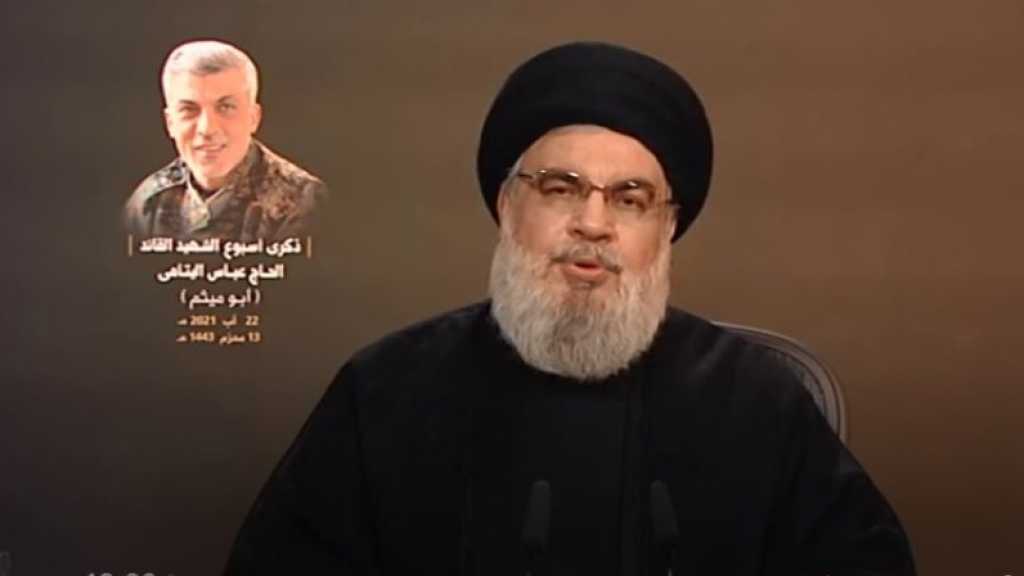
Hezbollah Secretary General His Eminence Sayyed Hassan Nasrallah delivered on Sunday a speech during the memorial ceremony of martyr Hajj Abbas Al-Yatama.

At the beginning of his speech, Sayyed Nasrallah offered condolences to the family of martyr Al-Yatama as well all his beloved people, congratulating them for the fact that this prominent leader has reached his goals. “I personally know martyr Al-Yatama, who belongs to the generation of Hezbollah’s establishment in 1982,” he said, noting that “When speaking about people like Hajj Abbas Al-Yatama, I like to recall the founding generation of the Islamic Resistance, they’re the people of 1982.”

On the characteristics of the martyr, His Eminence highlighted that “Martyr Abbas had a beautiful soul, like his beautiful appearance. He was brave and courageous.”

He recalled that Abu Maitham “joined this resistance at the age of 17, and soon his personal characteristics became evident in front of his brothers. Martyr Abbas started as a fighter, then a trainer and later assumed various leadership responsibilities. He was personally present in the field operations.”

According to the Resistance Leader, “Among the personal characteristics of the martyr Abbas were faith, etiquette, forbearance, patience and good behavior. He further possessed excellent leadership capabilities.”

“Martyr Abbas was one of the military leaders in the South. He is from Hermel and he was as a resistance’s military leader in the South,” he stated, pointing out that “Martyr Abbas, like his brothers, the rest of the martyrs are witnesses that the honorable people of this region embraced the resistance and sacrificed it with the best of their youth.”

In addition Sayyed Nasrallah unveiled that “Abu Maitham was among the military leaders who took part in the July war in South Lebanon, and he was the one who wrote the letter of the Mujahideen [for me] during the war, which conveys his loyalty to the resistance.”

Sayyed Nasrallah further revealed that “When the events in Syria began, martyr Abbas was one of the first leaders who joined the battle and was present in the most dangerous places. Abu Maitham has been to the most dangerous zones from Aleppo, to the besieged city and airport, as well as the road of Ethriya-Khanaser.”

“Martyr Al-Yatama was a field commander next to senior Syrian Army commanders, resistance leaders such as Haj Mustafa Badriddine, and Iranian Generals in Syria, atop of whom was martyr leader Hajj Qassem Soleimani,” His Eminence added.

Emphasizing that “The secret of the resistance’s strength is that it has never sought gains here or there,” Sayyed Nasrallah lamented the fact that “Since the establishment of the state, the Bekaa region has received nothing but deprivation and negligence, but return it has offered honesty, the best of its youth and pure blood.”

“These people spared nothing, neither in confronting the Zionist scheme nor the American project. The people of Baalbek-Hermel did not wait for anyone to defend their villages and all of Lebanon,” he said.

Moving to the political front, Hezbollah Secretary General explained that “The Americans do believe that we are people who seek the worldly life, as if by threatening us with this life they might be able to change our stance. They didn’t understand until now what does it mean to belong to the Islam pf Prophet Mohammad [PBUH] and the Karbala of Imam Hussein [AS].”

In parallel, His Eminence clarified that “The battle that is being waged in Lebanon against the resistance and the true national forces has been run by the American embassy since 2005. However, they have failed.”

On this level, he uncovered that “Tens of billions of dollars have been spent since 2005 in order to distort the image of the resistance, and they failed.”

“The US seeks to set Lebanon under its control so that it does not pose any threat to “Israel”,” Sayyed Nasrallah reminded, warning that “The US embassy in Lebanon is responsible for targeting the livelihood of the Lebanese people as it interferes in every single aspect.”

He also underscored that “The US and Saudi embassies have been working in the past years to ignite a civil war in Lebanon. The American embassy wants to make Lebanon move into chaos. It seeks to strike the Lebanese society and the Lebanese person with his dignity and family.”

Meanwhile, Sayyed Nasrallah reiterated that “After spending $30 billion for political parties that were not able to serve them, they turned to the civil society.”

Urging the Lebanese state to shoulder its responsibility in facing the current crisis, he viewed that “It is not Hezbollah that can open the country in front of Chinese and Russian companies for investment. This is the state’s duty. We urged them to buy from Iran by the Lebanese pound, and they replied that the Americans would put us on the sanctions list. We offered the state options and proposals for which it turned a deaf ear, and Lebanon continued in the path of declining.”

Amid this negligence, Sayyed Nasrallah clearly announced: “Our second ship will sail from Iran within days, and other ships will follow.”

He further stressed that “It is not a matter of one ship or two; this is a path which we will keep moving on as long as Lebanon needs it,” noting that “The goal is to help all the Lebanese people and ease their sufferings.”

However, His Eminence assured that “We-in Hezbollah- are neither a substitute for the state nor for importing companies or stations. We do not want to compete with anyone.”

“We will bring in fair amounts of oil derivatives to ease the pressure against companies, gas stations and the black market,” he said, noting that his party seeks “to break the greedy prices and ease the people’s sufferings.”

In this context, Sayyed Nasrallah went on to say: “We are not supposed to bring Lebanon’s full demand of gasoline and diesel but rather good quantities that alleviate pressure off the companies and the stations.”

Once again, he urged the government to alleviate the suffering of the people and assume its responsibilities.

In parallel, Sayyed Nasrallah denounced “Those monopolizing oil derivatives” calling for arresting and imprisoning them.

Regarding US ambassador Dorothy Shea’s initiative towards Lebanon, His Eminence welcomed the Egyptian gas, the Jordanian electricity project and anything that might help Lebanon.

However, His Eminence reminded that “If the US seeks to help Lebanon, it should lift its veto on providing support to Lebanon.”

To the Lebanese people, he elaborated that “What is important for the Lebanese to know is that the proposal of the American ambassador requires a period between 6 months and 1 year to be done. The US project needs negotiations with Syria and could not be performed in the dark night.”

“The US ambassador is talking illusions, but in case her project could be achieved we won’t be annoyed as this means breaking the siege on Lebanon and Syria.”

To the US administration and its ambassador in Lebanon, Sayyed Nasrallah said: “If you want to help Lebanon, tell your administration to stop preventing other countries from helping Lebanon, and we wouldn’t want neither your initiative nor your money.”

On another level, Sayyed Nasrallah asked “Who will shoulder the responsibility for the Tuleil incident in Akkar, and where did the investigations reach?”

To the Lebanese government, Hezbollah Secretary General said: “If you accept, we have companies that are able to extract oil and gas and sell it. The companies that I mentioned are not afraid of the “Israeli” bombing, and they can extract gas and oil and sell it. If the companies fear “Israel” and the sanctions, we are willing to bring an Iranian drilling company to extract offshore oil and gas, and let “Israel” bomb it.”

“The Resistance after July 2006 war became stronger and after every battle it maintained its existence and ended stronger than before,” he said, concluding that “The enemy and the Americans, and their affiliates, will discover that their popular and political losses will be very huge.”

Related Videos


River to Sea Uprooted Palestinian   
The views expressed in this article are the sole responsibility of the author and do not necessarily reflect those of the Blog!

News conference following Russian-German talks

 August 20, 2021

http://en.kremlin.ru/events/president/news/66418


Visual search query image
With Federal Chancellor of Germany Angela Merkel at a news conference following Russian-German talks. Photo: TASS

With Federal Chancellor of Germany Angela Merkel at a news conference following Russian-German talks. Photo: TASS

(The formal transcript is not fully released yet, but this page will be updated as it gets released.)

Update: The formal transcript is now complete on this page.

President of Russia Vladimir Putin: Colleagues, ladies and gentlemen,

Today’s talks with Madam Federal Chancellor were traditionally constructive and business-like.

We had an in-depth discussion, including with the participation of the delegations, on the current state of Russian-German relations and their prospects and exchanged views on a wide range of issues.

As you are aware, this visit by Ms Merkel is special since she is about to step down as Federal Chancellor after the parliamentary elections in the Federal Republic in September. But I want to say right away that we will always be delighted to see Ms Merkel in Russia as a welcome guest.

The fact that Angela Merkel has been heading the government of the Federal Republic for as long as 16 years inspires respect. She has been leading one of the largest, leading European countries with confidence, and she is rightfully among the most authoritative European and world leaders.

Over many years of working side by side, we have developed a good business relationship. We maintained regular contacts and close communication, discussed pressing bilateral matters and strived to coordinate our positions on challenges of global politics.

Occasionally, of course, we saw thing differently, but our dialogue has always been candid and meaningful and was aimed at reaching compromises and solving the most complicated challenges.

Importantly, Germany is indeed one of Russia’s priority partners in politics and the economy.

Speaking about Russian-German trade and economic ties, I would like to note that despite the coronavirus pandemic, which remains a major hindrance to restoring our business contacts in full, mutual trade has begun to expand. In January-May, this figure reached almost 33 percent to exceed $21 billion. Counter capital investment has come close to the $30 billion mark.

Russian-German Economy and Sustainable Development years are being held in 2020–2022. Businesspeople and entrepreneurs of the two countries are communicating at numerous events held as part of this campaign, and a number of promising joint projects in trade, the manufacturing industry and agriculture are being discussed in the process.

We have major projects that everyone is aware of. They are being implemented, and we very much hope that we will have more of them.

Of course, many pressing issues of international politics were touched upon during today’s talks.

Due to the rapidly unfolding events in Afghanistan, we prioritised this issue. The Taliban now controls almost the entire territory of that country, including its capital. This is the reality, and we must proceed from this reality as we strive to avoid the collapse of the Afghan state.

It is imperative to put an end to the irresponsible policy of imposing outside values ​​on others, to the desire to build democracies in other countries according to other nations’ “patterns” without regard to historical, national or religious specifics and totally ignoring the traditions of other nations.

We know Afghanistan, and we know it well enough to understand how this country functions and have had the opportunity to learn first-hand the extent to which trying to impose unusual forms of government or social life on it is counterproductive.

There has not been a single time when socio-political experiments of this kind succeeded. All they do is destroy states and degrade their political and social fabric.

At the same time, we see that the Taliban has already put an end to hostilities and is now seeking to ensure order, promising to guarantee safety for both local residents and foreign missions. I hope that this is how things will go.

The international community should keep a close eye on these developments with the UN Security Council playing a coordinating role.

There is one more point I wanted to make in this regard. We believe that it is essential at this point to prevent terrorists of all kinds from spilling over into Afghanistan’s immediate neighbours, including under the guise of refugees.

Among other international topics, we had a detailed discussion on promoting a settlement in southeastern Ukraine. As you know, Ms Merkel has done a lot to bring about a resolution to Ukraine’s internal crisis. She was at the origins of the Normandy Format, and we all worked together on ways of restoring peace in Donbass.

Unfortunately, so far we have not been able to accomplish this. Today, the Russian and German side expressed serious concern about the growing tension along the line of contact. We talked this over, and I hope that we follow up on this conversation in the nearest future. More than a thousand ceasefire violations have been reported since the beginning of August, and Donbass towns and villages face artillery fire every day.

Another matter of concern is that Ukraine has adopted a number of laws and regulations that essentially contradict the Minsk agreements. It is as if the leadership of that country has decided to give up on achieving a peaceful settlement altogether. In this connection, we ask Ms Federal Chancellor once again to exercise her influence over Ukraine, including during her upcoming visit to Kiev, to see that Ukraine honours its obligations.

Of course, we covered the situation in Belarus. Madam Chancellor touched on this issue as well. We believe that the differences in Belarusian society can only be resolved within the constitutional and legal framework and solely by the Belarusians themselves without any external interference.

When discussing the situation with the Iranian nuclear programme, Madam Chancellor and I expressed hope that once the new government in Iran has been formed, vigorous efforts to preserve the Joint Comprehensive Plan of Action will resume. I informed Madam Federal Chancellor of my recent telephone conversation with the newly elected President of Iran.

As you are aware, Ms Merkel is committed to promoting an intra-Libyan settlement. Last January, I also took part in the Berlin Conference on Libya, which was convened on the initiative of Madam Chancellor, and the decisions it adopted helped improve the situation on the ground.

We believe that the international community should maintain a dialogue with all influential political forces in Libya in order to retain and build on the positive achievements that have yet to come.

We shared our vision of the state of affairs in Syria with our German partners. The ceasefire is in force throughout most of the country; the ruined economy and infrastructure are being rebuilt, but the terrorist threat still persists. Due to the illegal sanctions imposed on Damascus and the coronavirus pandemic, the socioeconomic situation there remains challenging.

We attach great importance to UN Security Council Resolution 2585, which was approved in July, on providing comprehensive humanitarian assistance to Syria. This is largely the outcome of the agreements reached during the Russia-US summit held in Geneva in June. We hope that the European countries, including the Federal Republic, will join in the efforts to help the Syrian people.

I would like to close by once again thanking Madam Federal Chancellor for our productive joint work – not only during today’s talks, but also during the previous years. I said it before, and I will say it again: we will always be delighted to see Ms Merkel in Russia.

Thank you.

Federal Chancellor of Germany Angela Merkel (retranslated)Thank you.

President Putin, dear Vladimir, ladies and gentlemen,

Earlier today, at the beginning of my visit, I laid a wreath at the Tomb of the Unknown Soldier to honour the memory of the fallen and as a reminder that 80 years ago Nazi Germany attacked the Soviet Union.

Today, we are very pleased to know that there is a dialogue going on between our governments, and our dialogue is constructive. Of course, we talked about different views and approaches to our joint decisions.

With regard to the nature of our bilateral relations, it is important to highlight a number of positive developments. I would like to mention economic relations, namely, the Year of Germany in Russia, which Mr President mentioned, during which a large number of meetings have taken place. In addition, there is an economic initiative involving the 1,000 Trainees project, which makes it possible for thousands of young Russians to take internships at German enterprises. These are the relationships that are very gratifying to have.

But, of course, we discussed the very depressing situation with Alexei Navalny. From our perspective, his sentence and imprisonment in a correctional facility were based on a court ruling that the ECHR found unobvious and disproportionate. This is unacceptable to us. I once again demanded that the President of Russia release Alexei Navalny and stressed that we would continue to monitor this case.

I also said that we are disappointed to see three German NGOs that have done a lot of work as part of the Petersburg Dialogue for cooperation between civil societies included on the list of objectionable organisations. I would like to know if it is possible to take these organisations off the list and to have the Petersburg Dialogue continue as before. From my perspective, this would send a very important message.

We also talked about bilateral economic relations, which are moving forward. In this regard, of course, we talked about Nord Stream 2. I would like to emphasise that this is not a bilateral German-Russian project, but a project of European dimension, because companies from other countries are also part of it.

In this context, we talked about the document concluded between the United States and the Federal Republic of Germany, and Mr President and I emphasised that Georg Graf Waldersee would act as a highly experienced negotiator with regard to gas transit through Ukraine beyond 2024. This is his assignment. We bear certain responsibility in this regard despite the economic developments that need to be taken into account.

In this context, we also discussed relations between Russia and the EU. It became clear that Russia is interested in entering an exchange with the EU on the “Fit for 55” climate package with account taken of cross-border carbon regulation and other problems. And I also noted that I am in favour of this approach.

Afghanistan was also among the current issues that we discussed today. This is a very important issue. We exchanged views, and I emphasised that it is very unfortunate that the Taliban are back in power in the country. However, this is how things stand. I also said that Germany believes helping people who had worked with Germany over the 20 years of NATO operations and missions in Afghanistan is currently a priority. We need to provide them refuge and ensure their safety in Germany and to take as many people as possible to Germany over the next few days.

I asked the Russian side to raise during the talks with the Taliban the question of UN humanitarian aid in Afghanistan, to make sure that it can be provided. The people who helped us, including those who assisted the Bundeswehr and the federal police, should be able to leave Afghanistan.

We also discussed developments in Ukraine. The Normandy Format is the only political framework we have for discussing these contentious issues. Currently the situation is in a deadlock. Unfortunately, Ukrainian service personnel are dying on the line of contact. I have always advocated reviving this format and giving it more weight. The last meeting was in December 2019, in Paris, and the goals we set back then were achieved both by the separatists in the Donetsk and Lugansk regions, and by Ukraine.

I pointed out that I am ready to make further progress on this matter in the interest of the people of Ukraine, so that everyone can live in peace in Ukraine. This is what we stand for.

For us, the annexation of Crimea constitutes a violation of Ukraine’s territorial integrity, we will insist on this point, and I will continue supporting Ukraine’s territorial integrity.

Speaking of Belarus, I stated that I firmly condemn the use of people, refugees from other countries who find themselves in a dire situation, as a hybrid weapon of sorts. I am referring to the situation on the border between Belarus and Lithuania.

Of course, we discussed developments in Libya and Syria. On Libya, we need to implement the outcomes of the Libyan conference, which called for a proportionate and reciprocal withdrawal of foreign mercenaries, while empowering Libyan forces to shape a future for the country they want. On this issue, Germany and Russia have a number of points in common.

We also talked about the challenges posed by climate change. Both Germany and Russia have suffered from natural disasters. In Russia, Siberia, even north of the Arctic circle, was especially hard hit. For this reason alone, we are convinced that we need to fight climate change, which calls for close cooperation. The same applies to a number of other international matters.

I wanted to say that over the past 16 years I have been to Russia 16 times, which is to say that I was open to contact. Talks between us have not always been easy. There has been a lot of debate and controversy around them, including on the international stage, but I always sought compromise. I think that there is no alternative, at least no reasonable one, to dialogue and the exchange of opinion. This invariably requires a lot of work. Everything could have been a lot easier, but our dialogue should continue. I have no doubts about this.

Thank you.

Question (retranslated): Madam Chancellor, you said you spoke in support of Alexei Navalny and in favour of his release today. Here is a question for you, President Putin: what is needed to set Alexei Navalny free and what is needed to put an end to the persecution of Alexei Navalny’s supporters?

And a question for both of you. Today is the anniversary of the attempted poisoning of Alexei Navalny. He published an article in which he demands fighting corruption, since it is the root of all evil. What do you think about this proposal, Mr Putin? For example, he demands imposing sanctions on the oligarchs that are close to you.

Vladimir Putin: With regard to the person you just mentioned, he was not convicted for his political activities, but a criminal offense against foreign partners.

As far as political activity goes, no one should be using political activity as a front to carry out business projects, which, on top of that, violate the law. This is the first part of what I have to say to your question.

Second, with regard to non-systemic opposition in general. I don’t remember seeing in Western countries, Europe or the United States – Occupy Wall Street in the United States or the Yellow Vests in France – these people enjoying much support on their way to representative bodies, including parliament. We do not see anything like that. Moreover, when, following the US elections, people entered Congress with political demands, more than 100 criminal cases were brought against them. And judging by the charges brought against them, they are facing long prison terms anywhere from 15 to 20–25 years, maybe even more. To be completely objective, please pay attention to this side of the problem as well.

As for us, our political system is evolving, and all citizens of the Russian Federation have the right to express their opinions on political issues, form political organisations, and participate in elections of all levels. However, this must be done within the limits of applicable law and the Constitution. We will do our best to keep the situation in Russia stable and predictable. Russia exhausted its limit on revolutions back in the 20th century. We do not want revolutions. What we want is evolutionary development of our society and state. I hope that this will be so. As for the decision of the judicial authorities of the Russian Federation, please treat these decisions with respect.

Fighting corruption is critically important, but it should not be used as a tool in a political struggle. We, as well as you, are well aware that this toolkit is used to achieve political goals and is recommended for achieving political goals by the organisations that are in charge of activities by people of this kind. Indeed, fighting corruption is critically important in and of itself, and it is our top priority, and we will leave no stone unturned in our efforts to eradicate corruption in the broadest sense of the word.

Angela Merkel: I would like to emphasise that we have talked at length about the way we understand political systems and freedoms. I believe that the questions of good governance and fighting corruption are actually entwined.

Regarding Alexei Navalny’s call for more sanctions, I would like to say that today the European Union imposes sanctions in the face of the relevant facts but linking economic corruption to sanctions is never easy. Still, within the European Union we believe in the need to discuss these matters, since there is a genuine link between corruption and political activity, no matter where it takes place. This includes Germany, I believe. Fighting corruption requires independent courts, a free press, as well as non-profit organisations that refuse to play along.

Vladimir Putin: Overall, who should be fighting corruption? People who fully abide by the law themselves. This is an essential prerequisite for ensuring that these efforts are effective.

Question: Taking into consideration the ongoing developments in Afghanistan, what is your assessment of the 20-year operation by the US and its allies and its outcome? Can this be called a total failure and will it result in the US-led West to rethink its approach to imposing democracy on third countries?

I also have a question or rather a request for Madam Chancellor. You probably know that RT is preparing to launch a German-language channel, but unfortunately, the German authorities are doing everything they can to obstruct this project. First, the German banks were advised to close all RT accounts and not to open new ones. Now the German government is pressuring Luxembourg not to issue RT a broadcasting licence, and everyone knows this since the German media have been reporting on this issue.

Madam Federal Chancellor, please, help us enjoy freedom of expression.

Thank you.

Vladimir Putin: Regarding the operation in Afghanistan, it can hardly be described as a success. Quite the contrary, but concentrating on it for too long, emphasising this failure does not serve our interests.

We were interested in having stability in this country. But the situation is what it is. I think that many politicians in the West are beginning to realise what I just said in my opening remarks: you cannot impose political standards or behaviour on other countries and peoples, while ignoring their special nature, which includes the ethnic and religious structure and historical traditions. I think that eventually they will understand this, and this understanding will become the guiding principle in their realpolitik.

We saw what happened during the Arab Spring, now Afghanistan. However, it is important for our partners to make this rule universal and treat their partners with respect and be patient, whether they like something or not, they should still give these peoples the right to determine their future, no matter how long it may take them to bring democracy to their countries and regardless if they like what is happening in these countries or not. They must build neighbourly relations and respect each other’s interests in the international arena.

I think that this is the lesson we should learn from Afghanistan, and we should team up with our other partners – the United States and the European countries – we, that is Russia, must do whatever it takes to join our efforts today in order to support the Afghan people with the aim of normalising the situation in that country and establishing neighbourly relations with it.

Angela Merkel: With regard to Afghanistan, I would like to remind everyone about the starting point – the 9/11 attacks 20 years ago, in 2001. Back then, terrorist attacks on the United States were masterminded from Afghanistan. This started the fight against terrorism followed by NATO operations and missions.

The situation with terrorism in Afghanistan has improved since then, but the international community must fight the resurgence of terrorism in Afghanistan. With regard to the other project, that is, the Afghan people’s overall stance regarding their own future, we failed to achieve our goals; I am openly admitting this.

In December 2001, [German] Foreign Minister Joschka Fischer convened a conference with all Afghan representatives at the Petersberg hotel and urged Afghans to find a common shared solution. While trying to cooperate for development, we did not want to impose our position on the Afghan people, but we saw millions of happy girls who were allowed to go to school and empowered women. Many people find the current situation upsetting. However, it should be noted that the Taliban received more support than we would like. We will now need to talk with them and try to save the lives of the people who are now in harm’s way so they can leave the country, and we can continue to work for the benefit of Afghanistan.

It would be disappointing to see progress in these areas taper off. I hope we will find entities that can help Afghanistan find a path of its own, and that we will not be exposed to the threat of international terrorism.

As for RT, Germany did not put any pressure on Brussels or the decisions it made. In Germany, neither the federal government nor the state governments engage in matters like that.

Question (retranslated): Madam Federal Chancellor, the Minsk agreements are 6 years old now, but Ukraine remains divided, and you yourself said that people along the demarcation line in Donbass are dying. Following your talks today, are there any concrete plans to hold new talks at the heads of state or government level, or should we conclude that the Normandy format has failed?

And a question for you, Mr President. Once the Nord Stream 2 is completed, can you guarantee that gas transit across Ukraine will remain in place, and if so, will this arrangement remain in force after Ms Merkel leaves the post of chancellor?

Angela Merkel: With regard to the Minsk agreements: we have failed to achieve the goals that we wanted to achieve. But this is the format we have, including the trilateral contact group, and talks with the separatists in Donetsk and Lugansk regions.

So, this format needs to be handled with care, but progress is not as good as I would like it to be. However, if we identify an agenda, we can make arrangements for high-level meetings and talks. But we need to know what to discuss. During my visit to Ukraine, I will be pushing for identifying this agenda, because any minor progress can be decisive. However, this represents a very ambitious goal and a very challenging task. There are many inputs here. I still recommend this format, even though it is taking more time than we wanted, but we still need to avoid a dead end.

Vladimir Putin: I agree with the Federal Chancellor regarding the Minsk agreements and the Normandy format. We have no other tool to achieve peace, and I believe that it should be treated very carefully and with respect, despite the fact that we have so far failed to achieve the ultimate goals of the settlement.

The Minsk agreements are enshrined in a corresponding UN Security Council resolution, and in this sense, the Minsk agreements have become international law.

We are concerned that during the official talks and in their contacts with the media, the Ukrainian side says one thing, but inside the country it says something very different. In fact, and I want to emphasise this, it is enough to look at what the top public officials are saying, and they are saying that they are not going to comply with the Minsk agreements.

Today, I informed the Federal Chancellor that another draft law has been submitted by the Ukrainian government. If this law is adopted – please read it, it is not a classified document, it is probably available online – it means that Ukraine will, in fact, withdraw from the Minsk process unilaterally. Because it is not just that only certain things contradict the Minsk agreements, everything there contradicts the Minsk agreements. This will mean Ukraine’s de facto withdrawal from these agreements. I hope that during her visit, the Federal Chancellor will use some of her influence and exert some pressure on the Ukrainian authorities, and that this law will not be adopted.

Now, with regard to gas transit. Indeed, the Federal Chancellor has always advocated this approach. Always, mind you, even during construction, which is about to be completed. There are 44 or 45 kilometres left to go. (Addressing Alexei Miller.) How many, Mr Miller? 15? There are 15 more kilometres across the sea to go. We can safely assume that this project is nearing completion. But the Federal Chancellor has always raised the issue of continuing transit across Ukrainian territory even after the expiry of the transit contract.

The first thing I want to say in this regard. First, today this issue was raised again by the Federal Chancellor during the talks. I assured the Federal Chancellor that we will fully comply with our obligations under the transit contract even after she leaves the office of Federal Chancellor. Russia will fulfil all its obligations. We are doing so now and we will continue to do so going forward.

Next, Nord Stream 2. Some people claim the project is politically motivated. This is a fallacy or an attempt to mislead people. It is 2,000 kilometres shorter than the Ukrainian transit route. And it is a modern environmentally friendly system, and I mean it. It uses innovative equipment which, I believe, cuts carbon emissions into the atmosphere during the transit of our hydrocarbons to Europe by five times. We just need to be aware of it and know it. And it is much cheaper than transit across Ukraine.

However, we stand ready, and I’ll say it again, I have already said it publicly before and I want to make a point of it now, that we stand ready to transit gas across Ukraine beyond 2024. But we must understand the timeframe and volumes. And for this, we must know, and our European partners must tell us, how much they are willing to buy from us. This is obvious.

We cannot sign a transit contract if we have not signed supply contracts with our consumers in Europe. With the green agenda, which is already underway in Europe, we are wondering whether anyone will be buying gas from us altogether and, if so, how much. This needs to be discussed.

In any case, this is a purely business matter. I mean there is yet another component that is the technical condition of the pipeline system. To reiterate, we are not only willing to discuss this, we are really willing to get there. This is especially true of our supplies to Southern Europe. Consumption is on the rise, and I hope it will keep rising in the years ahead. Today, there is no other, more reliable source than Russian gas for German and other European consumers.

Question: Mr President, Ms Merkel,

You have been in close contact during the past 16 years: you have met and have spoken by phone. There have been ups and downs in relations between Russia and Germany during those 16 years. In general, what is your appraisal of the results achieved over 16 years and what is your vision of the future of Russian-German relations?

Vladimir Putin: The question is not quite pertinent. I would rather not appraise the performance of the Federal Chancellor, as only the German people can do this, including at the upcoming elections to the Bundestag.

Indeed, our relations have lived through different times. We just noted that we have taken different approaches to assessing various situations. Nevertheless, cooperation between us over these years, despite the difficulties we faced throughout this fairly lengthy period, has expanded and become more diverse.

Today, we talked about the economic aspect [of our relations]. The Federal Republic is our second largest trade and economic partner next to China – over $7 billion… We invested about $7.5 billion – it is even $9.5 billion – in Germany, while our German partners invested $18 billion [in our economy]. Importantly, German companies largely operate in the industrial sector. We appreciate this.

Today, Madam Chancellor put forth some concrete questions in connection with – I understand this, as I do the same on our behalf – the need to safeguard the interests of German businesses in the Russian market. This has to do with the level of domestic content and the like. All these are current issues. Generally, the quality of our relations has changed fundamentally, getting, of course, better. Hopefully, after the elections and the change of government, this trend will remain in place.

Angela Merkel: I believe that, despite different political systems, we need to keep communications channels open and exchange opinions. This is evidenced by the global situation and the history of relations between Germany and Russia. Our countries have lived through different periods, some of them terrible and some very pleasant.

Of course, during my term as chancellor, the political systems in our two countries have developed in different directions, so there are some vital matters that need to be discussed. All these differences notwithstanding, we have always managed to keep the negotiating channel open. I hope I have managed to contribute to this. I will always say that a failure to maintain dialogue is a poor choice.


River to Sea Uprooted Palestinian   
The views expressed in this article are the sole responsibility of the author and do not necessarily reflect those of the Blog!