 |
| Turkey is acting as a rear base for the insurgency and a forward command post for US/NATO forces. |
 Turkey itself is a major target for destabilization, upheaval, and finally balkanization through its participation in the US-led siege against Syria. Ankara has burned its bridges in Syria for the sake of its failing neo-Ottoman regional policy. The Turkish government has actively pursued regime change, spied on Syria for NATO and Israel, violated Syrian sovereignty, supported acts of terrorism and lawlessness, and provided logistical support for the insurgency inside Syria.
 The Turkish Labour Party has even demanded that the US General Consul in Adana be deported for “masterminding and leading the activities of Syrian terrorists.” [2] Mehmet Ali Ediboglu and Mevlut Dudu, two Turkish MPs, have also testified that foreign fighters have been renting homes [3] on Turkey’s border with Syria and that Turkish ambulances have been helping smuggle weapons for the insurgents inside Syria. [4]
Turkish Regional Isolation
If the Syrian state collapses, neighbouring Turkey will be the biggest loser. Turkish Prime Minister Recep Tayyip Erdogan and his government are foolishly aligning Turkey for disaster. Aside from Ankara’s historically bad relations with Armenia, Erdogan has managed to singlehandedly alienate Russia and three of Turkey’s most important neighbours. This has damaged the Turkish economy and disrupted the flow of Turkish goods. There have been clamp downs on activists too in connection with Turkey’s policy against Damascus.
 The freedom of the Turkish media has been affected as well; Erdogan has moved forward with legislation to restrict media freedoms. Prime Minister Erdogan and Turkish Foreign Minister Ahmet Davutoglu have even both attacked “reporters who quoted President Assad’s statements in Cumhuriyet, accusing them of treason, because they had questioned the official Turkish account of the Turkish jet shot down by in [sic.] Syria [for spying].” [5]
On Turkey’s eastern flank tensions are building between it and both Iraq and Iran. Baghdad is reviewing its diplomatic ties with the Turkish government, because Ankara is encouraging the Kurdistan Regional Government in Northern Iraq to act independently of Iraq’s federal government. Erdogan’s government has done this partially as a result of Baghdad’s steadfast opposition to regime change in Syria and in part because of Iraq’s strengthening alliance with Iran. Tehran on the other hand has halted the visa-free entry of Turkish citizens into Iran and warned the Turkish government that it is stoking the flames of a regional fire in Syria that will eventually burn Turkey too.
Growing Internal Divisions in Turkey
Despite all the patriotic speeches being made by the Turkish government to rally the Turkish people against Syria, Turkey is a much divided nation over Erdogan’s hostilities with Damascus. A significant portion of the Grand National Assembly of Turkey or Turkish Meclis and Turkey’s opposition parties have all condemned Erdogan for misleading the Turkish people and stirring their country towards disaster. There is also growing resentment amongst the citizens of Turkey about Erdogan’s cooperation with the US, NATO, Israel, and the Arab dictatorships – like Qatar and Saudi Arabia – against the Syrians and others. The majority of Turkish citizens oppose Turkish ties to Israel, the hosting of NATO facilities in Turkey, the missile shield project, and cooperation with the US in the Middle East.
 The Republican People’s Party, Turkey’s second largest political party and its main opposition party, has condemned the government in Ankara over Syria. Their leader, Kemal Kılıçdaroğlu, has openly accused Prime Minister Erdogan of interfering in the internal affairs of Syria. [6] Kılıçdaroğlu has been joined by Turkey’s other political parties in the condemnations of Erdogan and his ruling Justice and Development Party. Devlet Bahceli, the leader of the Nationalist Movement Party, has warned the Turkish government not to drag their country into a war with Syria through intervention. “Some Western countries have put pressure on Turkey for an intervention in Syria. Turkey should not fall into this trap,” Bahceli, who leads the third largest Turkish political party, has warned Erdogan according to the Turkish press. [7]
  The Peace and Democracy Party, which is the fourth largest Turkish political party, has also clarified that it is against war with Syria. [8] The politician Selahattin Demirtas, who is one of the leaders of the Peace and Democracy Party, has warned that any military intervention by Ankara in Syria would drag Turkey into a broader regional war. [9]
 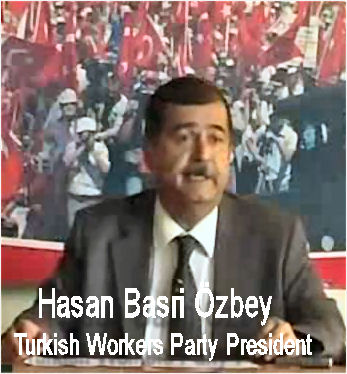 Hasan Basri Ozbey, the deputy leader of the Turkish Labour Party, has announced that his political party will file a complaint against Turkish President Abdullah Gul with the Turkish Meclis and the Turkish Higher Court to prosecute Gul, because the Labour Party “has clear evidence that [Gul] incited terrorism and war on Syria and signed a secret agreement with the United States, which alone is grounds for trial.” [10] Mustafa Kamalak, the leader of the Felicity Party, has even led a Turkish delegation to visit Bashar Al-Assad to show their support for Syria and opposition to Erdogan’s policies. [11]
The mobilization of the Turkish military on the Syrian border as a show of force is a psychological tactic to scare the Syrian regime. [12] Any large-scale military operations against the Syrians would be very dangerous for Turkey and could fragment the Turkish Armed Forces. Segments of the Turkish military are at odds with the Turkish government and the military itself is divided over Turkish foreign policy. Erdogan does not even trust half of Turkey’s own military leaders and has arrested forty of them for planning to overthrow him. [13] How can he send such a force to even attack neighbouring Syria or think that he can control it during a broader war?
The Dangers of “Blowback” from Syria
 While Turkey is trumpeting that it will not allow Kurdish militias to establish bases in northern Syria, the Turkish government is actually facilitating this itself. There is a real risk of “blowback” from Syria for Turkey. Like Syria, Turkey is a kaleidoscope of various peoples and faiths. The people of Turkey are held together by the primacy of the Turkish language and a shared citizenship. Turkey’s minorities constitute at the very minimum one-third of the country. A significant proportion of Turkey’s minority communities have ties to Syria, Iraq, or Iran.
The Kurds and other similar Iranic peoples alone form about 25% of Turkey’s population, which means one out of four Turkish citizens are of Kurdish and Iranic stock. Other ethnic minorities include Arabs, Armenians, Assyrians, Azerbaijanis, Bulgarians, and Greeks. No exact figures have ever been available about Turkey’s Shiite Muslims, because of the historical persecution and restrictions on Shia Muslims in Turkey from Ottoman times. Anywhere from 20% to 30% or more of the Turkish population may be categorized as Shiite Muslims, which includes Alevis, Alawites, and Twelvers. Turkey also has a small Christian minority, some of which have historic or organizational ties to Syria like Turkey’s Alawites and ethnic Arabs. Turkey will be consumed too, one way or another, should a broader sectarian conflict spread from Syria and should the Syrians be violently divided along sectarian fault lines.
The Self-Destructive Nature of Turkish Involvement in Syria
 All the factors discussed above are a recipe for disaster. Civil war in Turkey is a real possibility in an increasingly polarized Turkish state. Should Syria burn, Turkey will ultimately burn too. This is why a whole spectrum of Turkish leaders have been warning their country and people that the consequences for the fire that Erdogan, Davutoglu, and Gul are stoking in Syria will have disastrous consequences for Turkey and all the countries bordering Syria.
Erdogan’s government has managed to alienate Turkey from its most important neighbours, hurt the Turkish economy, and destabilize their country’s own borders. This, however, is only the tip of the iceberg compared to the damages they could unleash on Turkey. The Turks have been walking into a trap, where they are slated for a self-destructive kamikaze operation against Syria. The US-led siege on Syria intends to create chaos across the entire Middle East and ignite multiple regional conflicts. Violence and conflict from Syria is intended to consume Lebanon and Iraq too. Within this mêlée, Turkey has been slated to be weakened and divided – just as the US, NATO, and Israel have envisaged in their project to create a “new Middle East.” [14]
River to Sea
 Uprooted Palestinian
The views expressed in this article are the sole responsibility of the author and do not necessarily reflect those of this Blog!


No comments:
Post a Comment