Uprooted Palestinians are at the heart of the conflict in the M.E Palestinians uprooted by force of arms. Yet faced immense difficulties have survived, kept alive their history and culture, passed keys of family homes in occupied Palestine from one generation to the next.
بالرغم من تباين العناصر المادية بين جريمتي اغتيال الرئيس رفيق الحريري وتفجير مرفأ بيروت، تبدو وجوه التشابه كثيرة في السياقات المرافقة للجريمتين، حيث بدا من اللحظات الأولى لاغتيال الرئيس الحريري أن هناك مشروعاً كبيراً يستثمر على عملية الاغتيال، وجعله خريطة طريق نحو تنفيذ القرار 1559 الذي كان حتى ذلك التاريخ حبراً على ورق، وصولاً لعلاقة الاغتيال بإعادة رسم العلاقات بين الطوائف في المنطقة من العراق الى سورية ولبنان، وهي لا تزال حتى تاريخه ترددات زلازل الفتن المذهبية التي اشتعل فتيلها مع الاتهامات التي رافقت الاغتيال؛ وبصورة غير بعيدة أبداً، بدا تفجير المرفأ منصة فوريّة لتتابع وتزامن أحداث كبرى، بحجم التطبيع الخليجيّ الإسرائيليّ وبدء الحديث عن حلول مرفأ حيفا مكان مرفأ بيروت بالنسبة للتجارة الخليجيّة، وبحجم الحديث عن مشروع تفويض دولي إقليمي لفرنسا بتولي الملف اللبناني تعويضاً عن الخسائر الفرنسية والأوروبية المتلاحقة في بلدان الشرق الأوسط، وانطلاق هذا المسعى من منصة تفجير المرفأ.
–
كما في اغتيال الرئيس الحريري في تفجير المرفأ، ظهر صوت الاتهام الهادف للتوظيف السياسي أعلى من صوت البحث عن الحقيقة والسعي للعدالة. وفي الحالتين تمّ تطويق التحقيق القضائي وإغراقه بروايات وطلبات وأولويات وأحقاد وخطاب شعبويّ، وفي الحالتين محاولات لا تهدأ لحرف التحقيق المحلي عن السياق وصولا لطرح التحقيق الدولي القابل للتحكم والتوظيف بديلاً وحيداً. وفي الحالتين حجب دولي للمعلومات المفيدة عن التحقيق. وفي الحالتين ابتعاد عن الأسئلة الحقيقيّة حول المستفيد وصاحب المصلحة.
–
التحقيق التقني حول كيفية التفجير في الحالتين دخلت عليه الاجتهادات المبرمجة والموجهة، فكما صار الكل يومها خبراء متفجرات يتحدثون بالتفجير تحت الأرض وفوق الأرض، نسمع اليوم عن التلحيم مرة وعن تبخّر الكميات التي لم تتفجّر، بينما الجواب العلمي محجوب بضغوط خارجية تسعى لإعادة فتح الباب لتمرير استنتاجات تريد تحقيق أهداف سياسية، وليس من باب الصدفة فتح الباب لتمرير تقارير تشبه بالشكل والمضمون لعبة التسويق والتشويق مع بطل التزوير في التحقيق في لاغتيال الرئيس الحريري زهير الصديق، لروايات عن كيف وصلت النترات ولحساب مَن، بينما الملف القضائي لسفينة ترايدر، التي أوقفتها السلطات اليونانية وثبتت علاقتها بتنظيمات إرهابية معادية لسورية تريد استعمال لبنان كمنصة عبور، يكشف الكثير من الوقائع، التي يراد طمُسها وإغراقها بروايات جيمسبوندية تشبه روايات زهير الصديق، وبأدوات التسويق والتشويق ذاتها.
–
كما في اغتيال الرئيس الحريري في تفجير المرفأ، لا يزال الاستهداف للمقاومة حاضراً للتوظيف إن لم يكن حاضراً خلف الجريمة الأصلية، وفي الحالتين اللعبة الإعلامية ساحة رئيسية للاعبين، ولا يبدو التمويل المرصود للإعلام معزولاً عن مدى مشاركتها في هذه اللعبة، لكن اللبنانيين زادوا خبرة ولم يعُد ممكناً التلاعب بعقولهم بزعم مصداقية ما بث في قنوات إعلامية مرت باختبارات كشفت خلفياتها وأسقطت أقنعة الموضوعيّة عنها، والتكرار لم يعد ممكناً والناس في حال الذهول ذاته، والفبركات ومحاولات التلاعب، تبدو تحت المجهر هذه المرّة، وتبدو القوى المعنية بالمواجهة متحررة من لعبة الابتزاز التي فعلت فعلها في المرة الأولى.
–
استعمال الأدوات ذاتها يحقق النتائج ذاتها، وهم كبير. فالتعامل مع العقول تراكمي وما احتاج كشفه لسنوات في المرة الأولى يسقط خلال أيام في المرة الثانية.
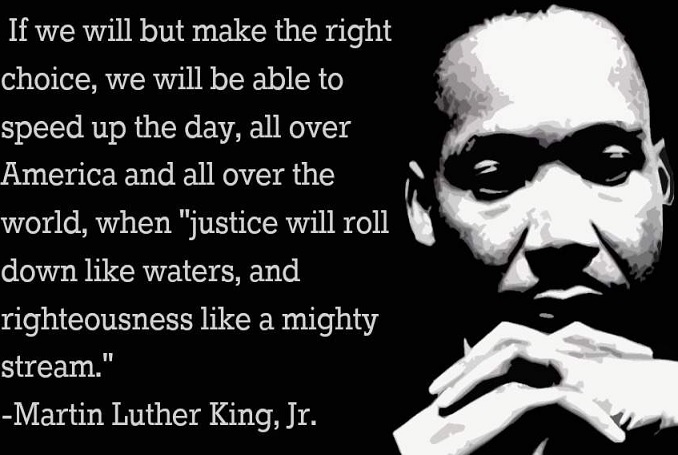
In “Beyond Vietnam” (1967), his speech delivered at the Riverside Church in New York, Martin Luther King opened by quoting from Clergy and Laymen Concerned about Vietnam. “A time comes when silence is betrayal,” King explained, then concluded: “That time has come for us in relation to Vietnam.”
King’s words that followed still ring true today. In what was perhaps the most significant, but least appreciated, speeches of his career, King warned against falling into “conformist thought,” in particular regarding official policy during times of war.
There is no war today like Vietnam, but there is an ongoing foreign policy that commits imperialist acts abroad. As Peter Dreier notes, over 50 years since King’s Riverside Church address, the US remains involved in several ground wars as well as a war on “terrorism,” which is principally a battle against Muslims as well as immigrants, the latter of whom are motivated to flee their countries because of US-sponsored violence abroad.
In particular, there is foreign aid that goes, among other destinations, to the state of Israel. In this way, the Unites States allows the Zionist state to continue its Occupation of Palestinians by using all the brutality that we used in Vietnam.
As Ramzy Baroud observes, by going against “not only the state apparatus” but also the “liberal hierarchy” which posed as if they were his allies, King’s self-described “inner truth” cost him some support. “It was a lonely, moral stance,” wrote Michelle Alexander. “And it cost him.”
In her landmark Opinion Piece published one year ago in the New York Times, Alexander goes on to hold up King’s example as a standard that still holds true today. In particular, Alexander is concerned with questioning her own silence on what she calls “one of the great moral challenges of our time: the crisis in Israel-Palestine.”
Alexander circumvents King’s well-known advocacy for Israel’s “right to exist” by suggesting that “if we are to honor King’s message and not merely the man, we must condemn Israel’s actions.”
It is impossible to know how King’s position on the Middle East would have changed over time. Building on Alexander’s piece, David Palumbo-Liu cites King’s opposition to apartheid South Africa as a clue to how he would feel towards the same practices in Israel today.
“The fact that King explicitly linked colonialism and segregation suggests that he would indeed recognize the expansion of the occupation as a settler-colonial project. If he did, he would then have to reevaluate his support for Israel pre-1967, as so many others have in recent years. He might well have come to recognize the absolute continuity between the 1948 dispossession, exile, and colonization of Palestinians and the post-1967 occupation.”
Indeed, Hagai El-Ad, executive director of B’Tselem, Israel’s largest human rights organization, has just called for the end of “the systematic promotion of the supremacy of one group of people over another,” i.e. apartheid very similar to what existed in South Africa.
In other ways King’s voice speaks to present-day concerns. In his 1968 call for an “economic bill of rights,” King challenged the notion that this country could afford both “guns and butter,” a conundrum that still prevails today. “We have come to see that this is a myth,” he explained, “that when a nation becomes involved in this kind of war, when the guns of war become a national obsession, social needs inevitably suffer.”
Theoretically we are not at war. On the other hand, as long as we give military aid to countries that repress their people we are not at peace. At a time when Congress continues to propose huge increases in the country’s military budget by cutting programs for the poor, King’s speech holds true today.
As Ramzy Baroud observes, there has been very little direct aid to Americans struggling under the impact of the virus, yet Congress continues to provide Israel with enormous sums of money ostensibly for defense. In reality, these funds are very much needed at home.
“The mere questioning of how Israel uses the funds – whether the military aid is being actively used to sustain Israel’s illegal occupation of Palestine, finance Jewish settlements, fund annexation of Palestinian land or violate Palestinian human rights,” Baroud explains, remains a “major taboo.”
Many years ago, Reverend King described “adventures like Vietnam” as “some demonic, destructive suction tube” that drew “men and skills and money” into the effort to keep it going. What would he think now of massive funds that go to another country which oppresses its people in ways similar to the Jim Crow South in which King was born?
At the closing of her memorial to Martin Luther King, Alexander pledges “to speak with greater courage and conviction about injustices beyond our borders, particularly those that are funded by our government, and stand in solidarity with struggles for democracy and freedom. My conscience leaves me no other choice.”
King, too, chose to address his vision “beyond Vietnam,” thereby to “a world that borders on our doors.”
In a statement regarding the January 6thright-wing riots in D.C., the US Peace Council reiterated that guns at the expense of butter were part of the root cause of disaffection. “While a record $740B military appropriation sailed through Congress with only 20 Democrats in opposition,” the statement read, “desperately needed reforms that benefit working people have been sidetracked.”
Moreover, the statement refuted a comment often heard in response to recent riots. According to the press and much of social media, what happened at the Capital was “sedition,” because this is America, and its “not who we are.” In reality, notes the Peace Council, what is happening today
“is a microcosm of what the capitalist financial institutions and elites have wreaked upon the planet through trade agreements and an imperialist foreign policy that has suppressed populations through illegal acts of interference, aggression, and economic warfare designed to create the conditions for exploitation, the theft of land and resources and environmental destruction.”
Because the root causes of our problems extend beyond our borders, the Council calls for solutions very much in the manner of King’s focus on the global nature of oppression. Accordingly, the statement concludes that:
“A unified grassroots mass movement is needed to address the fundamental class contradictions of the system as a whole and not limit itself to fighting against the symptoms solely by seeking cosmetic changes through elections and reforms from above. We need to bring all contingents of the people’s movement — labor, social justice, civil rights, human rights, environmental, peace — together under a single coordinated network, with a clear agenda that addresses the root causes of the present crisis and not only its variegated symptoms.”
In this way, more people will come to understand that the catastrophes we face will not be solved as long as what we allow to be done in our name abroad comes home to our nation’s capital. King knew that local police, in conjunction with para-military hate groups, used violence in much the same way as the far-right factions that more recently invaded D.C.
In both cases, the Klan and other groups were/are motivated by a desire to oppose the struggle for civil rights at home. Nevertheless, “our actions cannot be limited to the US,” concludes the US Peace Council, “because if the global elites are willing to oppress and exploit people anywhere, the crises we face will continue.”
The United States, concluded King, is “on the side of the wealthy, and the secure, while we create a hell for the poor.” In order to solve domestic problems while promoting global peace, he suggested “giv[ing] up the privileges and the pleasures that come from the immense profits of overseas investments,” and, he might have added, ending aid to countries like Israel that use the funds to wreak violence on Palestinians under the Occupation.
With “Beyond Vietnam,” concludes Baroud, King “courageously broke free from the confines of American exceptionalism,” thereby joining the civil rights struggle to “a worldwide movement of struggles against racism, colonialism and war.”
In 2021, it is more important now than ever to heed King’s words. Indeed, as Baroud suggests, “new strategies” will have “to replace the old ones” for the Palestinian struggle to succeed. His vision calls for unity among all factions, bringing together Palestinians in the homeland and elsewhere to formulate a blueprint for One Democratic State that would grant the Right of Return.
Harking back to King’s international idea, Baroud calls for “a global solidarity movement that rallies behind a unified Palestinian vision,” a plan that bypasses official circles that have done little to promote peace. While Baroud’s strategy focuses on freedom for the Palestinian people, if such a movement becomes one of transnational mutuality, it would be possible to bring about the liberation of all oppressed people worldwide, thereby remaining true to the “other, more revolutionary, radical and global King” that Baroud explains is more often “hidden from view.”
– Benay Blend earned her doctorate in American Studies from the University of New Mexico. Her scholarly works include Douglas Vakoch and Sam Mickey, Eds. (2017), “’Neither Homeland Nor Exile are Words’: ‘Situated Knowledge’ in the Works of Palestinian and Native American Writers”. She contributed this article to The Palestine Chronicle.
Israel’s separation wall is pictured on 11 February 2020 (AFP)
Jonathan Cook Jonathan Cook, a British journalist based in Nazareth since 2001, is the the author of three books on the Israeli-Palestinian conflict. He is a past winner of the Martha Gellhorn Special Prize for Journalism. His website and blog can be found at: http://www.jonathan-cook.net
New report by rights group B’Tselem will make it harder to smear Israel’s critics as antisemites for arguing that Israel is a racist state
For more than a decade, a handful of former Israeli politicians and US diplomats identified with what might be termed the “peace process industry” have intermittently warned that, without a two-state solution, Israel is in danger of becoming an “apartheid state”.
The most notable among them include Ehud Barak and Ehud Olmert, two former Israeli prime ministers, and John Kerry, who served as former US President Barack Obama’s secretary of state. Time is rapidly running out, they have all declared in the past.
Their chief concern, it seems, was that without the alibi of some kind of Palestinian state – however circumscribed and feeble – the legitimacy of Israel as a “Jewish and democratic state” will increasingly come under scrutiny. Apartheid will arrive, the argument goes, when a minority of Israeli Jews rule over a majority of Palestinians in the area between the Mediterranean Sea and the River Jordan controlled by Israel.
Demographic threshold
The apartheid threat has been wielded by the so-called “peace camp” in hopes of mobilising international pressure on the Israeli right, led by Prime Minister Benjamin Netanyahu. The goal has been to force it into making sufficient concessions that the Palestinian leadership agrees to a demilitarised statelet, or statelets, on fragments on the original Palestinian homeland.
Meanwhile, demographic trends have continued apace, and the Israeli right has ignored all warnings, preferring to pursue their Greater Israel ambitions instead. But strangely, the apartheid moment never arrived for the Israeli peace camp. Instead, its expressions of concern about apartheid fizzled into silence, as did its once-vocal worries about a Palestinian demographic majority.
How much sense would it have made in the former South Africa to claim that apartheid existed only in the Bantustans or black townships, while exempting white areas?
This entirely cynical approach to Palestinian statehood was very belatedly blown apart this week with the publication of a report by B’Tselem, Israel’s most prominent and respected human rights group. It broke ranks to declare what has been obvious for many, many years. Israel has created a permanent reality in which there are two peoples, Jews and Palestinians, sharing the same territorial space, but “a regime of Jewish supremacy” has been imposed by the stronger side. This unequivocally qualifies as apartheid, B’Tselem said.
It dismisses the sophistry that apartheid relates to some self-serving demographic deadline – one that never materialises – rather than the explicitly segregationist practices and policies Israel has enforced throughout the territories it rules. It also dismisses arguments made by Israel’s partisans abroad that Israel cannot be an apartheid state because there are no South African-style “whites only” signs on park benches.
Hagai El-Ad, B’Tselem’s executive director, notes that Israel’s version – “apartheid 2.0, if you will – avoids certain kinds of ugliness … That Israel’s definitions do not depend on skin colour make no material difference: it is the supremacist reality which is the heart of the matter.” The report concludes that the bar for apartheid was met after considering “the accumulation of policies and laws that Israel devised to entrench its control over Palestinians”.
Daring analysis
What is perhaps most daring about B’Tselem’s analysis is its admission that apartheid exists not just in the occupied territories, as has been observed before, including by former US President Jimmy Carter. It describes the entire region between the Mediterranean and the Jordan River – which encompasses both Israel and the Palestinian territories – as an apartheid regime. It thereby denies Israel’s claims to be a democratic state even inside its internationally recognised borders.
B’Tselem has abandoned the pretence that apartheid can be limited to the occupied territories, as though Israel – the state that rules Palestinians – is somehow exempt from being classified as integral to the apartheid enterprise it institutes and oversees.
That was always obvious. How much sense would it have made in the former South Africa to claim that apartheid existed only in the Bantustans or black townships, while exempting white areas? None at all. And yet, Israel has been getting away with precisely this clearcut casuistry for decades – largely aided by the peace camp, including B’Tselem.
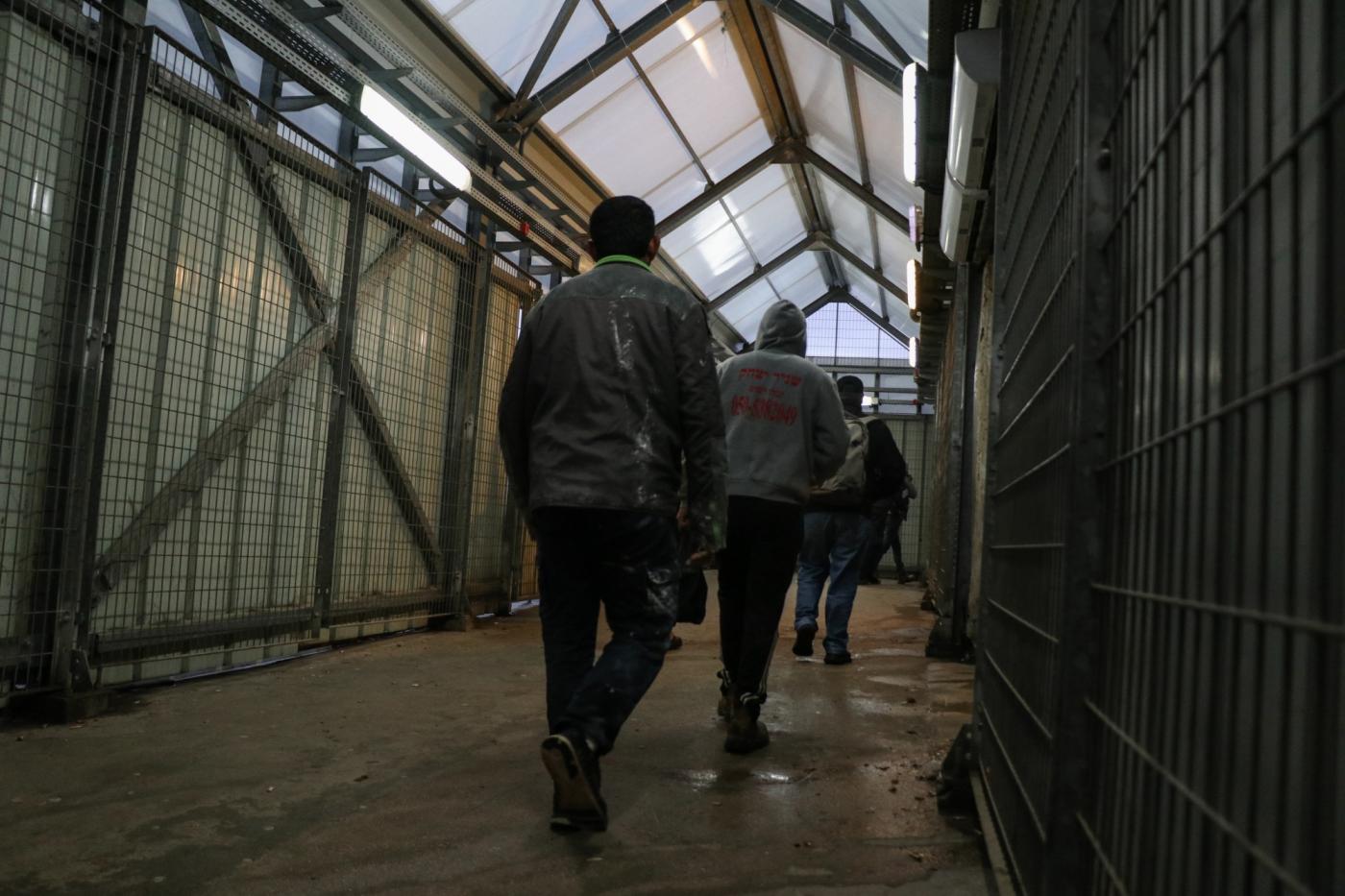
Palestinian workers cross the Nilin checkpoint on 18 March 2020 (MEE/Mohammad Abu Zaid)
Now, B’Tselem observes: “Jews go about their lives in a single, contiguous space where they enjoy full rights and self-determination. In contrast, Palestinians live in a space that is fragmented into several units, each with a different set of rights – given or denied by Israel, but always inferior to the rights accorded to Jews.”
Israel’s “Jewish supremacist ideology” is revealed in its obsession with “Judaising” land, in its bifurcated citizenship laws and policies that privilege Jews alone, in its regulations that restrict movement for Palestinians only, and in its denial of political participation to Palestinians. These discriminatory policies, B’Tselem notes, apply also to the fifth of Israel’s population who are Palestinian and have nominal Israeli citizenship.
El-Ad concludes: “There is not a single square inch in the territory Israel controls where a Palestinian and a Jew are equal. The only first-class people here are Jewish citizens such as myself.”
Permanent occupation
What B’Tselem has done is echo the arguments long made by academics and Palestinian civil society, including the international boycott, divestment and sanctions (BDS) movement, that Israel is a settler-colonial society.
In an emailed response to the report, Omar Barghouti, one of the founders of the BDS movement, said it helped to put an end to “the vicious and deeply racist lies about the not-so-perfect Israeli democracy that has a problem called ‘the occupation’”. Why acknowledging Israeli apartheid is not enough
The B’Tselem report observes that, while “occupation” must be a temporary situation, Israel has no intention of ending its military rule over Palestinians, even after more than five decades. A Palestinian state is not conceivably on the agenda of any Israeli party in sight of power, and no one in the international community with any influence is demanding one. The two-state solution has been smothered into oblivion.
For that reason, it argues, all of Israel and the Palestinian territories under occupation are organised “under a single principle: advancing and cementing the supremacy of one group – Jews – over another – Palestinians”.
There are good reasons why B’Tselem is biting the bullet now, after decades of equivocation from it and the rest of the Israeli peace camp. Firstly, no one really believes that Israel will be pressured from outside into conceding a Palestinian state. Trump’s so-called “peace plan”, unveiled a year ago, gave Netanyahu everything he wanted, including support for annexing swaths of the West Bank on which illegal settlements have been built.
Four years of Trump, and the recruitment of much of the Gulf to Netanyahu’s side, has shifted the conversation a long way from efforts to secure Palestinian statehood. Now, the focus is on how best to delay Israel’s move towards formal annexation. US president-elect Joe Biden will at best try to push things back to the dismal state they were in before Donald Trump took office. At worst, he will quietly assent to all or most of the damage Trump has inflicted on the Palestinian national cause.
Deeply isolated
Secondly, B’Tselem and other human rights groups are more deeply isolated at home than ever before. There is simply no political constituency in Israel for their research into the systematic abuses of Palestinians by the Israeli army and settlers. That means B’Tselem no longer needs to worry about messaging that could antagonise the sensibilities of Israel’s so-called “Zionist left” – because there is no meaningful peace camp left to alienate.
The disappearance of this peace camp, unreliable as it was, has only been underscored by the Israeli general election due in late March. The battle for power this time is being waged between three or four far-right parties that all support annexation to varying degrees.
Israel’s apologists will now face the much harder task of showing that B’Tselem is antisemitic, along with the Palestinian solidarity activists who cite its work
The Israeli left has ceased to exist at the political level. It comprises a handful of human and legal rights groups, mostly seen by the public as traitors supposedly meddling in Israel’s affairs on behalf of “European” interests. At this stage, B’Tselem has little to lose. It is almost entirely irrelevant inside Israel.
Thirdly, and as a result, the only audience for B’Tselem’s careful research exposing Israeli abuses is overseas. This new report seeks to liberate a conversation about Israel, partly among Palestinian solidarity activists abroad. Their campaigns have been stymied by the failure of the Palestinian leadership under Mahmoud Abbas to signal where they should direct their efforts, now that prospects for Palestinian statehood have vanished.
Activists have also been browbeaten into silence by smears from Israel’s partisans in the US and Europe, decrying any trenchant criticism of Israel as antisemitic. These slurs were relentlessly deployed against the UK’s Labour Party under Jeremy Corbyn because of his support for the Palestinian cause.
Breaking a taboo
By calling Israel an apartheid state and a “regime of Jewish supremacy”, B’Tselem has given the lie to the Israel lobby’s claim – bolstered by a new definition promoted by the International Holocaust Remembrance Alliance – that it is antisemitic to suggest Israel is a “racist endeavour”.
B’Tselem, a veteran Israeli Jewish organisation with deep expertise in human rights and international law, has now explicitly declared that Israel is a racist state. Israel’s apologists will now face the much harder task of showing that B’Tselem is antisemitic, along with the Palestinian solidarity activists who cite its work.
Palestinian protesters confront Israeli soldiers during a protest in the occupied West Bank on 29 January 2020 (AFP)
The report is also intended to reach out to young American Jews, who are more willing than their parents to foreground the mistreatment of Palestinians and to forgo the Zionist idea that Israel is their bolthole in times of trouble.
Significantly, the B’Tselem report has been published in the wake of two groundbreaking essays this past summer by influential American Jewish journalist Peter Beinart. In them, he broke a taboo in the US Jewish mainstream by declaring the two-state solution dead and calling for a single democratic state for Israelis and Palestinians.
It doubtless served as a wakeup call to Israeli groups such as B’Tselem that the conversation about Israel is moving on in the US and becoming much more polarised. Israeli human rights groups need to engage with this debate, not shy away from it.
Battle for equality
There is one possible lacuna in B’Tselem’s position. The report suggests a reticence to focus on outcomes. Nowhere is the two-state solution ruled out. Rather, the report notes: “There are various political paths to a just future.” Statements by El-Ad to Middle East Eye indicate that his organisation may still support a framework of international pressure for incremental, piecemeal change in Israeli policies that violate Palestinian human rights.Israeli settlers’ racism is not an aberration. It’s part of an apartheid systemRead More »
That is very much what western states, particularly Europe, have been paying lipservice to for decades, while Israeli apartheid has entrenched.
Does B’Tselem hope its apartheid criticisms will prove more effective than Barak and Olmert’s apartheid warnings, finally galvanising the international community into action to push for a Palestinian state? If so, Biden’s performance in office should soon dispel any such illusions. El-Ad observes that the goal now is “a rejection of supremacy, built on a commitment to justice and our shared humanity.”
That cannot happen within the two-state framework, even on the untenable assumption that the international community ever seriously rallies behind Palestinian statehood, against Israel’s wishes. So why not say so explicitly? The best-case two-state scenarios on the table are for a tiny, divided, demilitarised, pseudo-Palestinian state with no control over its borders, airspace or electromagnetic frequencies.
That would not offer “justice” to Palestinians or recognise their “shared humanity” with Israeli Jews.
As welcome as the new report is, it is time for B’Tselem – as well as Palestinian solidarity activists who look to the organisation – to explicitly reject any reversion to a “peace process” premised on ending the occupation. The logic of an apartheid analysis needs to be followed to the very end. That requires unequivocally embracing a democratic single state guaranteeing equality and dignity for all.
The views expressed in this article belong to the author and do not necessarily reflect the editorial policy of Middle East Eye.
The first two weeks of 2021 have, so far, been marked by an incredible increase in Israeli activity in the skies over Syria.
The most intense strike took place on January 13 morning hitting multiple Syrian and Iranian-affiliated targets in the province of Deir Ezzor, including the underground base of the Iranian Islamic Revolutionary Corps near al-Bukamal.
The pro-opposition Syrian Observatory for Human Rights reported that Israeli strikes have killed 57 and wounded another 37. Pro-government sources confirmed only 5 casualties.
The airstrikes were so numerous that even Abu Yatem al-Katrani – the commander of the Iraqi Popular Mobilization Units (PMU) 4th Brigade was killed in an airstrike.
The Israeli operations were carried out with the assistance of the United States – it provided intelligence and Israeli struck on them. Former CIA Director, Secretary of State Mike Pompeo was reportedly discussing the airstrikes with Yossi Cohen, chief of Israel’s spy agency Mossad.
The US support of Tel Aviv’s aerial raids is a clear message to Iran, and is a very open support to Israel’s undeclared war against Iran, which it has been waging in Syria since hostilities began.
All of the airstrikes in the first two weeks of 2021 are the most significant by Israel, and over all, since the beginning of the war in Syria. They were so significant, that Damascus even accused Tel Aviv of carrying out the strikes in very open support of ISIS militants which the Syrian Arab Army is hunting.
Meanwhile, there appears to be a sense of urgency, or a sense of danger in the air, as the United States reinforced its troop positions in the Omar oil fields with artillery pieces and other equipment.
The US troops, together with their local proxies also hold frequent drills in the area, to keep ready, for some future unknown escalation.
Prior to New Year’s Eve, Iran’s top nuclear scientist Mohsen Fakhrizadeh was assassinated, in what Tehran claimed to be an elaborate Israeli operation.
Additionally, since around the same time, a farewell strike on Iran has been expected from US President Donald Trump, and the general chaos in the US ahead of Joe Biden stepping into office has been used by Israel as a chance to inflict as much damage as possible on Tehran and its allies.
Russia, at the same time, appears to also be preparing for an escalation of some sort, by building up its forces and is lying in wait.
Israel appears dead set on continuing its crusade against Iran and its allies in Syria. An urgency is felt, since Biden is unlikely to support Tel Aviv as much as Trump did, and every possible chance should be used. This is all in spite of Prime Minister Benjamin Netanyahu removed the photo of Donald Trump from his Twitter, but all is fair in love and war.
Finally, both the American and Russian forces appear to be biding their time, waiting for an escalation that, with tensions at the breaking point appears closer than ever.
The year began with terrorist attacks in Syria, increased Israeli strikes, Iran threatening against any aggression against it, and the two most significant players in the face of Moscow and Washington are expecting an escalation, and no amount of preparation would be enough for the incoming storm.
BEIRUT, LEBANON (6:00 P.M.) – A U.S. nuclear submarine was spotted making close contact with an Iranian military chopper this week, in a new escalation in the Persian Gulf region.
In a video released by the Iranian media and shared on social media, the U.S. nuclear submarine can be seen making close contact with the Iranian anti-submarine helicopter, the SH-3D, in the Persian Gulf waters.
The video, which is shared below, was allegedly take on Thursday, January 14th, in the Persian Gulf; however, the U.S. and Iranian forces have yet to comment on this close approach.
شكل حدث اقتحام مبنى الكونغرس الأميركي من قبل أنصار الرئيس الأميركي دونالد ترامب للإطاحة بنتائج الإنتخابات وضمان بقائه في البيت الأبيض بعد 20 الشهر الحالي، شكل منعطفاً في مسار الأزمة البنيوية السياسية والاقتصادية والاجتماعية، التي تعاني منها الإمبراطورية الأميركية، والتي تفاقمت في عهد إدارة ترامب..
واذا كان العالم اعتبر هذا المشهد علامة من علامات التصدّع الذي تشهده الإمبراطورية الأميركية ودليلاً على دخولها في مسار من اشتداد الصراعات الداخلية، يفاقمها انتهاء مرحلة صعود الإمبراطورية وازدهارها، ودخولها مرحلة التراجع والأفول والاضمحلال على غرار الإمبراطوريات التي سبقتها في التاريخ.. الا انّ هذا المشهد كان صادماً في الدول الحليفة لأميركا، والتي تعتمد على قوّتها وهيمنتها الدولية، لا سيما كيان العدو الصهيوني الذي يستند في استمرار وجوده وتفوقه العسكري والاقتصادي إلى المصل الأميركي، الذي إذا ما انقطع فإنه سيحرم الكيان من هذا المصل الحيوي لوجوده المصطنع القائم على قوة الإرهاب والقمع..
وأهمية هذا المصل الأميركي في وجود كيان العدو عبّر عنه أخيراً، قبل حدث اقتحام الكونغرس، نائب رئيس وزراء العدو موشيه يعلون الذي اعتبر انّ تراجع الهيمنة الأميركية في المنطقة يثير القلق في «إسرائيل»، التي تعتبر الولايات المتحدة مركباً هاماً من مركبات أمنها… لذلك فإنّ «إسرائيل» قلقة من تآكل مكانة أميركا، وأنّ هذا التآكل يتجسّد في الصعوبات التي تواجهها واشنطن في كبح منافسيها في المنطقة والحفاظ على ثقة حليفاتها..
هذا القلق «الإسرائيلي» من تراجع الهيمنة والمكانة الأميركية في المنطقة والعالم، يؤشر إلى مدى العلاقة العضوية التي تربط «إسرائيل» بأميركا، فإذا كانت أميركا قوية ومهيمنة فإنّ ذلك ينعكس إيجاباً بتعزير قوة «إسرائيل»، أما إذا ضعفت أميركا وتراجعت هيمنتها، فإنّ «إسرائيل» سوف تضعف قوتها، ويتراجع سلطان احتلالها..
يقول أحد المعلقين، في إشارة بليغة إلى حيوية الدعم الأميركي بالنسبة لـ «إسرائيل»: «إذا غيّمت السماء في واشنطن فإنّ على الإسرائيليين حمل المظلات خشية التبلل».
من هنا فإنّ استمرار تراجع وضعف أميركا واضمحلال قوتها سوف يؤدّي إلى انعكاسات سلبية كبير وصاعقة على كيان الاحتلال الصهيوني، في كلّ النواحي، العسكرية والاقتصادية والسياسية..
على أنّ تراجع الهيمنة والقوة الأميركية وانشغالها في أزماتها الداخلية المتفجّرة، والذي لعب حلف المقاومة دوراً أساسياً فيه، من خلال استنزاف القوة الأميركية وإفشال وإحباط أهداف حروبها المباشرة وغير المباشرة، إنما يشكل الفرصة المواتية لتحقيق ما يلي:
أولاً، تشديد ضربات المقاومة ضدّ قوات الاحتلال الأميركية وأدواتها وأعوانها لتسريع إلحاق الهزيمة النهائية بها وإجبار إدارة الرئيس جو بايدن على أخذ قرار الانسحاب من سورية والعراق..
ثانياً، إحداث التحوّل الكبير في موازين القوى لمصلحة حلف المقاومة، وعودته إلى توجيه جهوده وطاقاته باتجاه مواجهة كيان العدو الصهيوني لأجل تصعيد حرب المقاومة المسلحة ضدّه لاستنزافه ومفاقمة أزماته الداخلية وإجبار على التراجع تلو التراجع…
انّ ما يجري من تفجر للنموذج الأميركي وتصدّعه ما كان ليتمّ لولا:
1
ـ المقاومة الضارية التي واجهت القوة الاستعمارية الأميركية الصهيونية العربية الرجعية، في العراق ولبنان وسورية وفلسطين واليمن وفي مواجهة إيران، ونجاح المقاومة في إلحاق الهزائم المتتالية بالمشروع الأميركي للسيطرة والهيمنة على المنطقة.
2
ـ ولولا المقاومة التي خاضتها روسيا والصين ودول أميركا اللاتينية وكوريا الديمقراطية إلخ… في مواجهة الهيمنة الأميركية الأحادية.
ولهذا فإنّ استمرار هذه المقاومة هو الكفيل بإلحاق الهزيمة الحتمية بمشروع الهيمنة الاستعمارية في العالم وتسريع ولادة نظام عالمي جديد متعدّد الأقطاب، وإسقاط أحلام الصهاينة في تصفية قضية فلسطين، واستطراداً تحرير فلسطين وكلّ الأرض العربية من الاحتلال الصهيوني على طريق تحقيق تحرّر الأمة واستقلالها الحقيقي السياسي والاقتصادي، وكلّ تطلعاتها في الوحدة والتنمية والتقدّم…
The first worried about the decline of the American empire and the loss of its serum
By Hassan Hardan
The storming of the U.S. Capitol by supporters of U.S. President Donald Trump to overthrow the election results and ensure his stay in the White House after the 20th of this month marked a turning point in the political, economic and social structural crisis plaguing the American Empire, which worsened under the Trump administration.
If the world considered this scene as a sign of the cracking in the American empire and a sign of its entry into a path of intensification of internal conflicts, exacerbated by the end of the stage of the rise and prosperity of the empire, and its entry into the stage of decline, decline and decay, similar to the empires that preceded it in history .. However, this scene was shocking to America’s allies, which depend on its international power and hegemony, especially the Zionist enemy, whose continued existence and military and economic superiority relies on the American serum, which, if cut off, will deprive the entity of this serum vital to its artificial existence based on the power of terror and oppression.
And the importance of this American vaccine in the presence of the enemy entity was finally expressed, before the event of the storming of Congress, the enemy’s deputy prime minister, Moshe Ya’alon, who considered that the decline of American hegemony in the region raises concern in “Israel”, which considers the United States an important component of its security vehicles … Therefore, “Israel” is concerned about the erosion of America’s standing, and that this erosion is reflected in the difficulties Washington faces in curbing its its regional rivals and maintaining the trust of its allies.
This “Israeli” concern about the decline of American hegemony and position in the region and the world indicates the extent of the organic relationship that binds “Israel” to America. If America is strong and dominant, then this will be reflected positively by strengthening the power of “Israel”, but if America weakens and recedes its hegemony, ” Israel » will weaken, and the power of its occupation will retreat.
“If the sky gets cloudy in Washington, the Israelis have to carry umbrellas for fear of getting wet,” said one commentator, eloquently referring to the vitality of US support for “Israel”.
Hence, America’s continued decline and weakness and the erosion of its power will lead to significant and shocking negative repercussions on the Zionist occupation entity, in all respects, military, economic and political.
However, the retreat of US power and hegemony and its preoccupation with its explosive domestic crises, in which the Resistance Alliance played a fundamental role, by draining American power and thwarting the objectives of its direct and indirect wars, this constitutes the appropriate opportunity to achieve the following:
First, to intensify the resistance strikes against the U.S. occupation forces and their tools and aides to speed up their final defeat and force the administration of President Joe Biden to take the decision to withdraw from Syria and Iraq.
Secondly, changing the balance of power in favour of the Resistance Alliance, in order to direct its efforts towards confronting the Zionist enemy entity in order to escalate the armed resistance against it in order to exhaust it and exacerbate its internal crises and force it to retreat after retreat.
The explosion of the American model and its cracking would not have been possible without:
1 – The fierce resistance that confronted the American colonial power, Zionist Arab reactionary, in Iraq, Lebanon, Syria, Palestine, Yemen and in the face of Iran, and the success of the resistance in inflicting successive defeats on the American project to dominate the region.
2 – The resistance of Russia, China, Latin American countries, North Korea, etc. In the face of unilateral American hegemony. Were it not for the resistance that Russia, China, the Latin American countries, the DPRK, etc. waged against US hegemony.
Therefore, the continuation of this resistance is the guarantor of the inevitable defeat of the project of colonial domination in the world and the acceleration of the birth of a new multi-polar world order, the overthrow of the Zionists’ dreams of liquidating the Palestine cause, liberation of Palestine and all Arab lands from Zionist occupation on the way to achieving the liberation of the nation and its true political and economic independence, and all its aspirations for unity, development and progress
Not many countries are brave or reckless enough to execute a vast medical experiment on their entire population and put vulnerable people at risk. Britain and Israel did.
On December 8, Britain was the first Western country to start “immunising its population.” Two weeks later, just a few days before Christmas, Britain grasped that it was in serious trouble. Covid-19, the virus that was supposed to disappear from our lives, mutated into something else. On December 19, PM Boris Johnson admitted that British scientists had identified a new Covid-19 mutant that is ‘70% more transmissible’ than its ancestors. Britain introduced tighter local restrictions, yet despite these, along with the vast vaccination campaign, the numbers of Covid-19 cases, hospitalisations and deaths kept rising. They are escalating exponentially on a daily basis.
Israel launched its mass vaccination campaign a few days after Britain. Within the next two weeks, Israel managed to vaccinate nearly 20% of its population. Israel is by far the world winner when it comes to the mass vaccination contest, but the country is also in big trouble. Like Britain, Israel is facing a huge Covid-19 surge. Its national health system is on the brink of collapse and the inevitable question is if these similar (if not identical) health crises are related to them both pioneering vast covid-19 vaccination campaigns.
Today, In the biggest Israeli news outlet News12, Israeli computer scientists revealed that the British Mutation is about to become the dominant Covid-19 strain in Israel. You may wonder how the British mutant strain managed to make Aliya and settle so comfortably in the Jewish State. The News 12 article may answer the question. “Cases in Israel aren’t rising uniformly: there is a significant slowdown in the (Israeli) Arab sector, which in the past was the main area of concern. On the other hand, there is a major outbreak in the (Jewish) ultra-Orthodox sector. This week 1.3% of all ultra-Orthodox came out verified, and the rate of increase in cases of children (63%) this week was almost double that of adults. Among the ultra-Orthodox sector, there was a 16-fold increase in the number of verified people within four weeks: this is a doubling every week – from 100 verified people per day (per million people) to 1,600 verified people, and all within a month. Such a growth rate is not seen throughout the plague and is probably due at least in part to the British mutant. It is estimated that the British mutant is about 20% of all ultra-Orthodox verified.”
This must raise eyebrows. Why would the British mutant strain spread so vastly amongst orthodox Jews? Why doesn’t it spread as quickly in the Arab population?
We may be able to stumble upon a very crucial piece of information here. Israeli Arabs may be doing better on the Covid-19 front because many of them seem to be reluctant about the vaccine. The Israeli Marker’s headline on 27 December stated: “A cause for concern: (Israeli) Arabs do not come to get vaccinated.” The Marker pointed out that Jewish citizens from all over Israel travel to Arab villages and cities to receive the vaccines that were designated to Arabs. According to a duty manager of a vaccination centre in Nazareth, 70-80% of the those who come to receive the vaccine were Jewish. Some of them travel as much as 50 km to do so.
But the story doesn’t end here. On January 3, the Israeli news website Walla reported that “the ultra-Orthodox are leading the population vaccination campaign.” Walla confirmed that ‘the percentage of people vaccinated against corona among ultra-Orthodox society is higher than the rest of the population of all ages.’
It is beyond me why the Israelis decided to become guinea pigs in this reckless unscientific experiment in human lives. One option that can’t be dismissed is that Israel is once again heading towards an election and it is more than likely that Israel’s leaders believed that a mass vaccination campaign may translate into an electoral success.
As things stand at the moment, it is hard to deny the possibility of a correlation between mass vaccination and a sharp spike in Covid-19 cases in both Israel and Britain. It is hard to deny the fact that Israeli Arabs who at large avoid the vaccine are doing far better than the Jewish orthodox who seem to also believe in Pfizer.
Alongside the revelations about the British strain, we also learned about a South African strain that is highly dangerous and possibly resistant to the current vaccines. It takes very little research to figure out that South Africa, together with Brazil and Britain, had been the testing ground for new vaccine trials since September. It is hardly a secret anymore that this was at roughly the same time that the new mutants were discovered in Britain at least.
I point here at the devastating possibility of a link between mass vaccinations and Covid-19 spikes. I am not qualified to support or explain the science that may cause this correlation. My facts are supported by data that is available to the wider public through mainstream news outlets. I am not an epidemiologist or a virologist and I really hope that people with the appropriate scientific training can refute the issues raised above.
Kabbalistic Balance
-
Kabbalistic Balance August 6 2026 ___________________________________ More
Vids! +BN Vids Archive! HERE! ___________________________________ Support
The Br...
Report on Beth Israel vigil 07-04-26
-
*1A Rights under combined attack from local government plus media*
Ann Arbor City Council is at it again. Right before the long 4th of July
weekend, they ...
-
Hello all,
It is with great sadness that I share with you the passing of our beloved
sister, Mother, and Grandmother, the individual that you all knew ...
Best Horror Podcast
-
Best Horror Podcast Introduction: Horror podcasts […]
The post Best Horror Podcast appeared first on Copper Shock Horror Podcast.
Ikhras Endorses Muntadhar Al-Zaidi
-
“Oh parties of banditry and sectarianism and corruption, we have come and
our goal is to destroy you.” Ikhras formally endorses Muntadhar al-Zaidi,
Iraqi j...
Prince Charles: Foreign Jews behind bloodshed in ME
-
In May, 2017, British Crown Prince Charles declined an invitation from
Zionist entity’s president Reuven Rivlin‘s to attend the 100th anniversary
of the no...
Palestinian Women – One for All, All for One
-
Honouring All Palestinian Women by Honouring Three: Hanin Zoabi, Ahed
Tamimi, Samah Sabawi Vacy Vlazna “Palestinian women have always stood side
by side ...
US’s Saudi Oil Deal from Win-Win to Mega-Lose
-
By F. William Engdahl Who would’ve thought it would come to this? Certainly
not the Obama Administration, and their brilliant geo-political think-tank
neo-...
-
*Mordechai Vanunu wins human rights prize of Brazilian Press Association *
* http://www.alternativenews.org/english/index.php/features/updates/7038-mordechai...
Abdul Aziz Rantissi:
"My ultimate wish, my God, is to attain martyrdom,"...God granted him his wish on April 17, 2004, at the hands of Israeli assassins.