Showing posts with label Baltic republics. Show all posts

Friday, 3 September 2021

George Soros’s dream: To turn China into a neoliberal grabitization opportunity

George Soros’s dream: To turn China into a neoliberal grabitization opportunity

By Michael Hudson and posted with special permission.

In a Financial Times op-ed, “Investors in Xi’s China face a rude awakening” (August 30, 2021), George Soros writes that Xi’s “crackdown on private enterprise shows he does not understand the market economy. … Xi Jinping, China’s leader, has collided with economic reality. His crackdown on private enterprise has been a significant drag on the economy.”

Translated out of Orwellian Doublethink, the “crackdown on private enterprise” means cutting back on what the classical economists called rent-seeking and unearned income. As for its supposed “drag on the economy,” Mr. Soros means the economy’s polarization concentrating wealth and income in the hands of the richest One Percent.

Soros lays out his plan for how U.S. retaliation may punish China by withholding U.S. funding of its companies (as if China cannot create its own credit) until China capitulates and imposes the kind of deregulation and de-taxation that Russia did after 1991. He warns that China will suffer depression by saving its economy along socialist lines and resisting U.S.-style privatization and its associated debt deflation.

Mr. Soros does recognize that China’s “most vulnerable sector is real estate, particularly housing. China has enjoyed an extended property boom over the past two decades, but that is now coming to an end. Evergrande, the largest real estate company, is over-indebted and in danger of default. This could cause a crash.” By that, he means a reduction of housing prices. That’s just what is needed in order to deter land becoming a speculative vehicle. I and others have urged a policy of land taxation in order to collect the land’s rising site value, so that it will not be pledged to banks for mortgage credit to further inflate china’s housing prices.

Warning about the economic consequences of China’s falling birth rate, Soros writes: “One of the reasons why middle-class families are unwilling to have more than one child is that they want to make sure that their children will have a bright future.” This is of course true of every advanced nation today. It is most extreme in the neoliberalized countries, e.g., the Baltics and Ukraine – Soros’s poster countries.

Soros gives his game away by stating that “Xi does not understand how markets operate.” What he means is that President Xi rejects rapacious rent-seeking, exploitative free-for-all, and shapes markets to serve overall prosperity for China’s 99 Percent. “As a consequence, the sell-off was allowed to go too far,” Soros continues. What he means is, too far to maintain the dominance of the One Percent. China is seeking to reverse economic polarization, not intensify it.

Soros claims that China’s socialist policies are hurting its objectives in the world. But what he really is complaining about is that it is hurting America’s neoliberal objectives for how it had hoped to make money for itself off China. This leads Soros to remind Western pension fund managers to “allocate their assets in ways that are closely aligned with the benchmarks against which their performance is measured.” But the tragedy of financializing pensions is that fund managers are rated on making money financially – in ways that hurt the industrial economy by promoting financial engineering instead of industrial engineering.

“Almost all of them claim that they factor environmental, social and corporate governance (ESG) standards into their investment decisions,” Soros writes. At least, that’s what their public relations advisors advertise. Exxon claims to be cleaning up the environment by expanding offshore oil drilling in Guyana, etc. As for “social standards,” the neoliberal mantra is trickle-down economics: by making our stock prices rise, by stock buybacks and higher dividend payouts, we are helping wage-earners earn a pension, even though we are offshoring and de-industrializing the economy, de-unionizing it and “freeing” the economy from consumer and workplace protection laws.

Soros has a radical solution, which he suggests “should obviously apply to the performance benchmarks selected by pensions and other retirement portfolios: … The US Congress should pass a bipartisan bill explicitly requiring that asset managers invest only in companies where actual governance structures are both transparent and aligned with stakeholders.”

Wow. Such a bill would block Americans from investing in many American companies whose behavior is not at all aligned with stakeholders. What proportion: 50%? 75? More?

“If Congress were to enact these measures,” Soros concludes, “it would give the Securities and Exchange Commission the tools it needs to protect American investors, including those who are unaware of owning Chinese stocks and Chinese shell companies. That would also serve the interests of the US and the wider international community of democracies.” So Mr. Soros wants to block the United States from investing in China. He seems not to see that this is President Xi’s objective also: China doesn’t need U.S. dollars, and is in fact de-dollarizing.

George Soros is obviously upset that President Xi is not Boris Yeltsin, and that China is not following the kleptocracy dependency that warped Russia’s economy. Soros thought the ending of the Cold War would simply let him buy up the most lucrative rent-yielding assets, as he has aimed to do in the Baltics and Ukraine. China said “No,” so it is not deemed to be a “market economy,” Soros-style. It has not made its social organization marketable, and has avoided the financial dependency that makes “markets” a vehicle for U.S. control via sanctions and foreign buyouts.


River to Sea Uprooted Palestinian   
The views expressed in this article are the sole responsibility of the author and do not necessarily reflect those of the Blog!

Monday, 16 August 2021

Afghan Lesson For Uncle Sam’s Running Dogs


August 15, 2021

Finian Cunningham

Afghanistan is the most glaring proof of the American treachery. It’s a cautionary tale for others who incredibly still seem trusting in hitching their wagon to a U.S. alliance.

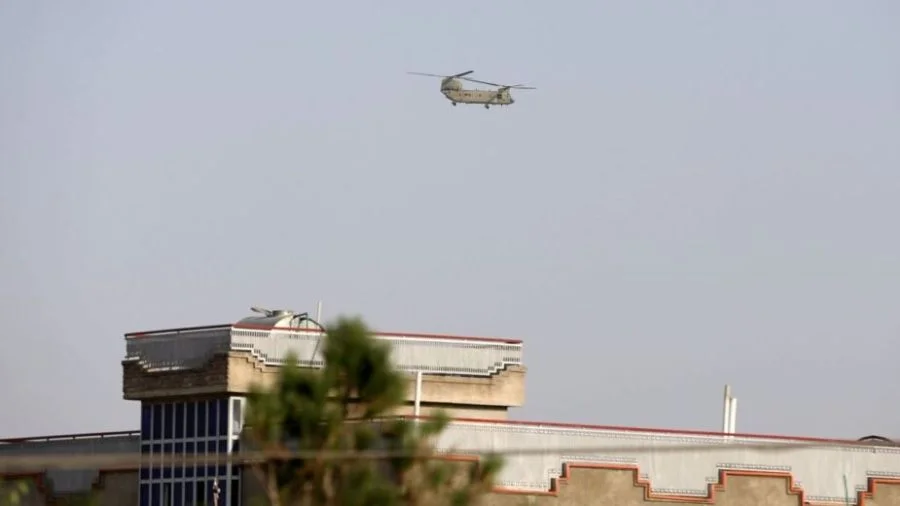
U.S. President Joe Biden said this week that he has “no regrets” about pulling American forces out of Afghanistan as the Taliban militants look set to over-run the entire Central Asian country. The lesson here is: anyone acting as a running dog for Washington does so at the peril of ultimate U.S. betrayal.

The U.S.-backed puppet regime in Kabul has done Washington’s bidding for nearly two decades. After 20 years of futile war at the cost of hundreds of thousands of Afghan lives and trillions of dollars, Uncle Sam has decided to pack up, get out and leave the Afghans to their miserable fate. As the Taliban take over one provincial capital after another, the U.S. intelligence agencies are warning that the Kabul regime could fall within a month. And callously, Biden this week told the Afghans they have to do their own fighting.

Whatever happened to lofty American vows of “nation-building”? Or “fighting terrorism”, “defending democracy”, “protecting women’s rights”?

It’s a sordid story with much historical precedent illustrating how at the drop of a hat Uncle Sam is liable to hang erstwhile “allies” out to dry. As American elder statesman Henry Kissinger once noted, the U.S. doesn’t have permanent allies, it only has interests.

Some 46 years ago, the Fall of Saigon saw the United States scurry away from a corrupt puppet regime it had propped up in South Vietnam as the North Vietnamese communists finally routed the redundant American pawns.

A more recent example of callous betrayal by Washington was the throwing of Kurdish militants to the mercy of Turkey when the latter invaded northern Syria during the Trump presidency. Anyone who accepts American patronage must know that the small print in the contract always reads: to be dumped at any time of Uncle Sam’s choosing and convenience.

Afghanistan is the most glaring proof perhaps since the Fall of Saigon in 1975 of that American treachery.

It’s a cautionary tale for others who incredibly still seem trusting in hitching their wagon to a U.S. alliance.

Ukraine, run by a venal regime in Kiev, appears slavishly willing to place all its fate under Washington’s whim. Centuries of common history with Russia are being sacrificed by the regime in Kiev all for the gain of Washington’s military benevolence. A seven-year civil war bankrolled by $2 billion in American military aid has destroyed the peace and prosperity of Ukraine as well as damage neighborly relations with Russia. We can be sure that when the imperial planners in Washington realize that their use of Ukraine as a pawn against Russia has become futile, then the people of Ukraine will be dropped to sort out the chronic mess.

Likewise the American lackeys in the Baltic states. They act as running dogs for Washington to spoil relations between Russia and the European Union. For years, the Baltic countries have objected to the Nord Stream 2 gas pipeline from Russia, appealing instead for more expensive and environmentally dirty U.S. gas exports. Overnight, Washington has decided such a policy is untenable and not worth antagonizing Germany and the rest of the EU. And just like that, the Baltic lackeys are left out in the cold looking like fools.

They never seem to learn though. This week Lithuania did Uncle Sam’s bidding to provoke China by announcing it would recognize Taiwan. That move infuriated Beijing because it undercuts the international One China Policy of accepting Taiwan as under Beijing’s sovereignty. China recalled its envoy from Vilnius and it has threatened punitive economic measures. As the EU’s top trading partner, it is reckless and self-defeating to incur China’s wrath. Lithuania and the rest of the EU could potentially be hit with economic losses – all for the sake of following Washington’s geopolitical agenda of hostility towards China.

Currently, the biggest caution of U.S. treachery must surely go to the renegade Chinese island territory of Taiwan. Beijing has warned that Washington’s provocative arms sales are fomenting separatist factions on the island. China has declared the right to invade Taiwan militarily and take back control by force. Such a move could ignite a war between the United States and China since Washington has repeatedly vowed to “defend” Taiwan.

But as the Afghan debacle reminds us, the chances are that Washington will leave the Taiwanese to their fate in a military confrontation with mainland China. There would be Chinese blood spilled on both sides before Beijing asserts its authority.

Afghanistan demonstrates with brutal clarity that there is not an iota of principle in Washington’s foreign policy and its military interventions. The lives of ordinary U.S. citizens are as expendable as those of foreign people as long as Washington’s interests of serving its corporate profits are deemed to be met. When those interests stop then the lives lost are flushed down the toilet like a nasty turd.


River to Sea Uprooted Palestinian   
The views expressed in this article are the sole responsibility of the author and do not necessarily reflect those of the Blog!

Wednesday, 27 January 2021

New U.S. Foreign Policy Problems (2) International files إشكاليات السياسة الخارجية الأميركية الجديدة (2) الملفات الدولية

**Part 2 English Machine translation**Please scroll down for the Arabic version **

Part 1 Here

Click here to see the Video (deleted by You Tube)

Ziad hafiz.

Part 2:  International Files

 What external files will there be a conflict between the  interests of the interventionists and the interests of the forces that want to focus on the internal files?  The contours of foreign policy began to be clarified  after the Senate hearings of Blinken (State Department)  and Heinz (Director of National Intelligence DNI). The  bottom line is that there is little change in substance  about  Obama and Trump’s policies  except  in style and approach. We’ll show here some files, not all of them,  because of the limited space available.

At the international  level, relations with Russia and China are number one. The first signs issued by a number of figures of the President-elect’s transition team do not suggest any future solution in relations with  Russia. Let’s no forget that most of the employees in the new administration were in the Obama  administration,  which  was  anti-Russian.  The Ukrainian crisis was triggered by the Obama administration and then the Vice President, the president-elect today, which had major interventions in Ukrainian affairs,  not to mention the suspicions of corruption that accompanied it. On the other hand, let’s not forget that the entire Democratic Party, the deep state and the dominant corporate media have spent the past four years  demonising President Trump and accusing him of working for Russia. The latter is also accused of  interfering  in the 2016 election in favour of Donald Trump. Taking into account some statements by intelligence leaders supporting Biden that the Russians are lying because lying is an essential part of Russian  DNA, we see that the climate within the new administration is a tough one for Russia. This pessimism is reinforced by the fact that prospective officials  in the new administration n the second  row of foreign affairs, defence and  national security are neoconservatives such as Victoria Newland and liberal  interventionists such as Kathleen Hicks, Wendy Sherman and John Weiner as deputy national security  adviser.  All of them have close ties with the military security complex, research centres and  major    universities, as we explained in an earlier article.  What has attracted the attention of observers  is that  to  date there has been no contact between the transitional administration and the Russian leadership, although  this  is  a tradition that has spanned over the  past decades.

Multifaceted U.S. Retreat

But the fact of the matter is that U.S. competitiveness has declined in politics and the economy, and perhaps most importantly in military matters, as we have also explained in previous articles. Confronting Russia is  by  raising the human rights issue in Russia, by deploying a missile belt in neighbouring countries and by  overthrowing neighbouring regimes that are in agreement with Russia. By the way,  despite the Democratic  Party accusing U.S. President Donald Trump of working for Russia it was the U.S. president who imposed the most sanctions on Russia that his predecessor, Barack Obama, had initiated. The main strategic point of contention is the Russian gas file and its role in supplying it to the European Union, while the dispute over  Ukraine comes in the context of attempts at Atlantic expansion in Eastern Europe.  The security issue    being  waved is to cover up the main target.  There is no evidence that Russia is seeking to destabilization’s  European  security and stability, on the contrary it is seeking the best relations  and cooperation  with the EUROPEAN Union.

That’s what  Germany  understood,  but it  bowed to U.S. pressure, as former German Foreign Minister  Frank-Walter Steinmeier said in justifying his government’s acquiescence to U.S.  dictates when he made  it clear  that Germany was economically affected  by those sanctions, but that the policy had a strong errand  on the  economy. But over the past months, Germany has been able to reduce the arrogance of the United  States with regard to its economic interests with Russia and China. Germany has agreed to extend the Russian Laurel  Pipeline (“Tor  Stream 2” in its Baltic Economic Zone (every  day a kilometre of the pipeline is extended).    This was also the case with the Czech Republic to extend the “Yugal” land line, which is an extension  of “North stream  2” on the  German-Czech Saxon border. This reflects the extent of the U.S. retreat at the  European  ally and cuts the road to the pressures that the new administration could  put on it.

On The Other  Hand, on December 30, 2020, China and the European Union signed an agreement that would open the door to mutual investment, despite opposition from the United States and despite traditional human rights pretexts that were being raised against China to prevent any rapprochement with it. This is another  sign  that Western Europe has felt American weakness and is starting to think about the priority of its interests. The EU would not have taken the move without the approval of Germany and France.

Among the outstanding files between the United States and Russia are  Ukraine, particularly eastern Ukraine (Dombesk), the annexation of Crimea, the file of the Caucasus states in Georgia and Nagorno-Karabakh, and the proliferation of Atlantic weapons in the Baltic states and Poland. Recently, the United States tried to  create unrest in Belarus but failed to do so. Russia’s rapprochement with Russia is intensifying and we do not rule out the accession of Belarus to the Russian Federation, which is a resounding blow to the American administration.  Today, Belarus is mandated to confront Poland and the Baltic states on Russia’s  behalf.  In addition  to the Syrian file and the nuclear file with Iran and of course the treaties in the matter of medium-range ballistic missiles. In the context of the treaty file that the United States has emerged on the subject of  ballistic missiles, Russia is no longer committed to it.

The state of denial is in the  mind of  the ruling elites. 

“We  don’t know what the United  States  can  offer  in  all  these  files other than to back down  from its escalatory positions, which will perpetuate the decline of its influence,”he said. But  in the  current  mood  in the transitional administration, it is not ready  for  any  concession.  Since the denial of that retreat is in control of the ruling elites in the  next administration on the basis of “American exceptionalism” and”its manifest value” and in the absence of any theoretical or concrete evidence to acknowledge that retreat, what we can expect is the continued high and hostile tone in addressing Russia without translating into  confrontation on the ground.   The sanctions regime on Russia continues and began under Obama,  and the next  administration cannot lift it for free to market it in the domestic scene.   There is no creativity in thinking about the American side and the Russian side does not consider itself obliged to make concessions,  especially since there is no confidence in the commitments of the  United States. That’s why  we’re seeing  growing  indifference on the Russian side to what could come from the Biden administration as long as  the  horizon of open armed confrontation is blocked. Russia has been able to adapt to sanctions  and even turned it into a self-sufficiency opportunity freeing it from American blackmail.  Sanctions have only succeeded in increasing the isolation of the United States in the world, especially with its European allies. The elites in  Russia see as we see that the new administration will be focused on the internal files because of their seriousness  and complexity and  therefore do not consider that  they can interact permanently in  external files.

But that doesn’t mean that communicating with Russia is out of the way. If it is necessity or inventions, it is  also the mother of understandings. In  this context, the Russian President announced in a letter to the   president-elect that he hopes for friendly relations on the basis of club and mutual respect, a sign that a return  to the method of transcendence is no longer acceptable. On the other hand, the response of the secretary of  state, Anthony Blinken, was that at the height of the nuclear rivalry between the United States and the Soviet Union and under the existential nuclear threat of thousands of nuclear ballistic missiles  directed against each of  the two countries, areas of cooperation in many hot files were possible. Therefore,  “opportunities for cooperation”  can be looked forward to controlling the rhythm of  tensions so as not to lead  to  confrontations  from which no one will emerge  unscathed.  Does this mean that the climate for settlements will exist?  Not necessarily, the most realistic case is that there are no major settlements, no major confrontations and everything is possible under that  roof. In  summary, it can be said that the ceiling of the  possible “understanding” with Russia does not go beyond the limits of  linking  the conflict until new balances of power are established and this will not happen in the foreseeable future, i.e. in the  mandate of the new administration.

One might ask why not settle? The simple answer is that Russia sees no justification for settling matters with a party that has always proved that it does not respect treaties. The Russian also believes that the American is in a state of structural weakness that may not survive it and therefore make concessions to a country whose fate is unknown may not be justified. On the other hand, the U.S. side believes that if the balance of power is not in its favour at the current stage, it should only adjust it to its advantage and therefore there is no need to give up anything substantial that might constitute the  board of settlement. The ruling elites of the United  States believe that it is destined to lead the world and that  its exceptionalism will enable it to do so. There is no willingness to acknowledge that the United States has entered the stage of strategic decline, even a likely internal collapse, and therefore the narrative prevailing among those elites will be  that the United States has valued the world regardless of the difficulties it is encountering at this stage.

Why not  face… I don’t think

The other question is why not face? The answer here is that both sides are well aware that confrontation  ultimately means the end of the globe in limited minutes!  The next war will not  be as long as it did in the two world  wars, not even in  regional wars.  It will be related to the duration of ballistic missiles reaching their targets and here we are talking about minutes, not hours! But what is the alternative to confrontation  and compromise?

The alternative is limited tensions in space and time determined by changing objective and regional  circumstances.  But this imposes careful cooperation to prevent slippage, which could lead to an all-out  confrontation that no one wants. On the other hand, multiplayer on the one hand and the absence of  any  force  capable of adjusting  the rhythm alone makes it very difficult. Hence we understand the role and value of the axis where each component has no ability to control whatever its own abilities. But the axis gives  added value to those capabilities and therefore the axis will be the rhythm officer and not the pole. Here the role of  regional gatherings or hubs is highlighted.  We are in a multi-axis world, not a multipolar world.

If we want to sum up the international landscape between the competing pivots, we see that the U.S. axis in    strategic decline may reach a collapse, but it does the work of its tactical  and show-off nature that does not  change anything in the  balance of power on the ground. On the other hand, the  other Axis of Russia and the Chinese with it the axis of resistance in the event of a strategic rise interspersed with acts of a tactical  and defensive character fortify the balances of power that created it. The anti-American axis does not believe  that a tactical confrontation is necessary at this stage because of the strategic decline of the U.S. axis.  The  time factor works in favour of the anti-dominance axis. Therefore, we do not rule out a very fragile stabilisation  phase of tensions between brief periods of calm. In our view, the balances of  power that change in favour of the anti-Western axis also include cultural and intellectual structures. It also includes political  systems where Western neoliberalism has reached an impasse and that all decisions taken by the ruling  elites in the United States and in the West in general  are an escape  from the structural internal  entitlements  facing all  states. Until a political and economic system takes into account the radical  transformations  that  have taken place in societies, especially economic and social gaps, the general  landscape will be the internal  tension in the western countries, which influence their foreign policies. These remarks apply to all  contentious files between the United  States and its competitors.

 On the Chinese issue, there appear to be two conflicting currents within the democratic party leadership.   On the  one hand, there is the  legacy of former President Barack Obama, who was the author of the theory of east-shifting to counter the rising threat posed by China. This trend to the East uses a political narrative  of  protecting human rights that are violated by the Chinese government. The U. S. needs a “moral” justification for interfering in China’s domestic affairs, whether in the Tibet, Hong Kong or Uighur Muslim stooum.   ut after the January 6 spectacle of the ruling elites dealing with angry crowds and the condemnation of these  demonstrations by elites, some leaders have come to demand that public freedoms be undermined, and it is difficult to put forward such rhetoric condemning freedoms in countries that want to submit to American  will.

The actual goal of U.S. policy is to undermine China’s competitiveness,  especially in the field of technology and artificial intelligence, by imposing sanctions on it (here new arguments will be sought for it!) And curbed  its military rise to prevent the expansion of its influence in East and South Asia. In the context of the conflict we mentioned between the group of interventionists and the “realists” the issue of dealing with  Chinese  t-communication companies, Huawei, which has been the target of sanctions in the Trump administration. If  the Biden administration wants to ease the conflict with China, it will settle the Huawei file at least  in its legal dimension. But is this in line with the interests of U.S. companies affected by Chinese competition that    have mostly supported Biden’s presidential bid? Here we see the extent of the contradiction within the  administration. This is where  Obama’s policy meets Trump’s policy f  confronting china’s rising  influence    and hitting the OneWay/One Belt project. But the capabilities of the United States, no matter how limited the governing  team may be, are too limited and cannot change the equations imposed by the transformations.

On the other hand, there is the BidenGroup, which has made confusing and suspicious deals with Chinese companies.  A large number of  Democratic party leaders are involved in suspicious deals with Chinese  government institutions such as former California State Attorney Barbara Boxer, who became the agent of a   Chinese state-owned eavesdropping  company, the current senator’s husband, Diane Feinstein, who has close ties to Chinese companies, or Representative Eric Swal of California, who is accused of having sexual  relations with a Chinese intelligence officer.  The president will be among the hammer of the Obama team,  which  wants to surround China, curb its rise, and the sanders of the special interests of the Biden family  and a number of senior Democratic officials in their dealings with China. The Republicans will undoubtedly raise the scandals championed by Hunter Biden, the president’s son, and James Biden, the president’s brother. They are the subject of investigations by the Federal Bureau of  Investigation (FBI), which refused to disclose  before the election, and William Barr, the outgoing Justice Secretary in the Trump administration, could have undermined Biden’s chances of winning the last election, reinforcing  the theory that the deep state of all its components wanted to get rid of Donald Trump and succeeded in disrupting  his mandate and success  in the  election.

One of Obama’s attempts to blockade China is the Trans Pacific Partnership/TPP,  which aimed to create a large  economic space similar to the European Common Market  before it became the European Union,    without China’s participation.  This project is similar to a European project that excludes Russia! Here is the grave  geopolitical error because it runs counter to the constant geography and changing history, how can an Asian  grouping be conceived without China and how can Russia be excluded from Europe? But Trump’s first  decision when he entered the White House was to destroy the Trans-Pacific Partnership project. In the fall  of 2020, China was able to conclude an economic agreement with Southeast Asian countries that effectively  eliminates  any  possibility of economic blockade of China.  The title of this new economic gathering is the Comprehensive Regional Economic Partnership Agreement (RCEP) signed on November 12,  2020 at a summit  of  regional  heads of  state such as China, Japan, South Korea, India and other ASEAN countries. 

China’s  most important economic influence…

The Rand Corporation, a Pentagon think  tank, considers  China’s economic influence more important than  U.S. influence in the Pacific and Asia. Asean countries also prioritise economic considerations and interests at the expense of security considerations. China’s economic influence weakens U.S. military influence, according to the RAND Corporation study, especially since countries in that region do not believe that U.S. military  influence is equivalent to China’s economic influence. There is also a conviction in those countries, according to the study, that the USA commitment to the region is questionable. Based on those considerations in the study, the Biden administration’s policy will be very complicated, especially since  the enthusiasm of the countries in the region to align  with them will be weak.

On the other hand, in recent days, the Trump administration has poisoned the atmosphere  between the United States and China by lifting all restrictions on Taiwan. It is clear that the move will anger China and strain relations with the new U.S. administration. The question is how the Biden administration can reinstate the restrictions lifted by the Trump administration, which means that there is no continuity in the outside  decision and weakens confidence in any U.S. pledge. The decisions of any administration become subject to veto by the administration that follows, and this is the result of  falling signs.  We therefore believe  that the Biden administration’s attempts will not go beyond the point of linking the conflict to conflicts of  interest  between the interveners and the realists, while  weighing  in favour of the interventionists  and the weakness of the realists because of the suspicions of corruption surrounding the president-elect and his family. 

 Some of the”positive” steps of the new administration will be to return  to the climate  agreement and the World  Health Organisation and to demand a return to the ballistic agreement. There is little cost here, but  a material for media propaganda to improve the image of the United States. Blinken’s remarks that he should”consult” with allies are a step toward restoring consideration to “diplomacy” that  his predecessor Mike Pompeo did not believe in. But what is the value of diplomacy if it is not  accompanied by  actions that take into account the interests of the various  parties?  The United States has not  yet acknowledged  this,  and it is continuing  its efforts to achieve its goals of domination and domination, but with far  fewer  possibilities. 

*Researcher  and political  economist 

And   the former Secretary General of the  Arab  National Congress


إشكاليات السياسة الخارجية الأميركية الجديدة (2) الملفات الدولية

This image has an empty alt attribute; its file name is Untitled-557-780x470.png
Click here to see the Video (deleted by You Tube)

زياد حافظ

الجزء الثاني: الملفّات الدولية

فما هي الملفات الخارجية التي ستشهد صراعاً بين مصالح المتدخلّين ومصالح القوى التي تريد التركيز على الملفّات الداخلية؟ ملامح السياسة الخارجية بدأت تتوضح بعد جلست الاستماع في مجلس الشيوخ لكلّ من بلينكن (وزارة الخارجية) وهاينز (مديرة الاستخبارات الوطنية DNI). الخلاصة الأساسية هي لا تغيير يُذكر في الجوهر عن سياسات أوباما وترامب الاّ في الأسلوب وطريقة التعاطي. سنعرض هنا بعض الملفّات وليست جميعها لضيق المساحة المتاحة.

فعلى الصعيد الدولي تأتي في المرتبة الأولى العلاقات مع كلّ من روسيا والصين. الإشارات الأولى التي صدرت عن عدد من رموز الفريق الانتقالي للرئيس المنتخب لا توحي بأيّ حلحلة مرتقبة في العلاقات مع روسيا. فلا ننسى أنّ معظم العاملين في الإدارة الجديدة كانوا في إدارة أوباما التي كانت معادية لروسيا. فالأزمة الأوكرانية فجّرتها إدارة أوباما ونائب الرئيس آنذاك، الرئيس المنتخب اليوم، والتي كانت له تدخّلات كبيرة في الشأن الأوكراني ناهيك عن شبهات الفساد التي رافقتها. من جهة أخرى لا ننسى أنّ مجمل الحزب الديمقراطي والدولة العميقة والإعلام الشركاتي المهيمن أمضى السنوات الأربع الماضية على شيطنة الرئيس ترامب واتهامه بالعمالة لروسيا. كما أنّ الأخيرة متهمة بالتدخل في انتخابات 2016 لصالح دونالد ترامب. وإذا أخذنا بعين الاعتبار بعض التصريحات لقيادات استخبارية داعمة لبايدن بأنّ الروس يكذبون لأنّ الكذب جزء أساسي من الحمض النووي الروسي نرى أنّ المناخ المرتقب داخل الإدارة الجديدة مناخ متشدّد تجاه روسيا. وما يعزّز ذلك التشاؤم هو أنّ المسؤولين المرتقبين في الإدارة الجديدة في الصف الثاني في الخارجية والدفاع والأمن القومي هم من المحافظين الجدد كفيكتوريا نيولند ومن المتدخّلين الليبراليين كـ كاثلين هيكس ووندي شرمان وجون فاينر كنائب مستشار الأمن القومي. وجميعهم لديهم ارتباطات وثيقة مع المجمع العسكري الأمني ومراكز الأبحاث ومن الجامعات الكبرى كما شرحناه في مقال سابق. وما لفت انتباه المراقبين أنه حتى الساعة لم يتمّ أيّ اتصال بين الإدارة الانتقالية والقيادة الروسية علماً أنّ هذا تقليد امتدّ طيلة العقود الماضية.

تراجع أميركي متعدّد الجوانب

لكن حقيقة الأمر هي أنّ القدرة التنافسية الأميركية تراجعت في السياسة والاقتصاد، وربما أهمّ من كلّ ذلك في الشأن العسكري كما شرحناه أيضاً في مقالات سابقة. فمواجهة روسيا تكون عبر إثارة ملف حقوق الانسان في روسيا وعبر نشر حزام صاروخي في الدول المجاورة وعبر إسقاط أنظمة مجاورة تتفاهم مع روسيا. بالمناسبة ورغم اتهام الحزب الديمقراطي الرئيس الأميركي دونالد ترامب بالعمالة لروسيا فإنّ الرئيس الأميركي هو الذي فرض أكثر العقوبات على روسيا والتي كان قد بدأها سلفه باراك أوباما. ونقطة الخلاف الرئيسية الاستراتيجية هي ملف الغاز الروسي ودوره في تزويده للاتحاد الأوروبي بينما الخلاف على أوكرانيا يأتي في سياق محاولات توسع الأطلسي في أوروبا الشرقية. قضية الأمن التي يتمّ التلويح بها هي للتغطية على الهدف الرئيسي. ليس هناك أيّ دليل بأنّ روسيا تسعى لزعزعة الأمن والاستقرار الأوروبي بل العكس تسعى إلى أفضل العلاقات والتعاون مع الاتحاد الأوروبي.

هذا ما فهمته ألمانيا لكنها رضخت للضغوط الأميركية كما صرّح وزير خارجية ألمانيا السابق فرانك والتر ستنماير في تبرير رضوخ حكومته للإملاءات الأميركية عندما قال بوضوح إنّ ألمانيا متضررة اقتصادياً من تلك العقوبات غير أنّ السياسة لها القوّامة على الاقتصاد. لكن خلال الأشهر الماضية استطاعت ألمانيا أن تحدّ من غطرسة الولايات المتحدة فيما يتعلّق بمصالحها الاقتصادية مع روسيا والصين. فقد وافقت ألمانيا على تمديد أنبوب الغار الروسي (“تور ستريم 2) في المنطقة الاقتصادية التابعة لها في بحر البلطيق (كلّ يوم يتمّ مدّ كيلومترا من الأنبوب). كذلك الأمر حصل مع الجمهورية التشيكية لتمديد الخط البرّي “يوغال” الذي هو امتداد لـ “نور ستريم 2) على الحدود السكسونية الألمانية التشيكية. هذا يعكس مدى التراجع الأميركي عند الحليف الأوروبي ويقطع الطريق على الضغوط التي يمكن أن تصدرها الإدارة الجديدة.

من جهة أخرى تمّ التوقيع في 30 كانون الأول 2020 بين الصين والاتحاد الأوروبي على اتفاق يفتح باب الاستثمارات المتبادلة وذلك رغم معارضة الولايات المتحدة ورغم الذرائع التقليدية حول حقوق الإنسان التي كانت تُرفع بوجه الصين لمنع أيّ تقارب معها. هذه إشارة أخرى أنّ أوروبا الغربية شعرت بالضعف الأميركي وبدأت تفكّر بأولوية مصالحها. ولم يكن الاتحاد الأوروبي ليقدم على تلك الخطوة لولا الموافقة لكلّ من ألمانيا وفرنسا.

من ضمن الملفّات العالقة بين الولايات المتحدة وروسيا ملف أوكرانيا وخاصة شرق أوكرانيا (الدومبسك) وضمّ شبه جزيرة القرم، وملف دول القوقاز في جورجيا وناغورنو كراباخ، وانتشار السلاح الأطلسي في دول البلطيق وبولندا. ومؤخراً حاولت الولايات المتحدة خلق القلاقل في بيلاروسيا إلاّ أنها فشلت في ذلك. فالتقارب الروسي البلاروسي يشتدّ ولا نستبعد انضمام بلاروسيا على الاتحاد الروسي ما يشكّل صفعة مدوية للإدارة الأميركية. وبلاروسيا اليوم موكّلة في مواجهة كلّ من بولندا ودول البلطيق نيابة عن روسيا. ويُضاف إليها ملف سورية والملفّ النووي مع إيران وطبعاً المعاهدات في الشأن الصواريخ الباليستية المتوسطة المدى. في سياق ملف المعاهدة التي خرجت عنها الولايات المتحدة في موضوع الصواريخ الباليستية لم تعد روسيا متمسّكة بها.

حالة الإنكار متحكّمة في عقل النخب الحاكمة

لا ندري ماذا يمكن أن تقدّم الولايات المتحدة في كلّ هذه الملفّات غير التراجع عن مواقفها التصعيدية الذي سيكرّس تراجع نفوذها. لكن ليس في المزاج الحالي في الإدارة الانتقالية جهوزية لأيّ بادرة لتقديم أيّ تنازل. وبما أنّ حالة الإنكار لذلك التراجع متحكّمة في عقل النخب الحاكمة في الإدارة المقبلة على قاعدة “الاستثنائية الأميركية” و”قدرها المتجلّي” وبغياب أيّ دليل نظري أو ملموس للإقرار بذلك التراجع، فما يمكن أن نتوقّعه هو استمرار النبرة العالية والمعادية في مخاطبة روسيا دون أن تترجم بمواجهة على الأرض. فنظام العقوبات على روسيا مستمرّ وهو بدأ في عهد أوباما ولا تستطيع الإدارة المقبلة رفعها دون مقابل ملموس لتسويقه في المشهد الداخلي. فليس هناك ابداع في التفكير في الجانب الأميركي والجانب الروسي لا يعتبر نفسه ملزما بتقديم تنازلات خاصة أن لا ثقة بتعهدّات الولايات المتحدة. لذلك نشهد تزايد عدم الاكتراث في الجانب الروسي لما يمكن أن يصدر عن إدارة بايدن طالما أنّ أفق المواجهة المفتوحة المسلّحة مسدود. فروسيا استطاعت التكيّف مع العقوبات بل حوّلتها إلى فرص اكتفاء ذاتي حرّرها من الابتزاز الأميركي. فالعقوبات نجحت فقط في زيادة عزلة الولايات المتحدة في العالم وخاصة عند حلفائها الأوروبيين. والنخب في روسيا ترى كما نرى نحن أنّ الإدارة الجديدة ستكون منصبّة على الملفّات الداخلية لخطورتها وتعقيداتها وبالتالي لا تعتبر أنّ باستطاعتها التفاعل الدائم في الملفّات الخارجية.

لكن هذا لا يعني أنّ التواصل مع روسيا خارج الاحتمالات. فإذا كانت الضرورة امّ الاختراعات فهي أيضاً أمّ التفاهمات. في هذا السياق أعلن الرئيس الروسي في رسالة للرئيس المنتخب أنه يأمل بعلاقات ودية على قاعدة الندّية والاحترام المتبادل، وهذه إشارة إلى أنّ العودة الى أسلوب التعالي لم يعد مقبولاً. من جهة أخرى كان ردّ وزير الخارجية المسمّى أنطوني بلينكن أنّ في ذروة التنافس النووي بين الولايات المتحدة والاتحاد السوفياتي وفي ظلّ الخطر النووي الوجودي المتمثّل بآلاف الصواريخ الباليستية النووية الموجهة ضدّ كلّ من البلدين كانت مجالات التعاون في العديد من الملفات الساخنة ممكنة. وبالتالي يمكن التطلّع إلى “فرص تعاون” لضبط إيقاع التوترات كي لا تؤدّي إلى مواجهات لن يخرج أحد سالماً منها. هل هذا يعني أنّ مناخ التسويات سيكون قائماً؟ ليس بالضرورة، فالحالة الأكثر واقعية هي أن لا تسويات كبرى ولا مواجهات كبرى وكلّ شيء ممكن تحت ذلك السقفين. في الخلاصة يمكن القول إنّ سقف “التفاهم” الممكن مع روسيا لا يتجاوز حدود ربط النزاع إلى ان تتبلور موازين قوّة جديدة وهذا لن يحصل في المدى المنظور أيّ في ولاية الإدارة الجديدة.

قد يسأل المرء لماذا لا تسوية؟ الإجابة البسيطة هي أنّ روسيا لا ترى أيّ مبرّر لتسوية الأمور مع طرف برهن دائماً أنه لا يحترم المعاهدات فما بال التسويات! كما يرى الروسي أنّ الأميركي في حالة ضعف بنيوي قد لا ينجو منها وبالتالي تقديم تنازلات لدولة مصيرها مجهول قد لا يكون مبرّرا. في المقابل، يرى الطرف الأميركي إذا كانت موازين القوّة ليست لصالحه في المرحلة الحالية فما عليه إلاّ أن يعدّلها لمصلحته وبالتالي لا داعي للتنازل عن أيّ شيء جوهري قد يشكّل متن التسوية. وتعتقد النخب الحاكمة في الولايات المتحدة أنّ قدرها هو أن تقود العالم وأن استثنائيتها ستمكّنها من ذلك. ليس هناك استعداد للإقرار بأنّ الولايات المتحدة دخلت مرحلة التراجع الاستراتيجي بل حتى الانهيار الداخلي المرجّح وبالتالي ستكون السردية السائدة عند تلك النخب بأنّ الولايات المتحدة قدر على العالم بغضّ النظر عن الصعوبات التي تلاقيها في المرحلة الحالية.

لماذا لا مواجهة…؟

والسؤال الآخر لماذا لا مواجهة؟ الإجابة هنا أنّ الطرفين يدركان جيّداً أنّ المواجهة تعني في آخر المطاف نهاية المعمورة في دقائق محدودة! لن تكون الحرب المقبلة ممتدّة على مدى سنوات كما حصل في الحربين العالميتين ولا حتى في الحروب الإقليمية. ستكون مرتبطة بمدة وصول الصواريخ الباليستية إلى أهدافها وهنا نتكلّم عن دقائق وليس ساعات! لكن ما هو البديل عن المواجهة وعن التسوية؟

البديل هو توتّرات محدودة في المكان والزمان تحدّده الظروف الموضوعية والإقليمية المتغيّرة. لكن هذا يفرض تعاوناً دقيقاً لمنع الانزلاق الذي قد يؤدّي إلى مواجهة شاملة لا يريدها أحد. في المقابل، تعدّد اللاعبين من جهة وعدم وجود أيّ قوّة قادرة بمفردها على ضبط الإيقاع تجعل ذلك الأمر في غاية الصعوبة. من هنا نفهم دور وقيمة المحور حيث كلّ مكوّن له لا قدرة على التحكّم مهما كانت قدراته الذاتية. لكن المحور يعطي قيمة مضافة لتلك القدرات وبالتالي المحور هو الذي سيكون ضابط الإيقاع وليس القطب. هنا يبرز دور التجمّعات أو المحاور الإقليمية. أصبحنا في عالم متعدّد المحاور وليس في عالم متعدد القطبية.

إذا أردنا تلخيص المشهد الدولي بين المحورية المتنافسين نرى أنّ المحور الأميركي في تراجع استراتيجي قد يصل إلى الأفول والانهيار ولكنه يقوم بأعمال طابعها هجومي تكتيكي واستعراضي لا يغيّر أيّ شيء في موازين القوّة على الأرض. في المقابل فإنّ المحور الآخر الروسي الصيني ومعه محور المقاومة في حال صعود استراتيجي تتخلله أعمال طابعها تكتيكي دفاعي تحصّن موازين القوّة التي أوجدتها. والمحور المقاوم للهيمنة الأميركية لا يعتقد أنّ مواجهة تكتيكية ضرورية في المرحلة الراهنة بسبب التراجع الاستراتيجي للمحور الأميركي. عامل الوقت يعمل لصالح المحور المقاوم للهيمنة. لذلك لا نستبعد مرحلة استقرار هشّ للغاية تسوده التوترات بين فترات وجيزة من الهدوء. في رأينا، موازين القوّة التي تتغيّر لصالح المحور المناهض للهيمنة الغربية تشمل أيضاً البنى الثقافية والفكرية. وتشمل أيضاً المنظومات السياسية حيث النيوليبرالية الغربية وصلت إلى طريق مسدود وأنّ كلّ القرارات التي تتخذها النخب الحاكمة في الولايات المتحدة وفي الغرب عموما هي هروب إلى الأمام من الاستحقاقات الداخلية البنيوية التي تواجه كلّ الدول. إلى أن يتبلور نظام سياسي اقتصادي يأخذ بعين الاعتبار التحوّلات الجذرية التي حصلت في المجتمعات وخاصة الفجوات الاقتصادية والاجتماعية فإنّ سمة المشهد العام سيكون التوتر الداخلي في دول الغرب العامل المؤثر على سياساتها الخارجية. هذه الملاحظات تنطبق على كافة الملفات الخلافية بين الولايات المتحدة ومنافسيها.

وفي ما يتعلّق بالملفّ الصيني فهناك تياران متصارعان على ما يبدو داخل قيادات الحزب الديمقراطي. فمن جهة، هناك إرث الرئيس السابق باراك أوباما الذي كان صاحب نظرية التحوّل إلى الشرق لمواجهة الخطر الصاعد الذي تمثّله الصين. وهذا التوجّه إلى الشرق يستعمل سردية سياسية هي حماية حقوق الانسان التي تنتهكها الحكومة الصينية. فالولايات المتحدة بحاجة إلى مبرّر “أخلاقي” للتدخل في الشأن الداخلي في الصين سواء في قضية التيبت أو هونغ كونغ أو المسلمين الأويغور! لكن بعد المشهد الذي قدّمته النخب الحاكمة في 6 كانون الثاني/ يناير في التعامل مع الجماهير الغاضبة وتنديد النخب بهذه المظاهرات وصلت عند بعض القيادات إلى المطالبة بتقويض الحرّيات العامة يصعب عندئذ طرح ذلك الخطاب المندّد للحرّيات في الدول التي تريد الخضوع للمشيئة الأميركية.

الهدف الفعلي لسياسة الولايات المتحدة هو تقويض القدرات التنافسية للصين خاصة في الميدان التكنولوجي والذكاء الاصطناعي وذلك عبر فرض العقوبات عليها (وهنا سيتمّ التفتيش عن حجج جديدة لذلك!) وكبح صعودها العسكري لمنع تمدّد نفوذها في شرق وجنوب آسيا. وفي سياق الصراع الذي ذكرناه بين جماعة المتدخلين وجماعة “الواقعيين” مسألة التعامل مع شركات التواصل الصينية كهواوي التي كانت هدفاً للعقوبات في إدارة ترامب. فإذا أرادت إدارة بايدن التخفيف من حدّة الصراع مع الصين فستقوم بتسوية لملف هواوي على الأقلّ في بعده القانوني. لكن هل هذا يستقيم مع مصالح الشركات الأميركية المتضرّرة من التنافس الصيني وهي التي دعمت إلى أقصى الحدود وصول بايدن إلى الرئاسة؟ هنا نرى مدى التناقض الموجود داخل الإدارة. هنا تلتقي سياسة أوباما مع سياسة ترامب في ضرورة مواجهة النفوذ الصيني الصاعد وضرب مشروع الطريق الواحد/ الحزام الواحد. لكن قدرات الولايات المتحدة مهما كان الفريق الحاكم محدودة للغاية ولا تستطيع تغيير المعادلات التي فرضتها التحوّلات.

ومن جهة أخرى هناك “جماعة بايدن” التي عقدت صفقات مثيرة للالتباس والشبهات مع شركات صينية. ويشاركه في ذلك عدد كبير من قيادات الحزب الديمقراطي في صفقات مشبوهة مع مؤسّسات صينية حكومية كالشيخة السابقة لولاية كاليفورنيا بربرا بوكسر التي أصبحت وكيلة شركة صينية حكومية مختصة بالتنصّت، أو زوج الشيخ الحالية دايان فاينشتين الذي له علاقات وثيقة مع الشركات الصينية، أو النائب أريك سوالوال من كاليفورنيا المتهم بعلاقات جنسية مع ضابطة من الاستخبارات الصينية! فالرئيس سيكون بين مطرقة فريق أوباما الذي يريد محاصرة الصين وكبح صعودها وسندان المصالح الخاصة العائدة لعائلة بايدن ولعدد من كبار المسؤولين في الحزب الديمقراطي في تعاملهم مع الصين. الحزب الجمهوري سيثير دون أيّ شكّ الفضائح التي بطلها هنتر بايدن نجل الرئيس وجيمس بايدن شقيق الرئيس. فهما موضوع تحقيقات يقوم بها المكتب الاتحادي للتحقيقات (أف بي أي) التي رفض الكشف عنها قبل الانتخابات وليم بار وزير العدل المستقيل في إدارة ترامب والتي كان بإمكانها تقويض فرص فوز بايدن في الانتخابات الأخيرة، ما يعزّز نظرية أنّ الدولة العميقة بكافة مكوّناتها أرادت التخلّص من دونالد ترامب وقد نجحت في تعطيل ولايته ونجاحه في الانتخابات.

من محاولات محاصرة الصين التي أطلقها أوباما مشروع الشراكة في المحيط الهادئ ((Trans Pacific Partnership/TPP التي كانت تهدف إلى إيجاد فضاء اقتصادي كبير شبيه بالسوق الأوروبية المشتركة قبل أن تصبح الاتحاد الأوروبي، وذلك دون مشاركة الصين. يتماثل هذا المشروع مع مشروع أوروبي يقصي روسيا! وهنا الخطأ الجيوسياسي الفادح لأنه يتنافى مع الجغرافيا الثابتة والتاريخ المتغيّر، فكيف يمكن تصوّر تجمع آسيوي دون الصين وكيف يمكن أقصاء روسيا من أوروبا؟ لكن أول قرارات ترامب عند دخوله البيت الأبيض كان وأد مشروع الشراكة في المحيط الهادئ. والصين استطاعت أن تعقد في خريف 2020 اتفاقاً اقتصادياً مع دول جنوب شرق آسيا يلغي فعلياً أيّ إمكانية محاصرة الصين اقتصادياً. عنوان هذا التجمّع الاقتصادي الجديد هو اتفاق الشراكة الاقتصادية الإقليمية الشاملة (RCEP) الذي وقّع في 12 تشرين الثاني/ نوفمبر 2020 في اجتماع قمة لرؤساء دول المنطقة كالصين واليابان وكوريا الجنوبية والهند وسائر دول جمعية دول الجنوب الشرقي الاسيوي (ASEAN).

نفوذ الصين الاقتصادي أهمّ…

وتعتبر مؤسسة راند كوربوريشن، وهي مؤسسة أبحاث تابعة للبنتاغون، أنّ نفوذ الصين الاقتصادي أهمّ من النفوذ الأميركي في منطقة المحيط الهادئ وآسيا. كما أنّ دول جمعية جنوب شرق آسيا تعطي الأولوية للاعتبارات والمصالح الاقتصادية على حساب الاعتبارات الأمنية. والنفوذ الاقتصادي الصيني يضعف النفوذ العسكري الأميركي وفقاً لدراسة مؤسسة راند خاصة أنّ دول تلك المنطقة لا تعتقد أنّ النفوذ العسكري الأميركي يوازي النفوذ الاقتصادي الصيني. وهناك أيضاً قناعة عند تلك الدول وفقاً للدراسة المذكورة أنّ التزام الولايات المتحدة تجاه المنطقة مشكوك بأمره. بناء على تلك الاعتبارات التي جاءت في الدراسة المذكورة ستكون سياسة إدارة بايدن معقّدة للغاية خاصة أنّ حماس دول المنطقة للاصطفاف معها سيكون ضعيفاً.

من جهة أخرى أقدمت إدارة ترامب في أيامها الأخيرة على تسميم الأجواء بين الولايات المتحدة والصين عبر رفع جميع القيود على تايوان. من الواضح أنّ ذلك الإجراء سيغضب الصين ويوتر العلاقات مع الإدارة الأميركية الجديدة. والسؤال كيف يمكن لإدارة بايدن إعادة القيود التي رفعتها إدارة ترامب ما يعني أنّ ليس هناك من استمرارية في القرار الخارجي فيضعف الثقة بأي تعهّد أميركي. فقرارات أيّ أدارة تصبح معرّضة للنقض من قبل إدارة تليها وهذا من إرهاصات السقوط. لذلك نعتقد أنّ محاولات إدارة بايدن لن تتجاوز مرحلة ربط النزاع لتضارب المصالح بين المتدخلّين والواقعيين مع ترجيح الكفّة لصالح المتدخلين وضعف الواقعيين بسبب شبهات الفساد التي تحيط بالرئيس المنتخب وعائلته.

بعض الخطوات “الإيجابية” للإدارة الجديدة ستكون في العودة إلى اتفاق المناخ ومنظمة الصحة العالمية والمطالبة بالعودة إلى الاتفاق الباليستي. لا كلفة هنا تذكر بل مادة للدعاية الإعلامية لتحسين صورة الولايات المتحدة. كما أنّ تصريحات بلينكن بضرورة “التشاور” مع الحلفاء خطوة نحو إعادة الاعتبار إلى “الدبلوماسية” التي لم يكن يؤمن بها سلفه مايك بومبيو. لكن ما قيمة الدبلوماسية إن لم ترفقها أفعال تأخذ بعين الاعتبار مصالح مختلف الفرقاء؟ لم تصل الولايات المتحدة حتى الساعة إلى الإقرار بذلك فهي مستمرّة في جهودها لتحقيق أهدافها في السيطرة والهيمنة لكن بإمكانيات أقلّ بكثير ما يؤهّلها بذلك.

*باحث وكاتب اقتصادي سياسي والأمين العام السابق للمؤتمر القومي العربي


فيديوات ذات صلة


مقالات ذات صلة


River to Sea Uprooted Palestinian   
The views expressed in this article are the sole responsibility of the author and do not necessarily reflect those of the Blog!

Thursday, 17 September 2020

Presidents that play chess

Presidents that play chess September 15, 2020

by Katerina for the Saker Blog

This is a follow-up to my previous contribution, the “Relentless March” and I have to warn you, this one will be much harsher as it will be highlighting some home truths for east Europeans. If you are not ready or simply do not want to face those, I suggest you stop reading now.

In this essay, among other things, I will also try to provide some explanations as to why Russian President (VVP as he is widely known) does not respond to western provocations the way some people would like him to and it seems to bother them, especially those who see the perceived lack of response on his part as an indication of some weakness and indecisiveness..

He is none of that.

Although I have to admit that once I was one of these people. When ukro-nazis embarked on their killing spree in Donbass (historically part of Russia) and started killing Russian population there, I was absolutely enraged that the Russian Government has allowed for this horror to take place.

Looking back at it in a much calmer light I eventually realised that THAT was, without doubt, the right response on the part of Russia. If it got itself involved in that provocation, the body count would have been much, much higher.. besides, Donbass was helped in other ways.

What is a provocation? It is something that your enemy sets up, expecting you to react to it the way they were hoping you would react. So, what you do not do is GIVE them what they expected.

I will also admit that my understanding of this and other things to do with the actions of the Russian President are entirely due to my very calm, collected and analytical husband of Scottish ancestry, who would very patiently explain to me as to why VVP is doing what he does. Although, he had to calm me down first! He understood much better the Russian President’s thinking and actions, better than his Russian born wife! Must be the man thing. : )

I will also touch upon the attitudes towards Russia by former Eastern Bloc allies – former Warsaw Pact members and the reasons for their disturbing Russophobia that is being displayed towards Russia in the last couple of decades.

First on VVP.

President Putin is an exceptional strategist, not to mention, analyst and he sees all of this as a long engagement, very much the same as Chinese in that respect. The short- lived satisfaction of hitting back at every provocation thrown at him is definitely not the way he operates. He will respond only when that response is absolutely required, as in retaliatory sanctions on EU, which apparently now costing them BILLIONS, and his response will be selective and painful. He has also very adequately retaliated for the expulsion of Russian Diplomats after the made-up by UK Skripal nonsense.

He looks far ahead and plans accordingly. Crimea is a very good example of that. He knew what was brewing up in Ukraine for much longer than anyone of us, the Russian intelligence service is second to none, and he was absolutely prepared for that. The speed of his counter-actions there was breath-taking.

And here I will describe the sheer imbecility and stunning ignorance of some morons (no other way to describe them) in the USA administration. Did you know that one of their main objectives in meddling in Ukraine was to remove the Russian Naval Base from Crimea and replace it with their own? They even made plans for the adaptation of the barracks there! Talk about absolute insanity and DELUSION. They actually thought that they could pull that off!! Beyond belief.. But that’s the mentality of the people Russians are dealing with here. The sheer ignorance of not only a country’s history but also it’s sacrifices is incredible! Russian Crimea has always been an extremely important asset to Russia, hence the several and very bloody wars it had to fight with the Ottoman Empire to wrench it back from them. Since then it has always been the home of Russia’s Black Sea Fleet- it is a highly strategic naval base, which also of course, gives Russia an access to the Mediterranean and beyond.

Those imbecilic morons, who planned such idiocy actually thought that they could just cruise in there!! Oh my God… what passes for brains among that lot?!

Their sanctions, which were wheeled out almost immediately when their plan did not succeed, was the result of what can only be described as “sour grapes”. Their Euro “allies” were rather reluctant to join them in those sanctions as most Europeans know very well that Crimea has always been Russian, for more than two centuries, and were fearing the reciprocal sanctions from Russia.

To force their Euro vassals to join them in imposing the sanctions, the imbeciles decided that something needed to be done to make that happen. And so, together with their ukie flunkies that is exactly what they have carried out – an unbelievably evil and shocking crime of shooting down a passenger airliner. The screaming headlines that Russia did it and not only that, Putin himself was responsible, were all over their Western media even before “the wreckage hit the ground”. Their Euro “allies’ had no choice now but to go along with the sanctions. Cui bono? I will repeat again – this is the psychopathic mentality Russia and her President are dealing with.

As for those sanctions – here is a good example of when you “get lemons you turn them into lemonade”. Again, things were anticipated and everything was in place. Since Russian retaliatory sanctions, which were imposed on EU immediately, were to do with banning food imports from Europe, Russia had to become much more self-sufficient in providing for itself what was needed, also including substitutions. In fact, having more adequate self-sufficiency was something that the Russian President had been advocating for years prior – all of this totally played into his hands.

Donbass also wanted to re-join Mother Russia, same as Crimea, but VVP sees it as a very useful buffer and wants to keep it that way. Donbass is protected and now it is de-facto Russian, with same currency, pensions (Kiev “government” stopped paying those when the conflict started), same education programmes as in Russia and of course Russian passports. Russia has got back most of what for centuries belonged to it. Two more regions of what used to be called Ukraine – the south east of it, Mariupol and Odessa in the south (as Russian as it gets!) will eventually follow Donbass, and the rest, as far as Russia is concerned, can go to hell. The western part of so-called Ukraine is former Galicia, the ukro-nazis breeding ground that Russia wouldn’t want to touch with a barge pole, Poland can have it back. In fact, welcome to it!

“Ukraine” as most people know by now, is an artificial construct, (same as EU by the way and as such, will also have no longevity), was created by the Bolsheviks – some territory was added by Lenin (Novorussia), later, the Western parts, by Stalin after WWII and in 1954 Khruschev has “gifted” them Crimea, probably after having one too many one evening. Even under the Soviet Constitution at the time, that was ILLEGAL, as such a move required a Referendum, but being one big USSR with no borders between Republics it did not matter that much at the time. After the break-up of the Soviet Union all historically Russian parts of it should have been returned back to Russia. Ukraine hung on to these for one simple reason – money. Novorussia, which includes Donbass, was the most industrialised part of that country, as for Crimea, well, they were getting paid by Russia for the base.

As for the rest of the former USSR – the cheap little Baltic prostitutes – well, those three have already paid a very heavy price for prostituting themselves to the West. Their economies are routed, population drastically shrunk. Once the supply of money from EU dries out, they will be thrown to the kerb. What’s called “used and abused” and it will be richly deserved. Under no circumstances Russia would want those back.

Georgia is facing a similar fate – the country which owes its very existence to the protection by Imperial Russia at the time, from the total annihilation by Ottomans, and of course with loss of Russian lives.. Rings the bell, doesn’t it? What some of these former Soviet republics have discovered, is that without Russia they are rather nothing, non-entities. The West is simply using them and the very thing that they all had eagerly engaged in, meaning Russophobia – as was demanded and expected by their new, western Master, is now coming back at them with a vengeance. Most of them are broke, depopulated, despised, with no future prospects. That is the price you pay for Russophobia. I believe other countries in Eastern Europe should take some serious notice here as they are pretty much in the same boat, whether they would want to admit that to themselves or not.

After the collapse of the USSR the former Warsaw Pact members, comprising of Eastern Europe states became immediately “invaded” – by various western NGOs, “experts”, “advisors” and what not. Same was happening in Russia – the goal there of course, was looting and pillage, in Eastern block the goal was also plain and simple – to convert them all into one Russophobic entity. And once these countries became members of EU and NATO, well.. what can one say.

It usually starts with the re-writing of one’s history and inventing lies to fit that, and then the insidious, constant and pervasive brainwashing that the Soviet Union (and by extension, Russia) was bad, was an invader and aggressor, no better than the Nazis and Stalin was just as bad as Hitler, etc and so on, was unleashed and has never stopped..

Ironically, these East European nations that have suddenly achieved their long-cherished dream of becoming a part of this “EUROPE”, did not realise at the time that to this “EUROPE” they were nothing more than holops, good old-fashioned Russian word for lowly servant. As they were gleefully giving a middle finger to their Slavic brothers in the East, their new Western Master fully expected them to polish his boots, muck out the stables and fetch and carry. Pathetic is not even a good enough word to describe it. The day might come when you would NEED that Russia, but by then you would have burned all your bridges..

Now, what we have there is at least two generations of these east Europeans that are totally brainwashed, indoctrinated and absolutely ignorant of their ACTUAL history.

Their grandparents and even parents perhaps could tell them that life as they knew it, wasn’t that bad being part of the Eastern Block alliance with the Soviet Union. There was no “ghastly tyranny”, “oppressions” or “massacres” – it was in fact a peaceful and friendly cooperation. In case of the “INVASIONS” of Hungary and Czechoslovakia, well, at the time, the usual EXTERNAL players were trying to foment there the early versions of what is now called “colour revolutions” – obviously those two had to be brought back in line. It was an alliance after all.

One would think that in today’s world where you can get any information you need, there would be at least some attempt to get a true picture of your own history and not become victims of this despicable indoctrination and the vile, “in your face” propaganda. Critical thinking is obviously no longer taught in the class, let alone the ability to have an INFORMED opinion as compared to an acquired attitude. As a result, most of them now have a firm belief that Russia was and is some “enemy” – EXACTLY what your NATO masters want you to believe. The “West” has done it’s job rather well with you – producing generations of dumb-downed, ignorant and brainwashed, and to that lot we can add the sold-out, totally self-serving and west-worshipping “elites” and the rest is just a silent mass.

This is what most East European countries have become. Only Serbia so far has not sold itself out, but her government, unfortunately has, as was amply demonstrated by the latest developments, which I am sure made most Serbs cringe. This, your sad quisling “government” needs to be replaced, and fast. There are, no doubt, lots of great people in Serbia who love their country. Vote for these.

As for the rest of Eastern Europe, I will say this – re-writing your history is never a good move and neither is inventing lies to suit. Pulling down statues of Soviet heroes that liberated your countries from the Nazi scourge is just as bad. And shameful.

I will repeat – the EU is an artificial construct and as such will have no longevity and THEN where would you be?

Unfortunately, Russia also has few of those brainwashed morons as well. This rather useless idiot, Navalny, whom the West has been lovingly grooming to be a “face of Russian opposition” and who is a long-time recipient of Soros’s grants, even he has some following. Not large but none the less showing the exact same mentality shaped by some delusional beliefs picked up from so-called “social media” and in a very much the same age group. They don’t even realise that what they are displaying is a dumb, sheeple mentality and of course, ignorance. It is truly sad to see. I wonder how many of them will believe another made up garbage with another alleged “Novichok poisoning”, now of this twat. By the way, these politicians in Germany that are actually promoting this, do they comprehend as to how utterly stupid they come across with this idiotic accusation? Feel like saying to them – for crying out loud, give it a rest!

Just to note, according to Lavrov, UK still has not produced ANY evidence to support THEIR accusations of the totally made-up and “highly likely” Scripal “poisoning” tale. Well, how can one? But never mind, meanwhile the Russian Diplomats were expelled, en-masse, and some diplomatic properties illegally seized. Mission accomplished.

Sometimes I feel really sorry for both Putin and Lavrov as to what kind of people they have to deal with..

As for the Russian President, it has been often said that he is a very good chess player, and for a chess player to be that good he needs to anticipate his opponent’s every move, well in advance. Besides, he is playing that chess not on just one chessboard, but several at once and dealing with SUCH people it becomes quite a challenge to anticipate every deranged MENDACITY as being displayed by them.

What makes the Russian President stand head and shoulders above those Western politicians is not only his strategic thinking, but his morals and also his unshakable belief in a lawful approach in everything that matters. If you have signed some agreement you absolutely keep to it, if you have given your word you honour it.

In addition, he is also of course a judo master and for these who are not familiar with this particular form of martial art, the objective is to defeat your opponent by using THEIR OWN bulk and strength against them to get them off balance and then throw them on the floor. Hmm..

This is what THE WEST is dealing with when it comes to the President of Russia. There will be some detractors here, sadly without much ability for an astute analysis, who would immediately label me as being Putin’s fan, but we will ignore them. The man is formidable, in every respect.

What most Russians want from their President now is to show a much harder edge, and THAT is actually happening. Lavrov, being a Diplomat Supreme, has been showing this lately, quite noticeably, in his responses, which are now much more pointed, direct and blunt. Still, caution is required.

The hegemon is collapsing in front of our eyes and this is one of the most dangerous moments, but as I have pointed out in one of my previous comments, there is a very wise saying, I believe by SUN TZU – why disturb your enemy when it’s self- destructing. The only question is how much destruction can it wreak on the rest of us in its death throes. A very careful approach is absolutely essential now – the aim is to make this collapse more of a “controlled demolition” than to have it as a very destructive explosion in which many could be very badly hurt as a result, especially with regard to their economies, already rather shaky amid this “scamdemic”.

That is what, I believe, VVP and Xi are now working on, very carefully. Hence the very calculated responses to numerous stupid and nasty provocations. And lots of patience.

We are indeed living in very interesting times.


River to Sea Uprooted Palestinian   
The views expressed in this article are the sole responsibility of the author and do not necessarily reflect those of the Blog!