Uprooted Palestinians are at the heart of the conflict in the M.E Palestinians uprooted by force of arms. Yet faced immense difficulties have survived, kept alive their history and culture, passed keys of family homes in occupied Palestine from one generation to the next.
This is not poetry nor mere exaggerations with the hope of spreading false hope. It is the reality of the Yemeni geographic revenge against the occupation.
Israeli technology is one of the most important sources of input for the Neom project, which heavily relies on stability that cannot be attained without securing the Red Sea itself.
For the UAE, Bahrain, “Israel,” and the United States to launch maritime military exercises is no show of force; it is a reflection of deep concern and misgiving, primarily that of “Israel.”
“Israel” is dealing with four nightmares in the Red Sea, and Yemen seems to be their common thread.
The first nightmare: “We will strike critical targets.” That is how Ansar Allah responded last year to “Israel’s” comment on the situation in Yemen. Ansar Allah’s words were not just mere lip service, for Yemeni drones and Sanaa’s missile capabilities pose a genuine threat to the occupation on the Red Sea front, which has been confirmed by various Israeli military research centers.
Throughout the entirety of the Yemeni Army and Popular Committee-controlled Yemen, threatening “Eilat” is not any harder than threatening Saudi Aramco – that is Ari Heistein’s approach, a researcher in the Israeli Institute for National Security Studies. Though Heistein underrates the Yemeni threat, he acknowledges that Ansar Allah is able to use long-range missiles to hit targets from very far ranges. He sums up the whole situation with a single phrase: “It is realistic; however, it is limited.”
The precarious aspect of “limitation” stems from one basic angle: long-range missiles would grant the Israeli defense systems a certain margin of time to respond. This study was written two weeks ahead of the battle of Seif al-Quds, which proved that the issues in the Israeli defense systems do not solely rely on preparation, for what merits preparation more than a war?
The second nightmare: during the 1967 war, “Israel” experienced firsthand the repercussions of the Suez Canal and the Straits of Tiran being closed, so what could be the adverse effects of a farther passage – Bab-el-Mandeb Strait – being closed?
Closing Bab-el-Mandeb Strait in the face of Israeli vessels could seriously harm Israeli trade, both in terms of imports and exports. India is the largest Israeli arms importer in the world, importing 43% of “Israel’s” arms exports between 2016 and 2020, while Vietnam is the third-largest in the world, importing 12% of “Israel’s” arms exports.
Arms exports are a vital part of the Israeli economy, as “Israel” ranks eighth in the world in terms of arms exports, exporting 3% of the world’s arms. Therefore, closing Bab-el-Mandeb in the face of Israeli ships, one of the main pillars of the Israeli economy, heavily impacts the lives of Israeli settlers, whom the Israeli authorities need many temptations to keep in place.
The Israeli economy heavily relies on imported goods, which cross through the Indian Ocean through Bab-el-Mandeb. “Israel” might experience a situation that is opposite to the one it went through during the October 1973 war, which saw “Israel” suffering because of Bab-el-Mandeb being closed in the face of Iranian tankers transporting oil to “Israel” back when Iran was under the Shah. Today, “Israel” is extremely worried about the same strait standing in solidarity with revolutionary Iran.
The third nightmare: “Israel” dreams about having coastal tourist-attractive cities, and they are part of its plans for the future, firstly due to profits they would generate, and secondly due to the doors they could open for normalization.
Carnegie Center calls this project “The diplomacy of the Saudi Neom.” Neom city is at the heart of this project, and Israeli technology is one of the most important sources of input for this project, which requires high levels of stability that cannot be attained without stability in the Red Sea. Losing the opportunity of having military stability in the Red Sea means “Israel” would lose its economic opportunities in these “smart cities.”
The fourth nightmare: China aims to ensure the finest conditions for stability in the regions and straits through which the Belt and Road Initiative goes. By taking a look at a map of the initiative, one sees that Bab-el-Mandeb is a pivotal intermediate link for its success. The same initiative deems the Haifa port as less of a priority in terms of pathways into the Mediterranean sea, especially because it has many alternatives.
“Israel,” who is acting very cautiously in fear of the US aims to please China, hopes to reap the utmost benefits from the project. However, Bab-el-Mandeb could seriously harm “Israel” if China was put in a zero-sum game. “Israel” would lose a railway that connects “Eilat” and “Ashdod” and huge gas pipelines that would transmit energy through the occupied territories and supply them with energy as well.
This is the Yemeni geographic revenge from the occupation, as the four Yemeni nightmares are enough to shake “Isreal” to the core in terms of the occupation’s security and economy.
Jordan’s King Abdullah II is pictured in Amman on 11 April 2021 (Yousef Allan/Jordanian Royal Palace/AFP)
David Hearst is co-founder and editor-in-chief of Middle East Eye. He is a commentator and speaker on the region and analyst on Saudi Arabia. He was The Guardian’s foreign leader writer, and was correspondent in Russia, Europe, and Belfast. He joined the Guardian from The Scotsman, where he was education correspondent.
For once, just for once, US President Joe Biden got something right in the Middle East, and I say this conscious of his abysmal record in the region.
In accepting the intelligence he was passed by the Jordanians that Crown Prince Mohammed bin Salman was up to his ears in a plot to destabilise the rule of King Abdullah, Biden brought the scheme to a premature halt. Biden did well to do so.
His statement that the US was behind Abdullah had immediate consequences for the other partner in this scheme, Benjamin Netanyahu, the prime minister of Israel.
While bin Salman was starving Jordan of funds (according to former Foreign Minister Marwan Muasher, the Saudis have not provided any direct bilateral assistance since 2014), Netanyahu was starving the kingdom of water.
Without Washington’s overt support, King Abdullah would now be in serious trouble, the victim of a two-pronged offensive from Saudi Arabia and Israel
This is water that Israel siphons off the River Jordan. Under past agreements, Israel has supplied Jordan with water, and when Jordan asks for an additional amount, Israel normally agrees without delay. Not this year: Netanyahu refused, allegedly in retaliation for an incident in which his helicopter was refused Jordanian airspace. He quickly changed his mind after a call from US Secretary of State Antony Blinken to his counterpart, Gabi Ashkenazi.
Had former US President Donald Trump still been in power, it is doubtful whether any of this would have happened.
Without Washington’s overt support, King Abdullah would now be in serious trouble: the victim of a two-pronged offensive from Saudi Arabia and Israel, his population seething with discontent, and his younger half-brother counting the days until he could take over.
The problem with Abdullah
But why were bin Salman and Netanyahu keen to put the skids under an ally like Abdullah?
Abdullah, a career soldier, is not exactly an opposition figure in the region. He of all people is not a Bashar al-Assad, Recep Tayyip Erdogan or Ayatollah Ali Khamenei.
Abdullah was fully signed up to the counter-revolution against the Arab Spring. Jordan joined the Saudi-led anti-Islamic State coalition, deployed aircraft to target the Houthis in Yemen, and withdrew its ambassador from Iran after the Saudi embassy in Tehran and consul in Mashhad were sacked and Saudi Arabia consequently cut diplomatic relations.Jordan arrested senior suspect over contact with Saudi crown prince Read More »
He attended the informal summit on a yacht in the Red Sea, convened to organise the fight against the influence of Turkey and Iran in the Middle East. That was in late 2015.
In January 2016, Abdullah told US congressmen in a private briefing that Turkey was exporting terrorists to Syria, a statement he denied making afterwards. But the remarks were documented in a Jordanian foreign ministry readout passed to MEE.
Jordan’s special forces trained men that Libyan general Khalifa Haftar used in his failed attempt to take Tripoli. This was the pet project of the UAE.
Why then, should this stalwart of the cause now be considered by his Arab allies, Saudi Arabia and the UAE, an inconvenience that needs to be dealt with?
Insufficiently loyal
The answer partly lies in the psychology of bin Salman. It is not good enough to be partially signed up to his agenda. As far as he is concerned, you are either in or out.
“But there is also a feeling [in Riyadh] that Jordan and others should be with us or against us. So we were not completely with them on Iran. We were not completely with them on Qatar. We were not completely with them on Syria. We did what we could and I don’t think we should have gone further, but to them, that was not enough.”
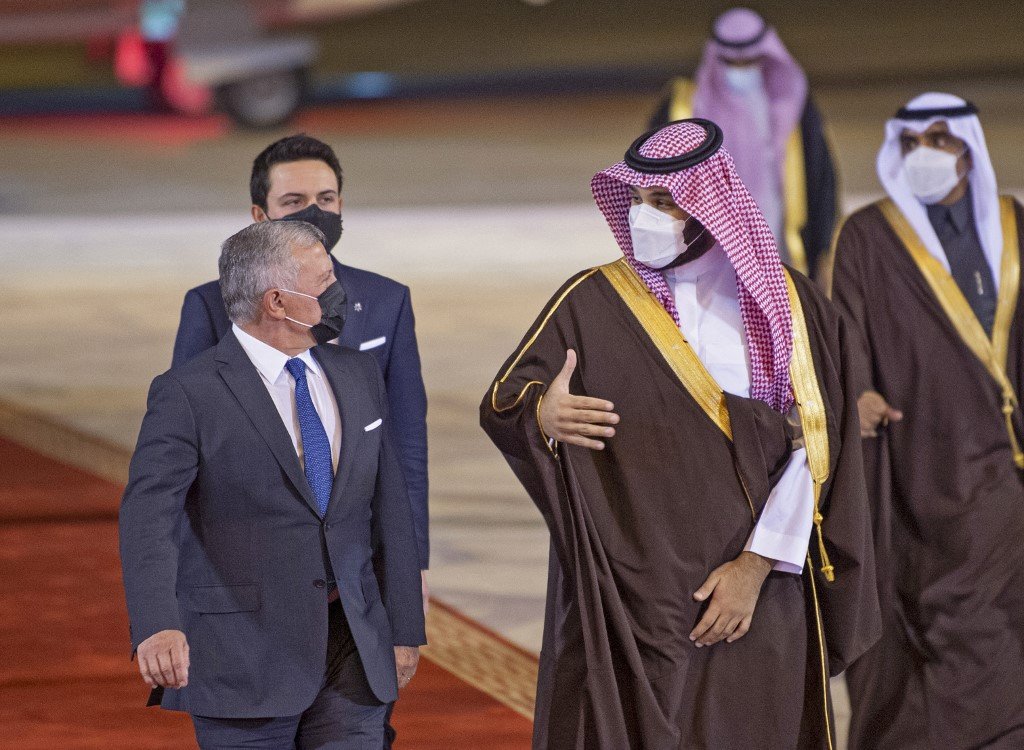
Saudi Crown Prince Mohammed bin Salman welcomes Jordan’s King Abdullah II to Riyadh on 8 March 2021 (Bandar al-Jaloud/Saudi Royal Palace/AFP)
Abdullah’s equivocation certainly was not enough for the intended centrepiece of the new era, Saudi Arabia’s normalisation of relations with Israel.
Here, Jordan would have been directly involved and King Abdullah was having none of it. Had he gone along with the Trump plan, his kingdom – a careful balance between Jordanians and Palestinians – would have been in a state of insurrection.
In addition, Abdullah could not escape the fact that he was a Hashemite, whose legitimacy stems in part from Jordan’s role as custodian of Al-Aqsa Mosque and the holy sites in Jerusalem. This, too, was being threatened by the Al Sauds.
The importance of Aqaba
But the plan itself was regarded by both bin Salman and Netanyahu as too big to stop. I personalise this, because in both Saudi Arabia and Israel, there are experienced foreign policy and intelligence hands who appreciate how quickly this plan would have destabilised Jordan and Israel’s vulnerable eastern border.
The plan has been years in the preparation and the subject of clandestine meetings between the Saudi prince and the Israeli leader. At the centre of it lies Jordan’s sole access to the Red Sea, the strategic port of Aqaba.
The two cities of Aqaba and Ma’an were part of the kingdom of Hejaz from 1916 to 1925. In May 1925, Ibn Saud surrendered Aqaba and Ma’an and they became part of the British Emirate of Transjordan.
The price for turning on the tap of Saudi finance was too high for Abdullah to pay. It was total subservience to Riyadh
It would be another 40 years before the two independent countries would agree on a Jordan-Saudi border. Jordan got 19 kilometres of coastline on the Gulf of Aqaba and 6,000 square kilometres inland, while Saudi Arabia got 7,000 square kilometres of land.
For the new kid on the block, bin Salman, a prince who was always sensitive about his legitimacy, reclaiming Saudi influence over Aqaba in a big trade deal with Israel would be a big part of his claim to restoring Saudi dominance over its hinterland.
And the trade with Israel would be big. Bin Salman is spending $500bn constructing the city of Neom, which is eventually supposed to straddle Saudi Arabia, Jordan and Egypt. Sitting at the mouth of the Gulf of Aqaba, the Jordanian port would be firmly in Saudi sights.
This is where Bassem Awadallah, the former chief of Jordan’s royal court, comes in. Two years before he definitively broke with King Abdullah, and while he was still Jordan’s envoy to Riyadh, Awadallah negotiated the launch of something called the Saudi-Jordanian Coordination Council, a vehicle that Jordanian officials at the time said would “unblock billions of dollars” for the cash-starved Hashemite kingdom.
A giant Jordanian flag is raised during a celebration in the port of Aqaba in 2016 (AFP)
Awadallah promised that the council would invest billions of Saudi dollars in Jordan’s leading economic sectors, focusing on the Aqaba Special Economic Zone.
The money, of course, never materialised. Saudi support for the kingdom diminished to a trickle, and according to an informed source, Muasher, Saudi funds stopped almost completely after 2014.Jordan: Why King Abdullah’s troubles are not over Read More »
The price for turning on the tap of Saudi finance was too high for Abdullah to pay. It was total subservience to Riyadh. Under this plan, Jordan would have become a satellite of Riyadh, much as Bahrain has become.
Netanyahu had his own sub-agenda in the huge trade that would flow from Neom once Saudi Arabia had formally recognised Israel.
A confirmed enemy of the Oslo plan to set up a Palestinian state in the West Bank and Gaza, Netanyahu and the Israeli right have always eyed annexation of Area C and the Jordan Valley, which comprises 60 percent of the West Bank. Under this new Nakba, the Palestinians living there, denied Israeli citizenship, would be slowly forced to move to Jordan. This could only happen under a Saudi-oriented plan, in which Jordanian workers could travel freely and work in Saudi Arabia. As it is, remittances from the Jordanian workforce in Saudi Arabia are an economic lifeblood to the bankrupt kingdom.
The money pouring into Jordan, accompanied by a mobile workforce of Jordanians and stateless Palestinians, would finally put to bed grandiose visions of a Palestinian state, and with it the two-state solution. On this, Netanyahu and bin Salman are as one: treat them as a mobile workforce, not citizens of a future state.
Hussein’s favoured son
That Prince Hamzah should be seen as the means by which Jordan is enlisted to this plan represents the final irony of this bizarre tale.
If the Hashemite blood runs deep in any veins, it is surely in his. He was King Hussein’s favoured son. In a letter sent to his brother Prince Hassan in 1999, King Hussein wrote: “Hamzeh, may God give him long life, has been envied since childhood because he was close to me, and because he wanted to know all matters large and small, and all details of the history of his family. He wanted to know about the struggle of his brothers and of his countrymen. I have been touched by his devotion to his country and by his integrity and magnanimity as he stayed beside me, not moving unless I forced him from time to time to carry out some duty on occasions that did not exceed the fingers on one hand.”
Abdullah broke the agreement he made with his father on his death bed when he replaced his half-brother with his son, Hussein, as crown prince in 2004.
The new foreign policy establishment in Washington should wean itself off the notion that US allies are its friends
But if Hashemite pride in and knowledge of Jordan’s history runs deep in Hamzah, he of all princes would have soon realised the cost to Jordan of accepting bin Salman’s billions and Netanyahu’s tacit encouragement, just as his father did.
Hamzah’s friends ardently dispute they are part of this plot and downplay connections with Awadallah. Hamzah only owns up to one thing: that he is immensely concerned at how low Jordan has fallen under years of misrule. In this, Hamzah is 100 percent right.
It is clear what has to happen now. King Abdullah should finally see that he must completely overhaul the Jordanian political system, by calling for free and fair elections and abiding by their result. Only that will unite the country around him.
This is what King Hussein did when he faced challenge and revolt by Jordanian tribes in the south of the kingdom; in 1989, Hussein overhauled the political system and held the freest elections in the history of the kingdom.
The government that emerged from this process led the country safely out of one of the most difficult moments for Jordan: Saddam Hussein’s invasion of Kuwait and the subsequent Gulf War.
The real villains
Biden, meanwhile, should realise that letting bin Salman get away with the murder of Saudi journalist Jamal Khashoggi has a cost.
Bin Salman did not learn anything from the episode and carried on in exactly the same way, reckless and swift, against an Arab neighbour and ally, with potentially disastrous consequences.
The new foreign policy establishment in Washington should wean itself off the notion that US allies are its friends. It should learn once and for all that the active destabilisers of the Middle East are not the cartoon villains of Iran and Turkey.
Rather, they are the closest US allies, where US forces and military technology are either based, or as in the case of Israel, inextricably intertwined: Saudi Arabia, the UAE and Israel.
Jordan, the classic buffer state, is a case in point.
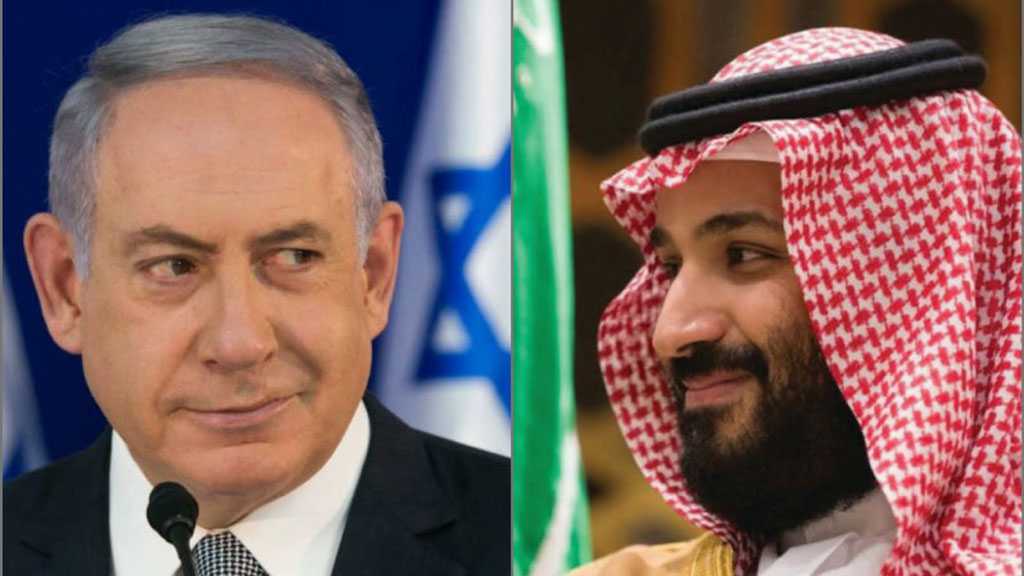
The “Israeli” entity’s Prime Minister Benjamin Netanyahu and Mossad Cheif Yossi Cohen reportedly took a private flight Sunday to Saudi Arabia, where they met with Crown Prince Mohamed Bin Salman [MBS], according to “Israeli” sources.
US Secretary of State Mike Pompeo also reportedly attended the meeting.
Netanyahu’s office had no immediate comment on the report.
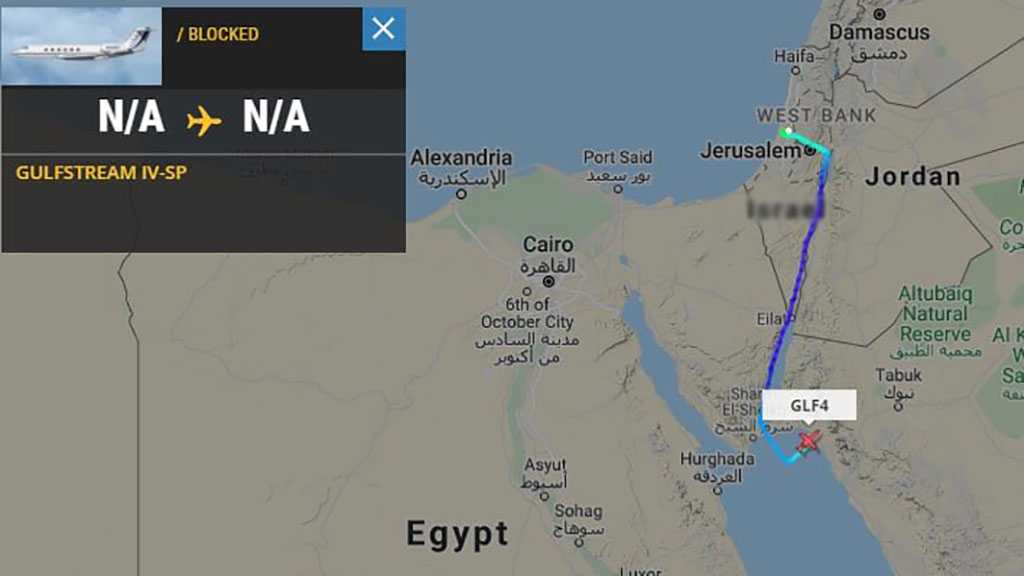
According to the a flight tracker website, a Gulfstream IV jet, which Netanyahu used several times on flights to Moscow, took off from the entity’s Ben Gurion Airport yesterday [Sunday] and landed in NEOM megacity in the Tabuk Province of northwestern Saudi Arabia.
The flight tracking data indicated that the plane took off from Tel Aviv at 5 p.m. local time on Sunday and took off back to the “Israeli” entity in roughly five hours.
At a press conference at the White House last August, US President Donald Trump said that he expects Saudi Arabia to join other Gulf states like the United Arab Emirates [UAE] in normalizing relations with the “Israeli” entity.
In yet another futile joint attempt to hurdle the growing Iranian might in defense and science, ‘Israeli’ and Saudi efforts met once again, this time to fight the Iran nuclear deal, officially known as the Joint Comprehensive Plan of Action [JCPOA].
With rumors that the upcoming US administration of President-elect Joe Biden will rejoin the Iran nuclear deal that was signed in 2015 with the P5+1 world powers, Zionist Prime Minister Benjamin Netanyahu warned that “There must be no return to the previous nuclear agreement.”
Claiming that there is a “military” aspect to Tehran’s nuclear energy program, Netanyahu added: “We must stick to an uncompromising policy to ensure that Iran does not develop nuclear weapons.”
Hebrew media outlets, meanwhile, said Netanyahu’s remarks were clearly addressed at Biden, who has signaled to return to the nuclear accord.
Many inside the Zionist occupation entity believe Netanyahu’s policy of playing hardball against Iran is a tactic to deflect attention from his current political problems as he is facing probe over several corruption cases and frequent protests which have drawn people in tens of thousands taking to the streets to also denounce his mishandling of the coronavirus pandemic.
Meanwhile, Saudi Arabia’s ambassador to the United Nations Abdallah Al-Mouallimi said on Sunday that the incoming US administration is not “unexperienced enough” to return to the JCPOA
He then called for negotiations for a new deal with the Islamic Republic involving his country.
Al-Mouallimi dismissed the idea that the United States would re-enter the nuclear deal with Iran under Biden’s administration.
He said nobody would be “naive enough” to go back to a deal that has “proven its failure to the entire world.”
Speaking during an appearance on Fox News’ ‘America’s News HQ’, al-Mouallimi said he did not believe Biden’s administration would pivot from the Gulf states back to Iran and the nuclear deal.
“No, I think that the Iran nuclear deal has proven its failure to the entire world. And I don’t think that anybody is going to be naive enough to go back to the same deal,” he claimed.
“If there is a new deal in which Saudi Arabia is involved in the discussion and which covers the shortcomings of the previous deal … then we will be all for it.”
Relatively, Iran’s nuclear program has been subject to the most intensive inspections ever in the world, and the International Atomic Energy Agency [IAEA] has repeatedly verified the peaceful nature of the activities.
Meanwhile, the Islamic Republic has clearly distanced itself from pursuing non-conventional weapons, citing religious and humanitarian beliefs. According to a fatwa issued by Leader of the Islamic Revolution His Eminence Imam Sayyed Ali Khamenei, acquisition of nuclear weapons is haram or forbidden in Islam.
There is no need for much effort to deduce the Saudi position regarding the move of its Emirati ally to publicize its relations with ‘Israel’. What the officials do not say publicly is proclaimed by the court media and writers in day and night, to the extent that some of them refused to grant the Palestinians “generosity” without return. Instead, the recompense was “blackmailing” practiced – for 70 years – in the Gulf “in the name of the sanctity of the cause”, according to articles of semi-unified narratives. It is clear now that the temporary royal silence and Riyadh’s reluctance to welcome – unlike Manama and Muscat – is the result of the kingdom not being ready to announce a full normalization with ‘Israel’. Therefore, it is hiding behind its allies [now the Emirates and then Bahrain and later Oman], waiting for a “suitable” day in which its crown prince, Mohammad bin Salman, can proceed with the alliance, to consolidate the covenant of his ancestors and their promise.
The way the UAE has created “will form an Arab trend that exceeds all the failed obstacles that prevailed for seventy years.” This will undoubtedly contribute to strengthening the Saudi-‘Israeli’ rapprochement. This is a trend that was reinforced in recent years, under the alliance of the “two Mohammads” [Bin Zayed and Bin Salman]. The two pillars of common hostility toward Iran and the attempts to attract foreign investment to finance the economic transformation plan, Bin Salman’s “2030 Vision”, will unequivocally push the kingdom into an apparent rapprochement with ‘Israel’. Founding the $500 billion-city, “NEOM” – the backbone of this faltering “vision” – requires “peace and coordination with ‘Israel’, especially if the city will have the opportunity to become a tourist attraction,” according to researcher Mohammad Yaghi at the German Konrad Adenauer Foundation.
The intersections are many, as well as the “interests” that unite the undeclared alliance, in addition to the American pressure that is evident through the Gulf-‘Israeli’ “reconciliation” mediator, Jared Kushner, to compel the kingdom to publicize its “inevitable” relations with ‘Israel’. Kushner said a few days ago “the course of a warship cannot be changed overnight.” He reminded Riyadh yesterday that the normalization of its relations with Tel Aviv would be in the interest of the kingdom’s economy and defense. It would also contribute to limiting Iran’s power in the region. As for ‘Israel’, the “peace agreement” between it and the Emirates represents “the most important cornerstone on the road to achieving the central goal of normalizing relations with Saudi Arabia,” the expression belongs to an ‘Israeli’ political official who spoke to Yedioth Ahronoth.
In exchange for Riyadh’s official silence and Washington’s public calls, the Saudi media adhered, as usual, to a unified narrative based on marketing the idea that the kingdom views the normalization of relations between Abu Dhabi and Tel Aviv as a sovereign Emirati affair, which would “yield good results for the Palestinian cause,” by “suspending the annexation process indefinitely,” despite all that has been said and spoken by ‘Israelis’ about baseless propaganda that the UAE marketed to justify its move. According to what has been written, the declaration “does not involve any interference in the Palestinian affair. It rather sets red lines for any policy that ‘Israel’ might pursue, which involves oppressing the rights of the Palestinian people, excluding the phantom of annexing the Palestinian lands, and the consolidating the two-state solution.”
The justification of the Emirati moves in terms of “realism” as “constituting an important breakthrough in the peace process … after it suffered from a long stalemate without any progress or success”, had a significant share. In addition to that, the call to “overcome the deadly division based on returning to calling for the Arab Peace Initiative as a basis for negotiation”.
Riyadh considers, through its media, that “the policy of estrangement and boycott has not achieved neither the interest of the Palestinians nor the Arabs.” Abu Dhabi chose “another communication and recognition-based approach to address the outstanding problems in a different climate,” because “the just Palestinian cause has remained for more than seventy years without a political solution that satisfies the Palestinians who were insisting on big things, betting on the power of righteousness and forgetting the right to power.” They depend entirely on “aid from the Arab countries, especially the rich Arab Gulf states, for their livelihoods, lives, jobs, authority, embassies, and all their life details.” They speak of “unprecedented emotional and ideological blackmail because of the Palestine issue,” although they are “like all the causes of liberation that the occupied peoples suffered to obtain their liberation from the colonialists, the Palestinians are not better than the Vietnamese, the Algerians, or the rest of nations.” They received peerless indulgence … while all historical documents confirm that they were the ones who sold their lands, not alone, but in villages and sub-districts until they were transformed into Jewish settlements.” Therefore, “there is no real solution of the Palestinian issue except for Palestinians to accept their situation and build a new identity of their own choice… and assuming responsibility is the right way.”
The normalization of relations between the UAE and ‘Israel’ will encourage all the other Gulf states to follow their counterparts and reveal their secret ties with ‘Israel’ not to let Abu Dhabi enjoying alone the combination of its capital and advanced ‘Israeli’ technology in all fields, to become, along with Tel Aviv, the most powerful and wealthy in the Middle East. This is according to Thomas Friedman in “The New York Times”, who in his article talks about another, a stronger and more psychological message addressed to Iran and its proxies, that “there are now two alliances in the region; The first is a UAE-led alliance of those who want the future to bury the past, and the second is an Iran-led alliance of those who wish that the past buries the future.”
ستسهم الخطوة الإماراتية في تعزيز التقارب السعودي – الإسرائيلي (أ ف ب )
لا تزال الرياض تبدي حذراً شديداً إزاء الترحيب العلني بإتمام الاتفاق الإماراتي – الإسرائيلي. حذرٌ، وإن كان لا ينسحب على ما يُنشر في الإعلام (وكلّه رسميّ)، يمكن ردّه إلى حسابات كثيرة لا تزال تتخطّى في أهميتها الراهنة رغبة المملكة في البوحليس ثمّة حاجة إلى كثيرِ جهدٍ لاستنباط موقف السعودية إزاء خطوة حليفتها الإماراتية إشهار علاقاتها مع إسرائيل. فما لا يقوله الرسميّون في العلن، يجاهر به إعلام البلاط وكتّابه صبحَ مساء، إلى درجةٍ أنّ منهم مَن أبى إلّا أن يمنِّن الفلسطينيين بـ»كرمٍ» مِن دون مقابل، بل إنّ المقابل كان «ابتزازاً» مورس ـــــ على مدى 70 عاماً ــــــ في حقّ دول الخليج «باسم قدسيّة القضيّة»، وفق ما تقرأه مقالات بسرديّات شبه موحّدة. لم يعد خافياً أنّ الصمت الملكي الموقّت وإحجام الرياض عن الترحيب ـــــ بخلاف المنامة ومسقط ـــــ مردّهما إلى عدم جاهزية المملكة بعد، للإعلان عن تطبيع كامل للعلاقات مع إسرائيل. لذا، فهيَ تتلطّى خلف حليفاتها (الآن الإمارات ومِن بعدها البحرين ولاحقاً عُمان)، في انتظار يومٍ «مناسب» يمكن فيه وليّ عهدها، محمد بن سلمان، أن يمضي في التحالف، ليرسِّخ عهد أجداده ووعدهم.
الطريق الذي شقّته الإمارات «سيشكّل تياراً عربياً يتجاوز كل الإعاقات الفاشلة التي سادت لسبعين عاماً»، وسيسهم، بلا شكّ، في تعزيز التقارب السعودي ــــــ الإسرائيلي. وذلك اتجّاهٌ تعزّز بالفعل في السنوات الأخيرة، في ظلّ تحالف «المحمّدَين» (ابن زايد وابن سلمان). ركيزتا العداء المشترك تجاه إيران، ومحاولات جذب استثمارات أجنبية لتمويل خطة التحوّل الاقتصادي، «رؤية 2030»، الخاصة بابن سلمان، ستدفعان ـــــ بلا لبس ـــــ المملكة إلى تقارب علنيّ مع إسرائيل. فإنشاء مدينة الـ500 مليار دولار، «نيوم» ـــــ العمود الفقري لهذه «الرؤية» المتعثّرة ـــــ يتطلّب «سلاماً وتنسيقاً مع إسرائيل، خصوصاً إذا كانت المدينة ستُتاح لها فرصة أن تصبح منطقة جذب سياحي»، وفق الباحث في مؤسّسة «كونراد أديناور» الألمانيّة، محمد ياغي.
التقاطعات كثيرة، وكذا «المصالح» التي تجمع الحلف غير المُعلن، مضافاً إليها ضغوط أميركيّة تتبدّى عبر وكيل «المصالحة» الخليجية ــــــ الإسرائيلية، جاريد كوشنر، لحمل المملكة على إشهار علاقاتها «الحتميّة» بإسرائيل. ورغم أنّه «لا يمكن تغيير مسار سفينة حربيّة بين عشيّة وضحاها»، على حدّ تعبير كوشنر قبل أيام، فهو عاد وذكّر الرياض، يوم أمس، بأنّ مِن شأن تطبيع علاقاتها مع تل أبيب أن يصبّ في مصلحة اقتصاد ودفاع المملكة، إلى جانب أنه سيسهم في الحدّ من قوّة إيران في المنطقة. بالنسبة إلى إسرائيل، يمثّل «اتفاق السلام» بينها وبين الإمارات «الحجر الأساس الأهمّ في الطريق إلى تحقيق الهدف المركزيّ المتمثّل في تطبيع العلاقات مع السعودية»، والتعبير لمسؤول سياسي إسرائيلي تحدّث إلى «يديعوت أحرونوت».
في مقابل صمت الرياض الرسمي ودعوات واشنطن العلنيّة، التزم الإعلام السعودي، على جري عادته، سرديّة موحّدة، تقوم على تسويق فكرةٍ مفادها أنّ المملكة تنظر إلى تطبيع العلاقات بين أبو ظبي وتل أبيب باعتباره شأناً سيادياً إماراتياً، من شأنه أن «يسفر عن نتائج جيدة بالنسبة إلى القضية الفلسطينية»، عبر «تعليق عمليّة الضمّ إلى أجل غير مسمّى»، رغم كلّ ما حُكي ويحكى إسرائيلياً عن دعاية لا أساس لها سوّقتها الإمارات لتبرير خطوتها. بحسب ما كُتب، فإنّ الإعلان «لا ينطوي على أيّ تدخّل في الشأن الفلسطيني، بل (هو) حدّد خطوطاً حمراً لأي سياسة قد تنتهجها إسرائيل تنطوي على هضم حقوق الشعب الفلسطيني، وأبعد شبح ضم الأراضي الفلسطينية، وعزّز الحلّ عبر الدولتين».
ذكّر كوشنر الرياض بأنّ مِن شأن تطبيع علاقاتها مع تل أبيب أن يصبّ في مصلحة اقتصادها
تبرير الخطوة الإماراتية من باب «الواقعية» بوصفها «تشكل اختراقاً مهمّاً في عملية السلام… بعدما عانت من جمودٍ طويلٍ من دون أي تقدمٍ أو نجاحٍ»، كان له حصة وازنة، فضلاً عن الدعوة إلى «تجاوز الانقسام القاتل على قاعدة العودة إلى المطالبة بمبادرة السلام العربية كأساس للتفاوض». تعتبر الرياض، عبر إعلامها، أنّ «سياسة القطيعة والمقاطعة لم تحقّق لا مصلحة الفلسطينيين ولا مصلحة العرب»؛ من هنا، اختارت أبو ظبي «مقاربة أخرى تقوم على الاتصال والاعتراف لطرح المشكلات العالقة في مناخ مختلف»، ذلك أنّ «القضية الفلسطينية العادلة ظلّت لأكثر من سبعين عاماً من دون حلٍّ سياسي مُرضٍ للفلسطينيين الذين كانوا يصرّون على أشياء كبيرة، ويراهنون على قوة الحق ويتناسون حق القوة»، ويعتمدون «بالكامل على المساعدات من الدول العربية، وبخاصة دول الخليج العربي الغنية، في معاشهم وحياتهم ووظائفهم وسلطتهم وسفاراتهم، وفي كل تفاصيل حياتهم». إلى جانب كلّ ذلك، يتحدّث هؤلاء عن «ابتزاز عاطفي وأيدلوجي غير مسبوق (مورس) بسبب قضية فلسطين»، رغم أنّها «مثل كل قضايا التحرير التي كابدت الشعوب المحتلة لنيل تحررها من المستعمر، فلا الفلسطينيون أفضل من الفيتناميين ولا الجزائريين ولا بقية الأمم، ومع ذلك حظوا بدلال منقطع النظير… بينما كل الوثائق التاريخية تؤكّد أنهم هم من باعوا أراضيهم ليس بالمفرد بل بالقرى والنواحي حتى تحوّلت لمستوطنات يهودية». لذا، فـ»لا حلّ حقيقياً للقضية الفلسطينية إلا بمصارحة الفلسطينيين لأنفسهم وبناء هوية جديدة تقوم على أكتافهم لا أكتاف غيرهم… وتحمّل المسؤولية هي الطريق الصحيح». سيشجّع تطبيع العلاقات بين الإمارات وإسرائيل دول الخليج الأخرى جميعها على أن تحذو حذو نظيرتها، وتخرج بعلاقاتها السريّة مع إسرائيل إلى العلن، حتى لا تُترك أبو ظبي وحدها تتمتّع بالجمع بين رأسمالها والتكنولوجيا الإسرائيلية المتطوّرة في كلّ المجالات، وتصبح هي وتل أبيب الأكثر قوّة وثروة في الشرق الأوسط، بحسب توماس فريدمان في «نيويورك تايمز» الذي يتحدّث في مقالته عن رسالة أخرى أقوى وذات بعد نفسي، موجّهة إلى إيران ووكلائها، مفادها أن «هناك الآن تحالفين في المنطقة؛ الأول هو تحالف الراغبين في أن يدفن المستقبل الماضي بقيادة الإمارات، والثاني هو تحالف من يريدون للماضي أن يدفن المستقبل بقيادة إيران».
Missile finds patrons
-
“Iran War: Axios Reports US, Iran Agree to Ceasefire Within Ceasefire, Doha
Meeting on Strait of Hormuz as Iran Stands Up US on Technical Talks; Ship
Trans...
Hell Is Heaven For Jews
-
Hell Is Heaven For Jews June 23 2026 ___________________________________
More Vids! +BN Vids Archive! HERE! ___________________________________
Support The...
Is Rolex Quietly Retiring the GMT-Master II Pepsi?
-
Few Rolex rumors spread faster than whispers about the GMT-Master II
“Pepsi.” It happens almost every year. Someone claims production is ending,
Reddit lig...
Report on Beth Israel vigil 02-21-26
-
*Vigils continue, non-stop*
Just because we don’t get Vigil Reports out at the same rate as years'
past, we remind readers that we show up every Saturday ...
-
Hello all,
It is with great sadness that I share with you the passing of our beloved
sister, Mother, and Grandmother, the individual that you all knew ...
Best Horror Podcast
-
Best Horror Podcast Introduction: Horror podcasts […]
The post Best Horror Podcast appeared first on Copper Shock Horror Podcast.
Ikhras Endorses Muntadhar Al-Zaidi
-
“Oh parties of banditry and sectarianism and corruption, we have come and
our goal is to destroy you.” Ikhras formally endorses Muntadhar al-Zaidi,
Iraqi j...
Prince Charles: Foreign Jews behind bloodshed in ME
-
In May, 2017, British Crown Prince Charles declined an invitation from
Zionist entity’s president Reuven Rivlin‘s to attend the 100th anniversary
of the no...
Palestinian Women – One for All, All for One
-
Honouring All Palestinian Women by Honouring Three: Hanin Zoabi, Ahed
Tamimi, Samah Sabawi Vacy Vlazna “Palestinian women have always stood side
by side ...
US’s Saudi Oil Deal from Win-Win to Mega-Lose
-
By F. William Engdahl Who would’ve thought it would come to this? Certainly
not the Obama Administration, and their brilliant geo-political think-tank
neo-...
-
*Mordechai Vanunu wins human rights prize of Brazilian Press Association *
* http://www.alternativenews.org/english/index.php/features/updates/7038-mordechai...
Abdul Aziz Rantissi:
"My ultimate wish, my God, is to attain martyrdom,"...God granted him his wish on April 17, 2004, at the hands of Israeli assassins.