Showing posts with label US Election 2020. Show all posts

Tuesday, 30 November 2021

To see Putin and die

 November 29, 2021

by Rostislav Ischenko for Ukraina.ru
source: https://ukraina.ru/opinion/20211128/1032755065.html
Note: this machine translated text

Joseph Biden, the 46th president of the United States, has asked Russian President Vladimir Putin for a meeting for the second time in six months. This would not be surprising: in the end, international tensions have reached a limit, and not only the most alarmist of experts, but also the most cautious of politicians have already started talking about the high probability of war

In such circumstances, responsible leaders of great powers are simply obliged to meet and seek compromises.

But this is the same Biden, whose team cried all the tears over Russian interference in the American elections and twice tried to organize the impeachment of the 45th US President Donald Trump, accusing the latter of surrendering American interests to Russia and working for Putin. Meanwhile, Putin and Trump had only one full-format meeting (in Helsinki, July 16, 2018, a year and a half before the expiration of Trump’s powers), and the rest — about five short conversations “on the sidelines” of various summits.

Relations between Russia and the United States had sunk to the freezing point even before Trump. At the same time, the 45th American president, although he negotiated more harshly, was still much more constructive than the 46th. Trump was inclined to seek a compromise, despite all the contradictions, because only a mutually acceptable compromise can ensure a long and lasting peace.

Biden, in a typical American manner, is trying to deceive a partner in the negotiation process, seeking only a truce – a postponement of confrontation for some time, during which the United States will try to solve its problems in order to take up the old with renewed vigor later.

That is why Biden’s team is begging for meetings with Putin, as if their ancient boss is afraid to die without telling Vladimir Vladimirovich something important. Pay attention to the diplomatic activity of the American president who does not always adequately perceive reality during the first year of his term:

* spring – activation of the US-European Union, an attempt to force the EU to go to a sharp deterioration in relations with Russia and abandon the SP-2;
* summer – a sudden request for a meeting with Putin, insistence on its early organization, declared readiness to resolve the entire spectrum of controversial issues. In fact, absolutely empty and unacceptable hints for Russia about the readiness of the United States not to interfere if the Kremlin decides to restore its exclusive sphere of influence in the post-Soviet space by force, so that, as a reciprocal courtesy, Russia refuses an informal (but very problematic for the United States) alliance with China. The rest of the summer is devoted to spreading disinformation that Moscow is ready to negotiate with the United States at the expense of Beijing;
* autumn — the formation of an anti-Chinese alliance of US vassals in the Asia-Pacific region and part of the European powers, followed by a sharp and persistent desire to organize a personal meeting between Xi Jinping and Biden (the meeting took place, was in vain, after which the United States began spreading disinformation that Beijing is ready to negotiate with Washington at the expense of Moscow);
* winter — against the background of the sharp aggravation of the situation on the borders of Russia and Belarus that began in the autumn and an undisguised attempt to draw Russia into a war with the participation of Eastern European members of NATO and the EU, a new insistence on a personal meeting with Putin.

In my opinion, there is no need to have an outstanding intellect to see the “swing” on which the United States is trying to “rock” Russia and China in order to break their partnership (absolutely nullifying all attempts by the United States to regain the status of a global hegemon) and suppress Moscow and Beijing one by one and one by one. The United States offers everyone something unnecessary, but seriously binding their hands and requiring large resource costs, they try to link everyone with a regional war with their allies (who, however, are not in a hurry to drag chestnuts out of the fire for Washington), they inspire everyone that the partner has almost agreed to the American proposal and we must hurry to negotiate ourselves so as not to be made fools of.

The method is simple, has been used since ancient times and quite often led to success. The United States understands that neither Russia nor China want to win right now and annex the post-Soviet territories in Europe and Taiwan (respectively).

Moscow and Beijing would prefer to solve these problems peacefully and later. At this stage, the too clearly expressed intention to return the fallen imperial territories may not only limit the possibilities of cooperation between Russia and China to resist the military-political and financial-economic pressure of the United States, but also undermine the entire system of Eurasian unions built by them.

Therefore, the United States, in order to persuade Russia and China to make concessions in the negotiations, frighten both of them with an unnecessary regional war, while at the same time offering to negotiate and solve this problem. If someone gives up and starts at least discussing options, Washington will immediately provide a proof leak of information in order to persuade the second partner to make a concession, and then bargain with both from a favorable position to bring down the price.

Realizing all this, the Russian leadership is in no hurry to talk with Biden. Peskov, on behalf of the Kremlin, said that the exact date has not yet been determined. However, the Kremlin has agreed in principle to organize a videoconference before the end of the year. Why did they do that?

Every month (not to mention a year) without war, Russia and China strengthen and weaken the United States. If we hold out for two or three years, the war will become meaningless for the United States, because, by their own admission, after 2024 they do not see the possibility of defeating China militarily. Consequently, in two years, the opportunities for American blackmail will decrease sharply, and America’s allies, who are already unwilling to risk themselves because of the Washington games, will become even more thoughtful, it will be even more difficult to persuade them to demonstrative aggressive actions against Moscow and Beijing. A certain US deadline is approaching, we need to act already. Under these conditions, Washington, having lost hope of achieving its goal by peace, can really bet on provocation of war.

Any negotiations are a way to delay time. While they are preparing and while they are going, it is unprofitable for the United States to be unconstructive, which means they will try to keep their allies on a short leash. But vassal states are not trained dogs that can be set on an object or calmed down in one second, rocking the situation takes time (albeit a little). The solution suggests itself: as long as possible to delay the time in determining the date of negotiations, postponing them for later. As soon as it becomes impossible to pull further – to hold negotiations and try, without giving a single opportunity to interpret their outcome as a willingness to take seriously American proposals for the surrender of an ally, to involve the United States in the preparation of the next meeting by creating permanent expert groups in the areas.

Any diplomatic department is a complex bureaucratic machine that is extremely difficult to force to move simultaneously in two directions. If you give the task to begin diplomatic preparations for war, this apparatus will move in one direction, if you set the task of finding a compromise, then in another. At the same time, it will have a serious informational impact on both the international and domestic agenda. That is, even meaningless, but regular meetings of experts reduce (though not completely remove) the risk of fatal confrontation.

Russia’s actions indicate that the Kremlin clearly sees the threat and has chosen the right tactics. The agreement on the creation of expert groups was reached during the first meeting with Biden, with the organization of which they stretched out as much as they could. However, America countered this agreement by saying that the expert groups did not work. So, now Russian diplomats will point this out and demand more constructive.

The current meeting is also being delayed as much as they can, having already postponed it until the end of December. If it works out, then under the pretext of New Year’s holidays they will postpone it until the middle-end of January (however, this is unlikely, the United States is in a hurry). The current meeting will be held online: the coronavirus. Although he does not interfere with Putin and Biden’s meetings with other politicians, but in this case only online. And not because I don’t want to waste time on flights, knowing in advance that the negotiations will be in vain. The online mode does not allow the organization of fake leaks about the content of negotiations. This is not a face-to-face conversation (in the presence of only unknown and controlled translators, in an office protected from wiretapping) – everything is recorded, and by both sides.

Thus, Russia is trying to win one and a half to two months out of the 48 required. Will it be possible to win the world completely?

This question has no definite answer. On the one hand, time is running out, and with the approach of 2024, the United States has nothing to lose, and in the vassal countries designated by them for slaughter, there are their own war parties that (for personal gain) are ready to start even a losing war that destroys their states. On the other hand, the current authorities, who are now in charge of American consumables, are doing everything possible to get rid of the honorable mission of pointlessly dying for the interests of the United States. How strong will they have enough strength to continue maneuvering on the verge of a foul? How ready are Americans to increase pressure on the dependent elites of limitrophs? Where is the weak link ready to break: in Europe or in Asia and who is it (Ukraine, Taiwan, someone else)? We can only assume with more or less certainty.

Often the expected danger comes at all from where it is not expected or when they stopped waiting and relaxed.


River to Sea Uprooted Palestinian   
The views expressed in this article are the sole responsibility of the author and do not necessarily reflect those of the Blog!

Saturday, 12 June 2021

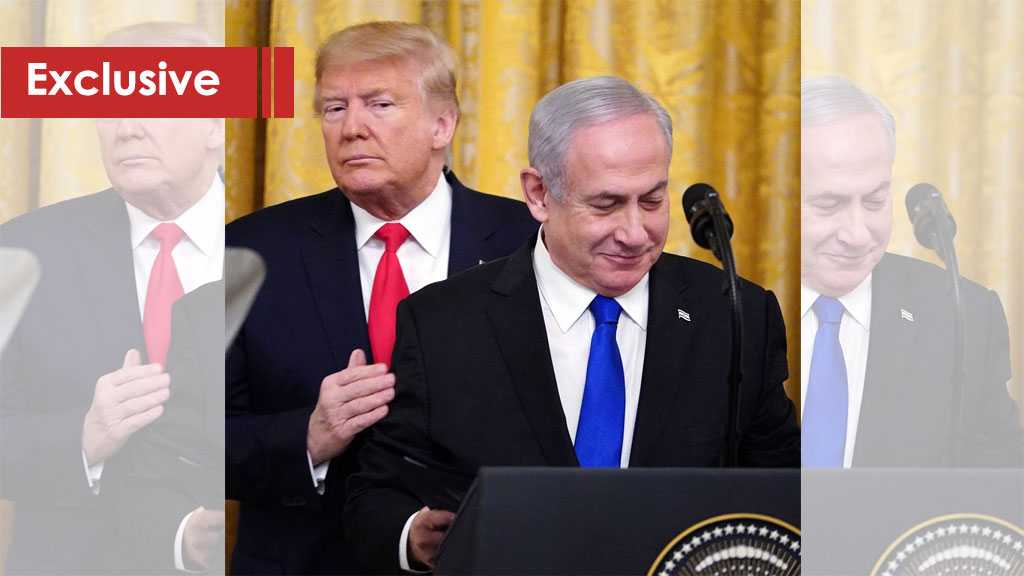
Netanyahu Follows Trump’s Footsteps: Political Downfall, Internal Crisis, and Attempt to Bridge the Gap

Netanyahu Follows Trump’s Footsteps: Political Downfall, Internal Crisis, and Attempt to Bridge the Gap

By Ali Abadi

The recent developments in the Zionist entity reopen the discussion regarding the extent to which this entity is influenced by the US policy as well as the changes inside the United States.

Since Trump’s failure in the US Presidential Elections, the countdown to Benjamin Netanyahu’s downfall has started -who represents the ‘Israeli’ version of Trump’s personality- even though the former was able to reproduce his leadership via three consecutive elections, and prepared to a fourth round to fortify his position against probes in cases of corruption, and to fight the possibility of moving him away from the political scene through a rival party coalition. However, Netanyahu’s ploys didn’t survive in front of the results of the recent war with Gaza, which turned the political atmosphere inside the occupation entity to the extent that Netanyahu’s government was found responsible or losing the deterrence with Gaza, not to mention his weakness to handle the resistance and its growing might.

Herein, we should notice the relative comparison between the American and the ‘Israeli’ arenas:

On the one hand, the extravagance of America’s right wing led to dangerous division that caused an intense desire among all of Trump’s opponents [including some of the Republican party members] to get rid of him via ballot boxes, so they voted majorly against the far-right policies [represented by Trump] more than to support his rival Biden and his electoral program. And in the ‘Israeli’ arena, the right policies led to attractions from within the Zionist society, not between the left and the right, but within the right itself. A dominant agreement emerged that Netanyahu is sticking to power at any price, even if it led to a ‘civil war’, and that he is using Zionist religious parties that exchange with him the electoral services and well as the governmental benefits.

On the other hand, it happened previously that the personalities of Trump and Netanyahu have been linked to each other, in the course of unprecedented similarity in political tendencies of both sides regarding several issues. Trump’s failure in the US has motivated many ‘Israeli’ politicians to think about a way to get rid of his closest ally, Netanyahu. However, they didn’t possess the required energy to unite. Then came the recent confrontation with the Palestinians to uncover the weak structure of the entity as well as the policies of Netanyahu’s government. The decision was among several political parties to scapegoat him based on the rule of preserving the rightist policies that are threatened with the strong Palestinian uprising on the one hand, and the harmony with the American policies as much as possible on the other hand. Hence, the Zionist right settlement scheme would be saved, while Netanyahu’s attempts to shake the alliance with the US due to his objection of its return to the nuclear deal with Iran would fail.

Separation

Both American and ‘Israeli’ societies suffer from not yet hidden political, ideological, and ethnic divisions. Both societies need to absorb the tension from time to time via changing the top of the pyramid. This is one issue. Another remarkable one is that ‘Israel’ didn’t succeed for long in staying away from the requirements of the American interests in the region. And without harboring hopes on a major separation between the two sides, we witness a sort of coldness in relations due to three main points over the past three decades.

First: With launching the Madrid Conference for settlement in the region in the beginning of the 1990s after the US-led war in Kuwait, when Isaac Shamir [Likud] government objected to the principle of establishing an independent Palestinian state, but the Zionist entity’s need for the US financial support to contain the Jewish migration from the Soviet Union and other places pushed ‘Israel’ to reduce its objections and conditions. Washington was able, through guaranteed loans worth billions of dollars, to tame the ‘Israeli’ policy in favor of its wider interests. Then, Shamir was displaced from the ‘Israeli’ scene, and was succeeded by Isaac Rabin [Labor Party] to lead the Oslo track which happened to become later the Palestinian Authority in Gaza and Ariha. However, after the assassination of Rabin in 1995, the abilities of the most harmonized Zionist parties with the US policy declined on the level of their potential to attract, and the base of the far-right parties, which reject the issue of ‘Two-state-solution’ or freezing the settlement activity grew, especially in the aftermaths of the major migration from the previously-known Soviet Union and other places. This led to a change inside the Zionist society, in addition to the structure of its successive governments.

Second: Netanyahu’s impediment of Barack Obama’s attempts to revive negotiations with the Palestinian Authority based on freezing the settlement activity in the West Bank, and then the US signing of a nuclear deal with Iran in 2015. Netanyahu objected to it publicly and inside the US congress in a famous speech. Meanwhile, the dispersion within Netanyahu’s rival ‘Israeli’ parties didn’t allow the formation of a change that suits the US regional policy.  Trump came to power in 2016 to revive Netanyahu’s hopes about change that he didn’t dream about from the part of the American orientation on other levels [such as moving the US embassy from Tel Aviv to al-Quds, recognizing the ‘Israeli’ sovereignty in the Golan, supporting the settlement activity in the West Bank, cutting funds of the Palestinian refugees’ UNRWA agency, shutting the office of the Palestine Liberation Organization in Washington, and encouraging the ‘Israeli’ normalization with Arab states regardless to the Palestinians.] A parallel US shift took place when Trump left the nuclear deal with Iran.

Third: Biden’s rising to power in Washington, which modified the ‘Israeli’ expectations. This is not limited to some differences regarding the traditional support of ‘Israel’ between America’s Republican and Democratic parties. The truth is that a change started to be witnessed in the public American mood in which a new political generation in the US, and inside the Democratic party is more liberal than its predecessors and doesn’t grant ‘Israel’ an ultimate support. It also cannot digest the rightist ‘Israeli’ thinking to ban the establishment of a Palestinian state, and the Palestinian people’s right to live on their land within internationally recognized borders. The ‘Israeli’ narrative, which has dominated the minds of the US elite over several decades regarding the right of Jews alone to establish their national Jewish state, has turned less tempting to many Americans. Additionally, the pro-Palestinian activism on social media platforms managed to breach the pro-‘Israel’ traditional media, in which Facebook and Twitter’s restrictions couldn’t curb this activism that was crystal-clear during the latest round of ‘Israeli’ aggression. It also scored important attractions in English and other foreign language.

Moreover, the Biden administration prioritizing of returning to the nuclear deal with Iran formed a separation from Netanyahu government’s orientations. He has started hinting to moving without an agreement from Washington, a matter that is not only underestimated in the US, but also among ‘Israeli’ milieus that are worried about losing the strategic alliance with the US.

Back to the house of obedience

After this third stop, ‘Israel’ returns to the so-called American ‘house of obedience’ or to adapting with the major US interests. This return is based upon avoiding confrontation with the US policies and their regional requirements to deal with the nuclear Iran in particular, reducing tension and difference with the American administration when dealing with the flaming Palestinian issue nowadays. However, it is not necessarily at the expense of the rightist tendencies regarding the settlement scheme that is the core of the Zionist project. The official US interest intersected with the internal ‘Israeli’ parties’ interests to remove Netanyahu from the scene. The US administration will take advantage of this shift in an attempt to revive negotiations between the Palestinian Authority and the occupation’s government to delegitimize the Palestinian resistance and the Axis that supports it in the region. Washington is to offer significant motivations to the future Zionist right government, led by Naftali Bennett, to allow progress in negotiations. Hereby, new obstacles will emerge from the side of Netanyahu’s successors who publicly adopt a hardline track regarding the rights of the Palestinian people, especially regarding the evacuation of some occupied land, freezing settlement, or establishing the Palestinian state. This will later turn things to the previous empty circle on the level of negotiations.

It is worth noting that Biden’s administration is not totally free to dictate its policies on ‘Israel’, especially amid the contradictions within the US political environment and inside the democratic party itself. However, ‘Israel’s’ dire need to the US support is an existential need to bear the pressures and preserve the qualitative military superiority. This will push the next ‘Israeli’ government to reduce the public contact with the US to overcome the challenges posed in this phase.

Finally, it is important to examine the extent to which the future Zionist government would succeed in:

– Managing the internal chaos along with threats of physical killing among the right affiliates

– Managing the military confrontation with the Gaza Strip

– Managing the variations with the US administration regarding the Palestinian issue and the Iran nuclear deal

On the American level, it is important to note the US administration’s ability to:

– Pass the nuclear deal with Iran without shockwaves inside the US congress and the circles of the conservatives who are more sticking to the ‘Israeli’ interests

– Dealing with the critical Palestinian issue, militarily and politically, based on the results of the recent confrontation that raised the voice of the Palestinian resistance


River to Sea Uprooted Palestinian   
The views expressed in this article are the sole responsibility of the author and do not necessarily reflect those of the Blog!

Friday, 28 May 2021

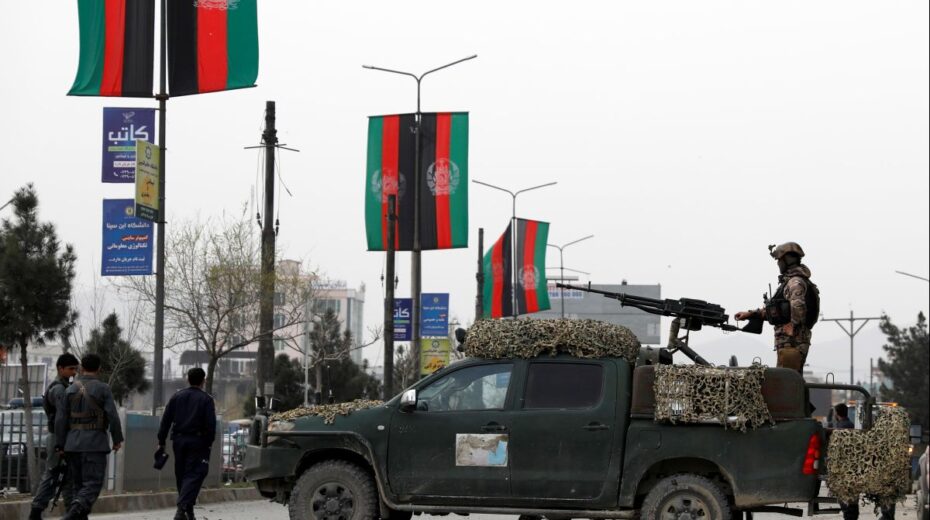
Good News and Bad News: Biden Punts on Russia and Takes Some Heat on Afghanistan

 See the source image

Executive Director of the Council for the National Interest.

Philip Giraldi

May 27, 2021

The Establishment Foreign Policy has long advocated a policy of staying in Afghanistan until a political reliable government is established there.

Possibly the best news to come out of the past week has been the announcement of a possibly Egyptian mediated cease fire between Israel and Gaza late last Thursday. The fighting killed 243 Palestinians, including 66 children, versus twelve Israelis including two children and also did major damage to schools, medical facilities and other infrastructure in Gaza. It is being widely presumed that Prime Minister Benjamin Netanyahu pulled the plug on the “Guardians of the Walls” offensive because of concerns that Israeli Army brutality was inflicting serious damage on the hitherto favorable perception of the Jewish state in the United States. As U.S. support of Israeli initiatives for both the money and political cover that Washington provides is essential to the Netanyahu long term plan to annex nearly all of the West Bank, it would have seemed prudent to take one’s foot off the pedal until the expected next round of fighting.

Though it has not been confirmed, it seems reasonable to assume that President Joe Biden might have offered a considerable sweetener to Netanyahu to nudge the Israeli leader towards the cease fire. It appears to have come in the form of an offer to help pay for and assist the reconstruction of Gaza with one apparent condition, that Hamas effectively completely disarm by getting rid of all its missiles. Presumably U.S. or United Nations inspectors would make sure the job were done right, would share what they learn about Gaza’s tunnel system with Israeli intelligence, and the IDF in turn would find it much easier going the next time it chooses to attack. As usual, the American taxpayer would be victimized to undo the damage in paying for a significant part of the multi-billion dollar reconstruction tab.

But in terms of benefiting actual American interests, there has also been the Biden Administration decision to lift the sanctions imposed by Donald Trump on the contractors who have been working on the Nord Stream 2 pipeline which will deliver Russian gas to Germany. The Trump Administration, driven by its gaggle of neocon advisers, had declared that the pipeline was a “national security threat” and initiated sanctions on all parties involved, including Russian Prime Minister Vladimir Putin, while also appointing a special envoy to put pressure on the German government to renege on the deal. The pipeline was and is good business for Moscow and also for Berlin since the Russian gas is cheaper than other available supplies. It will cost $11 billion to complete, is over 95% finished and will reportedly create at least 10,000 jobs.

It initially looked as if Biden would continue the Trump policy. As recently as mid-March Secretary of State Tony Blinken stated that it was a bad deal because “this pipeline is a Russian geopolitical project intended to divide Europe and weaken European energy security.” He said he would do “whatever he can to stop [its] completion” and also warned that companies working on the pipeline must cease work immediately or face more “harsh” U.S. sanctions. Most of the companies were and are Western European and nominally NATO allies of the U.S. and Nord Stream 2 and while it appeared likely that the project would be completed for good economic reasons, the German government was reportedly undecided, afraid to confront Biden.

Washington was angered, at least in part, because it wanted to sell more expensive American gas to the Germans. Biden surprisingly has decided to abandon the bad Trump policy, which, inter alia also has given fuel to European anti-U.S. sentiment while serving unnecessarily to increase tension with Russia. The move was welcomed both in Germany and in Russia. The German Foreign Minister noted that it was a sign that Washington is now willing to work with its “partners.” It is an all too rare “win” for American foreign policy.

Now for the bad news. President Joe Biden has recently received an unexpected gift in the form of a letter signed by 126 retired admirals and generals stating that he is not qualified to hold office because of his health and because the 2020 election process was flawed. It also raises a number of specific foreign and national security policy issues, including the threat from China, the border crisis and increased censorship. One might expect that the letter originated in a circle of disgruntled Trump supporters and could therefore be ignored, but many of signatories are not known to be Republican Party supporters. Given that, the agenda just might be more complicated and its timing suggests that it might be linked to the United States proceeding with its withdrawal from Afghanistan.

What might be referred to as the Establishment Foreign Policy as opposed to what sometimes goes on in the State Department and White House has long advocated a policy of staying in Afghanistan until the establishment of a stable and political reliable government in Kabul is completed. And to be sure there are many dissidents in Congress who see leaving Kabul as yet another avoidable defeat for the United States. Given all of that, several previous attempts by Donald Trump to withdraw the U.S. troops were successfully undermined by critics and eventually abandoned. Biden, however, appears to be sticking to his pledge to depart fully by September 11th and many tons of military equipment are currently being removed from the country.

This has produced multiple attacks on the intention to leave Afghanistan effectively in the hands of the Taliban. A humanitarian pitch has included stories on how women will suffer, being deprived of schooling and opportunity if and when the Taliban return to power. That claim is unfortunately true but the continued presence of a couple of thousand American soldiers at bases in a country as large and infrastructure deficient as Afghanistan will not reverse attitudes that are as much cultural and religious as political.

And the pressure on Biden to reverse the decision is growing. On May 25th, for example, the Center on National Security at Fordham Law in New York hosted a discussion panel looking into “Departure from Afghanistan: Envisioning a Responsible Withdrawal.” The panel’s conclusions were to say the least mixed and have already been used by critics of the Biden decision.

Pressure is also coming from Congress, even from lawmakers who would normally support the White House. “This has some eerie resemblances” [to Vietnam], Representative Gerald E. Connolly, a Virginia Democrat, said pointedly at a “heated” hearing last week at the House Foreign Affairs Committee. He recalled the unexpectedly rapid collapse of security in Saigon in 1975 as U.S. forces evacuated the last of the personnel from the American embassy, lifting employees from the roof of the building with helicopters. He added that “It seems the American game is to cut its losses and leave and hope for the best — not our problem. The problem is because of this engagement, just like Vietnam, we’re leaving behind hundreds of thousands of Afghans who relied on us, trusted us, for security.”

And if more resistance to the plan were needed, it came last week from George W. Bush, best noted for his disastrous invasions of both Afghanistan and Iraq. Bush had no end game to extricate the U.S. from either intervention and the results of the improvised policies that have continued now for nearly twenty years are clearly evident. Bush said in a Fox News interview “I’ve always warned that no U.S. presence in Afghanistan will create a vacuum, and into that vacuum is likely to come people who treat women as second class citizens… One of the great successes of the liberation of Afghanistan and the removal of al-Qaeda’s safe haven was that women and girls began to flourish in the country… We all benefit when women and girls are empowered to realize their full potential and become contributing members of society. And Laura and I will always stand behind them… I’m also deeply concerned about the sacrifices of our soldiers, and our intelligence community, will be forgotten…”

Bush also said that Iran is very dangerous for “world peace” because it is targeting Israel, revealing yet again that he, like the Bourbon kings of France, has not learned anything since leaving office. In any event, the comments by Bush, the pushback in Congress, the holding of academic conferences on leaving Afghanistan as well as the letter from retired senior military officers just might be part of the same plan to force Biden into extending the timetable or even revoking the orders for U.S. departure from Kabul. And it just might succeed. That would be very bad news indeed.

Also by this author


River to Sea Uprooted Palestinian   
The views expressed in this article are the sole responsibility of the author and do not necessarily reflect those of the Blog!

Saturday, 17 April 2021

Feds Finally Confirm That Trump Campaign Data Ended Up in Russian Intel Hands

By VT Editors -April 15, 2021

Daily Beast: The U.S. will escalate sanctions against the Russian government for hacking American government networks during the 2016 election, the Treasury Department said Thursday. But, in announcing the sanctions, the government went even further than Special Counsel Robert Mueller’s probe in connecting the dots between the Trump campaign and Russian intel agencies.

The statement outlined the pipeline as this: President Trump hired Paul Manafort to run his campaign, who then asked Rick Gates to come aboard. The pair then provided an old colleague, Konstantin Kilimnik, with internal campaign polling and strategy information. Kilimnik then handed it to Russian intelligence officials.

“Additionally, Kilimnik sought to promote the narrative that Ukraine, not Russia, had interfered in the 2016 U.S. presidential election,” the statement said.

It took a long time to connect the dots because Kilimnik was not interviewed by Mueller, and Manafort lied about the affair, The Washington Post reports. It’s still unclear whether Trump knew about the sharing of information, and what Russia did with the information.

https://www.thedailybeast.com/feds-finally-say-manafort-and-gates-gave-trump-campaign-info-to-konstantin-kilimnik-who-gave-to-russian-intel?ref=home

Trump Can Now Be Prosecuted As Government Confirms His Campaign Worked With Russia

For the first time, the US Treasury Department has confirmed that the Trump campaign shared strategy and polling data with Russia in 2016.

Via: The US Treasury Department:

Konstantin Kilimnik (Kilimnik) is a Russian and Ukrainian political consultant and known Russian Intelligence Services agent implementing influence operations on their behalf. During the 2016 U.S. presidential election campaign, Kilimnik provided the Russian Intelligence Services with sensitive information on polling and campaign strategy. Additionally, Kilimnik sought to promote the narrative that Ukraine, not Russia, had interfered in the 2016 U.S. presidential election.

In 2018, Kilimnik was indicted on charges of obstruction of justice and conspiracy to obstruct justice regarding unregistered lobbying work. Kilimnik has also sought to assist designated former President of Ukraine Viktor Yanukovych. At Yanukovych’s direction, Kilimnik sought to institute a plan that would return Yanukovych to power in Ukraine.

It is illegal for any person to solicit, accept, or receive anything of value from a foreign government in an election. Trump and his campaign broke many laws in 2016. A candidate that accepts anything worth more than $2,000 is committing a misdemeanor, and it is a felony to accept anything valued at more than $25,000.

The Russians spent hundreds of thousands of dollars on Facebook and Twitter ads to help Trump in 2016.

The missing piece to the Trump/Russia puzzle has always been how the Russians knew where to target their efforts to help Trump. The Russians knew which voters to target because Trump told them. The Trump campaign was a joint effort by Trump and Russia to cheat to win an election.

The truth is out, and nothing is stopping Trump from being prosecuted.

ABOUT VT EDITORSVT EditorsVeterans Today

VT Editors is a General Posting account managed by Jim W. Dean and Gordon Duff. All content herein is owned and copyrighted by Jim W. Dean and Gordon Duff

editors@veteranstoday.com


River to Sea Uprooted Palestinian   
The views expressed in this article are the sole responsibility of the author and do not necessarily reflect those of the Blog!

Executive Order on Blocking Property with Respect to Specified Harmful Foreign Activities of the Government of the Russian Federation


Executive Order on Blocking Property with Respect to Specified Harmful Foreign Activities of the Government of the Russian Federation

April 15, 2021

By the authority vested in me as President by the Constitution and the laws of the United States of America, including the International Emergency Economic Powers Act (50 U.S.C. 1701 et seq.) (IEEPA), the National Emergencies Act (50 U.S.C. 1601 et seq.) (NEA), section 212(f) of the Immigration and Nationality Act of 1952 (8 U.S.C. 1182(f)), and section 301 of title 3, United States Code,
I, JOSEPH R. BIDEN JR., President of the United States of America, find that specified harmful foreign activities of the Government of the Russian Federation — in particular, efforts to undermine the conduct of free and fair democratic elections and democratic institutions in the United States and its allies and partners; to engage in and facilitate malicious cyber-enabled activities against the United States and its allies and partners; to foster and use transnational corruption to influence foreign governments; to pursue extraterritorial activities targeting dissidents or journalists; to undermine security in countries and regions important to United States national security; and to violate well-established principles of international law, including respect for the territorial integrity of states — constitute an unusual and extraordinary threat to the national security, foreign policy, and economy of the United States.  I hereby declare a national emergency to deal with that threat.
Accordingly, I hereby order:
Section 1.  All property and interests in property that are in the United States, that hereafter come within the United States, or that are or hereafter come within the possession or control of any United States person of the following persons are blocked and may not be transferred, paid, exported, withdrawn, or otherwise dealt in:
(a)  any person determined by the Secretary of the Treasury, in consultation with the Secretary of State, and, with respect to subsection (a)(ii) of this section, in consultation with the Attorney General, or by the Secretary of State, in consultation with the Secretary of the Treasury, and, with respect to subsection (a)(ii) of this section, in consultation with the Attorney General:
(i)    to operate or have operated in the technology sector or the defense and related materiel sector of the Russian Federation economy, or any other sector of the Russian Federation economy as may be determined by the Secretary of the Treasury, in consultation with the Secretary of State;
(ii)   to be responsible for or complicit in, or to have directly or indirectly engaged or attempted to engage in, any of the following for or on behalf of, or for the benefit of, directly or indirectly, the Government of the Russian Federation:
(A)  malicious cyber-enabled activities;
(B)  interference in a United States or other foreign government election;
(C)  actions or policies that undermine democratic processes or institutions in the United States or abroad;
(D)  transnational corruption;
(E)  assassination, murder, or other unlawful killing of, or infliction of other bodily harm against, a United States person or a citizen or national of a United States ally or partner;
(F)  activities that undermine the peace, security, political stability, or territorial integrity of the United States, its allies, or its partners; or
(G)  deceptive or structured transactions or dealings to circumvent any United States sanctions, including through the use of digital currencies or assets or the use of physical assets;
(iii)  to be or have been a leader, official, senior executive officer, or member of the board of directors of:
(A)  the Government of the Russian Federation;
(B)  an entity that has, or whose members have, engaged in any activity described in subsection (a)(ii) of this section; or
(C)  an entity whose property and interests in property are blocked pursuant to this order;
(iv)   to be a political subdivision, agency, or instrumentality of the Government of the Russian Federation;
(v)    to be a spouse or adult child of any person whose property and interests in property are blocked pursuant to subsection (a)(ii) or (iii) of this section;
(vi)   to have materially assisted, sponsored, or provided financial, material, or technological support for, or goods or services to or in support of:
(A)  any activity described in subsection (a)(ii) of this section; or
(B)  any person whose property and interests in property are blocked pursuant to this order; or
(vii)  to be owned or controlled by, or to have acted or purported to act for or on behalf of, directly or indirectly, the Government of the Russian Federation or any person whose property and interests in property are blocked pursuant to this order.
(b)  any person determined by the Secretary of the Treasury, in consultation with the Secretary of State, to have materially assisted, sponsored, or provided financial, material, or technological support for, or goods or services to or in support of, a government whose property and interests in property are blocked pursuant to chapter V of title 31 of the Code of Federal Regulations or another Executive Order, and to be:
(i)    a citizen or national of the Russian Federation;
(ii)   an entity organized under the laws of the Russian Federation or any jurisdiction within the Russian Federation (including foreign branches); or
(iii)  a person ordinarily resident in the Russian Federation.
(c)  any person determined by the Secretary of State, in consultation with the Secretary of the Treasury, to be responsible for or complicit in, or to have directly or indirectly engaged in or attempted to engage in, cutting or disrupting gas or energy supplies to Europe, the Caucasus, or Asia, and to be:
(i)   an individual who is a citizen or national of the Russian Federation; or
(ii)  an entity organized under the laws of the Russian Federation or any jurisdiction within the Russian Federation (including foreign branches).
(d)  The prohibitions in subsections (a), (b), and (c) of this section apply except to the extent provided by statutes, or in regulations, orders, directives, or licenses that may be issued pursuant to this order, and notwithstanding any contract entered into or any license or permit granted before the date of this order.
Sec. 2.  The prohibitions in section 1 of this order include:
(a)  the making of any contribution or provision of funds, goods, or services by, to, or for the benefit of any person whose property and interests in property are blocked pursuant to this order; and
(b)  the receipt of any contribution or provision of funds, goods, or services from any such person.
Sec. 3.  (a)  The unrestricted immigrant and nonimmigrant entry into the United States of noncitizens determined to meet one or more of the criteria in section 1 of this order would be detrimental to the interests of the United States, and the entry of such persons into the United States, as immigrants or nonimmigrants, is hereby suspended, except when the Secretary of State or the Secretary of Homeland Security, as appropriate, determines that the person’s entry would not be contrary to the interests of the United States, including when the Secretary of State or the Secretary of Homeland Security, as appropriate, so determines, based on a recommendation of the Attorney General, that the person’s entry would further important United States law enforcement objectives.
(b)  The Secretary of State shall implement this authority as it applies to visas pursuant to such procedures as the Secretary of State, in consultation with the Secretary of Homeland Security, may establish.
(c)  The Secretary of Homeland Security shall implement this order as it applies to the entry of noncitizens pursuant to such procedures as the Secretary of Homeland Security, in consultation with the Secretary of State, may establish.
(d)  Such persons shall be treated by this section in the same manner as persons covered by section 1 of Proclamation 8693 of July 24, 2011 (Suspension of Entry of Aliens Subject to United Nations Security Council Travel Bans and International Emergency Economic Powers Act Sanctions).
Sec. 4.  (a)  Any transaction that evades or avoids, has the purpose of evading or avoiding, causes a violation of, or attempts to violate any of the prohibitions set forth in this order is prohibited.
(b)  Any conspiracy formed to violate any of the prohibitions set forth in this order is prohibited.
Sec. 5.  I hereby determine that the making of donations of the types of articles specified in section 203(b)(2) of IEEPA (50 U.S.C. 1702(b)(2)) by, to, or for the benefit of any person whose property and interests in property are blocked pursuant to this order would seriously impair my ability to deal with the national emergency declared in this order, and I hereby prohibit such donations as provided by section 1 of this order.
Sec. 6.  For the purposes of this order:
(a)  the term “entity” means a partnership, association, trust, joint venture, corporation, group, subgroup, or other organization;
(b)  the term “Government of the Russian Federation” means the Government of the Russian Federation, any political subdivision, agency, or instrumentality thereof, including the Central Bank of the Russian Federation, and any person owned, controlled, or directed by, or acting for or on behalf of, the Government of the Russian Federation;
(c)  the term “noncitizen” means any person who is not a citizen or noncitizen national of the United States;
(d)  the term “person” means an individual or entity; and
(e)  the term “United States person” means any United States citizen, lawful permanent resident, entity organized under the laws of the United States or any jurisdiction within the United States (including foreign branches), or any person in the United States.
Sec. 7.  For those persons whose property and interests in property are blocked pursuant to this order who might have a constitutional presence in the United States, I find that because of the ability to transfer funds or other assets instantaneously, prior notice to such persons of measures to be taken pursuant to this order would render those measures ineffectual.  I therefore determine that for these measures to be effective in addressing the national emergency declared in this order, there need be no prior notice of a listing or determination made pursuant to section 1 of this order.
Sec. 8.  The Secretary of the Treasury, in consultation with the Secretary of State, is hereby authorized to take such actions, including the promulgation of rules and regulations, and to employ all powers granted to the President by IEEPA, as may be necessary to carry out the purposes of this order.  The Secretary of the Treasury may, consistent with applicable law, redelegate any of these functions within the Department of the Treasury.  All departments and agencies of the United States shall take all appropriate measures within their authority to carry out the provisions of this order.
Sec. 9.  Nothing in this order shall prohibit transactions for the conduct of the official business of the Federal Government or the United Nations (including its specialized agencies, programs, funds, and related organizations) by employees, grantees, and contractors thereof.
Sec. 10.  The Secretary of the Treasury, in consultation with the Secretary of State, is hereby authorized to submit recurring and final reports to the Congress on the national emergency declared in this order, consistent with section 401(c) of the NEA (50 U.S.C. 1641(c)) and section 204(c) of IEEPA (50 U.S.C. 1703(c)).
Sec. 11.  (a)  Nothing in this order shall be construed to impair or otherwise affect:
(i)   the authority granted by law to an executive department or agency, or the head thereof; or
(ii)  the functions of the Director of the Office of Management and Budget relating to budgetary, administrative, or legislative proposals.
(b)  This order shall be implemented consistent with applicable law and subject to the availability of appropriations.
(c)  This order is not intended to, and does not, create any right or benefit, substantive or procedural, enforceable at law or in equity by any party against the United States, its departments, agencies, or entities, its officers, employees, or agents, or any other person.

JOSEPH R. BIDEN JR.

THE WHITE HOUSE,
April 15, 2021.


River to Sea Uprooted Palestinian   
The views expressed in this article are the sole responsibility of the author and do not necessarily reflect those of the Blog!

Saturday, 27 March 2021

US, Israel, EU election farces or ‘Allies of sovereignty’

 Friday, 26 March 2021 2:02 PM  [ Last Update: Friday, 26 March 2021 2:02 PM ]

US Rep. Ilhan Omar (D-MN) (L) talks with Speaker of the House Nancy Pelosi (D-CA) during a rally with fellow Democrats before voting on H.R. 1, or the People Act, on the East Steps of the US Capitol on March 08, 2019 in Washington, DC. (AFP photo)
US, Israel & EU election farces or the ‘Allies of Sovereignty’ – Iran, China & Russia?
(Ramin Mazaheri is the chief correspondent in Paris for Press TV and has lived in France since 2009. He has been a daily newspaper reporter in the US, and has reported from Iran, Cuba, Egypt, Tunisia, South Korea and elsewhere. He is the author of ‘Socialism’s Ignored Success: Iranian Islamic Socialism’ as well as ‘I’ll Ruin Everything You Are: Ending Western Propaganda on Red China’, which is also available in simplified and traditional Chinese.)

By Ramin Mazaheri and cross-posted with PressTV

Mazaheri is the chief correspondent in Paris for Press TV.

Too bad the elections for European Parliament aren’t this year – we could have enjoyed all three tones of the chord of “liberal (aristocratic) democracy”.

The United States, the European Union and Israel – the triumvirate which dominates half the world and thinks it has the moral and intellectual right to rule the other half – obviously have incredibly flawed, domestically-denigrated and politically feckless elections. As time goes on the world can only be increasingly attracted to innovative alternative political models because this trio is so endemically dysfunctional.

In Israel voters just chose between the war criminal Benjamin Netanyahu or those who claim to be the colonizers who are the “sane” alternative. This election sham will likely need to be repeated for the fifth time in two years, but only a few thick Westerners ever claimed Israel is a democracy, anyway.

Thirty years after the United States penned the structures of the European Union – in a rush of Cold War euphoria and arrogance – there may not be elections which are as meaningless and uninteresting to the actual voting public as those for EU Parliament.

The United States’ recent election was as bad as anyone could have expected, and Americans themselves expected the worst more often than anyone. So I don’t know why France-raised US Secretary of State Antony Blinken thought the last months and years of American carnage and discontent would go unnoticed abroad?

When Blinken assumed a Parisian pose of oblivious nonchalance at the first China-US summit and tried to shame China for not being Western enough, China was ready: his counterpart, Yang Jiechi, delivered an impromptu, blistering, 17-minute critique of America which was redolent of Mao’s era.

In short, Yang’s rebuttal contained well-known and totally accurate critiques of America’s capitalist-imperialist and liberal democratic structures. From “massacring the people of other countries” to the obvious “slaughtering” of African-Americans and beyond, Yang listed a poisonous cornucopia of the inevitable social evils which arise from such outdated social structures.

China’s standing up to the new administration in Washington – and at the very first opportunity – will mark a sea change in geopolitical affairs. China knew it was going to be targeted – as a welcoming gift Biden placed sanctions on two dozen Chinese officials just prior to the landing of their diplomats – and they eagerly responded with, “Let’s fight – ideologically – because it’s clear you don’t have a solid leg to stand on anymore.”

Out with the ‘Axis of Evil’ and in with the ‘Allies of Sovereignty’

Yang’s speech clearly ends the era of the “Axis of Evil”, declared by George W. Bush in his 2002 state of the union address, which put Iran, Iraq and North Korea at the top of the list for allegedly being sponsors of terrorism. However, the actual policy of America was: whoever was not “with us” was an evil entity for being “against us”, and thus Bush II essentially declared at the point of a spear that it was now a unipolar world.

In a new column titled “Welcome to shocked & awed 21st century geopolitics” indispensable global journalist Pepe Escobar agreed that China’s hour-long diplomatic give-and-take meant that “21st century geopolitics will never be the same again”. He also noted that the unified, unbowed response to Yang’s speech by Iran, China and Russia amounted to an open “triple slap on the (US) hegemon” with a dueling glove.

So what is it which unifies this Asian triumvirate?

It’s a group whose essential demand is something which resonates universally, and which was the only logical and inevitable retort to those (the US, EU & Israel) who insist on a unipolar world: it’s an “alliance of sovereignty”, i.e. the right to resist a unipolar world where domestic affairs cannot be decided locally. The fundamental basis of this stance is anti-imperialism.

Sovereignty is what France denies to Africa, what the Monroe Doctrine still denies to Latin America, what Israel denies to the Middle East and what – it’s often poorly understood – Brussels denies to the southern and eastern members of its own bloc. Sovereignty is an essential demand in a world full of nations but it’s an illegitimate demand and even seditious blasphemy to assert, as Yang did, that, “Neither the United States itself nor the Western world represent international public opinion.”

Let the US and Israel continue to wave the bloody flag of World War II and perhaps dub Iran, Russia and China the “Axis of Evil II” all they want: As the Yellow Vests, Brexit and Trump illustrate, many of their own subjects are already painfully aware that national sovereignty is a human right which has become unbearably stifled in favor of 1%-er capitalist globalization.

The roles of the ‘Allies of Sovereignty’ get more and more openly declared

Obviously, once China gets involved militarily then it’s all over – there will be a global victory for sovereignty.

Russia got involved militarily in Syria — the US lacked the diplomatic credibility for a repeat of the Iraq & Afghanistan invasions, and they lacked the military supremacy, and they also blinked because they have lost faith in their own cause — and they were able to assure the sovereignty of Syria.

Iran is the most involved militarily: they take the most risks and remain the most at risk of assaults – this is perhaps the price to be paid for earning the partnership of those two much larger regions, both of which are big enough to be continents. Revolutionary Iran has won many regional countries if not outright sovereignty then at least temporary reprieves, measures of peace and, that most essential ingredient, hope. Iran deranges the West the most: there is no logical reason for Iran to be included with these two much larger powers except for the fact that Iran obviously punches way above its weight solely via decades of advanced political modernity, social merit and intelligent redistribution of its natural economic resources.

China and Russia are in a conundrum which was made clear in both Yang’s remarks and by Russia’s official response, which said that Moscow’s relationship with the EU, “has been destroyed by unilateral decisions made from Brussels”: China and Russia are trying to uphold a rights-based system of international law with a triumvirate who has no respect for it.

The United Nations – the fulcrum of this system – is totally irrelevant to Americans. Given the “you’re either with us or against us” worldview they openly declared – with all the subsequent violations of international law via illegal sanctions, via Guantanamo Bay, via pulling out of treaties like the JCPOA, etc. – Moscow and Beijing should have realized that “only unilateral decisions” has been the Western worldview for many years. The West will never say what China and Russia apparently want to hear: “You’re either with the United Nations or against us.”

Contrarily, Iran has far fewer expectations that the UN is an impartial body. Going back to the chemical weapons atrocities by Iraq more than three decades ago, Iran sees it is quite necessary to take risks because the “international community” – dominated by Western interests and democracy-gutting vetoes – so often don’t come to save the innocent until after the bullets have flown.

What is the “international community”? To many – like the US – it is nothing. To others – like China, Russia and France – it is worth saving and using, and largely because they can get enough of what they want. To many others – like Iran and countless other nations – it is not useful without major reforms first. But these analyses are all moot:

The concept of national “sovereignty” can and must exist before, during and after any discussion of how, what, who, where or when this “international community” is formally arranged – refusal to recognize this necessarily implies some sort of one-state/unipolar world. 

“Sovereignty” needs allies today, but the situation of “sovereignty” is not as dire as it was in 2002, (although a Yellow Vest will certainly disagree). In case the new Biden administration was wondering they now know: Beijing is not about to side with the Western triumvirate (or, more accurately, their 1% class) over their own sovereignty.

If pushed like Russia was in Syria, Beijing may even fight to protect the sovereignty of certain other nations, such as Iran. 

Geopolitics moves much slower than the average person may think, but for a plethora of enormous reasons which go far beyond a debate in Alaska – four years of the curtain-lifting outsider Donald Trump, the “no strings attached for bankers” fiscal policy disasters of QE and ZIRP, an unregulated private high finance sector, the disputed election of Joe Biden, the atrocious Great Lockdown decisions of the West, etc. – the unilateral world ordered by the West has wilted. What we now have is two camps which contain half the world.

What’s key to grasp is that what is truly “up for grabs” is the other half: Latin America and Africa. For centuries they have had no sovereignty – and the plunder of their wealth is what led to the West’s current success – and restoring it is the inevitable goal of the “Allies of Sovereignty”.

Were the Western triumvirate (and we can include a fourth note to that chord: many of the key members of the 54-nation English Commonwealth) not so bloody capitalist-imperialist they would be working to maintain the current status quo between China and the West which has been, ultimately, mutually-beneficial for both groups for several decades.

However, Beijing said the new administration of Joe Biden came to the first Sino-US summit to emit “a strong smell of gunpowder and drama” – China was clearly unimpressed, and they clearly know who their real allies are.

The views expressed in this article do not necessarily reflect those of Press TV.


Press TV’s website can also be accessed at the following alternate addresses:

www.presstv.ir

www.presstv.co.uk

www.presstv.tv


River to Sea Uprooted Palestinian   
The views expressed in this article are the sole responsibility of the author and do not necessarily reflect those of the Blog!