Showing posts with label Abbas Al-Mousawi. Show all posts

Wednesday, 17 February 2021

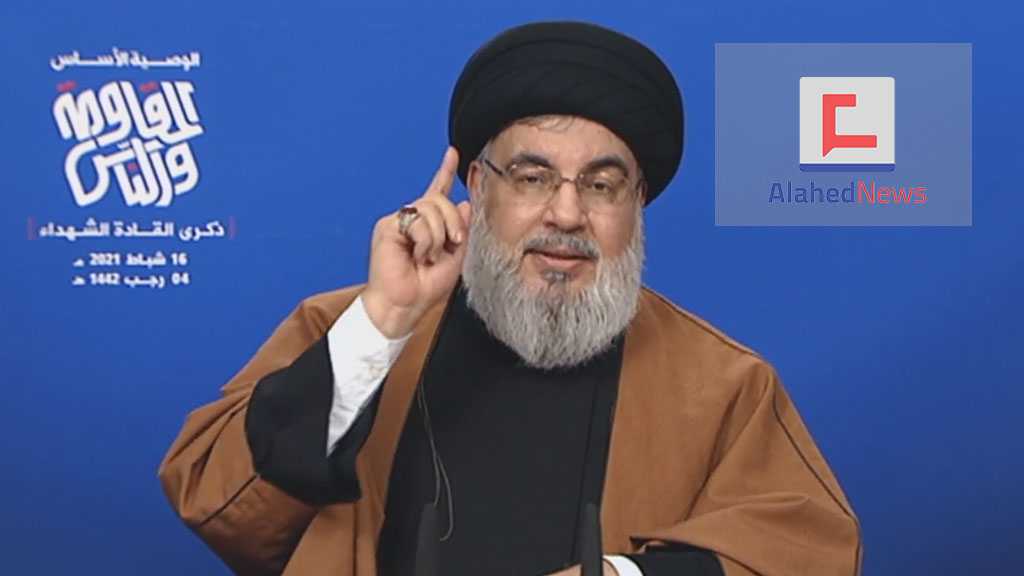
Sayyed Nasrallah to the ‘Israelis’: Stop Playing with Fire, It Is the Era of the ‘Axis of Resistance’


Sayyed Nasrallah to the ‘Israelis’: Stop Playing with Fire, It Is the Era of the ‘Axis of Resistance’

By Zeinab Abdallah

Beirut – Hezbollah Secretary General His Eminence Sayyed Hassan Nasrallah warned the ‘Israeli’ enemy that the Lebanese resistance movement will strike sensitive Zionist military targets in case the enemy used a similar pretext to bomb Lebanese cities.

In a televised speech on Tuesday marking Hezbollah’s Martyr Leaders Day, Sayyed Nasrallah said that the occasion follows the 42nd anniversary of the Islamic revolution in Iran, which is an example on maintaining sovereignty and independence.

The resistance leader’s speech commemorated the martyrdom anniversaries of Sheikh Ragheb Harb, Sayyed Abbas al-Mousawi and Hajj Imad Mughniyeh.

“Forty-two years have passed on the victory of the Islamic Revolution in Iran; The Isalmic Republic resisted and developed on every level until it became a great and considerable regional power,” His Eminence stated.

Regarding the Bahraini revolution’s February 14th anniversary, Sayyed Nasrallah further hailed the Bahraini people who sacrificed a lot to obtain their freedom, atop of them is Ayatollah Sheikh Isa Qassim, adding that “the Bahraini people are struggling to return their country to its normal situation after its rulers have turned it into a base for normalization with ‘Israel’.”

Praising the common characteristics of martyr leaders enjoyed, Sayyed Nasrallah said that they were dedicated to resistance and tolerated all hard circumstances to develop the project of resistance.

“The resistance of our martyr leaders developed and became followed by the enemy before the friend because it threatens its existence,” His Eminence underscored, noting that in our time, “We need stances similar to those of Sheikh Ragheb Harb to confront normalization with ‘Israel’.”

We preserve the will of Sayyed Abbas al-Moussawi by preserving the resistance and serving the people, Sayyed Nasrallah added, stressing that “The most important service we offer to the people is to preserve their existence and defend their lands, dignity and country.”

“We carry on the will of Sayyed Abbas al-Moussawi and work within it in all fields, and when an ‘Israeli’ or a terrorist threat endangers our people we won’t hesitate in defending our honorable people.”

In the same context, the Hezbollah leader stressed that “We need the spirit of martyr Imad Mughniyeh to develop the project of resistance, and the brothers of Hajj Imad are doing this nowadays.”

Internationalizing Lebanese Affairs

Elsewhere in his remarks, His Eminence slammed any talks about an international resolution under the United Nations Charter VII regarding the formation of the Lebanese government, which he referred to as a call to war towards which we mustn’t remain silent.

“Calling for internationalization to resolve domestic issues is unacceptable regardless of who said so, and it can pave the way for undesirable consequences,” His eminence added.

“Internationalizing the Lebanese issue contradicts the country’s sovereignty and could be a cover to a new occupation. It would open the door wide to settling Palestinian refugees in Lebanon. We reject any form of internationalizing the Lebanese issue, which we find a danger that threatens Lebanon,” Sayyed Nasrallah outlined.

The anti-Hezbollah Chorus

Commenting on the electronic armies and the media outlets that grab any incident to point the blame on Hezbollah, Sayyed Nasrallah described those sides as saying “There is a chorus in Lebanon whose goal is to insult Hezbollah without any pretext. This only represents them, and all of their acts won’t affect us.”

In this respect, the resistance leader called on its audience not to be dragged to this chorus’ behavior as all the blamed accusations contradict all norms, laws and traditions.

“There is a systematic, managed and paid targeting of Hezbollah. This campaign has failed to distort the image of resistance within its people. Some reactions by some of the resistance’s audience as a result of this campaign shouldn’t be considered as an act of the entire audience, although they should be dealt with,” Sayyed Nasrallah made clear.

The Beirut Port Mystery?

In reference to the yet unannounced results of investigations regarding the Beirut Port blast which have already ended, Sayyed Nasrallah noted that he had previously called on the Lebanese Army, the Internal Security, and the Judiciary to announce the result.

“It is the duty of the concerned parties in the Lebanese Judiciary to announce the results of the investigations regarding the Beirut Port blast, and we have been told that the due amounts of insurances for the families of the martyrs and the owners of damaged properties is estimated at $1.2 billion,” His Eminence said while renewing calls for announcing the results of the investigations.

Lebanese Government Formation

“Nobody doesn’t want the formation of a Lebanese government,” the Hezbollah leader emphasized, adding that “It is in everybody’s interest to form a government, and talking about waiting the Iranian nuclear issue is baseless.”

“Waiting foreign powers is futile and pressures may push some sides to adhere to their stances. It is unjust to hold the president responsible for not forming the government.”

Pointing that Hezbollah understands other parties’ demands to hold certain portfolios, Sayyed Nasrallah noted that “We don’t understand insisting on forming an 18-minister government while some sides believe that the aim behind this is to eliminate their participation.”

The Hezbollah-FPM Understanding

On the 15th anniversary of the understanding that was made between Hezbollah and the Free Patriotic Movement, Sayyed Nasrallah pointed to that the resistance movement wanted it to be a base for wider understandings with other powers.

“The understanding has made a group of achievements that served Lebanon, Hezbollah, and the FPM. We don’t agree on some negative remarks that were made by the FPM as they serve as a material for those who are waiting such things.”

Meanwhile, Sayyed Nasrallah affirmed the solid relationship with the FPM and expressed keenness to develop it.

Lebanon As Seen Via Social Media

Sayyed Nasrallah made clear that Tel Aviv, Washington, and their allies announce that they form electronic armies to cause strife and disputes.

“There are sides that want to cause an explosion in Lebanon via what is happening on social media platforms,” Sayyed Nasrallah said before calling for strong presence on social media platforms while adhering to awareness, politeness and not harming anybody.

The post-Trump Region

Pointing to the major developments that took place in the region and the world after Trump’s departure, Sayyed Nasrallah insisted that Lebanon is a key part in the region which is affected by all the developments that take place in it.

“The Islamic Republic of Iran has shown endurance and braveness regarding its nuclear issue, and there are clear ‘Israeli’ and Saudi concerns regarding it.”

As for the revival of Daesh [the Arabic acronym for terrorist ‘ISIS/ISIL’ group], Sayyed Nasrallah said that “The Americans’ talking that their mission doesn’t include protecting the oil in Syria anymore came along with reviving Daesh,” making clear that the Americans want to remain in Syria and Iraq.

“They might mobilize Daesh in both countries, and the new US administration is using this pretext to remain there,” His Eminence noted, stressing however that “those who defeated Daesh in the past will defeat it again, and working to defeat the terrorist organization should be crushing so that it won’t be able to be revived.”

The Steadfast Yemen

In reference to the new US administration of Joe Biden, Sayyed Nasrallah said that Washington’s announcement of ending its support for the war on Yemen is a positive step that is a result of the Yemenis’ steadfastness, noting that any call for ending the war on Yemen is positive, and the brothers in Yemen are aware of the situation, which is normal and required.

“The Yemenis steadfastness and tolerance of the siege, the pain, and the bombing pushed the silent world to issue daily reports to defend the aggressive Saudi Arabia, and the Yemeni Army today is in an advanced place, and the other side is screaming in Marib due to the progress the Yemenis are making,” Sayyed Nasrallah explained.

“The honest and steadfast Yemenis will bear the fruits of their steadfastness, and the concerns are growing among Saudi Arabia and the enemy’s entity.”

The Declining ‘Deal of the Century’

Mentioning that the ‘Deal of the Century’ has majorly decreased, Sayyed Nasrallah found it as a clear explanation that it either ended or is declining. “This is a source of concern for the ‘Israelis’ and the Saudis.”

The persistence of the Palestinians and the Axis of Resistance in the face of Trump resulted in the decline of the ‘Deal of the Century’, His Eminence noted, criticizing the Zionists exaggeration regarding the Arab acceptance of normalization: “We’ve seen the stances of the Bahraini people, and before them the Egyptian and Jordanian people against the normalization.”

He then urged boycotting the ‘Israeli’ enemy and rejecting normalization as an important step that represents the religious and national sense of belonging.

“Rulers in Sudan will realize that normalization won’t solve their economic problems, which already happened with countries that normalized ties years earlier,” Sayyed Nasrallah said, noting that some people’s visits to the enemy’s entity or the actions of some electronic armies don’t express the Arab and Muslim popular mood.

It Is the Era of the ‘Axis of Resistance’

In response to hollow remarks made by ‘Israeli’ military chief Aviv Kochavi, Sayyed Nasrallah concluded with a clear and precise message.

His Eminence warned that the game of combat days is a dangerous one for the ‘Israelis’ as nobody can guarantee that such a game won’t lead to an inclusive and major war.

Kochavi claimed that the Zionist military will not hesitate to launch an attack in full force against any civilian neighborhoods, installations or even residences where unmanned missiles, rockets and aircraft are being stored or launched from.

“We will take part in any confrontation imposed on us, and I say it clearly: bombing cities for bombing cities, and bombing settlements for bombing villages.”

Using pretexts of striking military targets inside cities will be responded to by bombing military targets inside the enemy’s cities, the resistance leader insisted.

“In a case a war broke out, the ‘Israelis’ shouldn’t brag about their strength as the enemy’s internal front will face incidents that it didn’t witness since the establishment of this entity in 1948.”

“This is why I tell you to stop playing with fire,” Sayyed Nasrallah emphasized, telling the enemy that it should be aware of its limits.

“The time when the enemy threatens people and they remain silent has gone! There is a resistance from Gaza to Lebanon to the entire regional countries.”

This matter cannot be run the same way they used to in old mentalities, Sayyed Nasrallah said. “It is a different time; it is the era of the Axis of Resistance which is following all developments quietly and precisely.

“Don’t think for a moment that all the ongoing developments would affect the will of the resistance to confront or change the equations,” Sayyed Nasrallah conluded.


السيد نصر الله: ستواجه الجبهة الداخلية الإسرائيلية في الحرب المقبلة ما لم تعرفه منذ قيام “إسرائيل”


المصدر: الميادين نت


الأمين العام لحزب الله السيد حسن نصر الله يؤكد أن أي كلام عن قرار دولي تحت البند السابع بشأن الحكومة هو دعوة إلى الحرب، ويشدد على أن الجبهة الداخلية الإسرائيلية ستواجه في أي حرب مقبلة ما لم تعرفه منذ قيام “إسرائيل”.

  • كلمة الأمين العام لحزب الله السيد حسن نصر الله بمناسبة الذكرى السنوية للقادة الشهداء

قال الأمين العام لحزب الله، السيد حسن نصر الله، بمناسبة الذكرى السنوية للقادة الشهداء: “من الصفات المشتركة للقادة الشهداء هي التمحض في المقاومة، وهم تحملوا كل الظروف الصعبة من أجل تطوير مشروع المقاومة”.

وأضاف السيد نصر الله: “نحن بحاجة إلى مواقف الشيخ راغب حرب لمواجهة التطبيع، وروح الشهيد عماد مغنية من أجل تطوير مشروع المقاومة، ونحن نحفظ وصية السيد عباس الموسوي بحفظها وخدمة الناس، والخدمة الأهم للناس هي الحفاظ على وجودهم وأرضهم وكرامتهم وبلدهم”.

وبمناسبة الذكرى العاشرة للثورة البحرينية، قال: “الشعب البحريني يناضل لإعادة بلاده إلى مكانتها الطبيعية بعدما حولها حكامها إلى قاعدة للتطبيع. نحيّي شعب البحرين الذي دفع الكثير من التضحيات للحصول على حريته، وفي مقدمة قادته سماحة آية الله الشيخ عيسى قاسم”.

وحول مرور 42 سنة على انتصار الثورة الإسلامية في إيران، قال إن الأخيرة “صمدت وتطورت على كل الصعد، وباتت قوة إقليمية كبرى يحسب لها ألف حساب”.

نصر الله: تدويل ملف الحكومة اللبنانية قد يكون غطاء لاحتلال جديد

وفي الملف الداخلي اللبناني، أكد السيد نصر الله أن “أي كلام عن قرار دولي تحت البند السابع بشأن الحكومة هو دعوة إلى الحرب، والتدويل يتنافى مع السيادة، وقد يكون غطاء لاحتلال جديد، وقد يفتح الباب على مصراعيه، وقد يفرض توطين الفلسطينيين”.

وأكد رفض أي شكل من أشكال التدويل، مضيفاً: “إننا نراه خطراً على لبنان، ونشعر بأن فرض فكرة التدويل هو لاستقواء بعض اللبنانيين على بعضهم الآخر”.

وعن تشكيل الحكومة اللبنانية، قال السيد نصر الله: “لا أحد لا يريد تأليف حكومة جديدة في لبنان، في وقت من مصلحة الجميع أن تتألف حكومة، والكلام عن انتظار الملف النووي الإيراني ممجوج ولا مكان له. سابقاً، كان الكلام عن انتظار الانتحابات الأميركية وغيرها.. انتظار الخارج لن يؤدي إلى أي نتيجة، والضغوط قد تدفع البعض إلى التمسك بمواقفه”.

واعتبر أن “من غير المنصف تحميل مسؤولية عدم تأليف حكومة لرئيس الجمهورية. نحن نتفهم مطالبات بعض الجهات بحقائب معينة ووجود قلق من حصول حزب واحد على ثلث معطل”.

وتابع: “لا نتفهم الإصرار على حكومة من 18 وزيراً. هناك شرائح تعتقد أن إلغاءها هو الهدف من ذلك”.

وعن التفاهم بين التيار الوطني الحر وحزب الله في 2006، قال السيد نصر الله: “15 عاماً مرت على تفاهم مار مخايل. كنا نريده أساساً لتفاهمات أوسع مع قوى أخرى”، لافتاً إلى أن “التفاهم حقق مجموعة من المصالح للبنان ولحزب الله وللتيار”، وقال: “لا نوافق على خروج بعض الملاحظات السلبية حول التفاهم في بيان للتيار، فهي تعطي مادة للمتربصين”، مؤكداً “متانة العلاقة مع الوطني الحر والحرص على تطويرها”.

نصر الله: هناك استهداف ممنهج ومدفوع الثمن ضد حزب الله

وفي سياق آخر، قال السيد نصر الله إن “هناك جوقة هدفها السباب والشتائم لحزب الله من دون أي حجة، وهذا يعبر عن أصحابها. كل أفعال هذه الجوقة لا تؤثر فينا. أدعو جمهور المقاومة إلى عدم الانجرار لسلوكهم”. 

وتابع: “هناك استهداف ممنهج ومدبر ومدفوع الثمن ضد حزب الله، وما يجري معنا من اتهامات خارج كل الأعراف والتقاليد والشرائع، وما يجري أن هناك من يتعامل مع حزب الله على أنه متهم وقاتل ومسؤول حتى تثبت براءته”. 

كلام السيد نصر الله يأتي في سياق الاتهام الذي وُجّه إليه من قبل أطراف سياسية وإعلامية باغتيال الناشط السياسي لقمان سليم. وقد أكد في هذا السياق أن “إسرائيل تقتل مواطنيها من أجل خدمة مشروعها، والمجازر الصهيونية لم تقتصر على المسلمين والمسيحيين فقط، بل شملت يهوداً رفضوا الهجرة إليها”.

وشدد على أن “هناك استهدافاً ممنهجاً ومدبراً ومدفوع الثمن ضد حزب الله. وقد فشل في تشويه صورة المقاومة لدى بيئتها وجمهورها”، مشيراً إلى أن “انفعال بعض جمهور المقاومة نتيجة الحملة يجب ألا يحسب على كل الجمهور، وإن كان يجب أن يعالج”.

وفي سياق الحديث عن الحملات الممنهجة في مواقع التواصل، شدد السيد نصر الله على أن “تل أبيب وواشنطن وحلفاءهما يعلنون أنهم يشكلون جيوشاً إلكترونية لإثارة الفتن والخلافات، وهناك من يريد أن يأخذ البلد إلى الانفجار من خلال ما يجري في وسائل التواصل الاجتماعي”، داعياً إلى “الحضور القوي في وسائل التواصل الاجتماعي مع الالتزام بالوعي والأدب وعدم الإساءة”.

وفي ملف انفجار مرفأ بيروت، قال السيد نصر الله إن “التحقيق في التفجير انتهى. طالبت سابقاً الجيش والأمن الداخلي والقضاء بإعلان نتيجته، ومن واجب الجهة المعنية الإعلان عن نتائج التحقيق”.

نصر الله: هناك قلق إسرائيلي وسعودي واضح حيال الملف النووي واليمن

إقليمياً، قال أمين عام حزب الله إن “تطورات كبيرة تحصل في المنطقة والعالم بعد رحيل الرئيس الأميركي دونالد ترامب غير مأسوف عليه، ووصول إدارة أميركية جديدة، ولبنان جزء أساسي في المنطقة، وهو يتأثر بكل ما يجري فيها”.

وأضاف أن هناك “قلقاً إسرائيلياً وسعودياً واضحاً حيال الملف النووي الإيراني”.

وعن إعلان واشنطن وقف دعمها للحرب على اليمن، اعتبر السيد نصر الله أنها “خطوة إيجابية. وقد جاءت نتيجة صمود اليمنيين. الجيش اليمني واللجان الشعبية في موقع متقدم في كل الجبهات. أيضاً، نجد أن القلِق هو السعودي والإسرائيلي”.

وعن الملف السوري، قال: “حديث الأميركيين عن أن مهمتهم لم تعد تشمل حماية النفط في سوريا ترافق مع إعادة إحياء داعش”، مؤكداً أن “من هزم داعش سابقاً سيلحق الهزيمة به مجدداً، وأي عمل بمواجهته يجب أن يكون هجومياً لا دفاعياً”.

وحيال “صفقة القرن”، قال السيد نصر الله: “لا أحد يتحدث اليوم عن الصفقة التي يبدو أنها انتهت أو باتت في حالة تراجع وتلفظ أنفاسها، نتيجة صمود الشعب الفلسطيني والقيادات الفلسطينية ومحور المقاومة”.

وحول تطبيع الدول العربية مع الاحتلال الإسرائيلي، أكد أن “موقف الشعبين المصري والأردني نموذج واضح لرفض التطبيع، وهو ينسحب إلى باقي الشعوب. ثمة دول عربية وإسلامية، كالجزائر وتونس وباكستان وغيرها، ما زالت صامدة ومتمسكة برفضها للتطبيع”.

وأكد أن “أصحاب الأوهام، كحكام السودان، سيكتشفون أن التطبيع مع إسرائيل لن يحل مشاكلهم الاقتصادية”، لافتاً إلى أن “الإسرائيليين يعطون موضوع التطبيع أكثر من حجمه، والجيوش الإلكترونية لا تعبر عن مزاج الأمة والشعوب”. 

ولفت السيد نصر الله إلى أن “إسرائيل لم تلتزم يوماً بالقانون الدولي، ودمرت مدناً، وقتلت المدنيين في كل حروبها”، وأضاف: “أقول لرئيس الأركان الإسرائيلي إننا لا نبحث عن مواجهة وعن حرب، ولكن إن فرضتم حرباً فسنخوضها. وإذا ضربتم مدننا، فسنرد بالمثل. وإذا استهدفتم قرانا، فسنقصف مستعمراتكم. وفي أي حرب مقبلة، ستواجه الجبهة الداخلية الإسرائيلية ما لم تعرفه منذ قيام إسرائيل”، مشيراً إلى أن “لا أحد يضمن ألا تتدحرج “الأيام القتالية” إلى حرب واسعة”.

فيديوات ذات صلة

فيديوات ذات صلة

Tuesday, 16 February 2021

Um Yasser and Sayyed … A Unique Martyrdom

 Source

Um Yasser and Sayyed ... A Unique Martyrdom

Local Editor

It was a dream from the book of the resistance. Almost like a passerby who left behind his basic will for future generations to follow and preserve. The martyred Secretary General of Hizbullah, Sayyed Abbas al-Musawi, stood tall, leaving behind glory, pride, and dignity for history to remember.

He was one of the lights among resistance fighters and fire to its enemies. He consciously acknowledged his responsibilities toward his faith, worldly affairs and country. Palestine is a chapter from Sayyed’s story. But an attempt to count all the luminous points of Sayyed’s life would be a never-ending affair.

His cousin and the brother of his wife, Sayyed Hani al-Musawi, recalls some of these points during an interview with the Al Ahed website.

He was his childhood friend. The friendship got stronger due to the bond of intermarriage. With much nostalgia, Sayyed Hani speaks about the [former] Secretary-General.

“Many things have contributed to making him a great leader. He was bold in his stances, brave in expressing his opinion, and in addition to all that he was adamant in reaching his goals as well as attached to the ultimate goal; Palestine,” said Sayyed Hani.

The loving friend talked about Sayyed’s attachment to “martyr Sayyed Muhammad Baqir al-Sadr, who loved and appreciated the young man after finding him conscious and thirsty to learn about religion and its provisions, and thirsty for knowledge.”

“After graduating from a Hawza (a religious seminary) in Tyre, Sayyed Abbas moved to Iraq to continue his studies under Sayyed Sadr in accordance with the latter’s wishes. Sayyed Sadr saw in Sayyed Abbas a distinctive character. So he treated him in a special way, getting closer, and opening up all the doors of his knowledge,” Sayyed Hani adds.

He continues by touching on Sayyed Abbas’s visits to Lebanon, throughout that period.

“He used to come on religious occasions like the month of Muharram and Ramadan in order to preach. Back then, knowledge or religious sciences were not widespread among the people. The son of the Bekaa region, who lived through its hardships, had a special place among the people. He was their good example. He contributed to educating the ‘private groups’ that took his place preaching during his absence,” Sayyed Hani explains.

“Sayyed Abbas would return home from time to time to take in the facial features of the people he loved, and desired this to be part of his future, which would be filled with sacrifice and giving and grow to love life,” he continues.

According to Sayyed Hani, his dear friend “was diligent in his work. He did not give in to fatigue easily. As for his car, it was his second home in which he used to sleep during his journeys from the south to the Bekaa Valley or the north or Syria. He was always on the move accompanied by the motto of giving. He devoted his youth for the Palestinian cause. With every minute of his life, he pursued it and raised its banner among the public.”

Sayyed Hani does not forget the leader’s companion on this path; a lady that Sayyed Hani was more closely attached to than his own brothers.

She was the “family darling, good hearted, and the most beautiful girl in form and substance.

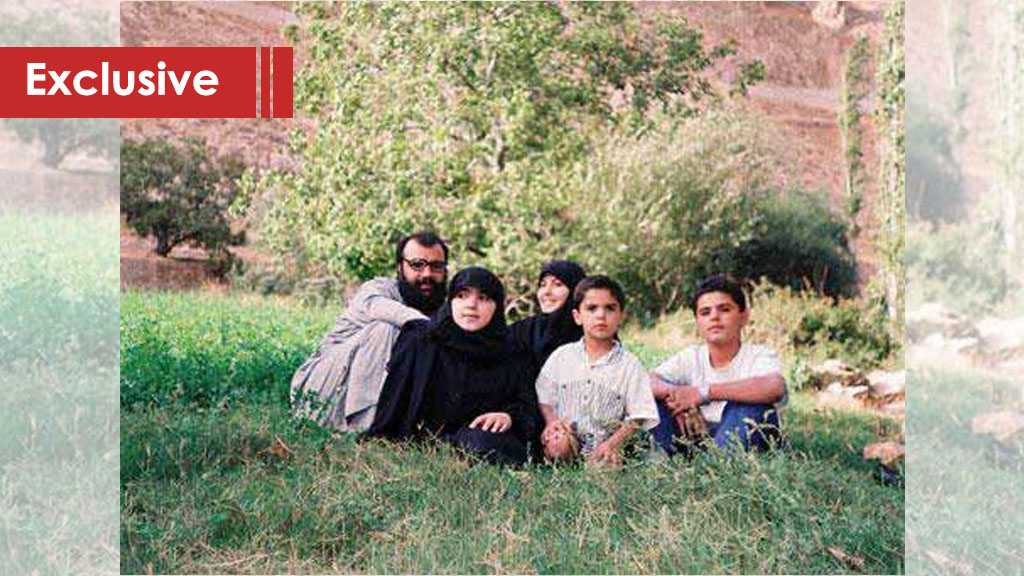
And because men of purity are for women of purity, God brought together Siham al- Musawi and Sayyed Abbas. The engagement took place in the presence of a number of scholars. Since that time, Sayyed was never alone in his travels. His cousin, Siham al- Musawi, accompanied him to Iraq. She became Mrs. Um Yasser after their wedding, and she was fourteen years old.”

According to Um Yasser’s brother, the relationship between both martyrs was pure. “I’ve never seen them happier,” Sayyed Hani recalls. He remembers the sacrifices and dedication of his sister with her husband, who was always away. “She used to take his place and assume full responsibility. She was content. He never heard her complain about the harsh conditions or her husband’s risky work. Instead she endowed her life to his jihad to get nearer to God.”

To talk about Um Yasser is a never-ending affair. She was the one that “proved her awareness and competence while in the company of Sayyed. She was the watchful eye and the hand that arranged his affairs. Sayyed reciprocated the respect and appreciated her patience. He was supportive of her, which enabled Um Yasser – despite all the responsibilities – to build the Sayyeda Zahra (AS) Hawza for women as well as the Hawza of Imam Al Montathar for men which Sayyed Abbas al- Musawi founded when he was forced to return from Iraq.”

Both Hawzas [religious schools] had a significant impact on the revival of the pillars of religion in the Bekaa Valley. The city of Baalbek saw the rise of religion and jihad. Which later expanded into several other areas of Lebanon.

“One day I expressed my concern to Sayyed Abbas al-Musawi over the people’s growing despair and the deteriorating situation. Despite my pessimism, he responded with reassuring words and confidence in God saying, ‘the turban and martyrdom will be victorious'” Sayyed Hani added, “He felt that his martyrdom would be an awakening point for the masses. In fact, Sayyed al- Musawi’s martyrdom formed a revolt against injustice.”

The eye of the enemy was watching the [former] Secretary-General of Hizbullah.


“We used to joke with him saying, ‘if you sold yourself to God, do not subject your companions to danger. He would always answer us that he was doing what he must and leaves the rest to God Almighty,” Sayyed Hani said.

The [former] Secretary-General, who was elected to his post in May 1991, was sensitive towards the oppressed and the resistance fighters. After his election, he stressed that this choice “is an obligation and not an honor.”

He was always worried that the position would take him away from feeling the worries of the resistance fighters. Soon Sayyed’s wish and constant intuition that Um Yasser would be his companion in achieving his dream came true. That dream, which he repeated with his melodious voice as he raised his hands to the sky, “I ask you to bless me with a pure martyrdom, I chose for myself in expiation for my sin; a unique martyrdom where my body disintegrates.”

God Almighty heard and answered Sayyed’s call.

Al-Ahed News


River to Sea Uprooted Palestinian   
The views expressed in this article are the sole responsibility of the author and do not necessarily reflect those of the Blog!

Saturday, 13 February 2021

New Footage Shows Sayyed Nasrallah and Martyr Imad Mughniyeh Coordinating Resistance Operations: Al-Manar TV


Mohammad Salami

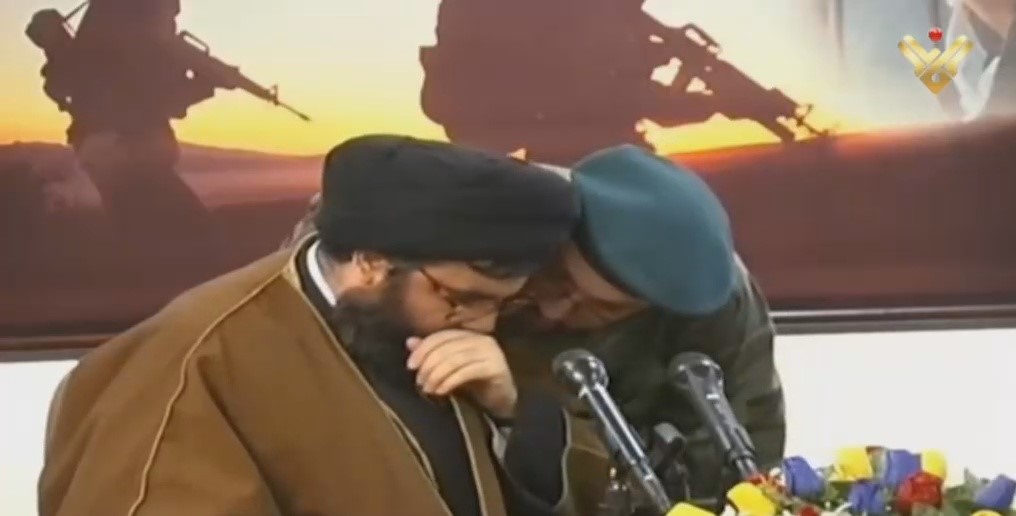
Hezbollah Secretary General Sayyed Hasan Nasrallah and military commander, martyr Hajj Imad Mughnieyh, appeared in a new footage released by Al-Manar TV Channel on the martyrdom anniversary of the Resistance leaders.

The video shows martyr Nughniyeh whispering in the ear of Sayyed Nasrallah about the details of the operations which proved later to be very efficient.

On February 12, 2008, Hezbollah’s top military commander Hajj Imad Moghniyeh was martyred in a car bomb attack carried out by Israeli Mossad agents.

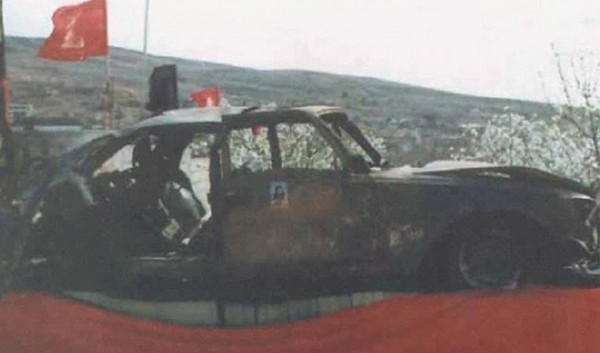
The occasion also marks the anniversary of late Hezbollah Secretary General Sayyed Abbas al-Mousawi who was martyred, along with his wife and son, when an Israeli airstrike attacked his convoy as he was attending the commemoration anniversary of Sheikh Ragheb Harb on February 16, 1992.

The martyr Sheikh Harb was assassinated by an Israeli agent on February 16, 1984.

Source: Al-Manar Eglish Website


River to Sea Uprooted Palestinian   
The views expressed in this article are the sole responsibility of the author and do not necessarily reflect those of the Blog!

Friday, 24 April 2020

US REWARDS FOR HEZBOLLAH LEADERS’ HEADS: HOW DO THEY AFFECT THE ORGANISATION?

Posted on  by Elijah J Magnier


By Elijah J. Magnier: @ejmalrai
The US government offers financial rewards to those who help arrest a Hezbollah leader or who reveal details of their activities that enable the US to disrupt them. These rewards vary from five to ten million dollars. Thus far, no one has been able to obtain a single dollar of these awards from the US administration since 1985, when Hezbollah officially came into existence in Lebanon. How are the organisation and its leaders affected by these tempting millions offered by Washington?
There is no doubt that the “Axis of Resistance” in Lebanon is operating outside the American system. Hezbollah possesses no property outside Lebanon, and no bank accounts in any local bank inside or outside the country, notably not in any western countries. Family members and children of Hezbollah leaders are not present in western countries, therefore they are outside the US’s blackmailing orbit. Hence, the decision to place Hezbollah leaders on the US terrorist list and confiscate their “non-existent” funds is not much more than an ostentatious display by which the US aims to self-advertise itself as the world’s policeman. 
Washington believes that announcing the names of Hezbollah leaders could give impetus to America’s allies in Lebanon. But the US’s allies in Lebanon are too weak – although persistent and holding at least some leverage – to confront Hezbollah in the first place. Most importantly, US sanctions cannot possibly be effective in a country like Lebanon – or in other countries under the “Axis of the Resistance” umbrella because they are sovereign states outside direct US control and the “Axis of the Resistance” is far from being weak.
This takes us to Iraq, an “Axis of the Resistance” stronghold, during the 2018 parliamentary campaign.  Before the elections the US Presidential envoy against ISIS, Ambassador Brett McGurk, visited National Security Minister Faleh Al-Fayyad in his office in Baghdad. McGurk complained that Fayyad had met with Sheikh Muhammad Kawtharani, a Hezbollah official on the US terrorism list.
Al-Fayyad replied:
“It is not permitted to interfere in internal Iraqi affairs, nor with what an Iraqi citizen does. Sheikh Kawtharani is an Iraqi citizen, and America has no authority or jurisdiction over us to dictate who we can or cannot receive.”


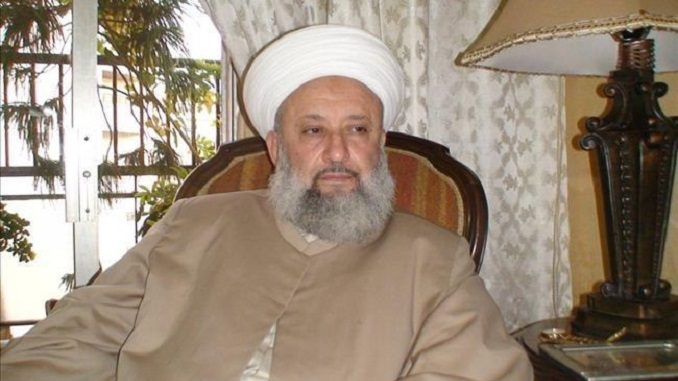
Sources in the “Axis of the Resistance” confirm, in fact,  that “Sheikh Muhammad Kawtharani was never a military leader but part of the political bureau. By virtue of his studies and the presence of his father, a scholar and jurist, in Najaf for many years, Sheikh Mohammed was born and raised in the holy city. Sheikh Kawtharani married an Iraqi woman from Baghdad, mastered the language and the Iraqi mentality, which made him very successful in managing the Iraqi file and communicating with Iraqi leaders. He had spent time in Saddam Hussein’s prisons and was a close companion of Sayyed Abbas Al-Mousawi, the Secretary-General of Hezbollah assassinated by Israel in 1992. He was able to forge close relations with Iraqi leaders during their presence in Lebanon in exile as refugees in the days of Saddam Hussein’s authority. He is the Hezbollah official who knows Iraq best, from the Marjaiya in Najaf to every single political member from Erbil to Basra.”
“Sheikh Kawtharani has no enemies among Iraqi leaders because his way of dealing with them is never condescending; he does not impose his agenda or conditions on them. Rather, his objective is to unite Iraqi groups on mutually agreed decisions and to listen to their complaints when they find it difficult to communicate with each other. He is a coordinator and a mediator, one of the most difficult functions to serve – especially among Iraqi Shiite parties”, said the source.
“America knows that Sheikh Kawtharani does not work within the security-military apparatus of Hezbollah, but is the Assistant to Secretary-General Sayyed Hassan Nasrallah for Iraq affairs.
Sayyed Nasrallah is the leader of the” Axis of Resistance “and enjoys excellent relationships with Palestinians, Syrians, Iraqis, Yemenis, and various leaders in different countries. Therefore, the US wanted to obstruct his return to Iraq in order to prevent Iraqi Shiite solidarity, especially following his success in reunifying the Iraqis after the assassination of the Iranian Major General Qassem Soleimani”, according to the source.
Shiite parties were not satisfied with the choice of President Barham Saleh of Adnan al-Zurfi as prime minister. Iraq was facing serious domestic unrest between Shiites, Sunnis and the Kurds. By selecting Mr Mustafa Kazemi, the tension was de-fused with the help of Sheikh Kawtharani and the Iranian leadership who mediated to help the Iraqis find the most suitable candidate for all.


The source asserts that “Sheikh Kawtharani has better relations with most Iraqi politicians than any Iraqi or non-Iraqi leader or personality. This is what allowed him to work to support Iraq; US financial rewards of $10 million will not prevent him from travelling to Iraq when he so desires.”
As for the American financial rewards, generally speaking, they create a positive outcome for every Hezbollah official: the higher the amounts offered by the US on one’s head, the more prestige one accrues. This raises the wanted leaders to a privileged social status in Lebanon, Syria, Iraq, Iran, Yemen and Palestine, because threatened US punishment is understood to indicate US fear, proof of a Hezbollah leader’s power to annoy the US and its administration.
These rewards have not harmed Hezbollah at all over the 35 years of their existence. But internally, the higher the amount, the more important the “wanted” Hezbollah leader is in relation to other Hezbollah officials. The wanted leader’s financial compensation increases, and additional budgets, guards and security members are allocated to protect him. Multiple cars are at his disposal, and more than one apartment is offered for his convenience and security. Precaution in selecting an apartment includes the presence of an electric elevator that reaches the underground basement, to cover his arrival, departure, and movements in and out. 
The US rewards incite jealousy among those Hezbollah officials who have not yet attained the distinction of having a US reward on their head. Those with a lower reward wish the US could offer more millions on their heads for them to gain a higher position in society!


Those officials higher on the US list of terrorist rewards become weightier and gain additional powers. Their credibility and influence with foreign political leaders and allies during their contact or meetings increases, so that allies brag about contacts and pictures taken next to them. 
Long ago, the US put Imad Mughniyeh on its list and placed a reward on his head. He then reached the level of Military Commander in Chief of Hezbollah and Deputy Assistant Secretary-General of the Jihad Council. This is but one example of promotion thanks to US targeted opposition.
If the US decides to target leaders placed on its terrorist bounty list, Hezbollah’s response then becomes more significant because they become part of a new equation of deterrence. Thus, what US officials imagine as harsh punishment for Hezbollah leaders actually becomes a source of direct reward within the Hezbollah system and society! It is but one more example of the way in which the US’s desire to punish and eliminate is turned to advantage and even privilege in a system and culture they do not understand.
Proofread by:  C.G.B and Maurice Brasher
This article is translated free to many languages by volunteers so readers can enjoy the content. It shall not be masked by Paywall. I’d like to thank my followers and readers for their confidence and support. If you liked it, please don’t feel embarrassed to contribute and help fund it, for as little as 1 Euro. Your contribution, however small, will help ensure its continuity. Thank you.
Copyright © https://ejmagnier.com   2020 

River to Sea Uprooted Palestinian   
The views expressed in this article are the sole responsibility of the author and do not necessarily reflect those of the Blog!

Wednesday, 19 February 2020

The Transnational Hezbollah Commander: Sayyed Abbas Mousawi

Image result for The Transnational Hezbollah Commander: Sayyed Abbas Mousawi
“This resistance is our source of pride. It taught us everything. The resistance taught us that we can make strength out of our weakness,” said Sayyed Abbas Al-Mousawi, former Hezbollah Secretary General who was assassinated by Israeli occupation on February 16, 1992.
Sayyed Abbas was known for his resistance movement that knew no boundaries. Starting by Lebanon and Palestine, and not ending by Syria, Iraq, Iran, Pakistan and Afghanistan, Sayyed Abbas considered Palestine as the primary cause of the Muslim nation. He saw the resistance as a transnational movement that can’t only operate in one battlefield.
Palestine Was the Spark
Sayyed Abbas AlMousawi
Inspired by a youth who was the first Lebanese to be martyred in a battle with Israeli occupation in 1968 in Jordan, Sayyed Abbas, who was 15 years old back then, went to Syria’s Zabadani to take part in a training camp established by Fatah Palestinian resistance movement.
The senior commander then decided to apply himself to Hawza studies. He affiliated with leading Lebanese Shia cleric Imam Sayyed Mousa Al-Sadr in the southern town of Tyre. After that, he joined Hawza of Grand Ayatollah Sayyed Mohammad Baqer Al-Sadr in the holy city of Najaf. Sayyed Mohammad Baqer Al-Sadr was an influential Shia cleric, philosopher, political leader, and founder of the Daawa Party of Iraq.
Upon his arrival to Lebanon in 1978, when the Baathist regime expelled all non Iraqi clerics, Sayyed Abbas founded Al-Muntathar Hawza in Baalbeck. He believed that the role of this Hawza was not limited to the Shiite arena in Lebanon. In March 1978, the Israeli enemy launched an aggression on Lebanon in which it managed to occupy areas located to the south of Litani River. At time, Sayyed Abbas played pivotal role in mobilizing the Lebanese people for resistance.
Sayyed Abbas was highly inspired by the victory of the Islamic Revolution led by Imam Sayyed Ruhollah Khomeini in 1979. The revolution in Iran represented for the former Hezbollah S.G. a glimpse of hope in face of the US hegemony and Israeli oppression.
Establishing Hezbollah
Following the Israeli occupation of south Lebanon in June 1982, Sayyed Abbas returned to Lebanon from Tehran along with Sheikh Ragheb Harb, Lebanese cleric who was well-known for his anti-Israel stances and then was a senior Hezbollah commander. The two men worked at the end of that year on establishing the resistance movement, Hezbollah.
“The Islamic Resistance in south Lebanon. We called it Islamic because its ideology ad spirit is Islam. However, it is for all the oppressed people across the world,” Sayyed Abbas said about Hezbollah, the Islamic Resistance in Lebanon.
In that year (1982), Sayyed Abbas headed a delegation representing Hezbollah to Iran, where they met Imam Khomeini who blessed their efforts, telling them that “he sees victory on their foreheads,” according to “Jihad and Martyrdom Leader” documentary which explores the life of Sayyed Abbas.
Sacred Defense in Ahvaz
Later in 1983, Sayyed Abbad headed for Iran’s Ahvaz to take part in the sacred defense during the war launched by the Baathist regime in Iraq.  Imam Khomeini dispatched his personal delegate Sheikh Abbas Al-Kaabi who urged Sayyed Abbas to go back to Lebanon, stressing that the Lebanese battlefield needed him more.
When he returned to Lebanon, Sayyed Abbas tried to strengthen ties with other Muslim clerics from outside the Shiite arena in a bid to boost Islamic unity and unify resistance movements allover Lebanon.
He coordinated resistance efforts with both Sheikh Said Shaaban in the northern city of Tripoli and Sheikh Maher Hammoud in the southern city of Sidon.
Resistance Path of Victory
ormer Hezbollah Secretary General Sayyed Abbas Al-Mousawi with resistance fighters (photo from archive)
“Sayyed Abbas presented the resistance as a path of victory not only as a path of martyrdom,” Hezbollah Secretary General Sayyed Hasan Nasrallah described his predecessor in the documentary which was aired on Al-Manar TV.
Sayyed Abbas was the military commander of the Islamic Resistance in south Lebanon. He personally oversaw resistance operations which forced the Israeli enemy to withdraw from Beirut and then from Sidon to the southern villages and towns.
Visits to Pakistan, Afghanistan, Kashmir
In March 1990, Sayyed Abbas went to Pakistan, to take part in a pro-Palestine conference. In that visit he toured 17 Pakistani villages, where he tackled Israeli oppression, importance of resistance and US schemes in the region. After that, Sayyed Abbas visited Afghanistan, where he met with fighters against Soviet troops, and then he went to Kashmir.
Hezbollah S.G.
In April 1991, and following years of hard work in ranks of the Islamic Resistance, Sayyed Abbas was elected to be Hezbollah Secretary General. Sayyed Nasrallah narrates in the “Jihad and Martyrdom” documentary how long it took to convince Sayyed Abbas that he has to accept this post.
“After ten days of attempts to convince him, Sayyed Abbas accepted to assume his duties as the Secretary General of Hezbollah,” according to Sayyed Nasrallah.
Upon his election, Sayyed Abbas was maintained strong relation with resistance fighters as well as with Lebanese people whom was keen to serve them. He raised the slogan of “We Are All at Your Service,” referring to securing basic needs of the people in light of the state’s absence in several areas especially in south, Bekaa and Beirut southern suburb.
Martyrdom and Will
Sayyed Abbas was assassinated in February 16 1992, when he was returning from south Lebanon where there was a ceremony marking the martyrdom anniversary of Sheikh Ragheb Harb. Israeli Apache helicopters fired missiles at his motorcade, killing him, his wife, his five-year-old son, and four others.
Following his martyrdom, Sayyed Hasan Nasrallah succeeded Sayyed Abbas, whose primary will was to “preserve the Islamic Resistance.”

River to Sea Uprooted Palestinian   
The views expressed in this article are the sole responsibility of the author and do not necessarily reflect those of the Blog!