Showing posts with label Al-Qaeda. Show all posts

Thursday, 28 May 2020

The ominous Jihadis war; From Tripoli to Tripoli


The ominous Jihadis war; From Tripoli to Tripoli:

May 23, 2020
The ‘War on Syria’ is far from being over, and it will continue until all foreign forces illegally present on Syrian soil retreat; either willingly, or defeated.
And even though the American presence in Syria has no clear and realistic political purpose other than wreaking havoc. https://transnational.live/2020/05/19/america-exists-today-to-make-war-how-else-do-we-interpret/ and making it hard for Russia to help reach a decisive victory, in a twist of fate, the focus of the Russo-American conflict in the region may soon move away from Syria.
In reality, the outcome of the ‘War on Syria’ was never expected by the initial assembly of adversaries when they launched the attack. Furthermore, they had many deep differences and nothing in common other than a shared hatred for Syria, but the unexpected turn of events has intensified their internal conflict and seemingly catapulted the strife between those former allies much further afield to a new hub in Libya.
Whilst the world and its media are busy with COVID-19, a new huge struggle is brewing, and this time, it is drawing new lines and objectives that are in reality going to be fueled, financed and executed by the former once-united enemies of Syria; but this time, it will be against each other.
An array of regional and international issues lies behind the impending conflict; and to call it impending is an under-statement. It is already underway, but hasn’t reached its peak yet, let alone making any significant news coverage.
It is a real mess in Libya now, and the short version of a long story goes like this:
Soon after NATO hijacked the UNSC mandate to enforce a no-fly-zone decision over Libya and manipulated it in a manner that ‘legalised’ bombing Libya culminating in toppling and killing Gadhafi, the Libyan Government of National Accord (GNA), based in the formal capital Tripoli on the Western side of the coast, was created.
But the ‘revolution’ against Gadhafi was launched in the eastern coastal city of Benghazi. After Gadhafi’s demise, another interim government was formed in Libya’s east under the name of National Transitional Council (NTC).
The NTC, whose flag is the flag of the ‘revolution’, did not recognize the GNA and regarded it as a Western lackey.
After a few years of squabbling, NTC strongman General Haftar decided to militarily disable the GNA.
With little concrete protection on the ground from the West, and under the guise of upholding UNSC mandates, Erdogan jumped into the existing void and the opportunity to grab Libya’s oil, and decided to send troops to support the GNA.  https://www.bbc.com/news/world-africa-51003034
In return, Haftar is getting support from other regional players. Recently, representatives from Egypt, the UAE, Greece, Cyprus and France had a meeting and denounced Turkey’s involvement in Libya. https://greekcitytimes.com/2020/05/12/greece-egypt-cyprus-france-uae-denounce-turkey-in-joint-statement/. Erdogan perhaps borrowed a term from his American part-ally-part-adversary and referred to the meeting and its decree as an ‘alliance of evil’. https://www.washingtonpost.com/world/national-security/turkey-accuses-five-nations-of-forming-alliance-of-evil/2020/05/12/a3c5c63a-9438-11ea-87a3-22d324235636_story.html Fancy this, a NATO member accusing other NATO members of being in an alliance of evil.
It must be noted that even though Saudi Arabia did not attend the meeting, it was there in spirit, and represented by its proxy-partner the UAE.
The USA took a step further and accused Russia and Syria of working behind the scenes and planning to send fighters to Libya to support Haftar. https://www.reuters.com/article/us-libya-security-usa-syria-idUSKBN22J301
But this article is not about the geopolitical hoo-ha. It is about shedding a light on what score-settling is expected to eventuate in Libya, and who is likely to end up doing the fighting against who.
Even though the Afghani Mujahedeen were purportedly the first Jihadi fighters to engage in battle in the 20th Century, their fight was against foreign USSR troops. In terms of an internal force that aimed for fundamentalist Muslim rule, there is little doubt that the first event of such insurgency in the Middle East was the Muslim Brotherhood (MB) revolt that took place in Syria in the early 1980’s and which was quashed by the then President, Hafez Assad. After their smashing defeat, the fundamentalists kept their heads low until they lit the flame again in the Palestinian refugee Naher Al-Bared Camp at the northern outskirts of Tripoli Lebanon in 2007.
There are, for those who are unaware, two cities bearing the name Tripoli on the Mediterranean coast; one is in Northern Lebanon, and it is Lebanon’s second largest city, and the other Tripoli is located on the Western side of the Libyan Coast. They are sometimes called Tripoli of the East and Tripoli of the West, respectively.
Shaker Al-Absi, leader of Fateh Al Islam, a Salafist terror organization, declared jihad and engaged in a bitter fight against the Lebanese Army. He was defeated, remained at large, but any look at Lebanon’s Tripoli after his demise displayed a clear evidence of a huge build-up of Salafist presence in the city.
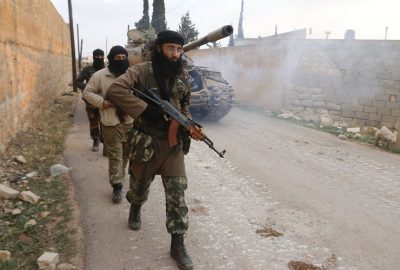
When the ‘War on Syria’ started only four years later, Tripoli became a major hub for the transport of fighters and munitions from Lebanon into Syria. Nearly a decade later, and with a few Jihadi pockets left in the Idlib province now, their defeat in Syria is imminent.
But who exactly are those murderous head-chopping radical elements that we talking about; past and present?
When the coalition that started the attack on Syria took form, it was comprised virtually of all of Syria’s enemies. Most of them were religious fundamentalists. In an early article, I called them ‘The Anti-Syrian Cocktail’.  https://intibahwakeup.blogspot.com/2013/09/the-anti-syrian-cocktail-by-ghassan-kadi.html
Back then, ISIS, did not exist in the form that it became known as. Furthermore, I have always advocated that there was no difference at all between Al-Nusra and ISIS and/or any other Takfiri organizations. They are all terror-based and founded on violent readings of Islam.
In time however, and this didn’t take long, it became apparent that even though the ideologies were identical, there were two major financiers and facilitators to those many different terror organizations. One was primarily funded by Saudi Arabia and the UAE, and the other by Qatar and facilitated by Turkey.
The former group is affiliated with what is known as Saudi Wahhabi Islam. They are also known as the Salafists. The latter group are the MB’s.
As the war was shifting in favour of Syria, their agendas diverged, the schism grew deeper and strong rivalries emerged; especially as the Wahhabis and their sponsors were sent home defeated. Part of this fallout was the ongoing Saudi-Qatari conflict.
But the rivalry that is least spoken about is personal. It is the one between Erdogan and Al-Saud.
They are both fighting over the leadership of fundamentalist Sunni Islam. But Erdogan also has his nationalist anti-Kurdish agenda, and of course, he is desperate to put his hands on oil supplies that he can call his own. He cannot find oil on Turkish soil or in Turkish waters, but he is prepared to act as a regional pirate and a thug and steal another nation’s oil. If no one is to stop him, he feels that he can and will.
Upon realizing that Turkey could not get in Syria either victory or oil, Erdogan is now turning his face west towards Libya. He finds in Libya a few scores that he hopes to settle after his failure in Syria. He wants a face-saving military victory, he wants to assert his position as THE Sunni leader who can reclaim glory, and he wants free oil. Last but not least, In Libya, he will find himself close to Egypt’s Sisi; the political/religious enemy who toppled his MB friend and ally, President Mursi.
On the other side, defeated but not totally out, Saudi Arabia wants blood; Erdogan’s blood.
The Saudis blame Erdogan (and Qatar) for their loss in Syria because he was more focused on his own agenda and spoils rather than the combined ones of the former alliance they had with him. They blame him for abandoning them and making deals with Russia. They hold him responsible for the breakup of the unity of Muslim fundamentalism. They fear his aspirations for gaining the hearts and minds of Muslims who regard him as a de-facto Caliph. As a matter of fact, it was Saudi Crown Prince MBS who used the borrowed word ‘evil’ first when he stated more than two years ago that Erdogan was a part of a ‘Triangle of Evil’. https://www.reuters.com/article/us-saudi-turkey-idUSKCN1GJ1WW. And how can we forget the Khashoggi debacle and the ensuing standoff between Turkey and Saudi Arabia?
We must stop and remember once again that not long ago at all, Turkey and Saudi Arabia were allies, who together, plotted how to invade Syria and bring her down to her knees. These are the heads of the two major countries that facilitated the war machine with Saudi money injecting fighters and munitions into Syria from the south, and open Turkish borders and Qatari money injecting them from the north.
Back to Libyan General Haftar. In his westerly advance along Libya’s terrain, he cleaned up the ISIS elements who stood in his way and hindered his progress.  https://www.theguardian.com/commentisfree/2020/feb/02/libya-foreign-powers-khalifa-haftar-emirates-russia-us But ironically, he is now fighting their religious rival; the Turks, the protectors of the MB’s.
The USA may accuse Syria of sending troops into Libya, but where is the proof and why should Syria do this after all? And even though the Saudis and the Emiratis are warming up relationships with Syria, the Syrian Army is still engaged in battle and is not prepared to go and fight in Libya. There is nothing for it to gain. Once the war is over, Syria will be concerned with rebuilding a war-torn nation. Syria has no interests in Libya; none what-so-ever.
The role of Russia is not very clear on the ground even though there are clear indications that Russia supports Haftar ideologically. The support began when Haftar demonstrated to the Russians that he was adamant about fighting ISIS and exterminating its presence in Libya. He lived up to this promise thus far and gained Russian respect.
How will the situation in Libya eventually pan out is anyone’s guess. That said, apart from sending regular Turkish Army units, Erdogan is not short on rounding up fighters; and he has attained much experience in this infamous field of expertise from his vicious attack on Syria. With Qatari money in his pocket, he can recruit as many fighters as Qatar can afford.
Erdogan realizes that the West is not interested in backing him up militarily in Libya. The best deal he can get from America is a tacit support. And with France, a NATO member taking part in the above-mentioned five-nation conference, he will definitely have to stand alone so-to-speak.
He has Qatar behind him, but how powerful is Qatar? A ‘nation’ of 200,000 citizens? How can such a small state play such a big role and why?
Qatar is not really a nation or even a state in the true sense. Qatar is an entity, a ‘corporation’ owned by a ruling dynasty that serves the interests of the USA and Israel. https://thesaker.is/qatar-unplugged/. This family will outlay any sum of money to guarantee its own protection and continuity.
And Erdogan, the friend-and-foe of both of America and Israel, knows the vulnerabilities and strengths of Qatar, and he is using his deceptive talents to provide the Qatari ruling family with the securities that the shortfalls that America and Israel do not provide. For example, it was he who sent troops to Qatar after the Saudi threats. And even though Erdogan will never take any serious actions against his NATO masters except in rhetoric, the weak and fearful Qataris will dance to the tune of any protector and will sell their souls to the devil should they need to.
On the other hand in Libya, if Haftar finds himself facing a huge Turkish army, he will need assistance on the ground. Where will he seek it from?  His next-door neighbour Egypt? If so, will it be in the form of regular army units or hired guns?
Sisi is neither a religious nor a fundamentalist zealot, but this is not meant to be a complementary statement. He has not taken any serious black-and-white steps in regional politics. This does not mean he is a man of principles. He is probably waiting for dollar signs, and if he sees financial benefits in supporting Saudi Arabia in a proxy war against Turkey in Libya, he may opt to agree; if the price it right.
Whether or not Saudi Arabia can afford a new war, especially with current crude prices, is another story, but as the war on Yemen winds down, the gung-ho MBS is irrational enough to be persuaded. His regional enemy is no longer Assad. His current enemy is Erdogan.
To be fair to MBS, despite his vile, criminal and megalomaniac attributes, he never claims to be a religious leader, but Erdogan does, and many Sunni Muslims see in Erdogan THE leader they have been waiting for. This alone constitutes a huge challenge for MBS because neither he, nor anyone else in the whole of Saudi Arabia for that matter, is regarded anywhere in the Muslim World as a potential leader of the Sunni Muslims.
In reality, as far as Muslim leadership is concerned, the Saudis can only bank on the location of Mecca in Saudi Arabia. Apart from this, they only have wealth that enables them to buy supporters, but their oil wealth is becoming increasingly vulnerable.
In the uphill fight against Erdogan within the Muslim World, both of the Saudis and the Turks realize that the fight between them in Syria is over. Actually, the Saudis have no loyal ‘troops’ on Syrian soil left to fight anyone with. This begs the question of whether or not the Turks and Saudis are moving the battle ground and the score settling from Syria to Libya.
This time around, such a potential battle between the two lines of Jihadis may have to morph from a fight between terror organizations to a war between regular armies; the Turkish Army against the Egyptian Army. Such a battle will rage over Libyan soil, with the Turks financed by Qatar and Egypt by Saudi Arabia.
Such a war will not necessarily bring in Iran into the fight. If it eventuates, it will be a fundamentalist Sunni-Sunni war, sponsored by fundamentalist Sunni states, each fighting for and against different versions of radical Muslim fundamentalism, under the watchful eyes of the USA and to the glee of Israel.
The jihadi war that was first ignited in Tripoli Lebanon between a rogue terror organization and the Lebanese Army did not end. It kept moving theatres and objectives and changing players. Is the final score going to be settled in Tripoli Libya?

River to Sea Uprooted Palestinian   
The views expressed in this article are the sole responsibility of the author and do not necessarily reflect those of the Blog!

Friday, 3 April 2020

Nearly 500 Syrian mercenaries killed in Libya: LNA

By News Desk -2020-04-02


BEIRUT, LEBANON (2:20 P.M.) – The spokesperson for the Libyan National Army (LNA), Major-General Ahmad Al-Mismari, announced on Thursday that the death toll for the Turkish-backed Syrian mercenaries had reached 500 after more than four months of fighting.
Over the past week alone, the Syrian mercenaries have suffered dozens of casualties at the hands of the Libyan National Army.
Many of these casualties in the ranks of the Syrian mercenaries came as a result of the Libyan National Army’s rapid advance through the southern outskirts of Tripoli, which has since come under the control of LNA.
While the LNA reports 500 Syrian mercenaries killed, the Syrian Observatory for Human Rights (SOHR) contrasts these figures; instead, they claim approximately 150 of these militants have died in the past four months.
Despite the large deviation in numbers, it still remains that the deployment of Syrian mercenaries to Libya has been a major failure, as they have been unable to slow down the LNA’s large-scale advance across the northwestern region of the country.
The first Syrian mercenaries arrived in Libya at the end of December. Since then, Turkey has transported a large number of them to the North African country, despite territorial losses in Syria’s northwestern region.

River to Sea Uprooted Palestinian   
The views expressed in this article are the sole responsibility of the author and do not necessarily reflect those of the Blog!

Wednesday, 29 January 2020

Maarat Al-Numan Is Liberated


JANUARY 28, 2020
On January 27 evening, units of the Syrian Army continued their operation in southeastern Idlib. Government troops liberated Hamidiya, Bseida, Maasaran, Tal Al-Shih, Maziyan and several other villages. By this advance, the army fully besieged Maarat al-Numan from the northern, southern and eastern directions.
According to pro-government sources, Hayat Tahrir al-Sham militants are not planning to defend the encircled city for a long time. They are actively planting mines and IEDs in the area. Therefore, even if militants withdraw from Maarat al-Numan via the remaining corridor, government troops will not be able to secure the city immediately.
On January 28, government sources claimed that the Syrian Army had already entered Maarat al-Numan. However, government forces still have to remove IEDs and fortify their new positions.
The Syrian Army offensive in southeastern Idlib is ongoing under the nose of the Turkish observation post near Maarat al-Hat. In the event of further advances by the army, the observation post will likely be encircled by Syrian forces. This will be the third Turkish observation post that faced this fate. The previous two are located near Surman and Morek.
Pro-opposition sources blame Turkey for the recent setbacks of al-Qaeda-linked groups. According to them, Ankara conspired with Moscow in order to undermine the so-called Syrian revolution. They also claim that the redeployment of members of Turkish-backed militant groups from Syria to Libya undermined the defense of Idlib. On January 26, the Libyan National Army, a rival of the pro-Turkish Libyan Government of National Accord, claims the number of Turkish-backed fighters that were prepared to be deployed to Libya was over 8,000. Earlier, reports appeared that at least 2,400 Turkish proxy fighters had been already sent to Libya.
Another hot point of the battle for Greater Idlib is western Aleppo, where the 4th Armoured Division is engaged in an intense fighting with militants. Local sources say that the Aleppo advance is a diversionary strike designed to drew attention of the Hayat Tahrir al-Sham leadership from Maarat al-Numan and contain reinforcements that it can send to southeastern Idlib.
Related Videos

لحظة دخول قوات الاقتحام معرة النعمان اليوم و الاشتباكات داخلها و السيطرة عليها
الجيش السوري يسيطر على مدينة معرة النعمان بالكامل

Related News

River to Sea Uprooted Palestinian   
The views expressed in this article are the sole responsibility of the author and do not necessarily reflect those of the Blog!

Tuesday, 28 January 2020

US TO GRANT $35 MILLION TO PROMOTE ITS FAKE NEWS BUBBLE IN SYRIA & CONTROL LOCAL MEDIA


Fake News Media

January 24, 2020, RT.comAlthough Western media has a shoddy track record of lying on Syria (and Libya, Iraq…), the US State Department will pump $35 million more into future war propaganda on Syria, under the guise of promoting honest reporting. 
A US State Department grant, “Support for Independent Media in Syria,” is unabashed in stating one of its main goals is “to advance U.S. Government policy objectives in Syria.”
That is probably the sole honest clause in the grant description: that it is in the end about US self-serving, hegemonic objectives in Syria.
The description goes on to claim these goals include the defeat of ISIS—although the illegal US-led coalition has attacked Syrian army positions on numerous occasions, ensuring the advance (not defeat) of ISIS in those areas. One of the most glaring instances being the September 2016 repeated attacks on the Syrian army in Deir ez-Zor province, which saw ISIS take over the region.
The US assassination of Iranian General Qasem Soleimani, recognized in the region as the man responsible for the near-defeat of ISIS, is another notable example of the US goals being to prolong, not defeat, ISIS in the region.
With their grant, the US plans to “advance human rights and promote tolerance and dialogue between ethnic and religious communities,” which is again morbidly laughable given that the US has been supporting wahhabi and other extremists whose human rights track records include caging, torturing, raping, and starving civilians, and public executions.
It wouldn’t be American policy if the State Department grant didn’t include mention of countering “Russian disinformation” and ending the presence of “Iranian forces and proxies in Syria.”
However, removing Iranian forces isn’t within America’s right to do; Syria invited Iran, Russia and other allies to actually fight terrorism in Syria, as opposed to the US-led occupation forces. And as discussed, it isn’t Russia that has the track record of disinfo on Syria, that honour goes to America and allies.
Western outlets in chorus promoted the accusations of Syria/Russia preventing food and aid into eastern Aleppo (even Reuters reported“rebels” had stockpiled aid) and Madaya and eastern Ghouta (none was true).
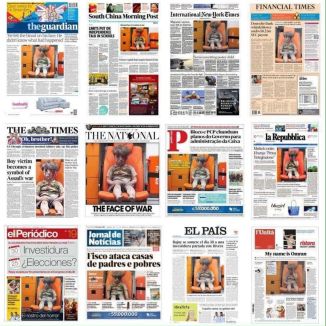
Western media sold the story of Russia/Syria bombing the home of Omran Daqneesh (didn’t happen), of the al-Quds hospital being “reduced to rubble” by Russian/Syrian bombing (didn’t happen), and a litany of other grotesque war propaganda stories.


897px-Omran_made_the_news


19022348_10155554719009059_87946180_o-1


DSCN7625-1
Suddenly we’re meant to find credible journalists who embed with al-Qaeda and whitewash their crimes, and media which have on many occasions used photos not even in Syria to accompany sensationalist war propaganda stories. 
CNN and western media got it wrong about Omran Daqneesh, but I haven’t even seen any retractions for this lie.
And yet the US wants people to believe that the independent voices and Russian and Syrian media who actually reported factually and honestly on these and other issues…are not credible. 
The US wants people to live in a fake news bubble, where the narratives are controlled by the war mongers. And, strangely, America seemingly wants Syrians to be subjected to media that reports opposite of the reality they are living. As if after nine years of enduring Western (and Gulf) media’s lies Syrians will suddenly believe them and decide to overthrow the president they elected (and support)? America is grasping at straws…

The OPCW Truth Bombs

Western nations accuse Russia of disinformation around whether Syria used a chemical weapon in Douma, eastern Ghouta.
In April 2018, Western media pounced on and promoted the White Helmets’ lies, shedding crocodile tears over civilians allegedly exposed to a chemical agent, at the same time ignoring or mocking the testimonies of 17 Syrians from Douma (including the boy starring in the White Helmets’ hoax video). 
Turns out the body tasked to examine this accusation omitted from its final report key findings that poke massive holes in the (West’s) official narrative around Douma. Not one, but many revelations have been leaked about the critical omissions of the OPCW  report. 
The only ones taking this seriously are mainly Russia, Syria and independent researchers. In the face of these recent revelations, most Western media have largely thus far been silent.
Similarly, Western media didn’t cover the December 2018 panel detailing damning findings on the White Helmets’ association (and membership) with terrorist groups in Syria, and their involvement in staging chemical attacks and in organ harvesting…
In the State Department’s quest for truthful reporting, one of the issues to be protected seemingly at all costs is of course the White Helmets (and the chemical hoaxes they help stage).
Anyone who has seriously researched the White Helmets, much less bothered to interview Syrian civilians about the fake rescue group, knows their footage and claims are as credible as the words of nurse Nayirah, Colin Powell, or the entries of Wikipedia.
Journalists who bothered to interview medical staff in Douma following the chemical hoax were told that doctors were treating patients with normal wartime injuries when “strangers” (including White Helmets members) entered yelling about a chemical attack, creating a panic (and demonstrating a lack of medical skills), and filming the scene with then 11 year old Hassan Diab.


Diab was one of the Syrians dismissed by western media when he testified to the OPCW that he had not been subject to a chemical attack but had been used by the White Helmets. For Western media, only some children are credible (exploited)…when it suits their narrative.
One such youth, Muhammad, gained notoriety when eastern Ghouta was being liberated. Like the Aleppo child Bana before him, the Ghouta teen had an account in his name on Twitter (the dodgy logistics of which I raised in my last article) and was busy parroting the accusations.
Incidentally, Ghouta (to the silence of media which claimed concern in 2018) is rebuilding, in peace.
In any case, I get the feeling people are tired of lying Western media, chemical hoaxes and the antics of the White Helmets. I certainly see propaganda apologists getting called out on Twitter more than prior, and people are extremely skeptical of chemical weapons accusations.
As Vassily Nebenzia said of the OPCW official report on Douma: “Humpty-Dumpty, as we know, “sat on a wall, had a great fall and all the king’s horses, all the king’s men, couldn’t put Humpty together again”. I mean, that is exactly what happened to FFM report. Exactly.”
RELATED:

River to Sea Uprooted Palestinian   
The views expressed in this article are the sole responsibility of the author and do not necessarily reflect those of the Blog!

Thursday, 16 January 2020

SYRIAN ARMY’S CREEPING OFFENSIVE ON IDLIB. NEVERENDING CEASEFIRES EXPLAINED


South Front

A new ceasefire in the Greater Idlib region of northwestern Syria started on January 12, at 00:01 local time. The ceasefire, once again brokered by Turkey and Russia, followed a series of successful advances by pro-government forces in southern Idlib. Just a few hours after start of the ceasefire, Hayat Tahrir al-Sham (formerly the official branch of al-Qaeda in Syria) and its supposedly ‘moderate’ counterparts shelled Aleppo city, targeting the districts of Shahba, al-Khalidiyah, al-Neil, al-Sabeel and Tishreen. At least 3 civilians were killed and 5 others – injured.
Despite this, the Syrian Army halted all of its offensive operations and air and artillery bombing campaigns against militants’ military infrastructure across Greater Idlib. Now, government troops open fire only in response to attacks by Hayat Tahrir al-Sham and its allies. They, in coordination with the Russian Reconciliation Center, also opened three humanitarian corridors (Al-Hobait – in southern Idlib, Abu Duhur – in southeastern Idlid, and Al-Hadher – in southwestern Aleppo) allowing civilians to leave the militant-controlled areas. The Idlib ‘opposition’ reacted by establishing own checkpoints near the corridors and imposing an unofficial tax for every persons that want to leave.
The new ceasefire effort caused a strong negative reaction among supporters of a military solution of the Idlib militants question. They reasonably say that the peace cannot be achieved in this part of Syria as long as al-Qaeda-style groups like Hayat Tahrir al-Sham dominate there. So, if Turkish-backed ‘moderate rebels’ cannot separate from al-Qaeda, they should face a military operation. In own turn, supporters of Idlib armed groups claim the army, Russia and Iran were just scared by their military might or, another version, the ceasefire is just another form of aggression because it allows civilians to leave Idlib, thus removing ‘human shields’ from the area. However, it seems that all these are a part of the larger trend.
Since the establishment of the Idlib de-escalation zone in September 2018, there have been 3 notable army operations against radical militants:
  • The April-June 2019 offensive, when government troops liberated Kafr Nabudah town and a number of nearby villages in northwestern Hama;
  • The August offensive that led to the liberation of Khan Shaykhun and nearby areas in southern Idlib;
  • The November-December operation in southern Idlib in the framework of which around 30 villages and settlements were liberated, and the army deployed in a striking distance from Maarat al-Numan, another key militant stronghold on the M5 highway.
All of these operations ended and even were interrupted by a number of temporary ceasefires. In general, the loop looked the next way:
  • Turkey, Russia, Damascus and the Turkish-backed ‘opposition’ agree on de-escalation efforts and the separation of “terrorists” and “moderate rebels”;
  • “Moderate rebels” do not separate from “terrorists”. Attacks on army positions across the contact line continue. Leaders of Idlib militant groups claim that the ‘bloody Assad regime’ is terrified and vow to crush the regime and its supporters;
  • The army and the Russian Reconciliation Center open humanitarian corridors allowing civilians to leave Greater Idlib. Militants try to prevent this sabotaging the effort. Despite this, some people leave;
  • Government forces launch an offensive delivering a blow to militants and liberating a notable chunk of territory;
  • The ‘international community’ and mainstream media report about numerous atrocities of the army against forces of the young Idlib democracy. Turkey and Russia agree on another ceasefire. The situation repeats.
At the first look this approach looks contrary to a straight logic. It is hard to imagine that somebody believes that the real ceasefire and political settlement is possible with al-Qaeda as one of the key powerbrokers on the ground. Nonetheless, it leads to apparent results: more and more civilians are being evacuated from Idlib and the Syrian Army liberates more and more areas. During the December offensive, even Hayat Tahrir al-Sham supporters had a suspicious that something was going wrong. In these conditions the main question is that how many such ceasefires will be needed to get rid of all radicals in the region?
Related Videos

حوار خاص 2020/1/15 تقديم : حسين الفياض
ريف إدلب .. الإخبارية ترصد واقع ممر أبو الضهور | وليد هناية

Related News

River to Sea Uprooted Palestinian   
The views expressed in this article are the sole responsibility of the author and do not necessarily reflect those of the Blog!
Sunday, 5 January 2020

MEDIA HAVE BEEN SPREADING PROPAGANDA AGAINST SYRIA FOR YEARS – JOURNALIST


Dec 31, 2019, RT America:

“Fallout continues from recent Wikileaks revelations, which confirmed that the OPCW had been pressured to alter its report to cover up evidence about the alleged April 2018 chemical attack in Douma, Syria. Investigative journalist and on-the-ground reporter Eva Bartlett joins In Question to discuss.”
*
I thank Robert Thorpe for his summary of the interview:
“Steadfast Canadian journalist Eva Karene Bartlett, who has spent months on the ground in many parts of Syria since 2014, discusses Western propaganda designed to mislead people about Syria, demonize the nation in support of Western efforts to overthrow its sovereign government, and the defacto complicity in terrorism of the US, British, Canadian and other NATO governments.
She raises the issue of the recent resignation of Newsweek journalist Tareq Haddad’s from the publication over the censorship of his coverage of recent leaked internal OPCW documents which show that the senior management of UN sponsored organization produced fraudulent reporting of the non-existent alleged gas attack (a White Helmet false flag) at Douma used to justify US, French and British missile attacks on Syria.
Related/Mentioned Links:

River to Sea Uprooted Palestinian   
The views expressed in this article are the sole responsibility of the author and do not necessarily reflect those of the Blog!

Saturday, 14 December 2019

“The Good Terrorists”: How U.S. Airstrikes Helped Prop Al-Qaeda in Syria’s Idlib?


Global Research, December 14, 2019

Marines
Al-Qaeda in Syria has two noteworthy apologists. One is the jihadist propagandist Bilal Abdul Kareem, a former correspondent for CNN, often seen in videos sporting a long beard and reporting from the ground in the al-Nusra Front strongholds in northwestern Syria, and the other is Syria analyst and the fellow of the Middle East Institute Charles Lister.
Recently, Lister has written a research paper for the Hudson Institute, titled “The Syria Effect: Al-Qaeda Fractures,” [1] in which he has tried to prove that militants of al-Qaeda in Syria are not “bad guys” per se, rather they are “good terrorists” whose ambitions are restricted to fighting the Syrian government, and they don’t intend to mount terror attacks in the Western countries.
In conclusion of the lengthy screed, he has craftily proposed “Gaza-fication” of Syria’s northwestern Idlib, where like the Hamas in Gaza, the so-called “Salvation Government” of the al-Nusra Front, the Syrian affiliate of al-Qaeda, can be recognized as a legitimate government administering the northwestern enclave under the tutelage of Ankara.
Unwittingly, however, Charles Lister has spilled the beans in the article about a July 30 American airstrike in rural Aleppo that killed several high-profile jihadist dissidents, who had challenged the unity of the Washington-backed insurgency against the Syrian government offensive in northern Hamah and Idlib in late April.
Before getting into details, it’s worth noting that Hurras al-Din is a small radical outfit in Syria’s northwestern Idlib that split in 2018 from al-Qaeda in Syria, which was formerly known as al-Nusra Front until 2016, and now as Hayat Tahrir al-Sham (HTS).
An excerpt from Charles Lister’s research paper reads:
“When the Syrian regime and Russia launched their all-out military offensive on northwestern Syria in late-April 2019, a debate ensued within Hurras al-Din – a breakaway faction of Tahrir al-Sham, formerly known as al-Nusra Front – should they assist Tahrir al-Sham and other opposition groups by reinforcing their frontlines in northern Hama?
“Given al-Qaeda Central chief Ayman al-Zawahiri’s public directives indicating the importance of Islamist unity and sustaining the armed struggle against the regime, the leader of Hurras al-Din Abu Hammam al-Suri and his deputy Sami al-Oraydi emerged as tacitly supportive of helping other jihadist groups, including Tahrir al-Sham, wherever necessary.
“The debate over Hurras al-Din’s role on Tahrir al-Sham’s opposition frontlines spilled out into the open in late June of 2019, when Hurras al-Din leader Abu Hammam al-Suri expelled two prominent Hurras al-Din clerics, Abu Dhar al-Masri and Abu Yahya al-Jazairi, for having issued non-sanctioned rulings forbidding fighting in northern Hama. Some alleged Abu Yahya had gone as far as pronouncing takfir on Tahrir al-Sham, thereby excommunicating them from Islam and labeling them apostates and legitimate targets for attack.
“Abu Hammam’s dismissal of Abu Dhar and Abu Yahya sparked an uproar within Hurras al-Din. The group’s internal judicial court, led by Abu Amr al-Tunisi, issued a petition signed by more than 300 members on June 23 demanding an arbitration involving Abu Hammam and his deputy, Sami al-Oraydi.
“However, neither Abu Hammam nor Oraydi turned up at the planned arbitration on June 25, leading the court’s chief, Abu Amr, to issue a furious five-minute audio statement accusing HaD’s leaders of nepotism. Abu Amr was swiftly expelled from Hurras al-Din, and this led another senior leader, Abu Yaman al-Wazzani, to declare in exasperation ‘the jihadist project over.’ Later that day, a statement confirmed that Wazzani and another fellow critic, Abu Musab al-Libi, had also been expelled from Hurras al-Din.
“Tensions persisted through the summer of 2019, albeit less intensely. But in a mysterious twist on June 30, 2019—just days after the above-mentioned crisis—Abu Amr al-Tunisi, Abu Yahya al-Jazairi and Abu Dhar al-Masri were all killed, along with three other allied hardliners (Abu al-Fid’a al-Tunisi, Abu Dujana al-Tunisi and Abu Ibrahim al-Shami) in an American airstrike that targeted a meeting of Hurras al-Din detractors in rural Aleppo.
“That was the first American strike in northwestern Syria in more than two years and it was followed up two months later by another on August 31, 2019, targeting Hurras al-Din ally Ansar al-Tawhid. Al-Qaeda veteran Abu Khallad al-Mohandis was also killed in an improvised explosive device attack that targeted his personal vehicle in Idlib city on August 22, 2019.”
It becomes abundantly clear after reading the excerpts from Charles Lister’s article that not only has Washington provided weapons and training to militant factions battling Damascus but it has also conducted airstrikes eliminating jihadist dissidents who dared to threaten the unity of large militant outfits in northwestern Idlib, such as Tahrir al-Sham, formerly known as al-Nusra Front.
During the eight-year proxy war in Syria, Abu Mohammad al-Jolani, the leader of al-Nusra Front, has emerged as the second most influential militant leader after the Islamic State’s slain chief Abu Bakr al-Baghdadi. In fact, since the beginning of the Syrian conflict in August 2011 to April 2013, the Islamic State and al-Nusra Front were a single organization that chose the banner of Jabhat al-Nusra.
Although the current al-Nusra Front has been led by Abu Mohammad al-Jolani, he was appointed[2] as the emir of al-Nusra Front by Abu Bakr al Baghdadi, the late leader of Islamic State, in January 2012. Thus, al-Jolani’s Nusra Front is only a splinter group of the Islamic State, which split from its parent organization in April 2013 over a leadership dispute between the two organizations.
In August 2011, Abu Bakr al-Baghdadi, who was based in Iraq, began sending Syrian and Iraqi jihadists experienced in guerrilla warfare across the border into Syria to establish an organization inside the country. Led by a Syrian known as Abu Mohammad al-Jolani, the group began to recruit fighters and establish cells throughout the country. On 23 January 2012, the group announced its formation as Jabhat al-Nusra.
In April 2013, Abu Bakr al-Baghdadi released an audio statement in which he announced that al-Nusra Front had been established, financed and supported by the Islamic State of Iraq. Al-Baghdadi declared that the two groups were merging under the name “Islamic State of Iraq and Syria.” The leader of al-Nusra Front, Abu Muhammad al-Jolani, issued a statement denying the merger and complaining that neither he nor anyone else in al-Nusra’s leadership had been consulted about it.
Al-Qaeda Central’s leader, Ayman al Zawahiri, tried to mediate the dispute between al-Baghdadi and al-Jolani but eventually, in October 2013, he endorsed al-Nusra Front as the official franchise of al-Qaeda Central in Syria. Abu Bakr al-Baghdadi, however, defied the nominal authority of al-Qaeda Central and declared himself the caliph of the Islamic State of Iraq and Syria.
Keeping this background in mind, it becomes abundantly clear that a single militant organization operated in Syria and Iraq under the leadership of al-Baghdadi until April 2013, which chose the banner of al-Nusra Front, and that the current emir of the subsequent breakaway faction of al-Nusra Front, al-Jolani, was actually al-Baghdadi’s deputy in Syria.
Thus, the Islamic State operated in Syria since August 2011 under the designation of al-Nusra Front and it subsequently changed its name to the Islamic State of Iraq and Syria (ISIS) in April 2013after which it overran Raqqa and parts of Deir al-Zor in the summer of 2013. And in January 2014, it overran Fallujah and parts of Ramadi in Iraq and reached the zenith of its power when it captured Mosul in June 2014.
Excluding al-Baghdadi and a handful of his hardline Islamist aides, the rest of Islamic State’s top leadership is comprised of Saddam-era military and intelligence officials. According to a Washington Post report [3], hundreds of ex-Baathists constitute the top- and mid-tier command structure of the Islamic State who plan all the operations and direct its military strategy.
It is an indisputable fact that morale and ideology play an important role in battlefield, and well-informed readers must also be aware that the Takfiri brand of most jihadists these days has directly been inspired by the puritanical Wahhabi-Salafi ideology of Saudi Arabia, but ideology alone is not sufficient to succeed in battle.
Looking at the Islamic State’s astounding gains in Syria and Iraq in 2013-14, a question naturally arises that where did its recruits get all the training and state-of-the-art weapons that were imperative not only for hit-and-run guerrilla warfare but also for capturing and holding large swathes of territory in Syria and Iraq.
According to a revelatory December 2013 news report [4] from a newspaper affiliated with the UAE government which supports the Syrian opposition, it is clearly mentioned that along with AK-47s, rocket-propelled grenades and other military gear, the Saudi regime also provided machine gun-mounted Toyota pick-up trucks to every batch of five jihadists who had completed their training in the training camps located in Jordan’s border regions along southern Syria.
Once those militants crossed over to Daraa and Quneitra in southern Syria from the Jordan-Syria border, then those Toyota pickup trucks could easily have traveled all the way to Raqqa and Deir al-Zor in eastern Syria, and thence to Mosul and Anbar in Iraq – the former strongholds of the Islamic State.
It is clearly spelled out in the report that Syrian militants got arms and training through a secret command center known as the Military Operations Center (MOC) based in the intelligence headquarters’ building in Amman, Jordan, that was staffed by high-ranking military officials from 14 countries, including the US, European nations, Israel and the Gulf states to wage a covert war against the Syrian government.
*
Note to readers: please click the share buttons above or below. Forward this article to your email lists. Crosspost on your blog site, internet forums. etc.
Nauman Sadiq is an Islamabad-based attorney, columnist and geopolitical analyst focused on the politics of Af-Pak and Middle East regions, neocolonialism and petro-imperialism. He is a regular contributor to Global Research.
Notes

River to Sea Uprooted Palestinian   
The views expressed in this article are the sole responsibility of the author and do not necessarily reflect those of the Blog!