Showing posts with label Torture. Show all posts

Wednesday, 6 October 2021

Muslim Al-Muhsin: Another Innocent Victim Beheaded in the Saudi Kingdom of Blood

 October 5, 2021

Muslim Al-Muhsin: Another Innocent Victim Beheaded in the Saudi Kingdom of Blood

By Staff

Rushing to fill this year’s bloody record of beheading its own nationals, Saudi Arabia executed a citizen from the al-Awamia Neighborhood in the Shia-populated Eastern Province of Qatif on Tuesday, October 5, 2021.

The Kingdom’s Ministry of Interior identified the Saudi national as Muslim Mohammad al-Muhsin.

Al-Muhsin was brutally arrested from his workplace at al-Araf Commercial Center in the Saudi town of Awamia in the eastern province of Qatif on Monday, November 23rd, 2015.

The Saudi regime claimed that al-Muhsin “was behind the killing of Dhaifulla al-Qarashi, attempted to confront the security forces, and opened fire towards them.” During the arrest, the Saudi regime forces opened fire, shot him in his leg and arrested him, while unlike their narrative, no security personnel was harmed, even in the reports circulating by the regime’s media outlets.

Locals, however, who were present at the time of the arrest, indicated that more than 15 security personnel stormed the commercial center, moved towards al-Muhsin immediately and started beating him using batons and the bottoms of their machine guns. They even forced customers who were at the place to lie on the ground.

Without providing any evidence on the fabricated claims, the Saudi authorities neither identified were the incident took place, nor the weapon that was used by the alleged perpetrator.

Al-Muhsin was brutally tortured during his arrest, not to mention the pain he had been through as the regime arrested him without removing the bullet he sustained in his left leg during the raid. He was also deprived from the right to assign a lawyer in a grave violation of human rights, as well as local and international laws.

After several delays of the show trial sessions, the Appellate Court of the Specialized Criminal Court decided to sentence al-Muhsin to death, in yet another brutal measure of many similar Saudi regime measures consistently targeting the people of the kingdom’s Shia-populated region.

The sentence was executed after the non-proved guilty citizen had spent almost six years behind bars, where only God knows what kind of treatment he had been through.


River to Sea Uprooted Palestinian   
The views expressed in this article are the sole responsibility of the author and do not necessarily reflect those of the Blog!

Tuesday, 21 September 2021

199 Rights Groups Urge Protection for Rearrested Palestinian Inmates

  SEPTEMBER 21, 2021

199 Rights Groups Urge Protection for Rearrested Palestinian Inmates

By Staff, Agencies

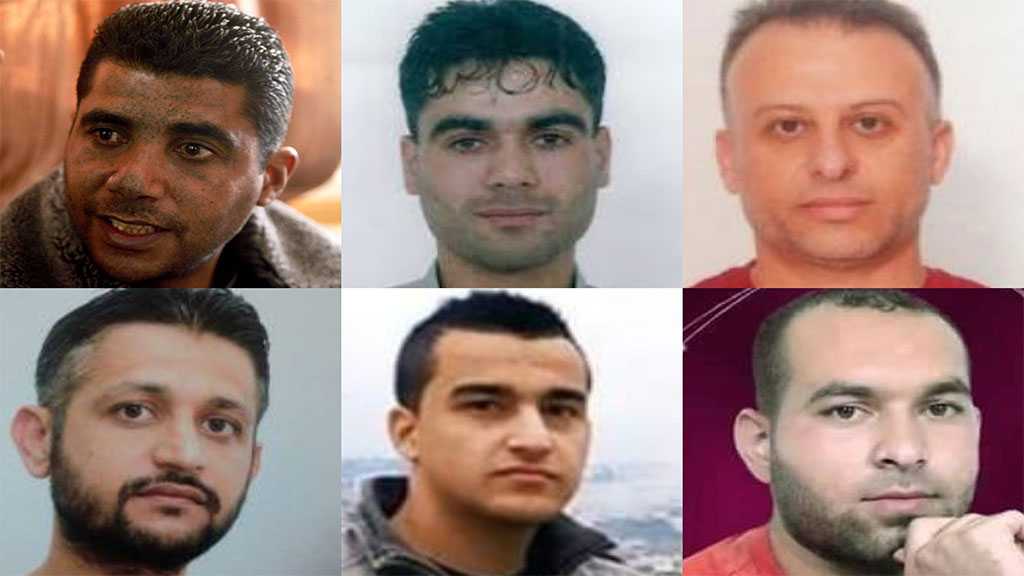
Nearly 200 human rights organizations have held the Zionist entity fully responsible for the lives and safety of six prisoners who tunneled their way out of a maximum security Zionist detention center earlier this month and were arrested later.

A total of 199 organizations, in a joint statement released on Monday, called for the formation of an independent international investigation committee to immediately look into the conditions of their detention.

“According to the testimony of lawyers, ‘Israeli’ occupation forces assaulted them harshly from the moment of arrest, causing multiple bodily injuries. The injuries necessitated hospitalization of some of them as they had been subjected to unjustified violence and torture,” the statement read.

“They are deprived of sleep, and have been interrogated after complete sleep deprivation, according to available information. Interrogators have made death threats against some of them, and their relatives have also been arbitrarily arrested for the purposes of revenge.”

The human rights organizations stressed that the mistreatment of the prisoners amounts to a violation of international and humanitarian principles.

They demanded the “urgent formation of an independent, impartial and honest international investigation committee to examine circumstances surrounding the arrest of the six Palestinian prison escapees, and to hold the perpetrators of violations to account.”

The organizations called upon Arab nations and expatriates to advocate for Palestinian prisoners and detainees in Zionist occupation jails, and to raise their cause through social media platforms.

The rights organizations asked the Hague-based International Criminal Court to prosecute ‘Israeli’ prison officials responsible for the torture of Palestinian detainees.

They urged the Arab League and its bodies to support Palestinian prisoners, and to activate effective mechanisms at the international level.

The rights organizations stressed that UN special rapporteurs, especially Special Rapporteur on the situation of human rights in the occupied Palestinian territory Michael Lynk, should actively shed light on the Zionist entity’s systematic torture of Palestinian prisoners and detainees, and take the matter to the United Nations.

On Sunday, the Zionist occupation forces arrested the two remaining prisoners, who had escaped from Gilboa Prison more than two weeks ago.

A former commander of the al-Aqsa Martyrs’ Brigade in Jenin and five Islamic Jihad members had tunneled their way out through their cell’s drainage system and escaped from the prison on September 6.

There are reportedly more than 7,000 Palestinians held at Zionist jails. Hundreds of the inmates have been apparently incarcerated under the practice of administrative detention.

River to Sea Uprooted Palestinian   
The views expressed in this article are the sole responsibility of the author and do not necessarily reflect those of the Blog!

Tuesday, 31 August 2021

Enforced Disappearance: A Crime against Humanity Systematically Practiced by Saudi Arabia

 August 31, 2021

Enforced Disappearance: A Crime against Humanity Systematically Practiced by Saudi Arabia

By the European Saudi Organization for Human Rights

On the International Day of the Victims of Enforced Disappearance, which is commemorated every year on August 30, UN Secretary-General Antonio Guterres stressed that, despite being “strictly prohibited by international human rights law in all circumstances, enforced disappearances continue to be used worldwide as a means of repression, intimidation and stifling opposition. Lawyers, witnesses, political opposition and human rights defenders are at particular risk of enforced disappearance,” he said. “This deprives families and communities of the right to know the truth about their loved ones, accountability, justice and reparations.”

The Kingdom of Saudi Arabia practices enforced disappearance, on a large scale, especially against political detainees and opinion-makers through blatant circumvention and evasion. Most families of the victims are unaware of the fate of their relatives, after they have been detained on the street or in their workplaces, because they have been deprived the right to communicate with them and have no access to a lawyer.

In many cases, after a forced disappearance, that last for hours or days, officials at General Investigation Prisons allow the disappeared person a brief contact to inform his family of his whereabouts, only to return and disappear for periods lasting a year or more, during which he is tortured and denied the right to communicate with the outside world or access a lawyer.

In other cases, enforced disappearance extends without any information about the victim’s whereabouts or the reason for the arrest, for months or years. In light of Saudi Arabia’s intimidation policy against activists and human rights defenders.

The European-Saudi Organization for Human Rights documented the Saudi Arabian government’s use of enforced disappearance as a prelude to torture, extracting confessions, and in many cases the use of these confessions to issue death sentences.

Enforced disappearance is defined, according to the article II of the International Convention for the Protection of Persons from Enforced Disappearance, as “arrest, detention, abduction or any other form of deprivation of liberty by agents of the State or by persons or groups of individuals acting with the authorization, support or acquiescence of the State, followed by a refusal to acknowledge the deprivation of liberty or by concealment of the fate or whereabouts of the disappeared person, which deprives him of the protection of the law”.

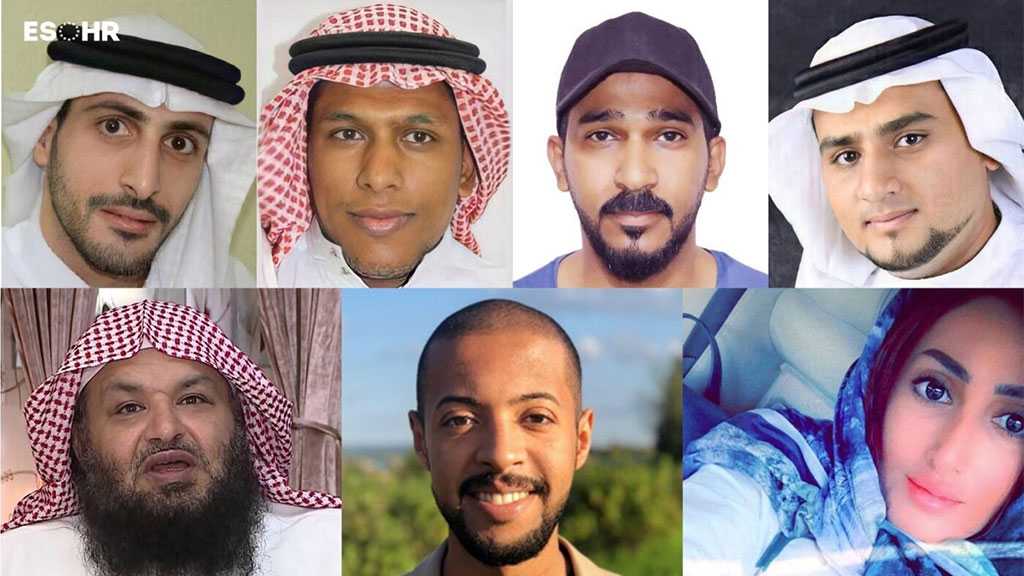
During 2021, ESOHR monitored the practice of enforced disappearance by the security services against a number of detainees, including activists:

Abdullah al-Mubaraki:

On July 22, 2021, Al-Mabaheth forces arrested online activist Abdullah bin Awad al-Mubaraki from his home in Yanbu. The family does not officially know the reason for the arrest and news broke from the moment of the arrest. Despite attempts by the family to find out where he is, and to verify his whereabouts from the prisons of Yanbu, Medina and Jeddah, they have been unable to reach him. However, activists believe that the reason for his arrest stems from his expression of opinion, his participation in campaigns on social media to defend political and civil rights, and his opposition to government policies.

Lina al-Sharif

In late May 2021, officials from the Saudi State Security Presidency raided the Sharif family’s home in Riyadh, arresting Dr. Lina al-Sharif and taking her to an unknown location. Before her arrest, al-Sharif had been active on social media, discussing Saudi politics and defending human rights issues in Saudi Arabia.

Abdullah

On May 12, 2021, State Security forces arrested Abdullah Jilan, in Medina, after it stormed his mother’s house and searched him before taking him to an unknown location. Jilan was active on Twitter, calling for his right to work and fundamental freedoms in Saudi Arabia. So far, his fate and whereabouts remain unknown.

Najla Abd El-Aziz:

Saudi security forces arrested activist Najla Abdul Aziz Mohammed al-Marwan on July 20, 2021, from her home in the capital al-Riyadh. Najla is a young divorced woman and a mother of two children. According to reports, Saudi Arabia is still forcibly hiding her after more than a month in detention, and the family has no information about her.

Najla’s Twitter account shows that she welcomed and supported the call to demonstrate in conjunction with Arafa Day. A group of activists launched a hashtag called #Arafat_Day_protest, and called for participation in a campaign against the government’s policies and the Crown Prince Mohammed bin Salman, with the goal of calling for the release of detainees, in addition to enabling young people’s right to employment, tax removal, and more.

ESOHR also monitored other arbitrary arrests. Local sources said victims were also subjected to enforced disappearance, including Sheikh Abdullah al-Shihri, who was arrested for tweets criticizing statements made by Crown Prince Mohammed Bin Salman. Among those reported missing are Reina Abdulaziz and Yasmine al-Ghafili.

Continuous Enforced Disappearances:

In addition, Saudi Arabia regularly hides individuals, with no information on their whereabouts for years.

In April 2016, preacher Suleiman al-Darwish disappeared during his visit to Mecca. His family does not know any details about the arrest or its reasons nor has it been officially informed of any information about his whereabouts. However, the Ministry of Interior posted his name on its website, which is dedicated to identifying the names and status of detainees. The statement indicated that he was “under investigation”, but his name was removed after a while.

Al-Darwish is still missing and despite the request from the UN Working Group on Enforced Disappearances for official information from Saudi Arabia on his whereabouts, his whereabouts remain unknown.”

Human rights organizations that received information in May 2012 confirmed to them that Al-Duwaish was transferred directly to the office of Saudi Crown Prince Muhammad bin Salman after his arrest, where he beat him.

In August 2015, the Saudi government announced the arrest of Ahmad al-Mughassil in the Lebanese capital, Beirut. Since his arrest six years ago, the family has not been able to contact him or to know his whereabouts. Although Saudi Arabia announced the arrest, it did not announce where he was being held or the charges he is officially facing. Information the family received about the possible murder or death under torture raised concerns that the family could not get any information about his condition since his arrest.

In January 2020, Saudi security forces arrested Mohammed Al Ammar during a military raid in Qatif. The Saudi government announced the arrest of Ammar, who had been on wanted lists for years, but the family was unable to find out where he was, and they did not allow him any visits. In light of information about his severe injury during the arrest. Al-Ammar was not offered a trial, unless his whereabouts were known to be in enforced disappearance.

Hide as an introduction to unfair judgments:

Besides the cases in which individuals are still forcibly disappeared, detainees face harsh sentences, sometimes up to death, despite being subjected to enforced disappearance at the time of arrest. Among them is Mohammed Al-Shakhouri, who was forcibly disappeared by the Saudi government for three days after his arrest, and who was then able to communicate with his family in brief call, not being able to know what he was exposed to for eight months. The organization has also monitored executions of detainees including minors, despite violations there were subjected to including enforced disappearances, such as Abdelkrim al-Hawaj.

According to ESOHR, the Saudi government uses enforced disappearance for a variety of reasons. While in many cases concealment is used as a prelude to torture in order to extract confessions, it is used for reprisal motives that refuse to disclose definitively the status and location of the person forcibly disappeared and to intimidate the community and families.

The organization maintains that Saudi Arabia, through its practice of enforced disappearance, is committing a “crime against humanity” violating its domestic and international laws. And it recalls that no justification for the continuation of this crime can be invoked, as affirmed in the International Convention for the Protection of All Persons from Enforced Disappearance: “No exceptional circumstances whatsoever, whether a state of war or the threat of war, internal political instability or any other exception, may be invoked to justify enforced disappearance.”


River to Sea Uprooted Palestinian   
The views expressed in this article are the sole responsibility of the author and do not necessarily reflect those of the Blog!

Friday, 23 July 2021

Data Leak Raises New Questions over Capture of Princess Latifa

 July 22, 2021

Data Leak Raises New Questions over Capture of Princess Latifa

By Staff, The Guardian

For a few days Princess Latifa had dared to think she could relax. An extraordinary plan to escape from a father she said had once ordered her “constant torture” was looking as if it might work, as she sat on a 30-metre yacht on the Indian Ocean, her home city of Dubai further and further away.

Yet the daughter of Sheikh Mohammed bin Rashid al-Maktoum, the ruler of the glittering Emirati city, still wanted to connect with home, to tell family and friends something of her new-found freedom, sending emails, WhatsApp messages and posting on Instagram from what she thought were two secure, brand new “burner” pay-as-you-go mobile phones.

It was a decision that may have had fateful consequences, according to analysis by the Pegasus project.

At the height of the escape drama, it can now be revealed, the mobile numbers for Latifa and some of her friends back home appeared on a database at the heart of the investigation.

It raises the possibility that a government client of the NSO Group was drawing up possible candidates for some sort of surveillance.

It was late February 2018, and Princess Latifa, then 32, had been desperate to flee her father’s emirate for many years. She had made a “very, very naive” first attempt in 2002, arranging to be driven across the border to neighbouring Oman, but was easily recaptured. This time she hoped it was different, but had prepared for the worst.

When planning her second escape, Latifa had prepared a video to be released online if the latest effort was foiled, explaining why she wanted to quit home. In it, Latifa described how she was beaten and tortured between 2002 and 2005, during which time she was also forcibly injected with sedatives, and once told by her captors: “Your father told us to beat you until we kill you.”

They were extraordinary claims of abuse that were accepted as truthful in a fact-finding judgment from an English judge, part of a custody battle between Sheikh Mohammed and his sixth and former wife, Princess Haya, over their two young children. Part of that continuing case turns on how Dubai’s ruler treated some of his other children, although after the fact-finding ruling, Sheikh Mohammed insisted it had only told “one side of the story”.

Alongside Latifa on the Nostromo was her best friend and confidant, a Finn with a taste for adventure, Tiina Jauhiainen. She had first met the princess at the end of 2010, when she was asked to become her fitness instructor, and had become so close that the princess asked for her help to get out of the country, in an elaborate scheme worthy of a film.

Also on board was Herve Jaubert, a former French spy, who was captaining the vessel. It was Jaubert who had devised the yacht end of the escape plan after Latifa recruited him – Jauhiainen later told a London court he was paid €350,000 – after she had come across a book he had written about escaping from Dubai, after a business deal he was involved in ran into trouble nearly a decade before.

Latifa and Jauhiainen believed their communications, via the yacht’s satellite uplink, were secure.

They had taken some precautions: Jaubert had turned the ship’s tracking device off and their phones were new, with brand new sim cards.

Latifa and Jauhiainen began their escape at 7am on 24 February from downtown Dubai. The princess’s driver had dropped her off to meet her friend for breakfast, then Latifa changed clothes in the cafe’s bathroom, where she ditched her normal mobile phone, leaving it on silent in the bathroom and went on the run.

Likening themselves to the ill-fated Thelma and Louise, the duo drove six hours to Muscat in neighboring Oman. There with the help of Christian Elombo, a former French soldier and a friend of both women, they made a difficult journey by dinghy and jetski, 13 miles out into the ocean to international waters, where Jaubert and the Nostromo were waiting.

Meanwhile, back in Dubai the hunt for the missing princess had started. A day later, on 25 February, Latifa’s phone appeared in the leaked data list, by Dubai’s doing, it is thought, although not much may have been gleaned, given that it had been left behind in the cafe.

Elombo and his friend, who were supposed to leave Oman, were picked up a day later and questioned by the authorities on behalf of the neighboring state. Realizing contact with Elombo had been lost, and becoming a little more nervous, Latifa and Jauhiainen revised their plan. They had intended to go to Sri Lanka, from where Latifa would fly to the US to claim asylum, but instead they opted to land in India.

Yet, it did not appear to matter much, because for the first four days at sea, until 28 February, there was nobody on their tail. Latifa and Jauhiainen were thrilled to have made it, although conditions were not luxurious: there was an ever-expanding number of cockroaches onboard and, apart from watching a few bad movies, there was not much to do. Inevitably they ended up spending time on their phones.

On the same day, 28 February, the numbers of some of her friends began appearing on the list that is determined to have come from Dubai.

At home, one of Latifa’s few freedoms had been skydiving; she had jumped frequently with Jauhiainen among others. But it was other members of the daredevil club whose numbers were being added to the list in the days that followed, including Juan Mayer, a photographer who regularly took pictures of the princess mid-air, which formed the basis of a short magazine feature.

The data indicates other numbers began to appear too: those of Lynda Bouchiki, an events manager, and, more significantly, Sioned Taylor, a Briton who lived in Dubai, working as a maths teacher in a girls’ school. Taylor, too had been a member of the skydiving club.

Both Bouchiki and Taylor had known Latifa from acting as chaperones prior to her flight. After she had been released from prison, the princess was never allowed out of home unsupervised; friends of the princess say that Taylor, in particular, had also become a close friend.

On the Nostromo, Jauhiainen, who spoke to the Guardian in April, remembers Latifa messaging both Taylor and Bouchiki. The latter did not reply, but she clearly remembers that the princess was chatting with Taylor while they were onboard. At one point Latifa even became suspicious, saying: “I’m not sure this is Sioned,” but the communications continued.

What that signified precisely is unclear, but what the database shows is that Taylor’s mobile phone was listed repeatedly – on 1 and 2 March and again on the day Latifa was to be captured, 4 March. Bouchiki’s number appeared again, on 2 March.

Without forensic examination of phones, it is not possible to say whether any attempt was made to infect the devices, or whether any infection attempt was successful.

But at sea, the situation had changed, ominously. Jaubert says it was on 1 March, a day after Latifa’s friends and family were first targeted that he first noticed the first ship following the Nostromo, curiously taking the same route and following at the same speed. Spotter planes followed soon after that.

It was clear they had been picked up by the Indian coastguard. The captain became increasingly nervous, also emailing a campaign group, Detained in Dubai, worrying that he might run out of fuel as he chose to head towards the Indian port city of Goa, and seeking their help. But they were never to arrive.

After 10pm on 4 March, about 30 miles offshore, in an operation authorized by the prime minister, Narendra Modi, at the request of Dubai, around 15 Indian commandos in “full military gear” stormed the yacht, firing stun grenades to incapacitate those onboard.

Latifa and Jauhiainen panicked, running below deck and locking themselves in the bathroom in a desperate attempt not to be seized. Latifa frantically rang Radha Stirling from Detained in Dubai, who said the princess was “frightened, hiding, that there were men outside and that she heard gunfire” on the emergency call.

But the two women had to give themselves up, as smoke poured in through the bathroom vents. They were captured and dragged to the deck, and according to Jauhiainen, Latifa was screaming, in English: “Shoot me here, don’t take me back” as she was dragged off, handed over to waiting Emirati forces, tranquillized and returned to Dubai.

Dubai did not respond to a request for comment. Sheikh Mohammed did not respond, although it is understood he denies having attempted to hack the phones of Latifa or her friends or associates, or ordering others to do so. He has also previously said he feared Latifa was a victim of a kidnapping and that he had conducted “a rescue mission”.

NSO denies the leaked list of numbers is that of “Pegasus targets or potential targets” and says the numbers are not related to the company in any way. Claiming that a name on the list is “is necessarily related to a Pegasus target or potential target is erroneous and false”.

Jauhiainen and Jaubert were released after a short period of detention, with the Finn relocating to London. Latifa was held under house arrest back home, and after a while managed to smuggle out fresh videos to Jauhiainen to tell more about her plight. “I’m a hostage. I am not free. I’m enslaved in this jail,” she angrily said.

But in the past three months there has been a notable change, involving two of the women Latifa tried to message from the boat. In May, Taylor posted a picture on Instagram of Latifa, sitting in a Dubai shopping mall, with her and Bouchiki, to show she was enjoying a degree of freedom at home.

Then, in June a picture followed of Latifa inside Madrid’s main airport, indicating she had been able to travel abroad. “I hope now that I can live my life in peace without further media scrutiny,” the princess said in a statement released by her lawyers, suggesting after the years of conflict some sort of accommodation with her father had been reached.

With the passage of time, it may never be possible to establish definitively how Latifa was recaptured at gunpoint.

NSO said that the fact that a number appeared on the list was in no way indicative of whether that number was selected for surveillance using Pegasus.


River to Sea Uprooted Palestinian   
The views expressed in this article are the sole responsibility of the author and do not necessarily reflect those of the Blog!

Saturday, 26 June 2021

Palestinians protest death of activist Nizar Banat in PA police custody

 Death of prominent critic of the Palestinian Authority has unleashed anger at President Mahmoud Abbas

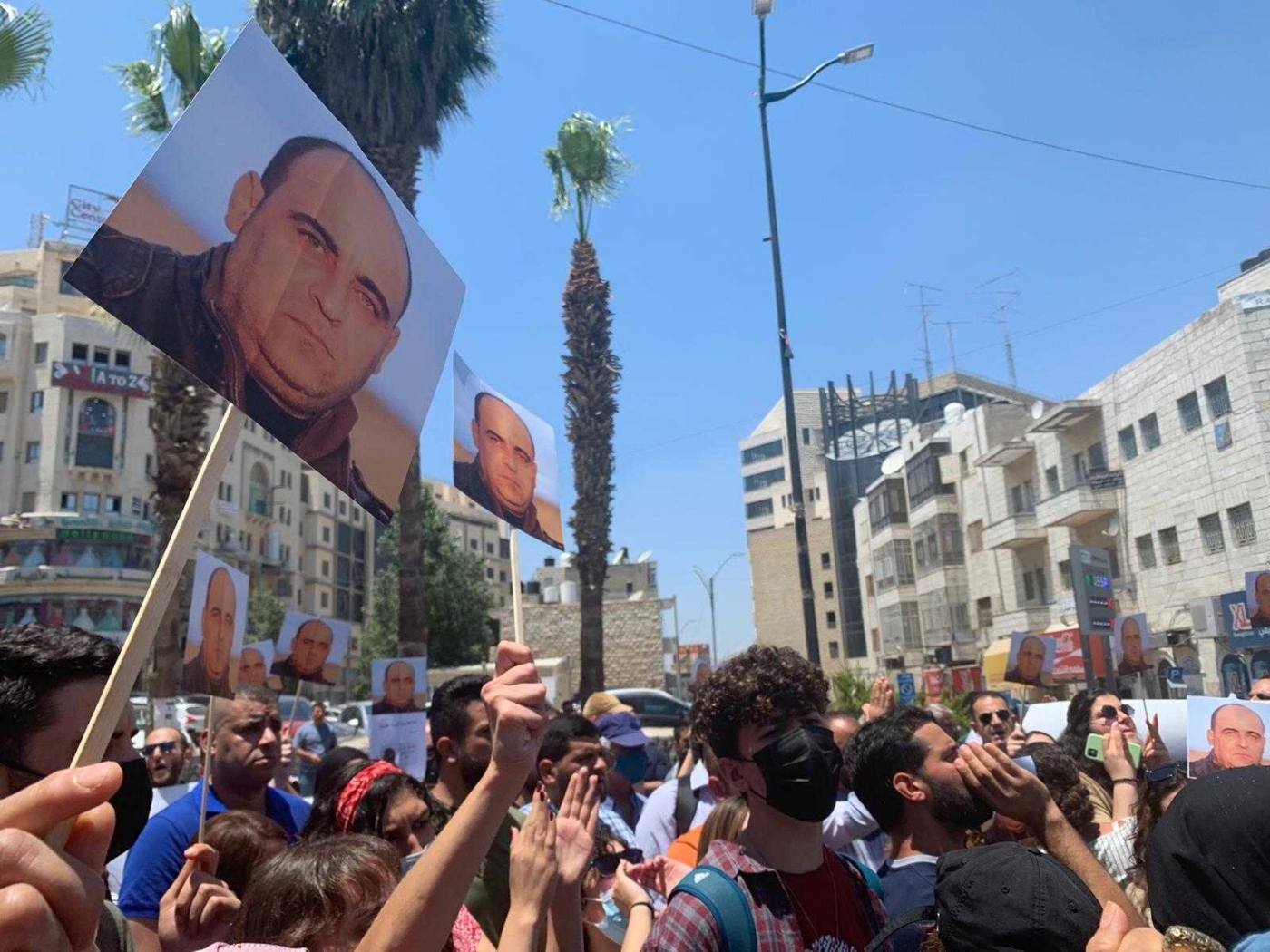
Protesters hold photos of Nizar Banat, who died in the custody of Palestinian Authority security forces, during a demonstration in the occupied West Bank city of Ramallah on 24 June 2021 (MEE/Shatha Hammad)

By Shatha Hammad in Ramallah, occupied West BankPublished date: 24 June 2021 11:40 UTC | Last update: 8 hours 33 mins ago

Protesters took to the streets in the occupied West Bank on Thursday, facing police repression following the death of prominent critic of the Palestinian Authority (PA) Nizar Banat overnight while in the custody of PA forces.

In Ramallah, the administrative centre of the PA, thousands of demonstrators chanted: “In soul, in blood, we defend you Nizar.”

Many other slogans took direct aim at the PA and President Mahmoud Abbas, with chants including: “The people want the downfall of the regime,” and “Leave, leave Abbas.”

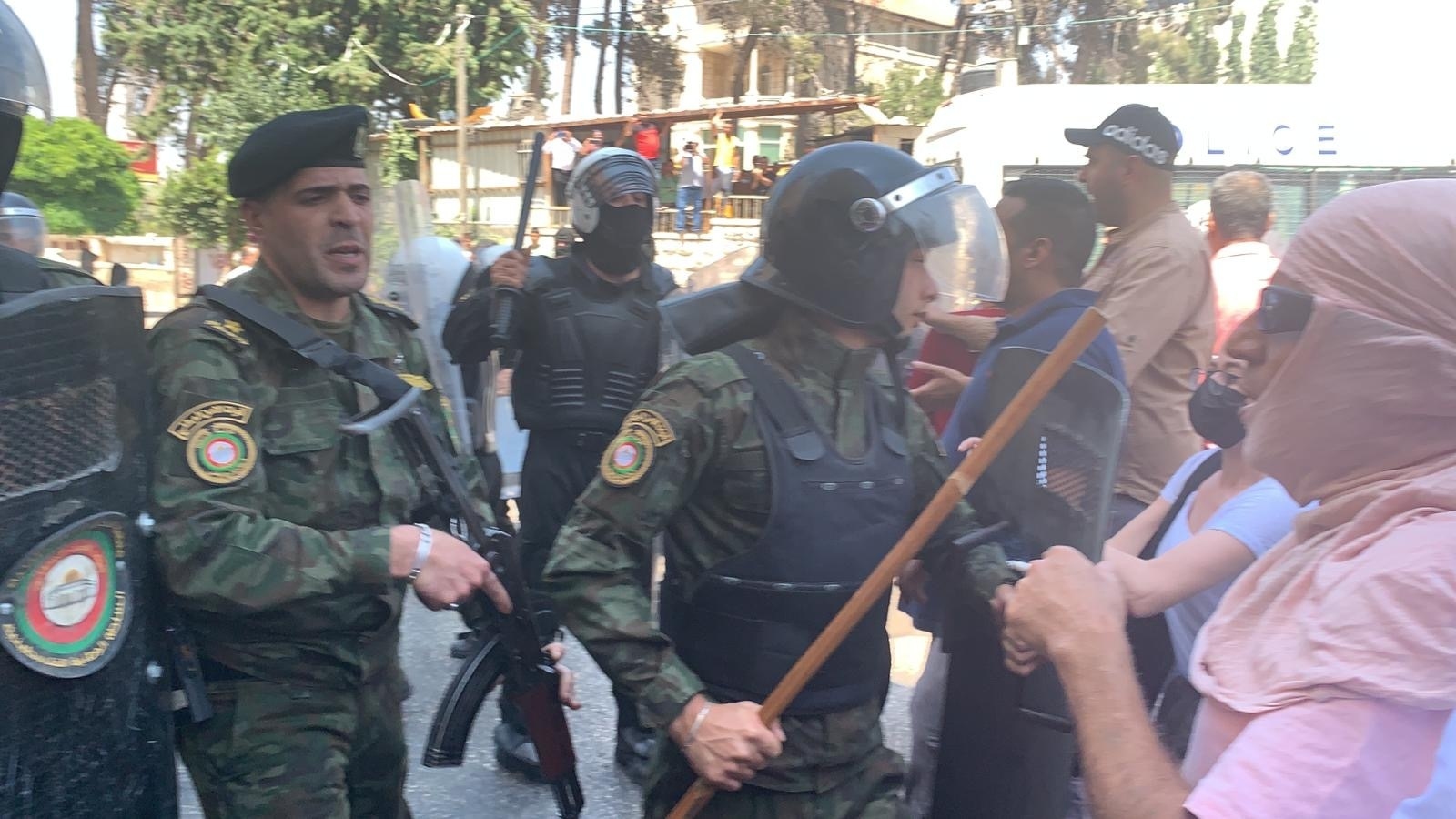
PA forces hit demonstrators with batons and fired tear gas and stun grenades in Ramallah.


A member of Palestinian Authority forces wields a baton during the demonstration in memory of Nizar Banat in Ramallah on 24 June 2021 (MEE/Shatha Hammad)

Banat was arrested by at least 25 officers, who raided his home in the town of Dura in the southern West Bank governorate of Hebron, at 3.30am on Thursday. He was declared dead shortly afterward.

Preliminary autopsy results showed that Banat was severely beaten with several bruises and fractures showing all over his body, Samir Zaarour, a doctor who oversaw the autopsy, said on Thursday.

The Ramallah-based Independent Commission for Human Rights revealed the autopsy results at a news conference in Ramallah on Thursday.

Zaarour said Banat had injuries in the head, neck, shoulders as well as broken ribs and internal bleeding in the lungs – signs indicative of an unnatural death – stressing that the victim did not suffer from any serious medical condition that would otherwise lead to his death.

Full autopsy and toxicology reports, expected to be available within 10 days, will definitively determine the cause of death.

‘Dangerous precedent’

Ammar Al-Dwaik, the general director of the commission, described the death of Banat a “dangerous precedent” against a political dissident, calling for a criminal investigation into the incident that would refer the perpetrators of the killing to trial.

Banat was well known for his criticism of the PA leadership and had been arrested several times in the past by Palestinian security forces. He was also a candidate on the Freedom and Dignity electoral list for the Palestinian Authority parliamentary elections, which had initially been scheduled for 22 May, but were postponed by the PA.

Human rights organisations and Palestinian factions have called for an independent investigation into the circumstances surrounding Banat’s death – which, according to Mohannad Karajah, a member of the Palestinian Lawyers for Justice group, amounted to an “assassination”.

PA officials announced on Thursday afternoon that Prime Minister Mohammad Shtayyeh had ordered an investigation committee – led by Minister of Justice Mohammad Shalaldeh and including a physician appointed by the Banat family, a human rights official, and a security official – into Banat’s death.

But Omar Assaf, a member of Democratic Front for the Liberation of Palestine (DFLP) political bureau, dismissed outright the credibility of an investigation led by the PA.

“There needs to be a popular investigation committee established, not an official committee, because a popular committee will uncover the truth,” he told Middle East Eye.

He referred to the case of Majd al-Barghouthi, who died in PA custody in 2008, only for an official investigation to clear security forces of wrongdoing.

“In the case of Majd al-Barghouthi, they concluded that he was a chain smoker, when he had never smoked once in his life,” Assaf said. “These are the official investigation committees.”

‘Palestinian law protects the occupation’

Speaking at the demonstration in Ramallah, Assaf added: “This is a continuation of the Dayton [Mission] creed, which was adopted by the PA and its security apparatus, that the people are the enemy of the state. There must be the dismissal of heads of the security branches, and the criminals responsible for killing Nizar Banat should be brought to court.”

The PA was established in the wake of the 1993 Oslo Accords, and initially intended to be an interim governing body until the establishment of a fully-fledged Palestinian state.

But with a two-state solution never materialising, the PA – which exerts only limited control over Areas A and B, which make up around 40 percent of the West Bank – has long been accused by many Palestinians of being an extension of the Israeli occupation.

The PA’s security coordination with Israel is a principal target of anger. The policy, through which PA forces are in regular contact with Israeli forces, has meant PA police may withdraw from areas ahead of an Israeli army raid, or arrest Palestinians wanted by Israel.

“Palestinian law protects the occupation, but we want it to protect the Palestinian people,” Maher al-Akhras, a leader of the Islamic Jihad movement in the West Bank, told MEE from the Ramallah protest.Abbas critic Nizar Banat dies after raid on his home by PA forces

Akhras, who was released from Israeli prison in November following a 103-day hunger strike against his administrative detention, drew a parallel between Banat’s death and the killing of another prominent Palestinian activist, Basel al-Araj, in March 2017.

Araj had been one of six activists imprisoned and tortured by the PA for six months in 2016. Most of them were arrested by Israeli forces shortly after their release by the PA, while Araj went into hiding for months, only to later be killed in a standoff with Israeli forces. The PA had been widely denounced at the time as complicit in Araj’s death due to its security coordination.

The PA has also been criticised for its crackdown on political opposition and social media users in the West Bank through draconian legislation on social media posts. Abbas, meanwhile, has been in power since 2005. Though his term as president officially ended in 2009, the PA has not held presidential elections in 16 years.

In addition to legislative elections, a presidential vote initially scheduled for 31 July was postponed in April, with the voting rights of Palestinians living in occupied East Jerusalem cited as a reason. Critics of Abbas have accused the president of using Jerusalem’s right to vote as an excuse to avoid the election due to the popularity of Hamas, the main rival party to his own Fatah movement.

The US State Department said on Thursday that Washington was “disturbed” by Banat’s death.

“We urge the Palestinian Authority to conduct a thorough and transparent investigation and to ensure full accountability in this case,” spokesperson Ned Price said in a statement. 

“We have serious concerns about Palestinian Authority restrictions on the exercise of freedom of expression by Palestinians and harassment of civil society activists and organizations.”

Related


River to Sea Uprooted Palestinian   
The views expressed in this article are the sole responsibility of the author and do not necessarily reflect those of the Blog!

Sunday, 13 June 2021

June 12, 2021

By Stephen Lendman

Source

On Sunday Netanyahu’s tenure ends, Israeli apartheid tyranny will remain in power under new management — like always before in Jewish state history.

Ahead of a Friday evening deadline, a penultimate hurdle passed when all opposition parties submitted required signed coalition agreements to the Knesset secretary.

At this time, a final one is Sunday’s Knesset swearing-in ceremony to officially replace the Netanyahu regime with a new one.

At the same time, things are never over when they’re over as long as he’s around.

He’s not leaving quietly and when disempowered won’t operate as a loyal to the country opposition.

Continuing to cite nonexistent victimization, he claims a “deep state” conspiracy targeted him for removal (sic), adding:

“They are uprooting the good (sic) and replacing it with the bad and dangerous,” he roared.

“I fear for the destiny of the nation (sic).”

His inflammatory rhetoric has been around at least since the 1990s.

For him, opposition Jews are anti-Israeli leftists, Arab politicians considered fifth column threat terrorist sympathizers.

Delusions of grandeur define his self-crafted persona, falsely claiming he alone can lead the Jewish state at a time of invented barbarians at the gates.

Since becoming Israeli prime minister for the second time in early 2009 and remaining in office for 12 straight years, he’s on the cusp of being dethroned for being unable to form a majority coalition government after four elections since 2019 — a sign of weakness overtaking diminished strength.

His ravings don’t resonate like earlier.

According to Israeli political scientist Gayil Talshir:

When out of power, “(w)e’re going to see a very assertive and aggressive head of the opposition, meaning Netanyahu, determined to make sure that this coalition of change would be a short-lived one and that we will have another election as soon as possible,” adding:

“We don’t have even a memory of what normal politics looks like.”

On Thursday, the Times of Israel reported that members of Netanyahu’s inner circle know that although his time is up, he’ll combat the new government to “bring it down.”

Peaceful transition of power and respect for the rule of law was never his style, notably not after reigning as King Bibi for 12 straight years.

It’s unclear if he’ll attend Sunday’s swearing in session and traditional handover of power on Monday.

No joint briefing with incoming prime minister Naftali Bennett is scheduled.

On Friday, Ynet News noted even though a new government is set to replace him Sunday, he’s “not relenting for a second…”

He “sen(t) his messengers and sycophants to lash out at his opponents and continue nurturing the toxic discourse he has created.”

You’re either with him or against Israel, according to his mindset.

Because of his extremist rhetoric and toxic environment he created, many opposition coalition members require security for protection of themselves and family members.

In or out of power, he represents an unparalleled internal threat to political forces against him.

The harm he caused since taking power left permanent scars, defenseless Palestinians bearing the brunt of his viciousness.

Haaretz reported on recently surfacing video from Israel’s Ketziot Prison on Netanyahu’s watch, saying: 

It “should have set off an earthquake in the Israel Prison Service, police and the State Prosecutor’s Office.”

It showed dozens of Palestinian prisoners thrown to a concrete floor.

Shackled with their hands behind their back, guards beat them repeatedly with metal batons and by kicking.

Ordered not to move or speak, their ordeal continued for hours — the incident filmed by security cameras.

According to an unnamed prison official, it was one of the most violent unprovoked incidents ever inside an Israeli prison.

Only four guards were questioned briefly about what happened in March 2019, video of it now emerging for the first time.

It showed no rioting or other provocations.

About 15 Palestinian prisoners required hospitalization, at least two in serious condition from what happened at the time.

Recounting the incident, one affected Palestinian said the following:

“They put us in restraints and no one resisted, and then they simply began to beat us with (metal) batons,” adding: 

“They tossed us into the center of the wing like we were nothing, and beat us without us being able to defend ourselves.”

Despite prisoners knowing the guards and seeing them daily, “(t)hat didn’t keep them from beating us mercilessly.”

“We were sure they were going to kill us.”

“Everyone prayed to God. Only after seeing all the blood around me did one of the officers order that I be taken to the clinic.”

“They beat me along the way, too.”

Others described similar horror stories.

Restrained in pairs after beatings, they stayed that way overnight.

Stripped and not given mattresses, they were kept this way for three days “without anything.”

Told to keep heads down, “anyone who raised his head gotten beaten.”

Haaretz explained that four guards alone were “briefly questioned on suspicion of battery,” adding:

Few attempts were made to identify additional officers present that night.” 

“Although the prisoners declared they could identify the perpetrators, no lineup was conducted.”

After closure of the case with no accountability, the Hamoked human rights group appealed to Israel’s attorney general, saying:

“The incident at Ketziont is a case of brute, wholesale violence against tied, helpless people,” adding:

“The investigative authorities’ attempt to shirk responsibility, despite the security camera footage, is a badge of shame for the national unit for investigating corrections officers and investigative bodies in general.” 


River to Sea Uprooted Palestinian   
The views expressed in this article are the sole responsibility of the author and do not necessarily reflect those of the Blog!

Thursday, 10 June 2021

شهادات لمعتقلين لدى السلطة الفلسطينيّة: تعرّضنا لتعذيب وشتائم للمقاومة في غزة!

 09/06/2021

كشفت شهادات لمعتقلين سياسيين أفرج عنهم مؤخراً من سجون قوات السلطة الأمنية، عن تعرّضهم لتعذيب وإهانات على خلفية مشاركتهم في تظاهرات وفعاليات داعمة للمقاومة في غزة، خلال الهبة الشعبية الأخيرة، التي تزامنت مع معركة «سيف القدس».

وأدلى عدد من المعتقلين السياسيين بشهادات عن إجبار المحققين لهم على شتم المقاومة، وتوجيه إهانات لهم خلال التحقيق لمشاركتهم في الفعاليات الشعبية، المناصرة لغزة، والتي هتفت لكتائب القسام، وأبوعبيدة ومحمد ضيف.

وفي شهادة نقلتها عائلته، قال المعتقل السياسي مصطفى الخواجا، من بلدة نعلين غرب رام الله، إن «المحققين أجبروه على شتم شخصيات من المقاومة في غزة، مثل الناطق باسم كتائب القسام أبو عبيدة وغيره».

وأفرج عن الخواجا، أول أمس، بعد 17 يوماً من الاعتقال تعرّض خلالها للتعذيب والشبح، وفقاً لعائلته، التي كشفت أن «الضباط خلال التحقيق وجّهوا إهانات له وشتائم للمقاومة واستخفافاً بإنجازها في المعركة».

وفي السياق، أدلى المعتقل السياسي أكرم سلمة بشهادة حول تعرّضه للتعذيب والإهانات، خلال اعتقاله لمدة 16 يوماً في سجن اللجنة الأمنية في أريحا.

وكشف أن التهمة التي اعتقلته أجهزة السلطة عليها، كانت التنظيم والمشاركة في مسيرات داعمة للمقاومة في غزة، خلال معركة «سيف القدس».

وأشار إلى أن المحققين تعمّدوا خلال التحقيق معه توجيه شتائم للمقاومة وقادتها، وعبارات مثل «تظنون أنكم انتصرتم؟ سنعيد تربيتكم من جديد؟».

من جانبه، أكد المحامي مهند كراجة من مجموعة «محامون من أجل العدالة»، توثيق ادعاءات تعذيب من جانب عدد من النشطاء الذين اعتقلوا في حملة الاعتقالات الأخيرة التي نفذتها الأجهزة الأمنية الفلسطينية، بعد الهبّة الشعبية والمعركة في غزة.

وقال إنه تم توثيق ما قاله المعتقلون حول تعرّضهم للتعذيب أمام محكمة الصلح والنيابة، التي قالت إنها ستفتح تحقيقاً بذلك، بعد الفحص من قبل طبيب شرعيّ.

وحول توثيق توجيه إهانات للمقاومة خلال التحقيق، أشار إلى أن مجموعة لم توثق هذه الشهادات بعد، نظراً للانشغال بمتابعة ملفات المعتقلين في الحملة، وستقوم بذلك لاحقاً.

وقال كراجة، إن المجموعة تتابع حالياً ثمانية معتقلين سياسيين، معظمهم محتجز لدى اللجنة الأمنية في أريحا.

River to Sea Uprooted Palestinian   
The views expressed in this article are the sole responsibility of the author and do not necessarily reflect those of the Blog!

Tuesday, 20 April 2021

Sheikh Isa New Constitution Sole Way out of Bahrain Crisis

 20/4/2021

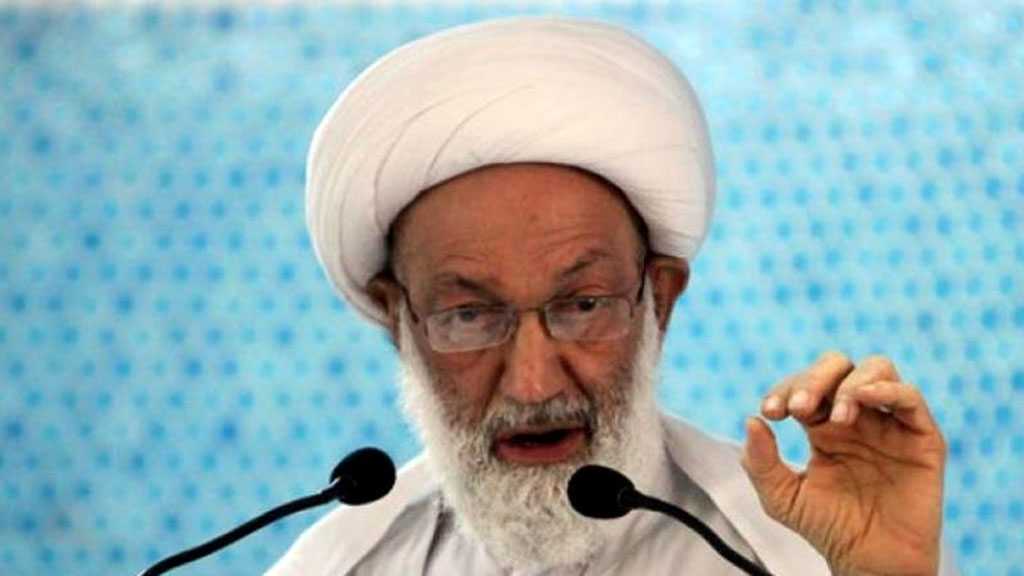
Sheikh Isa Qassim: New Constitution Sole Way out of Bahrain Crisis

By Staff, Agencie

Bahrain’s top cleric Ayatollah Sheikh Isa Qassim stressed that “Drawing up a new constitution is the only way out of the political crisis in the protest-hit kingdom.”

He further called on urging the regime in Manama to pursue an agreement with the Bahraini opposition instead of increasingly suppressing the dissidents.

“Since the people do not find anything to persuade themselves to stop their protest movement and are witnessing a surge in the [regime’s] policy of repression, dictatorship and marginalization, they are pressing ahead with their uprising, whatever the cost may be,” Sheikh Qassim said in a statement released on Monday and carried by the Bahrain Mirror news website.

His Eminence further highlighted: “There would be no way out of the current situation unless the government reaches an agreement with the opposition to draw up a new constitution and found relevant institutions so as to protect the citizens’ rights and recognize their sovereign position in the country’s politics.”

The senior cleric pointed out that “Reforms must be undertaken at a pace satisfactory to the public and must guarantee the authority, dignity, comfort, security and interests of all.”

This comes as Bahrain’s crackdown continues in Ramadan as regime forces attack political inmates in Jaw prison.  “There is a serious political and legal crisis in Bahrain, the consequences of which will be dangerous for both the nation and the government itself,” he stated.

He denounced the Manama regime over the “absurd” policy of putting more people behind bars, saying such a practice will not even benefit the “unjust political goal” being pursued by the Al-Khalifah regime.

“If the purpose of populating prisons with thousands of inmates is to tone down the demands for political and civil rights to mere calls for the release of prisoners, the calls among the prisoners themselves for the nation’s rights [to be guaranteed] will definitely thwart such a conspiracy,” Sheikh Qassem confirmed.

“The people of Bahrain are well aware of the fact that the solution to the country’s crisis lies only in a genuine improvement of the situation and establishment of a political relationship between the nation and the government on the basis of new and viable principles,” His Eminence elaborated.


Related Videos


Related Articles


River to Sea Uprooted Palestinian   
The views expressed in this article are the sole responsibility of the author and do not necessarily reflect those of the Blog!