Uprooted Palestinians are at the heart of the conflict in the M.E Palestinians uprooted by force of arms. Yet faced immense difficulties have survived, kept alive their history and culture, passed keys of family homes in occupied Palestine from one generation to the next.
Most of you must have heard it: the Taliban will organize a major celebration on September 11th to mark the liberation of Afghanistan from the US occupation and the creation of the new Afghan government. The Russians and the Chinese have been invited. As are the Pakistanis. Not sure about Iran (do you know?)?
The Afghan government could be called a “GITMO government” since 5 members are former GITMO hostages and one, the head of security/intel, is still on the FBI most wanted list.
Needless to say, the Taliban had nothing to do with 9/11. As for Bin-Laden and al-Qaeda they were somewhat involved, but only as “patsies”.
But the US government declared that the Taliban guilty and invaded Afghanistan.
Twenty years later, the Taliban are in total control and the US has probably executed one of the dumbest, worst and generally immoral military operation in history. And 20 years later, the US was totally defeated. Not by Russia. Not by China. Not by Iran. Not even by Venezuela. By the Afghans, after 20 years of warfare and trillions spent.
I have to agree with a Russian analyst who recently declared that “no, this is not even a “regular/normal” imperial collapse, this is the worst and most shameful imperial collapse in history”.
I fully concur.
As for what the Taliban will do this Saturday, it can’t even be called “spitting in Uncle Shmuel’s face”. It’s even more than that. Maybe we could speak of “urinating into Uncle Shmuel’s face” or some other even ruder metaphor showing both the total and utter contempt in which the Taliban hold not only the USA but the entire AngloZionist Empire AND somehow express the magnitude of the humiliation inflicted upon the USA.
I lack the words to come up with a suitable metaphor.
Can somebody come up with something sufficiently powerful?
Also, and especially for the MAGA folks out there:
CNN has reported that the entire “Ukie plan” to kidnap Russian PMCs was organized by the CIA and botched by the Ukies. The harcore Ukronazis are now accusing CNN of either being “duped by the FSB” or even for being used by Putin personally. Or both.
Anyway, what this goes to prove that Trump approved a clear terrorist attack against Russia. Either that, or he did not even know about it, which might be worse…
And you guys are seriously discussing his possible comeback?!?!
Get real!
I saw an interesting poll somewhere (sorry, don’t remember where exactly) which shows that 49% of US Americans feel safer than on 9/11 20 years ago and 41% feel less safe.
And that is the real outcome of this monumentally evil and stupid Neocon plan.
After 20 years of warfare, pompous self-aggrandizement, many thousands dead and maimed and trillions spent.
Nothing will ever wash off this shame from the awareness of folks in Zone B and even many in Zone A.
Finally, today the Ukronazis shelled the Donbass again, with howitzers and mortars. They were aiming at a water pumping station, miss and wounded/killed a couple. Either way, this is a warcrime. The Russians have declared that they have the designation of the unit which fired and the name of the commander who gave the order.
Which is all very predictable, since 1) US officials just visited the Ukraine 2) the CNN story is a HUGE scandal in the Ukie Rada and 3) Zelenskii is desperate to show that he might still be useful to the USA.
As for the Poles, they are fearing Russian invasion, so they put bared wire (I kid you not!) along their eastern border. Which remind me of a Russian joke: a man walks down the street minding his own business, when he sees a woman on a balcony screaming “help! he wants to rape me! help!!!” from the top of her lungs. The man looks up and says, “ma’am, calm down, I have no interest in you whatsoever and you are on the balcony while I am in the street” to which the woman replies, “yeah, maybe, but I can come down!“.
The Russian military is engaged in some large and serious, not fake, military maneuvers: 200’000 soldiers in both Russia and Belarus. Hence all the wet pampers in eastern Europe (especially in Poland – the “hyena of Europe” always was a cowardly animal).
The Poles have even predicted the date of the Russian invasion: tomorrow (not a joke)
I have terrible news for Poland, the Baltic statelets and the Ukraine: nobody in Russia has any need for you, or your land. Nobody. Oh, and, for your information: “defenses” like walls, barbed-wires or even trenches cannot stop a modern military, such crap would not even slow the Russians down.
Summary: both Biden and Zelenskii might get impeached or otherwise removed. That’s won’t solve anything for the US or the Ukraine, but sheer magnitude of their incompetence and stupidity makes such an outcome quite possible.
Not even in my most wildest and craziest dreams could I ever have imagined such a quick and total collapse of the Empire and of the USA. I have to pinch myself several times a day, each time I get the news
The Reagan administration constructed a network of outsourced private organizations that would do the dirty work of the U.S. empire, shielding the U.S. government from the prying eyes of investigators and journalists.
After organizing coups, overthrowing democratically-elected heads of state, and arming death squads all around the world in the 1960s and 1970s, it was clear that the CIA had an image problem. The Reagan administration, therefore, began constructing a network of outsourced private organizations that would do the dirty work of the U.S. empire, shielding the U.S. government from the prying eyes of investigators and journalists.
“A lot of what we do today was done covertly 25 years ago by the CIA,” Allen Weinstein, co-founder of the National Endowment for Democracy, told The Washington Post.
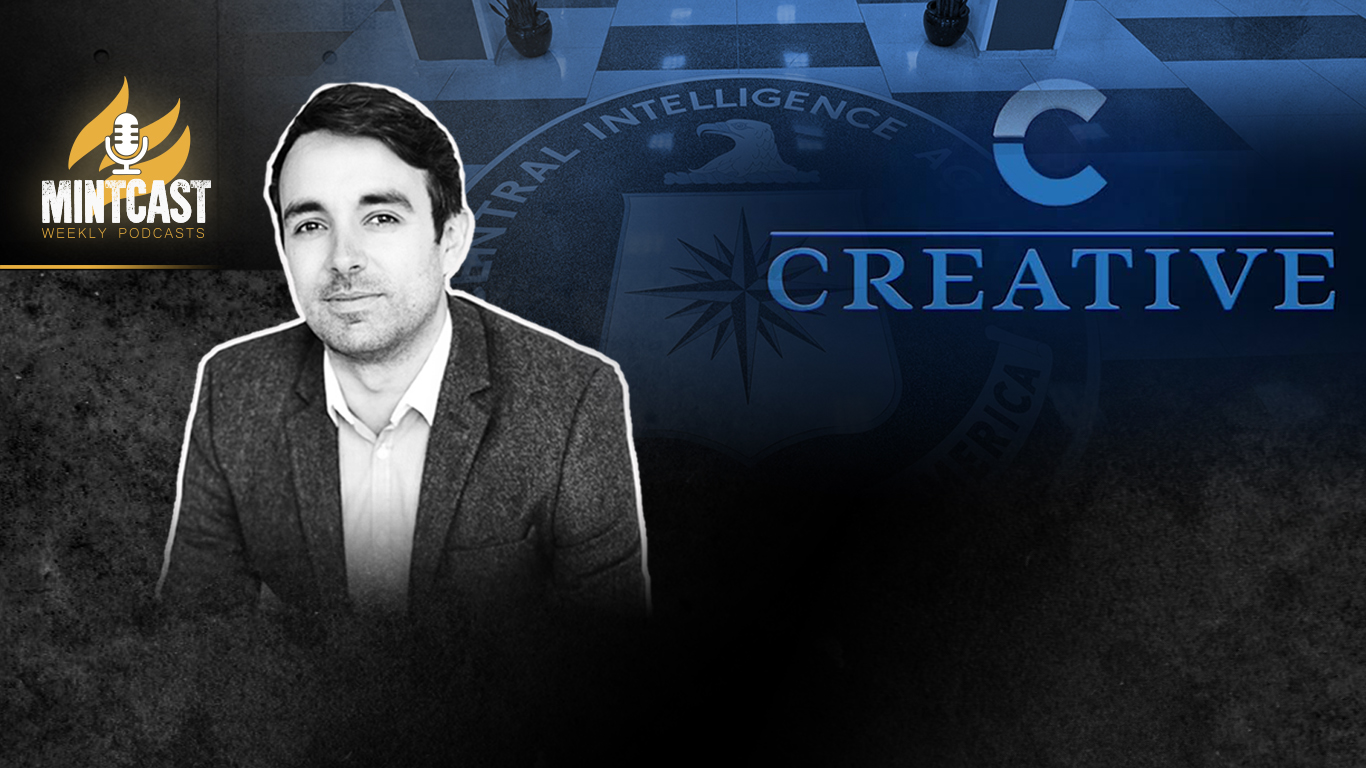
One of these groups is Creative Associates International, the subject of an in-depth MintPress News investigation by Senior Staff Writer Alan MacLeod. Alan joins MintCast host Mnar Muhawesh Adley today to discuss his findings.
Creative Associates International (CAI) was founded by Bolivian ex-pat M. Charito Kruvant in 1979. Visiting the organization’s website, viewers are met with images of smiling African children being taught how to read and write, happy Latino farmers, and pictures of Asian women going to school. The image CAI projects of itself is that it is a progressive charity helping many of the world’s poorest and most vulnerable groups. And it does indeed do education work in dozens of countries. But it also has a long history of being the shock troops for the U.S.’ regime-change agenda throughout the world.
CAI was involved in the 1991 Haitian coup d’etat that removed populist priest Jean Bertrand Arisitde from power; it has worked with Contra death squads in Nicaragua, helping to defeat the Sandinista revolution there; and it has also spearheaded a number of attempts to sow discord in Cuba, with the ultimate goal of removing the Communists from power.
CAI was hired to create a Twitter-like app for Cubans called ZunZuneo. The app would, at first, provide a great service and take over the market. Slowly, however, the plan was to drip-feed Cubans anti-Communist propaganda until the time came to organize a color revolution on the island through bombarding users with messages to take to the streets. CAI also recruited rappers to serve as anti-government figureheads who would push divisions and spread discord throughout the island.
With virtually all of its budget coming from the U.S. government and six of the seven members of its board former or current high U.S. officials, MacLeod describes Creative Associates as a government organization posing as a non-governmental organization.
Alan MacLeod is Senior Staff Writer and Podcast Producer with MintPress News. He completed his PhD at Glasgow University in 2017, where he studied the U.S. government’s attempts at regime change in Venezuela. Since then, he has published two books: Bad News From Venezuela: Twenty Years of Fake News and Misreporting and Propaganda in the Information Age: Still Manufacturing Consent. Joining MintPress News in 2019, he writes primarily on U.S. imperialism, Latin America, media and propaganda, and on cybersecurity issues.
In this frank discussion, we delve into the world of soft power and regime-change ops.
أكدت التطورات الأخيرة جملة من الحقائق التي يجب ان يعيها اللبنانيون ويدركوا من خلالها مَن هو المسؤول عن أزماتهم المتفاقمة ومنع الحلول لها مما أدى الى لإذلالهم في البحث عن الدواء والوقوف في طوابير على محطات البنزين، وتدهور قدرتهم الشرائية على نحو غير مسبوق مما أدّى إلى سحق الفقراء وانضمام الطبقة الوسطى إلى صفوف الفقراء حتى يمكن القول إننا بتنا في مجتمع مكوّن من طبقتين، طبقة الأربعة في المئة من الأثرياء، وطبقة الفقراء الذين باتوا يشكلون الغالبية العظمى من الشعب…
فما هي هذه الحقائق:
الحقيقية الأولى، انّ الرئيس الحريري، ومنذ بداية انفجار الازمة، لم يقدم على أيّ خطوة من تلقاء نفسه وبإرادته، بل كانت قراراته استجابة للتوجيهات الأميركية وخضوعاً لها، وسعياً لنيل رضا ولي العهد السعودي محمد بن سلمان، رغم انّ الأخير اعتقله في الرياض وأهانه، ومع ذلك فإنّ الرئيس الحريري لا يزال يسعى إلى كسب ودّ ابن سلمان ودعمه، ويوسّط الرئيس المصري عبد الفتاح السيسي، والسفيرتين الأميركية والفرنسية، ولهذا بات الرئيس الحريري في وضع لا يُحسد عليه، يبحث عن مخرج بعد أن أبقى البلاد نحو عشرة أشهر رهينة مأزقه، من دون أن يشكل حكومة، أو يعتذر، رامياً بالمسؤولية على رئيس الجمهورية للتغطية على عجزه وارتهانه…!
الحقيقة الثانية، انّ هذا الخضوع والارتهان من قبل الرئيس الحريري لكلّ من واشنطن والرياض، إنما كان ولا يزال يندرج في سياق تنفيذ مخطط أميركي استهدف شلّ الحكم في لبنان، ومنع الخروج من أزمته، والعمل على خنق لبنان اقتصادياً ومفاقمة أزماته النقدية والاجتماعية والمعيشية من ضمن خطة تشترك فيها بعض القوى السياسية، والمؤسسات المالية وفي المقدمة حاكم مصرف لبنان، وكبار المصارف، والشركات الاحتكارية، للأدوية ومشتقات النفط، التابعة لواشنطن والمرتبطة مصلحياً بالرأسماليات الغربية الاستعمارية.. إنْ كان عبر الدعم المالي الذي تحظى به هذه القوى السياسية، أو عبر الوكالات الحصرية التي تتحكم بحياة اللبنانيين.. خطة جعلت اللبنانيين يغرقون في أزماتهم الحياتية ليتمّ تحريضهم ضدّ مقاومتهم وحلفائها وفي الطليعة عهد الرئيس ميشال عون، والتيار الوطني الحر… لإضعاف التأييد الشعبي والسياسي للمقاومة، التي باتت منذ انتصاراتها عام 2000، وعام 2006، تشكل مصدر القلق الأساسي للعواصم الغربية، لأنّ المقاومة أصبحت تهدّد أمن ووجود الكيان الصهيوني، المرتكز الاستعماري الغربي الذي زرعه في قلب الوطن العربي لمنعه من التوحّد والتحرّر واستغلال ثرواته، وبالتالي ضمان استمرار نهب الشركات الغربية للثروات العربية وفي مقدمها النفط.. فحماية أمن ووجود هذا الكيان الصهيوني أصبح هو الهاجس الذي يحرك الحكومات الغربية، التي تضع لبنان في رأس سلّم أولوياتها، لكون مقاومته نجحت في هزيمة “إسرائيل” وردع عدوانيتها ومنعها من تحقيق أطماعها في لبنان… لا سيما في مياه لبنان الإقليمية الخالصة التي اكتشفت فيها ثروة غازية هامة تمكن لبنان، في حال أحسن استغلالها من معالجة أزماته وتعزيز اقتصاده وقوّته المستندة إلى معادلة قوة لبنان المتمثلة بـ “الجيش والشعب والمقاومة”.
الحقيقة الثالثة، انّ لبنان لا يمكن له أن يخرج من أزماته الاقتصادية والمالية، ويحقق الاستقرار الاقتصادي والاجتماعي، ما لم يتحرّر من التبعية السياسية والاقتصادية للدول الغربية الاستعمارية، ويبني سياساته انطلاقاً من مصالحه.. التي تمكّنه من بناء اقتصاد إنتاجي غير ريعي، اقتصاد يحقق نمواً فعلياً وينتج الثروة، ويستغلّ ويوظف ثروات لبنان في خدمته، كما يستفيد من كلّ المشاريع والمساعدات المعروضة عليه من دون شروط لحلّ أزماته الخدماتية المزمنة حلاً جذرياً، لا سيما المشاريع والمساعدات التي عرضت من إيران والصين وروسيا، إلى جانب الاتجاه نحو تحقيق التكتل المشرقي مع سورية والعراق وإيران الذي يحقق التكامل الاقتصادي، وربط شبكات النفط والغاز والكهرباء وسكك الحديد، ويجعل من لبنان محطة هامة في مشروع طريق الحرير…
الحقيقة الرابعة، انّ استكمال معركة تحرير الأرض، وحماية لبنان وثرواته من العدوانية والأطماع الصهيونية مرتبط ارتباطاً وثيقاً بالتمسك بالمقاومة وسلاحها الرادع، والمعادلة الذهبية، الجيش والشعب والمقاومة، وبخوض معركة التحرّر الاجتماعي من السياسات الريعية النيوليبرالية التي أدّت إلى زيادة حدة التفاوت الاجتماعي، وزيادة أعداد الفقراء، وتمركز الثروة بيد قلة قليلة من الأثرياء والشركات الاحتكارية والمالية.. وهذه المعركة الاجتماعية غير منفصلة عن معركة التحرّر من الوصاية والهيمنة الأميركية الغربية التي تستند من النظام الطائفي الذي زرع بذرته الاستعمار لضمان عدم استقرار لبنان واستمرار تدخلاته في شؤونه الداخلية.. كما يفعل حالياً..
في خلاصة الكلام، إذا أجاب الرئيس عون اليوم بالموافقة على تشكيلة الحكومة التي قدّمها له الرئيس الحريري، فهذا يعني انّ الرئيس المكلف حصل على موافقة ودعم إقليمي ودولي لتشكيل حكومته الجديدة، دعم يمكنه من تحقيق انفراجات تخفف من الأزمات التي يعاني منها لبنان بهدف تعزيز الوضع الشعبي للرئيس الحريري وتحالفاته عشية الانتخابات النيابية، بحيث يتمكن تيار المستقبل وحلفاؤه من قوى 14 آذار من حصد الأغلبية النيابية وإعادة تشكيل السلطة بما يحقق الأهداف الأميركية…
أما إذا رفض الرئيس عون التشكيلة باعتبارها لا تنسجم مع التوافقات التي تمّ التوصل إليها، وتعكس إصرار الرئيس الحريري على فرض حكومة اختصاصيين من خارج أيّ تفاهم مع الرئيس عون والقوى السياسية الأساسية المكوّنة للبرلمان، فإنّ الرئيس الحريري يكون قد تعمّد ذلك لتبرير إقدامه على سلوك خيار الاعتذار… الأمر الذي يعني انّ الأزمات سوف تستمرّ بهدف زيادة حدة الضائقة المعيشية للمواطنين إلى أن نصبح على مقربة من موعد إجراء الانتخابات، ليجري تحميل المسؤولية عن الأزمة إلى الرئيس عون وتياره الوطني وحزب الله في محاولة للنيل من شعبيتهما والحصول على الأغلبية النيابية من قبل القوى التابعة للولايات المتحدة وبالتالي تنفيذ الأجندة الأميركية سياسياً واقتصادياً لمحاولة محاصرة المقاومة..
في الحالتين، فإنّ تحالف حزب الله والقوى الوطنية والتيار الوطني، مطالب بوضع خطة مواجهة لإحباط هذه الخطة الأميركية الانقلابية عبر الانتخابات بعد أن فشلت بواسطة ركوب موجة الاحتجاجات الشعبية في الشارع…
Even if the rhetoric and the interim security strategy of the Joe Biden administration itself tries to give a multilateralist veneer to the idea that the benevolent hegemon would be back, the reality imposed by the increase in competitive pressure, which deepens after the outbreak of the pandemic, and acquires dramatic contours in the so-called “vaccine war”, reveals a challenging scenario for the coming years.
The gradual increase in competitive pressure, symptom of a phenomenon justified in the theory of the Expanding Universe, would have its origins after the September 11 attacks, when the “universal war on terrorism” unveils a world where the power of an omnipotent hegemon revealed itself in the need for the permanent expansion of power through the use of its military infrastructure.
Then arises the figure of the “terrorist enemy”, which could be any person or group, inside or outside the United States, a universal enemy that could be destroyed anywhere, even if that meant violating individual rights or the sovereignty of other states.
The unilateral power expansionism carried out by the Americans after September 11 would therefore have generated the seed of escalation in conflicts, leading to increased destabilization and consequently to a reactive movement of the other states in the world system.
As if in a movement of self-protection, former powers of the interstate system return to a game that seemed dead, but in practice was only sleeping: the old geopolitics of nations, where national interest and the resumption of sovereignty would return to play the cards against the dogmas of globalization and liberal order.
The return of Russia, which in 2015 intervened in the Syrian war – demonstrating a warlike power not seen for some time – represented a turning point, which apparently began with the reelection of Vladimir Putin himself in 2012, but also with the coming to power of the current Chinese president Xi Jinping in 2013. From then on, the interstate dispute would have accelerated considerably with the rise of these two Eurasian giants.
The spread of international competition and instability would be, therefore, in line with the idea that for international political actors the effort for changes in the system would be preponderant for the achievement of their own interests.
The appearance of new emerging actors in the world system, even if considered a destabilizing factor of the system itself, on the other hand, would boost in the hegemonic state the expansionist impulse necessary for it to remain at the top of the system.
The global instability caused by the clash between the powers that would be benefiting from the instituted international order, and those states that would aim to climb the power ladder, would suggest the end, or at least an interruption of the minimum consensus necessary for harmonious coexistence within what Hedlley Bull would call a “society of states”.
From this perspective, the hypothesis of war would emerge as an almost inevitable expedient to resolve the tensions caused by power imbalances and global instability. It is from war, therefore, and especially from the so-called hegemonic war, that the state or coalition of states that would lead the new international order would emerge.
At the moment in which the crisis or the end of the so-called liberal order created in the 20th century and led by the United States of America is being discussed, what seems evident is the occurrence of an increasingly deeper questioning of the current international order by other nations.
In this sense, the global instability reflected in the increase of competitive pressure would be explicit in the context of a generalized conflictive ambience, or on the way to generalization.
To better conceptualize this idea, Robert Gilpin’s Theory of Hegemonic War would indicate that a generalized conflictive environment, even if not configured in an apparent hegemonic war, would already suggest such a situation if we think that what differs a hegemonic war from other categories of war would be precisely the systemic conception existing in the relations between individual states. This being so, and given that it is a systemic relationship, the whole structure itself would be affected by it.
What has been happening internally in a country like Brazil is a very peculiar and local-scale example of this global phenomenon that has spread throughout the interstate system.
Therefore, just as the pandemic accelerated and deepened the global systemic crisis, internally it had a devastating effect by fusing conflicts and contradictions within societies in many countries around the world.
At a time when the parliamentary commission investigating the pandemic crisis is exposing the viscera of corruption in the Bolsonaro administration, exposing the Armed Forces to a public embarrassment not seen for some time, the repudiation note of the three military commands in a clear threat to the National Congress confirms the thesis that the internal war within the institutions and oligarchic elites is something real and increasingly out of control.
The strange visit of the CIA director to Brasilia, and his meeting behind closed doors with Bolsonaro and the head of Brazilian espionage, General Augusto Heleno, sounded like an intimidating message to Brazilian civil society that the Biden administration would endorse a hypothetical regime closure in Brazil.
As it happened during the Jimmy Carter administration – when the military dictatorship was strongly pressured by the United States -, even if the pressure of American public opinion may lead the Biden administration to abandon the nefarious Bolsonaro administration, it is still very useful for the current American security strategy that a vassal government like the Brazilian one ensures the removal of the Eurasian presence in the “Western Hemisphere”, and even contributes to the destabilization of hostile countries like Argentina, Bolivia, Venezuela and Cuba.
The erratic way in which the privatization of Eletrobrás is being carried out – which will lead to an unprecedented increase in costs – as well as the energy crisis that is looming, signal a growing distancing of powerful sectors of the business elites from a government that reveals an openly militarized, authoritarian face that is oblivious to reality.
The fraying, therefore, of social relations at the top of the Brazilian pyramid reveals a scenario that finds historical precedent only in that period that led to the so-called Revolution of 1930, when the dispute between the oligarchies of the time reached its peak.
Following the example of what is happening at this very moment in Cuba and South Africa, the escalation of systemic social conflicts seems to have no end, and even if for different reasons, it would be the result of the pandora’s box opened by the pandemic.
Even if at first glance it doesn’t seem relevant, certainly the deepening of tensions at a global level – within the universe of the great hegemonic dispute – will be decisive for the future of the much debilitated Brazilian democracy.
The classic “Entranced Earth”, by the great filmmaker Glauber Rocha, never came so handy for the Brazilian reality.
Fabio Reis Vianna, lives in Rio de Janeiro, is a bachelor of laws (LL.B), MA student in International Relations at the University of Évora (Portugal), writer and geopolitical analyst. He currently maintains a column on international politics at the centennial Brazilian newspaper Monitor Mercantil.
Much of Western media is a mixture of sensationalist accusations and fear mongering about ‘enemy’ states. It is difficult to find perspectives divorced from US foreign policy, American journalist Stephen Kinzer has told RT.
I asked the author and journalist Stephen Kinzer how the corporate media came to be so devoid of honest content and discussed the rise of censorship by Big Tech.
Kinzer is a Boston Globe columnist and formerly a correspondent for the New York Times. With over two decades of experience reporting from around the world, including areas being targeted by American imperialism, Kinzer can offer a much needed critique on the state of journalism today.
He started as an independent journalist in Central America in the mid-70s, when few journalists were going there, later reporting from Central Asia, Turkey, the Caucasus, and Europe.
“I’m sometimes asked why I developed a different perspective on the world than many other people who comment in the American press,” he told RT. “I always seem to be the skunk at the foreign policy garden party. Why is that?
“Upon reflection, I think it has to do with the way that I learned about the world. Many people who write about the world in the United States learned about the world the same way: they went to international relations schools, they went to work on congressional staffs, then they worked at think tanks. And they’re very steeped in this Washington-centric view of the world.”
Unlike such journalists and commentators, Kinzer learned journalism by going places and writing firsthand what he saw and heard.
“I learned about the world from the perspective of the people who were the victims of American foreign policy. I was in the places where people were getting bombed. I saw American foreign policy from the perspective of the rest of the world.”
Having myself learned journalism the same way, I appreciated his words. And I had a followup question about the concept of journalistic qualifications, something my detractors have claimed I lack.
According to Kinzer, there are many qualifications for being a journalist that are much more important than what school you went to or what you studied.
“The most important one is independent thinking. The great curse of our press in the West is willingness to accept the official narrative,” he said.
In his view, many American journalists are merely stenographers.
“They’re sitting down at a press conference, they write down what some government spokesman says, then they go and print that in a newspaper. You hardly even need to have a sentient human there, you can get an algorithm to probably put most of those stories together.
“And when you want to have a story that’s very well-sourced, they call the State Department, and the Defense Department, and several think tanks, and some congressmen. And they think, ‘Well I sure covered the landscape on this one!’”
But that, Kinzer argues, is not what covering the landscape is about.
“The great qualification you need for a journalist is the confidence to go out and see for yourself, and believe that your eyes are actually telling you more than press releases from some other country.”
Indeed, much of the lies and war propaganda about Syria, for example, have come from journalists situated in Istanbul, Beirut, or North America, most who have never been to Syria, or if they have – not in the past decade.
“It’s amazing to see how many people have built reputations as commentators on foreign countries and world affairs who have never been there, have no idea, beyond vague tropes, of what those countries are,” Kinzer said. “It’s because they are seeing the entire world from Washington’s perspective, and don’t think there is any other perspective worth having,” he added.
“It’s truly amazing, I’ve seen the decline of this profession into such willing subservience. We don’t have any core of regular columnists or people trying to challenge established narratives. We do have voices that pop up periodically, but they’re so drowned out by the regular columnists who just voice the same tropes over and over again,” Kinzer said.
“The intellectual laziness of the American press in covering the world has never been as extreme as it is now. It’s just as dangerous in most of what’s called NATO countries to be contradicting the narrative as it is in the United States.”
Tremendous desire of CIA to control news
In 2014, German journalist and editor, Udo Ulfkotte, told RT he had been forced to publish works not written by him under his own name (or risk being fired), including things “written by agents of the CIA and other intelligence services, especially the German secret service.”
According to Kinzer, the CIA “has had a massive, long-term effort to influence” the Western media dating back to the Cold War era.
“The CIA has placed its own people, people who are on its payroll, in the offices of major news outlets over many decades. There was a large project the CIA called ‘Operation Mockingbird’ aimed specifically at trying to influence the US press, and particularly what the US press writes about the world,” he said.
He recalled that in 1954, “when the CIA was planning to overthrow the government of Guatemala… because its president was ‘communist’, a New York Times reporter there started writing stories saying that actually the president is not communist and that land reform is only answering a desperate need of starving Guatemalans.”
At CIA Director Allen Dulles’ request, the publisher agreed to keep the correspondent, Sydney Gruson, out of Guatemala.
“Now that’s an extreme example. But, the motivation behind it is still there. There is a tremendous desire on the part of the CIA to control news.”
While not surprised that the CIA would interfere in journalism, Kinzer was emphatic about his disgust that journalists toe the line.
“What I don’t like is that journalists go along with this! Power has so many levers, why should journalists become yet another one of them. We are the ones that are supposed to be questioning. It’s the job of reporters not to submit themselves to that.”
‘Press a button, and the narrative changes’
Kinzer also noted how media narratives can suddenly change, like a switch has been flipped.
“It’s so interesting that when power decides to change the narrative, it happens right away.
“I can remember just six months ago turning on my PBS News Hour, in the US, and seeing a very longreport with General Dunford and Kelly Ayotte and a bunch of these right wingers who had come up with a big report about Afghanistan. And it was about why we can’t leave Afghanistan, we have to stay. It was a 10-minute report, and no other voices, nobody came on to say, ‘Wait a minute, that’s nonsense.’ Everybody was saying, ‘We have to stay in Afghanistan forever.’
“Suddenly, the president of the United States decides, OK, we’re gonna withdraw. And now, suddenly, it’s acceptable to say, ‘That whole Afghanistan thing was a disaster.’ Somebody just has to press a button, then the narrative changes, then everybody is allowed to say what the president said. But if you had said it one day before, you would have been in a lot of trouble.
“You have to wait for the general narrative to change, then you can change your narrative, but don’t do it until power tells you it is acceptable to change.”
Later in our conversation, he gave the example of writing about Israel, which he said was hard to do, until recently.
“Suddenly, in recent weeks even, it’s become a little more OK to be critical of Israeli policies, because some people in Washington are now a little more critical.”
Big Tech censorship on the rise
In the past several years, there has been an increase in social media giants deciding what content is acceptable and what “violates” so-called “community standards.” And as I wrote recently, it has gotten to the point where Twitter issues scary warnings about “unsafe” or “spammy” content from websites the social media platform deems dangerous, potentially scaring readers away.
Commenting on the matter, Kinzer said that “the power of private companies to decide what people see and don’t see is greater now than ever.”
As for censorship by the outlets he has written for, Kinzer said he was lucky to be writing from places that editors really didn’t have the knowledge to tell him how to report. “Nobody called me and said ‘I know everything about Uzbekistan and this is wrong.’”
That said, he does maintain that in writing his columns, some subjects are either taboo or you would have to frame them in the usual anti-Russia manner common in Western media.
“It’s very hard to get a story in the American press about Russia that’s anything other than fitting into the cliches. I’ve had trouble writing about Russia, because the narrative that Putin is something other than a killer is not welcome in the United States. And I’ve had trouble writing about Syria. And of course, it’s very difficult to write about Israel.”
Lather, rinse, repeat
On the 10-year anniversary of the war on Syria, I wrote about how, mind-bogglingly, Western media and pundits continue to repeat the cliched and debunked rhetoric and lies that have been recycled year after year.
Kinzer addressed this technique, the repetition of narratives.
“I had an editor at the New York Times years ago who told me: A lot of journalism is about repetition. And boy does the American press do that. We have been told certain things about certain countries so many times over. And it just seems like the truth.
“‘The evils that have taken hold of Russia. The daily genocide that’s happening under the killers in Syria…’ You don’t need to go, you don’t need to check, it’s just like the air, it’s like an obvious fact.”
“I even see it in what’s happened to the Pulitzer Prize for International Journalism,” he said, adding that in 2020 it “predictably” went to a series of reports on “how evil Russia is” and this year – to a series of reports on “how evil China is.”
The Pulitzer, he argued, is supposed to encourage original reporting, “not people that just scribble down what officials say, and then put it in nicer prose, and use phrases that are calculated to make people believe that government opinion is actual fact.”
“The job of journalists is to rebel against the narrative. We are out there as the eyes and ears of the world. If you don’t want to do it, fine, but don’t pretend that you’re doing it, and sit in your little cubicle and think of the stereotypes you’ve been fed and just regurgitate them. That is not journalism, it’s just public relations.”
In conclusion, Kinzer recalled a quote by Mark Twain: “The majority is always wrong. When you find yourself on the side of the majority, it is time to reform.”
Indeed, time and again when the majority has written about “weapons of mass destruction,” “chemical attacks,” Iraqi troops “killing babies in incubators,” and other Washington-contrived narratives, those courageous few who have stood up against those lies-based-narratives have proven to be honest journalists.
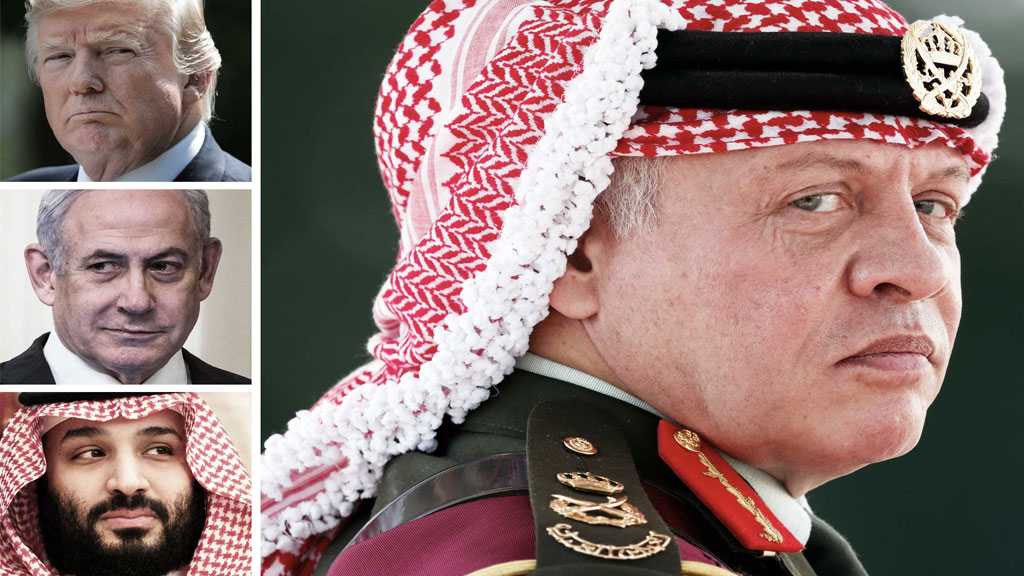
The Zionist entity, Saudi Arabia and the US joined forces to pressure Jordan’s King Abdullah II to partake in the US-sponsored “normalization deals” with Tel Aviv, according to the Washington Post.
The Jordanian monarch resisted the attempts, leading to a plot to “destabilize” the country, that ensnared the king’s half-brother Prince Hamza and former senior officials Bassem Awadallah and Sharif Hassan bin Zaid.
According to the report, Saudi crown prince Mohammad bin Salman [MBS], former Zionist PM Benjamin Netanyahu and former US President Donald Trump were at the center of the intrigue.
“It became a belief of Trump that the king was a hindrance” to his plan, a former senior CIA official was quoted as saying.
The report noted the close relations that Trump and his son-in-law and senior adviser Jared Kushner had forged with MBS, Saudi Arabia’s de-facto ruler.
Abdullah was said to be concerned those expanded ties came at Jordan’s expense, because of his reservations over the US proposal for the Middle East.
Abdullah is recognized as the custodian of the Haram esh-Sharif and the al-Aqsa Compound, and other Muslim sites in the Old City, which the Zionist regime occupied in the 1967 Six Day War.
The newspaper wrote that Abdullah felt the US, ‘Israel’ and Saudi Arabia were trying to push him out as custodian.
As Kushner’s campaign to advance Trump’s plan picked up last year, he also hoped to help facilitate a normalization pact between the Zionist entity and Saudi Arabia, according to the report. However, Abdullah was seen as an obstacle to such a rapprochement.
A key figure in the report was Awadallah, one of the former senior officials implicated in the alleged recent plot. Awadallah, a cabinet minister and onetime head of the royal court, moved to Saudi Arabia in 2018 and became close with the Saudi crown prince.
“A sticking point for us is al-Aqsa. The king [Abdullah] uses that to browbeat us and keep his role in the Middle East,” Awadallah was reported to say regarding the US plan.
An unnamed former US official, according to the report, said he was told by Awadallah that “MBS is upset because he can’t get a deal because he can’t handle the reactions of Palestinians if the king holds his position” on occupied al-Quds.
The Post also quoted from a Jordanian investigative report on the coup plot.
“Awadallah was working to promote the ‘deal of the century’ and weaken Jordan’s position and the King’s position on Palestine and the Hashemite Custodianship of Islamic and Christian holy sites in al-Quds,” the Jordanian report said.
According to the same report, bin Zaid, the other senior Jordanian official implicated alongside Awadallah, met in 2019 with two officials from a foreign embassy in Amman “to inquire about their country’s position on supporting Prince Hamzah as an alternative to the King.”
The Post said an unnamed Western official who gave him the report believes the embassy was likely the US mission in the Jordanian capital.
All Global Research articles can be read in 51 languages by activating the “Translate Website” drop down menu on the top banner of our home page (Desktop version).
*
[T]here are two sides whose composition cuts across national and even community boundaries. The issues … can be described as freedom vs. slavery…. [T]wo powerful leaders of these opposed sides have emerged—the United States of America and the USSR.
We are faced now with a situation similar in some respects to that which confronted our forefathers in early colonial days when they ploughed the land with a rifle slung on the shoulder. If they stuck to the plough and left the rifle at home, they would have been easy victims for any savages lurking in the woods. ”
As Canada’s Minister of External Affairs, Lester Pearson delivered the above statements in his speech entitled “Canadian Foreign Policy in a Two Power World” to a joint meeting of the Empire Club of Canada and Canadian Club of Toronto. (April 10, 1951)
*
For centuries, self-righteous state myths have depicted the imperial Canadian project as a victory for democracy and human rights. Despite Canada’s long record of genocide, land plunder, and war profiteering, official narratives about noble “Canadian values” still reign in this imagined “peaceable kingdom.”
Canada’s ethnonationalist propaganda demonized First Nations as hostile sub-humans to be enslaved, imprisoned on reservations and made Christian in residential schools. This White-Power racism served imperialist containment policies designed to turn “Red Indian” enemies into captive nations.
By the early 1950s, then-external affairs minister Lester Pearson was pioneering a new containment policy. During the transition to the new world order of the Cold War, he rallied his powerful allies in Canada’s racist old-boys’ clubs.
Pearson’s status as a national hero was consolidated when he won the Nobel Peace Prize in 1957 for his role in helping to establish a UN peacekeeping force.
But Pearson was far from a progressive. In 1951, he compared the new Red Menace of communism to what he called “savages lurking in the woods.” These “savages,” he declared, had violently threatened the peaceful lives of innocent white Europeans whom he lovingly called “our forefathers.”
By conjuring unsettling images of a Red-Indian bogeyman, Pearson helped manufacture consent for a new, politically Red enemy to meet the needs of NATO’s capitalist powers.
On the home front, Pearson’s fierce anticommunism justified Canada’s systematic abuses of civil rights. As Ian MacKay and Jamie Swift note in Warrior Nation: “Pearson enthusiastically supported a Cold War against any Canadians suspected of viewing the world outside the newly hegemonic framework of the American imperium.”[1]
Headline in Toronto newspaper pointing to repressive political environment in the early Cold War. [Source: opentext.bc.ca]
Targeted for abuse by Canada’s Cold War elites were “peaceniks,” radical unionists and anyone branded as too leftwing. “Pearson had become an ever-more-aggressive accomplice,” said MacKay and Swift, “in government attacks on dissidents.”[2]
To Pearson and other Cold Warriors, the world was torn. As chief architect of Canada’s postwar anti-Red foreign policy, Pearson demonized the Soviet Union as the epicenter of evil. The USSR was still reeling after 27 million of its citizens had been killed by Hitler’s anti-communist crusade.
Anti-communist propaganda which Pearson echoed. [Source: coat.ncf.ca]
After the Red Army liberated Eastern Europe and led Germany’s defeat, the U.S. replaced the Nazis as global leaders in the war on communism. NATO efforts to destroy the USSR used Cold-War “containment” strategies: surrounding the Soviet Union with nuclear weapons, isolating it with political and economic sanctions, and vilifying it with propaganda. Pearson had a central role in this new phase of the West’s war on communism.
Lester Pearson, far right, with Halvard Lange of Norway and Gaetano Martino of Italy. They were known as the “Three Wise Men” who were ardent in supporting NATO. [Source: nato.int]
The Red Scare had been going on for decades. In Pearson’s youth during WWI and the First Red Scare (1914-20), Canada ran slave-labor, concentration camps that interned thousands of single immigrant men, mostly Ukrainians, who had been laid off from rural work camps. Elites feared their growing protests in urban centers might spark a socialist revolution.[3]
Ukrainians interned during World War I and the First Red Scare. [Source: infoukes]
And, in 1919, Canada was among thirteen countries that invaded newborn Soviet Russia with 150,000 troops to intervene in its civil war and reverse its revolution. Canada’s allies in the war, led by Admiral Alexander Vasilevich Kolchak, killed at least 100 civilians for every one killed by the Bolshevik Red Army, according to General William S. Graves, who headed the U.S. contingent.[4]
Members of the Canadian Army’s 67th Battery pose for a photo following the Battle of Tulgas, Russia, on November 11, 1918. [Source: ipolitics.ca]
During the Depression, when Pearson was a bureaucrat working closely with Canada’s prime minister, some 170,000 single, unemployed men were forced into remote work camps to prevent a potential revolution.[5]
One means of dismantling Canada’s prevailing peace mythology is to examine this country’s support for U.S. militarism throughout the Cold War. This study leads to the conclusion that little if anything has changed.
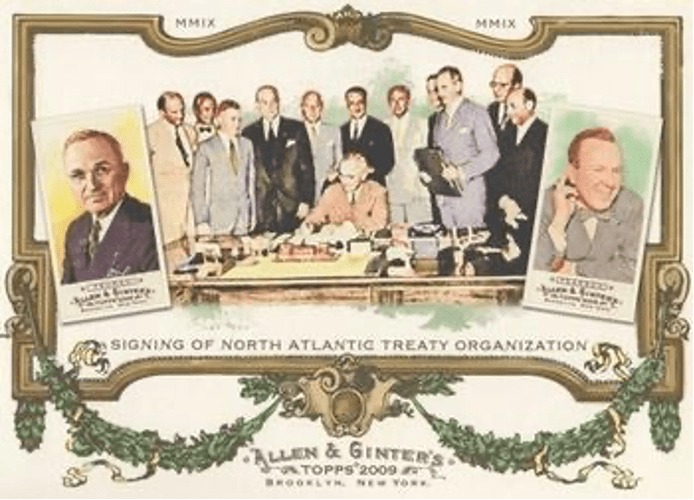
Plaque commemorating Pearson and Truman and signing of original NATO treaty in 1949. [Source: tcdb.com]
Always a stalwart NATO warrior giving solid allegiance to U.S.-led military, political, economic and propaganda warfare, Canada has taken leading roles in a new Cold War being waged by the American empire.
Lester Pearson at West Germany’s accession to NATO in 1955. [Source: nato.int]
Facing Canada’s history of duplicity is especially difficult because it means challenging the villainous hypocrisy of some of this nation’s most-beloved leaders. It also means confronting the powerful, political descendants of Canada’s much-glorified peace cult heroes, and debunking pernicious narratives that are still perpetuated, even by many mainstream progressives.
Pearson As Peace-Cult Hero and Cold-War Hatemonger
While state-sponsored myths have helped to create an institutionalized cult around Pearson, Canada’s beloved Nobel Peace Prize winner was actually a vociferous Cold Warrior. Besides using hateful anti-Red rhetoric to whitewash U.S.-backed wars, Pearson rallied support for various covert actions that squashed anti-colonial struggles in Africa, Asia and Latin America.
Canada’s largest political, corporate, religious and media institutions shared with their Western allies a fierce loathing for anyone who could be labelled communist. Their global crusade maligned all individuals, groups, parties, movements and governments that dared to threaten the freewheeling reign of predatory corporations. In Lester Pearson, these fear-mongering elites found a believable voice whose skilful devotion to Cold War tropes served their shared, vested interests.
Pearson was useful to British and American power elites because he leveraged Canada’s well-crafted reputation as a neutral “middle power” to cheerlead their neocolonial adventures. This included lending Canada’s respected voice to the ousting of elected, socialist-friendly governments that tried to limit the exploits of foreign corporations.
As Canada’s most influential confidence man, Pearson exuded faith in America’s supposed devotion to peace. “It is inconceivable to me that the United States would ever initiate an aggressive war,” said Pearson in 1955, and “it is also inconceivable that Canada would ever take part in such a war.”[6]
Captivated by the era’s extreme anti-communism, Pearson ignored Western war crimes. In fact, he artfully glorified these crimes with phobic narratives that painted assaults on democracy as if they were part of a noble, god-inspired plan to wipe communist evil off the face of the earth.
Before examining Pearson’s key role in leading Canada’s support for these American adventures, it is worth examining the cultural influences in his early life that helped create his pious devotion to Cold War causes.
The Early Origins of Pearson’s “Muscular Christianity”
That Pearson slipped so easily into sermonizing about the Red Menace can be explained largely by his ultrareligious upbringing. His father, and both grandfathers, were Methodist ministers. [NOTE: Not sure what a “staunch” Methodist minister is.]
Methodism, which was then Canada’s largest Protestant denomination, was central to the imperial project of spreading “Christian values” at home and abroad.
This religious exercise, to build the moral muscles of a global Anglo-based civilization, fixated on the Social Gospel movement. Its mission was to take up the “white man’s burden” and uplift atheist heathens and inferior races through such genocidal institutions as Indian Residential Schools.[7]
Pearson describes his maternal grandfather, Rev. Thomas Bowles, as “a pillar of the church and the Liberal party.” He had been elected county warden three times, township reeve (mayor) ten times, and was appointed first sheriff of Dufferin County, Ontario. Pearson notes that his paternal grandfather Rev. Marmaduke L. Pearson, one of the Methodist “church’s most distinguished divines,” was a devoted Tory who seemed to spend an inordinate amount of time thinking about and playing baseball, lawn-bowling and cricket.
This obsession was passed on to his sons, including Lester’s father, Rev. Edwin A. Pearson. He was described by historian John English, as “a strong imperialist” whose “three boys shared his enthusiasm for sports and the empire.”[8]
Lester Pearson (bottom left), at home in Hamilton, 1913, with brothers, parents and grandfather. His father and grandfather were both Methodist ministers who zealously supported British imperialism. [Source: coat.ncf.ca]
Pearson’s memoir also reveals the great influence of certain novels he found in his Sunday School library. “From its shelves I learned of life and adventure,” said Pearson, “through Horatio Alger, G.A. Henty and similar heroic books.”[9] Alger, a disgraced Unitarian minister who became one of the most popular novelists of the late 1800s, is best known for perpetuating the American dream’s “rags-to-riches” myth.
George A. Henty though, revealed Pearson, was “the author whom I knew the best among all English writers before I went to college.” [10] As a British war correspondent, Henty’s travels across Europe, the Middle East, Africa and Asia, were always sure to promote British imperialism. Throughout the late 19th and early 20th centuries, his work epitomized that blatantly jingoistic literary genre known as “imperial adventure fiction.”Canada’s Secret War: IRAQ – Ten Years After “Shock and Awe”
Henty’s books embodied the spirit of so-called “Muscular Christianity.” This Victorian movement glorified the pious athleticism and virile masculinity of tough, white saviors who would happily knock heads together (and kill if need be) for the glory of god, king, country and empire.
Always ready to save the brutish, lower-class savages from themselves, Henty’s heroes enthralled impressionable juveniles, like Pearson, who lapped up this macho vision of a missionizing, tough-love fundamentalism that was hopped up on just wars and imperial steroids.[11] “To be a true hero,” explained Henty when interviewed, “you must be a true Christian.”[12]
Henty’s 122 novels were riddled with white supremacist heroes who spouted the era’s outrageously popular racist, sexist and anti-semitic beliefs. His books also targeted left-wing, cartoon villains from the ruthless labour leaders of striking English coal miners[13] to the eroticized socialist women who ran loose in the 1871 “Paris Commune.”[14]
Considering his class and the strong religious leanings of his family and community, it is not surprising that Pearson would be so captivated by Henty’s writings. While Pearson’s 1972 memoir offers no critique of Henty, it praises the author’s historical fiction for having provided a knowledge of the world that informed and inspired him throughout his political career:
“His exciting stories based on history’s more romantic episodes stirred my imagination mightily and, I suspect, had much to do with my liking for and concentration on history in my educational progress. When years later I traveled extensively abroad as Canada’s Secretary of State for External Affairs, there was hardly a place I visited which I had not known through that prolific but now almost forgotten writer of adventure stories for boys.”[15]
Pearson’s exceedingly sheltered childhood kept him cozy in the warmth of positive feelings for imperialism. “[T]he parish was my world,” he confessed. “As for the rest of the world, I thought about it … largely in terms of the British Empire which was looking after the ‘lesser breeds’ and keeping the French and Germans under control.”[16]
Admitting that his was “an absorbing mind rather than a questioning mind,” Pearson also disclosed that he had “a rather superficial approach to life.” His “limited” world, Pearson says, “did not broaden much” until 1913 when, at age 16, he entered Toronto’s Victoria College.[17]
Named for Queen Victoria, and founded by the Wesleyan Methodist Church in 1836, this was no breeding ground for radical thought; it was a hotbed of imperialist education.
Rather than freeing Pearson’s mind from its fetters, college life further narrowed Pearson’s “limited” worldview. And, it was here that Pearson first made contact with influential men who led him along the political path to power.
Victoria College was where he began what he called his “long and … rewarding association”[18] with Vincent Massey, a history lecturer and dean of the residence building which his family had built and furnished. Massey’s Methodist father, owning one of Toronto’s biggest industrial concerns, had close links to the highest echelons of the Liberal Party. Massey was already a good friend of Mackenzie King, who became Canada’s longest-standing prime minister.
Massey became one of Pearson’s most important Methodist mentors. His deeds included being a leader of Toronto’s Cecil Rhodes-inspired Round Table Society (1911-18); marrying Alice Parkin, daughter of Sir George Parkin, secretary of The Rhodes Trust (1915); being appointed to Prime Minister Mackenzie King’s cabinet war committee (1918) and to the Liberal cabinet (1925); being appointed Canada’s first envoy to the U.S. (1926-30) and its high commissioner to Britain (1930, 1935-46); being president of England and Wales’ National Liberal Federation (1932-35); being made Canada’s delegate to the League of Nations (1936) and being appointed to represent the Queen as Canada’s governor general (1952-59).[19]
Massey, who Pearson notes was “personal friends of the Royal Family, and … seemed to know every duke by his first name,”[20] was able to open doors for Pearson throughout his career. This included funding Pearson’s BA and MA studies at Oxford (1923-25).[21]
Pearson’s subservience to the moneyed interests of empire helped ensure his rise through the Department of External Affairs. He joined that bureaucracy in 1928, during the King government, but when Conservative Prime Minister Richard “Iron Heel” Bennett took power in 1930, “Pearson was a beneficiary.”[22]
Bennett, who was also a devout Methodist, earned his nickname after an inflammatory 1932 speech in which he said:
“What do these so-called groups of Socialists and Communists offer you? They are sowing their seeds everywhere…. [T]hroughout Canada this propaganda is being put forward by organizations from foreign lands that seek to destroy our institutions. And we ask that every man and woman put the iron heel of ruthlessness against a thing of that kind.”[23]
Crushing communism was clearly the order of the day, and Pearson was ambitious and eager to comply.
Talent-spotted by Bennett, Pearson was soon appointed to two royal commissions on economic issues. As journalism professor Andrew Cohen noted: “Pearson liked Bennett who treated him as a protegé.”
In early 1935, Pearson accompanied Bennett to London where they took part in the Jubilee to celebrate King George V’s 25-year reign. During their lavish sea voyage with its sumptuous cuisine, Pearson learned he would receive the Order of the British Empire and asked Bennett for a raise of $25 per week.[24]
This increase boosted Pearson’s salary by an extra $25,000 per year in today’s dollars. This was distasteful considering all those who were hungry for food and justice during the Great Depression.
Unmentioned by Cohen or Pearson is that, between 1932 and 1935, Bennett’s government rounded up 170,000 single, unemployed, urban men and forced them into slavery in army-run “Relief Camps.”
Army-run relief camp during Great Depression, designed to remove “red” agitators from the cities. [Source: sutori.com]
General Andrew McNaughton’s internment plan makes it clear why. “In their ragged platoons,” he explained to the cabinet, “here are the prospective members of what Marx called the ‘industrial reserve army, the storm troopers of the revolution.’”[25]
General McNaughton further told Bennett that “[b]y taking the men out … of the cities” and forcing them into remote work camps, “we were removing the active elements on which the ‘red’ agitators could play.”[26]
In 1935, Bennett approved Pearson’s posting to Canada’s High Commission in London. When Bennett was replaced by King, Pearson’s move was confirmed and he continued his climb, becoming second in command under High Commissioner Vincent Massey (1939-42).
In 1940, Pearson was recruited by Sir William Stephenson to be a “King’s messenger” carrying secret documents to Europe. Nicknamed “the Quiet Canadian,” Stephenson was the Canadian intelligence agent, codenamed “Intrepid,”[27] who inspired Ian Fleming’s fictional, anti-communist superspy, 007.[28]
James Bond was also the violently racist and sexist Cold War equivalent of the Victorian era’s manly, white, imperial adventure heroes, so admired by Pearson.
From London, Pearson was transferred to Washington, D.C., where he was Canada’s ambassador and envoy extraordinaire to the U.S. (1942-46).
After returning to Ottawa, he was appointed foreign minister for the last few months of Prime Minister King’s time in office (1948). When King’s protégé, Louis St. Laurent, took over, he retained Pearson as foreign minister (1948-57).
Pearson’s early decades of pliable innocence were over. Having been moulded and mentored into form by family, church, schools and government, he had thoroughly internalized the deceitful scripts of elite institutions.
But though he became a manager and manipulator in his own right, Pearson’s role on the global stage was still directed by external forces in Washington and London. While just following his social orders, Pearson’s acts of complicity in Cold War coups, wars, invasions and occupations cannot be excused. He was culpable for the criminality in which he willfully engaged. Let’s look at a few examples.
The Korean War and Its Planning, 1947-1953
Pearson was a strong supporter of the Korean War (1950-1953), which devastated the Korean peninsula and left a legacy of conflict and division that persists to this day.
Pearson considered the war part of a moral crusade against communism.
His understanding overlooked the fact that the northern communist regime, led by Kim Il-Sung, had led the fight against Japanese colonialism. By contrast, the southern regime, led by Syngman Rhee and dominated by Japanese colonial collaborators, killed over 100,000 of its own citizens and launched raids into the north, all of which provoked the onset of the war.
Image from Pyongyang museum of American war crimes depicting U.S. soldiers brutalizing North Koreans. [Source: peacehistory-usfp.org]
Pearson’s hawkish position contrasted with Prime Minister Mackenzie King’s, who said that “Canada should not automatically support the United States in all its endeavors.”[29]
Pearson also clashed with Defense Minister Brooke Claxton who opposed sending Canadian troops to Korea presciently because the U.S. was “getting [Canada] into something to which there is really no end.”[30]
When Pearson was dispatched to Washington to meet with President Harry S. Truman in 1948, he conspired behind the scenes with Truman to undermine King’s direct orders regarding the pursuit of an independent Canadian foreign policy, and assisted U.S. State Department officials in crafting a letter that urged King to support the Korean War.[31]
King’s successor, Louis St. Laurent, assisted the war effort by deploying a Royal Canadian Air Force (RCAF) squadron of transport planes to airlift U.S. troops, weapons and other materiel across the Pacific.
Canadian soldiers playing ice hockey, the national sport, on a rink they built in South Korea. [Source: bardown.com]
Military historian David Bercusson,[32] who continues to spread official narratives promoting this and other wars, wrote:
“Pearson was correct about what the Korean War meant in the global confrontation between Soviet Communism and the Western democratic powers and correct too in believing that Canada could not sit out the war if the Americans insisted that Canadian troops were needed. He was far wiser than Claxton in knowing this. With Pearson leading the way, Claxton came on board.”[33]
Pearson told St. Laurent that he supported troop deployments based on his anti-communist views about “the menace which faces us, … the expression of that menace in Korea, and the necessity of defeating it there by United Nations action.” Pearson’s efforts paid off. “St. Laurent came around,” said Bercusson, because “he and the nation really had little choice.”[34]
The speech St. Laurent gave over the radio announcing Canada’s commitment to the war was probably crafted in part by Pearson. It was deep in Orwellian newspeak:
“The action of the United Nations in Korea,” St. Laurent intoned, “is not war; it is police action intended to prevent war by discouraging aggression.” Since “the war to end all wars” had already come and gone 30 years hence, the Korean War was framed as “important to all of us who want to avoid another world war.” The need to “defeat the Communist aggressors in Korea,” said St. Laurent, was like fighting “fascist aggression” in WWII. He concluded his deceit with “We owe it to to ourselves, to each other, to our children, and each other’s children … to prevent the disasters of a third world war.”[35]
This launched Canada’s four-year collaboration—under the UN’s respectable cover—in a barrage of napalm-saturated bombings that slaughtered some three or four million Koreans.
This supposed non-war, also caused “six to seven million” more to be “rendered refugees,” says historian Jeremy Kuzmarov, who also notes that the onslaught destroyed “8,500 factories, 5,000 schools, 1,000 hospitals, and 600,000 homes.”[36]
Canadian troops marching in North Korea during a brutal 40-day U.S.-UN occupation. [Source: thecanadianencyclopedia.ca]
To aid and abet this mayhem, Canada supplied its good name, plus more than 20,000 troops (516 of whom died), numerous war planes, eight destroyers and a wealth of strategic minerals and military hardware.
Canadian troops after the Battle of Kapyong in April 1951. [Source: veterans.gc.ca]
In return, the St. Laurent government exploited the war as an excuse to vastly expand Canada’s army, navy and air force and to accelerate the production of jet fighters, jet engines, naval vessels, weapons, ammunition, radar and more.
“We are working in the closest co-operation with the United States,” said St. Laurent, so “that our joint resources and facilities are put to the most effective use in the common defence [sic] effort.” The government, he went on, was also “looking forward confidently to an acceleration and an intensification of our joint [military] production efforts” through the “U.S.-Canada industrial mobilization planning committee.”[37]
While devastating Korea itself, the Korean War sparked the blossoming of Canada’s military-industrial complex, which fueled its complicity in Cold War adventures for decades to come.
Similarly, anti-communism was harnessed by Western governments to repress the civil liberties of anti-war activists. Quebec’s “Padlock Law” (1937-57) made it illegal to copy, publish or distribute anything deemed pro-communist. Although the King and St. Laurent governments could have struck down this law, they didn’t. It was used against peace activists opposing the Korean War.
In May 1951, an “anti-subversion squad” raided a Montreal home where about thirty labor and civil rights activists were meeting with James Endicott, president of the Canadian Peace Congress. Literature was seized and male police invasively searched activists, including the women, who lodged a complaint to Pearson’s office, which did nothing.[38]
In January 1952, Endicott denounced the “Padlock Law” at a meeting in London, England. “Under American pressure,” he reported, Canada’s treason act had been amended “so that a cabinet committee can order secret arrests and hold people indefinitely and incommunicado without trial. They are doing that against peace workers.”[39]
Coup in Iran, 1953
Pearson’s foreign ministry supported the coup that installed Shah Mohammad Reza Pahlavi as Iran’s dictator in 1953.
This CIA/MI5-led coup ousted Mohammad Mosaddegh’s elected government after it dared to nationalize Iran’s UK-owned oil industry in March 1951. Although not a socialist, Mosaddegh worked with Iran’s communist party, Tudeh, which had played a key role in Iran’s struggle to gain control of its own oil resources.
As revealed by anti-war writer Yves Engler, Pearson “was not happy with the Iranian’s move”:
In May 1951 External Minister Lester Pearson told the House of Commons the “problem can be settled” only if the Iranians keep in mind the “legitimate interests of other people who have ministered to the well-being of Iran in administering the oil industry of that country which they have been instrumental in developing.”[40]
Mossadegh’s duly-elected government also angered Pearson. “In their anxiety to gain full control of their affairs by the elimination of foreign influence,” he told parliament, Iran had exposed itself “to the menace of communist penetration and absorption—absorption into the Soviet sphere.”[41]
As Engler notes, “Pearson did not protest the overthrow of Iran’s first elected prime minister” and three days after the coup, Canada’s ambassador expressed concern with what he called the “disturbing factor” of “the continued strength of the Tudeh party.”[42]
In response, the Shah’s CIA-trained secret police (SAVAK) quickly began arresting thousands of Tudeh members. By 1958, SAVAK torture and assassination campaigns had decimated Tudeh and other popular, democratic forces.[43] This “progress” allowed Canada to begin diplomatic relations with Iran in 1955.
By May 1965, when deposed Prime Minister Mossadegh was still under arrest, Pearson was prime minister and hosted the Shah’s state visit to Canada.
Upon his arrival in Ottawa, aboard a Canadian military plane, the Shah was greeted by Pearson, Foreign Minister Paul Martin, Sr., and Governor General George Vanier, who literally gave him the red-carpet treatment.
Vanier intoned “I greet Your Imperial Majesty as an able and valiant head of state and as a great leader with progressive policies,”[44] while Pearson said the Shah “had given outstanding leadership in bringing his country forward into the modern world.”[45]
During his eight-day visit to five cities, the Shah attended top-government meetings, inspected an honor guard, waved to the public, laid a wreath, spoke at press conferences and elite clubs, was feted at gala luncheons and black-tie dinners, dined privately at Pearson’s home, was honored at a state banquet and reception by Vanier in his palatial mansion, and was regaled by Canada’s mass media. Pahlavi and his Empress were a hit.[46]
Special police precautions were taken for fear of Iranian student protests, which the Shah “dismissed … as the work of communists.”[47]
Summing up the visit, Pearson said it had “brought our two countries even closer together in our approach to problems of peace and the United Nations.”[48]
Coup in Guatemala, 1954
A CIA-led coup toppled Guatemala’s elected government and ushered in decades of dictatorships that killed about 200,000 people.
Diego Rivera painting, Glorious Victory, which depicts Secretary of State John Foster Dulles shaking hands over a pile of dead corpses with Castillo Armas who deposed Guatemala’s left-leaning president Jacobo Arbenz. CIA Director Allen Dulles stands next to the pair, his satchel full of cash, while Dwight Eisenhower’s face is pictured in a bomb. [Source: wikipedia.org]
As a U.S. State Department official said, Guatemala’s elected President Jacobo Arbenz—the target of the coup—had a “broad social program” to aid “workers and peasants in a victorious struggle against the upper classes and large foreign enterprises.”
This, he admitted, had “strong appeal to the populations of Central America.”[49] Arbenz was not allowed to pose the threat of a good example.
Even before Arbenz’s 1950 election, Ottawa’s trade commissioner in Guatemala had characterized him as “unscrupulous, daring and ruthless, and not one to be allayed in his aims by bloodshed or killing.”[50]
Prior to the coup, Arbenz’s Foreign Minister Guillermo Toriello asked Canada to allow embassies to open in their two countries.
Pearson’s department refused. “At external affairs and in Canadian board rooms,” said reporter Peter McFarlane, “the coup was chalked up as another victory of the Free World against the [Red] Menace.”[51]
Afterwards, U.S.-led counter-insurgency operations directed against left-wing rebels who sought to restore Arbenz’s political program benefited from the use of Canadian military hardware. The key U.S. warplanes used in this CIA operation were P-47 and F-47N fighter planes and C-47 and C-54 cargo planes. Owned and operated by the CIA, they were flown by American pilots.[52]
These aircraft in the CIA’s “Liberation Air Force” were powered by Wasp-series engines built in Montreal, Quebec, by Pratt & Whitney Canada (PWC).[53]
Throughout the 1980s, when the Guatemalan air force attacked villages, they employed U.S. Bell 212 and 412 helicopters—made famous in the Vietnam War—that were powered by PWC’s PT6T engines.[54]
PWC has long been one of the highest government-subsidized war industries in Canada. For example, between 1982 and 2006 it was Canada’s top corporate welfare recipient, raking in about $1.5 billion.[55]
Vietnam War, 1952-1974
From the beginning, Pearson was a gung-ho supporter of the Vietnam War. When France initiated the first Indochina War (1946-1954) in an attempt to reclaim its former colony, Pearson led Canadian efforts to supply weapons for use by French forces in Indochina (now Vietnam, Laos and Cambodia).[56]
This was done under the radar through NATO’s Mutual Aid Program. Between 1950 and 1954 alone, about $650 million (in 2021 dollars) worth of Canadian “armaments, ammunition, aircraft, and engines were transferred … to the Indochina war theatre.”[57]
In 1952, Pearson “okayed the deal” to allow Canadian arms, sold to France for use in Europe only, to be diverted to Indochina. This materiel included “antitank and anti-aircraft guns, ammunition, rangefinders and telescopic sights.” Behind the cabinet’s back, Pearson decided that arming France’s Indochina War was lawful because it “help[ed] assure the preservation of peace.”[58]
In one of Pearson’s many 1951 tirades affirming his support for that war, he suggested that if the independence of Indochina were to fail, “all of South-East Asia, including Burma, Malaya and Indonesia, with their important resources of rubber, rice and tin, might well come under communist control.”[59]
Pearson at the same time was claiming in the early 1950s that the “‘Soviet colonial authority in Indochina’ appeared to be stronger than that of France.” Considering that there was “not a Russian anywhere in the neighborhood,” Noam Chomsky wrote, “[o]ne has to search pretty far to find more fervent devotion to imperial crimes than Pearson’s declarations.”[60]
Pearson’s collaboration in the Vietnam War included his backing of Canadian government collaboration in “spying, weapons sales, and complicity in the bombing of the North.”[61]
Many Canadians believe the myth today that Pearson helped keep Canada out of the Vietnam War. However, 40,000 Canadians joined the U.S. armed forces during the war.[62] This was 50% more than the 26,000 Canadian soldiers who had served in Korea.
In 1954, when Pearson was minister of external affairs, he helped gain American backing for Canada’s bid for a seat on the International Control Commission (ICC)—whose purpose was to enforce the 1954 Geneva accords.
Pearson served as the handler of Canada’s ambassador to the U.S., Arnold Heeney, who forged an agreement with U.S. Deputy Undersecretary of State Robert Murphy, that Canada would illegally supply the U.S. with secret intelligence obtained through its involvement in the ICC mission.[63]
Canada’s best-known ICC spy was Blair Seaborn, a long-time friend of America’s ambassador to South Vietnam, Henry Cabot Lodge, Jr. In late April 1964, U.S. Secretary of State Dean Rusk met Prime Minister Pearson and External Affairs Minister Paul Martin, Sr., to discuss the “Seaborn Mission.” A month later Pearson conveyed to Johnson his “willingness to lend Canadian good offices to this endeavour.”
The Pentagon Papers later revealed that Pearson told Johnson at this meeting that, although he “would have great reservations about the use of nuclear weapons,” in Vietnam, America’s “punitive striking” with “iron bomb attacks” (i.e., unguided, air-dropped conventional munitions) was fine.[64]
Seaborn conveyed U.S. threats to the North Vietnamese that, unless they surrendered, the U.S. would unleash massive military attacks.
Seaborn also “gathered intelligence for U.S. authorities” on many strategic issues that aided and abetted America’s war. The Pentagon Papers showed that the U.S. informed Canada, seven months in advance, of closely guarded U.S. plans for a major bombing campaign against the north in December 1964.[65]
Victor Levant’s groundbreaking book, Quiet Complicity: Canadian Involvement in the Vietnam War (1986), reveals that Pearson’s government (he was prime minister from 1963 to 1968) was aiding and abetting domestic war industries to cash in on the bonanza.
This was despite the fact that, as a member of the ICC, one of Canada’s duties was “to restrict the entry of arms into Vietnam from anywhere.”[66] But, said Levant, “[f]ar from trying to curtail U.S. purchases of Canadian military equipment, the government in Ottawa actively encouraged the process” with grants to so-called “defense industries” between 1964 and 1968, that were worth just over $1 billion in 2021 dollars.[67]
This investment of taxpayers’ money paid off, at least for Canadian corporations that received over $2.16 billion (in 2021 dollars) “in 1965 [alone] by making military equipment, ranging from green berets to airplanes, for the U.S. war effort in Vietnam.”[68]
Prime Minister Pearson tried to absolve himself and the government of complicity in this war profiteering by claiming in 1967 that Canada could not determine the whereabouts of military equipment purchased in Canada by the U.S., though he conceded that a “small percentage of Canadian arms could be reaching the battlefield in Vietnam.” [69]
While cheered by virulently anti-communist groups, Pearson became a main target of the anti-war protesters who carried banners that read “End Canadian complicity in Viet Nam War,” “Pearson accomplice in genocide” and “Accomplice in mass murder.” A chant that was familiar in those days,was “Pearson, Martin, LBJ, how many kids did you kill today?”[70]
On the nation’s 100th anniversary (July 1, 1967) in Montreal, when thousands marched to protest Canada’s role in the Vietnam War, French chants included “Johnson assassin. Pearson Complice.”[71] The fact that Pearson was an accomplice to mass murder in Vietnam was then well known to the peace movement. This institutional memory has now been all but erased.
*
Note to readers: please click the share buttons above or below. Forward this article to your email lists. Crosspost on your blog site, internet forums. etc.
Richard Sanders is an anti-war activist and writer in Canada. In 1984, he received an MA in cultural anthropology and began working to expose Canada’s complicity in U.S.-led wars. In 1989, he founded the Coalition to Oppose the Arms Trade (COAT), which led to a 20-year municipal ban on Ottawa’s arms bazaars. Richard can be reached at overcoat@rogers.com
Notes
[1] Ian MacKay and Jamie Swift, Warrior Nation: Rebranding Canada in an Age of Anxiety, 2012, p. 128.
[2] Ibid., p. 118.
[3] Richard Sanders, “War Mania, Mass Hysteria and Moral Panics,” Captive Canada, Press for Conversion!, March 2016, pp. 5-14. http://bit.ly/RedScare-1
[4] See Jeremy Kuzmarov and John Marciano, The Russians Are Coming, Again: The First Cold War as Tragedy, the Second as Farce (New York: Monthly Review Press, 2018).
[5] Richard Sanders, “Left-Right Camps: A Century of Ukrainian Canadian Internment,” Captive Canada, op. cit., pp. 40-55. https://coat.ncf.ca/P4C/68/68_40-55.htm
[6] Lester Pearson, Statements and Speeches, 55/10, March 24, 1955, cited by Levant, op. cit., pp. 12-13.
[7] Richard Sanders, “The Occupation(al) Psychosis of Empire-Building Missionaries,” Captive Canada, op. cit., pp. 18-19.https://coat.ncf.ca/P4C/68/68_18-19.htm
[8] John English, “Pearson, Lester Bowles,” Dictionary of Canadian Biography, 2003- http://bit.ly/EdwinP
[9] Lester Pearson, Mike: The Memoirs of the Rt. Hon. Lester B. Pearson, Vol.1, 1972, p. 10.
[10] Ibid.
[11] For more on this genre and its Canadian exemplar, Charles Gordon, see Richard Sanders, “Religious Guardians of the Peaceable Kingdom: Winnipeg’s Key Social-Gospel Gatekeepers of Canada West,” Captive Canada op. cit., pp. 22-29. https://coat.ncf.ca/P4C/68/68_22-29.htm
[12] Ray Van Neste, Review of The Boy’s Guide to the Historical Adventures of G. A. Henty, March 3, 2006. http://rayvanneste.com/?p=686
[28] Guy F. Burnett, “Ian Fleming’s Coldest Warrior: The Anticommunist Origins of James Bond,” Dissident, Nov. 17, 2015. http://bit.ly/antiRedBond
(The above archived article, from the anti-communist, “Victims of Communism Memorial Foundation” website, celebrates both Fleming and his Bond character as those “who fought to save the world from tyranny and oppression.”
[32] Bercuson is a director of two right-wing, Calgary-based think tanks, the Centre for Military and Strategic Studies (funded by the Canadian war department’s “Security and Defence Forum”), and the Canadian Defence and Foreign Affairs Institute (which has accepted funding from General Dynamics and publicly promoted the company’s exports of major Canadian-made weapons systems, such as LAVs, to Saudi Arabia.
[33] Ibid., p. 33.
[34] Ibid.
[35] “St. Laurent Text on Resisting Reds,” Windsor Daily Star, August 8, 1950, p. 14.
[36] Jeremy Kuzmarov, “The Korean War: Barbarism Unleashed,” United States Foreign Policy, History and Resource Guide website, 2016. http://peacehistory-usfp.org/korean-war/
[37] Windsor Daily Star, op. cit.
[38] See author’s collection of seven newsclips, May 25-28, 1951.
(Note: The article noted a figure of $260 million, which the Bank of Canada, when corrected for inflation, says is worth $2,164,578,313.25 in 2021 dollars.)
[69] Lester Pearson, Statements and Speeches, March 10, 1967, Levant, ibid.
(Note: This article, covering a protest the next day outside a gala banquet attended by Pearson, notes the same “Pearson, Martin, LBJ…” chant. The reporter mocked the protesters’ appearance, and said they were “denouncing Canada’s alleged support of the US in Vietnam.” Emphasis added.)
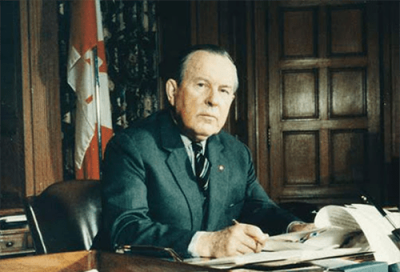
Featured image: Former Canadian Secretary of State for External Affairs (1948-1957), Lester B. Pearson, at his desk in Ottawa. As leader of Canada’s Liberal Party, he served from 1958 to 1968. [Source: journal.forces.gc.ca]
And You Remain Impossible to Erase
-
There you are, the inspiring Imam, forever present in the conscience of the
honorable and the hearts of the loyal.
Father Dave Smith, Pray For (Mufti) Dr. Hassoun
-
Abducted by the terrorist regime in Syria in 2025, Sheikh Hassoun has been
sentenced to life in prison I spoke with Father Dave Smith, an Australian
Anglic...
The eight heads were only the beginning
-
“Over 1,200 Human Heads And Multiple Human Fetuses Discovered In A
Warehouse In Detroit“ (Books Behind Borders):Despite everything authorities
had already ...
Jewish Supremacy Over The Goy
-
Jewish Supremacy Over The Goy August 26 2026
___________________________________ More Vids! +BN Vids Archive! HERE!
___________________________________ Sup...
Report on Beth Israel vigil 08-15-26
-
*Charlie Kirk and JFK*
John F. Kennedy was assassinated under questionable circumstances on
November 22, 1963, and Charlie Kirk fell on September 10 of la...
On The Road To International Anarchy
-
ON THE ROAD TO INTERNATIONAL ANARCHY— An Analysis (14 August 2026) by
Lawrence Davidson Part I — The Turn Toward […]
-
Hello all,
It is with great sadness that I share with you the passing of our beloved
sister, Mother, and Grandmother, the individual that you all knew ...
Best Horror Podcast
-
Best Horror Podcast Introduction: Horror podcasts […]
The post Best Horror Podcast appeared first on Copper Shock Horror Podcast.
Ikhras Endorses Muntadhar Al-Zaidi
-
“Oh parties of banditry and sectarianism and corruption, we have come and
our goal is to destroy you.” Ikhras formally endorses Muntadhar al-Zaidi,
Iraqi j...
Prince Charles: Foreign Jews behind bloodshed in ME
-
In May, 2017, British Crown Prince Charles declined an invitation from
Zionist entity’s president Reuven Rivlin‘s to attend the 100th anniversary
of the no...
Palestinian Women – One for All, All for One
-
Honouring All Palestinian Women by Honouring Three: Hanin Zoabi, Ahed
Tamimi, Samah Sabawi Vacy Vlazna “Palestinian women have always stood side
by side ...
US’s Saudi Oil Deal from Win-Win to Mega-Lose
-
By F. William Engdahl Who would’ve thought it would come to this? Certainly
not the Obama Administration, and their brilliant geo-political think-tank
neo-...
-
*Mordechai Vanunu wins human rights prize of Brazilian Press Association *
* http://www.alternativenews.org/english/index.php/features/updates/7038-mordechai...
Abdul Aziz Rantissi:
"My ultimate wish, my God, is to attain martyrdom,"...God granted him his wish on April 17, 2004, at the hands of Israeli assassins.