Showing posts with label Mike Pompeo. Show all posts

Saturday, 26 December 2020

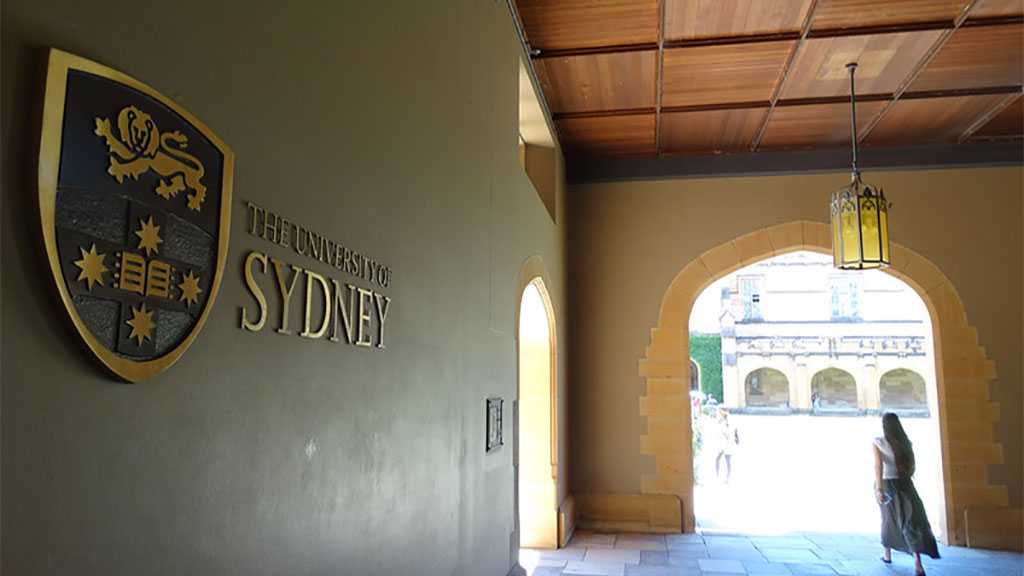
The ‘Israel’ Lobby at the University of Sydney

The ‘Israel’ Lobby at the University of Sydney

By Tim Anderson – The American Herald Tribune

Documents released under freedom of information law show that an ‘Israeli’ organization has, over many years, privately contributed millions of dollars to the University of Sydney’s Faculty of Arts and Social Sciences [FASS]. A sub-branch of the ‘Israeli’ World Zionist Organization [the Fund for Jewish Higher Education] contributes around half a million dollars to FASS each year, with contributions peaking at $819,000 in 2019. The WZO is committed to the ‘Israeli’ colony in Palestine, where more than half the population is denied full citizenship rights.

These amounts are way out of proportion to the nominal beneficiaries at the University: Hebrew, Biblical, Jewish and Holocaust Studies, and give the ‘Israeli’ lobby influence with University of Sydney management. This ‘Israeli’ funding is sustained while federal ‘foreign influence’ laws are trumpeted against China, and form part of a much larger private fund pool – one billion dollar plus, announced with pride in the University’s 2019 Annual Report  – at the University, for which there is little public accountability. The door is wide open for corruption, alongside secret foreign influence.

2020 data on the WZO confirms documents provided to me by a whistle-blower within the administration, back in 2018, which showed that the ‘Committee for Jewish Higher Education’ had been the largest single donor [by far] to FASS, with combined donations of $571,000 [in eight separate donations] in the first five months of 2012, all tagged for the Department of Hebrew, Biblical and Jewish Studies, including its specialty in Holocaust Studies.  With about 10 academics staff [not all full time] that department represents less than 2% of the 700 or so academic staff in the Faculty.

With all senior managers eligible for performance bonuses, at least in part based on their fund raising, these large undisclosed sums indicate a great potential for corruption, all the more so now that the Federal Court of Australia [in the case brought by the NTEU and myself] has rubber stamped management gag orders, even when they concern public academic work.

The ‘Israel’ lobby, acting through the tabloid media, pressured University of Sydney managers to expel me from my academic position in 2018-2019. The final issue was my graphic linking of one of ‘Israel’s’ Gaza massacres with the racial massacres of Nazi Germany; and my refusal to submit to secret gag orders, effectively made under pressure from the ‘Israel’ lobby. In late 2020 the Federal Court ruled that academics must follow management orders, even when it concerns their research and teaching. I have published some detail on this case and its implications; showing the vulnerability of the corporate university to outside pressures.

‘Israel’ lobby influence on the wider phenomenon of academic ‘cancel culture’ deserves attention. A recent Guardian article cites several British academics on the problem of university managers trying to “silence academics on social media.” This was said to be part of a tension between the corporate university and social media, where “on the one hand unis are pushing their staff to be more active online … but when that individual voice is in conflict with the official brand it creates a tension … it is about brand protection.” The corporate media has discovered that it can use this tension to goad management to move against certain academics.

The ‘Israel’ lobby has spent time and effort in this territory, in particular by trying to vilify as ‘racist’ public figures who criticize ‘Israel.’ The International Holocaust Remembrance Alliance [IHRA] has had some success in its attempts to extend the definition of anti-Semitism “to criticism of ‘Israel’ and support for Palestinian rights.” But I am one of many who have written that there is no legitimate basis for conflating criticism of a state or government with inciting hatred against a people.

An ‘Israel’ lobby group in the USA, under the guise of ‘protecting Jewish students’ branded as ‘biased’ more than 200 academics who supported the boycott against ‘Israel.’ Academics and teachers have been hounded from their positions in the USA, the UK, Australia and New Zealand because of their comments on ‘Israel,’ including those who have raised legitimate academic questions about ethno-nationalist settler colonialism” and of “victims becoming perpetrators.”

Jewish writers have not been immune from these attacks. Some have hit back, saying that “unfounded allegations of anti-Semitism [are used to] cover up ‘Israeli’ apartheid.” Last year sixty Jewish and ‘Israeli’ academics condemned the German parliament for its attempts to equate the Boycott, Divestment and Sanctions movement with anti-Semitism.

A 2017 letter signed by more than 200 British academics complained of the ‘Israel’ lobby’s repeated attempts to link academic criticism of ‘Israel,’ and support for the Palestinian people, with anti-Semitism. These moves were “outrageous interferences with free expression” and “direct attacks on academic freedom.” The group said “we wish to express our dismay at this attempt to silence campus discussion about ‘Israel,’ including its violation of the rights of Palestinians for more than 50 years. It is with disbelief that we witness explicit political interference in university affairs in the interests of ‘Israel’ under the thin disguise of concern about anti-Semitism.”

In the USA, President Donald Trump in 2019 signed an executive order to withhold funds from universities which did not do enough to stop “anti-Semitic practices,” which includes criticism of ‘Israel.’ Defense of the ‘Israeli’ colony in Palestine is taken seriously.

‘Israel’ and academic freedom became an issue at the University of Sydney in March 2015, after students shut down a talk by former British Army Colonel Richard Kemp, who had been invited on campus to defend the ‘Israeli’ military’s slaughter of more 2,000 Palestinian civilians in Gaza in 2014. According to the Times of ‘Israel,’ Kemp was to give a lecture about “ethical dilemmas of military tactics and dealing with non-state armed groups.” The ‘Israel’ lobby claimed the protest and student behavior was an attempt to intimidate Jews. A wider debate over the intellectual freedom afforded to visitors like Richard Kemp ensued.

At around this time I looked into the reporting of the slaughter in Gaza, preparing a graphic which showed – from relatively independent sources – that ‘Israeli’ forces had slaughtered more than 1,000 Palestinians [the final count was more than 2,000] of whom, according to UN sources, more than 75% were civilians.

The person who invited Colonel Kemp was former University of Sydney academic Dr. Suzanne Rutland. At her retirement a few months later Provost Stephen Garton praised Suzanne as a person of “moral courage” who had made “an effort to bridge the cultural and political divide, to promote tolerance and understanding … [and] we owe her a debt of gratitude.” Stephen used the occasion to backhand the students who had confronted Kemp, saying that some on campus “confuse academic freedom with the right to disrupt.”

Dr. Rutland had a high profile from her academic and community work. In 2008 she received the Order of Australia for her services to Higher Jewish Education and “interfaith dialogue.” She was also active in campaigns against anti-Semitism and Holocaust Denial. However her response to the students who confronted Colonel Kemp was not so tolerant. She denounced them as vicious racists, saying “when they stand there chanting, ‘free Palestine’ what they mean is the dismantling of the Zionist entity which means genocide against ‘Israel’s’ Jewish population.” This is an extreme view.

In fact, the better view is that ‘Israel,’ by its repeated massacres and ethnic cleansing, is engaged in a form of genocide. The US Centre for Constitutional Rights, noting a controversy over this question, wrote that:

“Prominent scholars of the international law [on the] crime of genocide and human rights authorities take the position that ‘Israel’s’ policies towards the Palestinian people could constitute a form of genocide. Those policies range from the 1948 mass killing and displacement of Palestinians to a half century of military occupation and, correspondingly, the discriminatory legal regime governing Palestinians, repeated military assaults on Gaza, and official ‘Israeli’ statements expressly favoring the elimination of Palestinians.”

Attacks on the critics of ‘Israel’ are often aimed at deflecting attention from this.

The now Emeritus Professor Suzanne Rutland was not just an academic, she was a conduit of ‘Israeli’ finance to the university.  Her online CV [now redacted online] listed her as ‘Chair of the National Advisory Committee on Jewish Education for Australia, for the World Zionist Organization.’ The WZO was founded in 1897 with the aim of creating a Jewish ‘state’ and, since the creation of ‘Israel,’ it has become an umbrella group for a range of ‘Israel’ lobbies. The WZO declares its commitment to “‘Israel’ education.”

At the political level the ‘Israel’ lobby remains influential. A 2018 study by the Australian Strategic Policy Institute [APRI] found that an ‘Israeli’ lobby group in Australia [AIJAC] was the biggest single foreign funder of Australian MPs’ overseas travel. MPs from both major parties were beneficiaries of these ‘study tours’. While the public focus of foreign influence in Australia has become China, with special new laws to criminalize ‘foreign influence,’ the APRI study showed that influence peddling from ‘Israel’ has been greater than that from China or the USA. While Australian MPs had been funded for nearly 60 trips to China and 45 to the US, AIJAC had sponsored around 100 visits to ‘Israel,’ “nearly evenly split between Labor and Liberal.”


River to Sea Uprooted Palestinian   
The views expressed in this article are the sole responsibility of the author and do not necessarily reflect those of the Blog!

Trump’s final month in office could be his most dangerous one – update

 Update: Washington has sent Nuclear Submarines to the Persian Gulf, in a move to “deter” Iran. This combined with Mike Pompeo laying the blame on “Iranian-backes forces” for the alleged “attacks” on the US embassy in Baghdad, leaves us in a very dangerous situation.

Trump’s final month in office could be his most dangerous one – update

December 22, 2020

By Aram Mirzaei for the Saker blog

Only one month remains of Donald Trump’s presidency. It seems inevitable that the Biden administration will take over the White House come January 20th. While the Trump administration has been very aggressive against the Islamic Republic during the past four years, it has nonetheless refrained from starting a full-fledged war. This could all change as he is about to leave office.

A few days after the election in November, reports emerged that Trump had “asked his advisers last week about the options he could have to attack Iran’s nuclear sites.”

However, “a range of senior advisers dissuaded the president from moving ahead with a military strike,” The New York Times reported. According to the report, Vice president Mike Pence, Secretary of State Mike Pompeo and others reportedly told the outgoing president that such action could spiral out of control.

Despite the NYT being notorious liars, I could imagine this report being true. I’ve for long maintained that Trump is an imbecile surrounded by war hawks and Zionist extremists. Nonetheless, those extremists and hawks still understand the consequences of a direct attack on Iran. Trump on the other hand does not. Zionist chieftain Benjamin Netanyahu knows that Trump is an imbecile and has done his utmost to take advantage of it. Netanyahu has for long dreamed of a US-Iranian war as it would do a lot of harm to his main enemy Iran, while it would cost Israel nothing when US soldiers are the ones being sacrificed to save the supremacist Zionist regime. Knowing that Joe Biden would be far more reserved in his approach towards Iran compared to the belligerent “maximum pressure” policy of the Trump regime, it is no coincidence that Netanyahu chose to assassinate Iranian scientist Dr Mohsen Fakhrizadeh only weeks after the US election.

Much like when Iran responded to Martyr Soleimani’s murder, Netanyahu and the Zionists had hoped that Iran would somehow retaliate again and enter the Zionist trap- to drag Iran into a war.

During these past four years, Trump has offered Israel a lot of “gifts” to prove his loyalty to the Empire. It is no coincidence that his administration has been very generous to Netanyahu and his friends since Trump has chosen to surround himself with the most extreme Zionists around, including his son in-law Jared Kushner. The relocation of the US embassy to Jerusalem, the recognition of the occupied Golan Heights as “Israeli territory”, and the recent “peace deals” between certain Arab states and Israel have all been very important moves for the Empire. Being wary that Trump, in his last month in charge could offer Israel a final gift in the form of an attack on Iran, Tehran has been preparing itself for any possible scenario.

Any attack by the US on Iranian soil will lead to war. That war will quickly become a regional war unless they expect Hezbollah, Hashd Al-Shaabi, the Houthis and many more to just sit idly by while the leader of their alliance is being attacked. Despite the risk of starting a regional war, Trump could make such a move in order for Biden to “inherit” the war, thus giving Israel the ultimate gift.

These are just speculations of course, but the sudden “attacks” on the US embassy in Baghdad, General Frank McKenzie, saying that the US is “ready to respond” if Iran attacks it on the first anniversary of the assassination of the Quds Force commander Major General Qassem Soleimani, and Mike Pompeo’s increasing obsession with Iran, are all causes for concern.

Trump’s policy of absolute subservience to Israel has only made Zionist hawks like Netanyahu much bolder and more audacious. It will also leave its mark for years after his exit from the White House as Bibi will now demand the same level of subservience from the Biden administration. Netanyahu has taken upon himself to show the former Vice President who is calling the shots, before Biden has even had the chance to take office.

In an obvious message to Biden, Netanyahu told him that “There can be no going back to the previous nuclear agreement. We must stick to an uncompromising policy of ensuring that Iran will not develop nuclear weapons.”

The fact that Biden has remained rather coy about how he intends to “return the US to the JCPOA”, makes me believe that he has readily agreed to continue the policy of the Trump administration in one way or another.

“I will offer Tehran a credible path back to diplomacy. If Iran returns to strict compliance with the nuclear deal, the United States would rejoin the agreement as a starting point for follow-on negotiations. With our allies, we will work to strengthen and extend the nuclear deal’s provisions, while also addressing other issues of concern,” he wrote in an article for the CNN website.

“Strengthening” the deal’s provisions and “addressing other issues of concern” sounds a lot like someone who is hoping to alter the deal in some form. This was something that Trump also hoped to achieve with his “maximum pressure” campaign. It is no coincidence that German Foreign Minister Heiko Maas all of a sudden is calling for a “nuclear deal plus” either. They all want to include Iran’s missile program into the deal because it has started to become a concern for the Zionist Empire and its vassals. So you can see that going back to the original JCPOA seems impossible at this point.

There is also the matter of how the JCPOA is viewed in Iran these days. Many Iranians had huge hopes for the JCPOA. They were hoping to finally be able to enjoy the benefits of an economic recovery after decades of sanctions and blacklisting. Most of them now consider the JCPOA to be evidence of the failure of diplomacy with the US. To them, despite long negotiations and concessions, Iran is still suffering from sanctions and is in no better position economically than it was before the JCPOA. This is why the Iranian “conservative bloc” emerged victorious in the parliamentary elections earlier this year, and it is also why I believe they’ll win the presidency next year.

With the “conservatives” in power, Iran will not so easily want to return to the stipulations of the JCPOA either. Last year Iran began scaling down on its commitment to the JCPOA agreements, in response to Washington’s withdrawal and Europe’s inability to stand up to the US. Iran has since lost billions of dollars worth of trade revenue due to the sanctions that Washington reimposed- why would Iran want to just return to the JCPOA without compensation for the damage done to its economy?

The Islamic Republic will be facing the 8th President since its birth when Biden assumes power. Nobody is expecting Biden to change anything in US policies towards Iran and the rest of the world for that matter. Trump is really hated in Iran, to the point where he is regarded as a terrorist. Iranian president Hassan Rouhani recently said: “We are by no means excited about [Joe] Biden coming to power, but we are happy with Trump leaving as a terrorist and a person who even blocked Iran’s access to [COVID-19] vaccines; we are happy because he failed to adhere to basic moral and human principles,”

Personally, I understand the hatred towards Trump, it is easy to dislike such an imbecile who has no self-control. But in anger, it is also easy to lose sight of the bigger picture; Trump was in many ways a preferable enemy. Assad said it several times too, noting how the imbecile openly bragged about stealing Syrian oil. Trump was a clumsy and irrational enemy, the Europeans and many liberals realized this too, hence the great animosity towards him and his rule. His maximum pressure policy has left Washington rather desperate and pathetic, whereas his predecessor managed to portray Washington as a serious negotiator when the JCPOA was first announced.

Unfortunately, there’s also the other side to his irrationality. Trump’s irrational behaviour after what he perceives to be electoral fraud, could cost many people their lives if and when he decides to give his friend Bibi Netanyahu his final gift.


River to Sea Uprooted Palestinian   
The views expressed in this article are the sole responsibility of the author and do not necessarily reflect those of the Blog!

Wednesday, 16 December 2020

James Jeffrey’s Confessions: We Destroyed the Syrian Pound and Prevented Russia, Iran and Assad from Feeling Victory (1) اعترافات جيمس جيفري: دمّرنا الليرة السوريّة ومنعنا روسيا وإيران والأسد من الشعور بالانتصار… (1)

James Jeffrey’s Confessions: We Destroyed the Syrian Pound and Prevented Russia, Iran and Assad from Feeling Victory (1)

Paris – Nidal Hamada

In a lengthy interview with The Monitor, former U.S. special envoy to Syria James Jeffrey made confessions about his country’s Syria policy, which can rightly be said to be the kind of scandal revealed by WikiLeaks documents.

James Jeffrey said: I convinced Secretary Pompeo of the USA administration that Iran should be treated as a nuclear problem like North Korea and that it represents a threat to security in the region, and we supported the Israeli air campaign against Iranian targets in Syria, we told them if you did not address the Iranian presence in Syria will not succeed in the war against ISIS, and we invoked the administration’s war against terrorism to justify the “Israeli” air campaign against Iranian targets in Syria, so we made a policy in Syria that is at the heart of our Iranian policy and the result was relatively successful, because we got a lot of Turkish assistance.

 Elsewhere, James Jeffrey says: “We have stepped up the pressure of siege and isolation on Assad, we have kept along the line to prevent any reconstruction assistance that the country needs, see what happened in the Syrian pound, you see what happened to the Syrian economy, it was a very useful strategy.”

 On the Iranian issue, he also says that “Iran’s ability in Syria to impose an equation similar to south Lebanon through long-range missiles stopped because of the Israeli air campaign, and the continuation of this campaign is due to The American diplomatic support and I will not enter into more details on the subject, we have stopped Iran’s long-term objectives and put its presence under pressure, but I do not know if it is enough to force it to leave Syria. I know that this is an important element for any broader agreement and no matter how much pain we attribute to the Russians, the regime in Syria and the Iranians, this will not disappear until Iran leaves Syria.”

He also said that Russia is winning politics and it knows that there is no military solution to the crisis, and we have clearly told them that we will lift the sanctions, and that Assad will return to the Arab League and will drop the diplomatic blockade if they accept our offer put by Pompeo in Sochi in 2019, they know what this offer is.”

(Part2: Turkey kurds and how were they lying to Trump?).

اعترافات جيمس جيفري: دمّرنا الليرة السوريّة ومنعنا روسيا وإيران والأسد من الشعور بالانتصار

باريس – نضال حمادة

This image has an empty alt attribute; its file name is Untitled-523.png

في مقابلة طويلة أجراها مع (ذي مونيتر) أدلى المبعوث الأميركي الخاص السابق الى سورية جيمس جيفري بكلام أشبه بالاعترافات حول سياسة بلاده في سورية، يمكن القول عنها بحق إنها من نوع الفضائح التي كشفتها وثائق «ويكيليكس».

قال جيمس جيفري: لقد أقنعت مع وزير الخارجية بومبيو أعضاء الإدارة الأميركية أنه يجب التعامل مع إيران على أنها مشكلة نوويّة على غرار كوريا الشمالية وأنها تمثل تهديداً للأمن في المنطقة، كما دعمنا الحملة الجوية «الإسرائيلية» ضدّ الأهداف الإيرانية في سورية، قلنا لهم إذا لم تعالجوا التواجد الإيراني في سورية فلن تنجحوا بالحرب ضدّ داعش، وتذرّعنا للإدارة بالحرب ضدّ الإرهاب لتبرير الحملة الجوية «الإسرائيلية» على أهداف إيرانية في سورية، هكذا صنعنا سياسة في سورية تدخل في صلب سياستنا الإيرانية العامة وكانت نتيجتها ناجحة نسبياً، لأننا حصلنا على الكثير من المساعدة التركية.

 في مكان آخر يقول جيمس جيفري: «لقد صعّدنا ضغوط الحصار والعزلة على الأسد، لقد حافظنا على طول الخط على منع أية مساعدة لإعادة الإعمار التي يحتاجها البلد، أرأيتم ماذا حلّ بالليرة السورية، أرأيتم ماذا حلّ بالاقتصاد السوري، لقد كانت استراتيجية مفيدة جداً».

 في الشأن الإيراني يقول أيضاً «إنّ قدرة إيران في سورية على فرض معادلة شبيهة بجنوب لبنان عبر صواريخ بعيدة المدى توقفت بسبب الحملة الجوية الإسرائيلية، ويعود استمرار هذه الحملة إلى الدعم الدبلوماسي الأميركي ولن أدخل بتفاصيل أكير عن الموضوع، لقد أوقفنا أهداف إيران البعيدة المدى ووضعنا وجودها تحت الضغط، لكن لا أعرف إذا كان كافياً حتى يجبرها على ترك سورية. أنا أعرف أن هذا عنصر مهمّ لأيّ اتفاق أوسع ومهما كان الألم الذي نسبّبه للروس وللنظام في سورية وللإيرانيين فهذا لن يختفي قبل مغادرة إيران لسورية».

قال أيضاً «إنّ روسيا تكسب بالسياسة وهي تعلم ان لا حلّ عسكرياً للأزمة، وقد قلنا لهم بشكل واضح إننا سوف نرفع العقوبات، وإنّ الأسد سوف يعود الى الجامعة العربية وسوف يسقط الحصار الدبلوماسي في حال قبلوا بعرضنا الذي طرحه بومبيو في سوتشي عام 2019، هم يعرفون ما هو هذا العرض».

(الجزء الثاني: تركيا الأكراد وكيف كانوا يكذبون على ترامب؟).


River to Sea Uprooted Palestinian   
The views expressed in this article are the sole responsibility of the author and do not necessarily reflect those of the Blog!

Saturday, 19 September 2020

Imam Khamenei’s Adviser: Snapback Mechanism Piece of US Propaganda

Imam Khamenei’s Adviser: Snapback Mechanism Piece of US Propaganda

By Staff, Agencies

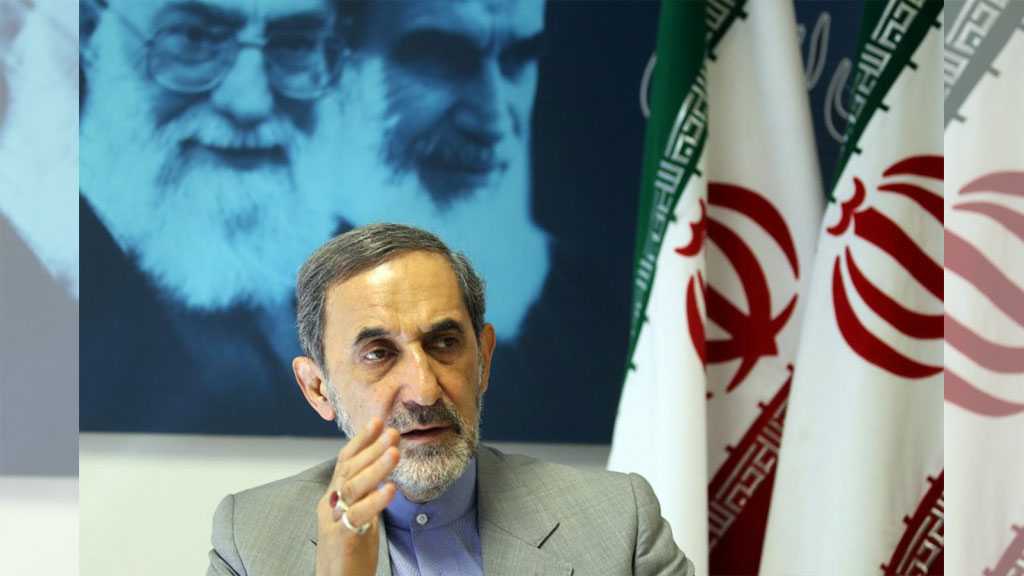
Washington’s push to trigger the snapback mechanism of the JCPOA for re-imposing sanctions on Iran is nothing but an attempt to attract the American public attention as part of a propaganda game, Adviser to Leader of the Islamic Revolution His Eminence Imam Sayyed Ali Khamenei, Ali Akbar Velayati said.

In an interview with Iran’s Tasnim News Agency, Velayati slammed the hype over the so-called snapback mechanism of the 2015 nuclear deal as a propaganda game.

Pointing to the US administration’s attempts to attract the public opinion after Donald Trump’s plummeting poll numbers, the member of the Iranian team of JCPOA observers lashed out at the US for reneging on the nuclear deal and refusing to lift the sanctions.

“A one-sided JCPOA has no validity,” Velayati added.

Asked about Iran’s reaction to a possible activation of the snapback mechanism, he said the US, which has already withdrawn from the deal, has no right to make any comment or trigger the mechanism.

On the expectations that Joe Biden would win the US presidential election, Velayati said the weakest diplomacy taken by a country is to pin hopes on the fate of other states, stressing that the Iranian authorities do not care who the next US president will be.

Last month, 13 countries of the 15-member council rejected the US push to trigger the snapback provision in the 2015 nuclear deal, leaving Washington isolated on the issue.

UNSC Resolution 2231, which enshrined the JCPOA, states that if no council member has put forward a draft resolution to extend sanctions relief on Iran within 10 days of a non-compliance complaint, then the body’s president shall do so within the remaining 20 days.

The document, however, says the Security Council would “take into account the views of the states involved.”

US Secretary of State Mike Pompeo claimed that all UN sanctions against Iran will be reinstated on September 20 after the US “activated the snapback mechanism.”

However, the claim was strongly condemned by other signatories of the nuclear deal including the EU, Russia and China.


River to Sea Uprooted Palestinian   
The views expressed in this article are the sole responsibility of the author and do not necessarily reflect those of the Blog!

Tuesday, 26 November 2019

US Threatens Lebanon: Leave Hezbollah or Total Collapse


US Threatens Lebanon: Leave Hezbollah or Total Collapse
Beirut – On March 22, US Secretary of State Mike Pompeo was in Beirut threatening the Lebanese by giving them two options: either confront Hezbollah or pay the price. What Pompeo said eight months ago was repeated by former US ambassador to Lebanon, Jeffrey Feltman, before Congress. What he meant was that the Lebanese had two options: either to adhere to Washington’s policies, or to collapse. Washington’s policies also mean standing up to Hezbollah [in his testimony, Feltman repeated the word Hezbollah’s 49 times], weakening his allies in any future elections, and forming a technocratic government.
Jeffrey Felmann presented his vision of the situation in Lebanon. “What happens is related to American interests,” he said. The mobility in Congress seemed remarkable, as the Subcommittee on the Middle East, North Africa and International Terrorism [a branch of the House Foreign Affairs Committee] met in a session entitled:
“What is next for Lebanon?
The demonstrations, that the US is so interested in, has been taking place in Lebanon since October 17, are according to Feltman “not about the United States”. Feltman cautioned that it is necessary for his country to avoid turning the focal point of the protests against the US, because the outcome of what is happening will affect Washington’s interests, whether positive or negative, “in what could be a pivotal moment in the history of Lebanon.”
Over the years, many have been surprised by Lebanon’s amazing ability to stay afloat. Remaining intact politically and economically, amid circumstances suggesting an imminent collapse. Feltman pointed out that predictions of Lebanon’s fate often proved wrong. This time, however, it seems different. Lebanon’s internal and external debt management is not only increasingly complex in a stagnated economy, but the public is exhausted and angry at the sectarian rhetoric and lame excuses used by political leaders to advance their narrow political and financial interests. As a result, the Lebanese political system as a whole is subject to hostile public scrutiny, and Hezbollah, according to Feltman, is only the target of such scrutiny.
Feltman’s preposterous propaganda was not surprising, given Pompeo concluded his visit last March by seemingly encouraging an uprising against Hezbollah when he said,
“It will take courage for the nation of Lebanon to stand up to Hezbollah’s criminality, terror, and threats.”
Pompeo’s threat was clear: If Lebanon fails to limit Hezbollah’s political and military power, it would risk not just losing US aid but also a more severe response, possibly in the form of debilitating national sanctions.
Pompeo attacked the Lebanese Resistance for carrying out “Iran’s agenda” in the region at the expense of Lebanon’s domestic order and “the prosperity of future generations.” However, what the secretary of state fails to comprehend is that if the United States follows through on this plan to inflict collective punishment on Lebanon over Hezbollah, the results are likely to be the opposite of what administration officials intend.
Hezbollah’s allies inside Lebanon are today ever more defensiveness towards the party to a point that it seems US officials have completely misunderstood our internal political system. Pompeo, Feltman and whoever is hoping to damage Hezbollah with these protests, has completely missed the fact that Lebanon’s sectarian political system forbids treating Hezbollah, which has a parliamentary faction legitimately elected into office, as an illegal entity. US officials and their regional and local affiliates seem to have missed that the military power of Hezbollah, with its Iranian weapons and training that no one is denying, is superior to that of the Lebanese Armed Forces. It has successfully branded itself to the Lebanese public as capable of standing up to Israel in ways that the Lebanese army manifestly cannot.
Even Lebanese officials critical of Hezbollah dismissed Pompeo’s calls to directly challenge the group, warning that were they to follow his advice, the country could descend into a second civil war. That assessment may be overly exaggerated. The United States, however, is undoubtedly risking Lebanon’s basic stability in ways that may ultimately benefit Hezbollah rather than harm it.
The United States, which has already imposed sanctions against Hezbollah leaders and Hezbollah-affiliated businesses, hopes to step up pressure on the Shia community, could now risk facing resistance even from the US’s local allies, who fear that pushing too hard could trigger a backlash and endanger the tiny country’s fragile peace.
President Aoun, Hezbollah’s biggest ally in Lebanon, has repeated on many occasions that the country’s priority is to preserve national unity and peace while affirming especially during his latest TV interview last week that
“Hezbollah is a Lebanese party that has a popular base representing one of the main [religious] sects in the country.”
It simply now seems that the American efforts to weaken and isolate Hezbollah might have only succeeded in creating countless practical problems for the party that it can outmaneuver in simple steps but did nothing to accomplish the fundamental United States goal of containing Hezbollah politically and militarily.
Meanwhile, lasting effect of US policy is yet to be seen. However, even when we have the likes of Pompeo and Feltman believing the US should adopt a more nuanced approach towards Hezbollah, it is only normal fathom that the United States has limited power to coerce actions from Lebanese politicians and institutions. The question the Trump administration should be asking is whether sweeping sanctions against the Lebanese government and institutions would weaken Hezbollah or rather strengthen it in the longer run.
Related Videos
Related News

River to Sea Uprooted Palestinian   
The views expressed in this article are the sole responsibility of the author and do not necessarily reflect those of the Blog!

Saturday, 6 July 2019

The Plot to Keep Jeremy Corbyn Out of Power


In the latest of the interminable media “furores” about Jeremy Corbyn’s supposed unfitness to lead Britain’s Labour party – let alone become prime minister – it is easy to forget where we were shortly before he won the support of an overwhelming majority of Labour members to head the party.
In the preceding two years, it was hard to avoid on TV the figure of Russell Brand, a comedian and minor film star who had reinvented himself, after years of battling addiction, as a spiritual guru-cum-political revolutionary.
Brand’s fast-talking, plain-speaking criticism of the existing political order, calling it discredited, unaccountable and unrepresentative, was greeted with smirking condescension by the political and media establishment. Nonetheless, in an era before Donald Trump had become president of the United States, the British media were happy to indulge Brand for a while, seemingly believing he or his ideas might prove a ratings winner with younger audiences.
But Brand started to look rather more impressive than anyone could have imagined. He took on supposed media heavyweights like the BBC’s Jeremy Paxman and Channel 4’s Jon Snow and charmed and shamed them into submission – both with his compassion and his thoughtful radicalism. Even in the gladiatorial-style battle of wits so beloved of modern TV, he made these titans of the political interview look mediocre, shallow and out of touch. Videos of these head-to-heads went viral, and Brand won hundreds of thousands of new followers.
Then he overstepped the mark.
Democracy as charade
Instead of simply criticising the political system, Brand argued that it was in fact so rigged by the powerful, by corporate interests, that western democracy had become a charade. Elections were pointless. Our votes were simply a fig-leaf, concealing the fact that our political leaders were there to represent not us but the interests of globe-spanning corporations. Political and media elites had been captured by unshored corporate money. Our voices had become irrelevant.
Brand didn’t just talk the talk. He started committing to direct action. He shamed our do-nothing politicians and corporate media – the devastating Grenfell Tower fire had yet to happen – by helping to gain attention for a group of poor tenants in London who were taking on the might of a corporation that had become their landlord and wanted to evict them to develop their homes for a much richer clientele. Brand’s revolutionary words had turned into revolutionary action.
But just as Brand’s rejection of the old politics began to articulate a wider mood, it was stopped in its tracks. After Corbyn was unexpectedly elected Labour leader, offering for the first time in living memory a politics that listened to people before money, Brand’s style of rejectionism looked a little too cynical, or at least premature.
While Corbyn’s victory marked a sea-change, it is worth recalling, however, that it occurred only because of a mistake. Or perhaps two.
The Corbyn accident
First, a handful of Labour MPs agreed to nominate Corbyn for the leadership contest, scraping him past the threshold needed to get on the ballot paper. Most backed him only because they wanted to give the impression of an election that was fair and open. After his victory, some loudly regretted having assisted him. None had thought a representative of the tiny and besieged left wing of the parliamentary party stood a chance of winning – not after Tony Blair and his acolytes had spent more than two decades remaking Labour, using their own version of entryism to eradicate any vestiges of socialism in the party. These “New Labour” MPs were there, just as Brand had noted, to represent the interests of a corporate class, not ordinary people.
Corbyn had very different ideas from most of his colleagues. Over the years he had broken with the consensus of the dominant Blairite faction time and again in parliamentary votes, consistently taking a minority view that later proved to be on the right side of history. He alone among the leadership contenders spoke unequivocally against austerity, regarding it as a way to leech away more public money to enrich the corporations and banks that had already pocketed vast sums from the public coffers – so much so that by 2008 they had nearly bankrupted the entire western economic system.
And second, Corbyn won because of a recent change in the party’s rulebook – one now much regretted by party managers. A new internal balloting system gave more weight to the votes of ordinary members than the parliamentary party. The members, unlike the party machine, wanted Corbyn.
Corbyn’s success didn’t really prove Brand wrong. Even the best designed systems have flaws, especially when the maintenance of the system’s image as benevolent is considered vitally important. It wasn’t that Corbyn’s election had shown Britain’s political system was representative and accountable. It was simply evidence that corporate power had made itself vulnerable to a potential accident by preferring to work out of sight, in the shadows, to maintain the illusion of democracy. Corbyn was that accident.
‘Brainwashing under freedom’
Corbyn’s success also wasn’t evidence that the power structure he challenged had weakened. The system was still in place and it still had a chokehold on the political and media establishments that exist to uphold its interests. Which is why it has been mobilising these forces endlessly to damage Corbyn and avert the risk of a further, even more disastrous “accident”, such as his becoming prime minister.
Listing the ways the state-corporate media have sought to undermine Corbyn would sound preposterous to anyone not deeply immersed in these media-constructed narratives. But almost all of us have been exposed to this kind of “brainwashing under freedom” since birth.
The initial attacks on Corbyn were for being poorly dressed, sexist, unstatesmanlike, a national security threat, a Communist spy – relentless, unsubstantiated smears the like of which no other party leader had ever faced. But over time the allegations became even more outrageously propagandistic as the campaign to undermine him not only failed but backfired – not least, because Labour membership rocketed under Corbyn to make the party the largest in Europe.
As the establishment’s need to keep him away from power has grown more urgent and desperate so has the nature of the attacks.
Redefining anti-semitism
Corbyn was extremely unusual in many ways as the leader of a western party within sight of power. Personally he was self-effacing and lived modestly. Ideologically he was resolutely against the thrust of four decades of a turbo-charged neoliberal capitalism unleashed by Thatcher and Reagan in the early 1980s; and he opposed foreign wars for empire, fashionable “humanitarian interventions” whose real goal was to attack other sovereign states either to control their resources, usually oil, or line the pockets of the military-industrial complex.
It was difficult to attack Corbyn directly for these positions. There was the danger that they might prove popular with voters. But Corbyn was seen to have an Achilles’ heel. He was a life-long anti-racism activist and well known for his support for the rights of the long-suffering Palestinians. The political and media establishments quickly learnt that they could recharacterise his support for the Palestinians and criticism of Israel as anti-semitism. He was soon being presented as a leader happy to preside over an “institutionally” anti-semitic party.
Under pressure of these attacks, Labour was forced to adopt a new and highly controversial definition of anti-semitism – one rejected by leading jurists and later repudiated by the lawyer who devised it – that expressly conflates criticism of Israel, and anti-Zionism, with Jew hatred. One by one Corbyn’s few ideological allies in the party – those outside the Blairite consensus – have been picked off as anti-semites. They have either fallen foul of this conflation or, as with Labour MP Chris Williamson, they have been tarred and feathered for trying to defend Labour’s record against the accusations of a supposed endemic anti-semitism in its ranks.
The bad faith of the anti-semitism smears were particularly clear in relation to Williamson. The comment that plunged him into so much trouble – now leading twice to his suspension – was videoed. In it he can be heard calling anti-semitism a “scourge” that must be confronted. But also, in line with all evidence, Williamson denied that Labour had any particular anti-semitism problem. In part he blamed the party for being too ready to concede unwarranted ground to critics, further stoking the attacks and smears. He noted that Labour had been “demonised as a racist, bigoted party”, adding: “Our party’s response has been partly responsible for that because in my opinion … we’ve backed off far too much, we have given too much ground, we’ve been too apologetic.”
The Guardian has been typical in mischaracterising Williamson’s remarks not once but each time it has covered developments in his case. Every Guardian report has stated, against the audible evidence, that Williamson said Labour was “too apologetic about anti-semitism”. In short, the Guardian and the rest of the media have insinuated that Williamson approves of anti-semitism. But what he actually said was that Labour was “too apologetic” when dealing with unfair or unreasonable allegations of anti-semitism, that it had too willingly accepted the unfounded premise of its critics that the party condoned racism.
Like the Salem witch-hunts
The McCarthyite nature of this process of misrepresentation and guilt by association was underscored when Jewish Voice for Labour, a group of Jewish party members who have defended Corbyn against the anti-semitism smears, voiced their support for Williamson. Jon Lansman, a founder of the Momentum group originally close to Corbyn, turned on the JVL calling them “part of the problem and not part of the solution to antisemitism in the Labour Party”. In an additional, ugly but increasingly normalised remark, he added: “Neither the vast majority of individual members of JVL nor the organisation itself can really be said to be part of the Jewish community.”
In this febrile atmosphere, Corbyn’s allies have been required to confess that the party is institutionally anti-semitic, to distance themselves from Corbyn and often to submit to anti-semitism training. To do otherwise, to deny the accusation is, as in the Salem witch-hunts, treated as proof of guilt.
The anti-semitism claims have been regurgitated almost daily across the narrow corporate media “spectrum”, even though they are unsupported by any actual evidence of an anti-semitism problem in Labour beyond a marginal one representative of wider British society. The allegations have reached such fever-pitch, stoked into a hysteria by the media, that the party is now under investigation by the Equality and Human Rights Commission – the only party apart from the neo-Nazi British National Party ever to face such an investigation.
These attacks have transformed the whole discursive landscape on Israel, the Palestinians, Zionism and anti-semitism in ways unimaginable 20 years ago, when I first started reporting on the Israeli-Palestinian conflict. Then the claim that anti-Zionism – opposition to Israel as a state privileging Jews over non-Jews – was the same as anti-semitism sounded patently ridiculous. It was an idea promoted only by the most unhinged apologists for Israel.
Now, however, we have leading liberal commentators such as the Guardian’s Jonathan Freedland claiming not only that Israel is integral to their Jewish identity but that they speak for all other Jews in making such an identification. To criticise Israel is to attack them as Jews, and by implication to attack all Jews. And therefore any Jew dissenting from this consensus, any Jew identifying as anti-Zionist, any Jew in Labour who supports Corbyn – and there are many, even if they are largely ignored – are denounced, in line with Lansman, as the “wrong kind of Jews”. It may be absurd logic, but such ideas are now so commonplace as to be unremarkable.
In fact, the weaponisation of anti-semitism against Corbyn has become so normal that, even while I was writing this post, a new nadir was reached. Jeremy Hunt, the foreign secretary who hopes to defeat Boris Johnson in the upcoming Tory leadership race, as good as accused Corbyn of being a new Hitler, a man who as prime minister might allow Jews to be exterminated, just as occurred in the Nazi death camps.
Too ‘frail’ to be PM
Although anti-semitism has become the favoured stick with which to beat Corbyn, other forms of attack regularly surface. The latest are comments by unnamed “senior civil servants” reported in the Times alleging that Corbyn is too physically frail and mentally ill-equipped to grasp the details necessary to serve as prime minister. It barely matters whether the comment was actually made by a senior official or simply concocted by the Times. It is yet further evidence of the political and media establishments’ anti-democratic efforts to discredit Corbyn as a general election looms.
One of the ironies is that media critics of Corbyn regularly accuse him of failing to make any political capital from the shambolic disarray of the ruling Conservative party, which is eating itself alive over the terms of Brexit, Britain’s imminent departure from the European Union. But it is the corporate media – which serves both as society’s main forum of debate and as a supposed watchdog on power – that is starkly failing to hold the Tories to account. While the media obsess about Corbyn’s supposed mental deficiencies, they have smoothed the path of Boris Johnson, a man who personifies the word “buffoon” like no one else in political life, to become the new leader of the Conservative party and therefore by default – and without an election – the next prime minister.
An indication of how the relentless character assassination of Corbyn is being coordinated was hinted at early on, months after his election as Labour leader in 2015. A British military general told the Times, again anonymously, that there would be “direct action” – what he also termed a “mutiny” – by the armed forces should Corbyn ever get in sight of power. The generals, he said, regarded Corbyn as a national security threat and would use any means, “fair or foul”, to prevent him implementing his political programme.
Running the gauntlet
But this campaign of domestic attacks on Corbyn needs to be understood in a still wider framework, which relates to Britain’s abiding Transatlantic “special relationship”, one that in reality means that the UK serves as Robin to the United States’ Batman, or as a very junior partner to the global hegemon.
Last month a private conversation concerning Corbyn between the US secretary of state, Mike Pompeo, and the heads of a handful of rightwing American Jewish organisations was leaked. Contrary to the refrain of the UK corporate media that Corbyn is so absurd a figure that he could never win an election, the fear expressed on both sides of that Washington conversation was that the Labour leader might soon become Britain’s prime minister.
Framing Corbyn yet again as an anti-semite, a US Jewish leader could be heard asking Pompeo if he would be “willing to work with us to take on actions if life becomes very difficult for Jews in the UK”. Pompeo responded that it was possible “Mr Corbyn manages to run the gauntlet and get elected” – a telling phrase that attracted remarkably little attention, as did the story itself, given that it revealed one of the most senior Trump administration officials explicitly talking about meddling directly in the outcome of a UK election.
Here is the dictionary definition of “run the gauntlet”: to take part in a form of corporal punishment in which the party judged guilty is forced to run between two rows of soldiers, who strike out and attack him.
So Pompeo was suggesting that there already is a gauntlet – systematic and organised blows and strikes against Corbyn – that he is being made to run through. In fact, “running the gauntlet” precisely describes the experience Corbyn has faced since he was elected Labour leader – from the corporate media, from the dominant Blairite faction of his own party, from rightwing, pro-Israel Jewish organisations like the Board of Deputies, and from anonymous generals and senior civil servants.
‘We cheated, we stole’
Pompeo continued: “You should know, we won’t wait for him to do those things to begin to push back. We will do our level best. It’s too risky and too important and too hard once it’s already happened.”
So, Washington’s view is that action must be taken before Corbyn reaches a position of power. To avoid any danger he might become the UK’s next prime minister, the US will do its “level best” to “push back”. Assuming that this hasn’t suddenly become the US administration’s priority, how much time does the US think it has before Corbyn might win power? How close is a UK election?
As everyone in Washington is only too keenly aware, a UK election has been a distinct possiblity since the Conservatives set up a minority goverment two years ago with the help of fickle, hardline Ulster loyalists. Elections have been looming ever since, as the UK ruling party has torn itself apart over Brexit, its MPs regularly defeating their own leader, prime minister Theresa May, in parliamentary votes.
So if Pompeo is saying, as he appears to be, that the US will do whatever it can to make sure Corbyn doesn’t win an election well before that election takes place, it means the US is already deeply mired in anti-Corbyn activity. Pompeo is not only saying that the US is ready to meddle in the UK’s election, which is bad enough; he is hinting that it is already meddling in UK politics to make sure the will of the British people does not bring to power the wrong leader.
Remember that Pompeo, a former CIA director, once effectively America’s spy chief, was unusually frank about what his agency got up to when he was in charge. He observed: “I was the CIA director. We lied, we cheated, we stole. It’s – it was like – we had entire training courses.”
One would have to be remarkably naive to think that Pompeo changed the CIA’s culture during his short tenure. He simply became the figurehead of the world’s most powerful spying outfit, one that had spent decades developing the principles of US exceptionalism, that had lied its way to recent wars in Iraq and Libya, as it had done earlier in Vietnam and in justifying the nuclear bombing of Hiroshima, and much more. Black ops and psyops were not invented by Pompeo. They have long been a mainstay of US foreign policy.
An eroding consensus
It takes a determined refusal to join the dots not to see a clear pattern here.
Brand was right that the system is rigged, that our political and media elites are captured, and that the power structure of our societies will defend itself by all means possible, “fair or foul”. Corbyn is far from alone in this treatment. The system is similarly rigged to stop a democratic socialist like Bernie Sanders – though not a rich businessman like Donald Trump – winning the nomination for the US presidential race. It is also rigged to silence real journalists like Julian Assange who are trying to overturn the access journalism prized by the corporate media – with its reliance on official sources and insiders for stories – to divulge the secrets of the national security states we live in.
There is a conspiracy at work here, though it is not of the kind lampooned by critics: a small cabal of the rich secretly pullng the strings of our societies. The conspiracy operates at an institutional level, one that has evolved over time to create structures and refine and entrench values that keep power and wealth in the hands of the few. In that sense we are all part of the conspiracy. It is a conspiracy that embraces us every time we unquestioningly accept the “consensual” narratives laid out for us by our education systems, politicians and media. Our minds have been occupied with myths, fears and narratives that turned us into the turkeys that keep voting for Christmas.
That system is not impregnable, however. The consensus so carefully constructed over many decades is rapidly breaking down as the power structure that underpins it is forced to grapple with real-world problems it is entirely unsuited to resolve, such as the gradual collapse of western economies premised on infinite growth and a climate that is fighting back against our insatiable appetite for the planet’s resources.
As long as we colluded in the manufactured consensus of western societies, the system operated without challenge or meaningful dissent. A deeply ideological system destroying the planet was treated as if it was natural, immutable, the summit of human progress, the end of history. Those times are over. Accidents like Corbyn will happen more frequently, as will extreme climate events and economic crises. The power structures in place to prevent such accidents will by necessity grow more ham-fisted, more belligerent, less concealed to get their way. And we might finally understand that a system designed to pacify us while a few grow rich at the expense of our children’s future and our own does not have to continue. That we can raise our voices and loudly say: “No!”

River to Sea Uprooted Palestinian   
The views expressed in this article are the sole responsibility of the author and do not necessarily reflect those of the Blog!