Showing posts with label War on Gaza. Show all posts

Sunday, 21 November 2021

Bahaa Abou Al-Ata…A Name Deeply Engraved within the Israeli Mind

 Nov 20, 2021

Source: Al Mayadeen

By Hassan Lafi

Abou al-Ata was responsible for removing the “Master of Israeli Security” from the podium in an embarrassing fashion, which Netanyahu viewed as a personal insult.


اخبار لبنان من لبنان - أخبار كل يوم
Martyr Bahaa Abou el-Ata

The decision taken by “Israel” to assassinate Bahaa Abou al-Ata, the leader of the northern region in the Quds Brigades – the military faction of the Islamic Jihad Movement in Palestine -, was certainly not a normal event. It took place on the dawn of Tuesday, 12 November 2019, and showcased a string of complicated Israeli calculations given that this assassination would be the first targeting a resistance commander since 2012, and occurred amidst a lack of tension or war.

Thus, the two Israeli institutions, the political and military, were aware that taking this decision would certainly break the equation sanctified by the Palestinian resistance, which stipulates that any assassination equals a war.

Subsequently, the assassination of Abou al-Ata, for “Israel”, was a declaration of a military battle with the resistance in Gaza. And certainly, the Israeli intelligence assessments know very well that the shrapnel of the Gaza rockets in that battle will not be confined to the borders of the settlements around the Gaza Strip and the south, but will rather reach deep into the “Gush Dan” area, the most densely populated center in the occupied lands.

Nonetheless, this scenario occurred in the battle of “Sayhat al-Fajr” (The Cry of Dawn) which the al-Quds Brigades fought against “Israel.”

Two years after the assassination of Bahaa Abou al-Ata, the question still remains: what was the Israeli view of the Palestinian leader’s personality? And what did it represent in the Israeli mindset of both military and political institutions? 

Amos Gilad, head of the Israeli Institute for Policy and Strategy (IPS) and former director of policy and political-military affairs at the Ministry of Security, answered when asked about Bahaa Abou el-Ata by saying: “He was the chief motivator for the Islamic Jihad’s operation, and possesses a strong and bold personality.” 

Israeli Occupation Army Spokesman Heidi Zilberman did not diverge from Gilad’s assessment, saying to journalists following the assassination of Abou al-Ata that “Israel” understands well that the martyr was “a wild element, mostly working according to a point of view paradoxical to regional interests.” This confirms that the occupation dealt with the resistance leader as a major hurdle to its regional plans, the most important of which were:

First: “Israel” was in need of cooling down the Gaza front through understandings of instilling calm in exchange for humanitarian facilitations (on a humanitarian level). This approach turned, two years after the assassination of Abou al-Ata, into a full-fledged plan put forward by the Israeli foreign minister Yair Lapid, and adopted by his government, titled “Security in exchange for Economy”, away from any political dimensions related to the Palestinian rights as a people under occupation.

Second: The political leadership of the Israeli occupation at the time, represented by Prime Minister Benjamin Netanyahu, considered that the continuation of the “ninth hour” strategy, of which martyr Abou al-Ata was the icon, that maintains a state of perpetual conflict through engagement with “Israel,” negatively affects the impetus of some normalizing countries to steer towards “Tel Aviv”, which Netanyahu considered a major goal in his regional policies. Moreover, the name of Bahaa Abou al-Ata was engraved deeply in Netanyahu’s mind at two instances that had great impact on his policies and personality. 

The first instance was Abu al-Ata’s crucial role in sanctifying the eye for an eye equation with the occupation, which came in defense of the peaceful protesters who were being assaulted during their “Return Marches” by the IOF. This equation engendered successive rounds of military escalations, becoming the main reason behind the toppling of Netanyahu’s government in November 2018 following the resignation of the then-Minister of Security, Avigdor Lieberman, who opposed accepting a ceasefire with the resistance in Gaza right after the “Ashkelon Hell” battle. Lieberman viewed this “compromise” as a capitulation on the part of Netanyahu’s government. 

The second instance was al-Ata’s responsibility for removing Netenyahu, the so-called “master of Israeli security,” from the podium in an embarrassing fashion in front of his electoral audience in “Ashdod”. This incident was considered by the former PM as a personal insult to him that affected his entire political future, especially with the wide circulation of Abou al-Ata’s picture in Israeli media. Although this circulation aimed to send a threat to the Palestinian leader in order to hinder his work, the continuation of “Al-Quds Brigades”, under his leadership, in the engagement strategy, made him a permanent presence in the Israeli media. Every time Bahaa Abou al-Ata’s photo is published, the Israeli public recalls the humiliation of Netanyahu and his escape from Abou al-Ata’s missiles to the shelter. 

Third: At the time, “Israel” was seeking to focus its efforts on the northern front and the Iranian nuclear project, taking advantage of the presence of US President Donald Trump in office. However, as the Gaza front continued to heat up through the engagement strategy, the occupation considered that the Islamic Jihad, as an effective part of the resistance axis, impeded these Israeli endeavors. Therefore, the Israeli occupation planes tried to assassinate in Damascus the commander of the military department in the Islamic Jihad movement, Akram al-Ajouri, whom “Tel Aviv” calls the military mastermind of the al-Quds Brigades, in tandem with their assassination of Abou al-Ata, who was considered the most powerful executive commander in the Brigades. Thus, “Israel” would have dealt a simultaneous double blow to the military mind and arm of the Islamic Jihad, in order to paralyze the military capacity of the al-Quds Brigades.

This strategy echoes the mistakes made in 1995 when former Israeli PM Yitzhak Rabin decided to assassinate the founder of the Islamic Jihad movement and its first secretary-general, Dr. Fathi Shaqaqi, believing that the movement was solely based on the person of Shaqaqi.

However, less than six months later, the Islamic Jihad was carrying out its first operations in “Tel Aviv,” in response to the assassination of martyr Shaqaqi, under the leadership of Dr. Ramadan Shallah back then, may God have mercy on him.

In the case of Bahaa Abou al-Ata, the Jihad movement, led by its Secretary-General Ziad al-Nakhala, did not wait extensively to prove to “Israel” the failure of its expectations: Half an hour after Abou al-Ata’s assassination, al-Quds Brigades fired a rocket barrage in the direction of the “Gush Dan” area, announcing the start of the “Sayhat al-Fajr” battle.


River to Sea Uprooted Palestinian   
The views expressed in this article are the sole responsibility of the author and do not necessarily reflect those of the Blog!

Friday, 19 November 2021

عمر أبو عصب والجيل الرابع والقدس


وكالة الحياة برس الاخبارية

الجمعة 19 11 2021

ناصر قنديل

أظهرت معركة سيف القدس حقائق جديدة تستحق القراءة بعدما ثبتتها الشهور التي تبعت وقف المواجهة العسكرية، ليست موازين الردع التي فرضتها عنوانها الوحيد على رغم أهميته الفائقة عسكرياً واستراتيجياً، فالتذكير واجب بأن انفجار الحرب جاء نتيجة سبب مختلف عن أسباب انفجار كل الحروب السابقة التي نشبت حول غزة أعوام 2004 و 2006 و 2008 و 2012 و 2014  و 2016 و 2019، وكانت تتصل بالعناوين السياسية المتصلة بالحصار المفروض على غزة، أو بتداعيات عمليات المقاومة، أو بنوايا الاحتلال القيام بعملية عسكرية للتخلص من معادلات الردع التي فرضتها المقاومة، والتي ارتفع منسوبها لصالح المقاومة في الحرب الأخيرة، لكن هذه الحرب من دون سواها جاءت نتيجة تداعيات تتصل بأسباب جديدة، وهي أسباب تتصل بانفجار المواجهة في القدس بين شباب الجيل الرابع من الفلسطينيين، بوجه الاحتلال والمستوطنين، على خلفية مستقبل هوية القدس ومشاريع التهويد، سواء بعنوان الإخلاءات التي استهدفت أهلها الأصليين، أو بعنوان توسع كتل الاستيطان التي تلتهم الأراضي العائدة للفلسطينيين، وصولاً لتهديد هوية الأماكن المقدسة.

لم تبدأ المواجهات الشبابية في القدس بقرار فصائلي، سواء المنضوين تحت راية المقاومة أو المشاركين في السلطة، بل بدأت على قاعدة قرار ترجمته مجموعات شبابية مستقلة من أبناء القدس والبلدات المحيطة في جوار القدس، ودعمته على مدى سنوات في توفير الحضور الشعبي للدفاع عن القدس، وبصورة تصاعدية مجموعات شبابية مشابهة في الأراضي المحتلة عام 1948، وكان المحرك الذي يجاهر به المشاركون ينطلق من عاملين، الأول عدم الثقة بفاعلية وجدوى رهانات السلطة على التدخلات الدولية، سواء لحماية القدس أو لإنعاش الخيار التفاوضي، والثاني السعي لجذب اهتمام فصائل المقاومة لتسييل فائض القوة وميزان الردع لحماية القدس ووقف مشاريع التهويد، ولذلك شهدت شوارع القدس وساحات المسجد الأقصى، كما البلدات المحيطة بالقدس، مواجهات تصاعدية، أظهر خلالها الشباب دورهم الريادي وبسالتهم الاستثنائية، كما ظهرت خلالها بطولات فردية كانت عمليات الطعن والدهس نموذجها المتكرر، قدم خلالها هؤلاء الشباب استشهاديين من نوع جديد، نفذوا هجماتهم التي انتهت كما يعلمون سلفاً باستشهادهم.

المعادلة الأولى التي باتت غير قابلة للكسر تقول إن حركة الشعب الفلسطيني التي كانت محصورة بالضفة الغربية وغزة، وكان مستقبل القدس على جدول أعمالها نابع من مكانة القدس في الذاكرة الفلسطينية، ويخضع لموازين قوى ليس للقدس شراكة في صنعها، دخل عليه متغير صارت القدس ومن خلفها الأراضي المحتلة عام 48، وعبرهما الجماعات الشبابية المستقلة شريكاً في صناعته، من موقع فرض ديناميكية جديدة، وبصورة متصاعدة وجدت نتائجها في معركة سيف القدس، ومن جهة موازية تسبب ذلك بتغيير قواعد الصراع، فعادت للقضية الفلسطينية قواعدها الأصلية التي يمثل مستقبل القدس والأراضي المحتلة عام 48 ركناً رئيسياً فيها، بعدما كان قبل هذا التحول طي النسيان بالنسبة لمكانة فلسطينيي الأراضي المحتلة عام 48 الذين تم تحويلهم إلى عرب «إسرائيل» ورميهم بالتالي خارج المستقبل الفلسطيني، أو كان موضوع مساومة سلبية في ما بتعلق بالقدس، بحيث كانت حرارة التمسك بها عرضة للتراجع تحت عناوين مواربة مثل القدس الشريف، والقدس الكبرى، فيما الاستيطان ينهش أراضي القدس والتهويد يلتهم الأحياء المقدسية.

تأتي عملية الشهيد عمر أبو عصب المقدسي أبن الستة عشر عاماً لتؤكد أن هذا المسار الجديد غير قابل للتراجع، وأن الرهان الذي بنى عليه قادة كيان الاحتلال استراتيجياتهم وسياساتهم، لجهة ظهور أجيال فلسطينية خصوصاً في القدس والأراضي المحتلة عام 48 تخرج من الصراع، قد سقط إلى غير رجعة، ما يعني سقوط الخيار التفاوضي القائم على المعايير التي تراعي الثوابت الإسرائيلية المجمع عليها، بصورة غير قابلة للإنعاش، إذا أخذنا في الاعتبار أن زمن القيادات التاريخية في الكيان قد انتهى هو الآخر إلى غير رجعة، وأن الجيل الرابع من المستوطنين يملك ديناميكية موازية للديناميكية الفلسطينية الشبابية لجهة قرار أخذ المبادرة والإمساك بقواعد اللعبة من يد صناع السياسة، وأن هذا الجيل المسكون بهاجس القلق الوجودي في ضوء موازين القوى المحيطة بالكيان، زاد توحشاً عن الأجيال التي سبقت، وأن القدس والأراضي المحتلة عام 48 تشكل ساحة المواجهة المفتوحة بين الجيلين المتقابلين من الفلسطينيين والمستوطنين، وأن قوى المقاومة حسمت خيارها بتشكيل حاضنة للجيل الفلسطيني الصاعد، بينما تصطف قيادة كيان الاحتلال خلف المستوطنين برضاها أو رغماً عنها، وفقاً لما تفرضه معادلات الانتخابات التي يشكل المستوطنون بيضة القبان فيها.

للمرة الأولى تنطلق ساحة الصراع الرئيسية في المنطقة بقوانين حركة وديناميكيات جديدة، يكون العامل الإقليمي فيها خاضعاً لمعادلات الصراع الأصلية، وعنوانها الشعب والأرض، وتبدو السياقات القادمة أشد حرارة مما سبقها، مهما كانت طبيعة التحولات الجارية في الإقليم، بما سيفرض على الإقليم استحقاقات لا يمكن تجاهلها لجهة مكانة فلسطين وتأثيرها، وتداعيات اي انفجار فيها، ما دامت قوى المقاومة الفلسطينية وحكومة الاحتلال تتموضعان خلف هذه الديناميكية الجديدة، وما دامت قوى المقاومة في المنطقة قد حسمت خيارها وفقاً لمعادلة السيد حسن نصرالله، القدس تعادل حرباً إقليمية، ما يجعل هذه الحرب آتية لا ريب فيها، لكن بشرارة يطلقها المقدسيون وتتسبب بإشعال الحريق الكبير.


فيديوات ذات صلة


أخبار ذات صلة


River to Sea Uprooted Palestinian   
The views expressed in this article are the sole responsibility of the author and do not necessarily reflect those of the Blog!

Wednesday, 10 November 2021

Eva Bartlett: About me, update


November 9, 2021

moi

Hi folks,

Since some of you may have come across me in recent years/months/weeks…I’m sharing my “about” section, filled with links to my journalism & activism from 2007 on, in occupied Palestine, Syria, Venezuela, the Donbass and elsewhere.

Perhaps you’ve come across me regarding my reporting from Syria, and maybe haven’t read about the things I witnessed & documented in occupied Palestine, particularly in my three years in Gaza (spanning from late 2008 to early 2013, including 2 Israeli massacres of the people of Gaza and many daily Israeli terrorism bombings that never make the “news”, as well as working with farmers and coming under Israeli live fire (which also doesn’t make the news), and the brutal effects of Israel’s draconian siege on Gaza.

In any case, read here for more on my earlier reporting (sadly, it is still very pertinent today, the situation in Gaza even worse than when I wrote about it 10 years ago, and still out of the headlines…).

Check here for my Linktree–links to various media platforms, since censorship is so rampant.

Join my Telegram channel, where I share news from a variety of other sources & channels.

And thank you to all who support in any way!


River to Sea Uprooted Palestinian   
The views expressed in this article are the sole responsibility of the author and do not necessarily reflect those of the Blog!

Sunday, 29 August 2021

Israeli Occupation Targets Gaza Strip, Again


August 29, 2021

Source: Agencies + Al Mayadeen

By Al Mayadeen

Night confusion units vow to continue their activities as “Israel” targets Gaza with fresh airstrikes,


An Israeli airstrike on Gaza Strip

Al Mayadeen correspondent reported that the Israeli occupation targeted the Gaza Strip with airstrikes.

A number of strikes were nullified as the Palestinian resistance launched ground-based counter-air defenses at the occupation warplanes in the Gaza Strip.

The Israeli occupation warplanes additionally dropped dozens of dangerous and poisonous bags with a foul smell along the Gaza border.

Coincidingly, Palestinians confirmed that they will continue their popular night confusion activities until the Israeli occupation ends its violations against Al-Quds (Occupied Jerusalem) and the Palestinian people, and breaks the siege on Gaza.

The blockade has devastated Gaza’s ailing economy and fuelled an unemployment rate that hovers at nearly 50 percent.

Furthermore, the Palestinian health ministry in Gaza on Saturday night reported 11 Palestinians wounded during confrontations with Israeli occupation forces. According to the ministry, three of those wounded were hit by live ammunition and are in moderate condition. The other eight were reported lightly hurt from rubber bullets or shock grenades.

The Israeli occupation forces, which had beefed up forces ahead of the activities, used tear gas and live ammunition to attack Palestinians.

The night confusion units vowed to resume their activities for the whole week.

Night confusion units asserted that “Israel’s crippling blockade on Gaza pushes us to make the lives of the Israeli settlers a living hell, and the settlement an uninhabitable area.”

“Our demands are clear.”

Night confusion units also warned that “any targeting of rebellious youth will cost an uncalculated price.”

What is night confusion?


As night falls, hundreds of young Palestinian men begin organizing various activities which last until dawn. 

The aim is simple. To confront Israeli settlers who established settlements on Palestinian land and confuse Israeli occupation forces.

Night confusion units were inspired by the “night confusion” activities during the return marches that erupted in March 2018 in the Gaza Strip near the barbed wire barrier with “Israel”. 

Omar Abu al-Nil: Yet another Palestinian Child Martyr…

Omar Abu al-Nil: Yet another Palestinian Child Martyr…


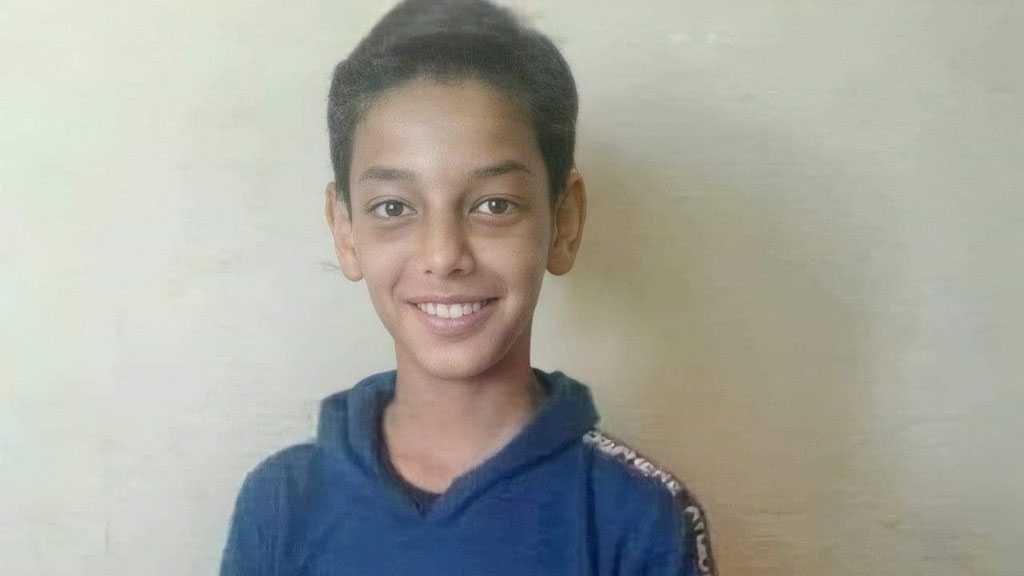
Omar Hassan Abu al-Nil, the child martyr, embraced by his family one last time

On Saturday, 12-year-old Palestinian child Omar Hassan Abu al-Nil died after succumbing to injuries he sustained at the Gaza Strip border last week.

Abu al-Nil, a child resident of al-Tuffah neighborhood east of Gaza City, was critically wounded after being shot by an Israeli sniper in the al-Ras area during his participation in a march against the Israeli siege on Gaza.

The child’s martyrdom comes only days after the occupation fired live bullets and tear gas canisters at Palestinian protestors peacefully chanting “Seif al-Quds will not be sheathed.”

Abu al-Nil is another victim of not only Israeli crimes, but the International Community’s deafening silence on the endless illegal trespasses the Zionist apartheid “state” has been committing since its colonial formation in 1948. 

Related News


River to Sea Uprooted Palestinian   
The views expressed in this article are the sole responsibility of the author and do not necessarily reflect those of the Blog!

Saturday, 28 August 2021

‘Israeli’ Forces Murder Palestinian Teen Near Gaza Strip Fence

 August 28, 2021

‘Israeli’ Forces Murder Palestinian Teen Near Gaza Strip Fence

By Staff, Agencies

The Zionist occupation forces murdered a Palestinian teenager as they shot him during weekend along the fence that separates the besieged Gaza Strip from the ‘Israeli’-occupied territories.

Palestinian medical sources said 12-year-old Omar Hasan Abu an-Neel was hit in the head during protests in the area of Malka, east of Gaza City, last week. 

The teenager was taken to a nearby hospital, where he underwent a surgery, but remained in a critical condition at the intensive care unit until he succumbed to his serious wounds early on Saturday.

The Zionist gunfire wounded at least 41 Palestinians, including two critically, on August 20.

Among the two Palestinians critically injured was a 13-year-old boy who was shot in the head, Gaza’s health ministry explained.

It described most of the other injuries as moderate, including gunshots to limbs, backs and abdomens.

The ‘Israeli’ military claimed that hundreds of demonstrators approached one area of the fence in northern Gaza and attempted to climb over it, admitting that troops fired tear gas and live rounds at the protesters.

The injuries came during a Gaza protest organized by Hamas and other Palestinian resistance factions in support of al-Quds, where ‘Israeli’ occupation forces frequently raided the holy al-Aqsa Mosque compound – the third-holiest site for Muslims – during the holy month of Ramadan, wounding hundreds of Palestinians.

The raids prompted Palestinian resistance fighters in the Gaza Strip to respond to acts of aggression and fire retaliatory rockets into the ‘Israeli’-occupied territories.

The Zionist military then launched a devastating 11-day war on the besieged Palestinian coastal enclave that led to the martyrdom of at least 260 Palestinians, including 66 children.

In this respect, the United Nations Children’s Fund [UNICEF] said Zionist forces killed nine Palestinian children and injured 556 others between May 7 and July 31 in the occupied al-Quds. ‘Israeli’ troops also arrested at least 170 Palestinian children during the period.


River to Sea Uprooted Palestinian   
The views expressed in this article are the sole responsibility of the author and do not necessarily reflect those of the Blog!

Saturday, 21 August 2021

Adding Fuel to Fire: The Politics of Power Outages in Gaza

 August 20, 2021

Source

BY YOUSEF ALJAMAL

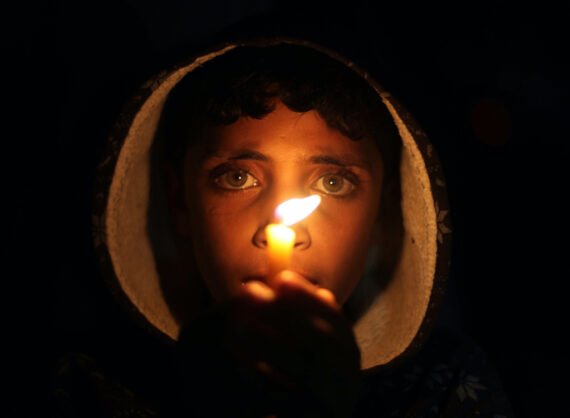
The continuing electricity crisis in Gaza means that it is only a matter of time before another Palestinian family dies in a fire caused by candles.


A Palestinian boy holds a candle during a protest against power cuts on November 3, 2013 in Gaza City. Gaza’s lone power plant shut its generators on Friday due to a fuel shortage, a move that will likely increase already long blackout hours in the impoverished coastal territory. Photo by Ashraf Amra. Anadolu Agency.

In late June 2006, and soon after Palestinian factions captured the Israeli soldier Gilad Schalit in an attack against an Israeli military outpost southeast of Gaza, Israel started a destructive military operation in the coastal enclave to bring its solider back. One of the main infrastructures destroyed by Israel’s military operation in Gaza at the time was Gaza’s only power plant, located in the Al-Nuseirat refugee camp where I grew up.

Israel’s F-16s destroyed the power plant with a dozen missiles as my family gathered in the middle of the night to seek some sort of protection. I remember that night vividly as my mother brought us together while Israeli warplanes fired their missiles at the power plant a mile away from my family’s house. The house would shake and the screams of children at night would be heard even clearer, breaking the relative silence of the night which was violated by the sonic sounds of the Israeli warplanes.

In the same year, my youngest brother Omar was born. Today, he is 15 years old – the number of years of Israel’s siege on Gaza – and he has probably not enjoyed a single full day of electricity in his entire life in Gaza. The year 2006 saw the start of the power outages crisis in the coastal enclave, which has only got worse over the years. At the start of the crisis, electricity was cu off for four hours a day. As the demand for more electricity increased with Gaza’s population doubling by some 70,000 a year, and as fewer people were able to pay electricity bills due to the lack of jobs, the crisis has only got worse.

For years, Israel has prevented the entry of materials needed to fix the damaged power engines and the oil tanks destroyed by its warplanes. In many instances, Israel would link allowing shipments of manufactured fuel to run the Gaza Power Plant to ceasing hostilities. Meanwhile Gaza’s power plant, which produces 140 MW of Gaza’s total need of 450 MW, has rarely been able to function at full capacity. Gaza depends on other sources to cover the rest of its needs including two Egyptian and Israeli supply lines. In many instances, these two lines have gone down, and Israel has used the pretext of the security situation in the Gaza Strip to postpone fixing the Israeli supply line.

The electricity crisis has impacted all aspects of life in Gaza. From 2006 to this day, dozens of patients have passed away due to the lack of electricity in the intensive care units (ICUs).

As forest fires continue unabated in many parts of the world due to the recent heat wave, one can only imagine what this heat wave means for the people of Gaza. In a place like Gaza, where green areas are limited, and where thousands of people live in tin houses in ever-crowded refugee camps, the heat is even worse. The only place people can escape to is the Mediterranean Sea, much of which is polluted by untreated sewage water that is pumped into the sea because the only desalination treatment in the Gaza Stirp was also destroyed by Israel in 2008/9.

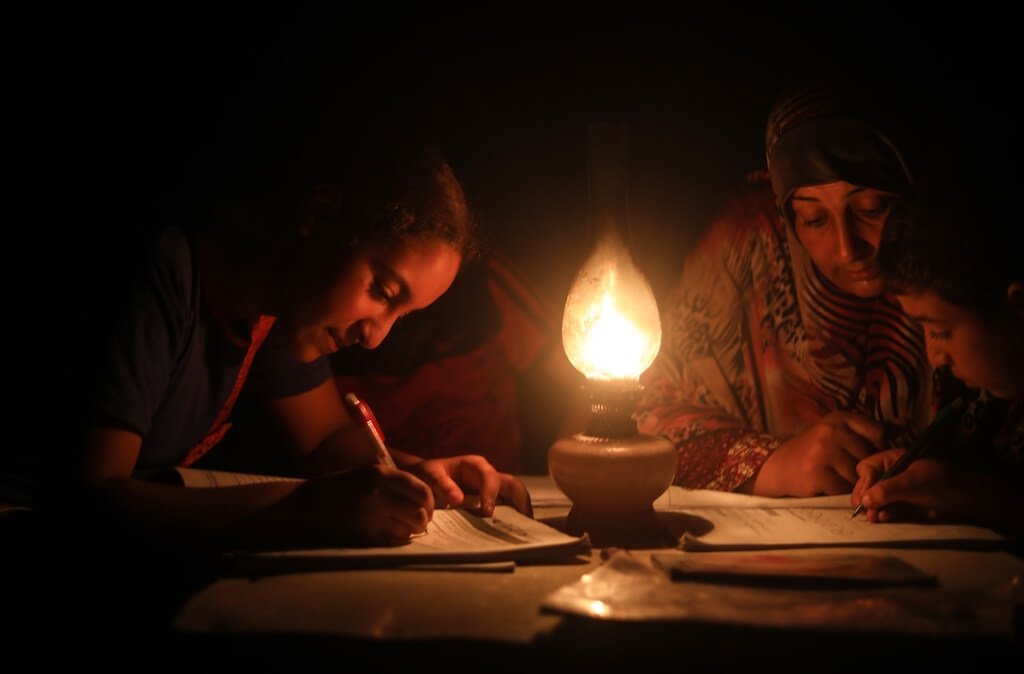
The electricity crisis has impacted all aspects of life in Gaza. From 2006 to this day, dozens of patients have passed away due to the lack of electricity in the intensive care units (ICUs). It has become nearly impossible for students to sit their exams or study due to the lack of electricity. Many factories and industries have stopped working due to the lack of electricity which is crucial to their functioning. All the people living in Gaza have had to change their lifestyle including when to cook, use the washing machines, or sleep, based on the power outage schedule.

A woman helps children study under candle light during a power cut in Khan Yunis, Gaza on August 18, 2020. After Israel tightened the blockade in Gaza Strip, the only power plant in the area stopped production affecting the life especially the health sector. Photo by Mustafa Hassona. Anadolu Agency.

The power outages crisis in the Gaza Strip has created new industries, some of which have been exploited by greedy merchants. Nearly every household in Gaza has a generator. As fuel prices jumped to 7 NIS (more than $2) per liter, following the destruction of many tunnels connecting Gaza with Egypt that were used to smuggle fuel, fewer people were able to run their generators.

In 2011-2013, when Egyptian fuel reached Gaza, most people turned on their generators at the same time, creating excessive noise pollution in the overpopulated coastal enclave. As this industry developed more and with fewer people able to run their own generators in the Gaza Strip, another private industry emerged with private electricity networks and companies being established. People interested in six extra hours of electricity pay approximately $50 a month and are able to use their lights and turn on their TVs –  but not their fridges or electrical devices that consume a lot of energy.

With unemployment rates rising by the day in the Gaza Strip, only a handful of people can afford to pay their electricity bills, let alone subscribe to private electricity networks. The majority of people choose to leave their oven-like houses for the sea, which tends to be very crowded in the summer. The lack of electricity has also affected people’s ability to pump water into their tanks, creating yet another problem for Gazans.

Read: Overcrowded and Under Siege: Worrying Pandemic Scenarios in Gaza

So far, the international community has failed to provide tangible solutions to Gaza’s ongoing electricity crisis. First, it has failed to make Israel accountable and ensure it does not target Gaza’s already fragile electricity infrastructure. The international community has also failed to pressure Israel to allow the implementation of long-term projects in the Gaza Stirp that would solve the issue of power outages in the coastal enclave such as the proposal by Turkey to send a floating power plant; the proposal by Qatar to convert the power plant so that it operates on gas and to establish a gas line to provide Gaza’s power plant with the needed gas; or Algeria’s proposal to send fuel to operate the power plant.

The Palestinian division between Hamas and Fatah has added fuel to the fire in this regard. In many instances, the Palestinian governments of Gaza and the West Bank would exchange accusations over who is responsible for the crisis. Meanwhile, Israel, the occupying power, which should provide Palestinians with all needed services according to international law, acts with impunity.

The international community should hold Israel responsible and make sure that it provides Palestinians, who live under its tight siege in Gaza, with electricity.

The people of Gaza, who have experienced four major Israel offensives – the latest of which was in May 2021 and which resulted in the destruction of more infrastructure in the Gaza Stirp – deserve to live in dignity and to enjoy full, basic services. The international community should hold Israel responsible and make sure that it provides Palestinians, who live under its tight siege in Gaza, with electricity.

The denial of basic rights to the Palestinians has created a Palestinian generation that sees no hope in achieving a just solution to their plight. Meanwhile, the continuing electricity crisis in Gaza means that it is only a matter of time before another Palestinian family dies in a fire caused by candles.

Israel and the international community should fear the reaction of people like my youngest brother Omar. The situation in the Gaza Strip is unsustainable, and if the dignity and freedom of Palestinians there are not respected, regional security will always be at stake, and it will be a matter of time before another conflict breaks out, bringing even more destruction to Gaza’s infrastructure.

VIDEO: Nakba Survivors Speak: “The sky was our blanket and the ground was our mattress”

Recommended


River to Sea Uprooted Palestinian   
The views expressed in this article are the sole responsibility of the author and do not necessarily reflect those of the Blog!

Friday, 13 August 2021

Bin Zayed’s Adviser: Gaza’s Suffering Is Due to Hamas, not “Israel”!

 August 12 2021

Source: Al Mayadeen


By Al Mayadeen

Senior Adviser to the Crown Prince of Abu Dhabi proclaims that Gazans suffer because of “Hamas” rather than “Israel,” expressing concern over Iran’s power.


Adviser to UAE Prince: Hamas Occupies Gaza, not
Ali Al Nuaimi, Senior Adviser to the prince of Abu Dhabi, Mohammad Bin Zayed

In an interview with an Israeli newspaper, Ali Al-Nuaimi, senior adviser to the Crown Prince of Abu Dhabi, Mohamed bin Zayed, denounced the Palestinian resistance in Gaza.

During an interview with “Israel Today“, Nuaimi expressed that “One of the biggest errors in this narrative, which I saw repeated over and over in the media, was the way they speak about [the] Gaza [Strip] as if it’s occupied by the Israelis. It’s not: It’s controlled by Hamas.”

“It is time to liberate Gaza, which was hijacked by Hamas to serve Iranian goals,” Al-Nuaimi said in an interview marking the one-year anniversary of the normalization of Emirati-Israeli relations, adding that “the Palestinian people in Gaza are suffering because of Hamas, not because of the Israelis.”

He discussed the international sentiment surrounding the crimes of the Israeli occupation during  Seif Al Quds battle, which sparked worldwide outrage, with thousands demonstrating on the ground and using electronic campaigns on social media, stating that “We also have to fight the war of propaganda – one that the Israelis lost in this last round of fighting between Israel and Hamas. I saw narratives coming from not only the Middle East but the West too, which represented a shift.”

After questioning him on the harsh criticism directed at “Israel” on social media in the Emirates, Al-Nuaimi stressed that “many of us condemned Hamas”, justifying “in Israel, too, there were people who opposed the war, so that is not an indication, but rather says what some of the people in the Emirates think. It’s hard to overcome history, but we want to open people’s eyes and show them things they haven’t seen over the last 40 or 50 years.”

The Israeli publication expressed admiration for Al-Nuaimi’s responses, commenting that “these brave responses were given by a senior official in an Arab country.”

Ariel Kahana, the journalist who conducted the interview, divulged that he previously met Al-Nuaimi a year ago, as Kahana was one of the Israeli journalists accompanying the first Israeli delegations to the UAE on August 31, two weeks after former US President Donald Trump announced the UAE-“Israel” agreement to establish relations.

Al-Nuaimi: Iran wants to be a world power

Answering the question of how to treat Iran, the adviser responded by expressing concern that the international community does not speak in “one voice on Iran”, detailing that “when we speak with our European friends about the invasiveness and aggression of Iran in Arab states, we hear that they ‘understand our concerns.’ But we don’t need someone to understand our concerns, rather we need someone to act according to international law and respond to those violating other countries’ sovereignty.”

Concerning the UAE’S opinion of the US and Iran returning to a nuclear agreement, Al-Nuaimi expressed that returning to the nuclear agreement as it used to be would not solve the problems, accusing Iran that it “never honored the agreement or the commitments, in any respect.”

Al Nuaimi: There is no “going back” on UAE-Israeli relations

Bin Zayed’s adviser remarked of his country’s connection with the Israeli occupation, “the ties being forged between us are not political or just between governments. These are comprehensive ties in every respect. This is a normal relationship that is growing. “

“There is discussion and dialogue, and I know the media will paint it as a crisis. But it isn’t,” he said of the UAE’S position on Israel’s revision of the gas transfer arrangement from the Emirates to Europe via “Israel”. 

He reassured the journalist that “a disagreement on one issue will degrade ties. This is not the case.”


River to Sea Uprooted Palestinian   
The views expressed in this article are the sole responsibility of the author and do not necessarily reflect those of the Blog!

Tuesday, 10 August 2021

“جيروزاليم بوست”: حزب الله يختبر “إسرائيل” وحتى الآن ينجح Hezbollah is testing Israel and so far it’s succeeding – analysis

 أغسطس 9 2021

المصدر: جيروزاليم بوست

سيث فرانتزمان

صحيفة “جيروزاليم بوست” الإسرائيلية تنشر مقالاً للكاتب “سيث فرانتزمان” يقول فيه إن رد “إسرائيل” على صواريخ حزب الله يمكن أن يضع حدود لبنان في نفس وضع حدود غزة.


“جيروزاليم بوست”: التوازن الصحيح لكيفية الرد سيكون من الصعب العثور عليه

نشرت صحيفة “جيروزاليم بوست” الإسرائيلية مقالاً للكاتب سيث فرانتزمان، تحت عنوان: حزب الله يختبر “إسرائيل” وحتى الآن ينجح.

وفيما يلي نص المقال المنقول إلى العربية: 

ردّ “إسرائيل” على صواريخ حزب الله يمكن أن يضع حدود لبنان في وضع حدود غزة نفسه. في يوم الإثنين الماضي، ألقى رئيس الوزراء نفتالي بينيت كلمة في الكنيست. قوبل بوابل من الصراخ والإزعاج والتسميات. 

وقال: “لنتحدث عن نتائج الحكومة الأخيرة” في غزة، أظهرتم ضبط النفس في مواجهة الهجمات الصاروخية بينما نهاجم كل بالون حارق. لقد تركتم حزب الله بعشرة أضعاف الصواريخ التي يمكن أن تصل إلى أي مكان في “إسرائيل” ولهذا السبب يجب أن تكون ميزانية الأمن كبيرة”.

لم يكن بينيت مخطئاً. عاد بنيامين نتنياهو إلى رئاسة الوزراء في سنة 2009، بعد ثلاث سنوات من حرب لبنان الثانية.

في ذلك الوقت، كان لدى حزب الله ما يُقدّر بنحو 30 أو 40 ألف صاروخ. في الوقت الحاضر، يُعتقد أن لديه أكثر من 150 ألف صاروخ. 

هل هذا خطأ نتنياهو؟ إنه قابل للنقاش، لكن ليس هناك شك في أن “إسرائيل” اتخذت في عهده قراراً واعياً بعدم توجيه ضربة استباقية لوقف التعزيز العسكري للوكيل الإيراني. سمحت “إسرائيل” باستمراره في التسلح رغم علمها أن هدف الصواريخ هو استخدامها ضدها في يومٍ من الأيام. 

في الغالب، كان القرار متسقاً مع العقيدة العسكرية الإسرائيلية. لم تتخذ “إسرائيل” إجراءات استباقية لوقف التعزيزات العسكرية التقليدية. اعتُمد هذا الخيار في حالتين عندما سعى العراق 1981 وسوريا 2007 للحصول على أسلحة نووية. نووية، نعم. صواريخ عادية، لا.

لكن ما سيتعلمه بينيت هو أنه من السهل التكلم لكن التصرف أصعب. هذا على الرغم من حقيقة أن أحد كبار أعضاء حكومته الائتلافية والأمنية، وزير القضاء غدعون ساعر، هو من أنصار العمل الوقائي منذ فترة طويلة ضد حزب الله. 

في سنة 2018 حذّر ساعر من أن لـ”إسرائيل” نافذة ضيقة لمهاجمة حزب الله لمنعه من الحصول على ذخائر دقيقة التوجيه. 

كل هذا مهم يجب أخذه في الاعتبار بعد هجوم حزب الله الصاروخي على “إسرائيل” في يوم الجمعة. صلية من نحو 20 صاروخاً جاءت بعد يومين فقط من إطلاق ثلاثة صواريخ باتجاه كريات شمونة. الفرق هو أن الصواريخ يوم الأربعاء قيل إن مجموعة فلسطينية مارقة أطلقتها. في يوم الجمعة، أعلن حزب الله مسؤوليته بشكل علني.

كان رد فعل “إسرائيل” حتى الآن معتدلاً. بعد هجوم يوم الأربعاء، قصف سلاح الجو مناطق مفتوحة في جنوب لبنان حيث تم إطلاق الصواريخ. بعد صلية يوم الجمعة، ردت “إسرائيل” بقصف مدفعي باتجاه مصدر النيران. بحلول ليلة السبت، بدا أن الأمر انتهى عند هذا الحد. 

ما نعرفه هو أنها طريقة خطيرة للتفكير منذ أن سمحت “إسرائيل” لحدودها الشمالية بالتحول إلى الطريقة التي تسير بها الأمور على طول الحدود مع غزة. هناك، على مدى سنوات، ضبطت “إسرائيل” نفسها بعد الهجمات الصاروخية. وفي حال ردّت، استهدفت الكثبان الرملية أو نقاط المراقبة المؤقتة التابعة لحماس. لا شيء خطير جداً.

هذه القذائف الصاروخية، التي أصبحت طبيعية، أُطلقت على سيادة “إسرائيل”. طالما لم يصب أو يقتل أحد، وطالما كان إطلاق الصواريخ متقطعاً، يمكن لـ”إسرائيل” أن تتمالك نفسها. هل كان لهذا معنى؟ يمكن. وهل قوّضت أيضا قوة الردع الإسرائيلية؟ قطعاً. 

هذا ما يحدث على طول الحدود الشمالية أيضاً. يمكن تفسير تعليق كوخاف على أنه تطبيع لإطلاق الصواريخ الآن من لبنان.

ليس بالضرورة. ما قد تفعله تعليقات مثل تعليقات كوخاف عندما تقترن برد عسكري معتدل، هو خلق شعور لحزب الله بأنه، مثل حماس، يمكنه تطبيع الهجمات الصاروخية ضد شمال “إسرائيل”. 

سيكون هذا كارثياً لـ”إسرائيل” ولكن من الصعب إيقافه. قد يؤدي الرد القوي جداً إلى تصعيد أكبر، وهو أمر لا تريده “إسرائيل”، في حين أن الرد الضعيف جداً قد يؤدي إلى تعلم حزب الله درساً سيئاً، وهو أمر لا تريده “إسرائيل” أيضاً. 

التوازن الصحيح لكيفية الرد سيكون من الصعب العثور عليه. بناءً على أحداث يوم الجمعة، يتعين على الحكومة أن تفعل ذلك بسرعة.

Hezbollah is testing Israel and so far it’s succeeding – analysis

AUGUST 7, 2021 21:09

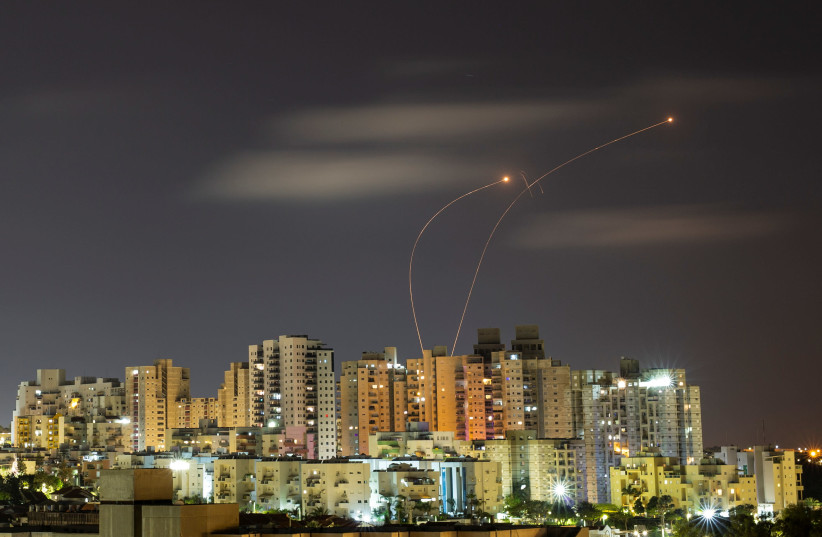
Streaks of light are seen from Ashkelon as the Iron Dome anti-missile system intercepts rockets launched from the Gaza Strip on May 20, 2021. (photo credit: AMIR COHEN/REUTERS)
Streaks of light are seen from Ashkelon as the Iron Dome anti-missile system intercepts rockets launched from the Gaza Strip on May 20, 2021.(photo credit: AMIR COHEN/REUTERS)

Israel’s response to the Hezbollah rockets could put the Lebanon border in the same situation as the Gaza border.


By YAAKOV KATZ   


On Monday, Prime Minister Naftali Bennett spoke at the Knesset. He was met by a volley of yelling, heckling and name calling. 

“Let’s talk about the results [of the last government],” he said. “In Gaza, you showed restraint in face of rocket attacks while we attack for every incendiary balloon. You left Hezbollah with ten times more rockets that can reach any place in Israel and because of that the defense budget needs to be big.

”Bennett was not wrong. Benjamin Netanyahu returned to the premiership in 2009, three years after the Second Lebanon War. At the time, Hezbollah had an estimated 30 or 40 thousand rockets. Nowadays, they are believed to have over 150,000.

Was it Netanyahu’s fault? That is questionable, but there is no doubt that under his tenure Israel made a conscious decision not to launch a preemptive strike to stop the Iranian proxy’s military buildup. Israel allowed the armament to go on even though it knew that the rockets were intended to be used one day against it.

For the most part, the decision was in line with Israeli military doctrine. Israel has not launched preemptive action to stop a conventional military buildup; that has been reserved for two instances when Iraq (1981) and Syria (2007) were pursuing nuclear weapons. Nuclear, yes. Regular rockets, no.

What Bennett will learn though is that it is easy to talk but harder to act. This is despite the fact that one of the senior members of his coalition and security cabinet, Justice Minister Gideon Sa’ar, is a longtime proponent of preemptive action against Hezbollah. 

In 2018, Sa’ar warned that Israel had a narrow window to attack Hezbollah to prevent it from obtaining precision-guided munitions.

This is all important to keep in mind following Hezbollah’s rocket attack against Israel on Friday. The barrage of about 20 rockets came just two days after three rockets were launched toward Kiryat Shmona. The difference was that the rockets on Wednesday were said to have been fired by a rogue Palestinian group. On Friday, Hezbollah openly took responsibility.

Israel’s response until now has been mild. After Wednesday’s attack, the Air Force bombed open areas in southern Lebanon from where the rockets had been fired. After Friday’s barrage, Israel responded with artillery fire in the direction of the source of the fire. By Saturday night, that seemed to be it. 

This is dangerous and complicated. IDF Spokesperson Brig.-Gen. Ran Kochav went so far as to explain that the fact Hezbollah fired its 20 rockets into open fields meant that the Lebanese terrorist group was deterred and scared of a larger conflict with Israel. If that wasn’t the case, he told reporters in a briefing on Friday, it would have attacked population centers. Is this true? We don’t know.

What we do know, is that it is a dangerous way to think since it sets up Israel to allow its northern border to turn into the way things are along the border with Gaza. There, for years, Israel restrained itself after rocket attacks. If it responded, it hit sand dunes or makeshift Hamas observation posts. Nothing too serious.

This normalized rocket fire into sovereign Israel. As long as no one was hurt or killed and as long as the rocket fire was sporadic, Israel could restrain itself. Did it make sense? Maybe. Did it also erode Israel’s deterrence? Definitely. That is happening along the northern border as well. Kochav’s comment could be interpreted as normalizing rocket fire now from Lebanon. No one was killed and no one was hurt so that must mean that Hezbollah is deterred. 

Not necessarily. What comments like Kochav’s potentially do when coupled with a mild military response, is create for Hezbollah a feeling that it – like Hamas – can normalize rocket attacks against Israel’s North. 

This would be disastrous for Israel but difficult to stop. Too strong a response could lead to a larger escalation – something Israel does not want – while too weak a response could lead Hezbollah to learn a bad lesson, something Israel also does not want. 

That right balance of how to respond and is going to be hard to find. Based on Friday’s events, the government needs to do so fast.

Related


River to Sea Uprooted Palestinian   
The views expressed in this article are the sole responsibility of the author and do not necessarily reflect those of the Blog!