Showing posts with label al-Nahda Party. Show all posts

Wednesday, 25 August 2021

لا خارطة انتقالية لتونس… وحده سعيد يرسم الطريق


الأربعاء 25 آب 2021

أمينة الزياني


لا خارطة انتقالية لتونس... وحده سعيد  يرسم الطريق
الغموض الذي يلفّ خطوات الرئيس لا ينفي حقيقة سعيه المستمرّ إلى تحقيق ما حلم به منذ عقد من الزمن (أ ف ب )

تونس | لم يكن مفاجئاً قرار الرئيس قيس سعيد تمديد العمل بالإجراءات الاستثنائية إلى أجل غير مسمًّى. إذ إن كلّ المؤشّرات الأخيرة تعاضدت على التأكيد أن سعيد لا يلقي بالاً لكلّ الدعوات إلى وضع «خارطة طريق»، يرى أن الأحزاب تدفع في اتّجاهها كي تحاول من خلالها التسلّل مجدّداً إلى مؤسسة الحُكم، التي يريد هو إبعادها منها نهائياً. هكذا، لا يبدو أن الرئيس في صدد اختيار رئيس للحكومة، بل يظهر أن لديه توجّهاً لحلّ البرلمان الذي عطّل أعماله منذ قرابة شهر. وفيما يتركّز عمله راهناً على مكافحة الفساد بطريقة غير مألوفة يَعتقد فريقه أنها السبيل الأنسب في الوقت الحالي، يحاول الرجل خطْب ودّ الفئات الفقيرة من خلال إجراءات اقتصادية عاجلة تستهدف إحداث انتعاشة في البلاد. وإذ لا تزال شعبية سعيد في مسار تصاعدي بالفعل، إلّا أن مضيّه في المسار الاستثنائي بلا أفق واضح، والغموض الذي يلفّ خطواته، يبعثان مخاوف لدى خصومه من “ديكتاتورية ناشئة” تضع تونس أمام مستقبل قاتم

كما كان متوقّعاً، مدّد الرئيس التونسي، قيس سعيد، التدابير الاستثنائية التي كان أعلنها في الخامس والعشرين من شهر تموز الماضي، إلى أجل غير مسمًّى، ليبقى السؤال حول ما سيلي التمديد مستقبلاً، خصوصاً في ظلّ تلويح سعيد بـ«إطلاق صواريخ دستورية جديدة»، كما جاء في آخر كلمة له الجمعة الماضي. على أن الغموض الذي يلفّ خطوات الرئيس لا ينفي حقيقة سعيه المستمرّ إلى تحقيق ما حلم به منذ عقد من الزمن، عرفه فيه التونسيون أستاذاً للقانون الدستوري وناشطاً مع عائلات ضحايا انتفاضة 17 كانون الأول 2010 (تاريخ إحراق محمد البوعزيزي لنفسه، واندلاع التظاهرات والمواجهات مع نظام زين العابدين بن علي)، والذين يعتبرهم المنبع الأصلي لأيّ شرعية بعد هذا التاريخ، رافضاً ما سمّاها توافقات «إخماد الإنفجار الثوري العظيم»، والتي انطلقت، بحسبه، في 14 كانون الثاني 2011، بهرب بن علي وإعلان أعمدة نظامه ( فؤاد المبزع رئيس البرلمان، ومحمد الغنوشي رئيس الحكومة)، آنذاك، إدارتهم للدولة إلى حين إنتاج توازنات جديدة، لم تُلغِ البتّة بقايا النظام، وإنما أدمجتها في صلبها، وأعلت العناوين السياسية على المطالب الاجتماعية، بل تكاد تكون ألغتها تماماً، وتبنّت ممارسات النظام السابق نفسها، وأعادت إنتاجها.

وإذا ما تمّ تشريح مفهوم «الانفجار الثوري»، الذي يرفض سعيد استبدال مفهومَي الثورة أو الانتفاضة به، فقد يتّضح هامش فعله السياسي من هذه الزاوية. فوفق أستاذ القانون الدستوري الذي اعتلى سدّة الحكم في قصر قرطاج بعد تسع سنوات من ذلك، ما حدث كان انفجاراً اجتماعياً بالأساس، بدت كلّ أسباب تَحوّله إلى نارٍ تحرق نظام بن علي متوفّرة منذ زمن، علماً أنها ليست أسباباً سياسية بالدرجة الأولى، بقدر ما هي متعلّقة بأوضاع المعيشة المتدهورة، والتباين الطبقي والتمييز الجهوي (العنف الهيكلي المسلّط على جهات نائية في البلاد حُرمت قصداً من التنمية، مقابل محاباة جهات أخرى وتركيز المشاريع والبنية التحتية فيها)، والظلم الذي مورس على الطبقات الشعبية التي أُرغمت على الصمت على فقرها وتهميشها بواسطة القمع والهرسلة البوليسية. جميعها تراكمات جاءت حادثة إحراق البوعزيزي لنفسه لتُفجّرها على نحوٍ غير مسبوق، قبل أن تسطو الأحزاب على «الانفجار» وفق رؤية سعيد، الذي لا يستثني من ذلك المعارضة التي قارعت نظام بن علي، ولا «منظّمة الشغيلة» التي لعبت دوراً هامّاً في تأطير الاحتجاجات، بل يعتبرها شريكاً أساسياً في السطو على الثورة، والاشتراك في توافقات لتقاسم النفوذ.

عمل سعيد على توفير أسباب انتعاشة اقتصادية مؤقّتة عبر محادثاته مع «منظّمة أرباب الأعمال»


من هنا، يعتقد كثيرون أن ما قام به سعيد على امتداد شهر، مَثّل ترجمة لتلك الرؤية، مع تعديلات بسيطة تُمليها عليه «إكراهات» السلطة وبعض التمثّلات المتشكّلة في الذهنية التونسية خلال العقد الماضي، ولا يمكن له أن يمحوها بسرعة وسهولة. وعلى هذا الأساس، يتفهّم هؤلاء إرجاء سعيد الاستحقاقات السياسية إلى توقيت يتحيّنه هو، ورفضه أيّ «خرائط وحوارات وطنية»، وإحيائه تقرير «التقّصي حول الفساد والرشوة» المنجَز سنة 2011، والذي لا يتذكّر عموم التونسيين منه إلا صورة لرئيس اللجنة في القصر الرئاسي، يحسب أموال بن علي ومقتنياته الثمينة، واعتباره هذا التقرير منطلقاً للمحاسبة، ليلغي به كلّ ما أفرزته منظومة «العدالة الانتقالية»، أو التوافقات السياسية مع رموز النظام السابق. وانطلاقاً من ذلك، بدأ سعيد إجراءات متعلّقة بـ«الفاسدين الجدد»، توازياً مع حديثه المتكرّر عن الأموال المصادَرة (أموال رموز نظام بن علي المجمّدة في البنوك الأجنبية)، والتي اتّهم الحكومات المتعاقبة بإهدار حق التونسيين فيها والعمل على إفشال عملية استجلابها قصداً في إطار تحالفٍ غير معلَن بين المنظومتَين. وممّا يُفهم من تلك الخطابات، إصرار سعيد على إيصال رسالة بانتهاء مرحلة «الامتيازات» التي سادت خلال العشرية الماضية، وكانت من أهمّ ملامحها حصانة السياسيين ومَن والاهم من رجال أعمال وقضاة وإعلاميين، بمن فيهم رئيس «هيئة مكافحة الفساد» نفسه الذي يأخذ عليه القصر الرئاسي دوره الخفي في إسقاط حكومة الفخفاخ السنة الماضية. ولذا، لاقى ترحيباً قرارُ سعيد إحالة كبير قضاة تونس، الرئيس الأوّل لمحكمة التعقيب الطيب راشد، وكبير المدّعين العامين، وكيل الجمهورية السابق بشير العكرمي، على القضاء ورفع الحصانة عنهما، توازياً مع توجيه دعوة إلى بقية القضاة للانخراط في مسار مكافحة الفساد أو مواجهة مصير مَن كانا منذ أشهر صاحبَي نفوذ منقطع النظير وحصانة «خيالية» ضدّ تهم الفساد والرشوة والتواطؤ مع الإرهاب. المفارقة أن إجراءات سعيد لم تطل رجال أعمال نافذين أو سياسيين راجت حولهم اتهمات بالإثراء على حساب المال العام، وهو ما ولّد خيبة أمل لدى كثيرين. لكن فريق الرئيس يدافع عن ما تَقدّم بأن إثارة هكذا ملفّات تتطلّب إعداداً قضائياً وقانونياً كافياً، حتى لا تكون القضايا واهية ويؤدي سقوط الدعاوى إلى أثر عكسي لدى الجمهور المساند لسعيد، مشيرين إلى أن هذه القضايا تُطبخ على مهل، وستُفتح في الوقت المناسب لضخّ الأوكسجين في أوساط المساندين متى أصابتهم الخيبة أو ملّوا بطء المسار. وفي هذا الإطار، جاء إيقاف النائب لطفي علي ليخدم الهدف المذكور، بالنظر إلى تواتر الاتهامات المُوجّهة إلى الأخير بالتسبّب بإيقاف إنتاج الفوسفات في البلاد، وتراجع عائداته بشكل أثّر عميقاً في المالية العمومية، لكن نتيجة لعلاقات علي المتشابكة لم تقترب منه المساءلة القضائية أو حتى السياسية، وفق ما يُنظّر له فريق الرئيس.

على خطّ موازٍ، عمل سعيد على توفير أسباب انتعاشة اقتصادية مؤقّتة، عبر محادثاته مع «منظّمة أرباب الأعمال» أو مهاجمته المحتكرين للمواد التموينية والأولية، فضلاً عن توقيعه اتفاقية المساعدات الاجتماعية للفئات الفقيرة والهشة، والذي استغلّه لتوجيه عدّة رسائل، من بينها حديثه عن مخطّط لاغتياله. وإذ اتّجهت الأنظار، عقب حديثه هذا، إلى حركة «النهضة» باعتبارها خصمه الأول والخاسر الأول من إجراءات 25 تموز، فقد أطلقت جرس إنذار من إمكانية تفكير أطراف بإنهاء المسار الجاري حالياً عبر الدم. في المقابل، لقيت هذه الرسالة صدى كبيراً لدى مناصري سعيد، وأعادت تزخيم الدعم الشعبي له، في الوقت الذي أعلنت فيه «النهضة»، بدورها، دعمها للرئيس، وتعهّدت بأن تحاسب كلّ مسيء إليه وإلى عائلته من قواعدها، وفق بيان لرئيس الحركة، راشد الغنوشي، نُشر الأحد. وعلى رغم تودّد «النهضة» إلى سعيد، إلّا أن الأخير لم يستثنها من مقاطعته للساحة الحزبية بجميع مكوّناتها، ورفضه أيّ طرح يعيد تلك المنظومة إلى واجهة الفعل السياسي.

يُبقي سعيد حوله هالة من الغموض. يفاجئ الجميع بتحرّكاته وزياراته وقراراته، رافضاً التعاطي مع الإعلام أو تقديم إجابات على الأسئلة المطروحة بمبرّر «حساسية الوضع»، الذي يقتضي، من وجهة نظر قصر قرطاج، سدّ منافذ «الاختراقات». وفي حصيلة الشهر الأوّل بعد قرارات 25 تموز، مساعٍ دبلوماسية حثيثة لسعيد ووزير خارجيته، تستهدف نفي تهمة الانقلاب عمّا قام به الرئيس، توازياً مع التزام سلوك الحذر إزاء الأطراف الإقليمية الساعية إلى الاستثمار في الحدث التونسي، وعلى رأسها الإمارات والسعودية ومصر، فيما تُعدّ الجزائر الدولة الأكثر تواصلاً مع الرئيس وتطميناً له. وبينما راهنت النهضة على المواقف الأوروبية والأميركية لإرجاع سعيد عمّا ينويه، فإن ردّ القصر الرئاسي على التصريحات الغربية لا يزال هو نفسه: ما حدث «لم يكن انقلاباً، بل إجراءات تستمدّ شرعيتها من الشعب»، والأخير «هو المحدّد للمستقبل، وقطعاً يريد مستقبلاً بدون برلمان يتسبّب في العنف والفوضى، وتوافقات سياسية حول حكومات لم تقدّم للتونسيين شيئاً». هكذا، يستحضر سعيد ما يرى أنه الحقبة الأفضل في تاريخ الدبلوماسية التونسية حينما كان مدرّساً ويروي ذلك لطلبته، وهي تموضع تونس في «كتلة عدم الانحياز» في فترة شهد فيها العالم انقساماً حادّاً بين قطبين. وفيما يبدو أن الرئيس حسم أمره بحلّ البرلمان الذي بدأت استقالات نوابه تعلَن بين الفينة والأخرى، لا يظهر أن الحكومة تمثّل بالنسبة إليه شأناً عاجلاً طالما أنه لم يعثر بعد على «المخلِص» الذي ينفّذ توصياته ولا ينقلب عليه حتى لا يتكرّر سيناريو هشام المشيشي مرّة أخرى. وبين هذا وذاك، يتواصل قلق المنظّمات الحقوقية من السياق الاستثنائي الذي تتركّز فيه السلطات بيد سعيد، والذي لا تزال التطمينات الرئاسية المتكرّرة عاجزة عن تهدئته، أو عن إبعاد شبح التفرّد بالرأي والقرار.


مقالات مرتبطة


مقالات مرتبطة


River to Sea Uprooted Palestinian   
The views expressed in this article are the sole responsibility of the author and do not necessarily reflect those of the Blog!

Tuesday, 24 August 2021

Tunisian Police Arrest President Assassination Suspect

 August 23, 2021 

Source: Al Mayadeen

By Al Mayadeen

The Tunisian security forces arrest a suspect who planned for the assassination of President Kais Saied.


Tunisian police officers in Tunis, Tunisia on March 28, 2020 | Anadolu Agency
Tunisian police officers in Tunis, Tunisia on March 28, 2020 (Anadolu Agency)

The Tunisian police arrested a suspect who was planning to assassinate President Kais Saied.

Tunisia’s Al Chourouk newspaper revealed that a lone wolf was preparing for the assassination. According to investigations, the suspect was planning on assassinating President Saied while he was visiting a certain coastal city.

On Friday, Tunisian President Kais Saied had revealed that there was an attempt on his life, which he described as “hopeless.” Subsequently, Saied announced that he would tread the same lawful path: “The path to reform is complicated and hard,” he added.

Additionally, the Tunisian Judicial Council announced Saturday the arrest of Beltayeb Rached, the first president of the Court of Appeals, indicating that his case had been transferred to the Public Prosecution.

Tunisian President Kais Saied also relieved the Secretary-General of the National Anti-Corruption Authority, Anwar Ben Hassan, of his duties.

Ennahda Movement denounced Sunday the conspiracies threatening Tunisian national security and the President’s personal security. The movement issued a statement in which it called on the State’s security services and judicial body to probe into the matter to expose those involved in the said conspiracies. Ennahda Movement also warned against internal and foreign plots that aim to undermine the country’s stability.

Ennahda indicated that the unconstitutional decisions and measures announced on July 25 and thereafter are ‘exceptional,’ noting that overcoming them requires cooperation.

Previously, Ennahda had announced that its executive office had a meeting, in which they discussed the “dangerous repercussions” of President Saied’s exceptional measures and their negative political and economic effects.


Related Videos


Related News


River to Sea Uprooted Palestinian   
The views expressed in this article are the sole responsibility of the author and do not necessarily reflect those of the Blog!

Monday, 9 August 2021

President Kais Saied: Vaccination Must Include Political Pandemics

 9 Aug 2021

Source: Agencies

By Al Mayadeen

While Kais Saied was visiting a COVID-19 vaccination center, he asserted that Tunisia is not easy prey.


Tunisian President Kais Saied during his visit to the COVID-19 vaccination center

Tunisian President Kais Saied asserted that his country “will regain its status, and is not easy prey.” Saied also stated that vaccination against political pandemics is still ongoing.

Saied announced his position during a visit to the Farhat Hached Rades vaccination center, where he praised the military and security forces’ efforts for their steadfast stance and contributions to making a new history for Tunisia.

The Tunisian Ministry of Public Health announced Sunday that over half a million Tunisians had been vaccinated after Tunisia received over 6 million vaccine doses from Western and Arab countries.

The slow vaccination pace and the response to the pandemic led to a wave of demonstrations against al-Mashishi’s government, which was dismissed by President Saied two weeks ago as part of a series of emergency measures.

Intensive care units and emergency departments in hospitals across Tunisia were overwhelmed. Doctors all over the country have been complaining of stress and lack of oxygen.

Tunisia is aiming for vaccinating 50% of its population of 11.6 million by October.

Related Videos


River to Sea Uprooted Palestinian   
The views expressed in this article are the sole responsibility of the author and do not necessarily reflect those of the Blog!

Tuesday, 3 August 2021

Tunisia’s President To Businessmen: Return Billions of ’Looted’ Dollars So Not to Be Prosecuted

 July 30, 2021

Tunisia’s President To Businessmen: Return Billions of ’Looted’ Dollars So Not to Be Prosecuted

By Staff- Agencies

Tunisian President Kais Saied, who seized control of the government last weekend, said that billions of dollars had been stolen from the country and offered businessmen an option to return the money if they wanted to avoid prison.

During his meeting with the head of the UTICA business union, Samir Majoul, on Wednesday, Saied blamed 460 individuals for snatching 13.5 billion dinars [around $4.8 billion] from Tunisia.

He promised a crackdown on corruption, but, at the same time, insisted he had “no intention to harm or abuse” Tunisian entrepreneurs.

“I propose a penal reconciliation with businessmen involved in looting the people’s money and tax evasion in exchange for their commitment to projects … instead of being prosecuted and imprisoned,” the president said in video footage of the meeting distributed by his office.

The businessmen on Saied’s list will be ranked in accordance with the amount of money they owe the country. Over the next ten years, they will be asked to fund the construction of schools, hospitals, and other socially important infrastructure, according to the proposal.

The head of state also urged traders to be “patriotic” and to reduce their prices, promising punishment for those caught speculating or hoarding goods.

Saied, who became president in 2019 after campaigning against corruption and the entrenchment of the political elite, used emergency powers to dismiss the government and freeze the parliament late on Sunday. He insisted the harsh move was necessary to “save” the country amid protests caused by people’s anger over its “dysfunctional” political system and crumbling healthcare provision.

His opponents have labeled the consolidation of power in Saied’s hands as a “coup” and a pushback against the achievements made by Tunisia during the Arab Spring uprising in 2014, and urged their supporters to take to the streets. However, the president has warned that the military would “respond with bullets” if the situation got out of hand.


Related Videos


River to Sea Uprooted Palestinian   
The views expressed in this article are the sole responsibility of the author and do not necessarily reflect those of the Blog!

Monday, 2 August 2021

أول الغيث: تونس


1 اب2021

المصدر: الميادين نت

بثينة شعبان

هل ستشكّل تونس أوّل الغيث للعودة إلى المرجعيات السليمة بعد دفن كلّ محاولات التضليل المشبوهة، والتي اشترك بها كلّ أعداء هذه الأمة رغم ادعاءاتهم الكاذبة بالخلافات وعدم التوافق؟ 

الخطوات التي قام بها الرئيس التونسي قيس سعيد ضرورية ولا بدّ منها

لا شكّ أنّ ما تعرّضت له منطقة الشرق الأوسط في العقود السبعة الماضية يعود إلى استحداث الكيان الصهيوني أولاً، وإلى التواطؤ المحكم بين هذا الكيان وحركة الإخوان المسلمين، والاتفاق على الأهداف الاستراتيجية الكبرى بين الحركتين الصهيونية والإخوانية، مع دعم مباشر وغير مباشر من الدول الغربية.

وقد كتب أكثر من إخواني سابق عن دور المخابرات الغربية في تأسيس وتشكيل حركة الإخوان المسلمين في الدول العربية، واستضافة قادتها في العواصم الغربية تحت عناوين إنسانية لا تمتّ للإنسانية بصلة. 

فقد نشرت وكالة الاستخبارات المركزية الأميركية “سي آي إي” ما يقرب من 13 مليون وثيقة سرّية على الانترنت وجعلتها متاحة للعامّة. كشفت الوثائق عن النظرة الأميركية للإخوان بصفتهم أخفّ الضررين.

تكشف الوثائق أنّ عدّة لقاءات تمّت بين الولايات المتحدة وممثلين لجماعة الإخوان المسلمين لم تتمّ تسميتهم. وقد حدثت هذه اللقاءات مع عدد من فروع الإخوان في عدّة دول عربية كالأردن وسوريا وشمال اليمن والكويت، مؤكّدين على ولاء هذه التنظيمات الفرعية للجماعة الأمّ في مصر. 

والأمثلة أكثر من أن تحصى عن دور الحركة في بلدان عربية مختلفة في ضرب العيش المشترك، وخلق جوّ من التعصّب والتزمّت، واللجوء إلى العنف والتدمير في سبيل تحقيق أهدافهم، وأوّل هذه الأهداف زعزعة استقرار البلدان العربية، ومحاربة الأنظمة الوطنية والقومية والعداء المكشوف لأيّ صيغة وصعوبة.

كما أنّ الأمثلة كثيرة ومنشورة عن علاقة قادة الإخوان بالكيان الصهيوني، وتبادل الرسائل الودّية بينهم، والتأكيد على اشتراكهم في هدف تحويل الجمهورية الإسلامية الإيرانية إلى العدوّ الأول للعرب بدلاً من “إسرائيل”. 

وإذا أخذنا سوريا نموذجاً عمّا يجري في العالم العربي، فإننا نجد أنّ الإخوان المسلمين عملوا طوال تاريخهم على استكمال ما قام به العدوّ الإسرائيلي من حروب ضدّ سوريا، فقاموا ببثّ الفوضى والقتل والدمار من الداخل، وشقّ صفوف المجتمع بنشر أفكار التطرف والتكفير ومعاداة النظام السياسي الوطني، والتصويب على العيش المشترك، واستهداف المسيحيين والآشوريين والسريان ودفعهم إلى الهجرة خارج البلاد.

ولم تكن الفتن الدموية التي قاموا بها في الخمسينيات والثمانينيات والحرب الإرهابية التي تمّ شنّها على الشعب السوري عام 2011 من قبل المخابرات الإسرائيلية والتركية والأميركية والبريطانية إلا استكمالاً للمحاولة الإخوانية ضدّ سوريا في سبعينيات وثمانينيات القرن الماضي.

وفي كل مرة يستخدم الغرب إرهابيو الإخوان المدججين بالكراهية والحقد والعنف تحت مسمّيات وعناوين مختلفة من دون أن تختلف أساليب القتل والتدمير، وإن تكن توسّعت هذه المرة لتشمل كلّ مؤسسات الدولة التعليمية والزراعية والصناعية والصحية، وقتل الكوادر، ودفع من لا يُقتل إلى الهجرة في عمل ممنهج لبثّ روح التعصّب والفوضى والكراهية.

ولا شكّ أنّ الإخواني العثماني الجديد، والذي نصّب نفسه زعيماً لأخونة المنطقة والعالم، لعب الدور الأخطر في تشكيل وتشغيل هذه الحركة ضدّ سوريا والعراق وتونس وليبيا واليمن ومصر وحيثما أمكن ذلك. 

حين قرّر الشيخ نوّاف البشير مغادرة صفوف المعارضة في تركيا، والعودة إلى الوطن، قال: “لا توجد معارضة سياسية سورية في تركيا أو الغرب، ولكن توجد حركة أخوان مسلمين منظّمة ومموّلة ومسلّحة، تعمل من أجل تغيير هوية سوريا إلى بلد أخواني تابع لإسرائيل وأطماعها”.

واليوم وبعد عشر سنوات من هذه الحرب يكشف الكثيرون الذين استُهدفوا خلالها ونجوا عن الخيوط الخفية بين أحداث الثمانينيات والأحداث التي بدؤوها عام 2011، وأنّ كثيراً من الأسماء قد تمّ البحث عنها، واستهدافها نتيجة الدور الذي لعبته في مقاومة الإخوان المسلمين في نهاية السبعينيات وبداية الثمانينيات. 

ليس من الصعب على الباحثين المتخصّصين أبداً أن يثبتوا التوافق والتكامل بين الأهداف الصهيونية والإخوانية في منطقتنا، ولذلك فإنّ الأحاديث الرمادية عن التوافق والتعايش بين مجتمعات مدنية درجت خلال تاريخها على العيش المشترك والتسامح، وبين الإخوانيين والعثمانية الجديدة هي أحاديث إما مغرضة أو مغفّلة في أحسن الأحوال. ولا يمكن لمشروعين يعتمدان أسساً متناقضة أن يتعاونا تحت قبة برلمان أو سقف وطن إذ لا بدّ أولاً من الاتفاق على الأسس والأهداف المشتركة. 

وفي هذا الصدد، فقد سمعنا من الأخوة التونسيين، وعلى مدى السنوات الماضية، صعوبة العمل والتوصل إلى أية نتائج مرضية وحاسمة لصالح الشعب التونسي، وذلك لأنّ برنامج حركة النهضة مختلف تماماً عن البرامج الوطنية والمدنية والعلمانية الأخرى خاصة أن النهضة باعتبارها الذراع الإخوانية في تونس اتّسم عهدها بالإرهاب والفساد وتجنيد الإرهابيين من بين أعضائها وإرسالهم بالآلاف إلى سوريا لقتل المدنيين الأبرياء.

ومن هنا، ومن خلال المتابعة للشأن التونسي، قد تكون الخطوات التي قام بها الرئيس التونسي، قيس سعيد، مؤخراً، ضرورية ولا بدّ منها من أجل التمكّن من السير في طريق واضح المعالم ومحدّد الأهداف. وقد برهن التاريخ مرات ومرات أن الاسترضاء والمهادنات مع المتطرّفين بمن فيهم الإخوان المتصهينين في الأسس والمبادئ لا يوصل إلى حلول بل يضيع الزمن ويزيد الأمور تشتّتاً وتعقيداً. 

ربما هو قدر تونس الخضراء أن ترسل إشارات عن التوجهات المستقبلية للمنطقة، فقد كانت حادثة البوعزيزي هي الشرارة التي تدحرج بعدها ما أسموه بالربيع العربي، بينما كان في الواقع، أو أريد منه أن يكون، جحيماً عربياً أحدث الدمار والقتل والتخريب والفوضى على البلدان التي أصابها.

وقد يكون قرار الرئيس قيس سعيد في 25 تموز/يوليو، إيذاناً مناقضاً ينفض غبار الإخوان عن أعين المتضرّرين، ويساهم في تحقيق وضوح في الرؤية تقود إلى بلورة الأهداف الوطنية والتخلّص من الرماديات وحسم الأمور، وعدم الارتكاز إلى المواقف التي تحتمل الوجهين تحت أيّ ذريعة كانت، لأنّ الوقت ثمين والشعوب متضرّرة، ولا بدّ أن يبدأ العمل بإيمان وقوّة واندفاع لتلافي ما خلّفته السنوات العجاف، والبناء على الأسس السليمة التي تضمن سلامة وازدهار الأوطان. 

وبغضّ النظر عمّا تؤول إليه التجربة التونسية وإن كنا نتمنّى وندعو لتونس وشعب تونس بالتوفيق والخير، فإنّ ما حدث يُقدّم درساً على الجميع أخذه بعين الاعتبار بأنّ الوضوح في المسائل الوطنية شرط لازم، وأنّ الغموض والتأرجح والادّعاء بالإخلاص والنزاهة لا يمكن أن تتساوى مع الصدق والشفافية والوطنية الحقّة الواضحة. ولا شكّ أنّ الخطر العثماني الإخواني اليوم هو الخطر الداهم على بلداننا العربية، وهو مناقض تماماً للسيادة والقرار المستقلّ والمصلحة الوطنية العليا. 

لقد كشف العثماني الجديد عن نواياه الحقيقية في إصراره على احتلال شمال قبرص، ولا شكّ أنه يحمل النوايا ذاتها لشمال سورية والعراق وليبيا وحيثما تمكن من فرض وجوده وإرسال قواته. ولا شكّ أيضاً انّ حركة الإخوان المسلمين تشكّل الذراع الأهمّ لهذه الاحتلالات والاختراقات، ولا بدّ من مواجهتها كخطر داهم لا يمكن السكوت عنه أو التعايش معه أبداً.

السؤال هو: هل نعيش اليوم بداية صحوة لأحداث ربيع عربي حقيقيّ، وعودة إلى الركائز الوطنية السليمة، بعيداً عن محاولات التضليل والاصطياد في الماء العكر؟ كما كانت تونس إيذاناً لبرنارد هنري ليفي ببدء تطبيق نظرياته الخبيثة والمجرمة بحقّ شعوبنا، هل تشكّل تونس اليوم بداية الانقلاب الحقيقيّ على المشروع العثماني الإخواني، والعودة إلى القرار الوطني الذي تصيغه الشعوب بأنفسها، وإلى التيارات العربية العلمانية التي حقّقت نهضة حقيقية لشعوبنا وبلداننا، وصانت قراراتها الوطنية المستقلّة؟

هل ستشكّل تونس أوّل الغيث للعودة إلى المرجعيات السليمة بعد دفن كلّ محاولات التضليل المشبوهة، والتي اشترك بها كلّ أعداء هذه الأمة رغم ادعاءاتهم الكاذبة بالخلافات وعدم التوافق؟ 


River to Sea Uprooted Palestinian   
The views expressed in this article are the sole responsibility of the author and do not necessarily reflect those of the Blog!

Saturday, 31 July 2021

Tunisia Stands Against the Muslim Brotherhood

 By Steven Sahiounie

Global Research, July 30, 2021

All Global Research articles can be read in 51 languages by activating the “Translate Website” drop down menu on the top banner of our home page (Desktop version). 

Visit and follow us on Instagram at @crg_globalresearch.

***

The only democracy to emerge from the Arab Spring in 2011 is going through a process of strategic correction. Tunisian President Kais Saied announced late Sunday he was firing the prime minster, Hichem Mechichi, dismissing the parliament, and assuming executive authority under Article 80 of the constitution.  The speaker of Parliament, Rachid Ghannouchi, declared the actions amounted to a coup.

Saied announced that he was assuming the public prosecutor’s powers and stripping lawmakers of immunity, while assuring Tunisian rights groups on Monday that he remains committed to civil liberties and the democratic process, and that the changes will be temporary.

The crisis stems partly from an economy which never improved, and the COVID pandemic which has hit Tunisia hard.  The main cause of the crisis is a political power struggle between Saied, Mechichi and Ghannouchi which has split the country into two camps: those who want Tunisia to maintain a secular based government, and those who follow Radical Islam as a political ideology.

On Sunday, demonstrators across Tunisia called for the dissolution of Parliament, which gave Saied the green-light to take action based on the will of the people.

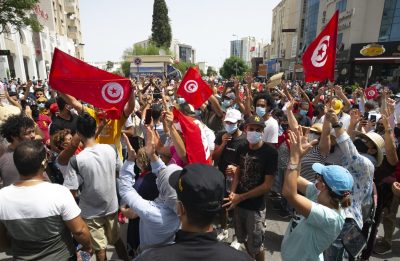
Videos posted to social media showed crowds cheering, honking, ululating and waving Tunisian flags after the president’s actions Sunday night.

By Monday afternoon, Saied had fired the defense minister and acting justice minister. On Wednesday, Saied revealed shocking allegations against Ghannouchi’s party, Ennahda, that they accepted money from foreign governments, which amounts to a crime against democracy in Tunisia. Additionally, Saied has identified 480 persons who have defrauded the government of billions of Tunisian dinars.  He has promised to hold all accountable.

Mr. Saied was elected in 2019, and many Tunisians hoped he could turn things around, seeing him as a fresh political outsider. However, since taking the helm he has been locked in a fight with Mechichi and Ghannouchi.

What is Ennahda platform and leadership?

According to western mainstream media, such as the New York Times and Washington Post, Ennahda is a moderate Islamist party.

Likewise, the same media calls the group which holds Idlib, Syria as the ‘moderate rebels’, when in fact they are the Al Qaeda affiliate in Syria.

Anger toward Ennahda has mounted over the past year as the pandemic hit the country and its economy and a movement against police brutality gained steam. Angry citizen activists called for the dissolution of parliament, which is controlled by Ennahda’s highly unpopular leader Rachid Ghannouchi, who has been its president for 38 years.

Ghannouchi wrote, “The Islamic government is one in which: 1- supreme legislative authority is for the shari’a, which is the revealed law of Islam, which transcends all laws. Al-Ghannouchi, R. (1998). “Participation in Non-Islamic Government”.

Critics, lawyers and politicians have accused Ennahda of forming a secret organization that has infiltrated security forces and the judiciary. Ennahda was relaunched during the Tunisian revolution in 2011.  The party was accused of being behind the 2013 assassinations of Chokri Belaid and Mohamed Brahmi, two progressive political leaders of the leftist Popular Front electoral alliance.

Ennahda was founded in 1981 by the Islamic cleric, Rached Ghannouchi.  The party is part of the global network of the Muslim Brotherhood. The party’s decline in popularity continued into mid-2016, and has now hit rock-bottom with the present corrective action undertaken by Saied.

The role of the Muslim Brotherhood in the 2011 Arab Spring

Ghannouchi has remained a steadfast follower and member of the Muslim Brotherhood.  Ghannouchi attened a global Muslim Brotherhood conference in Istanbul in April 2016, and has continued to serve Islamist and Brotherhood-affiliated organizations in Europe, as a high-ranking member. Most notable is his involvement with a Dublin-based center ECFR, and the designated terrorist organization, the International Union of Muslim Scholars.

Most worrying is Ghannouchi’s ties to Islamist and violent extremist groups, both in Tunisia and around the world.  Leaders of the al-Qaeda-affiliated Ansar al-Sharia group in Tunisia (AST) attended meetings at Ghannouchi’s home in 2011 at which he allegedly advised them to encourage AST youth to infiltrate Tunisia’s national army and National Guard.

In a leaked video, Ghannouchi also claimed that his Ennahda party had previously met with AST leader Seifallah Ben Hassine. In 2014, Ben Hassine was sanction-designated by the United States and United Nations for his links to al-Qaeda in the Islamic Maghreb (AQIM) and his implication in various terror attacks, including the assassination of Tunisian security forces and political figures, as well as the September 2012 AST attack on the US Embassy in Tunis. Ben Hassine died in a US airstrike in Libya in mid-June 2015.

Many compare Egypt’s histories with Tunisia.  In 2011 Egypt had a popular revolution which saw Mubarak step-down.  The US engineered a vote which put a Muslim Brotherhood leader, Morsi, in power. However, the Egyptian people took to the streets once again, in a corrective change, and the current leader stepped into the leadership role.  Many western analysts bemoaned that the fledgling Egyptian ‘democracy’ was squandered with the ouster of Morsi. The Egyptian people made a political correction: they decided the Muslim Brotherhood regime of Morsi was more brutal than that of the previous authoritarian leader, Mubarak.

Western governments such as the US and UK, and to a lesser extent Germany, are very close to the Muslim Brotherhood in their own land, and wanted to install, at any cost, like regimes across the Middle East.  Places such as: Libya, Syria, Egypt and Tunisia.  The west recognizes that the Muslim Brotherhood works well in coordination with Israel, and does not present a threat to Israel, or the occupation of Palestine.

What country’s currently struggle against Muslim Brotherhood?

Al Jazeera, the Qatar state news channel, said on Monday the security services had shut-down their bureau in Tunis.  Qatar, and their media, are politically aligned with Ennahda.   Qatar and Turkey are both run by Muslim Brotherhood regimes.

Currently in Libya, there is a civil war raging against those who support the Muslim Brotherhood, and those who wish to maintain a secular form of government.  It is not surprising that the US is on the side of the Muslim Brotherhood there, along with Qatar and Turkey, while Russia supports the secular side.

In Syria, the US-NATO war against the Syrian people which began in 2011 and has raged for 10 years, pitted the US backed Muslim Brotherhood terrorists against the only secular government in the Middle East.  The US and the Muslim Brotherhood lost the war, but not before destroying the country, and killing hundreds of thousands of unarmed civilians.

What will Biden’s position be on the Tunisian crisis?

The current Tunisian crisis presents a major test for the Biden administration.  If Saied is seen as usurping power, and against democratic principles, we may see Biden square off in support of the Muslim Brotherhood, and Ennahda.  Already we have a warning from the State Department, “Tunisia must not squander its democratic gains,” Secretary of State Antony J. Blinken, said in a phone call Monday with Mr. Saied, while encouraging him “to adhere to the principles of democracy and human rights.”

“Tunisia is the last ember of the Arab Spring, now snuffed out,” Said Ferjani, an Ennahda member of Parliament, said in an interview, calling on President Biden to demonstrate his commitment to democracy.

While the US and her allies might be on the Ennahda side, the opposing side is formidable.  Egypt and Saudi Arabia, the two biggest powerhouses of the Middle East, join the UAE and Syria in welcoming the Tunisian president’s strategic correction, and the public denouncement of the Muslim Brotherhood.

*

Note to readers: Please click the share buttons above or below. Follow us on Instagram, @crg_globalresearch. Forward this article to your email lists. Crosspost on your blog site, internet forums. etc.

This article was originally published on Mideast Discourse.

Steven Sahiounie is an award-winning journalist.


River to Sea Uprooted Palestinian   
The views expressed in this article are the sole responsibility of the author and do not necessarily reflect those of the Blog!

Friday, 30 July 2021

Saied Lifts MPs’ Immunity, Reassures Rights, Freedoms

 July 29, 2021

Source: Al-Mayadeen

By Al-Mayadeen

Tunisian President Kais Saied issues new orders, the most important of which is lifting immunity off members of Parliament – he stresses that he is “keen to enforce rule of law.”


Visual search query image
Saeed reassures rights and freedoms

Tunisian President Kais Saied issued a presidential order to lift the parliamentary immunity of all members of the People’s Assembly for the duration of the suspension, and assigned the Secretary-General of the House of Representatives to handle the administrative and financial work of the Assembly.

He called on the Tunisian citizens, local and foreign, to be assured of their rights and freedoms because they “are governed by law,” noting that “the state is not a puppet driven by strings, and there are lobbies that move strings behind the curtain.”

The Tunisian president stressed that he “is keen to implement the constitutional text, and no one was arrested or deprived of his rights,” noting that he had taken these exceptional measures “to guarantee rights, freedoms, and the continuity of the state.”

Saied stressed that “there is no room for manipulating the state, dividing it, or exploding it from within,” noting that he derives confidence from “the popular power of attorney that appeared on more than one occasion, as well as on July 25.”

Saied assigned the advisor to the President of the Republic in the National Security Department, Reda Gharslawi, to run the Ministry of Interior.

Gharslawi took the constitutional oath before the Tunisian President to run the Tunisian Ministry of the Interior in accordance with Article 89 of the constitution.

President Saied also called on everyone in Tunisia and abroad to be reassured of their rights and freedoms, asserting that exceptional measures are taken to guarantee rights and freedoms and the continuity of the state.

Saied had earlier called on the Tunisian people to remain calm, and not to be drawn into provocations and rumors, stressing that his actions are consistent with the country’s constitution. This came after he issued a presidential order last Monday that decided to relieve the Prime Minister and the person in charge of managing the Ministry of the Interior, Hisham Al-Mashishi.

Today, Thursday, Al-Mashishi said that he is not denied any of his rights, rejecting rumors that he was beaten or threatened with weapons in the Carthage Palace.

The Head of the Tunisian Ennahda Movement, Rachid Ghannouchi, called earlier today for a national discussion in the country, expressing his party’s readiness for “any concessions in order to restore democracy.”

In an interview with Agence France-Presse, Ghannouchi called for “a national discussion in order to find out how Tunisia has a government,” noting that since the issuance of presidential decisions, “there has been no conversation with the President of the Republic, nor with his aides.”

In addition, the Assistant Secretary-General of the “Tunisian General Labor Union,” Mohamed Ali Al-Boughdiri, revealed that the union will present to the Presidency of the Republic a map that includes visions related to the political and economic aspects. He called called for an end to the transitional situation as soon as possible.


Ghannouchi: The Coup Will Fail


Source: Al Mayadeen

July 29, 2021

The President of Tunisia’s Ennhada Party Rached Ghannouchi considered the president’s recent decisions “a coup against the revolution and the constitution.”

Visual search query image
The President of Tunisia’s Ennhada Party Rached Ghannouchi

The President of Tunisia’s Ennhada Party Rached Ghannouchi has called for a new national dialogue to restore democracy after Tunisia’s President Kais Saied announced his assumption of executive power and suspended parliament.

In an interview with AFP, Ghannouchi mentioned “if there is no agreement, we will call on the people to defend democracy.”

On July 25, Tunisian President Kais Saied took drastic measures, to dismiss Prime Minister Hichem Mechichi and freeze parliament for 30 days.

Ghannouchi has denounced President Kais Saied’s decisions, branding his suspension of parliament and dismissal of Prime Minister Hichem Mechichi’s government as “a coup”.

“We consider the institutions still standing, and the supporters of the Ennahda and the Tunisian people will defend the revolution,” he told AFP.

Ghannouchi continued, “there has been no contact with the President of the Republic, nor with his aides” since the decisions were issued” adding, “However, we believe that a national dialogue should take place regarding forming a Tunisian government.”

He went on to say, “We are willing to make any concession if democracy is restored…Our clinging to power is less important than the constitution.”


Related Videos

Following the protests in Tunisia on Sunday, Tunisian President Kais Saied suspends the Parliament and dismisses Prime Minister. Where is the situation heading to?


Related News


River to Sea Uprooted Palestinian   
The views expressed in this article are the sole responsibility of the author and do not necessarily reflect those of the Blog!

Thursday, 29 July 2021

Tunisia Judiciary Investigates “Ennahda” Movement

 July 28, 2021

Source: Agencies

By AL Mayadeen Net


Tunisia’s judiciary has launched an investigation into three political parties, the “Ennahda” Movement, the Heart of Tunisia Party, and the Ayich Tounes Society on suspicions of receiving illegal foreign funds.


Visual search query image
The Economic and Financial Judicial Pole took decisions on several cases.

According to Reuters, Tunisia’s judiciary has opened an investigation into three political parties, the “Ennahda” Movement, the Heart of Tunisia Party, and the Ayich Tounes Society, on charges of receiving illegal foreign funds during the 2019 elections campaign.

Reuters reported that the investigation was initiated on July 14, before President Kais Saied issued, on July 25, the executive orders of dismissing the cabinet, freezing the parliament, assuming executive authority, and taking over public prosecution.

The Spokesman of the First Instance Court and the Economic and Financial Judiciary Pole, Mohsen al-Dali, assured that the Economic and Financial Judiciary Pole took decisions in a myriad of files and cases, including political parties and public figures.

Among these is the “Lobbying Contracts” file that was brought recently before the Public Prosecution of the Economic and Financial Judicial Pole. After examining the file, the Public Prosecution launched an investigation into the “Ennahda” Movement, the Heart of Tunisia Party, and the Ayich Tounes Society on suspicions of receiving illegal foreign funds.

Al-Dali assured that the investigation judge “started examining the file since mid-July.”

In the same context, Mohsen al-Dali explained that “the competent team has completed its examination of one of the cases and transferred the file to the Public Prosecution Office, and a research investigation has been opened.”

Saeid Meets the Members of the Supreme Council of the Armies

Today, Wednesday, the Tunisian President Kais Saied met with members of the Supreme Council of the Armies.

The Tunisian Presidency stated on its Facebook page that “President Saied is the Leader of the Armed Forces”, and “Today, on July 28, 2021 has chaired the meeting of the Supreme Council of the Armies in the Carthage Palace.”

On July 25, Tunisia witnessed an important political event coinciding with the 64th anniversary of the declaration of the Republic, which began with protests caused by a political crisis between the Government, the President, and the Parliament and ended with orders by the Tunisian President Kais Saied following his meeting with military and security leaders.

The decisions included the exemption of the Prime Minister, freezing the Parliament for 30 days, and lifting the immunity of all MPs. Moreover, the President assumed executive authority and took over the public prosecution.

On his part, Saied asserted that his actions are exceptional procedures in line with the constitution, but the Tunisian Parliament Speaker Rachid Ghannouchi and the “Ennahda” Movement described what the Tunisian President did as a “coup d’état against the revolution and the Constitution.”


River to Sea Uprooted Palestinian   
The views expressed in this article are the sole responsibility of the author and do not necessarily reflect those of the Blog!