Uprooted Palestinians are at the heart of the conflict in the M.E Palestinians uprooted by force of arms. Yet faced immense difficulties have survived, kept alive their history and culture, passed keys of family homes in occupied Palestine from one generation to the next.
Angry Moroccans against the butchers of the Palestinian children and those normalizing the savagery in the garb of lucrative military deals on Monday took to the streets in several cities across the country to protest Rabat’s normalization of ties with the Zionist regime and recent military agreements signed between the two sides.
The protesters, including activists and ordinary people, took part in large-scale protests in the cities of Oujda, Berkane, Ben Slimane, Beni-Mellal and Oulad Teima on Monday.
The demonstrators chanted vociferous anti-‘Israel’ slogans, calling for an end to normalization of relations between Rabat and Tel Aviv and voicing their support for the Palestinian cause.
The Moroccan police, however, foiled a similar protest by pro-Palestinian groups in the capital Rabat on Monday, using brute force, according to reports.
The demonstrations protested under the banner of “The Moroccan Front to Support Palestine and against Normalization”, denouncing recent bonhomie between the ‘Israeli’ occupation regime and Morocco.
They also condemned the visit of Benny Gantz, the Zionist war minister, to Morocco and rejected any collaboration with “the enemies of the Palestinian people.”
The pro-Palestine demonstrators said any cooperation with the Tel Aviv regime constitutes a threat to Morocco and the whole region.
Gantz visited Rabat last week, his first known visit to one of the Arab states that normalized ties last year, during which the two sides signed a military agreement and a pact that would see the occupation regime sell drones and weapons to Morocco.
In a statement, Gantz said that the agreement was “very significant and will allow us to exchange ideas, enter joint projects and enable ‘Israeli’ military exports here.”
Morocco, the United Arab Emirates, Bahrain and Sudan signed agreements to normalize relations with Tel Aviv in 2020 as part of the so-called ‘Abraham Accords’, brokered by the previous US administration.
The normalization deals sparked widespread protests in these countries, pointing to the overwhelming divide between the rulers and the people, and have also been condemned by all Palestinian political factions, who have termed it a betrayal of their cause.
Monday’s protests coincided with the International Day of Solidarity with the Palestinian People, an annual day dedicated to expression of solidarity with the oppressed people of Palestine.
This is not poetry nor mere exaggerations with the hope of spreading false hope. It is the reality of the Yemeni geographic revenge against the occupation.
Israeli technology is one of the most important sources of input for the Neom project, which heavily relies on stability that cannot be attained without securing the Red Sea itself.
For the UAE, Bahrain, “Israel,” and the United States to launch maritime military exercises is no show of force; it is a reflection of deep concern and misgiving, primarily that of “Israel.”
“Israel” is dealing with four nightmares in the Red Sea, and Yemen seems to be their common thread.
The first nightmare: “We will strike critical targets.” That is how Ansar Allah responded last year to “Israel’s” comment on the situation in Yemen. Ansar Allah’s words were not just mere lip service, for Yemeni drones and Sanaa’s missile capabilities pose a genuine threat to the occupation on the Red Sea front, which has been confirmed by various Israeli military research centers.
Throughout the entirety of the Yemeni Army and Popular Committee-controlled Yemen, threatening “Eilat” is not any harder than threatening Saudi Aramco – that is Ari Heistein’s approach, a researcher in the Israeli Institute for National Security Studies. Though Heistein underrates the Yemeni threat, he acknowledges that Ansar Allah is able to use long-range missiles to hit targets from very far ranges. He sums up the whole situation with a single phrase: “It is realistic; however, it is limited.”
The precarious aspect of “limitation” stems from one basic angle: long-range missiles would grant the Israeli defense systems a certain margin of time to respond. This study was written two weeks ahead of the battle of Seif al-Quds, which proved that the issues in the Israeli defense systems do not solely rely on preparation, for what merits preparation more than a war?
The second nightmare: during the 1967 war, “Israel” experienced firsthand the repercussions of the Suez Canal and the Straits of Tiran being closed, so what could be the adverse effects of a farther passage – Bab-el-Mandeb Strait – being closed?
Closing Bab-el-Mandeb Strait in the face of Israeli vessels could seriously harm Israeli trade, both in terms of imports and exports. India is the largest Israeli arms importer in the world, importing 43% of “Israel’s” arms exports between 2016 and 2020, while Vietnam is the third-largest in the world, importing 12% of “Israel’s” arms exports.
Arms exports are a vital part of the Israeli economy, as “Israel” ranks eighth in the world in terms of arms exports, exporting 3% of the world’s arms. Therefore, closing Bab-el-Mandeb in the face of Israeli ships, one of the main pillars of the Israeli economy, heavily impacts the lives of Israeli settlers, whom the Israeli authorities need many temptations to keep in place.
The Israeli economy heavily relies on imported goods, which cross through the Indian Ocean through Bab-el-Mandeb. “Israel” might experience a situation that is opposite to the one it went through during the October 1973 war, which saw “Israel” suffering because of Bab-el-Mandeb being closed in the face of Iranian tankers transporting oil to “Israel” back when Iran was under the Shah. Today, “Israel” is extremely worried about the same strait standing in solidarity with revolutionary Iran.
The third nightmare: “Israel” dreams about having coastal tourist-attractive cities, and they are part of its plans for the future, firstly due to profits they would generate, and secondly due to the doors they could open for normalization.
Carnegie Center calls this project “The diplomacy of the Saudi Neom.” Neom city is at the heart of this project, and Israeli technology is one of the most important sources of input for this project, which requires high levels of stability that cannot be attained without stability in the Red Sea. Losing the opportunity of having military stability in the Red Sea means “Israel” would lose its economic opportunities in these “smart cities.”
The fourth nightmare: China aims to ensure the finest conditions for stability in the regions and straits through which the Belt and Road Initiative goes. By taking a look at a map of the initiative, one sees that Bab-el-Mandeb is a pivotal intermediate link for its success. The same initiative deems the Haifa port as less of a priority in terms of pathways into the Mediterranean sea, especially because it has many alternatives.
“Israel,” who is acting very cautiously in fear of the US aims to please China, hopes to reap the utmost benefits from the project. However, Bab-el-Mandeb could seriously harm “Israel” if China was put in a zero-sum game. “Israel” would lose a railway that connects “Eilat” and “Ashdod” and huge gas pipelines that would transmit energy through the occupied territories and supply them with energy as well.
This is the Yemeni geographic revenge from the occupation, as the four Yemeni nightmares are enough to shake “Isreal” to the core in terms of the occupation’s security and economy.
A Jewish-American group visited the Kingdom of Saudi Arabia recently to advance the normalization of ties between the kingdom and the ‘Israeli’ occupation regime, with a member of the group predicting a deal in the coming months or year.
The delegation, consisting of 20 Jewish-American leaders, met with senior Saudi officials, including at least six government ministers and top representatives of the Saudi royal house, according to Zionist media.
The visit came at the invitation of the Saudis and with the support of the Biden administration, after a visit to the UAE – the first Arab country that normalized its relations with the occupation regime in 2020 – in order to strengthen bilateral ties.
“The Saudis are preparing their citizens for normalization with ‘Israel’,” said Jewish-American businessman Phil Rosen, a member of the delegation, ‘Israeli’ Ynet news website reported.
Rosen also said he “would not be surprised if we see normalization between Saudi Arabia and the Tel Aviv occupation regime in the coming months or year.”
Under US-pushed normalization deals, a number of Arab countries, including the UAE, Bahrain, Sudan, and Morocco, have agreed to establish official diplomatic ties with the apartheid entity.
The normalization accords, however, have been denounced by Palestinians the people of the region as “treacherous”, and sparked protests in the countries that signed them.
In recent weeks, the Zionist regime has approved plans for more than 1,700 new illegal units in the East al-Quds settlements of Givat Hamatos and Pisgat Zeev.
In a statement on Wednesday, UN experts condemned the regime’s illegal expansion of settlements in the West Bank and East al-Quds as “the engine of the occupation” and hold the Zionist entity responsible for a wide range of rights violations against the Palestinian people.
Al-Manar and Al-Masirah TV Channels are scheduled to launch an extensive documentation project which records all the massacres committed by the US-Saudi-led forces and mercenaries in Yemen.
An interactive map will come-to-light on the official websites of the two TV channels at 8 p.m. and reveal in an innovative way the massacres committed by the aggression with all the available data and figures.
The interactive map is aimed at preserving and perpetuating the sacrifices of the Yemeni civilians before the Saudi-led aggression.
“So as Rights Remain Preserved,” was the motto of the documentation that represents a reference for right activists, academicals, media outlets and public opinion, using photos, videos and demonstration tools.
Al-Manar English Website is also part of the project and will display the interactive map with data translated in English. Click here.
Yemen has been since March 25, 2015 under aggression by the Saudi-led coalition in a bid to restore power to fugitive president Abd Rabbu Mansour Hadi, who is Riyadh’s ally.
Tens of thousands of Yemenis have been killed or injured by US-Saudi-led airstrikes.
The Arab impoverished country has been also under harsh blockade by the coalition which includes in addition to the Kingdom, the UAE, Jordan, Bahrain, Kuwait, Egypt, Morocco and Sudan.
Massacres Map of the Saudi-American aggression on Yemen
Introduction:
This work is one of the largest documentation projects that records massacres committed since the start of the Saudi-US aggression on Yemen, on March 26, 2015, based on information released by well-known sources.
We assure, through this project, that the blood of Yemen’s oppressed martyrs and injured will persist in the conscience of the free people. This blood will also constitute a mark of disgrace for all who contributed to the bloodshed in Yemen.
Objective:
Documentation of widespread massacres perpetrated by the Saudi-US aggression across Yemen through an interactive and innovated map that can be considered a reference to rights activists, media outlets and journalists as well as to specialists and public opinion.
Definition of a Massacre:
A killing is considered a massacre in this project when at least one civilian gets martyred by Saudi-led aggression fire.
Map Characteristics:
Every dot on the map represents a massacre
Dots are classified by colors, every color refers to a year
The color of dots gets bolder as per the number of martyrs
Every massacre is recorded according to:
Date of the massacre
Place of the massacre
News summary
Link of the news story
Number of martyrs
Number of injured
Related photos and video (if available)
The map allows the search feature according to:
Place of the massacre (mainly provinces)
Date of the massacre
Keywords
Yemeni Center for Human Rights was considered the main source regarding the number of victims. Hence, there would be an overlap between the toll which appears on the map and the news summary
Areas where the massacre occurred are approximate
Characteristics of the Interactive Frontpage:
Represents statistical reference to massacres
The map is the source for figures on the frontpage
Notes:
We don’t claim that this project has covered all massacres committed by the US-Saudi aggression on Yemen. Therefore, we are glad to receive any addition, either on the level of massacres or the visual material at: yemen-map@almanar.com.lb
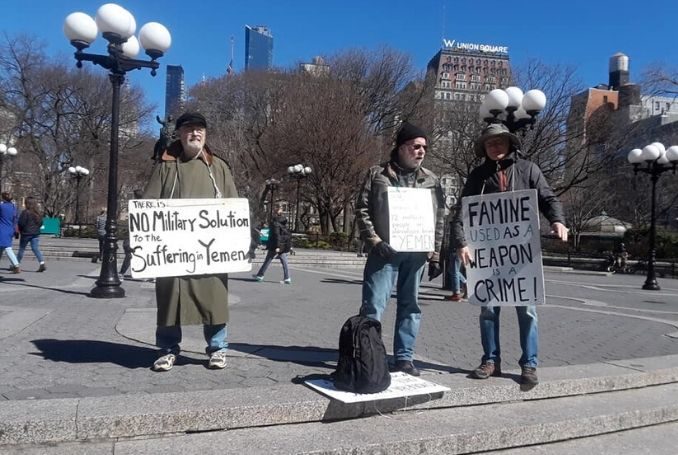
Monday, October 11, marked the official closure of the UN Group of Eminent Experts on Yemen (also known as the Group of Experts or GEE). For nearly four years, this investigative group examined alleged human rights abuses suffered by Yemenis whose basic rights to food, shelter, safety, health care and education were horribly violated, all while they were bludgeoned by Saudi and US air strikes, drone attacks, and constant warfare since 2014.
“This is a major setback for all victims who have suffered serious violations during the armed conflict,” the GEE wrote in a statement the day after the UN Human Rights Council refused to extend a mandate for continuation of the group’s work. “The Council appears to be abandoning the people of Yemen,” the statement says, adding that “Victims of this tragic armed conflict should not be silenced by the decision of a few States.”
Prior to the vote, there were indications that Saudi Arabia and its allies, such as Bahrain (which sits on the UN Human Rights Council), had increased lobbying efforts worldwide in a bid to do away with the Group of Experts. Actions of the Saudi-led coalition waging war against Yemen had been examined and reported on by the Group of Experts. Last year, the Saudi bid for a seat on the Human Rights Council was rejected, but Bahrain serves as its proxy.
Bahrain is a notorious human rights violator and a staunch member of the Kingdom of Saudi Arabia-led coalition which buys billions of dollars worth of weaponry from the United States and other countries to bomb Yemen’s infrastructure, kill civilians, and displace millions of people.
The Group of Experts was mandated to investigate violations committed by all warring parties. So it’s possible that the Ansar Allah leadership, often known as the Houthis, also wished to avoid the group’s scrutiny. The Group of Experts’ mission has come to an end, but the fear and intimidation faced by Yemeni victims and witnesses continues.
Mwatana for Human Rights, an independent Yemeni organization established in 2007, advocates for human rights by reporting on issues such as the torture of detainees, grossly unfair trials, patterns of injustice, and starvation by warfare through the destruction of farms and water sources. Mwatana had hoped the UN Human Rights Council would grant the Group of Experts a multi-year extension. Members of Mwatana fear their voice will be silenced within the United Nations if the Human Rights Council’s decision is an indicator of how much the council cares about Yemenis.
“The GEE is the only independent and impartial mechanism working to deter war crimes and other violations by all parties to the conflict,” said Radhya Almutawakel, Chairperson of Mwatana for Human Rights. She believes that doing away with this body will give a green light to continue violations that condemn millions in Yemen to “‘unremitting violence, death and constant fear.’”
The Yemen Data Project, founded in 2016, is an independent entity aiming to collect data on the conduct of the war in Yemen. Their most recent monthly report tallied the number of air raids in September, which had risen to the highest monthly rate since March.
Sirwah, a district in the Marib province, was—for the ninth consecutive month—the most heavily targeted district in Yemen, with twenty-nine air raids recorded throughout September. To get a sense of scale, imagine a district the size of three city neighborhoods being bombed twenty-nine times in one month.
Intensified fighting has led to large waves of displacement within the governorate, and sites populated by soaring numbers of refugees are routinely impacted by shelling and airstrikes. Pressing humanitarian needs include shelter, food, water, sanitation, hygiene, and medical care. Without reports from the Yemen Data Project, the causes of the dire conditions in Sirwah could be shrouded in secrecy. This is a time to increase, not abandon, attention to Yemenis trapped in war zones.
In early 1995, I was among a group of activists who formed a campaign called Voices in the Wilderness to publicly defy economic sanctions against Iraq. Some of us had been in Iraq during the 1991 US-led Operation Desert Storm invasion. The United Nations reported that hundreds of thousands of children under age five had already died and that the economic sanctions contributed to these deaths. We felt compelled to at least try to break the economic sanctions against Iraq by declaring our intent to bring medicines and medical relief supplies to Iraqi hospitals and families.
But to whom would we deliver these supplies?
Voices in the Wilderness founders agreed that we would start by contacting Iraqis in our neighborhoods and also try to connect with groups concerned with peace and justice in the Middle East. So I began asking Iraqi shopkeepers in my Chicago neighborhood for advice; they were understandably quite wary.
One day, as I walked away from a shopkeeper who had actually given me an extremely helpful phone number for a parish priest in Baghdad, I overheard another customer ask what that was all about. The shopkeeper replied: “Oh, they’re just a group of people trying to make a name for themselves.”
I felt crestfallen. Now, twenty-six years later, it’s easy for me to understand his reaction. Why should anyone trust people as strange as we must have seemed?
No wonder I’ve felt high regard for the UN Group of Experts who went to bat for human rights groups struggling for “street cred” regarding Yemen.
When Yemeni human rights advocates try to sound the alarm about terrible abuses, they don’t just face hurt feelings when met with antagonism. Yemeni human rights activists have been jailed, tortured, and disappeared. Yemen’s civil society activists do need to make a name for themselves.
On October 7, the day the UN Human Rights Council voted not to continue the role of the Group of Experts with regard to Yemen, the United Nations agreed to set up an investigative group to monitor the Taliban. However, the agreement assured the United States and NATO that abuses committed under their command would not be subject to investigation.
Politicizing UN agencies and procedures makes it all the more difficult for people making inquiries to establish trusting relationships with people whose rights should be upheld by the United Nations High Commission for Human Rights.
When I was approaching shopkeepers for ideas about people we might contact in Iraq, I was just beginning to grapple with Professor Noam Chomsky’s essays about “worthy victims” and “unworthy victims.”
That second phrase seemed to me a terrible oxymoron. How could a victim of torture, bereavement, hunger, displacement, or disappearance be an “unworthy victim?” Over the next thirty years, I grew to understand the cruel distinction between worthy and unworthy victims.
A powerful country or group can use the plight of “worthy victims” to build support for war or military intervention. The “unworthy victims” also suffer, but because their stories could lead people to question the wisdom of a powerful country’s attacks on civilians, stories about those victims are likely to fade away.
Consider, in Afghanistan, the plight of those who survived an August 29 US drone attack against the family of Zamari Ahmadi. Ten members of the family were killed. Seven were children. As of October 13, the family had not yet heard anything from the United States.
I greatly hope Mwatana, The Yemen Data Project, The Yemen Foundation, and all of the journalists and human rights activists passionately involved in opposing the war that rages in Yemen are recognized and become names that occasion respect, gratitude, and support. I hope they’ll continue documenting violations and abuse. But I know their work on the ground in Yemen will now be even more dangerous.
Meanwhile, the lobbyists who’ve served the Saudi government so well have certainly made a name for themselves in Washington, D.C., and beyond.
Grassroots activists committed to ending human rights abuses must uphold solidarity with civil society groups defending human rights in Yemen and Afghanistan. Governments waging war and protecting human rights abusers must immediately end their pernicious practices.
In the United States, peace activists must tell the military contractors, lobbyists, and elected representatives: “Not in our name!” With no strings attached, the US government should be proactive and end war forever.
– Kathy Kelly (kathy@vcnv.org) co-coordinates Voices for Creative Nonviolence (www.vcnv.org). She contributed this article to The Palestine Chronicle. This article first appeared in The Progressive magazine and was contributed to The Palestine Chronicle
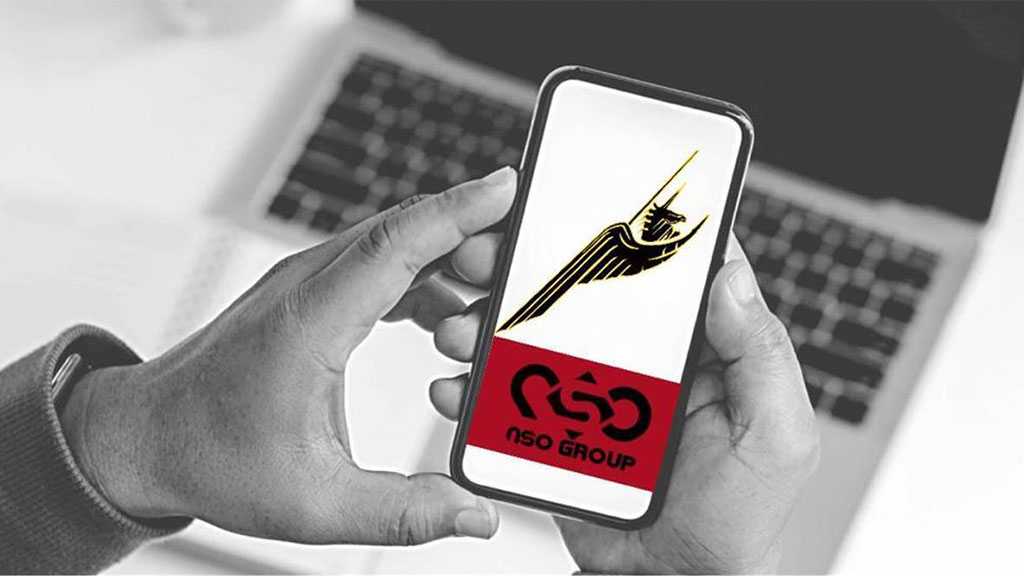
Israeli NSO’s Pegasus spyware hits headlines yet again, however this time, used by Bahrain to spy on human rights activists. According to the Canadian Citizen Lab Institute, the victims included 9 human rights activists from 3 different organizations; 2 of which have voluntarily exiled in England. Other than the more blatant issue of normalization with ‘Israel’, the joint endeavor in capturing human rights activists sets a prime example of the brutality and oppression that was not needed in the already repressive state in which human rights activists live in Bahrain.
The three movements targeted were Al-Wefaq, the Bahrain Centre for Human Rights (BCHR) and Waad, some of which are often labelled as ‘terrorist organizations’. The attacks occurred between June 2020 and February 2021. The Canadian Citizen’s Lab revealed that the Israeli NSO’s Pegasus Spyware has developed a ‘no-click’ hacking system which is revolutionary, since in the typical espionage circumstances, a link is sent to the victim’s phone, under the guise of a genuine link, in this case – a DHL message to the victims’ iPhones. Contrary to iPhone’s claim that their security is solid, the Pegasus spyware were seemingly able to bypass their strongest security feature ‘BlastDoor’.
Israeli NSO claims no responsibility, as expected, demanding the release of evidence the Canadian Citizen Lab claim to hold – as it has done previously at every accusation stop, including the 2019 WhatsApp lawsuit against them that is still presently ongoing.
It must be said that amidst all these so-called new headlines, there really is nothing new about it at all. Bahrain has been investing in spyware and espionage techniques since 2010; and although normalization with Israel only occurred last year, truth dictates that relations between the two preceded, as NSO cyber programs were purchased by Bahrain since 2017.
As normalization with ‘Israel’ spreads in the Middle East, control of the rebelling population has become even more of a priority. Pegasus, ‘the most powerful piece of spyware ever developed,’ as the Guardian described it, is crucial in controlling and repressing any powerful uprisings and rebellion; which is why it expectedly will grow and intensify as time goes by. Nevertheless, although Pegasus is evolving rapidly, it being Israeli is far more cause for concern. A concern that, unfortunately has begun to infiltrate the Middle East officially for all to see and being labelled as normal helping aid. It is not normal. It will never be normal.
*Ragheb Malli is a researcher for the Gulf Institute of Democracy and Human Rights and also a London-based social media activist for human rights.
Al-Manar.com.lb is not responsible for the content of this article. All opinions expressed are solely those of the author.
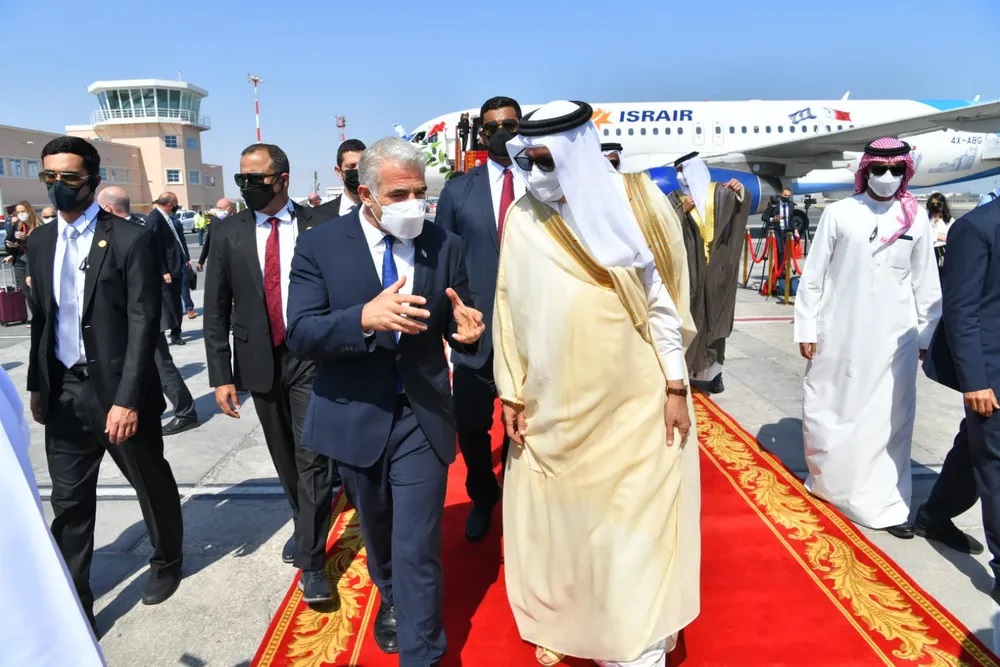
Iran slammed Bahrain’s “despicable” welcoming of Zionist foreign minister Yair Lapid to Manama, considering it at odds with the will of the Bahraini people, stressing that the visit left an “unremovable stain” on the reputation of the tiny Gulf country’s rulers.
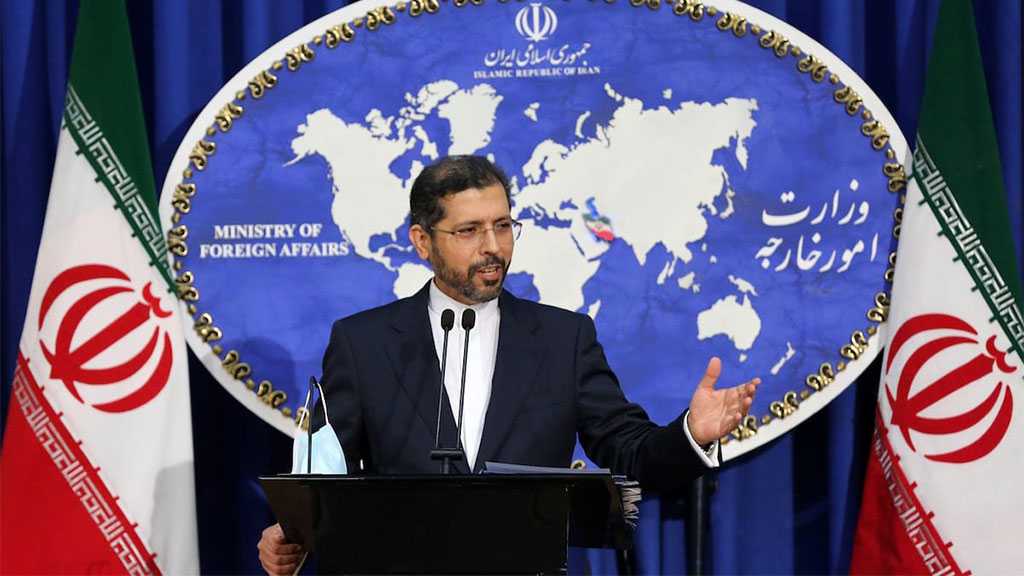
In a statement on Friday, Iranian Foreign Ministry Spokesman Saeed Khatibzadeh denounced the move, saying any scheme to bolster the ‘Israeli’ regime’s “destructive presence” in the region will escalate regional tensions and instability.
Lapid arrived in Bahrain on Thursday to open the Zionist occupation entity’s embassy in Manama and sign cooperation deals with the Arab country.
He met Bahraini King Hamad bin Isa Al Khalifa and Crown Prince and Prime Minister Salman bin Hamad Al Khalifa.
Lapid’s visit to Bahrain is aimed at advancing the US-pushed normalization deals between the Zionist entity and a number of Arab countries, including the UAE, Bahrain, Sudan and Morocco.
Khatibzadeh lamented Bahrain’s ignoring of the Zionist regime’s daily atrocities against the oppressed yet resistant people of Palestine.
“Such actions will not give a boost to the legitimacy of the Zionist regime and will not affect the ideal of liberating al-Quds al-Sharif as the first qibla of the world’s Muslims,” he said.
Khatibzadeh also emphasized that Bahraini rulers will not be able to remove the mark of disgrace.
“The people of the region will continue to oppose the process of normalization of relations with the Zionist regime,” he added.
On Thursday night, Bahraini people staged protests against Lapid’s visit, holding placards condemning normalization with the ‘Israeli’ entity.
The protesters shouted “Down with ‘Israel’” and “Get out of Bahrain” to protest the normalization of ties with Tel Aviv, local media reported.
As if the Bahraini regime is just sending political prisoners from small cells to a wider prison…
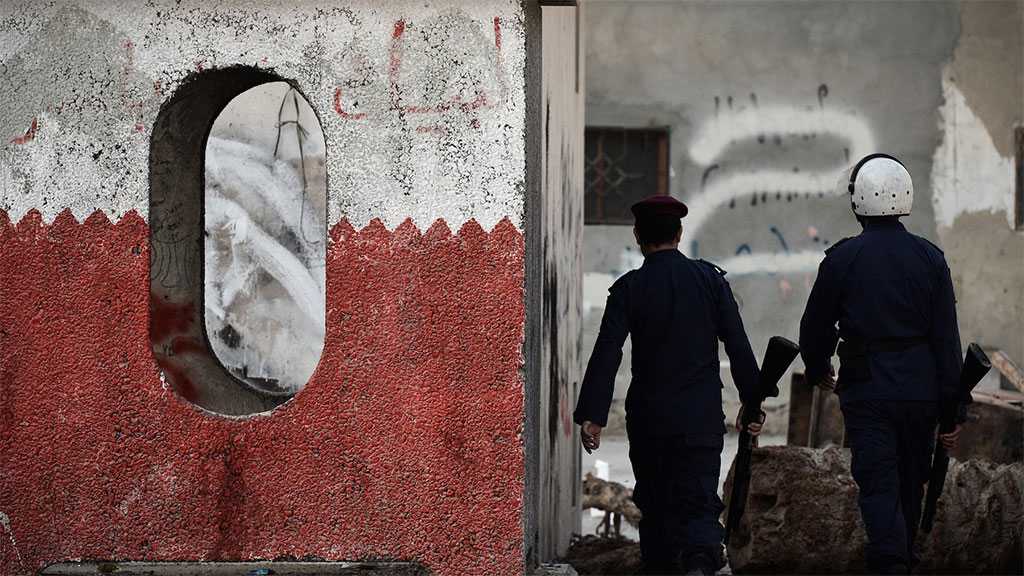
The Bahraini regime has conditionally released 30 prisoners under new rules allowing electronic monitoring and home detention instead, the government and activists said on Wednesday. Almost all those freed are considered political detainees by rights groups.
The Gulf state has imprisoned thousands of protesters, journalists and activists – some in mass trials – since an anti-government uprising in 2011. It says it prosecutes those who commit crimes in accordance with international law, and rejects criticism from the United Nations and others over the conduct of trials and detention conditions.
Under a 2017 “alternative sentences” law prisoners who had served at least half their sentence in jail were allowed to complete it outside via measures including community service, rehabilitation courses and electronic surveillance.
Last week, the king amended the law to allow a switch to non-custodial punishments at any point in a sentence.
Sayed Ahmed Alwadaei, a Bahraini activist in exile who heads the Bahrain Institute for Rights and Democracy [BIRD], said 27 of those released this week were political prisoners, and many had been detained when they were juveniles.
“However, they will continue to face severe restrictions on their liberty and these rare releases remain overshadowed by the continued incarceration of hundreds of political prisoners in Bahrain,” said Alwadaei. He called on the government to unconditionally release all political detainees.
One of those released on Sunday night was Kameel Juma Hasan, who was arrested at age 14 and sentenced to 28 years in 2019. The United Nations Working Group on Arbitrary Detention [WGAD] in May said it considered him to have been arbitrarily detained.
Documents seen by Reuters show some release offer conditions including devices to monitor movements and bans on speaking to the press, using social media or any political activities.
Hassan Mushaima, who was arrested in 2011 and jailed for life for anti-government protests, declined a conditional release offer this week, his son Ali Mushaima told Reuters.
Several high-profile government critics remain in prison, including Abduljalil al-Singace who has been on hunger strike for more than 60 days.
Leading human rights activist Nabeel Rajab was released under the alternative sentence law in June 2020.
BIRD estimates that there are over 1,400 political prisoners out of a total prison population in Bahrain of around 3200-3800.
On Wednesday the public prosecution claimed it was considering alternative sentences for six children, without elaborating.
Earlier this year prisoners and security forces clashed inside Jaw prison, and families protested outside, after COVID-19 outbreaks.
Protests broke out across Bahrain rejecting normalization with “Israel” and denouncing the appointment of the Bahraini Ambassador to the occupation entity.
Protesters hold signs in support of the Palestinian cause
Protests took place in various regions across Bahrain, rejecting normalization with “Israel” and denouncing the appointment of the Bahraini Ambassador to the occupation entity.
The demonstration in the Abu Saiba area, which chanted “together we stand against normalization,” witnessed protesters burning the Israeli flag and affirming their solidarity with the Palestinian people.
Similar protests were witnessed in the regions of Al Markh, Sanabis, and Samaheej.
In the course of violating human rights in the Bahraini kingdom, nine activists from Bahrain had their iPhones hacked by advanced spyware made by the ‘Israeli’ company NSO Group, the world’s most notorious hacker-for-hire firm, a cybersecurity watchdog reported on Tuesday.
Citizen Lab at the University of Toronto said NSO Group’s Pegasus malware successfully hacked the phones between June 2020 and February 2021. Those reportedly hacked included members of the Bahrain Center for Human Rights and two political dissidents living in exile. At least one of the activists lived in London when the hacking occurred, Citizen Lab said.
Citizen Lab said it has “high confidence” that at least four of the activists were hacked by the Bahraini government, which has a history of using commercially available spyware.
One of the activists targeted is Moosa Mohammed, who said he was previously a victim of spyware, in 2012.
“When I fled torture and persecution in Bahrain, I thought I would find safety in London but have continued to face surveillance and physical attacks by Gulf regimes,” he said.
The government of Bahrain, a tiny island kingdom off the coast of Saudi Arabia that’s home to the US Navy’s 5th Fleet, has a long history of suppressing dissent. Bahrain’s National Communication Centre dismissed Citizen Lab’s findings as “misguided” and said in a statement the country is committed to safeguarding individual rights and freedoms.
NSO Group said in a statement that it had not yet seen the report, but questioned Citizen Lab’s methods and motives. “If NSO receives reliable information related to the misuse of the system, the company will vigorously investigate the claims and act accordingly,” the company said.
Citizen Lab found that in some instances the malware infected targeted iPhones without the users taking any action — what’s known as a zero-click vulnerability.
Bill Marczak of Citizen Lab said the exploits worked against a recent versions of the iPhone’s operating system, adding that there’s “no indication that the bugs exploited have been fixed.”
Ivan Krstic, head of Apple Security Engineering and Architecture, said such attacks are costly and often have a short shelf life. “They are not a threat to the overwhelming majority of our users,” he said in a statement, adding that Apple constantly adds new protections for its devices and data.
The new report is the latest unwelcome news for NSO Group. The firm was the focus of recent reports by a media consortium that found the company’s spyware tool Pegasus was used in several instances of successful or attempted phone hacks of business executives, human rights activists and others around the world.
Ten years since the onset of the 2011 popular uprising, Manama’s regime has decided to terminate the political action in the country after dissolving all political societies and liquidating their funds on flimsy pretexts, which has been confirmed by Amnesty International in its report, “No one can protect you.”
The report along others highlights the dismantling of political activism in Bahrain by targeting the leaders and members of political societies due to their national stances against corruption, monopoly, brutality and the culture of impunity.
This campaign has been led by the Minister of Justice, Islamic Affairs and Endowments, Khalid bin Ali Al Khalifa, a member of the ruling family and whose personal relation with the peaceful opposition is only characterized by animosity and hostility.
Undermining political action is indeed an arbitrary approach that the authorities insist on following against the opposition, for nothing but to consolidate absolute rule.
This approach has been followed with all opposition political societies, starting with the Islamic Action Society [Amal] and then the top opposition bloc Al-Wefaq National Islamic Society, all the way to the secular National Democratic Action Society [Waad], which was dissolved on May 31, 2017.
The dissolution of Al-Wefaq and the liquidation of its funds came on the basis of malicious allegations, including: Providing an incubating environment for terrorism and extremism; Calling for external intervention in internal national affairs; Inciting violence and encouraging mass rallies and sit-ins; organizing activities that cause strife in the country; Criticizing the performance of the authorities, etc.
Targeting Al-Wefaq continued with the arbitrary detention of Sheikh Ali Salman, the top opposition leader, with the aim of silencing and framing all political associations, and instead formulating sham associations to whiten the face of the regime before the international community.
Definitely, Bahrain’s judiciary is non independent and human rights organizations have frequently described as unjust and subservient to the authority.
This confirms the regime’s public and comprehensive prosecution of all the citizens, turning Bahrain into a big prison in light of the firm popular conviction that Al-Wefaq is not just a political association, but rather a natural organization that reflects the people’s aspirations, due to the broad segment it represents.
Thus, there is no solution in Bahrain without a comprehensive political solution and a genuine political partnership, which guarantee the building of a state of institutions and law, the achievement of justice and development within the framework of a constitutional monarchy similar to the modern kingdoms.
Manama regime must come out of the crucible of exclusivity of public opinion and must engage people in the political process, and thus be able to see the broad horizon of a policy solution that will be reflected in all aspects of life in Bahrain because the marginalization of constitutional institutions has done a great deal of damage to the local economy.
Likewise, the security mentality, the suppression and marginalization of elites, and the importation of an alternative people has impeded human development in the country.
Voltaire, actualité internationale, n°191
-
Outre ce site internet gratuit, nous publions une lettre confidentielle en
PDF, Voltaire, actualité internationale. Chaque jeudi soir ou vendredi
matin, vo...
A Jewish One World Government
-
A Jewish One World Government October 21 2026
___________________________________ More Vids! +BN Vids Archive! HERE!
___________________________________ Su...
The United States At A Crossroad
-
The United States At A Crossroad—An Analysis (16 Sept 2026) by Lawrence
Davidson Part I—Texas vs Minnesota Back in mid-May […]
Report on Beth Israel vigil 09-12-26
-
*Eat-a-Cheeseburger Day Approaches*
This year, EAC Day appears on Monday, September 21st. The date coincides
with the Jewish holiday called Yom Kippur. Cl...
-
Hello all,
It is with great sadness that I share with you the passing of our beloved
sister, Mother, and Grandmother, the individual that you all knew ...
Best Horror Podcast
-
Best Horror Podcast Introduction: Horror podcasts […]
The post Best Horror Podcast appeared first on Copper Shock Horror Podcast.
Ikhras Endorses Muntadhar Al-Zaidi
-
“Oh parties of banditry and sectarianism and corruption, we have come and
our goal is to destroy you.” Ikhras formally endorses Muntadhar al-Zaidi,
Iraqi j...
Prince Charles: Foreign Jews behind bloodshed in ME
-
In May, 2017, British Crown Prince Charles declined an invitation from
Zionist entity’s president Reuven Rivlin‘s to attend the 100th anniversary
of the no...
Palestinian Women – One for All, All for One
-
Honouring All Palestinian Women by Honouring Three: Hanin Zoabi, Ahed
Tamimi, Samah Sabawi Vacy Vlazna “Palestinian women have always stood side
by side ...
US’s Saudi Oil Deal from Win-Win to Mega-Lose
-
By F. William Engdahl Who would’ve thought it would come to this? Certainly
not the Obama Administration, and their brilliant geo-political think-tank
neo-...
-
*Mordechai Vanunu wins human rights prize of Brazilian Press Association *
* http://www.alternativenews.org/english/index.php/features/updates/7038-mordechai...
Abdul Aziz Rantissi:
"My ultimate wish, my God, is to attain martyrdom,"...God granted him his wish on April 17, 2004, at the hands of Israeli assassins.