Showing posts with label kirkuk. Show all posts

Tuesday, 11 February 2020

‘Bombshell’: Iraqi Officials Say ISIS —Not Iran— Likely Behind Rocket Attack Trump Used to Justify Soleimani Assassination


“Al-Qaeda attacked the U.S. on 9/11 and we went to war with Iraq. If this report is true, ISIS attacked the U.S. and we nearly went to war with Iran.”
Global Research, February 10, 2020
Common Dreams 7 February 2020

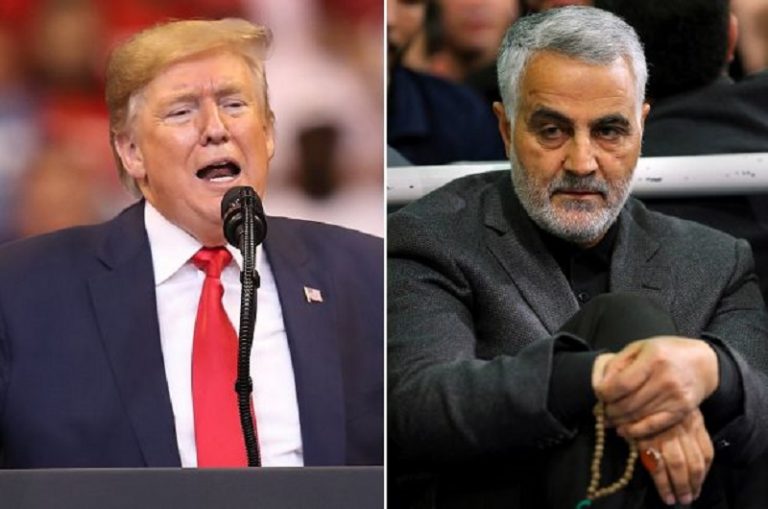
In a “bombshell” revelation that calls into question one of the Trump administration’s stated justificiations for assassinating Iranian Gen. Qasem Soleimani—a move that nearly sparked a region-wide military conflict—Iraqi intelligence officials told the New York Times that they believe ISIS, not an Iran-linked militia, was likely responsible for the Dec. 27 rocket attack that killed an American contractor at an air base near Kirkuk, Iraq.
The Times reported Thursday that “Iraqi military and intelligence officials have raised doubts about who fired the rockets… saying they believe it is unlikely that the militia the United States blamed for the attack” was responsible.
“All the indications are that it was Daesh,” Brigadier General Ahmed Adnan, the Iraqi chief of intelligence for the federal police at the K-1 air base, told the Times, using the Arabic acronym for ISIS. “We know Daesh’s movements.”
The Trump administration has not released a single piece of evidence showing that the Iraqi militia Khataib Hezbollah, which has ties to Iran, was responsible for the attack on K-1. The group has denied carrying out the attack.
The U.S. responded to the rocket attack days later with deadly airstrikes on Khataib Hezbollah targets in Iraq and Syria, setting off a dangerous escalatory spiral that brought Iran and the U.S. to the brink of war.
On Jan. 2, the U.S. assassinated Soleimani with a drone strike in Baghdad ordered by President Donald Trump. Following the assassination, which was widely condemned as an act of war, the U.S. Department of Defense issued a statement claiming without evidence that Soleimani “orchestrated attacks on coalition bases in Iraq over the last several months—including the attack on December 27th—culminating in the death and wounding of additional American and Iraqi personnel.”
But Iraqi officials told the Times that “based on circumstantial evidence and long experience in the area where the attack took place,” there is good reason to be skeptical about U.S. claims that Khataib Hezbollah was behind it.
As the Times reported:
The rockets were launched from a Sunni Muslim part of Kirkuk Province notorious for attacks by the Islamic State, a Sunni terrorist group, which would have made the area hostile territory for a Shiite militia like Khataib Hezbollah.
Khataib Hezbollah has not had a presence in Kirkuk Province since 2014.
The Islamic State, however, had carried out three attacks relatively close to the base in the 10 days before the attack on K-1. Iraqi intelligence officials sent reports to the Americans in November and December warning that ISIS intended to target K-1, an Iraqi air base in Kirkuk Province that is also used by American forces…
These facts all point to the Islamic State, Iraqi officials say.
“We as Iraqi forces cannot even come to this area unless we have a large force because it is not secure,” Brig. Gen. Adnan said of the area from which the rocket attack was launched. “How could it be that someone who doesn’t know the area could come here and find that firing position and launch an attack?”
In response to the Times report, Jamal Abdi, president of the National Iranian American Council, tweeted:
“Al-Qaeda attacked the U.S. on 9/11 and we went to war with Iraq. If this report is true, ISIS attacked the U.S. and we nearly went to war with Iran.”


The US almost started WWIII based on questionable evidence.

After all of the violence in the Middle East following the attack on US bases, officials are now questioning the US's claim that the -backed militia Khataib Hezbollah are to blame. https://buff.ly/31CpWqT 

46 people are talking about this
U.S. officials insisted to the Times that they have “solid evidence” showing that Khataib Hezbollah carried out the attack, but they have not released any of this evidence to the public or to Iraqi officials.
“We have requested the American side to share with us any information, any evidence, but they have not sent us any information,” Lt. Gen. Muhammad al-Bayati, chief of staff for former Prime Minister Adel Abdul Mahdi, told the Times.
Ilan Goldenberg, Middle East security director at the Center for a New American Security think tank, tweeted that the U.S. Congress “must ask questions about this and get the intel.”
Responsible Statecraft managing editor Benjamin Armbruster agreed.
“Congress needs to investigate ASAP,” Armbruster tweeted.
*
Note to readers: please click the share buttons above or below. Forward this article to your email lists. Crosspost on your blog site, internet forums. etc.


River to Sea Uprooted Palestinian   
The views expressed in this article are the sole responsibility of the author and do not necessarily reflect those of the Blog!

Monday, 6 January 2020

الشعب العراقي في مواجهة دولة «بريمر»


يناير 6, 2020

للمرة الأولى منذ الاحتلال الأميركي للعراق في 2003، يتكشف ان الدولة التي ضغط لإنشائها المندوب الأميركي “بريمر”، هي مجرد آلية شكلية مصابة بعطل بنيوي بالولادة وغير قابل للاصلاح او المعالجة.
لقد بذل الأميركيون جهوداً جبارة لبناء دولة عراقية تشبه النماذج الكونفدرالية التي يحتاج أي قرار فيها لموافقات كبيرة من المؤسسات الدستورية وتتطلب في البعض تأييداً يفوق الثلثين في مجالسها النيابية وحكوماتها ورؤساء بلدياتها. وهذا يعني استحالة صدور أي قرار إلا بالاتفاق المسبق والعميق بين قادة المذاهب والقوميات بما يؤكد عجز هذا النوع من الدول الاتفاق على القرارات الوطنية الكبرى. وهذا يعني شللاً في إنتاج المواقف التاريخية الكبرى مع الميل الى المساومات بين القوى السياسية للتحاصص الداخلي فقط، في الوظائف والأموال العامة والتعيينات.
هذا حال العراق الذي اجتاحه الأميركيون قبل سبعة عشر عاماً من دون إذن أممي متذرعين بوجود اسلحة دمار شامل على اراضيه، فقضوا على نظام صدام حسين سافكين دماء مئات آلاف العراقيين ومؤسسين هذه الدولة الضعيفة التي فرضوا عليها بموجب سيطرتهم على موازنات القوى، توقيع معاهدة تجعل احتلالهم شرعياً للعام 2011، فانتهت هذه المهلة ولم يخرجوا إلى أن اكتشفت دولة “بريمر” العراقية الحل الناجع فأجبرت حكومة العراق على توقيع اتفاق جديد يسمح للقوات الأميركية بالبقاء لتدريب القوات العراقية ورفدها باستشارات ونصائح في اوقات المحن.
ضمن هذا السيناريو الدقيق عمل الأميركيون على السيطرة على الجيش العراقي ومجمل القوى الأمنية، ولم يكتفوا بذلك، ساعين الى التفتيت بمستويات متعددة: سياسي طائفي وآخر داخل كل قوة مذهبية بمفردها، وثالث قومي وعرقي، وذلك لصنع المزيد من الفرقة بين الكتل السياسية الشيعية والسنية من جهة والشيعية الشيعية والسنية السنية من جهة أخرى مع خلافات عربية كردية مشجعين الإرهاب على قتل المسيحيين والايزيديين ما أحدث خللاً سياسياً وطنياً ادى الى اضعاف الأقوياء والأقل قوة في آن معاً حتى بدا أن القوى الوحيدة هو ذلك الأميركي المتحكم بمفاصل القوة، فهو محتل ومستشار وسياسي وإعلامي يلعب على نيران الفتنة الداخلية ولص يسرق نفط كردستان وكركوك ويسوّقه في تركيا، بما يؤدي الى انتفاع ثلاثي في هذه الثروة العراقية: آل البرزاني المتحكمون بالسلطة في كردستان واردوغان البراغماتي الذي لا يريد دولة كردية، لكنه يأكل من نفطها، والأميركيون أصحاب الرعاية والتنسيق الذين يحمون مقابل حصة من نفط العراق.
بشكل يشابه ما يفعلونه دائماً مع الإمارات والسعودية وقطر والكويت أي: ادفع تسلم.
كما ذهبوا في مناطق الوسط الى حدود دعم كل التيارات الانفصالية والعشائر مستعينين بخدمات الأحزاب الإسلاموية الموالية لتركيا، وادوار السعودية والإمارات في التأثير على عشائر الأنبار وبعض احزاب الوسط عبر تزخيم شعار العداء لإيران وتصوير العراق على أنه ساحة للنفوذ الفارسي المجوسي كما تقول إشاعاتهم اليومية.
ولم ينسوا جذب بعض القوى الشيعية التي تريد الإمساك بالحكم على غرار سائرون جماعة مقتدى الصدر وطموحات عراقيين شيعة آخرين، مستعدين لبيع سراويلهم مقابل رئاسة الحكومة.
فأمسك الأميركيون بهذه الطريقة بالكثير من الأحزاب في كردستان والوسط والكلدان والصابئة والايزيديين وبعض قوى الجنوب والعاصمة.
بذلك استطاعت دولة “بريمر” لعب دور مرجعية لا يمكن لأي قرار وطني ان يعبر إلا بإذنها، واداء دور المنظم للأحجام والحائل دون وصول قوة الى درجة تستطيع فيها إلغاء الآخر.
انها اذاً دولة مشلولة وعاجزة تراقب “بصمت العاجزين” ولادة مشروع سياسي أميركي جديد يريد تحويل العراق الى جدران تمنع تطوير العلاقات التنسيقية مع سورية وتلغي أي دور سياسي او اقتصادي لحدودها مع إيران، ولو استطاعت إلغاء انظمة الزيارات الدينية لمراقد الأولياء والأئمة بين العراق وايران لما تلكأت لحظة واحدة.

لذلك يذهب الجنون الأميركي هذه المرة الى حدود اغتيال قائدين أمنيين من الدرجة الاولى، أحدهما رجل أمن إقليمي تاريخي له مكانة متقدّمة في محور المقاومة في لبنان وسورية والعراق وإيران واليمن وفلسطين، والشهيد الثاني نائب رئيس الحشد الشعبي في مواجهة الأميركيين.
هذا إذاً اغتيال له أبعاد سياسية عراقية لكن جغرافيته العراقية تتطلب رداً سياسياً حازماً من الدولة العراقية اولاً، ولن تستطيع التقدم بشكوى لمجلس الامن الدولي بسبب الفراغ السياسي في المؤسسات الدستورية، فبرهم هارب الى باكستان والحلبوسي صاحب الآراء الرمادية وعاد عبد المهدي المستقيل الذي لم يعد باستطاعته حتى جمع وزراء من حكومته. هذا الى جانب أن حكومة تصريف الأعمال الحالية لا قدرة قانونية لديها على إنتاج موقف وطني.
فهل يعجز العراق عن تأمين بديل من مؤسساته الدستورية المشلولة؟
إنه الشعب العراقي بكامل أطيافه الذي ملأ بغداد والنجف بالملايين المستنكرين لاغتيال القائدين. هي الآلية الشجاعة وعلى رأسها مفتي السنة والشيعة المنلا الذي يجهر مطالباً بإخراج الأميركيين. هؤلاء هم القادرون على إصدار فتوى شعبية تعلن انتهاء مفاعيل كل المعاهدات والاتفاقات مع الأميركيين على أساس حظر كامل لأي تفاعل مع القواعد العسكرية الأميركية ومعاملتها كمراكز تنتهك سيادة العراق وصولاً الى حدود إعلان الكفاح الشعبي لطرد هذا الاستعماري.
المطلوب إذاً أن يلعب الشعب العراقي دوراً في إعادة بناء عراق داخلي موحّد وعراق إقليمي قادر على التنسيق مع سورية لبناء أقوى معادلة ممكنة منذ سقوط النظام العربي القديم على يد الرئيس المصري السادات في 1979.
فهل يتحوّل الاغتيال الأميركي للشهيدين الى مناسبة لطرد الأميركيين من العراق وسورية؟هذا ممكن بالقوة الشعبية وحلف المقاومة ورفع شعار يقوم على المساواة بين الشعوب في سورية والعراق ولبنان وفلسطين على أساس المساواة في السياسة والاقتصادي والاجتماع بمنأى عن التباين الديني والعرقي، لذلك فالمأزوم اليوم هم الأميركيون الذين يفقدون آخر أوراقهم في المنطقة بما يبشر بفجر جديد لشعوب مضطهدة منذ ألف عام وأكثر.

River to Sea Uprooted Palestinian   
The views expressed in this article are the sole responsibility of the author and do not necessarily reflect those of the Blog!

Thursday, 26 April 2018

SYRIAN KURDISTAN: FROM “OLIVE BRANCH” TO “FALLEN STATE”

26.04.2018
Syrian Kurdistan: From "Olive Branch" to "Fallen State"
Kurdish fighters raise flag of PKK leader in centre of Raqqa
Written by Maksim Alexandrov; Originally appeared on warsonline.info; Translated by AlexD exclusively for SouthFront
Not long ago in Washington at the Institute of National Strategic Studies of the National Defence University the round table on “The Multimodal Threats in the Kurdish Region” took place, a continuation of the “NATO and Regional Military and Political Alliance in 2018” Council.
The organisers of the meeting, taking place on April 9 to 11, were the Institute of National Strategic Studies, the Defense Threat Reduction Agency (DTRA), the intelligence community and the commanders of the Special Forces of the US. The main agenda of the event was focused on clarifying the conceptual and analytical foundations of American policy in the framework of topical issues of the “Kurdish question”, the problem of improving the coordination of regional allies, as well as military and political modeling of crisis systems that fall under the topology of “fallen state”.
“Today, the USA, as never before, is faced with the destructive position of the Syrian regime and its allies, the Russian Federation and Iran. We met qualitatively new challenges and hybrid threats to freedom and democracy in Syria (SAR)”, with these words the special representative of the Department of Military and Political Modeling began his presentation, specialist in the field of pre-emptive analysis and the Greater Middle East of the Agency for the reduction of military threats Ray Ross.
During the discussion, experts highlighted the most complex structure of the problems that cause the revision of operational resources, and as a consequence, reducing operational sustainability and “window of response” to the crisis situations. First, such challenges include the issue of harmonisation of positions and approaches.
As an empirical base, analysts cite examples of the destructive positions of the Turkish Republic regarding the “united Kurdish space”, the inconsistent/punctual nature of the work of the UK, France and Germany in providing and preparing the Kurdish militia after the October operations in Iraq’s Kirkuk. During the meeting, the coalition failed to ensure prompt withdrawal of 140 Bundeswehr instructors and 30 specialist of the Special Aviation Service of the British Armed Forces.
Second, comes the imbalance of the asymmetric military and political education within the framework of the international coalition. The fragmentation of Kurdish troops and militia (YPG) during the events related to the referendum on the independence of Iraqi Kurdistan and the subsequent military and political crisis, the split of the Peshmerga and other Kurdish armed groups controlled by Erbil; the growth in popularity of the Movement for Change or “Goran”, are a ready counter-rally against ex-President Massod Barzani’s block, the “Democratic Party of Kurdistan” and the “Patriotic Union of Kurdistan”.
As a result, there is a curtailment of the potential of “Kurdish National Councils” in the Syrian Kurdish Supreme Council, in other words, the growing influence of the Democratic Union Party of Salih Muslim, supporter of the autonomy within the SAR, and the national Councils of Western Kurdistan, which may cause a potential strengthening of Moscow’s and Iran’s positions in the region.
The disagreements between the Kurdish and Arab (Sunni, 23 movements) ethnic and religious components are, in particular the revolt of the Arabs in Syria’s Raqqa, armed conflicts within “independent” groups in North-Eastern Syria, caused by both “humanitarian” and military-political aspects, systemic shortcomings of the previous presidential administration to unite the projects of the “Kurdish Zone”, “Syrian Democratic Forces” and the “Free Syrian Army”.
The data formed the need for duplication of “territorial formations” by independent structures, the creation of Kurdish security forces that are not included in the YPG during the last year. Along with this, it allowed partial substitution and assumption of the contingents of the Arab countries in the area of responsibility of the Alliance. Preliminary rounds of talks with Egypt, Saudi Arabia and the United Arab Emirates are now been held.
“The newly formed security forces, along with the implementation of substitution approaches are certainly a guarantee for stability and security in the North-East of Syria”, stated Ray Ross.
Third, the current problems required operational support for the concept “Balance of deterrence and engagement”, as described in previous submissions.
Thus, according to analysts, the greatest actual problems are:
  1. Security in the North East of Syria;
  2. Containment of Ankara;
  3. Exclusion of the growing influence of Damascus, Moscow and Tehran;
  4. Revision of the allies system, accompanied by a “balance of deterrence and engagement”.
Thus, the methods to achieve a “balance of deterrence and engagement” through the support and expansion of special measures aimed at the integration of non-system actors of the military and political process are of greatest interest. “We conduct constant monitoring of the military-political process and its dynamics. It has already been six months that we monitor the escalation of the conflict in the north of Syria, which we repeatedly inform our allies, Turkey and other countries. Today within the framework of the modeling, we understand the need to involve all parties in the settlement process. Potentially, it may include the Kurdish Workers’ Party and the Democratic Union”, said the representative of DTRA.
According to data received from the source “occupying a high position” in the Kurdistan Workers’ Party (PKK) since November 2017, personnel changes have begun, accompanied by an intra-party conflict. With the beginning of the Turkish operation “Olive Branch” the group “Will to Freedom” stood out, actively cooperating with the YPG troops, coordinated with the United States and its allies. The unit, numbering up to 5000 personnel, advocates for the change of the party’s leadership course and the formation of the “common Kurdish space”. “However, we must work to ensure that this organisation does not engage in destructive activities on Turkish territories”.
In addition, in the ranks of the PKK, according to intelligence, in December last year a “right-oriented core” was formed, which began the extradition of previously left in Afrin intra-party opponents of the “new forces” with Salih Muslim. “The United States have actively watched this process, today we have a unique opportunity to unite these PKK platforms into a new, powerful force that can affect the entire region. These processes are very complex, but positive for national security”, commented Ray Ross.
During the talks held at the end of December 2017, between the “new forces” and the Democratic Union Party, the parties could not agree on “extradition”, but agreements were reached in exchange for the deployment of seven training camps in North Africa in exchange for full support from the “right forces” in the PKK.
The personnel trained at these facilities were intended for deployment on the neighbouring Turkish territory. However the Turkish side took these processes as a strengthening, an attempt to unite the Kurdish Workers’ Party and on January 20 launched the army operation “Olive Branch”, which ended with the capture of the city of Afrin and the division of the canton into Turkish and Syrian-Russian areas of responsibility.
During the Turkish operation, with the support of the US, talks were held between the YPG and the Afrin security forces on the limited material and technical support, as well as sending a number of volunteer units subordinate to the military council of Manbij. Also, the “special contact mission” guaranteed full support in the case of coordination of the Afrin security forces, the dissolution of the HPX battalion and the “Desert Scorpion” brigade.
De facto, this process should be seen as providing an alternative resource base, aimed at the involvement of the security forces and councils of Afrin in the structure of the YPG and the expansion of cooperation with the International coalition, i.e. the removal of Iran and Russia from the northern province of Aleppo. However, cooperation between Moscow, Tehran and Ankara did not allow the formalisation of this union.
At the same time, analysts noted that the division, the failure of “involvement”, allowed to restore the balance of forces in the “Kurdish zone”, since after the military and political crisis caused by the “collapse” of Iraqi Kurdistan and the departure of Masoud Barzani as President, the “Democratic Union Party” significantly strengthened its position, “threatening the integrity of the Syrian Kurdistan”. However, after the division of Afrin, its potential, through natural processes, decreased, opening up new opportunities for the American side and the security forces that were created.
Thus, turning to the conclusions, we can say that the American side is now involved in the processes of operationalization of the concept of “containment and engagement”, considering factor projects of unification of multidirectional forces through the chaos of existing crisis systems and territorial associations. The growing military presence in the area of Al-Tanf, and the disparate information of the transfer of Arab-Kurdish troops to the area, could potentially mean the unification of the YPG, the security forces and the new Syrian Army into a single structure.
With the completion of operation “Olive Branch”, an extensive media company was launched to discredit the positions of Moscow, Tehran and Damascus in resolving the “Kurdish issue”.
In mid-March 2018 in north-eastern Syria, a “Syrian popular Resistance” was formed, advocating the liberation from occupation by a coalition led by the United States.
On April 15, 2018, the Department of Military and Political Modeling of the US agency for reducing military threats adopted the programme of development of the north-east of Syria, labelling this territory as “fallen state”.

River to Sea Uprooted Palestinian   
The views expressed in this article are the sole responsibility of the author and do not necessarily reflect those of the Blog!

Wednesday, 15 November 2017

Live from Baghdad: the secret of Iraq’s renaissance


November 14, 2017
by Pepe Escobar of the Asia Times (cross-posted by special agreement with the author)
BAGHDAD – On a sandstorm-swept morning in Baghdad earlier last week, Abu Mahdi al-Mohandes, the legendary deputy leader of Hashd al-Shaabi, a.k.a. People Mobilization Units (PMUs) and the actual mastermind of numerous ground battles against ISIS/Daesh, met a small number of independent foreign journalists and analysts.
This was a game-changing moment in more ways than one. It was the first detailed interview granted by Mohandes since the fatwa issued by Grand Ayatollah Sistani – the immensely respected marja (source of emulation) and top clerical authority in Iraq – in June 2014, when Daesh stormed across the border from Syria. The fatwa, loosely translated, reads, “It is upon every Iraqi capable of carrying guns to volunteer with the Iraqi Armed Forces to defend the sanctities of the nation.”
Mohandes took time out of the battlefield especially for the meeting, and then left straight for al-Qaim. He was sure “al-Qaim will be taken in a matter of days” – a reference to the crucial Daesh-held Iraqi border town connecting to Daesh stronghold Abu Kamal in Syria.
That’s exactly what happened only four days later; Iraqi forces immediately started a mop up operation and prepared to meet advancing Syrian forces at the border – yet more evidence that the recomposition of the territorial integrity of both Iraq and Syria is a (fast) work in progress.
The meeting with Mohandes was held in a compound inside the massively fortified Green Zone – an American-concocted bubble kept totally insulated from ultra-volatile red zone Baghdad with multiple checkpoints and sniffer dogs manned by US contractors.
Adding to the drama, the US State Department describes Mohandes as a “terrorist”. That amounts in practice to criminalizing the Iraqi government in Baghdad – which duly released an official statement furiously refuting the characterization.
The PMUs are an official body with tens of thousands of volunteers linked to the office of the Commander in Chief of the Iraqi Armed Forces. The Iraqi Parliament fully legalized the PMUs in November 2016 via resolution 91 (item number 4, for instance, states that “the PMU and its affiliates are subject to military regulations that are enforced from all angles.”)
Its 25 combat brigades – comprising Shi’ites, Sunnis, Christians, Yazidis, Turkmen, Shabak and Kurds – have been absolutely crucial in the fight against Daesh in Samarra, Amerli, Jalawla, Balad, Salahuddin, Fallujah (35 different battles), Shirqat and Mosul (especially over the western axis from Qayarah base to the Iraq-Syrian border, cutting off supply chains and sealing Mosul from an attempted Daesh escape to Syria).
Retaking Kirkuk “in a matter of hours”
Mohandes describes the PMUs as “an official military force” which plays a “complementary role” to the Iraqi Army. The initial plan was for the PMUs to become a national guard – which in fact they are now; “We have recon drones and engineering units that the Army does not have. We don’t mind if we are called gendarmes.” He’s proud the PMUs are fighting an “unconventional war”, holding the high ground “militarily and morally” with “victories achieved in record time”. And “contrary to Syria”, with no direct Russian support.
Mohandes is clear that Iran was the only nation supporting Iraq’s fight against Daesh. Iraq reciprocated by helping Syria, “facilitating over flights by Iranian planes.” With no Status of Forces Agreement (SOFA) between Washington and Baghdad, “the Americans withdrew companies that maintain Abrams tanks.” In 2014
“we didn’t even have AK-47s. Iran gave them to us. The US embassy had 12 Apache helicopters ready to transport diplomats if Baghdad fell to Daesh”.
One year later, “Baghdad would have been occupied” were not for the PMUs; “It’s like you’re in a hospital and you need blood. The Americans would show up with the transfusion when it was too late.” He is adamant “the US did not provide a single bullet” in the overall fight against Daesh. And yet, Mohandes clarifies that the “US may stay in Iraq should the Iraqi government decide it. My personal opinion is well known.”
Mohandes considers the [Western] “media war waged against Hashd al-Shaabi” as “normal from the beginning”; “Countries that supported terrorism would not perceive that a popular force would emerge, and did not recognize the new political system in Iraq.” On that note, he added ruefully, “you can smell petrol”.
Mohandes was personally wounded in Halabja and also in Anfal – Saddam Hussein’s anti-Kurdish operations. He was “pleased to see Kurdistan saved after 1991”; stresses “we had martyrs who fell in Kurdistan defending them”; and considers himself a friend of the Kurds, keeping good relations with their leaders. Iranian advisors, alongside the Iraqi Army and the PMUs, also “prevented Daesh from conquering Erbil.”
Yet after a “unilateral referendum, Iraq had to assert the authority of the state”. Retaking Kirkuk – largely a PMU operation – was “a matter of hours”; the PMUs “avoided fighting and stayed only in the outskirts of Kirkuk”. Mohandes previously discussed operational details with the Peshmerga, and there was full coordination with both Iran and Turkey; “It’s a misconception that Kurdish leaders could rely on Turkey.”
Fallujah, finally secured
The PMUs absolutely insist on their protection of ethnic minorities, referring to thousands of Sabak, Yazidi and Turkmen – among at least 120,000 families – forced by Daesh rule into becoming IDPs. After liberation battles were won, the PMUs provided these families with food, clothing, toys, generators and fuel. I confirmed that many of these donations came from families of PMU fighters all across the country. PMU priorities include combat engineering teams bringing families back to their areas after clearing mines and explosives, and then reopening hospitals and schools. For instance, 67,000 families were resettled into their homes in Salahuddin and 35,000 families in Diyala.
Mohandes stresses that, “in the fight against Daesh in Salahuddin and Hawija, the brigade commanders were Sunnis”. The PMUs feature a Christian Babylon brigade, a Yazidi brigade, and a Turkmen brigade; “When Yazidis were under siege in Sinjar we freed at least 300,000 people.”
Overall, the PMUs include over 20,000 Sunni fighters. Compare it with the fact that 50 per cent of Daesh’s suicide bombers in Iraq have been Saudi nationals. I confirmed with Sheikh Muhammad al-Nouri, leader of the Sunni scholars in Fallujah, “this is an ideological battle against Wahhabi ideology. We need to get away from the Wahhabi school and redirect our knowledge to other Sunni schools.” He explained how that worked on the ground in Haditha (“we were able to control mosques”) and motivated people in Fallujah, 30 minutes away; “Fallujah is an Iraqi city. We believe in coexistence.”
After 14 years in which Fallujah was not secure, and with the Haditha experience fast expanding, Sheikh Muhammad is convinced “Iraq will declare a different war on terror.”
The inclusive approach was also confirmed by Yezen Meshaan al-Jebouri, the head of the Salahuddin PMU brigade. This is crucial because he’s a member of the very prominent Sunni Jebouri family, which was historically inimical to Saddam Hussein; his father is the current governor of Tikrit. Al-Jebouri decries “the state corruption in Sunni regions”, an “impression of injustice” and the fact that for Daesh, “Sunnis who did not follow them should also be killed.” He’s worried about “the Saudi accumulation of developed weapons. Who guarantees these won’t be used against the region?” And he refuses the notion that “we are looked upon by the West as part of the Iranian project.”
Military victory meets political victory
Far from the stereotyped “terrorist”, Mohandes is disarmingly smart, witty and candid. And a full-blooded Iraqi patriot; “Iraq now reinstates its position because of the blood of its sons. We needed to have a military force capable of fighting an internal threat. We are accomplishing a religious national and humanitarian duty.” Soldiers apart, thousands of extra PMU volunteers do not receive salaries. Members of Parliament and even Ministers were active in the battlefield. Mohandes is proud that “we have a chain of command just like the army”; that the PMUs harbor “thousands of people with college degrees”; that they run “dozens of field hospitals, intensive care units” and have “the strongest intel body in Iraq.”
In Baghdad, I personally confirmed the narrative accusing the PMUs of being Prime Minister Nouri al-Maliki’s private army is nonsense. If that was the case, Grand Ayatollah Sistani should take the blame, as he conceptually is the father of the PMUs. Hadi al-Amiri, the secretary-general of the powerful Badr organization, also extremely active in the fight against Daesh, stressed to me the PMUs are “part of the security system, integrated with the Ministry of Defense”. But now “we need universities and emphasis on education.”
Pakistani Prof. Hassan Abbas, from the College of International Security Affairs at the National Defense University in Washington, went even further, as we extensively discussed not only Iraq and Syria but also Afghanistan and Pakistan; “Iraq is now in a unique position heading towards a democratic, pluralistic society”, proving that “the best answer to sectarianism is religious harmony.” This “inclusiveness against Takfirism” must now connect in the streets “with the rule of law and a fair justice system”. Abbas points out that the base for Iraq to build up is law enforcement via scientific investigation; “Policing is the first line of defense”.
Baghdad has been able, almost simultaneously, to pull off two major game-changers; a military victory in Mosul and a political victory in Kirkuk. If Iraq stabilizes, erasing the Daesh death cult, so will Syria. As al-Jebouri notes, “now every community must have a cut of the cake.” At least 7 million jobs and pensions are paid by Baghdad. People want the return of regularly paid salaries. That starts with decent security all over the country. Mohandes was the engineer – his actual profession – of key battles against Daesh. There’s a wide consensus in Baghdad that without him Daesh would be firmly installed in the Green Zone.
Hashd al-Shaabi is already an Iraqi pop phenomenon, reflected in this huge hit by superstar Ali al-Delfi. From pop to politics is another matter entirely. Mohandes is adamant the PMUs won’t get involved in politics, “and directly won’t contest elections. If someone does, and many individuals are now very popular, they have to leave Hashd.”
From hybrid warfare to national renewal
After days talking to Hashd al-Shaabi personnel and observing how they operate a complex hybrid warfare battlefield coupled with an active recruitment process and heavy presence in social media, it’s clear the PMUs are now firmly established as a backbone underpinning Iraqi state security, an array of stabilization programs – including much needed medical services – and most of all, introducing a measure of efficiency Iraq was totally unfamiliar for almost three decades.
It’s a sort of state-building mechanism springing out of a resistance ethic. As if the ominous Daesh threat, which may have led to as many as 3.1 million IDPs, shook up the collective Iraqi subconscious, awakened the Iraqi Shi’ite proletariat/disenfranchised masses, and accelerated cultural decolonization. And this complex development couldn’t be further from religious bigotry.
Amid Wilsonian eulogies and references to the Marshall Plan, Foreign Minister Ebrahim al-Jaafari is also a staunch defender of the PMUs, stressing it as “an experiment to be studied”, a “new phenomenon with a humane basis operating on a legal framework”, and “able to break the siege of solitude Iraq has suffered for years.”
Referring to the Daesh offensive, Jaafari insisted “Iraq did not commit a crime” in the first place, but hopefully there’s “a new generation of youth capable of reinforcing the experiment”. The emphasis now, following reconciliation, is on “an era of national participation”. He’s adamant that “families of Daesh members should not pay for their mistakes.” Daesh informers will be duly put on trial.
I asked the Foreign Minister if Baghdad did not fear being caught in a lethal crossfire between Washington and Tehran. His response was carefully measured. He said he had enough experience of dealing with “radical” neocons in D.C. And at the same time he was fully aware of the role of the PMUs as well as Iran in Iraq’s reassertion of sovereignty. His warm smile highlighted the conviction that out of the ashes of a cultish black death, the Iraqi renaissance was fully in effect.

River to Sea Uprooted Palestinian   
The views expressed in this article are the sole responsibility of the author and do not necessarily reflect those of the Blog!