Showing posts with label Tahrir Square. Show all posts
Tuesday, 10 February 2015
Is History Repeating Itself in Egypt?
Is history repeating itself in Egypt today, or are the same mistakes being committed again? About four years ago, the opposition called for boycotting the second round of elections, because candidates of the now-dissolved National Democratic Party (NDP) won a suspicious landslide victory, gaining 95 percent of parliamentary seats, even in districts where NDP candidates had lost popular support to candidates from the opposition and independent parties.
Cairo — This scenario repeated itself yesterday as nominations began. The Supreme Committee for Election opened up to nominations for parliamentary elections (a 10-day process), and one Ahmed Ezz — “one of the main reasons for the January Revolution” — submitted his application through his lawyer.
The call for boycott came even before the first round this time, as many suspect that the expected outcome of this election may resemble the previous one.
The fraud witnessed during the 2010 election was committed and overseen by the same Ahmed Ezz, the NDP’s secretary-general at the time, from an operations room in the party headquarters near Tahrir Square and Abdel Munim Riad Square. The boycott of the second round of elections revealed the fragility of Hosni Mubarak’s regime, which had ruled the country for 30 years. In those days, a number of opposition parties, including the Wafd Party and the currently banned Muslim Brotherhood, led the boycott . The most important result of the boycott, the January 25 Revolution, followed a few months after, in 2011.
The Constitution Party established by Mohammed al-Baradei recently joined the list of parties boycotting the 2015 elections, which includes the Egyptian Popular Current (headed by former 2014 presidential candidate Hamdeen Sabahi), The Socialist People’s Alliance Party and the Strong Egypt Party (headed by former 2012 presidential candidate Abdel Moneim Aboul Fotouh). The reason for the boycott, according to these parties, is the government’s rejection of their repeated demand to amend the electoral law in order to “build a political system based on a multi-party system and transfer of power.”
Amr Badr, a member of the Socialist People’s Alliance Party and a boycott supporter, said “boycotting is the solution, it is the best option in light of a regime that does not believe in the political parties that are counting on the January 25 Revolution.” Badr believes the “revolutionary wave” is coming, but he cannot predict its timing: “The make-up of the next parliament (if the elections are held in this manner) will inflame public sentiments as the political and economic oligarchs — who corrupted Egypt’s political life and against whom the revolution erupted in the first place — return.”
The Constitution Party, which joined the boycott recently, justified its decision saying: “The current political climate does not encourage political parties to participate in public life. There is a strong tendency to narrow and confine the political sphere to people with special interests, influence and money, in addition to ongoing severe human rights violations.”
Ezz running in the elections suggests that the same scenario may be crudely repeated. And he wasn’t the only symbol of the Mubarak regime — imprisoned after the January 25 Revolution only to be later acquitted — to be involved in the nomination process. The list of candidates (until the deadline for submitting papers to the relevant courts) is headed by Ahmed Ezz and his wife Shahinaz al-Najjar; but also Hussein Megawer, president of the Egyptian Trade Union Federation under Mubarak; another NDP figure named Ragab Hilal Hamida; and also Hani Sorour who was accused of supplying tainted blood bags [to Egyptian hospitals] but acquitted after several years of adjudication.
Hassan Nafaa, a political science professor, commented on the current electoral scene saying the revolution continues and it is taking different forms. He believes the election will “expose the nature of the regime and will determine if it is an extension of the Mubarak regime or if there is some kind of change.”
Nafaa however argues that “the revolution will not be like the one in 2011, especially now that Egypt is entering a period that resembles the Mubarak era in terms of the behavior of security agencies as they tighten their control over events, the return of the network of economic and political interests through parliament, and the strengthening of the military institution, through the presidency of former Secretary of Defense Abdel Fattah al-Sisi.” He adds: “Liberal forces have begun to realize that the current regime is not their regime... The power of the ruling regime will be determined in the next six months and in light of its confrontation with the Muslim Brotherhood.”
This article is an edited translation from the Arabic Edition.
Related
The views expressed in this article are the sole responsibility of the author and do not necessarily reflect those of the Blog!
Friday, 9 January 2015
The Arab Spring 4 years after
ماذا بعد_ 4 سنوات على الربيع العربي _ د صفوت حاتم ، د رفعت سيد احمد | المنار
The views expressed in this article are the sole responsibility of the author and do not necessarily reflect those of the Blog!
Wednesday, 10 December 2014
Cairo surprised by closure of Western embassies
An Egyptian policeman stands guard outside the Canadian embassy in Cairo on December 8, 2014 after Canada joined Britain on closing its embassy in the Egyptian capital to the public for security reasons, with neither country providing details about any specific threat. AFP/Ahmed Sayed
Published Wednesday, December 10, 2014
The last thing the Egyptian regime needed was for powerful countries, like Britain and Canada, to close their embassies in Egypt. Such a reputation aggravates Cairo, which denies any factual reasons for the closure. The issue has raised the ire of the Egyptian Ministry of Foreign Affairs, while diplomatic sources attributed the decision to exaggerated security fears.
Cairo – The embassies of the United States, Canada, Britain, and other countries are located In the upscale neighborhood of Garden City in downtown Cairo, just a few meters away from Tahrir Square, which is why the area is known as the embassy district. It is a diplomatic hub, around which the Egyptian authorities have imposed tight security measures since the events of September 11, 2001 until today. In addition to the high walls, and the surveillance and investigation of residents in surrounding houses, the government has banned the leasing of one of the towers overlooking the British Embassy garden. This means that the area is well-secured.
Here, cars are carefully inspected throughout the day, and more than 500 officers and soldiers protect the neighborhood. Residents, however, feel that their area has become akin to military barracks due to these measures. A bystander scoffs at the security concerns cited by the embassies of Britain and Canada given the tight security in place, despite the Ministry of Interior announcement that it has seized maps of diplomatic premises in Cairo from persons that were recently arrested.
The German Embassy announced that its consulate will be closed on Thursday, November 11. The US Embassy has also warned of the possibility of taking a similar decision based on the security situation, and the Australian Embassy has followed suit. This prompted Prime Minister Ibrahim Mahlab to go on an evening tour around the streets of Cairo, and take pictures with citizens to show that the security situation is stable. He made sure to take pictures just tens of meters away from the headquarters of the two closed embassies.
According to a diplomatic source in the Egyptian Ministry of Foreign Affairs, the closures are part of a general state of exaggerated fear by Western ambassadors in the Arab region.
Many took advantage of the situation to talk about security and political scenarios facing the regime. According to a diplomatic source in the Egyptian Ministry of Foreign Affairs, the closures are part of a general state of exaggerated fear by Western ambassadors in the Arab region. Nevertheless, the source expressed surprise that Britain and Canada have closed their embassies although they remained open in the past, even when clashes took place just a few hundred meters away, that is, in Tahrir Square.
The source told Al-Akhbar that the British Ambassador to Cairo, who supposedly “feels concerned about his safety,” was in the province of Minya in Upper Egypt a few days ago, where he met with officials at a church, although “Minya saw the most violent clashes between the Muslim Brotherhood and security members after the dismissal of former President Mohammed Mursi.” The source added that the ambassador also visited the city of Luxor and its ruins, which is “an indication of safety and freedom of movement in Egypt.”
Many circles in the Egyptian Ministry of Foreign Affairs have expressed surprise over the positions of these embassies, and wondered why the diplomatic corps did not send communiqués to the ministry containing the security assessments on the basis of which they decided to suspend their work.
Ibrahim Abdel Ghaffar, ambassador and former assistant foreign minister, says that the decision to close the embassies is normal given the general situation in the “Arab Spring countries,” pointing to the great concern by embassies since the killing of US Ambassador Christopher Stevens in Libya. He added that the closure of the British and Canadian embassies may be due to fear of reactions from the Muslim Brotherhood in light of the legal inquiry conducted in Britain on the group.
Ambassador Ahmed Najm, a former diplomat at the Egyptian Embassy in Canada, attributed the Canadian and British positions to security considerations, especially given the increased targeting of foreign citizens in Arab countries.
He told Al-Akhbar that the closure is not expected to last long due to the urgent needs of Canadian and British nationals in Egypt. He said that the decision is not in any way linked to the now-banned Muslim Brotherhood.
This article is an edited translation from the Arabic Edition.
Related
- Canada closes Cairo embassy due to security concerns
- Bombings near Egyptian, UAE embassies in Libya’s Tripoli
The views expressed in this article are the sole responsibility of the author and do not necessarily reflect those of the Blog!
Labels:
Al Qaeda,
Britain,
Brotherhood,
Canada,
Egypt,
ISIL,
Tahrir Square,
USA
Monday, 4 March 2013
Egyptian debt threatens Tahrir Square’s promise of freedom
River to Sea
The views expressed in this article are the sole responsibility of the author and do not necessarily reflect those of this Blog!
Labels:
Economy,
Egyptian revolution,
Tahrir Square
Monday, 4 February 2013
Islamofascist Rule in Egypt
I believe firmly that unknown heroes will emerge from the ranks of the people who revere freedom , pride and believe in the dignity
(Right) 1940's- Hassan Al-Bana the founder of MB kissing the hand of King Abdulaziz - (Left) 1960's- Nasser sitting on ground with an Egyptian peasent
Mursi Kissing Saudi king during his first visit as president

by Stephen Lendman
Washington engineered Mubarak’s ouster. He fell from grace. He became more liability than asset. For years, State Department and Pentagon officials wanted him out. He opposed Bush’s 2003 Iraq war and other US policies. He had to go.
Washington engineered Egyptian uprisings. Spontaneity was created and manipulated. Arab Spring is Western terminology. It’s yet to bloom.
It was first used in March 2005. It suggested a beneficial Iraq war spinoff. Washington deplores emerging democracies. It prioritizes unchallenged control.
Regional uprisings achieved nothing. Daily life reflects poverty, unemployment, and despotism. Tens of oppressed millions suffer.
Conditions now are worse than earlier. People want jobs, decent pay, better services, ending corruption and repression. They want liberating democratic change.
In February 2011, Mubarak was ousted. At the time, an article said hold the celebration. Egypt’s struggle just began. Everything changed, stayed the same, and worsened.
It’s pro-Western, pro-business, pro-privilege, pro-super wealth, pro-neoliberal, anti-progressive, anti-labor, anti-dissent, anti-freedom, and anti-government of, by, and for everyone equitably and fairly.
In June 2012, Morsi became Egypt’s fifth president.
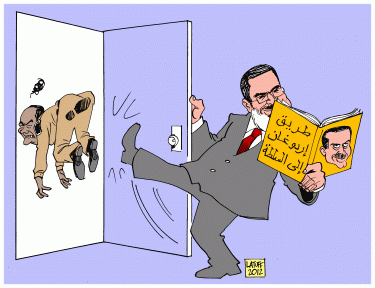
On November 23, protests erupted nationwide. They came after his November 22 decree asserted dictatorial powers.

Rescinding it made little difference. He claimed “all of its consequences remain in effect.” He overstepped. Egyptians want him out.
Doublespeak duplicity conceals tyranny. Democracy is verboten. It’s not tolerated. Hardline rule is policy. So are social injustice and anti-worker practices.
Two voting rounds were held. Around 30% of eligible voters cast ballots. Fraud allegations followed. Egypt Independent said the MB’s Freedom and Justice Party (FJP) bused in remote-based residents. They were told to vote yes. Media reports suggested ballot box stuffing, obstructing or banning opposition voters, assaulting those who tried, and other fraudulent practices.
On January 25, 2011, anti-Mubarak protests erupted. Cairo’s Tahrir Square became iconic. On the uprising’s second anniversary, hundreds of thousands of youths, workers and others rallied nationwide.
They oppose MB power. They demanded Morsi’s ouster. They want Egypt’s constitution revoked. They want social justice and democratic governance.
One protester reflected public sentiment, saying “The revolution has been hijacked. We want to complete the revolution’s goals.”
“The situation is getting tougher under the Brotherhood’s rule. Unemployment is on the rise, and jobs are harder to find.”
An unemployed new graduate added “I’m here to get rid of Morsi. First Mubarak, then (General) Tantawi, now Morsi. We are only ruled by bastards.”
Repressive right-wing extremism is policy. Social justice is verboten. Force-fed austerity prevents it. Mursi’s $4.8 billion IMF loan demands it.
Impoverished Egyptians face harder times. Popular sentiment demands real change.
On January 24, Morsi suggested protesters would face harsh crackdowns. He claimed “counter-revolutionary” forces “undermine the state.”
He outlined his own agenda. He called for providing a “suitable environment for investment.” Doing so involves worker exploitation. Ordinary people are sacrificed on the alter of profits.
Mubarak’s 30 year dictatorship enforced it. Egyptians hated it. Sweeping government powers were established. Anyone considered dangerous could be indefinitely detained without charge.
Morsi claims dictatorial executive powers. Constitutional rights don’t matter. Nor does press freedom. Security forces can detain protesters indefinitely. They can be held uncharged. They can tried in military courts.
Morsi told Egyptians what to expect, saying:
“I always said I’m against any exceptional measures, but I also said I might resort to such measures if I had to. I may even do more for the sake of Egypt, it’s my duty.”
“I instructed interior ministry officials to deal strictly with whoever threatens the people, public, and private institutions.”
They refused. He asked all political parties to participate. Opposition activist Ayman Fayed told Voice of Russia he believes Washington is manipulating events covertly.
He said Obama officials want Egypt isolated. They want Russian and Chinese regional influence marginalized. They want unchallenged control.
They’ve been “encouraging Islamists to thwart the much aspired freedom.” It remains to be seen what’s next. Turmoil shows no signs of ending.
Egyptians demand democracy. Morsi hijacked it. Most Egyptians consider Muslim Brotherhood leadership illegitimate and corrupt.
Stephen Lendman lives in Chicago and can be reached at lendmanstephen@sbcglobal.net.His new book is titled “Banker Occupation: Waging Financial War on Humanity.”
http://www.claritypress.com/LendmanII.html
Visit his blog site at sjlendman.blogspot.com and listen to cutting-edge discussions with distinguished guests on the Progressive Radio News Hour on the Progressive Radio Network Thursdays at 10AM US Central time and Saturdays and Sundays at noon. All programs are archived for easy listening.
http://www.progressiveradionetwork.com/the-progressive-news-hour
Egypt: The Return of SCAF
New Pharaoh? 'Military fascism replaced by Islamofascism in Egypt'
River to Sea
The views expressed in this article are the sole responsibility of the author and do not necessarily reflect those of this Blog!
Wednesday, 28 November 2012
Clashes in Tahrir Square as Egypt Sinks Deeper into Crisis
Local Editor
Egypt on Wednesday plunged deeper into its worst political crisis
since President Mohammad Mursi took office in June, with massive opposition
rallies nationwide signaling a new "revolution" nearly two years after Hosni
Mubarak was toppled.
Egyptian Police fired tear gas into Cairo's Tahrir Square early Wednesday, where several hundred protesters spent the night after a mass rally to denounce what they call ‘Mursi's power grab’.
Clashes that have been erupting on streets just off Tahrir near the US embassy spilled into the square, with canisters falling into the crowd forcing protesters to run and sending clouds of tear gas over the tents housing the demonstrators.
The outskirts of the square have seen sporadic clashes now entering their
ninth day, in what started as an anniversary protest to mark one year since
deadly confrontations with police in the same area.
Clashes also raged through the night between supporters and opponents of Mursi in the Nile Delta city of Mahalla and the canal city of Port Said.
In Mahalla, 132 people were injured while 27 were hurt in Port Said, medical sources told Agence France Presse. According to a security official, calm in both towns had been restored by morning.
Tuesday's huge turnout for a protest rally marked the largest mobilization yet against the president.
Protesters are furious at the decree that Mursi announced last Thursday allowing him to "issue any decision or law that is final and not subject to appeal", which effectively placed him beyond judicial oversight.
Mursi's decree also bans any judicial body from dissolving the controversial panel, putting him on a collision course with the judiciary.
The International Monetary Fund on Tuesday said Egypt can still get its $4.8 billion loan, agreed last week, despite the turmoil as long as there is "no major change" in its reform commitments.
River to Sea
Uprooted Palestinian 
The views expressed in this article are the sole responsibility of the author and do not necessarily reflect those of this Blog!
Egyptian Police fired tear gas into Cairo's Tahrir Square early Wednesday, where several hundred protesters spent the night after a mass rally to denounce what they call ‘Mursi's power grab’.
Clashes that have been erupting on streets just off Tahrir near the US embassy spilled into the square, with canisters falling into the crowd forcing protesters to run and sending clouds of tear gas over the tents housing the demonstrators.
Clashes also raged through the night between supporters and opponents of Mursi in the Nile Delta city of Mahalla and the canal city of Port Said.
In Mahalla, 132 people were injured while 27 were hurt in Port Said, medical sources told Agence France Presse. According to a security official, calm in both towns had been restored by morning.
Tuesday's huge turnout for a protest rally marked the largest mobilization yet against the president.
Protesters are furious at the decree that Mursi announced last Thursday allowing him to "issue any decision or law that is final and not subject to appeal", which effectively placed him beyond judicial oversight.
Mursi's decree also bans any judicial body from dissolving the controversial panel, putting him on a collision course with the judiciary.
The International Monetary Fund on Tuesday said Egypt can still get its $4.8 billion loan, agreed last week, despite the turmoil as long as there is "no major change" in its reform commitments.
- Mursi Advisors Behind Egypt Judiciary Debacle
- Pumped: "Two cheers for Mursi! Now let's get to work."
River to Sea
The views expressed in this article are the sole responsibility of the author and do not necessarily reflect those of this Blog!
Labels:
Egyptian revolution,
Mohamad Mursi,
Tahrir Square
Friday, 23 November 2012
Egyptians React Angrily To Morsi’s New Powers
Thousands of protesters carried banners emblazoned with photos of the January 2011 uprising victims and protested President Mohammed Morsi's constitutional declaration granting him sweeping powers in Cairo, Friday Nov. 23. (photo by Mohannad Sabry)
CAIRO — In reaction to President Mohammed Morsi's stunning constitutional declaration on Thursday night, Nov. 22, thousands of angry demonstrators marched to Cairo’s iconic Tahrir Square in protest of what they described as “a coup on legitimacy.” Thousands were led by Muslim Brotherhood officers to show support at the walls of the presidential palace.
Presidential spokesman Yasser Ali announced on Thursday night that President Morsi had passed a constitutional declaration granting full immunity to the disputed 100-member assembly charged with writing the constitution as well as the remaining Upper House of Egypt’s dissolved parliament, in addition to retiring the general prosecutor and ordering the retrial of Mubarak-era officials, including those acquitted through several trials held in the aftermath of the January 2011 uprising.
The second constitutional declaration passed by Morsi in less than four months in power included the “revolution protection law,” which grants him the power to single-handedly take all “necessary measures to confront any dangers threatening the January 25 revolution, the life and safety of the nation, national unity or standing in the way of state institutions in performing their duties.” Such decisions could not be revised, appealed or revoked by any other authority, including the country’s Supreme Constitutional Court.
A statement signed and published by liberal, democratic and secular parties as well as Egypt’s Popular Current, a coalition of leftist and Nasserite parties, condemned the decision it described as “a complete crime committed by President Mohammed Morsi in the name of a new constitutional declaration.”
“It represents a full coup on the legitimacy that brought him to power and a tyrannical usurping of the state’s authorities. It creates a dictator Egypt has never known, even in the era of Mubarak,” said the statement.
Hamdin Sabahi, Egypt’s popular Nasserite and a 2012 presidential candidate, led a massive march to Tahrir Square on Friday, Nov. 23 along with Mohamed El-Baradei, former head of the International Atomic Energy Agency and founder of the Constitution Party. They signed the statement of condemnation published after an emergency meeting of liberal and secular political powers held immediately after Morsi’s declaration on Thursday night.
“Morsi’s declaration is preparing Egypt for a new era of dictatorship,” said Amira Hafez, a producer at Egypt’s state-owned television channel who joined the anti-Morsi protest on Friday. “But his political ignorance actually united the secular powers against those who are controlled and regularly mobilized to serve the interests of the Muslim Brotherhood and its fellow Islamists.”
Morsi’s assistant for Democratic Transformation Affairs, Samir Morcos, resigned his post in reaction to the declaration.
“I resigned in protest of the constitutional declaration, which I was surprised to hear on television on Thursday night,” Morcos told local press.
Meanwhile, Islamist figures and top Muslim Brotherhood officers cheered the president’s decisions.
“History will remember that such decisions were Allah’s salvation to the revolution and its noble men and the people of Egypt,” said Essam El-Erian, Deputy Chairman of the Freedom and Justice Party. “This will be the end to the dictator, the unjust, the hypocrite and whoever follows them.”
At 3:45 p.m., Morsi addressed the public from a stage erected overnight by members of the Freedom and Justice Party at the walls of the presidential palace in eastern Cairo, the same stage from which Islamist clerics and leading figures of the Muslim Brotherhood cheered the president, called for the application of Islamic Shariah law, and led an all-day attack on those who oppose the declaration.
“I will never be biased against any son of Egypt; I am with all Egyptians, supporters and opposition,” said Morsi, addressing thousands of supporters at the presidential palace while central security forces fired tear gas and birdshot at protesters right off Tahrir Square.
“I am working to accomplish the political and economic stability of Egypt,” said Morsi in defense of his decisions. “The powers of evil and the remnants of the former regime are trying to block our procession. But I will never allow anyone to stand in the way of the revolution's goals.”
Morsi’s confirmation that “he does not intend sole control over the country,” and that he is physically standing on a Muslim Brotherhood stage but his “heart and brain are all over Egypt,” failed to absorb the rising anger of tear gas-breathing protesters in Tahrir Square.
“The president has divided Egypt into seculars and religious and will lead us to bloody confrontations,” said Maged Atef, a bookstore manager who joined thousands of protesters in Tahrir Square.
“It is shocking to see the president passing a constitutional declaration and putting it above the law by granting it full immunity,” said Atef. “I fear he will be making more tyrannical decisions since he is immune.”
“The public and especially the judicial authorities have to immediately start civil disobedience or else the revolution will be over,” said Atef.
Mohannad Sabry is an Egyptian journalist based in Cairo. Follow him on twitter@mmsabry.
River to Sea
The views expressed in this article are the sole responsibility of the author and do not necessarily reflect those of this Blog!
Labels:
Dictatorship,
ElBaradei,
Mohamad Mursi,
Muslim Brotherhood,
Sabahi,
Tahrir Square
Sunday, 10 June 2012
Mob attacks women at Egypt anti-sexual harassment rally
Hundreds of men assaulted women holding a march demanding an end to sexual harassment, with the attackers overwhelming the male guardians and groping and molesting several of the female marchers in Cairo's Tahrir Square
AP, Saturday 9 Jun 2012
File photo: A protest by hundreds of Egyptian women demanding an end to sexual harassment and equal rights (Photo: AP)
A mob of hundreds of men have assaulted women holding a march demanding an end to sexual harassment, with the attackers overwhelming the male guardians and groping and molesting several of the female marchers in Cairo's Tahrir Square.
From the ferocity of Friday's assault, some of the victims said it appeared to have been an organised attempt to drive women out of demonstrations and trample on the pro-democracy protest movement.
The attack follows smaller scale assaults on women this week in Tahrir, the epicenter of the uprising that forced Hosni Mubarak to step down last year. Thousands have been gathering in the square this week in protests over a variety of issues — mainly over worries that presidential elections this month will secure the continued rule by elements of Mubarak's regime backed by the ruling military.
Earlier in the week, an Associated Press reporter witnessed around 200 men assault a woman who eventually fainted before men trying to help could reach her.
Friday's march was called to demand an end to sexual assaults. Around 50 women participated, surrounded by a larger group of male supporters who joined hands to form a protective ring around them. The protesters carried posters saying, "The people want to cut the hand of the sexual harasser," and chanted, "The Egyptian girl says it loudly, harassment is barbaric."
After the marchers entered a crowded corner of the square, a group of men waded into the group of women, heckling them and groping them. The male supporters tried to fend them off, and it turned into a melee involving a mob of hundreds.
The marchers tried to flee while the attackers chased them and male supporters tried to protect them. But the attackers persisted, cornering several women against a metal sidewalk railing, including an Associated Press reporter, shoving their hands down their clothes and trying to grab their bags. The male supporters fought back, swinging belts and fists and throwing water.
Eventually, the women were able to reach refuge in a nearby building with the mob still outside until they finally got out to safety.
"After what I saw and heard today. I am furious at so many things. Why beat a girl and strip her off? Why?" wrote Sally Zohney, one of the organisers of the event on Twitter.
The persistence of the attack raised the belief of many that it was intentional, though who orchestrated it was unclear.
Mariam Abdel-Shahid, a 25 year-old cinema student who took part in the march, said "sexual harassment will only take us backward."
"This is pressure on the woman to return home," she said.
Ahmed Mansour, a 22 year-old male medical student who took part in the march, said there are "people here trying to abuse the large number of women protesters who feel safe and secure. Some people think it is targeted to make women hate coming here."
"I am here to take a position and to object to this obscene act in society," he said.
Assaults on women Tahrir have been a demoralising turn for Egypt's protest movement.
During the 18-day uprising against Mubarak last year, women say they briefly experienced a "new Egypt" taking place in Tahrir, with none of the harassment that is common in Cairo's streets. Women participated in the anti-Mubarak uprising as leading activists, protesters, medics and even fighters to ward off attacks by security agents or affiliated thugs. They have continued the role during the frequent protests over the past 15 months against the military, which took power after Mubarak's fall on 11 February, 2011.
But women have also been targeted, both by mobs and by military and security forces in crackdowns, a practice commonly used by Mubarak security against protesters. Lara Logan, a US correspondent for CBS television, was sexually assaulted by a frenzied mob in Tahrir on the day Mubarak stepped down, when hundreds of thousands of Egyptians came to the square to celebrate.
In a defining image of the post-Mubarak state violence against women, troops dispersing a December protest in Tahrir were captured on video stripping a woman's top off down to her blue bra and stomping with their boots on her chest, as other troops pulled her by the arms across the ground.
That incident prompted an unprecedented march by some 10,000 women through central Cairo in December in a show of outrage, demanding Egypt's ruling military step down.
In contrast, the small size of Friday's march could reflect the vulnerability and insecurity many feel in the square, which was packed with thousands of mostly young men by nightfall Friday. Twenty rights groups signed on to support the stand and hundreds more vowed to take part, according to the Facebook page where organiders publicised the event, but only around 50 women participated.
Sexual harassment of women, including against those who wear the Islamic headscarf or even cover their face, is common in the streets of Cairo. A 2008 report by the Egyptian Centre for Women's Rights says two-thirds of women in Egypt experienced sexual harassment on a daily basis. A string of mass assaults on women in 2006 during the Muslim feast following the holy month of Ramadan prompted police to increase the number of patrols to combat it but legislation providing punishment was never passed.
After Friday's attack, many were already calling for another, much larger stand in the square against such assaults.
Another participant in Friday's march, Ahmed Hawary, said a close female friend of his was attacked by a mob of men in Tahrir Square in January. She was rushed off in an ambulance, which was the only way to get her out, he said. After suffering from a nervous breakdown, she left Cairo altogether to work elsewhere in Egypt.
"Women activists are at the core of the revolution," Hawary said. "They are the courage of this movement. If you break them, you break the spirit of the revolution."
River to SeaFrom the ferocity of Friday's assault, some of the victims said it appeared to have been an organised attempt to drive women out of demonstrations and trample on the pro-democracy protest movement.
The attack follows smaller scale assaults on women this week in Tahrir, the epicenter of the uprising that forced Hosni Mubarak to step down last year. Thousands have been gathering in the square this week in protests over a variety of issues — mainly over worries that presidential elections this month will secure the continued rule by elements of Mubarak's regime backed by the ruling military.
Earlier in the week, an Associated Press reporter witnessed around 200 men assault a woman who eventually fainted before men trying to help could reach her.
Friday's march was called to demand an end to sexual assaults. Around 50 women participated, surrounded by a larger group of male supporters who joined hands to form a protective ring around them. The protesters carried posters saying, "The people want to cut the hand of the sexual harasser," and chanted, "The Egyptian girl says it loudly, harassment is barbaric."
After the marchers entered a crowded corner of the square, a group of men waded into the group of women, heckling them and groping them. The male supporters tried to fend them off, and it turned into a melee involving a mob of hundreds.
The marchers tried to flee while the attackers chased them and male supporters tried to protect them. But the attackers persisted, cornering several women against a metal sidewalk railing, including an Associated Press reporter, shoving their hands down their clothes and trying to grab their bags. The male supporters fought back, swinging belts and fists and throwing water.
Eventually, the women were able to reach refuge in a nearby building with the mob still outside until they finally got out to safety.
"After what I saw and heard today. I am furious at so many things. Why beat a girl and strip her off? Why?" wrote Sally Zohney, one of the organisers of the event on Twitter.
The persistence of the attack raised the belief of many that it was intentional, though who orchestrated it was unclear.
Mariam Abdel-Shahid, a 25 year-old cinema student who took part in the march, said "sexual harassment will only take us backward."
"This is pressure on the woman to return home," she said.
Ahmed Mansour, a 22 year-old male medical student who took part in the march, said there are "people here trying to abuse the large number of women protesters who feel safe and secure. Some people think it is targeted to make women hate coming here."
"I am here to take a position and to object to this obscene act in society," he said.
Assaults on women Tahrir have been a demoralising turn for Egypt's protest movement.
During the 18-day uprising against Mubarak last year, women say they briefly experienced a "new Egypt" taking place in Tahrir, with none of the harassment that is common in Cairo's streets. Women participated in the anti-Mubarak uprising as leading activists, protesters, medics and even fighters to ward off attacks by security agents or affiliated thugs. They have continued the role during the frequent protests over the past 15 months against the military, which took power after Mubarak's fall on 11 February, 2011.
But women have also been targeted, both by mobs and by military and security forces in crackdowns, a practice commonly used by Mubarak security against protesters. Lara Logan, a US correspondent for CBS television, was sexually assaulted by a frenzied mob in Tahrir on the day Mubarak stepped down, when hundreds of thousands of Egyptians came to the square to celebrate.
In a defining image of the post-Mubarak state violence against women, troops dispersing a December protest in Tahrir were captured on video stripping a woman's top off down to her blue bra and stomping with their boots on her chest, as other troops pulled her by the arms across the ground.
That incident prompted an unprecedented march by some 10,000 women through central Cairo in December in a show of outrage, demanding Egypt's ruling military step down.
In contrast, the small size of Friday's march could reflect the vulnerability and insecurity many feel in the square, which was packed with thousands of mostly young men by nightfall Friday. Twenty rights groups signed on to support the stand and hundreds more vowed to take part, according to the Facebook page where organiders publicised the event, but only around 50 women participated.
Sexual harassment of women, including against those who wear the Islamic headscarf or even cover their face, is common in the streets of Cairo. A 2008 report by the Egyptian Centre for Women's Rights says two-thirds of women in Egypt experienced sexual harassment on a daily basis. A string of mass assaults on women in 2006 during the Muslim feast following the holy month of Ramadan prompted police to increase the number of patrols to combat it but legislation providing punishment was never passed.
After Friday's attack, many were already calling for another, much larger stand in the square against such assaults.
Another participant in Friday's march, Ahmed Hawary, said a close female friend of his was attacked by a mob of men in Tahrir Square in January. She was rushed off in an ambulance, which was the only way to get her out, he said. After suffering from a nervous breakdown, she left Cairo altogether to work elsewhere in Egypt.
"Women activists are at the core of the revolution," Hawary said. "They are the courage of this movement. If you break them, you break the spirit of the revolution."
The views expressed in this article are the sole responsibility of the author and do not necessarily reflect those of this Blog!
Labels:
Activism,
Arab women,
Egypt,
Tahrir Square
Thursday, 2 February 2012
Shahenda Maklad: The Lifelong Trip to Tahrir
Maklad’s heart still beats to the rhythm of militancy and freedom. She is now 74 years old, but despite her old age and feeble body, her memory is as sharp as ever. (Photo: Al-Akhbar)
By: Radwan Adam
Published Thursday, February 2, 2012
In 1965, international revolutionary figure Ernesto “Che” Guevara, accompanied by late Egyptian President Gamal Abdel Nasser, made a stop in Kamshish, a small village in the Governorate of Menoufiya, north of Cairo. There, with a wide grin and twinkling eyes, he saluted the young woman, who dared to rebel against feudalism, and her peasant friends.
She shook his hand and the presidential convoy was soon on its way. Yet, this encounter left an image that cannot be erased from the mind of fierce militant Shahenda Maklad.
Maklad keeps a large picture of Guevara next to one of her husband, Communist activist Salah Hussain who died in 1966, just one year before Guevara.
“They are both the same for me, they both fought against exploitation and slavery,” she says as tears welled up in her eyes.
She cries for the husband whom she fought next to in the armed resistance against feudal lords. She tries to escape this painful feeling, but pictures of her old companion fill every corner of her house. She sips some water, but soon more tears stream down her face. This time, they are tears of joy. The January 25 Egyptian revolution has filled her heart with joy.
Maklad’s heart still beats to the rhythm of militancy and freedom. She is now 74 years old, but despite her old age and feeble body, her memory is as sharp as ever.
Maklad descended from a bourgeois family. As a child, she had an early taste of adventure with her father, Abdul-Hamid Shawki Maklad, a senior police officer and intellectual.
“He was a great oud player. If his father, the mayor, had not forced him to join police academy, he would have played the oud player in Umm Kulthum’s band,” she says.
Maklad was the eldest daughter in her family and had four younger brothers. She was very close to her father, even more so than to her “kind, yet unadventurous,” mother.
At an early age she had to confront the contradictions of class in Egyptian society. Despite his class background, her father would frequently have discussions about socialism with her, giving her an early grasp of the root of those contradictions.
It wasn’t until years later that Maklad understood why her father used to “refuse to order breaking up popular demonstrations after our defeat in the Palestine war in 1948.”
Maklad’s father – who sent a telegram to Nasser saying “if you do not release the peasants of Kamshish, who were detained for revolting against feudalism, then detain me with them” – always urged his daughter to defend her opinion until her dying breath.
He supported her and empowered her to separate from her officer husband, whom she didn’t love. He did this so she would be able to marry Salah Hussain, who had just returned at that time to Kamshish.
Prior to his return to the village, Hussain was arrested for organizing the peasants’ movement, in addition to students. He had been training them to take up arms to face the Feki family.
The Feki family owned the village and the peasants who lived in it. The family ruled with terror and oppression, treating peasants in a disdainful and demeaning manner. The family prevented peasants from continuing their education or even from looking any one of the family members in the eye.
Hence, it is not surprising that the armed peasant struggle Hussain led in 1953 was the fiercest battle against feudalism. He was arrested and imprisoned for a year, as the Nasser regime was a reformist and not a radical one when it came to reclaiming lands from the Feki family.
“The land was not redistributed to peasants until five years after the armed struggle, in which dozens were killed...nevertheless, that was not the end of the battle with feudalism in the village,” declares Maklad.
On 30 April 1966, Maklad collapsed in her home in Alexandria, when she received the news that her husband had been assassinated by the Feki family in Kamshish.
The then mother of three (one of which was a new-born) pulled herself together and went down to Kamshish. She carried the casket of her husband, the martyr of the revolutionary peasants’ movement.
There, the funeral turned into a popular demonstration. Maklad shouted at the top of her lungs, “Salah is a martyr, and a martyr never dies.”
The color black soon dominated her wardrobe, as she was in a constant state of mourning. The stream of bad news seemed endless, the last of which was the death of her son Wassim in Russia, soon followed by that of her brother and cousin.
“After the death of Wassim, I thought I was finished and that it was the end of me. But the January revolution brought me back to life once more,” she says.
In her early youth, Maklad joined the armed movement with her Marxist partner. After his death, she decided to follow in his footsteps and continue in the path of struggle and militancy. She soon became a national and international icon.
“Jean Paul Sartre, Simone de Beauvoir, and Nasser visited me to give me their condolences. We greeted them with chants calling for ‘freedom and the fall of feudalism,’” says Maklad.
Maklad was imprisoned twice in her life. The first time was in 1971 when she was sent to Alexandria at the height of the armed conflict with feudalism, which was in its last throes.
Maklad was imprisoned again in 2 January 1981 on charges of belonging to the Egyptian Communist Party. Then, poet Ahmad Fouad Negm, who he himself was jailed multiple times for his controversial poetry, dedicated a poem to Maklad titled “The Nile.”
Feudalism resurfaced again in the era of former Egyptian President Hosni Mubarak. Maklad never stopped struggling against it.
On 23 December 2011, she led a women’s march that comprised of over one million Egyptian women to Tahrir Square, in order to restore the honor of young Egyptian women who were subjected to humiliating virginity tests by the soldiers of the Egyptian army.
When asked about her position on the Islamists’ victory in the recent parliamentary elections, she said she doesn’t accord any weight to it.
“Their victory was merely a matter of seizing the right moment in history. They exploited people’s poverty and their distorted awareness. The people will eventually awaken from this state of confusion. It is good for the people to try Islamist rule now, because they are drained,” she says.
“The people are leftists. Egypt is leftists. Egypt will return to them and they will return to her, once they recover. Tahrir Square will forever be our weapon and the people’s general assembly,” she concludes.
This article is an edited translation from the Arabic Edition.
Labels:
Egyptian revolution,
Tahrir Square
Tuesday, 27 December 2011
A tale of two Egyptian Women, two Squares and two Movements
US voters can learn from Egyptians this electoral season
A tale of two Egyptian Women, two Squares and two Movements
This observer spent a good part of Christmas Eve divided between two main Cairo Squares, Tahir and Abassiya, while waiting for a Visa from the Libyan Embassy.
A tale of two Squares and two Movements
In Abbasiya Square close to Noor Mosque, the attitudes and trappings are in opposition to what has been happening in Tahrir Square. Same souvenirs, candy, caps with the Egyptian flag on them, T-shirts, face painting, but with a different political message.
At Abassiya Sq. slogans about the dignity of women and the value of martyrs tend include the not very subtle message that those Egyptians demonstrating in Tahrir Sq. are paid to be there and most are unpatriotic and influenced by foreign elements. Is there are country in this region that has experienced an uprising where we have not heard essentially these same messages?
What I found interesting as I arrived at the Cairo Airport was the huge bill board (s) proclaiming: “American young people need to grow up more like Egyptian youngsters.” At the end of the quote is the signature Barack Obama. I have no idea if it’s an accurate quote from Obama’s June 2009 speech at Cairo University but some here seem to think it is and they ask about it.
But even more intriguing , and quite surprising, are the number of young and older demonstrating Egyptians who are very knowledgeable about current American politics and even quite arcane details of US Middle East policy. And their keen interest to discuss this subject even with the maelstrom swirling around this city of 25 million increasingly stressed citizens.
The near unanimous opinions I heard included the insistence that the messages of US candidates for President as they tour Iowa and New Hampshire need to be rejected by American voters for the good of the USA.
Is that true?” She asked. Before I could utter a syllable, the same female student continued, “Not only is that not accurate what she claimed about getting the same intelligence briefings as the US President but Michele then announced that as President she would close the American Embassy in Tehran, apparently unaware that President Carter did that 32 years ago. How can these candidate be so ignorant and still run for our Presidency?”
Then someone asked why Mitt Romney is assuring audiences in America and presumably Tel Aviv that his first trip as President will be to go to Israel.
Next I received a quick mini-lecture on the subject of, “and not to be outdone in groveling to Israel and ignoring American interests, former history teacher Newt Gingrich informs the world the Palestinians are an invented people while Rick Perry sees no difference between what Israel wants and what’s best for America. How is it possible they can say such things and run for President?”
Stunned, I am dazzled by how well informed these students are. In fact, reports just in from Iowa and New Hampshire (12.24.11) suggest that this wannabe Republican nominee quartet, among other candidates this year, believe the issue they have been pushing may be pure electoral gold: the fear which they believe American voters have of Islamic Terrorism.
Nervous about losing Israel-lobby cash, given their inclination to take the Bush and Obama administrations assault on civil liberties even further than attorney generals Ashcroft, Gonzales, and now Holder have done, the right wing Republicans are touring the early primary states vilifying, by innuendo, Arabs, Muslims and Islam itself—not to mention Hezbollah, Iran, Syria and Hamas.
Claiming that "the Democrats do not understand the full nature and scope of the terrorist war against us," the quartet tells their two audiences (the one in front of them and much more importantly, the one at the AIPAC HQ in Washington, the latter supplying virtually all the Presidential candidates with reams of position papers on Hezbollah, Iran, Hamas, terrorism etc. and busy raising what they claim will be the most money every distributed in the history of the United States by the Israel lobby for a presidential election) that, as candidate Bachman likes to assure her audiences, "This war of terror ends when they stop coming here to kill us! Never, ever again must we be caught with our guard down.”
All the current Presidential candidates insist that American support for Israel with endless special arms programs and evermore cash and green lighting crimes against Palestine has nothing to do with the fact that the US is being driven out of the Middle East and that the American government has never been held in lower repute.
Mitt Romney claimed to speak for all the current White House aspirants when he said Arabs and Muslims have no hard feelings from the nearly one million deaths the Bush-Obama administrations have needlessly caused with their wars in Iraq and Afghanistan and support for Israel's fifth aggression against Lebanon, while urging a sixth. At the same time the Obama administrations violates international law weekly by impliedly threatening Iran with a nuclear attack in violation of Article 2 (4) of the UN Charter with its “all options are on the table! hysteria.
The precise authenticity of Barack Obama’s quote on the huge billboards at Cairo International airport is not sure. But the insights and wisdom of the Egyptians protecting at both Tahrir and Abbassiya Squares this season are most impressive and worth heeding as American go to the polls to vote in the coming months.
Franklin Lamb is doing research in Lebanon. He is reachable c\o fplamb@gmail.comHe is the author of The Price We Pay: A Quarter-Century of Israel’s Use of American Weapons Against Civilians in Lebanon.
He contribute to Uprooted Palestinians Blog
Please Signhttp://www.petitiononline.com/ssfpcrc/petition.html
Shatila Palestinian Refugee Camp
Beirut Mobile: +961-70-497-804
Office: +961-01-352-127“Blue Bra Girl” Video: A Remarkable Story of Horror and Heroism
River to Sea
Uprooted Palestinian
The views expressed in this article are the sole responsibility of the author and do not necessarily reflect those of this Blog!
A tale of two Egyptian Women, two Squares and two Movements
Alexandria, 415 or 416
| In the year 415 or 416, on the streets of Alexandria, Egypt, a band of Christian monks seized Hypatia, one of the last great thinkers of ancient Alexandria, beat her, and dragged her body to a church where they mutilated her flesh with sharp tiles and burned her remains. Read more watch here |
Cairo in year 2011
| Blue-Bra Egyptian Girl as Modern Day Hypatia |
| Outraged Egyptian Facebook users posted a composite of three photos from the above video. Taken together, they appear to show that a pair of bystanders -- a man and a woman, both well dressed -- watched the young woman's beating, went to her side after the troops discarded her, and were then beaten themselves for their effort |
A tale of two Squares and two Movements
It is evident here that the "blue bra girl" or "Tahrir Woman” whose assault by the Egyptian army has brought intense wrath upon the ruling Supreme Council of Armed Forces (SCAF) and similar attacks are much on the minds of protestors in both Squares. But in Abassiya Sq. the participants focus more on the provocative demonstrators in Tahrir Sq. many of whom they claim are baltagiy (hoods or thugs). Tahrir Square demonstrators feel about the same way regarding the pro- SCAF (Supreme Council of Armed Forces) demonstrators over in Tahrir Square.
A newspaper photo shows Egyptian security forces beating a female demonstrator during clashes in Cairo on Sunday. |
At Tahrir Square, visitors are lectured about the current protests focusing on “Reclaiming Honor” and condemning the military for violence against protestors while chanting slogans such as “Egypt’s women are a red line.”Referring to women who have been beaten by the military including the “blue bra lady”demonstrators encourage each other with chants like, “Raise you head high, you’re more honorable than the one who stomped you.”Last week’s violence at Tahrir Sq. left 17 dead and more than 900 injured and justice is demanded.
The ruling Supreme Council of Armed Forces (SCAF) has since apologized to Egypt's women for the infamous incident, but it has also stepped up a campaign to portray the demonstrators as vandals)
| ‘The girls of Egypt’ rally after blue bra beating |
| Supporters of Egypt's ruling military council supporters hold up a banner showing some of the council members and military ruler Field Marshal Hussein Tantawi, at Abassiya square in Cairo |
What I found interesting as I arrived at the Cairo Airport was the huge bill board (s) proclaiming: “American young people need to grow up more like Egyptian youngsters.” At the end of the quote is the signature Barack Obama. I have no idea if it’s an accurate quote from Obama’s June 2009 speech at Cairo University but some here seem to think it is and they ask about it.
But even more intriguing , and quite surprising, are the number of young and older demonstrating Egyptians who are very knowledgeable about current American politics and even quite arcane details of US Middle East policy. And their keen interest to discuss this subject even with the maelstrom swirling around this city of 25 million increasingly stressed citizens.
Maybe in the spirit of the holidays the current crop of Republican candidates could be forgiven for trying out various stump speeches on their audiences. But not according to Egyptians I spoke with at both Cairo main Squares now that the campaign for US president is up and running.
The near unanimous opinions I heard included the insistence that the messages of US candidates for President as they tour Iowa and New Hampshire need to be rejected by American voters for the good of the USA.
One student told me, “They are reaching new lows—and that is truly low--in American political discourse.” Before I could explain that I found Egyptian politics these days much more interesting than American politics, one young lady blurted out, “But Michele Bachman, who rival Ron Paul tells us simply hates Muslims told one Iowa audience that that she is qualified to be President because of her grasp of foreign affairs and that being on the House Intelligence Committee, “I get the same intelligence briefings that President Obama does.”
Then someone asked why Mitt Romney is assuring audiences in America and presumably Tel Aviv that his first trip as President will be to go to Israel.
Next I received a quick mini-lecture on the subject of, “and not to be outdone in groveling to Israel and ignoring American interests, former history teacher Newt Gingrich informs the world the Palestinians are an invented people while Rick Perry sees no difference between what Israel wants and what’s best for America. How is it possible they can say such things and run for President?”Stunned, I am dazzled by how well informed these students are. In fact, reports just in from Iowa and New Hampshire (12.24.11) suggest that this wannabe Republican nominee quartet, among other candidates this year, believe the issue they have been pushing may be pure electoral gold: the fear which they believe American voters have of Islamic Terrorism.
Nervous about losing Israel-lobby cash, given their inclination to take the Bush and Obama administrations assault on civil liberties even further than attorney generals Ashcroft, Gonzales, and now Holder have done, the right wing Republicans are touring the early primary states vilifying, by innuendo, Arabs, Muslims and Islam itself—not to mention Hezbollah, Iran, Syria and Hamas.Claiming that "the Democrats do not understand the full nature and scope of the terrorist war against us," the quartet tells their two audiences (the one in front of them and much more importantly, the one at the AIPAC HQ in Washington, the latter supplying virtually all the Presidential candidates with reams of position papers on Hezbollah, Iran, Hamas, terrorism etc. and busy raising what they claim will be the most money every distributed in the history of the United States by the Israel lobby for a presidential election) that, as candidate Bachman likes to assure her audiences, "This war of terror ends when they stop coming here to kill us! Never, ever again must we be caught with our guard down.”
All the current Presidential candidates insist that American support for Israel with endless special arms programs and evermore cash and green lighting crimes against Palestine has nothing to do with the fact that the US is being driven out of the Middle East and that the American government has never been held in lower repute.Mitt Romney claimed to speak for all the current White House aspirants when he said Arabs and Muslims have no hard feelings from the nearly one million deaths the Bush-Obama administrations have needlessly caused with their wars in Iraq and Afghanistan and support for Israel's fifth aggression against Lebanon, while urging a sixth. At the same time the Obama administrations violates international law weekly by impliedly threatening Iran with a nuclear attack in violation of Article 2 (4) of the UN Charter with its “all options are on the table! hysteria.
Egyptian students ask: “Do these same candidates expect American voters not to be concerned about the projected two trillion dollars of US taxpayer money wasted -- money that every one of your countries 435 congressional districts needs for education, medical care, repairs to your deteriorating infrastructure, and myriad other urgent needs?
Egyptians in Tahriri and Abasssiya Squares have a better grasp of American politics and many of us have.
The precise authenticity of Barack Obama’s quote on the huge billboards at Cairo International airport is not sure. But the insights and wisdom of the Egyptians protecting at both Tahrir and Abbassiya Squares this season are most impressive and worth heeding as American go to the polls to vote in the coming months.
Source: Al-Manar Website |
Franklin Lamb is doing research in Lebanon. He is reachable c\o fplamb@gmail.comHe is the author of The Price We Pay: A Quarter-Century of Israel’s Use of American Weapons Against Civilians in Lebanon.He contribute to Uprooted Palestinians Blog
Please Signhttp://www.petitiononline.com/ssfpcrc/petition.html
Shatila Palestinian Refugee Camp
Beirut Mobile: +961-70-497-804
Office: +961-01-352-127
River to Sea
The views expressed in this article are the sole responsibility of the author and do not necessarily reflect those of this Blog!
Subscribe to:
Posts (Atom)