Showing posts with label Nasrallah's Family. Show all posts

Saturday, 28 September 2019

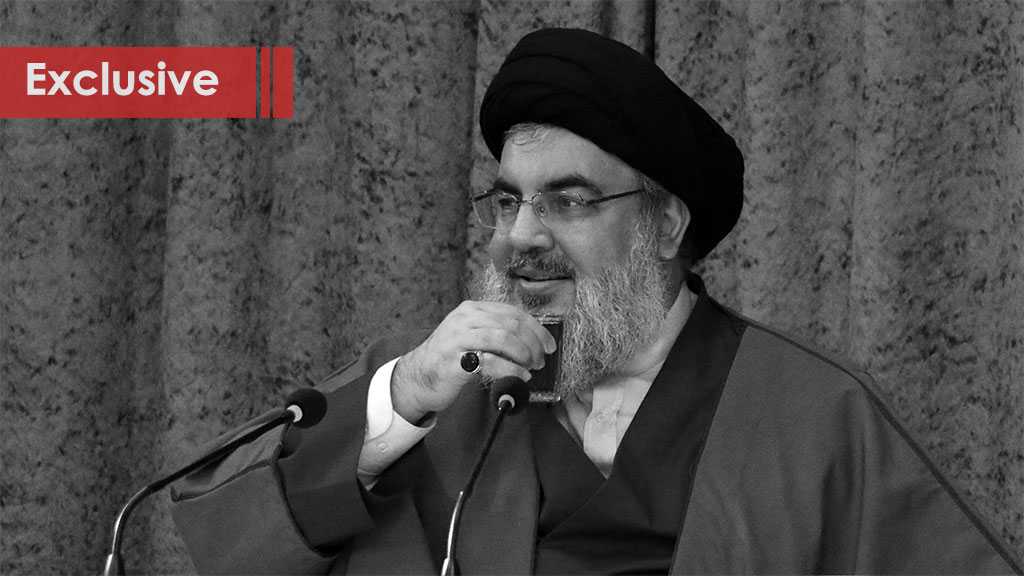
Hezbollah SG Sayyed Nasrallah’s Son, Jawad, Tells Al-Ahed Never before Heard Stories about Martyr Hadi

Hezbollah SG Sayyed Nasrallah’s Son, Jawad, Tells Al-Ahed Never before Heard Stories about Martyr Hadi

Hezbollah SG Sayyed Nasrallah’s Son, Jawad, Tells Al-Ahed Never before Heard Stories about Martyr Hadi

By Fatima Salami
Beirut – There are moments when we find ourselves unable to write.  It just so happens that when we wish to describe a certain reality, we find it difficult to put into words. So, we write, and then we delete hoping that we find the suitable phrase for the right place. Of course, these moments do not occur when we are writing political or economic commentary.
These moments occur when we are in the presence of the martyrs! We ask ourselves where do we start when all the roads lead to beauty planted with chivalry and pride. These roads tell many stories that we have long sought with passion and longing. We have long waited for any details that would reveal to us the identity of these martyrs. Decades might pass and those details would continue to live inside of us, teaching us many lessons.
Who among us does not care to know more about the personality of martyr Sayyed Hadi Hassan Nasrallah?
22 years have passed since his martyrdom during the Jabal al-Rafi confrontations. Yet his memory awakens our hope in leaders who have sacrificed their loved ones on this path and put forth the interest of this path before fatherhood. They were steadfast and praised God for this offering.
As the 22nd anniversary of Sayyed Hadi’s martyrdom approaches, his brother Sayyed Jawad talks to al-Ahed News Website for the first time since 2007. He speaks in length about a martyr who possessed leadership characteristics. He was loved, decisive and charismatic.
Sayyed Jawad spoke about a young man who had not yet passed through adolescence but behaved well beyond his age. In the midst of a conversation in which Jawad evoked memories of more than two decades, the spirit of the martyr was present. The stories about Hadi the child, the teenager and the young man overlapped. He had the mind of a decisive leader. He was a compassionate brother who was kind and caring. He was the calm obedient son who was attached to his mother until the last breath. He was also attached to his relatives, neighbors and friends. Since he was a child, he was good in building relationships with his surroundings. He was the trustworthy Mujahid who kept the secrets of the Jihadi work and was loyal to it. He was a son who was identical to his father and took a lot of his traits.
Hadi was the heart of the household
Delving into Martyr Hadi’s character and capturing its details is no easy task. Jawad recalls martyr Hadi’s intelligence from a young age. He used to move everyone with his eyes as he was quiet and calm. He was quiet in nature during playtime as well. But he used to make up plans, which were carried out by his friends. When he suggested a particular game idea, everyone moved to implement it without questions. All this was because of the leadership characteristics the martyr possessed. He was labeled a “motor brain” despite his young age.
According to Jawad, Hadi can be called the “heart of the house”. He gave the house vitality and movement. He was very attached to his mother and she to him. He had an unspeakable eagerness in his heart for his mother and vice versa. He was highly energetic. He always woke up early to help his mother with house chores.
What distinguishes Hadi was also his obedience to his parents. For example, he once thought of buying a car. Sayyed [Hassan Nasrallah] told him at the time, “I’d rather you not buy a car, even if it was from your own money. We have to feel with the people and be equal to our neighbors. We should not be different from them when it comes to our financial matters.”
It did not take Sayyed a long time to convince Hadi, who quickly obeyed his father’s wishes. He replaced the idea of a car with a motorcycle, which he used for transportation.
Hadi was very attached to his siblings, especially the youngest Muhammad Ali. Jawad recalls the beautiful noise Hadi used to make in the house. In spite of his calmness, he formed the dynamics of the household through his prevalent laughter, smile and energy. In his absence, there was stillness and calm. Jawad says that there was no energy in the house when he would go away to train especially that their father was absent most of the time because of his leadership role that preoccupied him. This left their mother with the task of raising them.
Hadi’s charisma and appeal
Hadi derived some of his charisma and appeal from His Eminence Sayyed [Nasrallah]. Jawad tells us how the neighbors distinguished Hadi from his peers. For example, when about 20 children were playing football in the neighborhood playground, the neighbors only called Hadi to drink water and rest. They asked him if he needed anything. They only called Hadi, given his beloved personality that he imposed on everyone and the eagerness that others had towards him.
He was affectionate to the family and sought to bring happiness to them.
Following his last Jihadi training session, a year before Hadi’s martyrdom, he came home bearing gifts for all the members of the family each according to what he/she liked. He did so since he was the eldest child. His mother also received a present. Martyr Hadi always made sure to make his family happy. His primary concern was to put a smile of the faces of his younger siblings.
The common hobbies
Jawad talks about the strong relationship with his brother. “One of the hobbies we shared was involved a trip to Baalbek where we competed in climbing the mountain. Since we were so attached to each other, if one of us falls behind in a place the other automatically grabs his hand and pulls him. This shows how much love we had for each other even when we were racing. Brotherhood always prevails. My relationship with Hadi was especially strong and very solid. We ate together; we played together; we went to school together; we did everything together since we were almost the same age. He was a year and a half older than me.”
Jawad recalls how pretending to be resistance fighters was their favorite game. Football was second on the list of hobbies. Jawad remembers in detail of how he played football and Hadi’s passion for this game. Hadi used to cheer for Ansar and Jawad for Nejmeh.
When competition ensued, Hadi – known for his fondness of drawing – would sketch a broken star and an arrow piercing it. The arrow was in reference to Ansar.
The conversations on the motorcycle
“On our last trip I went with him on the motorcycle to visit Grandma”, Jawad says.
“Hadi began to talk to me about the world and that true happiness is gaining Allah Almighty’s pleasure. Nothing calls for the disobedience of the Creator. He told me that the peak of his happiness is when he was at the frontlines and when he was with God. He had unnatural kindness and purity. This was the talk of a 17-year-old shortly before his martyrdom. This intellectual and spiritual connection with Allah Almighty is very precious. We rarely find this among young people his age.”
Proficiency in establishing relationships
According to Jawad, Hadi was keen on upholding family ties. He had a strong relationship with his relatives such as his paternal grandmother and his late aunt Zakiya, to whom Hadi was deeply attached. He was also keen on establishing relationships and friendships with the neighbors.
The martyr possessed a degree of kindness that is uncommon in any teenager his age. For example, he was eager to buy sweets and candy for the younger siblings of his friends. He was just 14 years old. The youngest among his friends had an unusual attachment to Hadi and his personality not because he was the son of Hezbollah’s secretary-general, but because he had a special character.
Jawad cites one of Hadi’s friends concerning an incident involving the martyr and the “young men” [resistance fighters] in 1996. Back then, they were positioned along a river when they came under “Israeli” bombardment. At the time, their sole concern was to grab Hadi and jump into the river to protect him from danger. Because of his beloved personality, people would go out of their way to protect him and he broke barriers with others the very first time he meets them.
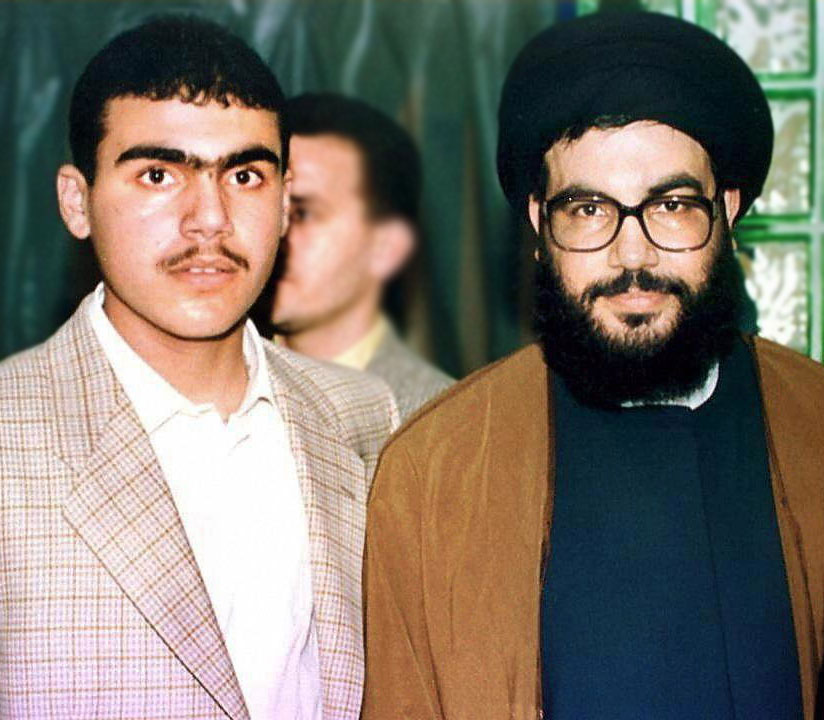
Hezbollah SG Sayyed Nasrallah’s Son, Jawad, Tells Al-Ahed Never before Heard Stories about Martyr Hadi
The humble person who loved life
Humility was a feature in Hadi’s personality. His friends have always talked about it. Jawad points out that the martyr used to go to his friends’ homes without informing their parents whose son he was. Moreover, when he was martyred, many of the families that Hadi had visited and sat with for hours were surprised because he did not reveal that he was the son of Hezbollah’s secretary general.
Hadi was humble. On the other hand, he loved life. Jawad tells us how he always took care about his appearance and clothes, contrary to what is said about martyrs. He liked taking walks with his friends. Hadi had a charming childish smile, Jawad says.
He was mindful. He thought as a leader and was extremely smart. For example, he once underwent a computer course and became a teaching assistant. Hadi also had a strong method of persuasion that made others do what he liked willingly.
Because he was so humble, he never found it difficult to carry out house repairs with the help of Jawad. He was preparing to bid bachelorhood farewell. However, his martyrdom came two months before the planned occasion.
Being cautious
Jawad recounts the degree of certainty and sensation that the martyr had in his heart. In this context, he tells us about another incident. Hadi got accustomed to going to Hanaway in Tyre once a week to visit his fiancé’s home. On one occasion, Jawad went into Hadi’s room and found him ironing his shirt and preparing his clothes to go to the southern Lebanese city. He begins joking with his brother.
Suddenly Hadi tells Jawad, “Frankly, I feel very tired. I won’t go.” And then he went to bed. That night, the enemy raided the house of his in-laws in an effort to capture him after they documented his weekly appointments. However, they did not find him.
The last meeting
Jawad tells us about the last meeting with his brother Hadi. It was an unusual meeting. This was the only time the martyr warmly bid him farewell and kissed him saying, “I am going to work.” “I followed him down the stairs”, Jawad says, “to ask him when he will return.”
“It is supposed to be four to five days. But God willing I will be martyred and will not return,” Hadi replied.
During these moments, Hadi’s face was unusually bright. He was not interested in worldly matters. He left everything and went on a journey of jihad.
The secretive and trustworthy Hadi at work
Jawad notes that Hadi embraced jihad willingly. He even sought it out, in the hope of being enlisted quickly. In 1995, he underwent an al-Moqatel [military training] course. The following year, he underwent a special forces training course. He was martyred in 1997.
Here, Jawad recounts an incident that highlights the level of secrecy Hadi practiced during his jihadi work. After Hadi’s martyrdom, Jawad accidentally found X-rays and [medical] tests. Jawad asked Hadi’s friends why his brother had gone to the hospital.
One of them told me that “once, we were working on extending internal lines to one of the military points in the Iqlim.”
“Hadi carried a roll of wire and crossed the mountain to deliver it. Because it was so heavy, Hadi got sick and had to visit the hospital on every time he was on leave.”
Hadi before martyrdom
“I was in Iran in 2013,” says Jawad. “I met a prominent religious cleric. He told me, ‘I was on the battlefront, and I didn’t know Hadi. So I got to know him and we started talking. I warned him to be careful and pay attention as he was the son of the secretary-general of Hezbollah. Hadi replied by saying, ‘do not worry. God willing, I will make my father proud’.”
Jawad conveys this particular exchange to underscore Hadi’s insightful vision and strong ability to look to the future.
Jawad also quotes one of Hadi’s comrades who spoke of his calmness minutes before he was martyred. One of his comrades asked him, “what is wrong, Hadi?”
“I look forward to things beyond this world,” he replied.
News of the martyrdom
Jawad goes back 22 years, to the date of his brother’s martyrdom. At the time, he was heading home, and an old lady asked for his name.
The lady spoke with a broken heart and in a loud voice
“What is your name?” she asked
“Jawad,” he replied.
She started beating one hand against the other said, “There is no power nor strength except through Allah.”
“Then I understood that something happened to Hadi,” Jawad says. “I continued my way home. I knocked on the door. My sister Zainab opened the door with tears in her eyes. Then I was sure something had happened. I entered, and I was surprised to see Hajj Imad Mughniyeh, Sayyed Mustafa Badreddine [Zulfiqar] and the late Sheikh Ali Khatun. My father was in his office alone. But he was calm and quiet. I kissed him and sat on the floor beside him. A minute had passed before Hajj Imad Mughniyeh called us to watch the video filmed by the ‘Israelis’ in Marjayoun. I immediately recognized Hadi and the body of martyr Ali Kawtharani. Hajj Radwan started boosting our morale.”
Jawad points out that Hajj Imad was kind and very patriarchal. He had a very strong relationship with Sayyed Nasrallah. The family was glad to see him because of the level of harmony, love and eagerness that existed between the two men.
“After his martyrdom, I saw Hadi in a dream,” Jawad adds. “He came to us at home. I was sitting next to my younger brother, Mohammad Ali. I told Hadi, ‘explain to me what happened to you with the Zionists.’ He pointed with his hand and said that there was a meter separating the martyr from the enemy. I asked him what he felt. He said, ‘nothing at all.’”
My father the mountain
In the end, Jawad talks about strength, power and determination that His Eminence possessed.
“I was a 16-year old athlete. I was unable to stand throughout the condolences service following Hadi’s martyrdom. However, my father stood tirelessly and calmly. He was eager to insure the comfort of those around him.”
There is no doubt that the above are just a few of the many characteristics of Hadi’s beautiful soul, which has left its mark that will not be erased by all these years.

Related

River to Sea Uprooted Palestinian   
The views expressed in this article are the sole responsibility of the author and do not necessarily reflect those of the Blog!

Sayyed Nasrallah’s Other Side (Part 2): This Is How He Followed Social Networking Sites & Prepared His Speeches

Sayyed Nasrallah’s Other Side (Part 2): This Is How He Followed Social Networking Sites & Prepared His Speeches

Sayyed Nasrallah’s Other Side (Part 2): This Is How He Followed Social Networking Sites & Prepared His Speeches

Fatima Salami
Beirut – When we read about the personality of Hezbollah Secretary General Sayyed Hassan Nasrallah, we find ourselves immersed in the finer details. We may read the text a second time and not get bored.
One reader commented on the first segment of this article series noting that the more we read about this extraordinary figure, the more attached we become.
Meanwhile, a politician who stands in stark contrast to Sayyed’s political views expressed in private correspondence his admiration for Sayyed’s charisma and personality, describing him an extraordinary leader. This is the opinion of an opponent.
There is no doubt that many like him think the same way, even if they do not declare it. For you cannot dive into Sayyed’s distinctive personality and not find yourself captivated by those exemplary qualities.
Behind the character of a strong and capable leader, a leader who knew how to twist the arm of the Zionist enemy, a leader who terrified the enemy into keeping up with each and every single appearance he makes, Sayyed Nasrallah hides a great deal of humanity, kindness, compassion and love for his people.
In the last part of the interview with the Al-Ahed news website, Sayyed Jawad, the son of Hezbollah’s secretary general, talks about the love His Eminence has for the people. He has infinite compassion for his supporters in his heart. He asks about their situation and matters that concern them, follows up on their issues and grieves over their pain.
Jawad also points out that Sayyed Hassan Nasrallah who is today Hezbollah’s secretary general is the same person he was before he took up this post. He has great adoration for the Grand Ayatollah Imam Sayyid Ali Khamenei and has a strong relationship with the Mujahideen.
He makes sure to read most of the reports and articles, and he follows with distinction what is published on social media. He underscores the need for civilized communication, calling on everyone to disagree with respect.
His Eminence regards money and legitimate rights as a red line that should never be abused. Jawad talks about an incident that he experienced personally in this regard.
As for Sayyed’s speeches, he has them in his head as they are on paper. Let us assume that he went somewhere to deliver a speech and forgot the papers, nothing changes at all.
Sayyed the human being
Jawad elaborates on Sayyed the man, who has not been changed by the world and has not been taken by the glamor of the podiums. He talks about Sayyed, who was only made more modest by the pride and people’s cheers.
Sayyed Hassan Nasrallah, the secretary general of Hezbollah today, is the same person he was before he assumed the post. Not only that, but with time he become more modest.
“My father takes pride in the people’s love and trust. He loves them so much. Of course, he does not love them for love’s sake only, but he is also concerned about their interests. He fears for their life in the afterlife [Akhira] more than in this world,” Jawad says.
The first trait that comes to mind when Jawad talks about his father is humanity. He elaborates on this bright side in Sayyed’s personality. In his view, the term “human being” applies to his father in every sense of the word.
This characteristic is further exemplified by the relationship between His Eminence and the most honorable people. We see him carry passion, love and understanding in his heart. He always advises that one should conform with people.
“He calls on us to restore (things). If someone makes a mistake, we have to right it and try to understand it. When two people disagree, we must look for a way to reform it, not to fuel sedition between them.”
“Sayyed Hassan has a high and elegant morality. He has many of the attributes of Amir al-Mu’minin [Commander of the Faithful] (PBUH),” says Jawad. “He has a great ability to control himself. This ability always makes him look into God’s eyes, speak his tongue and act with his hand.”
According to Jawad, “all his dwellings and movements revolve around the pleasure of Allah.
There are red lines in life as there are in politics. His Eminence regards the rights of the people as a red line, without which everything else falls by the waist side. He has endless generosity, and at the same time he does not make anyone feel they owe him gratitude. We, his children, do not know what his exchanges are with the people closest to us. It is forbidden.
The dignity of the people as well as their comfort are a top priority. He is eager to insure the comfort of those around him to an extent that no one expects. For example, he does not stay too late so as not to exhaust the young men [resistance fighters] or embarrass them, even though sitting with him is extremely dear to them. According to his convictions, anything that causes others’ exhaustion is unacceptable.
Sayyed’s concern and fear for the people is not limited to their dunya [temporal world] but rather for their afterlife.” Jawad says. “One time, I asked him, ‘If you were an intercessor, would you intercede for me?’ He replied, ‘I would not only intercede for you, but I would intercede for all the believers.’”
“If we look at these positions and sayings over the years, we see in Sayyed the trait of a human being who has compassion, mercy, self-esteem and the understanding of his people,” Jawad adds.
In Jawad’s opinion, the commandments of Ahl al-Bayt are imbedded in Sayyed’s actions. He treats people in their absence as if they were in front of him. On numerous occasions, his heart aches for the people and he is saddened by their stories. He is very eager to further their piety. He follows up on people’s attendance in mosques. His concern is people’s piety on the grounds that the world has no value if our relationship with God is not sound. This matter will cost the loss of the dunya and the Hereafter. My relationship with God being good means to preserve the rights of people and not fall into sin. This brings good in dunya and in the Hereafter. In Sayyed’s opinion, what is the benefit of doing Jihad while I deprive the people of their rights, or pray while I attack people?
A mountain of patience
“Among other qualities that Sayyed possesses is his mountain of patience. He is insightful and far-sighted, as if he can see things for years to come,” Jawad explains.
“He is a strong administrator, a meticulous person with exceptional memory and a light touch when it comes to management. He is sincere with his feelings and shows them without excuses.
He is a father figure and merciful. At the same time, his love for the people and the Mujahideen does not prevent him from making any remarks to anyone on any subject. He is firm but does insult anyone and lenient but not a pushover.
He convinces you of what he is dictating with love and satisfaction, by clarifying and explaining things to you. He possesses the art of listening. When you sit down with him, he seems to be listening to you par excellence.
In short, his flesh and blood have been affected by the infallible household [Prophet’s family],” Jawad adds.
He also points out that His Eminence seems to be closely following up on the conditions of his family despite the strategic matters he is handling. “He keeps a close eye on the family without violating the privacy and freedoms of its members. We also see this quality during work, even with things we don’t expect. He considers this organization [Hezbollah] a part of his soul and follows it very carefully.”
The humble Sayyed
Jawad discloses some details that highlight Sayyed’s humility, and the fact that he is not embarrassed by serving the people.
“I remember before the 2006 war His Eminence invited his siblings and their families for Iftar at our house. He sat in the middle and prevented anyone from pouring food. He told them, ‘throughout the holy month, people have been serving me [food]. Now it’s my turn to serve you and pour food for you myself.’”
Jawad says that those gathered at the table refused but Sayyed insisted on doing it himself. Here he points out that His Eminence often does things himself in everyday life. He helps in setting the table. Sometimes he heats his food himself. He repeatedly prepares his papers.
He is not demanding or bossy. Because of their great love for him, everyone around him waits for him to ask them to do something.
Sayyed and Imam Khamenei
Jawad points out that His Eminence has a great deal of adoration for Grand Ayatollah Imam Sayyed Ali Khamenei. He follows his recorded lessons, listens to his sermons, and sheds light on anything posted on his behalf. He was so touched when the story of the Leader marrying off one of his sons was circulated. He was affected by the asceticism and humility that accompanied that event. Sayyed always repeats the phrase: look at where we are and where the Leader is!
Sayyed and the Mujahideen
His grave responsibilities did not hinder his ability to closely follow-up on matters concerning the families of the martyrs. With regard to the Mujahideen, Sayyed has a particular sensitivity and passion towards them.
“I remember during the Joroud [battle] and the snow. His Eminence remembered them during ablution and would say, ‘God help them while they perform ablution in this cold.’ Or when he wants to eat, he remembers them and says, ‘I wonder what they are eating now,’” Jawad says.
Jawad pauses and points out that Sayyed is not a show-off. He did not say this to a group of people. Only one person knows these things.
Sayyed puts a great deal of importance on the blood of the martyrs. For him, all the pride that we enjoy comes from those who sacrificed themselves so that the nation can live in dignity.
This is how His Eminence follows social media
His Eminence reads most of the articles and reports. He follows and looks at everything on social media, according to Jawad. Of course, he does not have an account. He, however, receives detailed and lengthy reports on everything every day, including Twitter and Facebook posts. He sees the profiles and pictures of the people on social media. We see them on the screen while he sees them printed on paper. Sayyed even reads most of the letters sent to him. Sometimes, if he does not have time to read everything, his assistants choose funny things of a political nature.
“I ask him what he thinks about some tweets regarding a certain topic. He tells me, ‘I saw the tweets of several people. Aren’t those your friends, Jawad?’”
Sayyed hates foul language and obscenity on social media no matter what party issued it. His Eminence does not permit offending opponents. Of course, the “Israelis” are another topic, says Jawad. There should be manners and decency in political rivalries. He considers that the fraught atmosphere among activists is very bad. People can politely disagree and raise the level of communication, attention and thinking. When Sayyed comes across such types of offensive tweets, he describes them with one word: “wretched”. To him this is the most profound description.
The majalis e-aza are for all Muslims
Sayyed does not only keep a close eye on social media sites while advocating more civilized forms of communication, he also follows a lot of other things. For example, he makes sure that the central majlis e-aza can be attended by all Muslims. Imam al-Husayn is the son of the Prophet (PBUH). In this sense, it is our duty to convey his grievance to everyone. Moreover, when he has time, he looks into the content of the majlis.
Furthermore, His Eminence rejoices greatly with the scientific achievements of the people. He is also delighted with any humanitarian initiative.
Being careful with public rights and money
Jawad stresses that Sayyed is the same person whether he is under the spotlight or alone. To him, the criterion is the satisfaction of Allah.
In this context, he talks about His Eminence’s care for legitimate rights and money in a manner that other people may not notice. “For example, once His Eminence received a present that I liked. He told me, ‘you can take it, but you have to pay for it.’ I wondered and asked him why. He said, ‘I did not receive this present as Hassan the son of Abdul Karim Nasrallah but as the secretary general of Hezbollah. Therefore, you have to pay for it with a certain Hajj. The price of the gifts that are sold are transferred to a [bank] account to help Mujahideen get married.’ He told me confidently, ‘what makes you more special than the other young men?’”
Here, Jawad points out that Sayyed is always concerned with the worries of his people, and he fears for their rights. After 2006, he was ready to take from Hezbollah’s funds to aid people and pay for their health, education, etc.
“Conforming with people” is the permanent commandment at every situation
Sayyed always underscores the need to conform to people in many of the things that we wants to do.
“Following the July 2006 war, I was able to borrow money and buy an ordinary house, and the prices were still acceptable,” says Jawad.
“My father told me at the time, ‘you’re not allowed to. After reconstruction, you return to your home. You have to live the way people are living. You have to rent like them, even if this drives you to move from one house to another. We are not better than people. We have to console them and be equal to them.’ According to His Eminence, it is possible not to share one’s joy. However, consolation during hardship and pain alleviates the heart and spirit. As long as you are my son, you have to accept and live this life with its sweetness and bitterness. If we cannot console them, the least we can do is be equal to them. This is stated in our religion and the morals of the Holy Prophet (PBUH) and his family (PBUT). It is not our business what others do within what God allows. We are accountable to the people who give and love expecting no return. Those are the people of loyalty. The relationship with them is beyond leadership. And the least we can do is to conform with people, leave behind what we can and live in asceticism to be closer to Allah Almighty. Then he reminds me of the holy verse {Never will you attain the good [reward] until you spend [in the way of Allah] from that which you love. And whatever you spend – indeed, Allah is Knowing of it.} (Surah Ali-Imran – Verse 92).”
What is the secret behind Sayyed’s confidence in victory?
“About two years after the 2006 war, I said, ‘Father, I know you are someone who cares a lot about the speeches you give. Honesty is a red line for you, so you are careful not to shake the trust between you and the public. In the beginning of the July war, tell me how were you able to say your famous sentence ‘as I always promised you victory, I promise you victory again’? What did you base this certainty on at the beginning of the war and the whole world was against us? He told, ‘aren’t you a reader of the Quran?’ I said, ‘Yes.’ He gave me two verse: {O you who have believed, if you support Allah, He will support you and plant firmly your feet.} (Surah Muhammad – Verse 7) and {Indeed, Allah defends those who have believed. Indeed, Allah does not like everyone treacherous and ungrateful.} (Surah Al-Hajj – Verse 38). ‘This is Allah’s promise,’ he said.”
“This is certainty,” says Jawad. “The whole world is against us and is conspiring against us. A cruel war is launched against us, yet someone comes with all this confidence and certainty to say this famous sentence. In my opinion, this is the foundation of the great popular trust that Sayyed enjoys today. This has turned him into a symbol of truth and everyone began to see him as a person who is certain.”
No favoritism in employment
For Sayyed, there is no place for favoritism when it comes to jobs.
Jawad says, “once, I waited for three months to get a direct job appointment with him. Sayyed had me disapproved. Although I tried more than once to bring the date forward, but I did not succeed. He even put me at the end of the day. Then, I felt something. I contacted his assistant and told him, ‘I will cancel the appointment but on one condition do not schedule any appointment instead of mine. Let my father rest.’ He said, ‘I accept.’ I said, ‘Cancel my appointment.’ When I met my father later, he told me, ‘you know, my son, when X told me that Jawad canceled the appointment on the condition that you rested, I was very happy because I was very tired. Then I said thank God and I was grateful to you from my heart.’”
The speech is in the mind as it is on paper
There is no doubt that His Eminence’s distinguished speeches have always been admired because of the methodology, strength and eloquence. Every speech is unlike the previous one. Every time you listen to him, it feels like it is the first time. Many wonder how His Eminence prepares his speeches.
In this regard, Jawad tells us that when an idea comes to His Eminence’s mind in any particular subject, he thinks about it before putting it down on paper. “You see him put the points he will include in the speech in his mind. He has mental and intellectual abilities and other unnatural gifts. Let us assume, for example, that he went to deliver a speech and forgot the papers somewhere, nothing changes at all. What is written on the papers is imprinted in his mind – the same sequence and order.
He has a strong memory. This is sometimes evident, for example, when we talk to him about something that might not be a needle in the haystack. 15 days later, on the allotted time he replies to us even though the date is not written down.
How does Sayyed approach politics?
Sayyed has a realistic view on how we should approach politics. In his view there must be flexibility. Nobody takes everything in politics. We have to coexist with people. Politics, in the end, is give and take. Nothing can just be because you say so.
Sometimes His eminence regrets when the public opinion does not wait in a particular case to see what is behind Hezbollah’s decision regarding a certain matter. According to his convictions, it is very wrong to make judgments arbitrarily, especially regarding sensitive subjects.
Jawad concludes his heartfelt talk about his father by pointing out that despite all this compassion and affluent passion, Sayyed is a wise manager, a brilliant and intelligent person, resolute, decisive and deadly in war.
Finally, writing about His Eminence’s other side carries us to another world where there is a lot of beauty. There is no doubt
that Sayyed Nasrallah’s personal and human traits constitute some of the many in an exceptional leader that brought pride to the nation. And even so, everything written and said about him remains too little.

Related


River to Sea Uprooted Palestinian   
The views expressed in this article are the sole responsibility of the author and do not necessarily reflect those of the Blog!