Showing posts with label Economic siege. Show all posts

Sunday, 31 October 2021

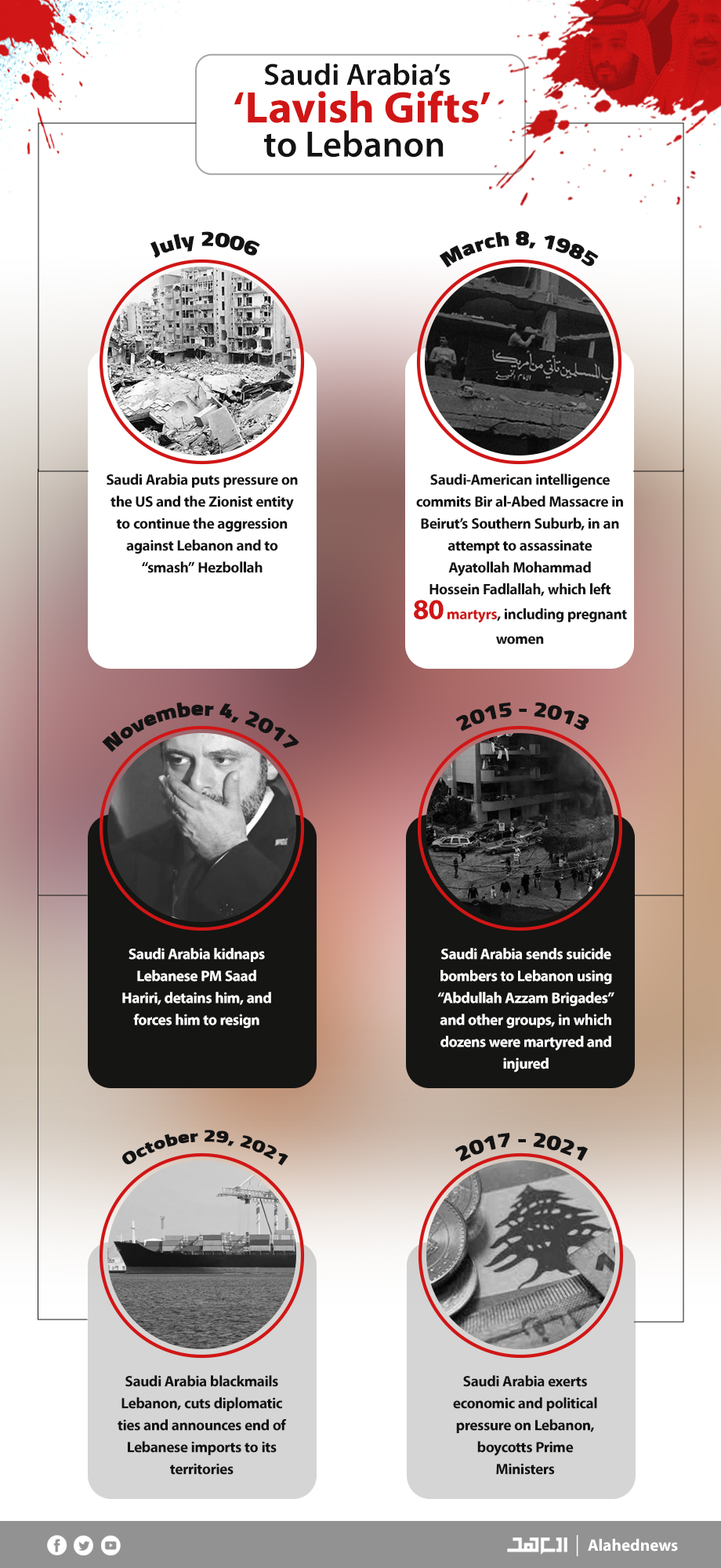
Saudi Arabia’s ’Lavish Gifts’ to Lebanon

 Oct 30, 2021

By Al-Ahed News


Saudi Arabia’s ’Lavish Gifts’ to Lebanon


River to Sea Uprooted Palestinian   
The views expressed in this article are the sole responsibility of the author and do not necessarily reflect those of the Blog!

Saturday, 18 September 2021

Touch Move; America’s Vicious Circle in Lebanon

 Al Mayadeen English

September 18, 2021 

Source: Al Mayadeen

By Lea Akil 

In light of Lebanon’s current energy and unprecedented economic crises, Hezbollah’s decision to import Iranian oil to aid Lebanon led the US into a state of confusion, thus limiting its options.


Visual search query image
Foreign Policy: The United States has no active plan to rescue the country

Lebanon’s economic crisis is a book with many authors. This is a tale of a country that plunged into poverty, dragging down a large percentage of its population. 

The Lebanese are desperate, as the economic situation in the country worsens. So, the hopes of some Lebanese were pinned on the United States, which issued several statements and expressed some reactions, but made no solid actions. In other words, the United States never intended to provide an action plan to help the country out of its crisis.

It is worth mentioning that one factor of the country’s economic crisis is the siege that the US has put the country under. 

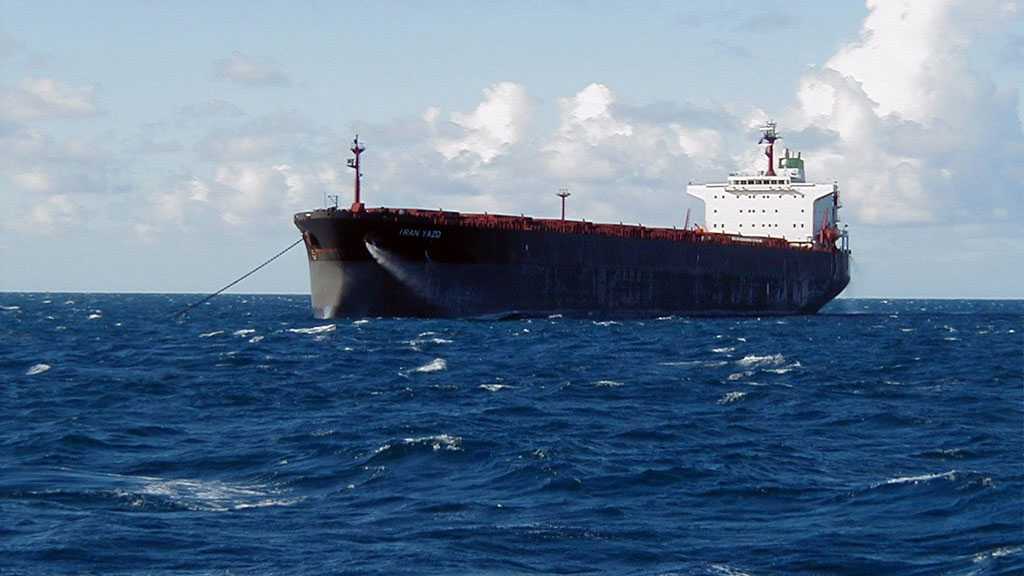
The opening; oil ships to Lebanon 

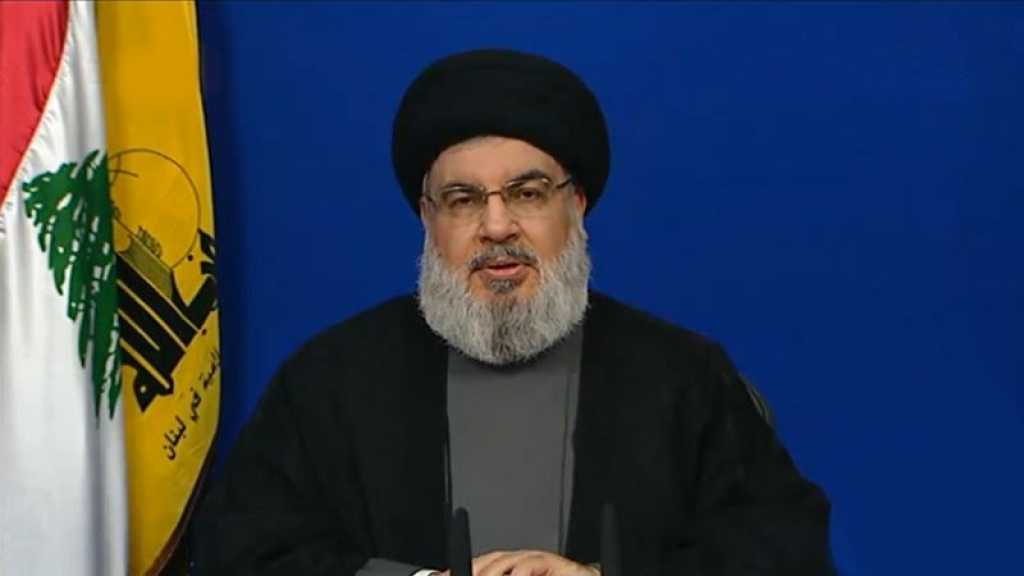
Hezbollah Secretary-General Sayyed Hassan Nasrallah, in a speech on August 20, stated that the “Caesar Act on Syria was not only meant to besiege Syria alone but also Lebanon.” The country is isolated from all directions, Syria from the north and east with the longest borderline, and Palestine since its occupation in 1948.

During the same speech, Sayyed Nasrallah announced, “We agreed with the Iranians to start loading the third ship of oil derivatives,” adding that Lebanon will need more than 3 ships to face the forthcoming stage of the crisis.

He emphasized that there are no aims for trade or profit, “our aim is to alleviate the suffering of the people.” 

The first ship reached Syria’s Baniyas Port on September 12 and its cargo was unloaded. Passing through Syria, the Syrian tankers, each carrying 50,000 liters of Iranian diesel, have made it to Lebanese soil a few days later

Back to the US agenda

International politics and its game rules dictate that there is no clear agenda on the table, especially when it comes to western agendas in West Asia. However, history can sometimes speak for itself.  

During a hearing of the Senate Foreign Relations Committee, on Sep 24, 2020, former US Under Secretary of State, David Hale, revealed that the United States has spent $10 billion in Lebanon, on security forces and the army on one hand, and on the civil society represented mostly by non-governmental organizations on the other, throughout several years.

He continued to say that Washington’s support for the Lebanese army comes within the US strategy to confront Hezbollah’s “terrorism”, explaining that the Lebanese army is “capable of carrying out its tasks.”

Back in 2010, July 8, the former US Assistant Secretary of State Jeffrey Feltman revealed that after Lebanon’s 2006 war, the US invested $500 million to demonize Hezbollah’s image using the media and to drive people away from the party. 

Feltman’s testimony, one of many, reveals that the US wanted to assist and support Lebanon after the war by “reducing” Hezbollah’s appeal to Lebanon’s youth. To this end, the US rushed to invest millions of dollars through USAID and the Middle East Partnership Initiative. 

“Hizballah’s persistence as a well-armed terrorist group within Lebanon, as well as its robust relationships with Iran and Syria, and the transfer of increasingly sophisticated missiles and rockets to Hizballah, threaten the interests of the United States, Lebanon, and our partners in the region, especially Israel,” Feltman stated. 

US policy in stalemate 

There are two moves to play here, either to impose sanctions on Hezbollah or to intervene militarily directly or by proxy. Sanctions were already pushed to their limits, while war looks costly under the current balance of power, with an intrinsic possibility of insurmountable losses.

Following its policy of maximum pressure, the United States imposed sanctions on Iran, Syria, and Hezbollah. The three parties were the main players in the current oil transportation route, but sanctions were already there years back. Starting from when the ship set sail from Iran, reaching Syria’s Baniyas port, and then ending on Lebanese territories, America’s siege was considered broken and the US reached stalemate. 

Sayyed Nasrallah clearly and purposely emphasized that the oil ships will indeed reach Lebanese territories. In other words, he was stressing that any attack on the ships would be considered a violation of Lebanese national sovereignty, which will rationally lead to retaliation. Since the other party does understand this simple algorithm, the question is: Is the US ready for escalation?

For a closer look, take a few steps back to August 6. On that day, in response to Israeli raids on Lebanese territories, the Resistance responded.

Hezbollah fired rockets in response to the raids on open areas in Al-Jarmaq and Al-Shawakir, noting that the bombing was carried out with about twenty 122mm rockets.

Checkmate; a win-win for Hezbollah 

In light of talks that Hezbollah would import Iranian oil to Lebanon, a delegation of four US senators announced that the US is looking to help Lebanon overcome its crisis, but warned against importing Iranian oil.

Senator Richard Blumenthal added that there should be no reason for Lebanon to depend on Iran because there are plenty of “other sources” that could be relied on.

Following Sayyed Nasrallah’s speech, in which he announced that Iran would be sending oil ships to Lebanon, the US ambassador to Lebanon, Dorothy Shea, revealed that the Biden administration is ready to facilitate Jordanian surplus electricity and the export of Egyptian natural gas to Lebanon via Syria. 

It is worth mentioning that the announcement about exporting Egyptian gas was made over a month ago, but the facilitation of the process was hastened right after Sayyed Nasrallah’s speech that without a doubt created a rush of speculations and catalyzed the reactions in the political arena.

This announcement by the Biden administration seems to unintentionally benefit Hezbollah’s plans to aid Lebanon. Needless to mention that the gas they said they will help to export will pass through Syria, a country that is already under a US siege imposed by the Caesar act. It looks like the Americans will have to seek Syria’s help in this regard. 

Zugzwang; the compulsion to move 

The US created a corridor that defies the point behind the siege, which it has imposed on Lebanon, thus forcing it to waiver sanctions on Damascus. As such, the US is forced to either rehabilitate the infrastructure in war-torn Syria or to give it funds to do so in order to use the electric transmission line and gas pipelines, which both need repairs. 

Moreover, Hezbollah welcomed the plan that offers aid to Lebanon, whether from Iran, Jordan, or Egypt, as long as it serves the country. Stability after all appears to serve the interests of the Lebanese party more than its foes’. 

The US policy for Lebanon could be easily marketed as a fierce competition with Iran, but the US plan could nevertheless assist Lebanon out of its crisis, regardless of its real intentions, thus, a win-win situation for Hezbollah that is after stability in its home country. The US, on the other hand, seems to only judge Lebanon primarily through the lens of Israeli interests. 

In sum, just as the Foreign Policy wrote, “The United States has no active plan to rescue the country—nor is there any indication that one is in the works,” adding that, “the United States has only offered ad hoc support, doing the minimum to keep the country from utter collapse.”


River to Sea Uprooted Palestinian   
The views expressed in this article are the sole responsibility of the author and do not necessarily reflect those of the Blog!

Wednesday, 30 June 2021

لبنان: الكارثة المتفاقمة والحلول الغائبة!؟


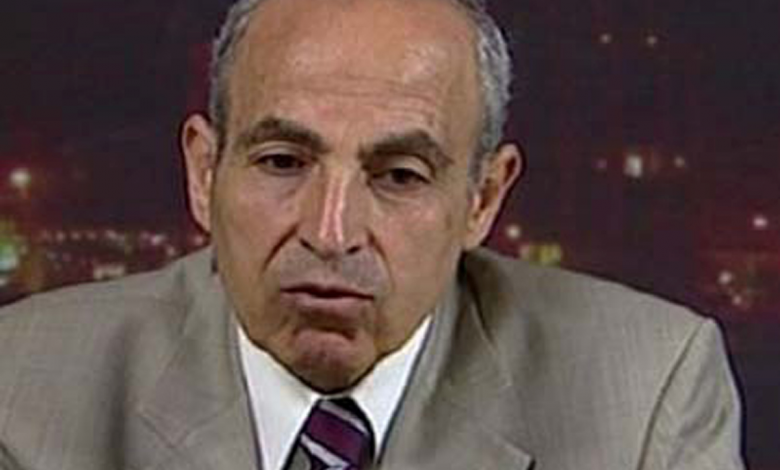
العميد د. امين محمد حطيط

في العام 1967 أحجم لبنان عن دخول الحرب التي شنّتها «إسرائيل» على دول الطوق يومها بذريعة الضعف وعدم القدرة الدفاعية التي تحمي أرضه، ولما انتهت الحرب بعد أيامها الستة المعدودة ارتدّت «إسرائيل» على لبنان فألغت اتفاقية الهدنة معه من جانب واحد وشرعت في قضم أرض لبنانيّة في مزارع شبعا، القضم الذي استمرّ حتى العام 1973، حيث سيطرت «إسرائيل» على كامل المزارع ولم يحرك لبنان ساكناً خشية أن يُضمّ إلى القرار 242 ويضطر للتفاوض على الأرض ويسقط الحدود الثابتة باتفاقية «بوليه نيوكمب» 1923 والمؤكد عليها باتفاقية الهدنة 1949. ومن جهة أخرى نذكر أيضاً بأنّ لبنان الذي لم يشارك في حرب 1967 والتزم سياسة الحياد فيها من أجل حماية اقتصاده على أبواب فصل الصيف يومها وجد اقتصاده بعد الحرب ينهار ويظهر بأنه ضحية لتلك الحرب التي وضعت حداً للطفرة والنمو الاقتصادي اللبناني وتسبّبت بزعزعة أركانه أو لنقل هزة كبرى غيّرت مسارات النمو ووضعت حداً للبحبوحة. 

بدأت بذكر هذه الواقعة اليوم ليس من أجل السرد التاريخيّ طبعاً، ولكن من أجل الإشارة إلى حقيقة ثابتة في تاريخ لبنان مفادها القول إنّ تجنّب المواجهة أو الاتجاه إلى الحياد أو كما يُقال ابتداعاً وخرافة لبنانية «النأي بالنفس»، أنّ كلّ ذلك لا يضمن دائماً الحقوق ولا يؤدّي إلى حمايتها ولا يمكن من استرجاعها إنْ اغتصبت، خاصة إذا كان العدو الذي يهدّد تلك الحقوق من نسخة وطبيعة العدو «الإسرائيلي» وكان المُعتدى عليه دولة كلبنان واهنة هشة في نظامها وسلطتها وماليتها. اليوم تكاد الصورة ذاتها تستعاد، إذ إنّ لبنان الرسمي وفي مواجهة الحرب الكونية التي شنّت على سورية وعلى محور المقاومة زعم انه التزم سياسة «النأي بالنفس»! وهي أغرب بدعة يمكن أن يتسامع بها في العلاقات الدولية، خاصة اذا كانت الدولة متشابكة مع محيطها اللصيق في الجغرافية والتاريخ والديمغرافية والاقتصاد، ولو لم تبادر المقاومة لامتشاق السلاح والدفاع عن لبنان على الأرض السورية ابتداء ثم على الأرض اللبنانية هي والجيش اللبناني بعد وصول العماد ميشال عون إلى رئاسة الجمهورية، لكان الإرهابيون فعلوا في لبنان ما سبق لهم وارتكبوه من جرائم القتل والتشريد والتخريب والتدمير التي ارتكبوها في سورية والعراق. 

لقد استطاعت المقاومة بقرارها الأوّلي الذي لم يتوقف عند «سياسة النأي بالنفس» الغبية، أن تحمي لبنان من الإرهاب، لكن الحرب الكونيّة التي قادتها أميركا ومعها «إسرائيل» ضدّ سورية لم تكن عسكرية فقط، بل تعدّدت صنوفها وسقوفها وأشكالها وشملت في ما شملت الحرب الاقتصادية والإرهاب الاقتصادي، وهنا بدل أن يساهم لبنان في تخفيف آثار العدوان على سورية ويدافع عن نفسه عبرها خاصة بعد أن وضع قانون قيصر الأميركي موضع التنفيذ وهو القانون الذي ادّعت أميركا كذباً انه لا يمسّ لبنان، فقد كان العكس تماماً حيث ساهم الممسكون بالقرار الاقتصادي والمالي في لبنان في الحرب على سورية بشكل إجرامي وحرموا السوريين من أموالهم المودعة في لبنان كما حرموا المودعين اللبنانيين أيضاً من مالهم وطبّقوا «قانون قيصر» بشكل أسوأ مما كان يطلب واضعوه الأميركيون، وظنّ هؤلاء جهلاً او ارتهاناً بأنّ في ذلك كسباً للرضا الأميركي وصيانة للاقتصاد اللبناني، وأغفل هؤلاء أيضاً ما حاكته أميركا للبنان من خطة عدوان هي خطة بومبيو التي تتضمّن الانهيار الاقتصادي والمالي. 

وهكذا تأكد على أرض الواقع بأنّ الحرب الاقتصادية على سورية شملت لبنان وكشفت عوراته الاقتصادية والمالية دفعة واحدة وأظهرت على الطبيعة الكارثة الاقتصادية الحقيقية التي يعيشها لبنان بسبب نهب الأموال العامة من قبل المسؤولين وبسبب الفساد المستشري في الإدارة العامة وعلى كلّ الصعد، وبسبب سياسة الامتيازات والاحتكارات والوكالات الحصرية، وبسب السرقات المبرمجة بما أُسمي الهندسات المالية التي وضعها حاكم مصرف لبنان ما أدّى إلى إثراء المصارف وإغنائها من مال المودعين من لبنانيين وغير لبنانيين ومنهم سوريين قيل إن رصيد ودائعهم في لبنان تخطى الـ 25 مليار دولار. هكذا وبلمح البصر انكشف الاقتصاد اللبناني وظهر وهنه وخواؤه وظهرت الطبقة السياسية والاقتصادية والمالية على حقيقتها بأنها زمر من اللصوص منهم الكثير من العملاء للخارج، والفاسدون المفسدون الذين قادوا لبنان إلى الانهيار والجوع والبطالة والويلات. 

لم تكن الحرب الاقتصادية على سورية وخطة بومبيو الإجراميّة هي السبب الوحيد للانهيار الاقتصادي اللبناني، بل كانت تلك الحرب أحد الأسباب التي فاقمت الأزمة والسبب الرئيسي الذي كشف عن الحقيقة. وشكلت رداً مباشراً وعملياً على أولئك الذين فاخروا بسياسة النأي بالنفس وقاطعوا سورية وامتنعوا حتى عن الحديث معها لا بل إنّ مسؤولين كباراً يعلم القاصي والداني أنّ الرعاية السورية هي التي بنت لهم مواقعهم وأنتجت لهم أمجاداً يتغنون بها الآن، قاطعوا سورية وعملوا مع أميركا ضدها بشكل بشع. 

إنّ مأساة لبنان باتت حقيقية كارثية قائمة، والكارثة الأفظع هي عدم الاعتراف بالمسؤولية عنها والإصرار على التمسك بالأشخاص والأساليب ذاتها التي أدت إلى الكارثة، متناسين الحكمة القائلة بانّ «المقدمات ذاتها تؤدي إلى النتائج ذاتها» أو أن تطابق المقدّمات يحكم بتطابق النتائج، وبالتالي فإنّ تماثل الأشخاص والأدوات والأساليب يؤدّي إلى نتائج متماثلة. وفي حالنا يعني أنّ لبنان سيكون أمام مأساة تتفاقم وليس أمام إشكالية يتبعها حلّ. 

والغريب في الأمر أنّ من يتفحّص مسارات وآلية البحث عن حلّ لمأساة لبنان يصاب بالذهول، حيث إنه يجد أولاً أن المتسبّبين بالكارثة هم أنفسهم يستأثرون بالبحث عن حل بعد أن أوكل إليهم أمر الإخراج منها، وأنّ أدوات إنتاج الكارثة هي نفسها الأدوات التي يتمّ التمسك بها والأفظع من ذلك هي الدعوة أو الإصرار على سياسة العزلة والنأي بالنفس أو ما ابتدع بتسميته «الحياد الناشط» الذي ليس له مكان في القانون إلا في أوهام وخيال مَن يطلقه. 

أما الحلّ الذي نراه فإنه يجب أن يُرسى على قوائم ثلاث تتمثل بإصلاح سياسي واقتصادي ومالي. ففي السياسة لا بدّ من تغيّر أو إصلاح جذري يضع حداً للطبقة السياسية الفاسدة التي ترفع شعار حقوق الطائفة وتنهب أموال الطائفة والوطن والمجيء بمن يعمل للوطن والدولة والشعب ولا يكون مطواعاً للخارج. وفي الاقتصاد يجب أن يقوم الإصلاح على شقين أو فرعين فرع في الماهية وعبره نتحوّل إلى الاقتصاد الإنتاجي الذي قضت عليه سياسات ما بعد 1992، وفرع استراتيجي يقوم على الاندماج الاقتصادي التكاملي مع المحيط وبشكل خاص الدول العربية الثلاث التي توجّه اليها الرئيس ميشال عون بمبادرته طارحاً السوق الاقتصادية المشرقية، (بدأت مصر مع الأردن والعراق بهذا التعاون الفاعل وندعو إلى انضمام لبنان وسورية لهما) كما والانفتاح على الشرق بشكل عام وعلى الصين وإيران وروسيا بشكل خاص مع وضع حدّ لسياسة الاحتكارات والتبعية للغرب. وأخيراً الإصلاح النقديّ الذي يجب أن تقوم به لجنة من الخبراء يضع حداً للدولرة ويعيد إلى القطاع المصرفي الثقة ويحرر أموال المودعين أو على الأقل يضع جدولاً زمنياً لإعادتها حتى ولو طال الوقت بضع سنين، فالمهمّ ألا تضيع. 

هذه برأينا الخطوط الكبرى للحلّ، لكن للأسف لا نرى مَن يسعى اليه بشكل يدعو إلى طمأنينة ما بل نرى استشراء في النهب والسيطرة واستباحة الدولة الأمر الذي يطرح السؤال: متى يتحرّر اللبناني من زعيمه الجلاد، ومن مرجعيته الخارجية الظالمة المستبدة ويعمل باستقلالية القرار وليس بالحياد التافه، يعمل بإرادة وقرار مستقلّ من أجل نفسه ووطنه؟ وهل ستبقى الحلول غائبة حتى تلك اللحظة؟ 


River to Sea Uprooted Palestinian   
The views expressed in this article are the sole responsibility of the author and do not necessarily reflect those of the Blog!

Wednesday, 6 January 2021

السبيل لإحباط أهداف الحرب الاقتصادية واستكمال معركة التحرّر الشامل من الاحتلال والهيمنة


 حسن حردان

لا تثقوا بالحكام الأميركيين، سواء كانوا من الجمهوريين أو من الديمقراطيين. فالضمانة لإحقاق الحقوق واستعادة المنقوص منها، وإحباط المشاريع والخطط الاستعَمارية للولايات المتحدة، وردع عدوانيتها وتمكين العرب من تحرير فلسطين، إنما هي مواصلة حلف دول وقوى المقاومة، طريق المقاومة المسلحة، والعمل في ذات الوقت على تحقيق التنمية الاقتصادية والعدالة الاجتماعية، بما يحقق الاكتفاء الذاتي من احتياجات الشعب وتوزيع الموارد بعدالة.

لقد بات واضحاً انّ حلف المقاومة نجح في تحقيق جملة من الأمور الهامة من خلال تصدّيه ومقاومته للمشاريع والمخططات الاستعمارية التي استهدفت إعادة رسم خريطة المنطقة وإخضاعها بالكامل للسيطرة الأميركية وأدواتها.. وتجلى نجاح حلف المقاومة بالأمور التالية:

الأمر الأول، إفشال الحروب العسكرية المباشرة، الأميركية الصهيونية، وإلحاق الهزيمة العسكرية والمعنوية بقوات الاحتلال الأميركي الغربي والصهيوني، في العراق، ولبنان، وغزة.

الأمر الثاني، إحباط أهداف الحروب الإرهابية بالوكالة التي قامت بها أميركا في سورية والعراق واليمن، بعد فشل حروبها العسكرية المباشرة..

الأمر الثالث، إحباط مخططات الفتنة الطائفية والمذهبية التي استهدفت دول وقوى المقاومة في سياق ما سُمّي الحرب الناعمة التي استهدفت شيطنة المقاومة والدول الداعمة لها، ومحاصرتها وإضعاف شعبيتها وتقويض عوامل صمودها وصولاً إلى محاولة فرض الاستسلام عليها ونزع أسلحة قوتها إلخ…

اما اليوم فقد بات الحفاظ على هذه الإنجازات وتعزيزها، لاستكمال معركة التحرر الشامل من الاحتلال والهيمنة الاستعمارية بكلّ أشكالها، العسكرية والأمنية والسياسية والاقتصادية والثقافية، يتطلب أيضاً إحباط أهداف الحرب الاقتصادية المميتة ببطء لجمهور دول وقوى المقاومة، فهذه الحرب تقتل الناس بالحصار والتجويع، من دون أن تتكبّد، الحكومات الأميركية والغربية والصهيونية، أي خسائر مادية أو بشرية..

على أنّ تحقيق النجاح في إحباط أهداف الحرب الاقتصادية، يستدعي بالضرورة، الى جانب خوض المقاومة المسلحة ضدّ قوات الاحتلال الأجنبي، اعتماد سياسات اقتصادية واجتماعية ترتكز الى بناء الاقتصاد الذي يحقق التنمية والعدالة الاجتماعية في توزيع الموارد…

انّ سلوك هذا النهج من قبل دول وقوى حلف المقاومة هو السبيل إلى تحقيق ما يلي:

أولاً، إسقاط أهداف حرب الحصار الاقتصادية، والعقوبات الأميركية، وإجبار إدارة العدوان في واشنطن على التسليم بحقّ شعوب ودول المنطقة في تقرير مصيرها واسترداد حقوقها، واحترام سيادتها واستقلالها بعيداً عن أيّ تدخلات أجنبية…

ثانيا، منع إدارة الرئيس الأميركي جو بايدن، المقبلة، من الاستمرار في الحرب الناعمة التي دشنتها الادارة الديمقراطية في عهد الرئيس باراك أوباما، واستمرت فيها إدارة الرئيس الحالي دونالد ترامب، وبالتالي إجبارها على سلوك طريق:

1

ـ العودة إلى الالتزام بالاتفاق النووي نصاً وروحاً من دون أيّ تذاك لمحاولة إدخال تعديلات عليه لن تلقى اي صدى أو اهتمام لدى القيادة الإيرانية، وبالتالي إلغاء كل القرارات والإجراءات الاقتصادية التي اتخذتها إدارة الرئيس دونالد ترامب اثر انسحابها من الاتفاق النووي وتعويض إيران عن الأضرار التي أصابتها نتيجة لذلك.

2

ـ سحب القوات الأميركية المحتلة من سورية والعراق والكفّ عن مواصلة التدخل في شؤونهما الداخلية ودعم وتغذية الجماعات الإرهابية من داعش والنصرة وغيرهما من التنظيمات التي صنعتها الاستخبارات الأميركية ودفعت الأنظمة التابعة لواشنطن إلى دعمها بالمال والسلاح لتنفيذ حروبها الإرهابية التي فشلت في تحقيق أهدافها في إخضاع سورية والعراق لنظام الهيمنة الاستعمارية الأميركي..

انّ اعتماد هذه الاستراتيجية المتكاملة، التي بدأت بها كل من سورية وإيران، يجب أن يقترن كذلك بشن حرب بلا هوادة ضد الفاسدين، والمستغلين من التجار.. فعبر تنفيذ هذه الاستراتيجية يتمّ تحقيق هدفين مهمين:

الهدف الأول، تعزيز التفاف الناس حول خيار الصمود والمقاومة في مواجهة قوات الاحتلال الأجنبي وأدواتها الإرهابية والرجعية، وتحصين الجبهة الداخلية…

الهدف الثاني، سدّ المنافذ أمام قوى الاستعمار، التي تحاول الاستفادة من الثغرات الداخلية، وإنهاك الناس بالحرب الاقتصادية لإعادة فرض مخططاتها، التي فشلت في تحقيقها بواسطة قوتها العسكرية وأدواتها الداخلية والإرهابية.

إنّ إنجاز هذين الهدفين، الى جانب مواصلة استنزاف قوات الاحتلال بالمقاومة المسلحة، هو الذي يؤدي إلى إجبار قوى الاستعمار على التراجع والانكفاء والتسليم بالهزيمة وسحب قواتها المحتلة بلا قيد أو شرط على غرار ما حصل في لبنان عام 2000، وفي غزة عام 2005، وفي العراق عام 2011 .. وبالتالي اختصار عمر المعاناة وتحقيق التحرر الشامل والناجز من الهيمنة الاستعمارية بكلّ أشكالها..


River to Sea Uprooted Palestinian   
The views expressed in this article are the sole responsibility of the author and do not necessarily reflect those of the Blog!

Wednesday, 8 July 2020

Sayyed Nasrallah Launches Battle to Confront Economic Crisis, To US: Your Policy Won’t Weaken Hezbollah


Sayyed Nasrallah Launches Battle to Confront Economic Crisis, To US: Your Policy Won’t Weaken Hezbollah
Click the photo to watch the Video

Beirut- Hezbollah Secretary General His Eminence Sayyed Hassan Nasrallah delivered on Tuesday a televised speech on the latest developments, particularly the Lebanese internal situation.
At the beginning of his speech, Sayyed Nasrallah recalled the anniversary of the Divine victory scored July war “the resistance’s victories and the defeat of the American scheme in the region from the Lebanese Gate. He further announced that he is to tackle this victory as well as the triumph over the takfiri terrorism in the coming speeches.
Meanwhile, His Eminence remembered the ‘late dear and noble Ayatollah Sayyed Mohammad Hussein Fadlullah, who stood firm in support of the resistance. We feel him living with us despite a decade on his departure.”
On the internal Lebanese situation, Sayyed Nasrallah viewed that “What the Lebanese are suffering on the economic level requires the cooperation, solidarity and sincerity of all sides. The current situation at the economic, financial and social levels requires everyone’s efforts and intelligence.”
“He who deals with the economic crisis must think about all Lebanon and not a certain village or district because the repercussions of the crisis are affecting everyone,” he said, pointing out that “The starting point of the solution is to deal with this crisis in humanitarian, patriotic, moral and religious manner.”
Calling for following “a national approach” to solve the crisis, the Resistance Leader underscored that “One should think of all those living on Lebanese soil, including refugees.”
In parallel, he clarified that “Moving towards the east does not mean cutting ties with the West and we are open to any country that is willing to help Lebanon by setting deposits and providing loans. We are open to get help from any country in the world except from the “Israeli” entity.”
“Unfortunately, some people have begun to claim that we are seeking to make Lebanon as part of certain axes,” His Eminence added, saying “We are not seeking to cut off the ‘Western oxygen’ from anyone in Lebanon. Let them breathe it.”  
In addition, Sayyed Nasrallah declared that “Hezbollah will put all its considerations aside to make Lebanon pass this difficult stage.”
“I heard some people saying, ‘They want to turn Lebanon into the Iranian model.’ We did not say that. We asked the Iranians to help us, otherwise they need dollar,” he added.
Assuring everyone that “No one wants to implement the Iranian model nor change the face of Lebanon” Sayyed Nasrallah underscored that “We must be open to any country in the world willing to help Lebanon, We must knock its door and search for opportunities.”
“Hezbollah won’t be an obstacle if America wants to help Lebanon,” he said, pointing out that “We must set the way to prevent the state’s collapse and hunger as a goal.”
Regarding claims that Hezbollah seeks to turn Lebanon into an Iranian model, His Eminence confirmed that “Iran is making sacrifices when it agrees to sell oil products to Lebanon in Lebanese Pound. Iran’s economic example is a good example because it has dealt with the siege and sanctions and has reached self-sufficiency.”
Praising Iran’s resistance to US sanctions over the decades and compared Iran to Lebanon and said: “Be assured that Lebanon does not have the elements of the Iranian model; a model that has made Iran stand up to US sanctions.”
According to His Eminence, “It is not permissible for the public performance to be covered by negative wait for the results of negotiations with the International Monetary Fund or the regional developments without searching for other options.”
“What Lebanon is experiencing today is a threat of hunger and collapse,” Sayyed Nasrallah cautioned, noting that “Lebanon is able to turn the threat into an opportunity and to emerge from the accumulation of wrong policies.”
He also explained that “If we said that China should come invest in Lebanon, this does not mean turning the country into a communist system,” noting that “The effectiveness of openness to China was demonstrated through the American madness and the campaign against this choice.”
In addition, His Eminence stated that “The Americans have launched an aggressive campaign against the Chinese option to intimidate the Lebanese and prevent them from moving towards China.
Regarding openness to Iraq, he viewed that “it was a good thing. Iraq is an economically capable country, and there is religious and medical tourism between the two countries.” However, Sayyed Nasrallah mentioned that “There are people who started to doubt that Iraq will be open to Lebanon due to the American pressure.”
“It is required to send a delegation to Iraq as Baghdad did, and not to surrender to the talk about American pressure on the Iraqi government,” Hezbollah Secretary General said.
Sayyed Nasrallah added that “The central bank is obliged to pay billions of dollars to cover Lebanon’s need for oil derivatives, so if we ask the Iranian brothers to sell us oil derivatives in Lebanese pounds, how much this will save the central bank?”
“What we are going through today is the most dangerous threat that can face a people and a state, but we are capable as Lebanese state and people to turn the threat into a chance,” His Eminence predicted, pointing out that “We have an opportunity to carry out very important steps towards economic stability.”
On the Iranian readiness to sell Lebanon oil derivatives in the Lebanese pound, he declared “I do not want to precede the brothers in Iran, but I guarantee you this. This is a blessed matter.”
“This methodology gives hope to the Lebanese and sends a strong message to the American that whoever wants to besiege Lebanon and suffocate it, Lebanon has options, paths, and other gates, and you will not be able to starve and topple us,” His Eminence predicted.
According to His Eminence, “During decades of economic policies in the country, Lebanon was being prepared for the perception of peace in the region, and Lebanon was established as a country of services. As a result of this policy, two sectors, the agricultural and industrial sectors, were struck.”
Sayyed Nasrallah added that “We are a consuming country and today there is a chance to become a productive country and the State has a responsibility to revive the agricultural and industrial sectors.”
“Turning Lebanon into a productive country is a responsibility of the state and the people,” he stressed, urging the Lebanese to fight to revive the industrial and agricultural sectors as a prerequisite for survival in dignity.
Calling Lebanese community to wage ‘agricultural and industrial jihad and resistance.” Sayyed Nasrallah announced: “We in Hezbollah took a decision to confront collapse and hunger, and all Hezbollah, with all its capabilities, friendships and alliances, will be at the heart of this confrontation.”
To the people of the resistance, he sent the following message: “Over the past decades, we have raised on the slogan ‘We are to be present where we should be’ and we have achieved all our victories by this slogan. Today we are in the battle of industry and agriculture. This is our new battlefield. Let the date of 7-7-2020 be to declare jihad, resistance and renaissance at the agricultural and industrial levels.”
Warning the US that its state Department is playing an exposed role in Lebanon, Sayyed Nasrallah addressed the latest blatant US ambassador by saying: “The US ambassador is acting like a military ruler and what business does she have in intervening in the financial appointments?
“The US ambassador has no right to say if the current government should leave. She is also blatantly interfering in the nature of the next government, he added, noting that “The Lebanese people and the Lebanese parliament determine whether the government remains or leaves. The US ambassador is inciting the Lebanese against each other.”
Once again, His Eminence reminded he who’s concerned that “Hezbollah is a Lebanese party that has great popularity and participates in political life, and every day the US ambassador attacks it with the most horrific description while the Lebanese state remains silent.”
Expressing Hezbollah’s pride in Judge Moahmmed Mazeh’s ruling, Sayyed Nasrallah unveield that the “ Loyalty to the Resistance Bloc MPs will present a petition to the Lebanese Foreign Ministry to ask the American Ambassador to abide by diplomatic relations and international law.”
“The US is exploiting the accumulations of 40 years in Lebanon,” he went on to say, hoping that “the American ambassador does not talk to us about sovereignty and human rights.”
To the US Ambassador, Hezbollah SG sent a sounding message: “You are the ones who brought the takfiri terrorism and enabled the “Israeli” terrorism against the Palestinians. You represent a country that waged wars and plundered goods, and with what is happening in the US from racial discrimination, you are never entitled to speak, “Do not act as a teacher, professor, or counselor.”
“The US is trying to weaken and isolate Hezbollah through starving the people and turning them against the resistance,” he added, assuring that “the US schemes to Lebanon will not work and Hezbollah and the Resistance will not surrender.”
Sayyed Nasrallah further addressed the Americans by saying: “Hezbollah will not surrender, the resistance will not surrender, and your policies will lead to no result. Stop this game and end the waste of time. The policy of siege and sanctions you are following against Lebanon won’t weaken Hezbollah but rather your allies and influence.”
On the regional level, he emphasized that “Hezbollah’s preoccupation with our economic situation should not make us forget supporting the Palestinians.”
Related Videos


Related Articles

River to Sea Uprooted Palestinian   
The views expressed in this article are the sole responsibility of the author and do not necessarily reflect those of the Blog!

Saturday, 4 July 2020

US Attempts to Seize Four Iranian Tankers Headed to Venezuela

Source


US Attempts to Seize Four Iranian Tankers Headed to Venezuela

By Staff, Agencies
US federal prosecutors are seeking to seize four tankers sailing towards Venezuela with gasoline supplied by Iran.
It is the latest attempt to disrupt ever-closer trade ties between the two heavily-sanctioned anti-US allies.
The Trump administration has been stepping up pressure on ship owners to abide by sanctions against US adversaries like Iran, Venezuela and North Korea, Al-Jazeera reported.
In May, Maduro celebrated the arrival of five Iranian tankers delivering much-needed fuel supplies to alleviate shortages that have led to days-long gas lines even in the capital, Caracas, which is normally spared such hardships.
The flotilla’s arrival angered the Trump administration, which struck back by sanctioning the five Iranian captains of the vessels.
The four tankers named in the complaint filed on Wednesday – the Bella, Bering, Pandi and Luna – are currently transporting 1.1 million barrels of gasoline to Venezuela, the report added.
Related News

River to Sea Uprooted Palestinian   
The views expressed in this article are the sole responsibility of the author and do not necessarily reflect those of the Blog!

وفد عراقيّ في بيروت: النفط مقابل المنتجات الزراعية

 الجمعة 3 تموز 2020
وصل وفدٌ وزاريٌّ عراقيٌّ، أمس، إلى العاصمة بيروت، ضمّ كلاً من وزير النفط إحسان عبد الجبّار والزراعة محمد كريم الخفاجي اللذين التقيا مساءً على العشاء وزراء: الزراعة عباس مرتضى، والطاقة ريمون غجر، والصناعة عماد حب لله. الزيارة، وفق ما تردّد في أكثر من وسيلةٍ إعلاميّةٍ عراقيّة، تهدف إلى «دعم الحكومة اللبنانية»، و«سيلتقي الوفد رئيس الوزراء اللبناني حسّان دياب، على أن يبحث معه ملف استيراد النفط من العراق».
وفيما أكّدت مصادر في رئاسة الحكومة اللبنانية أن الزيارة هي تفعيل للتعاون بين البلدين بناءً على مشاورات بدأت مع تكليف دياب، ومن ثمّ عبر أكثر من قناة، آخرها كانت زيارة المدير العام للأمن العام اللواء عباس إبراهيم لبغداد، قالت مصادر في رئاسة الوزراء العراقيّة لـ«الأخبار»، إن «هدف الزيارة هو تأكيد أهمية العلاقات الثنائيّة، وتأتي في إطار توسيع التعاون بينهما». وأضافت إنّها «تلبيةٌ لدعوةٍ قديمةٍ من الجانب اللبناني»، في حين تشير معلومات «الأخبار»، إلى أن الزيارة أقرب إلى أن تكون «زيارة استطلاعٍ للساحة اللبنانيّة، وبحث سبل مساندة لبنان في أزمته الاقتصاديّة الراهنة».
ووفق المعلومات، فإن الجانب اللبناني، ومنذ أن تسلّم مصطفى الكاظمي منصبه رئيساً للوزراء، طلب منه – غير مرّة – وضع «وديعةٍ ضخمة» في مصرف لبنان، إلا أنّ الأخير اعتذر لعدم قدرة بلاده على ذلك، في ظل الظروف الماليّة الصعبة التي تمرّ بها جرّاء انهيار أسعار النفط عالميّاً، وانعكاس ذلك بشكلٍ مباشرٍ وقاسٍ على التدفقات الماليّة. ويُنقل عن الكاظمي «أسفه» لمآلات الأزمة الاقتصاديّة في لبنان، وهو وجّه أكثر من رسالةٍ لبعض القوى اللبنانيّة، أبدى فيها رغبة بغداد بالوقوف إلى جانب بيروت في هذه الأزمة، واستثمار الموارد المتاحة. وترجمة هذا الدعم هي الوصول إلى «تفاهمٍ» بين الطرفين، يتيح للبنان بأن يُصدّر منتجاته الزراعيّة إلى العراق، مقابل تلبية الحاجات النفطيّة اللبنانيّة.
أبدى الكاظمي رغبة بغداد بالوقوف إلى جانب بيروت في هذه الأزمة

طبعاً، الوصول إلى «تفاهمٍ» – راهناً – دونه عقباتٌ عدّة. المرحلة الأولى، تقضي بـ«إطلاع الطرفين على الحاجيات المشتركة»، وفي المرحلة الثانية «إطلاق عجلة المباحثات، والوصول إلى تفاهمات»، أما المرحلة الثالثة فتوقيع المذكرة بغية البدء في تنفيذها. الكاظمي، سبق أن عبّر أمام زوّاره عن رغبته بضرورة انفتاح العراق والسوق العراقية على جيرانه، والاستفادة من الإمكانات والموارد المتوفّرة لبلورة رؤية «الطرح المشرقي» الذي ينادي به منذ أن كان رئيساً لجهاز المخابرات العراقي.
الحديث – حتى الآن – ما زال في إطاره النظري. توقيع التفاهم مقرونٌ بالتنفيذ، وهذا مقرونٌ أيضاً بقدرة كُلّ من بغداد وبيروت على تخطّي «العقبة الأميركيّة»، والتي يمكن أن تكون حجر عثرةً أمام هذا المشروع. بغداد تنظر إلى الإنتاج اللبناني عموماً والزراعي خصوصاً باهتمامٍ بالغٍ، وفي الوقت عينه تسعى إلى مساعدة بيروت بـ«المتوفّر» حاليّاً، كما تعبّر المصادر. اللافت، أن أكثر من مصدرٍ عراقيٍّ حكوميٍّ يتكتّم عن أهداف الزيارة، لأبعادها «الكبرى»، ما فُهم أنّ الكاظمي «جدّيٌّ في ذلك، ويسعى إلى تحقيق إنجازٍ ما بصمت».
ويبقى غائباً عن المشهد، التنسيق اللبناني – السوري – العراقي المشترك. حيث إن أي اتفاقات بين العراق ولبنان، وتحديداً تلك التي تتطلب نقلاً بريّاً، ستواجه عقبة رسوم الترانزيت المرتفعة التي فرضتها سوريا على الشاحنات، مع حاجتها إلى القطع الأجنبي وانقطاع الحكومات المتعاقبة عن التواصل معها لحلّ هذا الأمر بالأطر الرسمية بين الحكومتين، بما يؤمّن المصلحة المشتركة، ويعيد لخطّ الترانزيت عبر لبنان وسوريا قيمته الجغرافية، من المتوسط إلى العراق والخليج.

River to Sea Uprooted Palestinian   
The views expressed in this article are the sole responsibility of the author and do not necessarily reflect those of the Blog!

Thursday, 5 December 2019

Crimes against Humanity: US Sanctions Harm One Third of World’s People


Global Research, December 05, 2019
Workers World 3 December 2019
The most insidious and pervasive form of modern warfare by Wall Street and the Pentagon, acting in coordination, is passing largely unnoticed and unchallenged. This calculated attack is rolling back decades of progress in health care, sanitation, housing, essential infrastructure and industrial development all around the world.
Almost every developing country attempting any level of social programs for its population is being targeted.
U.S. imperialism and its junior partners have refined economic strangulation into a devastating weapon. Sanctions in the hands of the dominant military and economic powers now cause more deaths than bombs or guns. This weapon is stunting the growth of millions of youth and driving desperate migrations, dislocating tens of millions.
‘A crime against humanity’
Sanctions and economic blockades against Venezuela, Cuba and Iran are well known. But the devastating impacts of U.S. sanctions on occupied Palestine — or on already impoverished countries such as Mali, Central African Republic, Guinea-Bissau, Kyrgyzstan, Fiji, Nicaragua and Laos — are not even on the radar screen of human rights groups.
Most sanctions are intentionally hidden; they don’t generate even a line of news. Some sanctions are quickly passed after a sudden news article about an alleged atrocity. The civilians who will suffer have nothing to do with whatever crime the corporate media use as an excuse. What are never mentioned are the economic or political concessions the U.S. government or corporations are seeking.
Sanctions cannot be posed as an alternative to war. They are in fact the most brutal form of warfare, deliberately targeting the most defenseless civilians — youth, the elderly, sick and disabled people. In a period of human history when hunger and disease are scientifically solvable, depriving hundreds of millions from getting basic necessities is a crime against humanity.
International law and conventions, including the Geneva and Nuremberg Conventions, United Nations Charter and the Universal Declaration of Human Rights, explicitly prohibit the targeting of defenseless civilians, especially in times of war.
Sanctions draw condemnation
Modern industrial society is built on a fragile web of essential technology. If pumps and sewage lines, elevators and generators can’t function due to lack of simple spare parts, entire cities can be overwhelmed by swamps. If farmers are denied seed, fertilizer, field equipment and storage facilities, and if food, medicine and essential equipment are deliberately denied, an entire country is at risk.
The Venezuelan ambassador to the United Nations, Samuel Moncada, spoke to the XVIII Summit of the Non-Aligned Movement held in Baku, Azerbaijan, Oct. 26. Addressing the 120 countries represented, he denounced the imposition of arbitrary measures, called “sanctions” by the U.S., as “economic terrorism which affects a third of humanity with more than 8,000 measures in 39 countries.”
This terrorism, he said, constitutes a “threat to the entire system of international relations and is the greatest violation of human rights in the world.” (tinyurl.com/uwlm99r)
The Group of 77 and China, an international body based at the U.N. and representing 134 developing countries, called upon “the international community to condemn and reject the imposition of the use of such measures as a means of political and economic coercion against developing countries.”
The Group explained:
“The criminal, anti-human policy of targeting defenseless populations, which is in clear violation of United Nations Charter and international law, has now become the new weapon of choice for these powerful states since they are faced with strong opposition from the majority of their own population to the endless wars of occupation that they are already involved in.”
The power of banks
The mechanism and the ability of one country or one vote to destroy a country on the other side of the world are not well understood.
International capital uses the dollar system. All international transactions go through U.S. banks. These banks are in a position to block money transfers for the smallest transaction and to confiscate billions of dollars held by targeted governments and individuals. They are also in a position to demand that every other bank accept sudden restrictions imposed from Washington or face sanctions themselves.
This is similar to how the U.S. Navy can claim the authority to intercept ships and interrupt trade anywhere, or the U.S. Army can target people with drones and invade countries without even asking for a declaration of war.
Sometimes a corporate media outlet, a U.S.-funded “human rights” group or a financial institution issues charges, often unsubstantiated, of human rights violations, or political repression, drug trafficking, terrorist funding, money laundering, cyber-security infractions, corruption or non-compliance with an international financial institution. These charges become the opening wedge for a demand for sanctions as punishment.
Sanctions can be imposed through a U.S. Congressional resolution or Presidential declaration or be authorized by a U.S. government agency, such as the departments of the Treasury, Commerce, State or Defense. The U.S. might apply pressure to get support from the European Union, the U.N. Security Council or one of countless U.S.-established regional security organizations, such as the Organization of American States.
A U.S. corporate body that wants a more favorable trade deal is able to influence numerous agencies or politicians to act on its behalf. Deep-state secret agencies, military contractors, nongovernmental organizations funded by the National Endowment for Democracy, and numerous corporate-funded foundations maneuver to create economic dislocation and pressure resource-rich countries.
Even sanctions that appear mild and limited can have a devastating impact. U.S. officials will claim that some sanctions are only military sanctions, needed to block weapons sales. But under the category of possible “dual use,” the bans include chlorine needed to purify water, pesticides, fertilizers, medical equipment, simple batteries and spare parts of any kind.
Another subterfuge is sanctions that supposedly apply only to government officials or specific agencies. But in fact any and every transaction they carry out can be blocked while endless inquiries are held. Anonymous bank officials can freeze all transactions in progress and scrutinize all accounts a country holds. Any form of sanctions, even against individuals, raises the cost and risk level for credit and loans.
There are more than 6,300 names on the Specially Designated Nationals and Blocked Persons List of individuals sanctioned by the Office of Foreign Assets Control at the U.S. Treasury Department.
The OFAC describes its role this way:
“OFAC administers a number of different sanctions programs. The sanctions can be either comprehensive or selective, using the blocking of assets and trade restrictions to accomplish foreign policy and national security goals.”
There is also a Financial Action Task Force list and an International Traffic in Arms Regulations list.
The sanctions weapon has become so extensive that there is now a whole body of law to guide U.S. corporations and banks in navigating sales, credit and loans. It is intended to be opaque, murky and open to interpretation, payoffs and subterfuge. There seems to be no single online site that lists all the different countries and individuals under U.S. sanctions.
Once a country is sanctioned, it must then “negotiate” with various U.S. agencies that demand austerity measures, elections that meet Western approval, cuts in social programs, and other political and economic concessions to get sanctions lifted.
Sanctions are an essential part of U.S. regime change operations, designed in the most cynical way to exact maximum human cost. Sudden hyperinflation, economic disruption and unexpected shortages are then hypocritically blamed on the government in office in the sanctioned country. Officials are labeled inept or corrupt.
Agencies carefully monitor the internal crisis they are creating to determine the optimum time to impose regime change or manufacture a color revolution. The State Department and U.S. covert agencies fund numerous NGOs and social organizations that instigate dissent. These tactics have been used in Venezuela, Nicaragua, Iran, Syria, Libya, Zimbabwe, Sudan and many other countries.
A weapon of imperialism in decline
Gone are the days of Marshall Plan-type promises of rebuilding, trade, loans and infrastructure development. They are not even offered in this period of capitalist decay. The sanctions weapon is now such a pervasive instrument that hardly a week goes by without new sanctions, even on past allies.
In October the U.S. threatened harsh sanctions on Turkey, a 70-year member of the U.S.-commanded NATO military alliance.
On Nov. 27, Trump suddenly announced, by presidential decree, harsher sanctions on Nicaragua, calling it a “National Security Threat.” He also declared Mexico a “terrorist” threat and refused to rule out military intervention. Both countries have democratically elected governments.
Other sanctions sail through the U.S. Congress without a roll call vote — just a cheer and a unanimous voice vote, such as the sanctions on Hong Kong in support of U.S.-funded protests.
Why Wall Street can’t be sanctioned 
Is there any possibility that the U.S. could be sanctioned for its endless wars under the same provisions by which it has asserted the right to wreak havoc on other countries?
The Chief Prosecutor at the International Criminal Court, Fatou Bensouda, in November 2017 asked the Hague-based ICC to open formal investigations of war crimes committed by the Taliban, the Haqqani network, Afghan forces, and the U.S. military and the CIA.
The very idea of the U.S. being charged with war crimes led then White House National Security Advisor John Bolton to threaten judges and other ICC officials with arrest and sanction if they even considered any charge against U.S. forces in Afghanistan.
“If the court comes after us, Israel or other U.S. allies, we will not sit quietly,” Bolton said. He noted that the U.S. “is prepared to slap financial sanctions and criminal charges on officials of the court if they proceed against any U.S. personnel. … We will ban its judges and prosecutors from entering the United States. We will sanction their funds in the U.S. financial system, and we will prosecute them in the U.S. criminal system. … We will do the same for any company or state that assists an ICC investigation of Americans.” (The Guardian, Sept. 10, 2018)
Bolton also cited a recent move by Palestinian leaders to have Israeli officials prosecuted at the ICC for human rights violations. The ICC judges got the message. They ruled that despite “a reasonable basis” to consider war crimes committed in Afghanistan, there was little chance of a successful prosecution. An investigation “would not serve the interests of justice.”
Chief Prosecutor Bensouda, for proposing an even-handed inquiry, had her U.S. visa revoked by Secretary of State Mike Pompeo.
Sanctions are a weapon in the capitalist world order used by the most powerful countries against those that are weaker and developing. One hundred years ago, in 1919, President Woodrow Wilson advocated sanctions as a quiet but lethal weapon that exerts pressure no nation in the modernworld can withstand.
Sanctions demonstrate how capitalist laws protect the right of eight multibillionaires to own more than the population of half the world.
U.N. sanctions demanded by Washington
The U.S., with the largest nuclear arsenal on the planet and 800 military bases, claims — while engaged in wars in Iraq, Afghanistan, Syria and Libya — that the Democratic People’s Republic of Korea and the Islamic Republic of Iran are the greatest threats to world peace.
In the U.N. Security Council, the U.S. succeeded in winning harsh new sanctions against Iran and the DPRK by threatening, on the eve of “war games,” that the U.S. would escalate hostilities to an open military attack.
This threat proved sufficient to get other Security Council members to fall in line and either vote for sanctions or abstain.
These strong-arm tactics have succeeded again and again. During the Korean War, when the U.S. military was saturation-bombing Korea, U.S. Ambassador to the U.N. Warren Austin held up a submachine gun in the Security Council to demand expanded authority in the war from that body.
Throughout the 1990s the U.S. government used sanctions on Iraq as a horrendous social experiment to calculate how to drastically lower caloric intake, destroy crop output and ruin water purification. The impact of these sanctions were widely publicized — as a threat to other countries.
Bill Clinton’s Secretary of State, Madeleine Albright, when asked about the half a million children who died as a result of U.S. sanctions on Iraq, replied, “We think the price is worth it.”
The sanctions imposed by the U.S. against Iran are book-length, spanning 40 years since the Iranian Revolution. The blockade and sanctions on Cuba have continued for 60 years.
Sanctions Kill campaign
It is an enormous political challenge to break the media silence and expose this crime. We need to put a human face on the suffering.
Targeted countries cannot be left to struggle by themselves in isolation  — there must be full solidarity with their efforts. The sheer number of countries being starved into compliance via U.S.-imposed sanctions must be dragged into the light of day. And one step in challenging the injustice of capitalist property relations is to attack the criminal role of the banks.
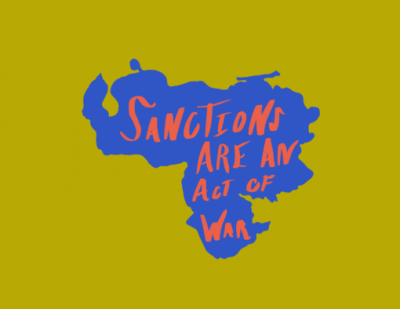
The effort to rally world opinion against sanctions as a war crime is beginning with a call for International Days of Action Against Sanctions & Economic War on March 13-15, 2020. Its slogans are “Sanctions Kill! Sanctions Are War! End Sanctions Now!”
These coordinated international demonstrations are a crucial first step. Research and testimony; resolutions by unions, student groups, cultural workers and community organizations; social media campaigns; and bringing medical supplies and international relief to sanctioned countries can all play a role. Every kind of political campaign to expose the international crime of sanctions is a crucial contribution.
*
Note to readers: please click the share buttons above or below. Forward this article to your email lists. Crosspost on your blog site, internet forums. etc.
Featured image is from WW

River to Sea Uprooted Palestinian   
The views expressed in this article are the sole responsibility of the author and do not necessarily reflect those of the Blog!