Showing posts with label Malki. Show all posts

Tuesday, 4 February 2020

What is not considered by America and the Gulf? ما لم يكن في الحساب الأميركي والخليجي


The only valuable impressive political bet agreed upon by Washington and the Gulf capitals during the months that preceded and followed the parliamentary elections in Iraq was the distinct political position of Al Sayyed Muqtada Al-Sadr among the forces that met in the Popular Crowd. The Popular Crowd that represents the project of resistance through a cooperation and alliance relationship with the resistance forces in the region especially with Iran and Hezbollah and its field partnership in the battlefield where it offered blood in the battles of defending Syria. The source of the trust in that bet and its importance stems from the fact the Al Sayyed Muqtada Al-Sadr is a unique example in Iraq; he inherits a popular leadership of the poor of Baghdad since the Days of his father Mohammed Sadiq Al-Sadr. He was distinguished from the Shiites leaders who entered the political process under the occupation because he did not come from the exile as them but he was in Iraq and refused the participation, he called publically to resist the American occupation. These positions especially those during the battles of Fallujah and during Al Anbar protests in the face of the government of Nour Al-Maliki have provided him a cross-sect feature, he is highly appreciated among the people, so it is difficult for the anti-resistance leaders to accuse him of partnering in the political process or in his patriotism, as it is difficult for them to accuse him of sectarianism especially the representation of an extension of Iran.
Al Sayyed Muqtada-Al Sadr’s disagreement with Iran and his repeated critical positions of its policies as well as his fundamental dispute with the President Nouri Al-Maliki made his hostile positions a separation between America-Gulf opponents and their allies. This dual distinction has encouraged the Americans and the Gulf people to make a cooperation project between him and their direct allies from Kurdistan to the governorates of the center. They built dreams on that cooperation to make a historic change in Iraq especially by depending on his position towards Iran’s allies and the resistance forces and towards Al Najaf authority by talking about an Arab religious authority that competes the non-Arab authority of Qom. The media run by the Americans and the Gulf has contributed in making an aura around the pure Iraqi positions issued by Al Sayyed Muqtada Al-Sadr.
During the formation of the resigned government headed by Dr. Adel Abdul Mahdi, “Sairoun” bloc supported by Al-Sadr competed with “Al Binaa” bloc represented by the resistance forces on the nomination of a prime minister, finally, they agreed on nominating Abdul Mahdi. The opponents of Iran and the resistance promoted that Al-Sadr was under threat, but this justification seemed inconsistent with the facts which everyone who knows Al-Sadr and his stubbornness know. That justification was the only possible way in order not to lose the upcoming moment of collision between Al-Sadr and the resistance forces supported by Iran. Therefore, the only logic to enhance that hope is what is being said in their analyses about Al-Sadr’s aspiration to leadership at any cost.
With the outbreak of the uprising in Iraq, Al Sayyed Muqtada Al-Sadr was the real support of the uprising’s youth, the source of their protection, the one who puts the political ceiling in front of the government towards its resignation, and the one who calls for crowded demonstrations, even though the Americans and the Gulf people were running the groups that organized the uprising and providing the media coverage , employing it in slogans against Iran, they were happy that Al Sayyed Muqtada was overlooking that employment. All the Western and the Gulf analyses that deal with the Iraqi popular path concerning the Iranian presence were seeing in the position of Al Sayyed Muqtda Al-Sadr a factor that can make imbalance which the resistance forces and Iran are trying to avoid until the assassination of the commander Qassem Soleimani and the leader Abu Madhi Al-Muhandis occurred.
There was a call to oust the Americans from the region in response to the assassination, but the most important surprise in the history of the American and Gulf scrutiny is the fact that Al-Sadr has initiated this call followed by the gathering of resistance forces as their gathering behind the prime minister in the official confrontation to oust the Americans. The vote of the deputies influenced by the positions of Al-Sadr along with the approval of the parliament of the recommendation addressed to the government to start the removal was the first step. The call launched by Al-Sadr for the million demonstration under the same title was a source of the greatest concern, because the Iraqis in all their sects will emerge to meet the call of Al-Sadr, and whoever has reservation about the calls coming from the resistance forces and their relations with Iran cannot be reserved about the call of Al-Sadr since he is the symbol of the pure Iraqi patriotism, therefore, no one can remove this title from him because he calls to oust the Americans from Iraq.
America and the Gulf lost the biggest beg, and they will lose what is coming after due to the normal position of Al Sayyed Al-Sadr which they did could not understand or read, as their allies who are opponents to Hezbollah did in Lebanon in similar bets on the position of the Speaker of the parliament Nabih Berri taking in into consideration the differences of forces, people, and countries.

ما لم يكن في الحساب الأميركي والخليجي


خلال الشهور التي سبقت وتبعت الانتخابات النيابية في العراق كان الرهان السياسي الوحيد الذي يملك قدراً من القيمة والتأثير، وتجتمع حوله واشنطن وعواصم الخليج، هو انتقال السيد مقتدى الصدر إلى موقع سياسي متمايز عن القوى التي التقت في الحشد الشعبي وتمثل مشروع المقاومة وتربطها علاقة تعاون وتحالف مع قوى المقاومة في المنطقة، وخصوصاً مع إيران وحزب الله، وترجمت موقفها بشراكة ميدانية قدمت خلالها الدماء في معارك الدفاع عن سورية. ومصدر الثقة بقيمة هذا الرهان وأهميته ينبع من كون السيد مقتدى الصدر يشكل نموذجاً فريداً في العراق، فهو يرث زعامة شعبية يلتقي تحت عباءتها فقراء بغداد منذ أيام والده السيد محمد صادق الصدر. وهو تميّز عن أقرانه من زعماء الشيعة الذين دخلوا العملية السياسية في ظل الاحتلال، أنه لم يأت مثلهم من المنفى بل كان في العراق، وأنه رفض هذه المشاركة، ودعا علناً لمقاومة الاحتلال الأميركي، وقد وفّرت له هذه المواقف، وتراكمها، خصوصاً أثناء معارك الفلوجة، وأثناء احتجاجات الأنبار بوجه حكومة نور المالكي، رصيداً عابراً للطوائف. فهو يملك لدى عامة الناس تقديراً عالياً، ويصعب على القادة المناوئين للمقاومة اتهامه بالشراكة بالعملية السياسية والطعن ولو شكلا بوطنيته، كما يصعب عليهم اتهامه بالطائفية، وخصوصاً يصعب عليهم اتهامه بتمثيل مجرد امتداد لإيران.
تمايز السيد مقتدى الصدر عن إيران وإطلاقه لمواقف انتقادية لسياساتها مراراً، وخلافه الجذري مع الرئيس نور المالكي، الذي جعل الأميركيون والخليجيون من العداء له خطاً فاصلاً بين معسكر خصومهم ومعسكر حلفائهم. وهذا التمايز المزدوج شجع الأميركيين والخليجيين على الاستثمار في مشروع تعاون بينه وبين حلفائهم المباشرين، من كردستان إلى محافظات الوسط، وبنوا على هذا التعاون أحلاماً بتحقيق تحول تاريخي في العراق، خصوصاً أن الرهان على تموضع السيد مقتدى خارج حلفاء إيران وقوى المقاومة، فتح شهيتهم على رهان مشابه تجاه مرجعية النجف، بالحديث عن مرجعية عربية تتنافس مع مرجعية قم غير العربية. وساهمت وسائل الإعلام التي يديرها الأميركيون والخليجيون بصناعة هالة ربطت المواقف التي تستحق صفة العراقية الصافية لتلك التي تصدر عن السيد مقتدى الصدر.
خلال تشكيل الحكومة المستقيلة والتي ترأسها الدكتور عادل عبد المهدي، تنافس تكتل سائرون الذي يدعمه الصدر مع تكتل البناء الذي يمثل قوى المقاومة على تسمية رئيس الحكومة، ولكن في نهاية الطريق تم التفاهم بينهما على تسمية عبد المهدي، وروّج خصوم إيران والمقاومة أن استجابة الصدر جاءت تحت التهديد، وبدا هذا التبرير منافياً للحقيقة التي يعرفها كل من يعرف الصدر ويعرف صلابته وعناده، لكنه كان التبرير الوحيد الممكن لعدم خسارة الاستثمار على رصيد الصدر، والمضي في بناء الآمال على لحظة تصادم مقبلة لا محالة بين الصدر وقوى المقاومة ومن خلفها إيران. والمنطق الوحيد لتعزيز هذا الأمل هو ما يقولونه في تحليلاتهم عن الصدر كمتطلع للزعامة بأي ثمن.
مع اندلاع الحراك في العراق كان السيد مقتدى الصدر هو السند الحقيقي لشباب الحراك، ومصدر حمايتهم، ومن يضع السقف السياسي بوجه الحكومة، وصولاً لاستقالتها. وكانت التظاهرات الحاشدة للحراك هي تلك التي يدعو إليها الصدر، بالرغم من أن الأميركيين والخليجيين كانوا هم مَن يدير الجماعات المنظمة للحراك ويوفرون التغطيات الإعلامية، ويحرصون على توظيفه بهتافات مناوئة لإيران، ويفرحون بغض نظر السيد مقتدى الصدر عن هذا التوظيف. وكل التحليلات الغربية والخليجية التي تناولت المسار الشعبي العراقي، في ميزان الحضور الإيراني كانت تقرأ الحراك وموقع السيد مقتدى الصدر كبيضة قبان يشكل موقعها اختلالاً بالتوازن الذي تسعى قوى المقاومة وإيران لتحقيقه، حتى وقع اغتيال كل من القائد قاسم سليماني والقائد أبو مهدي المهندس.
جاءت الدعوة لإخراج الأميركيين من المنطقة رداً على الاغتيال،.فكانت المفاجأة الأهم في تاريخ المتابعة الأميركية الخليجية تصدُّر الصدر للدعوة، وتلاها اجتماع قوى المقاومة خلفه، كمثل اجتماعها خلف رئيس الحكومة في المواجهة الرسمية الهادفة لإخراج الأميركيين، وجاء تصويت النواب المتأثرين بمواقف الصدر مع إقرار المجلس النيابي للتوصية الموجهة للحكومة لبدء إجراءات إخراج الأميركيين أول الغيث، وتأتي الدعوة التي أطلقها السيد الصدر للتظاهرة المليونية تحت العنوان ذاته مصدر القلق الأكبر، حيث سيخرج العراقيون بكل طوائفهم تلبية لدعوة الصدر، ومن يتحفظ على دعوات آتية من كنف قوى المقاومة وعلاقتها بإيران لا يستطيع التحفظ على دعوة الصدر بصفته رمزاً للوطنية العراقية الصافية. ومَن أطلق عليه هذا اللقب لا يملك القدرة على نزعه عنه لكونه يدعو لإخراج الأميركيين من العراق.
خسرت أميركا وخسر الخليج الرهان الأكبر وسيخسرون ما بعده بفعل هذا الموقع الطبيعي للسيد مقتدى الصدر الذي لم يتمكّنوا من فهمه، ولا قراءته، كما فعل حلفاؤهم في لبنان في رهانات مماثلة على موقع الرئيس نبيه بري في خصومتهم مع حزب الله، مع حفظ الفوارق بين القوى والأشخاص والبلدان.
Related

River to Sea Uprooted Palestinian   
The views expressed in this article are the sole responsibility of the author and do not necessarily reflect those of the Blog!

Tuesday, 22 May 2018

العبادي وجنبلاط مثال على حصيلة الحركة السعودية


مايو 21, 2018


ناصر قنديل

– ليس الموضوع المطروح الآن تقييم حركة السيد مقتدى الصدر في العراق وقد فازت بمكانة مميّزة في الانتخابات الأخيرة، بخطاب وميراث للسيد الصدر يجمعان إلى موقفه السبّاق بالدعوة لمقاومة الاحتلال تميّزه بالابتعاد عن الخطاب المذهبي ومكافحة الفساد، إلى علاقته المستجدّة بالسعودية وموقفها العدائي من إيران وقوى المقاومة، بحيث ربط الصدر مصير الحكومة الجديدة بعد الانتخابات بما يتخطّى شرطه السابق باستبعاد تكتل رئيس الحكومة السابق نوري المالكي الذي يتهمه بالفساد والطائفية، ليشمل الحظر تكتل الفتح الممثل لقوى الحشد الشعبي التي كان لها الفضل بالنصر على داعش، والتي ليس لها في قصر السياسة من أمسِ عصر الانتخابات، وقد سبقها التيار الصدري بالتمثيل النيابي والحكومي ويحمل مسؤولية أكبر منها عما آل إليه الحكم في العراق، بما جعل الحظر مشروعاً تقاطع فيه الصدر مع السعودية بخلفية العلاقة المأزومة مع إيران.

– الأكيد أنّ الرهان السعودي كان واضحاً على تشكيل تحالف يضمّ تكتل سائرون بقيادة الصدر مع تكتل النصر بقيادة رئيس الحكومة حيدر العبادي، وفقاً للمعادلة ذاتها، إبعاد حلفاء إيران عن المعادلة الحكومية في العراق، على أن يجري اجتذاب تكتلات نيابية تضمّ الحزب الديمقراطي الكردستاني وحزب الحكمة بقيادة السيد عمار الحكيم وتكتل الوطنية بزعامة إياد علاوي لتشكيل أغلبية حاكمة تنضمّ إلى صفوفها الكتل الصغيرة تلقائياً، والأكيد في المقابل أنّ بيضة القبان في المعادلة كان العبادي وموقفه، وقد تسنّى للعبادي أن يقيم الحسابات الدقيقة، وأن يدرس الفرص والتوازنات، ويستمع للمبعوثين من القوى المحلية والإقليمية والدولية، ليكوّن موقفاً واضحاً، قبل اتخاذ القرار.

– الحصيلة التي وصل إليها العبادي تقول برفض عرض الصدر بحكومة تستبعد الحشد الشعبي والمالكي ويكون عنوانها مواجهة إيران، أو حتى الابتعاد عنها، أو إغضابها، وقد بنى العبادي هذه الحصيلة على ثلاث نتائج هي: الأولى أنّ قضية تشكيل الحكومة شأن إجرائي ينتهي مع توقيع مراسيمها، لكن تمكين الحكومة من ممارسة الحكم شأن سياسي يومي ومستمرّ تعوزه موازين قوى تجعل الحكومة التي يتمّ تشكيلها على الورق، حكومة موجودة في الواقع، والثانية هي أنّ الحزب الديمقراطي الكردستاني وأحزاب أخرى أوصلوا للعبادي تمسكهم بالتفاهم مع إيران للمشاركة في أيّ تكتل نيابي. فالعلاقة بإيران جغرافيا سياسية محلية وليست جغرافيا سياسية إقليمية فقط، والثالثة هي أنّ تكتل العبادي نفسه مكوّن من أفراد وليس من أحزاب، ونصفه سيتفكك إذا سار بخيار عنوانه الخصومة مع إيران. وفي حصيلة الحصيلة خرج العبادي بموافقة الصدر على حكومة توافق تضمّ الجميع، وخصوصاً تكتل المالكي وتكتل الحشد الشعبي.

– في لبنان جرى توقيت حركة سعودية بالعقوبات على حزب الله، وبالنشاط الدبلوماسي والسياسي على كتل ونواب وقادة، تحت شعار تضييق الخناق على حزب الله، وخلق مناخات تسهم بإضعاف وهج حصاده الانتخابي وحصاد حلفائه، وما وصفه الأمين العام لحزب الله السيد حسن نصرالله بتوفير الحصانة للمقاومة، وتوفير بيئة مناسبة تفاوضياً لرئيس الحكومة سعد الحريري بوجه حزب الله، بعد تكليف الحريري تشكيل الحكومة الجديدة. ومحاور الحركة لا يحققها تحصيل الحاصل الذي يمثله موقف القوات اللبنانية، ولا الأمل باجتذاب مستحيل لرئيس المجلس النيابي نبيه بري، والحركة محصورة بثلاثة محاور، الأول هو التيار الوطني الحر والثاني هو النائب وليد جنبلاط، والثالث هو النواب الذين عادوا للمجلس النيابي من الطائفة السنية على حساب تيار المستقبل، وكانت للسعودية خطوط وخيوط على هذه المحاور الثلاثة.

– على محورَيْ التيار الوطني الحر ونواب الطائفة السنية جاء الإفطار السعودي كافياً وافياً لإعلان الفشل بغياب كليهما عن هذا الإفطار، سواء كان الغياب قراراً سياسياً لهم، أو احتجاجاً بروتوكولياً، أو رسالة سعودية لهم، فهو يكشف أزمة في العلاقة في عنوان علني ومناسبة تحرص السعودية كثيراً على تظهير موقعها الجامع فيها، وقد أصيبت بالفشل. وهذا سيكون كافياً لتظهير كيف ستسير الأمور بعدها، سيصير تطبيع العلاقات فيه سقفاً للطموح، فكيف بالتعاون في قضية عنوانها بحجم العلاقة بحزب الله، لها من الجذور في تاريخ وسلوك المعنيين ما يكفي لمعرفة نتيجة أيّ محاولة للفكّ والإضعاف؟ أما على محور النائب جنبلاط فمحاولات التطبيع تنجح وقد تنجح لاحقاً وتتوّج بزيارة ملكية جنبلاطية إلى الرياض، لكن جنبلاط يضع نقاطه على حروف العلاقة مع السعودية من بوابة خصوصيته واحترامها. العامل الأهمّ في هذه الخصوصية العلاقة بمن يصفه بحليفه الأول في لبنان، الرئيس نبيه بري، وصولاً لترجمة هذا الموقف في انتخابات نائب رئيس مجلس النواب بتوزيع أصواته بين مرشح القوات اللبنانية ومرشح التيار الوطني الحر النائب إيلي الفرزلي لأنه يحظى بمباركة الرئيس بري.

– السعودية في لبنان والعراق، مال وإعلام وسفارات وزيارات، حركة بلا بركة.

Related Articles

River to Sea Uprooted Palestinian   
The views expressed in this article are the sole responsibility of the author and do not necessarily reflect those of the Blog!

Friday, 1 September 2017

“O’ Master of Resistance, all of us are with you.”

Maliki Denounces Campaign against Sayyed Nasrallah: ISIL Evacuation Deal Right Decision

August 31, 2017
Iraqi Vice President Nouri Maliki
Iraqi Vice President and leader of the State of Law coalition Nouri al-Maliki denounced  on Wednesday “the hostile campaign of ignorance” against Hezbollah Secretary General Sayyed Hasan Nasrallah, as he commented on the deal to evacuate ISIL militants from Lebanese-Syrian border.
Maliki welcomed the recent Hezbollah-negotiated deal with ISIL as the right decision, and “part of the strategic battle against terrorism,” stressing that the issue is a Syrian and not Iraqi since it is implemented in a Syrian territory.
He denounced the “systematic campaign of ignorance and hatred against Sayyed Nasrallah.”
Some Iraqi officials slammed the deal, saying the terrorists are to be transferred to Deir Ezzor’s Al-Bukamal, an area adjacent to the Iraqi borders.
Earlier on Wednesday, Sayyed Nasarllah issued a statement stressing that the terrorists were transferred to a Syrian territory. The resistance leader meanwhile, hailed the Iraqi’s for confronting terrorism, assuring that Fraternity between Hezbollah and the Iraqi cannot be shaken up and that the joint victory against terrorism is historical.
Source: Agencies

Deputy Chief of Iraq’s Popular Forces to Sayyed Nasrallah: O’ Master of Resistance, All of Us Are with You

Deputy Chief of Iraq’s Popular Mobilization Forces Abu Mahdi Al-Mohandes on Thursday sent a letter to Hezbollah Secretary General Sayyed Hasan Nasrallah in which he stressed that the Islamic Resistance in Lebanon and Iraq’s Popular Mobilization Forces join the same front against the revetments of terrorism, extremism and Zionism.
Al-Mohandes hailed the role of Sayyed Nasrallah, describing him as the master and the spirit of the resistance which loses its value without his eminence, according to the letter.
The Deputy Chief of Iraq’s Popular Mobilization Forces added, “We learnt from you how follow this path and from Hezbollah martyrs which was mixed with that of the Iraqis.”
Over three decades ago was the spark, and now Hezbollah leads a freedom project, according to Al-Mohandes.
Al-Mohandes also stressed that the followers and supporters of Sayyed Nasrallah will not be prevented from following your path despite all the borders and threats.
Finally, Al-Mohandes stressed that Sayyed Nasrallah will keep the title of glory and the conscious rejection project.
“We have been part of your project which extends from heaven to earth.”
“O’ Master of Resistance, all of us are with you.”
Source: Al-Manar Website

Related Articles
River to Sea Uprooted Palestinian   
The views expressed in this article are the sole responsibility of the author and do not necessarily reflect those of the Blog!

Saturday, 22 July 2017

POPULAR MOBILIZATION UNITS: ESTABLISHMENT, WAR ON ISIS, ROLE IN FUTURE OF IRAQ

Popular Mobilization Units: Establishment, War On ISIS, Role In Future Of Iraq
In June 2014, the so-called Islamic State (IS) occupied about one-third of Iraq’s territory, including Iraq’s second largest city, Mosul. It meant the radical islamists were close to capturing Baghdad and imposing its authority over all of Iraq. At that point the Iraqi government recognized the real danger of the situation and started forming militia units to liberate the country from IS. The Popular Mobilization Units (PMU) played a decisive role in that process.
The PMU (Al-HashdAl-Sha’abi) are pro-government forces operating under the formal leadership of the Iraqi military and consisting of about 70 factions. They were formed at the directive of Iraqi religious authorities after IS seized large swaths of territory in several provinces north of Baghdad in 2014.

Establishment history

One of the internal political factors which led to the PMU’s appearance in Iraq was the failure of state capacity in the realm of national security, against the backdrop of the rise of IS influence. The fall of Mosul due to massive corruption and Iraqi army’s inability to carry out its key functions meant then-PM Maliki lost faith in the armed forces. According to former Minister of Interior Mohammed Al-Ghabban, “The PMU is a unique, successful and necessary experience that was produced by the period.”
Popular Mobilization Units: Establishment, War On ISIS, Role In Future Of Iraq
Click to see the full-size image
Having armed loyal Shia militias, in contrast to the doubtfully reliable multi-ethnic Iraq units, turned out to to be a far more effective means of restoring order.
On June 15, 204, the leader of Iraqi Shia Ayatollah Ali al-Husseini al-Sistani issued a fatwa calling for struggle against IS and establishing the PMU. One should note here that Sistani did not limit his fatwa to Iraqi Shia. He insisted on characterizing the national mobilization forces as a national institution with the participation of all ethnic, religious, and social groups.

Composition

The core of the PMU are such armed Iraqi Shia formation as the Badr Organization, Asaib ahl al-Haq, Kata’ib Hezbollah, Kata’ib Sayyid al-Shuhada, Harakat Hezbollahal-Nujaba, Kata’ib al-Imam Ali, and Kata’ib Jund al-Imam. These units collaborate with certain Sunni tribes in the Salaheddin, Niniveh, and Anbar provinces that were occupied by IS. In addition, PMU includes units consisting of Christians, Turkmen, Kurds, and Yazidis.
Badr Organization. This formation was created in 2003 from the Badr Brigades, the paramilitary organization of the Shia Islamist party “Islamic Supreme Council of Iraq” (ISCI). Its leader is Hadi Al-Amiri. At present it is not only a military organization but also a political party with 22 seats in Iraqi parliament. Its military units are 10 to 15 thousand troops strong. Its units were spotted in every PMU operation against IS.
Asaib ahl al-Haq (League of Righteous People).  This group was formed in 2006 and is closely tied to Lebanese Hezbollah. Its ideology supports the official line of Iran’s leader Ayatollah Khamenei. Its leader is Qais al-Khazali. As of 2016, it had about 10 thousand troops. Its subunit, called Haidar al-Karar Brigades, is operating on Syria’s territory.
Kata’ib Hezbollah (Battalions of the Party of God). This organization was formed in 2003 in order to resist the US invasion of Iraq. Led by Abu Mahdi al-Muhandis and has up to 30 thousand troops. Its fighters also support government forces in Syria.
Kata’ib Sayyid al-Shuhada (Martyrs of Sayyid Battalions). Militarized Iraqi Shia militia. Formed in 2013 to defend “Shia holy sites around the world” and preserving the country’s unity. Led by Abu Mustafa al-Sheibani who used to be a member of Iraq’s Supreme Islamic Council. These units also fight in Syria in support of the government, mainly in Damascus province. No information on personnel strength.
Harakat Hezbollahal-Nujaba (Movement of the Party of God’s Nobles). Formed in 2013 in response to the drawn-out war in Syria and to disputes with Asaib ahl al-Haq leadership. The two groups still maintain close ties and often cooperate on the battlefield. Led by Sheikh Akram al-Kaabi whose ideology is consistent with that of Ayatollah Khamenei. No information on strength. These units also operate in Syria.
Kata’ib al-Imam Ali (Imam Ali Battalions). Armed wing of the Iraq Islamic Movement. Formed in June 2014 in response to IS aggression. Led by Shibl al-Zayd who earlier fought in the Mahdi Army under Moqtada al-Sadr. Its distinguishing feature is a unit formed from Christians, the Spirit of God Jesus Son of Mary Battalions. No data on strength. Its units participated in liberating Palmyra, battles for Tikrit, and the siege of Mosul.
Kata’ib Jund al-Imam (The Imam’s Soldiers’ Battalions). Its leader ‘Abu Ja’afar’ Ahmed al-Asadi is the PMU press secretary. Its ideology is consistent with that of Khamenei. No data on strength. Its units participated in the liberation of Baiji (2014-15).
Popular Mobilization Units: Establishment, War On ISIS, Role In Future Of Iraq
Ahmed al-Asadi
By various estimates, the PMU today is 60-90 thousand strong. The national mobilization reserve on Iraq’s territory is up to 3 million, including women. National mobilization forces also include support units (combat engineers, medical, logistics, media). Most PMU fighters have significant combat experience amassed during the US invasion of Iraq.
The PMU is headed by Falih al-Fayyadh whose deputy and military commander is Abu Mahdi al-Muhandis, an engineer. In military respects the PMU are subordinate to the Iraqi army and executive authority. One should also add that the PMU has several HQs in Baghdad and Najaf.
Popular Mobilization Units: Establishment, War On ISIS, Role In Future Of Iraq
Falih al-Fayyadh
Iraqi government is supporting the PMU both militarily and financially. Its budget is about 1.16 trillion Iraqi pounds. Iraq’s population is making major financial contributions to the PMU. Weapons and munitions come mainly from neighboring Iran. The government of Iran, Hezbollah, and the Syrian Arab Army have sent their best-trained officers and junior commanders to the PMU units in order to increase their combat effectiveness.
Popular Mobilization Units: Establishment, War On ISIS, Role In Future Of Iraq
Abu Mahdi al-Muhandis

Weapons and equipment

PMU have a large number of Soviet-made APCs provided by the Iraqi army, and also many repaired and overhauled armored vehicles. Armor provided by Iran (such as BMP-1s, as well as T-55 and T-72 tanks and their clones) is also found in PMU. Moreover, PMU has been observed using US-made armor (M1 Abrams, M113 APCs, Humvees, MRAPs). PMU manufactures and makes extensive use of improvised rockets and munitions, and also perform major engineering preparation of the battlefield, including river crossings, fortifications, and airfields.
Popular Mobilization Units: Establishment, War On ISIS, Role In Future Of Iraq
Click to see the full-size image

Operations

Since the moment of its creation, PMU conducted many defensive and offensive ops against IS. The first major success is the lifting of the blockade off Amirli, in Salahaddin province in June-August 2014. Turkmen units and fighters from Asa’ib Ahl al-Haq particularly distinguished themselves in this fight. From October through December 2014, PMU liberated Dhuluʿiya and Jurf Al Sakhar.
In November 2014 the operation to liberate Anbar province capital Ramade was launched, which resulted in a decisive victory of popular mobilization forces and the Iraqi army. Radical islamists brutally killed over 1200 inhabitants, whose bodies were found in the city and its outskirts. This victory had a major psychological impact and revealed the true face of the adherents of the “one true Islam.”
The operation to liberate Baiji took place between December 2014 and October 2015. The city was home to a large oil refinery and also a construction materials factory. Participants in this battle included Asa’ib Ahl al-Haq, Kata’ibHezbollah, Badr Organization subunits, and others. The road connecting Baiji to Baghdad was seized by government forces which allowed them to use the city as a jumping off point for offensive on Mosul.
The battle for the capital of Salahaddin province, Tikrit, took place in March and April 2015, with PMU support. This operation saw the participation of Asaib ahl al-Haq, Kata’ib al-Imam Ali, Kata’ib Sayyid al-Shuhada, subunits of the Badr Organization, Turkmen formations (16-th Brigade) as well as Sunni militia, the Martyrs of Salahiddeen (up to 5,000 fighters).
In early March 2016, the Operation Imam Ali al-Hadi was initiated in order to liberate Samara in Salahaddin province. All PMU units participated in support of federal police and Iraqi army. This operation had several objectives: liberating Baghdad and Salahaddin provinces, ensuring access to the tombs of two military imams, surrounding Anbar province, and liberating Samarra.
On May 23, 2016, Iraqi PM Haidar al-Abbadi announced Operation Destruction of Terrorism to liberate Falluja. This operation saw the participation of Iraqi army, federal police, the Golden Division, PMU units, and local militias. PMU participation was limited to fighting IS militants on the outskirts of Falluja and the Khaldiya island. The city was liberated on June 26.
It’s possible that the most important PMU achievement is its contribution to liberating Mosul, which began on October 17, 2016. PMU did not participate directly in the assault, but played an important role in besieging the city from direction of Tal-Afar. These operations cut off IS fighters’ retreat corridors toward Syria, and blocked possible reinforcements from Syria. The Mosul city itself was taken under control by government forces, but the operation is continuing since not all the militants have been eliminated.
Separately, the PMU also launched an effort aimed at reaching the border with Syria west of Tal Afar. PMU fighters liberated a large area from ISIS, including Al-Baaj, al-Qayrawan and Hatar, and reached the border with Syria. Controlling a part of the Syrian-Iraqi border, the PMU once again confirmed its important role in the ongoing anti-ISIS effort in Syria and Iraq and set a foothold for further operations in the border area.
The PMU are also playing an important humanitarian role, using their volunteers to collect contributions, distribute humanitarian aid, and provide medical assistance to civilians forced to leave their homes by the fighting. The PMU dramatically transformed the battlefield since it is they who undermined IS ascendancy. They were able to rapidly concentrate a large number of troops in a given sector and deploy units without the need to coordinate with higher HQs. One should also note the media component of PMU operations, which use IS’ own weapon against it. Media were used to organize objective coverage of operations which took public criticism into account.

Role in future political life of Iraq

The liberation of Mosul, IS military defeats in Syria, and the announced death of its leader, have placed a new question on the agenda—who will govern Iraq.
Western media are circulating information that Iraq’s Sunnis have begun to form a new insurgency. Tarikat Nakshbandi, Revolutionary Brigades of 1920, and Khavija City Baathists in the Kirkuk province have declared their intent to fight against the current Iraqi government after IS is destroyed.
Popular Mobilization Units: Establishment, War On ISIS, Role In Future Of Iraq
Click to see the full-size image
Army of the Men of the Naqshbandi Order. The armed wing of the Tarikat Nakshbandi Sufi order. By some estimates, its size and influence are second only to the IS. It has some 5 thousand fighters. It waged guerrilla warfare against US forces and Iraqi government forces. Remarkably, in June 2014 they participated in the assault on Mosul alongside IS. Its leader, Izzat Ibrahim al-Douri was the Deputy Chairman of Iraq’s Revolutionary Command Council between 1979 and 2003, and right now is one of the most US-sought high-ranking Saddam Hussein-era officials.
Therefore the defeat of IS will only be to their benefit, since it will eliminate the main competitor, and moreover after IS terror any other group looks more attractive to the Sunnis.
Moreover, with the defeat of IS Al-Qaeda could also reinvent itself, though it seems unlikely. IS collapse may show islamists of the whole world that Al-Qaeda’s strategy to establish a khalifate only in the final stage of the jihad, when the entire population already unconditionally shares jihadist ideology, is more productive than a khalifate established by violence. However, al-Qaeda currently does not play the role in the world of radical Islam that it played 10-15 years ago.
One also shouldn’t dismiss IS. The physical suppression of IS and Shia celebrations will hardly have a positive effect on Iraqi and Syrian Sunni dispositions. One can’t rule out new Sunni terrorist groups. Since the start of the Mosul battle, IS militants were able to carry out several major and bloody terror attacks in various parts of Iraq, including Kirkuk, Tikrit, Samarra, and Baghdad. With IS transitioning to guerrilla war after military defeat in Iraq and Syria, one can expect more of them. And it will be more difficult to determine who, radical Sunnis or IS survivors, is behind them.
One may draw a conclusion from the Middle East chaos that US policies have totally failed. But that would be incorrect. US will continue to exert significant influence on political processes. If one were to leave everything as it is, Iran would fill the created vacuum using Shia militias which exist to varying extent in Lebanon, Syria, Iraq. This will threaten the positions of such countries as Israel and Jordan.
The relations between Iraqi Kurds and the government are also complex. The Iraqi Kurdistan is a self-sufficient autonomous entity with own administration, economy, police, and army. Moreover, a referendum is planned for Sept. 25, 2017 on Iraqi Kurdistan independence, which can’t help but create tensions with Iraq’s federal government and with minorities who live on IK territory (Turkomen, Sunni Arabs, Shia Arabs). The Arab-Kurd relations are mde worse by the memory of Saddam Hussein’s repressions during the Iran-Iraq war, and the Kurds’ active support of the US administration during its occupation of Iraq.
As far as PMU future is concerned, there are several nuances. PMU has no single political leader as it is a militarized entity. There are current and potential frictions within PMU due to competition for power among three factions: Khamenei’s, Ali al-Sistani’s, and Moqtada al-Sadr’s.
The Khamenei faction includes several relatively small entities formed by Iran. Its leaders are proud of that affiliation, emphasizing their religious obedience to Khamenei. These groups include, for example, Saraya Khurasani and Kata’ib Abu Fadhlal-Abbas. This faction has the aim of furthering Iranian interests in Syria, and protecting Iran’s border regions. These militarized formations are either fully formed political parties, or are becoming them in anticipation of planned 2018 provincial and parliamentary elections. These groups are close to former PM Maliki, who convinced them to join the Coalition for Rule of Law during the Iraq parliamentary elections in 2014. Though initially formed as military organizations, these formations have become genuine political parties under former PM’s leadership.
Popular Mobilization Units: Establishment, War On ISIS, Role In Future Of Iraq
Click to see the full-size image
The second PMU faction includes several military formations which swore allegiance to the supreme leader of Iraqi Shia, Ayatollah Sistani, and whose interests are non-political. They were formed exclusively by Sistani’s fatwa to protect Iraqi Shia holy sites and literate territory from IS. In 2014, there was a real threat that IS could destroy Shia holy sites in Baghdad and other provinces. This faction’s main formations are Saraya al-Ataba al-Abbasiya, Saraya al-Ataba al-Hussainiya, Saraya al-Ataba al-Alawiya, and Liwa ‘Al ial-Akbar. Each of those names corresponds to one of the four sacred mosques in Kadhimi, Karbala, and Najaf. According to some of leaders and members of these groups, they will be disbanded as soon as IS threat dissipates. This view is based on Sistani’s fatwa being issued in response to a specific threat and having a temporary character. Their key mission is protecting Shia zones and obeying Sistani’s orders. It means this faction’s groups could be disbanded or integrated into Iraqi military.
Peace regiments (Sarai al-Salam) were formed by radical Shia leader Moqtada al-Sadr right after the slaughter perpertrated by radical islamists in 2014 in Camp Speicher. This amounted to rebranding the Mahdi Army which was disbanded in 2008 but retained its core of commanders and specialists. They were easily remobilized, since Sadr had more experience working with militarized formations than other leaders. By some estimates Sarai al-Salam could quickly mobilize up to 100,000 men. According to faction leaders, its power is not limited by number of volunteers but by shortage of resources, particularly money and military equipment. That’s because, unlike other factions, Moqtada al-Sadr’s group is largely cut off from Iranian funding. The movement, and its semi-military character, is popular in Iraq due to its activities in Iraq prior to US invasion in 2003. Unlike other parties and military groups, Sadrists were not part of the elite that returned to Iraq after US-led invasion. The movement was embedded with ordinary Iraqi citizens, not elites. Sadr has charted his own course, to the disappointment of Iran’s leaders who poured resources into Mahdi Army in 2003-10. Today Sadr and his militarized formations have a strong pro-national position, reject Khamenei’s politics, and are against the presence of any foreign troops in Iraq. This stance has introduced confusion concerning the role Sarai al-Salam in PMU. From time to time, Sadr’s supporters claim they are part of PMU, yet in other instances they claim they are not. This is partly the result of not recognizing Khamenei’s faction as part of PMU, and an even greater rejection of Iranian influence and of former PM Maliki in Iraq. However, this faction finds it useful to declare itself part of PMU due to its popularity among Iraqis.

Matters of contention within the PMU

Involvement in Syrian affairs. Khamenei’s faction remains close to Iran and favors aiding Assad’s government. Many of those groups, particularly the core of seven militarized formations, still support the legitimate government of Syria and are ready to help defend Damascus. But Sistani’s and Sadr’s supporters were against getting involved in aiding Assad. Sadr even criticized Hassan Nasrallah and Hezbollah for its official involvement in Syria in 2014. He claimed that Shia movements and parties ought to observe their own jurisdictions and not complicate their politics by intervening in other countries’ affairs. He also criticized Iraqi Shia militiamen for their presence in Syria. Moreover, many of Sistani’s unit commanders are more concerned with protecting Shia territory and holy sites in Iraq than intervening in Syria.
Integrating PMU into the existing Iraqi security institutions is another contentious matter. Khamenei’s faction is wary of being integrated into the Iraqi army or police, since they are still too weak post-2014. For their part, most groups tied to Sistani and Sadr voiced readiness to integrate into state institutions or even disband some of their military formations.
Whether PMU is integrated into existing armed forces or preserved as a separate branch of forces will have consequences not only for Iraq’s security but for its politics. If the acting Prime Minister Abadi is able to effectively and painlessly integrate PMU into Iraqi military, it will be a convincing argument in favor of his leadership. But the fact that Abadi kept PMU from participating in assault on Mosul and send them to a secondary sector, even though Iraqi military showed weakness and PMU could have been used effectively along the main axis of advance, shows that PMU will continue to have a decisive influence on the political balance of power in Iraq. Thus next year PMU will inevitably become a political instrument used by all parties in their efforts to attain power in Iraq.
Popular Mobilization Units: Establishment, War On ISIS, Role In Future Of Iraq
Iraqi PM is in Mosul

Conclusion

The PMU may be considered one of the biggest military and civilian organizations in the Middle East. They are the most likely and desirable center of  political power in Iraq. The PMU unites numerous Sunni, Shia, Christian, Yazidi, Turkoman, and Kurdish armed formations, which means that the PMU, in spite of internal disagreements, is a platform for dialogue on military and political matters, and also a guarantee against the internal or external threat of radical Islam. Currently only the PMU has major experience of conducting military operations, working with local population on humanitarian matters, and ensuring objective media coverage. Most ordinary Iraqis believe the PMU should have a political future, because it is they who broke the back of ISIS in Iraq and are ready to aid neighboring Syria.
For Iraq to be able to address own problems, it should strengthen local and federal institutions in order to combat armed terrorists and reach mutual understanding among ethno-religious communities. Only then will Iraq be able to translate its current military victories into long-term political dividends and ensure peace and stability in the region.

Related Articles

River to Sea Uprooted Palestinian   
The views expressed in this article are the sole responsibility of the author and do not necessarily reflect those of the Blog!

Tuesday, 31 January 2017

Real reason why Obama was not as eager as Trump to “knock the hell out of Daesh”

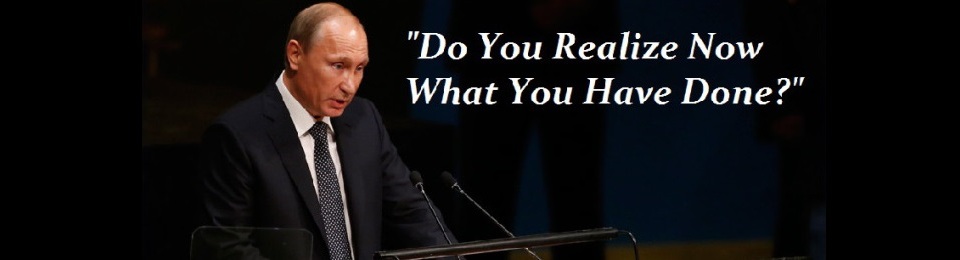
putin-voice-of-moral-authority-990x260
In the follow up to the phone conversation between Presidents Putin and Trump, where they agreed that a top priority in bilateral relations between Russia and the US is joining efforts in fighting their main threat, international terrorism, Russian political analyst Elena Suponina reviews why Barack Obama failed to pursue this agenda.
putin-with-obama-at-bingo
(SputnikNews, 29/1/2017) ~ On Saturday, Presidents Putin and Trump spoke over the phone in their first discussion about international issues since Trump was sworn in.
According to the announcement on President Putin’s official website,“the two leaders emphasized that joining efforts in fighting the main threat – international terrorism – is a top priority. The presidents spoke about the close coordination of actions between Russia and the USA aimed at defeating ISIS [Islamic State, Daesh] and other terrorists groups in Syria.”
Earlier on Friday, the 45th US president had a sit-down interview with Sean Hannity of Fox News, where he elaborated on the threat of radical Islam and how he plans to defeat it.
The American leader has called the Islamists “sneaky, dirty rats” for blowing people up in shopping centers and in churches.
“I don’t know Putin, but if we can get along with Russia, that’s a great thing. It’s good for Russia, it’s good for us. We go out together and knock the hell out of ISIS, because that’s the real sickness, you know the whole ISIS thing is the real sickness. But if we get along with Russia and other – not just we should get along with everybody if we can. Now, in some cases you won’t be able to but we’ve got to try,” the president then said.


Russian political analyst and expert on Asia and the Middle East, Elena Suponina delved into why Obama, Trump’s predecessor, was so reluctant to actually take on the terrorists directly.
“Nobel peace prize winner Obama repeatedly spoke about the importance of the fight against terrorism, however something always seemed to get in the way of actually doing anything practical,” reads Suponina’s article for RIA Novosti.
“Sometimes it was his indecision, sometimes – excessive caution and shortsightedness. However at times it was a deliberate intention to use the terrorists for his own purposes,” she elaborates.
obama-dishonesty-incompetence
The political analyst further recalls that when in the summer of 2015 Daesh terrorists were conquering one Iraqi settlement after another, setting sights on the capital Baghdad, the Americans were inactive, doing nothing to stop them, regardless of all the desperate pleas for help from the then-Iraqi prime minister Nouri al-Maliki.
She further describes how the Americans were disappointed in the policies of al-Maliki and wanted to put someone else in his place, and were thus not very eager to help. They were using the advance of Daesh terrorists as a punishment and to put tremendous pressure upon the out-of-favor prime minister.
truth-has-been-spoken
As the result, she says, Nouri al-Maliki turned to the Kremlin and received, if not great, at least very timely military assistance.
Then-Iraqi Deputy Prime Minister Hoshyar Zebari then noted to Suponina that the “helping hand from Moscow was stretched just in time, when the situation had become desperate, otherwise the terrorists who had captured Mosul and other cities would have entered into the capital Baghdad.”
The situation in Syria, she says, was even more complicated. The Americans had not concealed that their main priority there was not the fight against terrorism but an overthrow of President Assad. However officially the US and its allies have been fighting against terrorism since 2014, both in Iraq and Syria.
Suponina then refers to a number of US politicians, generals and political analysts who were vocally critical of the US policies in the Middle East.
General Jack Keane, she said, criticized Obama for not having any strategy to stop or defeat ISIS. He then said that the US combat jets, which made sorties in Syria, then returned back to the base fully loaded, dropping no bombs.
The general then calculated that only 25 per cent of sorties ended up with airstrikes.
Suponina was later able to ask one of the US generals about this issue, who responded that there was no bombing either due to the lack of intelligence or due to the danger of hitting non-military targets.
She also refers to a number of analytical works of some experts and political analysts on the US strategy in Syria.
Among others, she refers to Lebanese politician Wiam Wahhab who insisted that the US has repeatedly attempted to adapt radical Islam to its own needs, in other words to use the extremists in its own interests.
Or to Stephen M. Walt, a professor of international affairs at the John F. Kennedy School of Government at Harvard, who once urged to “to live with ISIS.”
“… only a large-scale foreign intervention is likely to roll back and ultimately eliminate the Islamic State [which is not about to] happen unless a coalition of Arab states agrees to commit thousands of their own troops to the battle, because the United States will not and should not do the fighting for states whose stake in the outcome exceeds its own,” he wrote in his article What Should We Do if the Islamic State Wins? for Foreign Policy magazine back in 2015.
Elena Suponina however hopes that with the more decisive Trump in office, the fight against terrorism will finally begin to bear fruit.

RELATED:


SOURCES:
Sputnik News - 29/1/2017
Submitted by Lone Bear
War Press Info Network at :
https://syrianfreepress.wordpress.com/2017/01/30/obama-trump-daesh/
~

River to Sea Uprooted Palestinian   
The views expressed in this article are the sole responsibility of the author and do not necessarily reflect those of the Blog!